Développement durable 2010 Highlights - Approval of two major sustainable development plans Overall improvement in air quality since 2000 ...
←
→
Page content transcription
If your browser does not render page correctly, please read the page content below
Direction de
 l’environnement et du

                          2010 Highlights
développement durable

              Approval of two major
         sustainable development plans

               Overall improvement
             in air quality since 2000

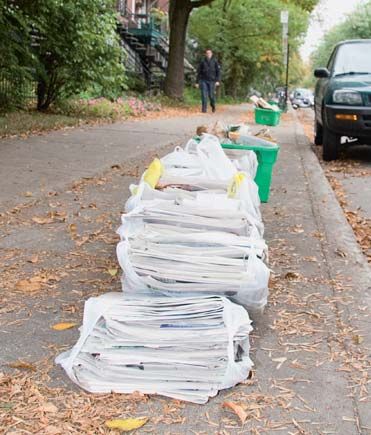
       Increased recovery of green waste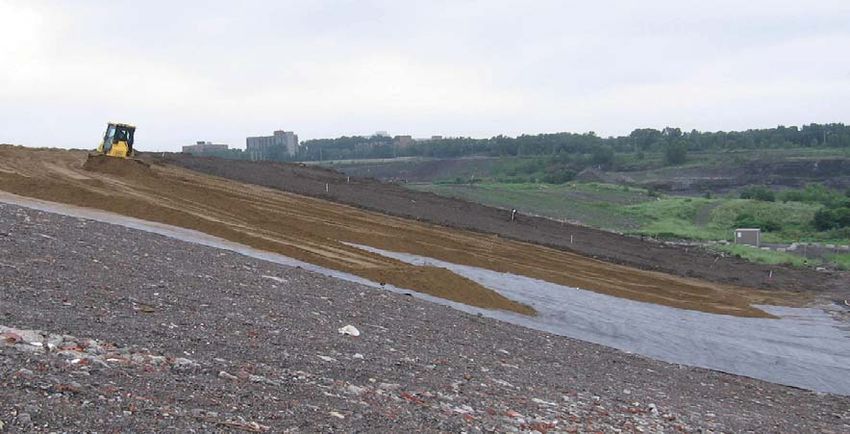
The mission of the Direction de l’environnement et
du développement durable is to improve the quality
of life and living environment of citizens of the
Montréal agglomeration, by raising public awareness
about environmental issues, by promoting and
monitoring the quality of the physical environment,
by providing responsible management of the
territory’s resources and residual materials, and
by monitoring the quality and safety of food with
respect to wholesalers, restaurants and retailers. In
addition, the Direction assumes an advisory role for
municipal services, boroughs, related municipalities
and other authorities in the area of sustainable
development. To this end, it develops policies,
programs and action plans.

This document was prepared using the reports
submitted for 2010 by the division heads
of the Direction de l’environnement et du
développement durable.

Anne-Marie Bernier
Expertise technique

Éric Blain
Soutien technique et infractructures –
Gestion des matières résiduelles

Sylvain Dansereau
Administration

Pierre Gravel
Planification et opérations –
Gestion des matières résiduelles

Annick Le Floch
Planification et suivi environnemental

Danielle Lussier
Équipe de coordination – Développement durable

Michel Raby
Contrôle des rejets industriels

Christine Vézina, D.M.V.
Inspection des aliments
Message from the director
Gaining momentum as a community
It is with great enthusiasm that I invite you to read, in these Highlights,
about the many actions carried out in 2010 by the Direction de
l’environnement et du développement durable to help make Montréal a
sustainable metropolis. The achievements to this end have been numerous.
What is more, they attest to a growing willingness by governments,
businesses, community groups and citizens to rally around this compelling
collective environmental movement! Let me provide a few examples.

Montréal’s Municipal Waste Management Master Plan for 2010-2014
has begun to take concrete shape. Citizens were invited to “consume
differently” so as to reduce waste at the source. Tens of thousands of rolling
bins, along with information kits on the collection of recycled materials,
were distributed across the island. More than 28,000 tonnes of kitchen and
garden waste were recovered — the equivalent of 3,000 garbage trucks filled to capacity — and the
exciting announcement of the upcoming construction of specialized facilities means we will be able to
enhance the value of even more organic material in the future.

The innovative and mobilizing effects of Montréal’s First Strategic Plan for Sustainable Development
2005-2009 were recognized at the national and international levels. In the same spirit, but with even
more ambitious objectives, the Montréal Community Sustainable Development Plan 2010-2015 and the
Corporate Sustainable Development Plan 2010-2015 were adopted.

Air and water quality continued to be closely monitored. Thanks to the granting of $1.9 million under
the Québec government’s Climat municipalités program, the Montréal agglomeration will soon have an
updated inventory of its corporate greenhouse gas emissions, as well as an action plan for adapting to
climate change. With respect to soil quality and green spaces, decontamination has been progressing —
and pesticide use has been diminishing.

Yes, even though there is still much to do, Montréal is well on its way to becoming a sustainable
metropolis. Contributions by a growing number of partners and the 15th anniversary celebration of the
Éco-quartier local action program are also examples — as is the progress made by our own team in
reaching the objectives of the Direction’s environmental management system. Now it is your turn to join
the movement. The thousand and one resources of our revamped website can help you!

Chantal I. Gagnon, MBA
Director
Direction de l’environnement et du développement durable
2010 Organizational Chart
PY: 305.3 Direction de l’environnement
R: $26.5 million et du développement durable
E: $100.7 million
Chantal I. Gagnon
5.0 PY R: $0.1 M
E: $0.5 M
Équipe de coordination – Développement durable Division de l’administration
6.0 PY E: $1.0 M 15.0 PY E: $2.0 M
Develops, coordinates and monitors the implementation of the Coordinates activities to support Advises managers and employees
Montréal Community Sustainable Development Plan (Plan) management of the Direction’s on decisions related to the
human resources procurement of goods and services
Supports the mobilization of partners involved in the Plan
Coordinates and prepares the Advises managers with respect to
Develops sustainable development expertise
Direction’s budget forecasts and information resources
updates
Oversees documentation
Advises managers with respect management
to budget management, financial
implications and human resources
Division du Division de Division de la Gestion des matières résiduelles
contrôle des rejets l’inspection planification et du suivi Division de
industriels des aliments environnemental l’expertise technique
Division soutien
Division planification
technique et
45.0 PY R: $4.2 M 46.0 PY R: $4.2 M 34.7 PY R: $0.1 M 55.9 PY R: $0.5 M et opérations
infrastructures
E: $3.8 M E: $3.6 M E: $3.8 M E: $5.4 M
Applies CMM regulations Applies provincial Plans and develops the Ville Ensures and coordinates the R: $12.8 M
on air and water pollution regulations on food quality de Montréal’s environmental quality of laboratory results 63.7 PY E: $8.8 M 34 PY E: $80.5 M
control for the Montréal and safety programs (EMS, pesticides, produced in an ISO 17025
air and water quality, Sets up the infrastructures Develops and implements
agglomeration environment, while offering
GHG) in collaboration with necessary to implement Montréal’s Waste
Conducts inquiries when a variety of consulting and
the boroughs and central the Waste Management Management Master Plan
Issues permits, conducts food-borne illness is analysis services
services Master Plan on the Montréal in collaboration with
inspections, collects the reported or complaints are
territory the boroughs and the
samples necessary for made, and collects food Collects and analyzes reconstituted cities
applying regulations, and samples Performs environmental water samples from pools
monitoring on the territory Maintains partnerships with
produces the appropriate and other artificial basins, the TOHU and the Direction Maintains relationships
Performs inspections of Montréal (RSMA, RSQA,
reports (municipal court, and provides expertise des parcs de la nature en with the CMM, the MDDEP,
contaminated soils, etc.) and
annual reports, etc.) of food premises in the accordingly ville in developing the CESM RECYC-QUÉBEC and external
produces annual reports on
restaurant, retail, processing, partners with respect to
these issues
Monitors industrial distribution, and storage Analyzes wastewater, Oversees the CESM’s waste management
emissions, establishes and sectors on the Montréal Maintains relationships leachate and watercourses conversion to a major urban
applies Montréal’s rate territory and produces with the CMM, the MDDEP, park in accordance with the Provides guidance and
structure (By-law 129) the appropriate reports community organizations Performs microbiological established master plan serves as a specialized
(municipal court, annual and external partners with and chemical analyses of consultant to local
Carries out prevention and reports, etc.) respect to the quality of the foods Oversees the rehabilitation administrations, produces
serves as a one-stop service physical environment of the Ville de Montréal’s the required reports, and
for industry in the area of Informs, educates and raises Analyzes emissions from sanitary landfill and its informs, educates and raises
environmental quality awareness among operators Informs, educates and raises chimneys, the ambient air, enhancement in keeping awareness among citizens
and consumers awareness among citizens and ventilation shafts with environmental with a goal to achieving
and the Montréal’s partners standards in effect using the the 1998-2008 government
Samples, analyzes and post-closure reserve created objectives
provides expertise on for this purpose
drinking water distributed Plans the infrastructures
through the Atwater and necessary to implement
Charles-J.-Des Baillets the Waste Management
networks; verifies the quality Master Plan on the Montréal
of all steps of the drinking territory and manages waste
water treatment process disposal contracts
Maintains partnerships with
PY: Person-years the boroughs, the CEMR and
R: Revenues the universities
E: Expenditures
Table des matières
The Direction de l’environnement et du développement durable
Environmental Management System (EMS): significant progress .................................................................................................. 4

Together for a sustainable metropolis
Adoption of two major plans ..................................................................................................................................................................... 5
A process recognized by peers .................................................................................................................................................................. 5
Sharing expertise and working together ................................................................................................................................................ 6
Informing through Environmental Education (EE) .............................................................................................................................. 6
Reflecting on practices ............................................................................................................................................................................... 7

Improving air quality
The Réseau de surveillance de la qualité de l’air (RSQA) .................................................................................................................. 8
Controlling industrial emissions ............................................................................................................................................................... 9

Improving water quality
The Réseau de suivi du milieu aquatique (RSMA) ............................................................................................................................ 10
Wastewater ................................................................................................................................................................................................. 11

Adapting to climate change
Reducing greenhouse gas (GHG) ........................................................................................................................................................... 13
Preserving the climate .............................................................................................................................................................................. 13

Participating in collective debates
The shale gas industry .............................................................................................................................................................................. 14
Other issues of importance ...................................................................................................................................................................... 14
Concerted regulatory actions ................................................................................................................................................................. 15

Countering pesticide use and pests
Supporting the application of the By-law concerning pesticide use ......................................................................................... 16
Fostering integrated pest management .............................................................................................................................................. 16
Raising citizen awareness ....................................................................................................................................................................... 17

Improving soil quality
Reducing contamination ......................................................................................................................................................................... 18

Improving waste management
Encouraging reduction at the source ...................................................................................................................................................                    19
Promoting the Master Plan ......................................................................................................................................................................           20
Recovering recyclable materials ............................................................................................................................................................               20
Ecocentres and reuse ................................................................................................................................................................................      21
Reclamation of organic matter ..............................................................................................................................................................               22
Disposal of household waste ..................................................................................................................................................................             23
Improving regulations ..............................................................................................................................................................................       23
Rehabilitation of the Complexe environnemental de Saint-Michel ...........................................................................................                                                 23

Managing food inspection
Harmonization of activities and agreement with MAPAQ ............................................................................................................                                          24
Inspections performed ..............................................................................................................................................................................       24
Computerized management, instant communication .....................................................................................................................                                       24
Maintaining expertise ..............................................................................................................................................................................       25

Rigorous administration
For an efficient and respectful transition ...........................................................................................................................................                     27
Human resources .......................................................................................................................................................................................    27
Financial resources ....................................................................................................................................................................................   27
Information resources and document management .......................................................................................................................                                      27

For more information ............................................................................................................................................................................... 28

The Direction de l’environnement et
du développement durable
In order to be a leader in environment and sustainable development, the Direction has engaged
in a process that aims to improve its own environmental performance, in all its workplaces. The
Environmental Management System (EMS), an inspiring prototype of what can be done within a
public organization, led to more than 30 projects in 2010. Overview.
Step by step, ENVIRONMENTAL MANAGEMENT SYSTEM now completed, all the buildings occupied by
the Direction are now equipped with these
the Direction is (EMS): SIGNIFICANT PROGRESS infrastructures. Moreover, a characterization study
making progress in EVERY KILOMETRE COUNTS. The Direction (sampling and then analysis to establish a clear
picture and develop an action plan) carried out at
achieving its EMS continued to work to reduce the greenhouse gas the Brennan Building revealed that each employee
(GHG) emissions resulting from the use of its
at the Direction generates 0.79 kg of residual
objectives. Thus, 97 vehicles. After drafting a report on the state
materials, and that the recycling rate is 60%.
the quantity of of this automobile fleet, a management kit was A guide to managing hazardous materials was
created so that each division can more easily
developed and the Direction signed agreements
GHG emitted by collect data related to fuel consumption, kilometres with recycling companies so that 15 of the
its vehicles has driven and maintenance — all information that is
required in order to fully understand the needs and
19 materials thus categorized can be reused.
dropped 33% behaviours of users. Other examples of actions to DUPLEX PRINTING. More
since 2006! improve efficiency: vans at the end of their useful
life were replaced with more energy-efficient
than 96% of work stations Certifié
at the Direction are now recto verso
vehicles, sampling routes were planned in a
configured in duplex Faites bonne impression!
way that sought to minimize distances travelled,
printing mode. As a result,
and preventive maintenance programs were
paper consumption went
meticulously followed.
down 4% in 2010.
A STUDY ON WATER USE within the Direction led
Procédure pour la transmission
des données du parc automobile
Données sur l’utilisation du véhicule et s
son entretien
Certaines données sont nécessaires pour bien connaître
connaîtr l’état de santé de nos véhicules et mieux comprendre
to the identification of equipment that consumes
large quantities of water and to come up with a
les besoins des utilisateurs du parc. C’est pourquoi le questionnaire 4 - Utilisation du véhicule et son
entretien devra être complété à la fin de l’année pour chaque
ch véhicule que vous possédez.
list of strategies for reducing consumption of this
Procédure pour la Transmission des données
transmission des données Toutes les données sur les véhicules devront être trans
transmises par courriel à Nancy Giguère de la Division de la
planification et du suivi environnemental.
du parc automobile
precious resource.
Des courriels de rappel vous seront envoyés à la fin de chaque
c trimestre et à la fin de l’année.
Portrait du parc automobile de votre divi
division
Suite à la compilation et à l’analyse des données, un di
diagnostic du parc automobile de la direction sera produit
Données du parc auto de la Division de la planification et du suivi
et vous sera transmis. Il permettra de dresser un bilan
bila concret de nos activités et d’identifier les actions à
environnemental (PSE)
entreprendre pour optimiser la gestion de notre flotte e
et poursuivre nos efforts de réduction des gaz à effet de
serre.
A CLEAR DASHBOARD. The result of careful
Notre direction s’est donnée pour objectif de réduire de 6 % la production de gaz à effet de serre attribuables au
transport d’ici 2011 par rapport à 2006. Pour ce faire, elle doit connaître son parc de véhicules afin de mettre sur
pied des interventions pour en améliorer la performance. Nous sollicitons Résumé des données
votre collaboration à transmettre
pour nous fournir
certaines informations relatives aux véhicules qui sont sous votre responsabilité.
Fichier Données parc auto PSE Récurrence de
Dates projetées
Documents
Ce document vous explique la procédure à suivre pour votre division et vous présente à compléter
un résumé des transmission
deliberation, an environmental dashboard now
informations que vous devez nous transmettre. 30 octobre et
31 décembre 2010
1 - Consommation Trimestrielle
Données sur la consommation de carburant 31 mars, 30 juin, 30 septembre
et 31 décembre 2011
brings together all the data that managers need
Nous vous demandons de fournir la consommation de tous vos véhicules en complétant le tableau
1 - Consommation du fichier Données parc auto PSE et ce, à tous les trois2mois.
- Allocations Annuelle Début janvier
to see, at a glance, the continuous improvements
Données sur les allocations automobiles 3 - Locations Annuelle Début janvier
Si des employés de votre division disposent d’une allocation automobile, veuillez remplir le tableau
4 - Questionnaire Utilisation du véhicule et son
so
on
2 - Allocations et le transmettre à la fin de l’année. Annuelle Début janvier
entretien
Données sur les locations de véhicules Pour toutes questions concernant ces procédures, veuill
veuillez communiquer avec Nancy Giguère au
(514) 280-4423 ou par courriel : nancygiguere@ville.mo
nancygiguere@ville.montreal.qc.ca.
Si votre division loue des véhicules pour plus d’un mois, et que vous vous approvisionnez en carburant dans un
made to reach the EMS objectives. Managers can
then inform employees of the progress achieved
garage privé, veuillez remplir le tableau 3 - Locations et le transmettre à la fin de l’année.
Trousse – procédures pour la transmission des données du parc automobile
aut DEDD 2
to date
COMPREHENSIVE MANAGEMENT OF RESIDUAL
MATERIALS. With the implementation of the
multi-material recycling program at the
laboratory of the Charles-J.-Des Baillets plant
4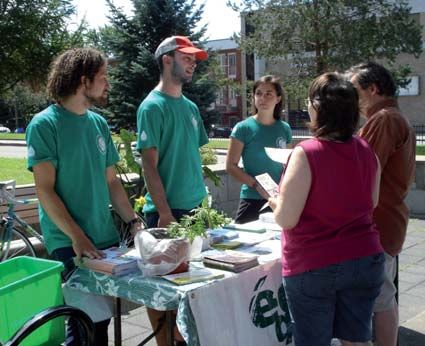
Together for a sustainable metropolis
In 2010, the adoption of two major plans and the carrying out of numerous partnership and
citizen education actions strengthened the foundation for sustainable development in Montréal.
Change is under way!

 ADOPTION OF TWO MAJOR PLANS                                                              A DYNAMIC NETWORK OF PARTNERS. Since                  The adoption
                                                                                          the 2010-2015 Plan was launched, nearly
                                                                                          140 partners have reaffirmed, or affirmed for the     of Montréal’s
In November, the agglomeration council
adopted the Montréal Community Sustainable
                                                                                          first time, their commitment to making Montréal       Strategic Plan
                                                                                          a sustainable metropolis. New partners include the
Development Plan 2010-2015 (2010-2015 Plan)
                                                                                          Agence métropolitaine de transport, the Montréal      for Sustainable
and the Corporate Sustainable Development
Plan 2010-2015.
                                                                                          Museum of Fine Arts and the David Suzuki              Development,
                                                                                          Foundation. Moreover, the Partners’ Network,
                           The culmination of
                                                                                          led by the Division du développement durable,         2010-2015, was
      économie
environnement
        société
      économie
environnement
        société
      économie
environnement
        société
      économie
environnement
        société
      économie
environnement
        société
      économie
environnement
        société
      économie
environnement
        société
      économie
environnement
        société
      économie
environnement
        société

                                      ➔➔➔➔                                                the Conférence régionale des élus de Montréal         accompanied
                           more than 18 months
                                                                                          and the Conseil regional de l’environnement de
              Le plan of work led by a                                                    Montréal, continued its activities, with three        by a new visual
    corporatif de liaison committee,                                                      thematic meetings, a conference on peak oil issues,
      Montréal en the 2010-2015 Plan                                                      and a tour of urban agricultural initiatives being
                                                                                                                                                identity and
développement was developed in                                                            carried out downtown. In April, there was a full      a dedicated
             durable collaboration with more                                              house for the fourth edition of the awards gala for
          2010 | 2015 than 180 organizations                                                                                                    website for
                                                                                          the environment and sustainable development
                           from all backgrounds.
                           Dialogue was in fact
       ENSEMBLE POUR UNE MÉTROPOLE DURABLE                                                in Montréal. Finally, the monthly electronic          sustainable
                                                                                          newsletter DOMINO kept people informed on
                           at the heart of this
                                                                                          sustainable development news in Montréal.
                                                                                                                                                development.
process: partners attended two meetings to
discuss the actions proposed as well as their own
contributions, and they were invited to send their
                                                                                          KEY REPORTS. The Division du développement
                                                                                          durable produced a summary report on Montréal’s
comments and suggestions to the Direction. A
                                                                                          First Strategic Plan for Sustainable Development
series of meetings with experts was also organized
                                                                                          2005-2009, as well as a 2009 report on the
in order to determine the broad actions required to
                                                                                          action plan for the 2007-2009 phase.
meet the nine objectives previously identified.

Meanwhile, the Corporate
                                                   économie
                                             environnement
                                                     société
                                                   économie
                                             environnement
                                                     société
                                                   économie
                                             environnement
                                                     société
                                                   économie
                                             environnement
                                                     société
                                                   économie
                                             environnement
                                                     société
                                                   économie
                                             environnement
                                                     société
                                                   économie
                                             environnement
                                                     société
                                                   économie
                                             environnement
                                                     société
                                                   économie
                                             environnement
                                                     société

                                                                                   ➔➔➔➔
Sustainable Development
Plan 2010-2015, which                             Le plan de
affects both central                         développement
services and local                             durable de la
administrations, intends                         collectivité
to make sustainable                            montréalaise
development an integral                           2010 | 2015
part of Montréal’s
municipal administration.
                                                    ENSEMBLE POUR UNE MÉTROPOLE DURABLE

                                                                                                                                                                  5
des changements climatiques as part of the
                        A PROCESS RECOGNIZED BY PEERS                          Coupez le moteur! (Turn off your motor!) program
                                                                               of the Ministère du Développement durable,
                       NUMEROUS AWARDS FOR THE FIRST STRATEGIC
                                                                               de l’Environnement et des Parcs (MDDEP). By
                       PLAN. The quality and the mobilizing effect of
                                                                               financing up to 70% of the costs of putting
                       Montréal’s First Strategic Plan for Sustainable
                                                                               up permanent traffic signs and an awareness
                       Development 2005-2009 earned the Direction the
                                                                               campaign, this program aims to encourage
                       Prix Réalisation – Monde municipal in the 2010
    Montréal’s First   edition of the Prix d’excellence de l’administration
                                                                               municipalities to remind drivers that it is prohibited
                                                                               to leave an engine running needlessly when the
     Strategic Plan    publique du Québec. The Montréal plan was
                                                                               vehicle is stopped. If the MDDEP approves the
                       also recognized on the provincial level, and
    for Sustainable    even internationally, as a finalist for the Phénix
                                                                               two applications submitted, other boroughs will
                                                                               be invited to use them as models for signage
      Development      de l’environnement 2010 in the category for
                                                                               throughout the Montréal territory.
                       responsible consumption, and received a Silver
        2005-2009      Award in the Environmentally Sustainable Projects
                                                                               A REVAMPED QUARTIERS 21 PROGRAM.
      has garnered     category of the 2010 LivCom Awards.
                                                                               This program, which invited community
     provincial and                                                            organizations to participate in improving residential
                                                                               neighbourhoods and in creating healthy urban
      international                                                            environments, was revised following an evaluation
        distinction.                                                           of projects carried out in 2009. Its actions now give
                                                                               priority to the built environment, and its financing
                                                                               has been increased. Four new projects have been
                                                                               accepted, in the boroughs of Montréal-Nord,
                                                                               Côte-des-Neiges–Notre-Dame-de-Grâce, Lachine,
                                                                               and Mercier–Hochelaga-Maisonneuve.

                                                                                INFORMING THROUGH
                                                                                ENVIRONMENTAL EDUCATION (EE)
                                                                               THE ZERO WASTE CAMPS initiative enjoyed a
                                                                               third successful year, freeing it from its label as a
                                                                               pilot project. Adopted by 25 summer camps, this
                        SHARING EXPERTISE AND WORKING TOGETHER                 program reached some 400 children and
                                                                               7,000 families on a daily basis. The evaluation
                       GREATER COLLABORATION WITHIN THE MUNICIPAL
                                                                               carried out by camp coordinators, camp monitors,
                       ADMINISTRATION. Called on for its expertise in
                                                                               parents and children showed the relevance of this
                       sustainable development, the Direction intensified
                                                                               approach and the importance of involving day
                       its collaboration with the various municipal services
                       and participated in analyses of urban projects such
                       as the Du Havre sector, the Turcot Interchange,
                       Griffintown, the Outremont Campus and former
                       Hippodrome de Montréal area.

                       COUPEZ LE MOTEUR!, AN MDDEP PROGRAM.
                       The Direction helped the boroughs of Ville-Marie
                       and Sud-Ouest submit applications to the Bureau

6
camps. Meanwhile, the Association québécoise         A NEW BLUE PATROL. Working with the Service de
du loisir municipal, at its 11th annual conference   l’eau and in partnership with the Regroupement des
in the Ville de Saguenay, crowned the project with   Éco-quartiers, the Direction played a determining
the first Prix coup de cœur in its history — an      role in setting up an environmental awareness
honour that highlighted the perfect match            patrol exclusively dedicated to water issues.
between this Montréal initiative and the             Some twenty patrollers met with thousands of
conference’s theme, “Le loisir durable… au-delà      citizens in 11 boroughs and 7 reconstituted cities,
du jeu” (Durable recreation… more than a game).      mostly in August, at information kiosks and by
                                                     going door-to-door, to raise awareness about
GREEN PATROL COMPLETES SEASON SIX. A new             recovering rainwater and property maintaining
tour de force for the coalition made up of the       backflow prevention systems. They also visited
Conseil régional de l’environnement de Montréal,     hardware stores to promote equipment that uses
the Regroupement des Éco-quartiers, the Direction,   less water.
the boroughs and the related municipalities, the
Green Patrol employed 52 enthusiastic young
people — thanks to 29 grants from Canada Summer
Jobs — to raise awareness among residents of
14 boroughs and 7 reconstituted cities. They
reached more than 43,000 citizens, in particular
during thematic days on saving drinking water and
on managing residual materials.

                                                      REFLECTING ON PRACTICES
                                                     The environmental education unit helped
                                                     Environment Canada’s Biosphère develop its
                                                     Montréal Urban BioKit. As well, its representative
                                                     participated in various capacities at the
                                                     10th annual Canadian Network for Environmental
                                                     Education and Communication (EECOM)
                                                     conference, the first Partners’ Forum of the
                                                     Regional Centre of Expertise (RCE) on education for
                                                     sustainable development, and the 10th Montréal
                                                     environmental education conference sponsored by
                                                     the Association québécoise pour la promotion de
                                                     l’éducation relative à l’environnement.

                                                                                                           7
Improving air quality
                         In order to counter the harmful effects of air pollution on the health of Montrealers, the
                         Direction continued to closely monitor outdoor air quality and to make sure that applicable
                         regulations were respected.

       Montréal’s THE RÉSEAU DE SURVEILLANCE
overall air quality DE LA QUALITÉ DE L’AIR (RSQA)
    has improved 2010 IN BREF. Although 2010 was Canada’s
     over the last hottest year since 1948 and the smog episodes are
                    often associated with heat waves, the number of
         ten years days where air quality was poor on the territory of
    (2000-2010). the agglomeration of Montréal was only 65, three
                         less than in 2009. Of this number, 24 were smog
                         days while the 41 others occurred for local reasons,
                         related to human activities.

                         Fine particles alone accounted for 63 of the poor
                         air quality days. In fact, on the night of May 30
                         to 31, the plume of smoke caused by the forest
                         fires raging in Upper Mauricie brought the level of                      DECREASE IN POLLUTION OVER THE LAST DECADE.
                         these particles to the highest level ever recorded in                    As can be seen in the table below, analysis results
                         the Montréal region.                                                     compiled from 2000 to 2010 show that the hourly
                                                                                                  concentrations of several gaseous pollutants
                                                                                                  have declined significantly in Montréal in the
                               Poor air quality days in Montréal in 2010                          last decade.
                                PM 2.5 : Fine particles
                                  O 3 : Ozone                                              2                Pollutant                2000-2010
                                 SO2 : Sulphur dioxide
                                                                                                      Sulphur dioxide (SO2)             ↓ 65%
                                                                                                      Carbon monoxide (CO)              ↓ 59%
                                                                                          11
                                                                                                      Nitrogen dioxide (NO2)            ↓ 31%
                         11
                                                              10                                     Nitrogen monoxide (NO)             ↓ 67%
                                                          8
                                                                      5
                                                                                                     Hydrogen sulphide (H2S)            ↓ 75%
                                                                          4
                                                  3                            3     3
                                 2           2
                                      1

                          J      F    M      A    M       J    J      A   S    O      N    D
                                                                                                    AT THE DIVISION DE L’EXPERTISE TECHNIQUE
                              PM2.5       SO 2        PM2.5 and SO2       O3       PM2.5 and O3

                                                                                                      • More than 11,000 analysis results sent
                                                                                                        to the RSQA

8
CONTROLLING INDUSTRIAL EMISSIONS AT THE DIVISION DU CONTRÔLE
DES REJETS INDUSTRIELS
REDUCING VOLATILE ORGANIC COMPOUND
(VOC) EMISSIONS. By ensuring compliance of COMPLAINTS, LEGAL ACTIONS AND PENALTIES
printing companies using flexographic and gravure • 988 complaints made by citizens,
printing, By-law 2007-42 of the Communauté compared to 1,046 in 2009
Métropolitaine de Montréal (CMM) aims to reduce • Average response time: 2.5 hours
major emissions of VOCs into the air. In 2010, the • 431 notices served; 23 legal
Division du contrôle des rejets industriels issued proceedings initiated
several permits to companies that met the required • 18 offenders convicted, for a total of
standards. In addition, it asked companies that $123,500 in fines
were not compliant to present a corrective action
plan by the end of the very same year. It also
PERMITS
initiated a study to determine the composition
• 127 permits issued for air purification projects
of gases emitted by the cooking of food in wood
(investments totalling $5.8 million)
or charcoal ovens, as this type of activity has led
• 323 temporary permits issued for construction
to complaints (smoke and odours), and it produced
or renovation projects
an annual report on air emissions from
industrial sources.
SAMPLING OF ATMOSPHERIC EMISSIONS FROM
STATIONARY SOURCES
• 78 characterizations to ensure compliance
with CMM By-law 2001-10 relating to air
pollution control
• 88 days devoted to the monitoring of air
emission characterizations required of
companies
• 31 samples of petroleum, oils and lubricants
collected from establishments on the
agglomeration territory. No cases of sulphur
content exceeding standards set out in
By-law 2001-10 were found.
SHARING EXPERTISE. The Direction has developed AT THE DIVISION DE L’EXPERTISE TECHNIQUE
a close collaboration with the Centre d’expertise • 860 analyses related to industrial air emissions
en analyse environnementale du Québec, which • Characterization of VOCs (especially styrene)
created a new air sampling team in 2010. as part of pipe rehabilitation work
9Improving water quality
In 2010, increased precipitation, mixed with low flows because of the generally dry weather, led
to an increase in bacteria counts in Montréal’s water bodies. With respect to wastewater, the
identification of reversed connections in the west of the island continued to progress.
Some 67 of THE RÉSEAU DE SUIVI
the 170 storm DU MILIEU AQUATIQUE (RSMA)
sewer networks For more than a decade, the RSMA has been
on the island of monitoring the quality of Montréal’s water bodies
through a number of programs: COURDO (boundary
Montréal waters), QUALO (shorelines), RUISSO (interior lakes
identified by and streams) and PLUVIO (storm sewer networks).
the RSMA as MORE RAIN, BUT LOWER FLOWS.
contaminated Even though summer rainfall was 25% above the
15-year average, sampling was carried out mostly
have now been during dry weather, as in 2009. Water levels and
studied. flows were below the average of previous years,
with a 40% drop for the Rivière des Prairies and a RUISSO: POLLUTION IS DOWN. Although the
10% drop for the St. Lawrence River. percentage of stations qualified as “excellent, good,
or satisfactory” went below the 50% threshold
in 2010, detailed analyses of each water body
revealed that the proportion of stations qualified
AT THE DIVISION DE L’EXPERTISE TECHNIQUE as “polluted” had dropped — from 19 to 9%.
• Some 18,000 analysis results produced as part PLUVIO: STREAMS UNDER THE INFLUENCE.
of the QUALO, RUISSO and PLUVIO programs A detailed study of contaminated storm sewer
networks in the west of the island, draining into
Orme River, Meadowbrook Stream and Saint-James
QUALO: ABOVE AVERAGE ONCE AGAIN. Stream, led to the identification of some 70 sectors
By the end of summer 2010, 72% of stations likely to be affected by reversed connections. It
had received QUALO certification (i.e. fit for should be noted that the characterization of four
water contact activities), which is above the storm drains (Kirkland, Sainte-Anne-de-Bellevue,
average recorded (58%) since the start of the Beaconsfield and Pointe-Claire) corresponded to
program in 1999, but below the average recorded 16 storm sewer networks. Another finding was
in 2009 (88%). Some very specific sections of that bacterial contamination from animal sources
shoreline, mostly along the St. Lawrence River, saw is a major contributor to the deterioration of
their conditions improve. water quality.
10WASTEWATER AT THE DIVISION DU CONTRÔLE
DES REJETS INDUSTRIELS
SUPPORTING THE APPLICATION OF NEW
REGULATIONS. Various actions fostered the
COMPLAINTS, LEGAL ACTIONS AND PENALTIES
application of By-law 2008-47 on wastewater
• 121 complaints made by citizens, compared
disposal (CMM) and By-law RCG08-041 on
to 149 in 2009.
wastewater (Ville de Montréal): development The industrial
• Average response time: 2.8 hours
of tools and training sessions, particularly with
respect to wastewater characterizations required
• 349 notices served and 12 legal
emissions
proceedings initiated
for certain establishments; writing of new
statements of offence; and regular meetings
• One offender convicted and fined a total team assessed
of $20,000
among the divisions concerned. some 250
PERMITS characterization
• 15 discharge permits granted
reports from
• 93 permits issued for water purification
projects (private investments totalling companies and
$8.9 million)
began a new
SAMPLING program aiming
• Nearly 460 visits to about 260 establishments
and more than 680 samples taken in order to
to reduce metal
verify compliance with standards set out in discharges into
By-law 2001-9 relating to wastewater
discharge into sewer networks and
the sewer system.
watercourses (CMM)
• Sewer network testing (equivalent of 92 work
days in the field), with 121 samples taken so
as to identify and reduce at the source the
discharge of metals from industrial sources
exceeding the standards prescribed in
CESM LEACHATE. No less than 481,056 m3 of
By-law 2001-9
leachate (water that comes from waste) were
• Implementation of four major monitoring
treated and then discharged into the sewer system
programs (totalling 60 sampling points along
in accordance with applicable regulations. The air
the sewer network) in order to determine the
injection treatment process brought the average
origins of recurrent problems such as spills
concentration of sulphur compounds from
and mechanical failures observed at the
28.4 mg/l at the bottom of the landfill to just
pumping stations
1.03 mg/l at the sewer drain (standard: 5 mg/l).
• Revenue generated through the application
of By-law 129 respecting the rate structure
AT THE DIVISION DE L’EXPERTISE TECHNIQUE relating to the treatment of industrial
wastewater: $4.2 million
• About 225 analysis results related to the • Service fees collected for wastewater discharge
environmental monitoring of the CESM characterizations: roughly $240,000
landfill site
11AT THE DIVISION DE L’EXPERTISE TECHNIQUE
WASTEWATER DRINKING WATER
• Some 16,000 analysis results produced under • Some 34,000 chemical analyses (inorganic and
the program for the characterization of affluents, organic) and 30,000 microbiological analyses to
effluent, sludge cakes, and ash from the monitor the quality of water from the Atwater
Wastewater Treatment Plant and the Île and Charles-J.-Des Baillets filtration plants and
Notre-Dame treatment plant from the drinking water distribution system
• Acquisition of a gas chromatograph combined (100 sampling sites each week)
with a mass spectrometer in order to analyze • 450 sampling visits carried out to verify the quality
volatile organic compounds in wastewater and of water issuing from the drinking water reservoirs
therefore be proactive in applying By-law 2008-47 (including each work day while renovations were
• More than 21,000 analysis results produced under being carried out on some of them); analysis
the application of By-law 2001-9 results confirmed compliance with standards
• More than 4,200 analysis results obtained under • At the Atwater and Charles-J.-Des Baillets
the application of By-law 129 filtration plants, participation in plans to
secure water intakes and monitoring of water
SWIMMING WATER transmittance to validate the sizing of UV
• 1,237 visits to 200 aquatic pools: measurements sterilizers that are to be added as a further step
taken on site (pH, free chlorine, total chlorine, in the treatment process
chloramines, conductivity and temperature) in • At the Charles-J.-Des Baillets filtration plant,
accordance with the Regulation respecting water continuing of analyses to validate the proper
quality in swimming pools and other artificial pools, functioning of filters following the replacement of
adopted in 2007 by the Government of Québec; certain mechanical components (including
4,000 laboratory analyses sluice gates)
• Training sessions given to about fifty borough • As a preventive measure, counting of
employees on water quality in swimming pools cyanobacteria (blue-green algae) and
and other artificial pools quantification of their main cyanotoxins (in
August and September) at the raw water intakes
of the island of Montréal’s seven drinking water
production plants
• Monitoring of drinking water quality at two
tourism sites (Cap-Saint-Jacques and Montréal
Botanical Gardens)
• As part of the Ville de Montréal’s follow-up on
the problem of lead in tap water, 49 homes visited
in July and August (with sampling). For a second
year, verification of new lead detection equipment,
intended for identifying lead service connections.
About 1,200 lead analyses in total.
• Collaboration with the NSERC Industrial Chair
in Drinking Water Treatment of the École
polytechnique de Montréal on various studies
relating to lead.
12Adapting to climate change
With the help of a grant from the Québec government’s Climat municipalités program, the
Direction has begun to update the inventories of greenhouse gas (GHG) emissions and to
develop plans for reducing these emissions and for adapting to climate change. It also worked in
close collaboration with the CMM, the Alliance for Resilient Cities, Ouranos and two Montréal
universities — partners in this initiative.
REDUCING GREENHOUSE GAS (GHG) PRESERVING THE CLIMATE The Energy Fund
earned the Ville
UPDATED CORPORATE INVENTORY COMING SOON. THE ENERGY FUND OF THE CLIMATE PROTECTION
The reconstituted cities had given the Direction CORPORATE ACTION PLAN offers interest-free loans de Montréal the
a mandate to submit an application on behalf to supports energy efficiency initiatives in Montréal 2010 “Phénix de
of the entire agglomeration for $1.9 million in municipal buildings. Since its creation in 2008, more
funding under phase 2 of the Québec government’s than $2.3 million has been granted to nine projects, l’environnement”
Climat municipalités program, and this request resulting in an estimated emissions reduction of
was accepted. The Ville de Montréal and the more than 1,000 tonnes CO2eq. Other projects are
award for
reconstituted cities can now update their inventory in the planning stage, for a total of more than adapting to and
of GHG emissions and their GHG reduction action $3 million in requests.
plan, and develop a plan for adapting to climate
fighting climate
change. As well, in follow-up to a preliminary change in the
study carried out by the Direction des systèmes
d’information, a contract was granted to develop
municipalities
a computer software that will make it easier to and municipal
update the corporate inventory of GHG emissions.
organizations
BIOGAS CAPTURE AND METHANE RECOVERY AT category.
THE CESM. As organic materials contained in
buried waste decompose, one of the gases they
produce is methane, which has a global warming
power 21 times greater than that of carbon dioxide
(CO2). In 2010, thanks to ongoing work to renovate
the capture network, 81 million m3 of biogas were
extracted from the garbage mass at the CESM,
corresponding to a GHG emissions reduction of
416,000 tonnes (CO2eq). An average methane
concentration of 34.6% was therefore maintained
up to the Gazmont power station, where the
recovered biogas was converted into electricity.
13Participating in collective debates
The Direction put its environmental expertise to work to comment on behalf of the Ville de
Montréal, in relation to issues of importance to Montréal, on various projects and legislation
under development by the governments of Québec and Canada or by authorities whose
concerns go beyond our borders. Among the issues it focused on in 2010 was one burning
news topic: shale gas.
to the Canadian Nuclear Safety Commission and
THE SHALE GAS INDUSTRY for Montréal Council to draft a resolution opposing
the project and calling instead for the management
The Direction worked with a number of groups,
of these residual materials close to where they
including the Great Lakes and St. Lawrence
are produced.
Cities Initiative, the CMM, and the Union des
municipalités du Québec, to prepare comments
THE GREAT LAKES AND ST. LAWRENCE CITIES
and briefs, which were then submitted to the
INITIATIVE. The Direction prepared Montréal’s
Bureau d’audiences publiques sur l’environnement
position on key issues targeted by the Initiative as
(BAPE) as part of the commission of inquiry on the
well as resolutions for two of its annual meetings
sustainable development of the shale gas
(in Milwaukee and in Ville de Québec). Among
industry in Québec.
the files dealt with were the Bruce Power project,
renewable energy, invasive species, and disposal of
OTHER ISSUES OF IMPORTANCE pharmaceutical waste. The Direction also answered
a survey on the management of pharmaceutical
THE BRUCE POWER PROJECT TO SHIP RADIOACTIVE waste, and prepared Montréal’s commitment
MATERIALS TO SWEDEN via the Great Lakes and to adhere to the Cities Transforming Towards
the St. Lawrence River was reviewed by the Sustainability (Green CiTTS) program, under
Direction. There again, through the preparation which, in 2011, the Ville de Montréal will study
of reports, the Direction provided the information its stormwater management
needed for the Mayor of Montréal to send a letter
14CONCERTED REGULATORY ACTIONS TOWARDS BETTER WATER QUALITY. The Direction
also served as Montréal’s representative during
consultations on several pieces of draft legislation
TOWARDS BETTER AIR QUALITY. The Direction
relating to water.
participated in the meetings of the Air Management
Committee of the Canadian Council of Ministers
• In concert with Québec partners of the
of the Environment, whose task is to report on air
COPLEM-TECHNIQUE (MDDEP, MAMROT,
quality, to gather reports on air emissions, to set
cities), it commented on Canada’s proposed
air quality objectives and to propose methods for
legislation on effluents from municipal
reaching the Canadian objectives.
water treatment plants.
The Direction also commented on the Québec • As part of the MDDEP’s proposed regulation
government’s bill to amend the Regulation respecting the charges payable for the use
respecting mandatory reporting of certain of water, it recognized the usefulness of
emissions of contaminants into the atmosphere. setting up an incentive rate and commended
This bill, which is in line with the standards the fact that charges would not be applied to
of the Western Climate Initiative, details the municipalities that draw and treat water for
calculation methods to be used for determining public distribution.
GHG emissions for various sectors of activity, in • In the context of drafting the New Canada-
preparation for a future cap and trade system Québec Agreement on the St. Lawrence,
for the largest emissions (carbon exchange). The the Direction highlighted projects to disinfect
Direction also submitted comments relating to effluent from the water treatment plant and
the mandates and activities under its jurisdiction, to correct reversed connections, as well as the
including the climate change aspect, aiming for need for reduction at the source to counter
the production of an inventory of GHG emissions the discharge of emerging substances. It also
and their reduction, residual materials management requested an improvement in the quality of
(GHG emissions and production of biofuel) and stormwater discharge, protection for riparian
controlling industrial emissions on the territory strips and the restoration of deteriorated or
of the Montréal agglomeration (including an sensitive natural areas. Finally, it emphasized
inventory of pollutant emissions). the importance of considering the impact of
climate change with respect to, among other
things, sustainable navigation and drinking
water, of making the river accessible to
citizens, and of ensuring the sustainability of
drinking water supplies.
15Countering pesticide use and pests
The Direction highlighted the sixth year of the Ville de Montréal By-law concerning pesticide
use — for which it coordinates the implementation — by providing updates on the projects
carried out and by initiating a reflection on the development of integrated pest management
on the Montréal territory.
SUPPORTING THE APPLICATION OF Les guêpes fouisseuses :
THE BY-LAW CONCERNING PESTICIDE USE des voisines utiles
Digger wasps are useful insects
SUPPORTING EVERYONE’S EFFORTS. The Direction Qu’est-ce qui vole au dessus du sable?
supported the boroughs in applying the By-law
Les insectes noirs et blancs qui survolent le sable sont des guêpes fouisseuses.
What’s that flying over the sand?
The black and white insects flying over the sand are digger wasps, or sand wasps.
concerning pesticide use, by providing training to Pourquoi creusent-elles dans le sable?
Chaque femelle creuse ses propres terriers. Dans chacun d'eux elle emmaga-
sine des proies paralysées par son venin, et pond un oeuf. Après l'éclosion,
the employees concerned and through meetings les larves mangeront les proies et termineront leur développement dans un
cocon fait de sable et de soie.
Why do they dig holes in the sand?
with the Table des inspecteurs sur les pesticides Before laying their eggs, the females excavate their own nests, which they provision with insects they paralyze
with their sting. After feeding on their prey, the larvae will end their development stage inside a cocoon made of
sand and silk.
(pesticide inspectors’ group) and the municipal Est-ce qu’on peut se faire piquer?
Une piqûre n’est pas impossible, mais les chances sont très minces car
ces guêpes ne sont pas agressives et cherchent à nous éviter quand nous
committee. An educational panel on burrowing
les dérangeons. Aucun incident n’a été rapporté à ce jour à Montréal.
Do they sting?
Digger wasps are not aggressive and don’t usually sting people. They tend to avoid humans, even
if they are annoyed by them. No incident has been reported in Montréal involving digger wasps.
wasps — often found near sandboxes — was Que fait la Ville à leur sujet?
Les spécialistes de la Ville de Montréal recherchent des moyens respectueux de
also prepared, to be installed in the parks of la santé humaine et de l’environnement pour que les guêpes fouisseuses soient
moins nombreuses dans les aires de jeu. Bicyrtes quadrifasciatus
Les guêpes fouisseuses ne sont pas agressives...
What is the city doing about digger wasps?
15 boroughs and 4 reconstituted cities. First-line City experts are looking into ways that are respectful of human health and environmentally friendly to reduce
their presence in playgrounds.
consulting services were also offered to boroughs Pourquoi ne pas les éliminer?
Les guêpes fouisseuses sont utiles car elles nous aident à nous débarrasser
des insectes nuisibles comme des mouches. On estime qu'une seule guêpe peut
en capturer plusieurs centaines par année! De plus, elles aident à polliniser les
that wished to learn more about biopesticides, on fleurs et font partie de la biodiversité qu’il faut protéger!
Why not get rid of them?
Digger wasps are useful insects that prey on undesirable insects, such as flies. One female alone can
maintaining sports grounds, and on exotic
eliminate a few hundred flies or bugs every year! Digger wasps are nature’s helpers that pollinate
flowers. They are part of biodiversity, which we must protect.
Bembix americana
Pour en savoir plus : ville.montreal.qc.ca/jardinernaturellement
invasive species.
... et sont utiles dans notre environnement urbain.
For more information, please visit ville.montreal.qc.ca/jardinernaturellement
Ensemble pour une métropole durable !
FOSTERING INTEGRATED PEST MANAGEMENT
INTEGRATED PEST MANAGEMENT PROJECTS. The a goal to reducing the fall intrusion of hackberry
Direction de l’environnement et du développement nipplegall psyllid into homes. The installation of
durable, in collaboration with the Direction des mesh screens led to encouraging results, as did the
grands parcs et du verdissement, continued to use of a soap spray on the larvae in the spring and
work on several integrated pest management on the adults in the fall. For the second year in a
projects. Thus, various tests were conducted with row, pheromone and floral scent traps were used to
capture thousands of female Japanese beetles —
an invasive exotic insect that affects more than
250 plant species, including rose bushes — before
they could lay their eggs in lawns. Mechanical
sifting was also tried in sandboxes using two
different types of machines to remove the cocoons
of burrowing wasps. This project has led to a
better understanding of this insect’s behaviour,
which in reality is not as aggressive as it seems.
16You can also read


