Royal Bafokeng Holdings
  Annual Review 2010
←
→
Page content transcription
If your browser does not render page correctly, please read the page content below
Royal Bafokeng Holdings Annual Review 2010
Scope of
                                                                       • Orange which represents air, and the necessity for its cleanliness
                                                                         in a world overwhelmed by excessive carbon emissions; and
                                                                       • Green which represents the land upon which the people of the
the report                                                               RBN live and sustain their lives.

                                                                       The design of the annual review mirrors both the document’s
                                                                       contents and the philosophy that is becoming increasingly
The theme of the 2010 annual review of Royal
                                                                       embedded in the company’s corporate approach and work ethic.
Bafokeng Holdings (RBH) is integration: the integration
                                                                       That is, the adoption of an integrated approach to the
between the natural elements, which RBH is committed
                                                                       sustainability of the RBN, and the financial relationships which
to preserving, and the connection between these
                                                                       make this development possible.
elements and the lives of the Royal Bafokeng Nation
(RBN), which RBH seeks to uplift.                                      This process of social and environmental integration and consolidation,
                                                                       however, has come at a time of simultaneous economic integration
This interconnectedness is represented through three crucial colours   and consolidation. 2010 has seen a recovering market, significant
in the report:                                                         acquisitions for RBH – which have served to drive the company’s
• Blue which represents water, a scarce resource in the arid           diversification of its portfolio – and the listing of Royal Bafokeng
   North West Province and a crucial element to the sustainability     Platinum, all of which have furthered RBH’s vision of becoming the
   of both the local environment and its inhabitants;                  world's leading community-based investment company.
Contents
                                             About us
                                             Corporate profile                           4
                                             Group structure                             5
                                             Directors and executives                    6

                                             Our business
                                             in 2010
                                             Chairman’s message                         10
                                             CEO’s review                               12
                                             Investment in commercial enterprises       15
                                                Commercial investments                  16
                                                Financial review 2010                   18
                                             Investment in society                      22
                                                Royal Bafokeng Sports                   22
                                                Royal Bafokeng Enterprise Development   25
                                                Corporate social investment             26
                                             Sustainable development review:
                                             The way we work                            30

                                             Governance and
                                             administration
                                             Corporate governance                        40
                                             Glossary of terms and acronyms              44
                                             Contact details                            IBC

Royal Bafokeng Holdings Annual Review 2010                                                    p1
p2
About us

                                             RBH is a community-based investment company,
                                             responsible for the management and development
                                             of the commercial assets of the RBN, with the
                                             overall business objective of optimising returns to
                                             enable the RBN to deliver sustainable benefits to
                                             the community.

Royal Bafokeng Holdings Annual Review 2010                                                         p3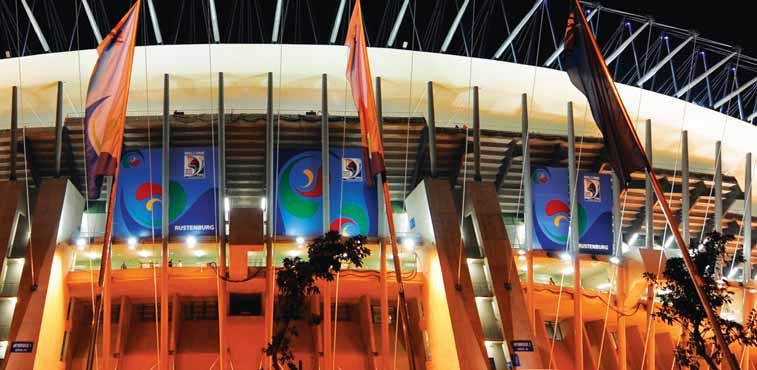
Corporate profile

     Descendants of the Sotho-Tswana peoples who                         (established in 2002) and Royal Bafokeng Finance (established in
     have inhabited southern Africa since the end of the                 2004). RBH functions as a community-based investment company
     first millennium, the Royal Bafokeng are a nation of                whose investment activities are aimed at generating the income
     some 300 000 Setswana-speaking people, whose                        required for the funding of sustainable projects that will benefit the
     home has been located in South Africa’s mineral-                    Bafokeng community.
     rich North West Province since the latter half of the
     17th century.                                                       The Royal Bafokeng Development Trust (RBNDT) is RBH’s sole
                                                                         shareholder and the former’s overarching developmental mission –
     The North West Province is the world’s largest known deposit of     Vision 2020 – is financed mainly through dividends and interest
     platinum group metals (PGMs). The discovery of platinum by Hans     income generated by RBH. This vision seeks to create opportunities
     Merensky in the 1920s precipitated a ‘platinum rush’ for land by    for the Bafokeng people to become participants in the regional and
     major mining companies. As a result, attempts to strip the          national economy of South Africa by the end of 2020, thus
     Bafokeng of their heritage occurred throughout much of the 20th     ensuring a community that is competitive, thriving and self-sufficient.
     century. In the 1990s, however, after extensive engagement
     between the Royal Bafokeng Nation (RBN) and the relevant mining     In striving to bring Vision 2020 to fruition, RBH has adopted a long-
     companies, the payment of equitable royalties to the RBN in         term investment view and has sought to diversify its investment
     exchange for the right to mine this valuable land was negotiated.   portfolio in an attempt to lessen the reliance on platinum as a source
                                                                         of wealth. To this end, RBH’s commercial investment portfolio
     Established to manage and develop the commercial assets of the      currently comprises interests in the telecommunications, services,
     RBN, Royal Bafokeng Holdings (RBH) was created in 2006, a           infrastructure, financial and manufacturing sectors, in addition to the
     result of the merger between Royal Bafokeng Resources               company’s significant holdings in the mining industry.

p4
Group structure

                                                                       Royal Bafokeng Nation
                                                                        General meeting of all RBN members

                                                                                   Supreme Council
                                                                            Chaired by Kgosi Leruo Molotlegi

                                                                              Royal Bafokeng Administration
                                                                                                                                      Royal Bafokeng Institute
                                          Royal Bafokeng Holdings                   • RBN Masterplan
                                                                              • Social Development Services                                • Education
                                                                                        • Health

                                                                                                       Impala Platinum Holdings Limited          Royal Bafokeng Platinum
                                          Mining                                                              Merafe Resources        South African Coal Mining Holdings

                                          Telecommunications                                                                                                  Vodacom SA
   Investment in commercial enterprises

                                                                                     MB Technologies       Senwes        DHL Express        Mining, Oil and Gas Services
                                          Services                                      Fraser Alexander        Pasco Risk Holdings       M-Tech Industrial       Metuba

                                                                                                                                            Atterbury Investment Holdings
                                          Infrastructure                                                                                             Eris Property Group

                                                                                                                                                          RMB Holdings*
                                          Financial                                                                              Zurich Insurance Company South Africa

                                                                                                                                                                 Astrapak
                                          Manufacturing                                                                                                Metair Investments
   Investment in society

                                                                                                                 Royal Bafokeng Sports       Platinum Stars Football Club
                                          Sport                                                                  Bafokeng Sports Campus         Platinum Leopards Rugby

                                                                                                                                 Royal Bafokeng Enterprise Development
                                          Local business development                                                                        Bafokeng Concor Technicrete

* Acquired subsequent to year end

                          Royal Bafokeng Holdings Annual Review 2010                                                                                                        p5
Directors and executives

      Kgosi Leruo Molotlegi            Niall Carroll             Thabo Mokgatlha              Steve Phiri                 Tshidi Nyama

     Kgosi Leruo Molotlegi Chairman                                       Steve Phiri Non-executive Director
     BArch, University of Natal                                           BJuris, University of the North; LLB, Vista University; Diploma in
                                                                          Corporate Law, Rand Afrikaans University; LLM, University
     Kgosi Leruo Molotlegi is the King of the Royal Bafokeng Nation       of Johannesburg
     and Chairman of the Supreme Council and Royal Bafokeng
     Nation Development Trust.                                            Steve Phiri is the Chief Executive Officer of Royal Bafokeng Platinum
                                                                          Limited. He has been admitted as an attorney to the High Court of
     Niall Carroll Chief Executive Officer                                South Africa and is a member of the Black Lawyers Association.
     BCom (Hons) CTA, University of Cape Town; Chartered
     Accountant (SA); Chartered Financial Analyst, CFA Institute;         Tshidi Nyama Non-executive Director
     Licentiate and Fellow, Trinity College London                        BCom, University of the North; MBA, University of Bridgeport (USA)

     Niall Carroll is a chartered accountant and completed his articles   Tshidi Nyama is a partner at Change Partners where her focus is
     with Deloitte Haskins & Sells, followed by 12 years at Deutsche      on executive coaching. She previously held various senior
     Bank. He was appointed CEO of Royal Bafokeng Finance in 2004         positions at Spoornet and Wesbank, as well as a number of non-
     and of Royal Bafokeng Holdings in 2006.                              executive directorships.

     Thabo Mokgatlha Non-executive Director                               Khumo Shongwe Executive Director:
     BCom, University of the North West; BCompt (Hons) CTA,               Human Resources and Transformation
     University of South Africa; Chartered Accountant (SA)                BSc (MED) Hons (Psych), MSc (Clin Psych), Medunsa; BJourn,
                                                                          Rhodes University
     Thabo Mokgatlha is a chartered accountant, having completed his
     articles with Coopers & Lybrand. He previously lectured at the       Khumo Shongwe is a registered clinical psychologist and has
     University of the North West. Thabo is the Executive: Treasury and   spent most of her career in the mining industry, specifically in the
     Business for the RBN.                                                human resources and transformation space. She has also

p6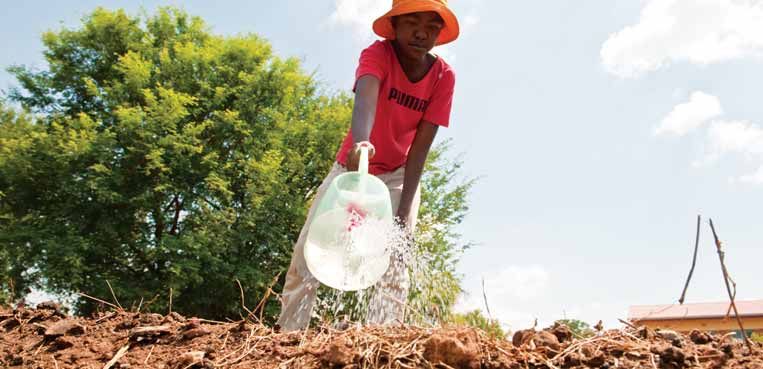
Khumo Shongwe                 Lucas Ndala                Gillian Kettaneh            Mpueleng Pooe               Pieter Rörich

participated in the sustainable development portfolios of the           Reconstruction and Development (London), and the International
organisations for whom she has worked. She has held executive           Finance Corporation (Johannesburg).
positions at Lonmin, De Beers and Anglo Platinum. Previously, she
worked for Transnet, Goldfields and the public sector.                  Mpueleng Pooe Executive: Public Affairs
                                                                        BProc, University of the North; Management Development
Lucas Ndala Executive Director: Finance                                 Programme, Gordon Institute of Business Science; Certificate in
                                                                        Advanced Corporate and Securities Law, University of South Africa
Postgraduate Diploma in Management, University of Cape
Town; BCom (Hons), University of Cape Town; Chartered
                                                                        Mpueleng Pooe is RBH’s public affairs executive. He has been
Accountant (SA)
                                                                        admitted as an attorney to the High Court of South Africa and
                                                                        began his career as a lawyer with Bell Dewar & Hall, where he
Lucas Ndala is a chartered accountant and completed his
                                                                        was later appointed director. He joined AngloGold Limited in
articles at Deloitte & Touche. Prior to this, he worked at Barclays
                                                                        1999 as legal counsel.
in corporate credit and at Mettle, where he was involved in
structured finance. Lucas is responsible for RBH Group finance.
                                                                        Pieter Rörich Executive: Corporate Finance
Gillian Kettaneh Executive: Corporate                                   BCom (Accounting), University of Pretoria; BCompt (Hons),
BSc Economics, London School of Economics; Juris Doctor,                University of South Africa; Certificate in Theory of Accountancy,
Harvard Law School; Masters in Public Administration, John              University of South Africa; Chartered Accountant (SA)
F Kennedy School of Government, Harvard University
                                                                        Pieter Rörich is responsible for evaluating RBH’s investments and
Gillian Kettaneh is responsible for RBH’s legal and corporate           executing transactions. Pieter’s expertise is in the fields of
affairs, governance and sustainable development. She has held           corporate finance, mergers and acquisitions. He was an
various positions at Cleary, Gottlieb, Steen & Hamilton (New            executive director of African Rainbow Minerals from 2004,
York), the World Bank (Washington DC), the European Bank for            before joining RBH in 2008.

    Royal Bafokeng Holdings Annual Review 2010                                                                                              p7
p8
Our business
in 2010

                                             During 2010, RBH continued to diversify its asset
                                             portfolio through significant acquisitions in the
                                             financial and infrastructure sectors, and improved
                                             its strategic positioning in the PGM industry through
                                             the listing of Royal Bafokeng Platinum.

Royal Bafokeng Holdings Annual Review 2010                                                           p9
Chairman’s message
Kgosi Leruo Molotlegi
The RBH team is as dedicated as ever to creating the
world’s best community-based investment company.
p10We increased our presence in the commercial property sector by
acquiring an 11% interest in Atterbury Investment Holdings
(Atterbury) in October. An unlisted capital growth property fund,
Atterbury invests in premium commercial and retail assets in sought-
after business nodes in major South African metropolitan areas.
Together with our stake in Eris Properties, this represents a
significant investment by RBH in the South African property market.
In addition to these important commercial transactions, we also
devoted a great deal of energy during the year to ensuring the
success of the 2010 FIFA World Cup. Our subsidiary, Royal
Bafokeng Sports (RBS), spearheaded our efforts to provide one of
the country’s best venues (the Royal Bafokeng Sports Palace), as
well as our world-class multipurpose sports campus (the Bafokeng
Sports Campus), where we hosted Team England. The event was
Despite the continuation of challenging economic conditions,
a great success, and we are confident that the experience we
2010 was a pivotal year for Royal Bafokeng Holdings (RBH). We
provided to community members and soccer fans from across the
reached a number of important milestones, and grew and
globe created long-lasting memories for both our company and
diversified our investment portfolio through significant acquisitions.
our community.
A major highlight of the year took place on 8 November 2010,
Looking ahead, we intend to take a fresh look at our enterprise
when we listed Royal Bafokeng Platinum (RBPlat) on the main
and economic development strategy to ensure greater reach and
board of the JSE Limited (JSE). For RBH, this meant gaining
upliftment in the Bafokeng community.
access to capital markets to fund the expansion of the Styldrift
mine, without relying solely on our own balance sheet. The RBH team is as dedicated as ever to creating the world’s best
Additionally, RBPlat is now the largest black-controlled and community-based investment company. As part of this objective,
operated platinum asset listed on the JSE. For the Royal Bafokeng we intend to bring new independent directors onto the Board with
Nation (RBN) as a whole, the listing was an important milestone investment backgrounds. I am satisfied with the performance of the
in our attempt to lead the way in responsible and sustainable company, and wish to thank and congratulate both the Board and
mining operations, located in close proximity to communities and management for an impressive set of accomplishments in 2010.
what is becoming a fragile ecosystem. Since the listing, the
enthusiasm for the new player on the JSE, reflected in the steady
rise in the share price, gives us reason to believe this venture will
bring sustainable benefits to the shareholder.
Another highlight of the year was the December announcement of
our proposed acquisition of a 5% share in RMB Holdings (RMBH),
which represents a significant step in the diversification of RBH’s
portfolio into the financial services sector. RMBH is itself a well-
diversified, well-managed company that aspires to be the pre
eminent financial services holding company in South Africa, and Kgosi Leruo Molotlegi
we are confident that our partnership will be one of mutual growth Chairman
and benefit. 28 February 2011
Royal Bafokeng Holdings Annual Review 2010 p11CEO’s review
Niall Carroll
Significant progress was made in diversifying and
unlocking value from the investment portfolio. Our
strategic positioning in the mining, financial and
infrastructure sectors has been enhanced and RBH
returned R653 million to its shareholder during the
year. A further R222 million of interest income was
generated from the RBN cash portfolio.
p12Royal Bafokeng Nation (RBN) cash portfolio. The RBH treasury
team, which manages the cash portfolio on behalf of RBN, again
outperformed its benchmark.
2010 FIFA World Cup
With regards to the 2010 FIFA World Cup, the anticipation and
hard work of many years finally culminated in a hugely successful
tournament. For the RBN, the speculation surrounding the
construction of the Bafokeng Sports Campus, the presence of Team
England at this venue for four weeks, the much anticipated England
– USA match, as well as five other high-profile matches, combined
to create an enormous amount of press interest in the community for
over seven months. Royal Bafokeng Sports (RBS) played a central
role in the myriad activities associated with the preparation for and
2010 was a period of significant strategic progress for Royal delivery of the tournament in the region, and the RBS team
Bafokeng Holdings (RBH), now in its fifth year of operation. The reinforced its reputation for getting things done under extreme
first half of the year was dominated by the build up to and the pressure. The tournament was a tremendous success for RBN, with
excitement of the 2010 FIFA World Cup, with the second half of a quantifiable net benefit to the community of more than R1 billion.
the year marked by a number of meaningful corporate
developments within the RBH investment portfolio. Royal Bafokeng Platinum
After the volatility of the previous two years, South African financial At the beginning of the year, RBH subsidiary Royal Bafokeng
markets in 2010 will be remembered for solid double digit returns Platinum (RBPlat) took economic and management control of the
from the JSE Limited (JSE), falling interest rates, and an appreciating Bafokeng Rasimone Platinum Mine (BRPM), in accordance with the
currency as foreign investors sought economic growth and yield in transaction announced in 2008 by the joint venture partners, RBH
developing markets. However, the strong rand tempered both the and Anglo Platinum. Under the direction of Steve Phiri, who
profitability and share price performance of the mining sector and previously ran Merafe Resources, the motivated RBPlat management
the RBH portfolio was not immune to this. team instituted a number of new initiatives that culminated in the
very successful listing of the company’s shares on the JSE in
Investment performance remains satisfactory. An annual total return to November 2010. The company slogan ‘More Than Mining’
the shareholder of 23% represents another year of outperformance captures the aspiration of its stakeholders to build an entity that will
relative to the JSE All Share Index total return of 19% and a Mining make a genuine, meaningful and sustainable contribution to wealth
Index return of 12%. Over a five-year period, the annualised creation and community building.
compound return of 32% comfortably exceeds the comparable
annualised returns of 15% from both the All Share and Mining
Investment diversification
Indices. In absolute terms, this translates to R18 billion of additional
wealth created by RBH relative to an investment in the All Share While the transfer of management control of BRPM and
Index over a five-year period. subsequent listing of RBPlat represented important steps in the
path of optimising the value of the community’s mining interests,
RBH returned R653 million to its shareholder during the year, while significant progress was made in investing into the non-mining
a further R222 million of interest income was generated from the sectors of the economy.
Royal Bafokeng Holdings Annual Review 2010 p13CEO’s review continued
In March, we concluded the acquisition of a further 15% in Zurich dignity in the communities in which we and our investee
Insurance Company South Africa (ZICSA) for R259 million, which companies operate, not just within the RBN region.
increased our equity interest in the company to 25%.
Governance
RBS concluded the construction and commissioning of the world-class
Bafokeng Sports Campus in May at a total cost of R365 million. RBH is now five years old, still a young and evolving business. It
Home to the five-star Royal Marang Hotel, Platinum Stars and Royal has both the promise and enthusiasm of a youngster, but requires
Bafokeng Sports, the campus has both commercial and careful nurturing and guidance if it is to grow to its full potential.
developmental objectives and is becoming a sought-after training As the business grows in complexity and size, so will it come under
and conference venue for professional sports teams and corporates. increasing scrutiny. In order to maximise our chances of ongoing
success, it is vital that the quality of our governance processes
In the second half of the year, we acquired an 11% interest in grow with the business and that we embed relevant best practice
Atterbury Investment Holdings (AIH), one of South Africa’s leading in all that we do.
property development and investment companies, for R500 million.
The quality of decision-making can only be strengthened if we
Other smaller investments totalling R100 million were made in have appropriately qualified, experienced individuals who are
other group companies during the course of the year. able to add additional dimensions and perspectives at Board
level. For this reason, we hope to appoint additional independent,
Finally, in December, we were very pleased to be able to non-executive directors to the RBH Board in the first half of 2011.
announce our intent to acquire a 5% interest in RMB Holdings
(RMBH) for R2.5 billion. RMBH is the holding company of the Outlook
Firstrand Group, which controls or has significant stakes in,
The investment portfolio is starting to take clearer shape. We have
amongst others, First National Bank, Rand Merchant Bank,
made substantial progress in our key focus areas of extractive
Wesbank, Momentum Metropolitan Insurance, Outsurance and
resources, financial services and enabling infrastructure (including
Discovery. We hope to increase our shareholding in this premier
telecoms and property). We will continue to enhance balance
financial services group over time.
sheet efficiency through the prudent use of equity and debt to fund
The cumulative impact of these investments, including our 5% our acquisitions, while we are likely to prune and shape our
interest in RMBH, is the increase of the non-mining segment of portfolio of smaller investments to release value and, if
RBN’s commercial asset portfolio from 30% at the beginning of the appropriate, recycle capital into our focus areas.
year to 35% at the time of writing this report. When RBH was
Without the commitment and dedication of the entire RBH team,
established five years ago, the non-mining portion of the RBN asset
the achievements of 2010 and indeed of the past five years would
portfolio comprised 16%. The diversification has been achieved
not have been possible. Similarly, many of our colleagues within
without any material disposals of existing mining investments.
other RBN entities, from Supreme Council downwards, have
played very significant roles in developing, promoting and
Social returns executing a bewildering range of activities that have directly or
Although RBH’s primary mandate is to protect and grow the indirectly contributed to the successes of the past year enjoyed by
commercial asset portfolio for the benefit of current and future both the RBN and RBH. We continue to face significant and
generations of Bafokeng, the company is also involved in a wide daunting challenges in many areas, but with the ongoing
range of activities that generate social rather than financial returns. commitment of the team, a coalescence around mutually shared
Apart from the activities of wholly owned subsidiaries, RBS and values, and some imagination and daring, nothing is impossible.
Royal Bafokeng Enterprise Development (RBED), the RBH team
spends considerable time and money on a range of social projects Niall Carroll
and interventions. The overarching objective of these initiatives is Chief Executive Officer
to develop capacity and self-sufficiency, and to enhance human 28 February 2011
p14Investment in
commercial enterprises
In a similar vein to an inter-generational endowment Potential investments are screened and analysed using
fund, RBH’s primary investment mandate is to build a predetermined criteria that are consistent with RBH’s overall
diversified, growth-orientated investment portfolio investment strategy. The company is an active and participative
for the RBN, to protect and grow the capital base over shareholder and, while it does not seek to manage the relevant
time, and to deliver the yield necessary to allow the operations, RBH executives participate in strategy and governance
issues, and sit on the boards of the investee companies.
RBN to meet its community development objectives.
The fundamental profit performance of each investment is the
RBH is a long-term value investor. Its approach is to acquire
primary determinant of long-term returns. RBH seeks to further
significant equity stakes in high-quality listed and unlisted
enhance its return on equity by exploiting the current BEE dynamic
companies in the mining, telecommunications, services,
in negotiating the price and structuring terms of each investment.
infrastructure, financial and manufacturing sectors. Once a core
equity holding has been established, RBH will always consider Overall, the portfolio is funded by a combination of equity capital
increasing its shareholding in existing investments as an alternative contributed by the RBN and by prudent levels of structured debt,
to investing in new companies. secured against the cash flow from the underlying assets.
Royal Bafokeng Holdings Annual Review 2010 p15Investment in
commercial enterprises continued
Commercial investments
RBH commercial investments* Mining
• 13% of Implats, the world’s second largest platinum producer.
• Mining 69%
• 57% of newly listed Royal Bafokeng Platinum, an independently
• Telecommunications 10%
black-controlled platinum producer on the JSE.
• Cash 10%
• 29% of Merafe Resources. Merafe has a 21% participation in
• Services 7%
the Xstrata-Merafe Chrome Venture, the world’s largest producer
• Infrastructure 2% of ferrochrome.
• Financial 1%
• 35% effective holding in South African Coal Mining Holdings,
• Manufacturing 1% a small coal producer.
* Including cash managed on behalf of the RBN
Telecommunications
• 2% of Vodacom SA, a cellular communications company with a
leading share of the South African market.
Services
• 100% of Fraser Alexander, the South African market leader in
mine tailings disposal, dry bulk materials handling in the mining
and ferrochrome industries, and infrastructure construction in the
mining sector.
• 55% of MB Technologies, South Africa’s largest privately owned
information technology distribution group.
• 17% of Senwes, South Africa’s second largest agricultural
services company.
• 25% of DHL Express, South Africa. DHL is the global leader in
express, air and sea freight, overland transport and logistics
solutions.
• 100% of Mining, Oil and Gas Services, a South African-based
company created by RBH to invest in mining, oil and gas
services businesses in Africa and the Middle East.
p16• 27% of Pasco Risk Holdings, Africa’s largest privately owned,
independent risk management company.
• 25% of M-Tech Industrial, a company involved in nuclear
energy, including the development of plant simulators.
• 30% of Praxima Payroll Systems, an outsourced payroll and
human resource service provider.
• 26% of RB Engineering, a mining-related joint venture with
engineering firm Metix.
• 100% of T-Jet Helicopters, a helicopter operator business.
Financial
• 5% of RMB Holdings, a diversified financial services group
that holds significant investments in leading South African
financial service companies.*
• 25% of Zurich Insurance Company South Africa, the third-largest
short-term insurer in the country.
Infrastructure
• 11% of Atterbury Investment Holdings, one of the largest unlisted
commercial property funds in South Africa.
• 15% of the Eris Property Group, a partnership with Rand
Merchant Bank, the Tiso Group and management. Eris is a
property management and development business.
Manufacturing
• 20% of Astrapak, South Africa’s largest plastic packaging group.
• 13% of Metair Investments, an automotive component
manufacturer.
• 51% of Bafokeng Concor Technicrete, a joint venture with
Concor Technicrete, one of the largest manufacturers of precast
concrete products in southern Africa.
* Acquired subsequent to year end
Royal Bafokeng Holdings Annual Review 2010 p17Investment in
commercial enterprises continued
Financial review 2010
Financial highlights 2010
24% increase in dividend income to R420 million
20% decrease in cash under management to R3 824 million
25% increase in intrinsic gross asset value to R35 230 million
Listing of Royal Bafokeng Platinum
Increased stake in Zurich Insurance and acquisition of a
stake in Atterbury Investment Holdings
p18The 2010 reporting period saw a rise in most economies. All these factors had a positive effect on the RBH
commodity prices, accompanied by a decrease in portfolio with intrinsic net asset value increasing by 25% to over
interest rates. This was offset by the dampening R35 billion.
impact of a stronger rand.
The distribution to the RBN of R653 million was higher than the
The general economy showed signs of recovery and the equity dividends received due to limited gearing introduced to the
market was a top performer relative to markets in most other balance sheet on the back of the ZICSA transaction.
Dividends received R million
1800
1 638
Most of the portfolio companies owned by RBH declared better 1600
dividends in 2010 compared to 2009. Implats remains the 1400
1200
largest dividend contributor to RBH, with R324 million of the total
878 1000
R420 million. 800
600
420
339 400
124 200
0
2006 2007 2008 2009 2010
Cash under management
Cash under management decreased significantly – a result of the R million
6000
increased infrastructure spending in the RBN and increased 5 221
4 620 4 784 5000
spending on new investments as part of the diversification
strategy. The RBN has budgeted an operating deficit for the next 3 824 4000
four years, that is, social expenditure is anticipated to be higher 3000
than dividend and inherent income receipts. The deficit will be 2 221
2000
funded from the cash pile.
1000
0
2006 2007 2008 2009 2010
Intrinsic value*
Growth in intrinsic gross asset value was fuelled by good R million
40000
performance from most of the underlying investments, especially 35 230
35000
in the resources sector, and includes new investments acquired 29 292 28 154 30000
during the year totalling R970 million. A detailed breakdown of 25000
22 357
the portfolio is provided on page 21. 17 756 20000
15000
* Gross equity investments held by RBH directly and excludes cash 10000
under management 5000
0
2006 2007 2008 2009 2010
Royal Bafokeng Holdings Annual Review 2010 p19Investment in
commercial enterprises continued
Common based to 100
450
Relative cumulative total return performance Common based to 100
400
403
(RBH vs JSE ALSI) 350
331 329 300
250
251 200
207 203
150
168 171
141 129 100
100 100 50
0
2005 2006 2007 2008 2009 2010
RBH JSE ALSI
p20RBN asset portfolio as at 31 December 2010
% % % %
R million 2010 change 2009 change 2008 change 2007 change 2006
Market value of listed investments 27 841 19 23 395 54 15 178 (144) 27 128 28 21 268
Impala Platinum Holdings Ltd 19 363 15 16 872 50 11 221 (43) 19 719 21 16 336
Royal Bafokeng Platinum 6 245 26 4 940 75 2 824 (43) 4 963 29 3 847
Merafe Resources Ltd 1 195 19 1 008 65 612 (64) 1 685 203 556
Zurich Insurance Company South Africa 581 165 220 (1) 222 2 218 19 183
Metair Ltd 232 132 100 (9) 110 (60) 272 100 –
Astrapak Ltd 224 (12) 256 35 189 (30) 270 (22) 346
Directors’ valuation of unlisted investments* 7 389 55 4 758 85 2 579 19 2 165 99 1 090
Vodacom SA (Pty) Ltd** 4 077 60 2 553 560 387 100 – 0 –
Fraser Alexander Holdings (Pty) Ltd 980 19 827 (4) 860 16 741 56 476
Atterbury Investment Holdings 499 100 – 0 – 0 – 0 –
MB Technologies (Pty) Ltd 711 (10) 792 1 784 0 785 105 383
MOGS (Pty) Ltd 278 103 137 122 62 100 – 0 –
Senwes (Pty) Ltd 271 13 239 50 159 (1) 161 44 112
Eris Property Group (Pty) Ltd 87 18 74 62 46 100 – 0 –
Royal Bafokeng Capital (Pty) Ltd 55 (23) 71 (58) 171 (47) 321 100 –
Bafokeng Sports Campus (Pty) Ltd 365 0 – 0 – 0 – 0 –
Other*** 66 0 66 (41) 111 (29) 156 32 119
Gross total intrinsic value 35 230 25 28 154 59 17 756 (39) 29 292 31 22 357
Cash under management 3 824 (20) 4 784 (8) 5 221 13 4 620 108 2 221
Total liabilities 1 602 285 416 2 409 (25) 543 124 242
Total value of RBN asset portfolio 37 451 15 32 522 44 22 569 (32) 33 370 37 24 337
* All methodologies reviewed by an external investment bank
** The 2009 restated and 2010 values are based on an independently performed Monte Carlo option valuation model, in accordance with IFRS requirements
*** Other includes the market values of RBH’s smaller investments
Royal Bafokeng Holdings Annual Review 2010 p21Investment in society
RBH’s commercial investments underpin the company’s
commitment to the socio-economic upliftment of the
Bafokeng community. With the income generated
from such investments, and through partnerships
with key stakeholders and various governance and
community structures, the company seeks to invest in
sustainable projects that will benefit the RBN in the
long term.
The direct investments in society undertaken by RBH fit into three
primary categories:
• Royal Bafokeng Sports (RBS), which exemplifies the relationship
between the company’s commercial and non-commercial
investments most clearly;
• Royal Bafokeng Enterprise Development (RBED), which
emphasises the RBH’s commitment to the creation of self-
sustaining, Bafokeng-led businesses; and
• corporate social investment (CSI), which includes the company’s
interest and investment in the fields of social development,
education, entrepreneurship development, music and arts, and
sports development.
Royal Bafokeng Sports
2010 was a significant year, not only for Royal enjoy sport in a structured environment. The focus on five sporting
Bafokeng Sports (RBS), but also for the RBN, which codes – soccer, athletics, rugby, netball and martial arts – has
had the privilege of hosting six 2010 FIFA World Cup further enabled children with talent to benefit from specialised
matches at the Royal Bafokeng Sports Palace. The coaching and to compete against the best sides, both nationally
World Cup attracted thousands of visitors to the and internationally.
Bafokeng region and gave the RBN an opportunity
to share its culture and heritage, increasing its Basketball will be introduced as RBS’s sixth sporting code from the
national and global visibility and contributing to the middle of 2011, in partnership with the National Basketball
country’s spirit of togetherness and celebration, Association of America (NBA) and will initially focus on middle
ignited by shared soccer enthusiasm. schools and high schools in the RBN region.
RBS has also continued in its mandate to develop sustainable Physical education
sporting structures and programmes that contribute to a healthy
At the beginning of 2010, RBS staff partnered with Royal
and active Royal Bafokeng community, as well as creating
Bafokeng schools to improve both existing and non-existing
opportunities for the fulfilment of sporting potential.
physical education programmes. As a result, approximately
20 000 school-going children in Bafokeng schools are now
Sports development involved in sport in one form or another at least once a week and
RBS has, over the past four years, created opportunities for are becoming increasingly aware of the importance of physical
thousands of Bafokeng school-going children to participate and activity in their day-to-day lives.
p22After-school and inter-school sport of producing players for professional teams in South Africa and
around the world.
Up until the end of 2010, the primary focus of RBS’s after-school
programmes was on village training and intermediate team
Athletics: Bafokeng athletes continue to perform well at both
coaching. In line with the call from government to ‘get sport back into
national and international level during the year. A total of
schools’, RBS will be embarking on introducing after-school and inter-
32 medals were won throughout the year at provincial and
school sporting programmes to Bafokeng schools in early 2011.
national competitions. A highlight was a 10-year-old Bafokeng
boy winning the national junior cross-country championships in
Staff training
October, an event at which three other medals were won by
RBS has also continued to provide training to its coaches and co Bafokeng children. Two of RBS’s senior athletes also competed
ordinators, ensuring that up-to-date coaching methods are utilised. overseas in various high-profile athletics meets.
Sports development highlights Rugby: During 2010, two of RBS’s development rugby players
Soccer: RBS’s soccer teams continued to perform well in 2010 and were selected to represent the province in the Grant Khomo Week.
won the majority of their matches during the year against quality The RBS development teams also participated in various
opposition. The RBS u13 team travelled to Norway in mid-2010 competitions around the province and Gauteng.
to take part in one of the biggest junior soccer tournaments in the
world, and 22 u13 boys have been selected for the Bafokeng Netball: The RBS netball teams took part in the Atlantic Summer
Soccer Academy (due to open in January 2011) with the intention Netball Challenge during 2010 where they dominated their
Royal Bafokeng Holdings Annual Review 2010 p23Investment in society continued
respective age groups. Kgomotso Itlhabanyeng was selected to Tsitsing and Kanana sports grounds
represent South Africa in the United Kingdom in the World
In early 2010 upgrades to the sports grounds at Tsitsing were
Netball Series.
completed. The grounds comprise three netball courts, two grass
Martial arts: Six karatekas qualified in 2010 for the South Africa sports fields, and a cross-country track, among other facilities. At
National Karate Squad. In addition, the development teams Kanana village, one sports field was created in 2010, and
competed in the South African JKA Championships winning another is planned, along with netball courts and an ablution
107 medals (35 gold, 37 silver and 35 bronze) and retained their block. These facilities will be up and running in 2011.
position as the number 1 Dojo. Lerato Puswe participated in the
Zone 6 African Championships held in Harare, Zimbabwe where School and village sports facilities
she was awarded a gold medal. School and village sports facilities continue to be poor to non
existent, with the vast majority of these facilities being unsafe for
Sports infrastructure sporting activity, hindering sporting development progress.
Ongoing partnerships, both internally and externally, are being
Bafokeng Sports Campus
sought to overcome this ongoing challenge.
The Bafokeng Sports Campus (BSC) was completed in the first half
of 2010 and successfully hosted the English team for the 2010
FIFA World Cup. The BSC consists of The Royal Marang five-star Commercial franchises
hotel, the Platinum Stars clubhouse, a world-class high Platinum Stars
performance centre, seven fields for rugby and soccer, a grass
Platinum Stars moved from Gauteng to Phokeng in early 2010
athletics track, netball and tennis courts as well as the Bafokeng
and started training at the BSC immediately after the 2010 FIFA
Academy. It is now increasingly used by visiting provincial and
World Cup.
national sports franchises as a venue for pre-season training and
pre-match build-up.
Platinum Leopards
Royal Bafokeng Sports Palace Having qualified for the premier league at the end of 2008,
The upgraded Royal Bafokeng Sports Palace (RBSP) comprises Platinum Leopards struggled to be competitive in various domestic
the Royal Bafokeng Stadium (which holds seating capacity for competitions in both 2009 and 2010, yet have retained their
44 000 spectators), the Royal Bafokeng Aquatics Centre and the premier league status for 2011. Their involvement in developing
Royal Bafokeng Court Complex. It hosted six of the 2010 FIFA World rugby in the Bafokeng region has been slow to date. However,
Cup games and continues to host various events, including Platinum with sport moving more into schools and the development of the
Stars and Platinum Leopards matches, the international sevens rugby best academy for rugby in South Africa, there will be renewed
tournament and is the training venue for our elite athletes. impetus to involve Platinum Leopards in RBS’s rugby programmes.
p24Royal Bafokeng
Enterprise Development
At the beginning of 2010, RBED developed a clear have proved to be the leading entities in terms of inviting SMMEs
strategic plan, business plan and budget which not to tender for relevant opportunities.
only catered for the year, but which are intended to
cater for the medium term up to 2013. Enterprise development delivered some good results in 2010, with
the following key activities performed:
The business plans are designed to deliver on the mandate of • 88 assessments conducted;
RBED, ensuring the development of SMMEs in order for them to • 212 business development interventions undertaken;
access the market competitively through procurement opportunities. • 157 SMMEs trained in various areas;
Additionally, providing access to the market also supports RBED’s • two mentorship interventions and one product development
job creation mandate. intervention performed;
• two new business establishments facilitated;
The bulk of RBED’s activities in the first half of the year were • 91 SMMEs present at various national exhibitions; and
related to the 2010 FIFA World Cup. RBED led a number of • 11 sectoral information sessions held.
projects designed to channel World Cup-generated economic
benefits to local Bafokeng small, medium and micro enterprises These exclude some of the achievements that are linked to the
(SMMEs). Some of the projects undertaken included home-stay 2010 FIFA World Cup which include encouraging legacy
programmes, the establishment of public viewing platforms, and benefits, especially on the tourism front, which RBED will be
catering initiatives. developing well into the forthcoming financial year.
During the second half of the year, RBED focused on achieving the The appointment of officials in the business linkages unit saw
entity’s core business targets, with SMMEs remaining the entity’s excellent developments take place in 2010. Implats continued to
primary beneficiaries and its main area of focus. In this vein, be the main investee company from which most opportunities for
collaboration with The Business Place Network – Phokeng (TBPN local SMMEs were sourced, and some traction is starting to
P) has yielded some positive returns that will be furthered to ensure develop in engagements with RBPlat, Xstrata and Fraser
total alignment with RBED’s mission of channelling development Alexander, with more expected in 2011. In 2010, opportunities
opportunities in the direction of Bafokeng SMMEs. with a value in excess of R148 million were unlocked, benefiting
more than 20 local SMMEs.
Highlights of the performance of TBPN-P for the year 2010 are
provided below: The business support services unit also found its footing in 2010,
• 2 317 consultations conducted, an average of 211 monthly; and began with the dissemination of information to SMMEs
• 764 SMMEs trained on six programmes offered by TBPN-P, through workshops, acquainting them with the regulatory and
an average of 69 monthly; statutory requirements with which they need to comply. The
• 1 networking session held and attended by 36 SMMEs; and primary function of assisting SMMEs with the compilation of
• 1 439 SMMEs made use of the internet facilities provided, an financial statements took off slowly, however, and it is anticipated
average of 131 monthly. that the unit will roll out this service more forcefully in 2011.
RBED also continued to work on stakeholder management with Finally, 2010 saw a major clean up of the database, with a total
other RBN entities as well as with external parties during 2010. The of 436 SMMEs captured and categorised into four groups:
latter was developed to ensure that opportunities are made operational, non-operational, pending and closed. This
available for Bafokeng SMMEs via the relevant RBN entities. organisation was done with the intention of ensuring that optimal
Significant progress has been made in this regard and Royal attention is given to the operational businesses and will enable
Bafokeng Administration (RBA) and the Royal Bafokeng Institute (RBI) RBED to function with even more efficiency in the future.
Royal Bafokeng Holdings Annual Review 2010 p25Investment in society continued
Corporate social investment
RBH’s corporate social investment (CSI) portfolio has continued to Projects in 2010
add value to the social and economic development of the RBN
community through the numerous initiatives it has supported over Health and social development
the years. The sustainability of projects, and the positive impact
Phokeng Trauma Centre
these have on the beneficiaries, is critical to its success.
The Phokeng Trauma Centre is a centralised rape and trauma
support centre that provides support to victims and survivors of
RBH continues to encourage its strategic partners to provide both
financial and non-financial support to the RBN community, and this crime and sexual assault. Funding for the project was used to
has assisted in addressing the socio-economic challenges faced assist the organisation to expand its services to areas outside of
by the Bafokeng in many ways. The combined financial Phokeng by increasing the number of full-time staff and volunteers.
contribution for 2010 exceeded R27 million. The centre was able to reach 19 700 people through the
awareness campaigns it ran in the community during the year, the
A spirit of volunteerism is fundamental to the success of this result of which saw 452 people come to the centre to seek help
portfolio and RBH’s employees once again donated their time and and 791 counselling sessions conducted.
skills to help others throughout the year under review.
Godisanang Orphans and Vulnerable
Summary expenditure Children Programme
Funding for the Godisanang Orphans and Vulnerable Children (OVC)
RBH allocates R10 million annually for its CSI programmes. The Programme was used to provide ongoing support to children in five
2010 expenditure on social investment according to areas of Bafokeng community centres. The support provided includes
focus is set out in the pie chart and table below. counselling, assistance with school work, and daily after-school meals.
A total of 455 OVCs benefited from the services provided by 19 child
Focus area R’000
care workers during the year.
Health and social development 4 197
Education 3 759
Entrepreneurship development 706
Music and arts 610
Donations 248
Sports development 82
Other* 180
* Cost of time for employee volunteering project, which saw employees
spending a day doing various community projects
2010 CSI expenditure breakdown
• Health and
social development 43%
• Education 38%
• Entrepreneurship
development 7%
• Music and arts 6%
• Donations 3%
• Sports development 1%
• Other 2%
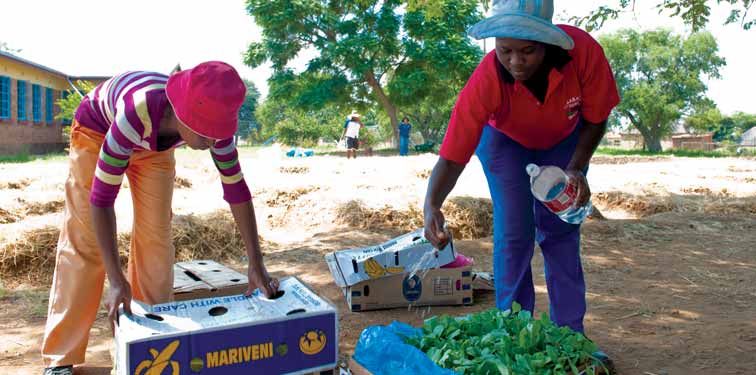
p26NGO/CBO Capacity Building Project Schools’ vegetable and nutrition gardens
The objective of the NGO/CBO Capacity Building Project is to The objective of this project is to increase the knowledge of
assist with the development of community entities operating in the gardening and nutrition among learners, educators, school food
RBN, enabling them to function effectively, efficiently and handlers and parents, and to increase the nutritional value of
independently so that they may become sustainable organisations. school lunches through the incorporation of fresh produce from
The project will be implemented over a three-year period by school gardens. Another important aspect is the drive to empower
Siyakhula Trust, a training organisation which will receive community members working in these gardens with the skills
assistance from RBN’s health and social development services necessary to enable them to supply fresh produce to feeding
programmes, and ultimately to run sustainable and profitable food
department. Funding for 2010 was used for the initial training of
production businesses. The project was implemented at five
90 people from 30 community organisations. More training as
primary schools in 2010, with a further five planned for 2011.
well as after care will be provided going forward.
The gardens have been created in five primary schools thus far
and 2 419 children, 74 teachers and 27 community members
Education
have been involved in the project. Five more schools will be
Molteno Institute added as beneficiaries in 2011.
The Molteno Institute is focused on empowering foundation phase
teachers with the skills necessary to teach literacy through the 13th Year Project
mother tongue of the pupils. This is a reaction to the identification The 13th Year Project aims to improve the level of mathematics
that poor academic performance amongst African children can be and English learning in Bafokeng schools by using motivated and
attributed to the fact that they do not have basic cognitive skills in talented ex-Grade 12 youths as classroom assistants and tutors.
their own language. The project supports and mentors teachers These former learners are working towards tertiary education by
through demonstrations and other mentoring strategies and improving their pass marks or are in the process of applying for
provides enabling teaching materials and resources. A total of admission. The project also wishes to develop a culture of giving
29 schools, 52 educators and 1 976 learners benefited from the back to the community by encouraging the youth to be involved in
various community activities. A total of 20 youths participated in
project during the year.
the pilot project and more will be involved as the project develops.
Mathematics
During 2010, a total of 2 000 scientific calculators were
provided to Grade 12 learners as well as mathematics teaching
aids for educators.
Palaeontological Scientific Trust (PAST) Walking
Tall Project
The Walking Tall Project, an educational outreach project
operating under the auspices of PAST, continued to run theatre
shows at schools in order to explain difficult scientific concepts,
such as human evolution, and to excite learners about paleo
sciences and careers in this field. A total of 13 schools
participated in the project during 2010 and 3 500 learners and
90 educators benefited.
Wits University Chamber of Mines Fourth Quadrant
Building Project
Due to the increased need for science, engineering and technology
graduates, universities producing these graduates have been under
pressure to increase the intake and graduates of these subjects. This
Counselling in progress at the Phokeng Trauma Centre
has led to a shortage of space in laboratories, classrooms and
Royal Bafokeng Holdings Annual Review 2010 p27Investment in society continued
Making a difference at the schools’ vegetable project
lecture theatres. Funding for the Wits University Chamber of Mines Royal Bafokeng Youth Choir, they will be provided with
Fourth Quadrant Building Project contributed to the renovation of opportunities not only in South Africa, but throughout the world.
the Chamber of Mines building, enabling the increasing numbers The idea is for these young people to pour the knowledge they
of engineering students to benefit fully from the university’s world- have gained through this experience back into their schools,
class facilities. communities and church choirs, thus uplifting the standard of choral
singing as a whole within the Bafokeng community.
Music and arts
Bafokeng Field Band Entrepreneurship development
The Bafokeng Field Band, a project run by the Field Band Wizzit
Foundation, caters for youth from the age of seven to those who The objective of Wizzit is to bring affordable banking services to
have completed their secondary education. The band members
the Bafokeng people. Wizzit has created jobs for 20 consultants
are taught to read music; to play marimba, steel band, trumpet,
from the community to create awareness and provide information
and drums; and to dance. Their training programme runs twice a
regarding banking options.
week at the Keledi Middle School and the Bafokeng Youth Centre.
In 2010, 250 youths were involved in the band. In a talent show
Donations
held by the band during the year, 12 members were selected to
participate in the opening and closing ceremonies of the 2010 Once-off donations were made to the following projects:
FIFA World Cup. • Mogono Primary School;
• Associated Country Women of the World;
Royal Bafokeng Youth Choir • Klipgat Old Age Home;
The objective of the Royal Bafokeng Youth Choir is to expose the • the RBH employee volunteering programme;
outstanding singers of the Bafokeng region between the ages of • the South African Rescue Team to Haiti;
15 and 25 to excellence in choral singing. As members of the • Room 13;
p28• career exhibition – Sekhukhune; and Fraser Alexander
• Lebone II College of the Royal Bafokeng.
Fraser Alexander’s expenditure was R611 000. This was used to
support the following community projects:
Employee volunteering • Associated Country Women of the World;
An employee volunteering day for RBH, RBS and RBED was held • career orientation;
in September 2010. The following activities were undertaken: • projects related to the 2010 FIFA World Cup;
• facilitating early childhood development through reading • Lebone II College of the Royal Bafokeng; and
sessions with children in Thekwane village; • the Food and Trees project.
• providing career advice talks for Sekete High School learners
in Kanana village; MB Technologies Group
• offering a capacity building workshop for RBN community
MB Technologies donated IT equipment and consumables to
organisations; and
NGOs working in the RBN to the value of R313 000. Christmas
• preparing meals for orphans and vulnerable children at the
gifts and food parcels were also donated to Godisanang’s children.
Robega and Chaneng Centres.
RBH’s corporate partners Partnerships
ZICSA Telkom Charity Cup
ZICSA’s expenditure was R6 million and the following initiatives A total of five RBN organisations were selected to benefit from the
were funded: proceeds of the 2010 Telkom Charity Cup. Each entity, listed
• the Godisanang Orphans and Vulnerable Children below, received a donation of R80 000:
Programme; • Godisanang Orphans and Vulnerable Children Programme;
• the Phokeng Trauma Centre; • Amusang Early Childhood Development Centre;
• RBI’s mathematics, science and library project; and • Kutlwanong Old Age Centre;
• the Tapologo Outreach project. • Tlhokomelo Health Centre; and
• Bana ba Kgotso.
RBPlat/BRPM
A total of R4.3 million was spent by RBPlat/BRPM on eight Absa
community projects and included contributions for: RBN and Absa have identified community initiatives run by Absa
• the purchase of an advanced life-support ambulance; which could potentially have a positive impact on the RBN
• the purchase of library books for Charora High School; community and which are in need of support. The identified
• the Thuto Thebe Education Trust; initiatives are mainly education and financial literacy projects, and
• the Macharora OVC Feeding Scheme; the process of implementation has already begun, at no cost to the
• computers for Bafokeng High School;
RBN, and will continue in 2011.
• the construction of 12 houses for Rasimone village;
• the youth centre; and
Impala Bafokeng Trust
• the 16 Days of Activism against woman and child abuse.
The Impala Bafokeng Trust (IBT), a partnership between Impala
Merafe Resources Platinum Holdings Limited and the RBN, has been in operation
for four years. It serves the communities of the Bojanala District,
Merafe Resources’ CSI expenditure was R3 .2 million and served to
totalling approximately 1.25 million people in the North West
fund various educational, environmental, job creation and
enterprise development initiatives in the RBN, including: Province, aiming to address the serious challenges of poverty
• e-learning teacher development; and unemployment. During 2010, each IBT partner contributed
• the Education Quality Management Programme (EQUIP) in R12.5 million to enable the trust to realise its vision of creating
five schools; self-sustaining communities. The IBT is currently funding
• the waste management and hydroponics project in 11 programmes across its five focus areas: enterprise
Macharora; development, health, capacity development, education and
• the cleaning project in Macharora; and sports. Thus far, the IBT has reached 37 schools, 222 groups
• laundry projects in Thekwane, Photsaneng and Mfidikwe. and 4 088 individuals through these programmes.
Royal Bafokeng Holdings Annual Review 2010 p29Sustainable development review:
The way we work
At the very core of RBH’s business function is the social and natural capital within the companies in which we invest
development and management of the commercial and the communities in which we operate. The company takes a
assets of the RBN as a means of funding ventures that holistic and integrated approach to environmental, social and
benefit the Royal Bafokeng community in a governance (ESG) issues, applying the ESG principles to drive the
sustainable way. Sustainable development, therefore, growth of sustainable investment and ensuring long-term value.
is at the heart of RBH’s responsibilities. Accordingly, RBH has committed itself to the principles set out by
internationally recognised organisations, including those of the
United Nations Global Compact (UNGC), the United Nations
Defining and developing Principles for Responsible Investment (UNPRI), the Millennium
Development Goals (MDG), the National Strategy for Sustainable
sustainable development Development (NSSD), and the International Council of Mining and
RBH defines sustainability as the ability to maintain growth to meet Metals (ICMM), and it encourages its investee companies to do
the needs of the RBN while protecting and enhancing economic, the same.
Commitment to external sustainability initiatives
Initiative Guiding principles RBH’s approach
UNGC A strategic policy initiative for businesses that are committed RBH is committed as a signatory to the principles of the
to aligning their operations and strategies with 10 universally UNGC and completed the 2010 UNGC implementation
accepted principles in the areas of human rights, labour, survey in December 2010.
environment and anti-corruption.
UNPRI A set of voluntary best practice standards that asset owners In 2009, RBH sent a letter to the UNPRI secretariat confirming
and managers pledge to uphold in order to incorporate its acceptance of the principles and received confirmation of
environmental, social and governance issues into their receipt. In 2010, RBH furthered this relationship and took part
investment processes. in the UNPRI's annual reporting and assessment survey.
MDG The eight MDGs form a blueprint agreed to by all the world’s RBH recognises and aspires towards the principles set out
countries and all the world’s leading development institutions in the MDG, defined by the UNDP as well as the NSSD.
who have galvanised unprecedented efforts to meet the
needs of the world’s poorest by the year 2015.
NSSD The NSSD works towards making South Africa a sustainable,
economically prosperous and self-reliant nation state.
ICMM ICMM has developed 10 principles as part of its sustainable RBH recognises the principles and is investigating
development framework. These principles are used by ICMM becoming a member of the ICMM.
members to implement and measure their performance.
IFC The IFC has developed a set of environmental and social RBH takes cognisance of the IFC performance standards
performance standards, which provide a frame of reference when assessing the environmental and social risks
for international lending institutions to review the associated with a new project or transaction.
environmental and social risks of projects, particularly those
undertaken in developing countries.
p30You can also read


