DIET and Parkinson's - Parkinson's UK
←
→
Page content transcription
If your browser does not render page correctly, please read the page content below
DIET and Parkinson’s

                       1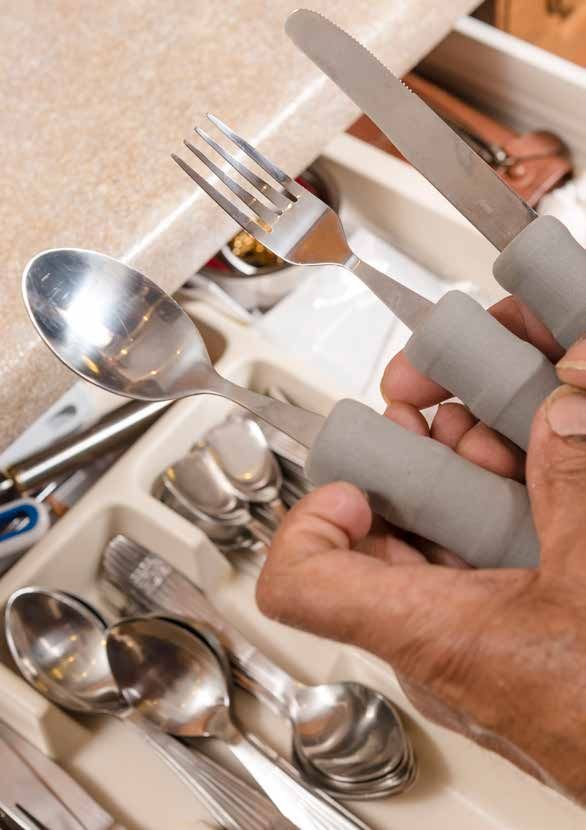
If you have Parkinson’s,
making some simple changes
to your eating and drinking
habits may help you manage
your symptoms effectively
and should improve your
general health and wellbeing.

This booklet provides some basic
healthy eating information, to help
you maintain a balanced diet and
a healthy weight. It also looks at the
diet issues related to Parkinson’s and
what you can do to manage these.
Contents

Eating a balanced diet ....................................................................................5
What should I eat?..............................................................................................5
Understanding the food groups......................................................................5
Can I drink alcohol?.............................................................................................9

Maintaining a healthy weight......................................................................11
I am underweight or losing too much weight,
what should I do?................................................................................................11
I am overweight, what can I do?....................................................................11

Constipation........................................................................................................15
How does fibre help?..........................................................................................15
How to increase your fibre intake..................................................................15
How much fluid should I drink?.......................................................................16

Eating and swallowing difficulties.............................................................17
What can I do to help with swallowing?......................................................18
Should I try a different diet?............................................................................18
Difficulties with fluids.........................................................................................20
Tube feeding..........................................................................................................20

Parkinson’s medication and your diet.....................................................21
When should I take my Parkinson’s medications?....................................21
How can protein affect my medication?.....................................................21
Side effects of Parkinson’s medications.......................................................22
Indigestion and heartburn................................................................................22

Vitamins, food supplements and special diets....................................25
    Calcium and vitamin D.......................................................................................25
    Antioxidants...........................................................................................................25
    Special diets...........................................................................................................27

    Low blood pressure..........................................................................................29

    Food shopping and preparation.................................................................31

    Dishes and cutlery...........................................................................................33
    Should I buy special utensils?..........................................................................33

    More information and support...................................................................35

4
Eating a balanced diet
What should I eat?                      Understanding the
If you have Parkinson’s there is no     food groups
specific diet that you should follow    Starchy (carbohydrate) foods
to the letter. But you should find it
                                        Try to base your main meals on
helpful to maintain as healthy a diet
                                        starchy foods. These contain fibre,
as you can. Generally, the rules for
                                        calcium, iron and B vitamins, and
following a healthy diet are:
                                        will give you healthy calories.
•• eat a varied diet                    Examples of starchy foods are
                                        bread, potatoes, rice, yams,
•• eat healthy portions of foods        chapattis (flatbread), pasta,
•• eat the right balance of             noodles, oats, cornmeal, crackers
   food groups                          and breakfast cereal.

•• eat regular meals                    Some people think that starchy
                                        foods are fattening, but they are
•• drink plenty of fluid
                                        actually low in calories, as long as
•• eat at least five portions of        extra fat is not added to them, for
   fruit and vegetables a day           example by frying potatoes in oil or
                                        buttering bread. They are also filling,
Eating a balanced diet will improve     which makes you less likely to snack
your health and may help to ease        between meals. A third of your plate
various problems you may be             should be made up of starchy foods.
experiencing, including constipation,
low mood, reduced bone density          Eating wholegrain versions of
and weight changes.                     starchy food, such as wholemeal
                                        bread, can keep you fuller for longer
                                        and help ease constipation. This is
                                        a common problem among people
                                        with Parkinson’s – see page 15 for
                                        more information.
                                                                                  5
Dairy                                 •• oily fish, such as salmon, tuna,
    Try to aim for three servings of milk    sardines and mackerel
    or dairy foods every day to get the •• breakfast cereal
    calcium you need. A serving is:
                                          •• eggs
    •• a third of a pint of milk
                                          •• meat
    •• one small pot of yoghurt
                                          •• some powdered milks
    •• a small matchbox-sized portion
       of cheese                          •• fortified margarines and spreads
    If you’re trying to keep your weight    People with Parkinson’s may have
    down, reduced fat, light and diet       lower levels of vitamin D, which
    versions of cheese, milk and yoghurt    may be related to reduced bone
    are available.                          density and an increased risk of
                                            fractures. So it is important to
    If you don’t like dairy, there are      get your levels tested by your
    non-dairy sources of calcium,           GP. See page 25 for more details
    including green leafy vegetables (for   on vitamins and minerals.
    example spinach), tinned fish with
    soft bones (like sardines), pulses
    like baked beans and chickpeas,
                                            Meat, fish and vegetarian
    dried fruit, and nuts and seeds         or vegan alternatives
    like tahini paste (used in hummus). Try to have two to three servings
                                        each day. This is the main source of
    Having Parkinson’s can make your    protein in your diet and will help you
    bones more fragile and increase     maintain your muscles and strength.
    your risk of bone fractures if you  Good sources include meat, white
    fall. Vitamin D helps to keep your  or oily fish, eggs, beans, pulses and
    bones healthy and is needed to help nuts. Lamb, beef, eggs, beans and
    your body absorb calcium. Most of pulses are also good sources of iron.
    the vitamin D you need comes from
    the effect of sunlight on your skin A healthy diet should contain two
    but what you eat can also help,     portions of fish a week. One portion
    especially during the winter.       a week should be ‘oily’. If you don’t
                                        eat fish, you can try including
    Good sources of vitamin D are:      linseeds, soybeans, walnuts and
                                        their oils in your diet.

6
One portion of each is:               portions of differently coloured
                                      fruit and vegetables each day.
•• 3 oz (80g) of meat or the size     These can be fresh, frozen, canned
   of a deck of cards                 or dried. For tips, recipes and
•• 3–4 oz (80–110g) of fish or        advice, visit the NHS website
   the size of a cheque book          www.nhs.uk/livewell/5aday

•• three heaped tablespoons of        One portion of fruit and
   pulses (beans or lentils)          vegetables is:
•• two eggs                           •• one banana
•• two tablespoons of nuts            •• two satsumas, kiwis, plums
                                         or clementines
Red meat is a good source of
protein, vitamins and minerals,       •• two large tablespoons of fruit
but you should avoid eating too          salad or stewed fruit
much red or processed meat.           •• one tablespoon of dried fruit
Stick to one portion a day, and
eat a variety of other high protein   •• one small glass of fruit juice
foods, such as nuts and pulses.
                                      •• one dessert bowl of salad
Fruit and vegetables                  Remember, potatoes are a starchy
Fruit and vegetables are a good       food, so don’t count towards one
source of vitamins, minerals and      of your five portions of fruit and
fibre. Try to have at least five      vegetables a day.

                                                                           7
Fatty and sugary foods                  If you have bladder problems,
    Fatty and sugary foods, such            it is important not to cut down
    as cakes, biscuits, and pastries,       on the amount of fluid you drink.
    contain lots of calories, fat and       It is likely to lead to other problems,
    sugar. Try to reduce how often          such as dehydration, constipation
    you eat them, especially if you         or worsened postural hypotension
    are trying to lose weight.              (see page 29).

    If you have high cholesterol or         Find out more: see our booklet
    are diabetic, please seek further       Looking after your bladder and
    advice from a dietitian.                bowels when you have Parkinson’s.

    Fluid                                   There are other ways to increase
    It is very important to drink plenty    your fluid intake, including:
    of liquid. Try to drink six to eight
                                            •• eating juicy fruits, such as melon,
    mugs or glasses each day. Any fluid
                                               watermelon, grapefruit, grapes
    counts towards this, including water,
                                               and berries
    fruit juice, milk and squash.
                                            •• having soups, custards, jellies
                                               and ice lollies
                                            Some people with Parkinson’s have
                                            swallowing problems and may need
                                            to thicken drinks to make the liquid
                                            move more slowly in the mouth.
                                            Sometimes this makes it harder
                                            for people to drink enough, which
                                            can lead to dehydration. If you’re
                                            experiencing problems eating or
                                            swallowing you should seek a referral
                                            to a speech and language therapist.
                                            See page 17 for more details.

                                            Salt
                                            Lots of people have too much salt
                                            in their diet. Extra salt often comes
                                            from processed food, such as soups,
                                            sauces, bread and ready meals.
8
One way you can eat less salt is to       For more information low blood
 stop adding extra salt during cooking     pressure and Parkinson’s see
 or at the dinner table. Try using herbs   page 29.
 and spices for flavour instead.
                                           Can I drink alcohol?
 You can look at the labels of food
 to assess how much salt it contains.      Generally, unless your GP, specialist
 The diagram above shows how               or Parkinson’s nurse have advised
 much is too much, per 100g.               you not to drink alcohol, a small
                                           amount, such as a glass of wine
 Some people with Parkinson’s may          or a beer every now and again,
 have problems with low blood              should not cause any problems.
 pressure (also called hypotension).
 It can be a symptom of Parkinson’s        People can respond to alcohol
 or it can be a side effect of the         in different ways, so talk to your
 drugs used to treat the condition.        medical professional if you have
 Salt causes your body to retain           any concerns. Remember to take
 water, so reducing your intake            into account any medication you
 can lead to decreases in your blood       may be taking for other conditions.
 pressure. So, if you have low blood       Alcohol can also cause problems with
 pressure, reducing your salt intake       low blood pressure (see page 29).
 may not be advisable. If you are
 concerned, speak to your GP,              If you are trying to lose weight,
 specialist or Parkinson’s nurse.          remember that alcohol is high
                                           in calories.
XXXX                                                                               9
Men and women should not drink     Keep at least two days each
 more than 14 units of alcohol      week free of alcohol and avoid
 a week. It’s important to spread   binge drinking.
 out alcoholic drinks throughout
 the week.                          Here are a few examples of how
                                    many units are in an average
                                    alcoholic drink:

10                                                          XXXX
Maintaining a healthy weight
It is important for everyone to between your meals. It’s
maintain a healthy weight, as being important to try to eat every
overweight or underweight can two to three hours during the day.
affect your health. You can find out
more about what your healthy body •• Instead of snacks, try having
weight is by speaking to your GP. a milkshake, malted drink or
smoothie. These may be used
to supplement your usual diet.
I am underweight or losing But, if you find you are replacing
too much weight, what your meals with these, it is
should I do? important to seek help from
If you are underweight or have a dietitian.
difficulty putting weight on, it may
be because of the side effects of If you are finding it difficult to
Parkinson’s medication or difficulties maintain your weight or reach a
with chewing or swallowing. It may healthy weight, your GP, specialist
also be due to practical problems, or Parkinson’s nurse can refer you
such as food shopping, preparation to a dietitian. They may recommend
or keeping your food hot while you tailored changes to your diet and
are eating. special high-calorie products that
are available on prescription.
You may find the following useful:
I am overweight, what
•• Make the most of adding extras
to foods, such as extra cream,
can I do?
butter, oil, or honey where you It is easy to gain weight if you
can. These will make the food become less active but are eating
more energy dense and tasty. the same amount of food.
•• Try to have three meals a If you are trying to lose weight,
day and two to three snacks here are some tips to start with:
11•• Don’t eat fried food regularly – Impulsive behaviour is when a
grill, dry fry, microwave, bake, person can’t resist the temptation
steam, poach or boil, without to carry out certain activities.
adding fat or oils. Instead, use These are often activities that give
marinades adding extra herbs, an immediate reward or pleasure,
stock and spices for flavour. such as gambling, hypersexuality
and overeating. So, someone may
•• Use skimmed or semi-skimmed eat large amounts of food in a
milk instead of full fat. short period of time because they
•• Cakes, sweet biscuits and can’t control their appetite, and
pastries all have lots of sugar they therefore gain a lot of weight.
and fat in them, so try to cut
down on treats. Try eating If you think you’re experiencing
healthier snacks like diet this behaviour, speak to your GP,
yoghurts, crumpets or teacakes. specialist or Parkinson’s nurse. We
don’t advise anyone to stop taking
•• Use ‘sugar-free’, ‘no added or to change their Parkinson’s
sugar’ or ‘low calorie’ drinks medication without the advice of
and use artificial sweetener their specialist or Parkinson’s nurse.
instead of sugar. Any changes have to be made slowly
If you have other health conditions and gradually, and should always
as well as Parkinson’s, such as be carried out and reviewed by a
circulation problems, high cholesterol, specialist, because of the risk of side
heart disease or diabetes, and are effects and withdrawal symptoms.
concerned about being overweight,
speak to your GP, specialist, Someone experiencing impulsive
Parkinson’s nurse or ask to see or compulsive behaviour may
a registered dietitian. not realise they have a problem.
So it’s important that your carer
(if you have one) is aware of
Parkinson’s and weight gain
these side effects.
Parkinson’s medication does not
tend to make people gain weight, Find out more: see our
but a small number of people may
information sheet Impulsive
experience impulsive and compulsive
and compulsive behaviour
behaviour. This is a side effect of
some Parkinson’s medication, in Parkinson’s.
particularly dopamine agonists
and, in some cases, levodopa.
12“ I am very overweight. I never had any problems with
weight until I was diagnosed six years ago, and it is simply
a matter of comfort eating. My neurologist has told me
not to lose weight, as it will be an advantage to me later.
But my worst Parkinson symptom is permanent curling
over of my toes, which makes walking hard work. My toes
and weight combined make it ever harder to walk and take
exercise of any kind, and I worry that this is damaging my
general health.
But in the last few weeks, my weight has stabilised and
I am no longer gaining. I think that is mainly because I have
become busier socially outside the house, so I don’t eat
through boredom or inactivity as I was before. That has
encouraged me to look for other exercise possibilities.
I’m hoping to join a friend on some short walks, and maybe
a dance class!
”
Mosie, diagnosed in 2010
Deep brain stimulation If you are considering surgery, talk
and weight gain to your healthcare professional about
Some people with Parkinson’s being referred to a dietitian, ideally
may put on weight quickly after before you have surgery.
having deep brain stimulation,
a surgery sometimes used to Find out more: see our booklet
treat the condition. Surgery for Parkinson’s.
1314
Constipation
Some people with Parkinson’s may          •• eating high-fibre varieties of
experience constipation. This can            foods, such as wholemeal bread,
be helped by:                                pasta or brown rice
•• drinking more fluid                    •• altering recipes to use some
                                             wholemeal flour instead of
•• exercising                                all white
•• eating more fibre-rich foods           •• choosing a breakfast cereal
                                             containing wheat, wheatbran
How does fibre help?                         or oats, such as Weetabix,
Fibre absorbs fluid as it moves              porridge or bran flakes
through your bowel, forming a soft        •• eating more vegetables. They
stool that can be passed more easily.        can be raw or cooked, fresh
It is very important to increase your        or frozen. Try using more peas,
fluid intake if you increase the fibre       beans or lentils
in your diet, because too much fibre
without enough fluid can increase         •• eating more fruit. It can be fresh,
constipation. A dietitian can give           stewed, tinned or dried. Try
you more information and advice.             bananas, oranges or prunes
                                          •• gradually introducing ground
How to increase your
                                             linseeds. You can add one teaspoon
fibre intake                                 to cereals, salads or yoghurts to
Fibre is found in cereals, seeds, nuts,      start with and increase this over
fruit, vegetables and pulses, such as        time to one tablespoon. If you do
peas, beans and lentils. To increase         this, make sure you drink an extra
your fibre intake you can try:               glass of fluid a day, otherwise it
                                             won’t work and may make
                                             constipation worse

                                                                                   15
When increasing your intake of fibre, it is important to do so gradually to avoid bloating or flatulence (wind). Aim to introduce one new high-fibre food every three days. Some people may need to take laxatives for regular bowel movements and minimal straining. You can discuss this further with your GP, specialist or Parkinson’s nurse. How much fluid should I drink? It is essential to drink plenty throughout the day, to help the fibre do its work. Try to drink six to eight mugs or glasses every day. Any fluid is suitable, such as water, fruit juice, milk, tea, coffee or squash. See page 8 for more about fluids. Find out more: see our booklet Looking after your bladder and bowels when you have Parkinson’s. 16
eating and swallowing
difficulties
Some people with Parkinson’s may         •• Not eating enough to maintain
find they have problems when eating         good general health (known
and swallowing.                             as malnutrition).

If you find it difficult to swallow,     •• Not drinking enough, which can
you may:                                    lead to other medical issues, such
                                            as constipation or dehydration.
•• cough when eating or drinking
                                         •• A rarer occurrence is food blocking
•• find it difficult to keep food or        the airway and stopping your
   drink in your mouth                      breathing (known as asphyxiation).
•• find it hard to start to swallow      It is very important to talk to your
   so that food goes round and           GP as soon as you can if you have
   round in your mouth                   problems with swallowing, as they
•• find that it takes longer to chew     may refer you to specialists who
   your food                             can offer help.

•• have difficulty opening your mouth    A speech and language therapist,
There are four main problems that        who works with people with
are linked to swallowing:                swallowing problems, can offer
                                         information and suggest strategies
•• Silent aspiration, which is when      to overcome some of the challenges
   food or liquid from the mouth         you are experiencing. In most areas,
   enters the lungs rather than          you will be able to contact a speech
   the stomach, without any of the       and language therapist through the
   usual signs of coughing or choking.   speech and language therapy
   This can lead to a chest infection,   department at your local hospital.
   known as aspiration pneumonia.        You may also be referred by your
                                         GP, specialist or Parkinson’s nurse.

                                                                                  17
•• Take your time and eat in
a comfortable, quiet place.
•• If you feel you are taking too long
and food is getting cold, consider
eating smaller, more frequent
meals and snacks, or food that
is easier to eat.
•• You can buy heated plates to
keep food warm for longer or
consider serving smaller portions
so that a second portion can be
kept warm or reheated if it’s safe
to do so.
•• Try eating sitting upright in
your chair.
•• Try planning your meals for when
your medication is working.
Before an assessment, you may
Avoid trying to eat large meals
find it helpful to keep a diary of
when you are ‘off’.
when problems with swallowing
happen and which foods you find •• If you wear dentures try to
most difficult to eat. ensure they fit comfortably.
Ask for a review by your dentist
Find out more: see our if you are concerned.
information sheets Monitoring
•• Try to eat when you are less tired,
your Parkinson’s and Speech and this may mean moving your main
language therapy and meal to lunchtime rather than in
Parkinson’s. the evening.
What can I do to help
Should I try a different diet?
with swallowing?
You may find certain foods difficult
Make sure you are comfortable
to chew or swallow. If swallowing is
at meal times. The following
becoming difficult, seek advice from
suggestions may help make it
a speech and language therapist, via
easier to eat:
your GP or a registered dietitian.
18“ Eighteen months ago my mum, Jean, was given
three or four days to live. We kept her comfortable,
warm, and well-hydrated. We also offered her jelly
and ice cream, which she took in tiny portions. Since
then we’ve provided tiny portions of home cooked
foods, eg soups bulked out with cream and buttered
crumbles of bread, mashed poached salmon and potato,
well-buttered, lightly scrambled eggs made with cream
and so on. We used a ramekin dish half full of food but
that has slowly increased to a reasonable adult portion.
I marvel at my Mum and her ability at 90 to try different
foods in a variety of combinations. I truly believe that her
willingness to try, taste, listen, and explore foods have
provided a boost and added interest to her life.
Joan, whose mother has Parkinson’s
”
They may suggest changing the You may find the following helpful:
texture of the food you eat – for
example, food that is able to be •• Avoid hard, dry or crumbly foods.
mashed with a fork, food that is •• Meat that is tough or chewy
pre-mashed or food that has can be difficult to swallow. Try
been puréed. Semi-solid foods using a gravy or sauce, chop
are usually easier to swallow meat up and consider different
than foods with mixed textures cooking methods, such as
or very hard or dry foods. casseroling, as this makes
meat more tender.
A dietitian can then advise you
on the type of foods that may •• Having a drink with your meal
be available in these forms so makes chewing and swallowing
you can eat a balanced diet. easier.
19`
•• Good posture and a comfortable A dietitian can discuss what PEG
position while eating will help feeding involves, show you a tube
with swallowing. and discuss your feeding options to
help you make an informed decision.
•• Try taking smaller mouthfuls.
To make sure your wishes are taken
Difficulties with fluids into consideration, you may wish
Sometimes people with Parkinson’s to talk to your healthcare team
have problems swallowing fluids. and your family about whether
you would want to be tube fed a
Following an assessment, a speech
long time before you may need it.
and language therapist may suggest
adding thickening agents to drinks.
Find out more: see our
These are available on prescription
information sheet Eating,
from your GP. Your dietitian can
swallowing and saliva control
suggest fluids that thicken well
in Parkinson’s.
to help maximise your fluid intake.
Tube feeding
If swallowing becomes very
difficult or you are not able to
eat enough to maintain a healthy
weight, your specialist, Parkinson’s
nurse, speech and language
therapist, or dietitian may suggest
you consider tube feeding.
Tube feeding usually involves a small
tube, called a PEG (Percutaneous
Endoscopic Gastrostomy) tube,
being inserted into your stomach.
All or some nutrition, hydration and
medication is then delivered directly
into your stomach through the tube.
PEG tubes can normally be easily
cared for at home or in a care
home setting.
20`
Parkinson’s medication
and your diet
When should I take my How can protein affect
Parkinson’s medication? my medication?
When you take your Parkinson’s In some people, protein (which
medication should always be is found mainly in meat, fish, eggs,
discussed with your GP, specialist cheese, yoghurt, nuts, beans and
or Parkinson’s nurse. pulses) may interfere with the
effects of their levodopa medication.
Some people with Parkinson’s may Therefore it is generally advised that
feel sick after taking medication, you should take your Parkinson’s
especially if they take it on an medication at least 30 to 45
empty stomach. Having a snack, minutes before meals.
such as a plain cracker or biscuit,
at the same time as taking your Some people with Parkinson’s have
medication can help ease this side told us that their medication is less
effect. Or you may find taking affected by some milk alternatives,
medication with plenty of water such as rice milk, although there is
can help to reduce nausea. no actual evidence to support this.
Your GP can also prescribe anti- You may also find it helpful to:
sickness tablets if you do feel sick
•• reduce the amount of protein
after taking your medication.
you eat earlier in the day.
This may help to increase
Talk to your GP, specialist or
the response your body has
Parkinson’s nurse if you have
to the medication and avoid
difficulty swallowing your medication.
unpredictable motor fluctuations
It may help to take your medication
with a cold drink, such as water, •• eat your main protein meal in
squash or fruit juice, or with yoghurt. the evening, as a slower response
You may also benefit from a referral to medication may not be as
to a speech and language therapist. important as at other times
of the day 21If you do wish to review the timing Indigestion and heartburn
of your protein intake, you should Antacids, which are used to relieve
talk to your GP, specialist or
heartburn or indigestion, should
Parkinson’s nurse, or ask to see
not be taken at the same time
a registered dietitian.
as other drugs. They may have
You should not stop eating protein an effect on the absorption of
altogether as it is vital to help your your Parkinson’s medication.
body renew itself and fight infection.
Reducing protein may cause If you do experience heartburn or
dangerous weight loss. indigestion, you should speak with
your GP, specialist or Parkinson’s
Side effects of Parkinson’s nurse, who can advise on more
medications appropriate treatments.
We can’t list all the possible side
There are other things you can do
effects of all Parkinson’s drugs in
to reduce heartburn, such as giving
this booklet, but some Parkinson’s
up smoking if you are a smoker,
medication may cause:
eating smaller more frequent meals
•• nausea and vomiting rather than three large meals a day
and avoiding eating just before bed.
•• diarrhoea or constipation
You may also find that certain foods
•• low blood pressure make your heartburn worse, so it
may help to avoid alcohol, coffee,
•• dry mouth
chocolate, tomatoes, fatty foods
•• tiredness and spicy foods.
These side effects may interfere
with your appetite, which may
lead to you eating and drinking
less. A dietitian may be able to
advise you on how to manage
these symptoms, especially if they
interfere with your normal appetite.
22“ I am not a very good cook but I do recommend
experimenting. My husband takes Sinemet every two
hours, so it is impossible to leave an hour either side of the
tablets! But we have found that different types of protein
affect the meds in different ways. Eggs and vegetarian
products, such as Quorn, seem to interfere less.
If we are staying in, we eat whatever we fancy and
put up with the shuffling! But if we are going out, we
eat a meal before setting off with no protein, for
example veg soup, pasta with a vegetable sauce, a
sliced tomato and lettuce sandwich, or baked potato
with butter and a mixed salad. It’s not very exciting
but it does mean the meds work.
If we are eating out with friends or family, we use
dispersible Madopar before and after eating in addition
to the usual Sinemet regime. And we try to choose the
option with the least protein, ie not a big steak!
I can only recommend experimenting to see what
works for you.
”
Val, whose husband has Parkinson’s
23` 24
`

    vitamins, food supplements
    and special diets
    Eating a well-balanced diet will      Calcium and vitamin D
    give you a good amount of vitamins    Osteoporosis is a condition that
    and minerals. For many vitamin        affects the bones, causing them to
    and mineral supplements, there’s      become weak and fragile and more
    no clear scientific evidence they     likely to break. It is often diagnosed
    have any health benefits (although    in people with Parkinson’s. It has been
    there is evidence for the benefits    suggested that increased severity
    of vitamin D, see below).             of Parkinson’s symptoms is linked
                                          to reduced bone density.
    So, if you feel you need more
    of a particular vitamin or mineral,   Some experts suggest that people
    it is advisable to try to eat more    with Parkinson’s should be taking
    of the foods containing it, rather    calcium and a vitamin D supplement
    than to buy expensive vitamin         daily, especially those who are bed/
    and mineral supplements.              house-bound or immobile. This is
                                          because most of our vitamin D
    You also need to be aware that        comes from exposing our skin
    some vitamins, when taken in large    to the sun.
    doses, can have side effects. Some
    supplements, for example vitamin      Your levels of calcium and vitamin
    B6 and iron supplements, may also     D should be assessed in the early
    affect the absorption of your         stages of your condition to prevent
    Parkinson’s medication.               or lower the risk of poor bone
                                          health. Speak to your health
    Before purchasing any ‘over           professional if you think you may
    the counter’ mineral and vitamin      need to take calcium or vitamin D.
    supplements from chemists or
    health food shops, consult your
                                          Antioxidants
    GP, specialist, Parkinson’s nurse
    or registered dietitian for advice.   Antioxidants are chemicals produced
                                          by your body or taken from your
                                                                                    25
diet that work to stop the damaging Currently, there is no evidence that
effects of free radicals. Free radicals antioxidants will slow the progression
are damaging molecules that can of Parkinson’s or improve symptoms.
be produced by normal chemical Providing you are eating a well-
reactions in your body or absorbed balanced diet that includes lots of
from outside sources (such as different fruit and vegetables your
cigarette smoke, pollution or antioxidant needs will be met.
spending too long in the sun).
Taking excessive amounts of
Free radicals only last in your antioxidant supplements can have
body for a very short time, but a negative effect on your health
can damage cells during that time. and wellbeing. You should speak
Antioxidants keep cell damage to your GP, specialist, Parkinson’s
under control, trapping and nurse or dietitian before taking
neutralising free radicals. any supplement.
26Co-enzyme Q10 •• Is the health information
Co-enzyme Q10 is naturally present consistent with other material
in very small amounts in a wide you have read?
range of foods, such as offal, beef,
•• Does the website give information
soya oil or oily fish, and has strong
about both the benefits and risks
antioxidant properties. There is
of potential treatments?
currently no evidence to recommend
co-enzyme Q10 as a treatment •• Is the information recent?
for Parkinson’s. If you wish to take
additional co-enzyme Q10, talk •• Are they asking for money
to your healthcare professional first. to access diet plans or to take
part in research? (Be wary of
any websites asking for money.
Special diets Remember that you will never
There are many websites and other be asked to pay to take part
sources that give dietary advice in research.)
or make claims about diets that
are suitable for people with health It is important for anyone who
conditions. We do not recommend is considering trying any special
that you follow this advice without diet to discuss this first with
reliable medical evidence that a health professional.
it works.
If you want to know whether a
health information website is reliable,
ask yourself the following questions:
•• Who has produced the content?
Is it owned or sponsored by
a reputable organisation? (Most
sites will have an ‘About us’ or
‘About this site’ section where you
can get more information about
the site and who has set it up.)
•• Are contact details available
for the website owners?
(Be wary if there is no way
of contacting them.)
2728
low blood pressure
People with Parkinson’s can              •• when you are dehydrated. A
experience low blood pressure,              lack of fluids and salt in your
particularly postural hypotension.          body makes it harder for your
Postural hypotension (also known            autonomic nervous system to
as orthostatic hypotension) is a large      regulate your blood pressure.
drop in blood pressure when standing        Drinking alcohol can cause
or changing position. This can be           dehydration and that can
a symptom of Parkinson’s or may             disturb the control of blood
be caused by the drugs used to treat        pressure, so try to drink water
Parkinson’s, for example levodopa.          in between alcoholic drinks

Common symptoms of low blood             •• if you are constipated (a
pressure include:                           common problem in people
                                            with Parkinson’s), sometimes
•• feeling dizzy or light-headed            the effort of straining may
   (especially when you stand               cause you to feel faint
   up after sitting or lying down)
                                         If you have low blood pressure, your
•• blurred vision                        symptoms may be managed by:
•• feeling weak                          •• avoiding large meals
•• feeling muddled or confused           •• reducing your carbohydrate
                                            intake, especially sugary foods
These symptoms are most likely to
happen when there is an increased        •• increasing the amount of salt
demand for blood, such as:                  in your diet
•• after meals – the stomach             •• increasing your fluid intake,
   and intestines need more blood,          particularly caffeine drinks. You
   which lowers blood pressure              may also find it helpful to have
   in other parts of the body               a glass of water before getting
                                            up (for example, out of bed)
                                                                                29
•• decreasing how much alcohol
you drink
For more advice on how to manage
these symptoms speak to your
GP, specialist, Parkinson’s nurse
or dietitian.
Find out more: see our
information sheet Low blood
pressure and Parkinson’s.
30food shopping and preparation
The way you buy, store, prepare •• If you don’t already have one,
and cook food may need a little consider buying a microwave.
advance planning. They are very versatile and take
only a few minutes to cook meals
Here are some tips if you find and heat up drinks.
shopping or cooking a challenge:
•• If you like a nap in the afternoon,
•• Plan meals in advance, making keep a flask on a tray so you can
a shopping list of all the prepare a drink when you wake
ingredients you need. up. Drinking hot drinks regularly
helps to keep you warm.
•• When planning meals, think
about how long you can stand at •• Contact your Parkinson’s local
a cooker without becoming tired. adviser to find out more about
shopping services or volunteers
•• At supermarkets, look out in your area.
for special trolleys designed
to make shopping easier for •• You may be entitled to a meals
people with disabilities. on wheels service or home
delivery of frozen meals.
•• Consider buying ready prepared Contact your local social services
foods, such as frozen vegetables or a social work department.
(they are just as nutritious as
fresh) and tinned fish, meat or An occupational therapist can give
beans. Ready meals can save you more advice on all aspects
time, your energy, gas, electricity of food shopping and preparation,
and food wastage. including kitchen and shopping aids.
•• Keep a wide supply of food in
Find out more: see our
your store cupboard and freezer.
information sheet Occupational
therapy and Parkinson’s for
referral details.
3132
dishes and cutlery
Should I buy special utensils?            •• Foam sleeves, which can be placed
There are many types of adapted              over existing cutlery handles to
utensils for eating and drinking             make the item easier to hold.
available that may be worth
                                          Cups and mugs
considering. An occupational
                                          If you have a tremor, you may
therapist can advise you on
                                          find special mugs will help you
the right equipment for your
                                          to prevent spills when drinking.
needs. Make sure you speak to
                                          You may find the following helpful:
an occupational therapist before
buying any expensive items as they        •• Two-handled cups can help
can also advise you on any grants            improve grip and reduce the
or loans that may be available.              chance of spills. Special ‘tumble-
                                             not’ mugs are available with wide,
They may also advise you on:                 non-slip bases and tall necks.
                                          •• Using a sip or sports cup with a lid
Cutlery
                                             can stop liquids from spilling. If the
Special cutlery is available in various
                                             sip cup is being used for hot drinks,
shapes and sizes. These utensils can
                                             it’s important to make sure that
be useful if you have reduced grip,
                                             the cup is made out of a material
weakness or tremor. You may find
                                             that won’t soften or melt.
the following helpful:
                                          •• Nosey cups have a low cut-out
•• Cutlery with the combined
                                             opposite the position of the mouth
   features of a knife and fork,
                                             when drinking. The cut-out allows
   or an all-in-one fork and spoon.
                                             the person drinking to tilt and drain
•• Special handles for cutlery               the cup more easily with limited
   that are extra-large, easy-grip           neck movement. These cups are
   (moulded rubber), extra-light,            made of plastic so are only suitable
   weighted or curved.                       for cold drinks.

                                                                                      33
“
•• A non-slip mat made from
There were several things a special tacky material called
Dycem can be placed under
that I found helpful to keep a plate or bowl to stop it from
my mother eating, drinking moving around while eating.
and interested in food,
Equipment
especially when swallowing You can also buy items to help
became an issue. I bought with opening jars and bottles.
her a set of ‘cut away’ cups,
Find out more: see our booklet
which you put in a two-
Daily living equipment for people
handled, cup-holder base with Parkinson’s.
that was really lightweight.
This meant she could
manage hot and cold drinks
and didn’t have to tip her
head back to drink.
Anne, whose mother
had Parkinson’s ”
Plates
Several special plates are available
that help if you find it takes a long
time to eat or if you have trouble
getting food on a fork or spoon.
The following may be helpful:
•• A ‘stay-warm plate’ may be useful
if it takes you a long time to eat.
•• High-lipped plates are available
that reduce spills and make
it easier to get food on a fork
or spoon. You can also buy plate
guards, that clip on to your
own plates.
34more information
and support
For advice on where to obtain Information and support from
specialised utensils, please contact: Parkinson’s UK
You can call our free confidential
Disabled Living Foundation helpline for general support and
0300 999 0004 information. Call 0808 800 0303
(10am–4pm, Monday–Friday) (calls are free from UK landlines
info@dlf.org.uk and most mobile networks) or
www.dlf.org.uk email hello@parkinsons.org.uk
Parkinson’s nurses Our helpline can also put you
Parkinson’s nurses provide expert in touch with one of our local
advice and support to people with advisers, who provide one-to-one
Parkinson’s and those who care for information and support to anyone
them. They can also act as a liaison affected by Parkinson’s. They can
between other health and social also provide links to local groups
care professionals to make sure and services.
your needs are met.
Our website has information about
Parkinson’s nurses may not be your local support team and how
available in every area, but your to contact them at parkinsons.
GP or specialist can give you org.uk/localtoyou. You can find
more details on local services. details of our local groups and your
nearest meeting at parkinsons.
You can find out more at org.uk/localgroups. You can also
parkinsons.org.uk/nurses visit parkinsons.org.uk/forum
to speak with other people in
similar situation on our online
discussion forum.
35Thank you to everyone who contributed to or reviewed this booklet: Alia S. Torreadrado, Community Neuro Rehabilitation Dietitian, Horsham hospital Karen Green, Senior Specialist Dietitian (Neurosciences), Nutrition and Dietetics, National Hospital for Neurology and Neurosurgery, London Kay Searles, Senior Community Dietitian, New Cross Hospital, Wolverhampton Sally Darby, Specialist Dietitian, Southmead Hospital, North Bristol NHS Trust, Bristol All were working on behalf of the Neurosciences Specialist Group of the British Dietetic Association. Thanks also to our information review group and other people affected by Parkinson’s who provided feedback. All of the photographs in this booklet feature people affected by Parkinson’s, health and social care professionals involved in caring for people with Parkinson’s and Parkinson’s UK staff. Thank you to everyone involved for letting us use their photograph. 36
Diet and Parkinson’s (B065/2016)
Do you have any feedback about this information? Your comments
will help us ensure our resources are as useful and easy to understand
as possible. Please return to Information Content team,
Parkinson’s UK, 215 Vauxhall Bridge Road, London SW1V 1EJ,
or email publications@parkinsons.org.uk. Thank you!
1. Please choose the option that best fits you.
I have Parkinson’s and was diagnosed in
I care for someone with Parkinson’s
I have a friend or family member with Parkinson’s
I’m a professional working with people with Parkinson’s
Other (please specify)
2. Where did you get this information from?
GP Specialist
Parkinson’s nurse Parkinson’s UK local group
Parkinson’s UK local adviser Ordered directly from us
Call to the helpline
Other (please specify)
3. Has it answered all your questions?
Yes, completely Not sure
Yes, mostly Not at all
Partly
4. How easy was it to understand?
Very easy Quite difficult
Easy Very difficult
Not sure
5. Has it helped you manage your condition better, or make
choices that have improved your life in some way?
It helped a lot It didn’t help
It helped a little It made things worse
No change
6. What is your ethnic background?*
Asian or Asian British Mixed
Black or Black British White British
Chinese White other
Other (please specify)
*We ask about your ethnicity to ensure our information is reaching a broad range of people.
However, this question is optional.
Want to hear more from us?
I would like a response to my feedback
I would like to be a member of Parkinson’s UK
I’m interested in joining the Information review group, to offer
feedback on Parkinson’s UK information
If you’ve answered yes to any of these options, please complete
your details below.
Name
Address
Email
Telephone
How would you prefer us to contact you?
Email Post Phone
We will not pass on your details to any other organisation or third party.
To find out more, read our privacy policy at parkinsons.org.uk/termsandconditions
Our information
All of our most up-to-date information is available at
parkinsons.org.uk/informationsupport
If you’d prefer to read one of our printed leaflets or booklets,
find out how to place an order at parkinsons.org.uk/
orderingresources or by calling 0300 123 3689.

We make every effort to ensure that our services provide current,
unbiased and accurate information. We hope that this will add to any
professional advice you receive and help you to make any decisions you
may face. Please do continue to talk to your health and social care team
if you are worried about any aspect of living with Parkinson’s.

If you’d like to find out more about how we put our information
together, including references and the sources of evidence we use, please
contact us at publications@parkinsons.org.uk

Can you help?
At Parkinson’s UK, we are totally dependent on donations from individuals
and organisations to fund the work that we do. There are many ways that
you can help us to support people with Parkinson’s.

If you would like to get involved, please contact our Supporter
Services team on 0800 138 6593 or visit our website at
parkinsons.org.uk/donate. Thank you.

                                                                            39
Every hour, two people in the UK are told they have Parkinson’s – a brain condition that turns lives upside down, leaving a future full of uncertainty. Parkinson’s UK is here to make sure people have whatever they need to take back control – from information to inspiration. We want everyone to get the best health and social care. So we bring professionals together to drive improvements that enable people to live life to the full. Ultimately, we want to end Parkinson’s. That’s why we inspire and support the international research community to develop life- changing treatments, faster. And we won’t stop until we find a cure. Together we can bring forward the day when no one fears Parkinson’s. Parkinson’s UK 215 Vauxhall Bridge Road London SW1V 1EJ Free confidential helpline 0808 800 0303 (Monday to Friday 9am–7pm, Saturday 10am–2pm). Interpreting available. NGT Relay 18001 0808 800 0303 (for use with smart phones, tablets, PCs and other devices). For more information see www.ngts.org.uk hello@parkinsons.org.uk parkinsons.org.uk Order code: B065 Last updated June 2016. We review our information within three years. Please check our website for the most up-to- date versions of all our information. © Parkinson’s UK, March 2018. Parkinson’s UK is the operating name of the Parkinson’s Disease Society of the United Kingdom. A charity registered in England and Wales (258197) and in Scotland (SC037554).
You can also read


