DIGITAL MENTAL HEALTH - Personal Project Journal Design Innovation and Environment Design Glasgow School of Art
←
→
Page content transcription
If your browser does not render page correctly, please read the page content below
DIGITAL MENTAL
HEALTH
Personal Project Journal
Design Innovation and Environment Design
Glasgow School of Art

                               Aaron Dandrea
                                   student ID: 19127146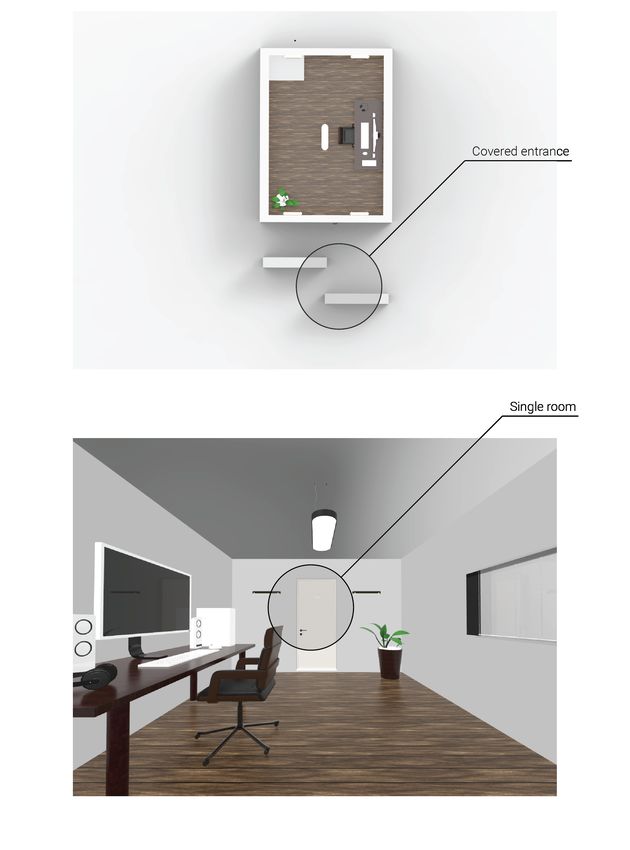
Student
 AARON DANDREA
 student ID: 19127146
 a.dandrea1@student.gsa.ac.uk
 The Innovation School
 The Glasgow School of Art
 164 Renfrew Street
 Glasgow
 G3 6RQ

Tutor
 Dr. CHRISTINE FARION
 c.farion@gsa.ac.uk
 The Innovation School
 The Glasgow School of Art
 Blairs Steading, Altyre Estate,
 Forres
 IV36 2SH

INDEX

    1   introduction               7
    2   desk research             10
    3   trying the supports       14
    4   interviews                20
    5   workshop                  28
    6   final outcome             36
    7   future possibilities      44
    8   bibliography webography   46

4                                 5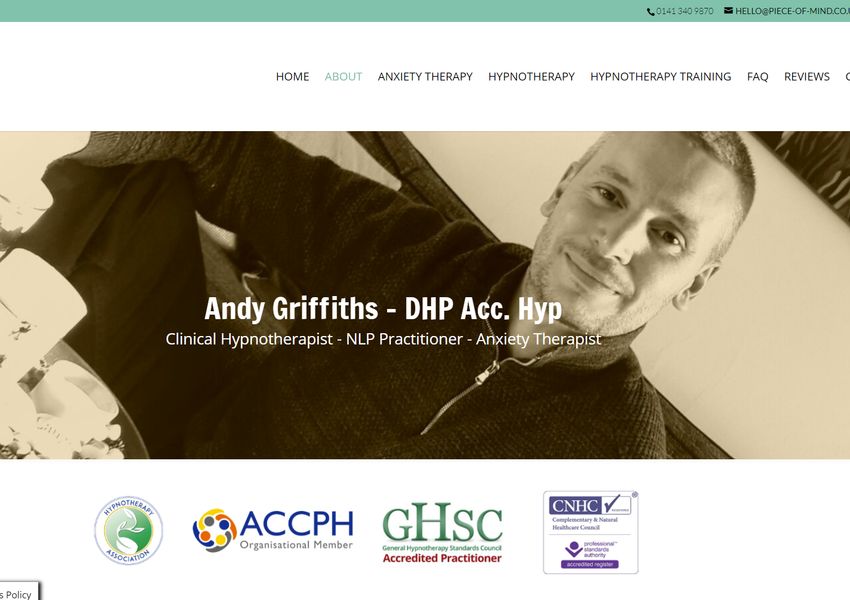
1.INTRODUCTION

       1.1 Digital environment
       The initial focus of this project was digital en-
       vironments. During the lockdown, I have seen
       a large number of different creators experi-
       menting with digital spaces because we were
       all segregated in our homes. These examples
       came from different fields. For instance, mu-
       sicians trying to rethink digital concerts, video
       gamers using their platforms to make events,
       clubs organising digital parties, etc. This burst
       of creativity, in an extremely difficult time like
       this global pandemic, gave me the right push
       to explore the digital environments further. I
       believe the future of digital interactions will be
       based on digital environments.
       For these reasons, I started to study in more
       depth this field, finding many challenging real-
       ities that use digital environments not to repli-
       cate reality, but to offer much more to the user.
       For instance, by exploring the infinite possibil-
       ities of the digital world, developers have the
       chance to create more immersive experiences
       that are more closely connected to their users’
       feelings and needs.

                                                     7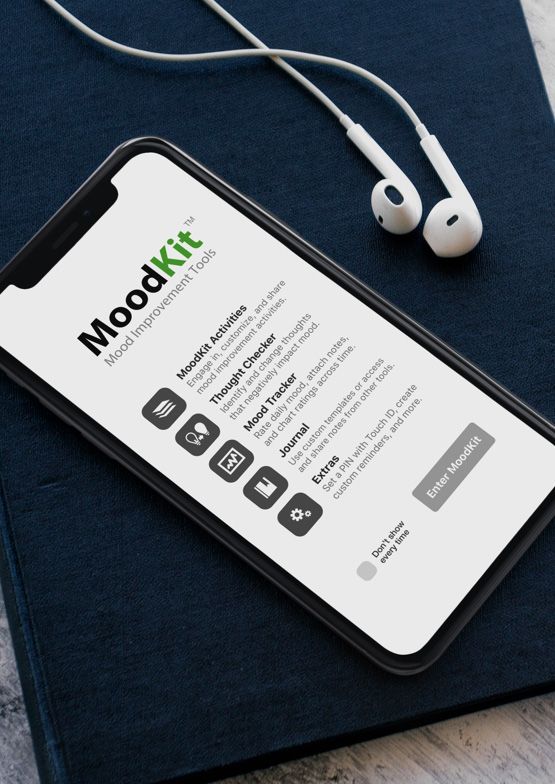
While researching, I started discussing these
    ideas with people around me, searching for
    feedbacks and new viewpoints. During these
    conversations, I came across the project of a stu-
    dent who studied the undergraduate with me.
    This project consists in a virtual experience that
    takes inspiration from an interview. In his idea,
    you are a character that answers the questions
    of the interviewer by moving around the space
    and creating your path through the questions.
    At the end, you arrive in a different room de-       Case study zooaszoo.
    pending on what your answers were during the
    interview. This project, together with my per-
    sonal experience of digital surveys, made me         This studio decided to use a digital environment
    realise how drastically things can be rethought      to create an explorable space that exhibits all
    when done online. In this case, people’s answer      their works. The works are the space itself, so
    to “yes” or “no” questions consisted in moving in    the different rooms are actually the pieces they
    a space rather than clicking a box and this gives    host. This case study shows some of the possi-
    to the experience a completely new dimension,        bilities of the digital environments that do not
    more engaging and interesting for people.            replicate reality, like the digital museums that
                                                         we are used to seeing, but offer new ways to
                                                         interact with the artworks.

                                                         https://zooaszoo.com/

                      Fig 1, 2, 3 from: zooaszoo.com/
8                                                                                                 9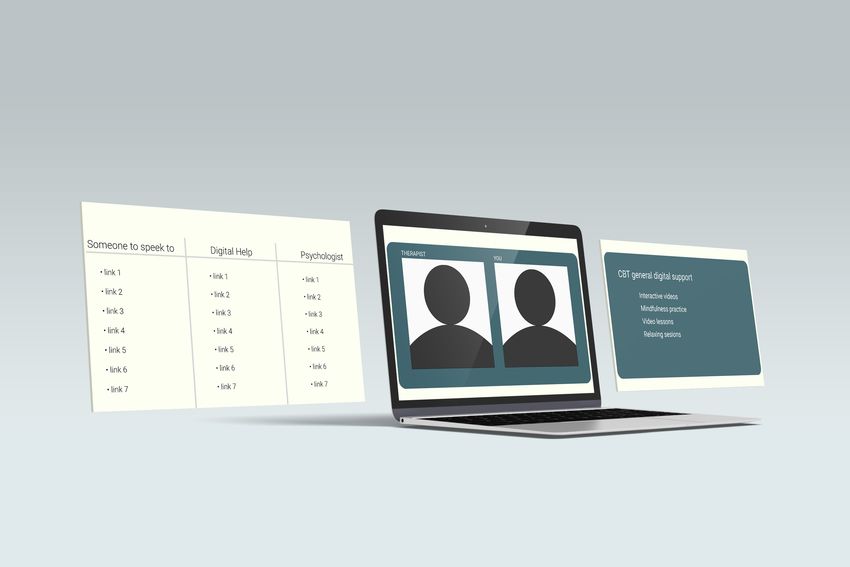
2.DESK RE-
  SEARCH
During my meetings to prepare for Stage 3,           types of support given to people. It was at
                                                                                                        How Might We
I spoke with tutors and students about my            this point that I decided to switch my topic
research topic and, having had these conver-         from digital environments to mental health.
sations, I started realising that digital envi-      At the beginning of my desk research, I start-
ronments were not the right topic. I needed          ed from the very basic, trying to answer to
to find a problem or an aspect to be improved        questions like what mental health is and
in people’s experience when interacting with         how it is delivered to people. My research
the digital world. At this point, I found out        was carried out during the Covid-19 epide-
that the right starting point was not the digi-      my and I was forced to work from home, not
tal environments, but the needs of the public.       being allowed to consult any library.
I decided to explore more and more the differ-       My research started from web search en-
ent fields in which the digitals environments        gines of scholarly literature such as Google
were used. I had been collecting various             Scholar. I searched for articles dealing with
types of material and, later on, I transferred       digital health and digital mental health, and
all this material in an How Might We exer-           I realised digital tools are largely used in the
cise. I spent a long time preparing and think-       health system. In mental health, digital tools
ing about this exercise, because I found great       are used mainly by the therapist/doctors/
possibilities in fields that were not so closely     practitioners as extra tools. The potential
linked to my main interest at that moment.           of the digital sector is acknowledged “but
Many ideas came from the fields of smart             unlike the rapid proliferation of digital tech-
working, education and art, but the most in-         nology, the worldwide shortage of mental
teresting ideas came from the world of men-          health clinicians is expected to remain con-
tal health. After this exercise, I started to read   stant”(Olfson, 2016).
more about mental health and the different           I noticed and found very interesting that the

                      10                                                                                               11
majority of studies about Digital Health In-       cause I am not an expert in the field. At this     It is used to help treat a wide range of issues   if you book an appointment with them. The
terventions (DHI) were conducted on children       stage, I came across an article that proved        in a person’s life, from sleeping difficulties    problem the NHS is facing now is that the
and young people (CYP) showing that the            to be extremely interesting: it was a study        or relationship problems, to drug and alco-       amount of people asking for support is in-
younger generations are more oriented than         on the Acceptance and Commitment Ther-             hol abuse, or anxiety and depression. CBT         creasing each year and the support is not
others to the digital world and that the future    apy (ACT), a web-based self-help program           works by changing people’s attitudes and          evolving at the same time. This translates
of our society will be progressively more digi-    designed to treat a broad range of psycho-         their behaviour by focusing on the thoughts,      into long periods that users have to wait be-
tally-oriented. Although “key methodological       logical problems students struggle with. The       images, beliefs and attitudes that are held       fore benefiting from the NHS support. This
limitations make it difficult to draw defin-       ACT is based on a theoretical-philosophical        (a person’s cognitive processes) and how          is one of the factors that brought me to the
itive conclusions from existing clinical trials    model, Relational Frame Theory, and its final      these processes relate to the way a person        bigger problem:
of DHIs”(Annual Research Review: Digital           purpose is to promote the user’s psycholog-        behaves, as a way of dealing with emotion-        It is estimated that 75% of people with
health interventions for children and young        ical flexibility. The most interesting aspect      al problems (https://psychcentral.com/lib/        mental health problems in England may
people with mental health problems – a sys-        of this study was the fact that it tested ACT      in-depth-cognitive-behavioral-therapy/).          not get access to the treatment they need
tematic and meta-review), the research and         using only digital web tools and the partici-      While researching, I found out that CBT is        (Mental Health Foundation). Globally, more
testing of new technologies in mental health       pants who received ACT improved their lev-         largely used by online services for mental        than 70% of people with mental illness re-
show potential, but at the same time it is still   els of overall distress, general anxiety, social   health of different types, ranging from com-      ceive no treatment from health care staff
difficult to formulate clear ideas, because it     anxiety, depression, academic concerns and         plete online services to open telephone lines     (https://www.ncbi.nlm.nih.gov/pmc/articles/
is a new and fast-evolving sector, and this        positive mental health (Web-Based Accep-           (MOODKIT/ BE MINDFULL).                           PMC3698814/).
makes it very interesting and stimulating for      tance and Commitment Therapy for Men-              My next step was to understand which was
me.                                                tal Health Problems in College Students).          the journey of a person in search of mental       This is the problem I decided to work around:
The more I read the more I realised how            After investigating ACT, I read more about         health support online. From the beginning I       to investigate the accessibility of mental
broad this field actually is. For this reason,     Cognitive Behavioural Therapy (CBT).               understood how complex and confusing it is        health support, keeping active the research
my research naturally moved to articles re-        CBT is a short-term, goal-oriented psycho-         to find online supports.                          on new digital technologies.
lated to digital tools used for individual men-    therapy treatment that takes a hands-on,           The main website that pops out from a basic
tal health, more than the Digital Health Tech-     practical approach to problem-solving. Its         search like “online mental health support” is
nology used in patients with serious mental        goal is to change patterns of thinking or          the NHS page that suggests some third party
issues, the latter being very interesting but      behaviour that are behind people’s difficul-       websites and some telephone lines, togeth-
too difficult to implement in my research be-      ties, and so to change the way they feel.          er with the explanation of what they can do

                     12                                                                                                                                                                           13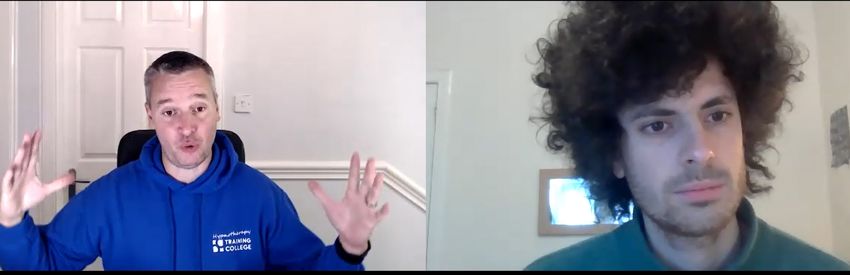
3.TESTIN G ONLINE
  SUPPORT
        To understand better how this system works,
        I decided to try a few support tools by myself.
        These tests were not to judge if the system was
        effective or not, but to analyse how the web-
        sites and the support activities are structured,
        focusing on the early phases, because from now
        on my research was targeted to accessibility.
        From my viewpoint, the early phases are of crit-
        ical importance for a user, because they are the
        moment in which the person decides whether or
        not to proceed with the support.
        I have tried many services both on smartphones
        and on computers. What follows this lines is an
        analysis of the two services that have the most
        interesting negative and positive aspects.

   14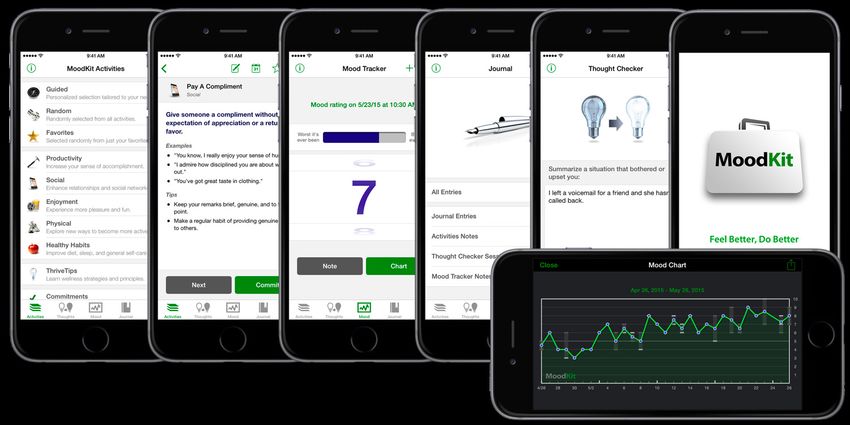
Pros:                                               Cons:
                                                                                                    • The interactive structure makes it more           • Sometimes it is very is time-consuming
                                                                                                    trustable because you can change the course         and slow.
                                                                                                    of the activity in real time.                       • There is a long survey at the beginning, it is
                                                                                                    • Not overwhelming because you see a thing          not engaging as the rest of the support im-
                                                                                                    at the time, the fact that it is a video does not   age (could put people off).
                                                                                                    allow you to skip ahead because you have to         • It is designed to teach you, but if you need
                                                                                                    follow the video.                                   fast help there are no options available.
                                                                                                    • The personalisation of the course through         • App not available on Android devices (you
                                                                                                    the interactive questions makes it very en-         need to have a PC or an iOS device).
                                                                                                    gaging.                                             • You do not have a therapist or expert to
                                                                                                    • The information given by a voice of char-         give you targeted information.
                                                                                                    acter makes it closer to what you can experi-
                                                                                                    ence in a face-to-face therapy.

                                                                                                    Considerations: The overall experience offers you a very interesting service, different
                                                                                                    from others because of the way it communicates with the user. The interaction is very human-
                                                                                                    ised, trying to be similar to a face-to-face conversation. From the data reported by the devel-
                                                                                                    opers this way of communicating with the user is very effective.

Sleepio

Sleepio is a digital sleep-improvement program (CBT). It has been clinically proven that, if you
follow the programme correctly, it helps you to fall asleep faster, stay asleep throughout the
night and have more energy during the day. The support is based on an interactive video in
which a virtual sleep expert, The Prof, guides the user through six interactive weekly sessions.

                                                                Fig 1, 2, 3 from: www.sleepio.com
                     16                                                                                                                                                                             17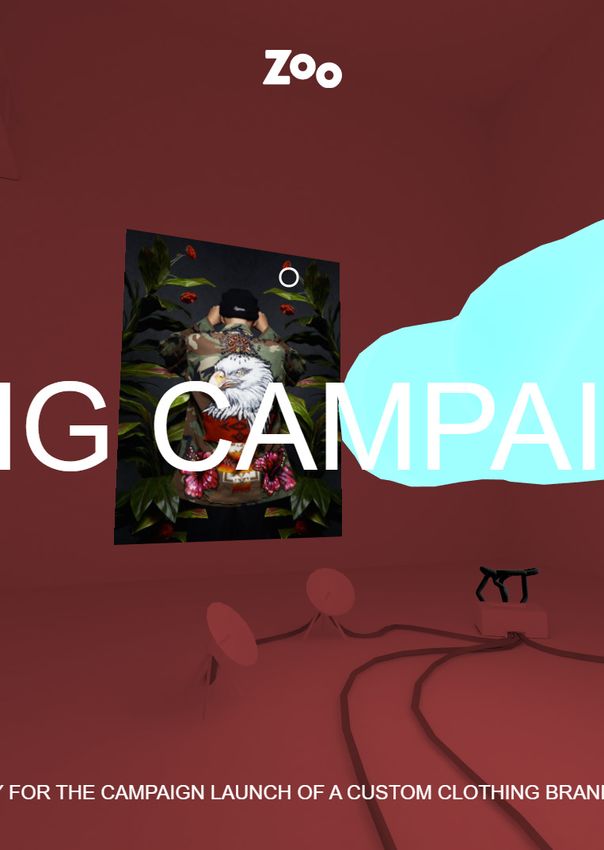
Pros:                                              Cons:
                                                                                                       • It is based on CBT and provides users with       • There is no therapist who actually under-
                                                                                                       different services: activities (CBT), check-       stands what your issue is, you are left to do
                                                                                                       er (helps you to identify what your issue is),     it by yourself.
                                                                                                       tracker (helps you to monitor your change          • The structure is very schematic, you need
                                                                                                       during time) and journal (records your obser-      to actively do activities, for this reason, if you
                                                                                                       vations over time).                                want to do it is perfect but, if you do not, it
                                                                                                                                                          gets difficult to use.

                                                                                                       Consideration:            The app offers a great amount of material to its users and I find very
                                                                                                       interesting their focus on the charts and journals. These elements help users to see their im-
                                                                                                       provements over time, making the app a sort of diary of your work. I believe that its schematic
                                                                                                       interface does not favour the engagement.

MoodKit
MoodKit is an app designed to help you apply effective strategies of professional psychology to
your every-day life. It includes four integrated tools, possibility of rating and chart mood across
time.

                                              Fig 1, 2, 3 from: www.thriveport.com/products/moodkit/
                     18
4.INTERVIEWS
My desk research combined with the testing ceived few replies to my emails and many
of various services gave me a good amount of the organisations told me that they were
of results and was inspiring for my future not available during the lockdown. However,
project. Nevertheless, the more I was inves- the people I managed to get in touch with
tigating the more questions I had. Questions were extremely helpful and offered me their
regarding mental health support activities, insights and opinions.
the differences between digital and face-to-
face services and questions regarding the
reasons why numerous people are strug-
gling to get access to the support they need.
I also realised that it was necessary to get
in touch with experts in the field of mental
health in order to being able to proceed with
Andy Griffith, life coaching and Neuro-linguistic program-
my project. My strategy to contact experts Piece of Mind ming (NLP). NLP is a psychological ap-
during the lockdown was pretty straightfor- proach that involves analysing strategies
ward, I emailed all the therapists and sup- used by successful individuals and apply-
port centres that were working around the ing them to reach a personal goal. It relates
area of Glasgow. At this stage, it proved es- thoughts, language and patterns of be-
sential to collaborate with fellow students haviour learned through experience to spe-
originally from Glasgow. They helped me in cific outcomes. Andy Griffith mainly deals
the difficult task of identifying support real- Andy Griffith is a fully accredited clinical hyp- with people struggling with anxiety, de-
ities, making a little bit easier this research notherapist registered with the General Hyp- pression, phobias or unwanted behaviours.
phase. Probably due to the complex times notherapy Standards Council and the Com- For this interview, I prepared many questions
we were facing between May and June, I re- plementary & Natural Healthcare Council. and a strict structure to follow, but the video
He provides a range of effective therapies call evolved into a very interesting conver-
including hypnotherapy, anxiety treatment, sation around the topics I was researching .
Fig 1 from: https://www.piece-of-mind.co.uk/
20 21The first topic we spoke about was the stig- just too stressful for them at that stage. For After these technical discussions, Andy Grif- lack of humanity and body language of vid-
ma of mental health. Andy Griffith explained example, in the initial phase, the NHS sys- fith shared with me some of his experiences eo calls.
me that over the last years more people tem starts by asking your full story to under- with the digital tools he employs for therapy.
asked for mental support: “In the last three stand what you could be suffering from, and Before the lockdown, 95% of his work was After these “provocations” he told me that,
years the number of young people with pan- only later they address you to a therapist to carried out during face-to-face sessions in as a therapist, you have to be more focused if
ic disorders, social anxiety disorders and Ob- whom you have to repeat your story once a studio. However, during the pandemic, he you want to capture this kind of information
sessive Compulsive Disorder (OCD) is grow- again and, it could even happen that if you switched to digital tools. From what he told from a video, but at the end the results are
ing in an alarming way”. In his opinion, this are forced to change therapist, you have to me, the best thing about being forced to do very similar and there even is the possibility
could have many causes, but one of the most start the process from the begging. This kind remote support was that people actually of recording the sessions, so the patient can
influential reasons is that the awareness of of procedure, for someone in pain, might be changed their opinion about digital support. watch them again when needed. This is es-
mental health is gradually increasing and, just too much. The amount of people drop- The feedback of his clients was very posi- pecially important for people suffering from
at the same time, the stigma is decreasing. ping off the NHS clinical support, Andy Grif- tive, especially because this kind of support anxiety because they tend to forget things.
This aspect of society is truly interesting and fith told me, is extremely high. is faster and you do not have to travel to ar-
helps people struggling with mental issues rive to a studio. I was very interested in un- Then I moved to questions that affect the ac-
to admit that they need help. Andy Griffith derstanding if an online session was as good cessibility to this kind of support, and Andy
has specified that, for the moment, the sup- Another problem of the supports is their tim- as a face-to-face one, so I asked him, and Griffith’s response was quite straightfor-
port system that is in charge to help people ing. For a person in search of help, the wait- surprisingly he said that for an experienced ward. The main problems are: there is a gen-
is not keeping up with the demand leaving ing time could be drastically bad: “When therapist like him the results were exactly the erational gap and the elderly find the internet
many people without support. you are struggling, 24 hours could feel like same. I was impressed, but not complete- frightening; some individuals do not own a
a year”. The big demand for help to the sup- ly convinced about it and I mentioned the PC, smartphone or home internet connection;
This is not the only reason why people strug- port systems necessarily brings to increased
gle to get the treatment they need. Andy waiting times and, unfortunately, this is an-
Griffith explained that for a person in pain other factor that puts people off.
the most difficult step is to admit that they
have a problem. Even though the aware-
ness of mental health is improving, it is still Private support could be better in terms of
difficult to see the problems that affect our- waiting time and quality of the support in
selves. Once you manage to admit that you the early phases, but is not something that
are facing an issue, you have to start the pro- everybody can easily afford and it accentu-
cess of finding the right support system and ates the great economic and social differ-
this can put off many people, because it is ences that already exist.
Fig 1: screenshot during the videocall interview
22 23and there are people that cannot access this
kind of support from home, because home is not
a safe place for them. The first two problems
were easy to understand, but I wanted more
information about the last one. Andy Griffith
told me that a number of his patients did not
feel comfortable when doing the digital sup-
port sessions from home. This happened for
different reasons, some people are scared to be
heard by family or flatmates, the family is part
of the mental issue or, in general, homes are too
chaotic to being able to relax and concentrate
on the session.
This last part of the interview was extremely
important for my understanding of the digital
support service and the future of my project.
24First of all, they explained me that their service The fact that this course is broad-
is based on Cognitive Therapy and it is not a ly used and is very effective (data
support ad hoc, there is only one course for all found on the website) together with
participants. So they do not ask questions at the NHS’ approval made me believe
the beginning because they cannot prescribe in this kind of approach.
anything to their users. Despite this small issue,
the course is interactive for different reasons: Despite being very different from
what a therapist does, it could be
1. The course is flexible, online and on-de- very effective for the mental wellbe-
mand, completed at the user’s own pace. ing of people and, sometimes, even
preferred to a therapist (it is cheaper
2. Mindfulness practices are introduced via and leaves the users more freedom in
video-led online sessions, with the opportunity terms of organising the course).
for participant to practice each one of them as
they are introduced. Online sessions consist of In my opinion, when we think about
videos, text and interactive exercises. digital mental support, we have to
consider both ways of delivering
3. Mindfulness assignments are given at the help: with a therapist and this more
beginning of each week for the user to practice general kind of help. Nevertheless, I
daily throughout the week. believe that the combination of the
two might be even more successful
Be mindful After many emails exchanged, I managed to
4. Participants are encouraged to write in
their course journal throughout their participa-
in addressing and dealing with men-
tal health issues.
send them a number of questions and a few tion to record their thoughts and feelings to re-
After the desk research and the interview general topics to speak about, and they re- turn to them later.
with a therapist, I felt it was time to learn plied with a long email that included all the
more about those online services that I tried information I was looking for. 5. Following each module, they invite par-
during my initial research. As I did for my first ticipants to rate its “helpfulness”.
interview, I started sending emails to the on- Be Mindful is a clinically proven online mind-
line services that seemed more interesting. 6. Participants are emailed regularly
fulness course for better mental wellbe- throughout the course, providing motivation
The response was similar to what happened ing, based on Mindfulness-Based Cognitive
the first time, a great investment in time and and encouragement in the form of anecdotes,
Therapy (MBCT) and it consists in a 4-week poems and more.
not many replies. As the first time, the task programme of training.
was demanding, but rewarding because I My objective was to explore more the kind of
managed to get in contact with one of the 7. When participants have completed the
general help they offer and how they keep in course, they are provided with a resource li-
biggest online support that I have contact- contact with their users.
ed. Differently from Andy Griffith’s interview, brary that includes items that develop further
this was way more complex to organise due the main mindfulness practices that users can
to the dimensions of the team working on access indefinitely at their discretion.
the platform.
Fig 1 from: https://www.bemindfulonline.com
26 275.WORKSHOP
After interviewing these experts and continuing
with desk research, I felt it was necessary to get
in touch with people who are using some kind of
mental health support to understand their per-
sonal point of view.
At the beginning, it seemed impossible to find
volunteers for my project in the summer time
and during a global pandemic, especially be-
cause my previous experience in contacting ex- with others was very stimulating and my This process was challenging. It was differ-
perts had been quite challenging. Fortunately, willingness to work increased significantly. ent from our previous experiences because it
at that point, I had the third Tutorial Session with We had three meetings together, to clarify was carried out completely online.
my group and, during the presentation of one which were the information we wanted to
of my fellow students, I noticed that she carried gather from the workshop and which were At the end, we decided to divide the work-
out an interview with a very interesting organ- the goals we wanted to achieve. shop in three different activities to be com-
isation. I asked her more information about it pleted one after the other.
and, during our conversation, we realised that When we started designing the activity, it Everything had to be done on Mural, a digital
we were searching for similar users for our next was supposed to be in collaboration with wall where it is possible to work together on
interviews, so we decided to collaborate. After the association that one of my teammates the same page.
a brainstorming session, another fellow student interviewed a few weeks before. This is an
joined us and we decided to cooperate in the association that provides mental health sup- The first part of the activity, which we intend-
organisation of a workshop. port and creates workshops for people of the ed to be an icebreaker, was the moment to
Working again with a group was an extremely community. This workshop was supposed to explain the workshop’s concept to the par-
useful experience for me. After several months target people that use some sort of mental ticipants and to make them design an image
spent alone in lockdown, being able to work health support. that would represent them during the activity.
Fig 1: screenshot during the workshop meeting
28 29The second part was the one that I worked for what they ask now to the support. The
on the most. It was focused on mental health blue circumferences symbolise the degree
and, especially, on the relationship that the of urgency, so if they put a sticky note close
users establish with the support/institution/ to the image it means that the thing on the
organisation they work with. sticky note is urgent, whilst if it is in the white
I decided to divide my activity into two dif- part its urgency is less pressing.
ferent parts. The first part was focused on
the mental health support and users’ rela- The second part focused on how you deal
tionship with it. In particular, this part was with your issues when you are by yourself.
addressed at identifying the things that
people search for when they look for mental The concept of the activity was the same as
health support. the previous one: to write on the sticky notes
the tools, skills or other means that they use
This activity consisted in asking the partic- to manage their problems or as a success-
ipants to put the digital sticky notes (which ful routine they follow to keep them healthy.
represent the thing you wish to obtain from Then, they had to drag them to the upper
the support) around the image (that repre- part of the image.
sent the individual and the support).
Around each image there was an area where
to put the sticky notes. As it can be seen, this
area is divided into two: the left part is for
the things people were searching for the first
time they asked for help and the right part is
Fig 1, 2 : Interfaces of the workshop
30Participant 1
Unfortunately, we lost contact with the as- While doing the activity, I realised that be- Experience with the support
sociation we were designing the activity for, ing just me and one participant at the time, The first participant suffers from anxiety and The first time he asked for help it was at his
so we had a workshop prepared, but no par- it was impossible not to talk. For this reason, insomnia. university mental health support.
ticipants ready to do it. I used the activity as the main structure and The first time he went to a mental health sup- This was not a positive experience because
then we spoke about every aspect in a more port he was looking for a solution to his two the therapist was not always the same per-
At this stage of the project, I went back home flexible way. The result was surprising: the issues. During the sessions he realised this son, the approach was cold and clinical, he
to Italy where I had an extra motivation from participants did everything they needed to is an evolutive therapy, which needs time to worried about being seen entering the ther-
this change. I started again to look for a psy- do on digital paper and, at the same time, we be effective. Now the things he searches for apist’s room by his fellow students because
chologist or mental health support centres had a very structured interview. It was more from the support have changed: it was not a secluded space.
around my area. than just an interview or workshop. So he looked for a psychologist.
In Italy, it was surprisingly easy to find peo- • New horizons to discover He started this new support via digital tools
ple to collaborate with. I managed to speak Another good thing about this workshop • The therapist’s help to realise what hap- only, in the beginning due to the lockdown
with a psychologist that was very excited was that it worked as a testing too, during pens around him and, later on, they kept the online therapy
about the project and shared my contact de- this sessions I was trying to understand, to- • Someone who can help him to unblock him because it was very effective.
tails with a number of his patients that after gether with the participants, if the way com- socially In his opinion, the positive factors of the vid-
a few days contacted me to volunteer for the municating (video call and digital wal) was • A person to confront with eo calls are similar to the ones previously
activity. effective or not. • New stimuli mentioned by Andy Griffith, namely that it is
I decided to carry out the activity in Italian a very fast service and the quality of the sup-
to keep it easy for them, so I translated my The tools he uses to manage these issues port is high.
part of the workshop and I proceeded to are: So I asked about the places where he has his
contact the volunteers. Due to their personal sessions and he told me that having a big
engagements, it was impossible to organise • TV series house it is not a problem for him to find a se-
the activity all together, so I preferred to do • Outdoor activities cluded room where he can be alone and feel
the workshop individually with each one of • Medicines comfortable. At this point, I understood that
the participants. • Hanging out with friends having a private space for the support ac-
tivities is essential. Another interesting point
about the digital calls that he mentioned is
that he can do the therapy during the eve-
nings, the moment of the day in which he
feels more comfortable and open to speak.
32 33Participant 2
The second participant after a long time, de- He later explained that he physically went
cided to call a psychologist even though he felt to the psychologist just once. On that occa-
very insecure about calling or not. From this ser- sion, he was visiting his parents, who know
vice, he expected to find someone who would that he goes to the psychologist, but still he
understand him and a person to confront with, was not comfortable doing the session from
a sort of guide in order to be able to manage home with them, even if he was in a closed
some negative sensations he often has. room. Just the possibility of someone hear-
These are the reasons why he first contacted ing was enough to make him feel uneasy
the support and these still are the things he about the session. At this point, he decided
searches for. Similarly to the first participant, to go to the studio of the therapist and he
he mainly did online support sessions. The lock- told me, smiling, that it was only then that
down was again the first reason and then the he realised that he was going to therapist,
psychologist and this person did not see a rea- because before he had done the sessions
son why to stop the video calls support. from his comfort zone and it had felt like
chatting with a friend. At the end he con-
He told me that it is very comfortable to do the fessed me that after a few minutes he was
support sessions from home because he lives in completely comfortable, but at the begging
a flat by his own. However, when his girlfriend the sensation was slightly different.
is at home with him, he has to trust her 100%
that she will not listen during the calls, other- To manage his thoughts he tried many dif-
wise the support will be not effective for him. In ferent tools, but at the end he understood
fact, he told me that if someone around you can that relying mainly on music (while working
hear what you say, you will probably not act in for example), and before the lockdown on
the same way, ruining the effectivity of the sup- dance, helped him to clear his mind and fo-
port activities. cus on other things.
Fig 1: Screenshot during the videocall interview
34 356.FINAL
OUTCOME
After a long research process, it was time to
Safe rooms
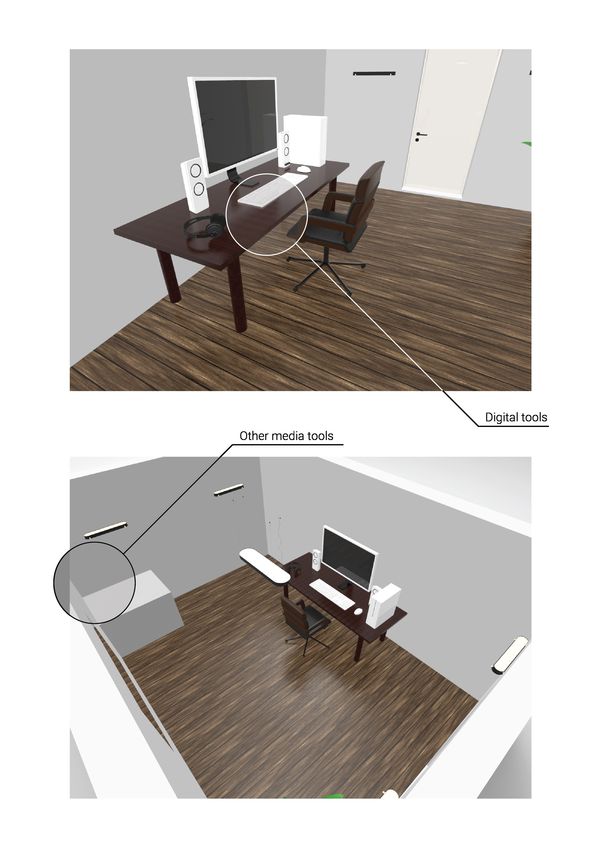
analyse all the data that I had gathered. This idea consists in a net of safe rooms free and open to anybody who wishes to ac-
Using paper and pen I started writing down all to be located in cities and urban areas. cess them. In order to make sure that nobody
the information that I had been given by the dif- A safe room is simply a room in which intrudes this safe space while you are using
ferent people that I had met during this journey. your privacy is guaranteed, where it it, small red/green lights will be placed out-
I summarise this information in the following is possible to access the digital sup- side, thus indicating when a safe room is free
chart: port systems that already exist online. or engaged.
Inside these rooms you can find all the tools To be free and open this net of rooms will be
Analysing this chart I noticed that from my re- you might need during a complete digital placed in public and open spaces. Libraries,
search the issue that came up more often was session. The digital tools consist in a good schools and universities are the best loca-
the problem of accessing digital help from internet connection and a desktop PC with a tions, but it does not really matters where
home. In order to have an effective support sys- webcam and headphones. This is the basic they are. The important thing is to give peo-
tem, you need to feel comfortable in a safe and equipment needed, but I think that in the future ple a safe place where they can feel comfort-
private space, and sometimes home does not these tools could evolve or be complement- able while having mental health support.
meet this requirement. ed, for example, with VR technology. Other The user who comes across a safe room in a
than these “simple” tools, there will be other school could be very different from the per-
I then started thinking about possible solutions items such as paper, pens, colours and so on. son who finds it in a library or university. For
and sketching down many ideas. At the end, all These rooms are supposed to host one this reasons,the rooms could be a little differ-
this work brought me to this concept project of person at the time, and are completely ent according to the place they are in.
safe rooms.
mental support
36IMMAGINE FARMACIA
To provide more privacy to the rooms’ users
while being in public spaces such as a library,
furniture like blocking walls (similar to the ones
pharmacies use) could be placed in front of the
entrance of these rooms. Depending on the lo-
cation, they might use different solutions, for ex-
ample, shelves could be employed in a library
Fig 1 from: https://www.sartorettoverna.it/farmacie
to define a path and block the view and sounds
from the counter.
To help people who are not familiar with tech-
nology, PCs should have installed a software
that works as a digital help finder, similar to
what HUB OF HOPE is doing (https://hubof-
hope.co.uk). This device has a very simple in-
terface that gives you all the options available
and all the necessary information of the support
services nearby you.
I made some renders of this concept’s ideas
to being able to show my general view to the
participants that took part in the workshop.
Fig 2 from: https://hubofhope.co.uk/
38Renders of the safe rooms concept
Concept of the software   Feedback from participant
                          Due to the short time, just one of the partici-
                          pants was available to check my idea. This par-
                          ticipant was one of those that consider home a
                          safe place and does not necessarily need an-
                          other place, but his feedback was constructive.
                          These are his main ideas:

                          1     In some occasions, these rooms could
                                be very useful. For instance, after uni-
                                versity, you do not need to go back
                                home for your mental health support
                                session

                          2     They have all the tools you might need

                          3     In terms of privacy, the entrance needs
                                to be tested

                          I completely agree with this point of view and
                          consider that the safe rooms should be tested
                          again, especially because I was only able to test
                          the online interactive way of speaking about
                          mental issues using a digital wall and not the
                          complete set of tools of a safe room.

         42                                                                   43
7.FUTURE
POSSIBILITIES
1 2 3
The first thing to do in order to have a better Another extremely important prospective The last prospective came from a peer’s
space will be to organise a workshop with users is that my initial concept was based on the feedback. He suggested me that it could be
to codesign the layout of the rooms and the tools idea “to make mental health support in step interesting to have a way to book the rooms,
to place inside. What I designed is my interpre- with the times of technology” this project similar to what many apps do (car shar-
tation of what could be a solution to a problem has to be fluid and change as fast as tech- ing for examples). This is a very interesting
that different people have told me about, but it nology evolves. This project has to give all suggestion because it would help to have a
would be useful to count with the users’ direct the tools necessary to access to the newest better working system. Nevertheless, this is
support when designing them. digital support systems that are growing not my first option, because I do not want to
In the different options that I considered before around the world. recreate a situation similar to what booking
the final 3D renderings, there were other rooms a NHS service is and I do not wish to over-
that had more tools and elements, but in the whelm people. In fact, I prefer to keep it sim-
end I decided to keep it simple as it was the first ple, similar to what some religious structures
idea. In the future, these rooms could be mod- have (confessionals for example). You just
elled with people, both users and mental health go there when you feel you need it, without
specialists, to make them more efficient and having to book in advance.
better suited to their needs. I think that these two options could coexist
During this workshop it will be interesting to in the future and it will be interesting to test
understand where to put these rooms, besides the two options to see the differences and
libraries, schools and universities. evaluate which one of them works best for
the users.
44 458.BIBLIOGRAPHY
WEBLOGRAPHY
Batra, S., Baker, R., Wang, T., Forma, F., DiBiasi, F. and Peters-Strickland, T., 2017. Digital health Lawton, E., Brymer, E., Clough, P. and Denovan, A., 2017. The Relationship between the Physical
technology for use in patients with serious mental illness: a systematic review of the literature. Activity Environment, Nature Relatedness, Anxiety, and the Psychological Well-being Benefits
Medical Devices: Evidence and Research, Volume 10, pp.237-251. of Regular Exercisers. Frontiers in Psychology.
Hollis, C., Falconer, C., Martin, J., Whittington, C., Stockton, S., Glazebrook, C. and Davies, E., Yin, J., Yuan, J., Arfaei, N., Catalano, P., Allen, J. and Spengler, J., 2020. Effects of biophilic indoor
2016. Annual Research Review: Digital health interventions for children and young people with environment on stress and anxiety recovery: A between-subjects experiment in virtual reality.
mental health problems - a systematic and meta-review. Journal of Child Psychology and Psy- Environment International, 136.
chiatry, 58(4), pp.474-503.
Walker, M., Kaimal, G., Koffman, R. and DeGraba, T., 2016. Art therapy for PTSD and TBI: A se-
Levin, M., Haeger, J., Pierce, B. and Twohig, M., 2016. Web-Based Acceptance and Commitment nior active duty military service member’s therapeutic journey. The Arts in Psychotherapy, 49,
Therapy for Mental Health Problems in College Students. Behavior Modification, 41(1), pp.141- pp.10-18.
162.
Hollis, C., Morriss, R., Martin, J., Amani, S., Cotton, R., Denis, M. and Lewis, S., 2015. Technological
Luik, A., Bostock, S., Chisnall, L., Kyle, S., Lidbetter, N., Baldwin, N. and Espie, C., 2016. Treating innovations in mental healthcare: harnessing the digital revolution. British Journal of Psychiatry,
Depression and Anxiety with Digital Cognitive Behavioural Therapy for Insomnia: A Real World 206(4), pp.263-265.
NHS Evaluation Using Standardized Outcome Measures. Behavioural and Cognitive Psycho-
therapy, 45(1), pp.91-96. Mohr, D., Lyon, A., Lattie, E., Reddy, M. and Schueller, S., 2017. Accelerating Digital Mental Health
Research From Early Design and Creation to Successful Implementation and Sustainment. Jour-
Simm, W., Ferrario, M., Gradinar, A., Smith, M., Forshaw, S., Smith, I. and Whittle, J., 2020. Anxiety nal of Medical Internet Research, 19(5), p.e153.
and Autism: Towards Personalized Digital Health. School of Computing and Communications,
Imagination Lancaster, Division of Health Research. Lancaster University, UK,. IDEGO Psicologia Digitale. 2020. Twende! - IDEGO Psicologia Digitale. [online] Available at:
[Accessed 3 August 2020].
Tal, A. and Torous, J., 2017. The digital mental health revolution: Opportunities and risks. Psychi-
atric Rehabilitation Journal, 40(3), pp.263-265.
46 47You can also read


