Direct Composite Veneers: A Simplified Approach - (Second Edition) A peer-reviewed article written by Ian E. Shuman, DDS, MAGD - Dental ...
←
→
Page content transcription
If your browser does not render page correctly, please read the page content below
EARN                  This course was

                                                              3CREDITS
                                                                  CE                written for
                                                                                    dentists,
                                                                                    dental hygienists,
                                                                                    and dental assistants.

Direct Composite Veneers:
A Simplified Approach
(Second Edition)
A peer-reviewed article written by Ian E. Shuman, DDS, MAGD

                                                                     PUBLICATION DATE:   MARCH 2021

                                                                     EXPIRATION DATE:    FEBRUARY 2024

                                                                                             SUPPLEMENT TO
                                                                                             ENDEAVOR PUBLICATIONS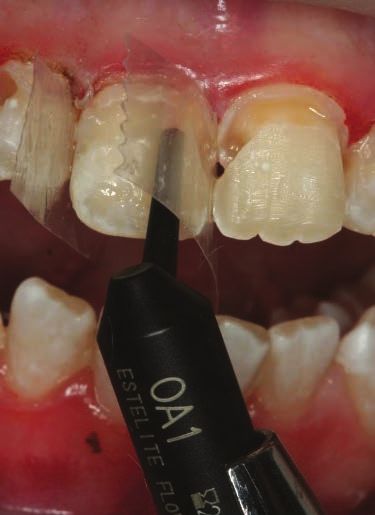
EARN

   3CREDITS
       CE
                                                                                    This continuing education (CE) activity was developed by
                                                                                    Endeavor Business Media with no commercial support.
                                                                                    This course was written for dentists, dental hygienists, and
                                                                                    dental assistants, from novice to skilled.
                                                                                    Educational methods: This course is a self-instructional
                                                                                    journal and web activity.
                                                                                    Provider disclosure: Endeavor Business Media neither has a
                                                                                    leadership position nor a commercial interest in any products
                                                                                    or services discussed or shared in this educational activity. No
                                                                                    manufacturer or third party had any input in the development of
                                                                                    the course content.
                                                                                    Requirements for successful completion: To obtain
                                                                                    three (3) CE credits for this educational activity, you must pay
                                                                                    the required fee, review the material, complete the course
                                                                                    evaluation, and obtain an exam score of 70% or higher.
                                                                                    CE planner disclosure: Laura Winfield, Endeavor Business

Direct composite veneers:                                                           Media dental group CE coordinator, neither has a leadership nor
                                                                                    commercial interest with the products or services discussed
                                                                                    in this educational activity. Ms. Winfield can be reached at

a simplified approach                                                               lwinfield@endeavorb2b.com.
                                                                                    Educational disclaimer: Completing a single continuing

(second edition)
                                                                                    education course does not provide enough information to result
                                                                                    in the participant being an expert in the field related to the
                                                                                    course topic. It is a combination of many educational courses
                                                                                    and clinical experience that allows the participant to develop
                                                                                    skills and expertise.
ABSTRACT                                                                            Image authenticity statement: The images in this
                                                                                    educational activity have not been altered.
Direct composite veneers serve as one method for restoring anterior teeth.          Scientific integrity statement: Information shared in this
However, many dentists shy away from this procedure due to a lack of innate         CE course is developed from clinical research and represents
                                                                                    the most current information available from evidence-based
artistic talent, lack of experience, past failures, and the length of time needed   dentistry.
to complete the procedure. As a result, they opt for laboratory-fabricated          Known benefits and limitations of the data: The
                                                                                    information presented in this educational activity is derived
alternatives, resulting in deep preparation designs. This course will demon-        from the data and information contained in the reference
                                                                                    section.
strate the steps required to fabricate direct composite veneers in a highly
                                                                                    Registration: The cost of this CE course is $59 for three (3)
simplified manner using veneer templates and microhybrid composite resin.           CE credits.
                                                                                    Cancellation and refund policy: Any participant who is not
                                                                                    100% satisfied with this course can request a full refund by
EDUCATIONAL OBJECTIVES                                                              contacting Endeavor Business Media in writing.
The focus of this clinical study will provide the dental professional with the      Provider information:
                                                                                    Dental Board of California: Provider RP5933. Course
steps needed to fabricate direct composite veneers in a highly simplified           registration number CA code: 03-5933-21003. Expires
manner. After reading this article, the reader should be able to:                   7/31/2022. “This course meets the Dental Board of California’s
                                                                                    requirements for three (3) units of continuing education.”
1. Describe the properties of esthetic composite resin
2. Describe technique differences between direct and indirect veneers                                                                  Endeavor Business Media
                                                                                                                                       is a nationally approved PACE program provider
3. Refer to the history of direct composite veneers                                                                                    for FAGD/MAGD credit.
4. Restore anterior teeth in a rapid manner using the materials outlined                                                               Approval does not imply acceptance by any
                                                                                                                                       regulatory authority or AGD endorsement.
   with the steps discussed                                                                                                            11/1/2019 to 10/31/2022.
                                                                                                                                       Provider ID# 320452
                                                                                                                                       AGD code: 250

                                                                                    Endeavor Business Media is designated as an approved Provider by the American Academy of
                                                                                    Dental Hygiene, Inc. #AADHPNW (January 1, 2021-December 31, 2022). Approval does not imply
                                                                                    acceptance by a state or provincial Board of Dentistry. Licensee should maintain this document in
                                                                                    the event of an audit.

                                                                                    Endeavor Business Media is an ADA CERP–recognized provider.

                                                                                    ADA CERP is a service of the American Dental Association to assist dental professionals in
                                                                                    identifying quality providers of dental continuing education. ADA CERP does not approve or
                                                                                    endorse individual courses or instructors, nor does it imply acceptance of credit hours by boards
                                                                                    of dentistry.

                                                                                    Concerns or complaints about a CE provider may be directed to the provider or to ADA CERP at
                                                                                    ada.org/goto/cerp.

Go online to take this course.
DentalAcademyofCE.com
 QU I CK AC C E S S C O D E   21003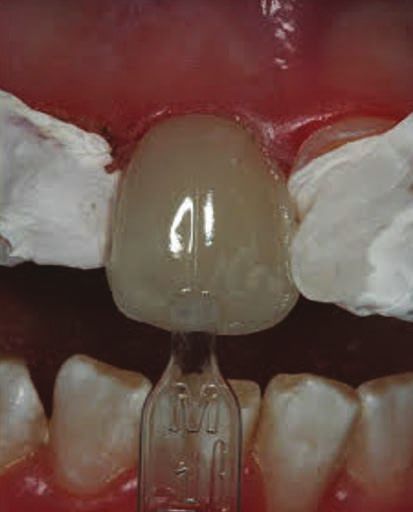
D ENTA L   ACA D EM Y    OF   CON TIN U IN G    ED U CATION

INTRODUCTION                                     fixation of porcelain to enamel.                  resin restoration, therefore obtaining four
Veneers are created for patients based on a          The reasons for choosing this treatment       groups for the study.” They concluded that
multitude of needs. They may be required         method can be many and varied. They               a “composite resin restoration and a por-
to esthetically correct misalignment, form,      include correction of esthetic concerns,          celain veneer could perform similarly for
color, and spacing issues of anterior teeth.     attrition and erosion, abfraction, fractures,     replacing a fractured incisor edge up to
They may also be necessary to restore cari-      caries, diastemas, restoring proximal con-        4 mm.”13
ous lesions. Regardless of need, veneers         tact, occlusal discrepancies, the desire for
can be fabricated as indirect restorations       a minimally invasive approach, and the            METHODS
using porcelain or composite resin, or as        financial limitations of the patient.5-10 Also,   In the past, direct composite veneers
direct restorations using composite resin.       of significant benefit is their use in medi-      were fabricated using a host of materi-
With the direct method, the restorative          cally compromised patients who display            als and techniques. In 1976, Faunce and
material must be placed and completed in         dental anomalies as secondary signs of            Myers reported the “no-tooth-reduction”
one appointment. The final result depends        conditions such as fluorosis and amelo-           method of direct resin veneers using cold-
entirely on the proficiency and artistry of      genesis imperfecta.11,12                          cure bonding materials (Concise by 3M and
the dentist. However, the length of time             A retrospective, longitudinal clinical        Adaptic by Johnson & Johnson) polymer-
needed to perform this treatment and the         study by Coelho-de-Souza et al. “investi-         ized with the Nuva-Lite system (Dentsply/
difficulty of the technique have limited it to   gated the performance of direct veneers           Caulk).18 This technique was revolution-
those talented few with the proper abilities.    using different composites (microfilled           ary and would set the stage for a future
This alone is why many in our profession         X universal) in vital or nonvital anterior        in which composite veneers would be an
may choose or prefer to use indirect res-        teeth . . . A total of 196 veneers were eval-     everyday treatment. According to Faunce
torations. However, new resin restorative        uated, with 39 failures.”5 They concluded         and Myers, “Direct bonding of composite
materials and preformed veneer templates         that “[d]irect composite veneers showed a         resins to fractured or discolored teeth has
have opened this treatment modality to           satisfactory clinical performance. Veneers        been shown to be a practical and effective
any dentist regardless of skill level or cre-    performed in vital teeth showed a better          method for restoring teeth. Previously, lack
ative ability.1                                  performance than those placed in nonvi-           of uniform shade matching and excessive
                                                 tal teeth.”5                                      bulkiness of material have been associated
DISCUSSION                                           When compared to porcelain, research          with full veneer bonding. The ultraviolet
Direct composite veneers are one option          has shown that direct composite holds             light (Nuva-Lite) in our studies penetrates
for veneering teeth, and for more than 60        up just as well.13-15 In a study by Rosen-        veneers as thick as 2 mm and effectively
years the science and application of direct      tritt et al., toothbrush abrasion and in vitro    cures the filler material. We also have used
composite resin have grown and matured.          aging on ceramic (indirect technique) and         cold-curing bonding materials (Concise
The application of composite resin has           composite veneers (direct technique) were         and Adaptic) and they seem to be equally
progressed into a high-level service dem-        investigated.16,17 A five-year period of oral     effective, although working time is short-
onstrating excellent results, especially in      service was simulated by thermal cycling          ened. We have had no clinical problems
vital teeth.                                     and mechanical loading. The results               with this technique and after two years the
   Historically, it is Charles Pincus, a Cali-   showed that all materials had compara-            veneers are intact. A technique has been
fornia dentist, who is credited with invent-     ble wear resistance, failure rates, and sat-      presented that requires no tooth reduction,
ing the veneer in 1928.2 The temporary           isfying longevity.                                except where necessary for caries removal,
veneers were to be used for a film shoot,            Batalocco et al. published a study with       or time-consuming contouring and color
changing the appearance of the actors’           the aim of investigating “whether there is        shading. Laminate veneers enable the
teeth. Nearly a decade later, Pincus fab-        a direct correlation between the amount           dental practitioner to obtain consistent
ricated acrylic veneers that had to be           of residual tooth structure in a fractured        esthetics with minimal chair time. Further
retained using denture adhesive, due to          maxillary incisor and the fracture resis-         evaluation of this technique to restore mal-
lack of adequate permanent adhesives.            tance of composite resin restorations or          formed, fractured, or discolored permanent
In 1959, the concept of acid etching by          porcelain veneers after cyclic loading.           incisors is being conducted.”18
Buonocore was the vanguard of adhesive           Sixty human-extracted maxillary central              More than a decade later, Larson and
dentistry, allowing the bonding of enamel        and lateral incisors were mounted in an           Phair reviewed the methods to duplicate
to porcelain veneers.3                           acrylic block with the coronal aspect of the      the intricate color distribution and surface
   Research performed by Simonsen and            tooth protruding from the block surface.          texture of natural tooth structure using a
Calamia in 1982 demonstrated the acid            The teeth were assigned to two groups: 2          direct bonded, microfilled composite resin
etching of porcelain using hydrofluoric          mm incisal fracture and 4 mm incisal frac-        veneer.19 “This technique creates a direct
acid.4 Thus, porcelain and composite             ture. Then, the teeth were further divided        bonded microfilled composite resin veneer
resins could achieve an adequate bond-           into two different restoration subgroups,         that replicates the complex color distri-
ing strength, resulting in the permanent         porcelain laminate veneer and composite           bution and surface texture of the natural

DentalAcademyOfCE.com                                                                                                                        3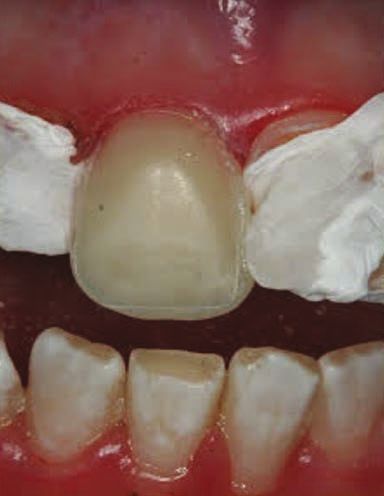
D ENTA L   ACA D EM Y   OF   CON TIN U IN G   ED U CATION

tooth structure. Duplicating the complex-       developed including thin, prepolymerized,       continue providing a high polish during
ity of natural tooth color can be repeated      hybrid composite shells (Componeer sys-         its lifetime.37
by recording the different layers of color      tem, Coltene, Altstätten, Switzerland), and         Microhybrid composite resins have
used in their sequence of placement.”19         more recently, laser-sintered, thermally        been one of the preferred materials for
With time, this technique was improved          tempered composite veneers (Edelweiss,          direct veneering. They have the ability to
using opacifiers and tints and streamlined      Ultradent) that demonstrate promise.26,27       retain a high polish similar to microfills,
with preformed transparent acrylic resin           Other attempts have been made to             with the strength of hybrid resin.
matrices and unique freehand methods.20-22      speed the process of direct resin veneers.          The long-term maintenance of the sur-
    In addition, other materials and proce-     One such concept was the use of pre-            face quality of materials is fundamental to
dures were introduced as a direct attempt       formed, clear mylar matrices in the shape       improving the longevity of esthetic resto-
to enhance the efficiency of these tech-        of veneers with attached interproximal          rations. Of great significance is the lifes-
niques.23 These included composite resins,      strips in a variety of sizes (Mylaforms,        pan of these materials, including strength,
opaquers, and tints for the “predictable res-   Plastodontics). Another, the “split-splint”     color stability, and polish, among others. In
toration of discolored anterior dentition       technique, involved sending the lab an          addition, having an average particle filler
with direct/indirect heat-treated compos-       impression of the existing dentition.28 A       size of 0.7 µm offers the ability to impart
ite resin veneers in a single appointment.”23   stone model was made and a technician           a high polish and luster typically seen in
    The “indirect-direct” application of        would wax up the model as if in prepara-        finer microfill resins.38-41 A study by Pala et
preformed acrylic laminate veneers with         tion for creating indirect veneers. A refrac-   al. “aimed to evaluate the flexural strength
bonded composite resin was attempted            tory model was created upon which two           and microhardness of three different ante-
(Mastique laminate veneers by DeTrey,           vacuform shells were made. The soft shell       rior composites after 10,000 thermocy-
Dentsply) with disappointing results.24 In      was perforated on the midfacial for each        cles.”41 It was concluded that the nanofill
a study by Høffding, these plastic veneers      tooth to be veneered. These holes accom-        composite “displayed significantly higher
were evaluated over four- and 10-year peri-     modated the tip of composite compules.          microhardness values. However, each resin
ods.25 It was found that they detached from     Interproximal slits were made to allow          composite was statistically similar for flex-
the tooth surface due to poor bond chem-        clear matrices to be used to maintain clean     ural strength values. Ten thousand thermo-
istries, demonstrated a low resistance to       contacts and reduce the amount of cleanup       cycles significantly affected microhardness
abrasion, and exhibited marginal leakage        required. The rigid shell helped maintain       and flexural strength.”41
and discoloration.                              the final form prior to curing. Regardless          Direct composite template: Follow-
    Høffding reported that the purpose          of technique, success or failure is often       ing in the tradition of simplified direct ante-
of the study was “to evaluate the clinical      dependent on the material used to achieve       rior veneers, a system has been created to
quality over four years and the longev-         the end goal.                                   ease the difficulty and shorten the time
ity over 10 years of 77 Mastique laminate                                                       needed for the process. A kit of 32 autoclav-
veneers (DeTrey, Dentsply). The veneers         MATERIALS                                       able, translucent templates in two univer-
were bonded to incisors and canines with        Direct composite resin: Direct compos-          sal sizes that mimic the precise anatomic
a light-cured composite resin, using the        ite resin should fluoresce and bear opal-       facial contour of upper and lower teeth,
acid-etch technique, and examined every         escent qualities of natural tooth structure,    including the second premolars, is avail-
1/2 year in accordance with USPHS cri-          especially since patients are seen under        able (UVeneer, Dental Art Innovations, St.
teria. Anatomic form and marginal adap-         various lighting conditions.29,30 It should     Kilda, Australia). The templates can be
tation were rated excellent in more than        have low-translucent, high-fluorescent          used with any preferred composite mate-
50% of the veneers throughout the study.        dentin shades, combined with highly trans-      rial, producing consistent, predictable, per-
Moderate surface wear was seen in most          lucent/opalescent enamel shades to facili-      fect results with regard to final tooth shape,
of the veneers after four years of service.     tate the superior reproduction of natural       shine, and smile design.
Marginal discoloration and color match          teeth.31,32 The composite resin should be           Following tooth preparation and routine
were recorded as not acceptable in 20%          sculptable with enough body to prevent          adhesive bonding techniques, composite
of the veneers at the four-year control. No     slumping and be easy to polish, offering a      resin is applied to the entire restorable
significant difference was found in the gin-    high luster.33-35 A perfect match to either     surface, and the template is then pressed
gival index between veneer and control          stock or custom shade guides is a must,         onto the composite. Once excess material
teeth. The cumulative retention rate was        and the system should be available in many      has been removed and the interproximal
40% after four years and 20% at the 10-year     shades. A high radiopacity is necessary         areas adequately separated and contoured,
recall. Owing to the high frequency of spon-    to distinguish the restoration from both        the composite is light cured through the
taneous loss, Mastique laminate veneers         tooth structure and future caries.36 In addi-   template. With a nonstick surface, the
cannot be recommended as permanent              tion, the composite should have a regular       template is removed, leaving a high-gloss
restorations.”25                                or average filler particle size to avoid pit-   finish. The template offers the additional
    Iterations of this concept were             ting during finishing and polishing and         benefit of removing the oxygen inhibition

4                                                                                                                      DentalAcademyOfCE.com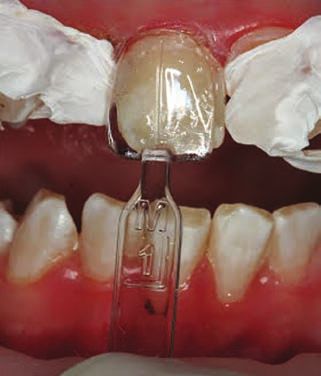
D ENTA L   ACA D EM Y   OF   CON TIN U IN G   ED U CATION

                                                 shades using a layering technique.”45 This
                                                 simplified method is one that less-experi-
                                                 enced practitioners can embrace.

                                                 APPLICATIONS
                                                 In addition to direct composite veneers,
                                                 preformed universal veneer templates offer
                                                 other benefits in clinical practice:
                                                 • Ease of use
FIGURE 1: Case presentation                      • Can enhance clinic productivity
                                                    significantly
                                                 • Saves time—no need to spend time and
                                                    effort on carving and polishing
                                                 • Requires minimal preparation
                                                 • Cost effective
                                                     When to use UVeneer:
                                                 • For all composite veneer applications,
                                                    for one or multiple teeth, to correct dia-
                                                    stemas, fractures, abrasions, discolored     FIGURE 4: Placing flowable composite
                                                    or mispositioned teeth, caries resto-
                                                    ration, and other esthetic corrections
FIGURE 2: False pocket                           • For the creation of temporary veneers
                                                    between appointments while porce-
                                                    lain veneers are being made in the lab
                                                 • For direct chairside mock-ups before
                                                    conducting the procedure
                                                 • Class V, and full-veneer coverage from
                                                    one tooth up to 10 teeth per arch, from
                                                    central incisor to second bicuspid
                                                 • Direct composite veneer restorations
                                                 • Cosmetic preview mock-up and shade
FIGURE 3: Surgery with a diode laser                selection
                                                 • Temporary veneers
layer (similar to the finish after mylar strip   • Laboratory model wax-up
removal), thereby increasing composite
strength.42                                      CASE REPORT                                     FIGURE 5: UVeneer templates tried against teeth
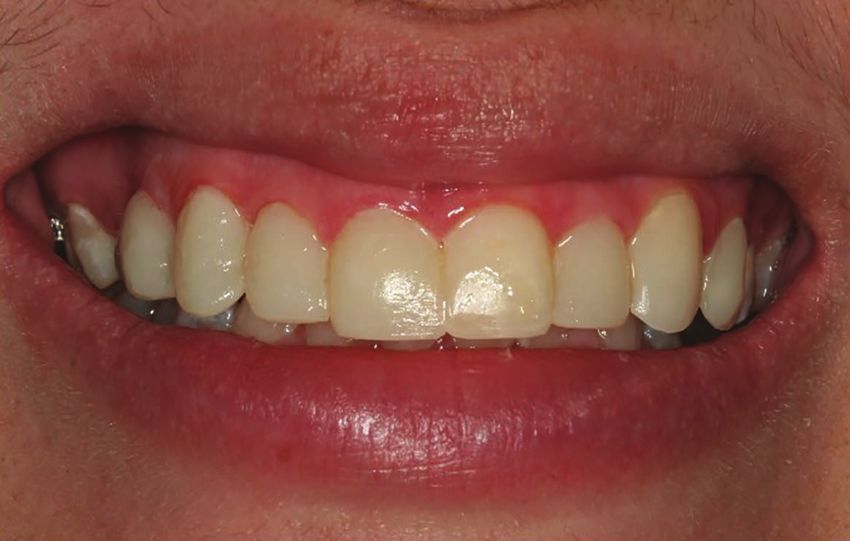
   This system offers several distinct           The patient, a 23-year-old female, pre-
advantages. At its most basic, there is an       sented for a routine prophylaxis and exam.
economy of material and time: The tem-           Due to a history of allergy-induced mouth
plate dictates the amount of composite           breathing and medication-induced xero-
resin needed per tooth, preventing waste         stomia, the desiccated anterior teeth had
and thereby avoiding the overbuilding/           multiple carious lesions ( figure 1). Often
cutback process. Also, because of the            originating as “white spots,” these occult
variants in template contour, a greater          lesions are found in patients due to a
amount of composite is imparted in the           variety of reasons including diet, fluoro-
midfacial and less as the restoration pro-       sis, enamel hypoplasia, plaque accumu-
gresses toward the inciso/gingivo/facial         lation, and dehydration. In addition, the
aspects.43,44 In an article by Lowe, this idea   teeth were malpositioned and the mar-
was described as follows: “. . . this var-       ginal tissue inflamed.
ied thickness of material creates differ-           Following a smile evaluation, it was
ent effects and values and, as a result,         explained to the patient that her wide
only one shade of composite is needed            smile allowed visibility of the posterior
in many cases to get a natural gradient          teeth bilaterally. It was agreed that com-
effect, obviating the need to use different      posite veneers would be placed from the         FIGURE 6: Aligning UVeneer

DentalAcademyOfCE.com                                                                                                                              5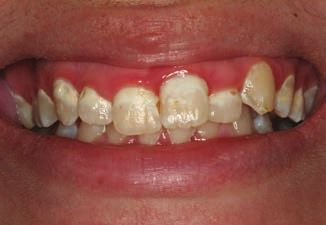
D ENTA L   ACA D EM Y   OF   CON TIN U IN G    ED U CATION

                                                     that the biologic width was not violated.        opportunity to increase practice income.
                                                     Surgery was performed on the tissue using           Now, dentists can give patients the
                                                     a diode laser ( figure 3).                       option of composite veneers without hes-
                                                         Following the removal of the carious         itation. UVeneer is a kit system that can
                                                     lesions, mylar strips and/or Teflon tape was     be used to create final provisional veneer
                                                     inserted between the teeth. The prepara-         restorations for one or multiple teeth; to
                                                     tions were then etched, rinsed, and dried. A     correct diastemas, fractures, abrasions,
                                                     fifth-generation bonding agent was applied       and discolored or malpositioned teeth; for
                                                     and cured. A flowable composite was used         caries restoration; for intraoral mock-ups;
                                                     to restore these small, irregular areas ( fig-   for study model correction; for communi-
                                                     ure 4).                                          cation with the lab technician or ortho-
                                                         Next, the appropriate UVeneer tem-           dontist; and for any other situation when
                                                     plates were selected from the kit and tried      a rapid, perfectly formed composite fac-
                                                     against the teeth ( figure 5). A B1 shade        ing is needed.
                                                     composite was selected and applied to the           It has been demonstrated that the use
                                                     entire surface of the upper right central        of a well-formed provisional restoration
                                                     incisor. The central line on the UVeneer         offers the ability to maintain oral health
FIGURE 7: Removing template after curing composite   template was aligned with the long axis          and promote healing of a surgical site.
                                                     of the tooth and gently pressed ( figure 6).     Using the technique of a fiber-reinforced,
                                                     Excess composite was removed around the          directly fabricated provisional prior to
                                                     edges of the veneer to reduce the need for       extraction is a simple, elegant way to pro-
                                                     trimming after curing. The composite was         vide this type of care. The technique dem-
                                                     then cured through the UVeneer template.         onstrated in this case report is simple,
                                                     The template was removed by pulling on           reliable, and repeatable.
                                                     the handle ( figure 7). Additional excess
                                                     resin was removed from the margins of            REFERENCES
                                                     the veneer.                                      1. Minguez N, Ellacuria JJ, Soler JI, et al. Advances
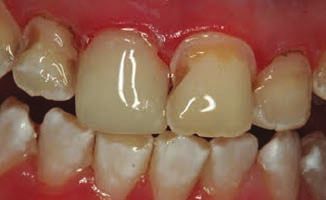
FIGURE 8: Restoring remaining teeth                      The remaining teeth were restored               in the history of composite resins. J Hist Dent.
                                                     in the same manner ( figure 8), and the             2003;51(3):103-105.
                                                     direct composite veneers were polished           2. Pincus CL. Building mouth personality.
                                                     as needed ( figure 9). One week later, the          Paper presented at: California State Dental
                                                     soft tissues appeared healed and healthy            Association. 1937. San Jose, California.
                                                     ( figure 10), and the patient was placed on      3. Buonocore M, Wileman W, Brudevold F. A
                                                     four-month recare.                                  report on a resin composition capable of
                                                                                                         bonding to human dentin surfaces. J Dent Res.
FIGURE 9: Polishing the direct composite veneers     CONCLUSION                                          1956;35:846-851.
                                                     It is now possible for any dentist to con-       4. R.J, Calamia JR. Tensile bond strengths
                                                     sistently and cost effectively produce com-         of etched porcelain [abstract]. J Dent
                                                     posite veneers that are predictable in final        Res. 1983;62(Spec Iss):1099.
                                                     tooth shape and smile design. The UVe-           5. -de-Souza FH, Gonçalves DS, Sales MP, et al.
                                                     neer system has eliminated those barriers           Direct anterior composite veneers in vital
                                                     so that virtually any practitioner can now          and non-vital teeth: A retrospective clinical
                                                     accomplish this in a short amount of time,          evaluation. J Dent. 2015;43(11):1330-1336.
                                                     with the results being a perfectly designed      6. B, Yanıkoğlu F, Günday M. Direct composite
                                                     direct composite veneer case. Unlike pre-           laminate veneers: three case reports.
FIGURE 10: One week later                            fabricated veneer systems, with UVeneer,            J Dent Res Dent Clin Dent Prospects.
                                                     dentists use their own composite and can            2013;7(2):105-111.
right to left upper second premolars.                also use layering techniques. The UVeneer        7. A, Burnside G. The survival of direct composite
    Following local anesthesia, the gingival         process removes several shortcomings of             restorations in the management of severe
tissue was sculpted to create symmetry.              prefabricated systems, including thick-             tooth wear including attrition and erosion: a
A false pocket caused by lingual malpo-              ness, sizing, shade restrictions, cost, and         prospective 8-year study. J Dent. 2016;44:13-19.
sition of the upper left lateral incisor was         stock holding. It’s so easy that dentists can    8. Scalas J. Occlusal diagnosis and treatment
probed ( figure 2). The pocket was mea-              incorporate more direct composite veneer            provide the foundation for successful
sured prior to the gingivoplasty to ensure           work into their schedules, creating a real          restorative and esthetic treatment. Compend

6                                                                                                                               DentalAcademyOfCE.com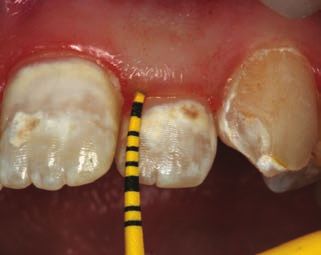
D ENTA L   ACA D EM Y     OF     CON TIN U IN G        ED U CATION

   Contin Educ Dent. 2015;36(9):672-680.                    a new technique. Quintessence Int.                    Longitudinal evaluation of radiopacity of resin
9. AN, Coelho-de-Souza FH, Rolla JN, et al. Direct          1992;23(4):237-243.                                   composites: influence of photoactivation
   or indirect composite veneers in anterior teeth:    22. Nash RW. Freehand composite veneering—the              and accelerated photoaging. Oper Dent.
   Which method causes higher tooth mass loss?              direct option. Pract Periodontics Aesthet Dent.       2018;43(2):E64-E71.
   An in vitro study. Gen Dent. 2014;62(6):55-57.           1993;5(3 Suppl 1):18-22.                           37. Dalla-Vecchia KB, Taborda TD, Stona D, et al.
10. BJ. Creating financial treatment options with      23. Fahl Júnior N. The direct/indirect composite           Influence of polishing on surface roughness
   minimally invasive composite techniques.                 resin veneers: a case report. Pract Periodontics      following toothbrushing wear of composite
   Dental Econ. July 1, 2008. https://www.                  Aesthet Dent. 1996;8(7):627-638.                      resins. Gen Dent. 2017;65(1):68-74.
   dentaleconomics.com/science-tech/                   24. Roberts GJ. Mastique acrylic laminate veneers.      38. Pahlevan A, Tabatabaei MH, Arami S, Valizadeh
   article/16387257/creating-financial-treatment-           Clinical evaluation over two years. Br Dent J.        S. Effect of LED and argon laser on degree of
   options-with-minimally-invasive-composite-               1983;155(3):85-88.                                    conversion and temperature rise of hybrid and
   techniques                                          25. Høffding J. Mastique laminate veneers: results         low shrinkage composite resins. Open Dent J.
11. Perdigão J, Lam VQ, Burseth BG, Real C.                 after 4 and 10 years of service. Acta Odontol         2016;10:538-545.
   Masking of enamel fluorosis discolorations               Scand. 1995;53(5):283-286.                         39. Santini A, Miletic V, Swift MD, Bradley M.
   and tooth misalignment with a combination           26. Gomes G, Perdigão J. Prefabricated composite           Degree of conversion and microhardness of
   of at-home whitening, resin infiltration, and            resin veneers—a clinical review. J Esthet Restor      TPO-containing resin-based composites cured
   direct composite restorations. Oper Dent.                Dent. 2014;26(5):302-313.                             by polywave and monowave LED units. J Dent.
   2017;42(4):347-356.                                 27. Lewis MW, Braxton AD, Wasson W.                        2012;40(7):577-584.
12. Strauch S, Hahnel S. Restorative treatment              Prefabricated composite veneers. A                 40. Ardu S, Duc O, Di Bella E, Krejci I. Color stability
   in patients with amelogenesis imperfecta: a              conservative solution for the aesthetic zone.         of recent composite resins. Odontology.
   review. J Prosthodont. 2018;27(7):618-623.               Dent Today. 2015;34(8):100-102.                       2017;105(1):29-35.
13. Batalocco G, Lee H, Ercoli C, et al. Fracture      28. Shuman IE, Goldstein MB. Anterior aesthetics        41. Pala K, Tekçe N, Tuncer S, et al. Flexural
   resistance of composite resin restorations and           using direct composite with a custom matrix           strength and microhardness of anterior
   porcelain veneers in relation to residual tooth          guide. Dent Today. 2008;27(3):126,128,130-131.        composites after accelerated aging. J Clin Exp
   structure in fractured incisors. Dent Traumatol.    29. Manauta J, Salat A, Putignano A, et al. Natural,       Dent. 2017;9(3):e424-e430.
   2012;28(1):75-80.                                        polarized light and the choice of composite:       42. Bijelic-Donova J, Garoushi S, Lassila LVJ, Vallittu
14. Heintze SD, Rousson V, Hickel R. Clinical               a key to success in shade matching of direct          PK. Oxygen inhibition layer of composite resins:
   effectiveness of direct anterior restorations—a          anterior restorations—part II. Trop Dent J.           effects of layer thickness and surface layer
   meta-analysis. Dent Mater. 2015;31(5):481-495.           2016;39(156):5-15.                                    treatment on the interlayer bond strength. Eur
15. Mozayek RS, Allaf M, Dayoub S. Porcelain           30. Mikhail SS, Schricker SR, Azer SS, et al.              J Oral Sci. 2015;123(1):53-60.
   sectional veneers, an ultra-conservative                 Optical characteristics of contemporary            43. St-Pierre L, Martel C, Crépeau H, Vargas
   technique for diastema closure (three-                   dental composite resin materials. J Dent.             MA. Influence of polishing systems on
   dimensional finite element stress analysis).             2013;41(9):771-778.                                   surface roughness of composite resins:
   Dent Med Probl. 2019;56(2):179-183.                 31. Blank JT. Creating translucent edge effects and        polishability of composite resins. Oper Dent.
16. Haralur SB, Alqahtani AS, AlMazni MS, Alqahtani         maverick internal tints using microhybrid resin.      2019;44(3):e122-e132.
   MK. Association of non-carious cervical lesions          Pract Proced Aesthet Dent. 2006;18(2):131-136.     44. Ehrmann E, Medioni E, Brulat-Bouchard N.
   with oral hygiene habits and dynamic occlusal       32. Mourouzis P, Koulaouzidou EA, Palaghias G,             Finishing and polishing effects of multiblade
   parameters. Diagnostics (Basel). 2019;9(2):43.           Helvatjoglu-Antoniades M. Color match of resin        burs on the surface texture of 5 resin
17. Rosentritt M, Sawaljanow A, Behr M, et al.              composites to intact tooth structure. J Appl          composites: microhardness and roughness
   Effect of tooth brush abrasion and thermo-               Biomater Funct Mater. 2015;13(3):e259-e265.           testing. Restor Dent Endod. 2019;44(1):e1.
   mechanical loading on direct and indirect           33. Chiang YC, Knezevic A, Kunzelmann KH.               45. Lowe RA. Simplifying direct composite veneer
   veneer restorations. Clin Oral Investig.                 Slumping during sculpturing of composite              placement. Dent Today. 2015;34(5):98,100-103.
   2015;19(1):53-60.                                        materials. Dent Mater. 2008;24(12):1594-1601.
18. Faunce FR, Myers DR. Laminate veneer               34. Costa de Morais R, Garcia L, Cruvinel D,                                 IAN E. SHUMAN, DDS,
   restoration of permanent incisors. J Am Dent             Pires-de-Souza F. Color stability and surface                           MAGD, maintains a general
   Assoc. 1976;93(4):790-792.                               roughness of composite submitted to different                           reconstructive and esthetic
19. Larson TD, Phair CB. The use of a direct bonded         types and periods of finishing/polishing:                               dental practice in Pasadena,
   microfilled composite resin veneer. J Am Dent            physical properties of composites. J Contemp                            Maryland. He is a master in the
   Assoc. 1987;115(3):449-453.                              Dent Pract. 2015;16(7):565-570.                                         Academy of General Dentistry
20. Mendoza AM, Reina ES. Direct composite             35. Çelık EU, Aladağ A, Türkün LŞ, Yilmaz G. Color                           and a fellow of the Pierre
   esthetic veneers: use of opacifiers and tints.           changes of dental resin composites before and      Fauchard Academy. Dr. Shuman has been named
   Rev Actual Estomatol Esp. 1988;48(378):45-48.            after polymerization and storage in water. J       one of the Top Clinicians in Continuing Education
21. Baratieri LN, Monteiro Júnior J, de Andrada             Esthet Restor Dent. 2011;23(3):179-188.            since 2005 by Dentistry Today.
   MA, Aracari GM. Composite resin veneers:            36. Cruz AD, Costa I, Calazans FS, et al.

DentalAcademyOfCE.com                                                                                                                                                 7
QUICK ACCES S CO DE          21003
ONLINE COMPLETION
Take this test online for immediate credit. Visit dentalacademyofce.com and sign in. If you have not previously purchased the course, select it from the “Online Courses” listings
and complete your purchase. The exam will then be added to your “Archives” page, where a “Take Exam” link will be provided. Click on this link, complete all questions, and submit your
answers. An immediate grade report will be generated. If you receive a score of 70% or higher, your verification form will be provided immediately for viewing and printing. View and print
forms at any time by visiting the site and returning to your “Archives.”

                                                                                   QUESTIONS

1. Many dentists avoid placing direct                             6. Which of the following dental                               11. In the case report, what was the
    composite veneers due to:                                         anomalies can benefit from direct                              patient’s recare frequency?
     A. Lack of innate artistic talent                                composite resin veneers?                                        A. Every 3 months
     B. Lack of experience                                                 A. Fluorosis                                               B. Every 4 months
     C. The length of time needed to                                       B. Amelogenesis imperfecta                                 C. Every 6 months
        complete the procedure                                             C. A and B                                                 D. Every 9 months
     D. All of the above                                                   D. Meniere’s disease
                                                                                                                                 12. What is the average particle filler
2. Veneers may be required for                                    7. Rosentritt conducted a study                                    size that offers the ability to impart
    all of the following except:                                      evaluating toothbrush abrasion and                             a high polish and luster typically
     A. Form                                                          in vitro aging on what materials?                              seen in finer microfill resins?
     B. Esthetic correction of existing                                    A. Ceramic                                                 A. 0.7 µm
        proper alignment                                                   B. Direct composite (veneers)                              B. 0.07 µm
     C. Color                                                              C. Titanium                                                C. 7.0 µm
     D. Spacing                                                            D. A and B                                                 D. None of the above

3. In a study by Coelho-de-Souza                                  8. Prior to curing, direct composite                           13. UVeneer can be used for all
    et al., the application of which                                  resin should be sculptable with                                except which of the following?
    of the following has progressed                                   enough body to prevent:                                         A. Temporary veneers
    into a high-level service                                              A. Slumping                                                B. Molars
    demonstrating excellent results?                                       B. Premature curing                                        C. Direct composite veneer restorations
     A. Composite resin in vital teeth                                     C. Dulling                                                 D. Cosmetic mock-up
     B. ¾ crowns                                                           D. None of the above
     C. Laminates                                                                                                                14. Which of the following
     D. None of the above                                         9. Direct composite should exhibit a                               composite resin types has been
                                                                      high radiopacity on radiographs to                             one of the preferred materials
4. The reasons for choosing direct                                    distinguish the restoration from:                              for direct veneering?
    composite for veneering include:                                       A. Periodontal ligament                                    A. Macrohybrid
     A. Occlusal discrepancies                                             B. Partial framework                                       B. Macrofill
     B. Attrition and erosion                                              C. Alveolar bone                                           C. Microhybrid
     C. Its highly invasive approach                                       D. Tooth structure and caries                              D. None of the above
     D. A and B
                                                                  10. Direct composite resin should have:                        15. Pincus fabricated acrylic veneers
5. The reasons for choosing direct                                         A. Low-translucent, high-                                 that had to be retained using
    composite for veneering include                                           fluorescent dentin shades                              denture adhesive, due to lack
    all but which of the following?                                        B. A nitrogen inhibition layer                            of adequate permanent:
     A. Fractures                                                          C. High-translucent, low-                                  A. Adhesives
     B. Abfraction                                                            fluorescent dentin shades                               B. Etching
     C. Caries                                                             D. Lines of demarcation at the margins                     C. Polishing
     D. Opening proximal contacts                                                                                                     D. A and B

8                                                                                                                                                             DentalAcademyOfCE.com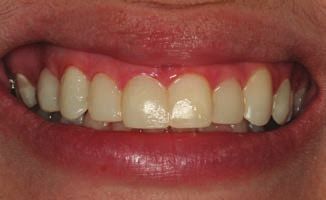
QUICK ACCES S CO DE          21003
ONLINE COMPLETION
Take this test online for immediate credit. Visit dentalacademyofce.com and sign in. If you have not previously purchased the course, select it from the “Online Courses” listings
and complete your purchase. The exam will then be added to your “Archives” page, where a “Take Exam” link will be provided. Click on this link, complete all questions, and submit your
answers. An immediate grade report will be generated. If you receive a score of 70% or higher, your verification form will be provided immediately for viewing and printing. View and print
forms at any time by visiting the site and returning to your “Archives.”

                                                                                      QUESTIONS

16. Who reported the “no-tooth-                                   21. In the clinical case presented, caries                     26. The template is removed
    reduction” method of direct                                       of the anterior teeth was due to:                              after curing by:
    resin veneers using cold-                                              A. Home care                                               A. Pulling on the handle
    cure bonding materials?                                                B. Xerostomia                                              B. Chemical means
     A. Faunce and Myers                                                   C. GERD                                                    C. Heating
     B. Martin and Lewis                                                   D. All of the above                                        D. Tapping
     C. Parker and Barrow
     D. Hale and Denver                                           22. The upper left lateral incisor was                         27. In the case discussed, what
                                                                      probed prior to the gingivoplasty                              shade was selected?
17. What feature is necessary to                                      to ensure that which of the                                     A. A1
    distinguish the composite                                         following was not violated?                                     B. B1
    restoration from tooth                                                 A. Biologic width                                          C. A2
    structure and future caries?                                           B. The Q continuum                                         D. A3
     A. Macro particles                                                    C. Mucogingival junction
     B. Radiolucency                                                       D. B and C                                            28. At its most basic, using preformed
     C. Carbon nanotubes                                                                                                             composite veneer templates
     D. High radiopacity                                          23. In the case presented,                                         offers an economy of:
                                                                      a gingivoplasty was                                             A. Material
18. The correct sequence of                                           performed using a:                                              B. Salary
    treatment, tooth preparation—                                          A. Microscalpel                                            C. Time
    adhesive bonding—apply                                                 B. Diode laser                                             D. A and C
    composite—seat template—cure,                                          C. A and D
    is necessary for which device                                          D. Diamond bur                                        29. Which of the following dictates
    mentioned in this course?                                                                                                        the amount of composite resin
     A. Mastique                                                  24. Following the removal of the                                   needed per tooth to prevent waste?
     B. Edelweiss                                                     carious lesions, what was                                       A. Interproximal matrix
     C. UVeneer template                                              inserted between the teeth?                                     B. The remaining enamel only
     D. None of the above                                                  A. Mylar strips                                            C. Template
                                                                           B. Teflon tape                                             D. All of the above
19. Which one of the following is not                                      C. Stainless steel matrix
    a preformed laminate veneer?                                           D. A and B                                            30. A greater amount of composite is
     A. Edelweiss                                                                                                                    imparted in the midfacial and less
     B. Componeer                                                 25. Prior to curing, what must be                                  as the restoration progresses toward
     C. Mastique                                                      aligned on the UVeneer template?                               the inciso/gingivo/facial aspects
     D. Ridgway                                                            A. The intercuspid line                                   because of the variants in template:
                                                                           B. The scribed horizontal line                             A. Contour
20. Which of the following are                                             C. The scribed vertical line                               B. Handle angulation
    universally sized, autoclavable,                                       D. All of the above                                        C. Pressure
    translucent templates?                                                                                                            D. None of the above
     A. UVeneer
     B. Mastique
     C. Split-Splint
     D. Mylaforms

DentalAcademyOfCE.com                                                                                                                                                                         9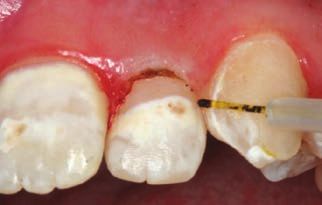
PUBLICATION DATE: MARCH 2021 ANSWER SHEET
Direct composite veneers:
EXPIRATION DATE: FEBRUARY 2024
a simplified approach (second edition)
Name: Title: Specialty:
Address: Email: AGD member ID (if applies):
City: State: ZIP: Country:
Telephone: Primary ( ) Office ( )
Requirements for obtaining CE credits by mail/fax: 1) Read entire course. 2) Complete info above. 3) Complete test by marking one answer per question.
4) Complete course evaluation. 5) Complete credit card info or write check payable to Endeavor Business Media. 6) Mail/fax this page to DACE. A score of 70%
is required for CE credit. For questions, call (800) 633-1681. Course may also be completed at dentalacademyofce.com.
Mail/fax completed answer sheet to:
EDUCATIONAL OBJECTIVES
Endeavor Business Media
1. Describe the properties of esthetic composite resin
Attn: Dental division
2. Describe technique differences between direct and indirect veneers 7666 E. 61st St. Suite 230, Tulsa, OK 74133
Fax: (918) 831-9804
3. Refer to the history of direct composite veneers
4. Restore anterior teeth in a rapid manner using the materials outlined with the steps discussed
Payment of $59 is enclosed.
COURSE EVALUATION Make check payable to Endeavor Business Media
1. Were the individual course objectives met?
If paying by credit card, please complete the
Objective #1: Yes No Objective #2: Yes No following: MC Visa AmEx Discover
Objective #3: Yes No Objective #4: Yes No Acct. number: ______________________________
Please evaluate this course by responding to the following statements, using a scale of Excellent = 5 to Poor = 0. Exp. date: __________________ CVC #: _________
2. To what extent were the course objectives accomplished overall? 5 4 3 2 1 0
Billing address: _____________________________
__________________________________________
3. Please rate your personal mastery of the course objectives. 5 4 3 2 1 0
Charges on your statement
4. How would you rate the objectives and educational methods? 5 4 3 2 1 0
will show up as PennWell / Endeavor.
5. How do you rate the author’s grasp of the topic? 5 4 3 2 1 0
6. Please rate the instructor’s effectiveness. 5 4 3 2 1 0 1. 16.
7. Was the overall administration of the course effective? 5 4 3 2 1 0
2. 17.
3. 18.
8. Please rate the usefulness and clinical applicability of this course. 5 4 3 2 1 0
4. 19.
9. Please rate the usefulness of the supplemental webliography. 5 4 3 2 1 0
5. 20.
10. Do you feel that the references were adequate? Yes No 6. 21.
11. Would you participate in a similar program on a different topic? Yes No 7. 22.
12. If any of the continuing education questions were unclear or ambiguous, please list them. 8. 23.
______________________________________________________________________________ 9. 24.
13. Was there any subject matter you found confusing? Please describe. 10. 25.
______________________________________________________________________________ 11. 26.
14. How long did it take you to complete this course? 12. 27.
______________________________________________________________________________ 13. 28.
15. What additional continuing dental education topics would you like to see? 14. 29.
______________________________________________________________________________ 15. 30.
PLEASE PHOTOCOPY ANSWER SHEET FOR ADDITIONAL PARTICIPANTS.
INSTRUCTIONS PROVIDER INFORMATION
All questions have only one answer. If mailed or faxed, grading of this examination is done Endeavor Business Media is an ADA CERP–recognized provider. ADA CERP is a service of the Endeavor Business Media is designated as an approved provider by the American Academy
manually. Participants will receive confirmation of passing by receipt of a Verification of American Dental Association to assist dental professionals in identifying quality providers of of Dental Hygiene Inc. #AADHPNW (January 1, 2020 - December 31, 2021). Approval does not
Participation form. The form will be mailed within two weeks after receipt of an examination. continuing dental education. ADA CERP neither approves nor endorses individual courses imply acceptance by a state or provincial board of dentistry. Licensee should maintain this
or instructors, nor does it imply acceptance of credit hours by boards of dentistry. Concerns document in the event of an audit.
COURSE EVALUATION AND FEEDBACK about a CE provider may be directed to the provider or to ADA CERP at ada.org/gotocerp.
We encourage participant feedback. Complete the evaluation above and e-mail additional RECORD KEEPING
feedback to Aileen Southerland (asoutherland@endeavorb2b.com) and Laura Winfield Endeavor Business Media is designated as an approved PACE program provider by the Endeavor Business Media maintains records of your successful completion of any exam for a
(lwinfield@endeavorb2b.com). Academy of General Dentistry. The formal continuing dental education programs of this minimum of six years. Please contact our offices for a copy of your CE credits report. This report,
program provider are accepted by the AGD for fellowship, mastership, and membership which will list all credits earned to date, will be generated and mailed to you within five business
COURSE CREDITS AND COST maintenance credit. Approval does not imply acceptance by a state or provincial board of days of receipt.
All participants scoring 70% or higher on the examination will receive a verification form for dentistry or AGD endorsement. The current term of approval extends from 11/1/2019 to
three (3) continuing education (CE) credits. Participants are urged to contact their state dental 10/31/2022. Provider ID# 320452. AGD code: 250. CANCELLATION AND REFUND POLICY
boards for CE requirements. The cost for courses ranges from $20 to $110. Participants who are not 100% satisfied can request a refund by contacting Endeavor Business
Dental Board of California: Provider RP5933. Course registration number CA code: 03-5933- Media in writing.
21003. Expires 7/31/2022. “This course meets the Dental Board of California’s requirements
for three (3) units of continuing education.” IMAGE AUTHENTICITY
The images in this educational activity have not been altered..
© 2020 Academy of Dental Therapeutics and Stomatology, a division of Endeavor Business Media
Customer Service | Call (800) 633-1681You can also read


