Doing audit of Japanese clients - 24th July, 2021 - Deloitte
←
→
Page content transcription
If your browser does not render page correctly, please read the page content below
Doing audit of Japanese clients
24th July, 2021

Agenda

  1. Opening

  2. Business culture in Japan

  3. Audit in Japan

  4. Introduction of best practice in DT Japan

  5. Japanese Services Group

  6. Q&A

Opening

Objective and goal of this webinar

 Objective
 ü   Increase client satisfaction from Japanese audit clients
 ü   Successful audit fee negotiation with Japanese audit clients
 ü   Enhance audit quality by using Japanese practice (if useful)

 Goal
 ü   To understand Japanese culture in business scene
 ü   To understand audit practice in Japan (Stock market, JSOX,
     accounting standard etc)
 ü   To understand best practice of DT Japan
Today’s facilitator

                   Yuichi Asai                                                     Kotaro Inui

                   Senior Manager, Japanese Services Group                         Manager, Japanese Services Group
                   Deloitte Singapore                                              Deloitte Singapore

                   Tel: +65 6800 4694                                              Tel: +65 9122 3050
                   Email: yasai@deloitte.com                                       Email: kinui@deloitte.com

 Experience                                                     Experience
 n After graduation, joined MUFG bank in 2002                   n After graduation, joined Osaka office in DT Japan in 2010.
 n Joined Deloitte Touche Tohmatsu Tokyo office in 2010.          Experienced international group audit under Japanese GAAP,
   Experienced international group audit under Japanese GAAP,     JSOX advisory
   IFRS, IPO advisory, other non audit engagement such as       n Seconded to Singapore JSG since November 2020
   purchase process optimization
 n Seconded to US Dallas audit department from 2013 to 2015
 n Seconded to Singapore JSG since July 2019
                                                                Place lived in Japan
                                                                n Osaka, Osaka Japan
 Place lived in Japan
 n Kawasaki, Kanagawa Japan
                                                                My favorite Japanese Manga
                                                                n Dragon Ball, Demon Slayer
 My favorite Japanese Manga
 n Slam Dunk
                                                                My favorite Singapore food
                                                                n Chili Crab (Palm Beach)
5 Myfavorite Singapore food
 n Bak kut teh (Founder Bak Kut Teh)
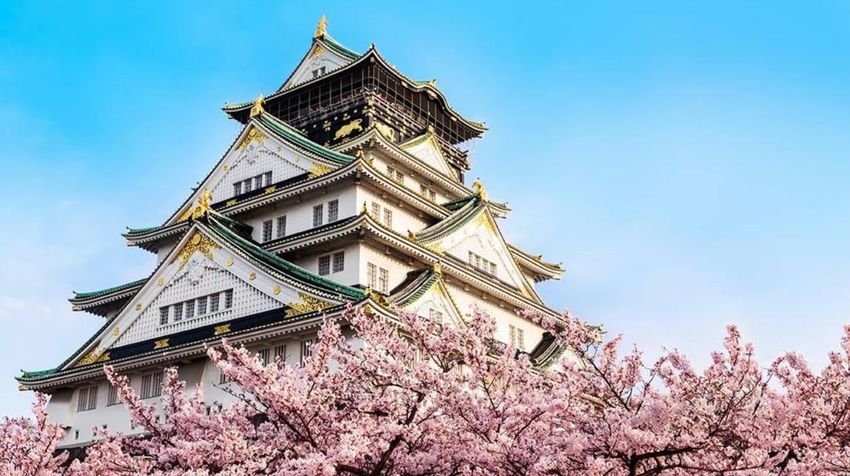
Japan overview

    125 Million population
    5.15 Trillion USD GDP size
    Tokyo as capital city
    Japanese as official language
                                    Tokyo

                           Osaka

6
Japanese in Singapore overview

   Japanese and companies in Singapore
   36,797 Japanese residence in Singapore(2019 Oct)
   2,821 Japanese companies in Singapore(2021 Apr)
   Japanese audit client in Deloitte Singapore
   396 audit engagements in DT Singapore office
   17 million USD A&A revenue in DT Singapore (FY21)
   75 subsidiaries of GCJ clients in DT Singapore office
   Approx15% of the total A&A revenue in SEA

Question regarding Japan

 Q. How many times have you been to Japan?

    A. Never(0 times)

    B. Once (1 times)

    C. More than twice to 3 times(2 - 3 times)

    D. More than the above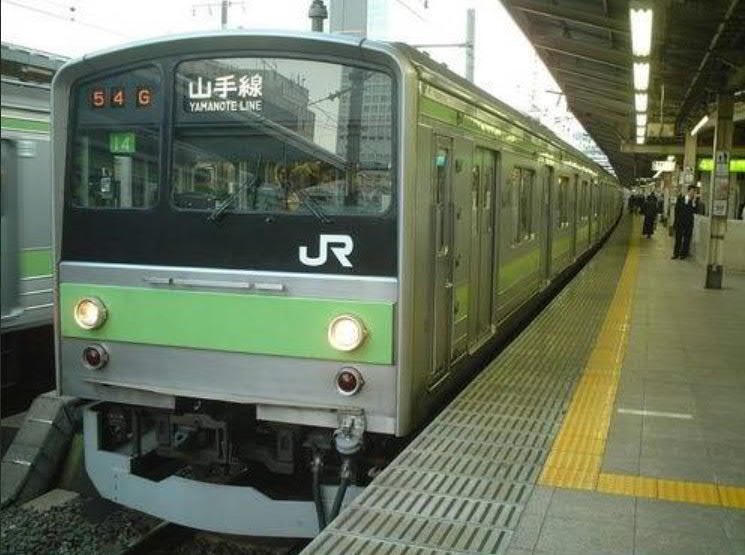
Question regarding Japan

 Q. Have you been engaged in Japanese client
    engagement?

    A. Yes

    B. No
Question regarding Japan

 Q. How have you had any difficulties to deal with Japanese
    client?

    A. Communication with Japanese managements

    B. Sight supporting documents in Japanese

    C. Understanding business

    D. Other than the above

    E. Nothing special
Question regarding Japan
Q. How have you had any difficulties to deal with Deloitte
Japan?
A. Communication with Deloitte Japan due to language
B. Late referral instruction
C. Less understanding Singapore subsidiary
D. Other than the above
E. Nothing specialJapanese audit client in Singapore office How many Japanese audit clients do you know? (This is just some….)
Popular Japanese restaurant chain in Singapore
Japanese Business Culture
Quiz for Japanese business etiquette
Q: Which is the best time to arrive at the client site?

 You have a meeting with Japanese management at client’s
 office from 10:00am.

 Choose the Answer:
 A. Arrive at 9:55am
 B.   Arrive at 10:00am
 C. Arrive at 10:05am

                                                           15
Quiz for Japanese business etiquette
Q: Which is the best time to arrive at the client site?
Best Answer is A. “5 minutes earlier”.
Japanese has “Go-fun-mae-kodo” practice
which means “Act five-minutes-earlier mind”
Good Behavior
You have a meeting with a Japanese client from 10:00;
You should arrive in the client by 9:45, finish the greeting by 9:50, then sit
down at 9:55 and wait for 5 minutes with talking about the weather.
16Quiz for Japanese business etiquette
Q: Which is the best way to bow?
You are going to meet Japanese management to apologize
for complaints against Deloitte.
① ② ③
Choose the Answer:
① 15 degrees
② 30 degrees
③ 45 degrees
17Quiz for Japanese business etiquette Q: Which is the best way to bow? Best Answer is ③. 15 degrees bow called “Eshaku” This is a light bow for casual greeting. You can use it when you met the client by accident. 30 degrees bow called “Keirei” This is a general bow for showing a formal greeting or appreciation to someone. You can use the timing of first-meet and sending off the client. 45 degrees bow called “Saikeirei” This is a deep bow for showing deep apology or respect to someone. You can use this bow when you apologize something and had the complaints. 18
19
Quiz for Japanese business etiquette
Q: Where is the best position to sit down?
                          Herewith is the assumption.
                          •   You are the audit partner
                          •   You had the discussion with client
                              management at Deloitte office.
                          •   You are joining with audit manager.

                     ③
                          Choose the Answer:
                     ④    ①
                          ②
                          ③
                          ④

                                                                    20
Quiz for Japanese business etiquette
Where is the best position you sit down?
Best Answer is ③.
Guest Host
Client Deloitte
Most senior person
③ Audit Partner(You)
“Kamiza”, top seat
which is the ④ Audit Manager
farthest place from
the exit
21Quiz for Japanese business etiquette
Q: Where is the best position to have seated when
you ride the taxi? Herewith is the assumption.
• You are the audit partner.
• You are heading to client’s office to
have a kick-off meeting.
• You are coming with audit manager
and associate.
Choose the Answer:
①
②
③
22Quiz for Japanese business etiquette
Q: Where is the best position to have seated when
you ride the taxi? Herewith is the assumption.
Best Answer is ② • You are the audit partner.
• You are heading to client’s office to
have a kick-off meeting.
• You are coming with audit manager,
manager and associate.
Associate. Needs
to guide the way
to the place Partner(You). We’re considering
this place is the safest place in the
back of the driver
Manager
23Japanese business culture overview
Business Attire § More formal (Jacket/Suits/ No jeans)
§ Punctual
Time conscious
§ 5 minutes earlier mind
Communication § Prefer face to face mtg rather than call or e-male
style § Sometimes “Nomi-nication” (Drinking alcohol)
Approach § Prefer detail plan and milestone
Decision making § Multiple layers of decision maker and many people
process involved (including HQ), so normally take time
24My personal cultural shock in Japan and in Singapore
Chew Su Yi Yuki Tanaka
A&A Manager, FSI Group Assistant Manager, Audit & Assurance
Deloitte Singapore - Global Financial Services Industry
Deloitte Singapore
Tel: +65 6531 5245
Email: suchew@deloitte.com Tel: +65 9460 3145
Email: yuktanaka@deloitte.com
Experience
Experience
n Joined Deloitte Singapore in 2014.
n After graduation, joined Tokyo office in DT Japan in 2016.
n Audit experience in Singapore, serving multinational
Experienced international group audit under Japanese GAAP,
companies and financial institutions
IFRS, JSOX audit
n Seconded to Deloitte Tokyo from 2018 to 2020, serving
n Seconded to DT Singapore audit department since
Japanese clients from manufacturing and FMCG sectors.
November 2020
Place lived in Japan
My favorite Japanese Drama
n Edogawa, Tokyo Japan
n Doctor X
My favorite Japanese Manga
My favorite Japanese food
n Attack on Titan, The Promised Neverland
n Natto, Sashimi (uni and meguro!)
My favorite Singapore food
n Chicken Rice (Tian Tian Hainanese Chicken Rice)
25What are my culture shocks? Singapore 1. How to spend lunchtime 2. Reliance on internal controls Japan 1. Ratio of male and female professionals 2. Public transport in Tokyo 3. Last hours on Report Singing Date
Audit in Japan
Statutory audit in Japan
                                                                              ※Interesting Fact
                                                                            Partner needs to sign
 2 different statutory audit requirement in Japan                           his/her own name on
                                                                                audit report in
       1                                                                         handwriting
            Companies Act

    • Private companies incorporated in Japan with either:
        a) stated capital(Paid in Capital) at 500 million yen (4.5 mil USD) or
           more, or
        b) Liabilities: 20 billion yen (180 mil USD) or more
    • Companies that are listed on stock exchange.
        ü Consolidated FS and stand alone FS                         Public company
                                                                     Public company is
                                                                                    is required
                                                                                       required to
                                                                                                to
                                                                             issue two
                                                                             issue two different
                                                                                       different kind
                                                                                                 kind of
                                                                                                      of
                                                                             audit report
                                                                             audit report
       2
            Financial Instruments and Exchanges Act

    • Companies that are listed on stock exchange.
       ü Quarterly review is required
       ü JSOX is regulated under this act
       ü Consolidated FS and standalone FS
    • Private companies with offering over 50 potential investors
                                                                                                           28
Stock exchange in Japan
Items JPX SGX
Market(*) § 1st Section 2,192 § Main Board:640
(The number of listed § 2nd Section 474 § Catalist:215
companies in each market) § Mothers 356 Total 855
§ Jasdaq standard 663 (As of Jan 2019)
§ Jasdaq Growth 37
§ Tokyo Pro Market 45
Total 3,767
The Number of IPO in 2020 75 16
Accounting standard § JGAAP § SFRS
§ IFRS § IFRS
§ USGAAP § USGAAP
(*) JPX will launch new market segments from April 2022
29Accounting standard in Japan
JGAAP
Ø Most of the listed companies (over 90%) still adopt
JGAAP
Accounting standard in Japan
Ø Still various differences from IFRS
IFRS
Ø 230 companies adopt IFRS among 3,700 listed
companies (approx. 6% among listed companies)
USGAAP
Ø Only 11 companies adopt USGAAP
(Canon, Murata, Omron etc)
Ø Many companies already shifted to IFRS
30Key schedule of listed company in Japan
Example of March year end
Year End
4/1 4/30 5/30 6/30
(5/29)
(4/30) § Date to start printing of notice
§ public announcement of shareholders meeting
of unaudited FS (statutory FS and audit report is
attached)
(5/15) (6/21)
Client typically request to finish § Statutory audit § Annual report audit date
procedures to identify material report date
misstatement by announcement § Share holders meeting
date
Key events and typical schedule
ü Public announcement: Late April to Early May
ü Statutory audit report date: Mid May
ü Date to start printing of notice of shareholders meeting: Late May to early June
ü Annual report audit date
31
ü Share holders meetingUnderstand JSOX
JSOX overview
• J-SOX is a regulation applicable to all Japanese listed
companies to assure objective “Reliability of financial reporting”.
What is • All public companies in Japan are required to comply with J-
J-SOX? SOX under Japanese legislation.
• Overseas subsidiaries and affiliates of listed companies in Japan
may be affected because the requirement is consolidated-basis.
Regulation overview
Financial Instruments and
Law
J-SOX is Exchange Law
Japanese
legislation
Standards for Management’s Assessment
Standard and Audit of Internal Controls over
Financial Reporting (ICFR)
32Understand JSOX Background for adoption of internal control audit in Japan [Reference ] Past accounting frauds in the U.S. – Enron, WorldCom, etc These scandals triggered enactment of Sarbanes Oxley Act Section 404 (“US- SOX”), and companies listed in the U.S. started to enhance Internal Controls. Japan is no exception to the global trend of re-invigorating corporate governance - corporate fraud accelerated the movement toward corporate control enhancements. Some accounting fraud e.g. Kanebo, Nikko Cordial Securities etc. became the motive for standardization of J-SOX which requires listed companies to take accountability to their shareholders.
Understand JSOX
 JSOX vs USSOX

        High level comparison of JSOX vs US SOX
     Items                         JSOX                                      US SOX
Starting year     2008                                     2002

Audit Report      Indirect reporting                       Direct reporting
Style             (Audit on Management’s report on ICFR)   (Audit on entity’s internal control)
Scope of          Consolidated subsidiaries and equity     Consolidated subsidiaries
Entities          method company could be in scope         (depending on significance)
                  (depending on significance)
Consulting Role   Possible to provide                      Generally prohibited

                                                                                                  34
Common complaints from Japanese audit client
Common complaints Key factor to manage
It is always good to respond even
Audit team does not respond in a
though it is not completed or not
timely manner, hence the client
ready.
cannot understand status on time
To establish on boarding protocol and
Audit team member change every ensure new member take onboarding
year and ask same basic question process to understand
clients/engagement before
communicating with client
Audit team does not understand It is important to communicate with
importance of reporting timeline the client and DT Japan (if applicable),
required from Japan and agree feasible timeline in advance
It is good to communicate and
Last minutes request for significant highlight priority item at an early
issue stage and agree each role of both 35
auditor and clientTips for Fee Negotiation
Common pit fall Best practice
It is good to start negotiation right
Negotiation starts late, even after after finishing PY audit.
commencing audit procedures Good to check clients budgeting
schedule.
Propose increase fee without Japanese subsidiaries normally are
sufficient reasoning required to explain reason of
increase to HQ.
Propose additional fee at late timing
and/or without sufficient reasoning It would be good to provide
reason of increase as much detail
as possible.
(In Japan, it is common to show
hours information (actual vs
budget by area))
36Tips for Fee Negotiation
Illustrative example of audit fee discussion slide deck of DT Japan
Table of contents (Objective for your reference)
I. Recent requirement and environment Ø To provide information regarding
around audit firm and Deloitte’s policy enhanced auditors requirement due
to stricter regulation/unstable
environment
II. Understand business environment of Ø To show that auditor well
the company in March 2022 and audit understands client’s business and
approach environment through audit
III. Audit schedule for March 2022 Ø To show overall audit schedule for
next year as well as enhanced
procedures if any
IV. Detail of prior year hours by area and Ø To show the detail reason of
estimate for March 2022 with reason increased fee based on estimated
of increase/decrease hours vs actual prior year
V. Deloitte approach for efficient audit Ø To show Deloitte’s efforts to
conduct efficient audit
37Best practice in audit department in Japan
Add audit value PJ

 DT Japan is trying to do various initiatives to add value on
 audit
  Why trying to add value?

               To be trusted advisor for management

      To enhance business skill for members in audit department

      Client’s satisfaction           Employee satisfaction

                                         Employee career
          Fee increase
                                          development

           Good EGM                     Sufficient resource       39
Add audit value PJ – Utilization of Management Letter
Management letter can be utilized as a tool for
§ value add and differentiator of our audit
§ communication tool with management
§ enhancing business skill of audit staff and manager+
• Not only showing fact pattern but also
indicating root cause and possible solution to
address issue
• Add useful information in the future
• Visualized format to utilize (accounting topic for next year, update of
communication tool with guidance etc)
management
40Add audit value PJ – Utilization of Management Letter
How to identify value added point (Example)
Issues Identified Root Cause Possible Solution
Incorrect info from other Investigate process on other
department than accounting department
Provide
Misstatement Skill of accounting staff
webiner/Training/Hireing
Resource Hiring staff/outsourcing
Process design deficiency Reform process design
Internal Control
deficiency
Operational error Educate staff
Valuable information for Problem solving skill for 41
management staffAdd audit value PJ
Useful information for management
Business overall § Various challenges and risks under Covid-19
Future Accounting
Topic
§ Revenue recognition for new transaction
Topic Example
§ Key audit matter and industry practice
Hot disclosure topic § Discussion for impact on ESG disclosures and
requirement for climate change
Governance and risk
management
§ Discussion for impact on ESG disclosures
§ How to enhance finance and accounting
F&A organization
department
・ ・ ・ ・
CoE supports for
engagement team
Various discussion paper template set up
42Add audit value PJ
Enhance member’s skill set
It is also important to elevate audit professional’s skill not only for audit and
accounting but also various business knowledge and skill to discuss with CFO
and F&A
Being Trusted advisor for management
Enhance Audit skill
Career development
M&A/Investment
Strategy framework Risk Governance Internal Control
management
HR management Data Analytics AI/Robotics ESG’s
・・・・
Various internal webiner/workshop
CoE supports
Various leaning materials
43Knowledge transfer within engagement team member
§ DT Japan is facing lack of resource, and engagement team member could
change every year.
§ To avoid getting repetitive complaints “same basic question every year”,
engagement teams are encouraged to do following
Documentation of basic business structure of an entity, other administrative
information for onboarding and store it to EMS. Update it periodically.
Use Deloitte Connect and save audit questions and answers as well as PBCs
Use shared folder/Teams to store prior year PBCs
44Knowledge transfer within engagement team member
Read Me First (example)
• Business flow of audit client
• Key personnel and each role
• Communication rule with client (e-mail/Deloitte Connect)
• Do’s and Don’ts
• DL data structure/how to modify data for analysis or to make
it readable format
• Key milestone (planning mtg/field work/closing mtg)
Data/info to be carried forward (example)
• Prior year PBCs
• Prior year audit question and response
• Planning/closing mtg agenda and minutes
Reduce time to explain to a new member Team’s efficiency
No need to ask to the client Client satisfaction 45Knowledge sharing PJ in audit department – “HINT”
Presentation from Hashizume-san, HINT PJ
team
Welcome Hashizume-san!
46Schedule Management in audit team
DT Japan is managing the audit progress, who is the owner and the due date
through the excel tool
Excel based task management. Easy to customize
Showing the progress on task basis, the ownership and due date
Easy to share the audit progress from planning to conclusion with audit
partner in the meeting. This is including the timing of fee negotiation, EL
and management discussion and more.
47Message from JSG
We are always here!
JSG Coordinate + Audit & Assurance
Noda Hino Asai Moriguchi Inui Kiya
(SEA Region Lead) (SG Country Lead)
v Please feel free to reach out to any JSG member if you
have any difficulty for Japanese engagement.
v We are always here to assist!
48Japanese Services Group
Japanese service Group (JSG)
Founded in 1975, with more than 1,000 Japanese bilinguals deployed worldwide,
we provide service to global Japanese companies.

                                                                           Americas                   ASIA                  EMEA

               Client            Client Global                                  Client                 Client                 Client
        (Japan headquarters)     Network                                   Foreign subsidiary A   Foreign subsidiary B   Foreign subsidiary C

                                                   Total
                                                Integrated
                                                  service

            Deloitte             JSG Network                                      JSG                    JSG                    JSG
           Tohmatsu              Approx.80 cities 1,100 employees

             Group
                                  Deloitte Global                             Deloitte               Deloitte               Deloitte
            (Japan)                                                           Member                 Member                 Member
         40 locations in Japan    Network
                                  Approx.150 countries 263,900 employees
                                                                               Firm                   Firm                   Firm
             12,300 people

                                                                           Americas                   ASIA                  EMEA
Deloitte SEA’s JSG network (1/2)
Over 160 Japanese bilingal cross borders to share expertise, human
resources and information, and provide high quality service.
Cambodia:81
Lao PDR:17
Vietnam:1,058
Myanmar:127 JSG: 8
JSG: 1 Guam:78
JSG: 7
Thailand:1,337 Philippine:779
Brunei:52
JSG: 30 JSG: 3
Malaysia:1,928
JSG: 10
Note: Figures are as of the end of Nov 2020
Total
Singapore:2,021
SEA:11,075
JSG: 55 JSG: 129
SEA Consulting: 1,744 Indonesia:1,454
Manila Delivery Center: 172 JSG: 15
Philippines Delivery Center: 227Deloitte SEA’s JSG network (2/2)
SEA JSG Leader Consulting Financial Risk Tax & Legal
Audit Assurance
Lead Lead Advisory Lead Advisory Lead Lead
Tomoya Noda
(JSG SEA Region Lead) Haruhiko Yoshie Yoshifumi Yanagisawa Masumi Hirayama
Tomoya Hino Yasuaki Shigematsu
JSG Country Lead
Myanmar
(Yangon)
Guam
Eijun Arakawa Vietnam Philippines
Thailand, Cambodia, Laos (HCMC) (Manila)
(Tamuning)
(Bangkok, Phnom Penh, Vientiane)
Hiroyuki Hanaoka Takahito Kobayashi
Gen Junichi
Kentaro Sugimoto Takaishi Harada
Malaysia Singapore Indonesia
(Kuala Lumpur) (Jakarta)
Takashi Watari
Tomoya Hino Yoshiaki SugitaniDeloitte Singapore – JSG members A total of more than 60 Japanese professionals
JSG Coordinate + Audit & Assurance belong to provide services to Japanese companies.
Noda Hino Asai Moriguchi Inui Kiya
(SEA Region Lead) (SG Country Lead)
Consulting Financial Advisory
Arai Shiotani Takahashi Murakami Kimoto
Yoshie Nishitani Okura Mori Ohira Yasuda
Yamamiya Hamaguchi Hosokawa Fuchu Matsuoka Yanagida
Risk Advisory Tax & Legal
Yanagisawa Ohashi Ohta Kuroda
Hirayama Igarashi Okumura Kitani Tsubaki
Minowa Maeda Uchiike
【 Representative Contact 】
Division ⽒名 Name Title Tel E-mail address
野⽥ 智也 Tomoya Noda Partner (JSG SEA Region Lead) +65 6800 2766 tomnoda@deloitte.com
Audit & Assurance
樋野 智也 Tomoya Hino Partner (JSG Singapore Country Lead) +65 6800 1980 tomhino@deloitte.com
新井 ⽞ Gen Arai Partner +65 6800 1073 gearai@deloitte.com
Consulting
村上 泰之 Yasuyuki Murakami Executive Director +65 6932 6535 yasumurakami@deloitte.com
Financial Advisory 吉江 治彦 Haruhiko Yoshie Partner +65 6800 2406 hayoshie@deloitte.com
Risk Advisory 柳澤 良⽂ Yoshifumi Yanagisawa Partner +65 6800 2515 yoyanagisawa@deloitte.com
Tax & Legal 平⼭ 真澄 Masumi Hirayama Partner +65 6800 2828 mahirayama@deloitte.com
53Q&A
Appreciate your valuable feedback for our future activities!
Deloitte refers to one or more of Deloitte Touche Tohmatsu Limited (“DTTL”), its global network of member firms, and their related entities (collectively, the “Deloitte organization”). DTTL
(also referred to as “Deloitte Global”) and each of its member firms and related entities are legally separate and independent entities, which cannot obligate or bind each other in respect
of third parties. DTTL and each DTTL member firm and related entity is liable only for its own acts and omissions, and not those of each other. DTTL does not provide services to clients.
Please see www.deloitte.com/about to learn more.

Deloitte Asia Pacific Limited is a company limited by guarantee and a member firm of DTTL. Members of Deloitte Asia Pacific Limited and their related entities, each of which are separate
and independent legal entities, provide services from more than 100 cities across the region, including Auckland, Bangkok, Beijing, Hanoi, Hong Kong, Jakarta, Kuala Lumpur, Manila,
Melbourne, Osaka, Seoul, Shanghai, Singapore, Sydney, Taipei and Tokyo.

About Deloitte Singapore In Singapore, services are provided by Deloitte & Touche LLP and its subsidiaries and affiliates.

Deloitte & Touche LLP (Unique entity number: T08LL0721A) is an accounting limited liability partnership registered in Singapore under the Limited Liability Partnerships Act (Chapter
163A).

© 2021 Deloitte & Touche LLP
You can also read


