DOING BUSINESS IN VIET NAM - A REFERENCE GUIDE FOR ENTERING THE VIET NAM MARKET - PWC
←
→
Page content transcription
If your browser does not render page correctly, please read the page content below

A reference guide for entering the Viet Nam market

Doing Business
in Viet Nam

This Guide includes information            makes no guarantee, representation
                    obtained or derived from a variety of      or warranty (expressed or implied)
                    publicly available sources. PwC has        as to its accuracy or completeness,
                    not sought to establish the reliability    and under no circumstances will
                    of these sources or verified such          PwC be liable for any loss caused by
                    information.                               reliance on any opinion or statement
                                                               made in this document. Except as
                    The information contained in this          specifically indicated, the expressions
                    document is of a general nature only.      or opinions are those of PwC only and
                    It is not meant to be comprehensive        are subject to change without notice.
                    and does not constitute financial,         This document shall not be copied,
                    legal, tax or other professional advice.   reproduced, transmitted or further
                                                               distributed by any recipient.
                    You should not act upon the
                    information contained in this              The materials contained in this
                    publication without obtaining              document were assembled in August
                    specific professional advice.              2018 and were based on the laws
                    Whilst every care has been taken           enforceable and information available
                    in preparing this document, PwC            at the time.

2 | Doing Business in Viet Nam
PwC Vietnam | 3
4 | Doing Business in Viet Nam

Content
Foreword                                    10

Introduction                                12

1. An Overview of Viet Nam                  16

2. Types of Business Entities               24

3. Trade                                    29

4. Taxation                                 34

5. Accounting and Auditing                  64

6. Human Resources and Employment Law       68

7. Banking and Capital Market               72

8. Real Estate Market                       76

PwC Vietnam                                 78

Viet Nam Chamber of Commerce and Industry   84

Contact us                                  86

                                                 PwC Vietnam | 5
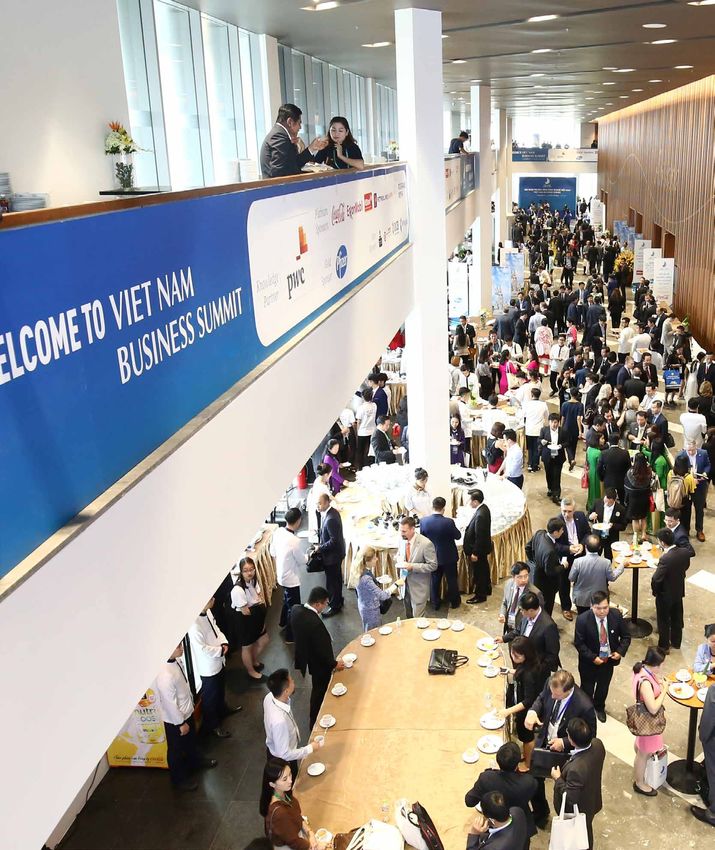
Viet Nam - We mean business: Connect and Inno-
          vate

                  Viet Nam:
                  We mean business

6 | Doing Business in Viet Nam
PwC Vietnam | 7

8 | Doing Business in Viet Nam
“   In the context of global economic uncertainties, Viet Nam has always
                                 maintained its position among the fastest growing countries in the world.
                                 In 2017, Viet Nam recorded a growth of 6.81%, for the first six months of
                                 2018 alone, the economy grew at 7.08% which is the country’s highest
                                 growth rate in 10 years since the world economic crisis in 2008. Viet Nam
                                 ranked 55th out of 137 countries in the WEF’s Global Competitiveness
                                 Index (GCI), 68th among 190 economies in World Bank’s Ease of Doing
                                 Business, and 45th out of 127 countries in the Global Innovation Index
                                 (GII) of The World Intellectual Property Organisation. The political,
                                 social environment and macroeconomic factors in Viet Nam are always
                                 considered stable. The country has an abundant work force - the youngest
                                 labour force in ASEAN, Viet Nam’s labourers are well-trained, hard-
                                 working, skilled and able to learn and quickly absorb new technology
                                 advances.
Nguyen Xuan Phuc
Prime Minister of Viet Nam
                                 Viet Nam currently has trade relations with more than 200 countries
                                 and territories. Viet Nam is a member of WTO, participating in 12 FTAs,
                                 including 6 FTAs between ASEAN and major partners such as China, India,
                                 Japan and Korea... The CPTPP is being ratified and the next steps will be
                                 the completion of the FTA with the EU and the RCEP. These agreements
                                 are giving Viet Nam access to more than 50 economies worldwide, and
                                 providing opportunities for the country to connect and engage further in
                                 the value chains and global production networks.”

                                 Extracts from the Keynote Address by H.E. Prime Minister Nguyen Xuan Phuc at the
                                 Viet Nam Business Summit 2018, September 13th, 2018.

                                                                                                          PwC Vietnam | 9
Foreword
                                  It gives us great pleasure
                                  to introduce the “Doing
                                  Business in Viet Nam” guide
                                  for 2018 co-published by
                                  the Viet Nam Chamber of
                                  Commerce and Industry
                                  (VCCI) and PwC Vietnam.

10 | Doing Business in Viet Nam
2018 brings the 7th edition of the It is never too late to invest in a
“Doing Business in Viet Nam” guide, country with high potential for
which provides insights for investors return on investment like Viet Nam.
planning to enter or expand their Its diversified economy and varied
presence in Viet Nam. geographical landscape are key
drivers shaping the development
The objectives of Doing Business are of promising sectors such as
Vu Tien Loc as clear as they are ambitious: to Agriculture, Tourism and Hospitality
Chairman & President address the initial establishment of and Renewable Energy.
Viet Nam Chamber of an entity, to implement appropriate
Commerce and Industry legal and tax structures, to ensure These are just a few examples
ongoing compliance and to resolve of business and investment
operations issues. opportunities that Viet Nam has to
offer. More information can be found
2017 saw a number of records for in this publication and other PwC
Viet Nam’s economy, such as FDI reports, e.g. Spotlight on Viet Nam.
disbursement reaching $17.5 billion, We hope you will find insightful
a 10-year high. Similar to FDI, information in this guide for your
import-export turnover reached a future endeavours. Our teams at
record high of over $400 billion with PwC and VCCI in Viet Nam would
a trade surplus of nearly $3 billion. be happy to guide you through your
Dinh Thi Quynh Van journey in this economy.
General Director Coupled with an “enabling
PwC Vietnam Government” and her commitment
to support and create the most
favourable conditions for foreign
businesses, the Comprehensive and
Progressive Agreement for Trans-
Pacific Partnership (CPTPP) and
EU-Viet Nam Free Trade Agreement
(EVFTA) will serve as strong levers to
boost the country’s growth.
PwC Vietnam | 11Introduction
Welcome to our guide to
doing business in Viet Nam.
In this publication,we provide
you with information on
the business environment as
well as accounting, tax and
regulatory laws governing
business in Viet Nam.
12 | Doing Business in Viet NamViet Nam’s economy has For years, capital has been poured
experienced strong growth, driven into Viet Nam focusing on assembling
by international trade and foreign facilities and manufacturing factories
investment since the 2000s. to take advantage of cheap labour.
Favourable government policies and With positive projections and outlook
laws, in combination with Viet Nam’s for the country, Viet Nam will
young, educated workforce and certainly see a wave of new entrants
other advantages have allowed the from foreign companies. In the next
country to develop into an attractive decade, it is expected that Viet Nam’s
place to invest in South East Asia. tech start-ups will attract big-name
investors from the region, mostly
In 1987, the National Assembly from within ASEAN and China.
passed the Law on Foreign
Investment and today, the country There will be challenges and
is reaping the benefits 30 years complexities ahead and foreign
later. Foreign investors committed companies seeking to enter
to invest $318 billion by the end Viet Nam will need to embrace a
of 2017, of which $172 billion was mind-set that no economy is the
disbursed. same. Thus, understanding Viet Nam
and all the elements that make it a
Vietnamese people are widely unique market, will help business to
regarded as technologically develop and adapt a bespoke strategy
proficient, embracing the mobile for the local context.
internet economy as a standard in
their daily lives. As per Statista’s More importantly, with adequate
data, the number of smartphone information and advice provided by
users in 2017 was estimated at 29 professionals, foreign investors will
million, meaning that around 29% not only effectively enter the market,
of the population currently use a but also enjoy sustained success in
smartphone. This figure is predicted this country.
to rise to 40% by 2021. In 2017,
Viet Nam had 54 million internet This guide outlines fundamentals of
users and this is forecasted to grow investing in Viet Nam and highlights
to 59 million by 2022. These have some common issues that investors
been contributing to a dynamic should be aware of when operating
digital economy. in Viet Nam. PwC and VCCI remain
available to share our considerable
local knowledge.
PwC Vietnam | 13Viet Nam in 2018 and looking ahead
PwC’s economists predict that Viet Nam will become the 20th largest economy by 2050, fueled by
sustainable economic reforms, the strengthening of macroeconomic fundamentals, public institutions
and crucially, mass education.
Fastest growing #68th
economy in ASEAN in Doing Business index
7.1% GDP growth
in 2018
14 places from 2016
ADB’s Asian Development Outlook, 2018 Administrative World Bank’s Doing Business Report, 2018
reform
A wave of bank 670 Investment and
business conditions
listing under the management of the
A key FDI destination
Ministry of Industry and Trade
9 commercial banks
were loosened Viet Nam is one of the most
consider listing in 2018,
frequently recommended
expected to spur interest in
Ministry of Industry and Trade, 2017 investment destinations.
Viet Nam’s stock market
AmCham’s ASEAN Business Outlook Survey
2018
>5,000 US$3 billion 2017 total FDI inflows reached
foreign deals trade surplus US$36 billion, a record over the past
10 years and is set to look brighter
45.1% increase in foreign while exports topped US$214 in 2018
capital inflow into Vietnamese billion, a 21% increase from Foreign Investment Agency, 2018
businesses compared to 2016 2016
Foreign Investment Agency, 2017 General Department of Viet Nam
Customs, 2017
Next steps for
investing in Beware of the See how Viet Nam
Viet Nam changing business fits into your
environment strategy
1 2 3 4
Understand the Build strategy
opportunities in execution plans
Viet Nam
14 | Doing Business in Viet NamThree major growth engines drive opportunities for investors in Viet Nam
Young and competitive workforce Competitive economy, Stable government committed to
A growing educated workforce, with beyond low cost growth
an ideal population structure, where Viet Nam has a cost-competitive,
55 million people are aged 15 and Viet Nam’s Prime Minister Nguyen
educated and increasingly skilled Xuan Phuc is committed to building
above, accounting for 59% of the labour force. This offers greater
total population. Viet Nam has a an enabling, working, and serving
value and serves as an ideal government. Several measures and
labour market efficiency of around production base for companies
4% compared to 4.4% for the region. actions taken by his government
thinking of shifting or diversifying and local administrations have
Manpower’s Total Workforce Index, 2017
out of larger economies such as proven to be effective.
China.
Vietnamese consumers are among
the most optimistic, ranked 7th in
the world*, riding on the back of
* According to Conference Board Global Consumer Confidence Survey
For more info, read our special report at pwc.com/vn/spotlight-on-Viet Nam a 7% growth in GDP per capita in
2017.
Invest in Viet Nam's Apply
competencies and international Share the
people standards rewards
5 6 7 8 9
Invest in Expand the
relationships business to support
regional growth
PwC Vietnam | 151 An Overview of Viet Nam This guide, Doing Business in Viet Nam, provides a high level overview of the practical aspects of doing business in Viet Nam, including the common types of business entities used by local and foreign investors, and the taxation and regulatory environment in Viet Nam. The guide also covers some practical issues faced by investors when entering Viet Nam. 16 | Doing Business in Viet Nam
“   Viet Nam’s enabling
    government,
    continuous
                            Geography

                            Viet Nam is conveniently located in the centre of South East Asia and is
                            bordered by China to the north, and Laos and Cambodia to the west.

    institutional reforms   The total area of Viet Nam is over 330,900 kilometres and its geography
                            includes mountains and plains. Viet Nam’s population is spread throughout
    and competitive         the country.

    workforce provide       Total population by end of 2017 was estimated at over 94 million people.
    excellent conditions    Viet Nam represents a huge pool of both potential customers and employees
                            for many investors.
    for investors to
                            Hanoi in the north is the capital of Viet Nam and Ho Chi Minh City in the
    conduct long-term       south is the largest commercial city. Da Nang, in central Viet Nam, is the third
    business.”              largest city and an important seaport.

    Dinh Thi Quynh Van                                                                     Language
                                                                   Capital city            Vietnamese
    General Director                                                       Hanoi
    PwC Vietnam                                                                            International
                                                                                           dialling code
                                                                                           +84

                                                                                           Currency
                                                                                           dong

                                                   3rd largest city,
                                                   important seaport:
                                                           Da Nang

                                                                                           Business &
                               63     municipalities & provinces                           banking hours
                                                                                           8am - 5 pm
                                      Area & population:                                   Monday to Friday
                                      over 330,900 square kilometres,
                                      over 94 million (median age: 30.5)
                                                                                           Stock exchange
                                                                                           Ho Chi Minh City
                               47.4 million                                                Hanoi

                               People of working age
                               in employment

                                     $2,385
                               Average annual income
                                                                           Largest city:
                                                                            Ho Chi Minh
                                                                            City

                                                                                                 PwC Vietnam | 17
Economic Environment
GDP growth was 6.8% in 2017, an increase from 6.2% in 2016 and is targeted
to hit 6.7% in 2018 by the Government.
Over the last 20 years from 1997 to 2017, GDP growth has averaged
approximately 6.4%. Despite facing numerous challenges, 2017 still marked
a successful year for trade with export turnover reaching $214 billion, up
21% compared to 2016 - the highest ever year-on-year increase. Textiles
and garments, electronic components and mobile phones made significant
contributions to Viet Nam’s export economy. Surprisingly, vegetable and fruit
exports were also positive, achieving a 43% year-on-year increase. Foreign
invested business achieved a trade surplus of $29 billion, contributing
substantially to the total national trade surplus.
Import activities were well managed which resulted in a trade surplus of
nearly $3 billion. Viet Nam’s imports largely comprised raw materials and
mechanical spare parts for manufacturing and production purposes as well as
for projects in power and energy.
GDP growth rate
7.1%
7.1%
6.8%
6.8%
6.7%
6.7%
6.2%
6.2%
6%
6%
2014
2014 2015
2015 2016
2016 2017
2017 2018
2018
(forecast)
(forecast)
Inflation
4%
4% 3.7%
3.5% 3.7%
3.5%
2.7%
2.7%
0.6%
0.6%
2014
2014 2015
2015 2016
2016 2017
2017 2018
2018
(forecast)
18 | Doing Business in Viet NamKey Sectors and Trading Partners
In terms of economic structure, services still accounted for the largest part of
GDP, approximately 41.3%, followed by manufacturing and construction at
33.3%. The agriculture, forestry and fishing sector made up 15.4% of GDP in
2017.
The EU and ASEAN have continually been long-term trading partners of
Viet Nam with total import-export turnover in 2017 hitting $50.4 billion
and $49.5 billion respectively. Four other import markets for Viet Nam, with
turnover of over $14 billion were: USA ($41.6 billion); China ($35.5 billion);
Japan ($16.8 billion) and South Korea ($14.8 billion).
For more information on FTAs and trade statistics, please refer to the ‘Trade’
section of this guide.
GDP by sector
15%
Services
41% Manufacturing & Constructing
Agriculture, Forestry & Fishing
33%
Major export partners
EU Korea
US 18%
7% 8%
19% China Japan
17%
10%
ASEAN
Others
21%
PwC Vietnam | 19Foreign Direct Investment
For the past 30 years, Viet Nam As part of its administrative Similar to previous years,
has opened the door to welcome reform efforts, the Ministry of Viet Nam continues to attract
investors. Viet Nam has become one Planning and Investment (MPI) foreign investments mostly from
of the most sought-after investment with support from the World Bank Asian countries, where Japan,
destinations thanks to its politico- has developed a draft strategy on Korea and Singapore are ranked as
economic stability, stable foreign attracting FDI in 2018-2023 to suit top investors. In 2017, among 115
exchange, inflation and interest new circumstances. The new draft foreign investors in Viet Nam, Japan
rates, and notably, its success in strategy targets quality rather than and Korea account for almost half
hosting APEC in 2017. quantity, with a focus on high-tech, of the total registered FDI. Most of
environmentally friendly, low-energy Japan investments are poured into
In line with the commitment to consuming and renewable energy two BOT thermopower projects in
create favourable conditions for projects, in addition to enhancing Thanh Hoa and Khanh Hoa, with
investors, the Government has made connectivity between FDI businesses total value up to US$ 5.4 billion. In
tremendous efforts to accelerate and domestic companies. 2017, China surprisingly climbed to
the equitisation and divestment of the fourth position with investments
SOEs, which helps to create more Viet Nam joined the World Trade worth US$ 2.1 billion.
opportunities for foreign investors. Organisation (‘WTO’) in 2007. Under
For instance, Saigon Beer Alcohol its accession commitments, Viet Nam Manufacturing and processing
and Beverage Corp (Sabeco) opened up various business sectors continue to be favourite sectors for
successfully raised $6 billion from to foreign investment, in some cases foreign investors, reaching US$15.9
sales of shares last year. Similarly, under a phased approach. These billion in 2017, accounting for 44.2%
Jardine C&C acquired 5.5% shares of commitments are generally referred of the total FDI. Power production
Viet Nam Dairy JSC (Vinamilk) for to when assessing whether foreign and distribution follow with the
$616 million in cash. investment in a particular sector is total investment capital of US$8.37
allowed. billion, accounting for 23.3%. Real
estate secured the third place at
US$3.05 billion, or 8.5%.
FDI capital inflow Key FDI sectors 2017 Key FDI sources 2017
$15.9b $8.4b $3.1b $2.4b $1.2b
(44.2%) (23.3%) (8.5%) (6.8%) (3.6%)
2016 44.4% 25.4% 23.7% 14.8% 6% 4.6%
2017 $36 billion
Highest since 2009
s
Disbursed FDI
Japan Korea Singapore China British
10.8% Virgin
Manufacturing-processing Islands
Power production & distribution
$17.5
billion Real estate
Retail
Mining
2016 2017
20 | Doing Business in Viet NamInvestment incentives:
Investment incentives are granted
to investment projects based on
location, sector and other factors
such as the size of the project. High
technology, software, new energy,
waste recycling and education are
among business areas eligible for
investment incentives. The full list
could be retrieved from the Foreign
Investment Agency’s website. Those
incentives are provided in the
following forms:
• Lower tax rates for the whole
duration of the investment term or
part thereof; exemption from and
reduction of tax rates;
• Import duty exemption for fixed
assets; and
• Reduction/exemption of land
rental
Further details on tax incentives
could be found under the Corporate
Income Tax section of this guide.
PwC Vietnam | 21Legal and Regulatory Regime
1/ Political structure:
Viet Nam is a socialist country operating under the single-party leadership of the Communist Party.
A nationwide congress (‘National Congress’) of the Communist Party of Viet Nam is held every five years, with the
most recent being in early 2016, to determine the country’s orientation and strategies and adopt its key policies on
policies for socio-economic development. The National Congress elects the Central Committee, which in turn elects
the Politburo.
2/ Hierarchy of regulations:
National
Assembly Government Ministries
Various other authorities
Circulars A plethora of other legal
Laws Decrees
instruments/ guidelines
As the only party in the political arena, the role and influence of the Communist Party is unique.
Viet Nam’s legal powers are centralised in one supreme body, and then delegated to lower bodies located in Viet Nam’s
63 municipalities and provinces. The National Assembly is the only body with the power to amend the Constitution
and pass laws but the implementation and administration of such laws is decentralised.
It is said that 2018 will be a key milestone to ensure the completion of the 2016–2020 Socio-Economic Development
Plan. One of the Government’s priorities is to enhance the legal system, which will result in a more business-friendly
regulatory environment. Consequently, in 2018, numerous laws are coming into effect, largely focusing on sectors such
as banking, technology transfer and trade. Among them, the most significant ones are the Law on Support for Small
and Medium - Sized Enterprises, the Law on Amending and Supplementing a Number of Articles of the Law on Credit
Institutions, and the Law on Foreign Trade Management.
2018 is going to be a busy year for lawmakers in Viet Nam as the National Assembly plans to pass six draft laws and
a dozen draft resolutions, as well as debate nine draft laws. Amongst those, the draft Law on Special Administrative-
Economic Zones has received a large amount of public attention since it is expected to greatly contribute to the GDP of
the country.
In late 2017, the Government issued a new decree on transformation of SOEs into joint-stock companies. This new
Decree aims to remove obstacles to SOE equitisation and boost the restructuring of State corporations.
22 | Doing Business in Viet NamLaw on Investment and property rights; and rights in plant imports of goods and services from
Enterprises varieties. Currently, Viet Nam and abroad, repayment of loans and the
the EU are finalising preparations payment of interest accrued thereon,
In late 2014, the National Assembly to sign the EU-Viet Nam Free Trade transfers of profits and dividends and
passed the Law on Investment (LOI) Agreement (EVFTA). Viet Nam’s for transfer of technology/ royalties.
and Law on Enterprises (LOE), both participation in both the EVFTA and
of which came into effect on 1 July the CPTPP Agreement requires Foreign investors and foreigners
2015. A series of implementing Viet Nam to meet high standards of working in Viet Nam are permitted
regulations were issued in late 2015 IPR protection. to transfer abroad profits and
(including Decree 78/2015/ND- income earned in Viet Nam, and any
CP guiding enterprise registration, Viet Nam has taken steps to improve remaining invested capital upon the
Decree 96/ND-CP guiding the its IP framework to the same level liquidation of an investment project.
implementation of the LOE, and as other South East Asian countries,
Decree 118/2015/ND-CP guiding the according to the sixth annual US Business Etiquette and
implementation of the LOI). These Chamber International IP Index, Culture
laws govern the establishment and which analyses the IP climate in
operation of companies in Viet Nam. 50 world economies, released in Many Vietnamese are more
February 2018 by the US Chamber of comfortable using their native
In 2016, a number of regulations Commerce Global Innovation Policy language rather than English.
were issued or came into effect in Center (GIPC). However, many English speakers can
relation to the Law on Investment, be found in Viet Nam, especially in
including Decree 135/2015/ND-CP Foreign Exchange Controls the larger cities.
on overseas indirect investment,
Circular 16/2015/TT-BKHDT The Vietnamese dong is not freely Presenting business cards is an
on templates for investment convertible and cannot be remitted important ritual in the Vietnamese
registration, Decree 50/2016/ overseas. The Government has been business world. Cards are exchanged
ND-CP on administrative fines for implementing measures to gradually at the beginning of a meeting using
violation of planning and investment reduce the country’s dependency on both hands. Translating written
regulations, and Circular 83/2016/ the US dollar. materials into Vietnamese shows
TT-BTC on investment incentives. respect for Vietnamese colleagues
Decree 50/2016/ND-CP above is also All buying, selling, lending and and business partners.
applied for enterprises. transfer of foreign currency must
be made through banks and other Face to face business meetings
Intellectual Property (“IP”) financial institutions authorised are important in Viet Nam and an
by the SBV. As a general rule, all appropriate level of respect must
As a member of the WTO, monetary transactions in Viet Nam be shown according to rank and
Viet Nam must conform with the must be undertaken in Vietnamese seniority.
WTO’s requirements on Intellectual dong. Payments, contracts,
Property. The Law on Intellectual quotations, etc. within Viet Nam
Property Rights (“IPR”) was passed must generally be in Vietnamese
in 2005, which was amended and dong.
supplemented in 2009. According to
the Law on IPR, three major IP rights The outflow of foreign currency by
are protected in Viet Nam: copyright transfer is only authorised for certain
and related rights; industrial transactions such as payments for
PwC Vietnam | 232 Types of Business Entities A foreign entity may establish its presence in Viet Nam as a limited-liability company with one or more members, a joint- stock company, a partnership, a branch, a business cooperation contract or a representative office. Foreign investors may also buy an interest in an existing domestic enterprise, subject in some cases to ownership limitations which vary depending on the industry sector. The choice of investment vehicle will depend on factors such as the number of investors, industry, size of the project and whether there is any intention to list. 24 | Doing Business in Viet Nam
“   The government has
    introduced a range
    of open policies and
                            Forms of business
                            Limited-liability Company                          stock company is divided into shares
                                                                               and each founding shareholder
    clearer guidance        A limited-liability company is a legal             holds shares corresponding to the
                                                                               amount of capital the shareholder
    supporting investors to entity established by its “members”
                            (i.e. owners) through capital                      has contributed to the company.
    establish a commercial contributions to the company. The                   A joint-stock company is required
                            capital contribution of each member
    presence in Viet Nam.   is treated as equity (charter capital).            to have at least three shareholders.
                            The members of a limited-liability                 There is no limit on the maximum
    Licensing procedures    company are liable for the financial               number of shareholders in such
    have become less        obligations of the company to
                            the extent of their charter capital
                                                                               companies.

    cumbersome during       contributions.                                     The governance of a joint-stock
                                                                               company includes the general
    the recent years.”      The management structure of a                      meeting of shareholders, the board
                                     limited-liability company would           of management, the chairman of
    Phan Thi Thuy Duong              normally consist of the “members’         the board of management, the
                                     council”, the chairman of the             general director and a board of
                                     members’ council, the general             supervisors (not compulsory if the
    Director
                                     director and a controller (or board       joint stock company has less than
    PwC Legal Vietnam
                                     of supervisors where the limited-         11 shareholders, or if a corporate
                                     liability company has more than 11        shareholder holds less than 50%
                                     members).                                 of the shares of the joint-stock
                                                                               company).
                                     A limited-liability company
                                     established by foreign investors may      A joint-stock company may either be
                                     take the form of either:                  100% foreign-owned or may take the
                                     • A 100% foreign-owned                    form of a joint venture between both
                                         enterprise (where all members         foreign and domestic investors.
                                         are foreign investors); or
                                     • A foreign-invested joint-venture        Partnership
                                         enterprise between foreign
                                         investors and at least one            A partnership is a very rare form of
                                         domestic investor.                    investment. It may be established
                                                                               between two individual general
                                                                               partners. The general partner has
                                     Joint-stock Company                       unlimited liability for the operations
                                                                               of the partnership.
                                     A joint-stock company is a limited
                                     liability legal entity established
                                     through a subscription for shares in      Branch
                                     the company.                              This is not a common form of foreign
                                                                               direct investment and is only permitted
                                     Under Vietnamese law, this is the         in a few sectors (e.g. banking and
                                     only type of company that can issue       foreign law firms). A branch is not an
                                     shares. The charter capital of a joint-   independent legal entity.

                                                                                                        PwC Vietnam | 25
Branches of foreign companies are Business Cooperation
different from representative offices Contract (“BCC”)
in that a branch is permitted to
conduct commercial activities in A BCC is a cooperation agreement
Viet Nam. between foreign investors and at
least one Vietnamese partner in
Representative Office order to carry out specific business
activities.
Foreign companies with business
relations or investment projects
This form of investment does not
in Viet Nam may apply to open
constitute the creation of a new
representative offices in Viet Nam.
legal entity. The investors in a BCC
generally share the revenues and/
A representative office may not
or products arising from a BCC and
conduct commercial or revenue-
have unlimited liability for the debts
generating activities (i.e. the
of the BCC.
execution of contracts, receipt of
income, sale or purchase of goods, or
provision of services). Public and Private
Partnership Contract
A representative office is only (“PPP”)
permitted to:
• Act as a liaison office;
A Public and Private Partnership
• Conduct market research; and
(“PPP”) contract is an investment
• Promote its head office’s
form carried out based on a
business and investment
contract between the government
opportunities.
authorities and project companies
for infrastructure projects and public
This is a very common form of
services.
registered legal presence in
Viet Nam, particularly for those
PPP contracts include Build-
in the first stage of a market entry
Operate-Transfer, Build-Transfer,
strategy.
26 | Doing Business in Viet NamBuild-Transfer-Operate, Build-Own- technology zone, information
Operate, Build-Transfer-Lease, Build- technology application;
Lease-Transfer and Operate-Manage • Infrastructure for agriculture
contracts. and rural development, services
for enhancing the correlation
Both public and private investors of agricultural production with
are encouraged to participate in PPP processing and consumption of
contracts. The rights and obligations agricultural products; and
of the foreign investor will be • Other sectors according to the
regulated by the signed PPP contracts Prime Minister’s decisions.
and the applicable regulations
governing such contracts. Investment
sectors include:
• Transportation infrastructure
and relevant services;
• Lighting systems, clean water
supply systems, water drainage Liquidation and Bankruptcy
systems, water/waste collection
and treatment systems, social/
resettlement houses, cemeteries;
• Power plants and power A company can only be voluntarily liquidated if it is solvent
transmission lines; and all creditors can be paid. The process generally takes 12
• Infrastructure for healthcare, months or more and requires a final tax audit.
educational and training,
cultural, sport and relevant The Bankruptcy Law came into effect on 1 January 2015
services, offices for government setting out, inter alia, which parties can instigate bankruptcy
authorities; proceeding, procedures for the appointment of a liquidator,
• Infrastructure for commerce, organisation of creditors meetings and priority of creditor
science and technology, payments.
hydrometeorology, economic
zone, industrial zone, high- tech
zone, centralised information
PwC Vietnam | 27Setting Up a Business
Limited-liability company/Joint-stock company/Partnership
The provincial
department of
planning and OR
The provincial industrial
zone management 15
days
Investment
authority or economic zone Registration
investment management authority
In practice, it usually takes
Certificate
(For projects located inside longer.
(For projects located outside of
industrial zones, export processing industrial zones, export processing
zones, high-tech zones and zones, high-tech zones and
economic zones) economic zones)
Step 2
The provincial
3
days Enterprise
department of Registration
planning and Certificate
investment In practice, it usually takes
longer.
Note: Investment in “conditional” sector activities is subject to more cumbersome licensing procedures. These may require
an approval in principle, or the licence application to be reviewed also at the central government ministry level in Hanoi.
Representative office
The provincial
department of OR
The provincial industrial
zone management
7
working days
industry and trade authority or economic zone Representative
management authority Office
(For representative office located (For representative office located In practice, it usually takes Licence
longer.
outside of industrial zones, export inside industrial zones, export
processing zones, high-tech zones processing zones, high-tech zones
and economic zones) and economic zones)
Public-Private Partnership (PPP) project (such as BOT/BTO/BT project)
Investment
agreement is signed
with an “Authorised State
Authority” (“ASA”)
The Ministry of
Planning and Investment Project contract is signed with
Investment Registration the relevant state body and the
Certificate project company is set up in the form
of a limited liability company or a
joint stock company.
28 | Doing Business in Viet Nam3
Trade
PwC Vietnam | 29Trade Statistics
“ Viet Nam’s Export & Import Growth (2012 - 2017)
participation in new-
generation FTAs like
the CPTPP and EVFTA 21.2%
will help diversify 18.2%
21%
trade opportunities 15.4% 15.4%
and create a more 13.7%
12.1%
transparent business 12%
environment and 7.9%
9%
6.6%
prepare for Industry 5.2%
4.0 ”
Grant Dennis 2012 2013 2014 2015 2016 2017
General Director
PricewaterhouseCoopers Key traders (2017)
Consulting Vietnam
ASEAN 28
21.5
Korea 46.7
Export
14.8
Import
16.6
Japan
16.8
China 58.2
35.5
12.1
EU 38.3
9.2
US
41.6
40.2
Others 45.5
Unit: US$ Billion
30 | Doing Business in Viet Nam10 Key export commodities
Phones and their parts Textiles
$45.3 billion $26 billion
Computers, electrical products Footwear
$26 billion $14.7 billion
Machinery, instruments, accessories Seafood
$12.8 billion $8.3 billion
Wood and wooden products Vehicles and their parts
$7.7 billion $7 billion
Cameras, video cameras and their parts Textile fiber, fabric & yarn
$3.8 billion $3.6 billion
10 Key import commodities
Machinery, instruments, accessories Computers, electrical products
$37.7 billion $33.7 billion
Phones and their parts Textiles, fabrics
$16.3 billion $11.4 billion
Iron, steel Plastic materials
$9 billion $7.3 billion
Petroleum oil, refined Other base metals
$7 billion $5.4 billion
Textile, leather and Plastic products
footwear materials $5.4 billion
$5.4 billion
Source: GSO, Foreign Investment Agency and
Custom Department
PwC Vietnam | 31Free Trade Agreements
Viet Nam has entered into, or being progressed as the CPTPP The ASEAN-Hong Kong FTA was
completed, the negotiation of a (Comprehensive and Progressive signed in late 2017 and will come
number of Free Trade Agreements Agreement for Trans-Pacific into force in the first quarter of 2019.
(FTAs), including both collective Partnership), Viet Nam continues The EU - Viet Nam FTA is expected
FTAs, as a member of ASEAN, and to be increasingly integrated into to be the next major milestone for
bilateral FTAs, (such as FTAs with the global economy, through these Viet Nam from a trade perspective.
the EU, Japan, Chile and Eurasian bilateral and collaborative FTAs. The It should be effective for Viet Nam
Economic Union). CPTPP maintains most of the terms by 2018; and this FTA is expected to
of the TPP, allowing the remaining liberalise 90% of imports from both
While the original TPP agreement TPP11 to continue implementation sides, in a 10 to 15 year time frame.
has been put on hold, instead of the FTA.
FTAs
10
Signed and
AFTA 3
End of
EU - Viet Nam
effective negotiation/
ASEAN - China
Signed but ASEAN - Hong Kong
not yet
effective
TPP - CPTPP
ASEAN - Korea
ASEAN - India
ASEAN - Japan
3
Under
Regional Comprehensive
Economic Partnership
(RCEP)
Negotiation
ASEAN - Australia/ New Zealand Viet Nam - EFTA
Viet Nam - Chile Viet Nam - Israel
Viet Nam - Japan
Viet Nam - Korea
Viet Nam - Eurasian
Economic Union
32 | Doing Business in Viet NamViet Nam has continued on the path • EU - Viet Nam FTA (EVFTA) – reforms, continued domestic
of economic liberalisation since its This agreement is in the final investment and improvements in
admission to the WTO in 2007. stages of negotiation and is due manufacturing and labour standards
to be signed this year. The EU are necessary to fully realise
While conceding some delays, key is Viet Nam’s second largest benefits from these and other trade
FTAs have been signed and have export market and this FTA will agreements.
progressed. The three main FTAs expand opportunities; notably,
are: for increased investment and
trade between Viet Nam and EU
• Comprehensive and member states. Viet Nam has
Progressive Trans-Pacific already become a key market
Partnership (CPTPP), – the in ASEAN for exports to the EU
original TPP has been amended,
due to the withdrawal of the
USA. However, the remaining
and this trend will continue,
pending the approval and
implementation of this FTA.
11
11 TPP signatories have TPP signatories have
continued to move towards full • ASEAN-Hong Kong FTA continued to move towards
implementation of the original (AHKFTA)– Signed in late 2017, full implementation of the
TPP terms, with some minor this key FTA will come into force original TPP terms.
modifications. This agreement in early 2019. Key benefits of the
still includes circa 14% of global AHKFTA include: increased ease
GDP and should continue to of investment, ownership and
foster the attractiveness of financial transactions between Malaysia
Viet Nam as an investment Hong Kong and ASEAN.
Canada
destination and bode well for Viet Nam is Hong Kong’s largest
future economic growth. As export market within ASEAN Peru
one of the least-developed and tariff reductions, reduced
economies of the CPTPP group, trade restrictions and investment Mexico
Viet Nam still needs to continue protection should increase
to make large strides, in order to the depth of this economic Japan
reach the standards outlined in relationship. Additionally,
Australia
the agreement, but also stands to onward investment through
achieve some of the largest gains Hong Kong to ASEAN will be Singapore
among the group. Viet Nam’s streamlined.
agricultural and manufacturing New Singapore
Zealand
sectors are in an especially These three key FTAs as well as
Brunei
good position to take advantage other recent liberalisation actions Darussalam
of more open trading terms. (FTAs, SOE equitisation, market
Chile
In addition to gains in trade, liberalisation policies) show that
the FTA should also stimulate the Viet Nam Government is Viet Nam
advancements in regulatory committed to expanding market
processes, transparency, labour access and opportunities in trade
standards, IP, market access, and investment to foreign investors.
disputes and other issues. However, additional regulatory
PwC Vietnam | 334 Taxation 34 | Doing Business in Viet Nam
“   The local tax system
    is undergoing
    modernisation to
    become more in line
    with international
    practices, and reduce
    tax compliance costs
    and time. ”
    Nguyen Thanh Trung

    Partner                 General Overview
    PwC Vietnam

                            Most business activities and investments in Viet Nam will be affected by the
                            following taxes:
                            • Corporate income tax;
                            • Various withholding taxes;
                            • Capital assignment profits tax;
                            • Value added tax;
                            • Import duties;
                            • Personal income tax of Vietnamese and expatriate employees;
                            • Social insurance, unemployment insurance and health insurance
                              contributions.

                            There are various other taxes that may affect certain specific activities,
                            including:
                            • Special sales tax;
                            • Natural resources tax;
                            • Property taxes;
                            • Export duties;
                            • Environment protection tax.

                            All these taxes are imposed at the national level. There are no local, state or
                            provincial taxes.

                                                                                                   PwC Vietnam | 35
Tax Rates
Corporate Income Tax
(“CIT”) 20%
Capital Assignment
Profits Tax (“CAPT”)
20%
5%
Value added tax 10% 0%
(“VAT”)
Standard for essential goods and for exported goods/
services services
Withholding taxes
5% 5%
(Excluding VAT)
Levied on certain pay-
10% 1%
ments to foreign parties,
rates depend on the Royalties General Interest Goods
nature of activities, e.g. services
Personal Income Tax • PIT rates depend on residency status and nature of income.
(“PIT”) • Tax residents are taxed on their world-wide taxable income, tax non-residents on
their Viet Nam sourced income only.
• Employment income: for residents, progressive tax rates from 5-35% apply, for
non-residents, 20% applies on the Viet Nam sourced income.
• Other income: tax rates vary from 0.1% to 10%.
Social insurance Employer
(“SI”), Health 3%
insurance (“HI”)
and Unemployment 17.5% 1%
insurance (“UI”)
SI HI UI
Employee
8% 1.5% 1%
SI HI UI
36 | Doing Business in Viet NamTax incentives based on applicable for
Inter alia education, health care, sport/
Preferential CIT rates are 10% and
culture, high technology (including
20% for 15 years and 10 years, in agricultural sector), environmental
respectively. From 1 January 2016, Sector protection, scientific research,
enterprises previously entitled to infrastructural development, clean energy
the preferential CIT rate of 20% will and computer software manufacturing.
enjoy a rate of 17% instead. When the
preferential rate expires, the CIT rate
reverts to the standard rate. Certain
Inter alia qualifying economic and high-
socialised sectors (e.g. education, tech zones, certain industrial zones, and
health) enjoy a 10% rate for the entire Location
difficult socio-economic areas.
life of the project.
Tax holidays with a complete
Large manufacturing projects meeting
exemption from CIT for a certain requirements regarding investment capital,
period generally beginning after the Scale minimum revenue, minimum headcount.
enterprise first makes profits, followed
by a period where tax is charged at
50% of the applicable rate: Manufacturing of industrial products
• 4 years of tax exemption and prioritised for development if they meet
9 subsequent years of 50% one of the following conditions:
reduction, • The products support the high
• 4 years of tax exemption and Industrial technology sector; or
5 subsequent years of 50% products • The products support the garment,
reduction, manufacturing textile and footwear, IT, automobiles
assembly or mechanics sector and
• 2 years of tax exemption and
are not produced domestically as
4 subsequent years of 50% at 1 January 2015, or if produced
reduction. domestically, they do not meet
the quality standards of the EU or
equivalent.
PwC Vietnam | 37Types of Tax Page
Corporate Income Tax (“CIT”) 39
Transfer Pricing 42
Foreign Contractor Withholding Tax (“FCT”) 43
Capital Assignment Profits Tax (“CAPT”) 47
Value Added Tax (“VAT”) 47
Special Sales Tax (“SST”) 52
Natural Resources Tax (“NRT”) 54
Property Tax 54
Environment Protection Tax 54
Import and Export Duties 55
Personal Income Tax (“PIT”) 57
Social, Health and Unemployment Insurance Contributions 61
Other Taxes 61
38 | Doing Business in Viet NamTax year end sport/culture, high technology,
environmental protection,
• Projects with total capital of
VND12,000 billion or more,
scientific research and technology disbursed within 5 years of
The tax year end in Viet Nam is development, infrastructural being licensed and using
generally 31 December, but financial development, processing of technologies appraised in
year end 31 March, 30 June, 30 agricultural and aquatic products, accordance with relevant laws.
September are also possible. software production and renewable
energy. The two common preferential rates
Corporate Income New investment or expansion
of 10% and 20% are available for
15 years and 10 years respectively,
Tax (“CIT”) projects engaged in manufacturing
industrial products prioritised for
starting from the commencement
of generating revenue from
development are entitled to CIT the incentivised activities. The
Tax Rates incentives if they meet one of the duration of application of the
following conditions: preferential tax rate can be
Enterprises (generally companies) • the products support the high extended in certain cases. From 1
are subject to the tax rates imposed technology sector; or January 2016, enterprises having
under the CIT Law. The standard CIT • the products support the projects previously entitled to the
rate is 20%. Companies operating in garment, textile, footwear, preferential CIT rate of 20% now
the oil and gas industry are subject electronic spare parts, enjoy a rate of 17% instead. When
to CIT rates ranging from 32% to automobile assembly, or the preferential rate expires, the
50% (depending on the location mechanical sectors and were CIT rate reverts to the standard rate.
and specific project conditions). not produced domestically as at
Companies engaging in prospecting, 1 January 2015, or if produced The preferential rate of 15% will
exploration and exploitation of domestically, they meet the apply for the entire project life in
mineral resources (e.g. silver, gold, quality standards of the EU or certain cases. Certain socialised
gemstones) are subject to CIT rates equivalent. sectors (e.g. education, health)
of 40% or 50%, depending on the
enjoy the 10% rate for the entire life
project’s location. Locations which are encouraged of the project.
include qualifying economic and
Tax Incentives high- tech zones, certain industrial Taxpayers may be eligible for
zones and difficult socio-economic tax holidays and reductions.
Tax incentives are granted to areas. The holidays take the form of an
new investment projects based exemption from CIT for a certain
on regulated encouraged sectors, Large manufacturing projects period beginning immediately after
encouraged locations and the size (excluding those related to the the enterprise first makes profits
of the project. Business expansion manufacture of products subject to from the incentivised activities,
projects (including expansion special sales tax or those exploiting followed by a period where tax is
projects licensed or implemented mineral resources): charged at 50% of the applicable
during the period from 2009 to 2013 • Projects with total capital of rate. However, where the enterprise
which were not entitled to any CIT VND6,000 billion or more, has not derived taxable profits
incentives previously) which meet disbursed within 3 years of being within 3 years of the commencement
certain conditions are also entitled licensed, if they meet either of of generating revenue from the
to CIT incentives. New investment the following criteria: incentivised activities, the tax
projects and business expansion 1. minimum revenue of holiday/tax reduction will start from
projects do not include projects VND10,000 billion/annum the fourth year of operation. Criteria
established as a result of certain by the 4th year of operation for eligibility for these holidays and
acquisitions or reorganisations. at the latest; or reductions are set out in the CIT
2. head count of more than regulations.
Sectors which are encouraged 3,000 by the 4th year of
include education, health care, operation at the latest.
PwC Vietnam | 39Additional tax reductions may be non-deductible. Examples of non- • Certain interest expenses
available for companies engaging deductible expenses include: exceeding the cap of 20% of
in manufacturing, construction EBITDA;
and transportation activities which • Depreciation of fixed assets • Provisions for stock devaluation,
employ many female staffs or employ which is not in accordance with bad debts, financial investment
ethnic minorities. the prevailing regulations; losses, product warranties or
• Employee remuneration construction work which are not
From 1 January 2018, certain expenses which are not actually made in accordance with the
incentives, including a lower CIT rate paid, or are not stated in a prevailing regulations;
are granted to small and medium labour contract, collective labour • Unrealised foreign exchange
enterprises (“SMEs”) (various criteria agreement or the company losses due to the year-end
apply in order to be considered as an policies; revaluation of foreign currency
SME). • Staff welfare (including certain items other than account
benefits provided to family payables;
Tax incentives which are available members of staff) exceeding • Donations except certain
for investment in encouraged sectors a cap of one month’s average donations for education, health
do not apply to other income (except salary. Non-compulsory care, natural disaster or building
for income which directly relates to medical and accident insurance charitable homes for the poor;
the incentivised activities such as is considered a form of staff • Administrative penalties, fines,
disposal of scrap), which is broadly welfare; late payment interest;
defined. • Contributions to voluntary • Certain expenses directly related
pension funds exceeding VND 1 to the issuance, purchase or sale
Calculation of Taxable Profits million per month per person; of shares;
• Reserves for research and • Creditable input value added
Taxable profit is calculated as the development not made in tax, corporate income tax and
difference between total revenue, accordance with the prevailing personal income tax.
whether domestic or foreign sourced, regulations; • Service fees paid to related
and deductible expenses, plus other • Provisions for severance parties that do not meet certain
assessable income. allowance and payments of conditions.
severance allowance in excess of
Taxpayers are required to prepare an the prescribed amount per the For certain businesses such as
annual CIT return which includes a Labour Code; insurance companies, securities
section for making adjustments to • Overhead expenses allocated trading and lotteries, the Ministry of
accounting profit to arrive at taxable to a permanent establishment Finance provides specific guidance on
profit. (“PE”) in Viet Nam by the foreign deductible expenses for CIT purposes.
company’s head office exceeding
the amount under a prescribed Business entities in Viet Nam are
revenue-based allocation allowed to set up a tax deductible
Non-deductible Expenses formula; research and development fund to
• Interest on loans corresponding which they can appropriate up to
Expenses are tax deductible if they to the portion of charter capital 10% of annual profits before tax.
relate to the generation of revenue, not yet contributed; Various conditions apply.
are properly supported by suitable • Interest on loans from non-
documentation (including bank economic and non-credit
transfer vouchers where the invoice Losses
organisations exceeding 1.5
value is VND20 million or above) and times the interest rate set by the
are not specifically identified as being Taxpayers may carry forward tax
State Bank of Viet Nam; losses fully and consecutively for a
40 | Doing Business in Viet Nammaximum of five years. The standard tax year is the calendar
Losses arising from incentivised year. Companies are required to
activities can be offset against profits notify the tax authorities in cases
from non-incentivised activities, and where they use a tax year (i.e. fiscal
vice versa. Losses from the transfer year) other than the calendar year.
of real estate and the transfer of
investment projects can be offset Profit Remittance
against profits from other business
activities. Carry-back of losses is not Foreign investors are permitted to
permitted. There is no provision for remit their profits annually at the
any form of consolidated filing or end of the financial year or upon
group loss relief. termination of the investment in the annual CIT return
Viet Nam. Foreign investors are not must be filed and
Administration permitted to remit profits if the submitted not later than
90
investee company has accumulated
CIT taxpayers are required to losses.
make quarterly provisional CIT days
payments based on estimates. If the The foreign investors or the investee from the fiscal year end
provisional quarterly CIT payments company are required to notify the
account for less than 80% of the tax authorities of the plan to remit
final CIT liability, any shortfall in profits at least 7 working days prior
excess of 20% is subject to late to the scheduled remittance.
payment interest (currently as high
as 11% per annum), applying from
the deadline for payment of the
Quarter 4 CIT liability.
Final CIT returns are filed annually.
The annual CIT return must be filed
and submitted not later than 90
days from the fiscal year end. The
outstanding tax payable must be
paid at the same time.
Where a taxpayer has a dependent
accounting unit (e.g. branch) in a
different province, a single CIT return
is required. However, manufacturing
companies are required to allocate
tax payments to the various
provincial tax authorities in the
locations where they have dependent
manufacturing establishments. The
basis for allocation is the proportion
of expenditure incurred by each
manufacturing establishment over
the total expenditure of the company.
PwC Vietnam | 41Transfer Pricing Related Party Definition i.e. comparable uncontrolled price,
resale price, cost plus, profit split and
(“TP”) The ownership threshold required
to be a “related party” under Decree
comparable profits methods.
Decree 20/2017/ND-CP (“Decree 20 is 25%, higher than the previous TP Documentation
20”) dated 24 February 2017 came 20% under Circular 66. In addition,
into effect on 1 May 2017. Guiding Decree 20 removes from the related Compliance requirements include
Circular 41/2017/TT-BTC dated 28 party definition of Circular 66 two an annual declaration of related
April 2017 also came into effect on 1 entities having transactions between party transactions and transfer
May 2017. them accounting for more than pricing methodologies used, and a
50% of their sales or purchases. taxpayer confirmation of the arm’s
Decree 20 is based loosely on the Viet Nam’s transfer pricing rules length value of their transactions (or
previous Circular 66/2010/TT-BTC, also apply to domestic related party otherwise the making of voluntary
but extends the interpretation of transactions. adjustments), which is required to
existing provisions and introduces be filed together with the annual CIT
additional concepts and principles TP Methodologies return.
from the Transfer Pricing Guidelines
of the Organisation for Economic The acceptable methodologies for Decree 20 requires that the TP
Cooperation and Development determining arm’s length pricing method applied must ensure that
(OECD) and BEPS Action Plan. are analogous to those espoused there is no loss of tax revenue to
by OECD in the Transfer Pricing the state budget, which could imply
Guidelines for Multinational that no downward adjustments are
Enterprises and Tax Administrations, allowed. Decree 20 also introduced
a new TP declaration form which
requires disclosure of more detailed
information, including segmentation
of profit and loss by related party and
third party transactions.
Decree 20 gives the tax authorities
the power to use internal databases
for TP assessment purposes in
cases where a taxpayer is deemed
noncompliant with the requirements
of the Decree.
Taxpayers engaged in related party
transactions solely with domestic
related parties could be exempt
from the requirements to disclose
information on such transactions
in the new TP declaration form,
where both parties have the same
tax rate and neither party enjoys tax
incentives.
42 | Doing Business in Viet NamCompanies which have related party
transactions must also prepare and
in November 2015, local Transfer
Pricing Audit departments were
Foreign
maintain contemporaneous transfer
pricing documentation. Decree
also established in the Hanoi, Binh
Duong, Dong Nai, and Ho Chi Minh
Contractor Tax
20 introduces a three-tiered TP
documentation approach to collect
City tax authorities. In July 2016, the
GDT announced the establishment
(“FCT”)
more tax-related information on of a BEPS Working Group which Scope of Application
multinational companies’ business is responsible for preparing action
operations, specifically, master file, plans to implement the OECD Foreign contractor tax is levied on
a local file and country-by-country BEPS Initiatives and overseeing the payments to foreign organisations
reporting. The three-tiered TP implementation process. and individuals undertaking
documentation has to be prepared businesses or earning income
before the submission date of the As of early 2018, the GDT is in sourced from Viet Nam. FCT is
annual tax return, which gives negotiations with the competent not a separate tax and is merely a
taxpayers just 90 days (from the authorities (“CA”) of various collection mechanism for VAT and
fiscal year end date) to complete the overseas tax jurisdictions to conclude CIT, or PIT for income of foreign
year’s TP documentation. the first Bilateral APAs for several individuals. Payments subject to FCT
taxpayers. include interest, royalties, service
A taxpayer is exempt from preparing fees, leases, insurance, transportation,
TP documentation (but not all other Substance over form transfers of securities, and goods
aspects of the Decree) if one of the principle supplied within Viet Nam or
following conditions is met: associated with services rendered in
• has revenue below VND 50 Decree 20 emphasises the need Viet Nam.
billion and total value of related for closer scrutiny of all related
party transactions below VND 30 party transactions to ensure that The application of FCT is subject to
billion in a tax period; or value creation is actually generated the application of a relevant Double
• concludes APA and submits from intra-group transactions. The Tax Agreement.
annual APA report(s); or substance over form principle is
• has revenue below VND 200 especially relevant to CIT deductibility Certain distribution arrangements
billion, performs simple and transfer pricing documentation where foreign entities are directly
functions and achieves at must support for such related party or indirectly involved in the
least the following ratios transactions. distribution of goods or provision of
of earnings before interest services in Viet Nam are subject to
and tax to revenue on the FCT - e.g. where the foreign entity
following business: distribution Interest cap
retains ownership of the goods,
(5%), manufacturing (10%), bears distribution, advertising or
processing (15%). Decree 20 introduces a 20% EBITDA
cap on the tax deductibility of total marketing costs, is responsible for
interest expenses. Whilst Decree 20 is the quality of goods or services,
2015 to 2017 saw significant making pricing decisions, or
developments in transfer pricing the guiding tax regulation applicable
to associated enterprises, it appears authorises/hires Vietnamese entities
initiated by the tax authorities. to carry out part of the distribution
In July 2015, a Transfer Pricing that the 20% EBITDA cap could be
applied to both related party and third of goods/provision of services in Viet
Audit Department was established Nam.
within the General Department of party loans.
Taxation (“GDT”). Soon afterwards,
PwC Vietnam | 43You can also read


