Duke Energy IRP Planning Process Overview - CAPER Spring Meeting 2018
←
→
Page content transcription
If your browser does not render page correctly, please read the page content below

Duke Energy IRP Planning Process Overview

CAPER Spring Meeting 2018
Contents
Planning Objectives
Defining Need
Load Forecast
Reserve Margin
Inputs to Plan
Nuclear Assumptions
Renewable Assumptions
Natural Gas Prices
Resource Plan
A Changing Fleet – Retirements and New Generation
Key Takeaways
3/22/2018 2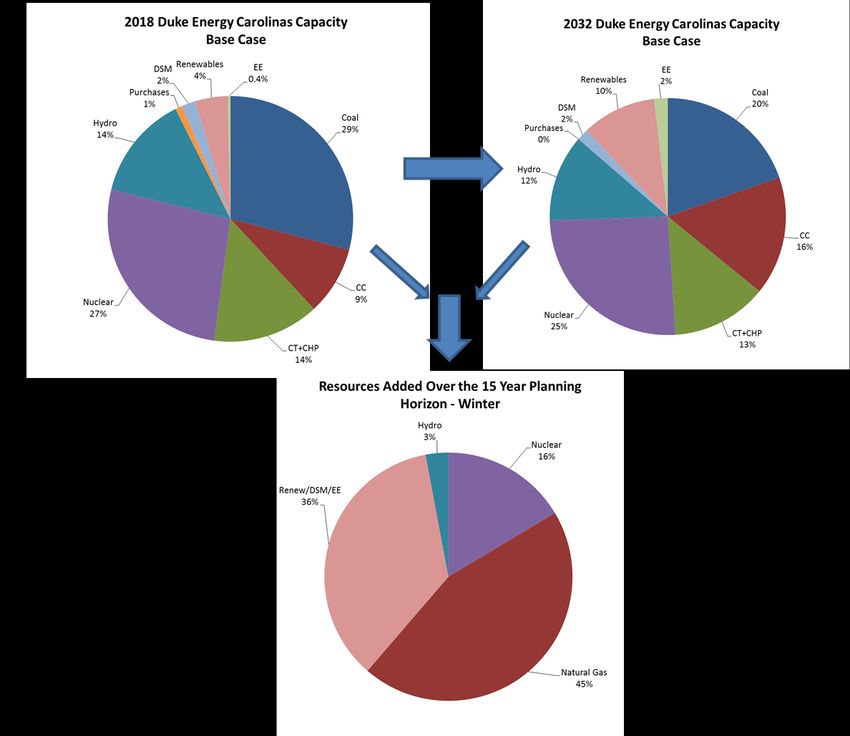
IRP 101: Planning Objectives

            NCUC       FERC     PSCSC   EPA

3/22/2018                                     3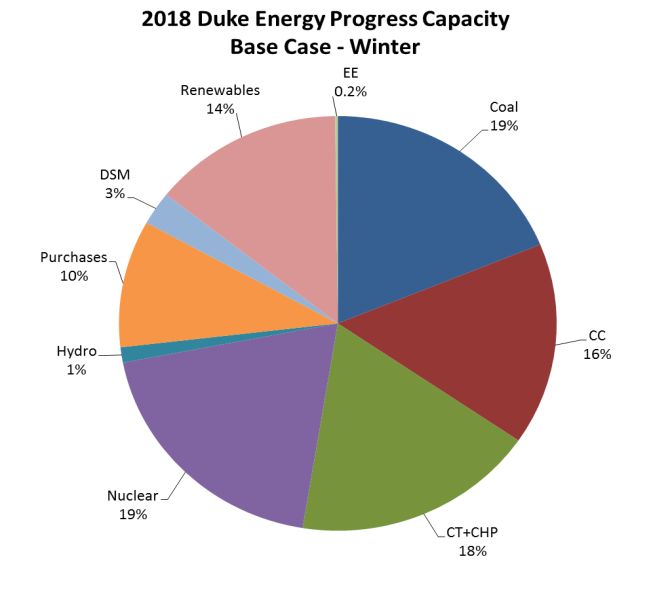
Resource Planning Overview
Growth in Customer Changes in Load Forecast
Consumption Impacts of Energy Efficiency (EE)
Impacts of Renewable Energy
Resource Plant Retirement
Retirements Purchase Power Contract Expiry
Load Resource Balance
Resource Need Reserve Margin
Non-conventional Resources
Remaining Resource Gap
2017 Resource Update Year
Plans Base Plan w/ Carbon Tax
Base Plan w/o Carbon Tax
Nuclear Relicensing Cases
3/22/2018 4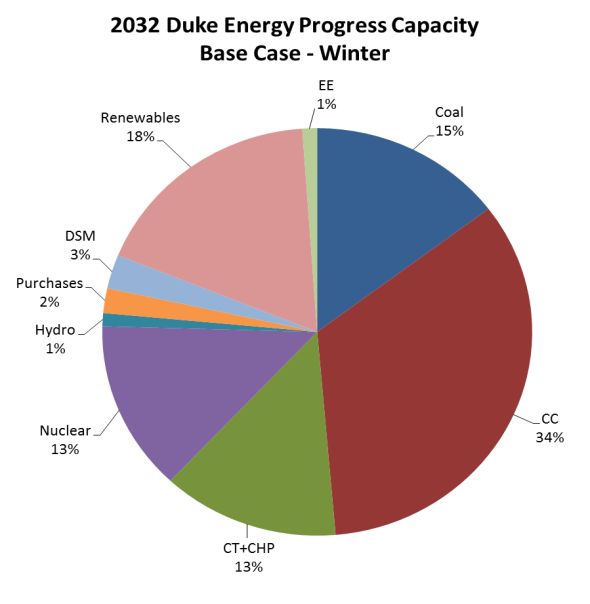
Load Forecast - System Winter Peak Comparison (2017 vs 2016)
• Residential growth projected at 0.9%
• Commercial growth projected at 0.6%
• Industrial sales growth projected at 0.7%
• Residential growth projected at 0.9%
• Commercial growth projected at 0.2%
• Industrial sales growth projected at 0.5%
Because of naturally occurring efficiency trends and government mandates, energy usage per customer is
slightly negative over the planning horizon.
Much of the growth in residential sales is driven by increase number of customers
3/22/2018 5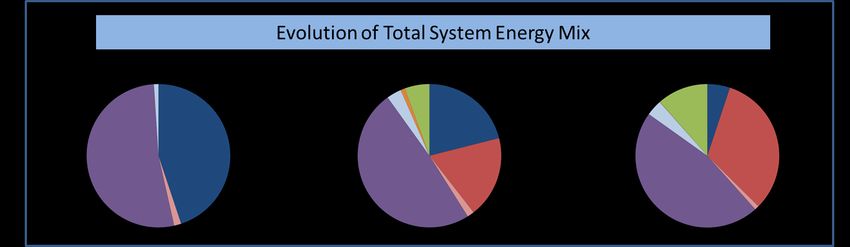
Reserve Margin Study
Reserve Margin = (Installed Generation – Peak Demand)/Peak Demand
Completed Reserve Study in 2016, and both DEC and DEP are now Winter Planning
Utilities (not necessarily winter peaking)
Minimum reserve margin in order to reliably meet peak winter demand is now 17%
Drivers prompting the need for the shift to Winter Planning include:
Increasing amounts of solar, and other summer-only resources, connected to the
systems and in the queue
Extreme cold temperatures and associated impacts on load experienced over
recent winter seasons
3/22/2018 6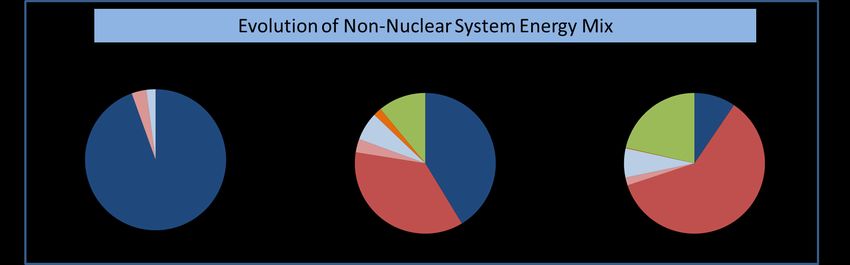
Nuclear Assumptions
DEC has filed a request to cancel the Lee Nuclear Project as originally envisioned
Oconee (DEC), Robinson 2 (DEP), Brunswick 1&2 (DEP) licenses up for renewal in the early
to mid 2030’s
License extensions would potentially allow units to operate for another 20 years and would extend life
of units to 80 years
Duke Energy has been working closely with the NRC on the process to relicense 60 year old units
Oconee is the first nuclear station being considered for relicense renewable
A final decision for relicensing Oconee, or any of the other Duke nuclear plants, has not been made
Consideration of new nuclear construction dependent on three main factors
Outcome of relicensing efforts
Natural gas prices
Carbon legislation
Base Case IRP – Update to last year, includes new nuclear in the early 2030s; no relicensing
of existing nuclear assets
Scenarios run both with and without relicensing under a carbon and no carbon scenario
3/22/2018 7Renewable Assumptions
House Bill 589 – Competitive Energy Solutions for NC (HB589) is a piece of legislation that introduces a competitive
procurement process to more economically procure solar
PURPA reform was acceptable to stakeholders like solar developers, environmental advocates, and academia if
continued renewable development was promulgated
Allows for “controllable” solar versus “non-controllable” solar that is predominant in the Carolinas today
Bill also introduced an 18-month wind moratorium in NC, updates to Net Metering, cost recovery changes, an
energy storage study, and various other customer offers (i.e. Large Customer Program; Solar Rebates, Community
Solar, Leasing)
Bottom line…more solar, sooner….
3/22/2018 8Natural Gas Prices
Katrina
& Rita Gustav
& Ike
Harvey
Rise in shale gas production has led to a sustained drop in natural gas prices
Natural Gas prices continue to be, and are expected to remain, at historic low levels
Price increases from impacts of hurricanes on gas production appears to have also
been mitigated as source of natural gas has moved north
3/22/2018 92017 IRP - Retirements and Contract Expirations
Contract Contract
DEC DEP
Retirements Expirations Retirements Expirations
2018 - - 2018 64 MW (Sutton) -
2019 - 41 MW 2019 384 MW (Asheville) 313 MW
2020 - 3 MW 2020 580 MW (Darlington) 2 MW
2021 - 86 MW 2021 - 567 MW
2022 - 6 MW
2022 - 379 MW
2023 - 6 MW
2023 - 260 MW
2024 604 MW (Allen) -
2024 - -
2025 - 1 MW
2025 - -
2026 - 6 MW
2026 - 1 MW
2027 - - 232 MW
2027 3 MW
2028 526 MW (Allen) 2 MW (Blewett/ Weatherspoon)
2029 - 14 MW 2028 4 MW
2030 173 MW (Lee 3) - 2029 - -
2031 - - 2030 797 MW (Robinson) 1 MW
2032 - 8 MW 2031 - 6 MW
2032 1,053 MW (Roxbor 1&2) 428 MW
3/22/2018 10Pacing Retirements and Building New Generation - DEC
• Retired approx. 1,700 MW coal since 2011
• Planning to retire 1,161 MW coal in the next 11 years
• Solar generation expected to increase by over 2,200 MW
over the next several years
• Increasing solar requires more flexible resources
3/22/2018 11Pacing Retirements and Building New Generation - DEP
• Retired approx. 1,700 MW coal since 2011 with
Asheville scheduled to retire in 2019
• Solar generation expected to increase by over
2,200 MW over the next several years
3/22/2018 12Generation Resource Diversity in the DEC System
A diverse resource mix allows Provides an ability to react
for flexibility in daily dispatch to both short-term and
dependent upon market longer-term changes in fuel
conditions prices dampening impacts of
cyclical fuel prices
3/22/2018 13Generation Resource Diversity in the DEP System
Newer resources, along …which is critical in
with modifications to helping to integrate
existing resources, create increasing levels of
more operational intermittent generation
flexibility…
Note: All capacity based on winter ratings except
renewables which are based on nameplate
3/22/2018 CONFIDENTIAL. FOR PLANNING PURPOSES ONLY. 14An Evolving System – A 30 Year View 3/22/2018 15
Primary IRP Takeaways Load forecast is lower in 2017, but resource retirements and expiring purchase contracts continue to drive the need for new generation in the early to mid 2020’s. Continued support for winter planning across DEC and DEP HB589 will accelerate the speed in which renewable generation expands in North and South Carolina while also likely increasing the overall level of renewable generation in the Duke Energy territories. The addition of distributed solar resources paired with the retirement of central generation over the planning horizon will require significant investment in the transmission and distribution systems to accommodate changing power flows. Gas prices remain in the $3 per MMBtu range, and prices are expected to remain low into the future. While gas prices and environmental regulations are projected to continue to lower coal plant output, Duke Energy continues to maintain a diverse and flexible operating portfolio with significant increases in renewable and natural gas based resources. 3/22/2018 16
Questions / Comments

3/22/2018                          17
18
You can also read


