Elephants. Not commodities - Taken for a ride 2 - cloudfront.net
←
→
Page content transcription
If your browser does not render page correctly, please read the page content below
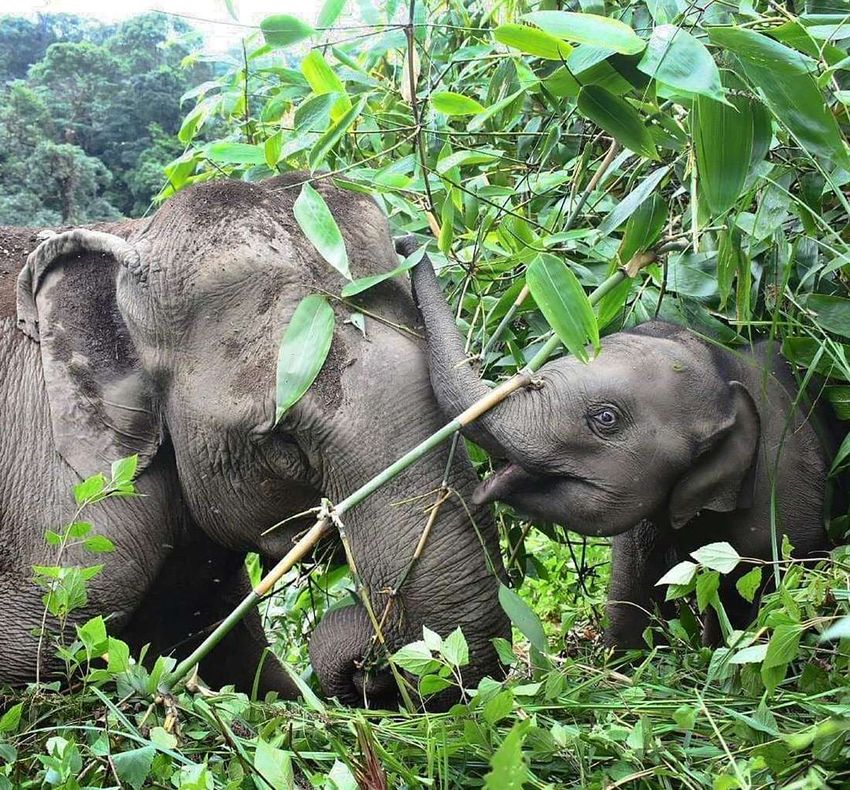
Elephants.
Not commodities.
Taken for a ride 2
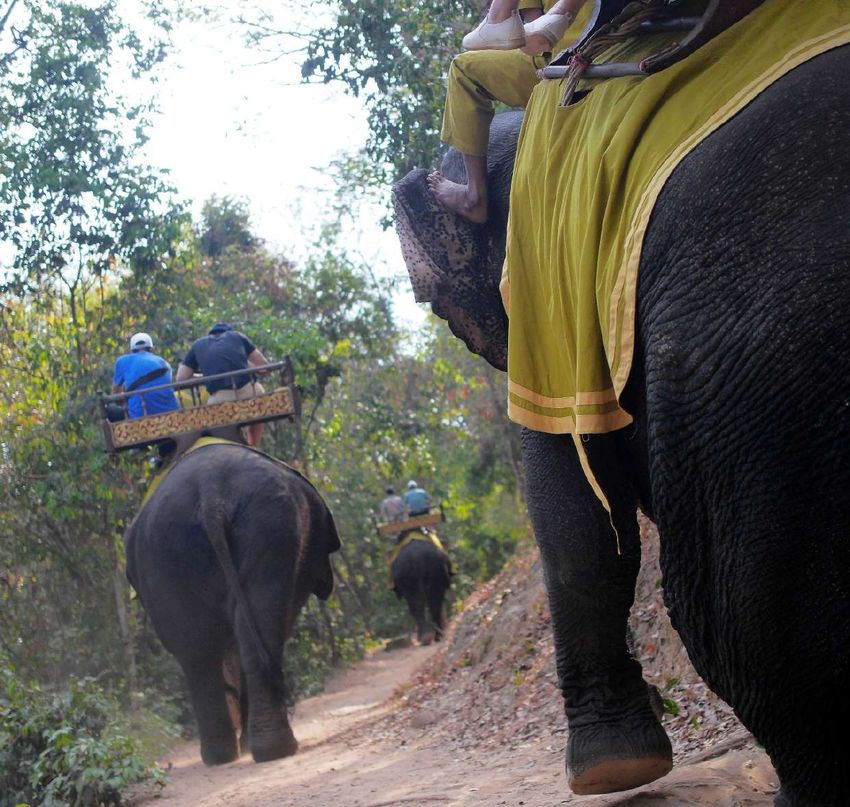
Cover image: Saddled elephants giving tourists rides at a venue in Cambodia.

                                                                               Elephants. Not commodities – Taken for a ride 2   2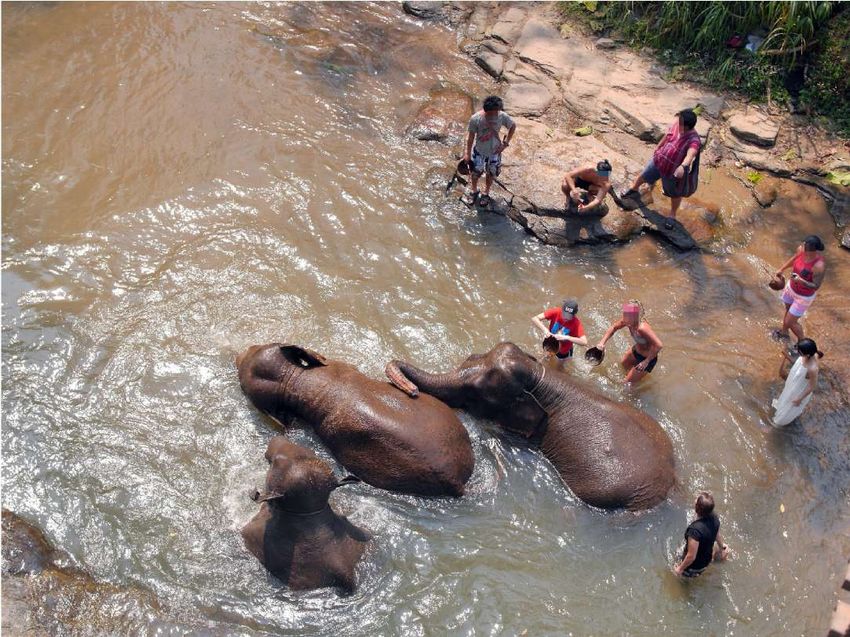
Contents
World Animal Protection is      Elephants. Not commodities – Taken for a ride 2
registered with the Charity
Commission as a charity and
with Companies House as a       Acknowledgement                                                                     4
company limited by              Foreword                                                                            5
guarantee. World Animal
Protection is governed by its   Executive summary                                                                   7
Articles of Association.

Charity registration number     Introduction                                                                        11
1081849
                                Species information and population                                                  13
Company registration number
4029540                         The myth of the domesticated elephant                                               14

Registered office 222 Gray’s    Tourist perceptions of captive elephants                                            15
Inn Road, London WC1X           Risks of elephant interactions to people                                            15
8HB
                                Captivity and welfare – what to consider about the wellbeing of elephants           17

                                Results                                                                             20
                                Animal welfare conditions at elephant tourism camps in Asia                         21
                                          Methodology                                                               21
                                          Findings                                                                  22
                                          Thailand                                                                  29
                                          Other countries                                                           35
                                Documenting the common methods of elephant training in Thailand                     40
                                Socio-economic study of Thai mahouts                                                45
                                Tourist attitudes, motivations and behaviour                                        47
                                The role of the travel industry                                                     54
                                Economics of the elephant tourism industry                                          58
                                          High economic value drives exploitation                                   61
                                Covid-19 impact: an opportunity to build back better                                63
                                Conservation value and captive breeding                                             64

                                Conclusions                                                                         67
                                Life in captivity                                                                   67
                                A way forward                                                                       68

                                Appendix 1                                                                          70
                                Appendix 2                                                                          71
                                Appendix 3                                                                          72
                                Appendix 4                                                                          73

                                References                                                                          74

                                                                           Elephants. Not commodities – Taken for a ride 2   3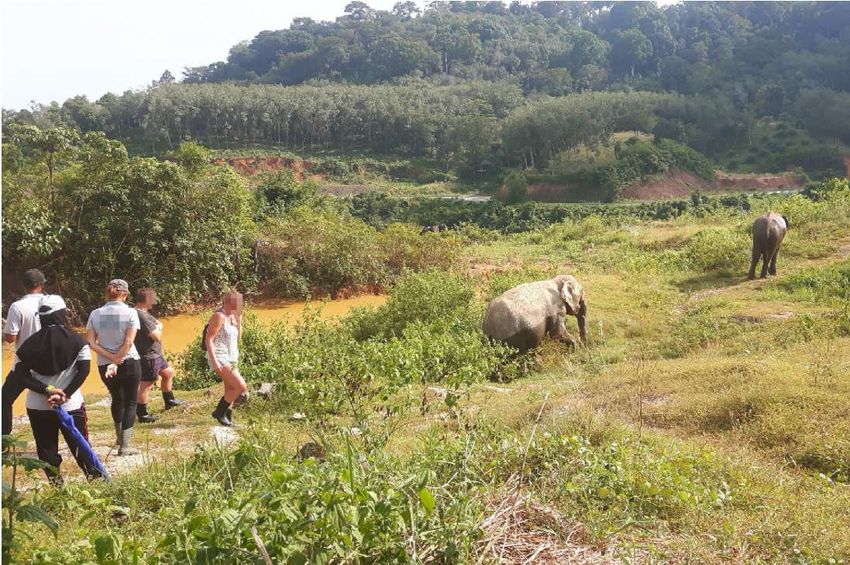
Image: A couple of elephants at a sanctuary in Thailand.

Acknowledgement
This report was authored by Dr Jan Schmidt-Burbach, PhD, World Animal Protection’s Head of Wildlife Research and Animal Welfare, and
Lindsay Hartley-Backhouse, MSc, Research Manager. It would not have been possible to complete without the dedicated contribution of the
following people (in alphabetical order): Rachel Ashwanden, Manoj Gautam, Tim Gorski, Elodie Guillon, Danielle Michon, Julie Middelkoop,
Faiza Mookerjee, David Owen, Nick Reale, Amy Squires and Madison Wigley.

                                                                                  Elephants. Not commodities – Taken for a ride 2   4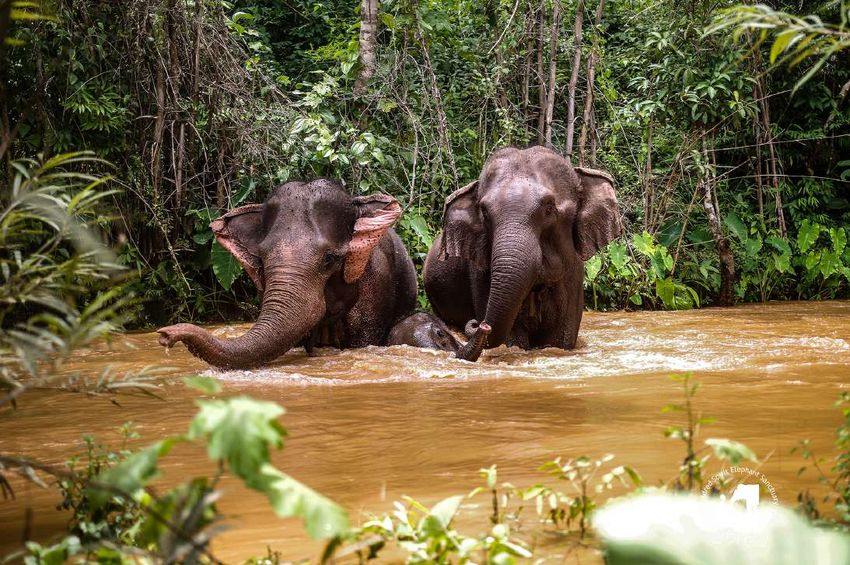
Foreword
By Jane Goodall, PhD, DBE

I have been fortunate, over the years, to have spent a good deal       supply even their most basic needs. They are forced to give rides
of time watching elephants in Tanzania. Of course, this is a report    to groups of people on their backs throughout the day, or to be
about Asian elephants, but the two species are very similar in their   washed by people as a so called ‘ethical attraction’. Some in
social behaviour. Both species form close knit groups of related       Thailand are trained to make drawings to sell.
females and young, led by a matriarch and these groups                 Many of these elephants have been captured as youngsters from
sometimes join up, into larger herds. They have a complex              the wild, others are bred in captivity, but all are torn from the love
communication system that is only now beginning to be                  of their mother and families. And then comes a cruel period when
understood, and are among the most intelligent of all animals, with    they are beaten into fear and submission. Like us elephants know
big brains, long memories and very distinct personalities.             joy and sadness, fear and depression. Like us they feel pain. This
I spent time with a family group where one mother had very             torture goes on until their will is broken and they obey to their
young twins – which is not common in elephants. It was charming        Mahout through fear.
to see how they were trying to get the hang of their trunks, which     I went to one of the better elephant camps in Nepal. There they
clearly got in the way when they were trying to suckle. Their          are trying to create an environment where the elephants can be
older brother was a pure delight to watch as he showed-off mock        released from their shackles and most of them were taken out to
charging our land rover several times, tossing his head from side      forage in the forest every day. Yet even there I watched two
to side so that his trunk swayed to and fro. One of the females,       males hobbling forward, their front legs tightly chained together to
possibly his mother’s sister, gently swatted him with her trunk so     prevent them from running off. It broke my heart and I am not
that he moved away from us. Suddenly he spied a warthog in the         ashamed of the tears I shed.
grass and charged him.
                                                                       The exploitation and cruelty as detailed in this meticulous report is
Elephants show great compassion for each other. As one                 all the more shocking because in both Buddhism and Hinduism
wounded female lay dying the members of her group formed a             the elephant is revered. The Hindu God of Beginnings is
close-knit group around her, stroking her body with gentle trunks,     Ganesha or Ganesh, depicted with the head of an elephant. In
trying to help her to her feet. They stayed until she died. And        Buddhism the elephant stands for strength, honour, patience,
returned next day to cover her body with branches and leaves.          peacefulness, and wisdom. Both these religions teach respect for
African and Asian elephants are both listed as endangered, and         animals. Mahatma Gandhi wrote that “a nation can be judged by
for both, habitat loss is a major factor. As human populations         the way it treats its animals”. By this criteria most countries
expand, elephants come into conflict with villagers when they raid     exploiting captive elephants and other animals would get very
crops. Both in Africa and Asia elephants earn tourist dollars, but     low marks.
whereas in Africa this is mostly through wildlife viewing, Asian       As I write, the COVID-19 pandemic has affected every country
elephants are ruthlessly exploited in captivity. Sangita Iyer’s        and caused great suffering, loss of jobs and economic chaos. The
acclaimed documentary “Gods in Shackles” provides tragic               tragedy is that to some extent we have brought it upon ourselves
insights into their abuse for ceremonies at temples. And it is Asian   through our disrespect for the environment and our disrespect of
elephants who have been forced to perform for people, trained to       animals. Zoonotic diseases are on the increase because we are
stand on their heads, walk upright, or to carry paying visitors on     creating ideal conditions for pathogens to spill over from animals
their back to walk in circles. Their situation is made more            to humans – in the wildlife markets of Asia, the bushmeat markets
intolerable because of cruel training, prodding with a pole with       of Africa, the factory farms of today’s intensive animal agriculture
an iron spike called a bull hook, and shackling in between tourist     and the trafficking of animals and their parts for food, medicine or
performances.                                                          exotic pets. Tuberculosis, one of the 10 most deadly diseases, has
This report is the result of a 10-year study of the thousands of       repeatedly spilled over from humans to elephants, and infected
captive Asian elephants used and horribly abused for the               elephants can infect humans.
entertainment of tourists, mostly kept in conditions that do not

                                                                                    Elephants. Not commodities – Taken for a ride 2        5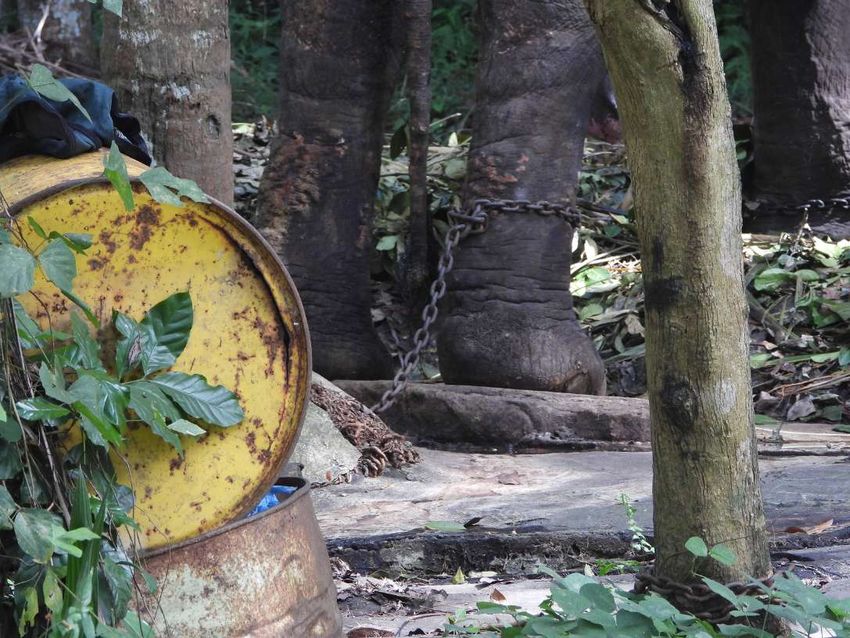
It is to be hoped that this pandemic will lead to us developing a         more people are understanding that we humans are not the only
new relationship with the natural world of which we are a part            ones with personalities, minds capable of solving problems and,
and on which we depend. We must recognize the importance of               above all, emotions. What was acceptable in the past is no
intact ecosystems in which every species of animal or plant has a         longer acceptable as our understanding increases.
role to play in the tapestry of life. Tragically we are losing
                                                                          Of course, those whose livelihoods depended on the exploitation
species at an unprecedented rate – we are in the midst of the 6th
                                                                          of these amazing beings, the mahouts and the owners, must be
great extinction, and this one is caused by us. To continue to
                                                                          helped to find other ways of making a living that are both
capture or kill elephants in the wild is leading to their extinction in
                                                                          profitable and ethically acceptable.
the wild, to the detriment of the habitats where they live. To
continue to exploit them in captivity, whether wild caught or             This report provides insights and propositions that, if followed,
captive born, is to perpetrate unacceptable cruelty to highly             could ensure that the current generation of captive elephants kept
intelligent social and sentient beings.                                   for commercial tourism is the last.

More and more tourists are becoming educated and demanding                Future generations of elephants must not experience captivity –
elephant friendly experiences – safaris to see them in the wild or        they should thrive in their natural habitat. I pray we all do our part
sanctuaries where rescued elephants are rehabilitated. More and           to ensure this vision comes true.

                                                                          Jane Goodall, PhD, DBE
                                                                          Founder, the Jane Goodall Institute and UN Messenger of
                                                                          Peace

Image: Two elephants at a sanctuary in Thailand

                                                                                      Elephants. Not commodities – Taken for a ride 2         6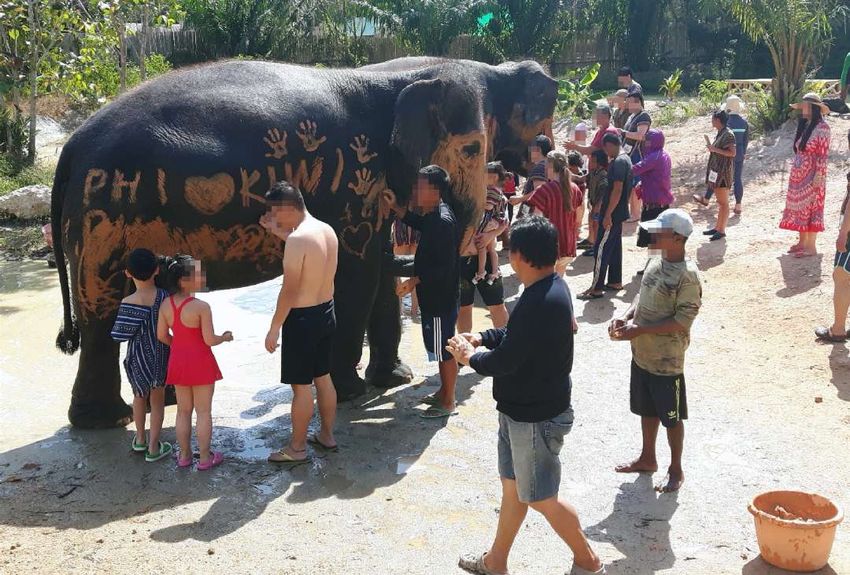
Executive summary
         v

This report documents the plight of the 3,837 elephants used in         welfare. Our researchers visited elephant tourism venues offering
tourism in Thailand, India, Laos, Cambodia, Nepal, Sri Lanka and        a range of entertainment activities including rides, shows, elephant
Malaysia as of January 2020. It features elephant living                washing, feeding, selfies and observation.
conditions, training, breeding, the status of the industry, academic    Our data was collected through in-person observation of the
research – regarding welfare and conservation – and is part of          elephants, tourism activities and living conditions as well as
our 10 years work in the region. Over these years we have               through informal conversations with staff on site. Photographs and
conducted more than 1,000 visits to more than 350 elephant              occasionally videos were taken to document the findings.
entertainment venues, conducted several global public surveys,
engaged with hundreds of travel companies and associations,
and been working with elephant venues on the ground.                    Ongoing suffering – but also some positive changes
Despite greater demand for ‘ethical tourism' and awareness of           From January 2019 to January 2020, our researchers assessed
the distress caused by elephant rides, the vast majority of captive     the welfare conditions of 3,837 elephants at 357 venues. In the
elephants in Asia still endure widespread and lifelong cruelty,         Asian countries evaluated for this report we found 2,390 (63%)
living in severely inadequate conditions.                               elephants suffering in severely inadequate conditions at 208
And their situation is likely to get worse because of the numbers of    (58%) venues. Improved, yet still inadequate conditions, were
captive elephants still being bred for the tourist industry and the     experienced by 1,168 (30%) elephants. Only 279 (7%)
economic devastation caused by Covid-19.                                elephants were kept in truly high-welfare observation-only venues.

Pre-Covid-19 we estimated that the entire captive elephant tourism      We documented distressing conditions at venues with severely
industry generated between US$581.3 to US$770.6 million of              inadequate welfare conditions. Frequent short chaining,
sales per year on the back of elephant suffering. Now, with very        demanding activity schedules for the elephants, limited possible
few tourists, owners and venues are struggling to feed their            social interaction between elephants and conditions that allowed
elephants and pay their workers.                                        for very little natural behaviour were common.

Throughout our research we have consistently found distressing          Venues with improved, yet still inadequate conditions often offered
cruelty to captive elephants in all countries. It involves separation   half or full-day elephant washing or bathing experiences. Despite
of mothers and calves, harsh training methods, restriction of           tourists’ perceptions that elephant washing, and bathing venues
movement, poor nutrition, limited or no veterinary care, social         provide high welfare to elephants, our researchers expressed
deprivation and punishment. In most tourist venues the elephants        concerns about these attractions. Although our research shows
are chained for long periods when not needed for tourism                that venues offering bathing activities typically offer better welfare
activities, often in inadequate shelters featuring concrete floors      conditions than riding venues, they still have significant welfare
and unhygienic conditions. They will typically have little or no        problems. These facilities were often misleadingly promoting
social interaction with other elephants and are made to perform         themselves using terms like 'sanctuary'; 'rescue centre' and
strenuous and stressful activities. Our researchers also noted many     'ethical'.
venues actively trying to breed more elephants into captivity. This     The high welfare, primarily observation-only venues allowed the
not only fails to address the core problem of elephant captivity,       animals to behave more naturally and within natural habitats.
but also reduces the limited resources available to the elephants       Visitors at these venues had very limited or no direct interaction
already in the industry.                                                with the elephants. They were able to enjoy observing elephants
                                                                        being elephants, without human interactions, while the mahouts
                                                                        continued to supervise their elephants remotely.
Assessing elephant welfare conditions

We assessed elephant welfare using nine recognised criteria
considered to have a significant direct impact on an elephant’s

                                                                                   Elephants. Not commodities – Taken for a ride 2        7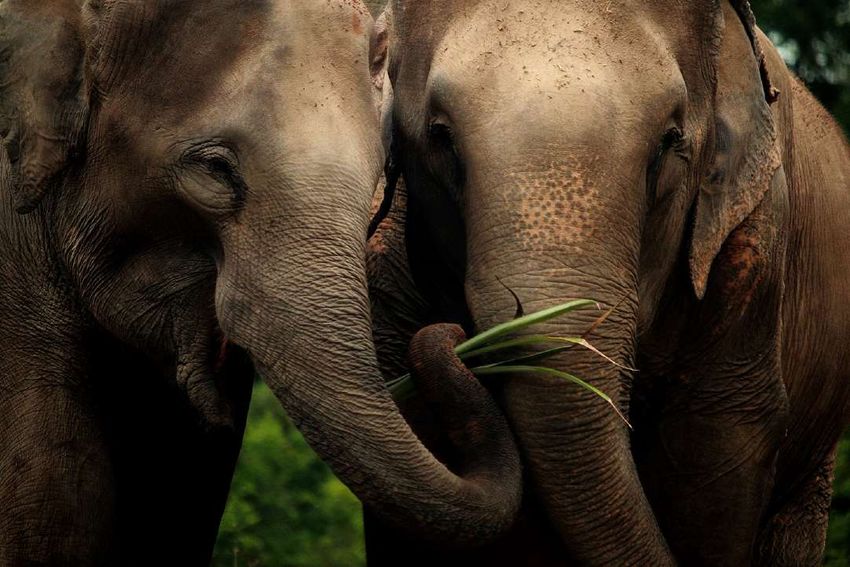
Thailand – centre of captive elephant tourism                           Nepal

Nearly three quarters of the elephants in Asia are used in              We assessed 55 venues with 143 elephants. The number of
Thailand (73%, 2,798) which attracted 39.8 million tourists in          elephants at tourism venues in Nepal has decreased by 8%
2019. Our research estimates that about 10.9 million (28%) of           between 2015 and 2020, from 155 to 143 elephants. We also
those rode or planned to ride an elephant while on holiday in           found that between 2015 and 2020, the percentage of
Thailand.                                                               elephants living in severely inadequate conditions decreased, and
                                                                        those living in improved conditions at medium welfare venues had
Our 2019–2020 research identifies Thailand as a continuing
                                                                        increased. Since 2015 several smaller scale projects have been
hotspot for elephant suffering. This is because of the number of
                                                                        initiated that aim to provide observation-only attractions for tourists,
elephants involved and the scale of cruelty inflicted due to tourist
                                                                        providing higher welfare to a few elephants.
numbers and demand.
The overall number of captive elephants used for tourism has
increased by a shocking 70% in just 10 years. Between 2010              Laos
and 2020, there was a dramatic 135% increase in the number of           We assessed 11 venues with 105 elephants. The number of
elephants living in the very worst of conditions in the country. Out    venues has increased by 83% (6) and the number of elephants by
of 2,798 elephants, we found that only 5% (144) were kept in            78% (46) elephants since 2015. We found 48% (50) elephants
high welfare conditions.                                                living in severely inadequate conditions and 15% (16) living in
                                                                        improved conditions at medium scoring conditions. Thirty seven
                                                                        percent (39) of elephants lived in two high welfare venues. In
India
                                                                        Laos, during 2019–2020, more elephants were living in better
India is home to the second highest number of elephants used in         conditions, and fewer were living in the worst than in 2015.
tourism out of the countries in our report. Twenty one tourism
venues housing 509 elephants were assessed. We found that
                                                                        Malaysia
44% (225) of the elephants were kept in severely inadequate
conditions. Fifty one percent were housed in medium welfare             We assessed 30 elephants at the sole identified elephant tourism
venues. Just 4% of the assessed elephants lived in higher welfare       venue. This was the first year including Malaysia in our
conditions. Seventy percent of elephants were housed at venues          assessments.
offering rides.

Sri Lanka
In Sri Lanka, we identified and assessed 13 venues, housing 188
elephants. This is an increase of 13% or 22 elephants held              Image: An elephant giving rides at a venue in Thailand

captive since 2015. More elephants were living in severely
inadequate conditions – 24% (46) compared to 22% (36) of
elephants in 2015. However, we found 28% (52) of elephants
living in high-welfare conditions at a single venue, Elephant Transit
Home. Here there is a clear policy against elephant entertainment
and the ultimate aim is to reintroduce their elephants into the
natural habitat.

Cambodia
We assessed 10 venues with 64 elephants. Thirty eight percent
38% (24) of elephants were living in severely inadequate
conditions. This has decreased from 67% (24) of elephants in
2015. Forty two percent (27) were living in medium scoring
venues with improved conditions. In 2015 there were no
elephants at any middle scoring venues.

                                                                                      Elephants. Not commodities – Taken for a ride 2        8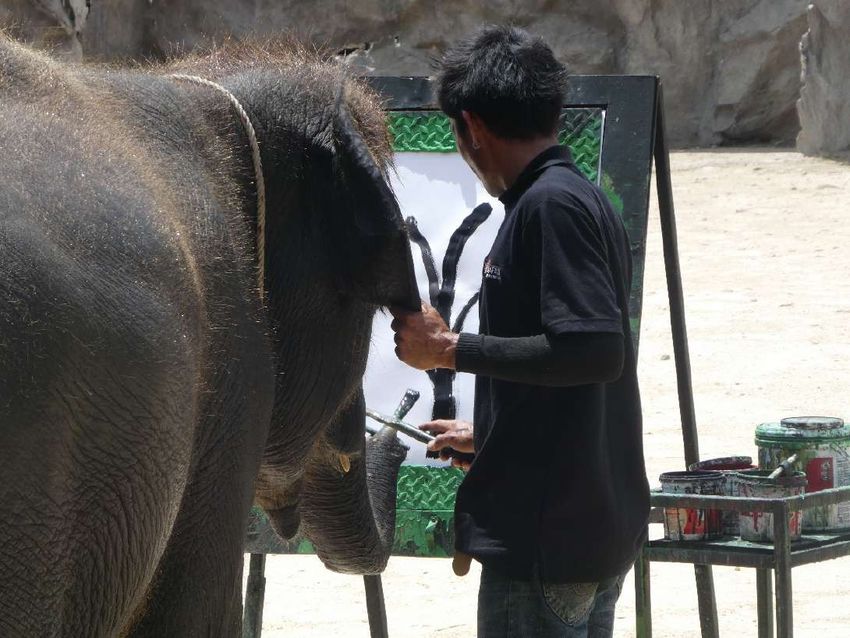
Training cruelty – lasts a lifetime                                     Changing tourist attitudes

Footage was made available to World Animal Protection                   Our consumer surveys show that attitudes towards wildlife
documenting the common practices of training elephant calves for        entertainment in China and other Asian countries are changing, as
the tourism industry. This footage was made during 2019                 the public become more aware of animal welfare issues. Several
following elephant trainers in Thailand who train 30-40 elephants       industry-leading travel companies in China have joined our list of
annually for the industry. It includes harrowing footage of eight       more than 250 travel companies worldwide pledging to stop
calves being trained.                                                   selling elephant rides and offer humane alternatives instead.

The footage documents the traumatic separation of two-year-old          More tourists from China visit Thailand than from any other country
calves from their distressed mothers. This was followed by the          – nearly 11 million visited in 2018. And elephant riding has
physically and emotionally cruel methods used to establish the          usually been on the bucket lists of many. However, from 2016 to
dominance needed to make elephants ‘safe’ for the tourist               2019, there has been a decrease: 23% of Chinese tourists took
industry.                                                               part in elephant rides in 2019 compared to 36% in 2016.

Methods included: calves put in a ‘crush’ – two heavy, wooden           In 2016, tourists interviewed in Thailand cited riding an elephant
frames – to stop them moving; chaining; prodding and hitting if         as their favourite activity (36%), and observing elephants as their
they showed any signs of defensive behaviour or aggression.             least preferred activity (14%). By 2019, things had changed
These extremely cruel methods were mixed with offering rewards          dramatically. Seeing wild animals in their natural habitat (37%)
when the elephants complied, and often involved some spiritual          and observing elephants (24%) became the two most preferred
components as well.                                                     activities. Eighty five percent of tourists interviewed in our most
                                                                        recent global poll believed that tour operators should avoid
Similar or variations of these training methods are used throughout
                                                                        activities that cause suffering to wild animals.
Asia, but the cruelty of them is frequently denied or underplayed
by venues and trainers. They are also not failsafe; mahouts
(handlers) and tourists are injured or killed by elephants every        Ending the suffering
year.
                                                                        The Covid-19 pandemic has shown the vulnerability and
In a separate study, conducted together with the Faculty of Social      dependency of captive elephants on tourism – venues have been
Sciences of Chiang Mai University, we found that thirty one             struggling to feed their animals. The food costs for all elephants in
percent of the mahouts we interviewed had been sick or injured          Thailand alone are estimated at more than US$900,000 per
through their work; and of those almost half were still in pain from    month; a similar amount is needed for the salaries of their
their injuries when interviewed.                                        caretakers. World Animal Protection, other international NGOs
                                                                        organisations, and local organisations have had to step in to stop
Other less punishing training methods have been tried but are
                                                                        these iconic animals starving.
deemed ineffective in reliably protecting tourists and their handlers
from harm if close contact with elephants continues to be required.     Covid-19 has also shown the close link between diseases that
                                                                        can be transmitted from animals to people. Tuberculosis has long
                                                                        been documented in both elephants and the mahouts that look
Breeding matters                                                        after them – although this risk to human health is rarely publicised.
Many venues argue that they keep and breed elephants for                Change must start now to protect Asia’s elephants and over a
conservation purposes. However, elephants reared and kept in            period that gradually:
tourist venues are unlikely to ever be successfully released in the
wild.                                                                   •    reduces the number of captive elephants used for
                                                                             commercial tourism
The breeding and use of captive elephants in tourism is a lucrative     •    decreases demand for captive elephant tourism
business and is driven by tourist demand, commerce and profit.               entertainment attractions
Most captive elephants in Thailand today have been bred                 •    improves conditions for the current generation of captive
specifically for commercial tourism. Across most of Asia, elephants          tourism elephants and their caretakers.
are commodities and legally traded as livestock. Prices are as
high as an expensive car.
Unfortunately, more captive elephant breeding is likely to be
happening during 2020 and beyond as owners try to mitigate the
economic effects of Covid-19.

                                                                                    Elephants. Not commodities – Taken for a ride 2        9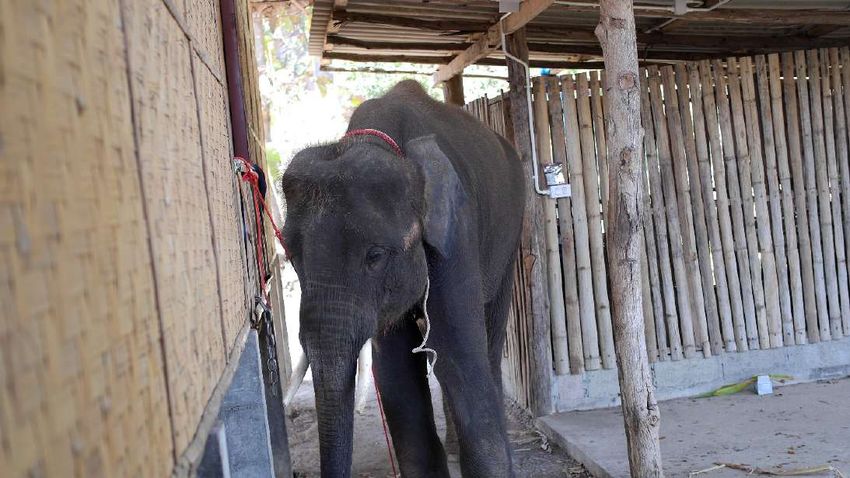
Governments must prevent captive breeding and the intake of any wild elephants for commercial use. They should also support transitions
to high-welfare observation-only venues. In this report we detail how such venues can be successful businesses using the examples of
Thailand’s ChangChill and Following Giants.
Travel companies and individual travellers are key to change. They should choose to only promote and visit elephant-friendly venues
offering observation-only experiences, or choose to observe elephants responsibly in the wild.
Mahouts must be part of the improvements to venues and to elephant welfare. They need better employment packages and living
conditions. They also need career development that will take them beyond the lifespan of the elephant in their care.
This generation of elephants must be the last to be kept in captivity. Elephants are wild animals – not entertainment commodities. They need
our protection to stay in the wild where they belong

                                 Our researchers assessed the welfare conditions of
                                         3,837 elephants at 357 venues.

                                                             63%
                                elephants suffering in severely inadequate conditions.

                                                             30%
                                experienced improved, yet still inadequate conditions

                                                               7%
                   of the elephants were kept in truly high-welfare observation-only venues.

                                                                                      Elephants. Not commodities – Taken for a ride 2     10
Image: An elephant stands chained amidst rubbish at a venue in Sri Lanka. This is a far cry from their life in the wild, where they belong.
.
Introduction
Worldwide, wild animals are taken from the wild, or bred in On the other hand, some wildlife attractions can be considered
captivity, to be used for entertainment in the tourism industry. Visits humane and ethical, contributing to the protection of wild animal
to wildlife tourist attractions are estimated to account for up to 20- populations through tourism’s full economic potential. These
40% of global tourism.1 attractions may include observing wild animals responsibly in their
natural habitats from a safe and respectful distance. They may
Wildlife attractions, such as those where captive wild animals are
also involve viewing them in genuine sanctuaries or wildlife-
used for entertainment1, are among the most popular with tourists.
friendly facilities that are part of efforts to phase out captive wild
These attractions are highly profitable and a market that has
animal use.
grown considerably.1,2
i
Wildlife entertainment includes activities that risk portraying or trivialising wild animals as pets, novelty objects, comedians, or domesticated species; that encourage animals to
perform behaviours that are either unnatural, unnecessary, or harmful; that involve procedures that may be considered stressful or harmful to all or individual animals; that
expose visitors or handlers to unnecessary risks of injury or disease; that are commerce-driven beyond sustaining maintenance of the animals at facilities striving to phase-out
captive wild animal keeping; or that may risk replication of similar activities in harmful ways in other places.
Elephants. Not commodities – Taken for a ride 2 11However, many other wildlife tourist attractions rely on practices We encourage people to be animal-friendly tourists and ask
that require keeping wild animals in captivity for handling, posing travel companies to replace sales and advertisement of wildlife
with, riding or watching in shows. These attractions lead to severe entertainment with activities not involving animal suffering. The
wild animal suffering and in many cases may pose a risk to campaign also asks venues to adopt more humane practices for
species conservation.3 their existing captive wild animals, and encourages a long-term
transition towards a humane tourist attraction model.
Until early 2020, international tourism growth was consistently
strong and regularly outpaced the global economy.4 In 2019 1.5 Since 2010 more than 250 travel companies have joined us by
billion tourist arrivals were recorded globally. Wildlife tourist committing to end all sales and promotion of venues offering
attractions account for a large proportion of tourism; this highlights elephant rides and shows. Instead they have pledged to offer
the need to address the increasing demand pressure on captive more humane alternatives. These include visits to genuine elephant
wildlife tourism attractions. sanctuaries to support captive elephants in need, or responsible
viewing of elephants in the wild.
The dependency on tourism also leads to severe risks for captive
wild animals when tourists fail to come. In January 2020 the Although the proliferation of wildlife entertainment tourism is a
United Nations World Tourism Organization (UNWTO) global trend, it is most evident in Asia, where millions of tourists
confirmed tourism as ‘a leading and resilient economic sector, flock each year. Upon arrival in Thailand, Asia’s second most
especially in view of current uncertainties’.4 popular tourist destination 5, tourists are bombarded with
advertising for wildlife entertainment attractions. They are invited
But then the Covid-19 pandemic hit and changed the situation
to: 'Ride an elephant', 'Be a mahout for a day', 'See elephant
dramatically. It stopped tourism dead in its tracks and led to the
shows', 'Take selfies cuddling tigers'.
suffering of thousands of captive wild animals as their facilities
struggled for income. Over the years, many venues have adopted language that aims
to address the increasing concerns by tourists around the
There is limited accurate data on the global scale of the industry
wellbeing of animals. They use words such as 'ethical', 'retirement
for specific species, the welfare conditions of the animals and the
home', 'rescue', 'love animals', in their marketing material. To
impact of this industry on the conservation status of wild
what degree these terms reflect reality is mostly impossible for
populations. A study commissioned by World Animal Protection
tourists to confirm.
through Oxford University's WildCRU found that out of 24 types
of wildlife tourist attractions 14 (involving 120,000–340,000 We have conducted three comprehensive, empirical studies, over
animals) had negative conservation impacts. Eighteen (involving 10 years, on the welfare conditions of captive tourism elephants in
230,000–550,000 animals) had negative welfare impacts. 1 Asia. The first study from 2010 covered only Thailand. In the
2015 and the 2019–2020 studies we included most countries
Despite these figures, very few tourists gave negative feedback on
with significant captive elephant tourism.6,7 Between 2010 and
these attractions because of conservation or welfare concerns.
2015 we detected a 30% increase in the number of tourism
The WildCRU study concluded that wildlife tourist attractions have
elephants in Thailand. Three out of four elephants were living in
substantial negative effects unrecognised by, or concealed from,
poor and unacceptable conditions. The conditions were similar in
most tourists. This suggests an urgent need for tourist education
other Asian countries as well.
and regulation of wildlife tourist attractions worldwide.
Wildlife entertainment is one of the most worrying types of wildlife
tourist attractions. It involves animals being taken from the wild or Our main points of concern were:
bred in captivity and removed from their mothers at a young age.
• extreme physical restraint by chaining during day and/or
They are then forced to endure cruel and intensive training to
night
make them perform and interact with people for the tourist
entertainment industry. • limited or no opportunity for social interaction with other
elephant individuals
Global efforts are needed to address the welfare and
conservation concerns inherent in this industry and lead to a • participation in stressful, and in some cases, extremely
phase-out of wildlife entertainment. demanding show activities
Our Wildlife. Not Entertainers global campaign is based on the • non-existent or insufficient veterinary care
vision that wild animals belong in the wild – not in entertainment.
• inadequate nutrition
This campaign focusses on captive elephant, tiger and dolphin
tourism. We believe these animals are flagship species, and • use of pain-inflicting or fear-instilling tools to train and retain
changes for them can trigger changes across the entire wildlife control over elephants.
entertainment industry.
Elephants. Not commodities – Taken for a ride 2 12This report expands and updates our research from 2010 and Species information and population
2015. Our results and comparison over the past 10 years have
produced one of the most comprehensive studies of the welfare Asian and African elephants are the largest land-based mammals
conditions for captive elephants in the tourism industry. In this alive. Adults can weigh between 3,000–5,000kg with a body
report we have also included our global public attitude surveys length of more than 6m. Elephants are long lived – up to about
and industry analyses. Our comprehensive research will help 70 years in the wild, although their lifespan in captivity is generally
expert travel industry stakeholders, governments, elephant experts considered shorter.8
and regular travellers make informed decisions to better protect Pregnant females have a gestation period of around 20 months.
elephants. They take care of their offspring for the first four to five years and
The effects of the Covid-19 pandemic illustrate the urgency of continue to supervise them for several years after that. Adult males
reversing the intentional dependency of endangered, complex travel alone, joining a female group for periods or forming
animals such as elephants on commercial tourism. The pandemic temporary male groups.
demonstrates the risks and consequences to us all of close Elephants are some of the most socially-developed mammals in
interactions with captive wild animals. the world and can arrange themselves into a complex social
The loss of tourism and the lack of compensative government structure. They form multi-tiered societies, based on mother-calf
actions has led to severe challenges in maintaining the elephants units, bonded joint-family units (that stay together), and clans that
that are bred specifically for the tourist industry. Although World coordinate their behaviour.9
Animal Protection, many other groups and initiatives stepped in to Asian elephants are considered endangered by the International
support elephants in this difficult time, the pandemic clarifies that Union for Conservation of Nature (IUCN). They are on Appendix
keeping captive elephants in commercial tourism must be phased I of the Convention on International Trade in Endangered Species
out. (CITES), which prohibits commercial international trade of
And this phase-out must be supported by responsible elephants and their elephant parts.
governments, the travel industry and elephant protectionists. It is Constant human encroachment into the elephant’s habitat and
vital that there are solutions to protect the existing captive
poaching for ivory or live animals has caused the Asian elephant
elephants and that captive breeding for commercial purposes is population's rapid decline in recent decades. Estimates of the
ended.
total population range between 45,671 and 49,028 elephants.10
Elephants need to be protected in the wild where they belong
and where they can serve their important ecological role. Tourism
entertainment is no adequate place for them.
Image: Tourists ride elephants at a
venue in Thailand.
Elephants. Not commodities – Taken for a ride 2 13The myth of the domesticated elephant
There are three commonly recognised elephant sub-species. ‘Domesticated’ is a term often used to describe elephants in
These are: the Indian elephant (Elephas maximus indicus) on the captivity, to imply they are distinct from their wild counterparts.
Asian mainland; the Ceylon elephant (E. m. maximus) in Sri Lanka, Tourists and travel industries are exposed to this term in advertising
and the Sumatran elephant (E. m. sumatranus) in Indonesia.10 and at elephant entertainment venues where it is communicated
Populations of these wild elephant species spread across 13 through educational materials and by guides and mahouts.
countries (or range states).11
Also, many tourist industry stakeholders in countries using captive
There are estimates of fewer than 500 elephants in the wild in elephants refer to them as 'domesticated animals'. They argue
each of Bangladesh, China, Nepal and Vietnam and fewer than domestication because of the long history of keeping elephants in
1,000 in Bhutan, Cambodia and Laos. The population of captivity. Even in scientific literature, a medium relied on for
elephants in the wild in Thailand is estimated to be between accuracy, the term is sometimes and incorrectly used to describe
3,126–3,341. India has the largest population with an estimated captive elephants.
27,312 elephants. 10
But elephants are not domesticated.14,15 They have never
There are also significant populations of captive elephants; these undergone the process of ‘domestication’: a long-term socio-
are estimated to constitute about one-third of all remaining Asian biological process. Although discussions continue on the exact
elephants and this ratio is likely to increase. In 2018, 14,930– definition of domestication, it is commonly agreed that
15,130 Asian elephants were assumed to live in captive or semi- domestication can only involve human-guided, selective breeding
wild conditions and were typically used for logging, village work, for no fewer than a dozen generations.16–18 In each generation,
tourism, or temple purposes.10 the offspring that carry the desired traits (eg strength, fur, size,
behaviour) are selected for further breeding.
Captive elephants are primarily sourced from the wild although in
some countries captive breeding has been practiced with some The term 'domestication' also always refers to a whole
success. Commercial gain has been identified as a prime population, so by definition an individual animal can never be
motivator for acquiring elephants.12 A report from the wildlife domesticated in its lifespan. A domesticated species is significantly
trade monitoring network TRAFFIC, reports the illegal capture of different from its wild cousin in its instincts, anatomy and the
79–81 wild elephants, between April 2011 and March 2013, emphasised traits desired by humans. While domesticated
for sale to the Thai tourism industry.13 animals still often display a range of natural behaviours, they differ
in the intensity of stimuli required to trigger a certain behaviour
Most of the animals were from Myanmar. There the capture of
change. This makes them easier to handle than their wild
elephants is considered a serious threat to the future survival of the
counterparts.
country’s wild population of around 2,000–4,000 Asian
elephants. TRAFFIC concluded: ‘Wild live elephants are being Throughout the 3,000-year human-elephant relationship, most
illegally captured to supply the lucrative tourism industry in elephants used by people have been captured from the wild. This
Thailand and urgent changes to the country’s legislation and means the long history of people using elephants is not a valid
elephant registration procedures are needed to stop the argument to label elephants as domesticated. Even today, most
trafficking.’ adult elephants originate from the wild, while others are typically
first or second generation captive-bred. Breeding is not done
selectively – yet selective breeding is a prerequisite in the
biological process of domestication.
Elephants are not
domesticated.
Elephants. Not commodities – Taken for a ride 2 14Most captive Asian elephants used for tourist rides today will still usually paints an inaccurate and often romanticised picture. This
have been captured directly from the wild. However, the exact reinforces the perception of elephants as well-cared-for pets,
number is difficult to validate as there are only incomplete adding to the enjoyment for the visitor and further fuelling support
databases available to verify origins. Various authors define the for this industry.
case of captive elephants as a classical example of animal
It can also be difficult for an untrained person to identify signs of
taming and training, not domestication. 15
elephant distress or discomfort. Apart from the typical
While elephants are not domesticated, their time in captivity and stereotypical swaying, distressed elephants do not always display
the close interaction with their human keeper imprints on the distress. Elephant body language can be difficult to interpret and
behaviour of individuals. Some authors suggest introducing is not comparable with the body language of domesticated
additional terminology between the outliers of ‘domesticated’ and animals people are familiar with.
‘wild’, such as ‘tamed’ or ‘captive wild animals’.16 However,
'tamed’ is commonly felt to be vague and potentially misleading
considering the persisting dangerousness of the animals. And the
word ‘captive’ could imply that the animal has been captured
directly from the wild, which is not the case for elephants born in
The usual visitor experience of
captivity.19
elephants in tourism paints a
Consequently, the term ‘captive wild animals’ most closely reflects
elephants in entertainment as they remain biologically identical to
their wild relatives and many still originate from the wild.20 This
skewed picture of a captive
label also allows for stricter regulations of the use of these
animals, recognising that their complex needs are identical to their
elephant’s life.
truly wild relatives. The term 'domesticated' is prone to misuse by
applying livestock regulations and keeping elephants
accordingly.14
Tourist perceptions of captive elephants Risks of elephant interactions to people
Captive elephants remain one of the most dangerous animals
The term ‘domesticated’ is not only inaccurate, it distorts tourist
used in tourism. Anecdotal sources suggest that for every male
perceptions, hinders conservation work and efforts to ensure
elephant in captivity, one human fatality will occur. Considering
better welfare of captive elephants. If animals are described as
that there are a few thousand bulls in captivity, this is a worrying
domesticated not wild, visitors are more likely to accept their
suggestion. It is unclear how many people each year are killed or
chaining for long periods, their confinement to small spaces, and
severely injured by captive elephants, but it is certainly higher than
their close contact with handlers and trainers.
with any other captive wild animal used by humans.
The term ‘domesticated’ implies that the animal has lost its wild
Our 2017 'Taken for a ride' report outlines that between 2010
instincts and, like cats, dogs and horses, has adapted successfully
and 2016, 17 fatalities and 21 serious injuries caused by captive
to a life of human companionship. For elephants, nothing could be
elephants in Thailand alone were reported by the media.7 Victims
further from the truth. The usual visitor experience of elephants in
were international tourists, local bystanders, or mahouts. Mahouts
tourism paints a skewed picture of a captive elephant’s life.
clearly bear the highest risk and so are the most frequent victims.
The few minutes a tourist spends with an elephant during a ride The number of unreported incidents is high; there is often no
do not reveal the elephant’s true life or what it has endured publicity unless a foreign tourist is involved.
before. Although elephant painting or playing football are clearly
Male elephants are most commonly involved in these incidents.
not natural to elephants, the venues rely on the ‘cute’, exotic and
During their ‘musth’ period, a natural and periodic phase of
novel factors of these activities appealing to tourists. And although
increased testosterone production, an elephant bull can become
the brief interaction of riding allows the tourist to appreciate the
unpredictable and often extremely aggressive. Even the most
elephant's bulk and beauty it hides the daily boredom, social
progressive elephant institutions struggle with the management of
isolation and confinement of captivity.
elephants in musth and chain them in isolation for the duration. This
Messaging communicated by tour guides and mahouts also does can be anything from a week in younger animals to up to two
not usually reveal the realities of the elephant’s life in captivity; it months in older ones.21
Elephants. Not commodities – Taken for a ride 2 15Elephants that turn aggressive and uncontrollable or start crucial for future studies to assess this risk and its impact on the
expressing severe stereotypic behaviour due to their captive health of tourists. It is also crucial that the risk of transmission of
environment are usually removed from the camps. They may be tuberculosis to elephants from people carrying the disease be
traded off to other places or isolated spatially. However, assessed too.
sometimes a tourism venue will ignore the signs of aggression and
There may be other diseases too. Sixty percent of emerging
urge a mahout to keep using the elephant to maximise profits.
infectious diseases are zoonotic, most are thought to originate
Other times a less experienced or over-confident mahout might not
from wild animals; close proximity to people elevates the risk of
recognise, or ignore these signs.
infection.32,33 If the Covid-19 pandemic has proven one thing, it is
Managing elephants is extremely high risk and highlights their that people should stay clear from handling wild animals. This
unsuitability for captive environments, especially when in direct includes trading wild animals for consumption, for supposed
contact with people. medical use or for tourist entertainment.
There are also public health concerns for people in close contact
with elephants. Tuberculosis in elephants has been well
recognised for centuries.22,23 Tuberculosis is a chronic disease
documented in captive Asian elephants worldwide including Managing elephants is
Thailand 24, Nepal 25 and in zoos in the USA 26. It has long been
recognised as an emerging zoonotic disease, with two-way extremely high risk and
transmission of the disease between people and elephants
evidenced in 1998.27 highlights their unsuitability for
Consequently, close contact between tuberculosis-carrying
elephants and people within confined workplaces poses a serious captive environments,
infection risk. Molecular studies on four elephants with tuberculosis
in Thailand indicated that the disease was most probably
transmitted from humans.24 Studies on tuberculosis in zoos in the
especially when in direct
USA found that Asian elephants carried the disease six times more
often than African elephants.28
contact with people.
Active and latent tuberculosis has been reported in 20% of
captive elephants in Malaysia and 24% of their mahouts with
indication of two-way transmission of the disease.29 In Nepal,
tuberculosis in captive elephants was first identified in 2002. Image: A male elephant at a Thai riding venue. Males are most commonly
During 2002–2009 seven captive elephants died from the involved in incidents injuring tourists and mahouts.
disease, and in 2011, 25% (11 out of 44) elephants tested
positive for tuberculosis.25
In 2018, an examination by the Animal Welfare Board of India
(AWBI) of 10 elephants at Amer Fort in India showed they had
tuberculosis; AWBI urged that they be removed from tourism
activities.30,31 The AWBI used a test that was internationally
accepted as standard for elephant tuberculosis testing.
Worryingly, in response, the Rajasthan authorities decided to use
a local, non-elephant specific test-kit to test these elephants again.
They concluded that the elephants were fit to continue being used
for tourist rides. Reliable screening for tuberculosis is rare, so the
actual health risk of tuberculosis carrying elephants is hard to
predict, but the results can have grave consequences.
This information raises serious questions about the public health
risk of elephant attractions that allow close contact between
tourists and elephants. Activities such as trunk kisses or giving
tourists trunk showers may facilitate a disease transmission. It is
Elephants. Not commodities – Taken for a ride 2 16Captivity and welfare – what to consider about the wellbeing of elephants
Animal welfare is about how an animal feels resulting from mental, physical and behavioural functions. Ensuring high standards of welfare
for elephants in captivity is particularly challenging. This is due to their physical size, complex social needs, high level of intelligence, large
home ranges, diverse diet, large behavioural repertoire, and natural habitat of tropical and subtropical climates and forests.
The following are some of the complex considerations relating to their natural habitat.
• As the largest terrestrial land mammal34, Asian elephants require a great deal of space and resources. They consume up to
300kg of food per day35 and forage up to 10km through dense forest36. Their home ranges vary between 30km² to 600km²
37
.
• Natural resources in the complex forest environment enable elephants to self-regulate their nutrient intake, particularly to
supplement dietary deficiencies and counter digestion problems.38 They are known to be very selective in what plants they eat.
They depend on the availability of between 20 to 75 different plant species in the wild.39–42 The forest also provides plenty of
stimulation for their highly developed olfactory receptors, which they engage daily for foraging, social communication and
reproduction43,44.
• Elephants are always close to a source of fresh water because they need to drink at least once a day. They also typically bathe
and often swim in water each day. Other common activities are mud and dust bathing, rubbing on trees, and exploring their
environment using their trunk.45
• Asian elephants are sensitive to environmental and social surroundings. Factors such as herd structure can have negative welfare
impacts46 and there is a wide range of individual variation in responses to environmental conditions47.
• Male elephants experience ‘musth’, an annual rise in testosterone levels that causes increased aggression. In captivity, violent
behaviour exhibited during musth can be a danger to surrounding elephants and people and is difficult to control without
intervention.48
• Asian elephants have complex social structures. They form multi-tiered societies with herds of up to 20 individuals.9 Herds display
a range of social and cooperative behaviours, including sharing the care of offspring. Studies have documented captive calves
spend up to 98% of time with different herd members during their first six months of life49 which is crucial for social development.
After birth, elephant mothers look after their offspring for the first four to five years and continue to supervise them for several
years after. Female offspring tend to remain in the mother herd all their life, while male offspring may leave the herd at between
10-15 years.50
• Elephants are highly intelligent animals with the capacity for complex thoughts and emotions.34 Evidence of a wide range of
cognitive abilities51 and emotional responses to stress and trauma52,53 have been documented.
• New research shows that we have much more to learn about behaviour and biology of Asian elephants. Due to the practical
difficulties of observing them in thick foliage in forest environments, we have a relatively limited understanding of their social
behaviour and structure in the wild.38,54 Therefore we cannot ensure they are suitably provided for in captivity.
Elephants. Not commodities – Taken for a ride 2 17In captivity, elephants will face situations which they would rarely,
or never experience in the wild.55 Understanding how captivity Intensively managed elephants
affects elephants and how to assess their condition has been a
topic of dispute between stakeholders for a long time. In Asia, a caretaker usually controls the elephant through direct
contact and relying on restraints and tools to ensure compliance.
Historically, when assessing conditions of elephants, most Caretakers are prone to injury despite the tools, and in most cases
attention has been placed on parameters that are readily the impact on the welfare of captive elephants is severe. In Asian
measurable. These include body condition, health status or range countries, captive management has prioritised the interests
glucocorticoid hormone levels. Consequently, animal welfare is of the owner and, understandably, the safety of the caretaker over
still often defined as the absence of negative states, such as the psychological or physiological needs of elephants.12
absence of disease, of hunger, or of pain.
These captive management systems resemble ‘intensive
Yet the welfare of animals, especially highly sentient species such management’ systems of livestock. This contrasts with ‘extensively’
as elephants, is vastly more complex. It requires a deeper managed farming systems, where animals like sheep seasonally
recognition of the psychological needs as well.56 Insights into enjoy a significantly enhanced behavioural freedom through free
neuro- and behavioural science over the past 15 years highlight roaming access to land.60 When managing elephants intensively it
that sentient animals are likely much more sensitive to is crucial to recognise that some procedures may be necessary to
environmental and social factors than previously thought.57 These safeguard the keeper, visitors or property from harm. However,
insights have led to revising previous animal welfare concepts, their necessity does not make them any more acceptable or better
such as the Five Freedoms. for the elephant. The following typical examples highlight this
One of the original animal welfare concepts, the Five Freedoms, is dilemma.
limited in its assumption that the absence (‘freedom‘) of negative
• Chaining, tethering or keeping elephants in enclosures is
states ensures high welfare. The more modern animal welfare
often necessary when managing elephants. But this directly
concept of the Five Domains considers nutrition, environment,
affects their behavioural freedom and behavioural freedom is
health, and behaviour as governing inputs that result in a range of
critical to ensuring better welfare.
positive or negative mental states.58
• Providing a diet that consists of only three or four different
Combined with concepts such as the Quality of Life spectrum it
components may be a necessity in captivity due to economic
enables one to prioritise reducing negative experiences and
or logistic limitations, yet it negatively affects the elephant’s
enabling positive experiences to ensure highest welfare
welfare.
throughout an animal’s life.59 To what degree such high welfare
can be achieved depends on several factors. These include • Maintaining control of a 3,000 – 5,000kg elephant may
whether a species has adapted to captivity through require using tools that create a strong enough stimulus to
domestication, its species specific needs and each individual prevent the elephant from aggressive or unwanted
animal’s characteristics and preferences. It also depends on the behaviour. However, this leads to painful punishment, induces
available resources and what motivates people keeping the fear, and limits behavioural freedom.
animals to prioritise welfare over the animal’s value as a
• Training of elephants to perform in shows or other activities
commodity.
requires aversive, punishment-based training to ensure
It can be challenging to measure an individual animal’s physical sufficient compliance by the animals to perform the various
and psychological welfare. However information about longevity, tricks and activities. Studies have shown development of
health status, range of natural behaviours, foraging opportunities, symptoms associated with post-traumatic stress disorder
autonomous decision-making and opportunities for social (PTSD) from such traumatic incidents in an elephant’s youth,
interaction can build a picture. and increased mortality several years after training.53,61
Modern zoos have mostly advanced to elephant management
styles that allow elephants to freely roam enclosures, while staff
only interact with them through protective barriers. This was done
partially to enable higher welfare standards, but also to protect
the elephant keepers from injuries and fatalities. Yet in the Asian
elephant range countries ‘protected contact’ elephant
management styles are not common or feasible.
Elephants. Not commodities – Taken for a ride 2 18activities alone is not automatically guaranteeing higher welfare
for the elephants.
Our elephant-friendly transition guidelines involve best-practice
animal management practices that must be incorporated at all
venues, no matter which tourism activity is offered. Best-practice
animal management venues allowing elephants more autonomy,
more natural behaviours, and no direct contact with visitors
potentially offer vastly higher welfare than venues using
conventional, direct interaction and restraint practices. There are
clear challenges in implementing such improved practices and not
all captive elephants may benefit from them. But, these arguments
should not prevent striving for such improvements or calling for a
decrease in captive elephant populations.
Image: A mahout and elephant at a riding venue in Thailand. The mahout carries
a bullhook, or ankhus, a tool used to express and reinforce the dominance of the However, even high-welfare observation-only practices can only
mahout over the elephant. be a compromise to fully meeting all of an elephant’s needs. They
cannot serve as a justification for continuing to keep elephants
captive for tourism beyond the current generation of elephants.
Researchers from Thailand’s Chiang Mai University and the USA’s
The notion from many proponents of the captive elephant industry
Smithsonian Conservation Biology Institute dispute that elephant
that there could be an acceptable way of keeping elephants
shows, rides, the metal hooks used by mahouts for control, or
within a commercial industry is deeply worrying. The need for the
chain restraints always affect elephants’ welfare negatively.62
many procedures restricting elephants’ autonomy, social
However, the researchers do not clarify how, why or where these
interaction and natural behaviour when intensively managing
practices will not have a negative impact. It appears that the
elephants in ‘protected contact’ systems, highlights their
necessity of such practices is confusing as it rules it as acceptable.
unsuitability for captivity.
This leads to the worrisome conclusion that it is acceptable to use
chains, metal hooks, or show performances when keeping This unsuitability is highlighted further by the risks to the lives and
endangered wild animals such as elephants in captivity. Chiang wellbeing of keepers and people around elephants and the
Mai University is based in an area that is at the epicentre of the financial dependency on tourism. As evidenced by the Covid-19
captive elephant entertainment industry. pandemic the decline in tourism has led to a crisis where captive
elephants are at risk of starvation.
Several other similar studies originating in Thailand have
investigated selective aspects of the conditions of captive tourism
elephants. This is positive as even basic animal welfare concepts
were mostly unheard of 10 years ago. However, the language
and methodologies used tend to oppose a phase-out of the
There are clear challenges in
commercial captive elephant industry. implementing such improved
In some cases the studies attempt to discredit elephant
management models that allow for increased autonomy and less
practices and not all captive
interaction with visitors by asserting they are negative for elephants may benefit from them.
elephants.62–64 It is disconcerting that an expansion of the
commercial captive elephant industry is accepted while But, these arguments should not
discrediting or ignoring benefits of less intensive alternative
elephant tourism attractions, such as observation-only models. prevent striving for such
More details can be found in Appendix 1.
improvements or calling for a
It must be acknowledged that these cited studies also contain
many very useful and important findings that must certainly be decrease in captive elephant
considered when trying to improve captive elephant welfare. And
it is crucial to understand that offering observation-only tourist populations.
Elephants. Not commodities – Taken for a ride 2 19You can also read


