DIGITAL HEALTH WHITE PAPER - Clinical Radiology Forging the Path Toward Interoperability - RANZCR
←
→
Page content transcription
If your browser does not render page correctly, please read the page content below

Volume 16 No 4 / September 2020

Quarterly publication of The Royal Australian and New Zealand College of Radiologists

DIGITAL HEALTH
WHITE PAPER
Clinical Radiology
Forging the Path Toward
Interoperability

                         Outgoing CEO         How Loneliness            RANZCR
Also Featured             Reflects on          Can Make Us             Standards of
                                              More Vulnerable           Practice for
in this edition           Seven Years of                                 Artificial
                          Achievements         to COVID-19
                                                                       Intelligence
“We look after
each other.”
At I-MED Radiology, we have a vision: to be the most respected and trusted
medical imaging specialists in the world. And at the heart of that vision is our
commitment to treating our patients and work colleagues alike with compassion.

If you are interested in working in a welcoming environment, with people who
support you in your career, who respect individuality and diversity, then come and
talk to us. You’ll be sure of a warm welcome.

Contact our careers team
T: +61 2 8274 1080,
E: careers@i-med.com.au
www.i-med.com.au/careers

Editor’s Pick                                                                                     39         Obituary: Dr David Green

                                                                                                  41         From the Faculty of
                                                                                                             Radiation Oncology
                                                       RANZCR Workshops,

5     A Message from
      the President                          23        Courses and Events
                                                       2020–2021
                                                                                                  43
                                                                                                             Chief Censor Update:
                                                                                                             Developments in Radiation
                                                                                                             Oncology Training

7      A Final Word from
       the CEO
                                            27
                                                       RANZCR2021: Elysium
                                                       Diagnostics and
                                                       Therapeutics (Now and                      45         Radiation Oncology Trainee
                                                                                                             Matters

8      Clinical Radiology                              in Future) with AI
       Forging the Path Toward                                                                              Quality Corner: Volume
       Interoperability
                                            28
                                                      Work on Training and
                                                      Assessment Reform                           48        Delineation in Radiation
                                                                                                            Oncology
                                                      Continuing!

                                                                                                849
            How Loneliness Can

11          Make Us                                                                                               Uterine Fibroid

                                             31
                                                            Targeting Cancer:                                     Embolisation: the
            More Vulnerable
                                                            Improving Cancer                                      Past, the Present,
            to COVID-19
                                                            Outcomes for New                                      and the Future
                                                            Zealanders

13
            The College Unveils
            Standards of                                                                        53          New Zealand Branch News

                                            33
                                                      From the Faculty of
            Practice for Artificial
                                                      Clinical Radiology
            Intelligence
                                                      Chief Censor Update:
                                                                                                54          New Zealand’s General
                                                                                                            Election in 2020

17
        Knowledge Building at The
        Christie NHS Foundation             34        The College’s Training
                                                      Program 2020                              55         News: Special Interest Groups
        Trust

                                                                                                56
                                                                                                                 Starting Out with
        New Chair of the College’s          37        Chief of Professional
                                                      Practice Update                                            Medicare Provider

19      Clinical Radiology Research
        Committee
                                                                                                                 Numbers and
                                                                                                                 Compliance Activities
                                            38        Clinical Radiology
                                                      Trainee Matters

                                                                                                 61        Mammography Quality
                                                                                                           Assurance Program

                        If you have thoughts or comments about one                                        Have you moved
  What                   of the stories you have read in this issue, we                                   recently?
 are your                  want to hear from you. The submission of                                       Log into the MyRANZCR
thoughts?              letters to the editor, articles and news items is                                  portal and ensure your
                       encouraged. Please email any submissions to                                        contact details are up to
                                     editor@ranzcr.edu.au                                                 date at www.myranzcr.com

    Inside News is printed on Sovereign Silk. Sovereign Silk is produced in an ISO 14001 accredited facility ensuring
        all processes involved in production are of the highest environmental standards. FSC mixed Sources Chain
              of Custody (CoC) certification ensures fibre is sourced from certified and well managed forests.

 Editorial Staff             All rights reserved. No part of this publication may be reproduced or copied in any form or
                             by any means without the written permission of the publisher.
 Editor-In-Chief             Publication of advertisements and articles submitted by external parties does not constitute
 Dr Allan Wycherley          any endorsement by The Royal Australian and New Zealand College of Radiologists of the
                             products or views expressed.
 Sub Editor                  Inside News
 Lindy Baker                 © 2020 The Royal Australian and New Zealand College of Radiologists® (RANZCR®)
Introduction

                                              A Message from
                                              the President

  Dr Lance Lawler

As we enter the eighth month since the      and their diligence in this exceptional       and guiding the organisation out of
first cases of COVID-19 were reported in    year. The College’s multi-layered             the shadows as an advocate for the
Australia and New Zealand in February       response, developed by the Taskforce          radiological professions. We will miss
this year, we continue to come to           and detailed on our website                   her energy and untiring enthusiasm.
terms as a medical college with the         (www.ranzcr.com/our-work/coronavirus),
                                                                                          Mark Nevin, previously the College's
complexities of the public health crisis,   has been directed at serving the
                                                                                          Head of Policy and Advocacy, will
first and foremost the complexities that    interests of all Fellows, educational
                                                                                          serve as interim CEO for 12 months
you are experiencing as clinicians.         affiliates, trainees, international medical
                                                                                          while the Board chooses a permanent
                                            graduates and College staff. The
Nowhere is this more evident than in                                                      replacement.
                                            College will continue to provide any and
Victoria and I want to reiterate that
                                            all support that we can.                      In Mark Nevin, we have an experienced
the College is acutely aware of the
                                                                                          and qualified interim CEO whose
tremendous amounts of pressure this         As you would know by now, in a
                                                                                          previous role spans both our Faculties,
places on our members in Melbourne,         significant development for the College,
                                                                                          and who has a strong track record in the
regional Victoria and in the wider          the Chief Executive Officer, Natalia
                                                                                          advocacy work we undertake on behalf
jurisdictions of Australia and              Vukolova, has resigned to start a family,
                                                                                          of members with health authorities in
New Zealand. Pressure which starts          effective from 25 September 2020, after
                                                                                          Australia and New Zealand. Mark is
with your work at the forefront of the      more than seven years in the role.
                                                                                          more than capable of safely steering
response from the health system with
                                            Natalia has served the College                the ship while the Board completes the
its effects on your personal lives, and
                                            with distinction, reorganising our            process of choosing its next CEO.
continues in the ongoing implications
                                            management systems, strengthening
for the functioning of our health systems                                                 I would like to take this opportunity
                                            engagement with government and the
under the strain of the global pandemic.                                                  to wish Natalia all the very best for
                                            membership, and helping to build our
                                                                                          the future and to welcome Mark back
We encourage you to take particular         international reputation as a leading
                                                                                          to the College, I am sure both will be
care of your physical, mental, emotional    medical college. She has worked for a
                                                                                          impressive in their new roles.
and social health and seek support if       total of 11 years in senior roles at the
you need it. A number of links to useful    College, having served as Executive
resources to support your health and        Officer of the College’s Faculty of
wellbeing are available on the College      Radiation Oncology from August
                                                                                            To access useful resources visit:
website. The Australian Government’s        2009 to March 2013, at which time she
digital mental health portal is also a      accepted the post as the College's first        www.ranzcr.com/fellows/general/
useful reference for information and        female CEO.                                     your-wellbeing
guidance on how to maintain good
                                            She has made a major contribution in            Head to Health: Australian
mental health during the COVID-19
                                            initiating the College's training and           Government, Department of Health
epidemic, as is the clinician-led
                                            assessment reforms in 2014, embodying
Pandemic Kindness Movement website.                                                         www.headtohealth.gov.au
                                            potentially the most significant revision
The College is continuing to navigate       to the College's role in specialist             The Pandemic Kindness Movement:
the challenges presented under the          medical education since its inception.          a clinician-led initiative
guidance of the COVID-19 College
                                            You might say Natalia grew with the             www.aci.health.nsw.gov.au/
Taskforce and I want to thank the
                                            College, proving to be an effective             covid-19/kindness
Taskforce members for their leadership
                                            force for positive change in many areas

                                                                                               Volume 16 No 4 I September 2020       5
Personalised Care
                                                           Made possible.

                                            Navigate to
                                            personalised care
                                            with the only
                                            completely
                                            air-cooled digital
                                            PET CT system

Air cooling technology.
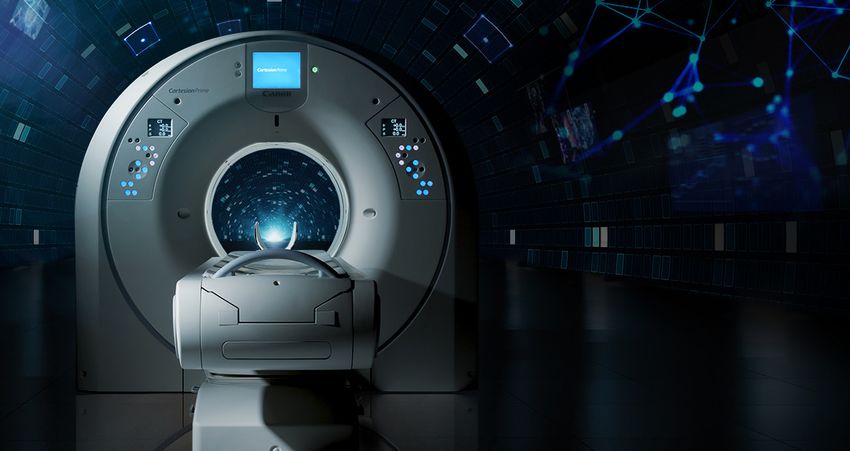
A first of its kind for digital PET-CT                                   Digital PET-CT

                                         We have exploited the abilities of digital PET
                                         to achieve high photon detection efficiencies,
                                         timing, resolution and compact installation
                                         to provide a system that delivers exceptional
                                         image quality at high speeds with accurate
                                         quantification and low dose.

                                         Introducing the new path to digital PET CT
                                         Cartesion Prime offers the ability to site a
                                         digital PET-CT in smaller rooms and with
                                         air-cooling technology.

                                         Air-cooling is an attractive option for
                                         optimising operational efficiencies by avoiding
                                         the costs and complexity associated with
                                         water-cooling.
Introduction

                                             A Final Word
                                             from the CEO

  Ms Natalia
  Vukolova

My dear colleagues and friends               Many of you know and respect Mark           I am grateful for the opportunities
throughout the College . . .                 for his intelligence and impressive track   I had at the College—to develop
                                             record in a key role at the College. I      professionally, initiate new projects,
As many of you will be aware, I am
                                             am certain he will lead the College well    improve old programs and systems,
leaving the College shortly to prepare
                                             while a search for a permanent CEO is       make a difference.
for big changes in my personal life with
                                             underway.
the planned arrival of a new member                                                      The College is different today to what it
into my family.                              It is hard for me to reflect on the         was when I took over, and it's better for
                                             experiences of my seven years as            it. I was just one of many who made that
Planning the transition has been difficult
                                             CEO, except to say that I was blessed       happen.
for me and the RANZCR Board, and I
                                             with a very strong management team
am grateful to all who assisted in the                                                   I am deeply grateful that the Board of
                                             who trusted me and gave me great
process. The Board recognised a need                                                     Directors took a chance on me in 2013
                                             support to achieve many things for our
to have certainty and clarity around the                                                 and then supported me to transform the
                                             members.
executive leadership, so as to maintain                                                  College to what we have today.
the momentum the College had built           The list of achievements is formidable:
                                                                                         I am proud of my contribution to your
up in recent years and steer the College     creating fresh policies to ensure patient
                                                                                         College and I'm thankful to all those
through the testing times we know lie        access to key treatments, advocating
                                                                                         who worked and contributed with me.
ahead.                                       powerfully to government, reforming
                                             our exams and trainee supports,
For me personally, of course, it has been
                                             strengthening member engagement,
the same dilemma countless women                                                         Best regards,
                                             numerous IT improvements and,
have faced countless times—balancing
                                             recently, navigating the impact of a        Natalia Vukolova
the twin demands of having a career and
                                             devastating pandemic.                       RANZCR CEO 2013–2020
having children—and trying her best to
get the timing and circumstances right       It is a demanding and sometimes tough          @NataliaVukolova
so she doesn't give up her choices in life   job that commands your time and
and work.                                    energy in full measure. And the job is
                                             important because strong leadership
I am pleased to say the Board and I
                                             in this organisation helps safeguard
have come to an agreement that works
                                             the critical work of our medical
well for both sides. I have resigned as
                                             professionals—men and women who
your CEO, effective from 25 September,
                                             save lives every day and are essential to
and handed over the reins to our
                                             the functioning of a modern healthcare
former head of policy and advocacy,
                                             system.
Mark Nevin, to take charge of the
management team as interim CEO for
12 months.

                                                                                              Volume 16 No 4 I September 2020        7
Features

Clinical Radiology Forging the
Path Toward Interoperability

Digital health has the potential to           see patients become active participants      more clinical documents uploaded by
transform the way health care is              in their health care and enable a            hospitals, pathologists or radiologists
delivered in Australia. A digitally           transition towards value-based care. It is   since March. It appears that the focus
connected health system relies on             only through the careful design of a new     on digital health including telehealth
interoperability. That is, the ability        digital workflow that we can maximise        consultations during COVID-19
of different information systems to           the benefits and evolve our digital          lockdowns has helped fast-track the
communicate and exchange data,                health system.                               adoption of some technology.
and use the information exchanged to
                                                                                           Patients have demonstrated that they
improve the care provided to patients.        The time is right to advance                 are open to using online technology
Unimpeded workflow needs to be                digital health                               to access and receive care. Current
seamless, safe and secure for patients
                                              The impacts of COVID-19 on the               consumer expectations for a digitally
and clinical users. For changes to be
                                              delivery of health care have been            enabled and connected health
truly transformational we need to find
                                              substantial—perhaps none more than           ecosystem are high as empowered and
value-creating solutions that realise
                                              necessitating the rise in digital health     digital-savvy consumers are driving
benefits for each clinician across the
                                              initiatives. This has had positive impacts   change in patient care and how they
care pathway, and most importantly for
                                              in some areas, while also highlighting       are treated. Similarly, health providers
the patients, prioritising their choices as
                                              the need for transformation in other         have relied on the technology more to
consumers.
                                              areas. Data released by the Australian       consult with their patients, diagnose and
The College has developed a digital           Digital Health Agency (ADHA) in June         deliver care in new ways.
health white paper entitled Towards           2020 showed healthcare providers             There is now unprecedented
Interoperability: Clinical Radiology          accelerated their use of technology          opportunity to transform the healthcare
Forging the Path Ahead, which is              during the pandemic. More than 90            system towards new, more open and
currently under review via consultation.      per cent of public hospitals are now         connected clinical pathways.
The white paper sets out a new, more          using My Health Record with 5.2 million
open and connected clinical pathway to

8    Inside News
Features

Despite national leadership, and
an overall framework for action to
guide, we lack a common shared
vision between the key players, and
this is holding back technology-led
interoperability and realisation of
our digital health objectives. The
rapid uptake of telehealth during the
COVID-19 pandemic has shown what
can be achieved when key players work
together toward a common goal.

“Unimpeded workflow
needs to be seamless,                     Importantly, interoperable                     the consensus terminology to use
safe and secure for                       communications and data will bring us
                                          closer towards the fundamental principle
                                                                                         for radiology referrals. Agreement
                                                                                         of this as the common standard
patients and clinical                     of truly enabled patient choice.               for Australian clinical radiology
                                                                                         terminology forms the foundation
users. For changes to                     The College’s vision is to fully utilise
                                                                                         for the College’s digital health
                                          available technology in the patient
be truly transformational                 journey from clinical radiology referral,
                                                                                         priorities.

we need to find value-                    test performance and interpretation,
                                          to receiving the results. In building the
                                                                                      	The College has already started
                                                                                        work on a related project to
creating solutions that                   technological architecture to support         introduce structured radiology
                                          this vision, the focus is across five         reports containing templates
realise benefits for                      strategic projects with each leveraging       for components of the report
each clinician across                     and building on existing systems.             and providing support for data
                                                                                        reconciliation with the request.
                                          These include:
the care pathway, and                                                                 2.	Streamlining, and improving
                                               Standardised terminology—as an
                                            1.
most importantly for the                       essential building block towards
                                                                                          the quality of, referrals with
                                                                                          electronic referrals.
patients, prioritising their                   interoperability—to ensure
                                               consistent use of terminology in       	Secure electronic referrals
choices as consumers.”                         referrals to radiology.                  can improve how clinical and
                                                                                        administrative information is
                                            	Multiple global and local
                                                                                        exchanged between healthcare
                                              catalogues already exist. A
                                                                                        providers, resulting in better
The College’s digital health vision           targeted project is required,
                                                                                        delivery of care. Safeguarding
                                              supported by the Department of
A foundational element of                                                               patient choice will be the most
                                              Health, ADHA and the broader
interoperability is the use of                                                          important factor in implementing
                                              clinical radiology sector, to review
standardised terminologies to ensure                                                    eReferral. In prioritising patient
                                              the relative merits of existing
that all participants have a common                                                     choice, the College strongly
                                              catalogues, mapping against other
understanding of the data provided                                                      prefers the exchange repository
                                              relevant systems and standards,
(known as ‘semantic interoperability’).                                                 model for eReferral.
                                              such as the Medicare Benefits
Currently there is not an agreed and          Schedule (MBS) and existing
common language used throughout               legacy catalogues. This review
the patient’s care pathway by all those       would produce a Radiology
contributing along the way.                   Referral Set which would establish                           continued over...

                                                                                         Volume 16 No 4 I September 2020      9
Features

“A foundational             3.	A platform that allows secure
                                access to prior medical images.
                                                                         5.	Leveraging artificial intelligence
                                                                             (AI).
element of                  	Clinicians subsequently caring             	The potential for AI should be
interoperability is the       for a patient would benefit                  considered when progressing
                              considerably from having access              all interoperability projects,
use of standardised           to prior images to complement                particularly in imaging-based
                              the clinical radiologist’s report. The       specialties such as clinical
terminologies to ensure       infrastructure of My Health Record           radiology and radiation oncology.
that all participants         can provide a registry of tests              This fifth element will be factored
                              performed previously which could             in to streamline the reporting
have a common                 be leveraged to a greater degree             process internally. Later, in the
                              by incorporating links to historic           reporting cycle, AI may assist
understanding of              images, stored at the practice               report interpretation by the
the data provided             which performed the original test.           referrer, where structured reports
                              The College believes a platform              will be needed.
(known as ‘semantic           is needed to connect My Health
                                                                       In realising the College’s vision to
                              Record with the practice’s stored
interoperability’).           images, while validating who
                                                                       advance interoperability and required
                                                                       standards, strategic partnerships are
Currently there is            should have access to sensitive
                                                                       required to provide the leadership
                              patient data.
not an agreed and           4.	Enabling clinical decision support
                                                                       commitment needed to lift the technical
                                                                       impediments currently holding us back.
common language                 (CDS) into the workflow.               The College has identified several key
                                                                       stakeholders representing consumers,
used throughout the         	Technology needs to be utilised
                                                                       referrers and government, and is
                              in a way that allows clinicians to
patient’s care pathway        provide evidence-based care for
                                                                       engaging with them to ensure active
                                                                       collaboration in codesigning digital
by all those contributing     patients. Easy access to clinical
                              guidance on the best radiology
                                                                       health solutions.

along the way.”               test for a particular patient’s
                              presentation would enhance
                                                                          The consultation on the College’s
                              decision-making at the point of
                                                                          digital health white paper is open
                              care. CDS must be seamlessly
                                                                          until 9 October 2022. Please
                              integrated to the referrer’s
                                                                          submit your feedback to the
                              workflow, which is best done by
                                                                          consultation via email to
                              incorporating it into eReferral. This
                                                                          fcr@ranzcr.edu.au
                              would provide timely access for
                              general practitioners and other
                              referrers to clinical guidelines
                              when they are considering what
                              radiology test or study their patient
                              needs.

10   Inside News
Features
How Loneliness Can Make Us
More Vulnerable to COVID-19
My neighbor’s elderly father died during “We are leaving these people in year—meaning you could go from a
the coronavirus pandemic. The virus isolation, alone,” she said. But it’s not perfectly normal measurements of 119
wasn’t the culprit, at least not directly— just hospitalised COVID-19 patients and mm Hg to 130 mm Hg, which is already
the man wasn’t infected. However, right nursing home residents who suffer from hypertension, in a mere three years.
before passing away, he confided in his lack of social connection during the
There are also direct links between
daughter that what was killing him was current pandemic. Most of us do. We
social isolation and how resistant our
loneliness. Loneliness caused by the are told to socially distance ourselves, to
bodies are to viruses. In one series of
outbreak. limit contacts, not to hug friends. From
experiments more than 300 people
the perspective of the immune system
Although that story happened in France, were voluntarily infected with common
functioning and health in general, that’s
in many countries across the planet, cold viruses (the volunteers were paid
disastrous.
Australia included, the elderly in nursing $800 for their participation, which could
homes have found themselves on total Research shows that social isolation and explain their willingness to suffer for
lockdown during the pandemic—to loneliness up the risk of early death, science). For several days after exposure
protect their health, the thinking went. increase the risk of stroke and cancer, they were assessed for the symptoms of
And they were not the only ones. In and even raise blood pressure—which is cold—from weighting their nose mucus
hospitals, coronavirus patients spend a bad thing as COVID-19 goes, elevating to measuring virus-specific antibody
hours sealed off from anyone else, the probability of complications. titers in their blood. The results showed
completely alone. As one nurse told me, In one study of people in their fifties and that those volunteers who were the
the healthcare workers often don’t feel sixties, being lonely predicted having most socially isolated before infection
like they can connect with their patients higher blood pressure a few years had about 45 per cent higher risk of
and simply be there for them—what down the road. For the most lonely developing the cold from the dose
with all the safety protocols, the layers of individuals, their systolic blood pressure they’ve received.
protective equipment. would hike up as much as 3.6 mm per
continued over...
Volume 16 No 4 I September 2020 11Features
Although in this particular study the
viruses used were from the rhinovirus
family, another study done back in the
1990s showed that stress really ups your
risk of developing symptoms of common
coronaviruses (the mild type, those that
used to cause us colds for centuries).
And what really counteracts stress?
The answer is connection with others,
kindness, even simple touch—which can
lower the levels of the stress hormone,
cortisol. What’s more, research shows
that people who experience chronic
social isolation have different expression
of genes responsible for the antiviral
response and for antibody production,
making them more susceptible to such
pathogens.
Of course, this is not to say that we
should just throw in the towel and
connectors for local practical supports
stop isolating coronavirus patients on
and social activities such as video chats, To access useful resources visit:
hospital wards or give up on lockdowns
online book clubs or fitness groups.
and social distancing. Not at all. But www.ranzcr.com/fellows/general/
In some states in the US, nursing care
there are things we can do to minimise your-wellbeing
facilities can now apply for funding to
the feelings of loneliness. We can, for
buy tablets, webcams and headphones Head to Health: Australian
instance, connect with others online—
for their residents—to help them re- Government, Department of Health
and certain ways are better than
connect with their loved ones online.
others. For one, try to call instead of www.headtohealth.gov.au
In New York, a new program is now
texting. Research reveals, for example,
being proposed that would allow The Pandemic Kindness Movement:
that hearing your mother’s reassuring
coronavirus survivors to visit and console a clinician-led initiative
words on the phone causes a larger
hospitalised COVID-19 patients.
oxytocin release than does receiving www.aci.health.nsw.gov.au/
similar support through a text message. As for me and my family, we simply try covid-19/kindness
Oxytocin, in turn, dampens stress and to pay more attention to each other, be
may lower plasma C-reactive protein empathetic, hug each other often, find
levels (although for now this is only time to talk. To make sure all of us feel
based on animal studies). Researchers in connected.
China, meanwhile, have recently found
Marta Zaraska is a Polish-Canadian science
that elevated levels of C-reactive protein
journalist and author of ‘Growing Young:
may predict aggravation of symptoms of
How Friendship, Optimism and Kindness
COVID-19.
Can Help You Live to 100’
Some great initiatives to counter www.growingyoungthebook.com
social isolation during the pandemic
are already under way. In Australia, @mzaraska
programs such the Community
Activation and Social Isolation initiative
in Victoria, provide a hotline and, at the
same time, link people to community
12 Inside NewsFeatures
The College Unveils Standards of
Practice for Artificial Intelligence
The College continues to be a world • Algorithm development AI and ML, including how both can
leader in the application of artificial • Information management successfully help drive even better
intelligence (AI) in health care, • Algorithm deployment patient care.
becoming the first professional peak • Professional standards
The nine ethical principles were
body in the world to launch AI Standards • Audit and governance.
developed specifically to guide the:
of Practice. The standards align with
The scope of the AI standards is to
the existing Standards of Practice for • development of standards of practice
guide the development, deployment
Clinical Radiology and are guided by for research in AI tools
and monitoring of artificial intelligence
the College’s Ethical Principles for AI in • regulation of market access for ML
and machine learning in public and
Medicine. and AI
private radiology settings. They also
• development of standards of
Clinical radiology and radiation serve to guide governance bodies and
practice for deployment of AI tools in
oncology have always been early others involved in areas where decisions
medicine
adopters of new technology and AI are made external to a practice or
• upskilling of medical practitioners in
is no exception. Application of the hospital department that have the
ML and AI, and
professional standards will maximise the potential to impact on patient care in
• ethical use of ML and AI in medicine.
opportunities AI presents, allowing for a radiology.
more efficient and accessible healthcare AI presents many opportunities for a
The development of the standards
system that delivers improved outcomes more efficient and accessible healthcare
was led by the College’s AI Committee
for patients. system. While it may be some time
with extensive consultation with a
until the technology is clinically
The standards are intended to mitigate broad range of industry, academic,
appropriate and safe for patients, it is
clinical risks and ensure best clinical commercial, government stakeholders
important for the College to continue
care when using AI in radiology. They and other medical colleges.
positioning itself as a leading player in
set out what is expected across a series
The launch of these landmark standards the application of AI in health care. It
of domains and what specific evidence
follows the release of the Ethical will also allow the College to further its
would need to be shown to demonstrate
Principles for Artificial Intelligence in advocacy efforts in the digital health
compliance. The standards cover key
Medicine last year. The ethical principles sphere.
components to the application of AI and
outline the most appropriate use of
machine learning (ML) including: Over the past decade, Australia
has invested significant funds into
attempting to harness and facilitate the
adoption of digital health care. Digital
health provides numerous opportunities
for providing better informed and
quality care and improving access,
particularly for those in regional and
remote areas.
Through our advocacy, the College aims
to ensure that patients and doctors
have access to all relevant healthcare
information, to enhance patient safety
and reduce duplication of imaging,
waste and costs. Digital health strives
to connect healthcare providers and
clinicians across all environments to
deliver a seamless experience and
quality care for patients.
continued over...
Volume 16 No 4 I September 2020 13What’s in Issue 4? Medical Imaging Review Article: Investigation and diagnostic imaging of suspected pulmonary embolism during pregnancy and the puerperium: A review of the literature Corresponding author: Dr Jodie Tester, c/o Department of Respiratory and Sleep Medicine, The Royal Melbourne Hospital, Parkville, Vic. 3050 Australia. Pulmonary embolism (PE) is a leading cause of maternal mortality with women at increased risk of PE during pregnancy and the early postpartum period. Clinical assessment of suspected PE during pregnancy is challenging as signs and symptoms associated with PE overlap with physiological changes of pregnancy. Clinical tests and rules commonly used to assess pre‐test probability of PE were historically not well validated in the pregnant population. The challenges of clinical assessment in the pregnant and postpartum population result in a lowered threshold for diagnostic imaging. Computed tomographic pulmonary angiography (CTPA) and nuclear medicine lung scintigraphy or ventilation/perfusion (V/Q) scans are the main types of diagnostic imaging for suspected PE. Both methods are associated with small levels of ionising radiation exposure to mother and foetus. Accuracy of the diagnostic imaging tests is paramount. Haemodynamic changes of pregnancy, including increased heart rate, increased blood volume and altered flow velocity in the pulmonary arteries, may influence the quality of imaging. This comprehensive review examines the literature and evidence for the investigation and diagnostic imaging of suspected pulmonary embolism during pregnancy with CTPA and V/Q. Clinical decision‐making tools, biomarkers and diagnostic imaging during pregnancy and postpartum will be considered with a focus on diagnostic accuracy and yield, radiation dose exposure (maternal–foetal) and protocol modifications. Current practice guideline recommendations and recent literature on diagnostic pathways are also presented. Medical Imaging Technical Article: Lipiodol hysterosalpingogram: A modified HSG technique to minimize risks associated with lipiodol use Corresponding author: Dr Jane Michele Peart, Auckland Radiology Group, PO Box 9889, Newmarket 1149, Auckland, New Zealand. Assessment of tubal patency and therapeutic tubal flushing using Lipiodol, an oil‐soluble contrast media (OSCM), has been shown to enhance fertility, resulting in increased interest in the use of Lipiodol. A modified hysterosalpingogram (HSG) technique, including a supplementary ultrasound with the contrast in situ, is recommended when using Lipiodol, taking into account both safety issues and technical challenges specific to Lipiodol. Radiation Oncology Original Article: Incidence of hippocampal metastases in non‐small‐cell lung cancer Corresponding author: Dr Sophia Ly, Department of Radiation Oncology, Princess Alexandra Hospital, 199 Ipswich Rd, Woolloongabba, Qld 4102, Australia. Objectives Patients with locally advanced non‐small‐cell lung cancer (LA‐NSCLC) develop brain metastases in 25–50% of cases during the course of their disease. Data on the incidence of metastases occurring in the hippocampus/perihippocampal zones are limited. This is important when considering hippocampal‐sparing brain radiation (HS‐BR), a method that could potentially reduce the neurocognitive impact of such treatment. The aim of this study was to assess the incidence of hippocampal/perihippocampal metastases in a cohort of patients with advanced NSCLC treated at our institution. Methods This retrospective cohort study included NSCLC patients discussed at our institutional lung cancer multidisciplinary meeting between 2000 and 2016. MRI and contrast‐enhanced CT (ceCT) brain images were reviewed to assess the incidence of hippocampal/perihippocampal metastases including metastases within the hippocampal subgranular zone and a 5 mm margin (hippocampal avoidance region) defined as per the RTOG 0933 study. Results Of 2146 patients reviewed, 357 (16.6%) had brain metastases. A total of 335 patients had available MRI/ceCT brain images for review. Thirty (9%) patients had brain metastases in the hippocampal avoidance region, 8 (2.4%) with hippocampal metastases and 22 (6.6%) with perihippocampal metastases. Univariate analyses did not show an association between developing metastases in the hippocampal avoidance region and age (P = 0.75), gender (P = 0.91) and tumour type (P = 0.298). Conclusion The incidence of metastases in the hippocampal avoidance region in our large cohort of patients was 9%. With low rates of metastases in this region, HS‐BR can be considered a feasible option in the management of patients with advanced NSCLC. Radiation Oncology Original Article: Does institutional patient accrual volume impact overall survival in patients with inoperable non‐small‐cell lung cancer receiving radical (chemo)radiation? A secondary analysis of TROG 99.05 Corresponding author: Dr Mun Yee Tan, Department of Radiation Oncology, Peter MacCallum Cancer Centre, 300-305 Grattan Street, Melbourne Vic. 3000, Australia. Introduction Increased hospital patient volume, reflecting greater experience, has been shown to be associated with improved survival for some cancers. However, there is no evidence to support the volume–outcome hypothesis for inoperable non‐small‐cell lung cancer (NSCLC) patients within the Australasian setting. We examined the relationship between overall survival (OS) and institutional patient accrual volume (IPAV) in a large prospective Australasian NSCLC database (TROG 99.05). Methods TROG 99.05 was an observational study which accrued patients from 1999 to 2007 to examine the relationship between primary lung cancer volume and survival. To be eligible for inclusion, patients had to have inoperable, biopsy‐proven NSCLC planned for radiotherapy to a minimum dose of 50Gy in 20 fractions, with or without chemotherapy. Participating institutions were de‐identified and grouped according to whether accrual was low, medium or high. OS was compared between groups and adjusted for prognostic factors using Cox regression. Results About 509 patients were accrued from 16 centres. Median potential follow‐up time was 60 months. Median survival for all groups was 20 months (95% CI 18.3–21.8 months). There were no statistically significant differences in OS with increasing patient accrual across the three groups after adjustment for prognostic factors (P = 0.84, 2 df). The hazard ratios (HR) for group accrual volumes, relative to that for high‐accrual volume, were as follows: low, 1.18; medium, 1.14. Test for trend: HR = 0.91 per group (95% CI 0.76–1.09, P = 0.31). Conclusion In the setting of a clinical trial with rigorous quality assurance, we found no evidence for an association between institutional accrual and survival. Access your College journal online If you are a member of the Royal Australian and New Zealand College of Radiologists, access JMIRO free online. - Go to www.ranzcr.edu.au - Log in using your College username and password = FREE access to all JMIRO current and digitised backfile content from volume 1, 1957!
Features

“The standards are          As technology continues to advance
                            at a rapid rate, it is vital that the digital
                                                                            The College continues to be a thought
                                                                            leader in digital health and AI in
intended to mitigate        health solution is properly considered          healthcare settings, and is committed to
                            and implemented effectively.                    equipping the membership to be at the
clinical risks and ensure                                                   forefront of the next frontier in medicine.
                            The College has a clear vision for how
best clinical care when     Australia can harness the benefits of
                                                                            Work continues on profession-led
                                                                            implementation and workforce transition
using AI in radiology.      digital technologies and improve the
                            quality of care for patients who need
                                                                            to support the effective implementation
                                                                            of AI in clinical practice.
They set out what is        radiology services. The College’s focus
                            in digital health centres around five key       We must continue to be pioneers in this
expected across a           priorities:                                     space and work with stakeholders to
series of domains and       •	the establishment of an eReferral
                                                                            help them recognise the potential and
                                                                            risk of AI and the integral role it could
                               system
what specific evidence      • access to historic images
                                                                            play as digital health and interoperability
                                                                            projects progress.
would need to be            • standardised terminology
                            •	development of imaging guidelines,
shown to demonstrate           and                                             If you have further questions about
                            •	the managed roll out of artificial
compliance.”                   intelligence (AI).
                                                                               artificial intelligence or digital
                                                                               health in clinical radiology please
                                                                               contact Melissa Doyle, Executive
                                                                               Officer at the College at
                                                                               melissa.doyle@ranzcr.edu.au

                                                              lnsid1 eR01diology
                                          Clinical Radiology Information for
                                         HEALTH CONSUMERS &
                                         HEALTH PROFESSIONALS
                                         Raises awareness of medical imaging and the role of the
                                         clinical radiologist. Written by RANZCR Fellows and other
                                         Australian and New Zealand health professionals, edited by
                                         consumer and GP contributors.
                                         ✓ Information about clinical radiology tests and
                                            procedures in plain English
                                         ✓ Additional technical information for health
                                           professionals
                                         ✓ Approximately 100 information items with
                                           new items added regularly

                                                                               Volume 16 No 4 I September 2020      15
Features
Knowledge Building at
The Christie NHS Foundation Trust
The Thomas Baker Fellowship
It was such an honour to have been
selected as the recipient of the Thomas The Christie Proton Beam Therapy
Baker Fellowship last year, providing building on a blue UK morning
welcomed support for my appointment
as a Clinical Fellow at The Christie NHS
Foundation Trust in Manchester in the
United Kingdom (UK). The Thomas
Baker Fellowship awards financial
support to the value of $AU20,000 to
one Fellow toward their return travel
and living costs for a period of up to 18
months of overseas experience, allowing
a qualified radiologist or radiation
oncologist to further their knowledge by
studying abroad.
“I was particularly
interested in expanding
my experience in
paediatric oncology. that it would be a competitive process. expanding my experience in paediatric
Though I had done Following a video interview in June oncology. Though I had done most
2019, I was offered the position and the of my radiation oncology training in a
most of my radiation process of obtaining the necessary visas, centre treating paediatric cases, I felt
oncology training satisfying background checks, obtaining
UK medical registration and the logistics
my volume of hands-on experience with
paediatric patients and pathologies was
in a centre treating of moving across the world would then still limited.
subsequently take another four to five
paediatric cases, I felt months.
The majority of paediatric tumour
cases across the UK is referred to
my volume of hands- The Fellowship is based in The Christie The Christie PBT centre which sees,
NHS Foundation Trust—the largest on average, 15 new children of less
on experience with single site cancer centre in Europe and than 17 years old per month.
paediatric patients and the first UK centre with an NHS funded My experience with paediatric patients
Proton Beam Therapy (PBT) centre. It is very quickly increased by the sheer
pathologies was still a part clinical, part research Fellowship volume of patients I was seeing along
working in the PBT centre with four- their treatment pathway from clinic to
limited. ” month rotations through the following discussion of their case in paediatric
subsites: sarcoma, head and neck MDTs, developing and assessing their
My post commenced in December 2019, tumours, paediatric body and central radiotherapy plans, and being involved
but the preparation process commenced nervous system tumours, and adult in surveillance through follow up
many months prior. I made a site visit central nervous system tumours. As reviews. Adapting to a new workplace,
in March 2019, spent several days more indications are added to the UK’s within a new healthcare system took
shadowing clinics and observing clinical Proton Beam Therapy indications list, some adjustment but in itself was an
operations and arranged a face-to-face this may expand in the future. opportunity to learn of the different
meeting with the Fellowship supervisor These tumour subsites aligned well ways daily work processes and structures
at The Christie to demonstrate my keen with my personal subspecialty interest could be run.
interest for the Fellowship post, knowing areas, and I was particularly interested in
continued over...
Volume 16 No 4 I September 2020 17Features
The friendly and
colourful paediatric
waiting room area
Proton beam therapy is an area of The benefits of the Fellowship however of the UK itself with its varied beautiful
interest that has developed with my extend far beyond the specifics of countryside, amazing peaks and lakes
growing passion for paediatric oncology. PBT itself. It has developed in me a and towns embedded in historical
With Australia now having started very detailed, almost forensic level of charm.
construction on their first PBT centre at scrutiny with volume delineation, and
I would encourage any Fellow or
the Australian Bragg Centre for Proton allowed a systematic approach to plan
trainee who has passed their Part II
Therapy Adelaide, patients, particularly assessment and evaluation. I have
examinations to apply for opportunities
parents, will be asking all the more no doubt it has enhanced my overall
overseas that align with their interest
about its role in management of their or ability in technical radiotherapy which
areas and to apply for the Thomas Baker
their child’s tumour. will extend into my photon practice.
award to support their endeavours.
Given its new implementation in the
The clinical experience working in
UK, there is significant emphasis on
proton therapy has been invaluable
systematic, accurate and consistent
and one which was only made possible
collection of clinical outcome data,
by me venturing overseas. I have been Applications for the 2021 Thomas
integrated into daily clinical practice.
able to learn the intricacies of working Baker Fellowship will open in
This has developed my diligence
with a new form of radiotherapy, with December 2020. The application
in documentation and robust data
its inherent differences to conventional opening date will be announced
collection, and created opportunities
photon therapy and how this manifests via email and on the College
for progression of my PhD with projects
dosimetrically as well as clinically as website: www.ranzcr.com/college/
that I have become involved with. It has
patients undergo proton therapy and grants-and-awards/educational-
allowed me to gain a sharper eye to
in their ensuing follow up years into the fellowships
recognise and record particular toxicities
future.
observed during treatment and beyond.
It goes without saying that aside from
the immense academic and clinical Dr Eunji Hwang
opportunities, the social aspect of RANZCR Fellow
meeting, working with and connecting Faculty of Radiation Oncology
with new people while living here in the
UK has been invaluable.
Now almost eight months into my
Fellowship post and having lived
through the onset of a global pandemic,
colleagues have become friends, and
my husband and I have integrated into
a community here in Manchester that
we love. Though the pandemic has
The Proton Fellows crew: Dr Simona limited our initial plans for global travel
Gaito (left), Dr Shermaine Pan (middle), particularly around Europe, we have
Dr Eunji Hwang (right) taken the opportunity to explore more
18 Inside NewsFeatures
New Chair of the
College’s Clinical
Radiology Research
Committee
Professor
Paul Parizel
Professor Paul Parizel was appointed In 2002, during the Annual Scientific like a perfect moment to consider a new
as the inaugural David Hartley Chair in Meeting, held in Adelaide, I became professional and personal challenge.
Radiology, based at Royal Perth Hospital an Honorary Fellow of the College And what better place to do so than
(RPH), in September 2019. The chair was and served as Kodak visiting professor. in Perth, Western Australia, one of the
established by the University of Western Somewhere, in the back of my mind, nicest cities on the face of this earth?
Australia to improve clinical governance, I had always been thinking how nice
education and research, and to develop it would be to work in Australia and How does your experience of
closer ties within the medical professions share my professional experience radiology in Australia compare to
and also with the wider community of with younger colleagues. There is a your experience in Belgium?
WA. Born and raised in the historic city famous quote by Ralph Waldo Emerson
of Antwerp, Belgium, he completed that states that “life is a journey, not First of all, I would like to say that I am
his medical school education at the a destination”. To travel successfully grateful for the opportunity to share
University of Antwerp before working on the journey of Life, one needs an some of my thoughts and visions with
at the Antwerp University Hospital and ambitious plan, a steady compass, the readers of Inside News.
undertaking Fellowships at centres and—importantly—the ability to avoid
There is an expression in French that
of international renown including at the doldrums and make good use of the
says ‘plus ça change, plus c’est la même
Massachusetts General Hospital and prevailing winds.
chose’ (the more things change, the
Harvard Medical School.
more they stay the same). In a way this
In February, Prof Parizel was appointed “Human interaction holds true for working as a radiologist
as Chair of the College’s Clinical in Australia. Compared to Belgium,
Radiology Research Committee (CRRC). between professionals there are many similarities in the work
we do, and in the organisation and
is the force that structure of radiology departments.
When did you move to Australia
and why? enables the transfer The technical platform at RPH is very
similar to what I had in my department
I arrived in Perth, WA on Sunday 22 of knowledge, and at Antwerp University Hospital. The
September 2019, which happened to be patient population in a tertiary referral
my birthday. I had signed my contract the development of centre is very diverse, interesting, and,
more than a year earlier, but it took a
very long time to get all the red tape
scientific collaboration, at times, challenging. RPH is unique
in that we see many patients referred
sorted out. In fact, there were times and the College is an through the State Major Trauma Unit
that I was not even sure if I would ever and the State Spinal and Scoliosis
succeed in getting all the documents essential catalyst to Service. However, a similarity between
together. drive these processes.” Australia and Belgian is the juxtaposition
My reasons for coming to Australia of a public health system and a private
were manifold. For more than 30 years, system, both with their specific and
I have been friends with Professor Mark In Europe, I finished my terms as individual roles.
Khangure, and thanks to him, I’ve had President (2017) and Chairman of the
Of course, there are also some
the occasion to visit Perth several times, Board (2018) of the European Society
differences in the type of examinations
and always was impressed by the high of Radiology (ESR), and as President of
and protocols we perform, but overall I
professional and ethical standards of the European Congress of Radiology
would say that the similarities are far, far
radiology in Australia. meeting in Vienna in 2017. It seemed
greater than the differences.
continued over...
Volume 16 No 4 I September 2020 19ELYSIUM:
DIAGNOSTICS AND
THERAPEUTICS
(NOW AND THE FUTURE)
WITH AI
Official Presenting Partner of RANZCR2021
ranzcr2021.comFeatures
What are your areas of interest importance to teach (junior) radiologists
within radiology? “In my view, research is how to conduct research, how to best
interface with clinicians, and how to
I trained as a neuroradiologist and have an essential component use software applications to extract
always been interested in imaging of the
brain and spine in a variety of disease in the delivery of information from the big data sets,
which are the constituent parts of all
conditions. In the last 10 years, my main
areas of interest have been imaging in
excellent patient- cross-sectional imaging techniques.
traumatic brain injury patients and the centred health care. We must provide radiology excellence
implementation of quantitative imaging to the next generation, which can best
and artificial intelligence techniques Radiology is moving be done through fostering research.
within our field. However, as chair of the
Department of Radiology at Antwerp
along a trajectory from What is your vision for the CRRC
University Hospital, and as supervisor an ‘art’ to a ‘science’, and research at the College?
of many PhD and Master students, I
always considered that it was my duty to from producing ‘pretty With the CRRC, the College has an
instrument to develop and steer the
keep abreast of developments in other
areas of radiology as well. Our discipline
images’ to quantitative present and future course of our
has undergone such an amazing data sets.” discipline. In my view, our plan should
be to stimulate and foster excellence in
transformation in the past couple of
decades. Radiology, or imaging in the Human interaction between research, and to enable the intellectual
broadest sense of the term, has become professionals is the force that enables awakening of radiologists, by offering
the crossroads in any modern hospital. the transfer of knowledge, and the support and encouragement. But,
development of scientific collaboration, our CRRC should be much more than
and the College is an essential catalyst just an instrument to select the best
What motivated you to get presentations and publications, or to
involved with the College? to drive these processes.
award prizes and Fellowships.
As stated previously, I fondly remember Why is research so important to In my view, research is an essential
the 2002 ASM in Adelaide, and I component in the delivery of excellent
the specialty?
remember being very much impressed patient-centred health care. Radiology
by the traditions and solid organisation Radiology, or medical imaging in the is moving along a trajectory from an ‘art’
of the College. During my years as a broader sense, has become a very to a ‘science’, from producing ‘pretty
member of the board of directors of the broad, horizontally integrated field, images’ to quantitative data sets.
ESR, I have had several meetings with cross-linking with many, if not most Our communication with clinicians
College representatives, in particular other specialties in medicine. This is is moving away from descriptive
with the College's President, Dr Lance a great strength and offers wonderful reports in flowery prose, towards
Lawler. opportunities for research. Conversely, standardised, structured reporting.
the time is long gone that imaging These developments will force
I strongly believe that for a medical
could be considered the exclusive radiologists to transmogrify their
practitioner, engagement with their
domain of radiology. Many of our ‘analogue’ minds to the requirements
professional organisation is important,
clinical colleagues have discovered the of a digital, quantitative and research-
both for individual professional
potential of performing imaging-driven driven working environment.
development and growth, and perhaps
research and have learnt to explore the
even more importantly, to engage in These changes are also reflected in the
potential for using quantitative imaging
the training of junior radiologists. It is spectrum of what we do as radiologists:
biomarkers.
our responsibility to ensure that the the focus has shifted away from
next generation of radiologists has a We as radiologists are by no means any performing brilliant feats of diagnostic
future that will be just as exciting and longer the sole custodians of imaging wizardry to the more mundane tasks
productive as the professional career equipment or even of image analysis of accurately staging and following up
that my generation has had until now. software. It is therefore of paramount patients with known diseases.
continued over...
Volume 16 No 4 I September 2020 21Features
Thanks to advancements in medicine, The future of medicine is research-
some previously fatal diseases have driven, and the engagement of
been reduced to chronic conditions. radiologists will help us to grow, as
The growth of precision medicine is individuals and as doctors. Ideally,
likely to become a key issue in how we through the CRRC, we can help to
perform and interpret imaging studies. create and develop a culture so that
Radiology plays a much more important radiologists can be a part of, or even
role in the diagnosis, follow-up and take the lead in, imaging-driven research
outcome prediction of patients with studies.
chronic disorders (all kinds of cancer,
Importantly, through research, we can
degenerative disorders, inflammatory
attract the best and brightest young
diseases) by developing biomarkers
minds to our discipline, and offer
based on volumetric measurements,
them perspectives in academic and
perfusion studies (blood flow),
professional development.
spectroscopy (metabolic information),
hybrid imaging (molecular information)
and functional studies.
The Royal Australian and New Zealand
College of Radiologists®
The Faculty of Radiation Oncology
22 Inside NewsEducation
RANZCR Workshops,
Courses and Events 2020–2021
As members are aware, the COVID-19 Confirmed topics and dates ESTRO Radiobiology Course
pandemic has had a significant impact
on public health, social wellbeing Clinical Radiology Faculty Forum An introduction to radiation biology
and the economy. There has been 8 October 6–7.30 pm AEDT as applied to radiotherapy, focusing
widespread cancellation of conferences on technology, biology and molecular
Radiation Oncology Faculty Forum
and meetings in line with current oncology. The ESTRO Radiobiology
9 October 2–3.30 pm AEDT
government guidelines. Course has been postponed to 15–18
Imaging Emergencies of the Vascular April 2021. Trainees who have already
The College’s COVID-19 Taskforce System 14 October 8–9 am AEDT registered and cannot attend the new
and the Board of Directors have been dates will be issued a full refund.
monitoring the situation closely to To register and for further information
foresee and mitigate any risks to please visit the Events Page on Register here!
members, staff and general community. our website: www.bit.ly/ESTROBasic
www.ranzcr.com/whats-on/events
Unfortunately, this has meant we
have had to postpone some of our Further topics will be released shortly.
upcoming events. This has been done If you have any questions relating
bearing in mind that social distancing New Zealand Branch Annual to any College events please
restrictions may continue well into the Scientific Meeting don’t hesitate to contact the
end of this year with strict restrictions Conferences and Events team at
The NZ ASM has been postponed to
on international travel as well as mass events@ranzcr.edu.au
6–8 August 2021, to be held at the
gatherings.
InterContinental Hotel, Wellington.
RANZCR Webinar Series RANZCR Annual
The Conferences and Events team Scientific Meeting
are working on running a series of
The ASM has been postponed to
educational webinars in the coming
16–19 September 2021, to be held at the
months.
Melbourne Convention and Exhibition
If you would like to suggest a webinar Centre.
topic, please don’t hesitate to email:
For more information on RANZCR2021
events@ranzcr.edu.au
visit our website:
www.ranzcr2021.com
Volume 16 No 4 I September 2020 23You can also read


