EVERYDAY GUARDIANS 50 YEARS OF NATIONAL SERVICE - SCDF
←
→
Page content transcription
If your browser does not render page correctly, please read the page content below
14mm

                                  Since 1967, National Service (NS) officers of the Singapore Police
                                  Force and Singapore Civil Defence Force have more than stepped up
                                  to the call to serve alongside regular officers – on the ground and
                                                                                                                                          everyday
                                                                                                                                          Guardians
                                  in senior appointments at all levels. This book, Everyday Guardians,
                                  captures a brief history and the key highlights of NS in the five
                                  decades since.

                                  Duty to the country is being performed ever more effectively in the
                                  Home Team. NS officers are equipped with more effective hardware,
                                  from Unmanned Aerial Vehicles to body-worn cameras, and more
                                  sophisticated skillsets in emergency medical service. But what qualifies
                                  them best is their deep sense of responsibility and dedication to keep
                                                                                                                                           50 Years of National Service

                                                                                                                     Everyday guardians
                                  Singapore safe and secure.
                                                                                                                                             i n S i n g a p o r e ’s H o m e T e a m
                                  Devotion to family and community remain primary motivations. These
                                  men in blue remain warmly-supported by “the other home team” of family
                                  and loved ones, as well as bosses and colleagues, neighbours and fellow
                                  citizens. It takes a village to make an NS officer, and in return, these citizen
                                  guardians give their all back – not only at home, but also in overseas
                                  missions far away, representing their country and serving humanity.

                                  Daring is evident in all that these NS officers do, wherever the need
                                  arises. Whether in a major disaster or neighbourhood incident, the
                                  courage is unquestioned, and the commitment untiring – to combat
                                  crime, preserve order and save lives.

                                  It has been 50 years, but Singaporeans know they can rely on their
                                  NS officers even for 50 more, as the core values of the Home Team are
                                  passed on from one generation to the next. From these guardians drawn
                                  from amongst the community, help is always at hand, even when off-duty
                                  and in civilian life. Here are the stories of these everyday heroes.

everyday guardians cover.indd 1                                                                                                                                                         24/10/2017 9:06 AM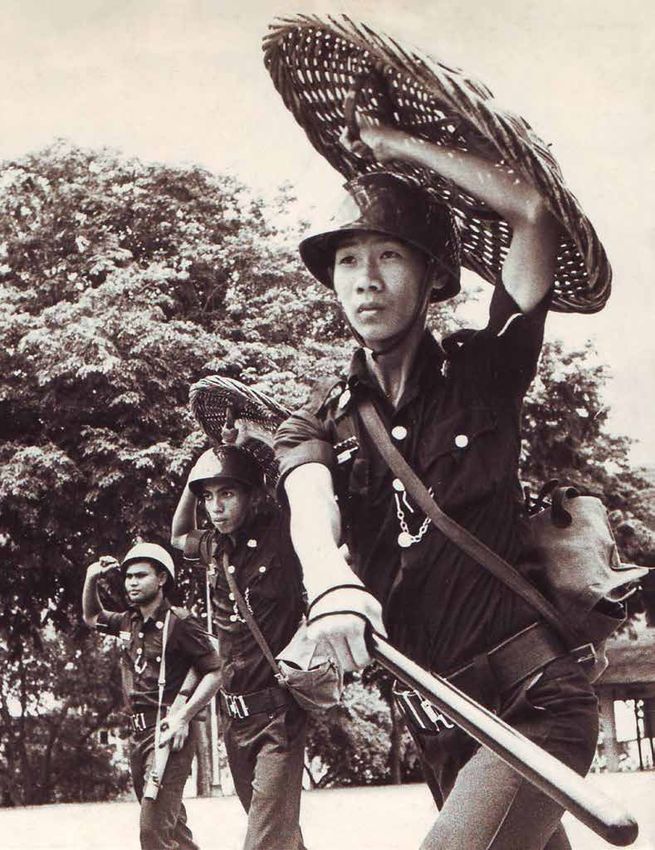
National Service Vocations in Singapore Police force                                                                     National Service Vocations in Singapore civil defence force

                      Ground Response                Community Engagement
                                                                                  Airport Police Patrol Officer                                Fire and Rescue Specialist                 Firefighter                Medical
                        Force Officer                      Officer

 Special Operations                                                  Police Coast Guard                  Protective Security                                     Community Engagement
                                          K-9 Officer                                                                               Dog Handler                                                          Provost               InfoComms Operator
 Command Trooper                                                        Patrol Officer                   Command Trooper                                              Specialist

Public Transport Security                                          Command, Control and
                                        Field Instructor                                            Operations Support Officer        Driver                      Multimedia Specialist                 Technician                 Storeman
Command Patrol Officer                                           Communications (C3) Officer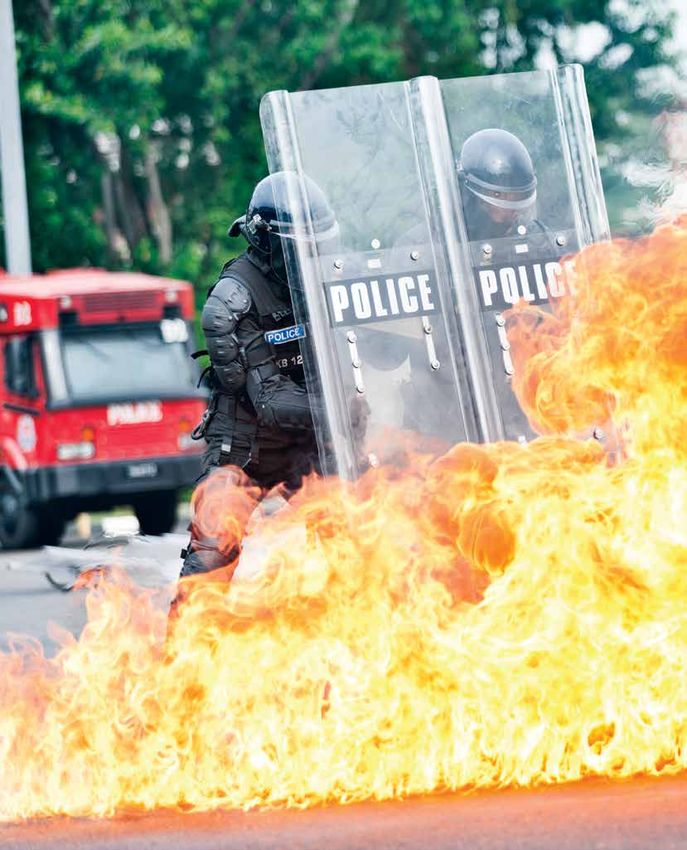
 1

everyday
Guardians
  50 Years of National Service
   in Singapore’s Home Team

           koh buck song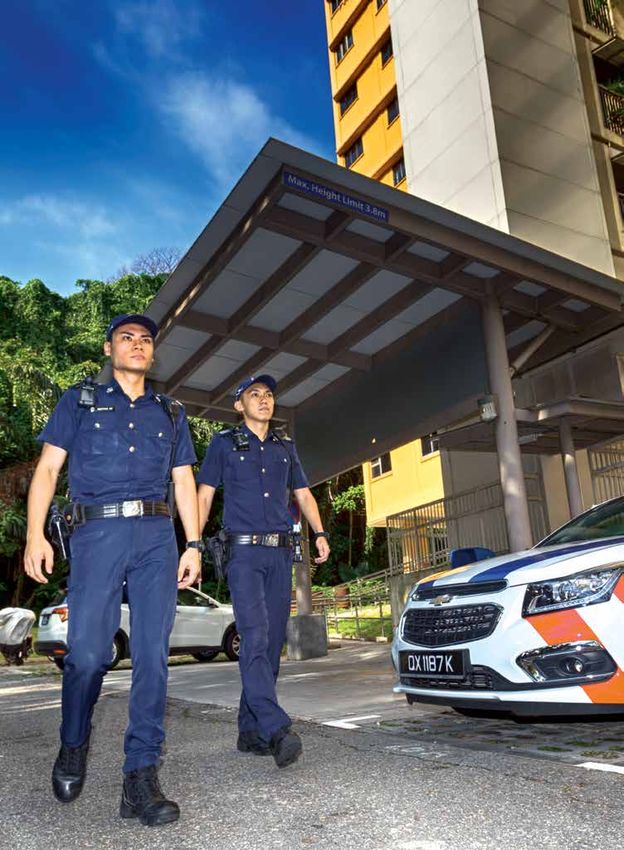
contents

                         © 2017 Ministry of Home Affairs
                                                                                       FOREWORD                               4
                                                                                       k Shanmugam
               Published on behalf of the Ministry of Home Affairs
                                                                                       Minister for Home Affairs
               by Marshall Cavendish International (Asia) Pte Ltd

                                                                                       message                                6
                                                                                       CP HOONG Wee Teck
                                All rights reserved
                                                                                       Commissioner of police
  No part of this publication may be reproduced, stored in a retrieval system or
transmitted, in any form or by any means, electronic, mechanical, photocopying,
   recording or otherwise, without the prior permission of the copyright owner.        Message                                8
  Request for permission should be addressed to the Ministry of Home Affairs.
                                                                                       Comr Eric Yap
The publisher makes no representation or warranties with respect to the contents       Commissioner of SCDF
of this book, and specifically disclaims any implied warranties or merchantability
 or fitness for any particular purpose, and shall in no event be liable for any loss
 of profit or any other commercial damage, including but not limited to special,
                    incidental, consequential, or other damages.                       key milestones of national service    10
                                                                                       IN singapore’s home team
    Marshall Cavendish is a registered trademark of Times Publishing Limited

             All images used in book © Singapore Police Force and
             Singapore Civil Defence Force unless stated otherwise                     Duty                                  13
                                                                                       To Serve the country
              Cover photo: Images of NS officers by Bob Lee;
    background scene of Singapore courtesy of desktop-backgrounds.com

                            ISBN 978-981-4779-47-0                                     Devotion                              71
                                                                                       A part of the community
                                  Project Team
          National Service Affairs Directorate, Ministry of Home Affairs
               Public Affairs Department, Singapore Police Force
          Police National Service Department, Singapore Police Force                   Daring                               103
           Public Affairs Department, Singapore Civil Defence Force                    Beyond the call of duty
     National Service Personnel Department, Singapore Civil Defence Force

                     Marshall Cavendish Project Team
               Glenn Wray, Melvin Neo, Bernard Go Kwang Meng

                               Printed in Singapore
Foreword
K Shanmugam
Minister for Home Affairs
                                                                                                                                                            One thing remains constant –
                                                                                                                                                            our NS officers can be counted
                                                                                                                                                            on to do their best when duty
                                                                                                                                                            calls.
                                                                                                                                                                              – K Shanmugam
                                                                                                                                                                     Minister for Home Affairs

                            NATIONAL SERVICE (NS) OFFICERS WORK SIDE BY SIDE                 of leadership and specialist posts and ensure that time
                            WITH OUR REGULAR OFFICERS IN THE SINGAPORE POLICE                spent in NS is purposeful and meaningful. We will continue
                            FORCE (SPF) AND THE SINGAPORE CIVIL DEFENCE FORCE                to enhance the training of our NSFs and ORNSmen. High
                            (SCDF) TO FIGHT CRIME, MAINTAIN LAW AND ORDER,                   standards will be maintained through refresher training and
                            RESPOND TO MEDICAL AND CIVIL EMERGENCIES AND                     re-certification tests.
                            SAVE LIVES AND PROPERTY. THEY ARE AN INTEGRAL PART
                            OF THE HOME TEAM (HT).                                           This book chronicles 50 years of NS in the HT, and its
                                                                                             evolution to become the modern fighting force that the SPF
                            Our young Full-time National Servicemen (NSFs) quickly           and SCDF is today. The book features interesting stories
                            learn to operate in the real world with its complex social       from different generations of HT NS officers, from those in
                            realities. When tense and chaotic situations arise, our NS       the 1960s to the present. The uniforms, training doctrine
                            officers have to remain clear-headed and act decisively          and equipment have changed over the years but one thing
                            to tackle the situation. They also learn the importance of       remains constant – our NS officers can be counted on to
                            social harmony and the need to be ready to respond to            do their best when duty calls.
                            emergencies and crises.
                                                                                             I would like to express my deep appreciation to all HT NS
                            Today, our NSFs are better educated and more                     officers, past and present, numbering more than 260,000
                            technology-savvy. Many of our Operationally-Ready                persons in all. You are dedicated to the safety and security
                            National Servicemen (ORNSmen) are leaders in their own           of Singapore and Singaporeans. I would also like to thank
                            fields. The HT has embarked on an NS Transformation              family members and employers of our NS officers. Your
                            Plan that will tap on the full array of skills and experiences   support has been crucial in enabling our NS officers to
                            that our NS officers bring. We will increase the proportion      serve with pride.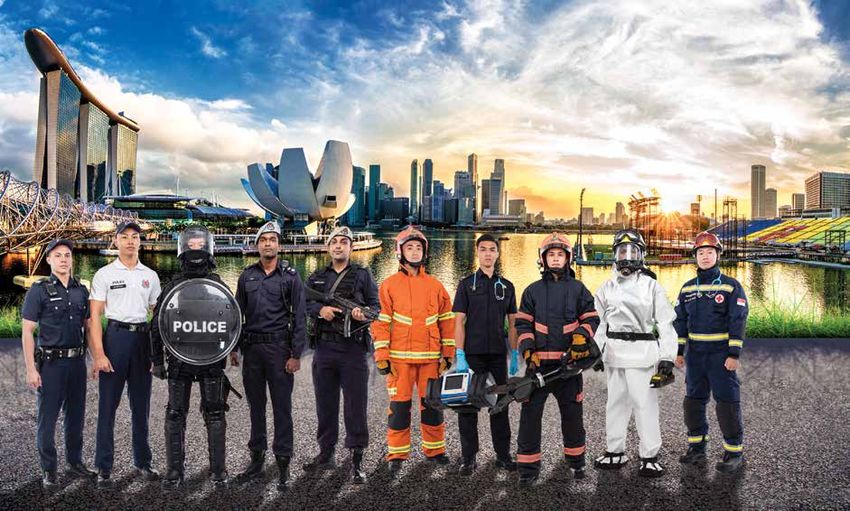
message
CP HOONG Wee Teck
Commissioner of Police
                                                                                            public on crime prevention and mobilising them to do
                                                                                            their part for the SGSecure movement. PNS officers now
                                                                                            oversee the safety and security of the annual Geylang
                                                                                            Serai Ramadan Bazaar. The Protective Security Command
                                                                                            comprises the largest single group of PNS officers who
                                                                                            receive specialised training for front-facing deployments.
                                                                                            With the rising global terrorist threat, we have formed
                                                                                            the PNSmen Public Order Troop, where our PNS
                                                                                            officers undergo a specialisation course with the Special
                                                                                            Operations Command to support their regular counterparts
                                                                                            during public order operations. Every day, our vigilant PNS
                         The 50th anniversary of National Service (NS) marks                officers from the Public Transport Security Command keep
                         an important milestone in the journey of the Police                our public transport system safe so that Singaporeans can
                         National Service (PNS) in keeping Singapore safe and               travel with peace of mind. Through the last 50 years, our
                         secure.                                                            PNS officers have served with distinction whenever they
                                                                                            are called to duty, and they will continue to play a vital
                         PNS began on a part-time basis with the first batch of 900         role that is crucial to the success of the SPF’s mission to
                         PNS officers in both the Special Constabulary and Vigilante        prevent, detect and deter crime.
                         Corps in July 1967. Full-time PNS was established in 1975
                         following the Laju terrorist incident in 1974, which highlighted   This book pays tribute to the commendable achievements
                         the importance of boosting the police’s manpower to                of generations of Home Team (HT) NS officers from the
                         safeguard Singapore’s security-sensitive installations.            Singapore Police Force and the Singapore Civil Defence
                                                                                            Force, as well as the contributions of our HT NS officers.
                         Over the years, the roles of PNS officers have evolved             These insights bear testimony to the importance of NS to
                         from protecting key installations and taking on general            Singapore, and I believe they will inspire our future HT NS
                         policing duties. Today, we have deployed PNS officers              officers to serve with pride and honour, in the footsteps of
                         alongside regular officers across 11 vocations, in more            the NS pioneers.
                         leadership, specialist and frontline positions that are on
                         par with regular officers as we seek to enhance their PNS          On this 50th anniversary of National Service, I thank
                         experience and maximise their potential.                           our past and present PNS officers for their dedication,
                                                                                            commitment and sacrifice, as well as their families and
                         Our PNS officers have since assumed the frontline role             employers for their unstinting support towards NS for
                         of Community Engagement officers, reaching out to the              Singapore’s safety and security.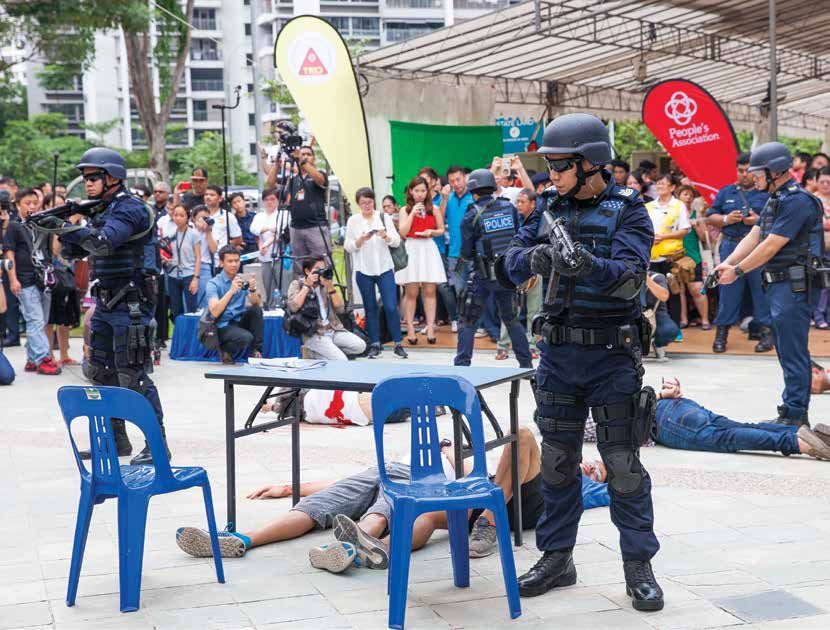
message
Comr Eric Yap
Commissioner of SCDF
                                                                                   of-the-art vehicles such as the Light Fire Attack Vehicle,
                                                                                   Unmanned Firefighting Machine and Fire Medical Vehicle.

                                                                                   Beyond the shores of Singapore, SCDF Operationally-
                                                                                   Ready National Servicemen (ORNSmen) have also worked
                                                                                   hand-in-hand with our regular officers at numerous
                                                                                   overseas Operation Lionheart humanitarian missions.
                                                                                   They include Lieutenant Colonel (NS) Mohamed Razaleigh
                                                                                   Bin Mohamed Saem who was the Deputy Contingent
                                                                                   Commander for the Operation Lionheart mission in Nepal
                                                                                   in 2015 and Dr Mohan Tiruchittampalam, a former SCDF
                       This book traces the key National Service (NS)              ORNSman, who was a Medical Officer involved in four
                       milestones in the Home Team (HT) and chronicles             other Operation Lionheart missions.
                       the contributions of successive generations of NS
                       officers from the singapore civil defence force (SCDF)      In recent years, the number of NS vocations has not only
                       and singapore police force (SPF).                           expanded to allow for more specialised NS schemes of
                                                                                   services, such as Emergency Medical Technician and
                       In SCDF, the first batch of Full-time National Servicemen   Marine Firefighter, but has also been enhanced with
                       (NSFs) was enlisted under the Singapore Fire Brigade on     more frontline leadership appointments, including Deputy
                       22 January 1976. After completing the basic firefighting    Division Commander and Paramedic designations. What
                       course, the 50 NSFs from this pioneer batch were            is most heartening is that there have also been countless
                       deployed to the fire stations and primarily tasked with     instances of SCDF NSFs and ORNSmen, regardless of
                       routine chores such as area cleaning and washing of fire    their vocations, who continue to step forward readily as
                       hoses. At the fire scenes, their roles were confined to     community first responders to help those in distress even
                       support functions such as providing water supply from       when they are off-duty.
                       the hydrant. Firefighting then was undertaken only by
                       the regular officers.                                       NS is a rite of passage and it has become a source of
                                                                                   pride and strength for Singapore. On behalf of the HT
                       41 years on, we have evolved from our humble beginnings.    and The Life Saving Force, I thank all NS officers for their
                       NS in the SCDF has progressed substantially. Today, not     service, dedication and sacrifices that have kept Singapore
                       only do NS officers work alongside SCDF regular officers    safe and secure; and not forgetting their spouses, family
                       in saving lives and property, they are also well-equipped   members and employers for the continuous support
                       with more advanced equipment and sophisticated state-       towards National Service.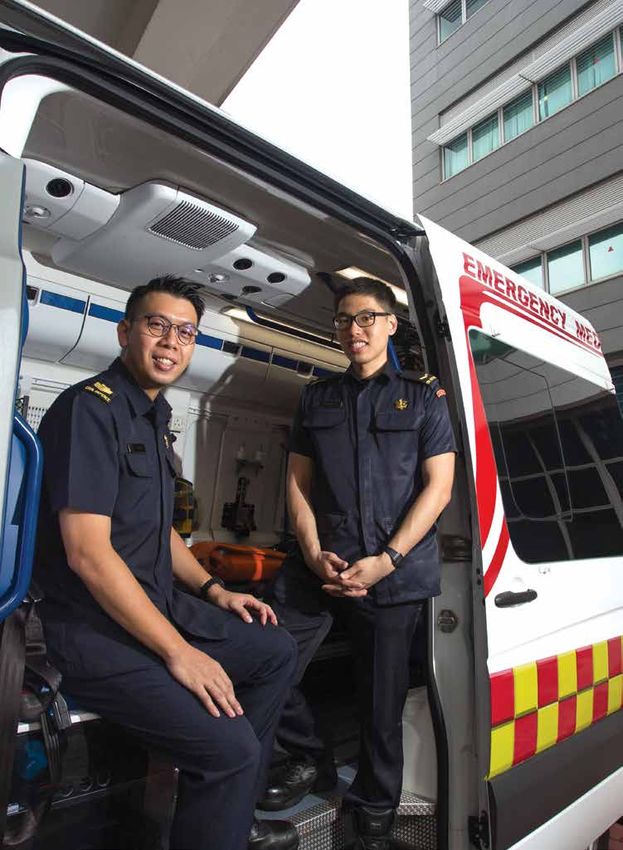
key milestones of national service
First Operation Lionheart Mission 1999
in singapore’s home team Involving SCDF ORNSmen
1967 Compulsory National Service (NS)
On 21 September 1999, the SCDF Operation
The NS (Amendment) Bill was passed on
14 March 1967 to build up Singapore’s defence
Lionheart Contingent was deployed for a mission to
Taiwan to render assistance in a search and rescue 2009 Commissioning of Public Transport
Security Command (TransCom)
forces. Part-time Police National Service (PNS) was operation following a massive earthquake. This is
introduced in the Special Constabulary the inaugural deployment of SCDF ORNSmen in an The TransCom was commissioned on 15 August
and the Vigilante Corps (VC). overseas humanitarian and disaster relief mission. 2009, to enhance public transportation security
Full-time PNS 1975 In the Civil Defence movement, there were two part-
in light of the terrorist attacks in London and
Mumbai. This unit is primarily staffed by PNS
Full-time PNS was introduced on 22 February 1975, time NS schemes under the VC – the Civil Defence officers to oversee and manage policing efforts
following the Laju terrorist incident in 1974. The first scheme and Auxiliary Fire Service scheme. throughout the entire public land transport
intake of 200 Singaporean males was enlisted on 24
July 1975.
Deployment of ORNS Firefighters
to Fire Stations 2010 network in Singapore.
With effect from November 2010, the In-Camp
1976 First Batch of Police Officer Cadets Training for SCDF ORNS firefighters attached to
the fire stations was increased from 8 to 18 days 2014 SCDF Collaboration with Singapore
The first batch of Police Officer Cadets was annually. This extension allows them to take on Workforce Development Agency (WDA)
enlisted on 22 January 1976 and appointed as active Rota (shift) duty as well as work hand-in-
NS Probationary Inspectors upon completion On 19 August 2014, the SCDF and WDA
hand with regular officers and NSF firefighters in
of a nine-month course. formalised the SCDF-WDA collaboration
responding to frontline fire and rescue operations.
1981
via a Memorandum of Understanding. This
Part-time NS Discontinued Full-time NS in the Singapore Fire Brigade collaboration provides SCDF NS officers with
(SFB) industry-recognised certifications for the
Part-time NS was discontinued. The red lanyard worn
competencies they acquire during NS, which
by the part–time PNS officers was no longer used. On the same date, the first batch of Full-time
National Servicemen (NSFs) was enlisted
Introduction of Voluntary Extension
of Service Scheme
2015 helps facilitate their transition into the workforce.
Full-time NS in the SCDF
under the SFB. Establishment of NSF Paramedic and
The scheme was introduced to allow Police Emergency Medical Technician (EMT)
This disbandment of part-time NS made way for the
Operationally-Ready National Servicemen (PNSmen) Vocations
establishment of the Construction Brigade and Civil
Defence Corps. 1986 Establishment of Rescue Battalions to continue contributing their expertise to the SPF
by serving as mentors and trainers beyond their The NSF Paramedic vocation was established
The first SCDF Rescue Battalion, a principal statutory age (40 years of age for Police Officers for newly enlisted NSFs with the appropriate
operational arm of the Reservist Units, came and 50 years of age for Senior Officers). academic background and training. This
into operation in September 1986. Reservists development, coupled with the introduction
Introduction of Multi-Task Group Concept 1988 from the SCDF Rescue Battalions were also of the NSF EMT vocation in March 2015, has
The Multi-Task Group concept allowed PNS officers
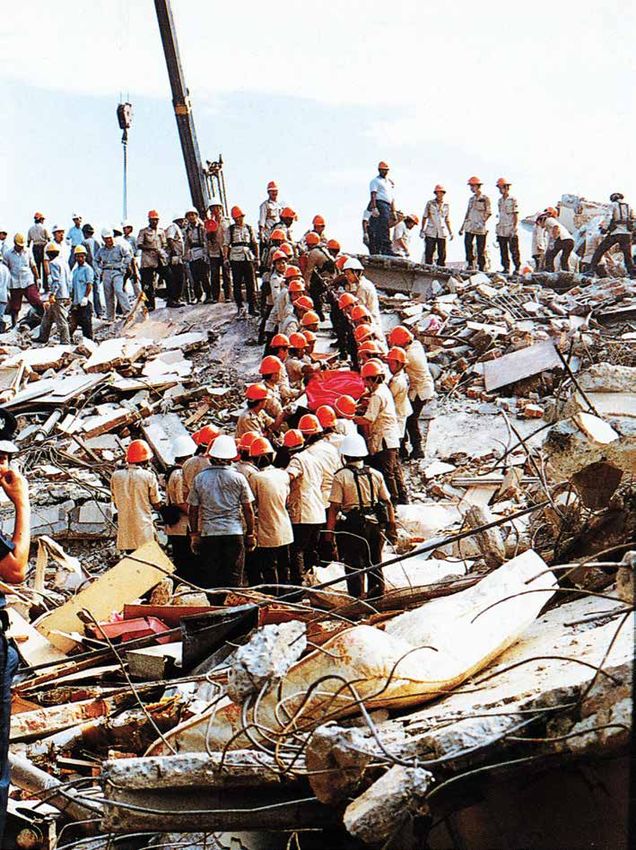
deployed to the Hotel New World collapse
incident.
Establishment of Protective
Security Command (ProCom)
2016 enhanced the standards of the SCDF NSFs in
Emergency Medical Service.
to contribute in a wider range of frontline duties
which included crowd control as well as emergency The ProCom, a specialist line unit, was
and disaster management.
1994 Standardisation of Police Uniform JOHN
JOHN
commissioned on 8 July 2016 to provide
security coverage at major national events
Enhancing Operational Capabilities
As part of integration, PNS officers began and protect security-sensitive locations during Future
wearing the same uniform as regular officers. The peacetime and national emergencies.
Come September 2018, the first PNSmen Public
white name tag worn by PNS officers was also
1995 Establishment of Community Engagement Order Troop will be formed. The troop will
Commissioning of First Batch replaced with the black ones. be trained and equipped to deal with violent
and Division Special Task Force Vocations
of SCDF NSF Officers rioters and boost the police’s capabilities during
The Community Engagement vocation was national emergencies and major events. The
The first batch of SCDF NSF officers was
established to allow PNS officers to take on troops will be fully rolled out by 2023. The SPF
commissioned. They later became the first group
more active roles in crime prevention and youth will continue to develop policies to provide PNS
of “thoroughbred” SCDF Operationally-Ready
National Servicemen (ORNS) officers.
1998 Direct Enlistment for Full-time Police National
Servicemen (PNSFs)
engagement. officers with more leadership opportunities and
new roles in light of the ever-changing security
The Division Special Task Force vocation was climate to better safeguard Singapore every day.
On 24 June 1998, the first Direct Enlistment established for PNSmen to enable land divisions to
Exercise was held where PNSFs reported directly better fight crime and tackle security challenges. Towards the Future:
to the Police Academy (known as the Home Team The annual Geylang Bazaar deployments consist SCDF’s Transformation Journey
Academy today). fully of PNSmen from this new vocation.
Under the SCDF’s vision to build “A Nation of
Deployment of NSF Firefighters to Fire Stations SCDF Shelter Battalion Renamed Lifesavers” by 2025, a holistic response model
was established to integrate community first
The first batch of NSF firefighters that completed the With the introduction of the SGSecure response with SCDF response. As all NS officers
Basic Fire Fighting Course was deployed to the fire movement in 2016, the SCDF Shelter Battalion are a critical resource of SCDF and also form
stations. NSF firefighters continue to work alongside (formed in 2012) was entrusted with an part of the community, the NS transformation
regular officers at the fire stations till this day. enhanced role as ‘mobilisers’, and renamed the plans will dovetail with SCDF’s overall vision.
Public Shelter and Resilience Unit on 1st July.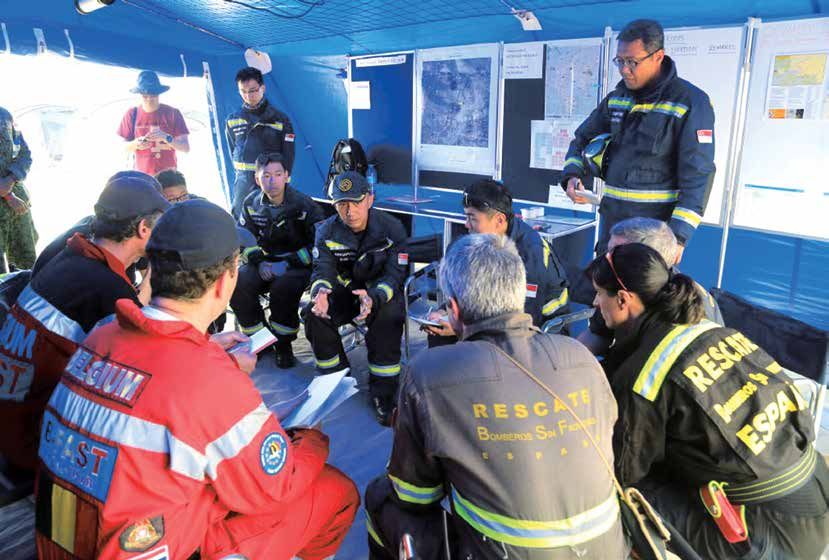
Duty
t o s e r v e th e c o u n t r y
14 e v e ry day Guardia ns                                                                                                                                                                                               Duty 15

                                                                                                                                                        In 1857, the Police Act was passed, paving the way for a
                                                                                                                                                        full-time regular police force to deal with escalating violent
                                                                                                                                                        crimes. In 1923, for the first time, police recruits received
                                                                                                                                                        training in a temporary Police Depot, a disused exhibition
                                                                                                                                                        site where Shenton Way now stands. In 1929, training was
                                                                                                                                                        formalised with a proper Police Depot to equip officers with
                                                                                                                                                        skills to instil law and order in what was, by then, a thriving
                                                                                                                                                        colony. This Depot at Thomson Road became the home of
                                                                                                                                                        generations of police trainees for the next 76 years.

                                                                                                                                                        The Police Training School was elevated to a Police
                                                                                                                                                        Academy in 1969, to enhance police training for a highly
                                                                                                                                                        professional and efficient Force. In December 2005, with
                                                                                                                                                        the opening of a new Home Team Academy in Choa Chu
                                                                                                                                                        Kang, the Thomson Road campus took on its current
                PNS officers on patrol   EARLY BEGINNINGS                                                                                               name: “Old Police Academy”, closing a significant chapter
                   in the late 1970s.
                                         The Singapore Police Force (SPF) can be                                                                        of the early history of the police force.

                                         said to have almost as long a history as                                                                       Another key part of protecting the community was to
                                         Singapore itself. Since its founding as                                                                        develop civil defence in Singapore. Volunteer firefighting
                                         a British colony by Stamford Raffles in                                                                        forces can be traced back to before the founding of
                                                                                                                                                        Singapore in 1819, when different groups of men came
                                         1819, Singapore’s security has drawn                                                                           together to put out fires when the need arose. As fire
                                         from the earnest endeavour of citizens,                                                                        safety became more of a priority, Raffles introduced a troop
                                         and its ultimate effectiveness has relied                                                                      of 150 sepoys, mostly from the British Army in India. They
                                                                                                                                                        were better-equipped than the volunteer firefighting forces,
                                         on close collaboration with the community.
                                                                                                                                                        but even then, their ‘fire engines’ were merely carts of
                                         By 1820, the first form of a police force was                                                                  water attached to hand pumps. A Fire Committee formed
                                         formally established. The first Resident of                                                                    to assess the need for an organised fire brigade went on
                                         Singapore, William Farquhar, introduced licenses                         Top: Entrance of the old              to set up the first Voluntary Organised Fire Brigade in April
                                                                                                         Singapore Police Training School.
                                         to fund a small police department, and Francis                                                                 1869. This Fire Brigade saw the consolidation of different
                                                                                                      Photo from Ministry of Information and the Arts
                                         James Bernard (his son-in-law) was appointed         Collection, courtesy of National Archives of Singapore.   groups of volunteers formed prior to 1819.
                                         Police Assistant, leading a department with just a                     Middle: Old Police Academy
                                         writer, jailor, jemadar (sergeant) and eight peada                        at Mount Pleasant Road.              In 1888 the official Singapore Fire Brigade (SFB) was set
                                         (constables).                                                     Bottom: PNS officers in training.            up by the Municipal Commission. The first fire station,
16 e v e ry day Guardia ns Duty 17
Top and bottom left: Central Fire Station Cross Street Station, was built in 1891. In 1908, the
in the 1980s. construction of Hill Street Fire Station was completed. It
Top and bottom right: Central Fire was later renamed Central Fire Station in 1950.
Station continues to operate at 62 Hill
Street till today. It was gazetted as a
national monument by the Preservation of The early role of the SFB was focussed mainly on
Monuments Board in 1998. firefighting, with little emphasis on civil defence. There were
Opposite top left: Volunteer firefighters general ground sentiments that, if there had been more of
fighting a dockside fire after a civil defence capability during the war, suffering could
a raid during World War II.
have been minimised.
Opposite top right: The early years
of the SFB.
In 1949, a Civil Defence Commissioner was appointed to
Opposite mddle right: Cross Street
Station, built in 1891, was the implement a detailed Civil Defence plan. This resulted in
first fire station in Singapore. the establishment of the Singapore Civil Defence Corps
Opposite bottom left: A “Green Certificate” that had six divisions at that time: headquarters, warden,
was awarded to those who completed rescue, ambulance, pioneer and welfare. In May 1951,
civil defence training with the
Singapore Civil Defence Corps. the Civil Defence Ordinance was introduced, but it was
not until 1982, when the Civil Defence Command was
Opposite bottom right: Officers from the
Singapore Civil Defence Corps’ hospital inaugurated, that civil defence began to take its present-
unit undergoing a practical first-aid lesson. day form. In 1982, the National Civil Defence Plan was
Photo from Ministry of Information and the Arts
Collection, courtesy of National Archives of Singapore. launched and in 1986, the Civil Defence Act was enacted.18 e v e ry day Guardia ns Duty 19
VOLUNTEERS JOIN THE FORCE
The precursor of today’s Police National Service (PNS)
is the Volunteer Special Constabulary (VSC), which was
formed in October 1946 to complement the SPF. The
VSC officers complemented the work of regular police
officers in various land divisions and specialised units.
VSC officers were drawn from volunteers from all walks
of life such as factory workers, nurses, businessmen
and lawyers.
The VSC itself has its roots in the Police Volunteer
Reserve, founded in 1938 to help deal with civil unrest
situations such as when Chinese residents held public
demonstrations against the war in China against Japan.
This reserve was disbanded during the Japanese
Occupation. After the war, an appeal for volunteers was
made in The Straits Times on 15 September 1945. In
October 1945, the Special Constabulary was formed
with 150 full-time officers who were paid a monthly
salary.
In 1946, the Special Constabulary was restructured into an
Extra Constabulary of full-time salaried officers and a VSC
of part-time unpaid volunteers. The VSC was especially
active during the turbulent years of the 1950s, including
the Maria Hertogh riots of December 1950 and the Hock
Lee Bus riots of May 1955.
The earliest attempt to introduce compulsory conscription in
Singapore was with its announcement in 1952, followed by
the National Service Ordinance being officially implemented
in March 1954. The Ordinance required males between the Top: Mr R E Foulger,
then Commissioner of Police,
ages of 18 and 20 to register for part-time National Service inspecting the recruited VSC in 1946.
(NS) and to be conscripted into the Singapore Military Force
Middle and bottom: VSCs at
or the Singapore Civil Defence Corps. the Police Training School in 1953.20 e v e ry day Guardia ns Duty 21
troops stationed in Singapore. The Singapore government
decided that it was necessary to have a military force
to defend itself that would be more substantial than
the 1,000 soldiers at independence. Conscription was
modelled after elements from the Israeli and Swiss NS
schemes.
POLICE NATIONAL SERVICE
In 1967, the PNS Command was established with the
introduction of part-time NS in both the VSC and Vigilante
Corps (VC). In 1967, the VSC was restructured to support
Left: Anti-riot police at However, this effort to engage citizens as part-time the implementation of the 12-year part-time PNS. The
Police enlistees
the Hock Lee Bus riots.
upholders of national security fell apart because it was reporting for NS. VSC was renamed Special Constabulary (Volunteers) or
© Ministry of Information and the
Arts Collection, courtesy of
National Archives of Singapore.
vigorously resisted by Chinese middle school students and
their parents, who were already unhappy with perceived
Right: Hundreds of people
outside the Supreme colonial bias against the Chinese language and culture,
Court, moments before the and did not see the need to support the British colonial
Maria Hertogh verdict was
delivered, 11 Dec 1950. government.
© Kenneth Chia Collection, courtesy
of National Archives of Singapore.
On 13 May 1954, violence erupted when hundreds of
students clashed with the police, as they demonstrated
against mandatory registration for military service. The
effort to introduce NS was thus postponed indefinitely until
conditions had changed completely again, after Singapore
gained full independence in 1965.
EARLY YEARS OF NATIONAL SERVICE
Life changed forever for all male Singapore citizens and
second-generation permanent residents from 14 March
1967, when the National Service (Amendment) Bill was
passed in Parliament to allow for conscription.
Building up self-defence seemed the only option in the
late 1960s, when the British government decided to
withdraw its troops and bases East of Suez, including22 e v e ry day Guardia ns Duty 23
SC (V), while the national servicemen were called Special
Constabulary. The first batch of SC enrolled between 30
August and 2 September 1967 at the Central Manpower
Base (CMPB). They were posted to one of five training
centres: Police Academy, Gan Eng Seng Secondary
School, Tanglin Integrated Primary School, Rangoon Road
Secondary School and Dunman Government Chinese
Middle School.
The inception of full-time PNS in 1975 was prompted
by the Laju terrorist incident of 1974. On 31 January
1974, Japanese Red Army terrorists hijacked the ferry
boat Laju at Pulau Bukom jetty and held its five crew
members hostage. After eight days of negotiations with
the Singapore and Japanese governments, the hijackers
agreed to release the hostages in exchange for safe
passage to Kuwait. The hijackers had attempted to
sabotage oil storage installations because oil and oil-based
products were among the chief commodities traded in
Singapore at that time.
Part-time national servicemen from the
VC registering at CMPB in 1967.
This episode highlighted the importance of
strengthening SPF’s manpower to secure vital
installations and protect important industries. One
of the key solutions to boost Singapore’s security
manpower was with full-time PNS.
The following year, 1975, full-time PNS was introduced.
On 24 July, the SPF enlisted its first intake of 200 Full-
time Police National Servicemen (PNSFs). Ever since
then, newly enlisted PNS trainees go through the Police
Officers’ Basic Course, where they learn about the Penal
Top: Laju Terrorist Incident on
Code, Criminal Procedure Code and relevant criminal 31 January 1974.
laws, police operations and procedures, weapons training
Bottom: A 7th Intake PNSF
and police defence tactics. bidding farewell to a loved one.24 e v e ry day Guardia ns Duty 25
Top and right: Newly-enlisted PNSF
trainees are put through their paces at the
Police Officers’ Basic Course.
Opposite top: Mr Lee Kuan Yew,
then Prime Minister of Singapore,
attending the Graduation Parade of the
first Officer Cadet Trainee batch in 1976.
Opposite bottom: PNSFs from the pioneer
SC and VC batch in salute.26 e v e ry day Guardia ns Duty 27
In 1976, the grooming of PNSFs for leadership positions and Special Operations Command (SOC), handled crowd
greater responsibility commenced when the first batch of management and anti-crime patrols at major events.
PNS Officer Cadets was enlisted on 22 January, and went This included Swing Singapore (a regular street party at
through training including leadership skills, physical fitness, Orchard Road at that time), and Malaysia Cup football
law and criminal investigation. They were commissioned in matches at the National Stadium, which often attracted
September as NS Probationary Inspectors. crowds of 55,000. They also supported the land divisions
in anti-vice and anti-gambling operations.
In 1977, the first batch of PNSFs became Police
Operationally-Ready National Servicemen (PNSmen),
and they were deployed for general policing duties in the
evenings between 7pm and 11pm on a bi-monthly basis.
By then, the total SC strength had grown to 9,640 officers
including PNSmen and volunteers. The deployment
strategy was revamped over time as PNS officers proved
themselves more than capable in their roles. Among the
adaptations of NS deployment was “vertical policing”,
which refers to how the officers conduct their patrols
“vertically” up and down the floors of multi-storey blocks
of flats. By doing this, PNS officers, in patrol teams of
two, helped enhance the level of security at high-rise
Housing Development Board (HDB) estates being built all
over the island.
In August 1980, PNS Inspectors became more involved
in frontline policing roles, as well as assisting in crime
investigations. In-Camp Training (ICT) was introduced
for PNSmen who had completed full-time PNS, and they Top left: A part-time PNS officer working
in the mobile squad in 1977.
underwent training at the Police Reserve Unit Base at Jalan
Bahar. Middle left: PNS officers from the
Police Reserve Unit in the late 1970s.
The last batch of part-time SC (NS) officers completed Middle right: PNS officers on patrol
in the late 1970s.
their PNS in 1981. Maintaining public order was a major
SC and VC national servicemen Bottom right: PNS officers in the Police
conducting “vertical policing” in the
aspect of PNS work. In the 1980s, PNS officers from
Task Force training to handle crowd
high-rise blocks of HDB estates. the Police Task Force, which later became known as the management and public order situations.28 e v e ry day Guardia ns Duty 29
Taking the heat
Left: Part-time national CIVIL DEFENCE NATIONAL SERVICE
servicemen from the VC also
learned basic firefighting and In the Civil Defence movement, there were two part-time
first-aid skills. NS schemes under the VC – the Civil Defence scheme
Right: Part-time national and Auxiliary Fire Service (AFS) scheme. These part-time
servicemen from the VC national servicemen, like all part-time national servicemen
practising firefighting at a Civil
Defence Training School. then, served 12 years. While personnel from both schemes
wore the trademark light brown shirt and trousers of the VC
with gold buttons and red berets, they also had distinctive
“As Director of Civil
insignias. For example, those under the Civil Defence
Defence, I remember
scheme had the “CD” insignia on their uniforms.
making a request for the
installation of a few fans Top: Group photo of
Between the two schemes, the AFS scheme was established the first batch of NSFs
in our office... to help the enlisted to the SFB.
later in January 1972, with the first batch comprising 700 part- firefighters cool down
Middle: The Straits Times,
time VC national servicemen. They were trained in firefighting, after each operation. 22 January 1976, pg.11
equipped with brown overalls and deployed to the fire stations This was deemed a © Singapore Press Holdings Limited.
to beef up Singapore’s firefighting services namely, the SFB luxurious request and after Right: The Straits Times,
(land), Unified Aerodrome Fire Service (air) and the Port of numerous questions posed 28 December 1988, pg.3
Singapore Fire Department (sea). to me by my superiors, the © Singapore Press Holdings Limited.
request was turned down.”
Full-time NS started in the firefighting services in January – The late Mr Selwyn Terrance
1976 with direct enlistment to the SFB. The first batch of Amerasinghe,
Full-time National Servicemen (NSFs) was enlisted on 22 on the no-frills working
conditions of the late 1970s
January 1976.30 e v e ry day Guardia ns Duty 31
The brigade took in 50 NSF firemen each year and put “Our training methods were simple but time-consuming,”
All the way to the top
them through a three-month basic firefighting course he says. “Our instructors had to light up a fire tray again
before they were deployed to the various fire stations. and again just for us to master our basic fire extinguishing
technique. They burned coconut husks and tyres in a
At the fire stations, they were primarily tasked with chamber to generate pitch darkness and heavy smoke.
routine chores such as area cleaning and washing of fire We were then directed to don the breathing apparatus
hoses. At the scene of a fire, their role was confined to sets and manoeuvre our way within the dark and smoky
support functions such as providing water supply from chamber.”
the hydrant. By and large, the regular firemen then were
protective of their rich tradition and the main tasks of In 1980, the SFB was renamed the Singapore Fire Service
firefighting were all undertaken by them. “Each day, after running around (SFS). The NSF firemen continued to be directly enlisted to
the training vicinity, we also SFS to serve in the fire stations, with the first batch on 19
“Training facilities then were certainly a lot more basic,” carried hoses on our shoulders March 1987. However, none of them were given leadership
recalls Senior Warrant Officer (SWO) Jimmy Tan, who and scaled the hose tower as appointments such as “leading fireman” and their roles
served his full-time NS with the SFB. In July 1977, he part of our morning workout. at the fire scenes were still confined to staying at the fire
was enrolled in the 4th Firefighter Course alongside 25 When we reached the top of the hydrant end of the water hose as the “fireman number 5”
other NSFs in that batch. There was nothing like the tower, we were required to shout or “hydrant man”.
sophisticated training aids today, such as “the furnace”, at the top of our voices: ‘Good
today’s state-of-the-art firefighting and rescue training morning, Jurong Fire Station!’” In September 1981, the Ministry of Home Affairs (MHA)
tower at the Civil Defence Academy (CDA). – WO Koh Ser Teck, one of SFB’s reviewed the roles of the two part-time NS schemes under
pioneer NSFs, recalling the the VC and concluded that they could be better utilised
NS training in the early days
through full-time NS.
Top: Registration Notice received
by SWO Chia Kok Beng who was
enlisted to the SFB to serve full-
time NS in 1976.
Right: SFB NSFs undergoing
height rescue training at the
former Jurong Fire Training School
in the late 1970s.
Opposite left: SFB NSFs practising
the role of a “hydrant man”.
Opposite right: SFB NSFs during
the days of the SFB in their
Physical Training attire.32 e v e ry day Guardia ns Duty 33
This resulted in the disbandment or demobilisation of VC for shrapnel and to utilise the drains as improvised covers
Wobbly helmets
NS in 1981 and the establishment of a full-time NS unit when seeking protection against aerial bombardment.”
and all
known as the Construction Brigade and a unit called the
Civil Defence Corps. Both units were managed by the By the early 1980s, the two most active full-time NS
Civil Defence Command – which was then part of the SPF vocations in the Civil Defence movement were NSF
– that executed its functions based on the National Civil firefighters from the SFS and Construction Brigade NSFs
Defence Plan of 1982. from the Civil Defence Command (the predecessor of
SCDF).
The late Mr Selwyn Terrance Amerasinghe, then Director of
Civil Defence, had a hand in revamping the original version The Construction Brigade was the first NS vocation of
of the National Civil Defence Plan drafted by Singapore’s the Civil Defence Command. It was established to train
then Civil Defence Commissioner, Colonel (COL) L.T. “In terms of equipment, we NSFs in construction skills for emergency civil defence
Firbank. He decided that, instead of dealing with one crisis had orange helmets that needs and also to build a pool of young local workers in
scenario at a time, it would be better to plan for the worst- never really fitted well. the construction industry. On 5 October 1981, 94 NSFs
case scenarios during wartime. They wobbled up, down were enlisted to the first Construction Brigade intake. They
and sideways whenever were trained for three months in construction, repair work,
Drawing from his personal experience from World War II, we ran. We had jumpsuits and restoration of essential utilities before being posted to
as well as similar experiences from the other VC and Civil as our field uniforms and it HDB for on-the-job training with building contractors. At
NSFs from the
Construction Brigade Defence officers, the Civil Defence Plan was ultimately was almost impossible for its peak, the Construction Brigade scheme took in about
learning to assemble
revised. “Some of my contributions included encouraging us to go in and out of the 2,000 enlistees annually.
rebar structures for
toilet quickly!”
constructing pillars. the civilian population to use sandbags as an effective shield
– Mr Benson Puah, In December 1985, the Construction Brigade scheme
former SCDF Company was revised to upgrade the skills of its NSFs. With the
Commander in the 1980s,
revision, Construction Brigade NSFs would first complete
recalling the basic equipment of
the early days three months of residential para-military training to
develop their physical fitness and teamwork as well as
to be trained in basic civil defence skills. Thereafter, they
became ranked servicemen and would undergo another
six-month intensive course at the Construction Industry
Training Centre before being posted to HDB for their on-
the-job training. By the late 1980s, Construction Brigade
NSFs were in great demand in the construction industry,
where they were offered higher wages with good career
prospects. This reflected well on the standard of training
and skills of these Construction Brigade NSFs.34 e v e ry day Guardia ns Duty 35
In November 2002, the Construction Brigade was
decommissioned largely due to the fact that their skills
were no longer required in the local construction industry.
In 1986, the Singapore Civil Defence Force (SCDF) was
established under the Civil Defence Act. It inherited the
functions of the Civil Defence Command, including the
management of Construction Brigade NSFs.
In 1987, both the SCDF and SFS maximised their
Bottom left: NSFs from the resources by embarking on joint basic training
Construction Brigade were also
exercises for NSFs. This was to enhance coordination
trained in electrical and tile works.
and team work in fulfilling their common life saving
Bottom right: Group photo taken
to mark the integration of the mission in times of emergency. In 1989, the SFS and
SCDF and SFS on 15 April 1989. the SCDF merged to form the Singapore Joint Civil
The integration was first known as
the SJCDF before being renamed
Defence Forces (SJCDF), and in 1992, it became the
as the SCDF in 1992. SCDF till the present day.
Top left: Modern-day enlistment at the SCDF NSTI.
Top middle: A parent sending her son off for NS enlistment in the SCDF.
Top right: New SCDF recruits learning how to fold their No. 4 uniform.
Bottom: Mr Amrin Amin, Parliamentary Secretary, Ministry of Home
Affairs, joined SCDF recruits for their pre-dawn meal during the fasting
month of Ramadan at NSTI.36 e v e ry day Guardia ns
upholding
law and
order He spent his 12-year stint at the old Central Police Station
since 1968 on South Bridge Road, where he was promoted to Corporal
(CPL) and later, Station Inspector and ASP. Each station had
Times were tough, but the
camaraderie was strong.
about 1,000 PNS officers in 10 teams of about 100 men
Mr Albert Lee – Mr Albert Lee
each. Initially, teams of up to eight youthful officers, led by
Mr Albert Lee, former Assistant Superintendent
a regular, would patrol by foot, bicycle or car in eight-hour
of Police (ASP) (NS), has served in the SPF for
shifts. “The regular officers felt a bit odd because it’s just like
close to 50 years.
a father taking care of a big family.”
Noting that there were then some 15,000 PNS officers
islandwide as the SPF was being beefed up for the security
Mr albert lee, 67, enlisted in 1968, in a batch of some 150 of Singapore, he was fully aware that this was necessary,
Police national servicemen. After completing his 12-year even though there seemed to be no immediate crisis.
cycle of part-time NS in 1980, he carried on serving in the Singapore as a young country itself was an “attraction” that
VSC for another 30 years until 2010 when he reached the had to be protected, he says.
age of 60, remaining a pNSman at heart till today.
In Chinatown, unlicensed “pirate taxis” would triple-park
Albert was dreading what he imagined would be very and obstruct traffic along New Bridge Road and Eu Tong
tough NS training when he enlisted in 1968. Things Sen Street. The taxi-drivers would mock Albert and his
changed when he found out that he would be enlisted to colleagues as “geena mata” (“children policemen” in
the SPF. Part-time NS – twice a week from 7pm to 10pm Hokkien or Teochew) because they were unarmed, only
– also meant he could continue helping his brother run a had batons, and looked so young. Their uniform then,
stationery business. Later, he served about 12 hours per leftover from British colonial times, probably did not help
month of ICT a year for 12 years. – grey top, brown shorts and white wool anklets that felt
ticklish on their legs.
“I enjoyed the training. On top of that, the trainers were
also very friendly,” Albert says. The police force occupied It was only later, with the introduction of stiffer fines for
Opposite top: The old Central
premises such as Gan Eng Seng School in Anson Road traffic-related offences, that drivers would rush up to plead
Police Station on South as venues for the six-month long basic training, which for leniency whenever they saw Albert and his colleagues
Bridge Road.
included aspects such as knowledge of the law, leadership whip out their little black notebooks.
Opposite bottom: The old and physical training. For arms drills, they had to march
uniform contributed to PNS
officers being taunted as
to Tanjong Pagar Police Post to draw the British .303 Lee Over time, he too plucked up more courage. He was told
“geena mata”. Enfield rifle, which was very heavy, and back again later. that secret society members had their principles, and38 e v e ry day Guardia ns Duty 39
would not harm police officers who were just doing their He appeared “cool” and spoke their street language with
duty. Although he knows of no police officer who was a mix of dialects. He was offered a packet of chicken rice
injured while on duty, every day, he and his fellow officers and a can of beer, which he acted like he enjoyed, as if
were still aware of the very real risk to life and limb that he was eating with friends. He pretended to be a buyer
their work demanded. and went to meet the thieves in a Joo Chiat cubicle with a
stash of dummy currency, before his colleagues eventually
Their scope of work included raiding gambling dens, sprang the ambush. “I had no backup. I was like a lone
bars, night clubs and opium dens that were very smelly ranger and it was only later that I realised I could easily
and full of old trishaw riders, lasting even into the early have been beaten up.”
1980s mostly in Sago Lane, Hokkien Street and Telok
Ayer Street. Over at Tanjong Pagar, they had to deal with These were the early times, when the equipment was
workers getting drunk on the alcohol called toddy and heavy, like the very basic walkie-talkies and telex machines,
falling unconscious in the middle of the road, creating a but the esprit de corps (camaraderie) lightened the burden
mess and causing a public nuisance. of duty. “We supported each other,” he recalls. “Times
were tough, but the camaraderie was strong.”
He was involved in the Robinson’s department store fire
at Raffles Place in 1972, and had to run all the way there
from Central Police Station as the narrow roads leading
up were all jammed. His immediate main task then was
crowd control, and he could see the fire burning and felt
concern for the people trapped inside. In subsequent days,
he and his teams performed a vital function where they
conducted security patrols to prevent looting and theft
from the incident site. In those days, crimes such as looting
would have been more common if not for the presence and
vigilance of PNS officers.
Top: Drivers would often
plead with Albert for Once, he “went undercover” to trap members of a racket
leniency when meting out
stealing calculators (worth $80, a big sum then). For this
a traffic summons.
covert operation, he had to leave his police warrant card
Opposite: Passing Out
Parade of the third intake of at the station and had nothing on his body to reveal that
Special Constabulary he was a police officer. This was his first experience as an
national servicemen at Police
Training School on Thomson
undercover officer. Though he felt nervous, he told himself
Road on 28 June 1969. he had a job to do.40 e v e ry day Guardia ns Duty 41
HOW TRAINING CHANGED WITH TIME
Training facilities have evolved and been enhanced over the
decades. The VC Civil Defence schools were set up to train
its part-time national servicemen in basic Civil Defence
Bottom: Part-time national skills. They comprised a few makeshift training camps
servicemen from VC
located in various parts of Singapore such as Buona Vista
undergoing equipment drills in
the 1970s. and Tanah Merah. One of the largest camps was located at
Opposite top: Part-time Kent Ridge Park.
national servicemen from VC
having field training at Buona
These Civil Defence training schools were initially
Vista Camp in the early
1970s. managed by the Civil Defence Command. In 1986, with
Opposite bottom: Passing out the establishment of the SCDF, all SCDF regulars and
parade of the Construction its NS officers, began to train at the four SCDF training
Brigade’s NSFs at the Jalan
Bahar Civil Defence Training
schools located at Nee Soon, Mandai, Jalan Bahar and
School in the early 1980s. Hougang.42 e v e ry day Guardia ns Duty 43
The Nee Soon Civil Defence Training School served as a
training centre for SCDF commanders and personnel from
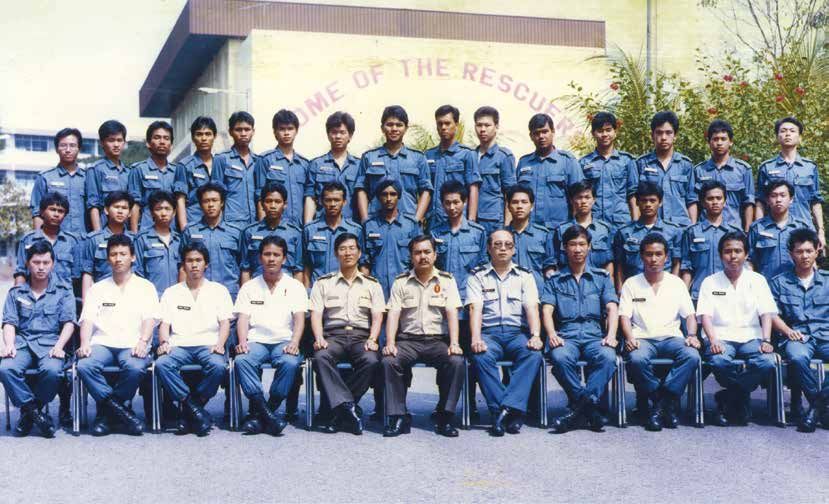
critical vocations. It was popularly dubbed the “Home
of the Rescuers”. The school primarily served as a base
camp for SCDF Rescue Battalions. It had a three-storey
dormitory that could house about four companies at any
one time. Over time, other features were introduced to the
training school, including the charging and repair rooms
for the breathing apparatus sets as well as facilities for
Opposite top, left and right: medical triage and first-aid treatment. The training school
SCDF ORNSmen training at also served as a reporting centre for the Rescue Battalion
Mandai Training Village.
reservists who were mobilised for the Hotel New World
Opposite bottom: Group photo of collapse incident in 1986.
rescuers trained at Nee Soon Civil
Defence Training School, more
affectionately known as the “Home Improvements in training facilities have culminated in
of the Rescuers”.
the CDA, officially opened in March 1999. One of the
Top left: The main entrance academy’s signature training facilities is called “The Ruins”,
to the “Home of the Rescuers”
along Bath Road. a large area of rubble with interchangeable voids and
confined spaces to simulate collapsed structures, for urban
Top right: The iconic
entrance arch of CDA. search and rescue training.44 e v e ry day Guardia ns Duty 45
SCDF NSFs practising firefighting
The 11-hectare CDA was custom-designed to house in a near-realistic scenario
state-of-the-art training facilities for a near-realistic conducted at “The Furnace”.
Top: SCDF ORNSmen training for all SCDF officers including NSF firefighters.
undergoing their ICT at
“The Ruins”. Some of these aspects include the computer-controlled
Bottom: SCDF NSF Rota
liquefied petroleum gas (LPG) bullet tank firefighting
Commanders cutting a simulator, HazMat Chemical Plant and a nine-storey
vehicle to rescue a ‘trapped
firefighting and rescue training tower known as “The
casualty’ in a road traffic
accident scenario. Furnace”.capabilities. An example includes the body-worn camera,
which is clipped on the front of an officer’s uniform.
MORE ADVANCEMENTS FOR THE 21ST CENTURY Introduced in 2015, this device can capture audio and
progressing with
In 2015, the Home Team Tactical Centre (HTTC) was officially video recordings while the officers are carrying out their
technology
opened, with purpose-built training facilities. Highlights duties. The gadgets help to deter crime and assist in
include a massive area of debris and a partially collapsed investigations because, as Deputy Commissioner of Police
building named the “Leaning Tower”. With an 18-degree (Operations) Lau Peet Meng explains, they “complement
slant, the “Leaning Tower” simulates a collapsing building existing forensic methods to allow the police to piece
at a disaster site. Such facilities enable SCDF NS officers to together what actually happened at an incident”.
sharpen their urban search and rescue techniques.
As the hardware of equipment and expertise became more
Over the years, SCDF further embraced innovation and sophisticated, the software of leadership and responsibility
harnessed technology, resulting in its capabilities and also expanded. In August 2014, SCDF and the Singapore
“There is definitely equipment being enhanced many times over. For instance, Workforce Development Agency (WDA) formalised a
a greater reliance on to mark Singapore’s Golden Jubilee of independence, in collaboration to provide SCDF NS officers with industry-
technology in today’s fire September 2014, SCDF unveiled the 4th Generation Light recognised certifications for the competencies they acquire
and rescue operations. Our Fire Attack Vehicle (LFAV), which has evolved in design and during NS, that would also facilitate their career transition
NSFs are now exposed to capability to reflect the spirit of the SCDF – agile, potent, into the workforce. Today, selected SCDF training courses
modern and sophisticated and cutting-edge. This is also the world’s first compact for NS officers are aligned to the Singapore Workforce Skills
appliances and devices. urban firefighting vehicle with a fully integrated compressed Qualifications (WSQ) system administered by WDA.
These include the air foam pump capability that is able to extinguish fires four
Unmanned Aerial Vehicle times faster and uses 70 per cent less water compared to Today, SCDF NS officers receive a nationally recognised
and Compressed Air Foam
conventional pumps. Statement of Attainment upon completion of each WSQ-
technology. Of course, it Top left: The Straits Times, aligned training module during NS. One such course is the
makes operations more 20 August 2014, B2.
Another innovative breakthrough of the SCDF is the Fire 28-week Rota Commander Course (RCC), which equips
efficient and effective.” © Singapore Press Holdings Ltd.
Medical Vehicle (FMV) which was launched in May 2017. SCDF officer cadets with competencies such as firefighting
Top middle: SCDF’s Unmanned Aerial
– SWO Jimmy Tan, This vehicle is a hybrid of a fire appliance and an ambulance Vehicle, deployed for use during large- and rescue skills, staff work knowledge, leadership skills and
one of SFB’s NSFs reflecting scale incidents, enables SCDF officers to
to stabilise and treat casualties of minor industrial incidents contingency planning proficiency. Other examples cover skills in
on how the training for SCDF monitor the situation of a fire
NS officers has progressed and road traffic accidents. The FMV also carries a slew of from the air and from a distance. areas such as emergency medical response and firefighting.
significantly over the years medical equipment on board that will serve to monitor the
Top right: The body-worn camera can
patient’s well-being en route to the hospital. capture audio and video recordings Each year, about 2,000 SCDF NSFs and ORNSmen benefit
Top left: SCDF’s FMV. while the police officers are from this skills accreditation, that continues into their
carrying out their duties.
Top right: SCDF’s 4th For the SPF, much of the new advanced equipment annual ICT. As WDA Chief Executive Ng Cher Pong noted:
Generation LFAV, Bottom: Several SCDF training courses
that has been introduced in recent years is being worn “Skills such as team leadership and contingency planning
which is affectionately held at CDA for NSFs and ORNSmen
known as the Red Rhino. by police officers to enhance frontline crime-fighting are aligned to the WSQ system. are industry-relevant and sought after by many employers.”48 e v e ry day Guardia ns Duty 49
The Multi-Task Group concept was introduced in 1988
Enforcing and also
to involve PNS officers in a wider range of tasks, to allow
making the law
them to contribute more to the SPF in both peacetime and
emergency functions.
The peacetime functions included “vertical policing” by
patrolling through high-rise blocks of HDB flats, crowd
control duties and crime-prevention patrols. Emergency
functions included preparation and training for national
emergencies and disasters. Training was expanded to
prepare PNS officers to help mitigate large-scale
“Never did I feel that I national crises.
was just going through
NS. It was exciting to see In 1994, PNS was reorganised to focus on specialisation,
the policy work we did integration and operational readiness. At the same time,
being translated into law, the uniforms of PNS officers were changed to be the same
sometimes within a matter as the regular officers. Previously, PNS officers wore white
of months.” name tags. Henceforth, they started wearing the same black
– Mr Sundaresh Menon, name tags, reflecting their greater responsibilities on par with
Chief Justice of Singapore, regular officers. That same year, the NS Key Installation and
on his stint as an NS Inspector, Protection Unit (KINS) was formed to guard vital installations
Traffic Police
throughout Singapore.
Also in 1994, the term “reservist” was replaced by
“Operationally-Ready NSmen” (ORNSmen) to better
reflect the frontline deployment of NS officers, as they
were in no way held “in reserve”. In the same year, a
review of SCDF’s ORNS orbat resulted in a reduction of
manpower from 63,000 to 23,000 men. 374 companies
were reorganised to form four support battalions.
Immediate response units were also introduced and
based at fire stations to respond to national emergencies.
Top: PNS officers’ white
and black name tags. The orbat was reviewed again in the 2000s, this time
reducing the strength further to 10,000 men as part of a
Opposite: KINS officers
guarding vital installations. leaner, more nimble and multi-skilled force.You can also read


