EMPOWERING KIDS TO CHOOSE MYPLATE LESSON PLAN - LEARNING ...
←
→
Page content transcription
If your browser does not render page correctly, please read the page content below
www.learningzonexpress.com
                                                                                            1.888.455.7003

                                                                                             USDA MyPlate Poster
                                                                                             18” x 24” Laminated
                                                                                             © 2011 Learning ZoneXpress
                                                                                             Product: # 410106
                                                                                             Price: $14.95

              Empowering Kids to Choose MyPlate Lesson Plan
National Health Education Content Standards:
    » 2. Students will demonstrate the ability to access valid health information and health promoting products
       and services.
    » 3. Students will demonstrate the ability to practice health-enhancing behaviors and reduce health risks.
    » 6. Students will demonstrate the ability to use goal-setting and decision-making stills to enhance health.
A Note for the Teacher:
This lesson plan is designed to help you assist students in making healthy eating choices using the new MyPlate
icon. You can choose to do the lesson in one day or stretch it out over several days. It is also designed to be
adaptable for grades K-5, so choose the activities that best match the grade level you teach. A family letter is
included to clue families in to the simplicity and importance of making healthy eating choices.

The MyPlate icon is divided into four portions with a glass on the side for dairy. Each section is described briefly
in the poster above.

Through this lesson, students will learn practical ways to implement these suggestions. The lesson will be divided
into the following categories:
    » Intro to MyPlate
    » Make Half of Your Plate Fruits and Vegetables
    » Make at Least Half Your Grains Whole
    » Vary Your Protein Food Choices/Switch to Fat-Free or Low-Fat Milk
    » Be Physically Active Your Way
Additional resources include:
    » Printable MyPlate images (black and white and color)
    » Games and activities for students
    » After-lesson assessments
                                            ©2011 Learning ZoneXpress | www.learningzonexpress.com | 1.888.455.7003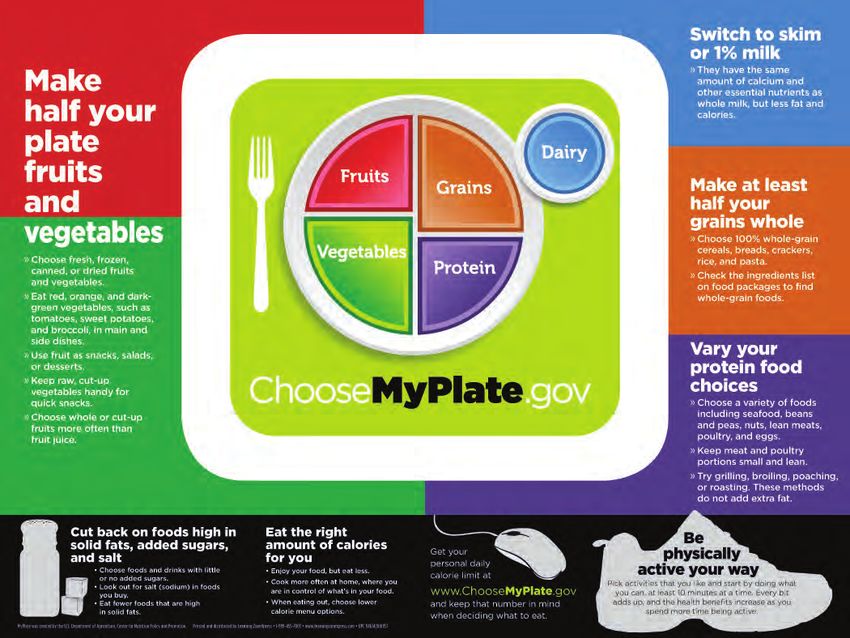
MyPlate Lesson Plan    »1

Intro to MyPlate

You will need:
 ✓   A colored MyPlate printout
 ✓   A black and white MyPlate printout for each student
 ✓   Crayons/markers/colored pencils for students

Directions:
     » Briefly introduce MyPlate. Emphasize the
       importance of eating a variety of healthy foods and
       how easy it can be.
     » Show the students the colored printout of MyPlate.
       Point out each section and, depending on the
       grade level you are working with, have the students
       identify the colors and or labels of each section.
     » For Younger Students:   Instruct them to color their plate one section at a time as you name each section.
       As they color, have them take turns listing foods that fit in that category. After they finish coloring, have
       them write or draw three foods that belong in each section.
     » For Older Students:   Instruct them to color their plate and then label the categories. Partnering up with
       other students, they will list at least ten foods that fit in each category. Then have them come back to the
       whole group and discuss the foods they listed.

ACTIVITY: ChooseMyPlate.gov
     » Have students visit the website www.ChooseMyPlate.gov and select the “Get a Personalized Plan”
       option. Have them enter their personal information and print off the computer’s calculations for their
       daily food needs. Encourage students to keep this printout and take it home to show their parents.
       Younger students will need assistance with entering their information and understanding the results.
     » Variation:Do a sample for the class on your computer screen or SmartBoard. Have the students
       complete their Personalized Plan at home.

                                           ©2011 Learning ZoneXpress | www.learningzonexpress.com | 1.888.455.7003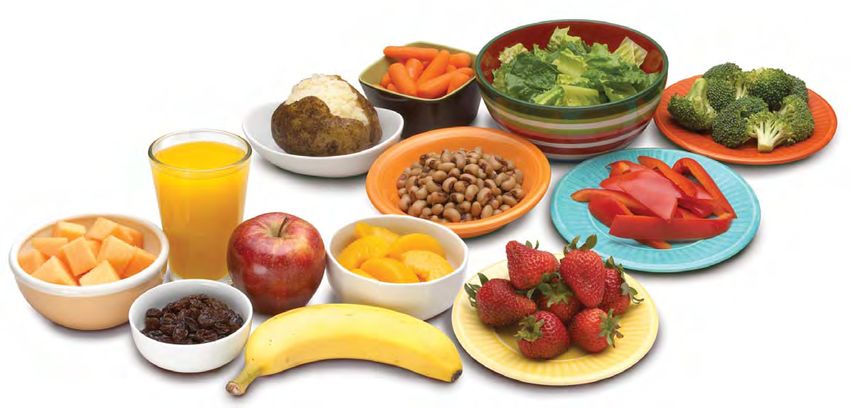
MyPlate Lesson Plan   »2

©2011 Learning ZoneXpress | www.learningzonexpress.com | 1.888.455.7003
MyPlate Coloring Sheet                                               MyPlate Lesson Plan   »3

                         ©2011 Learning ZoneXpress | www.learningzonexpress.com | 1.888.455.7003
MyPlate Lesson Plan   »4
Make Half of Your Plate Fruits and Vegetables
Directions:
Start with a class discussion. Have each student list his or her favorite fruit and
vegetable. Ask the students how much of their plates are normally taken up
by fruits and veggies. Ask them how they feel about trying new fruits and
vegetables. What could make it easier?

List and discuss the following tips:
     » Choose fresh, frozen, canned, or dried fruits and vegetables.      (Which
       forms are the best?)
     » Eat red, orange, and dark green vegetables, such as tomatoes, sweet potatoes, and broccoli, in main and
       side dishes. (What are some examples of dishes you like that include these foods?)
     » Use fruit as snacks, salads, or desserts. (Why is fruit a good dessert choice?)
     » Keep raw, cut-up vegetables handy for quick snacks. (List some veggies you could use for this.)
     » Choose whole or cut-up fruits more often than fruit juice. (Why is this a good idea?)
     » Check juice labels to ensure that they are 100% juice.
ACTIVITY: Crazy Colors
You will need:
 ✓   Crazy Colors worksheet for each student, timer

Directions:
     » Set a timer for 1 minute, 2 minutes, or whatever amount fits the needs of the students.  Instruct the
       students to list as many fruits and vegetables as they can for each color (you may decide to have students
       work in pairs for this). When the timer sounds, have the students count how many foods they came up
       with for each color. The person or group with the most foods listed wins.
     » Variation (older students): Have each group tell the class the foods they recorded. If another group has
       the same foods, they must cross them off. The winning group is the one with the most foods left on the list.
     » Variation (younger students): Draw the foods under each color heading.

                                              ©2011 Learning ZoneXpress | www.learningzonexpress.com | 1.888.455.7003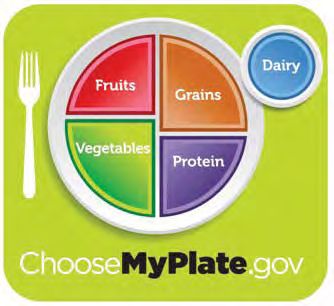
MyPlate Lesson Plan   »5
        Crazy Colors Worksheet
Green   White              Red             Yellow/Orange            Blue/Purple

                ©2011 Learning ZoneXpress | www.learningzonexpress.com | 1.888.455.7003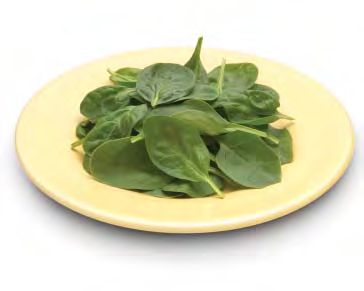
MyPlate Lesson Plan   »6
                Crazy Colors
Green   White              Red             Yellow/Orange            Blue/Purple

                ©2011 Learning ZoneXpress | www.learningzonexpress.com | 1.888.455.7003
MyPlate Lesson Plan   »7
                  Crazy Colors Worksheet Key
     Green              White                   Red             Yellow/Orange            Blue/Purple
Artichokes        Bananas               Beets                 Apricots               Black currants
Arugula           Brown pears           Blood oranges         Butternut squash       Black salsify
Asparagus         Cauliflower           Cherries              Cantaloupe             Blackberries
Avocados          Dates                 Cranberries           Carrots                Blueberries
Broccoflower      Garlic                Guava                 Golden kiwifruit       Dried plums
Broccoli          Ginger                Papaya                Grapefruit             Eggplant
Broccoli rabe     Jerusalem             Pink grapefruit       Lemon                  Elderberries
Brussel sprouts       artickoke         Red grapefruit        Mangoes                Grapes
Celery            Jicama                Pomegranates          Nectarines             Plums
Chayote squash    Kohlrabi              Radicchio             Oranges                Pomegranates
Chinese cabbage   Mushrooms             Radishes              Papayas                Prunes
Cucumbers         Onions                Raspberries           Peaches                Purple Belgian
Endive            Parsnips              Red apples            Persimmons                endive
Green apples      Potatoes              Red bell peppers      Pineapples             Purple potatoes
Green beans       Shallots              Red chili peppers     Pumpkin                Purple asparagus
Green cabbage     Turnips               Red grapes            Rutabagas              Purple cabbage
Green grapes      White corn            Red onions            Sweet corn             Purple carrots
Green onion       White nectarines      Red pears             Sweet potatoes         Purple figs
Green pears       White peaches         Red peppers           Tangerines             Purple grapes
Green peppers                           Red potatoes          Yellow apples          Purple peppers
Honeydew                                Rhubarb               Yellow beets           Raisins
Kiwifruit                               Strawberries          Yellow figs
Leafy greens                            Tomatoes              Yellow pears
Leeks                                   Watermelon            Yellow peppers
Lettuce                                                       Yellow potatoes
Limes                                                         Yellow summer
Okra                                                              squash
Peas                                                          Yellow tomatoes
Snow peas                                                     Yellow watermelon
Spinach                                                       Yellow winter
                                                                  squash
Sugar snap peas
Watercress
Zucchini

                                     ©2011 Learning ZoneXpress | www.learningzonexpress.com | 1.888.455.7003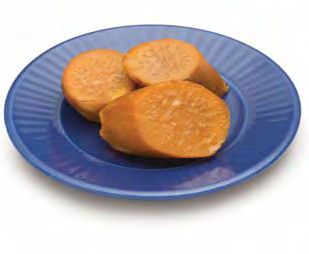
MyPlate Lesson Plan    »8
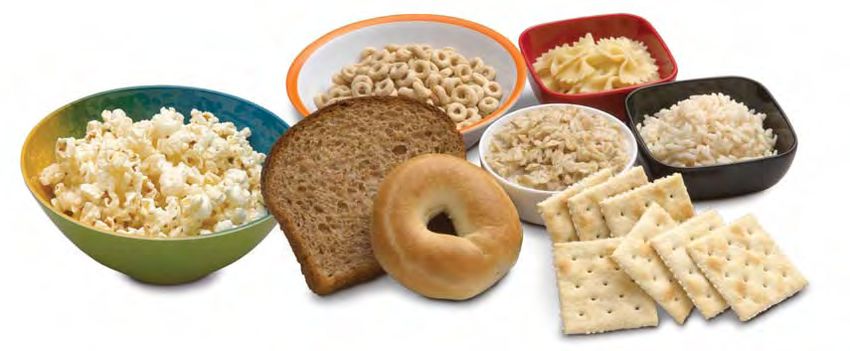
Make At Least Half Your Grains Whole
You will need:
 ✓   Visual of a whole grain
 ✓   Food labels from various foods—some containing whole grains and
     some not

Directions:
     » Begin by asking the students to name some grains. (Wheat, corn,
       barley, oats, rice, etc.)
     » Explain that every grain that grows is a whole grain in its original
       form. A whole grain is made up of three parts. (Show the visual of a whole grain). Each of the three
       parts contains important components for our nutrition. The bran is the outer shell of the grain which
       protects the seed. It has fiber and B vitamins. The endosperm is in the middle of the grain and provides
       carbohydrates and protein which give us energy. The germ is the inner part of the grain that sprouts
       when the grain is planted. It has antioxidants, vitamin E and B vitamins and healthy fat. Emphasize that
       at least half of the grain choices we make should be whole grain.
     » The difference between whole grains and refined grains is that whole grains include all three parts of the
       grain and refined grains have been stripped, leaving only the endosperm portion of the grain.
     » Variation (younger students):    With students, make a list of grains.
       Explain that grains are a part of a special type of a plant. (If possible, have a corn cob, wild rice plant, or
       wheat sheaf to share with students.) A whole grain is the entire grain. A whole grain is made up of three
       parts. (Show the visual of a whole grain.) There is the outside part (shell), the middle part that gives the
       new plant energy, and the inside part that becomes the new plant. When we eat foods with grains in
       them – bread, cereal, rice, pasta – at least half of it should have the whole grain in it. For example, when
       we eat whole grain bread, there are all three parts of the grain in the bread. But, when we eat white
       bread, only the middle part of the grain is in it.

ACTIVITY: Read Food Labels
For Older Students:
     » Divide the students into groups of 3-5 and give each group a food label.  Allow a couple of minutes for
       the students to look at the labels. Then ask each group to tell whether or not their food contains whole
       grains or not and how they can tell.

For Younger Students:
     » Bring in a small sample of refined white flour and a small sample of whole wheat flour.    After explaining
       the difference between whole and refined grains, have the
       students observe any difference they see between the
       two samples. Then, have students take turns
       feeling the textures of the two flours.
       Finally, ask students to
       describe any differences
       they feel or see.

                                             ©2011 Learning ZoneXpress | www.learningzonexpress.com | 1.888.455.7003
MyPlate Lesson Plan   »9

THE Whole
Grain                                  Endosperm
Kernel                                   The bulk of the kernel
                                            that contains small
                                          amounts of vitamins
                                                  and minerals.
    Bran                                         Refined grains
 This outer layer                               contain mostly
 of the grain                                      endosperm.
 kernel is rich
 in fiber.

                                                       Germ
                                              This inner layer
                                               is where a new
                                    plant sprouts. The germ
   “100%”                                 is rich in nutrients.
whole grain uses
  all 3 parts

                    ©2011 Learning ZoneXpress | www.learningzonexpress.com | 1.888.455.7003
MyPlate Lesson Plan » 10
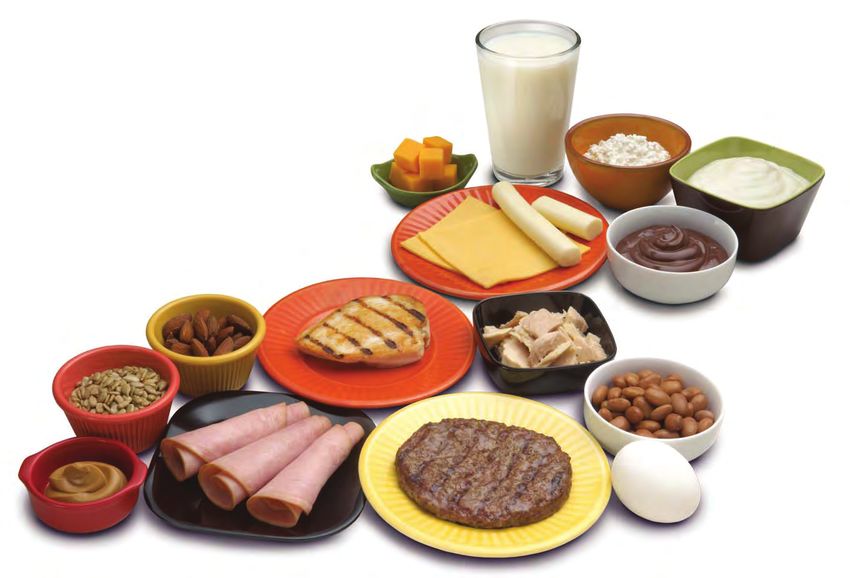
Vary Your Protein Food Choices/Switch to Fat-Free or Low-Fat Milk
Directions:
» Begin by telling students that protein is necessary for building strong
muscles and body tissues and that it helps sustain energy so that we do
not tire as quickly. There are many sources of protein—meat and non-
meat. It is important to eat from a variety of protein sources. Protein
portions should be small and lean (not fatty).
» Explain to students that dairy products contain calcium—a nutrient that
helps build strong bones. Using fat-free (skim) or 1% milk still gives a
person the same amount of calcium as 2% or whole milk but with less
fat and fewer calories.
» Draw a T-chart on the board or a large piece of paper. Label one side
protein and the other dairy. Have students list as many foods as they can
think of that would fit in each of those categories. Then have volunteers
circle the healthiest choices (i.e. grilled or broiled meats, low fat or fat-
free dairy products).
ACTIVITY: One of These Foods Doesn’t Belong
You will need:
✓ A copy of One of These Foods Doesn’t Belong sheet for each student
Directions:
» Instruct students to put an X through the food in each row that would not be a healthy source of protein
or dairy.
©2011 Learning ZoneXpress | www.learningzonexpress.com | 1.888.455.7003MyPlate Lesson Plan » 11
One of These Foods Doesn’t Belong
We have many choices when it comes to including protein and dairy in our diets. Each row below lists some
choices of either protein or dairy sources. Draw an X through the food that doesn’t belong in each row, and
circle protein or dairy to indicate which food group is best represented in that row.
These foods are
examples of:
milk rice string cheese yogurt Protein Dairy
These foods are
examples of:
grapes fish black beans lean deli ham Protein Dairy
These foods are
examples of:
egg tofu corn sunflower seeds Protein Dairy
These foods are
examples of:
low-fat cottage
low-fat frozen yogurt cheddar cheese hummus Protein Dairy
cheese
Write or draw your answers to the following questions:
What is your favorite healthy source of protein? What is your favorite healthy source of dairy?
©2011 Learning ZoneXpress | www.learningzonexpress.com | 1.888.455.7003MyPlate Lesson Plan » 12
One of These Foods Doesn’t Belong KEY
We have many choices when it comes to including protein and dairy in our diets. Each row below lists some
choices of either protein or dairy sources. Draw an X through the food that doesn’t belong in each row, and
circle protein or dairy to indicate which food group is best represented in that row.
These foods are
examples of:
milk rice string cheese yogurt Protein Dairy
These foods are
examples of:
grapes fish black beans lean deli ham Protein Dairy
These foods are
examples of:
egg tofu corn sunflower seeds Protein Dairy
These foods are
examples of:
low-fat cottage
low-fat frozen yogurt cheddar cheese hummus Protein Dairy
cheese
Write or draw your answers to the following questions:
What is your favorite healthy source of protein? What is your favorite healthy source of dairy?
©2011 Learning ZoneXpress | www.learningzonexpress.com | 1.888.455.7003MyPlate Lesson Plan » 13
Be Physically Active Your Way
Directions:
» Begin by listing several activities like walking, swimming, gardening, jumping, skipping, etc. and ask
the students what those things are examples of (physical activity). Explain to the students that physical
activity is a very important part of staying healthy. The energy we get from food is used when we are
active.
» Most children and adolescents need 60 minutes of physical activity each day. Ask the students to share
their favorite ways to be physically active. Then have them list some ways that families can be active
together.
ACTIVITY: MyPlate Relay
You will need:
✓ One set of food and activity cards cut out for each relay line
✓ One bowl or basket per relay line
✓ One MyPlate printout per line
Directions:
» Print out the number of food and activity card sets you need.
(1 per team)
» Divide the students into even teams (at least 2) and have
them line up behind a starting line. Place one basket at
the starting line for each team. The cards should be placed
in the starting line basket. The MyPlate printout should be
placed at the finish line for each team.
» Students line up single file behind the basket. The first
child draws a card and does the activity listed on it (running,
walking, skipping, crab walking, etc.) to get to the finish line.
He or she then places the card on the corresponding part of
the plate (i.e. grilled chicken on purple protein section). The
child runs back to the starting line and tags the next player. The
team that finishes first and has their cards on the right parts of
the plate wins.
©2011 Learning ZoneXpress | www.learningzonexpress.com | 1.888.455.7003Food & Activity Cards MyPlate Lesson Plan » 14
jump skip
whole-wheat
carrots bread
crab walk gallop
peaches milk
tip-toe
crawl
grilled
egg
chicken
hop on
spin
two feet
spinach
grapes
hop on
dance
one foot
eggplant
cheese
©2011 Learning ZoneXpress | www.learningzonexpress.com | 1.888.455.7003Food & Activity Cards MyPlate Lesson Plan » 15
roll
sway
sunflower
squash
seeds
walk
run
whole-wheat
watermelon
pasta
walk walk
heel-to-toe backwards
peanut low-fat
butter yogurt
grape-vine
take giant
walk
steps
sweet
red pepper
potato
wheelbarrow-
duck-walk walk (with a
friend)
brown rice
fish
©2011 Learning ZoneXpress | www.learningzonexpress.com | 1.888.455.7003MyPlate Lesson Plan » 16
Review Activity:
Create MyPlate
You will need:
✓ A white paper plate for each child
✓ Markers, crayons, colored pencils
✓ Magazines with food pictures, scissors, glue
Directions:
» Have the students use a black marker or crayon to divide their plate into four sections as you model this
on the board.
» Instruct the students to build a healthy plate for themselves by following the MyPlate guidelines of
making half the plate fruits and veggies (make sure they include both fruits and veggies), making half the
grains whole, varying the protein choices, and using skim or 1% dairy choices.
» Students can draw the foods and label them or cut out and glue on magazine pictures. When everyone
is finished, have each child share his or her plate with the class and explain why he or she chose those
particular foods. Then have him or her give one example of an enjoyable physical activity.
Final Assessment Grades K-2:
You will need:
✓ MyPlate black and white handout for each child (labeled)
Directions:
» Guide students through this activity by pointing to and naming each section of the plate. When you
name a section, instruct the students to draw a food that would fit in that section. They can also label the
food if they are able to write.
» On the back of the paper, have the students draw a physical activity that they enjoy doing.
Final Assessment Grades 3-5:
You will need:
✓ MyPlate black and white handout for each child (NO labels)
Directions:
» Instruct the students to label each section of the plate and list a minimum of 5 foods that would fit in
each section.
» On the bottom of the page, have the students list 3 physical activities that they enjoy.
©2011 Learning ZoneXpress | www.learningzonexpress.com | 1.888.455.7003MyPlate Lesson Plan » 17
MyPlate Final Assessment
(Grades K-2)
©2011 Learning ZoneXpress | www.learningzonexpress.com | 1.888.455.7003MyPlate Lesson Plan » 18
MyPlate Final Assessment
(Grades 3-5)
©2011 Learning ZoneXpress | www.learningzonexpress.com | 1.888.455.7003MyPlate Lesson Plan » 19
Goal Setting
You will need:
✓ One Goal Setting sheet for each student
Directions:
» Instruct the students to write down two goals that they want to work on in regards to healthy eating and
activity (i.e. eat more green veggies, play outside instead of watching TV, etc.). Collect the papers.
» After one week, hand the papers back and have the students fill out the response questions. Discuss as a
class how everyone did with their goals.
» Adaptation: Younger students may need to simply verbalize their goals while the teacher fills in the
blanks. Or this could simply be a class discussion for younger children.
©2011 Learning ZoneXpress | www.learningzonexpress.com | 1.888.455.7003Student Name:_________________________ MyPlate Lesson Plan » 20
Goal Setting Worksheet
Now that you have learned a little more about MyPlate and making healthy food and
activity choices, it’s time to come up with some personal goals to help you stay healthy.
Fill in the blanks with your goals.
Healthy Eating Goal
This week I plan to_______________________________________________________________
Physical Activity Goal
This week I plan to ______________________________________________________________
Response questions (to be completed after one week)
1. On a scale of 1-5 (1 being unsuccessful and 5 being very successful), how would
you rate your success with your healthy eating goal?
1 2 3 4 5
2. On a scale of 1-5 (1 being unsuccessful and 5 being very successful), how would
you rate your success with your physical activity goal?
1 2 3 4 5
3. What changes or additional goals do you plan to put in place for next week?
©2011 Learning ZoneXpress | www.learningzonexpress.com | 1.888.455.7003MyPlate Lesson Plan » 21
Dear Families,
In June of 2011, the USDA unveiled a new icon to help people make
healthy eating choices. It is called MyPlate. Healthy eating is an
important part of every person’s life, and this week your child will have the
opportunity to learn more about making those healthy choices. We will be
covering the main parts of the MyPlate icon (fruits and vegetables, grains,
protein, and dairy) as well as the importance of physical activity.
Students will visit the www.ChooseMyPlate.gov website and do many
activities to reinforce the importance of healthy food choices. Your child
will be bringing home a visual of MyPlate as well as some recipes that
might be fun to try at home.
You are invited to visit www.ChooseMyPlate.gov to learn more about this
great educational tool. Happy healthy eating!
Sincerely,
©2011 Learning ZoneXpress | www.learningzonexpress.com | 1.888.455.7003You can also read


