Year 11 Parents' GCSE Information Evening English, Maths & Science - AWS
←
→
Page content transcription
If your browser does not render page correctly, please read the page content below

Year 11 Parents’
GCSE Information Evening

English, Maths & Science
How to support your
child in GCSE English
    Language and
      Literature.
    Mrs A Clough, Head of English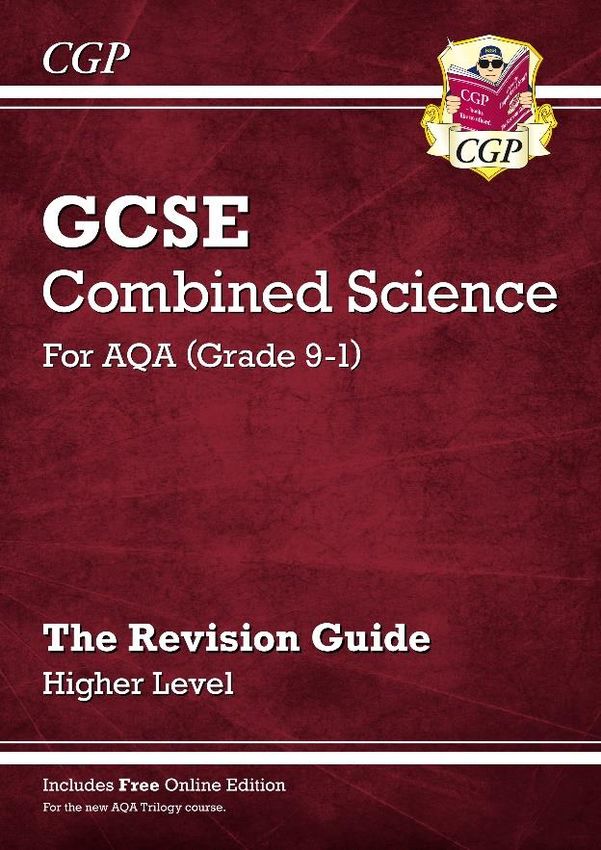
GCSE Examinations in English
• Students’ results are measured by     English Language
  their achievement in 4
  examinations. There is no             Paper 1              50%
  coursework or controlled
  assessment.
                                        Paper 2              50%
• In English Literature, examinations
  are closed book.                      English Literature
What does this mean for my child?
• Exam technique and timings are        Paper 1              40%
  very important.
• Students’ knowledge of the texts      Paper 2              60%
  they have studied must be
  thorough and detailed.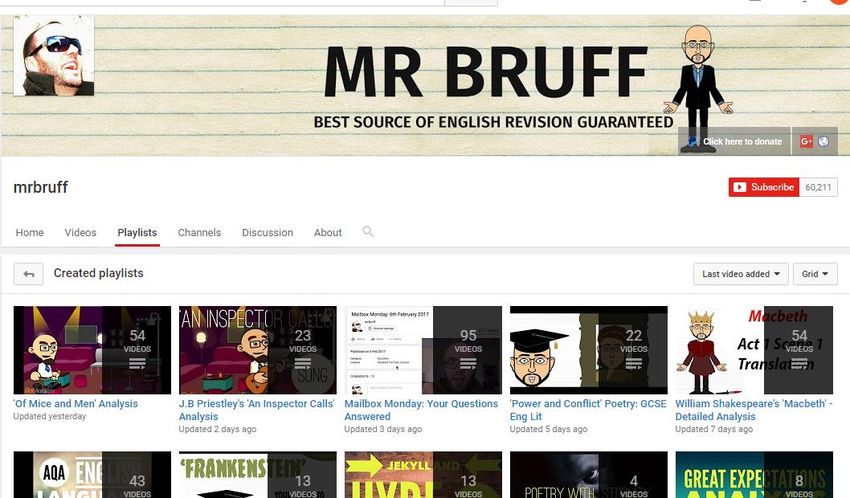
How can I support my child with exam
technique?
• Your children have been given clear guidance on which order to answer the
  questions in and how long to spend on each question. This is available in
  the following locations:
   • Homework booklets.
   • S-drive.
   • Referred to regularly in lessons.
• Answering Q5 first in Language will help them gain marks.
• Talk to your child about the format of the exam. Do they know the order
  and the timings?
• “Walk through” mock examinations have helped hone exam technique.
• Regular timed practice will help students to gain confidence.
How can I support my child in English
Language?
• Do your children know their      adverb          adjective        pronoun           Modal verbs

  language toolkit?
                                   imperative      simile           metaphor          Verb
• Can they identify these
  techniques in the things they
                                   abstract noun   onomatopoeia     personification   anecdote
  read?
• Can they discuss their effect?
                                   rhetorical      emotive          hyperbole         statistics
                                   question        language

                                   pun             pathetic fallacy repetition        alliteration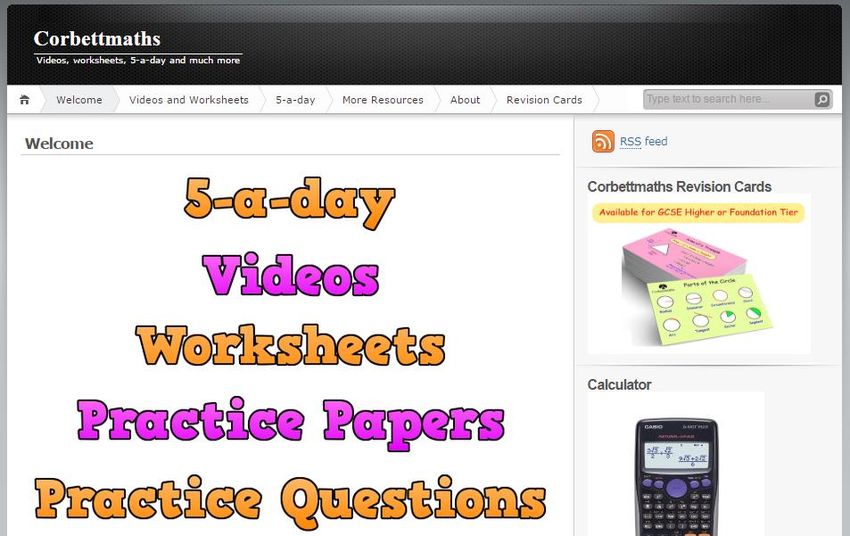
How can I support my child
in English Language?
   • “Everyday” non – fiction and
     fiction texts can be used as
     reading practice.
                             Why has Malala
                             used the repetition
                             of the emotive
                             adjective
                             “heartbroken”?

                             What is the
                             effect of this
                              anecdote?

                             What is the
                             effect of these
                             adjectives?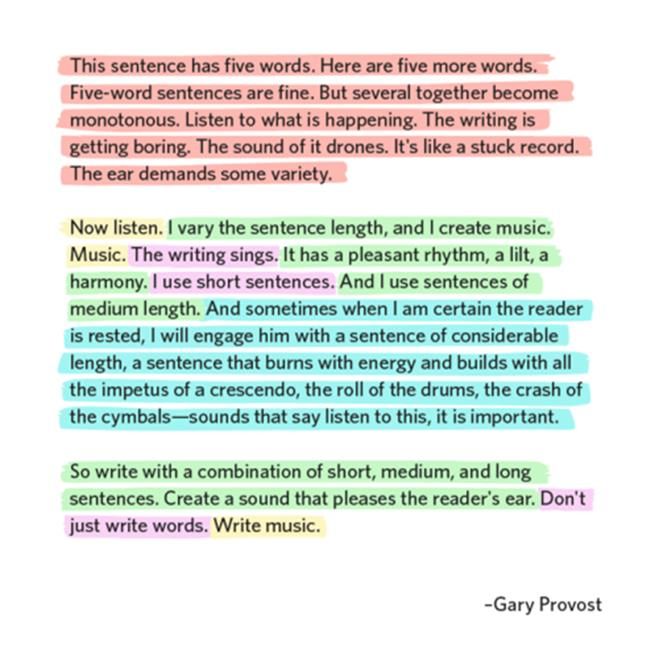
How can I support my child in English
  Language
How can I support my child in writing?
• Encourage your child to learn and practise spelling complex and
  ambitious examples of vocabulary to use in their exam.
• Encourage your child to focus on their written accuracy and to
  proofread their written work.
• Encourage them to plan before attempting any writing question so
  that they organise their ideas effectively.
• Focus particular on writing excellent opening and closing paragraphs.
• Encourage and remind your child about time management.
• Encourage your child to think about the audience, purpose and form
  of the piece of work they are writing.
• Encourage your child to use a variety of sentence lengths and
  sentence forms. A good way of doing this is to ask your child to
  count the words of each sentence they have written and note the
  amount in the margin.
• Ask your child to show you their writing. Ask them why they have
  used certain techniques and structures.
How can I support my child in English
Literature?
     “Look the innocent         Can your child remember key
                                quotations from:
      flower, but be the
      serpent under it”.        Macbeth
                                A Christmas Carol
                                An Inspector Calls OR DNA OR
        Are there no prisons?   Curious Incident
             Are there no
                                Poetry Anthology – Love and
            workhouses?         Relationships OR Power and
                                Conflict.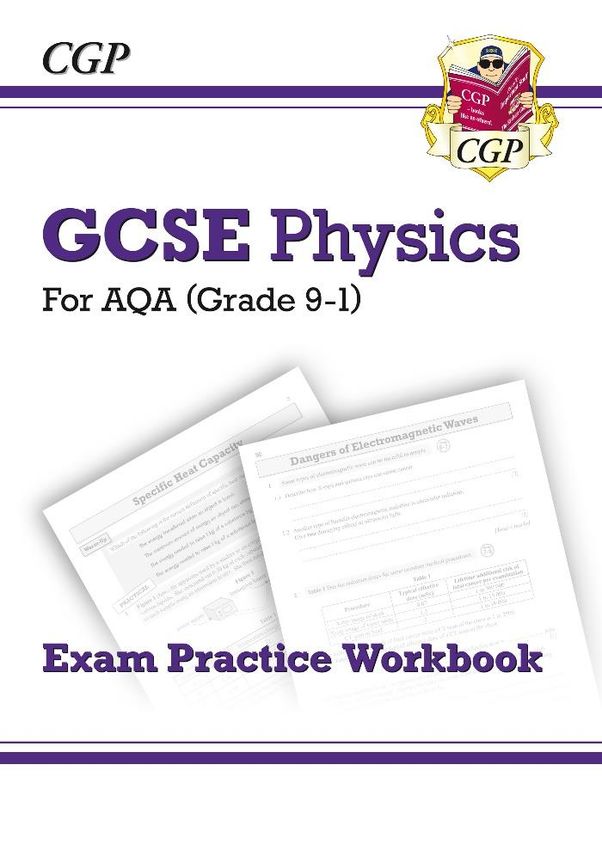
How can I support my child in English
Literature?
   Knowledge quizzes on the text.

   Quick listing:

   List 5 significant facts about Jacobean society
   which relate to themes in Macbeth.

   List all of the interactions Eva has with the
   Birling family in An Inspector Calls.
How can I support my child in English
Literature?
Essay Planning for DNA/An Inspector
Calls/The Curious Incident of the Dog in
the Night Time                             Essay Planning for Poetry Comparison

             How does Priestley                    The
                                                Charge of              Bayonet
             explore the theme
                                                the Light              Charge
             of responsibility in
             An Inspector Calls?                 Brigade
How can I support my child in English
Literature
54 videos on
Macbeth,
including key
quotations
song.
23 videos on An
Inspector CallsRevision Booklets
Thank You
• Staff are available in the atrium to answer questions:
• Mrs Clough
• Mrs Kidd
• Mrs Bailey
• Ms Gray
• Mr McKeating
Please take a booklet which explains how you can support your child.
Further examples of questions and tasks are in the booklet.
Raising Achievement
      In Science
   Mr Turnbull, Head of Science
Science In School • All students are entered for the AQA GCSE in Science. • Students could carry out one of two course – Separate (3 GCSE qualifications) or Trilogy (2 GCSE qualifications). • There are two tiers: Foundation and Higher • Students studying the Higher course can access grades 9 – 3 whilst students studying the Foundation course can access grades 5 – 1 • The students need to complete two papers in each Science subject at the end of the course. • For all of the papers, students can use a calculator, protractor and ruler to answer questions.
Science In School
• Students could carry out one of two course – Separate (3 GCSE qualifications) or Trilogy (2 GCSE
  qualifications).
Separate Award                                                     Combined Trilogy Award
Students sit two examinations in Biology, Chemistry and Physics.   Students sit two examinations in Biology, Chemistry and Physics.

Each paper is out of 100 marks.                                    Each paper is out of 70 marks.
Each paper is worth 50% of the overall grade.                      Each paper is worth 17% of the overall grade.

Students can either sit Higher tier or Foundation tier.            Students can either sit Higher tier or Foundation tier.
Tier entry can alter between the different subjects.               Tier entry has to be consistent between the different subjects.

Students receive 3 GCSE qualifications – one for each subject.     Students receive 2 GCSE qualifications.
The qualification for each subject does not depend on the other    The qualifications are made out of two equal or adjacent grades.
subjects.                                                          There are 17 possible grade combinations, for example, (9-9), (9-8)
                                                                   through to (1-1).
                                                                   The qualifications are an average of the three subjects.
Science In School
• Students could carry out one of two course – Separate (3 GCSE qualifications) or Trilogy (2 GCSE
qualifications).
Separate Award Combined Trilogy Award
Students sit two examinations in Biology, Chemistry and Physics. Students sit two examinations in Biology, Chemistry and Physics.
Each paper is out of 100 marks. Each paper is out of 70 marks.
Each paper is worth 50% of the overall grade. Each paper is worth 17% of the overall grade.
Students can either sit Higher tier or Foundation tier. Students can either sit Higher tier or Foundation tier.
Tier entry can alter between the different subjects. Tier entry has to be consistent between the different subjects.
Students receive 3 GCSE qualifications – one for each subject. Students receive 2 GCSE qualifications.
The qualification for each subject does not depend on the other is made up of two equal or adjacent grades. There are 17 possible
subjects. grade combinations, for example, (9-9), (9-8) through to (1-1).
The qualifications are an average over the three subjects.
A standard pass in each subject is a 4.
A standard pass in each subject is a 4-4.Science -Additional Support
• There are departmental intervention sessions for each course in each subject.
Time of Session Class/Year Attending Session Teacher Running Session Room
Tuesday Lunchtime GCSE Physics Dr. Wood F32
(Combined Science)
Tuesday Lunchtime (Week A) GCSE Chemistry Miss Winckle F27
Friday Lunchtime (Week B) (Combined Science)
Tuesday Lunchtime GCSE Physics Mr. Elliott F32
Tuesday After School GCSE Biology Mrs. Stewart F28
Wednesday After School GCSE Biology Miss Rees F26
(Combined Science)
Wednesday Lunchtime GCSE Chemistry Dr. Reed F32
Thursday Lunchtime GCSE Chemistry Dr. Jankowski F28
(Combined Science)
Thursday Lunchtime/After School GCSE Biology Mr. Gray F30
Friday Lunchtime (Week A) GCSE Physics Mr. Turnbull F29
(Combined Science)
Friday Lunchtime GCSE Chemistry Dr. Jankowksi F28
Friday After School GCSE Physics Mr. Turnbull F29Science – Additional Support • There are departmental intervention sessions for each course in each Science. • There will be additional support available after school via study support programme. • There will be tutor time intervention – small groups will work together to answer examination style questions.
Science – Revision Materials
 There are several revision resources, produced by CGP, available to purchase at a
 reduced price through the school.

Revision Guides                               Exam Practice Workbook                        Revision Question Cards
Combined Course                               Combined Course                               Combined Course (per subject)
Retail Price: £9.95     School Price: £5.50   Retail Price: £9.95     School Price: £5.50   Retail Price: £4.99     School Price: £3.00
Separate Course (per subject)                 Separate Course (per subject)                 Separate Course (per subject)
Retail Price: £5.95     School Price: £2.75   Retail Price: £4.95     School Price: £2.75   Retail Price: £7.49     School Price: £4.00
Science – Revision Materials
 • There are several revision resources, produced by CGP, available to purchase at a
   reduced price through the school.

                                              The order forms for these products will be
                                              available after the presentation.

Revision Guides                                      Exam Practice Workbook                        Revision Question Cards
Combined Course                                      Combined Course                               Combined Course (per subject)
Retail Price: £9.95     School Price: £5.50          Retail Price: £9.95     School Price: £5.50   Retail Price: £4.99     School Price: £3.00
Separate Course (per subject)                        Separate Course (per subject)                 Separate Course (per subject)
Retail Price: £5.95     School Price: £2.75          Retail Price: £4.95     School Price: £2.75   Retail Price: £7.49     School Price: £4.00
Science – Independent Revision There are many YouTube channels which can help students revise key scientific concepts. • Freesciencelessons • Science and Maths by Primrose Kitten • FuseSchool - Global Education • The GCSE Guide • Science with Hazel
Science – Independent Revision
• There are many online learning platforms which can help students revise key
  scientific concepts.
• The school has two online learning platforms for Science.
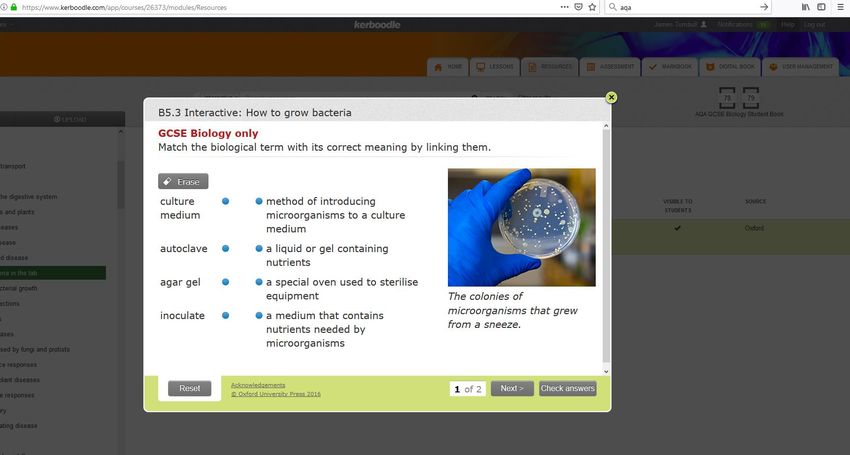
                                                              Kerboodle

                                                              www.kerboodle.com

                                                              Students can login with their
                                                              school e-mail.
                                                              Students will be set one online
                                                              learning quiz a week by their
                                                              subject teachers in 2019.

                                                              Students can complete extra
                                                              online quizzes on all aspects of
                                                              Science if they wish to carry out
                                                              extra revision.
Science – Independent Revision
• There are many online learning platforms which can help students revise key
scientific concepts.
• The school has two online learning platforms for Science.
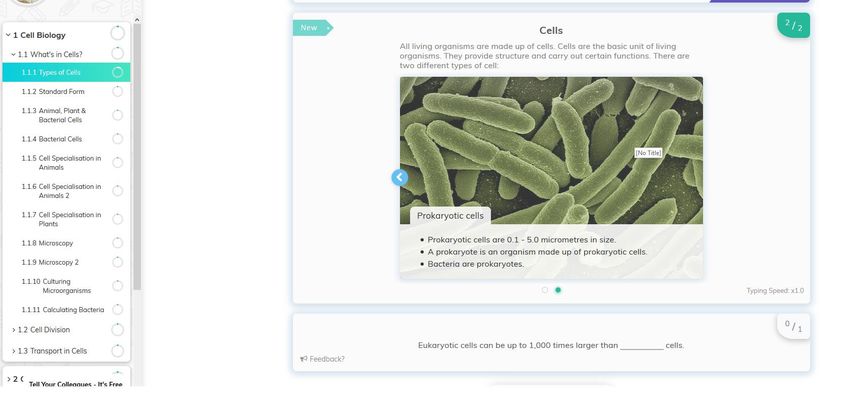
Seneca
www.senecalearning.com
Students can login with their
school e-mail.
Students will be set one online
learning quiz a week by their
subject teachers in 2019.
Students can complete extra
online quizzes on all aspects of
Science if they wish to carry out
extra revision.Science – Independent Revision
There are many online learning platforms which can help students revise key
scientific concepts.
The school has two online learning platforms for Science.
Seneca
www.senecalearning.com
Students can login with their
school e-mail.
Students will be set one online
Seneca is also set up to work
learning quiz a week by their
through mobile phones via the
subject teachers in 2019.
internet explorer.
Students can complete extra
online quizzes on all aspects of
Science if they wish to carry out
extra revision.Science – Parental Support • Ensuring your son/daughter has all revision materials above in one place at home. • Regularly testing son/daughter’s knowledge using the resources gathered in the revision lessons or via revision apps. • Quizzing your son/daughter on the key information and equations found in the Science specification by testing knowledge from the CGP Revision Guide and the School Revision Guide(s). • Timing your son/daughter when they are completing practice exam questions.
Science – Parental Support
• Ensuring your son/daughter plans out revision in a timely and reasonable
  manner in build up to exams.

• Ensuring your son/daughter completes the examination style questions from the
  practice question booklet(s). Your son/daughter should then self-assess their
  understanding by using the attached mark scheme to correct mistakes.

• Ensuring your son/daughter carries out independent learning skills tasks, such as
  online quizzes and revision games, on online learning platforms such as Seneca
  and Kerboodle.
Science – School Online Support
The following materials are available on the school online portal for revision use.

• Past AQA examination papers and mark schemes.

• Individual Module Knowledge Checkers- Test yourself quizzes on key scientific
  concepts.

• Revision Placemats.
Key Recall Question                                    Answer
   1. What is a particle?                           A general word used by scientists to mean small
                                                    part of matter (something)
  2. What is an atom?                               The smallest particle that can be recognized as
                                                    an element. If you break an element into its
Module Knowledge Checkers                           smaller pieces you can no longer recognize that
                                                    it is an element.
  3. What is an element?                            A substance that is composed of only one type
                                                    of atom.
  4. What is a mixture?                             Substances which are together (in the same
                                                    space) but not chemically joined.
  5. What is a compound?                            Substances in which atoms of two or more
                                                    elements are chemically combined.
  6. What is a molecule?                            A word to describe atoms which are chemically
                                                    joined together. These might be two of the
                                                    same type of atoms (an element molecule) or
                                                    two or more different types of atom (a
                                                    compound molecule)
  7. What are the reactants of a chemical reaction? The substances which react together in a
                                                    chemical reaction
Module 1 - ATOMIC STRUCTURE
Draw the symbol for sodium What are the charges and masses of Balance the following equation:
include its atomic mass and atomic electrons, protons and neutrons
Ca + 02 CaO
number (what do they tell us)
Cl2 + Al AlCl3
Charge Mass
How many atoms and elements are there in:
Proton C2H5OH ?
Neutron
Where are electrons and neutrons and protons found in an
Draw the electronic configuration for argon atom?
Electron
Revision Placemats Draw and label the plum-pudding
What is an isotope? model of the atom
Why is argon not reactive?
How do you calculate the average atomic mass of an isotope. Eg.
Chlorine atoms exist as 75% Cl-35 and 25% Cl - 37
What is the definition of an element?
Describe a method to separate insoluble solids from a liquid eg. Sand
from water.
Describe how ideas about the structure
What is the definition of a compound? of the atom changed over time and
compare today’s nuclear model to the
plum pudding model.
Draw a diagram to show how you would separate the dyes in coloured
What is the definition of a mixture? inks
Draw a diagram to show how you would separate sugar from waterScience – Past Examination Papers
The most effective way of revising for the Science examinations is to answer past
examination papers.
These questions will be collated in school booklets to give to students near the
time of the exam, or can be downloaded from www.aqa.org.uk.
These papers can be used in two different ways to revise.
Method 1 Method 2
1. Revise a specific paper (or topic) in 1. Answer a past paper question without the
chemistry/biology/physics aid of notes in examination timed conditions.
2. Answer a past paper question with the aid of notes. 2. Mark the answer using mark scheme.
3. Mark the answer using mark scheme. 3. Evaluate your performance in this answer.
4. Evaluate your performance in this answer. 4. Make revision notes based on areas of
weakness from your evaluation.Science – Past Examination Papers
There are two types of examination question which
can benefit from past examination paper revision.
In animals oxygen diffuses from the alveoli
into the blood. Also glucose diffuses into the
This method is really useful for 4-6 mark blood from the small intestine. Glucose and
questions that come up frequently. oxygen are important for respiration.
Summarising the mark scheme can give you In plants carbon dioxide diffuses from the air
a standard answer that you can learn. into the leaves so it can be used in
photosynthesis.Science – Past Examination Papers
There are two types of examination question which
can benefit from past examination paper revision. Poor answer
Heart rate increases during exercise so more
blood gets to the muscles.
Question
Why does heart rate increase
during exercise?
Heart rate and exercise
• Increased heart rate Good answer
• More blood
• Carries more oxygen and glucose Heart rate increases during exercise so more
• More respiration blood gets to the muscles. This carries more
• Muscles contract more effectively oxygen and glucose so respiration can happen
allowing muscles to contract.
There are lots of processes you need to
know about in Biology/Chemistry/Physics.
Make a list of them and bullet point the
steps in each process.Science – Revision Summary
• To carry out effective Science GCSE revision, you should carry out the following…
Step 1: Learn the Key Facts
Use the revision guides, the class exercise books, the student preparatory notes and the
text book to learn the key ideas of the course.
You may wish to make mind maps or write out notes yourself.
Step 2: Test Yourself
Use the Kerboodle e-learning platform, the Seneca e-learning platform or the module
knowledge checker to quickly test your own knowledge.
You may wish to do this from your own cue-cards.
Step 3: Practice Examination Questions
Use the examination preparation books, the homework books, the examination practice
workbooks and past examination papers (with mark schemes) to answer examination
questions and mark your own work.
You may wish to download your own examination past papers to do this.Thank You • Staff are available in the atrium to answer questions: • Mr Turnbull – Head of Physics/Science • Dr Jankowski – Head of Chemistry • Mr Reeve – Head of Biology
Raising Achievement
      In Maths
    Mrs Crosbie, Head of Maths
Maths In School
• All students are entered for the OCR GCSE in Maths
• We use the J560 course
• There are two tiers: Foundation and Higher
• Students studying the Higher course can access grades 9 – 3 whilst students
studying the Foundation course can access grades 5 – 1
• The students need to complete three papers at the end of the course, each
1
paper is worth of their final grade
3
• For two of the papers, students can use a calculator, the other paper is
completed without a calculatorMaths In School • We have now finished teaching the course. • Each class is now revising and the content of lessons is identified from analysing mock exams and covering the key issues arising from each session • Homework is set weekly and alternates between written booklets and Hegarty Maths • Written homework consists of worksheets that aim to consolidate the key skills by repetition
Mock Exams
 • Key information for staff regarding achievement and progress (this
   information can then be used to inform discussions with students, parents
   and the pastoral team).
 • The analysis of these exams by class teachers allow for identification of areas
   of priority for revision and of students who require additional support.
 • Students can regularly self-reflect on their individual strengths and prioritise
   their own areas for revision.

 Students should not revise for individual mock papers. All revision
  should be focussed on the final exam, with mock exams used as
           stepping stones to guide this revision process
Additional Support
• Maths Clinic is available for all students and advertised to them frequently in
the department
o It is held on Tuesdays at 3:10pm – 4:10pm in F12 and Thursday lunchtimes
at 12:15pm – 12:45pm in F21
o Students can attend this for support with homework, specific areas of
revision or to work through practice papers, which are available to them
here.
• Additional, weekly, after school GCSE study support sessions will start after the
Christmas breakAdditional Support
• Identified students who would benefit from further support will also be
offered extra revision sessions during registration and the Pastoral Programme
o Each registration session focusses on a different skill (students should
complete work for extra practise at home)
o Friday P1 – practising and applying skills with exam questions.
Behaviour of students in their day-to-day maths lessons will be considered when
offering these sessions to students.Parental Support • It is important that students have a complete set of equipment including a pen, pencil, ruler, compass, protractor and a scientific calculator when attending lessons and completing exams. • It is essential that they are able to practise using their own calculator in lessons and as such that they are familiar with the required functions. • Students can buy any equipment that they require from the school library.
Parental Support
• Independent Revision
o Homework – completed on time, with maximum effort
o Additional revision – 15-30 minutes every day
Hegarty Maths
Revision apps
Revision websites
Follow Maths teachers on twitter
Printable revision materials available on student portal
Additional written support materials available tonightAccess to revision materials at home
• All students have received instructions on how to access a wealth of resources using a
portal to access the school system.
• The maths folder contains many past papers (with mark schemes), revision worksheets,
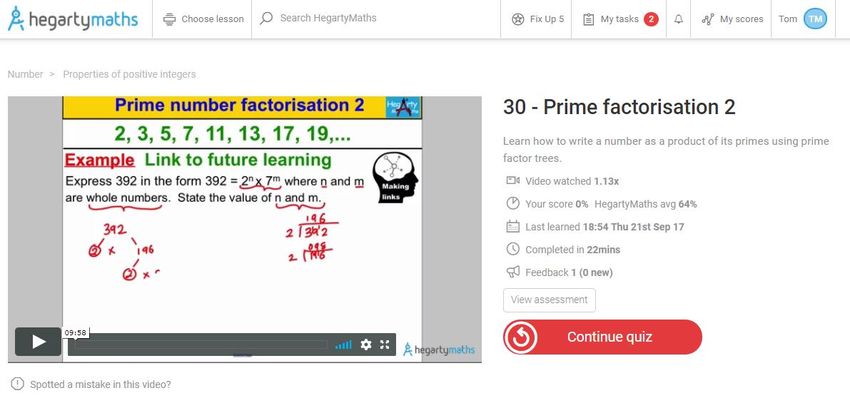
and an extensive set of revision notes that pupils can use to aid their revision.Hegarty Maths • Students login to https://hegartymaths.com/ using their individual user information and password
The search bar at the top can be used to
Hegarty Maths                 find different topic areas on the site

           When a student logs in, this is their front page:

                           Tasks set by the class teacher
                             are highlighted at the top
Clicking on my scores brings up a list of all
Hegarty Maths previously attempted tasks
Scores can be filtered to identify areas to
prioritise for revisionHegarty Maths
Hegarty Maths
Fix Up 5 is an excellent tool for a quick fire
Hegarty Maths               practise of key skills
Fix Up 5 chooses 5 questions students have previously
Hegarty Maths    got incorrect and has the appropriate video available
                                   without searching
Additional revision support • www.corbettmaths.com o Videos, worksheets (including solutions), practise papers o 5-a-day
Additional revision support
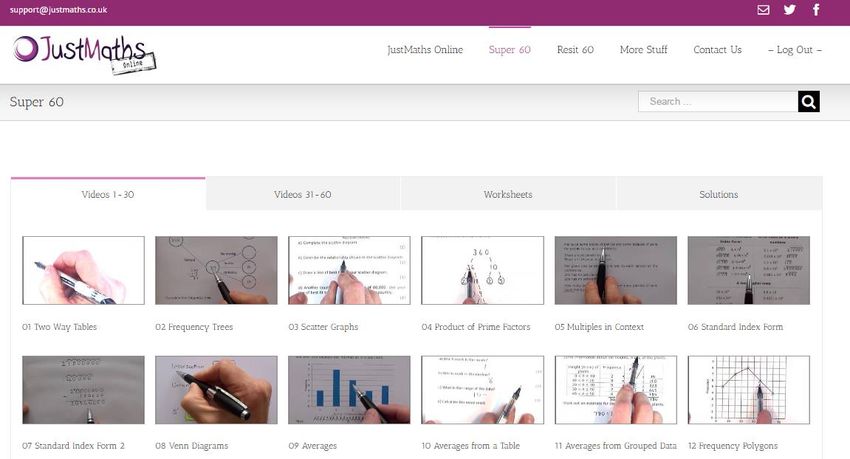
• online.justmaths.co.uk    Login: MaryStudent; Password: Mary
    o More videos and worksheets, additional exam practise and techniques
Additional revision support • http://www.mrbartonmaths.com/ o Revision notes, videos, topic based question booklets, interactive quizzes
Additional revision support
• http://www.mathsgenie.co.uk/
   o Revision notes, videos, topic based question booklets, old style exam
     papers
Thank You • Mrs Crosbie • Mrs Edgar • Mrs Howarth • All available to answer questions
You can also read


