Euroguidance Insight - Anefore
←
→
Page content transcription
If your browser does not render page correctly, please read the page content below
Euroguidance Insight

                                                                             November 2019

This edition of Insights is dedicated to the
ongoing competence development undertaken
by guidance practitioners. The call for content
was to submit articles that would highlight the
variety of supports guidance practitioners
across Europe engage in within the professional
delivery of their service, across multiple
contexts. The feedback was overwhelming!

Through this theme, we have been able to describe
how the field of career guidance is in rapid
development all over Europe. Some countries like
Finland, Greece and Norway are improving the
education and certification of their career
practitioners.

Other countries, like Croatia, Malta, and Serbia are
putting efforts into practitioner training for
employees at all levels of the educational system. Other countries share how they have been
focussing on special needs, like the UK that introduces training for NEETs, Ireland promoting
competences for delivery with migrants, and Slovakia for people with disabilities.

The role of ICT is ever so relevant when we talk about competencies for the guidance practitioner.
The Estonian article highlights how the use of ICT represents a paradigm shift in guidance and the
Norwegian example describes how the use of ICT is integrated within public policy being applied in
the setting up of a new guidance framework.

From a Network perspective, as ever, international cooperation and training for learning mobility is
at the forefront of our activities. We have been active in many different international settings such
as our recent participation at the IAEVG conference, the coordination of Cross Border Seminars
and through additional structures promoting cooperation for Counsellors / Educators like the VALA
network.

We are especially pleased to offer an in-depth interview with the newly appointed professor in
Career Guidance, Prof. Rie Thomsen from the University of Aarhus, who has dedicated her faculty
life to further professionalising the discipline of career guidance both domestically in Denmark as
well as internationally.
2

                                                               In this issue:

3 The Emergence of a Profession -        19 Training of Practitioners across
  Education and Certification of            Europe
  Practitioners
                                         20 Guidance and Career Counselling
4 The First Professor of Career
                                            Seminars for School Counsellors
  Guidance in Denmark
                                            in Croatia
6 Specialist Training for Career         21 Strengthening Career Guidance
  Guidance and Counselling Produce          Practitioners’ Competences in Malta
  New Types of Competence for the
                                         22 Norway Digital Career Guidance – in
  Need of Working Life
                                            the Pipeline!
7 Certification of Career Guidance
  Counsellors                            23 Development of Career practitioners
                                            Competencies – Experience of the
9 Training for Guidance Practitioners       Euroguidance Center in Serbia
  in the Nordic and Baltic Countries
                                         24 Shaping the Future: Gen Z and
                                            Career Guidance
                                         25 Co-careering and ICT – a
                                            Changing Landscape for Guidance
13 International Cooperation and         26 The Changing Role of the Teacher
   Mobility                                 in Careers Education and Guidance
14 Discussing skills for the future in      – does Teacher Education Offer a
   Cross Border Seminar                     Match or a Mismatch?
15 Blended training for the Italian
   Mobility Advisors
                                         28 Guidance of marginalized
16 Career Learning Enables Students
                                            Groups
   as they Enter the Labour Market
                                         29 ACCEnT–Assisting Guidance
17 Connect, Engage, Inspire,                Practitioners in Working with hard-
   Transform: Results of a Fulbright        to-reach Groups
   scholarship in Career Guidance at
                                         30 Exploring the Challenges of
   Boston University
                                            Providing Meaningful Guidance
18 Global Symposium at the IAEVG            in a Multicultural Context
   Conference 2019
                                         31 Our Strength is Our Experience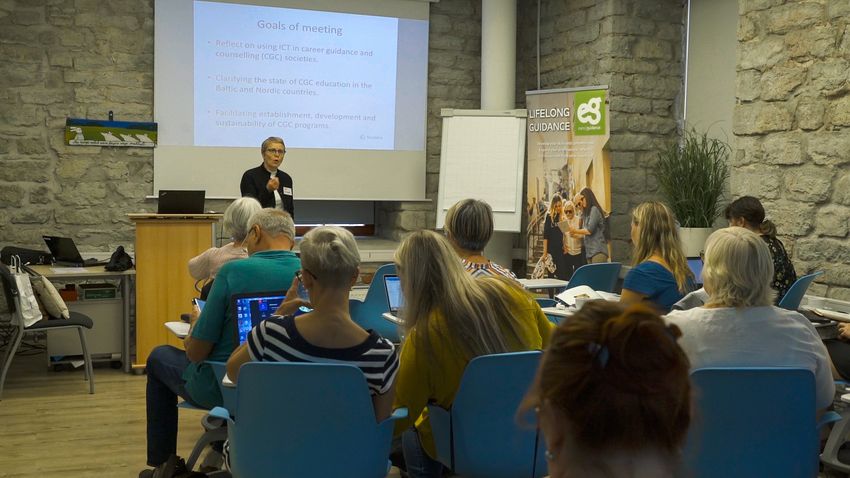
1
THE EMERGENCE OF A
PROFESSION - EDUCATION AND
CERTIFICATION OF
PRACTITIONERS
4

The First Professor of Career Guidance in Denmark

On 8 March 2019, the International Women’s         a reflexive model, its purpose is to support counsellors
day, Denmark’s first professor of career           who wish to unleash the collective and liberating
guidance gave her inaugural speech at the          potential of career guidance. You can also read about it
University of Aarhus: ‘What is career? –           in the article 'Career Guidance in Communities: A Model
Career guidance as a field of research –           for Reflexive Practice'. The concept of career guidance
between adaptation and emancipation’.              in communities contributes to the research into career
                                                   guidance in two ways: first to bring the importance of
We spoke to Professor Rie Thomsen and              communities in the career guidance into focus and
asked her:                                         second, as a concept for the many career guidance
                                                   activities that take place outside the counselling office.
What does it mean to Danish career
guidance practice that we now have a               In my international research work, I have published two
professor in career guidance?                      books on social justice together with Tristram Hooley
                                                   and Ronald Sultana. We are currently working with
It makes the field more visible. It will help      grants from the Nordplus programme to prepare a
people to discover that there are many ways in     Summer School in Norway next summer and we are
which careers can be understood.                   collecting votes from practitioners working with social
                                                   justice, which we will publish on our website
I was interviewed for Danish media where the       https://careerguidancesocialjustice.wordpress.com.
title was ‘Dear young people, lower your
shoulders, your choice of education does not
have to decide your future’. The key point is
that the linear thinking that characterises the
political communication to young people about
education choices and implementation is
actually a false premise. After the interview,
people were writing to me, saying: ‘You are
just SO right, I did not take the straight path
either’. I also saw parents tagging their
children and other young people because they
wanted them to get the message that their
choice of education does NOT decide their
future. Because of this I started a Twitter feed
#twistedcareer, where you can get an insight
into the winding career paths of ordinary
people.

What are your current projects and fields of
research?

I continue to work on the theme from my PhD
‘Career Guidance in Communities’ and in
collaboration with Rita Buhl and Randi
Skovhus from VIA UC with whom I have
written the book ‘Guidance Provision in
                           1
Communities and Groups’ . The book contains                                                                 �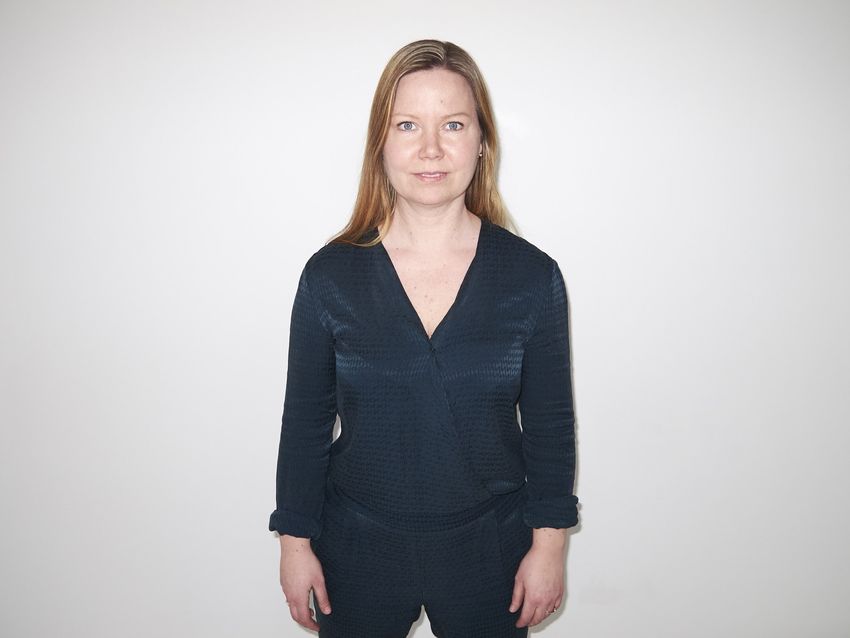
5

After your inaugural speech, you received               It is a great privilege to meet the new PhD students
congratulation videos from more than 20                 each year and to allow them to experience that
colleagues from 10 countries inside and                 research in career guidance is important and to
outside Europe. What has international                  help them to realise that their contributions to the
cooperation and research meant for your                 field are appreciated. In addition, they themselves
career?                                                 form international relationships and networks. That
                                                        is particularly gratifying for me in my work.
                                                        ECADOC 2020 will be held at Jönköping University
                                                        in Sweden, from 7-12 June.
                                                        Career guidance is an international research field,
                                                        and it is important that we collaborate across
                                                        countries, especially if, like me, people are
                                                        interested in a particular form of research, namely
                                                        action research, which aims to bring researchers
                                                        and practitioners together to develop and create
                                                        knowledge about career guidance. The reason it is
                                                        so important is that not many people in the field of
                                                        guidance operate in this manner. It is therefore
                                                        very much within this area, and internationally, that
                                                        I see my special contribution. The ambition to work
                                                        with action research should also be seen in the
                                                        light of my position on the critical approaches to
I have always worked internationally and found that
                                                        knowledge creation, where the goal is to change
this was important, for two main reasons:
                                                        practice for the better for marginalised and
As a young person, I participated in youth work and     oppressed groups and to involve them in research
projects, including the European Youth Forum,           as well. After all, the knowledge that we scientists
funded by the EU. It was here that I gained             create should, with the support of the career
inspiration and knowledge by collaborating with         guidance community, ultimately help people to live
young people from other countries – so when I           the life they want to live.
began my research work I already had international
experience and I had already found the importance
                                                        1
of how travelling the world can give you inspiration.     Thomsen, R., Skovhus, R. B. and Buhl, R. (2013). At Vejlede
                                                        i Fællesskaber og Grupper [Guidance Provision in
Later, my supervisor Peter Plant said: ‘You must        Communities and Groups]. Valby: Schultz Thomsen, R.
be part of this international career guidance           (2017). Career guidance in communities: a model for reflexive
                                                        practice. Derby: International Centre for Guidance Studies.
project’. The participants in the project included      University of Derby http://hdl.handle.net/10545/621596
Deirdre Hughes, Jenny Bimrose and Raimo
Vuorinen which meant that I had some really good
international colleagues right from the beginning,
                                                                                                       Birtha Theut
almost before I started my PhD.
                                                                                                Euroguidance Denmark
It has meant a lot for my own development that I
have been able to draw upon their expertise and
ask them all sorts of questions along the way – it
has been a great source of new knowledge and
has motivated me to share the information and
engage more internationally. Now, I have the
important task of acting as scientific manager of
the ECADOC European doctoral programme in
career guidance and counselling.
6

Specialist Training for Career Guidance and
Counselling Produce New Types of Competence for
the Need of Working Life

An objective of lifelong guidance is to ensure continued career guidance and counselling for anyone who
needs it. One way to meet this need is to find new types of solutions for developing the career guidance
skills of different professional groups. In Finland, specialist training options for career guidance and
counselling has recently been established for professionals who have completed an academic degree and
are already employed. At the moment, there are two specialist training options for career counselling in
Finland.

Training for career guidance          The specialist training for career      operating environments. In the
and counselling professionals         guidance and counselling has            future, the new concept of
                                      students from all of these five         specialist training for career
Students of the specialist training   groups of career guidance               guidance and counselling is
for   career     guidance       and   providers.                              planned to be combined with
counselling are employed in                                                   follow-up research to monitor the
various organisations offering        Individual and customer-                development of skills and the
career guidance and counselling.      oriented career guidance                participants’ career paths.
We can identify at least five types
of    career    guidance        and     Specialist training for career        Jaakko     Helander,   Principal
counselling providers in Finland:     guidance offers professionals of        Lecturer of guidance and career
                                      various fields the opportunity to       counselling at HAMK
                                      develop and deepen their career
1    Educational institutions offer   guidance and counselling skills            University of Applied Sciences
career guidance and counselling       and expertise. After completing
services for pupils and students      the training, the participants of the
                                      training are able to analyse career                  Edited by Juuli Juntura
2   Employment and
                                      guidance and counselling as part
Economic Development Offices                                                                    Euroguidance Finland
                                      of the more extensive pace of
serve unemployed job seekers
                                      change in working life and society.
and employees considering a
change of career                      Another objective of the training is
3    Employers offer career           to know how to execute individual
guidance services to their            and customer-oriented career
employees                             guidance       processes.       The
                                      participants assess their own
4    Businesses offer career          professional career guidance and
guidance and counselling              counselling practices and the
services to clients                   quality of guidance services
                                      offered by various guidance
5   Organisations offer their
                                      service providers. Another target
members career guidance and
                                      is that the participants can plan,
counselling.
                                      market and organise career
                                      guidance      and      counselling
                                      services    for    the    changing
7

Certification of Career Guidance Counsellors
         A long awaited development in raising the quality of guidance provision in Greece

The need for quality                                                                Creating an Occupational Profile

In the European context, Practitioner Competence                                    A scientific study on accreditation of career
is central to the quality of service provision and                                  guidance counsellors resulted in a Career
improvements.1 In Greece, the absence, so far, of                                   Guidance Practitioner Occupational profile that was
a legal framework setting professional standards                                    with the participation of social partners and
and requirements for people working as career                                       responsible ministries and then accredited by
guidance counsellors means that people not                                          EOPPEP according to a legal procedure set by a
having the necessary competence could offer                                         ministerial Act. Acknowledging the different
career guidance services to the public without                                      complexities of career guidance functions and
central control. EOPPEP, being the responsible                                      levels of competence in practicing the professional
body of the Ministry of Education followed a                                        roles of career guidance, the profile includes two
specific procedure for the certification of the                                     levels of certification - basic and expert level
profession.                                                                         professionals. It describes in detail all the primary
                                                                                    and secondary professional functions and tasks
                                                                                    that can be performed by the two levels, as well as
                                                                                    the necessary knowledge, skills and competences,
                                                                                    conditions of work, minimum criteria for performing
                                                                                    each task and alternative educational paths. The
                                                                                    profile is complemented by a modular Continuous
                                                                                    Training programme that can be used as a national
                                                                                    context for the evaluation of Continuous Training
                                                                                    programmes resulting in basic level certification.

 LEVELS OF CERTIFICATION                        REQUIREMENTS                             PROFESSIONAL FUNCTIONS

 Basic level professionals                        EQF 6 university degree                 Plans, organises and prepares career guidance
                                                  in any subject + Written                provision
                                                  Examinations + On the
                                                  spot evaluation of a Face               Provides Career Guidance services according to
                                                  to Face career guidance                 the specific needs of its clients
                                                  session
                                                                                          Assesses, reorganise and extends the access to
                                                                                          career guidance services

 Expert level professionals                      EQF 6-8 university degrees               Supervises and assures quality of guidance
                                                                                          provision
                                                 in career guidance – No
                                                 examinations                             Conducts research and provides education in
                                                                                          career guidance

                                                                                          Promotes the development of career guidance tools

1 European Lifelong Guidance Policy Network (ELGPN). (2012) Life guidance policy development: A European Resource kit. University of Jyvaskyla, Finland and Finnish

                                                                                                                                                                �
  Institute for Educational Research (FIER), Saarijarvi, Finland. Page 18, 50, 96-105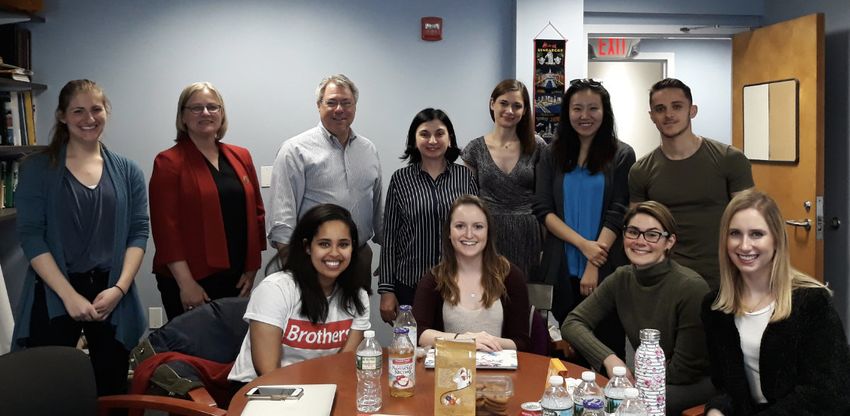
8

Setting up a national register                     Two national legislation of Certification of Career
                                                   Guidance Counsellors
Setting up a register of certified career
guidance professionals is the main quality         The next step planned by EOPPEP is national
indicator for 1 accessing the existence of                          1
                                                   legislation (Ministerial Act) setting the legal framework
recognised qualifications and national             covering the conditions for the recognition of the
regulations – legislative requirements in the      qualifications of career guidance counsellors and the
career guidance sector. With a decision            procedure for its certification, including the procedure of
published in the Government Newspaper,             the above mentioned exams. Upskilling activities,
EOPPEP set a special Register of Certified         continuous professional development through regular
Career Guidance Practitioners and described        training seminars, publications and tools, as well as
the terms and requirements for entering the        ongoing evaluation of competences should always
Register and its sub registers. An invitation to   complement the above described system of
Expert level professionals has already             Certification in order to raise the quality of career
resulted in the first 150 counsellors being        guidance professionals in Greece. EOPPEP is working
certified in the most advanced level (level A      towards all such activities.
sub register). Similar calls will ask for basic
level professionals to submit their applications
for entering level B sub register. However,                                 Dimitris Gaitanis - Euroguidance Greece
since the entrance to the level B sub register
                                                                                                  More information at:
requires     them    to   successfully     pass
examinations, EOPPEP will first set the whole                     https://www.eoppep.gr/index.php/el/work-guidance-and-

examination procedure.                                                 consulting/eoppep-upgrade-actions/syep-personel

41 Ethnikis Antistaseos Avenue, 14234 Νea Ionia,
                                        Greece
                                 www.eoppep.gr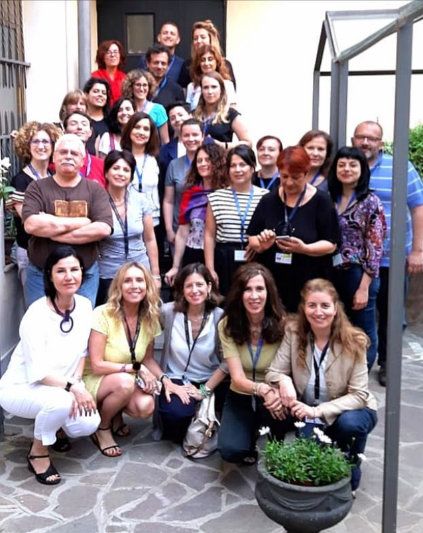
9

Training for Guidance Practitioners in the Nordic
and Baltic Countries

Developments in training for career guidance practitioners in the Nordic and Baltic countries were
exchanged at the expanded VALA1 meeting in Tallinn on 21-22 August facilitated by Euroguidance Estonia
and Latvia. VALA is a Nordplus funded network of Career counselling and guidance programmes at higher
education institutions in the Nordic and Baltic countries.

                                                      Finland: Jyväskylä University and JAMK

                                                      Since 1970 career education has been compulsory
                                                      in the Finnish school curriculum, with Career
                                                      counsellors following this curriculum. Well-
                                                      functioning guidance is seen as an indicator of an
                                                      effective and equitable education system. Training
                                                      pathways include a stand-alone Master’s degree of
                                                      120 ECTS, integrated Bachelor-master’s degrees
                                                      of 300 ECTS, and a Post-Graduate Diploma (60
                                                      ECTS). In 2016 98% of guidance practitioners at
While guidance in the Nordic countries may have       schools were qualified, indicating strongly
many similarities, 2018 research on training of       professionalised guidance provision in this sector.
guidance counsellors by Inga Andreassen et al2        Universities are working on ensuring quality
revealed the following differences across five
countries:                                            services for all sectors.

 ∠ Level and length of training                       Greenland: National Centre for Guidance
 ∠ Curricular focus on programme and
    service management                                The 2013 Greenlandic Act on Career Counselling
                                                      created major changes in the structure and service
 ∠ Emphasis placed on career information
    and assessment and, to a lesser extent,           provision of the Centre for National Counselling
    career counselling                                (now National Centre for Guidance - NCG). The
                                                      NCG provides “academy professional” level
A brief synopsis on the current situation in          guidance courses according to the Danish
practitioner training delivered by VALA members       education system. The basic training course is not
and guests follows.                                   regulated through an executive order, but due
                                                      to the Act on Career Counselling, training is
Sweden: Stockholm University                          mandatory for counsellors. Basic training
                                                      sandwiches 4 course modules and 4 practical
After a recent review, Stockholm University are re-   parts, totalling 420 student working hours. The
examining the Bachelor of Arts in Study and Career    NCG also provides 4 different further education
Guidance. The aim is to highlight the                 courses open to students who have completed the
interdisciplinary nature of the programme, and to     basic training.
strengthen focus on clients with special needs and
                                                      1
on migrants.        Based on the research by              https://peda.net/vala/partners

Andreassen, a compulsory course in service            2
                                                          Andreassen, Inga H. et al., Diverse histories, common ground and a shared
management skills is being introduced. To increase        future: the education of career guidance and counselling professionals in the

internationalisation, the fourth term is being
organized to allow for international exchange.
                                                          Nordic countries, International Journal for Educational and Vocational
                                                          Guidance https://doi.org/10.1007/s10775-018-09386-9                             �
10

Denmark: Aarhus University                             Lithuania: Vytautas Magnus University (VMU) in
                                                       Kaunas
The Danish Act of Guidance was passed in 2003. It
is possible to earn a Post-Graduate Diploma or a       The Career Designing Master’s research
Master’s degree in Career Guidance and                 programme was developed in 2006 at VMU to
Counselling (both 60 ECTS), or to specialize in        cover 90 ECTS. It was planned to add 30 ECTS of
Career Guidance and Counselling within the             practice to the research programme. However
Bachelor’s degree in Public Administration. A new      issues related to emigration, economics and
elective module of 10 ECTS in Counselling as an        politics have stopped this development, and in
institutional and pedagogical practice in the Master   2014 the programme was temporarily suspended.
of Education and Science started this autumn.          The Bachelor level Career Management
                                                       programme of 240 ECTS was closed 2 years ago.
The 60 ECTS Master in Guidance programme               Currently only 3rd and 4th year students are
structure is changing to offer fewer compulsory        finishing their studies. There are ongoing
modules and more flexibility. New modules are          discussions that may lead to re-opening the Career
being developed in the areas of career education,      Designing Programme at Master level.
motivation, social justice and advocacy, and others.
Innovative    group      supervision   on    writing
assignments and thesis work has helped students        Latvia: Latvia University of Life Sciences and
to start writing sooner through receiving peer         Technologies (LLU), Euroguidance Latvia
support.
                                                       The professional Master’s degree programme in
Estonia: team from universities, national and          Career counselling delivered since 2007 is
professional bodies                                    regularly up-dated in response to stakeholder
                                                       feedback. The programme is based on the
                                                       Professional Standard for Career counsellors
The Estonian Lifelong Learning Strategy prioritise     (revised in 2011), the 2013 provisions for career
professionalisation of career guidance practitioners   guidance in the Law on Education and the
and requirements are defined by the Estonian           European Competence Standards for the
Occupational      Qualification   Standard.     The    Academic Training of Career Professionals 3. The
Association of Estonian Career counsellors is the      120 ECTS of the course lead to an EQF Level 7
national accreditation body. However, there is not     qualification. About 60% of graduates work in the
yet a full programme of studies in career guidance     educational sector.
offered by any Estonian university. Tallinn
University offers elective courses for professional    In the context of ESF funded national projects
development and courses in study programmes of         reforming higher education, teacher training and
Social work and Youth work. The University of Tartu    school curriculum, discussions with the Ministry of
offers a cross-departmental programme and a            Education and Science are ongoing about the
professional programme at the Institute of             reassignment of Career Counselling from the field
Psychology with a number of courses related to         of education to some other currently undefined
Career guidance. Career guidance specialists           field. This has implications for occupational
employed by the Estonian PES receive in-service        standards, research and training of counsellors
training. The Euroguidance centre in Estonia also      affecting four universities in Latvia.
offers seminars, study-visits and e-courses to
develop international competences.                     3
                                                           http://www.nice-network.eu/Our-Goals/Publications/

                                                                                                                �
11
VALA – MORE TO COME!
The VALA network is an excellent example of how networking can support innovation. Some of the
highlights of VALA cooperation include:
∠ Mobility network for students of career guidance programmes
∠ Jointly developed and delivered International Summer School on ICT in guidance and
counselling (next session: https://tinyurl.com/ictinguidance2020)
∠ Research on career counsellor training in the Nordic Countries
∠ Exchange of experience on development of counsellor training
The VALA network is currently developing a new course on Social Justice.
Norway: Inland Norway and Western Norway
Universities of Applied Sciences
In 2014 a new Master’s programme in guidance
was developed in Norway, at the Inland Norway
University of Applied Sciences. Based on previous
programmes, it is structured in a new way to
highlight links with contemporary trends, such as
context of careers and management of services,
and employing action learning methods. A new
training module titled “Integrated guidance –
integrating technology into career guidance” will be Iceland: University of Iceland
delivered from 2019 4 . The programme takes into
account OECD feedback on digital career
information and services and builds on concepts A two-year Master’s degree programme has been
developed through the VALA summer school on ICT offered since 2010, comprising 120 ECTS.
in guidance, but places them in the Norwegian Students with a variety of Bachelor’s level
tradition of career learning. qualifications are admitted. As in Denmark and
Norway, no specific standards for Career Guidance
Careers education has been a compulsory subject Counselling education programmes exist in
in grades 8-10 at Norwegian schools since 2009. At Iceland. Programmes are evaluated through the
the Western Norway University of Applied Sciences, national accreditation procedures for higher
a new course on careers education for 3rd and 4th education. According to the Act on Study and
year teaching students started in August of this Career Counsellors of 20095 , a degree in Career
year. The content of curriculum for teacher trainees Guidance Counselling from a recognized university
is based on the school curriculum in career is required in order to receive a licence to practice
education and on the NICE Tuning Framework. from the Ministry of Education.
4
Bakke, I.B., Hagaseth Haug, E. and Hooley, T., 2018. Moving from information provision to co-careering: Integrated guidance as a new approach to e-guidance in
Norway. Journal of the National Institute for Career Education and Counselling, 41(1), pp.48-55.
5
(Lög um náms- og starfsráðgjafa, 35/2009) �12
Faroe Islands: Guidance Worker Association Learning perspective. As a result of the pilot, the
Faroese guidance system was analysed according
to frameworks developed by the European Lifelong
Career guidance education was first introduced in
Guidance Policy Network, and adapted to the
1974 as a two-year higher preparatory course (HF).
Faroese context. A Proposal on Lifelong Guidance
The Faroese Guidance Association has provided a
was developed by students of the programme and
six-week training course for practitioners since its
submitted to policy makers and system builders in
establishment in 1989.
2017. Support for the initiative has also been
The University of the Faroe Islands piloted a part- provided through cooperation with the Nordic
time blended learning Master’s degree programme Network for Adult Learning and partnerships funded
in Career Guidance and Counselling (CGC) in by the Nordplus programme. The first official
2013, taught by international experts. Students Lifelong Guidance centre was just opened in on 19
experienced how services were provided in various July 2019.
settings and countries through a practical period
abroad. The aim was to professionalize CGC by
preparing students to provide services in a Lifelong Ilze Jansone,
State Education Development Agency
Head of Euroguidance programme, Latvia
And
Margit Rammo,
Euroguidance Estonia2 INTERNATIONAL COOPERATION AND MOBILITY
14

Discussing skills for the future in Cross Border
Seminar

The main aim of the Cross Border seminar is to bring together guidance practitioners and experts to
engage in discussions and exchanges of good practices in the field of lifelong career orientation. Cross
Border Seminars have been organised since 2005, and this year the topic was skills for the future.

Around 80 guidance practitioners, experts and
Euroguidance centres from 11 participating
countries (Austria, Czech Republic, Croatia,
Germany, Hungary, Poland, Portugal, Romania,
Serbia, Slovakia and Slovenia) participated in
Slovenia in this year’s Euroguidance Cross border
seminar. In addition, national representatives of
the Employment Service of Slovenia, the
European Commission representation in Slovenia,
Center for Vocational Education (EQF NCP and
Europass Slovenia) and international guests from
Euroguidance Belgium Flanders, Euroguidance
Macedonia and Euroguidance Switzerland joined
as well.
                                                        Photo: Slovenian workshop Career Guidance for Teachers: An Example of
The seminar organised a total of 16 parallel                    Short Training programme by Miha Lovšin PhD and Lea Avguštin)
workshops where participants had the opportunity                                                   © Euroguidance Slovenia
to share good experiences in the field of career
guidance as well as to discuss national contexts
                                                        One valuable output from the seminar was a
and initiatives for guidance practitioners to improve
                                                        compendium of national surveys about skills for the
their present and future skills.
                                                        future made by all the participating Euroguidance
                                                        centers:
Due     to   the    current  fast    technological
developments, guidance counsellors are facing           (https://www.euroguidance.eu/resources/publicatio
questions about the changing nature of                  ns/other-publications/cross-border-seminar-2019).
careers/occupations and the (future) skills needed
in the labour market. Guidance practitioners in all
cross-border participating countries face these                                                            Sabina Škarja
challenges and will use the new knowledge when                                                        Euroguidance Slovenia
working with clients.
15
Blended training for the Italian Mobility Advisors
Competence development is a key pillar of the Euroguidance strategy in Italy. EG Team successfully
tested an innovative training package for mobility advisors which will be scaled up in 2020.
A promising practice
The training action proved innovative both process
and content-wise. How?
∠ A pilot initiative: an Euroguidance-funded
training course was delivered for the very first
time in Italy.
∠ A unique mix of learning objects: a
comprehensive overview of transparency tools
and main EU mobility schemes was provided.
∠ A state-of-the-art picture: senior experts from
the key agencies and ministries presented
the most recent policy and practice
developments in the field of mobility
∠ A duplicable action: the course was designed
to be scaled up in future editions
∠ Cross-fertilization: the trained EMAs committed
Course participants, Midas Hotel, Rome, 19 June 2019 to act as Euroguidance multipliers at local level.
Last June 18-19 Euroguidance Italy and Eurodesk
delivered a state-of-the-art blended training course
on “Mobility opportunities for learning and job
purposes in Europe". The course covered the EU
transparency tools and relevant mobility programmes
(Erasmus +, Eures, ESF-funded schemes), including
in the next Program Period changes. The course
brought together senior officials from the Erasmus+
National Agencies and the NCPs and Eures Teams
as well as national experts in the EU-level Advisory
Groups and E+ National Authorities Committee.
A total of 22 Eurodesk Mobility Advisors (EMAs) Course description:
successfully completed the training. As a result, they https://www.eurodesk.it/2019/EUGTCxEUK_Roma
became aware of recent tools changes and post-
2020 novelties and the implications as guidance Materials:
experts. https://www.eurodesk.it/anpal-pcn/doc
What’s next Information:
euroguidance_italia@anpal.gov.it
Two optimised editions will be delivered in March
and May 2020, so to meet the upskilling needs of the
remaining EMAs. Furthermore, participants will be Valentina Benni - Euroguidance Italy
awarded open badges, thus reinforcing EG
Translated by Euroguidance Italy
collective commitment to transparency.16
Career Learning Enables Students as they Enter the
Labour Market
Students should have a mindset that enables them to translate skills acquired at the University into skills
adaptable by the labour market. Career advisers from all over Europe met at the University of Southern
Denmark to learn about how the university has integrated career learning into teaching
For several years career advisers at the University We hope that the university teachers will begin to
of Southern Denmark (SDU) have implemented contact us at some point because they realise that
career learning into teaching. The goal is to make they need us,” she says.
students more career-conscious.
Knowledge about career learning is in demand at Practical approach to career
universities, not only in Denmark but throughout
Europe. Recent unemployment rates show that SDU-
graduates who have focused on their careers during
Therefore, Euroguidance Denmark and the
their studies find employment faster than those who
University of Southern Denmark arranged a study
have not.
visit in Odense for 16 career advisers from a wide
range of European universities to exchange “Many students approach us to discuss their study
knowledge and learn about the Danish experiences. plan and career opportunities after graduation,”
says Mar�a Dóra Björnsdóttir, Director of the
Student Counselling and Career Centre at the
University of Iceland.
“However, we know that there is a large group of
students that we are unable to reach who could
benefit from the guidance. SDU has an interesting
solution to this problem by implementing career
learning into the teaching.
Fact box: The study visit on career learning
took place on 14-15 May 2019 at SDU in
Career learning helps students Odense. 16 career advisers from Iceland,
Finland, Sweden, Croatia, Estonia and Latvia
The career advisers from SDU informed about how attended. The Danish Euroguidance Centre
they have changed the role from exclusively giving within the Ministry of Higher Education and
guidance to students to work more as a consultant Research and SDU were responsible for the
for university teachers, so that the responsibility for event.
career guidance is no longer theirs alone. The Fact box: SDU introduced the Career
university teachers are getting a bigger role in Management Skills course into a few
implementing career learning in the programmes. programmes in 2014. The course has since
become ECTS-based and can now be found in
Career adviser Fanny Elheim from Linnaeus 41 programmes. Several thousand students
University in Sweden says it can be a challenge to have taken it.
get university teachers to see the advantage of
talking about careers during teaching.
Stine Charlotte Hansen
“We arrange workshops in the courses for a number
of programmes, but we are always out selling our Journalist at the University of Southern Denmark
services.17
Connect, Engage, Inspire, Transform: Results of a Fulbright
scholarship in Career Guidance at Boston University
This article highlights some results of a postdoctoral Fulbright scholarship undertaken by the author at
Boston University, Wheelock College of Education and Human Development, U.S.A. in the period October
2018 – March 2019.
It was a great honour for me to complete to each child's future ...so they are prepared to open
postdoctoral study at Boston University, the doors for themselves.’ It empowers students to:
Wheelock College of Education and Human understand their own interests, strengths, values, etc;
Development. I had the great opportunity to visualise their future; and to develop individual goals
work with Professor Dr. V. Scott Solberg and and a personal plan for achieving them (Wisconsin DPI,
his research team on the topic ‘Evaluation of 2016). The ACP model was developed using research-
Career Guidance Programmes’. All in all, it based recommendations for incorporating career
was an extraordinary scientific (and life) development throughout K12 for self-exploration, career
experience that I would recommend to anyone exploration, and career planning and management.
who wishes to get to a new level in their
career.
A field visit on career guidance in Wisconsin
During a field visit in the state of Wisconsin,
U.S.A., I enriched my understanding of how a
career program could be implemented and
evaluated in both middle and high school
through learning about and observing the
Academic and Career Planning (ACP) Pr. The
main ideas discussed with school counsellors, The photo belongs to the author. People in the photo are: Dr. Angela
teachers, principals and other learning staff Andrei, Professor Dr. V. Scott Solberg and his research team from Boston
University, U.S.A.
were: how ACP is integrated in the school
programme and who is responsible for
activities; how staff are trained and what kind By exchanging ideas with colleagues from Boston
of professional resources are used; how University and with practitioners and decision-makers in
schools cooperate with family, community and Wisconsin, I enriched my knowledge of career
businesses; how activities are evaluated; how guidance. I gained a lot of inspiration for new projects by
beneficiaries are involved in the process of learning about innovative research methods and getting
evaluation; how the participation in ACP involved in valuable networks such as the State Leaders
influences students; and what the strengths Career Development Network. Overall, this experience
and weaknesses are of the ACP programme. has enabled me to take a ‘treasure box’ of experiences
back home to share and use in my day-to-day work!
What is the Academic and Career Planning
(ACP) Programme? Read the full article about the Academic and Career Planning
(ACP) Programme at p 99: https://iaevgconference2019.sk
The ACP Programme is both a process that
helps students to engage in academic and More information on the Academic and Career Planning (ACP)
Programme at: https://dpi.wi.gov/acp
career development activities as well as a
product for the academic, career and personal
advancement of students. It is undertaken By Dr. Angela Andrei, Researcher - Euroguidance Romania
under the wonderful idea of: ‘Opening the door Institute of Educational Sciences Bucharest, Romania18
Global Symposium at the IAEVG Conference 2019
The 43rd annual IAEVG conference under the heading Career Guidance for Inclusive Society was
organised in Slovakia in September 2019. More than 500 participants from 46 countries took part in this
inspiring event for professionals across the world.
In a series of seminars and workshops, On behalf of the Euroguidance network and
participants shared their practices, policies, presenters, the Estonian Euroguidance colleague
research initiatives and tools. The Euroguidance Margit Rammo presented common mobility-related
network had a high profile role as organisers and conclusions for the future. The recommendations
in different sessions. Petr Chlaus and Gabriela identified the following needs :
Kabotova from Czech Euroguidance hosted a
Global Symposium and many study visits in Brno.
Ladislav Ostroha from the Slovak Euroguidance ∠ to include an international dimension in
Centre supported the organisation of the main professional standards for guidance
conference in Bratislava. Several other professionals
Euroguidance centres shared their experience in ∠ to develop intercultural competencies (for
different sessions both practitioners and the general public)
One of the most significant joint initiatives was the ∠ to include social justice in ethical standards
Mobility Symposium. For the first time in IAEVG for guidance,
history, international mobility was highlighted in
the form of a symposium. In co-operation with ∠ to invest in early intervention,
researchers from Germany, Nina Ahlroos from ∠ to encourage systematic networking,
Swedish Euroguidance and Ellen Hagen from
Euroguidance Norway presented their joint
∠ to exchange practices at international level,
approach to practitioner competence development ∠ to establish mobility guidance services
needs and solutions in Nordic countries.
∠ to build empirical evidence in the field of
Not only can guidance professionals play a key international mobility.
role in creating good conditions for a stay abroad,
they can also contribute to increasing the numbers
taking part in periods of learning mobility and open
up the opportunities for under-represented groups.
Mobility guidance has the potential of assisting Nina Ahlroos
transformative learning and as a result Euroguidance Sweden
encourages students to gain learning through
exposure to difference. Through guidance
intervention it is possible to maximise the learning
outcomes from a mobility period.3 TRAINING OF PRACTITIONERS ACROSS EUROPE
20

Guidance and Career Counselling Seminars for
School Counsellors in Croatia

In the current context of rapid economic and technological change, which requires a change of
perspective from the “job-for-life” concept to the concept of “lifelong learning and employability”,
the importance of quality and efficient lifelong guidance systems in education and employment is
being increasingly recognised at European and national levels.
Bearing in mind the importance of providing pupils,
students and their counsellors with systematic
support in developing skills to make informed
career decisions, Euroguidance Croatia offers
diverse education, training and professional
development opportunities.

Since 2013, Euroguidance’s Guidance and
Career Counselling Seminars have been
delivered as a professional development training
programme for school counsellors (psychologists
and in primary and secondary schools).           The
objective being to equip practitioners with the skills,
competences       and     practical     methodology
necessary for the provision of school guidance.
                                                          As the seminar was recognised as a good starting
The seminar is organised as a two-day training            point     for    the     development      of    policy
programme which features plenary lectures,                recommendations which could help regulate the
workshops and discussions and is typically                delivery of guidance in schools, in 2018, apart from
delivered to groups of approx. 30 participants. In        continuing to deliver the seminar in its “standard”
2016, a follow-up booklet “Introduction to                form, Euroguidance also delivered two editions of
Guidance” was made to provide an overview of the          the seminar in the format of working seminars. The
seminar and summarize its most important topics           objective was to provide a concept draft for the so-
and points 1. The booklet is available online and can     called Guidelines for School Guidance, a working
provide a useful tool for practitioners who cannot        document featuring recommendations for the
attend the seminar in person (available here).            delivery of guidance in schools, which could be
                                                          further developed into a policy document by
                                                          relevant ministries. Through the joint work of expert
                                                          moderators and carefully selected participants, the
                                                          resulting document integrates the knowledge and
                                                          experiences of the practical sector with the
                                                          expertise of the research and academic sectors and
                                                          features different and comprehensive guidance
                                                          activities directed at pupils, teachers and parents.

                                                          1 Professional Choice; Stages of Career Planning; Getting to Know the World of
                                                           Work; School's Role in Guidance, etc.

                                                                                                                         Mia Tracol
                                                                                                               Euroguidance Croatia
21
Strengthening Career Guidance Practitioners’
Competences in Malta
Strengthening the skills and competences of the career guidance practitioners working in the
education sector in Malta is a major task of the National School Support Services (NSSS), Ministry
for Education and Employment. NSSS organises regular training for 200 guidance practitioners
working in our state schools and colleges, namely guidance teachers (who teach a subject but also
have guidance duties), career advisors and career guidance teachers who work full time on career
guidance. Training revolves around initiatives which inform practitioners about labour market
opportunities, employability skills and training routes. During 2018-19 practitioners were exposed to
training in the following sectors: Aviation, ICT, Manufacturing, Financial Services, Heritage, Life
Sciences and Tourism amongst others.
and Development, which is modular and structured in
such a way that students can finish with a Postgraduate
Certificate after a year, a Postgraduate Diploma after two
years, and a Masters after a third year of study, dedicated
to research.
Euroguidance conference: My Journey – Opening New
Horizons for Students – 3rd December 2018.
Copyright: Euroguidance MT
An important part of this training is practitioners’
exposure to workplaces. Each sector offers
practitioners a number of hours of experience
in the workplace so they are better informed
about labour market requirements and
therefore better equipped to guide students.
NSSS, through Euroguidance funds and in
collaboration with the Malta Career Guidance
Association (MCGA-Malta’s main association
representing guidance practitioners), also
Euroguidance conference: My Journey – Opening New
organises initiatives such as conferences and Horizons for Students – 3rd December 2018
seminars to strengthen practitioners’ Copyright: Euroguidance MT
competences. Topics during 2018-19 included
themes; ‘My Journey’ – new educational References:
pathways for Malta, peer learning activities for Institute for Education
practitioners to share effective ways of working https://instituteforeducation.gov.mt/en/Documents/Prospectus/INSTITUTE%
and discussions around professionalising 20OF%20EDUCATION%20PROSPECTUS%202019.pdf (pg. 65)
career guidance in Malta.
University of Malta
Practitioners in Malta also have other https://www.um.edu.mt/courses/overview/PMLCGPET6-2019-0-O
opportunities for training which includes an
Award in an understanding of Career Guidance
and Development by the Institute for Education Dorianne Gravina, Education Officer (Career Guidance)
and the Master in Lifelong Career Guidance Euroguidance Malta Representative22
Norway Digital Career Guidance – in the Pipeline!
Norway is currently in the process of developing a digital platform for career guidance.
The labour market in Norway experiences regular and brisk shifts and this impacts society on
several levels, from government to individuals. For the general public there is a need for people to
be able to continually realise individual potential and finding renewed and new meaningful
occupations.
The Skills Strategy Action Report for
Norway presented by the OECD in 2014,
highlighted that access to career guidance
services is low, and is often connected to a
person’s affiliation to an institution such as
educational institutions or public employment
services. The varying proximity of public
career centres within the country, due to the
way in which settlements typical to Norway are
dispersed, was also pointed out. These
findings lead to the recommendation of
increased access to personal and online Valuable information gathering in Scotland with project manager
career guidance. Ingrid Kulseng-Varmedal og Tonje Gravås from Skills Norway.
An Official Norwegian report from 2016
addressed the topic of digital options to further
The project team is currently bringing forward a skills
establish an online solution including both an
program that will be activated to ensure that the
e-guidance service and a website with
complex foundation of knowledge and accompanying
information and self-service tools. The task of
quality and methods of evaluation are sufficiently
digitising career guidance services was
integrated. In order to ensure this, the project has
subsequently awarded to Skills Norway in
established a cooperative partnership with a number
2018 and has been met with substantial
of academic institutions. The skills program will utilise
funding and political goodwill.
technical skills, ICT knowledge and ethics in the
The project is going forward with the development of any digital service. It will also focus on
development of a dual solution – combining enabling learners themselves to readily get to know the
both an online platform and chat service. The tools and content of the website and how to use them in
e-guidance service will be free of charge, a digital career guidance session.
available to all inhabitants and provide easy
Gathering information and experience during visits
and equal access regardless of place of
to Euroguidance colleagues in both Denmark and
residence, age and situation related to work
Scotland has also been of great importance to the
and education. It will also meet present quality
project team. During the coming year, we will focus on
standards and maintain a neutral position
further developing the digital solutions and establishing
regarding the information it provides.
a sound organisational structure; after all, the people
involved in the process are essential to making the
project a success. The service will be launched in the
autumn of 2020 and we are thrilled to be entrusted with
this important and significant task.
Ingrid Kulseng-Varmedal and Tonje Gravås
Skills Norway23
Development of Career Practitioners Competencies
– Experience of the Euroguidance Center in Serbia
In the 2018/19 school year, the Euroguidance
centre in Serbia organized a total of 8 accredited
training courses on career guidance and
counselling, which were attended by 280
participants throughout Serbia. These seminars
were aimed at developing competencies recognize
in the above-mentioned Standards by covering the
following topics: the role of schools in career
guidance and counselling, the basic types of
activities that can be implemented with pupils, the
ways in which these activities can be planned long-
term, the concrete ways in which the activities for
supporting the development of skills for presenting
oneself to employers can be carried out with pupils,
From 2017 onwards, Serbia was focussed on the etc.
question of quality of career guidance and
counselling system by developing and in June
2019 finally enacting Standards for Career
Guidance and Counselling Services. This
document defines standards in four key areas of
career guidance – Standards of Career
Management Skills, Standards of Practitioners
Competencies, Organisational Standards and
Standards of Programme. The area of standards
that concerns practitioners’ competencies defines
key knowledge, skills and attitudes relevant for
counsellors, teachers, psychologists, youth
workers and other practitioners in order to provide
quality career guidance services. This is a very
More information on activities of the Euroguidance
important step in providing better support to the
centre in Serbia as well as information on career
continuous professional development (CPD) of
guidance policy and practices in Serbia is available
guidance practitioners in Serbia. The aim of these on euroguidance.rs/english/
Standards is to serve as guidelines for self-
assessment and planning of CPD for practitioners,
as well as guidelines to providers of CPD Ivana Vulic and Ruzica Madzarevic
programmes pointing out the key competences Euroguidance Centre Serbia
that need to be addressed in training programmes.
One example of the use of these Standards are
activities of the Euroguidance centre in Serbia who
continuously supported promotion and use of
Standards by developing new and improving
existing training programmes for guidance
practitioners.24
Shaping the Future: Gen Z and Career Guidance
The Future is now, as the world is developing faster than ever before through technological
advancements 2 billion jobs that exist today will disappear by 20301. By the time Generation Z enter
the workplace, digital technology will be part of almost every career path, 65% of children entering
primary school today will have completely new job types that don't exist yet 2 .
The Future Time Traveller project is committed to future jobs that may appear the challenges and
transforming the lives of Generation Z through skills needed. The participants can describe their
career guidance that incorporates innovative and ideas of future jobs in short text, 1 minute video or
immersive games-based learning scenarios for a short presentation. Winners will be awarded with
preparing the next generation for the jobs of the solar charger, action camera and Bluetooth
future. speakers. The deadline is December 31st and the
young people can participate either through the
The Future Time Traveller career game is an
game or directly submit their ideas here.
European innovation, combining the topic of future
jobs with game-based learning in 3D virtual world
simulations. The game scenarios apply elements of
Escape Rooms, Web Quests, Treasure Hunting,
strategy and adventure games to facilitate the
decision making process in careers and help young
people make sense of future labour market trends.
Users enter the 3D virtual world with an avatar, and
teleport with a time capsule to the year 2050. They
explore future careers through different missions,
challenges and quizzes, working their way through
the levels to eventually arrive back in 2020 with a
message to humanity about the future’ of jobs.
Supporting career guidance practitioners’ is an
imperative aspect of this project, the need for
quality careers information, advice and guidance is
needed more than ever in this digital age. The
consortium has launched the Future Time Traveller
European Contest for Innovative Career Guidance
Tools. This competition aims to enhance, recognize
and promote good practices of innovative tools,
interactive games, scenarios, methods, platforms
and other digital and non-digital game-based
instruments for career guidance, information and
counselling. The application is only via email using
an application form and the deadline is 31
December 2019.
The Future is in your Hands
Further information about the topics discussed in this
article can be found at www.future-time-traveller.eu
To foster the active participation and empowerment
of young people, the consortium of partners have
1 2 Billion Jobs to Disappear by 2030: https://futuristspeaker.com/business-
created the Time Capsule “Jobs of the Future”
trends/2-billion-jobs-to-disappear-by-2030/
contest across the 7 partner countries for young
people aged 13-19. This contest encourages 2 The Future of Jobs Employment, Skills and Workforce Strategy for the Fourth
young people to explore their idea of what kind of Industrial Revolution:
http://www3.weforum.org/docs/WEF_FOJ_Executive_Summary_Jobs.pdf25
Co-careering and ICT – a Changing Landscape for
Guidance
The availability of the Internet and new media opportunities have changed the paradigm of
counseling and now a career counselor is a recognized expert in career information, counseling and
process management, and that he or she chooses the time, place and sources of information.
Author Terje Laur is an adviser at Top Civil Service
Excellence Centre in Estonia. She took part in
Nordic summer university course “Information and
Communication Technology in Guidance and
Counseling”. Her study mobility was supported by
Euroguidance Estonia and The Association of
Estonian Career Counsellors.
∠ “Information and Communication Technology in
Guidance and Counseling” was the theme of
international training course in Nordic summer
university. It aimed at raising the awareness of
The new paradigm is co-careering, where it is career counselors of the role of technology in
important to be present and have a say in career career guidance.
issues where and when they arise. This means ∠ The course (august 2019) was conducted by
being active in using new media, taking on the role researchers and practitioners from the Finnish
of discussion leader in the community, combining Institute for Educational Research, the Universities
services and offering the client a convenient source of Jyväskylä, Malmö and Iceland and the Danish e-
and time (email, chat, phone or video call, face-to- counseling center (eVejledning).
face meeting, self-service portal, etc.).
∠ Terje Laur: “The program was well-thought-out
If we neglect this mental leap in counseling, we will by the promoters and balanced with theory and
inevitably contribute to the spread of misinformation experience. It was impressive how active learning
and we will be stuck in the Stone Age ourselves! environment was shaped by the lecturers.”
Cyborgs are here!
For the new generation, the real and digital world is
one world. For them, smartphones are like a part of
the body that they use to live their daily lives, talk to
each other, communicate and meet, find and
express intimacy. They are like cyborgs who do not
function normally when the phone is taken off or
their use is forbidden.
The digital nation does not depend on time or place,
it is in constant communication with many, with
whom it also develops its profile and personality. As
career counselors, we also have to adapt to this Terje Laur And Margit Rammo
world to find a way into their hearts and Euroguidance Estonia
communities. The pioneer in digital career guidance
are the Danes, who, with the support of the state,
have launched an e-guidance center (eVejledning).You can also read


