Strategic Plan 2014-2018 - Global Focus - Regional Impact www - AIT
←
→
Page content transcription
If your browser does not render page correctly, please read the page content below
Athlone Institute of Technology
                                                                                                                                                      w

w
                                                                                                                                                          w

                                                                                   Strategic Plan 2014–2018
                                                                                                                     Strategic Plan 2014–2018
                                                                                                                     Global Focus – Regional Impact

    Dublin Road, Athlone, Co Westmeath, Ireland
    T: + 353 (0)90 646 8000 E: info@ait.ie www.ait.ie   EUROPEAN STRUCTURAL FUND

                                                        INVESTING IN YOUR FUTURE
Strategic Plan 2014–2018
Global Focus – Regional Impact

Strategic Plan 2014–2018

                           Vision
                           AIT will be a technological university
                           distinguished by outstanding learner
                           experience, international focus, distinctive
                           regional contribution and high quality impact of its
                           staff, teaching, applied research and innovation.

2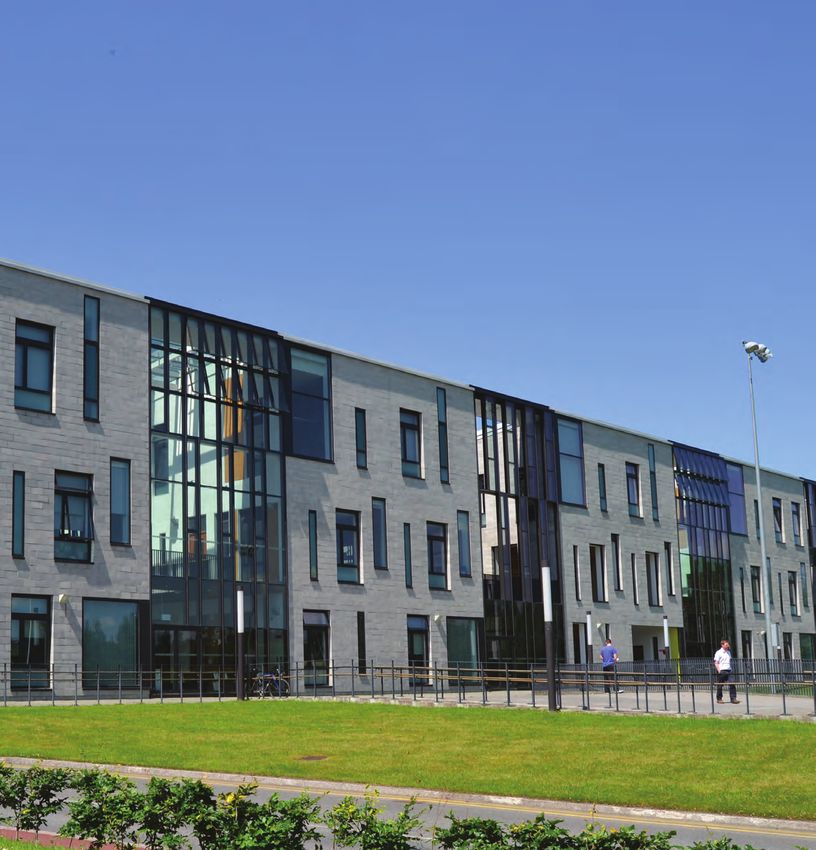
Contents
1   Foreword                                                                             5

2   Introduction and Context                                                              7
    2.1    Introduction                                                                   7
    2.2    AIT Profile                                                                    7
    2.3    External Context                                                              12
    2.4    AIT Context                                                                   13

3   Strategic Plan Development Process                                                   17

4   Vision, Mission, Values                                                              18

5   Strategic Pillars and Priorities                                                     21
    5.1    Pillar 1 – Learning, Teaching and Educational Experience		                    23
    5.2    Pillar 2 – Research, Innovation and Enterprise                                27
    5.3    Pillar 3 – Staff, Organisational Structure and Institute’s Environment        31
    5.4    Pillar 4 – Resources, Infrastructure, Competitiveness and Commercial Income   35
    5.5    Pillar 5 – Inter-Institutional Collaboration		                                39
    5.6    Pillar 6 – Enhanced Internationalisation                                      43
    5.7    Pillar 7 – Socio-Economic Engagement and External Stakeholder Partnerships    47

6   Implementation, Monitoring and Review                                                51

    Glossary and References                                                              52
    Appendices                                                                           54
Strategic Plan 2014–2018

                           Mission
                           To provide student-centred, career-focused
                           education, training and applied research
                           programmes for our diverse cohort of
                           learners within a professional and supportive
                           environment. We are fully committed to
                           intensive engagement with regional business,
                           enterprise and social communities while
                           maintaining our global orientation.

4
Global Focus – Regional Impact

1   Foreword

                               This strategic plan is alive;      The goals set out in this strategic plan are ambitious.
                               it is alive with possibility; it   However, the process by which it was developed
                               is alive with the vibrancy         enables us to set them forth with confidence. That
                               of the vision and mission it       process centred on an inclusive, institute-wide
                               espouses for AIT; it is alive      approach that took account of all aspects of AIT’s
                               with the goals enumerated          community. Teams comprising staff and students
                               in the seven strategic pillars.    were afforded the responsibility to identify the
                                                                  strategic goals and related actions and performance
                                In developing this plan,
                                                                  targets.
                                we wanted goals that we
    will have to stretch to reach; we wanted to hear the          The result is a plan wholly created and owned by
    voices of our students, our staff, our communities on         the AIT community. It is one we believe in, one that
    every page. Some 45 years after the establishment             reflects our core values of excellence, partnership,
    of Athlone Regional Technical College, we wanted              transparency and accountability, professionalism and
    to ask why; and I believe in posing that question, we         inclusive focus.
    have arrived at truly exciting answers.
                                                                  This is a plan that will guide the future development
    Our new vision sets out the type of higher education          of AIT through the next four years, however
    institution we desire to be. One that is distinguished        challenging and rewarding they might be. This is our
    by an outstanding learner experience, an                      future, the strategic plan sets out how we will attain it.
    international focus, a distinctive regional contribution,
                                                                  Beir bua – seize success.
    with our staff, teaching and applied research and
    innovation having a high quality impact. Our vision
    says that we will be a technological university.

    That desire for TU status is borne from a deeply held
    belief that such a recalibrated role will enable us to        Professor Ciarán Ó Cathain
    deliver to the maximum extent for our stakeholders            President
    and communities. That conviction is captured in the
    title of this plan, “Global Focus – Regional Impact”.

                                                                                                                                  5
Strategic Plan 2014–2018

6

Global Focus – Regional Impact

2   Introduction and Context

    2.1    Introduction                                         The format of Strategic Plan 2014–2018 reinforces our
                                                                commitment to identify key performance indicators,
    This strategic plan is launched in a period of
                                                                with milestones, and to embed these in the plan;
    significant change for higher education in Ireland.
                                                                our obligation is to review and renew our goals and
    The drivers for that change include continuing
                                                                targets annually. We are confident that this will realise
    constraints on public finances and a fundamental
                                                                a dynamic and relevant plan that will inform the focus
    reenvisioning of the purposes of higher education
                                                                of a committed learning and research community.
    with increasing emphasis on pragmatic measurable
    outcomes including support for employment
    creation and innovation, the embrace of digital             2.2 AIT Profile
    technologies, greater sensitivity to global mobility,       Athlone Institute of Technology is the sole higher
    and democratisation of knowledge and access to              education institution in the midlands of Ireland.
    further and higher education.                               Established in 1970 as Athlone Regional Technical
    In responding to this dynamic context, AIT invites          College, it has expanded in size, scope and influence.
    you to consider its ambitious intention in contributing     It now offers some 200 programmes on a full-time
    a distinctive response to a complex yet integrated          and part-time basis ranging from higher certificate
    system of higher education. This strategic plan covers      (Level 6 on the National Framework of Qualifications
    the inclusive period 2014–2018 and references               (NFQ)) to PhD (Level 10) across the Schools of
    an evaluation of our performance set out in the             Business, Engineering, Humanities, Science and the
    preceding 2009–2013 plan. The institute proposes            Department of Lifelong Learning. Programmes are
    this as a logical progression from that previous            offered on an ab-initio basis as well as through the
    iteration. It is a reaffirmation of a dynamic institution   “ladder system”. The institute has remained solidly
    which imbues its scholarship and learning with an           supportive of progression pathways and offers a suite
    applied focus.                                              of undergraduate programmes from Level 6 to Level
                                                                8, with every school offering options at Level 6.
    With increasing national attention on a realigned
    system of higher education comprising fewer                 In 2011 the Department of Education and Skills
    providers with distinctive but complementary missions,      published the National Strategy for Higher Education
    this plan focuses on the distinguishing contribution to     to 2030. This report represents the adopted policy
    be made by AIT and centrally on the character and           on the development of higher education in Ireland
    quality of that provision. It also seeks to benchmark       over the next decades. As an integral element within
    and measure that contribution consistent with               that system, AIT is responding to the heightened
    emerging good practice. This proposes that AIT is           expectation and requirement for change and
    on a path with mission distinctiveness and quality          especially the maintenance and enhancement of
    enhancement as the lodestar.                                quality at a time of considerable expansion in higher

                                                                                                                               7
Strategic Plan 2014–2018

                    “AIT has taken a pioneering approach to internationalisation
                     and over the past decade its ratio of international students
                     has been growing and currently it represents some 11%
                     of the institute’s full-time learner cohort.”

                     education. The resulting recommendations inform            The institute is committed to providing opportunities
                     this strategic plan, to the forefront of which is the      for all, especially those learners from groups under-
                     institute’s unambiguous commitment to achieve,             represented in higher education, including mature
                     over the lifespan of the plan, the criteria established    learners, those with disabilities, migrants and the
                     by the HEA for technological university (TU) status        socio-economically disadvantaged. This approach is
                     (HEA, 2013).                                               reflected in the institute’s access policy. At present
                                                                                38% of our total learner population are grant funded,
                     Registration data for 2013/2014 indicate a total learner
                                                                                in comparison to a national average of 30%.
                     population of 5,300 on third-level programmes.
                     The undergraduate population is spread more or             AIT is deeply committed to the principle of mobility
                     less evenly across the four schools and there are          of learners and staff between partner institutions in
                     approximately 600 undergraduates registered in the         Europe, and indeed, on a wider international level.
                     Department of Lifelong Learning. There are some            It has over the past decade developed a consistent
                     400 postgraduates registered at the institute, 80% of      record in building global relationships and in
                     whom are on taught programmes with the remainder           supporting its population of international learners.
                     engaged in research.                                       Through participation in trans-community consortia,
                                                                                the institute aims to give direct and meaningful
                     2.2.1 Our Learners                                         international experiences to all learners and staff
                     The profile of the student population is quite diverse.    involved in EU exchange programmes. The institute
                     The importance of AIT’s role as a tertiary education       is also active in receiving and facilitating learners
                     provider in the midlands can be gleaned from an            from outside the EU, from countries such as China,
                     analysis of the annual feeder school data. More            Malaysia, Saudi Arabia and Brazil. It has forged
                     than 60% of first year learners registered in AIT          international partnership agreements and works
                     in 2013/2014 came from the five counties in the            closely with reputable HEIs in Europe, the
                     immediate hinterland of the institute: Westmeath,          Middle East and Asia. AIT has taken a pioneering
                     Offaly, Galway, Longford and Roscommon. Also               approach to internationalisation and over the past
                     noteworthy has been the increased intake of mature         decade its ratio of international students has been
                     students attending AIT, which now stands at 29% of         growing and currently it represents some 11% of the
                     new full-time undergraduate entrants.                      institute’s full‑time learner cohort.

8
Global Focus – Regional Impact
2.2.2 Character of our Education from the commencement of their programmes in
There is a determined focus on applied education order to develop skills for employment and for active
and training; AIT equips learners for their careers. citizenship. Supporting retention will be a key theme
With a focus on real-world engagement, our through the cycle of programmatic reviews1 that will
approach to learning and teaching provides our take place during the life of this plan.
learners with the knowledge, skills and competencies Quality enhancement has been identified as the
identified and sought by employers. This professional guiding principle in this plan. The institute will
orientation is embedded across all schools, through recalibrate its resources to deliver this goal and to
placements, work-based learning (WBL), project work, ensure that the existing strong infrastructure and
and is informed by an applied research focus. culture is further strengthened in the interests of this
AIT describes itself primarily as a learning and and future generations of learners.
teaching organisation. We are committed to
2.2.3 Research-informed Environment
promoting excellence in learning and teaching so
as to underpin a high quality learner experience. A strong quality infrastructure and tradition of focused
In order to achieve this, we commit to dedicate inquiry has earned AIT considerable research
resources to building capacity in this area, to ensure autonomy with awarding authority to doctoral level.
that our learners at undergraduate and postgraduate Research capacity and capability is being continually
levels develop the requisite knowledge, skills and strengthened in Athlone. AIT has three strategic
competencies for their discipline and programme research institutes in materials research (MRI),
of study. We will continue to articulate strategies for bioscience research (BRI) and software research (SRI).
building and exploiting digital capacity. A related Further research clusters exist at school level. The
target has been the enhancement of professional research institutes, which have developed international
development for staff and we continue with our collaborations with leading multinational companies
collaborative strategy to provide substantial supports and universities in Europe, Asia and the US, have
to increase the percentage of staff with additional attracted significant multimillion euro funding.
pedagogical competencies and qualifications. Providing support to the economic, social, cultural
Transition in a variety of contexts such as retention, and environmental development of the region is
progression and completion is also a key priority.
This is consistent with the theme adopted by the 1
Programmatic review (PR) is the institutional process that invites
National Forum for the Enhancement of Teaching and external objective evaluation of the programmes offered by the
Learning and includes defining learning pathways institute. This process marks one of the institute’s principal quality
instruments and is centrally informed by a self-evaluation report by
and engaging and encouraging learners in the use each of the academic units and supporting units of AIT. The next
of enquiry-based and problem-solving approaches iteration of PR will take place in 2015–2016.
9Strategic Plan 2014–2018
“...the recent growth in science numbers has been responded
to with a major refurbishment of the laboratories and
instrumentation in the sum of €3 million.”
a priority for AIT. Our strategy is to be a partner of and Informatics Building opened in 2010 and has
choice for enterprise, focusing our applied research, almost 13,000 square metres of floor space over
innovation and enterprise support activities on three stories and marks one of the latest additions
addressing the needs of regional and national in a period of considerable expansion. In addition,
industry by proactively collaborating with start- in 2010 the Research Hub was completed on the
ups and established companies and by providing East Campus and created a main focus location for
a comprehensive range of knowledge intensive AIT’s applied research activities. In support of the
services, with a focus on SMEs. The Midlands 2009–2013 strategic target making AIT the college
Innovation and Research Centre (MIRC) is located of choice for learners, considerable resources
on campus and operates as a converging hub for have been invested in the development of sporting
innovation, research and enterprise. It provides infrastructure, including an outdoor IAAF-approved
incubation facilities for innovative and knowledge- athletics track and both grass and all-weather sport
based enterprise, an enterprise programme for facilities. The newest building on the main campus
entrepreneurs and start-ups, and makes available the is the AIT International Arena opened in 2013 at a
resources and expertise of the institute to support cost of €11 million, which was primarily self-funded.
client companies. Similarly, the recent growth in science numbers
Research, innovation and enterprise provide a central has been responded to with a major refurbishment
theme for this strategic plan. They also inform a key of the laboratories and instrumentation in the sum
criterion in the profile of a technological university. of €3 million. These developments add to recent
AIT has been building its research profile over improvements in other areas including design,
recent decades and has in place the conduits to hospitality, tourism and leisure, and in business,
transfer knowledge and technologies in a manner all of which offer our learners a modern and
that supports regional and national industry-based appealing setting for study.
partners. Its growing number of industry projects
2.2.5 Our Partners
and consistently strong performance in innovation
vouchers demonstrate that the institute is already a Consistent with the government’s national strategy,
considerable distance on the journey to meeting the AIT is contributing to a cluster of higher education
relevant TU criterion. (HE) providers in the Midlands, East, and North Dublin
(MEND). Within this cluster, we have a formalised
2.2.4 Our Campus agreement with NUI Maynooth, which will constitute
AIT is situated in the heart of Ireland to the east the institute’s most significant partnership in the
of Athlone on 22 hectares. Since 2008, AIT has medium term. The partnership builds upon significant
invested €45 million in the development and existing cooperation and it is planned to develop
modernisation of its campus. The new Engineering further in an incremental manner. This relationship
10Global Focus – Regional Impact
is located within the broader cluster which also system of education and training that is proposed within
includes Dundalk Institute of Technology and Dublin the revised landscape. Over the course of this plan AIT
City University. The success of the cluster in winning will be continuing to formalise its relationships with FE
competitive funding under the HEA’s Strategic to enhance further the progression paths for learners.
Innovation and Development Fund is another input to It will also contribute to this within the context of the
this strategic plan. MEND cluster.
This national collaboration is complemented through As the sole HE provider in a large region with a
a range of academic partnerships with international declared goal of playing a catalytic role in the social,
HEIs reflecting AIT’s pioneering role as an Irish economic and cultural development of its catchment,
provider with an established record of international AIT has cultivated a range of valued partnerships
engagement. and here acknowledges the ready input of so many
regional and national enterprises and agencies. Such
Over recent years, AIT has built a valued relationship
partnership was evidenced in the creation of this
with the further education (FE) sector within its broader
strategic plan and AIT will continue to work closely in
catchment. This too has been a time of change for that
a collaborative manner; this commitment is evidenced
sector and the institute sees the relationship with these
in the strong focus on engagement within this plan.
partners as a key element in realising the integrated
11Strategic Plan 2014–2018
“…EU countries, including Ireland, are putting
considerable emphasis on the central role of higher
education institutions in meeting regional economic,
social, innovation and development needs.”
2.3 External Context strategic action within one of the plan’s pillars (Grant
Thornton, 2014). As with the previous strategic plan,
The launch of this plan takes place against the
AIT must play a catalytic role in the social, economic
backdrop of considerable change in the landscape of
and cultural development of its region. In so doing, AIT
higher education both nationally and internationally.
is mindful of government ambition and employer input
Education is becoming increasingly global and is
into the graduate attributes and skills requirements
responding to the exponential growth of digital
that are required to support economic recovery
technologies. Equally students are becoming more
mobile and are seeking more flexibility in their access (IBEC, 2012). For this reason, the desired graduate
to education and training. Irish government policy attributes will be a theme within the comprehensive
encourages greater system alignment, increasing programmatic review that will take place during the
collaboration, and, in certain circumstances, currency of this strategic plan.
consolidation (HEA, 2012b). AIT endorses this strategy AIT is continually responding to both national and
and is actively contributing to its designated cluster international drivers and a funding initiative such as
with reputable partners and has within this plan set Horizon 2020 is consonant with the institute’s research
out its intention to meet the criteria necessary for ambition and with the stated determination to work
consideration as a technological university (DOES, increasingly in partnership. The global competiveness
2014). The institute is pursuing this goal while of the region and the country is enhanced through
adhering to its distinctive mission and with a central ready engagement with such an important initiative.
commitment to quality enhancement. Similarly, at a national level, AIT is cognisant of
These remain challenging times. The reductions in the Review of Apprenticeship Training in Ireland,
the core grant available to higher education and the published in January 2014, which sets out whether the
student contribution charge increases, along with current model of apprenticeship should be retained,
changes in grant entitlement form elements of a adapted, or replaced by an alternative model of
challenging funding environment that impacts both vocational education and training for apprentices.
learners and the institute. Alongside this is the growing This has the potential to bring significant change to
evidence that EU countries, including Ireland, are the relationship between the worlds of enterprise
putting considerable emphasis on the central role and academia; AIT, along with its partners both in
of higher education institutions in meeting regional business and further education, will be cooperating to
economic, social, innovation and development respond positively to shaping a new order in respect
needs. Notwithstanding some evidence of economic of applied education and training. In addition, AIT has
recovery, the indications are that an institution such as contributed each year to the labour activation schemes
AIT will have to place greater reliance on its capacity to initiated by government and the institute will continue
develop additional revenue streams in order to realise to demonstrate the responsive flexibility that such
the targets within this plan; this reality is captured as a support requires over the course of this plan.
12Global Focus – Regional Impact
Student mobility is an increasing feature of higher 2.4 AIT Context
education. AIT has built a deserved reputation
An element within the context informed by the
for the high quality of its global contacts and the
National Strategy for Higher Education to 2030
numbers of international students it attracts. It has
concerns the future evolution of universities
been a pioneering institution and has a consistent
and institutes of technology. AIT supports the
and singular record in this regard. That external
stated ambition for higher education to realise a
focus is strengthened within this plan. There is a
coherent system, made up of diverse, responsive
renewed commitment to foster diversity and to grow
and sustainable institutions. Within that strategic
the international cohort from the current baseline
roadmap there is the prospect of shaping a form
of 11%. This focus on numbers is but one element
of university that is different in mission from the
of an integrated approach set within a more holistic
existing Irish universities. AIT is clear in its mission
approach to internationalisation.
and in pursuing that, it is seeking to improve its
The system changes that have flowed from the quality performance against national objectives.
National Strategy for Higher Education to 2030 offer This performance is guided by the very metrics that
various intersecting instruments that afford an institute are ordained to establish a technological university.
such as AIT opportunity for greater insight and The key performance indicators identified within this
analysis of performance. In shaping this strategy and current plan are centrally informed by such metrics.
in planning the related implementation, monitoring As such, AIT is on a developmental pathway based
and reporting phases, AIT is utilising barometers such on delivering against these performance criteria.
as the HEA institute profiles, TU criteria, emerging AIT’s ambition is that this plan, and the clearly
European benchmarking instruments, and the Irish defined deliverables within it, will establish advanced
Survey of Student Engagement (ISSE) to concentrate performance within our stated mission. In so doing,
its key strategic goals and leading action projects AIT is confident that it will continue to make a
which are set out across seven interrelated pillars. distinctive contribution to higher education, one that
13Strategic Plan 2014–2018
is consistent with the current ethos and mission focus There were four overarching goals at the heart of
of an institute of technology. In supporting this mission the previous plan covering the five-year period
at the highest quality level, AIT can make a significant commencing in 2009:
contribution to strengthen system coherence, mission
»» Achieve a reputation and visibility as a college of
diversity and overall performance.
choice for students
In 2014, the Minister for Education and Skills, Ruairi
»» Develop excellence in learning and teaching
Quinn TD, published the General Scheme of
Technological Universities Bill which sets out the »» Strengthen research capacity and capability Play
objectives and functions of a technological university. a catalytic role in the Midlands Gateway and
AIT is proposing, and this plan is supporting, the fact in national economic, social and cultural
that this institute is on a trajectory performing these development
functions and pursuing these objectives. The very The evaluation of that plan is summarised in
functions and objectives described rhyme with the Appendix 1.
mission and quality enhancement that are at the heart
of this plan.
This Strategic Plan 2014–2018 is informed by
AIT’s performance during the period of the
preceeding 2009–2013 plan. We have evaluated
our performance under the main objectives of that
plan, notwithstanding the constraints of challenging
economic circumstances; we have achieved
significant success through the delivery of a
quantifiable result.
14Global Focus – Regional Impact
15Strategic Plan 2014–2018
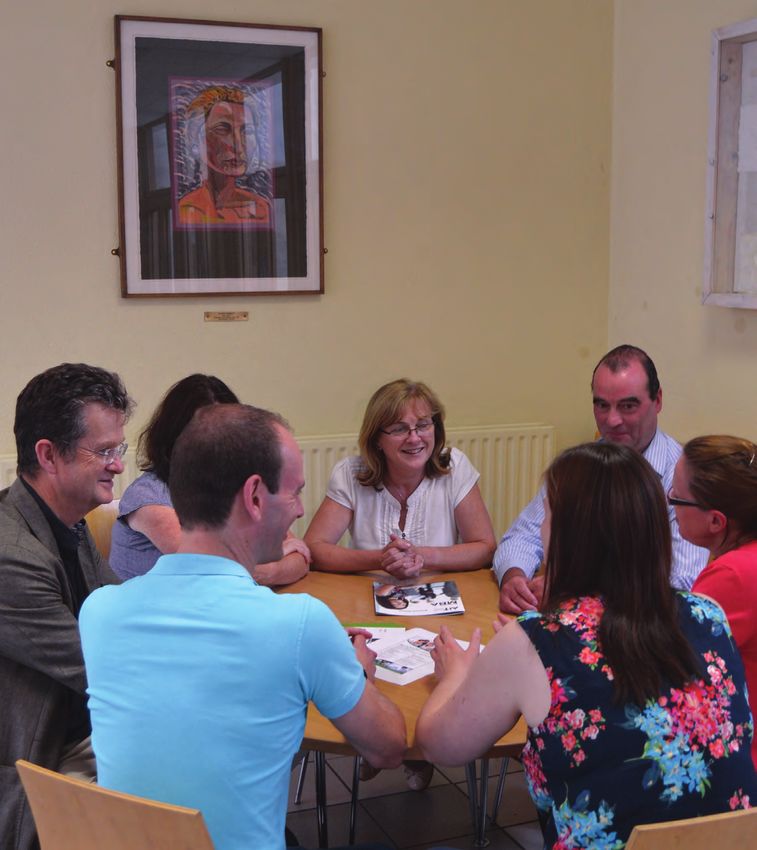
Members of our community,
including staff and students
from all areas of the institute
and numbering more than 80,
contributed to the formation
of this plan over the course
of some six months.
16Global Focus – Regional Impact
3 Strategic Plan Development Process
Athlone Institute of Technology has consciously In formulating this plan, AIT was mindful of the
adopted an inclusive process in the creation of interrelations between this guiding strategy, the
this plan. In September 2013, the AIT Executive mission-based performance compacts instituted by
Management Team (EMT) decided that the Strategic the HEA in 2013, the annual quality dialogue with
Plan 2014–2018 would be developed as an inclusive Quality and Qualifications Ireland (QQI), and of the
institute-wide process, through extensive consultation published criteria for designation as a technological
and collaboration with learners, staff, the Governing university. In respect of the central focus on quality
Body, alumni and with key external stakeholders enhancement and the provision of an evidence base
and agencies. Members of our community, including upon which performance might be monitored, the
staff and students from all areas of the institute and institute is determined to put in place the structures
numbering more than 80, contributed to the formation that can collect, analyse and publish data that will
of this plan over the course of some six months. afford opportunity to benchmark the organisation
Individual teams were afforded appreciable scope to both nationally and internationally. The purpose of
identify and nominate their own strategic goals and such self-evaluation tools is to enable AIT to improve
key related actions and performance targets. There its own performance, to enhance the accountability
was also external input from diverse stakeholder of higher education, and to demonstrate how the
groupings offering separate and important institute is making its distinctive contribution to
perspectives that have also informed the strategic key national expectations of higher education.
development. This determination is reflected in the goals and
consequences for restructuring that are contained
The core components of the plan include:
within this strategic plan.
»» Our vision, mission and values
Appendix 2 outlines the overall strategic plan
»» Key goals, which must be achieved to deliver development process.
our mission. Goals are set in association with the
seven selected pillars which encapsulate all our
major ambitions
»» Strategic actions and targets that are formulated
to deliver each of our goals
»» The identification of comprehensive projects,
many of a cross-functional nature, that facilitate
a system-based approach to executing strategic
actions
17Strategic Plan 2014–2018
4 Vision, Mission, Values
The new vision statement of AIT sets out explicitly the consistent with its distinctive contribution within a
type of entity the institute aspires to be, consistent variegated system of higher education in Ireland.
with the framework of the Higher Education Authority In carrying out its mission, AIT is guided by a
(HEA) Future Landscape for Higher Education in number of core values – excellence, partnership,
Ireland. The mission of AIT maps out strategically transparency and accountability, professionalism and
how this vision of a technological university can be inclusive focus. These values were established at the
achieved and the vision and mission are intrinsically outset of this strategic plan and at the heart of the set
linked. AIT’s vision is concerned not with status but of values lie the core belief of the institute, expressed
with the mission appropriate to a TU; in pursuing this in its central motto “Magna est veritas, et praevalet”
vision, AIT is on a journey of focused enhancement (Great is truth and it prevails).
LU S I V E F O C U S
INC
PLE, SOCIET
P E O D G LO B A Y
UR U N EN AN L
N
T C
ER A B Y
OP
R T ION A
PA
IO I L I T Y
AT T
RA
NS ABO
COLL
M
E X AC H I N C H
IN
LIS
CE
H
TE ESEAR
& COLLEG RUT
ITY
R
A
LLE
PROFESSION
IAL
T
NCE
I N T E G R I T Y,
G AND
Core Values
A N IN A
ND
RK N A P
T R AC L
I
SH
D L
N
A
C S PA R
N E AT I
O
O OU RE T
R OR O
UR N NC PA B MW
O P TA B Y LA
ER ILITY COL TE
A
A TIO
NS
18Global Focus – Regional Impact
Vision
AIT will be a technological university distinguished by outstanding
learner experience, international focus, distinctive regional contribution
and high quality impact of its staff, teaching, applied research and innovation.
Mission
To provide student-centred, career-focused education, training and applied
research programmes for our diverse cohort of learners within a professional
and supportive environment. We are fully committed to intensive engagement
with regional business, enterprise and social communities while maintaining
our global orientation.
Our mission is encapsulated in the following:
We will:
»» Continue to attract, support and assist our »» Continue to expand and improve the capacity of
diverse cohort of learners throughout their entire our applied research, innovation and enterprise
educational pathway development programmes
»» Provide our students with an outstanding »» Continue to engage and empower staff and
learner experience so that AIT graduates will be enhance their knowledge-base and skills profile as
professionally ready with the requisite skills to part of their continuous professional development
enter the global marketplace
»» Further strengthen our distinctive regional
»» Maintain the breadth of educational programme engagement with business, enterprise and social
provision from Levels 6 to 10 inclusive while communities
placing special emphasis on work-based learning
»» Achieve phased collaborative integration through
and on augmenting Levels 9 and 10
selected strategic alliances and clusters
»» Focus on attaining the nominated benchmarks
»» Focus and strengthen our global orientation in
required for quality enhancement and the
education, research and innovation.
designation of AIT as a technological university
»» Further develop and embed digital technology in
support of our core mission
19Strategic Plan 2014–2018
The architecture of this strategic plan is
built on clearly defined pillars. All seven
pillars are interconnected, each linked
to the mission statement of AIT and
reflecting the set of AIT core values.
20Global Focus – Regional Impact
5 Strategic Pillars and Priorities
1 hing and Rese
eac ce arc 2
ing l Experien
, T
and h, In
rn a En no
a on ter va
Le cati pr tio
d u ise n
E
rshi ehold ent
m
er
ge
Sta Instit
and Externa c Enga
an
d
, Or ute’s Environment
ps
k
l Sta
Socio-Econom 7
ganis
i
Partne
ational Structure
3
AIT Strategic Plan 2014-2018
Global Focus; Regional Impact
,
Inte
In s s a c t u r e
E n tio n
rna
co nd
6 c e d a ti
h a ali
c i ene s tr u
me
n s
iv f r a
4
In
on s,
c e tit
al
r
u p e er
so
Re C o m m m
5 Co
I n t e r -i n
s ti t u t i o n a l
C o lla b o r a ti o n
Athlone Institute of Technology has adhered to best The headings encompass the dominant areas of
international practice in linking this strategic plan to strategic activity and risk which governors and
a series of key performance indicators (KPIs) that can management will monitor on a continuing basis and
provide an evidence base for ongoing monitoring.2 these KPIs inform the seven pillars which are central
to this strategic plan.
2
In the 2013 HEA report, Towards a Performance Evaluation Framework:
Profiling Irish Higher Education, a number of high-level KPIs were
identified based on best-practice from the UK university sector (CUC
Report on the Monitoring of Institutional Performance and the Use
of Key Performance Indicators; CUC Report on the Implementation
of Key Performance Indicators: Case Study Experience, June 2008).
These KPIs define all the key strategic aspects of the institutional
health of a university or institute.
21Strategic Plan 2014–2018
AIT offers learners an education
that equips them for career success.
Our approach to learning, teaching
and the educational experience
gives learners the knowledge and
skills sought by employers. This
professional orientation is articulated
through placements, project work
and an applied research focus.
22Global Focus – Regional Impact
5.1 Learning, Teaching and Educational Experience
5.1.1 Key Strategic Goal
To sustain and further develop an inclusive learning community that
empowers learners to be successful in a dynamic environment.
5.1.2 Strategic Actions to Deliver our Goal 6. Promote a distinctive set of AIT graduate attributes,
Curriculum and Delivery thereby helping shape the professional growth of
1. The curriculum and learning, teaching and our learners and the holistic development of the
assessment processes will support our core individual.
mission to provide our learners with career-focused 7. Enhance our commitment to support a research-
education and research programmes. informed learning environment.
2. Curriculum developments will, in line with the mission 8. Implement a holistic institute-wide learning and
of a TU, continue to focus on knowledge, skills teaching strategy.
and competencies developed in conjunction with
Pathways
stakeholders.
9. Continue to embrace diversity, equality of
Preparing and Transitioning opportunity, and review and implement our
3. Provide appropriate and accessible advance access policy focusing on groups who are under-
information for prospective learners to make represented in the higher education sector.
informed choices.
10. Provide a balanced portfolio of taught programmes
4. Enhance alternative access routes and greater at Levels 6–9 on the National Framework of
transfer opportunities both within the institute and Qualifications (NFQ) including future developments
through our designated cluster. from a new national apprenticeship model. There
Studying will also be continued focus on taught programmes
5. Strengthen our capacity to provide current and research at Levels 9 and 10 and expansion of
programmes in modern modes that allow for opportunities for AIT through the MEND cluster.
increased flexibility, including the development of
flexible learning and digital literacies to enhance the
learning experience.3
3
This development will be centrally informed by the institute’s
contribution to, and collaboration with, the National Forum for the
Enhancement of Learning and Teaching.
23Strategic Plan 2014–2018
“…each undergraduate programme will
incorporate at least one module requiring
significant use of online class facilities..”
5.1.3 Performance and Strategic Targets
1. Develop by Q4 2014 an effective model that enhances 5. Increase the numbers of learners coming to AIT from
the institute’s engagement with business/industry further education by 25% over the duration of the
and the wider community to be implemented by all strategic plan.
schools in Programmatic Review (PR) 2015–2016.
6. Commencing in Q2 2015 carry out annual market
2. Over the duration of the plan, the total student analysis relating to student catchment sources and
population will grow by 15% from a 2013/2014 develop strategies to afford prospective learners
baseline of 5,300 to exceed 6,000 learners. The opportunities to engage with AIT at the earliest in
taught postgraduate population is envisaged to grow preparation for undertaking a programme.
by 40% from a baseline of some 320 to in excess
7. Our programmes will be distinguished by a strong
of 430 by the end of 2018. The lifelong learner
practical focus in which engagement with the
population will increase by 15% over this period.
workplace, applied industrial projects and internships
3. Flexible learning systems will be evaluated and are central; to be codified by Q1 2015.
enhanced commencing in Q3 2015. In addition, each
8. Incorporate project-orientated elements into
undergraduate programme will incorporate at least
appropriate programmes as part of PR 2015–2016.
one module requiring significant use of online class
facilities. This target will be informed by the National 9. Re-examine teaching norms to free capacity and
Forum for the Enhancement of Learning and Teaching develop further our blended learning and offer
principles and insights on building digital capacity. additional targeted supports to those learners who
require them by Q4 2015.
4. Foster a distinctive approach in respect of learning,
teaching and assessment, and further enhance 10. Increase the number of staff with pedagogical
opportunities for learner engagement and individual qualifications by 25% over the lifetime of the
development. Identification of a set of AIT graduate strategic plan.
attributes will commence in Q4 2014.
24Global Focus – Regional Impact
5.1.4 Leading Action Projects
1. Development of AIT Graduate Attributes Project 5. Learner Retention Project
The identification of a set of AIT graduate attributes During the plan, AIT will place particular focus on
will commence in Q4 2014. These will inform all future improving our student retention performance; this
programme design, curriculum development and will inform a central unifying theme of PR 2015–2016.
assessment strategies. The project will commence in Q1 2015 with emphasis
on evaluating and supplementing existing retention
2. Curricular Development Project
initiatives for first-year cohorts. This project is already
Comprehensive statistical analysis of programmes
designed and ready for implementation and will
will be carried out annually to include input metrics.
address through an integrated strategy the range of
All new programmes developed by schools will be
challenges presented at Levels 6, 7 and 8. A retention
required to include comprehensive market-needs
value of 78% in transition from first to second year
analysis in advance of submission to EMT/ASQ and
across the institute is the target for 2018.
incorporate universal design elements.4 There will be
an emphasis on progression pathways (up to Level 9) 6. Programmatic Review 2015–2016
and transferable skills in ICT, research, innovation and PR 2015–2016 will be thematic and focus on the first
enterprise in line with a TU mission. year curriculum, the student experience, retention,
research-informed and practice-led teaching,
3. Integrated Student Recruitment Project
entrepreneurship and learning and assessment
By Q4 2014 a working group will be established to
strategies using problem-orientated, practice-based
develop a strategic integrated student recruitment plan
methodologies. Work-based learning (WBL) and
to allow the institute to achieve growth targets of 15% in
internship will be emphasised. PR 2015–2016 will inform
total student numbers and 40% in taught postgraduate
institutional review and focus on the enhancement of
population over the lifespan of the plan.
the institute’s ongoing commitment to a quality culture.
4. Establishment of Educational Development Unit (EDU)
7. Flexible Learning and Digital Literacies Project
In light of the centrality of learning, teaching and
The institute will evaluate and enhance by Q4 2016
assessment, we will further strengthen and focus our
the use of a learning management system (LMS) on all
pedagogical approach. Work on the establishment of
programmes. By Q3 2017, the institute will incorporate
the EDU will commence immediately. By Q4 2015 an
developments with the MEND cluster within this context.
EDU will be developed and the library, IT and online
resources will be remodelled. The project will be 8. National Apprenticeship and Work-Based
undertaken in conjunction with MEND partners. Learning Models
By Q4 2016, progression routes in defined
4
ASQ is the AIT Academic Strategy and Quality Committee, the principal
apprenticeship-based and WBL programmes
sub-committee of the Academic Council that addresses the academic will be identified and developed incorporating
profile and standards within the institute and supports quality monitoring emerging national apprenticeship model initiatives.
and enhancement. 25Strategic Plan 2014–2018
Research, innovation and enterprise
activity at AIT is real-world oriented,
calibrated to meeting the needs of
industry through its strategic research
institutes in materials, bioscience
and software. With a particular
focus on supporting start–ups and
entrepreneurs, AIT is an innovation
partner of choice for industry
26Global Focus – Regional Impact
5.2 Research, Innovation and Enterprise
5.2.1 Key Strategic Goal
To support sustainable socio-economic development regionally
and nationally, through relevant and internationally excellent
collaborative research, innovation and knowledge-based enterprise
(RI&E) development.5
5.2.2 Strategic Actions to Deliver our Goal
1. The institute will demonstrate a developmental 6. Provide a broad range of knowledge-intensive
trajectory in line with the research dimension of a TU. innovation services to industrial and community
clients – delivering results in a time frame that
2. AIT has established three research institutes in
matches client needs, with a focus on start-ups
materials (MRI), software (SRI) and bioscience (BRI).
and SMEs.
We will create an additional, sustainable research
centre in a focused area aligned with regional needs 7. Benchmark research, innovation and enterprise
and national research priorities. activities against appropriate international standards.
3. Deliver targeted numbers of postgraduate research 8. Develop a cross-institutional framework to capture
students in areas aligned with our applied, problem- and strengthen pedagogical research at AIT.
oriented research fields through the integration of
9. Increase the awareness of AIT’s RI&E capabilities,
practice-led, professional and industrial master’s and
identify and develop strategic partnerships within
doctoral structures within MEND alongside traditional
MEND and with key stakeholders across industry,
routes.
other HEIs and government agencies.
4. Transfer advanced knowledge, technologies and
10. Attract and retain top research staff in areas
valuable intellectual property (IP) to regional and national
aligned with AIT’s focused research strategy which
industry-based partners via the commercialisation of
will include a defined career path for researchers
AIT’s research, innovation and enterprise activities.
in line with national initiatives.
5. Increase the number of knowledge-based start-ups
in the region by directly supporting regional spin-
in entrepreneurs, student start-ups and spin-out
companies.
5
The RI&E also refers to the sub-committee of Academic Council
charged with supporting activity under this strategic heading.
27Strategic Plan 2014–2018
“… provision of a broad range of knowledge
intensive innovation services to regional
and national clients, with a focus on
start-ups and SMEs.”
5.2.3 Performance and Strategic Targets
1. Formulate a strategic plan by Q2 2015, for the 6. In collaboration with Enterprise Ireland and NUI
advancement of new opportunities afforded to AIT Maynooth, provide over the lifetime of the plan
in the areas of RI&E. enhanced training and support towards the
development of knowledge-based start-ups in the
2. Increase postgraduate research enrolments at Levels
midlands mid-east region.
9 and 10 by 30% (from 90 to 120) by Q4 2018.
7. Increase the provision of a broad range of
3. Continue to build critical mass in existing thematic
knowledge intensive innovation services to regional
research areas of materials, software and bioscience,
and national clients, with a focus on start-ups and
aligned with regional needs and national research
SMEs. The performance targets in relation to the
priorities to meet the following targets by 2018:
Centre for Industrial Services and Design (CISD) by
»» Number of projects to increase by 60% Q4 2016 will include increases in:
»» Number of companies engaged to increase by 50% »» Industry projects to 174/pa
»» Total monetary value of projects to increase by 75% »» Company clients to 88/pa
»» Monetary value of industry contribution to »» Innovation Vouchers to 34/pa
increase by 50%
8. Benchmark RI&E activities against appropriate
4. Establish over the lifetime of the plan one new international standards by Q4 2015.
sustainable research centre/institute, created in
9. Achieve delegated authority to award at Level 10
collaboration with industry and academic partners.
in software/networking research by Q4 2014.
5. Significantly improve knowledge/technology transfer
10. By Q4 2016, AIT will be on a path towards
to enterprise via the commercialisation of AIT’s
developing a distinctive model for structured
research activity through a 100% increase in the level
postgraduate studies which emphasise core
of technology licensing to Irish-based companies and
research competencies, knowledge transfer
creation of knowledge intensive spin-out companies
capabilities, innovation framework, in collaboration
over the duration of the strategic plan.
with regional and national enterprise partnerships.
28Global Focus – Regional Impact
5.2.4 Leading Action Projects
1. TU Project 4. Postgraduate Research Students
This project to commence by Q4 2014 will develop A sustainable plan will be defined and
formal strategies for AIT to achieve all research implemented to:
criteria pertaining to TU status over the lifespan of
»» meet targeted numbers of postgraduate
this strategic plan.
research students in areas aligned with our
2. MEND Cluster Project (subject to agreement with focused research institutes.
MEND cluster partners)
»» deliver structured generic and discipline-
This project, to commence by Q3 2015, will establish
specific postgraduate research modules
strategies for the advancement of opportunities
in collaboration with NUI Maynooth and
afforded to AIT in RI&E through MEND, including
other regional cluster partners, in line with
development and provision of shared postgraduate
the emerging QQI/HEA national doctoral
modules, support services for technology transfer
framework.
and enterprise development, and mechanisms for
shared access to specialist research facilities. 5. Career Path for Research Staff
A defined career path for AIT dedicated researchers
3. Funding Diversification Project
will be developed and implemented by Q4 2018, in
This project will identify a range of funding sources
accordance with the EU ‘Charter and Code’ for
by Q3 2015 for RI&E, and target strategic and
researchers and achieve the HR ‘Excellence in
regional development funding opportunities aligned
Research’ logo awarded by the European
with AIT’s strengths, regional needs and national
Commission.
priorities from diverse exchequer and non-exchequer
sources, including EU, industrial, philanthropic and
national funding initiatives.
29Strategic Plan 2014–2018
AIT is an organisation founded
on human capital. Our social
and institutional structures will be
moulded to enhancing collegiality
and maximising performance.
Equally, staff will be supported
through an extensive programme of
continuing professional development.
30Global Focus – Regional Impact
5.3 Staff, Organisational Structure and
Institute’s Environment
5.3.1 Key Strategic Goal
To enhance our working environment and organisational structure
to support all staff to perform to their full potential.
5.3.2 Strategic Actions to Deliver our Goal
Strategic Direction of Organisation Working/Social Environment
1. Ensure our organisational structure is fit for purpose 7. Engender an environment conducive to collegiality
and reflective of the mission of a TU. and the promotion of the holistic health of all
employees and students.
2. Continue to adopt a strategic approach to ensuring
TU staffing metrics and resources are attained. 8. Develop and implement an internal communication
strategy.
Staff
3. Strengthen a culture of pride and loyalty in AIT. 9. Establish a community of inclusive participation.
4. Ensure that all staff contributions are recognised, and 10. Enhance campus staff facilities on a rolling basis.
that respect and trust are central to all relationships.
5. Provide a more effective induction programme for
all new staff (full-time and part-time) and implement a
fully functional and effective PMDS.
6. Implement a managerial staff development
programme with focus on strengthening leadership
and management skills.
31Strategic Plan 2014–2018
“Engender an environment conducive to
collegiality and the promotion of the holistic
health of all employees and students.”
5.3.3 Performance and Strategic Targets
Strategic Direction of Organisation Working/Social Environment
1. Review AIT’s organisational structure by Q3 2014 and
6. Develop and implement an internal communication
implement strategic modifications in Q3 2015.
strategy for the institute by Q4 2014.
2. Supporting unit strategic plans to meet the institute’s
7. Ensure that 40% of all staff participate in an activity/
master plan goals will be developed by each school
project/programme in another school/department/
and major function area by Q2 2015.
administrative area over the duration of the plan.
3. Increase from 2013 baseline levels the number
8. Implement an annual staff engagement survey by
of full‑time faculty holding PhDs (or professional
Q2 2015 with outcomes circulated to all staff. It is
equivalent) to achieve TU staffing metrics within the
proposed to explore benchmarking such a survey
lifetime of the plan.
utilising a best-practice instrument.
Staff
9. Increase by 50% over the lifetime of the strategic
4. Design and implement a more effective new staff
plan the number of organised social activities.
induction programme by Q3 2015. Employ effective
implementation of PMDS by Q3 2015. 10. Identify and implement minor capital improvements
related to staff facilities on an annual basis, subject to
5. Identify a suite of development programmes for all
available capital funding.
managerial staff by Q4 2014. All management teams
will participate in such programmes by Q4 2016.
32Global Focus – Regional Impact
5.3.4 Leading Action Projects
1. Strategic Direction of the Organisation 4. Continuous Professional Development of Staff
A comprehensive review of AIT’s organisational The Professional Development Committee will
structure will be carried out by Q3 2014, with review the development and implementation of
recommendations implemented by Q3 2015. PMDS, staff up-skilling, career development supports
(including support mechanisms for staff pursuing
2. Staff Communications
PhDs), and managerial/leadership programmes.
An IT-based staff communication forum will be
developed by Q4 2014, including a monthly 5. AIT Healthy Campus Project
newsletter. An effective annual staff engagement The AIT Healthy Campus Project will be further
survey system will be designed and implemented by developed on an annual basis from Q1 2015 with
Q2 2015. the implementation of additional initiatives and
in consultation with the HSE and other external
3. Induction Programmes for Staff
stakeholders.
A more effective induction programme will be
designed and provided for all new staff by Q3 2015.
33Strategic Plan 2014–2018
The beneficiary of €115 million since
2000, AIT’s campus can justifiably
be called state-of-the-art. We will be
innovative in our revenue generation
mechanisms to enable us to continue to
invest in our facilities, thereby creating
a future-ready connected infrastructure
to meet the needs of our learning and
research community.
34Global Focus – Regional Impact
5.4 Resources, Infrastructure,
Competitiveness and Commercial Income
5.4.1 Key Strategic Goal
To continue to offer a competitive, modern, learning and research
environment by providing a flexible, cost effective, commercially
focused and fit for purpose connected infrastructure.
5.4.2 Strategic Actions to Deliver our Goal
Funding Sources Competitiveness
1. Maximise HEA core grant income to optimise student 8. Utilise best-practice market analysis to ensure that all
numbers. AIT’s academic programmes continue to be current,
relevant and competitive.
2. Grow income streams from research, enterprise and
both national and international educational services. Commercial Income
9. Establish a cross-functional high level group with
3. Explore potential income streams from philanthropic
external participation to drive a series of self-funding
sources.
commercial partnerships institute-wide.
Infrastructure
10. Optimise the commercial use of a wide range
4. Design a new campus master plan for AIT and
of income streams emanating from AIT campus
prioritise development of library facilities.
facilities.
5. Continue to deliver a connected digital campus to
provide appropriate professional and educational
requirements to a diverse staff and student
population.
6. Improve the utilisation of existing space and create
greater cross-faculty use of infrastructure.
7. Develop and roll out a plan for Green Campus status
as part of the AIT campus master plan.
35Strategic Plan 2014–2018
“… deliver a connected digital campus
to provide appropriate professional and
educational requirements to a diverse staff
and student population.”
5.4.3 Performance and Strategic Targets
Funding Sources Competitiveness
1. Deliver on criteria agreed with the HEA to maximise 7. Incorporate detailed market-analysis in all new
annual available performance funding. programme proposals from Q3 2014.
2. Secure at least one contract for the provision of Commercial Income
international campus management services by Q4 8. Grow revenue from all non-exchequer income
2018. streams to €6 million per annum over the period.
Infrastructure 9. Develop a self-funding High Performance Sport
3. Design a new campus master plan by Q4 2015. Centre of Excellence by Q4 2016.
4. Continue to maintain a competitive IT infrastructure
throughout the duration of the strategic plan to
deliver on the connected digital campus.
5. Initiate space utilisation surveys in Q4 2014, with
results published annually and effective utilisation
metrics introduced.
6. Compile requisite data on a phased basis to meet
the targets for the achievement of Green Campus
status for AIT by Q4 2018.
36You can also read


