Aditya Birla Fashion & Retail Ltd - India's Premier Fashion House August, 2016 - Edelweiss
←
→
Page content transcription
If your browser does not render page correctly, please read the page content below

Aditya Birla Fashion & Retail Ltd
    India’s Premier Fashion House
               August, 2016

                      Kshitij Kaji
                  Research Analyst
                 +91 (22) 4272 2515
           kshitij.kaji@edelweissfin.com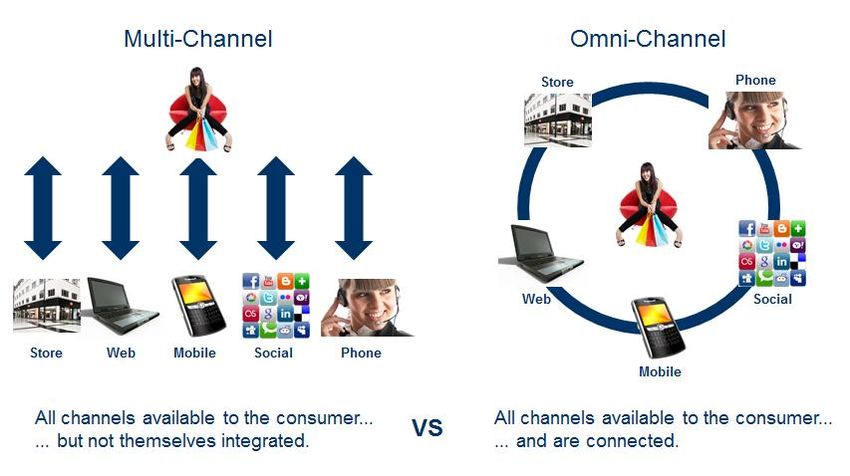
Edel Invest Research BUY
Coverage Stocks: Aditya Birla Fashion & Retail Ltd.
-
India’s Premier Fashion House CMP: 165 Target Price: 215
Kshitij Kaji Aditya Birla Fashion & Retail (ABFRL)—formed by merger of Madura and Pantaloons Fashion & Retail
Research Analyst (Pantaloons)—is India’s largest branded apparels player with a turnover of INR 6,060 crore in FY16. Ability to
+91 (22) 4272 2515 surpass industry growth anchored by a large base, anticipated margin improvement from Pantaloons’
kshitij.kaji@edelweissfin.com turnaround, an asset light model, presence across all categories & price points in apparel and a massive
unparalleled distribution network reinforce our optimism in the company’s robust growth prospects. Moreover,
it is best poised, underpinned by sheer quality & size of Madura's 4 brands and presence in fastest growing
segments such as fast fashion through Pantaloons & Forever 21, amongst branded apparel players to take
advantage of the improving macroeconomic milieu. Improving financial metrics—robust free cash flow
generation, 39% EBITDA CAGR over FY16-18E and 20% RoCE by FY19E (4% currently)—are expected to sustain
for many years, rendering the company a potential multi-bagger. We initiate with ‘BUY’ with a TP of INR 215.
Bloomberg: ABFRL:IN Presence across value pyramid, diversified market channels, pan-India presence burnish prospects
Madura is predominantly a premium men’s wear player, housing India’s largest brands (Louis Philippe, Van
52-week range (INR): 263 / 123 Heusen, Allen Solly and Peter England) with 2.3 mn sq ft retail space and revenue of ~INR 4,000 crore in FY16.
Acquisition of retail franchisees such as Pantaloons and Forever 21 gives it access to mid-premium fast fashion for
Share in issue (Cr): 77.2 women across additional 2.5 mn sq ft. Cumulatively, Madura and Pantaloons boast of a portfolio of 40 brands,
retailed through 2,150 EBOs and additional 7,000 points of sale across India with a combined 5.4 mn sq ft area. We
M cap (INR Cr): 12,674 perceive wide offerings across price points (mass to luxury), broad categories (men’s wear, women’s wear, kid’s
wear, accessories) and diversified market channels (MBOs, EBOs, LRS) to be key catalysts of ABFRL’s success.
Avg. Daily Vol. BSE/NSE :(‘000): 300/800
Pantaloons long-term game changer; expansion in white spaces, deeper penetration to spur Madura
Pantaloons’ aggressive expansion plans are bound to spur ABFRL’s top line as new stores in cities sans branded
apparel presence provide humungous growth opportunity. Also, targeting the currently fragmented women’s wear
SHARE HOLDING PATTERN (%) segment and the fast growing fast fashion segment entails significant long-term benefits. Moreover, higher sales
(in %) Jun-16 throughput in each store along with improved designs, new vendor network, refurbished IT systems and addition
& rationalization of own brands should meaningfully spur its margins. Successful franchisee model in conjunction
Promoter 59.46 with economies of scale will aid superior return ratios. Madura is anticipated to far outstrip industry growth
Public 40.54 underpinned by expansion in white spaces, product extensions through its wide distribution network.
Others – Improving macros, rising brand consciousness entail humungous growth opportunity
Domestic branded apparel segment is set to catapult manifold riding: 1) shift from fabrics to readymade garments;
2) favourable demographics; 3) higher discretionary spends; 4) low GDP per capita spend on apparel; 5) increasing
spends on branded products due to growing fashion consciousness & aspirations, among others. Sales of branded
apparels are estimated to grow at 15-20% CAGR over FY16-19E, driven by volumes as well as superior realizations.
Therefore, the share of branded garments is expected to rise to 48-50% in FY19E compared to ~35% in FY14.
Outlook and valuations: Burnished prospects; initiate with ‘BUY’
We believe ABFRL is best placed among branded apparel peers to reap significant benefits of the improving
macroeconomic milieu due to the sheer quality & size of Madura's 4 brands, presence in fastest growing segments
such as fast fashion and an unparalleled distribution network. The company’s pole position, ability to generate free
cash flow, 39% EBITDA CAGR over FY16-18E and RoCE expansion from 4% currently to 20% by FY19E will yield
target multiple of 3x sales for Madura and 15x EV/EBITDA for Pantaloons, leading to a target price of INR 215.
220 Year to March (INR Cr) FY14 FY15 FY16 FY17E FY18E
200
Net revenues 1,661 1,851 6,060 6,911 8,069
180
160 Rev growth (%) 29% 11% NA 14% 17%
140 EBITDA ma rgi n (%) 2.8 4.7 6.6 8.8 9.5
120
Adjus ted PAT (187) (228) (104) 179 319
100
80 Adj. EPS (INR) (4) (5) (1) 2 4
60 EPS growth (%) NA NA NA NA 78%
40
P/E (x) NA NA NA 71.0 40.0
Nov-15
Jul-16
Jul-15
Sep-15
Mar-15
Mar-16
Jan-15
Jan-16
May-15
May-16
P/B (x) 13.2 22.2 13.5 11.4 8.8
ABFRL Sensex RoACE (%) NA NA 3 13 18
RoAE (%) NA NA NA 17 25
nd EV/EBITDA (x) 193 102.5 36.6 23.9 19.0
Date: 22 August 2016
*Numbers up to FY15 are standalone Pantaloons numbers. Numbers post FY16 are Madura + Pantaloons
**As there is no Annual Report of ABFRL, all the numbers are based on proforma Financial Statements
1 Edel Invest Research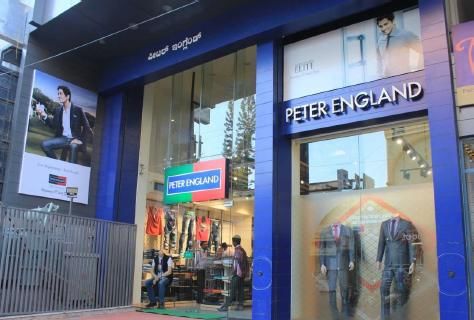
Aditya Birla Fashion & Retail Ltd

                                 ABFRL: Sales Growth + Margin Improvement + Improving Return Ratios

          ABFRL is best poised, underpinned by sheer quality & size of Madura's 4 brands and presence in fastest
          growing segments such as fast fashion through Pantaloons & Forever 21, amongst branded apparel
          players to take advantage of the improving macroeconomic milieu. Improving financial metrics—robust
          free cash flow generation, 39% EBITDA CAGR over FY16-18E and 20% RoCE by FY19E (4% currently)—
          are expected to sustain for many years, rendering the company a potential multi-bagger

           Wide offerings across price                                Pantaloons’ aggressive
                                                                                                                           Improving macros, rising brand
          points (mass to luxury), broad                          expansion plans in cities sans
                                                                                                                                 consciousness entail
             categories (men’s wear,                                branded apparel presence,
                                                                                                                                  humungous growth
           women’s wear, kid’s wear,                                  targeting the currently
                                                                                                                              opportunity. The share of
           accessories) and diversified                            fragmented women’s wear
                                                                                                                            branded garments is expected
          market channels (MBOs, EBOs,                           segment and the fast growing
                                                                                                                              to rise to 48-50% in FY19E
            LRS) to be key catalysts of                            fast fashion segment entails
                                                                                                                             compared to ~35% in FY14.
                 ABFRL’s success.                                significant long-term benefits.

              FY16     FY17E    FY18E      FY19E                    FY16     FY17E    FY18E    FY19E                                     Multiple           Price Target

Revenue       6060     6911     8069       9483                                                               Madura              3x Market Cap to Sales
                                                    RoACE (%)        3%       13%      18%         21%                                                         215
EBITDA        397       608      767       948                                                                Pantaloons             13x EV/EBITDA
                                                    Debt to
                                                                     2.0      1.7      1.2         0.8
EBITDA                                              Equity (x)
              7%        9%      10%        10%
Margin

PAT           -104      179      319       476

                                                                                                         EBITDA CAGR of 39%
                                                                                                          to lead to blended
                                  Entry = INR 165
                                                                                                          exit multiple of 24x
                                                                                                           FY18E EV/EBITDA

                                                                             Total
                                                                           Return of
                                                                             32%

  2                                                                                                                                             Edel Invest Research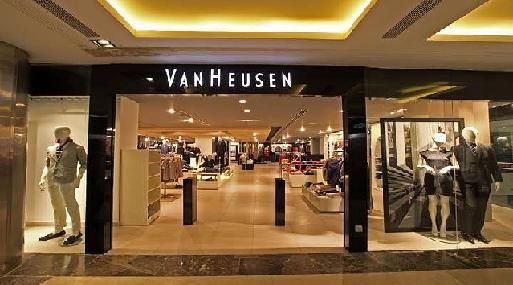
Aditya Birla Fashion & Retail Ltd
Focus Charts
ABFRL Portfolio mix – FY16 Presence across all segments
Luxury
Men's Casuals
5% 4%
Men's Formals
Super-Premium
8% Women's Western
39% wear
Premium
12% Women's Ethnic
wear
Kids Sub-premium
32%
Accessories
Value
Mass
Expected size of ABFRL brands by FY20E ABFRL has a massive retail presence
5000 4500
2500 5.5 6
4000
4.8
1500-2000 cr each 2000 4.2 5
3000
3.6 4
2000 1500
1000
1.6 3
1000 500
150 50 50 1.3
1000
0 2
Forever 21
People
Peter England
Van Heusen
Allen Solly
Louis Philippe
Simon Carter
Hackett
Pantaloons
The Collective
500 1
1129 1367 1648 1865 2200
895
0 0
FY11 FY12 FY13 FY14 FY15 FY16
Size (INR Cr) - FY20E EBOS (LFS) Carpet Area (mn Sq ft) (RHS)
*2011 and 2012 is only Madura. 2013 onwards includes Pantaloons
Expect robust topline growth alongwith margin increase Return ratios to improve
10000 10.0% 11.0%
9000 9.5% 10.0% 28%
8000 8.8% 25%
9.0% 21%
17% 18%
7000 13%
8.0%
6000
3%
6.6% 7.0%
5000
4000 6.0% FY16 FY17E FY18E FY19E
6060 6911 8069 9483
3000 5.0%
FY16 FY17E FY18E FY19E -16%
Revenue (INR Cr) EBITDA Margin(%) ROCE (%) ROE (%)
Source: Company, Edel Invest Research
3 Edel Invest Research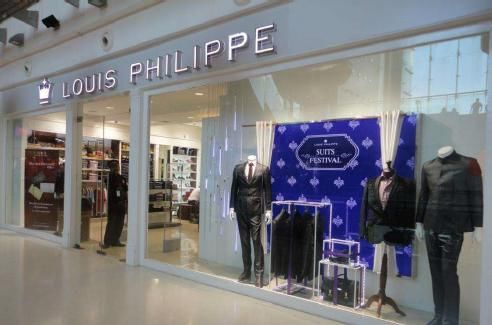
Aditya Birla Fashion & Retail Ltd

Embarking on growth phase after gradually building a fashion house

                                                            Expansion Phase                                              Growth Phase
               Entry Phase
                                                             Fill gaps in offering                                     Economies of scale
            Establish presence                                                                             2017 onwards - Consolidate apparel business
                                                 2007 - Launch of "The Collective" (super
  1999 - Takeover of Madura                      premium) and "The People"(mass)                           under one umbrella with product portfolio
                                                                                                           across all categories. Next leg to focus on
  2004 - Transition from wholesale to retail     2013 - JV with Hackett                                    growth
  2006 - Rapid expansion of Madura brands        2013 & 2016 - Acquisition of PFRL & Forever 21
  (4 premium menswear brands)                    (fast fashion and women's wear retailers)

                                                                                                                     Source: Company, Edel Invest Research.

 ABFRL is present across all segments of the USD 10 bn Indian branded apparel market with 10% market share

                                   Market Size               Men                                   Women
  Segment                                                                                                                       Kids          Accessories
                                    (USD bn)      Casual            Formal             Western              Ethnic
  Luxury and Super
                                        0.44       0.01               0.22                  0.04             0.04               0.13              0.01
  Premium
  Premium and Mid
                                        4.54       0.71               1.58                  0.33             0.46               1.36              0.11
  Premium
  Value & Mass                          5.21       0.64               1.77                  0.37             1.16               1.18              0.08
  Total                                10.19       1.36               3.57                  0.74             1.66               2.67              0.21
                                                                                                                     Source: Company, Edel Invest Research.

                                                 ABFRL accounts for 10% (USD 1 bn) of India’s branded apparel market (USD 10 bn)

                                                                     ABFRL FY16
                                                                      revenues
                                                                     (USD bn), 1

                                                                                                             Indian Branded
                                                                                                               Apparel Size
                                                                                                               (USD bn), 9

                                                                                                                     Source: Company, Edel Invest Research.

      4                                                                                                                             Edel Invest Research
Aditya Birla Fashion & Retail Ltd
ABFRL has steadily added brands to its kitty aiding its presence across all price categories and product segments
Portfolio mix – FY16 Expected size of brands by FY20E
5000 4500
Men's Casuals
4500
4000
4% Men's Formals 3500 1500-2000 cr each
5%
3000
(INR Cr)
8%
2500
Women's Western
39% wear 2000
12% 1500 1000
Women's Ethnic 1000 500
wear 500 150 50 50
Kids 0
Peter England
Van Heusen
Forever 21
People
Allen Solly
Louis Philippe
Simon Carter
Hackett
Pantaloons
The Collective
32%
Accessories
Size (INR Cr) - FY20E
Source: Company, Edel Invest Research
ABFRL Brand positioning – Madura Brands present across every price point with Pantaloons as a Fast Fashion Value Retailer
Brand Segment Positioning
Louis Philippe Premium Formal wear brand with superior quality and craftsmanship
Van Heusen Premium Lifestyle brand encouraging trendy power dressing
Allen Solly Mid-premium Friday dressing brand promoting casual, semi formal wear through colors
Peter England Value Formal and casual brand with strong presence in denim
The Collective Super Premium Transition from multi brand super premium to premium and bridge to luxury Madura
People Value Recently launched mass brand set for expansion mode
Forever 21 Value Mid Premium Fast Fashion womens wear retail brand
Simon Carter Super Premium Formal and casual menswear brand with big variety of accessories
Hackett Super Premium Formal and casual menswear brand
Pantaloons Value Fast Fashion retailer with higher focus on womens wear Pantaloons
Revenue breakup between Madura and Pantaloon (FY17E) EBITDA breakup between Madura and Pantaloon (FY17E)
Pantaloons
Pantaloons 25%
36%
Madura
Madura
64%
75%
Source: Company, Edel Invest Research
5 Edel Invest Research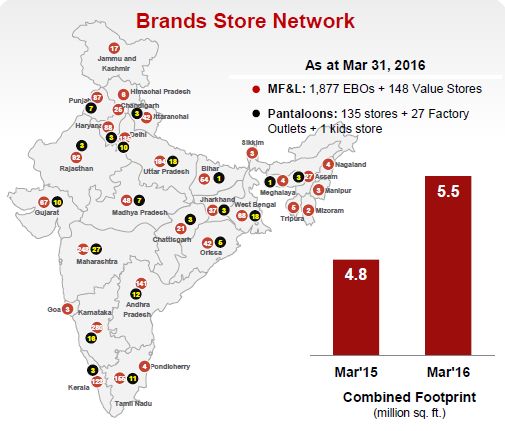
Aditya Birla Fashion & Retail Ltd

    ABFRL: Boasts of largest distribution reach among apparel players
    ABFRL’s 5.4 mn sq ft retail space is currently split almost evenly between Madura and Pantaloon. While
    Madura’s 4— Louis Philippe, Allen Solly, Peter England and Van Heusen—brands are present across 2,000
    EBOs, 4,000 MBOs and 3,000 department stores, Pantaloon has 135 stores and is planning to add 30 -35 new
    stores every year.

                                       ABFRL has a massive retail presence
     2500                                                                                           5.5           6
                                                                                 4.8
     2000                                                       4.2                                               5
                                                    3.6                                                           4
     1500
                                 1.6                                                                              3
                  1.3
     1000
                                                                                                                  2
      500                                                                                                         1
                                1129                1367          1648                 1865          2200
                  895
         0                                                                                                        0
                 FY11           FY12                FY13           FY14                FY15          FY16

                                       EBOS (LFS)          Carpet Area (mn Sq ft) (RHS)

                                                *2011 and 2012 is only Madura EBOs. 2013 onwards includes Pantaloons
                                                                        Source: CRISIL, Company, Edel Invest Research.

                                       ABFRL EBOs present across pan-India

                                                                                Source: Company, Edel Invest Research

6                                                                                              Edel Invest Research
Aditya Birla Fashion & Retail Ltd
ABFRL to benefit from underpenetrated segments (casualwear, womenswear)/ distribution channels (e-
commerce, omni-channel) and adaptability to major trends:
Major Trends ABFRL Presence
Changing trends and preferences
Readymade garments replacing demand for All Madura brands have a western positioning
fabrics/stitched clothes and have gradually moved away from formal
menswear brands by launching casual wear sub-
Preference for western and casual wear brands
combined with preference for brands with
western positioning Madura has launched sub-brands in white spaces
such as LP watches, Solly kids, LP shoes
Higher demand for accessories/white
spaces/product extensions
Fast fashion women’s wear Allen Solly and Van Heusen have launched
women’s wear sub-brands in the premium
Women’s wear market is mostly fragmented and category
unorganized
Pantaloons to focus primarily on being a fast
Diminishing dominance of ethnic wear due to fashion women’s wear player in the value
shift to casual wear and formal wear for women segment
as more women join the workforce
Recent Forever 21 acquisition in the fast fashion
Preference for fast fashion (latest designs mid premium category
available at cheap prices – products have shorter
shelf life and product life with high turnover)
E-Commerce ABFRL has its own e-commerce portal Trend-In
which currently contributes 4-5% to total
Presence across e-commerce apparel portals revenue. It is also present across major e-
commerce platforms
Omni-channel distribution to provide seamless
transition between e-commerce and brick and Omni-channel distribution to roll out later this
mortar players year
Source: Company, Edel Invest Research.
7 Edel Invest ResearchAditya Birla Fashion & Retail Ltd
Madura: Creator and owner of India’s biggest brands
Creator of India’s biggest brands
While in India there is no single brand bigger than INR 500 crore, Madura has managed to create 4 such
brands. Moreover, the 4 brands combined render Madura 2.5x bigger than its closest competitor Arvind.
Madura’s brands are far bigger than any of the other brands in India
1200 Madura - 4000 cr
1000
800 Raymond - 1150 Cr Arvind - 1600 Cr
(INR Cr)
600 KKCL - 450 Cr Indian Terrain
350 Cr
400
200
0
Lawman
Tommy
Raymond
Parx
USPA
Van Heusen
Park Avenue
Flying Machine
Peter England
Color Plus
Killer
Integriti
Indian Terrain
Arrow
Allen Solly
Louis Philippe
Hilfiger
Source: Company, Edel Invest Research
Total brand ownership unlike peers
Aditya Birla Nuvo acquired Madura Fashion & Lifestyle (established as Madura Coats in 1988) from Coats
Viyella (Europe’s largest clothing supplier) in 1999 and became the owner of Louis Philippe, Allen Solly and
Peter England. Van Heusen, however, is not owned by Madura, though it holds exclusive rights for the brand
in India, Middle East and SAARC.
Benefits of owning Louis Philippe, Allen Solly and Peter England
Save royalty
expenses and
other JV
related
overhangs
Freedom in
designing,
distribution
Flexibility in
expansion of the
brand as continuous
investments in
brands is possible
Source: Company, Edel Invest Research
8 Edel Invest ResearchAditya Birla Fashion & Retail Ltd
Diversifying into other categories
Though predominantly a premium men’s wear brand, Madura gradually shifted away from its primary line of
formal men’s wear into other categories such as casual wear, women’s wear and accessories due to limited
competition and faster growth in latter categories.
Reducing share of premium menswear is a positive due to faster growth in other segments
72%
55%
16% 14% 17%
4% 5% 7% 7%
3%
Mainline Sports Women Jeans Luxury/Elite
2010 2015
Source: Company, Edel Invest Research.
Continuous brand evolution via brand extension/sub-brands to spur growth
This extension and sub-branding has already been successful—Louis Philippe shoes clocked revenue of INR
150 crore (with its own EBOs), Louis Philippe Jeans hit INR 100 crore revenue, womens wear posted INR 250
crore (predominantly through Van Heusen) and kid’s wear registered INR 150 crore (predominantly through
Allen Solly). Peter England sells the highest number of denims in India by volume.
Brand Core Brand Extensions
Casual Wear, Colored Jeans and other denims,
Formal Wear (Men)
Luggage
Formal Wear (Men) Casual Wear, Women’s wear
Casual Wear, Women’s wear, Friday wear, Shoes, Kids
Formal Wear (Men)
Wear
Formal Wear (Men) Casual Wear, Shoes, Bags, Jeans, Belts
Source: Company, Edel Invest Research.
New brands in kitty
Simon Cater: Super premium brand to add to The Collective and Hackett
Simon Cater is a men’s wear London brand known for apparel and accessories such as watches, cuff links,
jewellery and luggage. ABFRL has inked a long-term licensing arrangement with rights to design &
manufacture. However, this is expected to be a small brand for ABFRL going forward.
Forever 21: One of the best global fast fashion retail brands
Forever 21 is an American fast fashion retailer chain known for its trendy offerings of women’s, men’s and
girls’ clothing, accessories and its economical pricing. It is present across America, Asia, Middle East and UK.
Women’s fast fashion is the fastest growing segment globally and in India, which prompted ABFRL to join
hands with Forever 21 as it further entrenches the former’s leadership position in the women’s fast fashion
business in India. ABFRL has acquired Forever 21’s online and offline rights for the Indian market and the
existing store network (12) from Diana Retail and DLF Brands for INR 175 crore. Forever 21 reported revenue
of INR 262 crore in FY16 (INR 105 crore and INR 213 crore revenue in FY14 and FY15, respectively) and ABFRL
plans to scale it up aggressively and is targeting revenue of INR 1,000 crore by FY20E.
9 Edel Invest ResearchAditya Birla Fashion & Retail Ltd
Multi-channel, asset light distribution strategy: Success lynchpin
As oganised retail has evolved in India, branded players have adopted a multi-channel distribution strategy
through various retail formats like multi-brand outlets (MBOs), large format stores (LFS)/ SIS (shop in shop)
and exclusive brand outlets (EBOs). These distribution channels and explosion in the number of retail outlets
provide branded apparel players plenty of options to reach out to consumers in a cost-effective way. Madura
has a distribution network comprising ~1,900 stores, covering 2.7 mn sq ft retail space. It is also present in
more than 4,000 premium MBOs and 3,000 departmental stores. The company’s swtich from a wholesale
distribution network to retail has helped spur growth as share of EBOs and LFS has catapulted to 49% and
14% in FY16 from 40% and 8% in FY10, at the expense of MBOs.
Madura has penetrated each distribution channel Madura’s revenue channel mix has shifted from wholesale to retail
3896
Others, 17%
2904
EBOs, 49%
1945
1850
LFS, 14%
698
440
MBOs SIS EBOs
Trade
(MBOs), 20%
FY 10 (number of stores) FY 15 (number of stores)
Source: Company, Edel Invest Research.
Madura has been one of the most successful branded apparel companies anchored by its unwavering focus
on retail and department stores spearheaded by a “reach and penetration” strategy. Its retail network is far
superior to any of its competitors.
Madura has the largest distribution network
1875
950
315
230
125
Madura Arvind Raymond KKCL Indian Terrain
Number of EBOs
Source: Company, Edel Invest Research
10 Edel Invest ResearchAditya Birla Fashion & Retail Ltd
Although bulk of the current EBOs are company owned (entailed heavy investment for brand building)...
Lease and
Type of EBO % of stores Location Capex Inventory Risk
operations
Bigger sized stores in metros and
COCO 30% Madura Madura Madura
prime locations
Tier 1 cities which have potential
COFO 40% Madura Madura Franchisee Owner
but are under penetrated
Smaller towns and cities as lower
FOFO 30% Franchisee Owner Madura Franchisee Owner
expertise in the local market
Source: Company, Edel Invest Research
200 new EBOs to be opened yearly will be through the asset light franchisee route
Madura has a strong presence in South and West regions and Tier 1 and 2 cities of India. However they plan
to expand in the North and East and Tier 3 and Tier 4 cities in a phased expansion of 200 new EBOS yearly
with 85% of them being through the franchisee route. Also as 35% of the current EBOs are Peter England, it
gives Madura a chance to scale up the EBO presence of the other brands.
Finger on fashion pulse: Planet Fashion helps gauge brand demand in underpenetrated areas
Planet Fashion was launched in 2000 as a hybrid EBO-MBO experience housing all 4 brands under one roof.
Currently, Planet Fashion has a chain of 200 stores across 164 towns in India garnering INR 330 crore
revenues as of FY16. Madura is planning to increase the store count to 500 by 2018 and double its revenue
by penetrating further into Tier 3 and 4 towns. The company has launched Project Bharat wherein it will
penetrate 500 new towns through the Planet Fashion model by displaying all brands under one roof. EBOs in
these towns will be based on the response to individual brands.
Online platform: TrendIN set for metamorphosis
Currently, ABFRL sells online via its portal TrendIN and has direct supply agreements with other e-commerce
portals with a strict policy of limiting discounts to protect brands. Going forward, along with these e-
commerce platforms, each brand will have its own website with TrendIN as a back-end portal to aid the
omni-channel experience. Currently, the company’s total online revenue is INR 200 crore, which is estimated
to jump to INR 1500 core by 2020 due to omni-channel and a 40% growth in e-commerce spending.
11 Edel Invest ResearchAditya Birla Fashion & Retail Ltd
The omni-channel experience
The omni channel provides the consumer with choice and convenience which most apparel companies
believe are key to enrich consumer experience to create brand loyalty. It enables the consumer to decide
when, where and how to shop. The consumer can order anything from anywhere, at any time using any
device. The customer can also see where the product is available, different sizes, colors & designs of
products and how much time will it take to be delieved. Omni channel retail integrates multiple distribution
channels to provide a seamless experience to customers through all possible channels, providing variety and
value as they can:
Buy online and pick up from a store or warehouse.
Take trial in the store and get it delivered at home if the color or size is out of stock.
Place an order on a mobile device and be assured that the item is not only available, but also be able to
choose how much to pay for shipping and know exactly when it will be delivered.
Order online, have it delivered at home and return to the store or warehouse if it does not fit.
Source: Company, Edel Invest Research
Madura is planning annual ~INR 40 crore IT spends, which includes INR 25 crore capex and INR 15 crore
opex to build an omni-channel distribution platform. On the anvil is plan to launch the omni-channel
expereince in 100 stores soon with a target of 500 stores by FY17 end. Due to the size and scale of its 4
brands, omni-channel will benefit Madura the most due to benefits listed below.
Benefits of omni channel
Eases additional
Ensure better Helps counter threat of
Big Data Analytics will distribution costs and
conversions and asset e-commerce platforms
give good insights into increases penetration.
utilizations by curbing by providing more choice
consumers’ buying Also creates synergies in
sales lost due to limited and a more fulfilling
behaviour sourcing inventory and
SKUs in a store experience
retail space
Source: Company, Edel Invest Research
12 Edel Invest ResearchAditya Birla Fashion & Retail Ltd
Strong brands portfolio, switch to retail: Key growth catalysts
Initially, Madura’s brands struggled to grow due to lower per capita spend on branded apparel & brand
conciousness among consumers and poor visibility of brands . However, with the mushrooming of malls and
organised retail, the company switched from sales through trade channels (MBOs) to sales via retail (EBOs
and LFS) in FY10. Post the switch, its brands began clocking a commendable ~20-25% CAGR on a much
higher base (refer chart below).
Switch from wholesale to retail resulted in huge growth for Madura brands
28% CAGR
3735 4000
3226
2523
(INR Cr)
2239
1811
1026 1116 1251
621 830
392 473
FY04 FY05 FY06 FY07 FY08 FY09 FY10 FY11 FY12 FY13 FY14 FY15 FY16
Madura Revenues (INR Cr)
Source: Company, Edel Invest Research.
FY16 margin miss to reverse: Strong brands, network and product extensions to yield 15% CAGR
FY16 revenue and margin were depressed due to many one offs—higher employee bonus expenses, merger
consolidation costs etc. Moreover, weak demand and competition from e-commerce led to heightened A&P
spends, which also weighed on margin. However, we expect demand to pick up going forward, especially as
e-commerce competition is waning (100% FDI in e-tail came with riders favoring brick-and-mortar players).
This growth will be complemented by a gradual increase in margin.
FY16 revenues and margin miss to reverse going ahead
7000 12% 14%
12% 11%
6000 10% 11% 12%
9% 10%
5000 8% 10%
10%
8%
4000
(INR Cr)
6%
3000
4%
2000 2%
1000 0%
0 -2%
FY10 FY11 FY12 FY13 FY14 FY15 FY16 FY17E FY18E FY19E
Revenues (INR Cr) EBITDA Margin (%)
Source: Company, Edel Invest Research.
Best-in-class return ratios due to lowest working capital cycle and high asset turnover
Madura’s working capital cycle of ~30 days is the shortest in the industry. This is largely driven by extremely
favourable terms from vendors (due to long standing relationships and strong brands) and short receivables
days (only Madura sales to LFS are receivables). As 50% of the company’s manufacturing is outsourced and
distribution expansion is via the franchisee model, capex is low, leading to high asset turnover ratios and
best-in-class RoCE of 50% plus.
13 Edel Invest ResearchAditya Birla Fashion & Retail Ltd
Madura Stores
14 Edel Invest ResearchAditya Birla Fashion & Retail Ltd
Pantaloon Fashion and Retail (Pantaloon): Fast fashion retailer
Pantaloon was launched in 1997 by the Future Group and was acquired by Aditya Birla Nuvo in 2013. It has
seen several transitions, but its current format of a fast fashion retailer enables presence across the fastest
growing segment in branded apparel which will hold it in good stead.
Pantaloons to target 2 fastest growing segments—women’s wear (highly fragmented) and fast fashion
Currently a fast
Launched as a Later
fashion big box
discount positioned as a
retailer with
apparel store in family store in
higher focus on
1997 mid 2000s
women's wear
Source: Company, Edel Invest Research
Pantaloons acquisition to plug gaps in Madura’s portfolio and distribution network
Pantaloon has positioned itself as an affordable fashion brand with a higher focus on women’s wear,
women’s accessories/non-apparel and kids wear (65% of current revenues are non menswear - opposite of
Madura). It is present on a pan-India with a big presence in tier 3 and tier 4 cities (uncluttered areas with
minimal brand presence). The biggest contribution of revenues comes from the East and North regions
which also account for the highest profitability due to low rental expenses (Madura has higher penetration
in the south and West regions).
Revenue mix titled towards women’s and kids wear Presence in East and uncluttered areas accounts for higher profitability
35%
60% is womens wear and kids wear West, 31%
North, 26%
23%
19%
14%
9%
South, 14%
East, 29%
Women
Kids
Men
apparel
Western
Women
Ethnic
Non-
Source: Company, Edel Invest Research
15 Edel Invest ResearchAditya Birla Fashion & Retail Ltd
ABFRL’s 4 step roadmap to revive Pantaloon
Post-acquisition by the Aditya Birla Group, significant investments were made focused on store upgradation,
expansion, deeper pan-India penetration, portfolio enrichment, brand building and organization processes
to lay the foundation for Pantaloon’s future growth.
Strategy set in FY14 is going according to plan
FY14 FY15 FY16 FY17
Manage the transition Lay the foundation Commence growth Build scale
journey
Source: Company, Edel Invest Research.
The journey up to FY16 has been relatively successful, setting the base to build scale in FY17. It posted gross
margin jump of 3% plus and EBITDA margin of 6% plus in a few quarters, led by the following measures:
Issues Implementation
Refurbishing the 30 most profitable Pantaloon stores, renewing rental leases at lower rates, adding
Stores upkeep, renovation & expansion
30 new stores yearly to its existing 104 stores annually with pilot franchisee model successful
Hired 40 new designers and set up a new in-house Design Studio to deliver 5,000+ designs every
Designs & Brands season, add own new brands, increase number of seasons from 2 currently, optimized mix of
exclusive brands and margin renegotiation for external brands
Vendor network & supply chain Replaced one-third of existing 250 vendors to improve quality & costs, will stick to outsourcing to be
transformation asset light, 4 regional distribution centers created and to be operational soon
Recruited ~280 at the Head Office level, rationalized business processes and KRAs for important
Investment in IT and people
positions. Built IT & CRM systems which will be rolled out in all stores and warehouses
Source: Company, Edel Invest Research.
16 Edel Invest ResearchAditya Birla Fashion & Retail Ltd
Fast fashion, women's wear focus, presence in uncluttered areas to boost ABFRL topline; higher
throughput to aid margins
Higher sales throughput (more Pantaloons heavy presence in
sales from same stores) will aid the traditionally more profitable
margins due to high fixed cost womens wear segment will aid
nature of the business margins
Presence in the East and Tier 3
Number of seasons increasing and Tier 4 towns with minimal
from 2 to 6 along with attractive branded apparel presence could
pricing (fast fashion concept), New Pantaloons
strategy could be a spur growth
will result in higher growth
long term game
changer for ABFRL
Source: Company, Edel Invest Research.
Higher contribution of own brands (now 63% of revenues) to also aid margins
Initially Pantaloons generated 52% revenue from own brands. However after the rationalization of brands,
they generate 63% of their revenues from their own brands which should aid margins due to higher
realizations, lower royalty payments and higher control on the brands.
New Own & In-Licensed
Categories Own & In-Licensed brands External brands
brands
Bare Denim, JM Sport, RIG, Byford, Alto Moda, SF Jeans John Miller, Celio, Spykar,
Men
Ajile, Lombard, F-Factor Urban Eagle, Indus Route Lee Cooper, Levi's
Honey, Bare Denim, RIG Alto Moda, Candie's 109°F, AND
Women –
Western
Anabelle, Ajile Izabel, SF Jealous 21, Kraus Jeans
Women – Rangmanch, Trishaa,
Alto Moda, Jamini Biba, W, Global Desi
Ethnic Akkriti
Kids Chalk, Bare Denim, Akkriti Chirpie Pie, Poppers Barbie, Gini & Jony
Source: Company, Edel Invest Research.
17 Edel Invest ResearchAditya Birla Fashion & Retail Ltd
Continuous aggressive expansion alongwith renewed strategy to yield a 20% plus CAGR growth
The last 3 years have seen Pantaloons store count doubling from 65 to 135 stores and nearly all of the
existing stores are new or renovated stores. Pantaloons plans to add 30-35 stores every year in new areas
(South India and new towns/cities).
Pantaloons has doubled store its count in the last 3 years Pantaloons has a pan India presence
250
195
200
165
150 135
113
100 87
65
50
0
FY13 FY14 FY15 FY16 FY17E FY18E
Pantaloons Stores
Source: Company, Edel Invest Research.
Higher throughput and scale will result in a margin uptick
Pantaloons margins have been suppressed over the last 3 years as half of the stores are new and typically it
takes 2-3 years for stores to mature. New store addition in terms of percentage growth is expected to be
slower and the higher ratio of mature stores will result in a margin improvement. Increasing throughput
(higher same store sales growth) will also aid in margins due to high fixed cost nature of the business.
Margins to gradually inch up towards 8-9%
3500 8.0%
2917
3000 7.0%
2431 6.0%
2500
2060
1851 5.0%
2000
(INR Cr)
1661
4.0%
1500 1285
3.0%
1000
2.0%
500 1.0%
0 0.0%
FY13 FY14 FY15 FY16 FY17E FY18E
Revenue (INR Cr) EBITDA Margins (%)
Source: Company, Edel Invest Research.
Franchisee store model to aid return ratios
After the success of the Pantaloons pilot franchisee store, they have opened 4 more stores through this
route. In this model, the company retains the long-term lease while the franchise infuses the capital. Stores
of 10,000-15,000 sq.ft. without any capex infusion should significantly boost return ratios.
18 Edel Invest ResearchAditya Birla Fashion & Retail Ltd
Indian branded apparel market estimated to clock 15-20% CAGR and anticipated to outpace domestic readymade garment market 1.5x
India’s GDP and GDP per capita to increase India’s per capita spending on apparel (USD) currently ¼ of China
3,000 2,672 8.0%
2,500 7.5% 680 690 701
647
2,000 7.0%
1,522
1,500 6.5%
1,000 6.0%
500 5.5%
0 5.0% 119
52
2016E
2017E
2018E
2019E
2020E
2011
2012
2013
2014
2015
19 30
India GDP Per Capita (USD) (LHS) US EU China India
Real GDP Growth (%) (RHS) 2005 2010
Source: Company, Edel Invest Research
India’s average population age amongst the least India to soon have one of the largest working populations
50%
44% 75%
34% 32% 30% 31% 65%
21% 23%
18% 15% 55%
8% 9%
45%
35%
China
USA
Japan
Indonesia
Europe
India
1950 1960 1970 1980 1990 2010 2020 2030 2040 2050
Non - Working Population (India)
Aged 24 and under Aged 60+ Non - Working Population (China)
Source: Company, Edel Invest Research
India’s discretionary spending has been rising India’s personal disposable income growing steadily
16%
3,045
14%
12% 12%
12%
10% 10% 1,939
6%
4% 787
424
2000-05 2005-10 2010-15 2005 2010 2015 2020E
Total consumer spend Essential Consumer Spend
Discretionary Consumer Spend India Disposable Personal Income (USD bn)
Source: Company, Edel Invest Research
19 Edel Invest ResearchAditya Birla Fashion & Retail Ltd
Rise in middle income and affluent class Rising urban population
1%
7% 41.2%
13% 12%
20%
18%
35.0%
42%
32.0%
59%
86%
75% 27.5%
46%
20%
1995 2005 2015 2025 2000 2010 2020E 2030E
Low Income Middle Income Affluent Class Share of Urban Population
Source: Company, Edel Invest Research
Lowest penetration of organized retail India spends only 4% of total consumption on clothing
Food, Beverages, Tobacco
USA 85% Clothing and Footwear
Taiwan 81% 3% 14% Gross Rent, Fuel & Power
2% Furniture & Appliances
Malaysia 55% 40%
Medical and Healthcare
Thailand 40% 17%
Transport & Communications
Indonesia 30% 6%
4% Recreations
10%
China 20% Education
4%
India 8% Miscellaneous Goods and
Services
Source: Company, Edel Invest Research
Indian e-commerce industry to clock 40% CAGR Apparel accounts for 31% of e-commerce spending
43.9 2%
2% 11%
Electronics
31.4
Apparel
22.4 7%
47% Books
16
13.6
Baby products
7.9 8.9
4.4 5.9
Personal Care
31%
Others
2010 2011 2012 2013 2014 2015 2016E 2017E 2018E
Online retailing market India (USD bn)
Source: Company, Edel Invest Research
20 Edel Invest ResearchAditya Birla Fashion & Retail Ltd
Merger rationale for creation of ABFRL
AB Nuvo has decided to merge Madura with Pantaloons. Post the restructuring, Pantaloons will be renamed
Aditya Birla Fashion & Retail (ABFRL) and will be the biggest branded apparel company in India. The merger is
aimed at unlocking value for shareholders, as AB Nuvo is a holding company with interests in Telecom,
Financial Services and Textiles. The restructuring will also significantly simplify the structure by bringing the
entire fashion retail business under one entity. This will enhance clarity on capital allocation. Also, the
merger is likely to throw up some synergies on the procurement front and create economies of scale as it
can use the same supply chain channels, IT systems and vendor networks. The merger will also help Madura
shed its tag of being only a premium men’s wear brand, as Pantaloons has mostly mass and women-centric
brands.
Pre Transaction Post Transaction
ABG Public ABNL ABG Public
9.06% 51.1% 39.84%
58.3% 41.7%
ABNL 1
PFRL/ABFRL
100% 72.6% 27.4%
MGLRCL 2 PFRL
Transaction Steps Swap Ratio
1 Mirror Demerger of Madura Fashion division into PFRL 26 equity shares of PFRL for every 5 equity shares of ABNL
2 Mirror Demerger of Madura Lifestyle division into PFRL 7 equity shares of PFRL for every 500 equity shares of MGLRCL
The transaction is subject to corporate & regulatory approvals and is expected 1 equity share of PFRL for all o/s preference shares of MGLRCL
to take further 3-4 months
Source: Company, Edel Invest Research.
21 Edel Invest ResearchAditya Birla Fashion & Retail Ltd
Outlook and valuations
Factoring base case assumptions, one may argue that current valuations limit huge upside in the near term,
but they also limit any downside. Over the long term, in our view, given the sheer quality and size of
Madura's 4 brands, presence in fastest growing segments such as fast fashion through Pantaloons & Forever
21, and an unparalleled distribution network, ABFRL is best poised amongst branded apparel players to take
advantage of the changing macroeconomic scenario. Improving financial metrics of robust free cash flow
generation, 39% EBITDA CAGR over FY16-18E and 20% RoCE jump by FY19E from 4% currently are expected
to sustain for many years, rendering ABFRL a potential multi-bagger.
We value Madura at 3x sales at par with peers like Kewal Kiran Clothing Ltd. (KKCL), who have identical
growth and return ratios. We value Pantaloons at 13x EV/EBITDA, akin to other retail players such as
Shopper’s Stop and Trent, as we expect a similar margin and RoCE profile.
SOTP Valuation
Valuations – Madura Valuations - Pantaloons
Market Cap to Sales (FY18E) EV/EBITDA (FY18E)
Madura (FY18E Sales) INR 5,150 Cr Pantaloons (FY18E EBITDA) INR 204 Cr
Market Cap to Sales 3.0x EV/EBITDA 13.0x
Pantaloons EV INR 2,650 Cr
Less: Pantaloons Debt INR 1,300 Cr
Madura Market Cap INR 15,450 Cr Pantaloons Market Cap INR 1,350 Cr
Peers Comparison Peers Comparison
Page 5.0x Shopper Stop 13.0x
Indian Terrain 1.2x Trent 11.0x
KKCL 3.8x
Expected ABFRL (Madura + Pantaloons) Market Cap - FY18E INR 16,800 Cr
Current ABFRL Market Cap INR 12,700 Cr
Potential Upside 32%
DCF analysis
In our DCF calculation, we have forecasted ABFRL’s business until FY26. We have assumed 24% EBIT CAGR, a
terminal growth rate of 5.5% and calculated a weighted average cost of capital of 10.5%. Based on our DCF
calculations and various assumptions, we have arrived at net present value (NPV) of Rs 212 per share.
Comparative Valuations – FY18E
Company Name CMP EPS P/E (x) ROCE (%) Market Cap (INR Cr)
Arvind 313 25.7 12 18% 8,000
KKCL 1,850 73.7 25 26% 2,250
Indian Terrain 155 10.5 14 21% 550
ABFRL 165 4.1 39 18% 12,700
Source: Company, Edel Invest Research.
22 Edel Invest ResearchAditya Birla Fashion & Retail Ltd
Financial Analysis – Poor consumer demand and competition from e-commerce resulted in a subdued 8% growth in FY16.
However, we believe growth will pick up from FY17 as the e-commerce threat is waning and demand is
ABFRL picking up, as reflected in our End of Sale Season (EOSS) channel checks.
Revenue growth expected to improve from 8% in FY16 to 15-18% over the next few years
10000 9483 21%
9000
8069 17%
(INR Cr)
8000
6911 13%
7000
6060
9%
6000
5000 5%
FY16 FY17E FY18E FY19E
Revenue (INR Cr) Revenue growth(%)
FY16 margin was depressed due to many one-offs—higher employee bonus expenses, merger consolidation
costs, weak demand, etc. The resultant 7% margin was a one off and we estimate a sharp jump in margin to
8.8% in FY17, 9.5% in FY18 and 10% from FY19 due to strong growth and high operating leverage nature of
the business.
One-offs and poor growth impacted EBITDA margins in FY16; Operating leverage to kick in from FY17
1000 11%
900 10% 10% 10%
800 9%
9%
700
(INR Cr)
600 8%
500 7% 7%
400
6%
300
200 5%
FY16 FY17E FY18E FY19E
EBITDA EBITDA Margin(%)
Suppressed margins and renovation of Pantaloons, expensed as depreciation, led to a loss in FY16. However,
EBITDA margin improvement and reduction in depreciation & finance costs should result in robust
bottomline growth in the coming few years.
Operating and financial leverage to boost bottomline
600 6%
5%
4%
4%
400 3%
2%
(INR Cr)
200
0%
-2%
0
-2%
FY16 FY17E FY18E FY19E
-200 -4%
PAT (INR Cr) PAT Margin (%)
Source: Company, Edel Invest Research.
23 Edel Invest ResearchAditya Birla Fashion & Retail Ltd
ABFRL’s working capital cycle of ~20 days is the shortest in the industry. This is largely driven by extrmely
favorable terms from vendors (due to long standing relationships and strong brands) and short receivables
days (only Madura’s sales to LFS are receivables). As 50% of Madura’s and 100% of Pantaloons’
manufacturing is outsourced, asset turnover ratios are also high. Also, goodwill currently comprises 60% of
balance sheet. RoCE, post excluding goodwill, is close to 40%.
Best-in-class working capital cycle and high asset turnover—Goodwill denting return ratios
28%
25%
21%
17% 18%
13%
3%
FY16 FY17E FY18E FY19E
-16%
ROCE (%) ROE (%)
As 60% of the manufacturing is outsourced and with further expansion of distribution network through the
franchisee route (franchisee model turning out to be successful for Pantaloons too), ABFRL is bound to
witness high free cash flows every year.
With completion of bulk of expansion phase, high FCF generation is on the cards
800 748
620
600 510
398
400
(INR Cr)
270
180 160
200
0
FY16 FY17E FY18E FY19E
-200 -120
Operating CF (INR Cr) Free CF (INR Cr)
With strong FCF generation, we expect ABFRL to start delveraging from FY18E, leading to lower debt to
equity ratio.
Debt to Equity ratio to reduce gradually
2.5
2.0
2.0 1.7
1.5 1.2
(x)
1.0 0.8
0.5
0.0
FY16 FY17E FY18E FY19E
Source: Company, Edel Invest Research
24 Edel Invest ResearchAditya Birla Fashion & Retail Ltd
ABFRL Key Management:
Name Designation
40 years’ experience in the consumer and retail industry. He was the ex-CEO of
Trinethra Super Retail, acquired by the Aditya Birla Group in 2007. Mr. Barua has
Mr. Pranab previously worked in senior positions with Brooke Bond India, as Foods Director on
Business Director, Apparel & Retail
Barua the Hindustan Unilever Board, as Chairman & Managing Director of Reckitt Benckiser
and as Regional Director, Reckitt Benckiser for South Asia. He holds a graduate degree
in B.A. (English Honours) from St. Stephens College, New Delhi.
Joined Madura from Asian Paints in 1998 and has since headed its supply chain,
marketing and sourcing functions. Mr. Dikshit has also worked as Principal Executive
Mr. Ashish
Business Head, Madura Assistant to the Chairman of ABG for more than 3 years. He is an Electronics &
Dikshit
Electrical Engineer from IIT-Madras and holds a Post graduate Diploma in
Management from IIM-Bangalore.
Mr. Mehta has been with Aditya Birla Group for about 15 years. He was the ex-CEO of
International Brands & Retail, Madura, after working as the brand manager for Godrej
Mr. Shital
CEO, Pantaloons Foods (1996-2000). He is an MBA in marketing from SP Jain Institute of Management
Mehta
& Research and has attended advanced management programs at Wharton Business
School.
Mr. Visvanathan joined the Aditya Birla Group in 2007 in the Textile and Apparel
business and is also a member of the Management Committee of the Textile and
Apparel business of the Aditya Birla Group. He has 26 years of experience across
Mr. S
CFO, Apparel & Retail white goods, capital equipment, electrical equipment and auto components, having
Visvanathan
previously worked with the Tata Group in various capacities in auto components
business, Voltas and Allwyn. He is a commerce graduate from Chennai University and
a qualified Chartered Accountant and Cost Accountant.
25 Edel Invest ResearchAditya Birla Fashion & Retail Ltd
Key Risks
• Operational uncertainty over PFRL
The ABFRL management closed loss making Pantaloon stores and renovated exisiting ones. It is also in
the process of revamping vendor network, portfolio overhaul and launch of new stores. While negative
margins have improved to ~6%, it will be important to see if the margin can be scaled to 8%.
• Increasing competitive intensity from other western brands
Many western brands as well as several domestic apparel players are currently present in India and new
brands such as GAP and H&M have also recently entered the country. This will keep the competitive
intensity high.
Semi-urban and urban slowdown
As target consumers are from Tier 1, 2 and 3 cities, any material economic slowdown in the these areas
could result in lower discretionary spending, which could impact ABRFL’s sales growth.
E-commerce threat
As e-commerce provides variety and convenience at cheaper prices, consumers have partially shied
away from premium apparel. However, ABFRL plans to counter this by providing variety and
convenience through its omni-channel network and provide consumers with an alternative source of
cheaper apparel through Pantaloon.
GST impact
A tax rate of 18% on branded apparel could lead to a higher tax outgo of 5-7% for most branded apparel
players as their current blended indirect tax rate is between 10% and 12%. However, this will be passed
on to customers, which may lead to a sentimentally minor negative impact on branded apparel players
in the short term.
26 Edel Invest ResearchAditya Birla Fashion & Retail Ltd
Annexure Indian macro enviornment provides massive growth opportunity
Indian textile industry: An overview
The textile industry is one of the key sectors of the Indian economy as it accounts for 14% of total industrial
production, 13% of export earnings and 4% of GDP. It provides employment to over 4.5 crore directly and 6
crore indirectly, rendering it the second largest job creator after agriculture. India is the second largest
textile producer in the world, the largest producer of jute, second largest producer of raw cotton, cotton
yarn, cellulosic fibre/yarn & silk, and the fourth largest producer of synthetic fibre. Also, its handloom
capacity is the highest in the world (63% of global pie). It is present across the entire textile value chain
(spinning, weaving, readymade garments and home textiles). The total market size of the Indian textile
industry currently stands at USD 108 bn.
Indian textile industry break-up
Indian Textile Industry
USD 108 bn
Domestic Exports
USD 81 bn USD 27 bn
Yarn/MMF Fabric RMG/ Apparel Yarn/ MMF Fabric RMG/ Apparel
USD 20 bn USD 34 bn USD 27 bn USD 6 bn USD 3 bn USD 18 bn
Source: CRISIL, Edel Invest Research
In spite of the size and global positioning, enterprises making up the Indian textile industry are minuscule
and fragmented. While the larger, de-centralised and unorganised sector is present in handloom,
handicrafts, sericulture, power looms, the organised sector is into capital-intensive spinning, apparel and
garmenting segments. But, the outlook for the textile sector is promising. Domestic consumption is expected
to be driven by Indian readymade garments (RMG) and branded garments as they are gaining prominence in
tier 2 and 3 cities due to rising incomes and growing aspirations for good quality and trendy fashion wear.
Going ahead, improvement in Europe’s economy, Latin America’s progress and easing of geopolitical
tensions in the Middle East are set to boost India’s exports.
Domestic textile consumption and textile exports are expected to clock ~10% CAGR each over the next 5
years. India’s share in the global textile market is set to rise from 5% in 2015 to 8.0% in 2020. China is
expected to vacate ~USD 100 bn of textile space over the next 5-6 years due to rising labour costs,
appreciating currency, high energy costs and renewed focus on the domestic market. Countries like India,
Vietnam, Bangladesh and Sri Lanka are likely to be key beneficiaries. While the total Indian textile exports
are estimated to touch USD 60 bn over the next 5 years, the textile market will grow to USD 221 bn by 2021
from USD 108 bn. This growth will be driven by readymade garments, within which branded apparel
segment is expected to grow at 10-12% annually and touch ~USD 65 bn by FY18E.
27 Edel Invest ResearchAditya Birla Fashion & Retail Ltd
Readymade Garments (RMG)
The total size of the Indian RMG segment currently is USD 45 bn; of this, while domestic market is estimated
at USD 27 bn, exports stand at USD 18 bn. In CY14, the RMG segment clocked robust growth on account of
orders shifting to India from Bangladesh due to labour safety concerns. Also, demand from major importing
countries saw an uptick, boosting exports by 19% in CY14.
RMG segment break-up
RMG
USD 45 bn
Domestic Exports
USD 27 bn USD 18 bn
Men Women Kids US EU Others
USD 13 bn USD 11 bn USD 2 bn USD 4 bn USD 6 bn USD 8 bn
Source: CRISIL, Edel Invest Research.
In CY15, domestic volumes are expected to rise 6.5% versus 6.0% growth in CY14, but realisations are
expected to remain flat as apparel manufactures will pass on the decline in raw material costs to consumers.
This will lead to slower growth of 5.5% versus 7.0% in CY14. Exports are also expected to slacken in CY15
with 6-8% volume growth versus 14% in CY14 due to sluggish demand from Europe and the US, strong INR
and shifting back of orders to Bangladesh & Vietnam.
RMG: Long-term outlook
The long-term trend for the RMG segment looks promising. The domestic RMG segment is expected to post
robust growth over the next 5 years, primarily driven by volume growth and an improvement in realizations.
Favourable demographics, rising incomes and greater penetration in tier 2 & 3 cities will drive volumes.
Lower raw material costs (cotton and manmade fibres) and improved demand will boost margins. Exports
are expected to remain subdued at 6% CAGR due to the same reasons as CY15. However, exports can
improve going forward amidst a weaker INR, increase in imports from the US, shifting of orders from
Bangladesh and growth in non-traditional markets such as Australia, Japan and UAE (Others) that will
account for more than half of total exports, up from 21% in CY09.
28 Edel Invest ResearchAditya Birla Fashion & Retail Ltd
Branded apparel/RMG: Most profitable in textile value chain
Although the RMG segment’s growth is expected to moderate compared to the high growth clocked in 2014,
surge in the branded apparel market is expected to prevail. Sales of branded apparels have increased at 15%
CAGR over 2009-14. The branded apparel segment is expected to post 10-12% CAGR over 2014-19 in spite of
a slower growth anticipated in the RMG segment. This spurt is expected to be driven by volumes as well as
better realizations. Therefore, the share of branded garments is expected to rise to 46-48% in 2019
compared to ~35% in 2014.
RMG is the most lucrative model for any textile company due to low bargaining power of other stakeholders
in the value chain, high entry barriers and minimal threat of substitutes due to strong brand recall. The
threat of new entrants is real, as many international brands are entering India to cash in on the vast
untapped potential. RMG business with strong brands, high growth and asset light models command the
best margins and have the highest RoCEs in the textile value chain. Hence, branded apparels is the most
profitable segment.
Branded Apparel/RMG – Most profitable
Yarn Fabric RMG Home Textiles
Bargaining power of buyers High Medium Low High
Rivalry amongst existing players High High Low High
Threat of new entrants High Medium Medium High
Bargaining power of sellers Low Medium Low Medium
Threat of substitutes High Medium Low High
Entry barriers Low Medium High Low
Financial Ratios Yarn Fabric RMG Home Textiles
Asset Turnover 0.8 - 1.8 x 1.0 - 2.4 x 1.2 - 2.8 x 1.2 - 2.2 x
EBIT Margins 9 - 20% 8 - 23% 8 - 25% 8 - 20%
ROCEs 7 - 22% 11 - 32% 11 - 60% 10 - 45%
Source: Company, Edel Invest Research.
Growth in the coming 5 years is more likely to be driven by urban consumption of branded apparel, spurred
by economic resurgence, growing urbanisation, higher discretionary spending, digital push and rise in
penetration of organised retail. Organised retail is estimated to post 18% CAGR, as brands expand reach to
tier 2 and 3 cities through exclusive and multi-brand retail outlets. Branded players in urban areas earn
higher per unit realisations, as they have the power to command double the rate of semi-urban areas given
their superior quality, latest trends and established brand equity. Therefore, branded players in the
organised retail segment have the highest margins and highest profitability.
29 Edel Invest ResearchAditya Birla Fashion & Retail Ltd
Financial Statements Financial Statements
Year to March (INR Cr) FY14 FY15 FY16 FY17E FY18E
Net revenue 1,661 1,851 6,060 6,911 8,069
Ma teri a l s cos ts 953 1,000 2,755 3,110 3,591
Gros s profi t 709 850 3,305 3,801 4,478
Empl oyee cos ts 150 184 597 622 726
Other cos ts 403 463 1,663 1,866 2,179
EBITDA 46 87 397 608 767
Depreci a tion & Amortiza tion 109 183 338 206 200
EBIT -63 -96 59 402 566
Other i ncome 5 3 12 12 12
EBIT i ncl . other i ncome -57 -93 71 414 578
Interes t expens es 129 134 175 190 180
Profi t before tax -187 -228 -104 224 398
Provi s i on for tax 0 0 0 45 80
Adjus ted Profi t -187 -228 -104 179 319
Ba s i c s ha res outs tandi ng (Cr) 46.4 46.4 76.9 77.2 77.2
EPS (INR) -4.1 -4.9 -1.4 2.3 4.1
Di vi dend per s ha re (INR) 0.0 0.0 0.0 0.0 0.0
Di vi dend pa yout (%) 0% 0% 0% 0% 0%
Common size metrics ‐ as % of net revenues
Year to March FY14 FY15 FY16 FY17E FY18E
COGS 57.3% 54.1% 45.5% 45.0% 44.5%
Empl oyee Exp 9.0% 9.9% 9.9% 9.0% 9.0%
Other Exp 24.2% 25.0% 27.4% 27.0% 27.0%
Depreci a tion 6.6% 9.9% 5.6% 3.0% 2.5%
EBITDA ma rgi ns 2.8% 4.7% 6.6% 8.8% 9.5%
EBIT ma rgi ns -3.8% -5.2% 1.0% 5.8% 7.0%
Adj profi t ma rgi ns -11.4% -12.3% -1.7% 2.6% 4.0%
Net profi t ma rgi ns -11.2% -12.3% -1.7% 2.6% 4.0%
Growth ratios (%)
Year to March FY14 FY15 FY16 FY17E FY18E
Revenues 29.3% 11.4% NA 14.0% 16.8%
EBITDA NA NA NA 53.2% 26.0%
PBT NA NA NA NA 77.8%
Adj profi t NA NA NA NA 77.8%
Net profi t NA NA NA NA 77.8%
*Numbers up to FY15 are standalone Pantaloons numbers. Numbers post FY16 are Madura + Pantaloons
**As there is no Annual Report of ABFRL, all the numbers are based on proforma Financial Statements
30 Edel Invest ResearchAditya Birla Fashion & Retail Ltd
Balance sheet INR Cr
As on 31st March FY14 FY15 FY16 FY17E FY18E
Equi ty ca pi ta l 93 93 769 772 772
Res erves & s urpl us 486 252 174 350 669
Borrowi ngs 1,051 1,311 1,858 1,900 1,800
Other l ong-term l i a bi l i ti es 48 61 100 100 100
Sources of funds 1,678 1,717 2,902 3,122 3,341
Gros s Bl ock 794 909 1,698 2,048 2,398
Accumul a ted Depreci a ti on (350) (516) (1,126) (1,332) (1,532)
CWIP 25 4 - - -
Net Fi xed As s ets 469 396 572 716 866
Net i nta ngi bl e a s s ets 1,189 1,187 1,775 1,775 1,775
Inves tments 6 - 272 272 272
Inventori es 358 427 1,388 1,555 1,795
Sundry debtors 17 3 391 417 486
Ca s h a nd equi va l ents 11 7 20 44 46
Loa ns a nd a dva nces 26 36 200 200 200
Tota l current a s s ets 412 474 1,999 2,216 2,528
Sundry credi tors a nd others 465 406 1,437 1,576 1,820
Provi s i ons 10 16 280 280 280
Tota l current l i a bi l i ti es & provi s i ons 475 422 1,717 1,856 2,100
Net current a s s ets (63) 52 283 359 428
Deferred ta x a s s ets - - - - -
Other l ong-term a s s ets 77 82 - - -
Uses of funds 1,678 1,717 2,902 3,122 3,341
Book va l ue per s ha re (INR) 12.5 7.4 12.3 14.5 18.7
Free cash flow
Year to March FY14 FY15 FY16 FY17E FY18E
Net profi t -186.8 -227.6 -103.9 179.3 318.8
Add : Depreci a ti on 109.0 183.5 338.0 206.0 200.1
Others 107.2 117.8 163.0 178.0 168.0
Gros s ca s h fl ow 29.4 73.7 397.1 563.3 686.9
Cha nges i n WC 40.8 -109.6 -217.3 -52.9 -66.5
Opera ti ng ca s h fl ow 70.1 -36.0 179.8 510.4 620.3
Ca pex -117.5 -116.3 -300.0 -350.0 -350.0
Free ca s h fl ow -47.3 -152.3 -120.3 160.4 270.3
Cash flow metrics
Year to March FY14 FY15 FY16 FY17E FY18E
Ca s h fl ow from opera ti ons 70.1 -36.0 179.8 510.4 620.3
Ca s h Fl ow from i nves ti ng a cti vi ti es 681.3 -108.8 -185.4 -338.0 -338.0
Ca s h Fl ow from fi na nci ng a cti vi ti es -765.9 141.1 299.4 -148.7 -280.0
Ca pex -117.5 -116.3 -785.4 -350.0 -350.0
Di vi dends - - - - -
*Numbers up to FY15 are standalone Pantaloons numbers. Numbers post FY16 are Madura + Pantaloons
**As there is no Annual Report of ABFRL, all the numbers are based on proforma Financial Statements
31 Edel Invest ResearchYou can also read


