Exploring and Characterizing Patient Multibehavior Engagement Trails and Patient Behavior Preference Patterns in Pathway-Based mHealth ...
←
→
Page content transcription
If your browser does not render page correctly, please read the page content below

JMIR MHEALTH AND UHEALTH                                                                                                                           Wu et al

     Original Paper

     Exploring and Characterizing Patient Multibehavior Engagement
     Trails and Patient Behavior Preference Patterns in Pathway-Based
     mHealth Hypertension Self-Management: Analysis of Use Data

     Dan Wu1*, BSc; Xiaoyuan Huyan2*, MBBS; Yutong She1, BSc; Junbin Hu3, MBBS; Huilong Duan1, PhD; Ning
     Deng1,4,5, PhD
     1
      College of Biomedical Engineering and Instrument Science, Ministry of Education Key Laboratory of Biomedical Engineering, Zhejiang University,
     Hangzhou, China
     2
      The First Health Care Department, The Second Medical Center & National Clinical Research Center for Geriatric Diseases, Chinese People's Liberation
     Army General Hospital, Beijing, China
     3
      Health Community Group of Yuhuan People's Hospital, Kanmen Branch, Taizhou, China
     4
      Alibaba–Zhejiang University Joint Research Center of Future Digital Healthcare, Hangzhou, China
     5
      Binjiang Institute of Zhejiang University, Hangzhou, China
     *
      these authors contributed equally

     Corresponding Author:
     Ning Deng, PhD
     College of Biomedical Engineering and Instrument Science
     Ministry of Education Key Laboratory of Biomedical Engineering
     Zhejiang University
     38 Zheda Rd, Zhouyiqing Bldg 512
     Yuquan Campus
     Hangzhou, 310000
     China
     Phone: 86 571 2295 2693
     Email: zju.dengning@gmail.com

     Abstract
     Background: Hypertension is a long-term medical condition. Mobile health (mHealth) services can help out-of-hospital patients
     to self-manage. However, not all management is effective, possibly because the behavior mechanism and behavior preferences
     of patients with various characteristics in hypertension management were unclear.
     Objective: The purpose of this study was to (1) explore patient multibehavior engagement trails in the pathway-based hypertension
     self-management, (2) discover patient behavior preference patterns, and (3) identify the characteristics of patients with different
     behavior preferences.
     Methods: This study included 863 hypertensive patients who generated 295,855 use records in the mHealth app from December
     28, 2016, to July 2, 2020. Markov chain was used to infer the patient multibehavior engagement trails, which contained the type,
     quantity, time spent, sequence, and transition probability value (TP value) of patient behavior. K-means algorithm was used to
     group patients by the normalized behavior preference features: the number of behavioral states that a patient performed in each
     trail. The pages in the app represented the behavior states. Chi-square tests, Z-test, analyses of variance, and Bonferroni multiple
     comparisons were conducted to characterize the patient behavior preference patterns.
     Results: Markov chain analysis revealed 3 types of behavior transition (1-way transition, cycle transition, and self-transition)
     and 4 trails of patient multibehavior engagement. In perform task trail (PT-T), patients preferred to start self-management from
     the states of task blood pressure (BP), task drug, and task weight (TP value 0.29, 0.18, and 0.20, respectively), and spent more
     time on the task food state (35.87 s). Some patients entered the states of task BP and task drug (TP value 0.20, 0.25) from the
     reminder item state. In the result-oriented trail (RO-T), patients spent more energy on the ranking state (19.66 s) compared to the
     health report state (13.25 s). In the knowledge learning trail (KL-T), there was a high probability of cycle transition (TP value
     0.47, 0.31) between the states of knowledge list and knowledge content. In the support acquisition trail (SA-T), there was a high
     probability of self-transition in the questionnaire (TP value 0.29) state. Cluster analysis discovered 3 patient behavior preference

     https://mhealth.jmir.org/2022/2/e33189                                                              JMIR Mhealth Uhealth 2022 | vol. 10 | iss. 2 | e33189 | p. 1
                                                                                                                         (page number not for citation purposes)
XSL• FO
RenderX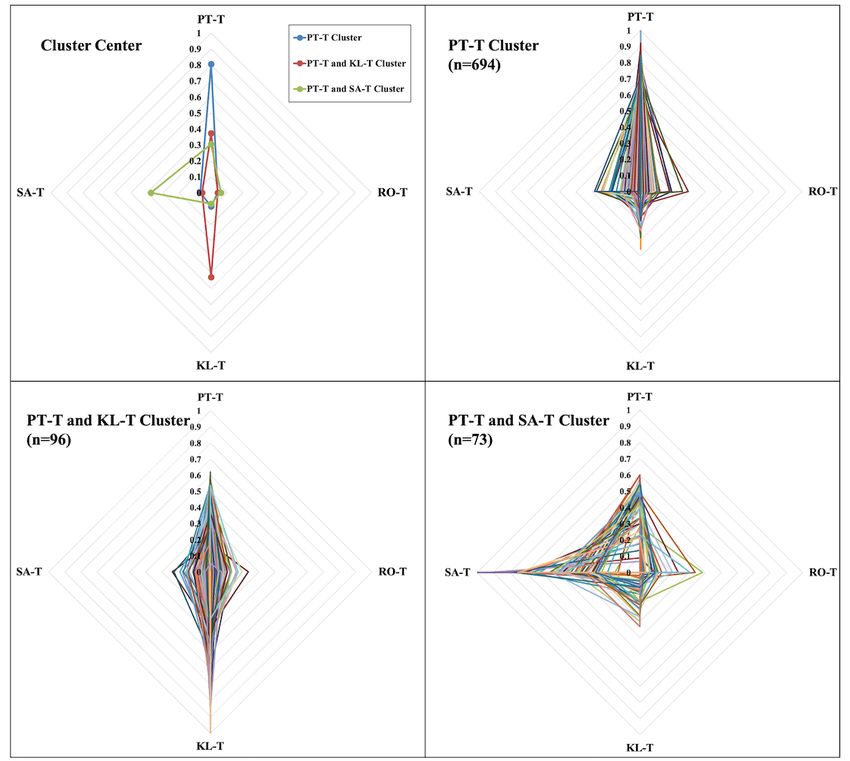
JMIR MHEALTH AND UHEALTH                                                                                                                    Wu et al

     patterns: PT-T cluster, PT-T and KL-T cluster, and PT-T and SA-T cluster. There were statistically significant associations
     between the behavior preference pattern and gender, education level, and BP.
     Conclusions: This study identified the dynamic, longitudinal, and multidimensional characteristics of patient behavior. Patients
     preferred to focus on BP, medications, and weight conditions and paid attention to BP and medications using reminders. The diet
     management and questionnaires were complicated and difficult to implement and record. Competitive methods such as ranking
     were more likely to attract patients to pay attention to their own self-management states. Female patients with lower education
     level and poorly controlled BP were more likely to be highly involved in hypertension health education.

     (JMIR Mhealth Uhealth 2022;10(2):e33189) doi: 10.2196/33189

     KEYWORDS
     hypertension; mobile health; patient behavior; engagement; data analysis

                                                                            self-management behavior of real-world patients in their daily
     Introduction                                                           lives can help to reveal patient behavior in natural settings.
     Background                                                             Compared to attracting patients from clinical trials who are
                                                                            more likely to overcome the burden associated with research
     Hypertension is a serious medical condition that affects               work [29], this provides deeper insight into real patient
     health-related quality of life and increases the risks to the heart,   self-management behaviors.
     brain, kidney, etc [1]. Controlling hypertension requires patients
     to achieve management goals by insistently adhering to                 Hypertension management requires long-term efforts, and
     long-term self-management plans, including regularly checking          patient behavior in hypertension management is dynamic and
     blood pressure (BP), taking medication, being physically active        continuous [30,31]. Understanding the longitudinal
     on a regular basis, eating more fruit and vegetables, and reducing     characteristics of patients engaged in self-management is
     alcohol consumption, etc. These plans should be established            important for long-term successful management. Moreover,
     based on hypertension management guidelines and guidance               there are many different dimensions of behavior with patients
     from health care providers [2].                                        who engage in mHealth services [12,30,32,33], such as
                                                                            measuring, viewing, and recording, which are associated with
     The development of mobile technology has promoted the                  individual inherent preferences and habits of patients [34-36].
     implementation of out-of-hospital mobile health (mHealth)              Patient engagement behavior has been measured as amount,
     services [3-6]. Extensive evidence supports the effect of mHealth      duration, breadth, and depth of using mHealth services [12].
     services in disease control [4,5,7-11], including promoting            Rahman et al [37] measured patient engagement by 3 key use
     patient engagement in health care services and helping patients        features: duration and frequency of using the mHealth app plus
     develop positive behavior in their daily self-management               the number of use records. Sanatkar et al [33] measured 5 use
     [12-16]. In comparison with transitional hypertension                  features of patient engagement: number of user log-ins, number
     management methods, mHealth services can effectively improve           of daily trackers used, numbers of learning activities started and
     patient engagement in hypertension self-management [17,18].            completed, and number of reminders received. However, the
     Cechetti et al [19] designed an mHealth app with a gamification        multidimensional and dynamic behavioral processes that change
     method for hypertension management, which can effectively              over time cannot be captured simply by analyzing count data
     promote patient engagement in their self-management. However,          captured at 1 time point in the cross-sectional data analysis.
     while recent studies have demonstrated the effectiveness of            Longitudinal change in patient multibehavior can be identified
     some mHealth services, others have performed poorly [12-15].           through analyzing the time series data. More comprehensive
     There have been mixed results for using mHealth services to            understanding of the multiple self-management behavior and
     support patient self-management of hypertension in the                 individual behavior preferences of patients engaging in mHealth
     community [20,21]. Thus, hypertension mHealth services pose            self-management over a long period requires further research.
     new design challenges in management strategies, partly because         Data mining techniques have been successfully adopted in the
     the mechanism by which patients engage in their                        analysis of longitudinal events, such as human behavior
     self-management is not clear.                                          navigation [26,38-40], information search behavior [41],
     Patient engagement is a broad concept that combines patient            phase-type distribution in the health care industry [42], and
     activation with interventions of health care services designed         lifetime health care costs [43]. These would allow us to infer
     to increase activation and promote positive patient behavior           the characteristics of patient behavior throughout the entire
     [22]. Positive self-management behavior of patients engaging           period of self-management.
     in mHealth services is essential for bringing an improvement           Objective
     in health outcomes [12,17,18,23-26]. Goyal et al [27] found a
     significant relationship between an increased number of daily          The aim of this study was to explore the trails of patient
     blood glucose readings and improved glycated hemoglobin.               multibehavior engagement in the pathway-based mHealth
     Toto-Ramos et al [28] found that hypertensive patients with            hypertension self-management and identify the characteristics
     sustained engagement in mHealth services experienced                   of patients with different behavior preferences. This included
     significant reduction in BP. Thus, understanding                       3 objectives. The first objective was to discover the trails of
                                                                            patient multibehavior engagement. The second objective was
     https://mhealth.jmir.org/2022/2/e33189                                                       JMIR Mhealth Uhealth 2022 | vol. 10 | iss. 2 | e33189 | p. 2
                                                                                                                  (page number not for citation purposes)
XSL• FO
RenderX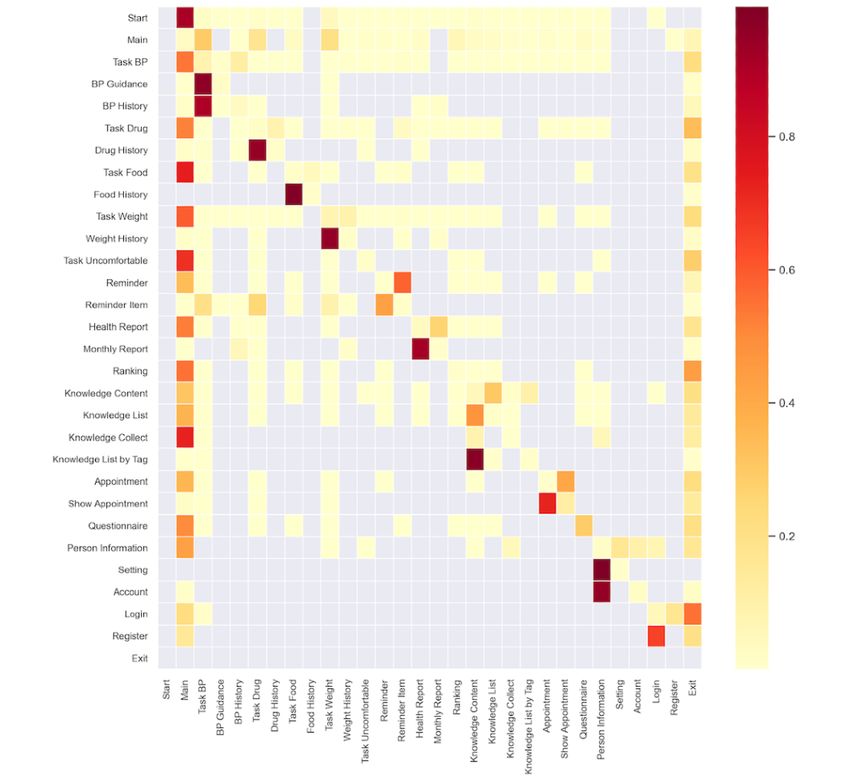
JMIR MHEALTH AND UHEALTH                                                                                                                    Wu et al

     to explore patient behavior preference patterns. The third            compliance with the Chinese guideline for hypertension
     objective was to identify the association between behavior            management [45] and was available for patients in the General
     preference patterns and the demographic and physiological             Hospital of Ningxia Medical University. The care pathway
     characteristics. Identifying the multidimension and longitudinal      involves 2 roles in hypertension management: health care
     characteristics of patient behavior within the mHealth                providers and patients. The care pathway defines 3 goals for
     hypertension management offers new opportunities for                  patients—improve        self-management       ability,   enhance
     personalizing management goals and plans to reduce                    self-management motivation, and receive self-management
     nonadherence and enhance possible effectiveness.                      support (see Figure 1)—and comprises 9 modules and 28
                                                                           behavioral states (see Multimedia Appendix 1 for the detailed
     Methods                                                               behavioral states). The 9 modules generate intervention plans
                                                                           and patient self-management plans. The term of state comes
     Description of the mHealth Hypertension Management                    from the Markov decision process, a mathematical model of
     App                                                                   sequential decision. The behavioral state is a description of the
     We used data from the Blood Pressure Assistant, a                     patient’s behavior in a hypertension self-management
     pathway-based hypertension self-management app in the Digital         environment or scene and is expressed by pages in the mHealth
     Care Study for Hypertension Management [44]. The app was              app. In this paper, we chose to use state to represent the patient
     designed in accordance with a customized care pathway in              behavior.

     Figure 1. Components of pathway-based mHealth hypertension self-management. BP: blood pressure.

     In this care pathway, patient actions on different pages of the       medication, physical activity, and diet. These patient behaviors
     app reflect specific patient behaviors. The behavioral states are     are represented on the appointment, main, task BP, task drug,
     represented by different pages in the app. Through the app, each      and other pages of this mHealth app. Health care providers can
     patient registers and enters basic demographic information, after     track current BP readings of patients through a web-based
     which the patient is assigned to a health care provider who           platform to adjust management plans and use mobile phones
     enrolls patients they manage into the mHealth hypertension            for patient follow-ups to assist in BP control.
     management program at an online community [45]. The health
     care provider is responsible for formulating a tailored
                                                                           Data Collection
     management plan, reviewing patients’ uploaded data, and               Ethics
     conducting follow-up. Patients can use the app to seek help
                                                                           Ethical approval was granted by the ethics committee for
     from health care providers, check their management plans, and
                                                                           conducting human research at the General Hospital of Ningxia
     record self-management data including BP monitoring,
                                                                           Medical University (NXMU-GH-2017-273). All patients in this
     https://mhealth.jmir.org/2022/2/e33189                                                       JMIR Mhealth Uhealth 2022 | vol. 10 | iss. 2 | e33189 | p. 3
                                                                                                                  (page number not for citation purposes)
XSL• FO
RenderX
JMIR MHEALTH AND UHEALTH                                                                                                                         Wu et al

     study signed the informed consent forms for their anonymized              time spent and sequence were calculated from the time pages
     data to be used in routine evaluations to monitor and improve             were entered and exited.
     health care services.
                                                                               The data of patient use behavior were analyzed through
     Sample                                                                    first-order Markov chain analysis, a method to model stochastic
     Since this app was launched in December 2015, 1159 patients               processes, which is suitable for analyzing user interaction with
     have used it to self-manage their BP. We selected patients based          mHealth apps [46,47]. In the mHealth field, interaction between
     on the following inclusion criteria: aged 18 to 80 years,                 users and apps is determined through a process of connecting
     diagnosed with hypertension, performed self-management                    multiple continuous actions together. In the case of this study,
     between December 28, 2016, and July 2, 2020 (the main                     we assumed that a next state depends only on the current state
     functions of the app were consistent during this period, ensuring         and not on the history of previous states. Thus, we used the
     patient behavior was not affected by the changes in app                   first-order Markov chain called a memoryless model, containing
     functions).                                                               the state space S , action, session, and transition matrix P. The
                                                                               discrete state space S was defined by the n different behavioral
     Data Extraction                                                           states (represented by different pages in the app): S={s1,...,sn}.
     All data were stored and extracted from the server of the Blood           A start state s0 and an exit state sn+1 were created when the
     Pressure Assistant, which contains the self-management plans,             patient started and left the app. The action was defined by the
     demographic information, uploaded self-management data from               transition from one behavioral state to another (si→sj). The
     patients, and follow-up records of health care providers. We              session was discriminated by the time interval between 2
     extracted 3 types of data from the database: demographics,                consecutive states greater than 600 seconds (si–sj>600 s). The
     physiological records, and patient use records. Demographics              transition matrix P contained each element on row i and column
     included patient identification, data of birth, gender (male or           j (pi,j) and indicated the transition probability that a patient
     female), and education level (below high school, high school,
                                                                               moves from state si to state sj. The transition probability pi,j was
     university and above). Physiological records included patient
     identification, systolic blood pressure (SBP), diastolic blood            defined as
     pressure (DBP), heart rate (HR), and uploaded date (year, month,
     day, minute, and second). Patient use records included patient
     identification, page name, time page is entered and exited, and           where Ni,j was the number of transitions si→sj. The quantity
     stay time. These data help determine longitudinal and
                                                                               and time spent of the behavioral state are represented by the
     multidimensional behavioral characteristics of hypertensive
                                                                               width and length of the rectangle (see Figure 2).
     patients and characteristics of patients with different behavior
     preferences.                                                              The transition matrix P was displayed by a heat map, which
                                                                               allowed us to understand the characteristics of patient
     Data Analysis
                                                                               multibehavior transition. Analysis was carried out using Python
     Identifying Patient Multibehavior Engagement Trails                       (version 3.8, Python Software Foundation). The 1% relative
                                                                               quantity of states and the 0.15 transition probability were used
     Patient multibehavior engagement trails were indicated by the
                                                                               as cutoff values to improve readability. We then combined
     type, quantity, time spent, sequence, and transition probability
                                                                               quantity, time, transition probability, and the pathway to plot
     value (TP value) of patient behavioral states (see Figure 2). The
                                                                               the main trails of patient multibehavior engagement.

     Figure 2. Example of patient multibehavior engagement trail represented by first-order Markov chain. BP: blood pressure.

                                                                               behavior preference features of each patient for different
     Cluster Analysis of Patients With Different Behavior                      behavior trails was 1. A K-means algorithm was then used to
     Preferences                                                               cluster patients through these normalized patient behavior
     Cluster analysis was conducted to group patients according to             preference features. Euclidean distance was used to calculate
     patient behavior preference features: the number of behavioral            the similarity of features between patients. Finally, we used a
     states that a patient performed in each trail. First, we normalized       silhouette score to determine the optimal number of clusters.
     the behavior preference features of each patient. The sum of

     https://mhealth.jmir.org/2022/2/e33189                                                            JMIR Mhealth Uhealth 2022 | vol. 10 | iss. 2 | e33189 | p. 4
                                                                                                                       (page number not for citation purposes)
XSL• FO
RenderX
JMIR MHEALTH AND UHEALTH                                                                                                                 Wu et al

     Higher silhouette scores indicate tighter clusters, where each
     cluster is completely separate from the others.
                                                                         Results
     Characterizing the Clusters                                         Patient Multibehavior Engagement Trails
     An optimal clustering result was reached based on the silhouette    Quantity and Time Characteristics of Each Behavioral
     score of different numbers of clusters. For each cluster, we        State
     analyzed the demographic features (age, gender, and education
                                                                         We restricted analysis to the remaining 863 patients, with
     level), and physiological features (mean BP [SBP and DBP]
                                                                         295,855 records from the app. Tables 1 and 2 depict the quantity
     and mean HR). Statistical analysis was conducted in SPSS
                                                                         and time spent in each behavioral state. It was clear that the
     (version 24, IBM Corp). A chi-square test was performed to
                                                                         main state (125,487 [42.42%]; 1,745,286 s [13.91 s]) was visited
     evaluate the statistical significance of associations between the
                                                                         most in quantity and total time spent; it was the default starting
     clusters and discrete variables (gender and education level). A
                                                                         page for a session. The relative number of 14 states exceeded
     z-test was used to conduct pairwise comparisons of the
                                                                         1%, and the mean time spent of 12 states exceeded 20 seconds.
     differences among the proportion of discrete variables between
                                                                         In 5 self-management tasks, the state of task BP (48,935
     the clusters. Analyses of variance (ANOVAs) were used to
                                                                         [16.54%]; 1,253,924 s [25.62 s]) was visited more, and the total
     evaluate the statistical significance of associations between the
                                                                         time spent was also longer. The mean time spent on task food
     clusters and continuous variable (age, BP, and HR). Bonferroni
                                                                         (149,164 s [35.87 s]) state was more than other self-management
     multiple comparisons were further conducted to examine the
                                                                         tasks. The states of ranking (7856 [2.66%]) and knowledge
     differences between the clusters. The cutting value (P≤.05) was
                                                                         content (7330 [2.48%]) had relatively high quantities of visits.
     used to determine whether the difference was statistically
                                                                         The states of knowledge content (615,430 s [83.96 s]) and show
     significant.
                                                                         appointment (261,371 s [162.75 s]) had relatively long mean
                                                                         time spent. In 9 modules, the mean time spent in management
                                                                         plans (contained 5 self-management task parts: 230.21 s) was
                                                                         longer than health education (contained 4 knowledge parts:
                                                                         124.06 s) and appointment (contained 2 appointment parts:
                                                                         168.72 s).

     https://mhealth.jmir.org/2022/2/e33189                                                    JMIR Mhealth Uhealth 2022 | vol. 10 | iss. 2 | e33189 | p. 5
                                                                                                               (page number not for citation purposes)
XSL• FO
RenderX
JMIR MHEALTH AND UHEALTH Wu et al
Table 1. Quantity of each behavioral state.
Behavioral statea Quantity, n (%)
Main 125,487 (42.42)
Task blood pressure 48,935 (16.54)
Task weight 33,560 (11.34)
Task drug 26,509 (8.96)
Ranking 7856 (2.66)
Knowledge content 7330 (2.48)
Blood pressure history 6070 (2.05)
Knowledge list 4871 (1.65)
Task food 4159 (1.41)
Questionnaire 4128 (1.40)
Health report 4055 (1.37)
Reminder item 3287 (1.11)
Appointment 3209 (1.08)
Weight history 3150 (1.06)
Reminder 2434 (0.82)
Drug history 2286 (0.77)
Show appointment 1606 (0.54)
Task uncomfortable 1345 (0.45)
Person information 1267 (0.43)
Monthly report 1144 (0.39)
Knowledge collect 1065 (0.36)
Knowledge list by tag 742 (0.25)
Blood pressure guidance 721 (0.24)
Setting 207 (0.07)
Food history 174 (0.06)
Account 125 (0.04)
Log-in 113 (0.04)
Register 20 (0.01)
a
Descending by quantity (relative) of behavioral states.
https://mhealth.jmir.org/2022/2/e33189 JMIR Mhealth Uhealth 2022 | vol. 10 | iss. 2 | e33189 | p. 6
(page number not for citation purposes)
XSL• FO
RenderXJMIR MHEALTH AND UHEALTH Wu et al
Table 2. Time spent in each behavioral state.
Behavioral statea Time spent (total), s Time spent (mean), s
Show appointment 261,371 162.75
Knowledge content 615,430 83.96
Task food 149,164 35.87
Monthly report 39,590 34.61
Register 639 31.95
Blood pressure history 185,240 30.52
Blood pressure guidance 19,772 27.42
Task blood pressure 1,253,924 25.62
Log-in 2575 22.78
Task drug 600,104 22.64
Task weight 746,268 22.24
Knowledge list 100,995 20.73
Ranking 154,468 19.66
Food history 3391 19.49
Task uncomfortable 23,474 17.45
Account 2110 16.88
Weight history 52,218 16.58
Reminder item 52,493 15.97
Main 1,745,286 13.91
Knowledge list by tag 10,129 13.65
Health report 53,730 13.25
Drug history 28,309 12.38
Questionnaire 31,579 7.65
Setting 1451 7.00
Person information 7779 6.14
Appointment 19,157 5.97
Knowledge collect 6094 5.72
Reminder 8426 3.46
a
Descending by time spent (mean) of behavioral states.
1. In most cases, the session started from the main state (0.91),
Patient’s Behavior Transition Matrix and the transition probability from other behavioral states to
The heatmap was used to demonstrate the transition matrix of the main state was also high, which was intended by design.
the Markov chain (see Figure 3). The various shades of color When patients were in the main state, the states of task BP
represent the probability of transition from one behavioral state (0.29), task drug (0.18), and task weight (0.20) were the most
to another, and the transparent color indicate that these 2 visited among all behavioral states. Patients had a high
behavioral states cannot be transitioned. Horizontal and vertical probability if exiting the app from the following states: task
coordinates indicate behavioral states. The rows summed up to drug (0.34), ranking (0.44), and log-in (0.55).
https://mhealth.jmir.org/2022/2/e33189 JMIR Mhealth Uhealth 2022 | vol. 10 | iss. 2 | e33189 | p. 7
(page number not for citation purposes)
XSL• FO
RenderXJMIR MHEALTH AND UHEALTH Wu et al
Figure 3. Transition matrix of patient multibehavior engagement. Probability of transitioning from behavioral state A[row] to B[column]. BP: blood
pressure.
We found that the 1-way transition (si→sj) from one behavioral in a behavioral state was very common, and a high self-transition
state to another had a high probability in the following states: can be seen in the questionnaire state (0.29).
from BP guidance (0.96) or BP history (0.90) to task BP, from
Four Types of Patient Multibehavior Engagement Trails
drug history to task drug (0.95), from food history to task food
(0.99), from weight history to task weight (0.95), from reminder There were 28 different types of behavior states and 283 possible
item to task BP (0.20) or task drug (0.25), from knowledge list behavior transitions in the original design in mHealth
by tag to knowledge content (0.98), and from account to person hypertension management app. The trails of patient
information (0.95). The cycle-transitions (si⇔sj) between the multibehavior engagement in the pathway-based hypertension
2 behavioral states had a high probability in the following states: self-management were visualized by the main transitions
between reminder and reminder item (0.58, 0.43), between between the different behavioral states (see Figure 4). The main
health report and monthly report (0.26, 0.92), between trails of patient behavior included the type, quantity, time spent,
knowledge content and knowledge list (0.31, 0.47), between sequence, and TP value. The size of a node indicated the
appointment and show appointment (0.41, 0.73), between person quantity and time spent of behavioral states; a node or line of
information and setting (0.16, 1.00), and between log-in and the same or similar color indicated a trail. Visual inspection of
the transition between different behavioral states in mHealth
register (0.17, 0.65). We found that the self-transition (si si) hypertension self-management revealed several types of trails
with different behavioral characteristics.
https://mhealth.jmir.org/2022/2/e33189 JMIR Mhealth Uhealth 2022 | vol. 10 | iss. 2 | e33189 | p. 8
(page number not for citation purposes)
XSL• FO
RenderXJMIR MHEALTH AND UHEALTH Wu et al
Figure 4. Four types of patient multibehavior engagement trails. BP: blood pressure.
A first trail type can be labeled as a perform task trail (PT-T; task drug, and task weight, and patients spent more time
green and dark green lines). After launching the app, patients checking BP history (30.52 s) than weight history (16.58 s).
go from the main state to the self-management task states to
Second, a result-oriented trail (RO-T) can be distinguished
conduct management plans. Among the 5 self-management
(yellow and orange lines). Patients had a high probability in the
tasks, patients were more likely to transfer to the states of task
states of health report and ranking in this trail, and the purpose
BP, task drug, and task weight (TP value 0.29, 0.18, 0.20) than
was to check their self-management outcomes and their ranking
the states of task food, and task uncomfortable (TP value 0.03,
among all hypertensive patients. The mean time spent in the
0.01). Moreover, some patients entered the states of task BP
ranking (19.66 s) state was longer than the health report (13.25
and task drug (TP value 0.20, 0.25) from the reminder item
s) state, which showed that when competing with other patients,
state, which happened when patients needed the app to remind
patients were more willing to spend time to understand the
themselves to measure BP and take medication on time. Patients
results of self-management. Eventually, this trail usually
also checked their BP history and weight history when they
returned to the main state.
conduct the self-management tasks. After finishing the
self-management tasks, there was a high probability that patients The third trail type was labeled a knowledge learning trail
would return to the main state. The mean time spent was longer (KL-T; blue lines). In this trail, patients preferred to read the
in the task food (35.87 s) state than that in the states of task BP, health education content. In addition, there was a high
probability of cycle transition (TP value 0.47, 0.31) between
https://mhealth.jmir.org/2022/2/e33189 JMIR Mhealth Uhealth 2022 | vol. 10 | iss. 2 | e33189 | p. 9
(page number not for citation purposes)
XSL• FO
RenderXJMIR MHEALTH AND UHEALTH Wu et al
the knowledge list state and the knowledge content state. This of patients (see Figure 5). Hence, we accepted the 3-cluster
situation occurred when patients switched to a new piece of output of K-means for further analysis. The patient behavior
knowledge content after reading a previous piece of knowledge preferences in 4 trails were significantly different (PT-T PJMIR MHEALTH AND UHEALTH Wu et al
Figure 6. Three patterns of patient behavior preference.
cluster and the PT-T and SA-T cluster, there were much more
Demographics and Physiological Characteristics of the male patients than female patients, but the proportion of male
3 Behavior Preference Patterns and female patients was equal in the PT-T and KL-T cluster.
There were statistically significant associations between the Compared with the PT-T cluster, the PT-T and KL-T cluster
behavior preference pattern and gender, education level, and was characterized by significantly fewer male patients, lower
BP, but there were not associations between the behavior education level, and higher BP. The PT-T and SA-T cluster had
preference pattern and age and HR (see Table 3). In the PT-T significantly lower BP than the PT-T and KL-T cluster.
https://mhealth.jmir.org/2022/2/e33189 JMIR Mhealth Uhealth 2022 | vol. 10 | iss. 2 | e33189 | p. 11
(page number not for citation purposes)
XSL• FO
RenderXJMIR MHEALTH AND UHEALTH Wu et al
Table 3. Descriptive characteristics of the behavior preference pattern. Multiple comparisons of the 4 clusters (at the .05 level).
Characteristic PT-Ta cluster (n=694) PT-T and KL-Tb cluster (n=96) PT-T and SA-Tc cluster (n=73) P value
Age, mean (SD) 53.20 (9.93) 52.23 (9.99) 50.86 (10.34) .13
Gender, n (%) —d — — .003
Male 469 (67.58) 48 (50.00)e 49 (67.12) —
Female 225 (32.42) 48 (50.00)e 24 (32.88) —
Education, n (%) — — — .05
< High school 249 (35.88) 43 (44.79) 34 (46.57) —
High school 105 (15.13) 21 (21.88) 11 (15.07) —
≥ University 321 (46.25) 30 (31.25)e 25 (34.25) —
Don’t know 19 (2.74) 2 (2.08) 3 (4.11) —
SBPf, mean (SD) 132.71 (15.43) 137.44 (17.96)e 130.77 (13.18)g .02
DBPh, mean (SD) 86.46 (11.37) 90.60 (12.88)e 84.87 (11.29)g .004
HRi, mean (SD) 72.41 (14.23) 73.20 (17.13) 73.23 (15.83) .84
a
PT-T: perform task trail.
b
KL-T: knowledge learning trail.
c
SA-T: support acquisition trail.
d
Not applicable.
e
Given cluster is significantly different from the PT-T cluster.
f
SBP: systolic blood pressure.
g
Given cluster is significantly different from the PT-T and KL-T cluster.
h
DBP: diastolic blood pressure.
i
HR: heart rate.
accurate chronic disease management strategies to achieve
Discussion disease control.
Principal Findings Patient Multibehavior Engagement Trails
In this study, we used a stochastic model to describe longitudinal The dynamic behavioral characteristics were identified by the
trails of patient multibehavior engagement with mHealth transition probability between 2 continuous behaviors [39,47],
hypertension self-management and further analyzed the which suggested the transitions in daily self-management
characteristics of patient groups with different behavior behavior of hypertension patients. When patients started
preferences. In a sample of 863 patients in mHealth hypertension self-management, they were more likely to focus on BP,
self-management, we identified 3 types of behavior transition medications, and weight conditions. Patients prefer to pay
(1-way transition, cycle transition, and self-transition), 4 trails attention to BP and medications from reminders, which can
of patient multibehavior engagement (PT-T, RO-T, KL-T, and help them manage their conditions. Tao et al [48] found that
SA-T), and 3 behavior preference patterns (PT-T cluster, PT-T the use of electronic reminders was associated with a significant
and KL-T cluster, and PT-T and SA-T cluster). improvement in patient adherence to medication. The cycle
These insights revealed what actual patients do in daily transition was often performed between 2 different behaviors
hypertension self-management and how patients use the mHealth of same module, such as reminder, health report, knowledge,
app to conduct self-management [32,43,47]. This may facilitate and appointment, etc. This kind of behavior transition
tailored and precise behavioral intervention strategies with information gives us opportunities to provide specific behavioral
specific content, methods, and time points for patient groups interventions at an accurate time between 2 consecutive
with specific behavior preferences. For example, for patient behaviors. In addition, self-transition was frequent when patients
groups who measure and record BP but not take medication completed questionnaires. Patients were willing to engage in
regularly, we will send a pop-up medication reminder in the the questionnaire, but the time spent was very short. It may be
app after completing the BP recording, rather than randomly because the questionnaire was too long and patients had no
and frequently reminding patients to measure BP and take patience when completing it or the content of the questionnaire
medication. After they follow this reminder, we will provide was difficult to understand. The clarity and conciseness of
rewards and push the knowledge about the advantages of regular questionnaires should be improved so patients can better engage
medication to improve their adherence. This may promote more in this management part [49].
https://mhealth.jmir.org/2022/2/e33189 JMIR Mhealth Uhealth 2022 | vol. 10 | iss. 2 | e33189 | p. 12
(page number not for citation purposes)
XSL• FO
RenderXJMIR MHEALTH AND UHEALTH Wu et al
The trails of patient multibehavior engagement revealed the patients, possibly because males were more inclined to use
high probability sequences of patient behavior in mHealth mHealth services for hypertension management [56,57].
hypertension self-management. This was a longitudinal and However, we found that female patients were more willing to
multidimensional process analysis rather than a cross-sectional read knowledge content than male patients. Our finding is
analysis at a point in time. The 4 trails contained the main scenes consistent with the finding by Al-Ansari et al [58] that oral
of hypertension management in daily life [50] and described health knowledge and health behavior were statistically
the behavioral conditions of patient self-management. In PT-T, significantly higher among the females than the males.
for 5 types of self-management tasks of improving ability, Moreover, in this study, we found that patients with lower
patients preferred to start self-management by focusing on BP, education level and poorly controlled BP were more likely to
medications and weight and spent more time on food. This may be highly involved in hypertension health education. Some
be attributed to diet management being more complicated and scientific literature demonstrated a strong association between
difficult to implement and record [51], which proposes a new lower levels of education and poor health outcomes [59,60].
challenge of how to improve the convenience of hypertension Health literacy was a potential pathway between levels of
diet management. Samiul et al [52] proposed a network for education and health outcomes [61]. Lee et al [62] and Nutbeam
automatic dietary monitoring that can gather food intake et al [63] also found that in comparison with people with higher
information through image, audio, and accelerometer sensors. education, people with lower education level were found to
By analyzing these data, the system can measure the type, demonstrate lower health literacy and poor health. Naturally,
volume, and nutrition of food, as well as the eating behavior of these patients had a strong enthusiasm for learning about
a person. Compared with weight history, patients spent more hypertension to promote their health literacy and improve health
time reading BP history. In KL-T, patients usually chose outcomes. The findings of patient preferences and characteristics
different health knowledge contents from knowledge list to are useful for designing personalized functions in the mHealth
learn how to improve self-management ability. This knowledge app to improve patient ability and engagement in hypertension
may help patients broadly learn health concepts and behaviors self-management [34-36].
[53]. In RO-T, patients read health reports to understand all
aspects of their self-management, and knew the ranking of their
Strengths and Limitations
self-management outcomes in an online hypertension The strengths of this study were that, first of all, the study used
community from the leaderboard. An interesting finding was time series data to unveil the longitudinal and multidimensional
that patients spent more energy on the rankings compared to behavioral characteristics of patient engaging in mHealth
reading health reports. This may suggest that gamification and hypertension management, which contained the type, quantity,
competitive methods can effectively increase patient motivation time spent, sequence, and transition probability of patient
and attention to their own self-management states [19,21,54]. behavior. The findings help provide more precise timing of
In SA-T, patients sought help from health care providers through mHealth behavior interventions for hypertension management.
appointments, and completed the questionnaire to provide their To the best of our knowledge, there has been no literature that
own information and support research on hypertension uses longitudinal data to describe the trails of patient
management. These findings helped us dive into the daily multibehavior engagement in hypertension self-management.
self-management of actual patients and deeply understand Secondly, we analyzed the demographic and physiological
patient behavioral characteristics through a longitudinal and characteristics of patients with different behavior preferences.
multidimensional method. This provides an opportunity to apply Our findings revealed the association between behavior
some health behavior intervention techniques to promote patients preferences, demographics, and physiology. This provided
to change their behavior and improve the effectiveness of information for the further design of the appropriate types of
chronic management results [50,55]. interventions for specific patient groups. Finally, we used data
from real-world patients, which revealed patient behavior in the
Patient Behavior Preference Patterns natural setting rather than attracting patients more likely to bear
The behavior preference patterns of patients represent the the burden of research-related evaluation. This helped to
individual inherent habits of patients in daily hypertension generate practical insights for the behavior of actual patients in
self-management [34-36], which is an essential factor to the daily hypertension management.
design of management strategies. In this study, we found 3
This study has limitations. One limitation was that the data were
behavior preference patterns of patients engaging in the
only from an mHealth hypertension app, which implies that the
pathway-based mHealth hypertension management, reflecting
sample is presumably not representative of all patient groups.
which patient groups preferred which type of behavior to achieve
We also don’t know the behavior of patients who engage in
better self-management results. All of 3 patterns preferred PT-T,
self-management but not use the app, such as older patients who
1 preferred KL-T, and the other preferred SA-T, but there was
cannot use the mobile devices. Moreover, the behavioral
no obvious preference for RO-T.
characteristics of patients may be influenced and limited by the
Patients with these 3 behavior preference patterns had design of the app. Second, we used a first-order Markov chain,
significantly different demographic (gender and education level) which simplified our analysis. Some other machine learning
and physiological (BP) characteristics. Compared with other methods such as higher-order Markov chains should be applied
patterns, patients with the preference for PT-T and KL-T had a to better represent global patient behavior. Finally, the behavior
lower education level, higher BP, and were much less likely to preferences can be caused by various demographic and social
be male. First of all, there were more male patients than female psychological characteristics of patients (such as marital status,
https://mhealth.jmir.org/2022/2/e33189 JMIR Mhealth Uhealth 2022 | vol. 10 | iss. 2 | e33189 | p. 13
(page number not for citation purposes)
XSL• FO
RenderXJMIR MHEALTH AND UHEALTH Wu et al
profession, anxiety, depression, etc), so these factors need to self-management. These findings gained insights of actual
be considered in the future studies. behavior of patients in daily hypertension self-management.
The behavioral characteristics of patients were dynamic,
Conclusion longitudinal, and multidimension, which may create
The mHealth services are an effective way to conduct opportunities to design tailored, personalized interventions
out-of-hospital health care services for chronic disease. In this within a specific behavior time to change patient’s behavior,
study, we have found 3 types of behavior transitions, 4 trails of develop positive behavioral habits, and continuously improve
patient multibehavior engagement, and 3 patient behavior and maintain the effect of hypertension management.
preference patterns in the pathway-based mHealth hypertension
Acknowledgments
This study was supported by grants 2020YFC2003403 and 2020YFC2006405 from the National Key Research and Development
Programs of China, grant 2020BFG02002 from the Key Research and Development Program of Ningxia, China, and grant
2021AB11007 from the Key Research and Development Program of Guangxi, China. This work was also supported by the
Alibaba Cloud. The authors would like to thank the General Hospital of Ningxia Medical University.
Authors' Contributions
DW, XH, and ND were the primary authors of this paper, oversaw all aspects of the study design and execution, and led the
writing of the manuscript. YS and JH led all data analysis with oversight from DW and XH. HD and ND provided critical revision
of the manuscript for important intellectual content.
Conflicts of Interest
None declared.
Multimedia Appendix 1
Detailed information about behavioral states.
[DOCX File , 15 KB-Multimedia Appendix 1]
References
1. Global Status Report On Noncommunicable Diseases 2014. Geneva: World Health Organization; 2014. URL: https://apps.
who.int/iris/bitstream/handle/10665/148114/9789241564854_eng.
pdf;jsessionid=3C0C9A267DA218A8836BDCA9EB2C5C0D?sequence=1 [accessed 2022-01-14]
2. Reynolds R, Dennis S, Hasan I, Slewa J, Chen W, Tian D, et al. A systematic review of chronic disease management
interventions in primary care. BMC Fam Pract 2018 Jan 09;19(1):11 [FREE Full text] [doi: 10.1186/s12875-017-0692-3]
[Medline: 29316889]
3. Free C, Phillips G, Galli L, Watson L, Felix L, Edwards P, et al. The effectiveness of mobile-health technology-based health
behaviour change or disease management interventions for health care consumers: a systematic review. PLoS Med
2013;10(1):e1001362 [FREE Full text] [doi: 10.1371/journal.pmed.1001362] [Medline: 23349621]
4. Osborn CY, Mayberry LS, Wallston KA, Johnson KB, Elasy TA. Understanding patient portal use: implications for
medication management. J Med Internet Res 2013;15(7):e133 [FREE Full text] [doi: 10.2196/jmir.2589] [Medline: 23823974]
5. Wong A, Bhyat R, Srivastava S, Boissé Lomax L, Appireddy R. Patient care during the COVID-19 pandemic: use of virtual
care. J Med Internet Res 2021 Jan 21;23(1):e20621 [FREE Full text] [doi: 10.2196/20621] [Medline: 33326410]
6. Cheung K, Ling W, Karr C, Weingardt K, Schueller S, Mohr D. Evaluation of a recommender app for apps for the treatment
of depression and anxiety: an analysis of longitudinal user engagement. J Am Med Inform Assoc 2018 Aug 01;25(8):955-962
[FREE Full text] [doi: 10.1093/jamia/ocy023] [Medline: 29659857]
7. Chen X, Koskela M, Hyväkkä J. mHealth new horizons for health through mobile technologies. Proc Int Work Content-Based
Multimed Index 2010;3:130-135. [doi: 10.1109/CBMI.2010.5529886]
8. Byambasuren O, Sanders S, Beller E, Glasziou P. Prescribable mHealth apps identified from an overview of systematic
reviews. NPJ Digit Med 2018;1:12 [FREE Full text] [doi: 10.1038/s41746-018-0021-9] [Medline: 31304297]
9. Li R, Liang N, Bu F, Hesketh T. The effectiveness of self-management of hypertension in adults using mobile health:
systematic review and meta-analysis. JMIR Mhealth Uhealth 2020 Mar 27;8(3):e17776 [FREE Full text] [doi: 10.2196/17776]
[Medline: 32217503]
10. Dendere R, Slade C, Burton-Jones A, Sullivan C, Staib A, Janda M. Patient portals facilitating engagement with inpatient
electronic medical records: a systematic review. J Med Internet Res 2019 Apr 11;21(4):e12779 [FREE Full text] [doi:
10.2196/12779] [Medline: 30973347]
https://mhealth.jmir.org/2022/2/e33189 JMIR Mhealth Uhealth 2022 | vol. 10 | iss. 2 | e33189 | p. 14
(page number not for citation purposes)
XSL• FO
RenderXJMIR MHEALTH AND UHEALTH Wu et al
11. Kruse CS, Argueta DA, Lopez L, Nair A. Patient and provider attitudes toward the use of patient portals for the management
of chronic disease: a systematic review. J Med Internet Res 2015;17(2):e40 [FREE Full text] [doi: 10.2196/jmir.3703]
[Medline: 25707035]
12. Pham Q, Graham G, Carrion C, Morita PP, Seto E, Stinson JN, et al. A library of analytic indicators to evaluate effective
engagement with consumer mhealth apps for chronic conditions: scoping review. JMIR Mhealth Uhealth 2019 Jan
18;7(1):e11941 [FREE Full text] [doi: 10.2196/11941] [Medline: 30664463]
13. Hamine S, Gerth-Guyette E, Faulx D, Green BB, Ginsburg AS. Impact of mHealth chronic disease management on treatment
adherence and patient outcomes: a systematic review. J Med Internet Res 2015;17(2):e52 [FREE Full text] [doi:
10.2196/jmir.3951] [Medline: 25803266]
14. Sakakibara BM, Ross E, Arthur G, Brown-Ganzert L, Petrin S, Sedlak T, et al. Using mobile-health to connect women
with cardiovascular disease and improve self-management. Telemed J E Health 2017 Dec;23(3):233-239. [doi:
10.1089/tmj.2016.0133] [Medline: 27623231]
15. Rothman AA, Wagner EH. Chronic illness management: what is the role of primary care? Ann Intern Med 2003 Feb
04;138(3):256-261. [doi: 10.7326/0003-4819-138-3-200302040-00034] [Medline: 12558376]
16. Edney S, Ryan JC, Olds T, Monroe C, Fraysse F, Vandelanotte C, et al. User engagement and attrition in an app-based
physical activity intervention: secondary analysis of a randomized controlled trial. J Med Internet Res 2019 Nov
27;21(11):e14645 [FREE Full text] [doi: 10.2196/14645] [Medline: 31774402]
17. Rehman H, Kamal AK, Morris PB, Sayani S, Merchant AT, Virani SS. Mobile health (mHealth) technology for the
management of hypertension and hyperlipidemia: slow start but loads of potential. Curr Atheroscler Rep 2017 Mar;19(3):12.
[doi: 10.1007/s11883-017-0649-y] [Medline: 28210974]
18. Cheikh-Moussa K, Mira JJ, Orozco-Beltran D. Improving engagement among patients with chronic cardiometabolic
conditions using mHealth: critical review of reviews. JMIR Mhealth Uhealth 2020 Apr 08;8(4):e15446 [FREE Full text]
[doi: 10.2196/15446] [Medline: 32267239]
19. Cechetti NP, Bellei EA, Biduski D, Rodriguez JPM, Roman MK, De Marchi ACB. Developing and implementing a
gamification method to improve user engagement: a case study with an m-Health application for hypertension monitoring.
Telematics Informatics 2019 Aug;41:126-138. [doi: 10.1016/j.tele.2019.04.007]
20. Goyal S, Morita PP, Picton P, Seto E, Zbib A, Cafazzo JA. Uptake of a consumer-focused mHealth application for the
assessment and prevention of heart disease: theJMIR MHEALTH AND UHEALTH Wu et al
31. Wu D, An J, Yu P, Lin H, Ma L, Duan H, et al. Patterns for patient engagement with the hypertension management and
effects of electronic health care provider follow-up on these patterns: cluster analysis. J Med Internet Res 2021 Sep
28;23(9):e25630 [FREE Full text] [doi: 10.2196/25630] [Medline: 34581680]
32. Rahman QA, Janmohamed T, Pirbaglou M, Ritvo P, Heffernan JM, Clarke H, et al. Patterns of user engagement with the
mobile app, Manage My Pain: results of a data mining investigation. JMIR Mhealth Uhealth 2017 Jul 12;5(7):e96 [FREE
Full text] [doi: 10.2196/mhealth.7871] [Medline: 28701291]
33. Sanatkar S, Baldwin PA, Huckvale K, Clarke J, Christensen H, Harvey S, et al. Using cluster analysis to explore engagement
and e-attainment as emergent behavior in electronic mental health. J Med Internet Res 2019 Nov 28;21(11):e14728 [FREE
Full text] [doi: 10.2196/14728] [Medline: 31778115]
34. Perski O, Blandford A, Garnett C, Crane D, West R, Michie S. A self-report measure of engagement with digital behavior
change interventions (DBCIs): development and psychometric evaluation of the "DBCI Engagement Scale". Transl Behav
Med 2020 Feb 03;10(1):267-277. [doi: 10.1093/tbm/ibz039] [Medline: 30927357]
35. Abd-Alrazaq AA, Bewick BM, Farragher T, Gardner P. Factors that affect the use of electronic personal health records
among patients: a systematic review. Int J Med Inform 2019 Jun;126:164-175. [doi: 10.1016/j.ijmedinf.2019.03.014]
[Medline: 31029258]
36. Kruse CS, Argueta DA, Lopez L, Nair A. Patient and provider attitudes toward the use of patient portals for the management
of chronic disease: a systematic review. J Med Internet Res 2015;17(2):e40 [FREE Full text] [doi: 10.2196/jmir.3703]
[Medline: 25707035]
37. Rahman QA, Janmohamed T, Pirbaglou M, Ritvo P, Heffernan JM, Clarke H, et al. Patterns of user engagement with the
mobile app, Manage My Pain: results of a data mining investigation. JMIR Mhealth Uhealth 2017 Jul 12;5(7):e96 [FREE
Full text] [doi: 10.2196/mhealth.7871] [Medline: 28701291]
38. Stragier J, Vandewiele G, Coppens P, Ongenae F, Van den Broeck W, De Turck F, et al. Data mining in the development
of mobile health apps: assessing in-app navigation through Markov chain analysis. J Med Internet Res 2019 Jun
07;21(6):e11934 [FREE Full text] [doi: 10.2196/11934] [Medline: 31237838]
39. Borges J, Levene M. Evaluating variable-length Markov chain models for analysis of user web navigation sessions. IEEE
Trans Knowl Data Eng 2007 Apr;19(4):441-452. [doi: 10.1109/TKDE.2007.1012]
40. Singer P, Helic D, Taraghi B, Strohmaier M. Detecting memory and structure in human navigation patterns using Markov
chain models of varying order. PLoS One 2014 Jul 11;9(7):e102070 [FREE Full text] [doi: 10.1371/journal.pone.0102070]
[Medline: 25013937]
41. Puspitasari I, Moriyama K, Fukui K, Numao M. Effects of individual health topic familiarity on activity patterns during
health information searches. JMIR Med Inform 2015 Mar 17;3(1):e16 [FREE Full text] [doi: 10.2196/medinform.3803]
[Medline: 25783222]
42. Fackrell M. Modelling healthcare systems with phase-type distributions. Health Care Manag Sci 2009 Mar 7;12(1):11-26.
[doi: 10.1007/s10729-008-9070-y] [Medline: 19938439]
43. Carreras M, Ibern P, Coderch J, Sánchez I, Inoriza JM. Estimating lifetime healthcare costs with morbidity data. BMC
Health Serv Res 2013 Oct 25;13:440 [FREE Full text] [doi: 10.1186/1472-6963-13-440] [Medline: 24156613]
44. Duan H, Wang Z, Ji Y, Ma L, Liu F, Chi M, et al. Using goal-directed design to create a mobile health app to improve
patient compliance with hypertension self-management: development and deployment. JMIR Mhealth Uhealth 2020 Feb
25;8(2):e14466 [FREE Full text] [doi: 10.2196/14466] [Medline: 32130161]
45. Wang Z, Li C, Huang W, Chen Y, Li Y, Huang L, et al. Effectiveness of a pathway-driven eHealth-based integrated care
model (PEICM) for community-based hypertension management in China: study protocol for a randomized controlled trial.
Trials 2021 Jan 22;22(1):81 [FREE Full text] [doi: 10.1186/s13063-021-05020-2] [Medline: 33482896]
46. Heyse J, Vandewiele G, Ongenae F, De Backere F, De Turck F. How do users interact with mobile health apps? A Markov
chain analysis. Proc 14th EAI Int Conf Pervasive Comput Technol Healthc 2020:255-258. [doi: 10.1145/3421937.3421967]
47. Stragier J, Vandewiele G, Coppens P, Ongenae F, Van den Broeck W, De Turck F, et al. Data mining in the development
of mobile health apps: assessing in-app navigation through Markov chain analysis. J Med Internet Res 2019 Jun
07;21(6):e11934 [FREE Full text] [doi: 10.2196/11934] [Medline: 31237838]
48. Tao D, Xie L, Wang T, Wang T. A meta-analysis of the use of electronic reminders for patient adherence to medication in
chronic disease care. J Telemed Telecare 2015 Jan;21(1):3-13. [doi: 10.1177/1357633X14541041] [Medline: 25147178]
49. Dell-Kuster S, Sanjuan E, Todorov A, Weber H, Heberer M, Rosenthal R. Designing questionnaires: healthcare survey to
compare two different response scales. BMC Med Res Methodol 2014 Aug 03;14:96 [FREE Full text] [doi:
10.1186/1471-2288-14-96] [Medline: 25086869]
50. Alessa T, Hawley MS, Hock ES, de Witte L. Smartphone apps to support self-management of hypertension: review and
content analysis. JMIR Mhealth Uhealth 2019 May 28;7(5):e13645 [FREE Full text] [doi: 10.2196/13645] [Medline:
31140434]
51. Hever J, Cronise R. Plant-based nutrition for healthcare professionals: implementing diet as a primary modality in the
prevention and treatment of chronic disease. J Geriatr Cardiol 2017 May;14(5):355-368 [FREE Full text] [doi:
10.11909/j.issn.1671-5411.2017.05.012] [Medline: 28630615]
https://mhealth.jmir.org/2022/2/e33189 JMIR Mhealth Uhealth 2022 | vol. 10 | iss. 2 | e33189 | p. 16
(page number not for citation purposes)
XSL• FO
RenderXJMIR MHEALTH AND UHEALTH Wu et al
52. Mamud S, Bandyopadhyay S, Chatterjee P, Bhandari S, Chakraborty N. A Body Sensor Network for Automatic Dietary
Monitoring System. Singapore: Springer; 2021.
53. Wang Z, Huang H, Cui L, Chen J, An J, Duan H, et al. Using natural language processing techniques to provide personalized
educational materials for chronic disease patients in China: development and assessment of a knowledge-based health
recommender system. JMIR Med Inform 2020 Apr 23;8(4):e17642 [FREE Full text] [doi: 10.2196/17642] [Medline:
32324148]
54. Miller AS, Cafazzo JA, Seto E. A game plan: gamification design principles in mHealth applications for chronic disease
management. Health Informatics J 2014 Jul 1;22(2):184-193. [doi: 10.1177/1460458214537511] [Medline: 24986104]
55. Michie S, Wood CE, Johnston M, Abraham C, Francis JJ, Hardeman W. Behaviour change techniques: the development
and evaluation of a taxonomic method for reporting and describing behaviour change interventions (a suite of five studies
involving consensus methods, randomised controlled trials and analysis of qualitative data). Health Technol Assess 2015
Nov;19(99):1-188 [FREE Full text] [doi: 10.3310/hta19990] [Medline: 26616119]
56. Zhang X, Guo X, Lai K, Guo F, Li C. Understanding gender differences in m-health adoption: a modified theory of reasoned
action model. Telemed J E Health 2014 Jan;20(1):39-46. [doi: 10.1089/tmj.2013.0092] [Medline: 24161004]
57. Khatun F, Heywood AE, Hanifi SMA, Rahman MS, Ray PK, Liaw S, et al. Gender differentials in readiness and use of
mHealth services in a rural area of Bangladesh. BMC Health Serv Res 2017 Aug 18;17(1):573 [FREE Full text] [doi:
10.1186/s12913-017-2523-6] [Medline: 28821243]
58. Al-Ansari JM, Honkala S. Gender differences in oral health knowledge and behavior of the health science college students
in Kuwait. J Allied Health 2007;36(1):41-46. [Medline: 17425190]
59. Mackenbach JP, Stirbu I, Roskam AR, Schaap MM, Menvielle G, Leinsalu M, et al. Socioeconomic inequalities in health
in 22 European countries. N Engl J Med 2008 Jun 5;358(23):2468-2481. [doi: 10.1056/NEJMsa0707519] [Medline:
18525043]
60. Kunst AE, Bos V, Lahelma E, Bartley M, Lissau I, Regidor E, et al. Trends in socioeconomic inequalities in self-assessed
health in 10 European countries. Int J Epidemiol 2005 Apr;34(2):295-305. [doi: 10.1093/ije/dyh342] [Medline: 15563586]
61. van Der Heide I, Wang J, Droomers M, Spreeuwenberg P, Rademakers J, Uiters E. The relationship between health,
education, and health literacy: results from the Dutch Adult Literacy and Life Skills Survey. J Health Commun 2013;18
Suppl 1:172-184 [FREE Full text] [doi: 10.1080/10810730.2013.825668] [Medline: 24093354]
62. Lee SD, Tsai T, Tsai Y, Kuo KN. Health literacy, health status, and healthcare utilization of Taiwanese adults: results from
a national survey. BMC Public Health 2010 Oct 16;10:614 [FREE Full text] [doi: 10.1186/1471-2458-10-614] [Medline:
20950479]
63. Nutbeam D. The evolving concept of health literacy. Soc Sci Med 2008 Dec;67(12):2072-2078. [doi:
10.1016/j.socscimed.2008.09.050] [Medline: 18952344]
Abbreviations
ANOVA: analysis of variance
BP: blood pressure
DBP: diastolic blood pressure
HR: heart rate
KL-T: knowledge learning trail
mHealth: mobile health
PT-T: perform task trail
RO-T: result-oriented trail
SA-T: support acquisition trail
SBP: systolic blood pressure
TP value: transition probability value
Edited by L Buis; submitted 27.08.21; peer-reviewed by L Min, S Nan; comments to author 11.10.21; revised version received 21.10.21;
accepted 20.12.21; published 03.02.22
Please cite as:
Wu D, Huyan X, She Y, Hu J, Duan H, Deng N
Exploring and Characterizing Patient Multibehavior Engagement Trails and Patient Behavior Preference Patterns in Pathway-Based
mHealth Hypertension Self-Management: Analysis of Use Data
JMIR Mhealth Uhealth 2022;10(2):e33189
URL: https://mhealth.jmir.org/2022/2/e33189
doi: 10.2196/33189
PMID:
https://mhealth.jmir.org/2022/2/e33189 JMIR Mhealth Uhealth 2022 | vol. 10 | iss. 2 | e33189 | p. 17
(page number not for citation purposes)
XSL• FO
RenderXYou can also read


