Fair 'Sucre' in Mechelen - Mechelen Sucre
←
→
Page content transcription
If your browser does not render page correctly, please read the page content below
Mechelen • Sucre

Fair ‘Sucre’ in Mechelen
Sucre is the legal capital of Bolivia. Although it is the capital according
            to the constitution, the government is established in La Paz. The only
            government body of importance in Sucre is the Supreme Court. The city
            has 280,000 inhabitants and is situated at 2800 m above sea level. The
            collaboration between Mechelen and Sucre dates back to 1996. During
            the first five years the foundations were laid for a further collaboration
            in the fields of tourism and culture. From the very start, Mechelen
            and Sucre took part in the pilot program concerning the covenants
            on municipal international cooperation organized by the Flemish
            government. After three years of the pilot phase of this program, in
            2004, the Flemish Parliament decided to lay it down in a decree. Both
            cities decided to continue as partners in 2005 within the framework of
            that decree.

0 km      2000       4000        6000

GEOATLAS® - © 2001 Graphi-Ogre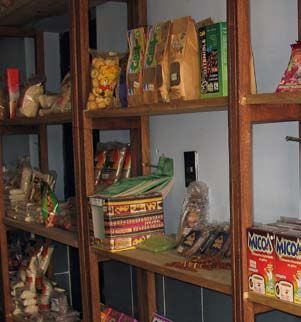
“    I am opposed to fair trade because I have
                                                        the choice between fair trade products and
                                                        regular products”, says the North-South
                                                        officer of Mechelen, Mieke van Cauwen-
                                                        berghe. “Do not misunderstand me”, she
                                                        continues. “In fact, I do not want to make
                                                        that choice. By definition, all products
                                                        should comply with fair trade criteria.”
                                                        Fair trade constitutes the core business
                                                        of the cooperation between Mechelen in
                                                        Belgium and.

Fair ‘Sucre’ in Mechelen
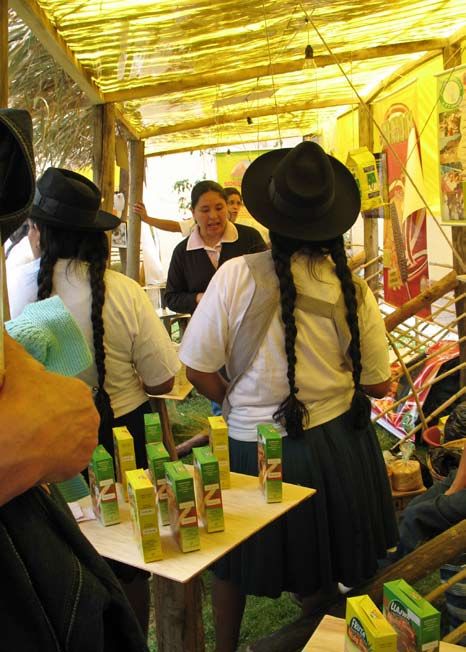
In 2005 the national campaign entitled ‘Ik              agricultural municipality. However, it does
ben verkocht’ 1 (I am sold) was launched.               play an important role in the processing
For Mechelen it provides a perfect instru-              of products and how they are introduced
ment to link sustainable development and                on the market. So the city translated the
fair trade to its city link with Sucre. This            concept of fair trade basically into striving
way, the objectives in the North can be                 for decent working conditions including
tested against the reality in the South.                attention for ecologically sound production
                                                        processes. Thanks to the close cooperation
But was this really an issue in the South? It           with Mechelen, Sucre has presented itself,
must be admitted that in Sucre fair trade               on a provincial level, as a fair trade city by
was not really on the agenda of the city                now. It is the only local authority that par-
administration until its partner Mechelen               ticipates in the Latin-American network-
put it forward. Although fair trade was no              ing on fair trade (Comercio Justo). Thanks
longer unknown at a national level (with                to the city link Sucre has developed some
Evo Morales as president), it was not an                expertise in this respect that can be shared
obvious topic for the city of Sucre. It is              with other administrations, so in this way
important to note that Sucre is not an                  it presents an added value.

1 A national campaign organized by Oxfam-We-
                                                        Have Mechelen and Sucre been able to
  reldwinkels (Oxfam World Shops), Vredeseilanden       match their agendas in this respect? Both
  (Islands of Peace) and Max Havelaar. The campaign
  promotes a fair income for all farmers in the South
                                                        partners deal with the concept from a dif-
  and the North.                                        ferent perspective. In Sucre a lot of micro

                                                                                      mechelen   • sucre 3
companies are operating in the processing
“ During our visit in Sucre (2004)
we had a meeting with an asso-
ciation defending the interests
of basic raw materials, a crucial link in the
production chain.
The fair trade story in Sucre covers more
of the small-scale milk produc-
than just fair trade and the labeling of
ers within the region. They products. The essence of the story is
do not get access to the local reinforcing local economy in consultation
market with their products,” with the various actors. Focusing on fair
explains North-South of- trade starts with focusing on hygiene,
ficer Mieke Van Cauwenberghe. quality, social legislation and employ-
“Thanks to our city link we have ment. Based on advice and support from
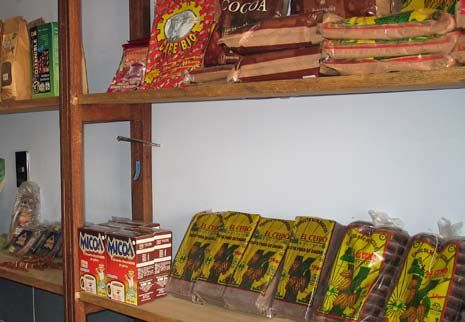
been able to discuss that prob- Mechelen, in the meantime a shop for fair
lem with the local authority of trade products has been opened in Sucre.
Sucre, that listened to us. We These products are produced locally, in a
biological way, by employees for whom so-
decided not to handle this as
cial security contributions have been paid
a cooperation policy area, but
correctly. Through the city link Mechelen
rather as a specific theme which
is closely monitoring the developments.
we would work on together in- The products are always provided with
tensively for three years, after the necessary information (on product
which we would continue at our origin, quality, processing procedure,…).
own pace. Whereas fair trade Furthermore Mechelen facilitated contacts
in Mechelen especially refers to with the local college, so that a marketing
sensitizing the population and student was able to support the city and
reaching more and more actors, the producers in developing a market-
in Sucre the focus is on making ing strategy and media campaign. It is
the local market accessible for important to notice that this lead to an
enhanced cooperation between the various
the small-scale producers.”
producers as such. For example, a producer
of ‘quinoa’ works together with a producer
processing the traditional ‘amarant’ so
as to offer a package of cereals together.
In the meantime, more ideas have been
4 mechelen • sucregenerated with respect to ‘combination products, such as cacao… was there a bet-
products’. Through the shop fair trade has ter place than Belgium to learn something
been visible and a second point of sale is in from master chocolate confectioners?
preparation! Sucre wanted to organize a chocolate
festival and consulted the population
At the same time a new social move- of Mechelen in this respect. However, in
ment has been generated from the basis, Mechelen there is no chocolate festival of
‘Atreveté’ (Take your chance), sending out that order. That is why Mechelen, during
a common message on fair trade in order a next visit, brought them into contact
to expand social support and exercise with chocolate confectioners from Bruges,
some political pressure. Together with the what resulted in a close cooperation that
city council of Sucre, the local producers has been sustained until the present day.
and NGOs laid down a step-by-step plan In its turn, Mechelen encouraged its sister
with a number of social criteria2 towards city to focus on local and sustainable raw
fair trade. The key in this whole process is materials, also with respect to chocolate
to obtain a label that is necessary to dif- and other derived products.
ferentiate one’s own products within the
interior market in Bolivia.
Inspiring one another
The biggest challenge for both cities
remains involving new partners, but also
in this respect the partners inspire one
another. The Catholic highschool of Meche-
len worked together with chefs from local
restaurants to produce tapas in Sucre on
the basis of fair trade products. Mechelen
will now organize something similar, so 2 Four criteria of the label:
• A product must be made of at least 70% of regio-
that they will not only provide a market nal materials.
outlet of fair trade products with the local • These are natural products without any chemical
processes being involved.
hotels and catering facilities, but also sen- • Apart from that, all the people contributing to
sitize another target group for fair trade the production, must receive a Bolivian minimum
wage.
and regional products. In Sucre people are • Finally, a product quality guarantee must be
extremely proud about the use of regional ensured by means of external control.
mechelen • sucre 5Lessons learned
Reciprocal visits are important
At the first working visit that Sucre paid in 2005 to Mechelen, it was like starting from
zero. The partner was convinced that Mechelen could constitute a market outlet for
milk from Sucre, what was absolutely not the initial idea of Mechelen. So, both city ad-
ministrations were talking at cross-purposes. Through dialogue and visits to Mechelen,
where the delegations (in 2006) could get acquainted with various actors (bio farmers,
producers, Max Havelaar) and their respective way of working, the Bolivians got a bet-
ter idea of what Mechelen meant. A reverse working visit, from Mechelen to its partner
city, was on the other hand necessary in order to know the Bolivian reality and to look
what could be feasible for Sucre. It is important but to keep looking with a critical eye.
Taking into consideration the needs of the population
To literally copy a campaign has no sense. It must be translated into the local reality
and adjusted to the needs of the population. Mechelen linked the ‘Ik ben verkocht’
(I am sold) campaign to people in Flanders and in the south, so that the story, the cam-
paign, the vision could be easily identified by the population. Furthermore, the story
was extended to themes such as local economy, dignified work,…
Sensitizing on a political level
Fair trade and dignified work must be an item on the political agenda. If politicians give
the example, they hereby give a signal to the population to opt for fair trade as well,
and so the support for fair trade is created and extended. Furthermore, a social move-
ment has been created in Sucre, expressing a common message, in order to put some
political pressure on the local and, if necessary, the national authorities.
Letting go the partner city in due time
A partner municipality must (be willing to) be aware of the importance of a theme, in
this case fair trade, all by itself, in order to continue on its own. Mechelen has assisted
Sucre in the first steps towards a policy on fair trade, but Sucre shall decide whether it
will continue and how far it will continue in this respect. If the political support for fair
trade is fading away, the social movement can again ask Mechelen for support, so as to
put this issue back on the political agenda.
6 mechelen • sucrewww.mechelenbolivia.be
mechelen • sucre 7editors Betty De Wachter, Bert Janssens, Ilse Renard, Tine Van Laer, Team Internationaal photography City of Mechelen Association of Flemish Cities and Municipalities Paviljoenstraat 9 1030 Brussels - Belgium T +32 2 211 55 00 F +32 2 211 56 00 internationaal@vvsg.be www.vvsg.be With the support of the Flemish Government
You can also read


