Family Planning Billing Guide - January 1, 2018 - Washington Apple Health (Medicaid) - Washington State Health Care Authority
←
→
Page content transcription
If your browser does not render page correctly, please read the page content below

Washington Apple Health (Medicaid)

Family Planning
Billing Guide

January 1, 2018

Every effort has been made to ensure this guide’s accuracy. If an actual or apparent conflict between this
document and an agency rule arises, the agency rules apply.
Family Planning

About this guide∗
This publication takes effect January 1, 2018 and supersedes earlier guides to this program.

HCA is committed to providing equal access to our services. If you need an accommodation or
require documents in another format, please call 1-800-562-3022. People who have hearing or
speech disabilities, please call 711 for relay services.

          Washington Apple Health means the public health insurance programs for eligible
          Washington residents. Washington Apple Health is the name used in Washington
          State for Medicaid, the children's health insurance program (CHIP), and state-
          only funded health care programs. Washington Apple Health is administered by
          the Washington State Health Care Authority.

What has changed?
         Subject                                 Change                          Reason for Change
    Client Eligibility Added a new section titled, “Client Eligibility –         Housekeeping and
    - General          General” This section reminds providers to always         notification of new
                       check the client’s eligibility before providing           region moving to
                       services and informs providers how to check a             FIMC
                       client’s eligibility.
                        Effective January 1, 2018, the agency is
                        implementing another fully integrated managed care
                        (FIMC) region known as the North Central region,
                        which includes Douglas, Chelan, and Grant
                        Counties.
    Contraception       Effective for claims with dates of service on or after   New HCPCS Code
    Coverage Table      January 1, 2018, HCPCS procedure code Q9984
                        Levonorgestrel 19.5 mg was replaced with
                        procedure code J7296.

∗   This publication is a billing instruction.
                                                    2
Family Planning
How can I get agency provider documents?
To access provider alerts, go to the agency’s provider alerts web page.
To access provider documents, go to the agency’s provider billing guides and fee schedules web
page.
Where can I download agency forms?
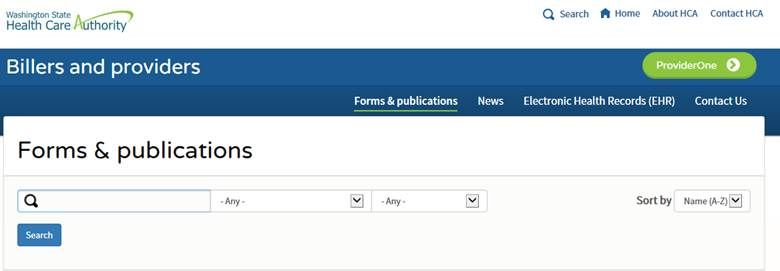
To download an agency provider form, go to HCA’s Billers and providers web page, select
Forms & publications. Type the HCA form number into the Search box as shown below
(Example: 13-835).
Copyright disclosure
Current Procedural Terminology (CPT) copyright 2017 American
Medical Association (AMA). All rights reserved. CPT is a
registered trademark of the AMA.
Fee schedules, relative value units, conversion factors and/or
related components are not assigned by the AMA, are not part of
CPT, and the AMA is not recommending their use. The AMA does
not directly or indirectly practice medicine or dispense medical
services. The AMA assumes no liability for data contained or not
contained herein.
3Family Planning
Table of Contents
About this guide ........................................................................................................................ 2
What has changed? ................................................................................................................... 2
How can I get agency provider documents? ............................................................................. 3
Where can I download agency forms? ...................................................................................... 3
Resources Available ...................................................................................................................... 7
Definitions ...................................................................................................................................... 8
Client Eligibility - General ......................................................................................................... 10
How do I verify a client’s eligibility? ..................................................................................... 10
Managed care enrollment .................................................................................................. 11
Behavioral Health Organization (BHO) ........................................................................... 12
Fully Integrated Managed Care (FIMC) ........................................................................... 12
FIMC Regions ................................................................................................................... 13
Apple Health Foster Care (AHFC) ................................................................................... 13
Reproductive Health Services .................................................................................................... 14
What are reproductive health services? .................................................................................. 14
What are the requirements for providers? ............................................................................... 14
Who is eligible for reproductive health services? ................................................................... 15
Managed care clients......................................................................................................... 15
Limited coverage .............................................................................................................. 16
Where can Washington Apple Health clients receive reproductive health services? ............. 16
What reproductive health services are covered? ..................................................................... 17
Covered services for women ............................................................................................. 17
Covered services for men.................................................................................................. 19
What reproductive health services are not covered?............................................................... 19
Coverage for Contraception .................................................................................................... 20
Hormonal contraceptive prescribing ................................................................................. 20
Hormonal contraceptives filled at the pharmacy .............................................................. 21
Hormonal contraceptives dispensed from a family planning clinic.................................. 21
Immediate postpartum Long-Acting Reversible Contraceptive (LARC) insertion ................ 22
Contraception Coverage Table ............................................................................................... 23
Prescription contraceptives ............................................................................................... 23
Nonprescription over-the-counter (OTC) contraceptives ................................................. 25
Nondrug contraceptive supplies (natural family planning) .............................................. 25
Family Planning Only Program ................................................................................................ 26
What is the purpose of the Family Planning Only program?.................................................. 26
What are the requirements for Family Planning Only providers? .......................................... 26
Who is eligible for Family Planning Only services? .............................................................. 27
What services are covered in the Family Planning Only program?........................................ 27
Complications from contraceptive methods ..................................................................... 29
Alert! This Table of Contents is automated. Click on a page number to go directly to the page.
4Family Planning
What drugs and supplies are covered in the Family Planning Only program? ....................... 30
What services are not covered in the Family Planning Only program? ................................. 31
TAKE CHARGE Program ........................................................................................................ 32
What is the purpose of the TAKE CHARGE program? ......................................................... 32
What are the requirements for TAKE CHARGE providers?.................................................. 33
Qualifications of approved TAKE CHARGE providers .................................................. 33
Client services ................................................................................................................... 34
Confidentiality, consent, and release of information ........................................................ 34
Client records .................................................................................................................... 35
Other documentation requirements ................................................................................... 36
Evaluation and research responsibilities ........................................................................... 36
When may other providers give services to TAKE CHARGE clients?.................................. 37
Who is eligible for TAKE CHARGE services? ...................................................................... 37
Specific eligibility criteria for the TAKE CHARGE program ......................................... 39
How can clients apply for the TAKE CHARGE program? .................................................... 43
Reviewing the client’s TAKE CHARGE application ....................................................... 44
Processing the client’s TAKE CHARGE application ....................................................... 45
Notifying the client about TAKE CHARGE eligibility status.......................................... 45
What services are covered under the TAKE CHARGE program? ......................................... 46
Covered services for men in the TAKE CHARGE program ............................................ 48
Complications from contraceptive methods ..................................................................... 49
What drugs and supplies are covered under the TAKE CHARGE program? ........................ 50
What services are not covered under the TAKE CHARGE program? ................................... 51
Family Planning Only and TAKE CHARGE Coverage Table .............................................. 52
Office visits for family planning surveillance and follow-up visits ....................................... 53
Comprehensive prevention family planning visit ................................................................... 53
See the reproductive health Section for the Contraceptive Coverage Table. ......................... 54
Radiology services .................................................................................................................. 54
Radiology services are covered only when medically necessary due to a family
planning complication. See the complications section for how to bill when a
family planning complication occurs for a Family Planning Only or TAKE
CHARGE client. See the Physician-Related Professional Services Fee Schedule
for payment rates for procedures related to a complication. ............................................. 54
Laboratory services ................................................................................................................. 54
STD/STI treatment .................................................................................................................. 56
Billing ........................................................................................................................................... 57
How do I bill claims electronically? ................................................................................. 57
How do providers bill for Family Planning Only and TAKE CHARGE services?................ 57
How do providers bill for managed care services? ................................................................. 58
How do providers who participate in the 340B drug pricing program bill for drugs
and dispensing fees? ................................................................................................... 59
Billing for third-party liability and “good cause” ............................................................. 59
Alert! This Table of Contents is automated. Click on a page number to go directly to the page.
5Family Planning
Appendix A .................................................................................................................................. 61
Clinic visit scenarios for Family Planning Only and TAKE CHARGE ................................. 61
Appendix B .................................................................................................................................. 63
Frequently asked questions ..................................................................................................... 63
Alert! This Table of Contents is automated. Click on a page number to go directly to the page.
6Family Planning
Resources Available
Topic Resource
Contact the Billers and providers "contact us" web page.
Information about reproductive
Contact the Family Planning Program:
health services, the Family
Planning Only program, and
PO Box 45502
TAKE CHARGE, including
Olympia, WA 98504-5502
becoming a TAKE CHARGE
Phone: 360-725-1652
provider
Fax: 360-725-1152
familyplanning@hca.wa.gov
TAKE CHARGE Application Medicaid agency forms.
form, HCA 13-781 (for clients)
See the agency’s Sterilization Supplement Billing Guide
Information about sterilization
and WAC 182-531-1550.
See the agency’s Pharmacy Information and the
Pharmacy information
Prescription Drug Program Billing Guide.
Additional agency resources See the agency’s Billers and Providers web page.
See the agency’s Approved Diagnosis Codes by Program web
ICD 10 Diagnosis Codes page for Family Planning.
7Family Planning
Definitions
This section defines terms and abbreviations, including acronyms, used in this billing guide.
Refer to Chapter 182-500 WAC for a complete list of definitions for Washington Apple Health.
340B dispensing fee – The agency’s women at the end of their pregnancy. This
established fee paid to a registered and benefit follows the 60-day postpregnancy
Medicaid-participating 340B drug program coverage for women who received medical
provider under the public health service assistance benefits during the pregnancy.
(PHS) act for expenses involved in
acquiring, storing and dispensing Family planning clinic – A clinic that is
prescription drugs or drug-containing designated by the agency to provide family
devices (see WAC 182-530-7900). A planning services to eligible people as
dispensing fee is not paid for nondrug items, described in this guide. Other types of
devices or supplies (see WAC 182-530- providers may offer family planning services
7050). within their scope of practice.
Applicant – A person applying for TAKE Family planning services – Medically safe
CHARGE family planning services. and effective medical care, educational
services, and/or contraceptives that enable
Comprehensive prevention visit for individuals to plan and space the number of
family planning – A comprehensive, children they have and avoid unintended
preventive, contraceptive visit that includes pregnancies.
evaluation and management of an
individual, based on age appropriate history, Informed consent – When an individual
examination, counseling/anticipatory consents to a procedure after the provider
guidance, risk factor reduction interventions, who obtained a properly completed consent
and labs and diagnostic procedures that are form has done all of the following:
covered under the client’s respective agency
program. These services may only be • Disclosed and discussed the client’s
provided by and paid to TAKE CHARGE diagnosis
providers.
• Offered the client an opportunity to ask
Contraception – Prevention of pregnancy questions about the procedure and
through the use of contraceptive methods. request information in writing
Contraceptive – A device, drug, product, • Given the client a copy of the consent form
method, or surgical intervention used to
prevent pregnancy. • Communicated effectively using any
language interpretation or special
Family Planning Only program – The communication device necessary per 42
program providing an additional 10 months CFR 441.257
of family planning services to eligible
8Family Planning
• Given the client oral information about
all of the following: TAKE CHARGE Provider – A family
planning provider who has a TAKE
The client’s right to not obtain the CHARGE agreement to provide TAKE
procedure, including potential risks, CHARGE family planning services to
benefits, and the consequences of not eligible clients under the terms of the
obtaining the procedure federally approved Medicaid waiver for the
TAKE CHARGE program. (See TAKE
Alternatives to the procedure CHARGE provider requirements in this
including potential risks, benefits, guide and WAC 182-532-730.)
and consequences
U.S. Citizenship and Immigration
The procedure itself, including Services (USCIS) – Refer to USCIS for a
potential risks, benefits, and definition.
consequences
Natural family planning (also known as
fertility awareness method) – Methods to
identify the fertile days of the menstrual
cycle and avoid unintended pregnancies,
such as observing, recording, and
interpreting the natural signs and symptoms
associated with the menstrual cycle.
“Over-the-counter (OTC)” – Drugs that do
not require a prescription before they can be
sold or dispensed (see WAC 182-530-1050).
Public Health Service Act (PHS) – The
federal act governing the 340B program
administered through the Office of
Pharmacy Affairs. Per Washington
Administrative Code (WAC), any drugs or
items purchased through this program must
be billed at the actual acquisition cost (see
WAC 182-530-7900).
Sexually Transmitted Infection (STI) –A
disease or infection acquired as a result of
sexual contact.
TAKE CHARGE – The Medicaid agency’s
demonstration and research program
approved by the federal government under a
Medicaid program waiver to provide family
planning services.
9Family Planning
Client Eligibility - General
Most Apple Health clients are enrolled in an agency-contracted managed care organization
(MCO). This means that Apple Health pays a monthly premium to an MCO for providing
preventative, primary, specialty, and other health services to Apple Health clients. Clients in
managed care must see only providers who are in their MCO’s provider network, unless prior
authorized or to treat urgent or emergent care. See the agency’s Apple Health managed care
page for further details.
It is important to always check a client’s eligibility prior to
providing any services because it affects who will pay for the services.
How do I verify a client’s eligibility?
Check the client’s services card or follow the two-step process below to verify that a client
has Apple Health coverage for the date of service and that the client’s benefit package covers
the applicable service. This helps prevent delivering a service the agency will not pay for.
Is the client enrolled in an agency-contracted managed care organization (MCO), in a
behavioral health organization (BHO), or is the client receiving services through fee-for-
service (FFS) Apple Health?
Verifying eligibility is a two-step process:
Step 1. Verify the patient’s eligibility for Apple Health. For detailed instructions on
verifying a patient’s eligibility for Apple Health, see the Client Eligibility, Benefit
Packages, and Coverage Limits section in the agency’s ProviderOne Billing and
Resource Guide.
If the patient is eligible for Apple Health, proceed to Step 2. If the patient is not
eligible, see the note box below.
Step 2. Verify service coverage under the Apple Health client’s benefit package. To
determine if the requested service is a covered benefit under the Apple Health
client’s benefit package, see the agency’s Program Benefit Packages and Scope of
Services web page.
10Family Planning
Note: Patients who are not Apple Health clients may submit an application for
health care coverage in one of the following ways:
1. By visiting the Washington Healthplanfinder’s website at:
www.wahealthplanfinder.org
2. By calling the Customer Support Center toll-free at: 855-WAFINDER
(855-923-4633) or 855-627-9604 (TTY)
3. By mailing the application to:
Washington Healthplanfinder
PO Box 946
Olympia, WA 98507
In-person application assistance is also available. To get information about in-
person application assistance available in their area, people may visit
www.wahealthplanfinder.org or call the Customer Support Center.
Managed care enrollment
Apple Health (Medicaid) places clients into an agency-contracted MCO the same month they
are determined eligible for managed care as a new or renewing client. This eliminates a person
being placed temporarily in FFS while they are waiting to be enrolled in an MCO or
reconnected with a prior MCO. This enrollment policy also applies to clients in FFS who have
a change in the program they are eligible for.
New clients are those initially applying for benefits or those with changes in their existing
eligibility program that consequently make them eligible for Apple Health managed care.
Renewing clients are those who have been enrolled with an MCO but have had a break in
enrollment and have subsequently renewed their eligibility.
Checking eligibility
• Providers must check eligibility and know when a client is enrolled and with which
MCO. For help with enrolling, clients can refer to the Washington Healthplanfinder’s Get
Help Enrolling page.
• MCOs have retroactive authorization and notification policies in place. The provider must
know the MCO’s requirements and be compliant with the MCO’s policies.
11Family Planning
Behavioral Health Organization (BHO)
The Department of Social and Health Services (DSHS) manages the contracts for behavioral
health services (mental health and substance use disorder) for eight of the Regional Service
Areas (RSAs) in the state. The remaining regions have fully integrated managed care (FIMC).
See the agency’s Mental Health Services Billing Guide for details.
Fully Integrated Managed Care (FIMC)
For clients who live in an FIMC region, all physical health services, mental health services,
and drug and alcohol treatment are covered and coordinated by the client’s agency-contracted
MCO. The BHO will not provide behavioral health services in these counties.
Clients living in an FIMC region will enroll with an MCO of their choice that is available in
that region. If the client does not choose an MCO, the client will be automatically enrolled
into one of the available MCOs, unless the client is American Indian/Alaska Native (AI/AN).
Clients currently enrolled in one of the available MCOs in their region may keep their
enrollment when the behavioral health services are added.
Effective July 1, 2017, American Indian/Alaska Native (AI/AN) clients
living in an FIMC region of Washington may choose to enroll in one of the
agency-contracted MCOs available in that region or they may choose to
receive all these services through Apple Health FFS. If they do not choose an
MCO, they will be automatically enrolled into Apple Health FFS for all their
health care services, including comprehensive behavioral health services. See
the agency’s American Indian/Alaska Native webpage.
For more information about the services available under the FFS program, see
the agency’s Mental Health Services Billing Guide and the Substance Use
Disorder Billing Guide.
For full details on FIMC, see the agency’s Changes to Apple Health managed care webpage.
12Family Planning
FIMC Regions
Clients who reside in either of the following two FIMC regions and who are eligible for
managed care enrollment must choose an available MCO in their region. Specific details,
including information about mental health crisis services, can be found on the agency’s Apple
Health managed care webpage.
North Central Region – Douglas, Chelan and Grant Counties
Effective January 1, 2018, the agency will implement the second FIMC region
known as the North Central Region, which includes Douglas, Chelan, and Grant
Counties.
Southwest Washington Region – Clark and Skamania Counties
Effective April 1, 2016, the agency implemented the first FIMC region known as the
Southwest Washington Region, which includes Clark and Skamania Counties. Clients
eligible for managed care enrollment choose to enroll in one of two available MCOs in
this region.
Apple Health Foster Care (AHFC)
Coordinated Care of Washington (CCW) provides all physical health care (medical) benefits,
lower-intensity outpatient mental health benefits and care coordination for all Washington
State foster care enrollees through a single, statewide managed care plan known as Apple
Health Core Connections (AHCC).
Clients under this program are:
• Under the age of 21 who are in foster care (out of home placement)
• Under the age of 21 who are receiving adoption support
• Age 18-21 years old in extended foster care
• Age 18 to 26 years old who aged out of foster care on or after their 18th birthday (alumni)
These clients are identified in ProviderOne as
“Coordinated Care Healthy Options Foster Care.”
See the agency’s Apple Health managed care page, Apple Health Foster Care for further
details.
13Family Planning
Reproductive Health Services
What are reproductive health services?
(WAC 182-532-050 and WAC 182-501-0065)
The agency defines reproductive health services as those services that:
• Assist clients in avoiding illness, disease, and disability related to reproductive health.
• Provide related, appropriate, and medically necessary care when needed.
• Assist clients in making informed decisions about using medically safe and effective
methods of family planning.
What are the requirements for providers?
(WAC 182-532-110)
To be paid by the agency for reproductive health services provided to eligible clients,
providers, including licensed midwives, must:
• Meet the requirements in Chapter 182-502 WAC and the Physician-
Related/Professional Services Billing Guide.
• Provide only those services that are within the scope of their licenses.
• Comply with the required general agency policies and specific reproductive health
provider policies, procedures, and administrative practices in this guide.
• Educate clients on Food and Drug Administration (FDA)-approved prescription birth
control methods, over-the-counter (OTC) birth control supplies, and related medical
services.
• Provide medical services related to FDA-approved prescription birth control methods
and OTC birth control supplies upon request.
• Supply or prescribe FDA-approved prescription birth control methods and OTC birth
control supplies upon request.
14Family Planning
Note: Providers must follow nationally recognized clinical guidelines. Cervical cancer
screening guidelines are produced by the American Society for Colposcopy and Cervical
Pathology (ASCCP), the American College of Obstetrics and Gynecology (ACOG), the
American Cancer Society (ACS), and the U.S. Preventive Services Task Force (USPSTF).
Breast cancer screening guidelines are produced by the American College of Obstetrics
and Gynecology (ACOG), the American Cancer Society (ACS), and the U.S. Preventive
Services Task Force (USPSTF). Family planning guidelines are produced by the Centers
for Disease Control and Prevention (CDC) and the U.S. Office of Population Affairs.
(http://www.hhs.gov/opa/clinical-guidelines/)
Who is eligible for reproductive health services?
(WACs 182-532-100(1) and 182-501-0060)
The agency covers medically necessary reproductive health services for people enrolled in
Washington Apple Health.
Managed care clients
For clients enrolled in one of the agency-contracted managed care organizations (MCOs),
managed care enrollment will be displayed on the client benefit inquiry screen in
ProviderOne.
Clients enrolled in an agency-contracted MCO must obtain services through their MCO,
unless otherwise noted.
Note: A client’s enrollment can change monthly. Providers who are not
contracted with the MCO must receive approval from both the MCO and the
client’s primary care provider (PCP) prior to serving a managed care client.
Self-referral for managed care clients:
(WAC 182-532-100(2))
Clients enrolled in an agency-contracted managed care organization (MCO) may self-refer to
providers not contracted with their MCO for:
• Family planning services (excluding sterilizations for people 21 years of age or older)
• Abortions
• Sexually transmitted infection (STI) services
These clients may seek services from any of the following:
• Medicaid-approved family planning clinics
15Family Planning
• Medicaid agency-contracted local health departments or STI clinics
• Medicaid agency-contracted providers who provide abortion services
• Medicaid agency-contracted pharmacies
Limited coverage
Family Planning Only and TAKE CHARGE programs:
Family Planning Only and TAKE CHARGE clients are eligible to receive limited
reproductive health services which includes only family planning and specified family
planning-related services. See the program guidelines in this guide.
Alien Emergency Medical:
Under WAC 182-507-0115, the agency covers reproductive health services under Alien
Emergency Medical programs only when the services are directly related to an emergency
medical condition.
Where can Washington Apple Health clients
receive reproductive health services?
Reproductive health services can be provided by any licensed agency contracted provider
whose scope of practice includes reproductive health or the ancillary services associated with
a reproductive health procedure or treatment (e.g. pathology, anesthesia, facility, etc). See
Chapter 182-502 WAC for requirements of agency contracted providers.
16Family Planning
What reproductive health services are covered?
(WAC 182-531-0100 and WAC 182-501-0065)
Covered services for women
(WACs 182-532-120 and 182-532-123)
The agency covers the following reproductive health services for women:
• One comprehensive family planning preventive visit per year (once every 12 months)
based on nationally recognized clinical guidelines that include counseling, education, and
initiation or management of contraceptive methods
This visit may include STI and cancer screening.
This visit may be billed as a preventive visit only when provided by a TAKE
CHARGE provider. Other providers must use the appropriate office visit code. See
the TAKE CHARGE section for information on how to bill a preventive visit.
A woman who is sterilized or otherwise not at risk for pregnancy does not qualify
for a comprehensive family planning prevention visit. She does qualify for all
other services.
• Cervical and breast cancer screening according to schedules established by nationally
recognized clinical guidelines (see the Physician-Related Services/Healthcare
Professional Services Billing Guide)
• Sexually transmitted infection (STI) and disease (STD) screening according to
nationally recognized clinical guidelines based on age
• STI and STD testing and treatment when medically indicated by symptoms or report
of exposure
• HPV vaccination
• Follow-up visits for contraceptive management, STI/STD treatment, diagnostic testing
for cervical and breast cancer
• Diagnosis and treatment of gynecological disorders and urological disorders (see the
Physician-Related Services/Healthcare Professional Services Billing Guide)
• Maternity-related services (see “Maternity Care and Services” in the Physician-
Related Services/Healthcare Professional Services Billing Guide)
17Family Planning
• Abortion (see the Physician-Related Services/Healthcare Professional Services Billing
Guide)
• Sterilization procedures that meet the requirements of WAC 182-531-1550 and the
Sterilization Supplemental Provider Guide
• Contraception:
See Coverage for Contraception
Food and Drug Administration (FDA)-approved prescription and nonprescription
contraception methods (see the Prescription Drug Program Billing Guide for
more information)
Over-the-counter (OTC) family planning drugs, devices, and drug-related
supplies (as described in the agency’s Prescription Drug Program Billing Guide)
Emergency contraception (as described in the agency’s Prescription Drug
Program Billing Guide)
Education and supplies for FDA-approved contraceptives, natural family
planning and abstinence
• Laboratory, imaging, diagnostic, and pharmacy services associated with the services in
the Covered services for women section
18Family Planning
Covered services for men
The agency covers the following reproductive health services for men:
• Office visits when there is a medical concern, including contraceptive and vasectomy
counseling
• OTC contraceptive supplies (as described in the Prescription Drug Program Billing
Guide)
• Education and supplies for FDA-approved contraceptives, natural family planning, and
abstinence
• Sterilization procedures that meet the requirements of WAC 182-531-1550 and the
Sterilization Supplement Billing Guide
• Screening and treatment for STI, including lab tests and procedures
• One prostate cancer screening per year (once every 12 months), when medically
necessary (see the Physician-Related Services/Healthcare Professional Services Billing
Guide)
• Diagnostic mammograms when medically necessary (see the Physician-Related
Services/Healthcare Professional Services Billing Guide)
What reproductive health services are not
covered?
(WAC 182-532-130)
The agency does not cover the reproductive health services listed as noncovered in the agency’s
Physician-Related Services/Healthcare Professional Services Billing Guide and WACs 182-
531-0150, 182-531-0150, and 182-525-130. This includes, but is not limited to, treatment for
infertility, hysterectomy for the purpose of sterilization, and marital counseling. The agency
reviews requests for noncovered services under WAC 182-501-0160.
19Family Planning
Coverage for Contraception
Hormonal contraceptive prescribing
The agency generally requires prescriptions for oral, transdermal, and intra-vaginal hormonal
contraceptives to be dispensed as a one-time prescription for a 12-month supply. When
specifying the dispensing quantity for these contraceptives, prescribers should write for a 12-
month supply (13 cycles) according to the chart below, unless there is an acceptable reason
not to do so.
For prescriptions written with a dispensing quantity less than a 12-month supply, providers
will receive requests from pharmacies to change the dispensing quantity. Providers may write
the prescription for a lesser amount if either:
• The client does not want a 12-month supply all at once
• There is a clinical reason, documented in the chart, for the client to receive a smaller
supply
This requirement applies to both fee-for-service and managed care clients.
Quantity required for twelve months to be dispensed
Contraceptive type Quantity Cycles/Packs
Oral contraceptives, e.g. 364 tablets 13
pills
Continuous oral 504 tablets when dispensed as 28-day packs
contraceptives 18
378 tablets when dispensed as 21-day packs
Transdermal 13
39 transdermal patches
contraceptives, e.g. patch
Intra-vaginal 13
13 intra-vaginal rings
contraceptives, e.g. ring
20Family Planning
Hormonal contraceptives filled at the pharmacy
(WAC 182-530-2000)
The agency generally requires pharmacies to dispense oral, transdermal, and intra-vaginal
hormonal contraceptives as a one-time prescription of a 12-month supply. For prescriptions
written with a dispensing quantity less than a 12 month supply, the agency encourages
pharmacies to contact the prescriber to request a change in the dispensing quantity.
Pharmacies may dispense a lesser amount if either:
• The client does not want a 12-month supply all at once
• There is a clinical reason, documented on the prescription, for the client to receive a
smaller supply
• The pharmacy does not have enough supply to fill for 12 months
This requirement applies to both fee-for-service and managed care clients.
See the Prescription Drug Program Billing Guide for more details.
Hormonal contraceptives dispensed from a family
planning clinic
12 month supply
The agency generally requires family planning clinics to dispense oral, transdermal, and intra-
vaginal hormonal contraceptives as a one-time prescription of a 12-month supply (13 cycles).
Clinics may dispense or write the prescription for a lesser amount if either:
• The client does not want a 12-month supply all at once
• There is a clinical reason, documented in the chart, for the client to receive a smaller
supply
• The clinic does not have enough supply to fill for 12 months
340B dispensing fee
A 340B dispensing fee may be billed only for designated hormonal contraceptives which must
be purchased and dispensed by a family planning clinic participating with Medicaid in the
340B drug program under the Public Health Service (PHS) Act. The clinic is listed on the
Medicaid Exclusion File as a family planning entity type (Title X funded). The 340B drugs
must be billed at actual acquisition cost. See WAC 182-530-7900.
The 340B dispensing fee may be billed on a unit-by-unit basis only with HCPCS codes
S4993, J7303, J7304, and J3490. J3490 must be billed with modifier FP when it is used for
emergency contraception. For example, if the provider dispenses 12 units of S4993 and 1 unit
of J3490, then the dispensing fee (S9430) would be billed for 13 units. The number of billed
units for S9430 must always equal the number of units dispensed by the provider for codes
21Family Planning
S4993, J7303, J7304 and/or J3490 FP, and be billed on the same day of service and on the
same claim.
These requirements apply to both fee-for-service and managed care clients.
Note:
• The agency does not reimburse for any drug provided free of charge (for example,
samples obtained through special manufacturer agreements). A dispensing fee in these
cases is not reimbursable.
• The agency requires providers to list the 11-digit National Drug Code (NDC) number
in the appropriate field of the claim when billing for all drugs administered in or
dispensed from their office or clinic.
Immediate postpartum Long-Acting Reversible
Contraceptive (LARC) insertion
The agency reimburses professional services for immediate postpartum IUD or contraceptive
implant insertion procedures if billed separately from the professional global obstetric
procedure.
The agency does not reimburse facility services for the immediate postpartum IUD or
contraceptive implant insertion procedure. These inpatient services may not be unbundled on
the hospital’s facility claim.
The agency reimburses for the IUD or contraceptive implant device in one of the following
ways:
• Through the facility’s pharmacy point of sale system;
• As a separate professional claim submitted by the facility when the facility supplies
the device; or
• As part of the professional claim when the device is supplied by the provider
performing the insertion.
Note: When billing for an IUD or contraceptive implant device, the provider must use the
appropriate HCPCS code and NDC.
22Family Planning
Contraception Coverage Table
Prescription contraceptives
The National Drug Code (NDC) number must be on all drug claims
HCPCS
Short Description Comments
Code
Pills, Ring, and Patch
S4993 Contraceptive pills for birth 1 unit = each 21 or 28-day pack
control (Seasonale should be billed as 3 units.)
Participating 340B provider: may bill with S9430.
J7303 Contraceptive ring, each Participating 340B provider may bill with S9430.
(Nuvaring)
J7304 Contraceptive patch, each Participating 340B provider may bill with S9430.
(Ortho-Evra)
S9430 Pharmacy compounding and A dispensing fee for participating 340B providers.
dispensing services
May bill only with S4993 (birth control pills),
J7303 (contraceptive rings), J7304 (patches) and
J3490 (emergency contraception).
Units of dispensing fee must match units of
contraceptive.
Emergency Contraception
J3490 Unclassified drug Ulipristal is prescription for all ages.
Used for:
Each 1 unit equals one course of treatment.
Ulipristal acetate 30 mg Participating 340B provider may bill with S9430.
Must be billed with FP modifier
Injectable
J1050 Injection, No 340B dispensing fee allowed.
Medroxyprogesterone
acetate 1 mg (Depo- May be billed with injection administration code
Provera) 96372 only when not in conjunction with an office
visit.
Intrauterine Devices (IUD)
J7297 Levonorgestrel-releasing No 340B dispensing fee allowed.
IUD (Liletta), 52 mg
J7298 Levonorgestrel-releasing No 340B dispensing fee allowed.
IUD (Mirena), 52 mg
23Family Planning
HCPCS
Short Description Comments
Code
J7300 Intrauterine copper device No 340B dispensing fee allowed.
(Paragard)
J7301 Levonorgestrel-releasing No 340B dispensing fee allowed.
IUD (Skyla), 13.5 mg
J7296 Levonorgestrel 19.5 mg -
releasing IUD (Kyleena) No 340B dispensing fee allowed.
58300 Insertion of intrauterine Enhanced fee applies. See Family Planning Fee
device (IUD) Schedule for current rate.
58301 Removal of intrauterine
device (IUD)
Implant
J7307 Etonogestrel (contraceptive)
implant system (Nexplanon) No 340B dispensing fee allowed.
11981 For the insertion of the Enhanced fee applies. See Family Planning Fee
device Schedule for current rate.
Must be billed with FP modifier.
11982 For removal of the device. Must be billed with FP modifier.
11983 For removal of the device Enhanced fee applies. See Family Planning Fee
with reinsertion on the same Schedule for current rate.
day
Must be billed with FP modifier.
11976 Removal of contraceptive Norplant only
capsule
Cervical Cap/Diaphragm
A4261 Cervical cap for No 340B dispensing fee allowed.
contraceptive use
A4266 Diaphragm No 340B dispensing fee allowed.
57170 Fitting of diaphragm/cap
24Family Planning
Nonprescription over-the-counter (OTC) contraceptives
Nonprescription OTC contraceptives may be obtained with a Services Card through a
pharmacy or agency-designated family planning clinic.
HCPCS/
Short Description Comments
CPT Code
A4267 Male Condom, each No 340B dispensing fee allowed.
A4268 Female Condom, each No 340B dispensing fee allowed.
A4269 Spermicide (for example, foam, sponge), Includes gel, cream, foam, vaginal film,
each and contraceptive sponge.
No 340B dispensing fee allowed.
Emergency Contraception
J3490 Unclassified drug Levonorgestrel is over the counter for
Used for: clients of all ages per FDA.
Levonorgestrel 1.5 mg
Each 1 unit equals one course of
treatment.
Participating 340B provider may bill
with S9430.
Must be billed with FP modifier
Nondrug contraceptive supplies (natural family planning)
HCPCS/ Short
CPT Code Modifier Description Comments
T5999 FP Unlisted Use for cycle beads only. Each 1 unit equals one set
supply of cycle beads.
99071 FP Unlisted Use for natural family planning booklet only.
supply Each 1 unit equals one booklet.
A4931 FP Reusable, Use for basal thermometer only.
oral Each 1 unit equals one thermometer.
thermometer
Note: For billable codes and fees for nonfamily planning reproductive health services, refer to
the Physician-Related Services/Health Care Professional Services Billing Guide and fee
schedule. For sterilization procedure codes, see the Sterilization Supplemental Billing Guide.
25Family Planning
Family Planning Only
Program
What is the purpose of the Family Planning
Only program?
(WAC 182-532-500)
The purpose of the Family Planning Only program is to provide family planning services to:
• Increase the healthy intervals between pregnancies.
• Reduce unintended pregnancies in women who received medical assistance coverage
while pregnant.
Women receive these services automatically regardless of how or when the pregnancy ends.
This 10-month coverage follows the agency’s 60-day postpregnancy coverage.
Men are not eligible for the Family Planning Only program.
What are the requirements for Family Planning
Only providers?
(WAC 182-532-520)
To be paid by the agency for services provided to people eligible for the Family Planning
Only program, providers must meet the requirements for Reproductive Health providers.
26Family Planning
Who is eligible for Family Planning Only
services?
(WAC 182-532-510)
A woman is eligible for Family Planning Only services if either:
• She received medical assistance coverage during her pregnancy.
• She is determined eligible for a retroactive period covering the end of the pregnancy.
• Her full scope medical coverage has ended.
• She is now enrolled for 10 months of the Family Planning Only Program.
She will continue to use the same medical services card that she received when she applied for
pregnancy-related medical services.
What services are covered in the Family
Planning Only program?
The purpose of the Family Planning Only program is to prevent unintended pregnancies.
Services provided under Family Planning Only must be related to the prevention of
unintended pregnancies.
Family Planning Only services include:
• One comprehensive family planning preventive visit per year (once every 12 months)
based on nationally recognized clinical guidelines which must have a primary focus
and diagnosis of family planning. This includes:
Counseling, education, and initiation or management of contraceptive methods
This visit may be billed as a preventive visit only when provided by a TAKE
CHARGE provider. Other providers must use the appropriate office visit code.
See the TAKE CHARGE section for information on how to bill a preventive
visit.
27Family Planning
• The following services if they occur during a visit focused on family planning:
Cervical cancer screening according to schedules established by nationally
recognized clinical guidelines
Gonorrhea and chlamydia screening according to nationally recognized clinical
guidelines based on age (only covered for women 13-25)
Assessment and management of medically necessary family planning or
contraceptive problems
STI and STD testing and treatment when medically indicated by symptoms or
report of exposure and medically necessary for the client’s safe and effective use
of the chosen contraceptive method
• Food and Drug Administration (FDA)-approved prescription and nonprescription
contraceptives as provided in Chapter 182-530 WAC, including, but not limited to, the
following items:
Oral hormonal contraceptives (pills)
Transdermal hormonal contraceptives (patch)
Intra-vaginal contraceptive (ring)
Injectable hormonal contraceptives
Implantable hormonal contraceptives
Intrauterine devices (IUDs)
Diaphragm, cervical cap, and cervical sponge
Male and female condoms
Spermicides (foam, gel, suppositories, and cream)
Emergency contraception
• Over-the-counter (OTC) family planning drugs, devices, and drug-related supplies, as
described in Chapter 182-530 WAC and the Prescription Drug Program Billing Guide.
• Sterilization procedures that meet the requirements of WAC 182-531-1550 and the
Sterilization Supplemental Provider Guide.
• Education and supplies for FDA-approved contraceptives, natural family planning and
abstinence.
28Family Planning
Complications from contraceptive methods
The agency covers inpatient, outpatient, and professional costs when they result from a
complication arising from covered Family Planning Only services.
• An example of a minor contraceptive complication is when a client is unable to find
the IUD string and it is not visualized on speculum exam, and an ultrasound is needed
to determine location.
• An example of a serious contraceptive complication is an IUD that migrates out of the
uterus and needs to be removed by laparoscopy.
A list of diagnosis codes related to complications of a contraceptive method are listed in the
agency’s Approved Diagnosis Code by Program web page for Family Planning.
For the agency to consider payment when complications occur, providers of Family Planning
Only-related inpatient, outpatient, or professional services must submit to the agency a claim
with a complete report of the circumstances and conditions that caused the need for the
additional services (see WAC 182-501-0160 and WAC 182-532-540).
A complete report includes:
• Letter of explanation ( a short description of the clinical situation and medical
necessity for the visit, procedure, testing, or surgery)
• Inpatient discharge summary or outpatient chart notes
• Operative report (if applicable)
Notes: For information on how to submit a claim with attachments, see the ProviderOne
Resource and Billing Guide. For complications due to a birth control method, write “birth
control complication” in the Claim Note section of the electronic claim.
29Family Planning
What drugs and supplies are covered in the
Family Planning Only program?
See the guidelines regarding contraceptive prescribing and dispensing in the Reproductive
Health Services section of this guide.
See the Contraceptive Coverage Table section in this guide for contraceptive products and
procedures covered for the Family Planning Only Program.
See the Family Planning Only and Take Charge Coverage Table section in this guide for
additional procedures, drugs, and tests covered for the Family Planning Only Program.
See the Sterilization Supplemental Billing Guide for drugs related to sterilization procedures.
The following categories of drugs are covered:
• Prescription contraceptives
• Antibiotics for the treatment of chlamydia and gonorrhea
• Adjunctive to a sterilization procedure
Over-the-counter, nonprescribed contraceptive drugs and supplies (for example, emergency
contraception, condoms, spermicidal foam, cream, and gel) may be obtained through a
pharmacy or a family planning clinic using a services card.
The agency does not pay for noncontraceptive take-home drugs dispensed at a family
planning clinic.
30Family Planning
What services are not covered in the Family
Planning Only program?
(WAC 182-532-540)
Medical services are not covered under the Family Planning Only program unless those services
are both:
• Performed in relation to a primary focus and diagnosis of family planning; and
• Medically necessary for clients to safely and effectively use, or continue to use, their
chosen contraceptive method.
The following reproductive health services are not included in the agency’s Family Planning
Only program:
• HIV counseling and testing
• Follow-up for abnormal cervical cancer screening
• Testing and treatment for vaginal infections
• Prostate cancer screening
• Breast cancer screening
• HPV vaccination
• Gynecological and urological services and procedures
Clients may be eligible for these services if they are eligible for Apple Health.
Pregnancy-related services, including abortions, are not covered under the Family Planning
Only program. Refer clients who become pregnant while on TAKE CHARGE or Family
Planning Only to www.wahealthplanfinder.org to enroll for coverage. People may also wish
to contact www.withinreachwa.org/ for further assistance.
The agency does not cover inpatient services under the Family Planning Only program except
for complications arising from covered family planning services. For approval of exceptions,
providers of inpatient services must submit a report to the agency, detailing the circumstances
and conditions that required inpatient services. (For details, see complications from
contraceptive methods.)
31Family Planning
TAKE CHARGE Program
What is the purpose of the TAKE CHARGE
program?
(WAC 182-532-700)
TAKE CHARGE is a family planning demonstration and research program. The purpose of
this program is to make family planning services available to women and men with incomes at
or below 260 percent of the federal poverty level. TAKE CHARGE is approved by the federal
government under a Medicaid program waiver.
The goal of TAKE CHARGE is to reduce unintended pregnancies by offering family planning
services to an expanded population of low-income women and men, and lower the
expenditures for Medicaid-paid births.
TAKE CHARGE increases access to family planning (birth control) services for people who
would find it difficult to become and/or remain self-sufficient because of an unintended
pregnancy.
The program objectives are to:
• Decrease the number of unintended pregnancies.
• Increase the use of contraception methods.
• Increase the availability of family planning services for low-income women and men.
• Raise the provider’s awareness about the importance of client-centered education,
counseling, and risk reduction to increase successful use of contraception methods.
Note: A TAKE CHARGE client may be seen only by a qualified TAKE CHARGE provider
and only for family planning services. Exceptions to this include providers performing
sterilizations, pharmacies, and imaging and lab services related to the safe and effective use
of the client’s chosen contraceptive method. See when other providers give services to TAKE
CHARGE clients for further information. For detailed information about sterilization, see the
Sterilization Supplemental Billing Guide.
32Family Planning
What are the requirements for TAKE
CHARGE providers?
(WAC 182-532-730 and 182-532 -760)
Qualifications of approved TAKE CHARGE providers
A TAKE CHARGE provider must:
• Be a provider, such as a physician, advanced registered nurse practitioner (ARNP),
physician assistant (PA), registered nurse (RN), a licensed practical nurse (LPN), a
trained and experienced health educator, a medical assistant, or a certified nursing
assistant who assists family planning providers.
• Meet the requirements in chapter 182-502 WAC.
• Provide only those services that are within the scope of their licenses.
• Sign and comply with the TAKE CHARGE agreement to participate in the TAKE
CHARGE demonstration and research program, according to the agency’s TAKE
CHARGE program guidelines.
• Comply with the required general agency policies and specific TAKE CHARGE
provider policies, procedures, and administrative practices in this guide.
• Participate in the agency’s specialized training for TAKE CHARGE before providing
TAKE CHARGE services.
• Document that each individual responsible for providing TAKE CHARGE services is
trained on all aspects of the TAKE CHARGE program.
• If requested by the agency, participate in the research and evaluation component of the
TAKE CHARGE demonstration and research program.
• Provide TAKE CHARGE client files, billing, and medical records when requested by
agency staff.
Note: The agency reimburses only enrolled and approved TAKE CHARGE providers for
services provided to TAKE CHARGE clients. Take Charge providers must bill using
taxonomy 261QA0005X for all services provided to Take Charge clients.
33You can also read


