Characteristics of Online Health Care Services From China's Largest Online Medical Platform: Cross-sectional Survey Study
←
→
Page content transcription
If your browser does not render page correctly, please read the page content below
JOURNAL OF MEDICAL INTERNET RESEARCH                                                                                                  Jiang et al

     Original Paper

     Characteristics of Online Health Care Services From China’s
     Largest Online Medical Platform: Cross-sectional Survey Study

     Xuehan Jiang1*, PhD; Hong Xie2*, MM; Rui Tang1, MSc; Yanmei Du2, MM; Tao Li2, MD; Jinsheng Gao2, MD;
     Xiuping Xu2, MM; Siqi Jiang2, BE; Tingting Zhao1, MSc; Wei Zhao1, PhD; Xingzhi Sun1, PhD; Gang Hu1, MA;
     Dejun Wu2, MA; Guotong Xie1, PhD
     1
      Ping An Healthcare Technology, Beijing, China
     2
      Ping An Healthcare and Technology Company Limited, Shanghai, China
     *
      these authors contributed equally

     Corresponding Author:
     Hong Xie, MM
     Ping An Healthcare and Technology Company Limited
     17/F Building B, No. 166 Kaibin Road, Xuhui District
     Shanghai
     China
     Phone: 86 18951670324
     Email: xiehong858@jk.cn

     Abstract
     Background: Internet hospitals in China are in great demand due to limited and unevenly distributed health care resources,
     lack of family doctors, increased burdens of chronic diseases, and rapid growth of the aged population. The COVID-19 epidemic
     catalyzed the expansion of online health care services. In recent years, internet hospitals have been rapidly developed. Ping An
     Good Doctor is the largest, national online medical entry point in China and is a widely used platform providing online health
     care services.
     Objective: This study aims to give a comprehensive description of the characteristics of the online consultations and inquisitions
     in Ping An Good Doctor. The analyses tried to answer the following questions: (1) What are the characteristics of the consultations
     in Ping An Good Doctor in terms of department and disease profiles? (2) Who uses the online health services most frequently?
     and (3) How is the user experience of the online consultations of Ping An Good Doctor?
     Methods: A total of 35.3 million consultations and inquisitions over the course of 1 year were analyzed with respect to the
     distributions of departments and diseases, user profiles, and consulting behaviors.
     Results: The geographical distribution of the usage of Ping An Good Doctor showed that Shandong (18.4%), Yunnan (15.6%),
     Shaanxi (7.2%), and Guangdong (5.5%) were the provinces that used it the most; they accounted for 46.6% of the total consultations
     and inquisitions. In terms of department distribution, we found that gynecology and obstetrics (19.2%), dermatology (17.0%),
     and pediatrics (14.4%) were the top three departments in Ping An Good Doctor. The disease distribution analysis showed that,
     except for nondisease-specific consultations, acute upper respiratory infection (AURI) (4.1%), pregnancy (2.8%), and dermatitis
     (2.4%) were the most frequently consulted diseases. In terms of user profiles, females (60.4%) from 19 to 35 years of age were
     most likely to seek consultations online, in general. The user behavior analyses showed that the peak times of day for online
     consultations occurred at 10 AM, 3 PM, and 9 PM. Regarding user experience, 93.0% of users gave full marks following their
     consultations. For some disease-related health problems, such as AURI, dermatitis, and eczema, the feedback scores were above
     average.
     Conclusions: The prevalence of internet hospitals, such as Ping An Good Doctor, illustrated the great demand for online health
     care services that can go beyond geographical limitations. Our analyses showed that nondisease-specific issues and moderate
     health problems were much more frequently consulted about than severe clinical conditions. This indicated that internet hospitals
     played the role of the family doctor, which helped to relieve the stress placed on offline hospitals and facilitated people’s lives.
     In addition, good user experiences, especially regarding disease-related inquisitions, suggested that online health services can
     help solve health problems. With support from the government and acceptance by the public, online health care services could
     develop at a fast pace and greatly benefit people’s daily lives.

     https://www.jmir.org/2021/4/e25817                                                          J Med Internet Res 2021 | vol. 23 | iss. 4 | e25817 | p. 1
                                                                                                               (page number not for citation purposes)
XSL• FO
RenderX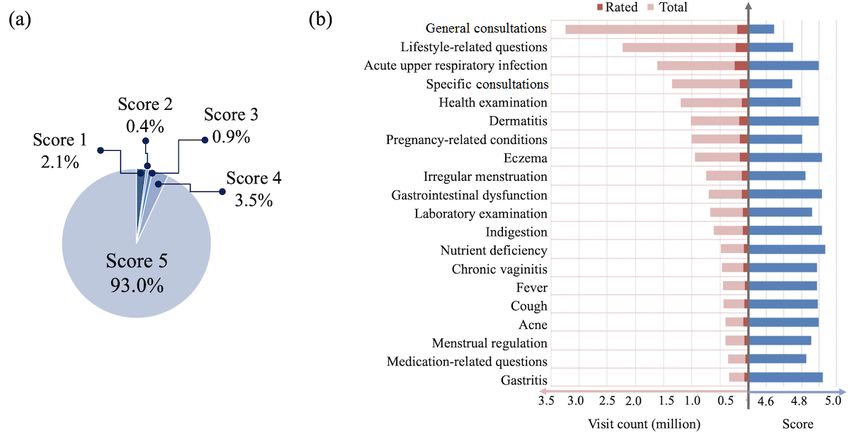
JOURNAL OF MEDICAL INTERNET RESEARCH                                                                                                       Jiang et al

     (J Med Internet Res 2021;23(4):e25817) doi: 10.2196/25817

     KEYWORDS
     eHealth; internet hospital; China; online health care services; mHealth; COVID-19; digital health; app; online consultation; user
     experience

                                                                             Second, family doctor systems in China have been
     Introduction                                                            underdeveloped [17,18]. As the family doctor plays a
     Background                                                              gatekeeping role in developed countries, it is convenient for
                                                                             one to seek health care services for mild problems. Although
     Internet hospital is an innovative type of hospital where               the Chinese government launched a series of policies and
     professional physicians provide health care services on the             regulations to accelerate family doctors’ contracting services
     internet. The online health care services at these hospitals            during the last decades, family doctor systems are still at an
     include, but not limited to, health-related consultations, disease      early stage in China [17]. The number of general practitioners
     diagnoses, medication prescription, and chronic disease                 was not sufficient due to the large population, wide geographic
     management [1].                                                         area, and uneven distribution of health care resources. As a
     In this study, internet hospitals generally refer to all applications   consequence, the effect of family doctor systems was
     that provide online health services for disease consultation and        compromised in practice [19]. With low public awareness of
     treatment through information technology. Services by internet          diseases, patients with moderate symptoms also visited the
     hospitals include a combination of offline medical treatment            tertiary hospitals, putting more stress on health care resources.
     and online follow-up consultation, telemedicine, online medical         According to the China Health Statistics Yearbook 2020, tertiary
     consultation, and online health management. Internet hospitals          hospitals covered 53.5% of patient visits in China, while primary
     are sometimes referred to worldwide as telehealth [2]. In the           hospitals only accounted for 6.0% [13]. Internet hospitals are
     United States, each state’s laws, regulations, and Medicaid             easy to access and serve as a supplement to family doctors.
     program policies for telehealth differ significantly. However,          Therefore, internet hospitals meet the population’s need for
     the common aspect they share is that most states and                    convenient access to professional medical help in China.
     Washington, DC, provide reimbursement via Medicaid for some             Third, clinical data sharing has been hindered by unconnected
     form of live video as a fee-for-service [3]. In the European            hospital systems. Such information islands result in patients
     Union, most countries have no formal definition of telemedicine         having to endure repeated examinations when changing to a
     services [4]. There is an online consultation system in South           new hospital. However, with internet hospitals, patients are able
     West England that allows adult patients to contact their general        to upload their existing examination results, which avoids
     practitioner, but evidence indicates that the use of                    wasting clinical resources.
     e-consultations is very low [5]. Compared with developed
     countries, telehealth could be more meaningful in developing            Fourth, with the increasing burden of medical insurance, the
     countries because of limited medical resources and poor health          Chinese government proposed the Healthy China 2030 plan
     care services [5,6].                                                    [20] and put more focus on health-driven management instead
                                                                             of traditional disease-driven treatment. For the increasing aged
     Internet hospitals have been rapidly established in China in            population, health care providers should intervene at the onset
     recent years [7-9]. As of May 2019, there were 158 internet             of chronic diseases and take advantage of artificial intelligence
     hospitals in China [10], and as of October 28, 2020, there were         technology to manage the disease at the same time.
     about 900 of them operating in China [11]. The expansion of
     internet hospitals is due to the following five reasons.                Last but not least, after the outbreak of COVID-19, offline
                                                                             treatment channels were blocked and the Chinese government
     First, health care resources are limited and unevenly distributed       had adopted a series of administrative measures to encourage
     by geography in China [12]. By 2019, there were only 2.77               the development of internet hospitals [21]. Unnecessary
     licensed physicians per 1000 people [13]; for city residents,           face-to-face contact was avoided with internet hospitals,
     there were 4.10 licensed physicians per 1000 people, while that         providing safer and more convenient health care services than
     number was 1.96 for rural residents [13]. There are 3-tier health       in-person, offline hospitals. As suggested by recent work,
     care systems in China [14,15]. Primary health care providers            internet hospitals helped control the COVID-19 epidemic
     are usually community based and are expected to play the role           [22,23] and made access to health care services more convenient
     of general practitioner and to perform health care management.          [24].
     Secondary and tertiary health care providers include more
     specialists and focus on more complicated clinical problems.            In terms of the types of initiators, internet hospitals in China
     However, tertiary health care providers are mainly located in           can be divided into government-led, hospital-led, and
     the eastern cities of China where the economies are more                enterprise-led services [8]. In 2012, the Guangdong Second
     developed. The top 100 hospitals in China have mostly been              Provincial General Hospital built the first internet hospital in
     located in big cities, such as Beijing and Shanghai, and                China, which belonged to the first type of internet hospital (ie,
     provincial capitals [16]. As a result, residents in rural areas or      government-led) [14]. Compared with government-led and
     western cities have had limited access to high-quality health           hospital-led internet hospitals, enterprise-led internet hospitals
     care services [16].                                                     have the advantages of stronger capabilities in market

     https://www.jmir.org/2021/4/e25817                                                               J Med Internet Res 2021 | vol. 23 | iss. 4 | e25817 | p. 2
                                                                                                                    (page number not for citation purposes)
XSL• FO
RenderX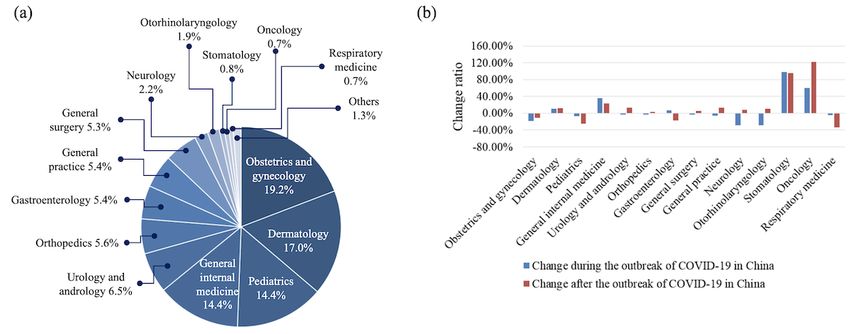
JOURNAL OF MEDICAL INTERNET RESEARCH                                                                                                                    Jiang et al

     exploration and faster product iterations. Enterprises are more                 corresponding health care services, including prescriptions if
     open to advanced technology and pay more attention to                           needed. Medications, if needed, would be delivered if the users
     improving the efficiency of consultation.                                       chose to buy them online. All consultations and inquisitions are
                                                                                     documented for further quality examination. At the end of the
     Ping An Good Doctor has been one of the leading companies
                                                                                     process, users are also asked to score the consultation, where 1
     of enterprise-led internet hospitals [21]. It provides health care
                                                                                     stands for the least satisfaction and 5 for the most satisfaction.
     services via a mobile app of the same name, Ping An Good
     Doctor. Ping An Good Doctor aimed to create a one-stop,                         Study Objectives
     whole-process, online-to-offline service platform and integrated                Despite the rapid development of internet hospitals in China,
     online health service platform with offline health services, such               there exist limited studies examining the characteristics of the
     as private clinics, pharmacies, health checkup and test centers,                departments and diseases of internet hospitals. To fill this gap,
     and so on [25]. It was rapidly developed, as there was an urgent                we carried out analyses regarding the nationally utilized Ping
     need for internet hospitals in China. The use of Ping An Good                   An Good Doctor platform, aiming to provide a comprehensive
     Doctor was nationwide. There were 346 million registered users,                 description of online medical care in China. Our primary focus
     more than 1800 staff members working for in-house medical                       was on answering the following three questions: (1) What are
     teams, and about 10,000 external experts by the middle of 2020.                 the characteristics of the consultations and inquisitions in Ping
     There were more than 820 million online consultations and                       An Good Doctor in terms of department and disease profiles?
     inquisitions in total from 2014 until now, which covered a wide                 (2) Who most often use the platform’s online health services?
     range of departments and diseases. The number of cumulative                     and (3) How do users experience the online consultations of
     visits during the COVID-19 epidemic—from the period of                          Ping An Good Doctor?
     January 20 to February 10, 2020—reached 1.11 billion [26].
     Besides Ping An Good Doctor, Ali and JD are also major players                  Methods
     in internet health care in China [27]. However, Ping An Good
     Doctor has the largest average daily consultation volume                        Data Collection
     [28-30].
                                                                                     To eliminate the influence of seasonal patterns, we analyzed
     Any user with a cell phone can use the health care services                     the online consultations and inquisitions of Ping An Good
     provided by the Ping An Good Doctor app anytime and                             Doctor from the past year (ie, from August 2019 to August
     anywhere. Users can ask any health-related questions or seek                    2020). Here, consultation referred to the asking of health-related
     health care services whether or not they have a specific health                 questions, while inquisition meant being treated online for health
     problem. In general, a dialogue in the absence of health                        problems. For all consultations and inquisitions, four types of
     problems is referred to as a consultation, while seeking clinical               information were extracted: (1) demographic information about
     help for specific health problems is called an inquisition. In the              the clients, (2) health care–related variables, (3) details about
     latter scenario, users are expected to submit their chief complaint             the consultation process, and (4) consultation evaluations
     and other clinical materials about their health status; the                     collected after the consultation finished. A detailed description
     physician would then make the diagnosis and provide                             of all variables involved in this study is listed in Table 1.

     Table 1. Variables considered in this study.
         Type of information and variables    Description of variables                                                        Responses (N=113,805,518a), n (%)
         Demographic information
             Gender                           Gender of the user                                                              111,844,894 (98.3)
             Age                              Age of the user                                                                 110,502,135 (97.1)
             Province                         Province (ie, location) of the user                                             103,786,537 (91.2)
         Health care–related variables
             Diagnosis                        Diagnosis as given by the physician                                             81,574,890 (71.7)
             Department                       Subentity of the online hospital, such as dermatology                           113,805,518 (100)
         Details about consultation process
             Dialogue rounds                  Number of rounds of dialogue between the user and the physician                 113,805,518 (100)
             Consultation time                Time of day when the user described their chief complaints                      113,805,518 (100)
         Consultation evaluation
             Satisfaction score               Scores given by the user after the consultation and/or inquisition              6,879,529 (6.0)

     a
         This value represents all consultations and inquisitions combined.

     https://www.jmir.org/2021/4/e25817                                                                            J Med Internet Res 2021 | vol. 23 | iss. 4 | e25817 | p. 3
                                                                                                                                 (page number not for citation purposes)
XSL• FO
RenderX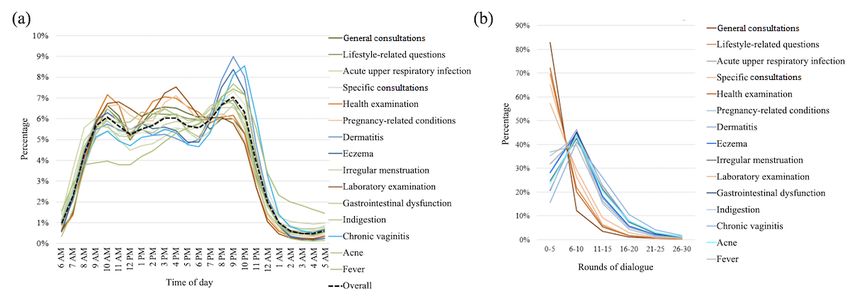
JOURNAL OF MEDICAL INTERNET RESEARCH                                                                                                              Jiang et al

     Data Selection                                                                inquisitions from some temporal consultation channels, such
     The number of consultations and inquisitions accumulated                      as the special consulting channel during COVID-19, that would
     between August 20, 2019, and August 22, 2020, was around                      bias the distributions of departments and diseases were also
     113.8 million. The detailed process of data selection is illustrated          omitted. Lastly, we removed consultations that were labeled as
     in Figure 1. Four types of consultations and inquisitions were                “medical guide,” which was an automatic diagnosis label
     excluded before the analyses of departments and diseases. First,              assigned under certain circumstances, such as the unexpected
     invalid consultations, where the consultations and inquisitions               end of a consultation due to the extended nonresponse of the
     had not started, were removed. Second, consultations from the                 user. After the four data-filtering steps, there were 35.3 million
     Traditional Chinese Medicine (TCM) department were excluded                   consultations and inquisitions remaining. After standardization
     since the diagnosis system of TCM is distinct from that of the                of the departments, those data were used for department- and
     International Classification of Diseases, Tenth Revision                      disease-related analyses. To further analyze user satisfaction of
     (ICD-10), and is poorly standardized. Third, consultations and                the online consultations, data that had no satisfaction scores
                                                                                   were filtered out.
     Figure 1. The process of data selection and the data sets that were used for different analyses.

                                                                                   Generally, the diagnosis labels for inquisitions and consultations
     Data Preprocessing                                                            were standardized as one-by-one mapping to ICD-10 or
     The diagnoses from the inquisitions were mainly based on the                  self-defined codes.
     ICD-10 coding system [31], while consultations were assigned
     self-defined diagnosis labels, such as general consultations,                 It should be noted that for 20.2% (7,140,917/35,296,169) of the
     specific consultations, and lifestyle-related questions. Here, the            consultations and inquisitions, there existed multiple diagnoses.
     term general consultations was a vague definition referring to                In this case, the diagnosis distribution was calculated by splitting
     asking questions about any nonspecific aspect of health                       the multiple diagnoses of one sample into multiple samples,
     problems, such as how one should take exercise if one has had                 each sample with a distinct diagnosis. All analyses in terms of
     a stroke. Specific consultations referred to asking questions                 diagnoses were based on this splitting approach of diagnosis
     about a specific disease, such as diabetes and cardiovascular                 statistics, such as user experience for each diagnosis.
     diseases. Lifestyle-related questions referred to asking questions            Statistical Analysis
     about how to stay healthy without mentioning specific health
                                                                                   Data were extracted from the database using Structured Query
     problems, such as what tea to drink to protect eyesight.
                                                                                   Language and were preprocessed by the pandas library in
                                                                                   Python 3.6 (Python Software Foundation).

     https://www.jmir.org/2021/4/e25817                                                                      J Med Internet Res 2021 | vol. 23 | iss. 4 | e25817 | p. 4
                                                                                                                           (page number not for citation purposes)
XSL• FO
RenderX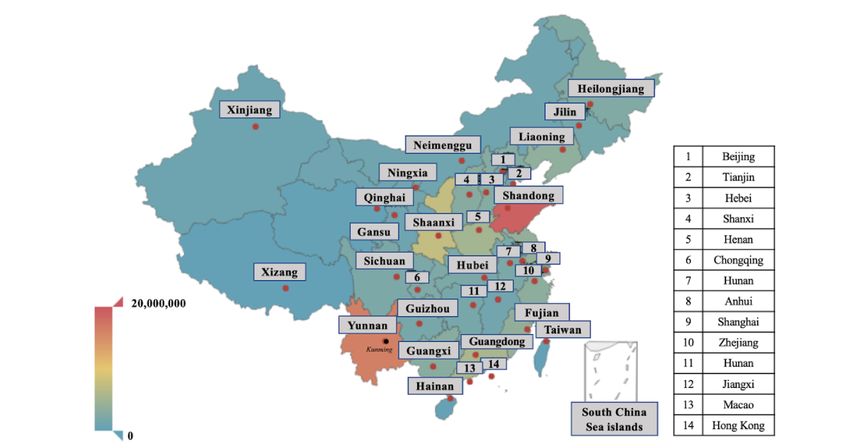
JOURNAL OF MEDICAL INTERNET RESEARCH                                                                                                               Jiang et al

                                                                                  (16,192,209/113,805,518,                15.6%),            Shaanxi
     Results                                                                      (7,439,540/113,805,518,         7.2%),       and        Guangdong
     Overview of the Online Consultations and Inquisitions                        (5,672,425/113,805,518, 5.5%) were the four leading provinces
                                                                                  and accounted for 46.6% (48,371,315/113,805,518 ) of the total
     The overall statistics of our data set are shown in Table 2. There           consultations and inquisitions in our data set. A city-level rank
     were 35,296,169 valid consultations and inquisitions in total.               was also calculated. Table 3 lists the top 10 cities in yearly visits
     During the study period, 12,446,838 users participated in                    to Ping An Good Doctor. It was interesting to note that big cities
     consultations via Ping An Good Doctor. A total of 40.3% of
                                                                                  such as Beijing and Shanghai only ranked 9th and 5th,
     the consultations and inquisitions were made by male users,
                                                                                  respectively, accounting for 34.4% (1,699,251/4,932,918) and
     and the mean age of the users was 27.3 years (SD 17.2). There
                                                                                  54.7% (2,700,223/4,932,918) of the total visits, relative to the
     were, on average, 7.3 (SD 5.3) rounds of conversation between
                                                                                  top city, Kunming.
     users and physicians. After standardization, there were 76
     departments and 1419 diseases covered in the cross section that              Longitudinally, the COVID-19 epidemic activated the daily
     we studied.                                                                  visits to Ping An Good Doctor. As shown in Table 4 [32,33],
                                                                                  the average daily visits increased by 23.2% during the outbreak
     As shown in Figure 2, which was drawn using the pyecharts
                                                                                  of COVID-19 in China. It was encouraging that the average
     library in Python 3.6, the consultations and inquisitions came
                                                                                  daily visits increased more even after the outbreak of COVID-19
     from all the provinces, municipalities, and autonomous regions
                                                                                  in China.
     of China. Shandong (19,067,141/113,805,518, 18.4%), Yunnan

     Table 2. Characteristics of the current data set.
      Characteristic                                                                                          Value
      Total consultations and inquisitions, N                                                                 35,296,169
      Consultations and inquisitions by male users, n (%)                                                     14,063,178/34,904,918 (40.3)
      Users of the platform, n                                                                                12,446,858
      Age of users who submitted consultations and inquisitions (years), mean (SD)                            27.3 (17.2)
      Rounds of dialogue between physicians and users, mean (SD)                                              7.3 (5.3)
      Departments represented in the data set, n                                                              76
      Diseases represented in the data set, n                                                                 1419

     Figure 2. The number of consultations and inquisitions from all over China out of the original 113.8 million data points. Red dots indicate the capital
     city of each province and the black dot indicates the city of Kunming. Kunming had the largest volume of consultations and inquisitions in Ping An
     Good Doctor at the city level.

     https://www.jmir.org/2021/4/e25817                                                                       J Med Internet Res 2021 | vol. 23 | iss. 4 | e25817 | p. 5
                                                                                                                            (page number not for citation purposes)
XSL• FO
RenderX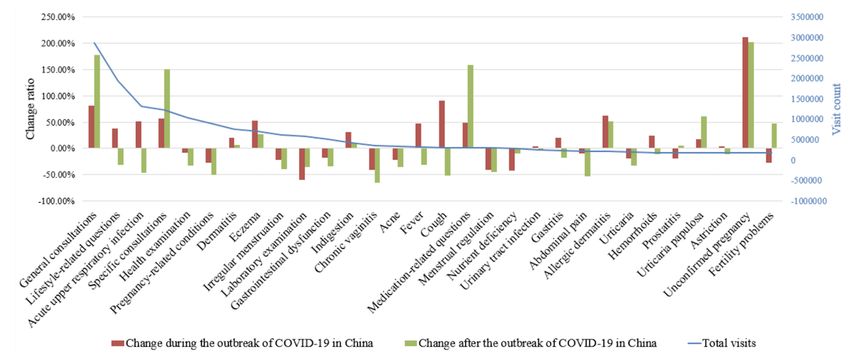
JOURNAL OF MEDICAL INTERNET RESEARCH                                                                                                                   Jiang et al

     Table 3. Top 10 cities by visits to Ping An Good Doctor from August 2019 to August 2020.
         City                                                                       Province                                 Relative yearly visit amounta
         Kunming                                                                    Yunnan                                   1
         Xi’an                                                                      Shaanxi                                  0.915
         Yantai                                                                     Shandong                                 0.835
         Qingdao                                                                    Shandong                                 0.559
         Shanghai                                                                   Shanghai                                 0.547
         Chongqing                                                                  Chongqing                                0.424
         Linyi                                                                      Shandong                                 0.410
         Honghe Hani and Yi Autonomous Prefecture                                   Yunnan                                   0.385
         Beijing                                                                    Beijing                                  0.344
         Zhengzhou                                                                  Henan                                    0.305

     a
      Values are based on the original 113.8 million data points; relative yearly visits of each city are calculated by setting the yearly visit amount by Kunming
     as a reference.

     Table 4. Average daily visits to Ping An Good Doctor before, during, and after the outbreak of COVID-19 in China.
         Phase                                          Time range                                                               Daily visits, mean (SD)
         Before the COVID-19 outbreak                   August 20, 2019, to January 22, 2020                                     74,893.92 (5843.34)
         During the COVID-19 outbreak                   January 23, 2020a, to February 29, 2020b                                 92,246.74 (20,411.83)

         After the COVID-19 outbreak                    March 1, 2020, to August 22, 2020                                        114,898.50 (11,708.20)

     a
         The city of Wuhan closed on January 23, 2020, indicating the start of the outbreak of COVID-19 in China [32].
     b
         As of February 29, 2020, the number of newly diagnosed COVID-19 cases per day in China was less than 1000 [33].

                                                                                     epidemic on the distribution of departments. The result is shown
     Characteristics of Departments and Diseases in Online                           in Figure 3 (b); for most of the departments, the change ratios
     Consultations                                                                   were within ±10% during and after the COVID-19 outbreak. It
     Distribution of Departments                                                     should be noted that the fraction of consultations represented
                                                                                     by dermatology increased by more than 10%, both during (from
     Although there were 76 departments represented in our data
                                                                                     15. 9% to 17.5%) and after (from 15.9% to 17.7%) the
     set, about 14 (18%) departments accounted for more than 99%
                                                                                     COVID-19 outbreak. In addition, the fraction of consultations
     of the consultations and inquisitions. As shown in Figure 3 (a),
                                                                                     represented by general internal medicine increased by 36.5%
     the most popular department was gynecology and obstetrics,
                                                                                     (from 11.7% to 16.0%) and 22.7% (from 11.7% to 14.4%)
     which was represented in 19.2% (5,868,172/30,579,297) of the
                                                                                     during and after the COVID-19 outbreak, respectively. Although
     consultations, followed by 17.0% (5,204,805/30,579,297) for
                                                                                     the fractions of consultations represented by stomatology and
     the dermatology department and 14.4% (4,394,634/30,579,297)
                                                                                     oncology both had a sharp increase, their absolute fractions
     for pediatrics. We further analyzed the change ratios of
                                                                                     increased by 0.47% and 0.51% after the COVID-19 outbreak,
     distribution for the top 14 departments during and after the
                                                                                     respectively.
     COVID-19 outbreak to investigate the effect of the COVID-19

     https://www.jmir.org/2021/4/e25817                                                                           J Med Internet Res 2021 | vol. 23 | iss. 4 | e25817 | p. 6
                                                                                                                                (page number not for citation purposes)
XSL• FO
RenderX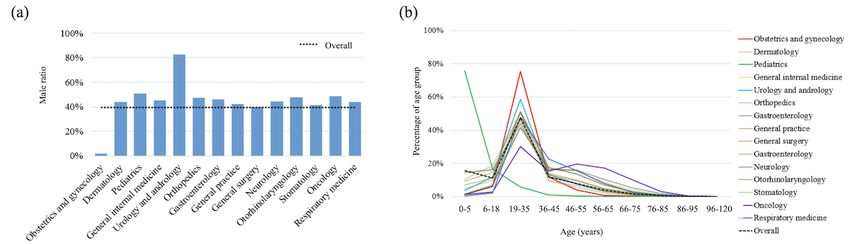
JOURNAL OF MEDICAL INTERNET RESEARCH                                                                                                                  Jiang et al

     Figure 3. Departments represented in the consultations and inquisitions: (a) distribution of the departments; (b) change ratios of the distribution of the
     top 14 departments during and after the outbreak of COVID-19 in China.

                                                                                    bars in Figure 4, diseases labeled as unconfirmed pregnancy,
     Distribution of Diseases                                                       cough, consultations, and specific consultations increased the
     There were 1419 diseases represented in our data set, and the                  most during the COVID-19 outbreak. In addition, eczema and
     top 30 diseases accounted for 53.6% (17,911,125/33,409,879)                    allergic dermatitis also had a significant increase. To
     of the total consultations. As illustrated by the blue line in Figure          summarize, diseases that increased in popularity during the
     4, consultations were the key components in terms of yearly                    COVID-19 outbreak, as represented in consultations and
     visits to Ping An Good Doctor; these included general                          inquisitions, included those with respiratory or dermatology
     consultations, lifestyle-related questions, specific consultations,            symptoms. After the COVID-19 outbreak, the inquisitions that
     health examinations, and pregnancy-related conditions. The                     included respiratory symptoms decreased, while the inquisitions
     change ratios of disease distribution during and after the                     that included characteristics of other diseases and consultations
     COVID-19 outbreak were also analyzed. As shown by the red                      remained.
     Figure 4. Distribution of the top 30 diseases represented in the yearly visits to Ping An Good Doctor; change ratios of the distribution of diseases during
     and after the outbreak of COVID-19 in China are also shown.

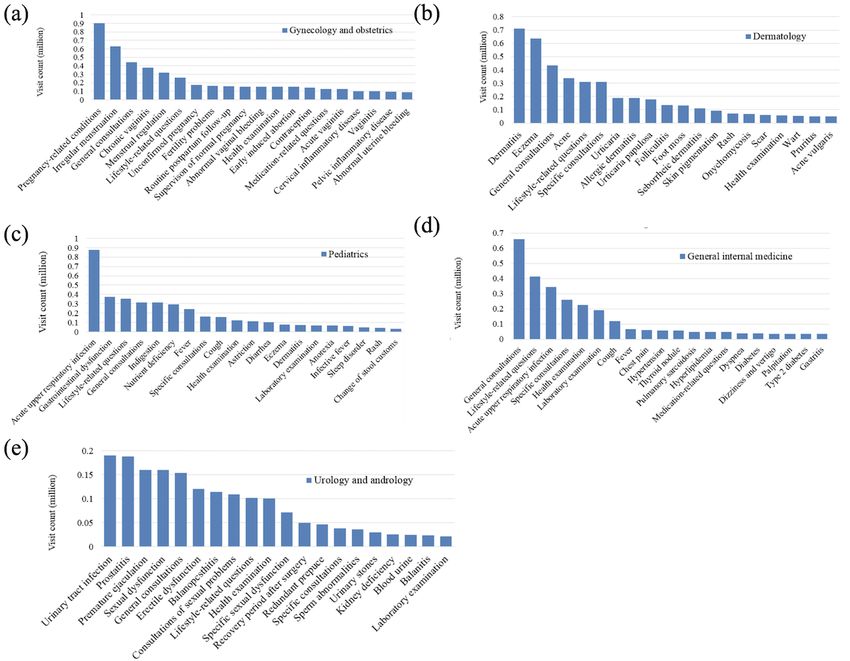
                                                                                    department. The results are illustrated in Figure 5; for each
     Disease Profiles for the Most Popular Departments                              department, the top 20 diseases are shown.
     We further analyzed the disease profiles for the five most
     popular departments to see if major diseases existed in each

     https://www.jmir.org/2021/4/e25817                                                                          J Med Internet Res 2021 | vol. 23 | iss. 4 | e25817 | p. 7
                                                                                                                               (page number not for citation purposes)
XSL• FO
RenderX
JOURNAL OF MEDICAL INTERNET RESEARCH Jiang et al
Figure 5. Disease profiles of the top five departments: (a) gynecology and obstetrics, (b) dermatology, (c) pediatrics, (d) general internal medicine,
and (e) urology and andrology.
From Figure 5, pediatrics had the most obvious head effect accounted for 39.6% (12,098,998/30,579,308) of the
regarding disease profiles, while acute upper respiratory consultations; this proportion varied little except for the
infection (AURI) accounted for 16.5% (876,786/5,074,566) of reproductive-related departments, as shown in Figure 6 (a). For
all the consultations. In addition, urology and andrology had most of the departments, users aged 19 to 35 years constituted
the least head effect regarding disease profiles, suggesting a the largest proportion of users as compared with other age
relatively high degree of disease diversity. groups, as listed in Figure 6 (b). For pediatrics, there were many
more consultations and inquisitions for children under 6 years
User Profiles of age than for children older than 6 years of age. For the
Demographic Characteristics respiratory medicine department , there was a relatively higher
proportion of users aged 36 to 45 years as compared with the
To better understand the users of Ping An Good Doctor, we
overall age groups. For oncology, the proportion of users in the
analyzed the user profiles for the top 14 departments. Male users
senior age ranges increased.
Figure 6. User profiles for the top 14 departments: (a) percentiles of male users by department; (b) age distribution.
https://www.jmir.org/2021/4/e25817 J Med Internet Res 2021 | vol. 23 | iss. 4 | e25817 | p. 8
(page number not for citation purposes)
XSL• FO
RenderXJOURNAL OF MEDICAL INTERNET RESEARCH Jiang et al
User Behaviors As shown in Figure 7 (a), there were three peaks regarding times
The user profiles for the top diseases had concordant of day for consultations; these were 10 AM, 3 PM, and 9 PM.
observations with those for the department analyses. We further The diseases could be roughly divided into three groups
investigated user consultation behaviors with respect to different according to the relative proportions for different time-of-day
diseases; namely, the times of day when users began to seek peaks as indicated in Figure 7 (a). Figure 7 (b) shows the
consultations and the rounds of dialogue between users and distribution of rounds of dialogue between the users and
physicians. physicians. For inquisitions, the number of rounds of dialogue
peaked at around the 6 to 10 range; for consultations, at least
half of the dialogues went through 0 to 5 rounds.
Figure 7. Characteristics of users' behaviors regarding the top 15 diseases: (a) distribution of times of day of consultations; (b) distribution of rounds
of dialogue between users and physicians.
diseases. As shown in Figure 8 (b), consultations related to the
Users’ Satisfaction With Online Consultations top 20 diseases all had average satisfaction scores above 4.6.
Among all the 35.3 million consultations, there were 5.2 million For some specific diseases, the average satisfaction scores were
that had satisfaction scores. A total of 93.0% even higher, such as for AURI and dermatitis, which were also
(6,408,143/6,879,529) of these satisfaction scores were 5, popular topics of consultation in our internet hospitals. For
suggesting that the vast majority of the users had a good general consultations and specific consultations, the satisfaction
experience when using Ping An Good Doctor, as seen in Figure scores were relatively low.
8 (a). We also analyzed user satisfaction in terms of different
Figure 8. Users’ satisfaction with the online consultations: (a) the distribution of satisfaction scores; (b) the proportion of users who scored the
consultations and inquisitions and the corresponding scores related to the top 20 diseases. Scores range from 1 (least satisfaction) to 5 (most satisfaction).
https://www.jmir.org/2021/4/e25817 J Med Internet Res 2021 | vol. 23 | iss. 4 | e25817 | p. 9
(page number not for citation purposes)
XSL• FO
RenderXJOURNAL OF MEDICAL INTERNET RESEARCH Jiang et al
Discussion ranked 9th and 5th, respectively, among all the cities, although
these two are megalopolitan cities with populations of more
Principal Findings than 20 million. Kunming, the capital of Yunnan province with
a population of around 7 million, had more yearly visits than
Analyses in this study answered the three questions proposed
Shanghai. The geographical distribution of yearly visits to Ping
in the Introduction section. First, the distributions of departments
An Good Doctor suggested that internet hospitals provided
and diseases in Ping An Good Doctor differed from those of
accessible health care services to anyone in need and could
offline hospitals. The gynecology and obstetrics department
relieve the uneven distribution of health care services across
and the dermatology department were the top two departments
China.
in Ping An Good Doctor in terms of number of consultations,
which differed from offline hospitals. The popularity of Nondisease-Specific Consultations and Moderate
gynecology and obstetrics came from about 22% of the users Health Problems Were Popular in the Top Five
being female, aged 19 to 35 years, who were in the reproductive Departments
age group. The popularity of dermatology suggested that users
found it suitable and more acceptable to seek consultations The top five departments represented in Ping An Good Doctor
about dermatological diseases online. Consultations and diseases were gynecology and obstetrics, dermatology, pediatrics, general
with moderate symptoms were commonly seen in terms of internal medicine, and urology and andrology. As the
disease profiles. Second, we found that most of the users of characteristics varied across departments, we will discuss them
Ping An Good Doctor were between 19 and 35 years of age, one by one.
and females were slightly more highly represented compared In gynecology and obstetrics, the most common consultations
to males. The gender distribution was in agreement with and inquisitions were focused on menstruation, vaginitis, and
previous work by Qiu et al, though their results were based on cyesis. These were mild health issues as compared with those
one city with a much smaller population [34]. Last, the users in offline hospitals where cancers; cervical disease, such as
had a good experience with Ping An Good Doctor, in general. hysteromyoma and ovarian cyst; and obstetric complications
We observed an average satisfaction score of 4.6 out of 5, were seen in higher proportions. These profiles were consistent
suggesting that users were comfortable with Ping An Good with the highest ratio of users who sought consultations in
Doctor as a health care service. gynecology and obstetrics being aged 19 to 35 years, as seen
Our results provided the distribution profiles of departments in Figure 6 (b).
and diseases. By examining those distributions, we could gain For dermatology-related concerns, the most common diseases
an increased understanding about which diseases can be were dermatitis and eczema, as seen in Figure 5 (b). The same
diagnosed and treated online. The user profile analysis described pattern was also reported in other work [37]. It was interesting
the current user market of internet hospitals; a new strategy to to note that disease inquisitions played a major role as compared
explore the market should be based on this user profile analysis. with consultations. The most important reason for this was that
the online health care service could replicate the offline clinical
Open Attitudes Were the Key Factor for Developing
scenarios to the largest extent. Users were able to upload pictures
Internet Hospitals of their skin, which played a vital role in diagnoses and
Based on the geographical distribution of the Ping An Good treatments in the dermatology department. In addition, the
Doctor visits, we found that Shandong, Yunnan, Shaanxi, and efficiency and timeliness of online health services encouraged
Guangdong were the four leading provinces in terms of volume users to choose online inquisitions when they had dermatological
of visits; the reasons for this were four-fold. First, Shandong problems. Online consultations also allowed patients to avoid
and Guangdong have large populations. Second, high-quality the potential embarrassment of exposing themselves to
health care services are limited in these four leading provinces; physicians face-to-face.
Shandong, Yunnan, Shaanxi, and Guangdong ranked 17th, 24th,
In pediatrics, the most common inquisitions were about AURIs
20th, and 19th, respectively, in terms of number of tertiary as well as growth and development, such as nutrient deficiency.
hospitals per 100,000 persons, according to the China Health Recent work on a pediatric map of Hangzhou also found that
Statistics Yearbook 2020 [13]. Third, Guangdong and Shandong AURI was the top disease discussed in all the outpatient visits
have a relatively high internet penetration rate [35]. Fourth, they considered. However, the next most popular category of
open attitudes toward internet technology were the key factor diseases in their study was common symptoms, such as fever,
for developing internet hospitals. Guangdong was the pioneer abdominal pain, and vomiting, which was distinct from the
in online health care services. The Guangdong government pattern we found in the online health service [38]. Internet
funded the first internet hospital in China [14]. Shandong has hospitals provide a way to efficiently and conveniently acquire
the most online physicians in a web-based medical consultation knowledge about children’s growth and development, relieving
service in China, which suggests an open mind on the part of parents’ anxiety. Educated with knowledge about their children’s
the physicians [36]. The Yunnan and Shaanxi governments also growth and development, parents can make proper and timely
have an open attitude toward the internet-related industry and decisions when needed. Mild medical cases were able to be
the public has a high acceptance of internet technology. resolved online, which reduced unnecessary visits to offline
It was interesting to note that the usage of internet hospitals was hospitals and also relieved the stress experienced by them.
not centered in big cities. For example, Beijing and Shanghai
https://www.jmir.org/2021/4/e25817 J Med Internet Res 2021 | vol. 23 | iss. 4 | e25817 | p. 10
(page number not for citation purposes)
XSL• FO
RenderXJOURNAL OF MEDICAL INTERNET RESEARCH Jiang et al
The diseases that were part of the general internal medicine but to widen and deepen their clinical experience of patients.
department were mostly chronic, indicating that health The patients they met were not limited to their local regions.
management was in high demand. This was in agreement with Meanwhile, physicians had the opportunity to inspect the whole
previous findings from Di Tommaso et al [39]. Meanwhile, disease process for the patients, from the onset to the prognosis.
health management was vital for reducing fatality rates and
Finally, internet hospitals could accelerate the reform of
disability rates. The proper management of chronic diseases
government health care insurance in China and possibly the
could reduce the occurrences of complications and acute
world. Medical insurance costs increase year by year. The total
episodes. Traditionally, physicians mainly focus on chronic
cost reached 2085.4 billion yuan (US $299 billion) in 2019 in
diseases at the time of patient in-person, offline visits; they have
China, and had increased by 12.2% compared to 2018 [43].
no time to conduct daily management for patients with chronic
Internet hospitals could help control four aspects of medical
diseases. With developments in artificial intelligence and
insurance costs. First, because the process of consultations and
wearable devices, health care data are easy to collect and
inquisitions was documented and all data were traced, it is
analyze. With well-educated patients and automatic tracking of
feasible to conduct quality control and fraud detection. Second,
physical measures, smart health care management has relieved
equipped with artificial intelligence, standardized diagnosis and
physicians from tedious work and helped patients to maintain
treatment procedures were simplified; for example, a robot helps
clinical conditions. Meanwhile, patients can benefit from advice
to collect basic information before the consultations begin.
on diet, exercise, and medication as given by smart health care
Therefore, with increased efficiency, the cost of consultations
management.
in internet hospitals would decrease. Third, the whole process
In the urology and andrology department, the consultations and of health management in internet hospitals controls the rate of
inquisitions were focused on sexual function and urinary system chronic diseases and, in the end, reduces medical insurance
infections. The online consultations were private and allowed costs. China has a large population living with chronic diseases.
users to avoid the embarrassment of face-to-face inquiries about Until 2019, there were 116.4 million people with diabetes in
sexual function problems. Urinary system infections were also China [44]. The glucose control rate was 10.2% in China and
common in both online and offline hospitals, but other frequent was 49.9% in America [45]. A higher control rate is related to
diseases seen in offline hospitals, such as cancer, urinary stones, slower disease progression, lower comorbidity risk, lower
and surgical trauma, were uncommon in online consultations. disability rate, and lower costs. Efficient health management
could help to increase the control rate and reduce medical costs.
To summarize, the common diseases seen in internet hospitals
Fourth, internet hospitals could promote the separation of
included moderate health problems. In this sense, internet
medical services and medications, which would prevent doctors
hospitals play the role of general practitioner, which partially
from receiving rebates from drugs.
fills a gap that exists in the family doctor system in China.
Limitations
Relationship Between the COVID-19 Epidemic and
Internet Hospitals We described the characteristics of internet hospitals in terms
of the distributions of departments, diseases, user profiles, user
The COVID-19 epidemic promoted widespread use of internet behaviors, and user experiences. However, treatment—an
hospitals in China. From Table 4 and Figure 4, we observed important aspect of clinical practice—was not investigated and
that consultations and inquisitions did not decrease even after evaluated, but will be targeted in our future work. To deepen
the first outbreak of COVID-19, from January 23, 2020, to our understanding of the characteristics of internet hospitals,
February 29, 2020. COVID-19 provided people with an our future efforts will include additional comparisons between
opportunity to change their behavior when seeking health care offline hospitals and internet hospitals.
services. With the epidemic under control, the development of
internet hospitals has normalized [40]. On the other hand, Conclusions
internet hospitals played a vital role in China's defense against As the largest entry point to online medical services in China,
COVID-19, from sharing knowledge on virus control and Ping An Good Doctor provides accessible health care services
providing health consultations to follow-up treatment for chronic nationwide, breaking the geographical boundary for high-quality
diseases and drug delivery. Ping An Good Doctor also played clinical resources. The COVID-19 epidemic accelerated the
a positive role during the COVID-19 pandemic, suggesting that expansion of online health services. This also provided an
internet hospitals are a valuable resource in dealing with opportunity to test the feasibility of such online modes of health
large-scale public health emergencies [41]. care delivery. It should be emphasized that after the outbreak
More Advantages of Internet Hospitals of COVID-19, the number of daily visits kept increasing,
suggesting that online health services satisfied peoples’ needs
In addition to the pros mentioned above, internet hospitals had for convenient and contactless health services. Our analyses
many other advantages. First, internet hospitals had a positive showed that nondisease-specific consultations and moderate
effect on the physician-patient relationship [42]. Online health health problems accounted for the majority of online visits to
services made health information more accessible to patients, Ping An Good Doctor. This indicated that online health services
reducing the communication barrier between physicians and played a similar role as family doctors. The positive feedback
patients. received from most users showed that online health services
Second, for the physicians, providing health care services via would be their preferred option in many circumstances. The
internet hospitals was a way to not only increase their income changes in people’s attitudes and behaviors, together with
https://www.jmir.org/2021/4/e25817 J Med Internet Res 2021 | vol. 23 | iss. 4 | e25817 | p. 11
(page number not for citation purposes)
XSL• FO
RenderXJOURNAL OF MEDICAL INTERNET RESEARCH Jiang et al
support from the government, would further promote the for both patients and health care providers.
development of online health services, leading to great benefits
Conflicts of Interest
None declared.
References
1. Notice on the issuance of three documents including the Administrative Measures for Internet Diagnosis and Treatment
(trial). National Health Commission of the People's Republic of China and Pharmaceutical Administration. 2018 Jul 17.
URL: http://www.gov.cn/zhengce/zhengceku/2018-12/31/content_5435436.htm [accessed 2021-04-06]
2. The National Telehealth Policy Resource Center. What is telehealth? The National Telehealth Policy Resource Center.
URL: https://www.cchpca.org/about/about-telehealth [accessed 2020-12-24]
3. Center for Connected Health Policy. State Telehealth Laws & Reimbursement Policies. Oakland, CA: Public Health Institute;
2020. URL: https://www.cchpca.org/sites/default/files/2020-05/CCHP_%2050_STATE_REPORT_SPRING_2020_FINAL.
pdf [accessed 2020-12-24]
4. Carrasqueiro S, Ramalho A, Esteves A, Pereira C, Martins D. Report on EU State of Play on Telemedicine Services and
Uptake Recommendations.: Joint Action to Support the eHealth Network; 2017. URL: https://ec.europa.eu/health/sites/
health/files/ehealth/docs/ev_20171128_co09_en.pdf [accessed 2020-12-20]
5. Edwards HB, Marques E, Hollingworth W, Horwood J, Farr M, Bernard E, et al. Use of a primary care online consultation
system, by whom, when and why: Evaluation of a pilot observational study in 36 general practices in South West England.
BMJ Open 2017 Nov 22;7(11):e016901 [FREE Full text] [doi: 10.1136/bmjopen-2017-016901] [Medline: 29167106]
6. Scott R, Mars M. Telehealth in the developing world: Current status and future prospects. Smart Homecare Technol
Telehealth 2015 Feb 2:25-37 [FREE Full text] [doi: 10.2147/shtt.s75184]
7. Xie X, Zhou W, Lin L, Fan S, Lin F, Wang L, et al. Internet hospitals in China: Cross-sectional survey. J Med Internet Res
2017 Jul 04;19(7):e239 [FREE Full text] [doi: 10.2196/jmir.7854] [Medline: 28676472]
8. Han Y, Lie RK, Guo R. The internet hospital as a telehealth model in China: Systematic search and content analysis. J Med
Internet Res 2020 Jul 29;22(7):e17995 [FREE Full text] [doi: 10.2196/17995] [Medline: 32723721]
9. Tu J, Wang C, Wu S. The internet hospital: An emerging innovation in China. Lancet Glob Health 2015 Aug;3(8):e445-e446.
[doi: 10.1016/S2214-109X(15)00042-X]
10. China builds 158 internet hospitals amid digital tide. China Daily. 2019 May 08. URL: http://www.chinadaily.com.cn/a/
201905/08/WS5cd29062a3104842260ba8f3.html [accessed 2020-10-24]
11. China embraces internet hospitals, with 900 now operational: Official. Xinhuanet. 2020 Oct 28. URL: http://www.
xinhuanet.com/english/2020-10/28/c_139473917.htm [accessed 2020-12-18]
12. Yu M, He S, Wu D, Zhu H, Webster C. Examining the multi-scalar unevenness of high-quality healthcare resources
distribution in China. Int J Environ Res Public Health 2019 Aug 07;16(16):2813 [FREE Full text] [doi:
10.3390/ijerph16162813] [Medline: 31394765]
13. National Health Commission of the People's Republic of China. China Health Statistics Yearbook 2020. Beijing, China:
Peking Union Medical College Press; Oct 1, 2020.
14. Wu D, Hesketh T, Shu H, Lian W, Tang W, Tian J. Description of an online hospital platform, China. Bull World Health
Organ 2019 Jun 03;97(8):578-579 [FREE Full text] [doi: 10.2471/blt.18.226936]
15. Feng XL, Martinez-Alvarez M, Zhong J, Xu J, Yuan B, Meng Q, et al. Extending access to essential services against
constraints: The three-tier health service delivery system in rural China (1949-1980). Int J Equity Health 2017 May
23;16(1):49 [FREE Full text] [doi: 10.1186/s12939-017-0541-y] [Medline: 28532500]
16. Gong P, Liang S, Carlton EJ, Jiang Q, Wu J, Wang L, et al. Urbanisation and health in China. Lancet 2012
Mar;379(9818):843-852. [doi: 10.1016/s0140-6736(11)61878-3]
17. Li X, Krumholz HM, Yip W, Cheng KK, De Maeseneer J, Meng Q, et al. Quality of primary health care in China: Challenges
and recommendations. Lancet 2020 Jun 6;395(10239):1802-1812 [FREE Full text] [doi: 10.1016/s0140-6736(20)30122-7]
18. Yuan S, Wang F, Li X, Jia M, Tian M. Facilitators and barriers to implement the family doctor contracting services in
China: Findings from a qualitative study. BMJ Open 2019 Oct 08;9(10):e032444 [FREE Full text] [doi:
10.1136/bmjopen-2019-032444] [Medline: 31597653]
19. Shang X, Huang Y, Li B, Yang Q, Zhao Y, Wang W, et al. Residents' awareness of family doctor contract services, status
of contract with a family doctor, and contract service needs in Zhejiang Province, China: A cross-sectional study. Int J
Environ Res Public Health 2019 Sep 09;16(18):3312 [FREE Full text] [doi: 10.3390/ijerph16183312] [Medline: 31505783]
20. Healthy China 2030 (from vision to action). World Health Organization. 2016. URL: https://www.who.int/healthpromotion/
conferences/9gchp/healthy-china/en/ [accessed 2020-10-30]
21. The National Health Commission strengthens internet diagnosis and treatment consulting services in epidemic prevention
and control. National Health Commission of the People's Republic of China. 2020 Feb 08. URL: http://www.nhc.gov.cn/
yzygj/s7652m/202002/32c3e98988894fa18280e4543d2710c7.shtml [accessed 2020-12-18]
https://www.jmir.org/2021/4/e25817 J Med Internet Res 2021 | vol. 23 | iss. 4 | e25817 | p. 12
(page number not for citation purposes)
XSL• FO
RenderXJOURNAL OF MEDICAL INTERNET RESEARCH Jiang et al
22. Gong K, Xu Z, Cai Z, Chen Y, Wang Z. Internet hospitals help prevent and control the epidemic of COVID-19 in China:
Multicenter user profiling study. J Med Internet Res 2020 Apr 14;22(4):e18908 [FREE Full text] [doi: 10.2196/18908]
[Medline: 32250962]
23. Li L, Liu G, Xu W, Zhang Y, He M. Effects of internet hospital consultations on psychological burdens and disease
knowledge during the early outbreak of COVID-19 in China: Cross-sectional survey study. J Med Internet Res 2020 Aug
04;22(8):e19551 [FREE Full text] [doi: 10.2196/19551] [Medline: 32687061]
24. Ding L, She Q, Chen F, Chen Z, Jiang M, Huang H, et al. The internet hospital plus drug delivery platform for health
management during the COVID-19 pandemic: Observational study. J Med Internet Res 2020 Aug 06;22(8):e19678 [FREE
Full text] [doi: 10.2196/19678] [Medline: 32716892]
25. Wang O. Ping An Good Doctor. 2015 Dec. URL: http://www.pingan.com/app_upload/images/info/upload/
5789191e-3019-4370-b8e1-a3a81561d4e3.pdf [accessed 2020-10-01]
26. Ping An Good Doctor issues sustainable development report: Platform visits hit 1.11 billion during epidemic. Cision PR
Newswire. 2020 Feb 17. URL: https://www.prnewswire.com/news-releases/
ping-an-good-doctor-issues-2019-sustainable-development-report-platform-visits-hit-1-11-billion-during-epidemic-301005828.
html [accessed 2020-10-01]
27. Internet medical industry: The big health battle, the "three kingdoms" of JD, Alibaba, and Ping An. Xiaoyi. 2020 Dec 20.
URL: https://mp.weixin.qq.com/s/bFwo5qSjMTdA4noG5RZR2A [accessed 2020-12-20]
28. The 2020 China internet medical app evaluation report is released!. Southern Metropolis Daily. 2020 Dec 07. URL: https:/
/m.mp.oeeee.com/a/BAAFRD000020201206387475.html [accessed 2020-12-20]
29. JD Health: On the first day of listing, the average number of consultations per day was only one-eighth of Ping An Good
Doctor. Bread Finance. 2020 Dec 09. URL: https://finance.sina.com.cn/stock/relnews/hk/2020-12-09/doc-iiznctke5531516.
shtml [accessed 2020-12-20]
30. Compared with Ali Health and Ping An Good Doctor, what are the advantages of JD Health? Futubull. 2020 Nov 26. URL:
https://news.futunn.com/market/137820?src=3 [accessed 2020-12-20]
31. National Center for Health Statistics. International Classification of Diseases (ICD-10-CM/PCS) transition - Background.
Centers for Disease Control and Prevention. 2015. URL: https://www.cdc.gov/nchs/icd/icd10cm_pcs_background.htm
[accessed 2020-10-01]
32. Moritsugu K, Wang Y. China closes off large city of Wuhan to stop spread of deadly virus. The Times of Israel. 2020 Jan
23. URL: https://www.timesofisrael.com/china-closes-off-large-city-of-wuhan-to-stop-spread-of-deadly-virus/ [accessed
2020-12-20]
33. Xinhua News Agency. White paper on "China's action against the new coronary pneumonia epidemic". China International
Development Cooperation Agency. 2020 Jun 07. URL: http://www.cidca.gov.cn/2020-06/07/c_1210650054.htm [accessed
2020-12-20]
34. Qiu Y, Liu Y, Ren W, Qiu Y, Ren J. Internet-based and mobile-based general practice: Cross-sectional survey. J Med
Internet Res 2018 Sep 25;20(9):e266 [FREE Full text] [doi: 10.2196/jmir.8378] [Medline: 30257819]
35. The 46th China Statistical Report on Internet Development. Beijing, China: China Internet Network Information Center;
2020. URL: http://www.gov.cn/xinwen/2020-09/29/5548176/files/1c6b4a2ae06c4ffc8bccb49da353495e.pdf [accessed
2020-12-20]
36. Li Y, Yan X, Song X. Provision of paid web-based medical consultation in China: Cross-sectional analysis of data from a
medical consultation website. J Med Internet Res 2019 Jun 03;21(6):e12126 [FREE Full text] [doi: 10.2196/12126] [Medline:
31162129]
37. Wang X, Yang H, Wang Y, Yuan J, Yu Q. Analysis of cases managed by dermatological service in the Chinese peacekeeping
level 1+ medical treatment facility in Lebanon, 2018-2019. BMJ Mil Health 2020 Feb 27:1-4 [FREE Full text] [doi:
10.1136/jramc-2019-001315] [Medline: 32111673]
38. Li H, Yu G, Dong C, Jia Z, An J, Duan H, et al. PedMap: A pediatric diseases map generated from clinical big data from
Hangzhou, China. Sci Rep 2019 Nov 28;9(1):17867 [FREE Full text] [doi: 10.1038/s41598-019-54439-w] [Medline:
31780760]
39. Di Tommaso MR, Spigarelli F, Barbieri E, Rubini L. On health production and demand: And why an effective health
industry is vital for China (and the rest of the world). In: The Globalization of China's Health Industry: Industrial Policies,
International Networks and Company Choices. Cham, Switzerland: Palgrave Macmillan; 2020:1-41.
40. Zhang X. 2020 Internet Hospital Report. Vcbeat. 2020 Aug 05. URL: https://vcbeat.top/
MmIyMDA1ZWU2NDFiOTJhYzI1ZGZlZjJmMGZhYjFlN2Q= [accessed 2020-12-18]
41. The healthcare market in China. Daxue Consulting. 2020 May 19. URL: https://daxueconsulting.com/healthcare-market-china/
[accessed 2020-10-30]
42. Tan SS, Goonawardene N. Internet health information seeking and the patient-physician relationship: A systematic review.
J Med Internet Res 2017 Jan 19;19(1):e9 [FREE Full text] [doi: 10.2196/jmir.5729] [Medline: 28104579]
43. 2019 Statistical Bulletin of the National Medical Security Development. Beijing, China: National Healthcare Security
Administration; 2020 Jun 24. URL: http://www.nhsa.gov.cn/art/2020/6/24/art_7_3268.html [accessed 2020-12-20]
https://www.jmir.org/2021/4/e25817 J Med Internet Res 2021 | vol. 23 | iss. 4 | e25817 | p. 13
(page number not for citation purposes)
XSL• FO
RenderXJOURNAL OF MEDICAL INTERNET RESEARCH Jiang et al
44. IDF Diabetes Atlas, Ninth edition. Brussels, Belgium: International Diabetes Federation; 2019. URL: https://www.
diabetesatlas.org/upload/resources/material/20200302_133351_IDFATLAS9e-final-web.pdf [accessed 2020-12-20]
45. View Point: Analysis and Prospect of Chronic Disease Drug Market. Shanghai, China: IQVIA; 2019 Feb. URL: https:/
/www.iqvia.com/-/media/iqvia/pdfs/china/thought-leadership/view-point/
iqvia-viewpoint-issue-41-chronic-disease-management.pdf?_=1617705413229 [accessed 2021-04-06]
Abbreviations
AURI: acute upper respiratory infection
ICD-10: International Classification of Diseases, Tenth Revision
TCM: Traditional Chinese Medicine
Edited by G Eysenbach; submitted 17.11.20; peer-reviewed by R Guo, L Ding; comments to author 09.12.20; revised version received
30.12.20; accepted 01.03.21; published 15.04.21
Please cite as:
Jiang X, Xie H, Tang R, Du Y, Li T, Gao J, Xu X, Jiang S, Zhao T, Zhao W, Sun X, Hu G, Wu D, Xie G
Characteristics of Online Health Care Services From China’s Largest Online Medical Platform: Cross-sectional Survey Study
J Med Internet Res 2021;23(4):e25817
URL: https://www.jmir.org/2021/4/e25817
doi: 10.2196/25817
PMID: 33729985
©Xuehan Jiang, Hong Xie, Rui Tang, Yanmei Du, Tao Li, Jinsheng Gao, Xiuping Xu, Siqi Jiang, Tingting Zhao, Wei Zhao,
Xingzhi Sun, Gang Hu, Dejun Wu, Guotong Xie. Originally published in the Journal of Medical Internet Research
(http://www.jmir.org), 15.04.2021. This is an open-access article distributed under the terms of the Creative Commons Attribution
License (https://creativecommons.org/licenses/by/4.0/), which permits unrestricted use, distribution, and reproduction in any
medium, provided the original work, first published in the Journal of Medical Internet Research, is properly cited. The complete
bibliographic information, a link to the original publication on http://www.jmir.org/, as well as this copyright and license information
must be included.
https://www.jmir.org/2021/4/e25817 J Med Internet Res 2021 | vol. 23 | iss. 4 | e25817 | p. 14
(page number not for citation purposes)
XSL• FO
RenderXYou can also read


