Depression in the Workplace in Europe: A report featuring new insights from business leaders - HR Leadership Forum to Target Depression in the ...
←
→
Page content transcription
If your browser does not render page correctly, please read the page content below

Depression in the Workplace in Europe:
A report featuring new insights from business leaders
      HR Leadership Forum to Target Depression in the Workplace

                           TARGET
                             CONCENTRATION

                                                       MAKING

                                                      DECISIONS
                                             MEMORY

                           DEPRESSION IN THE WORKPLACE

                                                1
Depression in the Workplace in Europe:
A report featuring new insights from business leaders

Foreword ........................................................................................................................................................ 3

SECTION ONE ................................................................................................................................................. 4
The impact and burden of depression in the workplace

SECTION TWO ............................................................................................................................................. 12
The impact of cognitive symptoms on an individual’s ability to perform at work

SECTION THREE ......................................................................................................................................... 14
The benefits of addressing depression in the workplace

SECTION FOUR ............................................................................................................................................. 16
Approaches to the management of depression in the workplace

SECTION FIVE .............................................................................................................................................. 18
Conclusion

                                 © HR Leadership Forum to Target Depression in the Workplace
                                Contact: www.targetdepression.com targetcampaign@ogilvy.com

                                                                                 2
FOREW0RD
By Bill Wilkerson, Chair, the European HR                                Target’s advisory group is made up of senior executives
                                                                         from Barclays plc, BT Group plc (BT), Deutsche Post DHL
Leadership Forum to Target Depression in
                                                                         (DPDHL), The Federation of European Employers (FedEE),
the Workplace and Executive Chairman,                                    International Labour Organization (ILO), H. Lundbeck A/S,
Mental Health International                                              Luxottica, Nature Magazine, Ogilvy, Royal Mail and Unilever.

Why action is needed to target depression in the                         Many of these organisations are already active in the
workplace                                                                mental health field and all are committed. As one example,
                                                                         BT is widely recognised for its positive work in workplace
Depression is a ‘brain-based’ disorder and is the principal              mental health policy and practice, demonstrated by the
source of workplace disability, attacking the individual’s ability       company’s involvement in the launch of the Good Work
to concentrate and work productively. Today’s brain-based                Good Health guidelines, produced by the H&S Working
economy puts a premium on cerebral skills, in which cognition            Group of the European Social Dialogue Committee for
is the ignition of productivity and innovation. Depression               Telecommunications. Further, DPDHL has received external
attacks that vital asset.                                                recognition for their work in this area, winning several awards
The effects of depression on working men and women in                    including the 2010 Special award of the European Union and
their prime earning years is one of the two leading causes of            Board of Health Insurance, in connection with the European
work years lost in the global economy through disability and             ‘Move Europe’ campaign for ‘excellent engagement in the
premature death.                                                         area of Mental Health’ and the 2013 ‘Health Award’ of the
                                                                         European Network for Work Health Promotion and Board
Depression has a direct impact on the operational costs of
                                                                         of German Health Insurances for ‘excellent engagement in
businesses and economic losses driven by work years lost on
                                                                         Health Management.’
the job. In fact, mental disorders wipe out 4% of the European
economy year in and year out.                                            The HR Leadership Forum to Target Depression in the
                                                                         Workplace aims to build on this foundation and reach out to
                                                                         employers across Europe as a basis for building an inventory
                                                                         of experience and innovation to share with HR professionals
   Further:                                                              broadly.
    ✔✔ 1 in 10 workers have taken time off work due to
                                                                         This work is underway, and this report represents an
       depression – the average time lost is 36 days per                 important early step toward a framework of knowledge and
       episode1                                                          comprehension of why employers must act, the challenges
    ✔✔ Employees with depression report on average 5.6                   they face and the steps they can take to reduce the impact of
       hours per week of lost time, representing a serious               depression in the workplace.
       erosion of productive capacity2
                                                                         Therefore, this report will outline the challenges organisations
    ✔✔ Eighty-one per cent of lost productivity time (LPT)               face in managing depression in the workplace, share
       is due to reduced performance while on the job,                   illustrations and examples of progressive steps taken by
       also known as presenteesim (the act of attending                  employers and demonstrate the importance of creating a
       work whilst ill)2                                                 ‘new openness’ around the discussion of this topic. The real
    ✔✔ Studies show that the costs of treating depression                benefits of addressing depression in the workplace through
       are outweighed by productivity benefits.3                         specific mental health programmes and policies have also
                                                                         been highlighted.
                                                                         The cooperation and support of the entire advisory group has
This is the context in which employer action is called for.              been essential to the development of this report. My special
Research has proven many organisations fail to have a                    thanks go to BT, DPDHL, Lundbeck, Ogilvy and Unilever for
concrete mental health and wellbeing policy in place. Human              providing the case studies featured in this report. Real signs
resources executives therefore must play an informed                     we are moving forward as a community of employers in
leadership, facilitation, advisory and advocacy role to advance          contending with one of the most significant public health and
mental health in the workplace and that quest begins with                economic questions of our times; depression in the workplace.
depression.
Target Depression in the Workplace is a European initiative
that brings together some of the largest businesses in Europe
and international organisations working on health, labour
and employment issues. The aim of the ‘Target’ initiative is
to advise and support human resources professionals across
Europe on the management of depression among their
employees.

                                                                     3
SECTION ONE

The impact and burden of depression in the workplace

   Håkan Wingren’s story
   Håkan Wingren, retired two years ago after many years
   working for E.ON – a leading power and gas company
   based in Germany, employing more than 79,000 people
   worldwide – has fallen into severe depression on two
   occasions. “I felt no desire for anything,” Håkan reflects on
   the first time he was struck with a bout of the illness, “I was
   almost unable to get out of bed each morning.” He started
   going to a psychiatrist for treatment and after two months,
   he was able to resume work. Returning was difficult at first.
   He, who always talked and joked during most coffee breaks
   found himself sitting quietly. Many of his colleagues didn’t
   understand why and Håkan found himself unable to explain
   or describe it. In 2006 depression struck again and Håkan
   found his only friend became his bed and pillow. His family
   realised therapy wouldn’t be sufficient and he was admitted
   to a hospital for a month.

   How did his employer help?
   Håkan has now made a full recovery due to great support               speak with a counsellor to help him reintegrate back into
   from his family and employer. He feels E.ON made every                the workplace at his own pace. He felt lucky to have such
   effort to help him overcome his illness. The company                  a supportive employer as he is fully aware of the great
   suggested Håkan attend a treatment centre for burnout, kept           difficulty many others face in managing their depression in
   close contact with him whilst in hospital and suggested he            the workplace.

Prevalence of depression
Depression is the leading cause of disability worldwide,
affecting 350 million people. Most importantly, depression
disproportionally affects adults of working age,4 meaning that
its financial impact on businesses and ultimately a country’s
economy is much more profound.
In Europe, it is estimated that every year up to 10% of people
experience a depressive episode. An estimated 86-87% of
cases of depression in Europe occur in adults of working age.4
Depression however, is not recognised in around half of
people who present with it to health professionals in primary
care.4 The non-specific nature of some depressive symptoms
means that health professionals do not always attribute them
to depression, and the stigma of labelling someone as having
a mental health condition such as depression also contributes
to underdiagnosis.4

                                                                     4
SECTION ONE

Case study: Lundbeck
Lundbeck is a global pharmaceutical company which
employs approximately 6,000 people in 57 countries,                                           Topics included in the survey
2,000 of whom are based in Denmark.
                                                                                 Further support                      Symptoms of
Lundbeck plan to introduce a state-of-the-art initiative                           dealing with                       psychological
                                                                                  psychological                         difficulties
called ‘Mental Health at Work’, a new programme for                                 difficulties
their employees who suffer from a mental illness. The
                                                                       Rehabilitation after                                   Absence due to
programme includes presentations, guidelines, training                   psychological                                         psychological

and much more to promote a good psychological working
                                                                           difficulties
                                                                                                     Mental Health               difficulties

environment.                                                                                           at work
                                                                            Managers role                                    Support from the
In order for the programme to focus on the right initiatives,                 in case of                                     work place during
                                                                            psychological                                     psychological
a survey was conducted among employees in Denmark in                          difficulties                                      difficulties
November 2013, 1,158 of whom responded.
                                                                                                        Depression

Key results from the survey
Prevalence
                                                                    Support
✔✔ 29% of employees had experienced 5 or more issues
   or symptoms of psychological difficulties in the past 5          ✔✔ 83% of managers expect to get support from HR in
   years                                                               dealing with employees with psychological difficulties
                                                                    ✔✔ 79% of employees point to either training of managers
✔✔ 4% of employees had been diagnosed with depression
                                                                       or providing training and information to employees as
   by a healthcare professional
                                                                       an appropriate support for employees suffering from
✔✔ 8% of employees had been absent or on sick leave for                mental illness
   1 week or more due to psychological difficulties in the
                                                                    The new ‘Mental Health at Work’ initiative complements
   past 5 years
                                                                    previous project activities put in place to promote a good
                                                                    psychological working environment including:
Stigma
✔✔ 47% of employees with 5 or more issues or symptoms               ✔✔ A website with information about the psychological
   of psychological difficulties did not tell their immediate          work environment such as: definition of a good
   superior                                                            psychological environment; distribution of responsibility
                                                                       and roles; factors contributing to a good psychological
✔✔ 48% of employees with 5 or more issues or symptoms                  work environment; tools; signs of problems with the
   of psychological difficulties did not seek professional             psychological work environment and handling of
   help                                                                negative signs
✔✔ 48% of employees who sought professional help waited             ✔✔ Mini courses by BST Nord (Occupational Health
   months before doing so                                              Service) on psychological work environment, work-
                                                                       related stress and communication
✔✔ 82% of employees who had been absent or on sick leave
   for 1 week or more due to psychological difficulties in          Lundbeck also has an arrangement with clinical
   the past 5 years are back in the same position as before         psychologists. Employees can contact them concerning
                                                                    work-related problems, as well as other problems with
                                                                    decisive consequences for the employee’s job satisfaction
                                                                    and work performance.

                                                                5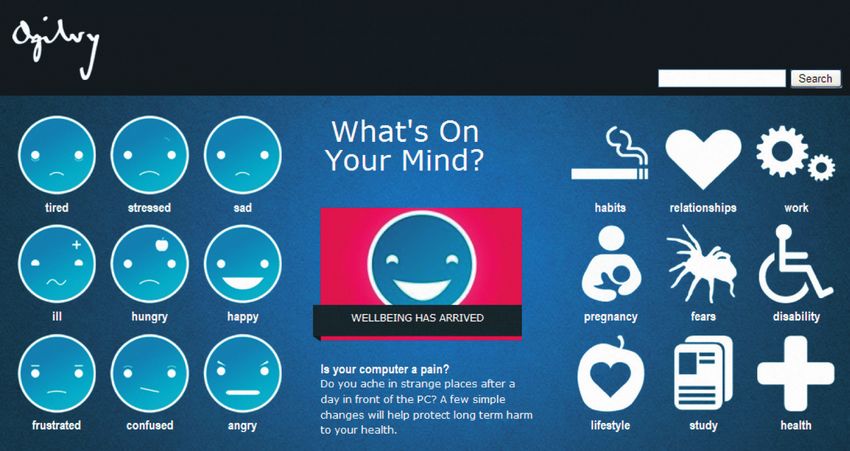
SECTION ONE

Economic impact and burden of depression                                 satisfaction and safety and can result in higher turnover of staff
                                                                         overall, and an increasing number of workplace accidents and
The World Health Organization (WHO) says that mental health
                                                                         critical incidents.9
problems are a leading cause of absenteeism and depression
has already become a leading cause of disability worldwide.4             In addition, an employee’s absence due to depression is
                                                                         estimated to cost a business an extra 28% on top of the
The changing economic model is also increasing the impact
                                                                         absent employee’s wage.8
that depression has on businesses. The majority of new jobs
demand cerebral, not manual, skills.5 Not surprisingly, people           Finally, failure of a business to manage stress and mental
who rely most on these cerebral skills at work identify stress,          health at work raises the risk of legal action under health and
anxiety or depression as the most serious work-related health            safety or disability discrimination legislation and may further
problem affecting them.4                                                 damage a company’s reputation, among both employees
                                                                         and customers.8 Conversely, companies which have a good
Depression has significant costs to the economy. In 2010 it
                                                                         reputation for caring about the wellbeing of their workforce
was estimated that depression cost the European economy
                                                                         can generate goodwill among potential customers as well as
€92 billion, of which approximately €54 billion (59%) related
                                                                         employees.8
to indirect costs (such as absence from work).6

Business costs
A recent report by the London School of Economics and                       For any company, it’s the
Political Science and King’s College London has since
confirmed that the annual cost of depression to European                    employees that represent the
businesses directly is in fact £77 billion.7 This is due to lost            most valuable capital. Health
productivity.
                                                                            management and active leadership
In 2007 the Sainsbury Centre for Mental Health estimated that
depression cost UK employers £26 billion every year.7 This                  are two essential contributors to
comprised £8.4 billion a year in sickness absences, £15.1
                                                                            employee satisfaction and, in turn,
billion a year in reduced productivity at work, and £2.4 billion a
year in replacing staff who leave their jobs because of mental              to customer satisfaction and a
ill health.8
                                                                            company’s long-term success.
Absence from work or lower productivity in work by employees
with depression can also impact on other staff, putting them                                                                 DPDHL
under additional strain. This impacts their productivity, job

                                                                     6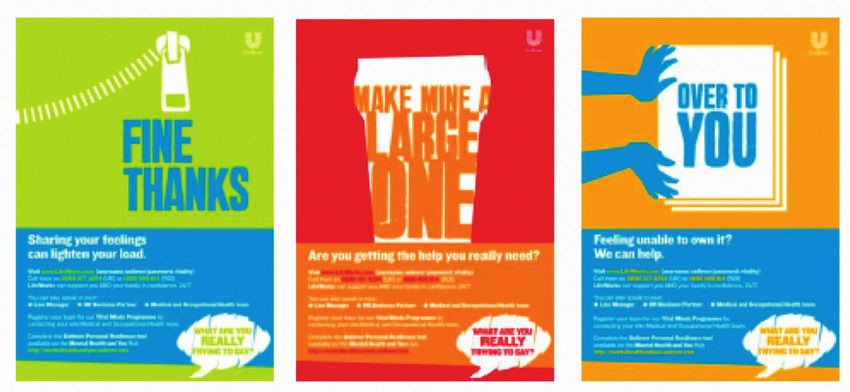
SECTION ONE

Case study: Unilever
Unilever is one of the world’s leading suppliers of fast-          An online portal ‘The Mental Health and You hub’ is a
moving consumer goods with 173,000 employees across                one-stop-shop for all resources related to wellbeing. It
the world. In October 2013, they launched a Mental                 includes links to relevant articles, testimonial films and
Wellbeing and Resilience Campaign in the UK and Ireland.           FAQs. LifeWorks is a free of charge employee assistance
                                                                   programme helping employees to manage personal issues
The campaign aims to improve mental wellbeing by:                  at work and at home. Additional resources include “Vital
✔✔ Building resilience in teams and individuals across the         Minds”, a team workshop that identifies potential causes
   organisation                                                    of stress to the team and positive practical responses.
✔✔ Developing line managers to lead and support a culture          Employees are also encouraged to use the Unilever
   of resilience and mental wellbeing and to manage the            Personal Resilience Tool which gives each person a
   things that influence resilience, health and wellbeing in       personal report on their own resilience and access to help
   the workplace                                                   if needed. Line manager training is also a key element, with
                                                                   on line training available for all line managers, and face-to-
✔✔ Providing excellent care and support to any employee
                                                                   face training being rolled out to over 1000 managers.
   who experiences mental ill-health for whatever reason
✔✔ Providing a one-stop-portal for access to tools and             In order to measure success, the campaign will aim for a
   resources                                                       10% reduction by 2015 in work-related mental ill-health
                                                                   cases and working days lost to mental ill-health. An
The plan to drive the campaign is based on four pillars:           increase in the percentage of employees self-reporting
✔✔ Leadership and Management                                       as ‘resilient` and functioning well, via associated Personal
✔✔ Communication and Culture                                       Resilience and Vital Minds programmes, will also be a key
✔✔ Building Resilience and Managing Pressure                       outcome.

✔✔ Support

Door Talkers

                                                               7
SECTION ONE
Human costs

   The company perspective
   DPDHL, one of the world’s leading mail and logistics
   groups based in Germany, with 480,000 employees in
   more than 220 countries, aims to promote employee
   health through a supportive work environment and
   provision of personal health resources. They believe it
   is important to listen to employees and gain their input.
   Every year they conduct a company-wide ‘Employee
   Opinion Survey’ (EOS), allowing their employees to
   influence the development of the entire group and help
   shape the individual working environment.

Depression and other mental health conditions are more
effectively treated early on.10 Symptoms of depression such
as low mood, cognitive symptoms, e.g. lack of concentration,
indecisiveness or forgetfulness not only reduce the quality-of-
life of sufferers, they also put these people at increased risk
of accidents and self-harm.11 Depression will also impact on
a person’s relationships with family, friends and colleagues,
and time off work or reduced productivity at work can affect
finances and push people into debt.3
                                                                      Psychological health is determined
A report conducted by the WHO found that psychosocial risks,
work-related stress, job strain and the associated depression         by a multitude of factors and the
risks are a substantial preventable public health issue.
                                                                      workplace is assigned a special
                                                                      significance here. On the one
                                                                      hand, having a job is a primary
                                                                      aspect for promoting health. On
                                                                      the other hand, the requirements
                                                                      for employability and the type of
                                                                      work are changing rapidly, which in
                                                                      turn can have a negative impact on
                                                                      employees’ health.
                                                                                                   DPDHL

                                                                  8
SECTION ONE

Case study: Ogilvy
Ogilvy is an international advertising, marketing and public       assistance to all forms of illness including mental health.
relations agency operating 450 offices in 120 countries with       A wellbeing working party has been established to look at
approximately 18,000 employees.                                    all forms of wellbeing, including communication, work-life
                                                                   balance, leadership and impact on health. This has included
This year the company is launching a resilience training           running a number of lunchtime sessions on nutrition, sleep,
scheme in all management and leadership programmes.                positive psychology, time management, etc. In addition,
The core of the training is based around an online                 Ogilvy has an EAP (employee assistance programme)
questionnaire each employee will complete to determine             for all employees which provides a confidential helpline
where they sit in relation to their norm group. Once the           to discuss all matter of issues and includes free face-to-
results have been generated, the individual will attend a          face counselling. The company also offers employees the
session to consider their results and develop an action plan       services of a clinical psychologist. Employees who are
to improve their ‘resilience’ in the workplace.                    suffering from signs of stress or depression are referred to
The company has also launched an occupational health               the practice.
referral scheme to help ensure Ogilvy offers the appropriate

My Wellbeing Website

                                                               9
SECTION ONE
Absenteesim due to depression                                          Lost productivity due to employees being off work with
                                                                       depression is a particular concern for businesses. Workers
                                                                       with mental health problems such as depression are absent
                                                                       from work for health reasons far more often than other
   The company perspective                                             workers, and when they have to take time off, they are away
   After respiratory, cardiovascular and musculoskeletal               for longer.8,10
   diseases, psychological illnesses are one of the main               To examine the impact of depression in the workplace and the
   causes for absenteeism in the workplace, according to               subsequent personal and economic burden, the European
   DPDHL. Alongside heart disease and musculoskele-                    Depression Association (EDA) commissioned the Impact
   tal illness, psychological illnesses account for 40% of             of Depression in Europe Audit (IDEA) Survey in 2012. The
   costs spent in the German health system, providing                  European-wide questionnaire which polled 7,000 workers
   DPDHL with another incentive for the company’s ‘Re-                 and managers, revealed that 1 in 10 employees take time
   spect and Results’ principle, which aims to promote                 off work due to depression, with 36 working days lost per
   health and wellbeing within the workplace.                          depressive episode, amounting to a total of 21,000 days in this
                                                                       population.1 The time taken off work for depression/anxiety or
                                                                       other common mental health problems is higher than for other
Work-related ill health can have a significant impact on               health reasons: The Office for National statistics published a
business costs. Given Europe’s ongoing economic troubles,              survey in 2007 which found that while 30% of workers took
absenteeism is a serious concern for both employers and                time off for health reasons in one year, among workers with
governments.                                                           depression, anxiety or other common mental health problems
                                                                       it was almost 50%.8 The average absence for health reasons
A survey conducted by The Economist Intelligence Unit
                                                                       was 23 days, whereas for people with depression and anxiety
has analysed the proportion of a salary that is covered by
                                                                       it was 40 days.8
employers during sick leave, as well as the proportion covered
by the state and employees. In Germany, for example, as                The Eurobarometer 2010 survey also found that workers
much as 100% of a worker’s salary is paid by their employer            with severe mental health problems were twice as likely to
for one month of sick leave.13 For a year’s sick leave, the            have been absent from work in the last four weeks for health
employer pays for 12%, while the remaining 88% is split                reasons, compared to those without mental health problems.10
between the state and the employee.13 In other countries this
might be slightly less, e.g. in Spain, 39% of a worker’s salary
is paid by their employer for one month of sick leave while for
a year’s sick leave, the employer pays for 3%.13

Sick on the Job? OECD, 2012

             Absenteeism and presenteeism for people with and without a mental disorder

        Sickness absence incidence                Sickness absence duration                              Presenteeism
                                                            (days)                                   (reduced productivity)
 35%                                          8                                            80%
 30%
              32%                                                                                       74%
 25%                                          6                                            60%
                                                        6.0
 20%
                                              4                           4.8              40%
 15%                          19%
 10%                                          2                                            20%                         26%
  5%
  0%                                          0                                             0%
             Mental      No disorder                  Mental       No disorder                        Mental       No disorder
            disorder                                 disorder                                        disorder

                                                                  10
SECTION ONE
Case study: Deutsche Post DHL (DPDHL)
Safeguarding the wellbeing and work ability of their 480,000
employees worldwide is vital for DPDHL, who aims to
Respect & Results
promote employee health through a supportive work
environment and provision of personal health resources. Less More
DPDHL’s overall health strategy is guided by one main
principle: ‘Respect and Results’ (see diagram). This guides
decision making processes and determines their corporate Managing people Leading people
culture to always show respect without compromising on
the results. To bring this guiding principle alive they strive Using misbehaviour of
Living Respect & Results
for three leadership values: Openness, Responsibility and others as an excuse
Commitment.
Asking for permission Asking for “forgiveness”
DPDHL believe you can promote workforce wellbeing on
four levels, which are all influenced by health management:
Fingerpointing Allowing mistakes
✔✔ Health promoting workplace design – Favourable
workplace set up, working conditions, working hours
Telling Listening
and working atmosphere
✔✔ Qualification/Development of decision making compe-
Solo thinking Think as one company
tence – Foster capability to take responsibility and im-
prove stress resistance
✔✔ Individual Health Promotion – Support a healthy life-
style
✔✔ Respectful Company Culture and Social Interaction –
Open, transparent communication; culture of respectful Respect Results
feedback; creation of social networks; sympathetic
interaction
11SECTION TWO
The impact of cognitive symptoms on an individual’s ability to perform at work
The cognitive symptoms of depression (concentration
difficulties, indecisiveness, and/or forgetfulness) are a
frequent but lesser known part of depression, yet they have a
significant impact on quality-of-life and the ability to function
Geoff McDonald’s story
professionally and socially.11
Presenteesim due to depression
Workers with depression experience cognitive symptoms,
such as trouble concentrating, indecisiveness or forgetfulness
up to 94% of the time during an episode, reducing their level
of performance in the workplace to below the standard
expected.14 UK estimates suggest that 1.5 times as much
working time is lost through presenteeism as absenteeism
for mental health conditions,8 and in the US it has been
suggested that it could be four times as much.10 The cost of
presenteeism to employers is substantially higher because it
occurs more frequently with higher paid staff.8
Results from the Eurobarometer survey demonstrate this.
While 28% of European workers with a severe mental illness Geoff McDonald is a Vice President at Unilever. He
said they had missed days from work in the past four weeks as suffers from depression. Since a young age, Geoff
a consequence of an emotional problem, 49% admitted they admits he has felt anxious about certain things. These
had worked fewer hours, 56% said they had accomplished thoughts have included worries about the family as
less and 67% had worked less carefully.10 When asked well as with day to day rituals such as reading bad
specifically whether they had accomplished less than they news in a newspaper. After 3 months working on an
would have liked in the last four weeks, because of either intensive project – that finished successfully, Geoff
emotional or physical health problems, those with a severe experienced a severe panic attack. As he had not
mental disorder were more than 3 times as likely than those been through anything like this before, he wasn’t sure
without to say they had (88% versus 26%), and those with a how to manage it. The panic attack triggered a period
moderate disorder, 2.5 times as likely (69%).10 of depression, which led him to taking 2 months off
work to recover. Geoff sought treatment with the help
Where sickness absences due to depression are lower, the
of different therapies such as cognitive behavioural
effects of presenteeism on productivity are likely to be higher
therapy (CBT) and medication; he was gradually able
because studies suggest that presenteeism and absenteeism
to recover and return to work. Geoff has experienced
are to some extent substitutes for each other.10 Many workers
subsequent bouts of depression since, but feels he
with mental health disorders never take sick leave,10 because
is now more aware of the condition and how best to
they are afraid of losing their job. This means reduced
manage himself when feeling ill.
productivity can continue for an extended period, with
the employer often unaware of the reason why, because
employees do not disclose the condition because they fear
How did his employer help?
stigma and discrimination.15 Geoff feels that one of the most important things in his
recovery was talking to family, friends and his manager
at work. His manager was extremely supportive, which
meant he could focus on getting well. He says he is
lucky that he didn’t experience any discrimination; in
Acknowledging and talking about fact once he started talking about his experiences he
issues when they arise is a sign noticed a lot of compassion and support from those
around him. In particular speaking to those who had
of strength and the first step to been ill before and seeing them fully recovered gave
resolution him so much hope.
Unilever
12SECTION TWO
Case study: British Telecom (BT) Group plc
BT is one of the UK’s largest private companies and is BT Mental Health Toolkit which includes access to a wide
an established global communications company serving range of resources for all BT employees and managers.
customers in more than 170 countries with almost 90,000 The resources are divided into three different levels:
employees worldwide. promoting good mental health; support when mental health
may be at risk; and managing mental health issues.
The company launched a three-tier framework in 2002
combining prevention, intervention and rehabilitation. The initial goal was to ensure workers affected by
depression received appropriate support with affected
The three-tier framework includes: employees working with their line manager to establish
✔✔ Primary prevention: encouraging all workers to look a plan to handle stress, which might include access to
after their mental health to prevent conditions such counselling. The ultimate goal was to move from treatment
as depression, by providing information on managing and towards prevention of the condition through a
stress and adopting a healthy work/life balance supportive and healthy working environment.
✔✔ Secondary intervention: identifying people at risk of Results from a programme BT launched in 2006 called
depression by looking for the early signs of depression ‘Positive Mentality’ has demonstrated sickness absence
and for individuals under stress rates due to mental health have been reduced by 30%.
✔✔ Tertiary rehabilitation: the identification and support of Feedback from staff revealed that 68% learned something
employees who are already experiencing an episode new about how to look after their mental health, 56% had
of depression to help improve their ability to function as tried some of the recommendations and were continuing
quickly and by as much as possible to follow them and 51% had noticed improvements in their
mental wellbeing.
All of the company’s employees are given information on
how to stave-off and combat mental health issues and a
Good Work Good Health
(produced by H&S Working Group of the European Social Dialogue Committee for Telecommunications)
Primary Tertiary
Secondary Intervention
Prevention Rehabilitation
Education & General awareness training to Training of people managers to Guidance for managers and employees on
Training workforce of mental health issues, recognise signs of distress and to effective return to work adjustments
healthy lifestyle and stigma avoidance signpost support services
Assessment Risk assessment of work and change Stress audits to identify people and/ Access to occupational health service for
to control psychosocial hazards or business units at risk of harm assessment of sick employees and advice to
management
Practical Adoption of flexible working (time &/ Availability of confidential employee Provision of psychological support (CBT)
Support or location) to help balance work and assistance programme services for mentally ill staff
home commitments
Primary Engagement
Promote Good Mental Health
Secondary Intervention
Support when Mental
Health at Risk
Tertiary
Resolution
Managing
Mental Health
Issues
13SECTION THREE
The benefits of addressing depression in the workplace
Benefits to the individual affected individual, social inclusion and reduce the financial
impact they and their family would have experienced if absent
Despite the profound negative effect of depression on
from work for a prolonged period.6
an individual, Lundbeck’s internal survey found that 47%
of employees with five or more issues or symptoms of A study from the London School of Economics and Political
psychological difficulties did not tell their immediate superior, Science (LSE) found that employees with depression are less
while 48% did not seek professional help. The IDEA survey, likely to take time off work if their managers offer help or a
of 7,000 workers in Europe, also revealed that of those who flexible working pattern.6
took time off for depression, 25% did not tell their employer
the reason why.1
Treatment of depression is more successful when the
condition is diagnosed and treated early on.10 A workplace Good mental resilience is vital
environment where staff do not feel they have to hide their
condition because it might harm their career prospects, and to our wellbeing; it enables us
where those exhibiting signs of the condition will be supported to bounce back when bad things
to seek help will start treatment sooner. Once they embark
on treatment, being in an environment where they feel happen in our lives preventing
surrounded by supportive colleagues and managers, who anxiety, stress or depression from
will be considerate and try to accommodate their needs,
can facilitate the recovery process, because employment is taking hold.
beneficial to both physical and mental health. Unilever
Continuing to go to work, even if for fewer hours or in a
slightly amended role, will provide continuity of routine for the
14SECTION THREE
Benefits to businesses
The company perspective A good psychological work
BT’s mental health framework has not only seen environment is important. It
benefits to the individual in terms of their wellbeing,
but a positive impact on the overall company has also
results in satisfied and committed
been recorded, with sickness absence rates due to employees, few work-related
mental health reduced by 30%.
injuries, minor work-related stress
symptoms, low absence due to
For employers, taking action to promote mental wellbeing sickness and low staff turnover.
amongst staff and support those experiencing an episode
of depression, or at risk of one in the workplace, makes A good psychological work
business sense. It will lessen the overall financial impact that environment not only influences
a depressive episode will have through absenteeism and
presenteeism. At any one time in Britain one worker in six will the wellbeing of the employees
be experiencing depression, anxiety or problems relating to but also Lundbeck’s efficiency and
stress.8 Among people who describe their mental health as
poor, 80% say this is at least in part a result of problems at financial position.
work.16 Lundbeck
It has been calculated that employers could save at least 30%
of what they lose financially through lost productivity and the
need to replace staff because of mental health conditions by
taking simple steps to prevent and improve early identification
of mental health problems in the workplace; in the UK, that
would equate to at least £8 billion a year.8
15SECTION FOUR
Approaches to the management of depression in the workplace
Mental health legislation
Some form of mental health legislation exists in numerous
countries across Europe, either as a stand-alone law or else Depression, the leading cause of a
incorporated with their general health act. A comprehensive disability worldwide, is one of the
overview can be found at http://ec.europa.eu/health/mental_
health/docs/europopp_full_en.pdf (table 5.2). major challenges that occupational
However, there is an increasing political call in Europe for health and safety legislation will
the need to prioritise legislation that enables individuals with have to overcome in the future.
depression in the workplace to be identified sooner, and be
encouraged to seek help. A number of members of European MEP Angelika Werthmann
parliament recommend policies and legislation that support
better working conditions, combined with provision of practical
support for staff members who have depression or other
mental illnesses. They specifically suggest that the imminent
The ILO is committed to
updates to the European Strategy on Health and Safety at maintaining a regular dialogue
Work (2013 - 20) should acknowledge the need to address
shortfalls in policy on mental health and depression.17
between enterprises and
WHO recognised the need for a comprehensive, coordinated
practitioners working on mental
response at the country level to the global burden of mental health, and health and safety.
disorders. It called for a comprehensive Mental Health Action
Plan (2013 - 20) to promote mental wellbeing, prevent mental
We have everything to gain from
disorders, provide care, enhance recovery, promote human cooperation which will enable us
rights and reduce the mortality, morbidity and disability for
persons with mental disorders.
to collectively react and respond to
the pressing issues facing today’s
workplaces.
Guy Ryder, Director-General, ILO
16SECTION FOUR
Workplace policies
The company perspective
Ogilvy believes there are two challenges when it
comes to addressing depression and mental health
among employees. One is the absence in some
companies of a detailed policy to manage mental
health in the workplace. The other is a lack of training
among managers in this area.
Depression is relatively common, but there is a striking lack of
awareness of it in the workplace and many managers admit
they do not know how to support employees with the condition
or even what their workplace policies on mental health are.
Perhaps not surprisingly, as a result most workers are reticent
to inform their bosses when diagnosed with the condition.
The IDEA survey revealed the extent to which people with
depression hide the condition. While one in five workers in
Europe had been diagnosed with the condition at some stage, Mental health and depression
only half (54%) were aware of a colleague who had been.1 remain taboo subjects
This is because only a third of workers with depression told
anyone at work about it – and those that did were most likely unfortunately. Although we are
to tell an immediate colleague.1 The predominant reasons getting better as a nation and in the
employees gave for keeping silent is stigma and the fear of
putting their job at risk.1 corporate world at recognising the
Furthermore, one in 10 managers confronted with an employee severity of the issue and its effect
with depression admitted that they did not know how to react, on individuals and businesses, it
while nearly one-third said they have no formal support or
resources to deal with employees who have depression.1 frightens many managers who do
In fact the majority of workplaces (78% in the UK), do not not want to be seen to worsen a
have a formal mental health policy in place and would most situation or react wrongly.
likely benefit from reviewing how they deal with depression.18
Ogilvy
WHO’s comprehensive mental health action plan seeks to
address this issue. It encourages employers to place a greater
emphasis on employee mental health wellbeing. Options for
implementation include promoting work participation and
We need to design new intervention
return-to-work programmes for those affected by mental
health and psychosocial disorders. strategies and conduct a
more robust evaluation of the
interventions once they have been
implemented.
Dr. Dan Chisholm,
Department of Mental Health and
Substance Abuse, WHO
17SECTION FIVE
Conclusion
Depression is now the leading cause of disability worldwide, group also plans to develop an HR charter, which will set out
disproportionately and affecting people of working age.19 the ten principles of HR Leadership to Target Depression –
It causes considerable reduction in productivity due to the an outline of the key actions that businesses should take to
impairment from cognitive symptoms, which has significant identify and support people with depression in the workplace.
cost implications from both an economic and individual This work is underway, and this report represents an
business perspective.10 Companies such as BT, DPDHL, important early step toward a framework of knowledge and
Lundbeck, Ogilvy and Unilever are leading the way in this area, comprehension of why employers must act, the challenges
with mental health policies that aim to address the challenges they face and the steps they can take to reduce the impact of
of depression in the workplace. Examples shared in this report depression in the workplace.
demonstrate how employers can encourage early detection
and management of depression, when equipped with the right By taking action now, we will preserve the future wellbeing
policies and resources. Equally, Håkan and Geoff’s stories of individuals and their families, as well as deliver benefits
illustrate the personal burden of depression and how the right to business in a time when the economy places ever more
kind of support from an employer can enable a person with demands on business’ primary commodity – its people.
depression to continue working.
However, a third of managers in Europe say they lack the
resources and support needed to tackle depression at
work.1 The HR Leadership Forum to Target Depression in Depression and mental health is
the Workplace is at the forefront of a global drive to address an area that many, including those
this issue and combat the devastating effects of depression.
Their goal is to provide practical recommendations and equip in HR, feel unqualified to deal with
human resources professionals across Europe with the tools appropriately and effectively. A
and resources to help them deal with depression among their
employees. plan, training, policy and a general
The advisory group has held two meetings to date: the toolkit for those businesses which
first, hosted by Royal Mail in London, the second by the
are smaller would be incredibly
International Labour Organization in Geneva; and has
embarked upon development of a ‘toolbox’ containing useful.
resources now available to employers to diagnose their own Ogilvy
requirements and to act upon that information. In 2014, the
References
1. IDEA: Impact of Depression at Work in Europe Audit Final report. Ipsos Healthcare. October 2012
2. Stewart W. Cost of Lost Productive Work Time Among US Workers With Depression. JAMA. June 2003
3. Simon GE. Depression and Work Productivity: The Comparative Costs of Treatment Versus Nontreatment. Journal of Occupational and
Environmental Medicine. January 2001
4. Oortwijn W, et al. Social determinants state of the art reviews - Health of people of working age - Full Report. (2011) European Commission
Directorate General for Health and Consumers. Luxembourg. ISBN 978-92-79-18526-7
5. Wilkerson B. BRAIN Health + BRAIN Skills = BRAIN Capital. Final Report of the Global Business and Economic Roundtable on Addiction and
Mental Health. http://www.mentalhealthroundtable.ca/mar_13/Dubai-Speech-Bill-Wilkerson-Mar-14-2013.pdf
6. J. Olesen, et al. The economic cost of brain disorders in Europe. Eur J Neurology. 2012; 19:155-162
7. Evans-Lacko S, Knapp M. Importance of Social and Cultural Factors for Attitudes, Disclosure and Time off Work for Depression: Findings from
a Seven Country European Study on Depression in the Workplace. PLOS One. 2014
8. Sainsbury Centre for Mental Health (2007). Mental Health at work: developing the business case. SCMH
9. Hilton M, The University of Queensland and The Queensland Centre for Mental Health Research. Assessing the financial return on investment
of good management strategies and the WORC Project
10. Sick on the job? Myths and Realities about Mental Health and Work. OECD, 2012
11. Greer Tl, et al. CNS Drugs. 2010;24(4):267-284
12. Leka S, Jain A. World Health Organization. Health Impact of Psychosocial Hazards at Work: An Overview. 2010; 72
13. Rogers L. The Economist Intelligence Unit. Out of Office: An Overview of Workplace Absenteeism in Europe. 2014; 9
14. Conradi HJ, Ormel J, de Jonge P. Psychol Med. 2011; 41:1165-1174
15. Houses of parliament Parliamentary office of science and technology. Mental Health and the Workplace. Post note number 422 October 2012
16. Employee Outlook, part of the CIPD series. Focus on mental health in the workplace. 2011; 3
17. Depression in the Workplace: Assessing progress in integrating depression in EU occupational health and safety legislation. European
Parliament policy roundtable, 8 April 2014
18. Shaw Trust. Mental Health: Still The Last Workplace Taboo? December 2010
19. Depression Factsheet. WHO http://www.who.int/mediacentre/factsheets/fs369/en/. Last accessed March 2014
18You can also read


