FIELD INSTRUCTOR
TRAINING MANUAL
     2020-21
←
→
Page content transcription
If your browser does not render page correctly, please read the page content below

FIELD INSTRUCTOR
TRAINING MANUAL
2020-21
FIELD INSTRUCTOR TRAINING MANUAL 2020-21
                                                   1

“There are three things to
remember when teaching.
Know your stuff, know whom
you are stuffing, and stuff
them elegantly.”

                  –Lola May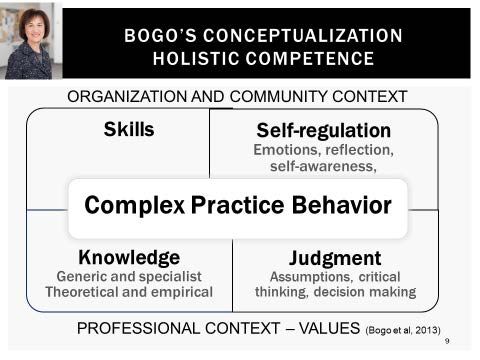
FIELD INSTRUCTOR TRAINING MANUAL 2020-21
 2

                                          TABLE OF CONTENTS
1-Berkeley Social Welfare and Field Education................................... 3
      School Directory ............................................................................................................. 3
      Field Calendar At-A-Glance ........................................................................................... 5
      Berkeley Social Welfare Mission and Vision ................................................................. 6
      Overview of the MSW Curriculum..................................................................................7
      MSW Sample Curriculum Plan ..................................................................................... 11
      Areas of Specialization………………………………………………………………..……………………12
      Multi-Level Practice Framework .................................................................................. 13
      Berkeley Social Welfare’s Field Education Model ........................................................ 14
      Berkeley Social Welfare’s Defined Field Competencies…………………………….........…..15
      Holistic Competence in Social Work ………………………………………………………………...16

2-Orienting and Assessing Your Student ........................................... 17
      Orientation Checklists................................................................................................... 17
      Preparing for Task Assignments ...................................................................................18
      General Orientation to Agency Context ........................................................................ 19
      Agency Risk Reduction Guidelines .............................................................................. 20
      COVID-19 Related Safety Policies……………………………………………………………..………20
      General Agency Safety Policies………………………………………………………………………….23
      Assessing Your Student ................................................................................................ 26
      Transparency: Sharing Your Experiences and Expectations………………………………..27

3-Developing a Competency-Based Learning Agreement .................. 28
      Sample Learning Agreement Worksheet ..................................................................... 29
      Protecting the Rights and Needs of Underrepresented Students ............................... 35
      Committing to a Learning Environment Free of Harassment and Discrimination ... 36

4-Instructional and Supervisory Methods…………………………………….37
     Overview of Methods…………………………………………………………………………………….…38
     Sample Observational Tools………………………………………………………………………….….39
     Forming Feedback After Observation…………………………………………………………….….41
     Effective Feedback and Principles of “Dosing” Feedback…………………………………….42

5-Competency-Based Student Evaluation ......................................... 43
     Competency Rating Scale for Foundation MSW Field Education….…………..…………..44
     Global Ratings and Qualitative Comments…………………………………………………………. 53
     Grade Recommendation ................................................................................................ 54

6-Relevant Policies and Procedures ................................................. 55
      Student Stipends or Wages ...........................................................................................55
      Attendance Policies and Time Requirements...............................................................55
      Field-Related Conflicts and Problem Solving Methods .............................................. 58
      Selection and Approval of Placement Sites and Field Instructors………………………….61
      Field Placement in an Employing Agency ………..………………………………………………..63

7-Additional Resources for Field Instructors.................................... 64
1-Berkeley Social Welfare and Field Education

               Berkeley Social Welfare Directory
                           School of Social Welfare
                      University of California, Berkeley
                       120 Haviland Hall, MC #7400
                          Berkeley, CA 94720-7400
                      http://socialwelfare.berkeley.edu

    Field Education:              swfield@berkeley.edu

    Dean of the School:
           Linda Burton, PhD
           lburton@berkeley.edu

    Director of Field Education:
           Greg Merrill, LCSW
           gregmerrill@berkeley.edu

Advancing Health & Wellness Across the Adult Life Span
(Direct Practice with Adults and Older Adults):
    Jennifer Jackson, LCSW
    jjackson@berkeley.edu

    Patti Park, LCSW, PsyD
    pattipark@berkeley.edu

    Carla Richmond, LCSW
    crich2020@berkeley.edu

Latinx Center of Excellence and Integrated Behavioral
Health/Substance Use Disorder Stipend Programs

    Luna Calderon, LCSW
    Latinx Center of Excellence
    lcalderon@berkeley.edu

    Lissette Flores, MPH
    Latinx Center of Excellence
    swfield@berkeley.edu

    Erica Gomes, LCSW
    Integrated Behavioral Health/SUD Stipend Program
    ericagomes@berkeley.edu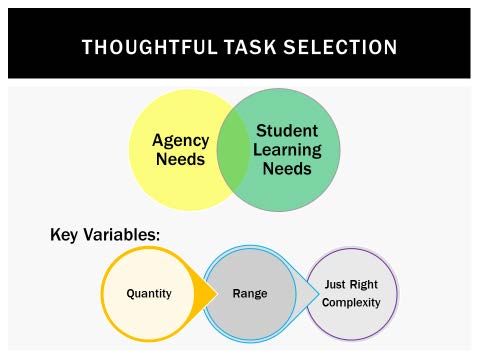
FIELD INSTRUCTOR TRAINING MANUAL 2020-21
 4

Strengthening Children Youth & Families
(Direct Practice with Children and Families):
       Christina Feliciana, LCSW, PPSC
       Child Welfare Scholars Project Coordinator
       cfeliciana@berkeley.edu

       Patti Park, LCSW, PsyD
       pattipark@berkeley.edu

             Christine Scudder, LCSW, PPSC
             Child Welfare Scholars
       cascudder@berkeley.edu

       Robert Watts, LCSW, PPSC
       rwatts@berkeley.edu

Strengthening Organizations and Communities (Macro):
       Andrea DuBrow, MSW, MPH
       adubrow@berkeley.edu

Admissions:                  socadm@berkeley.edu
Social Welfare Job Listserv: sswjobs@lists.berkeley.edu
Librarian, Susan Edwards:    sedwards@library.berkeley.edu
Online Guide to MSW Field Education:
https://socialwelfare.berkeley.edu/academics/field-education/guide-field-education-msw-
students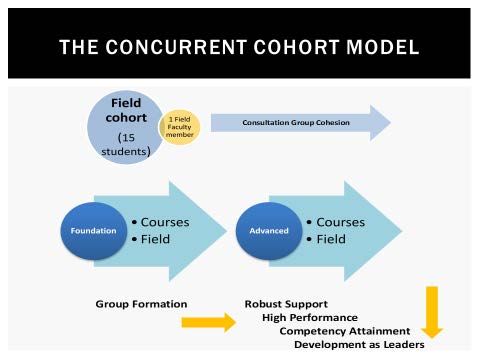
2020-2021 Field Calendar At-A-Glance
       Field Education Days
       First Year Students: Wednesdays and Thursdays
       Second Year Students: Wednesdays, Thursdays, and Fridays

                         First Year Student               Second Year Student
FALL 2020 SEMESTER
Aug 26 (Wed)                    Academic Instruction begins: 1st day of Classes
Sep 2 (Wed)              Virtual Field Instructor Training Day, 9 am – 12 noon
Sep 7 (Mon)                                 Labor Day Holiday
Sep 9 (Wed)                                           Fall Field Education Begins
Sep 23 (Wed)         Fall Field Education Begins
Oct 2 (Fri)                                              ü Learning Agreement Due
Oct 22 (Thur)        ü Learning Agreement Due
Nov 11 (Wed)                              Veteran’s Day Holiday
Nov 26-27 (Th-F)                          Thanksgiving Holidays
Dec 10 (Thur)      ü First Semester Evaluation Due
Dec 11 (Fri)                                          ü First Semester Evaluation Due
Dec 11 (Fri)                Academic Instruction Ends, Final Examinations Begin
Dec 17 (Thurs)      Last Day Fall Field Practicum
Dec 18 (Fri)                Semester Ends               Last Day Fall Field Practicum
                         First Year Student               Second Year Student
SPRING 2020 SEMESTER
Jan 6 (Wed)                          Spring Field Education Begins
Jan 18 (Mon)                          Martin Luther King, Jr. Holiday
Jan 19 (Tue)                   Academic Instruction begins: 1st day of Classes
Feb 15 (Mon)                             President’s Day Holiday
Mar 22-26 (M-F)                               Spring Break
April 22 (Thurs)   ü Final Field Evaluation Due
April 23 (Fri)                                        ü Final Field Evaluation Due
April 29 (Thurs)     Last Day of Field Education
April 30 (Fri)                                           Last Day of Field Education
May 14 (Fri)                Semester Ends – Professional Liability Coverage ends

                   Total Minimum Hours: 325-400 Total Minimum Hours: 575-720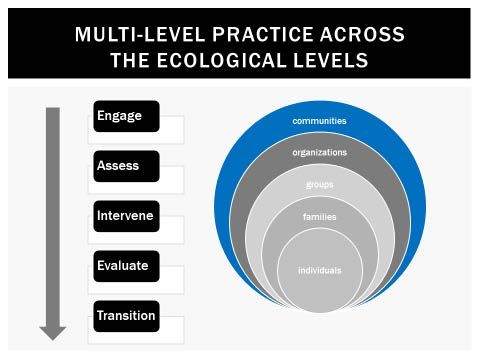
About Berkeley Social Welfare

Vision
Improving the lives of vulnerable individuals, families and
communities

Mission
Located within the world's finest public university and one of the
most diverse regions in the nation, the UC Berkeley School of Social
Welfare strives to transform the systems that perpetuate poverty and
social disadvantage. Berkeley Social Welfare develops effective
leaders and scholars committed to solving complex social problems;
produces, disseminates and utilizes research to improve social-service
delivery and policy through critical thinking and evidence-based
knowledge; and prepares the next generation of culturally-competent
social workers, researchers and teachers dedicated to serving the
most vulnerable members of our society.

MSW Program Mission
Berkeley Social Welfare’s MSW Program develops future leaders of
the profession who challenge conventional wisdom by being deeply
prepared for multi-level social work in specific areas of practice. We
provide an education built on the strongest available evidence,
oriented to advancing social justice, and responsive to the changing
needs of local and global communities.
FIELD INSTRUCTOR TRAINING MANUAL 2020-21
                                                                        7

OVERVIEW OF THE MSW CURRICULUM
Berkeley Social Welfare offers a two-year, full-time program of study
leading to the Master’s in Social Welfare (MSW) degree. The
program, fully accredited by the Council on Social Work Education
(CSWE), prepares students for advanced professional social work
practice in a variety of areas. All students follow a prescribed, full-
time (minimum 12 units/semester) program of work for both
foundation and advanced courses unless they qualify for a modified
academic plan. The School will begin offering a Flex MSW in 2020-
2021 which includes a one-year advanced standing option for persons
holding their BSW and an extended option (three-year part-time)
option for those who are employed and wish to remain so.

MSW Degree Requirements
To be eligible for graduation, students must satisfy all requirements
for the MSW degree:

  1. Unit Requirements: A minimum total of 54 units is required
     for the MSW degree. At least 29 academic units of required and
     elective courses and 25 units of field education must be
     completed. Most social welfare graduate courses provide two
     units of academic credit for two hours a week in class.

  2. Field Education Requirement: A total of 25 field
     placement and field seminar units are required for graduation,
     the equivalent of 900-1,200 hours of field education. Students
     receive approximately two units of field internship placement
     credit per semester for each full day per week spent in the field.

  3. Academic Standing: To be awarded the MSW degree a
     student must have maintained a grade point average not lower
     than 3.0 (B) in all upper division and graduate academic
     courses undertaken in graduate residence at the University of
     California.
FIELD INSTRUCTOR TRAINING MANUAL 2020-21 8 MSW Curriculum Overview First Year: Foundation All MSW students regardless of specialization take the same set of courses in their first semester. The anchor course for the semester is SW 241 Introduction to Multi-Level Practice which helps students to conceptualize engagement, assessment, and intervention at all ecological levels including individuals, families, groups, agencies, and communities. At the same time, students complete SW 240, a course in the historical, intellectual, and philosophical foundations of social work which includes modules on values, social justice, and social work ethics; SW 200, a course in the underlying theories that inform multi-level social work practice including ecological theory, attachment theory, person-in-environment, and critical race theory among others; and SW 220, a course that introduces students to major American social welfare policies and the policy making process. Macro students also take a course in group, organizational, and community dynamics; Child and Family students take a course in child development; and Adult/Older Adult students either take a course on psychopathology or aging processes. Concurrently, students participate in field seminar which facilitates self-reflection, effective learning stances for field learning, and engagement and communication micro-skills. In the spring semester, students take an advanced practice course in their area of specialization (Children Youth and Families; Adults and Older Adults Across the Lifespan, Management and Planning) that focuses on specialized methods. In addition, they take an advanced policy course that speaks to their area of specialization as well and the introduction to research which helps them to be critical consumers of research-based knowledge. Students also often take a diversity course and begin their advanced electives. Second Year: Advanced Specialization In the second year, students take a year-long applied research methods course which is project-based. Students work to design a program evaluation so that they can conceptualize how to evaluate practice outcomes. They will need access to the person in your agency who evaluates outcomes for brief consultation.
FIELD INSTRUCTOR TRAINING MANUAL 2020-21
                                                                       9

In addition, second year students usually take 2-3 advanced electives
that speak to their unique interests, learning needs, and advanced
field placements. The list of electives available in the School of Social
Welfare appears below. Students frequently take electives outside of
Social Welfare including in Public Health, Public Policy, Education,
Psychology, and City and Regional Planning. A growing number of
our students opt to spend a third year getting a second master’s
degree, usually in public health or public policy. In their second year,
Macro students take an additional course in program
implementation.

MSW ELECTIVES

Psychosocial Problems and Psychopathology (DSM V)
Infant Mental Health
Narrative Therapy with Vulnerable Populations*
Cognitive Behavioral Methods
Health and Human Services in Mexico*
Immigrants and Refugees in the U.S*
Financial Management for Nonprofit and Government Agencies
Aging Processes*
Trauma Informed Care Across the Lifespan
Child Development from Infancy to Adolescence in Its Social Context
Social Work and Education Policy
Social Work with Groups
Substance Abuse Treatment
Family Therapy
Human Sexuality*
Leadership Development
Solution Focused Brief Therapies
Diversity-Competent/Anti-Oppressive Social Work*
Motivational Interviewing: Helping People Change
Social Work with Latino Populations*
Social Work Practice in School Settings
Forensic Social Work*
Philanthropy: Foundations and Grant-Writing
Community Organizing*
Social Work Practice in Integrated Behavioral Health Care
Stress and Coping
*Approved to meet the diversity elective requirement
FIELD INSTRUCTOR TRAINING MANUAL 2020-21 10 Courses may also be taken in other graduate division schools such as public health, public policy, law, education, psychology, sociology, environmental design, business etc.
FIELD INSTRUCTOR TRAINING MANUAL 2020-21
                                                                                               11

MSW Sample Curriculum Plan

The sample curriculum plan outlined below shows the program of
work typically followed by most students. Students in special degree
program options (e.g., joint degree programs, school social work
credential program, etc.) will have additional requirements, and some
concentrations may also have additional requirements in the
advanced curriculum.

 Berkeley Social Welfare MSW Curriculum Guide

                         SOC WEL 200 Theories for Multi-Level Practice
                         SOC WEL 220 Introduction to Social Welfare Policy
                         SOC WEL 240 Historical, Philosophical, and Intellectual Foundations of Social Work
                         SOC WEL 241 Introduction to Multi-Level Social Work Practice
                         SOC WEL 290A Foundation Field Integration Seminar
                  Fall   SOC WEL 410A Foundation Field Practicum
                         And 1 of the following by specialization area:
                         SOC WEL 205 Psychosocial Problems & Psychopathology
              1          SOC WEL 210C         Aging Processes
                         SOC WEL 210i Group, Organizational & Community Dynamics
 FOUNDATION

                         SOC WEL 212          Child Development in Social Context
                         SOC WEL 275 Diversity-Competent/Anti-Oppressive Social Work
                                              or Approved Diversity Elective
                  Spring SOC WEL 280 Introduction to Social Welfare Research
                         SOC WEL 290B Foundation Field Integration Seminar
                         SOC WEL 410B Foundation Field Practicum
                         SOC WEL ##            Concentration Practice Course
                         SOC WEL ##            Concentration Policy Course
                         SOC WEL 282A Seminar in Social Welfare Research
                         SOC WEL 292A       Advanced Field Integration Seminar
                         SOC WEL 412A Advanced Field Practicum
                  Fall
                         Additional Concentration-based Coursework (Required or Elective)
                         Any Special Program Options Requirements
                         Additional Advanced Professionally Relevant Elective Coursework
              2
                         SOC WEL 282B Seminar in Social Welfare Research
 ADVANCED

                         SOC WEL 292B       Advanced Field Integration Seminar
                         SOC WEL 412B Advanced Field Practicum
                  Spring
                         Additional Concentration-based Coursework (Required or Elective)
                         Any Special Program Options Requirements
                         Additional Advanced Professionally Relevant Elective Coursework
FIELD INSTRUCTOR TRAINING MANUAL 2020-21
12
Berkeley Social Welfare Areas of Specialization
Berkeley Social Welfare’s MSW Program and the advanced
curriculum are organized around three areas of specialization, with a
program of study in each designed to impart the specialized
knowledge and skills required for advanced practice.
§ Advancing Health and Wellbeing Across the
Adult Life Span (AHWAL): Preparing students for
direct practice and leadership careers in serving adults,
older adults, and their families in health, mental health,
aging, and other settings.
§ Strengthening Children and Families (SCYF):
Preparing students for leadership and direct practice
roles in programs serving children, adolescents, and
their families in public settings such as schools, child
welfare agencies, health and mental health programs,
juvenile hall, and other settings.
§ Strengthening Organizations and Communities
(SOC): Preparing students for leadership in the public
and nonprofit sectors as program managers, agency
directors, policy analysts, program evaluators, and
community organizers.
Additional Credentials or Programs:
Adult Protective Services Stipend Program, Aging Certificate; Child
Welfare Scholars Program; Latinx Social Work Certificate; Latinx
Center of Excellence; Pupil & Personnel Services Credential (School
Social Work); and Integrated Behavioral Health and Substance Use
Disorder Stipend Program.
We also have concurrent degree programs with public health, public
policy, and our own PhD program.FIELD INSTRUCTOR TRAINING MANUAL 2020-21
13
Multi-Level Practice is Berkeley Social Welfare’s
organizing framework:Berkeley Social Welfare’s Field Education Model We have dedicated full-time field faculty who help to develop and implement agency partnerships, facilitate student placements, lead field seminars, teach practice methods courses, and sit on admissions and curricular planning committees. Students typically have one field faculty member and one field cohort of about 15 students for both of their MSW years. This leads to an opportunity to assess, teach, coach, and evaluate students over multiple contexts across time.
FIELD INSTRUCTOR TRAINING MANUAL 2020-21
                                                                                     15

Berkeley Social Welfare’s Defined Field Competencies
The School has established a set of 12 practice competencies based upon the 2015
Educational Policies and Accreditation Standards of the Council on Social Work and
interpreted for our context. These competencies guide task assignment, instruction, and
evaluation of student learning:

   1. Engagement with Individual, Families, Groups, Organizations, and/or
      Communities: Establishes contact, builds rapport, forms working
      relationships, and invites a diverse array of clients and/or constituents to
      participate in clinical services and/or administrative projects.
   2. Consultation, Coordination, and Collaboration: Obtains information
      from a variety of collaterals, stakeholders, and/or other formal or informal
      sources; integrates collateral information into an effective and coordinated
      service and/or project plan.
   3. Assessment of Individuals, Families, Groups, Organizations, and/or
      Communities: Collects, analyzes, and applies relevant information and
      develops relevant, well-formed goals to guide the effective delivery of clinical
      services and/or the effective execution of administrative and planning projects.
   4. Intervention Planning and Implementation: Selects intervention methods
      to support goal acquisition based upon assessment, the best available evidence
      and/or knowledge, and client or constituent preferences. Evaluates and modifies
      implementation so as to maximize the likelihood of reaching the intended
      outcome(s).
   5. Systemic Intervention: Demonstrates interest, understanding, and/or
      effective participation in the organizational, institutional, policy, and/or
      community contexts for the purpose of improving the delivery of social work
      services to vulnerable populations.
   6. Professional Communication: Communicates verbally and in writing in an
      organized, complete, and timely manner. Delivers communication in an effective
      manner given its purpose and context.
   7. Professional Ethics: Considers and applies the professional code of ethics for
      social workers so as to recognize ethical conflicts and arrive at principled
      decisions.
   8. Professional Conduct: Demonstrates professional behavior, appearance, and
      communication in accordance with standards identified by the school, agency,
      community, and profession.
   9. Professional Growth and Development: Takes responsibility for learning
      and demonstrates initiative. Receives, considers, and integrates feedback from
      instructors. Demonstrates commitment to continual professional development,
      life-long learning, and leadership development.

Because of their importance, these competencies should serve as the basis of field
instruction, student learning, and related evaluation.
FIELD INSTRUCTOR TRAINING MANUAL 2020-21 16 Bogo’s Model of Holistic Competence Meta-Competence: The underlying learning approaches and capacities that allow students to acquire professional competencies over time. In classes, we try to teach relevant explicit competencies so that student can succeed in assigned tasks. Through seminars and advising, we also try to build strong meta-competencies so that students can continue to learn and grow through experience over time.
FIELD INSTRUCTOR TRAINING MANUAL 2020-21
                                                                              17

2-Orienting and Assessing Your Student

Berkeley Social Welfare requires you to plan for your student’s arrival and to
provide them with a 3-4 week orientation. Careful planning and preparation
before students arrive play an essential part in making this important transition
as smooth as possible for them as well as for the agency. Students usually feel
anxious during their first month and when arrangements are made for them in
advance. In a remote and social distancing environment, orienting and assessing
will pose some specific challenges that are best planned for.

Below is a checklist of arrangements that have been used by other Training
Coordinators and Field Instructors; feel free to add your own items and modify
the list to suit the circumstances of your agency. Consider how to adapt
recommended activities to a remote or social distancing environment.

Orientation Checklists

Before the student arrives:
 q    Contact the student to confirm start date and time, and provide details
      about any requirements that the student should complete before arriving
 q    Arrange for any special agency requirements such as fingerprinting,
      medical testing, regulatory paperwork, etc.
 q    Determine in advance whether placement will be remote, in-person, or
      hybrid and, if hybrid, what in-person and remote schedule will be
 q    Inform staff of student's arrival date, and include the student’s name,
      school, area of study, field instructor, and other relevant information
 q    Arrange for mail box, name on staff board, parking space, name tag/ID
      badge, email accounts etc.
 q    Give the student’s telephone number and email address to the agency
      receptionist and arrange for their name to appear on agency directories
 q    Identify the student’s desk space, computer and telephone; work out
      coordination details with co-workers sharing space or equipment with the
      student; consider physical distancing guidelines
 q    Communicate with student in advance what the agency’s COVID-19
      protocols and what personal protective equipment will be needed and
      provided
 q    Arrange for student to have access to tele-communications equipment and
      software if learning remotely
 q    Schedule introductory interviews with other staff by zoom or phone
 q    Organize key agency documents into an electronic folder you can share
      with your student: staff director, organizational chart, mission statement,
      and policy and procedure manuals, key forms etc.
FIELD INSTRUCTOR TRAINING MANUAL 2020-21
18
q Provide an electronic schedule of meetings and activities for the first week
or month
q ___________________________________________________
q
The First Week:
q Introduce the student to staff at key meetings
q Explain protocols regarding risk reduction and worker safety
q Take student on tour of the agency (if in-person)
q Show the student his/her work space and how to use equipment and
technology
q Identify clerical/support staff and explain their roles(s)
q Give student an organizational chart, agency manual(s), and other
pertinent documentation
q Provide ID badge/name tag
q Explain procedures regarding parking, meals and break times, dress
codes, mileage reimbursement, etc.
q Explain agency hours and schedule expectations
q Explain procedures for signing in and out of agency, notification, re:
absences
q Provide schedule of meeting and activities for first 3-4 weeks
q Establish weekly meeting time for field instruction hour
q Discuss scheduling informational interviews with agency staff
Preparing for Task Assignments
Generally, the student will not assume primary responsibility for
clients or projects until the three or four week orientation is
complete. Three or four weeks is the average amount of time expected for first
year students to complete the orientation, although it may take somewhat longer
if the agency system is very large and complex. During this time, the student and
Field Instructor are also developing the Learning Agreement.
During the orientation phase, it is expected that you will spend a considerable
amount of time preparing them for their assigned tasks. This typically involves 1)
explaining how to perform task assignments, 2) arranging opportunities for the
student to observe others performing those tasks and/or viewing examples, and
3) helping the student to reflect on what they observed. Tele-health and remote
technology may provide excellent observational learning activities for students to
engage with.FIELD INSTRUCTOR TRAINING MANUAL 2020-21
19
Another effective orientation activity is visiting affiliated agencies, programs,
services, and collaborative partners to understand who your external partners
are. In a remote environment, this may include searching websites and phone or
zoom interviews. The Field Instructor should assist the student in identifying
other appropriate staff and agencies and in arranging these site visits.
It is the School's requirement that students should introduce and present
themselves as MSW students or interns in order to be clear with clients and staff
about their role in the agency.
General Orientation to Agency Context
Using the following list, orient the student to your agency environment verbally
and suggest one follow-up task assignment that will follow in the future that will
help the student complete their understanding of the agency environment. The
goal is to be brief, informative, and engaging.
1. Review agency mission, history, and clients, communities, or populations
served;
2. Review the organization structure of the agency, program, or service (who
is in charge of and responsible for what, hierarchy/chain of command
etc.);
3. The various roles and/or disciplines in the agency, how and when
management and related communication occur, and formal and informal
agency rules;
4. The role of social work in the program or agency vs. the roles of any other
disciplines or classifications of staff;
5. Review the culture and climate of the agency, communication and
professional norms, diversity concerns, and any areas of conflict that the
student may observe;
6. Review who the agency’s clients are, mechanisms of referral, common
reasons for referral, assessment strategy, common interventions andFIELD INSTRUCTOR TRAINING MANUAL 2020-21
20
services provided, and how clients experience the system and quality of
service;
7. How the agency is funded, the political climate related to funding, and
what the target outcomes are and how they are measured or evaluated;
8. Understand what laws, regulations, ethical codes as well as pragmatic
resource constraints govern decision-making in the agency;
9. Understand how the agency or unit fits into an overall system of care
and/or the community and complete site visits to collaborators and/or
frequent referral sources;
10. Become oriented to agency’s IT and record-keeping systems;
11. Review policies related to safety including student safety and client safety
(risk management, mandatory reporting, dangerousness to self and/or
others etc.).
Agency Risk Reduction Guidelines
Berkeley Social Welfare focuses on preparing social workers to serve
disadvantaged clients through the publicly supported human services. The
School recognizes that these settings can be under enormous financial pressure
and often respond to clients in serious crisis. In this context, social workers
experience a variety of risky and threatening situations as a routine occupational
hazard.
The School recognizes that students in training cannot be completely insulated
from the realities of professional life, nor should they be, if field education is to
continue to be a real life learning situation. On the other hand, students
frequently lack experience, judgment, and skills that help seasoned practitioners
to assess danger, take appropriate precautions, and remain safe. We recognize
the School's responsibility to provide classroom content on issues of safety and to
prepare students with knowledge to handle potentially dangerous situations.
However, we would be remiss were we not to require that a serious effort also be
made to reduce risk in field settings.
The following guidelines outline risk reduction policies and procedures that
agencies should have in place. Modification of these guidelines for particular
students and in special circumstances may be made only with the explicit
approval of the assigned Field Consultant and should be noted in the student’s
learning agreement.
Modification of these guidelines for particular students and in special
circumstances may be made only with the explicit approval of the assigned Field
Consultant and should be noted in the student’s learning agreement.
COVID-19 Related Safety Policies
Echoing campus guidelines, both students and agencies have responsibilities in
adhering to recommended public health guidelines. We require that agencies'
have COVID-19 policies and practices that adhere to public health guidelines.FIELD INSTRUCTOR TRAINING MANUAL 2020-21
21
When a student is to be present on agency site or community site related to
internship, the following guidelines must be adhered to:
• Student must wear an appropriate grade or quality of face covering and
other protective equipment that is consistent with Occupational Safety and
Health Administration (OSHA) standards for that particular field of
practice
• Student must remain physically distanced from colleagues, clients, and
constituents by the recommended public health distance of six feet,
whenever possible
• Student work space including all high-touch surfaces must be regularly
cleaned with an appropriate sanitizing agent
• Student must have access to frequent hand-washing facilities and, when
unavailable, hand sanitizer
• Student must generally interact with clients or constituents who are also
wearing masks and able to remain physically distant
• When masking of clients or constituents is not feasible due to the practice
setting, and students are unable to maintain at least six feet of distance,
students are strongly encouraged to wear higher grade personal protective
equipment including eye protection. Students should at all times follow
the occupational health and safety requirements of the site, at a minimum.
• Students are not allowed to be assigned to work with patients or clients
who have tested positive for COVID-19 until such time as those patients no
longer pose an infection risk
• Students who will be on-site at an internship are required to self-monitor
their health and symptoms.
All MSW students engaged in in-person field education will be given some
priority for campus COVID-19 surveillance testing and results at the University
Health Service and satellite surveillance sites. They are strongly encouraged to be
tested before beginning on-site service and at regular intervals thereafter
depending upon the student's level of risk and comfort and any agency testing
requirements.
• Students may not report to agency or community sites if they have tested
positive for COVID-19 and may not return to their agency or community
site until they have been cleared by a medical professional.
• Students who are in isolation, quarantine, or have COVID-19 symptoms
will be given field education hour credit for a period of up to two weeks of
placement; if the student is asymptomatic or symptoms are minor, the
student will be asked to continue placement tasks remotely during the
quarantine or isolation period
If a student tests positive for COVID-19, they will be expected to cooperate with
isolation and quarantine instructions, to seek appropriate medical care, and to
provide contact tracing information to appropriate public health officials.
Students who test positive for COVID-19 may discuss this situation with theirFIELD INSTRUCTOR TRAINING MANUAL 2020-21
22
identified field faculty member and/or agency field instructor but are not
required to. Students may simply indicate that they are in need of sick leave.
As part of protecting student health, agencies are asked to allow students to serve
remotely one, two, or three days per week, when possible. The feasibility of this
will depend upon the nature of social work services provided and the population
served and service context. When a student will be providing clinical social work
services to vulnerable clients or constituents remotely, the following must
generally be true:
• It is the responsibility of the agency to ensure students are well-oriented to
and follow the relevant state and national guidelines to protect
confidentiality of client and agency information and to obtain informed
consent.
• The agency ensures that the technology and process of telehealth and
distance.
• counseling are in compliance with state and national guidelines for the
protection of client and agency confidentiality
• The agency must issue the student an approved device with all of the
appropriate programs, software, applications, and/or encryption installed
or will make certain the appropriate programs, software, applications,
virtual private network (VPN), and/or encryption are installed on the
student's devices.
• The student must complete tele-health modules that will be provided by
the School regarding law and ethics and best practices.
• The field instructor will explicitly discuss consultation expectations and
protocols and crisis response protocols for students who are remotely
engaged in client-facing services.
• The field instructor, training coordinator, or another appropriate
employee of the agency must be immediately available to the student
providing tele-health services for urgent consultation regarding clinical
risk, consultation expectations and protocols for when students are
remotely engaged in client-facing services.
• The student must take reasonable steps to ensure client or patient privacy
when they are engaged in service provision such as using earphones and
arranging for as private of a space as possible.
• The student must complete modules made available by the school on Law
and Ethics and best practices related to tele-health.
Students who may need additional data or devices to perform placement
remotely are encouraged to apply for the Student Technology Fund.
If there should be safety concerns raised by students, field faculty, and/or field
supervisors that cannot be informally resolved (e.g., attempts to address student
safety concerns have not been successful), agency personnel, affected students,
and/ or field faculty may all ask for a safety/review committee meeting. In that
meeting, the Associate Dean and Director of Field Education will hear the
concerns of all parties (student, agency field instructor and training coordinatorFIELD INSTRUCTOR TRAINING MANUAL 2020-21
23
(if appropriate) and field consultant, as well as any other relevant parties), gather
information, consult with campus stakeholders as needed, and issue decisions as
to whether or not the placement may continue and/or how it must be modified if
it is to continue. The Associate Dean and Director of Field Education will make
reasonable efforts to ensure that decisions are issued in such a way as to be
equitable (across relevant indicators of needs and concerns) to students and
agencies.
General Agency Safety Policy
A field agency should have a policy and/or procedures on safety covering at least
the following matters, and should provide students with a copy of these as part of
the orientation process in addition to appropriate training about their
implementation:
§ Building and office security;
§ Emergency procedures, including when and how to summon security or
police assistance and in the event of natural disaster, evacuation routes
and procedures;
§ Staff responsibilities and procedures governing the management of violent
clients or other individuals;
§ Safety on home community visits, including when, where, and under what
conditions visits should or should not be made, when the student should
be accompanied, and how back-up is provided; and
§ Procedures for ensuring that the Field Instructor and/or other staff know
(or can easily ascertain) the student location during field practicum hours.
Home Visits
Thorough preparation should be made for student home community visits with
consideration given to the following elements:
§ Selection of clients and home environments that are not presumed to be
dangerous to the student;
§ Provision of a safe means of transportation, whether by agency vehicle, the
student's car, or public transportation where such can be judged normally
safe;
§ Discussion of the neighborhood including any potentially dangerous areas;
§ Discussion of appropriate risk-reducing behaviors in the neighborhood
and in the client's home;
§ Clarification of the purpose and development of a specific plan for the
visit;
§ Discussion of what to do should the client or anyone else present a threat
to the student;
§ Opportunity for the student to observe home visits before conducting
them and/or to be partnered with another member of the agency; and
§ Provision of appropriate support and backup. Depending on the situation
and the student’s experience with home visits, this may range from
accompaniment by another worker or security person, to immediate
availability of telephone consultation. At minimum, the student’s FieldFIELD INSTRUCTOR TRAINING MANUAL 2020-21
24
Instructor should know when and where a visit is to take place, and
arrange for telephone consultation.
Prohibited Student Activities
Students in field education placements may not be assigned the following
activities:
§ Physical restraint of clients;
§ Transportation of a client in the student's private car;
§ Transportation of a client with a recent history of violent behavior;
§ Treatment of a client with a history of violence toward staff;
§ Work in the agency at times when and/or in areas where other staff, are
not present;
§ Distribution or handling of medications;
§ Clinical responsibility for a client at high risk for suicide without reviewing
if the student possesses the requisite time, skills, knowledge, and supports
to manage the client;
§ Clinical responsibility for other high risk clients without review; and
§ Other activities that go beyond the scope of social work practice or the
capacity of an MSW intern or may place the intern or client at risk for
harm
Debriefing Critical Incidents
It is not unusual for students in field placement to directly witness, hear about, or
be party to a critical incident including a patient death, an incident of violence,
involuntary hospitalization, the arrest of a client, or other incidents that could be
considered traumatic or highly distressing. Reactions to these incidents can vary
widely, and students can be much more sensitive to adverse events than
experienced social workers. We encourage all Field Instructors to proactively
inquire about student reactions to adverse events in the placement agency. We
further encourage students to debrief incidents with their assigned Field
Consultant. If a student would like to debrief an incident in field seminar, the
Field Consultant should be consulted in advance to determine how to help the
group receive the information and offer support.
Required Reporting to Berkeley Social Welfare
Agencies are required to immediately report any incidents involving student
safety, client safety, or privacy violations to the appropriate Field Consultant. If
the Field Consultant is not available, the report should be made to the Director of
Field Education.FIELD INSTRUCTOR TRAINING MANUAL 2020-21
25
Assessing Your Student
As a field instructor, it is your responsibility to assess each student’s learning
needs, abilities, and style, cultural identity and background, and relevant
personal characteristics and how these fit with you and the organization.
Sample Assessment Activities
• Review the student’s resume with them again finding out with greater
specificity what they feel they have mastered and what they would like to
master
• Observe the student in interactions with colleagues, in meetings, and in
engagement or assessment contacts with clients
• Interview the student and encourage them to interview you
Questions for Your Student:
1. When you finish this internship, what are the most important knowledge
and/or skills you want to walk away with?
2. Walk me through your prior work and volunteer experience, letting me
know the kinds of things you have done before.
3. Tell me about your last internship or job, the kinds of things that you liked
and learned, how that happened, and the kinds of things that you did not
find helpful.
4. Describe a time you were given an assignment you did not know how to
perform and how you handled that.
5. What are the things that make you the most excited about this internship?
What are the things that you fear or are nervous about?
6. Describe a past teacher, mentor, or supervisor and, specifically, what he or
she did that made him or her so effective for you.
7. If I were to ask past teachers, mentors or supervisors about you, what
would they say your strengths were? Your growth zones?
8. What are some factors related to your background, your identity, and your
lived experience that you’d like me to be aware of and/or sensitive to in my
role as your field instructor?
9. What are some preferred ways you like to receive feedback?
10. If I have a concern about you or, how and when is the best way to bring it
up with you?
11. Many students feel anxiety, disappointment, and frustration with their
field instructor, the agency, or social work in general. How will I know if
you are feeling this? What should I expect?
12. In your experience, what reactions might you have to clients, colleagues, or
the work? How do you prefer to handle those reactions? What kinds of
support will you need or want from me?FIELD INSTRUCTOR TRAINING MANUAL 2020-21
26
Transparency: Sharing Your Experiences and Expectations
Students often feel it is helpful to know something about you and your
expectations in advance before they begin to be assigned duties and tasks. They
then have less anxiety about disappointing you or “failing” and feel that they
know where you may be coming from.
1. These are the kinds of experiences I have had in my career . . .
2. Here’s what I like and find challenging about my position in this agency. . .
3. The reason why I offer field instruction to students is . . .
4. Generally what I know about my style of providing instruction is . . .
5. Past students have tended to like this about my style . . . and yet also
commented on the following as being a challenge . . .
6. Things that matter most to me regarding student behavior and my
interactions with students are . . .
7. I like to observe my students directly from time to time so that I can help
you to know what you are doing well and to offer you some brief
suggestions for continued improvement. Here’s how that typically
happens . . .
8. Parts of my background, identity, and lived experience that might be
important for you to know because it affects how I practice and teach
social work are . . .
9. Although I imagine and hope we will have a very enjoyable year learning
together, I have come to expect misunderstandings and conflicts as a
natural part of the process of working together. Here’s generally how I
approach that and would like you to approach that.
10. There are a lot of demands on my time here but our time is extremely
important to me. Here is how I prefer you let me know if a matter is
urgent. . . If an item can wait, I typically prefer you put it on your
supervision agenda for our next meeting.
11. One thing I am focused on learning or improving right now is . . .
12. What do you think of this?
13. What else would you like to know about me that might be important to
you?FIELD INSTRUCTOR TRAINING MANUAL 2020-21
27
3-Developing a Competency-Based Learning
Agreement
While students are being oriented and assessed, they are expected to develop a
learning agreement which guides their learning and your instruction. They can
suggest activities but these should be negotiated together and ultimately
approved by you as appropriate. Well-selected tasks strike a balance between
what the student and agency needs, address the identified professional
competency areas, and have sufficient range, quantity, and complexity to
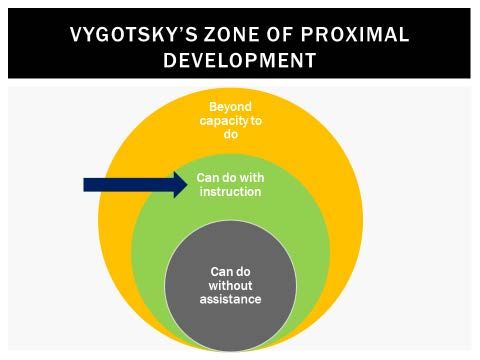
maximize learning.FIELD INSTRUCTOR TRAINING MANUAL 2020-21 28 It is tempting for students and agencies to focus on what they can already do. It is also possible to “overshoot” and assign tasks that are well beyond their reach. Well-selected tasks target the student’s “growth zone,” that which is just beyond their current capacity but that they can accomplish with instruction during the internship time frame. Thoughtful scaffolding and sequencing is critical.
FIELD INSTRUCTOR TRAINING MANUAL 2020-21
                                                                                29

         Student Learning Agreement Worksheet

Instructions: MSW students are encouraged to identify their primary
learning goals and then talk through all items with their primary field instructor.
Following this conversation, students construct a draft using this worksheet, and
review it again with their field instructor. Once verbal agreement has been
established, the information is entered into our online system (Sonia) and
submitted. The field instructor and supervising field faculty member hold final
approval rights. This information automatically populates on the evaluation form
used at the end of each semester, connecting performance evaluation to primary
task agreements. We understand that activities may be modified over time.

I.     Field Placement Schedule
Start Date:              End Date:
Start Time:              End Time:
Days of Service: (W/Th, First Year; W/Th/F, Second Year)
Remote/In-Person Configuration:
Day and Time of Supervision (minimum: one hour per week):

II.    COVID-19 Risk Reduction
For students who are doing any portion of their internship in-person at an agency
and/or community sites, please identify any COVID-19 related risks.
Risk Identification:

Please outline the protective practices that will be consistently adhered to.
Risk Reduction Protocols:
FIELD INSTRUCTOR TRAINING MANUAL 2020-21
30
III. Remote Privacy Protection and Access to
Supervision
For students who are doing any portion of their internship remote, please identify
any please identify any potential barriers to protecting private information or
practicing safely.
Risk Identification:
Please outline the protective practices or equipment and the plan for immediate
access to supervision, if needed.
Risk Reduction Protocols:
IV. Student’s Overall Learning Goals
Overall student learning goals:FIELD INSTRUCTOR TRAINING MANUAL 2020-21
31
Key Assigned Projects and Activities:
V. Competency-Based Task Assignments
1. ENGAGEMENT WITH INDIVIDUAL, FAMILIES,
GROUPS, ORGANIZATIONS, AND COMMUNITIES:
Establishes contact, builds rapport, forms working relationships, and invites a
diverse array of clients and/or constituents to participate in clinical services
and/or administrative projects.
Please describe specific tasks, activities, and/or projects related to
engagement including which will be completed in-person and which
remote:
2. CONSULTATION, COORDINATION, AND
COLLABORATION: Obtains information from a variety of
collaterals, constituents, and/or other formal or informal sources;
Integrates collateral information into an effective and coordinated service
and/or project plan.
Please describe specific tasks, activities, and/or projects related to
consultation, coordination, and collaboration including which
will be completed in-person and which remote:FIELD INSTRUCTOR TRAINING MANUAL 2020-21
32
3. ASSESSMENT OF INDIVIDUALS, FAMILIES, GROUPS,
ORGANIZATIONS, AND COMMUNITIES: Collects, analyzes,
and applies relevant information and develops relevant, well-formed goals to
guide the effective delivery of clinical services and/or the effective execution
of administrative and planning projects.
Please describe specific tasks, activities, and/or projects related to
assessment including which will be completed in-person and which
remote:
4. INTERVENTION PLANNING AND IMPLEMENTATION:
Selects intervention methods to support goal acquisition based upon
assessment, the best available evidence and/or knowledge, and client or
constituent preferences. Evaluates and modifies implementation so as to
maximize the likelihood of reaching the intended outcome(s).
Please describe specific tasks, activities, and/or projects related to
intervention including which will be completed in-person and which
remote:
5. SYSTEMIC INTERVENTION: Demonstrates interest,
understanding, and/or effective participation in the organizational,
institutional, policy, and/or community contexts for the purpose of
improving the delivery of social work services to vulnerable populations.
Please describe specific tasks, activities, and/or projects related to
systemic intervention including which will be completed in-person
and which remote:FIELD INSTRUCTOR TRAINING MANUAL 2020-21
33
6. PROFESSIONAL COMMUNICATION: Communicates verbally
and in writing in an organized, complete, appropriate, and timely manner.
Delivers communication in an effective manner given its purpose and
context.
Please describe organizational expectations and student goals related
to communication including virtual, email, and in-person
communication.
7. PROFESSIONAL ETHICS: Considers and applies the professional
code of ethics for social workers so as to recognize ethical conflicts and
arrive at principled decisions.
Please describe organizational expectations and student goals related
to professional ethics.
8. PROFESSIONAL CONDUCT: Demonstrates professional behavior,
appearance, and communication in accordance with standards identified by
the school, agency, community, and profession.
Please describe organizational expectations and student goals related
to professional conduct.
9. PROFESSIONAL GROWTH AND DEVELOPMENT: Takes
responsibility for learning and demonstrates initiative. Receives, considers,
and integrates feedback from instructors. Demonstrates commitment to
continual professional development, life-long learning, and leadership
development.FIELD INSTRUCTOR TRAINING MANUAL 2020-21 34 Please describe field instructor’s expectations and student’s goals around professional growth and development. VI. DELIVERABLES AND OBSERVED PRACTICE DELIVERABLES Based upon the primary assignments, please identify 2-3 deliverables (tangible products) upon which evaluation may be based. Examples include: case presentation write-up; intake evaluation or report; client handout or group curriculum; grant request; needs assessment results; logic model flowchart; PowerPoint; agenda or notes from a collaborative meeting etc. OBSERVED PRACTICE Based upon the primary assignments, please identify 2-3 activities that the field instructor can directly or indirectly observe and provide related feedback. Examples include: observation on a home or community visit; observation of an intake assessment; observation while student leads a group or meeting; observation of student participation in collaborative meeting or interdisciplinary case conference; listening to 5-10 minutes of a recorded segment with student providing therapy or case management; observing student doing a public presentation or meeting with a community partner or stakeholder.
FIELD INSTRUCTOR TRAINING MANUAL 2020-21
                                                                                35

Protecting the Rights and Needs of Bilingual-Bicultural and
Other Interns from Underrepresented Groups
(Adapted by Peter Manoleas from Maria E. Zuniga, San Diego State University
School of Social Work)

The following is a list of considerations and guidelines for bilingual and/or
bicultural student interns from populations who may be simultaneously under-
represented in our profession but overrepresented in the clients of social work:
   •   They should have diverse caseloads so they can learn from different
       cultural/racial groups
   •   They should serve a carefully selected caseload that does not overload
       them
   •   The training needs of these students must be addressed as the first priority
   •   It is critical to recognize that the needs of most monolingual/immigrant
       clients are more complex and will therefore more time to establish
       relationships and craft interventions. Typical characteristics can include:
          o Immigration concerns
          o Acculturation stress
          o Structural poverty and economic (housing, food) insecurity
          o Lack of referral access to the systems of care if not documented
          o The need to help immigrant clients navigate the bureaucratic nature
            of health and social services in the United States
Given the added complexity and demands, field instructors must assign cases
thoughtfully so as to avoid exploiting student interns. MSW students should not
be asked to translate documents or translate sessions for other providers or do
other tasks that are related to paraprofessional roles.
The field instructor has the responsibility to teach how to address the cultural
context. Students should know be expected to know this automatically because
they may come from a similar cultural background as the clients. If the field
instructor cannot provide this more complex type of supervision, they need to
have a bilingual/bicultural consultant who can provide additional insights to help
support the student’s development.
The field instructor has the responsibility to identify and address micro-
aggressions that underrepresented students may face from colleagues and in the
organization.
The School of Social Welfare recognizes the special demands on these interns and
ensures they are not overburdened and have access to the same quality of
educational attention as their non-bilingual/non-bicultural counterparts.
You can also read


