FINANCIAL LITERACY PLAYBOOK FOR EUROPE - European Banking ...
←
→
Page content transcription
If your browser does not render page correctly, please read the page content below
FINANCIAL LITERACY
PLAYBOOK FOR EUROPE
           ra ng n
         de ki ea

                 n
       Fe n p

             tio
         Ba uro
           E
FINANCIAL LITERACY
PLAYBOOK FOR EUROPE

Contributors:
Junida Katroshi (Albania), Roman
Molva (Austria), Azizagha Hakhverdiyev
(Azerbaijan), Sarah Meynen (Belgium),
Martina Etlinger (Croatia), Maria Ioannou
(Cyprus), Helena Brychova (Czech
Republic), Kåre Enevoldsen (Denmark),
Kati Voomets (Estonia), Jussi Karhunen
(Finland), Béatrice Durand (France), Julia
Topar (Germany), Sophia Ziakou (Greece),
Ágnes Sütő (Hungary), Kristin Lúðvíksdóttir
(Iceland), Jillian Heffernan (Ireland), Monica
Rivelli (Italy), Ilze Vitola (Latvia), Claudia
Guntli (Liechtenstein), Valerija Kiguolienė
(Lithuania), Jessica Thyrion (Luxembourg),
Karol Gabarretta (Malta), Angela Paparo
(Netherlands), Milena Perchinkova (North
Macedonia), Hilde Johansen (Norway),
Szymon Stellmaszyk (Poland), Rita Machado
(Portugal), Gabriela Folcut (Romania),
Sladjana Sredojević, PhD (Serbia), Diana
Brodnianska (Slovak Republic), Ksenija
Jaklin (Slovenia), Conchita Morán (Spain),
Jessie Cargill-Ek (Sweden), Cemil Guler
(Turkey), Fiona Turner (United Kingdom).

Report editors
Raymond Frenken
David P.R. Folcher

Follow us
Twitter: @EBFeu
#financialliteracy
www.ebf.eu
Design: alchemiser.com

2 European Banking Federation
“Education is the most
                                                       FINANCIAL LITERACY PLAYBOOK FOR EUROPE
                                                           powerful weapon
                                                           which you can use to
TABLE OF CONTENTS                                          change the world.”
                                                           Nelson Mandela
     P.4
     The Financial Literacy
     movement is growing                                                  “An investment in
                                                                          knowledge pays
                                          P.14
     P.6
                                          Financial education:
                                                                          the best interest.”
     Introduction by Wim Mijs
     Chief Executive Officer of the EBF   the game is on!                 Benjamin Franklin

     P.8                                  P.22
     Foreword by                          National practices
     Hilde Johansen
     Chair of the EBF Financial           Albania            Latvia
     Education Project Group              Austria            Liechtenstein
     Principal Adviser of the Consumer    Azerbaijan         Lithuania
                                          Belgium            Luxembourg
     Department, Finance Norge
                                          Croatia            Malta
     &                                    Cyprus             Netherlands
     Raymond Frenken                      Czech Republic     North Macedonia
     Director of Communications, EBF      Denmark            Norway
     Co-Chair, International Federation   Estonia            Poland
     of Finance Museums                   Finland            Portugal
                                          France             Romania
                                          Germany            Serbia
     P.10
                                          Greece             Slovak Republic
     European Money Quiz                  Hungary            Slovenia
                                          Iceland            Spain
     P.12                                 Ireland            Sweden
     European Money Week                  Italy              United Kingdom

                                                                    European Banking Federation 3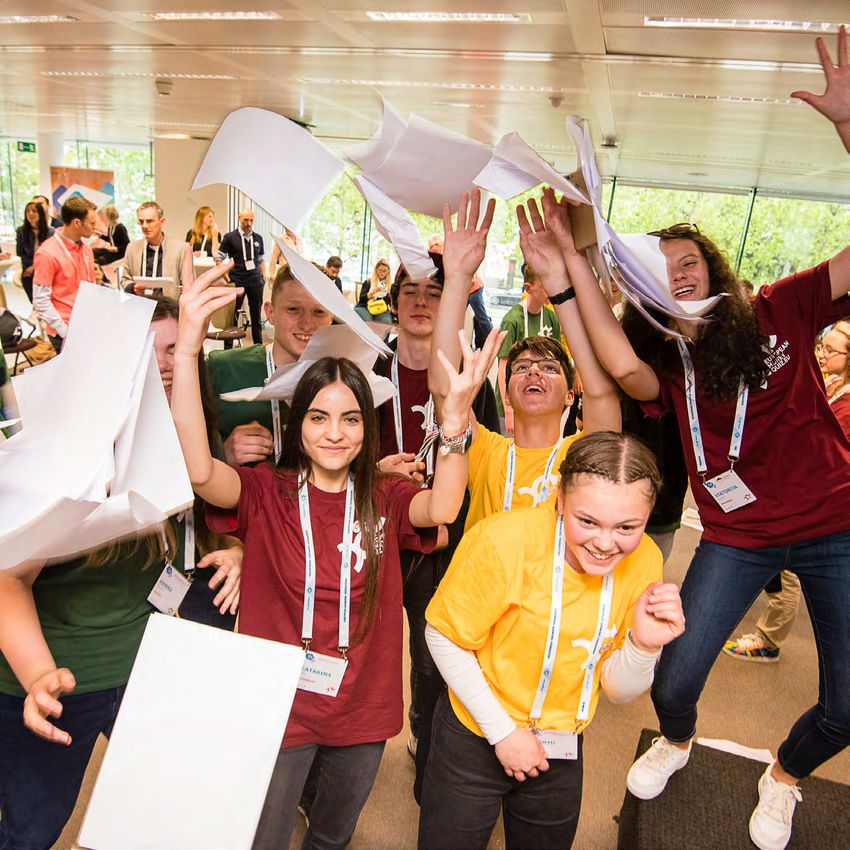
FINANCIAL LITERACY PLAYBOOK FOR EUROPE

THE FINANCIAL LITERACY
MOVEMENT IN EUROPE
IS GROWING
Nearly all countries in Europe
now have active national
programmes that seek to
encourage financial education.

65-75    55-64 45-54 35-44 25-34 15-24
Percentage of adults that are financially literate.               Country has a national strategy
Source: Standard & Poor’s Global Financial Literacy Survey 2018   for financial education.

4 European Banking Federation

FINANCIAL LITERACY PLAYBOOK FOR EUROPE

35 countries
in Europe, are participating in the European
financial literacy movement

>125 national
initiatives
exist across Europe, to promote financial education and to
boost financial literacy. National banking associations are
actively involved as organiser or co-organiser.

                                    European Banking Federation 5
FINANCIAL LITERACY PLAYBOOK FOR EUROPE

FINANCIAL LITERACY AND WELL-BEING
GO TOGETHER, ESPECIALLY NOW
Introduction by Wim Mijs                                about creating financial well-being of people, of
Chief Executive Officer of the EBF                      current and future generations.
                                                        When you study this playbook, you will recognize
                                                        that our work is about more than just our widely
Thanks for opening the EBF Playbook for Financial       recognized projects such as the European Money
Literacy in Europe. You are probably wondering          Week or the European Money Quiz.
what this is about. A ‘playbook’ usually is a book      An increasing number of countries in Europe
that contains different strategies for a sports team,   are embracing public-private cooperation as a
especially in American football. In the business        model for financial education with an impact.
community, a playbook normally contains all the         Such cooperation is an essential success factor for
pieces and parts of a company’s approach for            boosting literacy. National platforms are paying
getting things done. And colleagues working             off. Banks don’t need to be in the lead here, but
with the European Union will recognize ‘Brussels        our industry will encourage the creation of such
Playbook’ as the title of an influential daily          public-private-platforms where they do not exist yet.
newsletter.                                             This playbook provides a valuable snapshot of
                                                        where we are in terms of financial education
What a playbook certainly does - and that is            initiatives across Europe. It can be used as a
applicable in this case - is to describe the work       country-by-country reference guide. For a total
and actions already going on, the developments          of 35 countries that actively work through the
happening in a specific field: financial education.     EBF’s financial education committee, you can
Creating such an overview is exactly what the EBF       explore what the banking sector - together with
financial education community set out to do when        governments and leading NGOs - does to boost
it embarked on this project.                            financial education.
When it comes to financial education and
promoting financial literacy, national banking          This publication is a comprehensive but not
associations across Europe, together with the           exhaustive overview that serves as to complement
European Banking Federation, are trying to move         reports on financial literacy in Europe as those
mountains. Ever since the first European Money          published by the European Banking Authority,
Week in 2015 EBF has passionately committed             which reviews the actions by national financial
itself to boosting awareness on the importance of       supervisors, or the upcoming report by the
financial education. As a banker - and also as a        European Commission in the context of the review
former teacher - I genuinely believe this needs to      of the Mortgage Credit Directive. Importantly: we
be addressed. This is not about marketing. This is      also like the ‘play’ in playbook. Learning is at its

6 European Banking Federation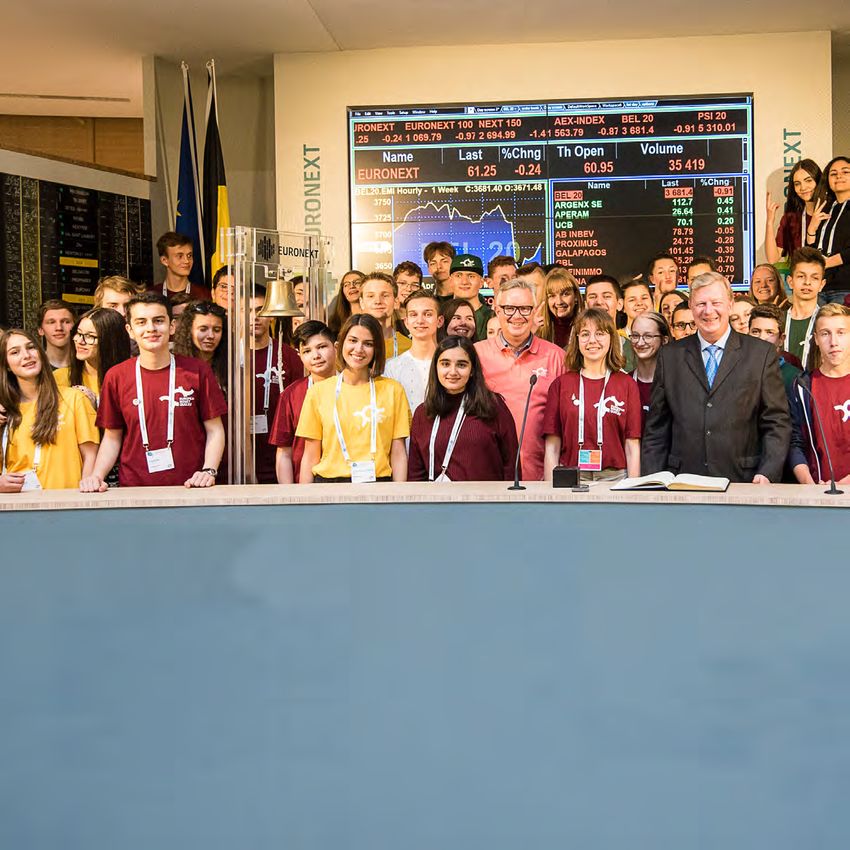
“An increasing number of countries in                         FINANCIAL LITERACY PLAYBOOK FOR EUROPE
Europe are embracing public-private
cooperation as a model for financial
                                                      more academic studies make clear that financial
education with an impact. Such                        education really does make a positive difference,
cooperation is an essential success                   although some programmes still are more effective
factor for boosting financial literacy.”              than others. We are still learning ourselves, and
                                                      need to continue to do so. While we have yet to
                                                      reach out final destination on this long journey,
                                                      it is clear that financial education does lead to
                                                      higher levels of financial literacy. And with that it
                                                      increases financial resilience and contributes to
                                                      people’s well-being.

                                                      Before 2019 it was clear already that the
                                                      increasing digitalization of our society comes with
                                                      an increased financial risk for some, especially
                                                      those that are likely to adopt new financial
                                                      services. It is clear how risky a bitcoin investment
                                                      can be. Elsewhere, digitalization creates new
                                                      classes of services that combine digital financial
                                                      apps with big data. On the other hand though,
                                                      there are new opportunities for managing one’s
                                                      personal finances. It’s important to know how you
                                                      can benefit without stepping into the digital pitfalls.
                                                      And if the need for financial education was not
                                                      clear enough yet: the Covid-19 pandemic leaves
                                                      no further doubt. People are at risk of losing their
                                                      income, and research shows that only a small part
                                                      of the population is able to handle unforeseen
                                                      expenses. It shows only a small part of the
                                                      population is financially resilient. Changing this
most effective when it is achieved without students   can only be done through better financial literacy
perceiving it as a burden. That is what is so great   and education programmes.
about our European Money Quiz partner Kahoot!,        I sincerely hope that the many national case
which aspires to put the fun back into learning. It   studies in this Playbook will inspire you into
is also what happens in finance museums such as       action. Whether you are a banker, a civil servant,
those in Mexico-City, Vienna and Turin. Play-based    a regulator or a policy maker - or a teacher or
learning, for any age group. In recent years we       a parent - financial education still is greenfield
gladly noted that the recognition of the importance   territory, with plenty of room for all who aspire to
of financial education is increasing. More and        improve our world.

                                                                             European Banking Federation 7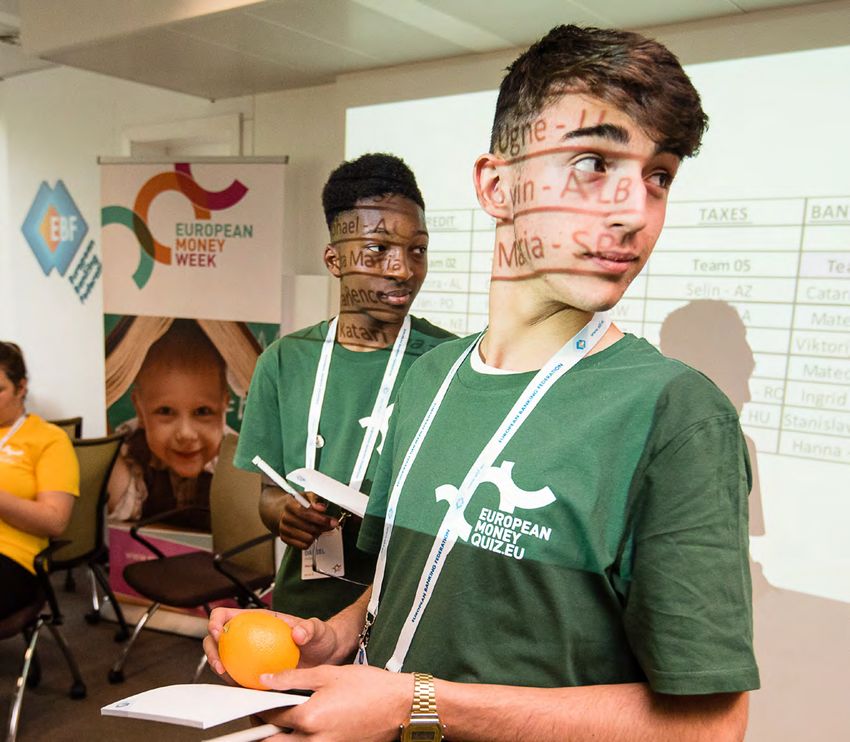
FINANCIAL LITERACY PLAYBOOK FOR EUROPE                                                 “The best way of preparing young
                                                                                       people for an independent life as
                                                                                       adult consumers is to teach them to
A THOROUGH GROUNDING                                                                   see the financial consequences of
                                                                                       different choices.”
Hilde Johansen
Chair of the EBF Financial Education Project Group
Principal Adviser of the Consumer Department, Finance Norge

Our society is getting more complex and the young face numerous
financial challenges when they leave home and set up on their own.
The transition from youth to adulthood is financially demanding,
and it is easy to go wrong without the right knowledge. Action is
needed to help prevent problems and make young people more
responsible. The lack of knowledge brings a considerable risk of
people making poor and costly financial decisions. To address
this and prevent more people from ending up in difficulties, young
people need to be given a thorough grounding in personal
finances. The financial industry has an important role to play here.

EBF’S FINANCIAL EDUCATION PROJECT
The European Banking Federation has been promoting financial
education via various means and has its own Financial
Education Project Group with representatives from national
banking associations in 35 countries. They are all engaged in          life as adult consumers is to teach them to see the financial
financial education at home and are eager to inspire each other        consequences of different choices. Lessons in personal
on how to teach young people about personal finance.                   finances must therefore be made interesting and relevant,
                                                                       and not just about theory. Two years ago, the Financial
EUROPEAN MONEY WEEK                                                    Education Project Group started a common project called
European Money Week is an annual initiative in March involving         European Money Quiz among students at the age of 13-
more than 35 European countries with many activities, e.g.             15 years. This is a competition where the students have
classroom teaching sessions, seminars and conferences. The focus       great fun when learning about savings, loans, budgeting
is to improve financial literacy through better financial education,   and digital security among other topics. Students in 30
and the target groups for the many events during this week are         countries play against each other by using Kahoot!. First
students of all ages, researchers, teachers, media and politicians.    there is a national competition with a live Kahoot! quiz
The numerous events across Europe are organized by the national        where the classrooms play against each other. The winners
banking associations and the European Banking Federation.              of the national competition are then invited to Brussels for
                                                                       the European Money Quiz Finals, but not this year because
EUROPEAN MONEY QUIZ                                                    of the Covid.
The best way of preparing young people for an independent

8 European Banking Federation
FINANCIAL LITERACY PLAYBOOK FOR EUROPE

                                       BEYOND AWARENESS
                                       Raymond Frenken
                                       Director of Communications, EBF
                                       Co-Chair, International Federation of Finance Museums

                                       Resilience is the one word that comes to mind when reflecting on the impact
                                       of the global Coronavirus pandemic. In our world today, financial resilience
                                       is tested on an unprecedented scale. Never before in our lifetimes has a
                                       global disruption underlined so clearly the importance of being prepared
                                       for an unexpected shift. The pandemic makes clear that financial literacy
                                       is relevant as a life skill, just as basic as reading and writing. Undoubtedly,
                                       the need for financial education programmes will be recognized even more
                                       widely once we can leave the pandemic behind us. Before the pandemic
                                       struck it was clear that recognition for financial education was on the rise. The
                                       digitalization of financial services turned up the spotlights on financial literacy.
                                       Thanks to financial technology new services emerged, not only in banking
                                       sector. Big data comes into play. Crypto currencies. Instant online payments.
                                       Those that consider themselves as digitally savvy are at risk. One click too far
                                       can be costly. A small loan when opening an account via retailer’s app no
                                       longer is exceptional. It also exposes underaged kids to debt.

                                       It has become clear that a new international financial literacy movement
“ It has become clear that a new
                                       has emerged, globally as well as in Europe and in Brussels. A wide range
international financial literacy       of players are active: academics, public policy makers, NGOs, banks,
movement has emerged, globally         insurance companies. Public-private cooperation is a success factor.
as well as in Europe and in            This ecosystem also includes a new generation of finance museums, inspiring
Brussels. A wide range of players      visitors - of any age - and elucidating them with practical financial insights
are active: academics, public policy   that can improve their lives. The International Federation of Finance Museums
                                       brings together museums from across the world and shares ideas and good
makers, NGOs, banks, insurance
                                       practices, while developing new concepts by brainstorming among peers.
companies.”                            Together with my colleagues at EBF, at national banking associations, and at
                                       the IFFM we proudly consider ourselves as ambassadors for this movement.
                                       This playbook brings together all that we in the banking industry have done
                                       in recent years. What’s next for all of us is to move beyond awareness, to
                                       actions - with policies and programmes - that will have an impact, and that
                                       make a real difference in the lives of the people around us.

                                                                                         European Banking Federation 9
FINANCIAL LITERACY PLAYBOOK FOR EUROPE

EUROPEAN
MONEY
QUIZ

10 European Banking Federation
GETTING CLASSROOMS TO TALK ABOUT MONEY
The European Money Quiz was launched in 2017 as a fun way
to help teachers talk about money and personal finances with
their pupils. Some 30 countries now organise national selections
that involve classrooms of 13-15-year-olds and digital methods
such as Kahoot! Quiz and live YouTube streams. The national
winners won a trip to Brussels - at the expense of their national
banking association - to take part in the European finals. Photos
in this Playbook were taken at the finals in 2018 and 2019, won
respectively by Poland and Slovenia. The 2020 online final was
won by Spain. The EBF organizes the quiz, working closely with
national banking associations.

www.europeanmoneyquiz.eu

                                    European Banking Federation 11
FINANCIAL LITERACY PLAYBOOK FOR EUROPE EUROPEAN MONEY WEEK European Money Week is an annual initiative to promote financial literacy, aligned with the OECD’s Global Money Week. It was inspired by the national money week in the Netherlands. This Dutch example, supported by a wide range of public and private sector representatives, took on an international following in 2015. National banking associations across Europe now coordinate their financial education projects at a European level. The 2021 money week will start on Monday 22 March. 12 European Banking Federation
FINANCIAL LITERACY PLAYBOOK FOR EUROPE

                                     “Financial literacy is essential! It
                                     is a means to an end; a core life
                                     skill for participating in modern
                                     society in this ever changing
                                     digital world that asks more
                                     and more of our youth.”
“Basic financial literacy can                                                “Financial education requires
make a crucial difference in         Queen Maxima,                           collaboration. We cannot
the lives of people, in their        UN Secretary-General’s Special          leave it to the private sector
opportunities, in their success.     Advocate for Inclusive Finance for      alone, we cannot leave it to
It is a foundation stone for well-   Development (UNSGSA)                    the public sector alone, we
being, for entrepreneurship,                                                 cannot leave it to not-for-profit
for social mobility, for inclusive                                           organizations alone”
growth.”
                                                                             Salvatore Nigro,
Angel Gurria,                                                                Chief Executive Officer,
Secretary-General of the OECD                                                JA Europe

                                                                               European Banking Federation 13
FINANCIAL LITERACY PLAYBOOK FOR EUROPE FINANCIAL EDUCATION: THE GAME IS ON! 14 European Banking Federation
FINANCIAL LITERACY PLAYBOOK FOR EUROPE

THE INTERNATIONAL CONTEXT

Europe’s financial literacy landscape very mixed         a vulnerable group and an important target for
and clearly developing. Some countries are only          financial education programmes.
just beginning to implement a national strategy,
while others have been doing this for a long time        When it comes to government programmes, the
already. Some are exclusively focusing on young          Organisation for Economic Cooperation and
people, while others increasing pay attention to         Development (OECD) actively coordinates policies
elderly and other audiences. Some countries see          and international research. In regards to Europe,
the private sector on a parallel track with the public   the OECD produced a detailed overview in its
sector initiatives. Some see close cooperation           2016 report Financial Education in Europe; Trends
between the private and public sector.                   and Recent Developments. The report concluded
                                                         that more than one third of the 48 countries
Countries whose programmes seem to have                  covered are developing, implementing or revising
the biggest impact are those that work through           a national strategy for financial education.
dedicated national platforms, often run by a
finance ministry or central bank and including                              The OECD also runs the
representatives of the financial sector. The Dutch                          International Network for
Wijzer in Geldzaken (‘Money Wise’) platform,                                Financial Education, known
which involves ministries, the central bank as well                         as OECD/INFE, in which
as trade associations representing pension funds,                           the EBF participates as
insurance companies and banks, is recognized as                             an industry association.
a benchmark for national platforms across Europe.                           Representatives of 110
                                                                            economies are active in the
Across Europe, financial literacy levels range from      INFE group. Since 2019 OECD/INFE also leads
as high as 71% for the population in Scandinavian        the work on Global Money Week.
countries to as low as 13% in the southeast of
Europe, according to the Standard & Poor’s               Emerging insights such as those generated in recent
Global Financial Literacy Survey conducted in            years by the OECD, its PISA studies and through
2014. (This data from this survey underpins the          the S&P Global Literacy Survey, managed with
map of Europe on pages 4 and 5.) The survey is           the Global Financial Literacy Excellence Centre
one of the most comprehensive measurements               led by Prof. Annamaria Lusardi from Washington
undertaken in recent years. It points at low             DC, have boosted interest in financial education
levels of financial literacy across the world, and       among policy makers and financial industry
shows that women’s financial literacy levels are         representatives. These are a driving force behind
lower than men’s. It also defines the young as           the international financial literacy movement.

                                                                             European Banking Federation 15
FINANCIAL LITERACY PLAYBOOK FOR EUROPE
EUROPEAN POLICY CONTEXT
At a European policy level, financial education policies that relate to the interaction between
and literacy are referred to in a number of financial institutions and consumers, in
policy programmes, such as Capital Markets particular in Capital Markets Union. The final
Union and the Mortgage Credit Directive. The report of the European Commission’s High
Treaty on European Union signed in 1992 Level Forum was published in June 2020
in Maastricht, as per Article 126, formally and underscored the relevance of financial
recognizes education as a EU competency literacy. “From a market perspective, increased
but falls short of empowering the European financial literacy would result in higher retail
Commission to initiate directives: “The Union investor participation which would help EU
shall contribute to the development of quality capital markets grow and increase the volume
education by encouraging cooperation of funding available to financing of the real
between Member States and, if necessary, by economy,” the experts’ report concluded.
supporting and supplementing their action,
while fully respecting the responsibility of the The subsequent CMU
Member States for the content of teaching and Action Plan that the
the organisation of education systems and their Commission presented
cultural and linguistic diversity.” in September recognizes
financial literacy is
‘Quality education’ can be defined as education
that readies young people for challenges they “an essential skill for making good
will face later in life. This means equipping them decisions about personal finances”
knowledge and understanding that makes them
ready to navigate obstacles in world where and notes that many people have not yet
a healthy personal financial situation often mastered it. “Sound financial literacy is the
is reflected also in an elevated sense of well- foundation of people’s ability to make good
being. The increasing digitalization of financial financial decisions and their financial well-
services presents both opportunities and being. People who are financially literate
risks, underlining the importance of financial are also more likely to take advantage of
education. Furthermore, the Covid-19 pandemic possibilities provided by capital markets,
underscores the importance of knowing about including on sustainable investments.” As part
financial resilience, across multiple generations, of its planned CMU actions the Commission
not only among the young. will conduct a feasibility assessment for
When it comes to EU economic and financial the development of a European financial
policies, financial education is recognized in competence framework and
16 European Banking FederationFINANCIAL LITERACY PLAYBOOK FOR EUROPE
“will also assess the possibility of more robust, safe and transparent financial
introducing a requirement for Member system needs responsible consumers who are
States to promote learning measures actively involved in improving their financial
awareness.” EBA said. The EBA report includes
supporting financial education, in
a repository of national financial literacy
particular in relation to responsible and initiatives adopted by financial supervisors. The
long-term investing.” EBF Playbook, with the overview of initiatives
by banking associations, may be seen as a
In earlier years, the European Commission complement to the EBA repository.
recognized financial education in the 2015
Mortgage Credit Directive. This directive The European Central Bank has recognized
includes a specific paragraph that called on the “important direct impact of economic
the European Commission to report on the and financial education on monetary policy.”
interaction between financial education and While still in her role as Managing Director
mortgage services. Article 6 requires that the of the International Monetary Fund, ECB
Commission shall publish an assessment of the President Christine Lagarde saw financial
financial education available to consumers and literacy as a support factor for responsible
identify examples of best practices which could financial inclusion. “And here I see a role for
be further developed in order to increase the everyone—the government, private sector, and
financial awareness of consumers. civil society—in building financial capacity,” she
said in a 2014 speech. She also identified its
A 2017 European Commission ‘non-paper’ on impact on gender equality, in particular in the
financial literacy identified the relevance also context of digitalization and emerging financial
for Small- and Medium-sized Enterprises (SMEs) technology.
and highlighted the importance of SMEs to the
European economy while explaining issues “Women also tend to use digital services
arising from financial illiteracy and affecting an less than men, at least in some countries,
SME’s ability to access finance.
possibly due to social norms, or issues
The European Banking Authority in March related to affordability and financial
2020 published its second report on financial literacy. That is why we believe increasing
education, describing the activities of national financial literacy can play a key role in
financial regulators in EU member states. generating higher gender participation in
The EBA report concluded that engaging
every economy,”
stakeholders in providing joint financial
education programmes is part of a broader Cristine Lagarde said in 2019*.
consumer protection objective to offer ___
transparent financial products. 204. “A * Speech Lagarde IMF 2019
European Banking Federation 17FINANCIAL LITERACY PLAYBOOK FOR EUROPE 18 European Banking Federation
FINANCIAL LITERACY PLAYBOOK FOR EUROPE

EUROPEAN BANKING
FEDERATION
For the European Banking Federation, the active
involvement in financial education and literacy

                                                                                     ra ng n
programmes such as the European Money

                                                                                   de ki ea

                                                                                           n
                                                                                 Fe an op

                                                                                       tio
Week and the European Money Quiz and the

                                                                                   B ur
lobby-work for policies that encourage financial

                                                                                     E
literacy is supported by a genuine belief that
higher levels of financial literacy can contribute
to a prosperous society and well-being for all.

Banking associations and federations are             The banking sector’s involvement also touches
well placed to engage on financial literacy as       on the Principles for Responsible Banking and
industry representatives. In financial education,    the Sustainable Development Goals set out
there is no room for financial marketing or          by the United Nations. SDG 4 is all about
commercial promotion of financial services.          quality education: inclusive and equitable
Banks wishing to involve themselves in EBF           quality education and promote lifelong learning
programmes such as the European Money                opportunities for all. This plays a central
Week or the European Money Quiz can                  role in building sustainable, inclusive and
only do so if they agree not to identify             resilient societies. The banking principles call
their institutions. Bankers that teach school        for example for aligning business strategies
classes during national money weeks in the           with the needs of society; for pro-actively and
Netherlands or France for example, only are          responsibly working with stakeholders; and for
allowed to tell the kids they are ‘a banker’,        creating shared prosperity for current and future
without naming their bank.                           generations. Financial education is but one
                                                     aspect of principles-based banking.

                                                                         European Banking Federation 19
FINANCIAL LITERACY PLAYBOOK FOR EUROPE
WORKING WITH STAKEHOLDERS
EUROPEAN PLATFORM FOR FINANCIAL EDUCATION
The European Banking Federation, together with The platform serves to exchange ideas,
other Brussels-based European associations and information, insights and experiences, as well
organisations, in 2017 initiated a the European as to facilitate discussions on how the European
Platform for Financial Education. The platform Union can play a leading role in advancing
seeks to cooperate and align activities in order financial literacy.
promote financial education and boost financial The platform also helps partners coordinate
literacy in Europe, particularly among young their involvement in European-level initiatives
people and entrepreneurs. It also seeks to to develop potential synergies and to avoid
encourage EU-level leadership in this field. duplication of work.
The platform’s partners are:
20 European Banking FederationFINANCIAL LITERACY PLAYBOOK FOR EUROPE
INTERNATIONAL FEDERATION OF FINANCE MUSEUMS
The International Federation of Finance The mission of the IFFM is to provide a
Museums, or IFFM, was created in 2013 by framework for greater collaboration among
the finance museums in Turin, Italy (Museo del museums, facilitating the sharing of exhibits,
Risparmio); New York (Museum of American the exchange of scholarship and scholarly
Finance); the Chinese Museums of Finance; resources, and the interchange of information
and through Prof. Lusardi’s GLFEC center at and knowledge. The IFFM also aims to develop
the George Washington University School of and implement innovative ideas and programs
Business in Washington DC. to advance financial literacy globally. IFFM
The federation now involves than a dozen members convene annually at an international
finance museums from across the world, conference that inspires innovation in the
including the MIDE in Mexico City; Erste promotion of financial literacy globally,
Banks’s FLIP Financial Literacy Park in Vienna; engaging media, academics, policy makers and
the Bank of Canada Museum in Ottawa; the the financial industry. In 2018, the EBF hosted
BELvue Museum and Wikifin Labs in Brussels; the annual meeting of the IFFM in Brussels,
the Museo do Dinhero operated by the Central including a conference on financial literacy in
bank of Portugal; and Citéco, la cité de Europe. EBF’s Raymond Frenken now serves as
l’économie, the new Bank de France museum Co-Chair of the IFFM, together with Ken Ross of
that opened in Paris in 2019. the Bank of Canada.
BBVA CENTER FOR FINANCIAL EDUCATION AND CAPABILITY
The Center for Financial Education and
Capability is a BBVA’s initiative to promote the
importance of financial knowledge and skills,
as a relevant issue that has a direct impact in
people’s lives. EBF’s Wim Mijs serves on the
center’s advisory board.
European Banking Federation 21FINANCIAL LITERACY PLAYBOOK FOR EUROPE NATIONAL PRACTICES ABOUT THIS PLAYBOOK: The EBF Financial Literacy Playbook for Europe is the conclusion of a survey conducted across national banking associations in 35 European countries during the first half of 2020. Representatives of these associations meet regularly through the EBF Financial Education Group. The survey asked respondents to describe their financial education activities, to present an overview of the different types of partners that they work with in their country and to share information on national policies applicable in their country. The Playbook brings together a comprehensive overview of private-sector financial education programmes being conducted across Europe. 22 European Banking Federation
European Banking Federation 23
FINANCIAL LITERACY PLAYBOOK FOR EUROPE
INITIATIVES Denmark /
•A ll around money
(Rund ums Geld)
INVOLVING
Finance Denmark
• Get Ready (Start frei)
• Visits to the Museum of Money
NATIONAL BANKING Yearly report on the economic
situation of the Youth
(Geldmuseum)
• Economic Folder for Teachers
ASSOCIATIONS Estonia / Estonian
• Seminars for Teachers at the
Frankfurt School of Finance
Banking Association
Albania / Albanian Belgium / Greece / Hellenic
• Money Smart Month
Association of Banks Febelfin Bank Association
• e-lessons for 6-9 graders
•A lbanian Network for • Digital Payment Day • National Competition on Money
Finland /
Financial Education • Phishing campaign • SDG 8.10
Finance Finland
• Greenback Academy • Money Mules campaign • Textbook: “First Steps in
• Informative video series on • I adopt digital banking Finance”
• Zaldo
banking products and services • Wikifin.be • Banks in Action
• Economic Guru
• Financial Education Library • Finances and Me • Panhellenic Bravo School Contest
• Getting to know the economy
• Debating Economics - High
• Insurance knowledge
school debates about Croatia / Croatian Hungary / Hungarian
workshops
Economics and Finance Banking Association Banking Association
• Brochures for senior citizens
• Yearly financial education
Austria /Austrian •M edia campaigns on cyber- highlight topic
France / French
Bankers Association prevention and financial • Ambassadors of Financial
Banking Federation
literacy Literacy Award
•B ankenverbandspreis - Annual • Nation-wide research on • Fintelligence Centre
• Keys of the Bank
promotional award teenagers’ financial literacy
• Mobile apps (Pilote Budget &
• Children’s book “Selling Money!” Iceland / Icelandic
Pilote Dépenses)
• Youth - Newspaper - Business Cyprus / Association Financial Services
• I Invite a Banker to my
• School banker (Schulbanker) of Cyprus Banks Association
Classroom
• JusHAK • Wise Finance
• IT Security Hub Austria • More than Money • Textbook: “First Steps in
Germany /
• Economics for Success Finance”
Association of
Azerbaijan /
German Banks
Azerbaijan Banking Czech Republic/Czech Ireland /
Association Banking Association Banking &
•M onthly newsletter for teachers
Payments Federation Ireland
• School banker (Schulbanker)
•A zerbaijan Bank Training • Online education platform
• Youth and Economy
Center • Money Friends (Bankovkovi) • BusinessEducation.ie
(Jugend und Wirtschaft)
• Banks and Business • Bankers go to school • Economist Masterclass webinar
• This is Money (So geht Geld)
Newspaper - Journalists’ • Safe Banks • BSTAI Business Studies
• Money at School
training in finance Achievement Awards
(Geld im Unterricht)
24 European Banking FederationFINANCIAL LITERACY PLAYBOOK FOR EUROPE
(Laisvės Piknikas) •P
ractical Manual for the Users
Norway /
Italy / Italian Banking • Economic discourse in Lithuania: of Financial Services
Finance Norway
Assocation, via FEduF when will we have our Nobel
Prize winner? (Būtent) Serbia / Association
• Digital Financial Literacy Test of Serbian Banks
• F inancial Education
Luxembourg / • School Menu • Financial Education of
Foundation (FEduF)
Luxembourg • Run Your Own Life Citizens-Adults
• EconomiAscuola
Bankers’ Association • Did you know?
• Take care of your money
Poland / Polish • General Information on Cyber
• Money and tales
•A BBL Foundation for Financial Bank Association Security for public and clients
• FinEdu Digital Live Talk and events
Education
• Financial Consumer Protection • Warsaw Institute of Banking Slovak Republic /
Latvia / Finance
Committee of the Luxembourg • Modern Business Management Slovak Banking
Latvia Association
Financial Supervisory Authority • A Map of Financial and Association
(CSSF) Insurance Education
• F inancial Literacy Strategy of
• ABC of Financial Education • Bankers for Education • Educational web portal
the Population of Latvia
• One minute in Finance • Media campaigns on personal
• Money Laws
• Kannerkascht + Portugal / Portuguese finance management and
• Client school of the FCMC
• Zuumer Academy Banking Association cyber security
• Business Tales; My little
dictionary
Malta / Malta • Financial Education Website
• Money School Slovenia /
Bankers’ Association (Boas Práticas Boas Contas) Bank Association
• Financial Education Magazine of Slovenia
Brochures on topical issues • Financial Education
Liechtenstein /
Workbooks for students Financial Literacy Projects in the
Liechtenstein Netherlands / Dutch
• SME training programmes Financial Sector
Bankers Association Banking Association
“Framework for SMEs
• Bank voor de Klas Financial Skills”. Spain / Spanish
•B anking 4 you – debt
• Money Type Test • Training programmes for Banking Association
prevention
• Me and my Money Journalists
• Kinder-Cash
• Ways to Earn Money • Awareness Sessions at Public • Your Finance, Your Future
• Money Matters
• Dutch Money Week Libraries • Member of the National Plan
(Rund-uns-Geld)
• Money wise public private • National Savings Day/National for financial Education
Lithuania / Association cooperation Financial Education Week • Financial Education Business
of Lithuanian Banks Case
North Macedonia / Romania / Romanian
Macedonian Association of Banks
• L ithuanian index of financial Sweden / Swedish
Banking Association
literacy Bankers’ Association
• National Financial Education • Unexpected Possibilities
• Seminars • Financial Literacy Days Strategy
• Smart-ID campaign • Like Your Economy
• International Savings Day and • Banking Education and
• Youth and Money: why are we • Consumers’ Banking and
Insurance Day Competence for Teachers
afraid to talk about it? Finance Advice Bureau
• Educational videos
European Banking Federation 25FINANCIAL LITERACY PLAYBOOK FOR EUROPE
Albania activities, from panel discussions to games such
as the European Money Quiz.
Financial literacy is compulsory at school, Albania’s most iconic event on financial
integrated into other subjects education is Greenback Academy. This initiative
marks the beginning of the capacity building
Cooperation between public and private actors component of Project Greenback, implemented
is encouraging by the World Bank in Albania in the context of
the Remittances and Payments Program funded
There is no national strategy by the Swiss Secretariat of Economic Affairs
for financial education (SECO).
STAKEHOLDERS
In Albania, the principal stakeholder and
NATIONAL BANKING ASSOCIATION responsible body for financial education is
As it is not possible to thrive in today’s society the Central Bank. The Financial Supervisory
without being financially literate, financial Authority is also another state supporter on
education is a powerful tool to increase financial education initiatives and projects.
financial inclusion. The Albanian Association Stakeholders cooperate around central projects.
of Banks (Shoqata Shqiptare e Banka, AAB) The cooperation on financial education includes
works towards ensuring that all Albanians can a wide range of actors, from national institutions
understand how to deal with their finances, to youth organizations, non-profit and financial
manage their money, increase their savings, service providers.
make good investment decisions, manage their
debt and handle responsible spending. Junior Achievement (JA) is another association
committed to financial education. Its programme
AAB produced educational brochures and is applied in 150 secondary schools throughout
Participant
videos, as well as information about financial the country, thanks to the initial funding of the
products. AAB works in both academic and Albanian-American Development Foundation
tangible ways. On the academic side, it has (AADF). It puts young people in situations
scheduled lectures in faculties of Economics where they experience the core of finance in a
across the country. The AAB organises every practical way. They are challenged in several
year a series of high school debates about aspects, including knowledge about financial
Economics and Finance. On a practical level, terminology, cost-benefit analysis, raising the
the AAB cooperated with VISA International and initial capital investment through shareholders,
Mastercard in media campaigns to promote setting financial goals (manufacturing-sales-
the responsible use of cards. During European net profit) or even preparing simple financial
Money Week, Albania sees a range of statements (inflows-outflows). This initiative is
26 European Banking FederationFINANCIAL LITERACY PLAYBOOK FOR EUROPE
an example of how not-for-profit organizations
can positively contribute to the work of national NATIONAL CONTEXT
actors. In 2018, the Bank of Albania launched the
“Albanian National Retail Payments Strategy”
In Albania, JA and the AAB work closely with which, among other goals, creates basics
the Ministry of Education, the Bank of Albania for building capacity across the payments’
and the National Youth Service. industry and aims to educate users on accounts
& electronic payments. This strategy aims to
The promotion of financial education is well- increase financial inclusion through financial
organised. Banks invest in financial education education.
programmes through their not-for-profit
organization (AAB) that define the teaching Financial and social education is integrated
priorities and coordinate their work. For into the national curriculum at both primary
example, banks supported the printing costs of and secondary levels and is a compulsory
the book “Finance in your hand” and delivered subject at secondary school (16-18 years old).
it for free to pupils. Financial regulators support The Ministry of Education has included the
these initiatives and take leadership. In general, teaching of personal finance in civic education
schools and public bodies welcome the help of classes. In addition, “livelihood education” has
the banking sector and vice-versa. been integrated into the secondary education
curriculum.
Since June 2019, eight non-for-profit
organizations and the National Youth Service Albania does not have a national advisory
created the Albanian Network for Financial committee in place to promote financial
Education (ANFE). This cooperation is an inclusion and education among the youth,
opportunity to cooperate successfully - rather but financial regulators recently committed
than compete - and use synergies better. It themselves to working on a financial education
will be used as a platform to collaborate with strategy.
public sector. It makes financial education very
welcomed by schools and especially teachers in OTHER STAKEHOLDERS
their classrooms. • Central Bank of Albania
• Financial Supervisory Authority
• Junior Achievement
European Banking Federation 27FINANCIAL LITERACY PLAYBOOK FOR EUROPE
Austria start at primary school to familiarise children with
the correct use of money and simple economic
relationships at an appropriate age and in a
Exemplary cooperation between responsible manner. The ABA works closely with
the Public and Private sectors experienced organizations, schools and specially
trained experts and occasionally helps pupils
The financial regulator plays an active role of vocational schools and students to prepare
their master’s theses. Furthermore, ABA supports
the education of young, ambitious scientists in
Financial literacy is not compulsory at school universities with an annual promotional award for
their work in commercial and banking law.
In the children’s book “Selling Money!” children
at elementary schools learn in a vivid manner
NATIONAL BANKING ASSOCIATION what money is. They discover why they need it,
Improving financial education and financial what the difference between wishes and needs
literacy leads to better financial skills and a better is, what wealth means and how to share. The
understanding of financial products and therefore contents of the book are presented and discussed
improves financial stability and prevents over- by professional readers together with trainers from
indebtedness as well as personal bankruptcy the Viennese education specialist “Three Coins”.
of consumers, especially young families. An Children learn in a playful way to think about their
independent planning and managing of income attitudes towards money.
and wealth, risks and rewards will also lead to an
improved relationship between banks and their Anyone who has always wanted to know
customers. “As regular and scientific studies show, how business journalists work will get exciting
there is an increasing need for improvements. insights from the “Youth - Newspaper - Business”
Participant The projects we support are important preventive project in cooperation with the renowned daily
measures through which young people learn at newspaper “Die Presse”. The pupils regularly read
an early stage to consciously use their money and the newspaper and choose a topic into which
to take decisions by themselves, responsibly. This they research, conduct interviews and write an
means that they are much less likely to fall into editorial text, and are supported in their work by
the debt or poverty trap later on” says Gerald experts and journalists. The best articles are then
Resch, Secretary General of the Austrian Bankers printed in the newspaper. The Austrian Bankers
Association. Association supports the children with content-
related expertise and arranges meetings with
The Austrian Bankers Association (Bankenverband, competent experts of its member banks.
ABA) supports selected projects and initiatives to “Be the boss yourself” is the motto of the
promote economic, financial and legal education “Schulbanker” education promotion project of
in general. Projects supported by the association the German banking association in cooperation
28 European Banking FederationFINANCIAL LITERACY PLAYBOOK FOR EUROPE
with the Austrian banking association. With this STAKEHOLDERS
project, which has been running successfully for Every public or private organization dealing
20 years, children can take a seat on the board with financial education initiatives responsibly
office of a virtual bank and experience first hand and sustainably is important. ABA is an active
how business and competition work. The pupils player in the field and works hand in hand with
get an insight into economic relationships and others: Ministries, National Bank, Universities,
entrepreneurial activity. The first round of the Supervisory Authorities, Member banks, schools
project take place online. The top 20 teams then and so on. Joint tasks between authorities
compete for the grand finale in Berlin. Cash prizes and private associations are successful in the
await the top three. field. Austrian policymakers advocate for this
cooperation and teachers welcome the help
The JusHAK started in September 2019 - a new of the banking sector as part of the national
school format that combines economic and legal strategy. Beside government bodies or banking
training. The pilot project is currently being tested associations the best help in financial education
at four locations across Austria. The Austrian should be provided by parents and schools as
Bankers Association supports with internships and well – this with the aim to strengthen a responsible
as a content-based cooperation partner. way of dealing with money matters. Public and
The “Austria IT Security Hub” is a platform for private initiatives in the field of financial literacy
cooperation between companies and young can be a useful support on the way to financial
people who are interested in the subject of IT and independence, especially for young people.
web-security. The aim is to promote IT talents in For decades, the Austrian National Bank
order to counteract the shortage of skilled workers traditionally plays an important role in financial
in the IT area. The Austrian Bankers Association education thanks to a well-informed website
supports cooperation opportunities. (eurologisch.at). Since 2019, the Austrian
For more than 40 years, the Austrian Bankers Financial Market Authority offers the “A-Z of
Association has been awarding a promotional Finance”, a financial education tool covering
award for outstanding scientific work in the field of the most common topics provided in a simple
commercial and banking law. The award winners language and in an easily understandable manner
can look forward to a total of 20,000 EUR. (fma.gv.at).
Funding is given to the work of young scientists
who deal with banking-related issues, particularly More and more banks themselves are involved
in the areas of corporate, capital markets, banking in financial education. One of the most popular
and tax law or economics. examples is the Financial Life Park: a facility for
innovative financial education, promoting know-
Finally, schoolchildren between the ages of 13 how in money matters and helping young people
and 15 compete in the European Money Quiz acquire the skills it takes to manage their personal
along with their classmates, in an exciting online financial affairs responsibly and independently.
challenge every year. On three levels and on 1,500m2 of floor space,
European Banking Federation 29FINANCIAL LITERACY PLAYBOOK FOR EUROPE
>> Austria
Azerbaijan
the Financial Life Park provides exhibition areas, Young average population
several content stations with interactive games, a
library as well as a seminar and workshop room.
A two-hour guided tour for school groups aged ten There is a national strategy
and above is offered. Visitors learn about money for financial education
matters and the significance of financial affairs in
their own lives. Three tour formats are available Cooperation between public
for different age brackets so that the choice of and private actors is encouraging
topics, the depth and complexity of their treatment
and the style of delivery are tailored to the needs Financial literacy is not compulsory at school
of each group. The visit and the tour are free of
charge for all visitors.
NATIONAL BANKING ASSOCIATION
The development of financial literacy in the
country, influences civic engagement, the ability
NATIONAL CONTEXT for people to handle money and to manage
Austria is characterised by a broad and their budget. Thanks to financial literacy,
trustful cooperation between public and private Participant Azerbaijani citizens can assess the use of
initiatives, under the supervision of the Ministry financial services and their possible benefits and
of Education. Although, financial education is a consequences of borrowing. There is potential
voluntary subject at school, it is usually integrated to improve financial inclusiveness in Azerbaijan.
as part of the curriculum through other subjects Increasing the financial literacy here will also
(such as mathematics, economics, social science, increase the demand for financial services,
or else). In August 2020, the Federal Ministry of financial discipline and improve the customers’
Finance launched a universal financial literacy financial opportunities. This will also have a
offensive called “Getting Austria fit for the positive impact on banks’ liquidity by increasing
financial future” to develop a nationwide strategy. the volume of cashless payments in the country.
Shortly, Azerbaijan will increase financial
OTHER STAKEHOLDERS literacy to accelerate economic growth and
• Federal Ministry of Education, Science and increase financial inclusion.
Research
• Austrian National Bank The Azerbaijan Banking Association
• Austrian Financial Market Authority (Azərbaycan Banklar Assosiasiyasi, ABA) is
• Federal Ministry of Finance one of the main organisers and supporters of
various financial literacy measures implemented
30 European Banking FederationFINANCIAL LITERACY PLAYBOOK FOR EUROPE
in Azerbaijan. ABA is also working with various STAKEHOLDERS
government agencies, local and international Policymakers support the work of the banking
organizations on the development of financial sector in financial education mostly through
literacy in the country. School children, students, advocacy. Government agencies and
journalists, and entrepreneurs are the main international organisations are crucial partners.
participants in these activities. Cooperation with these partners provides not
only credibility but also greater support for each
ABA holds a wide range of activities: student field. The Central Bank of Azerbaijan Republic
motivation to fintech and start-up projects, is the national public body responsible for
financial literacy competitions and seminars financial education. Its main role is to organise
at schools, journalists’ training in finance, and coordinate programmes.
open-door days of banks and other financial
service providers for students, etc. Many In Azerbaijan, cooperation between the Public
meetings are held with entrepreneurs and bank and Private sectors is usually successful when
representatives through the ABA channel during dealing with financial education projects.
training, seminars and other events organised Currently, financial service providers are active
by the Association, government agencies, and in taking measures to improve financial literacy,
other public associations. Every year, over especially among high school students and
1000 people benefit from these initiatives. university students. Banks conduct their activities
Furthermore, by 2020, ABA is planning to hold on the development of financial literacy and act
the first International Financial Literacy Forum in as a financial supporter for other programmes.
the country. This forum, which will be attended What is more, local initiatives and projects
by more international speakers, will discuss from international public organisations and
upcoming challenges and ways to address foundations are appreciated. Non-bank
financial literacy in the country. participants in the financial sector (mainly
card-processing companies and payment
In Azerbaijan, banks are the main stakeholders services) also participate in financial literacy
in the development of financial literacy. programmes.
Therefore, the role of the ABA is also to act
as the main coordinating body. In addition, In most cases, banks are part of regular events.
the Azerbaijan Bank Training Centre and For example, banks work together with the
Banks and Business Newspaper provide government or public agencies to offer training
direct education and educational articles. The for entrepreneurs, students and pensioners. This
Azerbaijan Bank Training Centre acts as one of cooperation provides public agencies with a
the coordinating bodies in financial literacy and greater impact in the field, thanks to innovative
is taking significant steps at this level. In total, solutions. For example, banks also sponsor
about 30,000 people have been trained by some TV shows, such as the “bank terminology”
these organisations. project, to promote financial literacy. Thanks to
European Banking Federation 31FINANCIAL LITERACY PLAYBOOK FOR EUROPE
>> Azerbaijan
Belgium
Financial literacy is a compulsory subject
its know-how and resources, the financial sector at school in Flanders
can provide considerable support in shaping
the content of financial education at various The financial regulator plays an active role
levels in the country. Starting from March 2019,
more than 600 young people benefited from
training covering various topics, offered by There is no national strategy, financial
banking professionals. The participants reported education policy is decentralised
having gained valuable knowledge on the
banking sector. The school system and public
bodies welcome the help of the banking sector NATIONAL BANKING ASSOCIATION
to promote financial literacy. Financial knowledge ensures that Belgian
citizens can make informed and conscious
choices about their personal finances and
understand the impact of those choices. It is
NATIONAL CONTEXT essential to understand the financial sector and
The average age of the population in Azerbaijan its functioning better, for instance by learning
is 28 years old. This also allows for the quick what banks do and what social value they
application of innovations, notably digital ones. Participant have. In Belgium, all layers and age groups can
Consequently, efforts produced today will have benefit from financial education and life-long
a significant impact on the short term and are learning. Not only senior citizens need extra
likely to produce a level-playing field in terms of help in today’s ever-evolving society, but the
financial literacy in the longer term. youth too, to learn good habits early. Belgium
Despite the Ministry of Education being adopted a pragmatical and project-based
responsible for financial education, schools do approach.
not teach it as there is no room for financial
literacy or the teaching of personal finance in Febelfin (Fédératon Belge du Secteur Financier) is
the national curriculum. The national strategy a non-profit organisation whose goal is to provide
is embodied by the strategic roadmap for the credible and objective information about the
development of financial services in Azerbaijan, financial sector in Belgium. Febelfin collaborates
and the Central Bank is the main body in charge. with various public institutions at European,
national and regional level and coordinates
OTHER STAKEHOLDERS initiatives with all relevant parties. It wants to
• Central Bank of Azerbaijan Republic be a house of dialogue for all its stakeholders.
Febelfin works bottom-up on financial education,
32 European Banking FederationYou can also read


