Public Health National Tribal - NEW MEXICO MAY 13-15, 2019
←
→
Page content transcription
If your browser does not render page correctly, please read the page content below
— • 10th Annual •—
National Tribal
Public Health
Summit       ALBUQUERQUE
             NEW MEXICO
             MAY 13-15, 2019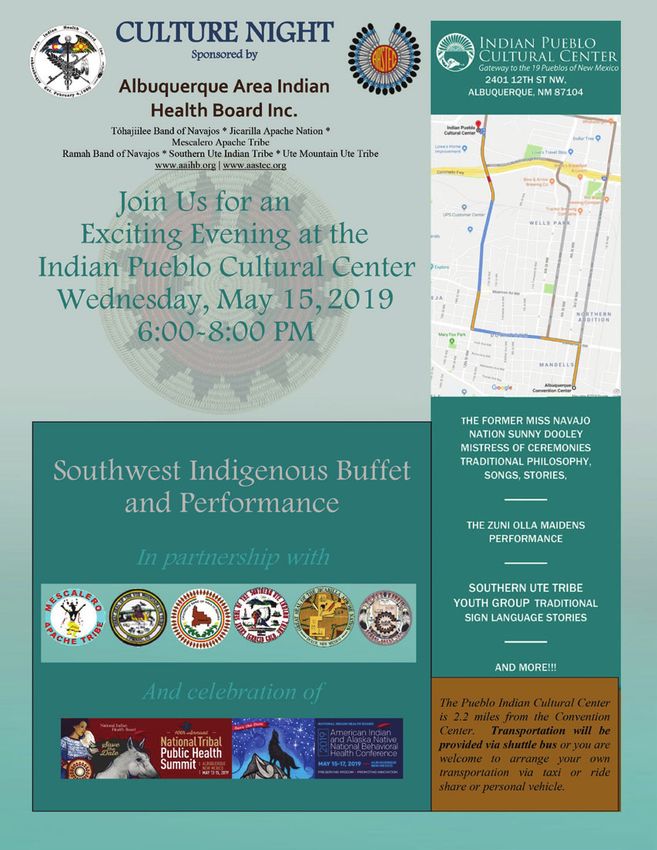
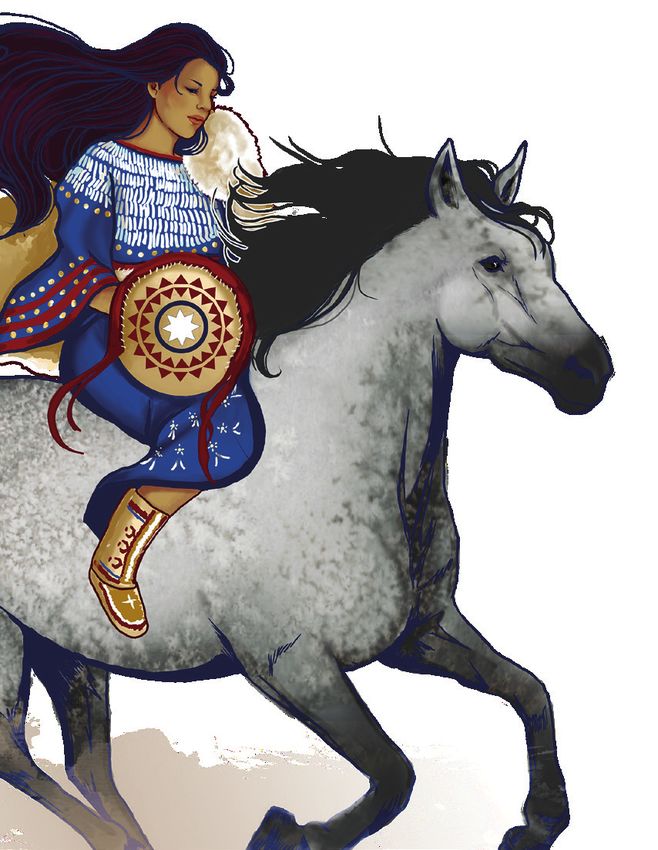
MEET THE ARTIST
ARTIST

         KRISTINA
         MALDONADO
         BAD HAND
         Kristina Maldonado Bad Hand is a Sicangu Lakota & Cherokee artist
         that hails from Taos, New Mexico. Her passion for community and social
         justice have led her to create, through illustration, a place in which
         indigenous youth, and particularly indigenous women, are empow-
         ered. She studied for four years at the Art Institute of Colorado and is
         an entrepreneur with big dreams. Kristina is currently a Community
         Liaison with Jeffco Indian Education, a commissioner on the Denver
         American Indian Commission and Chief Creative Director/co-founder
         of publishing and media start up, áyA Studios LLC.
CONTENTS
           Why Use the National Indian Health Board Event Mobile App?.....2
           Welcome Letter...............................................................................3
           What is the National Indian Health Board?....................................4
           2019 Public Health Innovation Awards.........................................10
           Agenda At-A-Glance.....................................................................12
           Agenda..........................................................................................15
               Sunday, May 12, 2019...............................................................15
               Monday, May 13, 2019..............................................................15
               Tuesday, May 14, 2019 ............................................................22
               Wednesday, May 15, 2019........................................................30
           NIHB Board Bios...........................................................................33
           Summit Information.....................................................................35
           Albuquerque Convention Center Floorplan.................................36
           Exhibitors and Passport to Prizes................................................38
           Summit Sponsors............................................... Inside Back Cover

                                          —      • 10th Annual •—
                                      National Tribal
                                      Public Health
                                      Summit                                                                     ALBUQUERQUE
                                                                                                                 NEW MEXICO
                                                                                                                 MAY 13-15, 2019
                                           NATIONAL TRIBAL PUBLIC HEALTH SUMMIT   • MAY 13-15, 2019 • ALBUQUERQUE CONVENTION CENTER • ALBUQUERQUE, NEW MEXICO 1
WHY USE THE NATIONAL INDIAN
HEALTH BOARD EVENT MOBILE APP?
    I t’s convenient. View the agenda, speakers, sponsors, maps, evaluations, receive event
     reminders, and more!
    Works on all your mobile devices.
     o more paper evaluations! Submitting electronic evaluations via the app saves roughly
    N
    3,000 sheets of paper, helping to reduce NIHB’s environmental footprint.
     OU CAN WIN PRIZES BY FILLING OUT SESSION EVALUATIONS USING THE APP!
    Y
    The evaluations are for Plenary Sessions, Workshops, and Roundtable Sessions.

HOW TO USE THE APP:
1. DSownload
             the NIHB app
       earch National Indian
        Health Board and            2. Select the TPHS    3. Log in
        download the app from          2019 event             • Enter your First and Last Name.
        the Apple Store or Google                             • Type in your email and a verification
        Play, or enter this                                      code will be sent to your email inbox.
        url into your mobile                                  • Enter the verification code from
        browser https://                                         your email.
        crowd.cc/s/2ttFi
                                                             OR just use this QR code to download
                                                                   the app and then follow from
                                                                          #2 above!!

                                                                              Available for iOS
                                                                             and Android.

2
WELCOME

 May 13 - 14, 2019
                                                      s, and Friends:
                          Advocates, Colleague
 Dear Tribal Leaders,                                                                                          nual
                                                      is   pl ea  se d   to   we  lco me you to its 10th An
                        Health Board (NIHB)                               to be here in this beau
                                                                                                      tiful location
 The National Indian                       it. W e   ar e   ho  no  re d
                       ic Health Summ
 National Tribal Publ
                         Mexico.
 in Albuquerque, New                                                                                             ssly
                                                             ho  ut  In  di an   Co  un  try, has worked tirele
                                                    ro  ug
                        ership with Tribes th                              frastructure, and colla
                                                                                                      borations that
  The NIHB, in partn                       he  n th  e  sy  ste  m  s, in                                          the
                        cades to strengt                                                   This week represents
  over the past four de                                  be   in g  of   ou  r Pe  op le.
                           for the collective well-                                                 focus on devel-
  allow us to better care                       th at   sh  ar ed   wo   rk. The Summit will
                          d culmination     of                                                                 muni-
  annual celebration an                                  ge   in  pu  bl ic   he alt h efforts across our com
                                                    ga
                          Indian Country to en                            otion and Disease Pr
                                                                                                     evention; Tribal
   oping the capacity of                    ns  on   He   alt  h  Pr om                                           alth;
                            feature sessio                                                 se and Behavioral He
   ties. The Summit will                              ste   m  s;  Su  bs  tan  ce  M  isu
                           Infrastructure and Sy                          ergency Preparedness
                                                                                                       and Emerging
   Public Health Policy,                      Ch an   ge  ;  an  d  Em                                          rs and
                          h and Climate                                                 keholders, practitione
    Environmental Healt                                     Tr  ib al  lea  de  rs, sta
                             h. We will hear from                            ensure healthy Nativ
                                                                                                       e communities
    Issues in Public Healt                   n jo in   to ge   th er  an  d                                      nities
                           how we all ca                                                 ll present key opportu
    health innovators on                                    in g.  Th   is  we   ek  wi
                              blic health programm                             n return home feeling
                                                                                                         enriched and
    through innovative pu                       in g  so    th  at yo  u   ca
                             lationship-build                                                     ney together.
     for networking and re                n co  nt in ue    to  sh are this important jour
                               that we ca
     connected to others so
                                                New
                          g us in Albuquerque,
     Thank you for joinin                        per-
                           ing your time and ex
     Mexico and for shar                            b-
                            u to our sponsors, exhi
     tise with us. Thank yo                      this
                           attendees for making
     itors, presenters and                        ing
                            look forward to hear
      Summit a reality. I                            .
                             hout the next few days
      from all of you throug

       Sincerely,

        Victoria Kitcheyan
                             ard
        Chairperson, NIHB Bo

                                                             NATIONAL TRIBAL PUBLIC HEALTH SUMMIT   • MAY 13-15, 2019 • ALBUQUERQUE CONVENTION CENTER • ALBUQUERQUE, NEW MEXICO 3
WHAT IS THE NATIONAL INDIAN
HEALTH BOARD?
PURPOSE
To advocate for the rights of all federally recognized American Indian and Alaska Native Tribes through the fulfillment of the
trust responsibility to deliver health and public health services.

MISSION
Established by the Tribes to advocate as the united voice of federally recognized American Indian and Alaska Native Tribes,
NIHB seeks to reinforce Tribal sovereignty, strengthen Tribal health systems, secure resources, and build capacity to achieve
the highest level of health and well-being for our People.

WHAT IS THE NATIONAL INDIAN HEALTH BOARD?
The National Health Board (NIHB) is a 501(c) 3 not for profit, charitable organization serving all 573 federally recog-
nized Tribal governments for the purpose of ensuring that the federal government upholds its trust responsibilities to
provide health care to the Tribes. Whether Tribes operate their own health care delivery systems through contracting and
compacting or receive health care directly from the Indian Health Services (IHS), NIHB is their national advocate. NIHB also
provides policy analysis on American Indian and Alaska Native (AI/AN) health and public health services, facilitates Tribal
budget consultation, delivers timely information to all Tribal Governments, leads national Tribal public health programs,
assists with Tribal capacity building, provides national and regional Tribal health events, conducts research, and provides
training and technical assistance. These services are provided to Tribes, Area Health Boards, Tribal organizations, Tribal
Leaders and members as well as federal agencies and private foundations. NIHB works collaboratively with the Tribes,
through the Tribal health organizations, in the twelve IHS Service Areas, to accurately capture and present the Tribal
perspective in response to federal legislation, regulations and policy. NIHB also serves as a conduit to foster collaboration
between Indian Country and national and international organizations, foundations, corporations, academic institutions and
other key stakeholders, in its quest to advance Indian health.

OUR BOARD OF DIRECTORS
Because NIHB serves all federally-recognized Tribes, our work must reflect the unity and diversity of Tribal values and
opinions in an accurate, fair, and culturally-sensitive manner. This objective is accomplished through the efforts of the NIHB
Board of Directors, which is comprised of representatives elected by the Tribes in each of the twelve IHS Service Areas,
through their regional Tribal Health Board or health-serving organization. Each Health Board elects a representative and an
alternate to sit on the NIHB Board of Directors. In Areas where there is no Area Health Board, Tribal governments choose
a representative. The NIHB Board of Directors elects an Executive Committee comprised of Chairman, Vice-Chairman,
Treasurer, and Secretary, who serve staggered, two-year terms and a Member-at-Large who serves a one year term. The
Board of Directors meets quarterly.

NIHB BOARD OF DIRECTORS
NIHB serves and represents all Federally Recognized Tribes through our Board of Directors and partnership with Tribal
Health Boards or health-serving organizations in each of the twelve IHS Service Areas:
•   Victoria Kitcheyan – Winnebago Tribe of Nebraska Tribal Council Member, NIHB Chairperson and Great Plains Area Representative
•   William Smith – Valdez Native Tribe Chairman, NIHB Vice Chairperson and Alaska Representative
•   Lisa Elgin – California Rural Indian Health Board Chairperson, NIHB Secretary and California Representative
•   Sam Moose –Director of Human Services at Fond du Lac Band of Lake Superior Chippewa, NIHB Treasurer and Bemidji Area Representative
•   Andrew Joseph, Jr. – Confederated Tribes of the Colville Reservation Tribal Council Vice Chairperson, Northwest Portland Area Indian Health
    Board Chairperson, NIHB Member-at-Large and Portland Area Representative
•   Marty Wafford – Southern Plains Tribal Health Board Chairperson, Oklahoma City Area Representative
•   Donnie Garcia – Albuquerque Area Indian Health Board Chairperson, Albuquerque Area Representative
•   Kaci Wallette – Fort Peck Assiniboine and Sioux Tribal Council Member, Billings Area Representative
•   Beverly Cook – St. Regis Mohawk Tribe Chief, Nashville Area Representative
•   Jonathan Nez – President, Navajo Nation, Navajo Area Representative
•   Phoenix Area – Vacant
•   Sandra Ortega – Tohono O’odham Nation Tribal Council Member, Tucscon Area Representative

4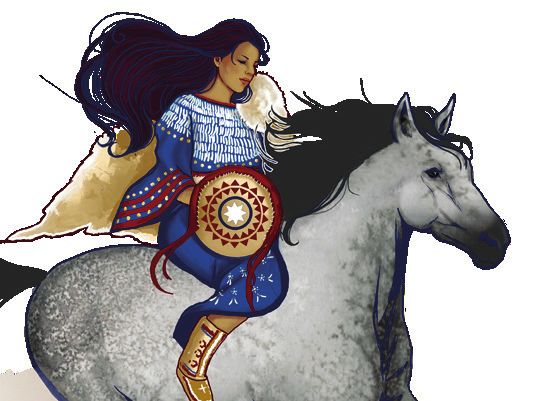
ia n He a lt h B o a rd In c.
lb u q u e rq____u__e__A d
rea In ________________ __ __ __ __ __ ______
A __ __ __
__ __ __ __________________ Mescalero Apache Tri
be
__ __ __ __ __ __
nd of Na vaj os * Jicarilla Apache Nation * tain Ute Tribe
Tóhajiilee Ba ian Tribe * Ute Moun
ma h Ba nd of Na vaj os * Southern Ute Ind
Ra
Letter of Support
Summit and
l Tribal Public Health ce
10th Annual Nationa e Nationa l Beha vioral Health Conferen
d Al ask a Nativ
The 2019 American Indian an
es,
ral Conference attende
mmit and AI /AN National Behavio
Dear NIHB Health Su to the 10th Annual
., we are ple ased to welcome you alth
querque Area Indian
Health Bo ard , Inc tional Behavioral He
and Alaska Native Na
On behalf of the Albu the 20 19 Am eri can Ind ian
selected to ho st the se im po rta nt
c Health Summit and west Region has been
National Tribal Publi qu erq ue Ar ea So uth
t the country .
lighted that the Albu us people throughou
Conference We are de alt h an d wellness of Indigeno
mo te the he
conferences to pro hip with the Nationa
l Indian
HB ), Inc . ha s a lon g tradition of partners esp eci ally gra teful
Ar ea Ind ian Health Board (AAI rta nt he alt h initiatives. We are
Albuqu erq ue conferences an d im po work; the pro home ud
ard , Inc . (N IHB) to host events, ds, his tor y, culture, language and serve
He alt h Bo
share our indigenous
hospital ity , foo our culture night to ob
for the opportunity to an d Tr ibe s. We inv ite all of you to attend of the co re act ivi ties
Ind ige no us Ba nd s, Nations, Pueblos ate r un de rst an din g and appreciation h of
to the 27 d bridge a gre from eac
al songs and dances an k forward to learning
some of our tradition d res ilie nc e for gen erations. We also loo t are tak ing pla ce to promote
to our health an ventive practices tha
that have contributed tions, an d pro mi sin g pre
t our country . .
us research, interven mmunities throughou
you about the vigoro lan ds an d in urban Indigenous co
tri ba l
health and wellness on lla Apache Nation, the
Ra ma h Ba nd of Navajos, the Jicari the
the Tóhajiilee Band of
Navaj os, the ibe, formed in 1980 for
The AAIHB, namely e Tr ibe an d the So uthern Ute Indian Tr ma tte rs tha t pe rta in to
, the Ute Mountain Ut vides leadership in
ler o Ap ach e Tr ibe of tri be s; an d pro
Mesca and wellness
ent toward the health
interest and commitm pe op le.
eing of its
the health and well-b vent and reduce the im
pact of
s in the co ns ort ium communities that pre int ain ing tru st responsi-
bli c health activitie d and advocate for ma
po rts pu nu es to lea IHB
AA IH B sup
ns and health disparit
ies; an d co nti For four decades, AA
adverse health conditio h car e ser vic es for all Native Americans. e tri ba l pu bli c health
nm en t for quality he alt ass istance to enhanc
fed era l go ver , an d tec hn ica l
bility by the e services, training
ality tribal health car d cultural values.
has provided high qu llness wh ile respecting spiritual an
aci ty, an d we
infrastructure, cap ibal Epidemiology Ce
nter
n to the Al bu qu erq ue Area Southwest Tr ce Al bu qu erq ue Area
the parent organizatio Indian Health Se rvi
ves as ns in the
AAIH B als o ser s, Pueblos an d Na tio alth promotio isease n/d
ves the 27 Tribes, Band health assessment, he
(AASTEC) which ser idemi olo gy, co mm un ity
opment, health resear
ch, and
h services including ep veillance, student devel
to provide public healt n, pu bli c he alt h sur
n, program evaluatio
prevention interventio can Indians.
to im pro ve the quality of life of Ameri me you
tra ini ng le we serve, we welco
alt h Bo ard , Inc . an d the indigenous peop o im po rta nt eve nts.
lf of the Al bu qu erq ue Area Indian He rt by yo ur pa rti cip ation in these tw
On beha to your suppo
gion. We look forward
all to the Southwest Re en da nc e.
for your att
Thank you in advance
Sincerely,
ian Health Board, Inc.
Albuquerque Area Ind
______________
________________ __________________
__________ __________________ (Voice/Tdd) * Fax 505
/76 4-0446 * Toll Free 1-8
00-658-6717
__________________ o 87110 * 505/764-0036
ct Pla ce NE * Albuquerque, New Mexic
7001 Pro spe
NATIONAL TRIBAL PUBLIC HEALTH SUMMIT • MAY 13-15, 2019 • ALBUQUERQUE CONVENTION CENTER • ALBUQUERQUE, NEW MEXICO 5
6

SUMMIT TRACK INFORMATION
AND FORMAT
A VARIETY OF BREAKOUT SESSIONS
Workshops:                                 Roundtables:                                                     Trainings:
A workshop is a standard 90-minute         A roundtable is a 90-minute                                      Trainings are half or full-day long
presentation on a topic relevant to one    informal participatory session. Each                             classes that provide a more in-depth
or more of the conference tracks.          session will consist of 4-5 individual                           exploration of a topic, as well as more
                                           15-minute rounds. Every 15 minutes,                              activities and skills-building opportu-
                                           attendees will rotate to the next table                          nities. Institutes will have appropriate
                                           in the round. Presenters will remain                             breaks as planned by the facilitator.
                                           stationary.                                                      All institutes are offered on the post-
                                                                                                            Summit day, Wednesday, May 15th.

SUMMIT TRACKS
The Summit sessions are organized by different tracks that have grouped related content together. Tracks are color-coded
and participants will be able to identify which breakouts belong to each Summit track by reading the session descriptions in
the program book or looking at the Agenda At-a-Glance chart (in the program book and on the At-A-Glance poster by regis-
tration). Tracks include:

 Health Promotion          Environmental             Substance Misuse                       Public Health Policy,                           Emergency
 and Disease               Health and                and Behavioral                         Infrastructure and                              Preparedness and
 Prevention – A            Climate Change–           Health – This track                    Systems –Efforts                                Emerging Issues in
 cornerstone of Tribal     Environmental             looks at behavioral                    towards improving                               Public Health –This
 public health is the      stressors and             health as an inte-                     health outcomes                                 track addresses
 effort undertaken to      climate change            gral component                         for Tribal commu-                               preparedness and
 encourage individ-        pose unique risks         of holistic health.                    nities must also pay                            response capabilities
 uals and communi-         for Tribal popula-        Behavioral health                      close attention to                              of Tribal communi-
 ties to explore their     tions across Indian       captures a wide                        macro-level factors                             ties. It is important
 own health status         Country. These            degree of factors                      that influence those                            that Tribal nations
 and assist them to        stressors can affect      including substance                    health outcomes.                                are prepared and
 make better choices       everything from           and alcohol misuse                     Many factors play a                             equipped when
 that will improve         fish and mammal           and overdose, mental                   role including: law                             facing health emer-
 and maintain health       migration patterns        health illnesses such                  and policy, public                              gencies. Changes
 and healthy life-         to water sanitation,      as PTSD and depres-                    health accreditation,                           in factors such
 styles. This leads to     allergen levels, air      sion, suicide, and                     and the capacity                                as environments,
 a culture of wellness     pollution, severe         exposure to trauma                     of systems tasked                               economies, systems,
 rather than one of        weather occur-            and interpersonal                      with protecting and                             social structures
 sickness. The best        rences, prevalence of     violence. Behavioral                   promoting health and                            and even laws and
 opportunities to          vector borne disease,     health concerns may                    wellness.                                       policies can pose
 create a culture of       and a multitude           co-occur with other                                                                    new threats to the
 wellness in Indian        of other impacts.         health conditions                                                                      public’s health and
 Country rely upon         Facing these and          such as chronic                                                                        equally important
 disease preven-           other challenges are      disease, and can                                                                       is a health system’s
 tion and health           an important compo-       pose significant                                                                       ability to recognize
 promotion.                nent of maintaining       challenges for                                                                         and respond to
                           holistic health.          individuals, fami-                                                                     emerging threats.
                                                     lies, and commu-
                                                     nities. Improving
                                                     behavioral health
                                                     outcomes remains
                                                     an important priority
                                                     for Indian Country.

                                                            NATIONAL TRIBAL PUBLIC HEALTH SUMMIT   • MAY 13-15, 2019 • ALBUQUERQUE CONVENTION CENTER • ALBUQUERQUE, NEW MEXICO 7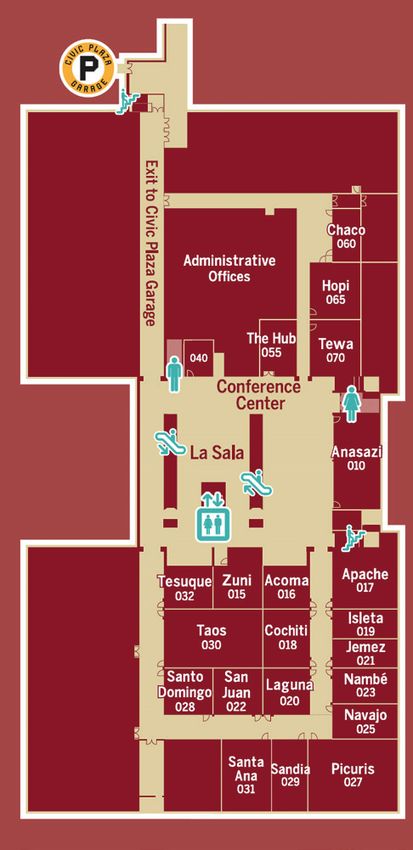
SUMMIT HIGHLIGHTS
Monday, May 13, 2019
OPENING PLENARY                            OPENING RECEPTION, SDPI POSTER           Special Diabetes Program for Indians
(8:30 AM-12:00 PM)                         SESSION AND ANNUAL PUBLIC                programs across Indian Country.
                                           HEALTH INNOVATION AWARDS                 Congress established SDPI in 1997
Please join us as we welcome national                                               to address the growing epidemic
leaders from across the country in         PRESENTATION
                                                                                    of diabetes in Indian Country and it
addressing public health in Indian         (BEGINNING AT 6:00 PM)                   quickly grew into the nation’s most
Country. We will be hearing from           Please join us for an opening recep-     strategic, comprehensive, and effec-
the U.S. Surgeon General Jerome M.         tion to kick off the Summit events,      tive effort to combat diabetes and its
Adams, U.S. Congresswoman Debra            help us honor our National, Regional,    complications.
Haaland (N.M.) and IHS Deputy              and Local Public Health Innovation
Director RADM Michael Weahkee              Award winners and to learn more
and many more!                             about the amazing work of the

Tuesday, May 14, 2019
FITNESS EVENT: ELDERS FITNESS              Clinic. So rise and shine, dress         PRIZE DRAWINGS
(6:30 AM-7:30 AM)                          comfortably, and bring a water bottle.
                                                                                    Up to 3 lucky winners will be drawn
Join us for an early morning elder                                                  for the Exhibitor and Marketplace
fitness class, where gentle aerobic,
                                           CLOSING PLENARY (3:15 PM-5:00 PM)        Passport prizes. See the back of the
stretching, and balance exercises          Will feature researchers and experts     book on how to qualify. You must be
will be adapted to your needs. All         on climate change and smokeless          present at the closing plenary to win.
are welcome to join this class led by      tobacco as well as remarks from          Six winners will be also be chosen
Kevin Tushka (Choctaw), a Diabetes         Jefferson Keel, President, National      from a pool of attendees who used
Treatment and Prevention Lifestyle         Congress of American Indians.            the conference app to complete
Coach at the Oklahoma City Indian                                                   session evaluations.

Wednesday, May 15, 2019
NATIONAL OPIOID RESPONSE                   CENTERS FOR DISEASE CONTROL              strategy initiatives. Tribal leaders,
                                           AND PREVENTION LISTENING                 health department staff, researchers,
PLANNING (9:00 AM-12:00 PM)                                                         individuals living with and at risk for
The Northwest Portland Area Indian
                                           SESSION – E-CIGARETTES AND
                                                                                    infection, and other stakeholders
Health Board and National Indian           INDIAN COUNTRY (3:00 PM – 5:00 PM)
                                                                                    from Indian Country are encouraged
Health Board are working to build a        The Office on Smoking and Health         to attend a listening session to share
strategic framework to be co-owned         (OSH) would like to hear from            with federal leaders their input for
by all Tribes to help form a clear foun-   tribal public health practitioners       these national strategies and federal
dation to develop and elevate priori-      and leaders on the use, impacts,         action plan.
ties for action and further learning.      and challenges of e-cigarettes
                                           in their communities and across          CULTURE NIGHT (6:00 PM-8:00 PM)
INDIAN HEALTH SERVICE (IHS) AND            Indian Country.
                                                                                    You won’t want to miss this exclu-
VETERANS AFFAIRS (VA) LISTENING                                                     sive evening at the Indian Pueblo
SESSION (9:00 AM-10:30 AM)                 SPECIAL LISTENING SESSION:
                                                                                    Center featuring a Southwest indig-
IHS and VA welcome your input,
                                           DEVELOPING THE NATIONAL                  enous buffet and cultural stories,
comments and recommendations               STRATEGIES FOR HIV AND VIRAL             dances and songs. Culture night is
to consider prior to formally initi-       HEPATITIS AND AN STD FEDERAL             sponsored by the Albuquerque Area
ating Tribal Consultation and Urban        ACTION PLAN (1:00 PM-3:00 PM)            Indian Health Board in partnership
Confer on updating a Memorandum            During this session, federal leaders     with Indian Pueblo Cultural Center,
of Understanding (MOU) between             will provide brief remarks on the        Tóhajiilee Band of Navajos, Jicarilla
IHS and VA later this year, as well as     process, policies, and scientific        Apache Nation, Mescalero Apache
other IHS or VA programs.                  advances that guide HHS’ efforts         Tribe, Ramah Band of Navajos,
                                           to develop the next iterations of        Southern Ute Indian Tribe, and Ute
                                           the national HIV and viral hepatitis     Mountain Ute Tribe.

8
NATIONAL INDIAN HEALTH BOARD
SPECIAL DIABETES PROGRAM FOR INDIANS
2019 ANNUAL POSTER SESSION
The Special Diabetes Program for Indians (SDPI) has been changing the lives of American Indians and Alaska Natives for the
past twenty years. Congress established SDPI in 1997 to address the growing epidemic of diabetes in Indian Country and it
quickly grew into the nation’s most strategic, comprehensive, and effective effort to combat diabetes and its complications.
Once a year, the National Indian Health Board is proud to host SDPI programs from around Indian Country, and this year is
no exception. We are thrilled to welcome the SDPI program participants to the Annual SDPI Poster Session, once again at
the Summit Opening Reception, Monday, May 13, 6:00 pm - 8:00 pm, Ballroom B/C!
SDPI COMMUNITY-DIRECTED GRANTS
Alaska Native Tribal Health Navajo Nation Southern Indian Health Council, Inc.
Consortium Navajo Nation Special Diabetes Native Own Wellness (California)
Diabetes Prevention Program (Alaska) Program (Navajo)
Spirit Lake Tribe
Chinle Comprehensive Oklahoma City Indian Clinic Spirit Lake Tribe SDPI Program
Healthcare Facility Get SET (Oklahoma City) (Great Plains)
Chinle Service Unit Diabetes
Program (Navajo) Parker Indian Health Services Stockbridge-Munsee Health and
CRIT Special Diabetes Project- Wellness Center
Fond du Lac Human Services Recreation Program (Phoenix) Stockbridge-Munsee Diabetes
Fond du Lac Band of Lake Superior Program (Bemidji)
Chippewa Diabetes Program (Billings) Rosebud Sioux Tribe
Rosebud Wellness Program Winslow Indian Health Care Center
Three Affiliated Tribes (Great Plains) Hozhoogo Iina Wellness
Fort Berthold Diabetes Program Program (Navajo)
(Great Plains) Sault Tribal Health Center/
Community Health- Yukon-Kuskokwim Health
Indian Health Service, Towaoc, CO Diabetes Program Corporation
Sleeping Ute Diabetes Prevention Sault Ste. Marie Tribe of Chippewa YKHC Diabetes Prevention &
Program (Albuquerque) Indians Diabetes Program (Bemidji) Control (Alaska)
Navajo Area Office SouthEast Alaska Regional Health Zuni Pueblo
Navajo Wellness Model Consortium (SEARHC) Zuni Healthy Lifestyles Program
Curriculum (Navajo) SEARHC Diabetes Program (Alaska) (Albuquerque)
NATIONAL TRIBAL PUBLIC HEALTH SUMMIT • MAY 13-15, 2019 • ALBUQUERQUE CONVENTION CENTER • ALBUQUERQUE, NEW MEXICO 9AWARD RECIPIENTS 2019
PUBLIC HEALTH
INNOVATION AWARDS
NATIONAL-REGIONAL-LOCAL
The Public Health Innovation Award were created to honor individuals, Tribes, organizations, and
programs that have enriched and improved American Indian and Alaska Native public health.
NIHB recognizes that public health is a Native traditional value, and that Tribes have led the
way in creating and implementing public health programming and services that align not only
with contemporary needs, but with cultural beliefs as well. The winners of these awards work to
improve health status, implement new programming, address long standing health disparities,
and/or increase the visibility of public health concerns.
This year NIHB received many deserving nominations from across Indian Country. Though we only
have three awards to grant, we would like to extend our thanks and congratulations to all of the
hardworking, dedicated nominees.
NATIONAL RECIPIENT
James Segura (Salamatof Native Association)
Chairman of the Board of Directors, Southcentral
Foundation
James Segura has served as Southcentral Foundation
(SCF) Board Chairman for 35 years. SCF is a nonprofit
Tribal organization serving 65,000 indigenous peoples.
With his commitment to strong governance, he has led
this Native Community through realizing the dream
of a customer-owned, customer-driven health care
system. The resulting Nuka System of Care has proven
to impact whole population health. Consistent with
the Native value of “sharing what we know,” Segura is
expanding the reach of these innovations through his
support for SCF’s Learning Institute, a new avenue for
sharing knowledge and expertise with other Tribes/
Tribal organizations. The Institute develops and
delivers workshops, trainings and consulting services
for organizations interested in replicating Nuka
concepts to improve health outcomes in their communities. Segura ensures the work is guided
by the client’s core values so the collaboration can help the people of any region achieve whole-
person wellness.
10REGIONAL RECIPIENT
Dr. Melanie Nadeau (Turtle Mountain Band of
Chippewa Indians)
Operational Director, American Indian Public Health
Resource Center
The American Indian Public Health Resource Center
(AIPHRC) was developed to provide technical assis-
tance around public health initiatives to Tribes in the
Northern Plains, Minnesota, and across the nation.
While at North Dakota State University, Dr. Nadeau
obtained her PhD in social and behavioral epidemi-
ology and focused her research on breast cancer
risk factors for American Indian women on the Turtle
Mountain Reservation, a study that was the first of its
kind. Through her work at AIPHRC, Dr. Nadeau has
been able to train and teach Tribal communities in
Minnesota on Indigenous Evaluation through a public
health lens. Melanie also specializes in data analysis
and is great at working with Tribal communities and making data easy to understand and read. Dr.
Nadeau was able to build the American Indian Public Health Resource Center from a small center
to what the center is now - which operates on several grant projects that focuses on health equity,
maternal and child health, and opioid use. Melanie is also a mother and wife and keeps up with her
traditions.
LOCAL RECIPIENT
Toiyabe Indian Health Project Infection Control &
Safety Committee
The Toiyabe Indian Health Project is a non-profit community
health clinic for residents of Inyo and Mono counties and provides
services such as medical care, dental care, dialysis, pharmacy,
optometry, counseling and behavioral health services, diabetes
care, and family services. The Toiyabe Indian Health Project
Safety and Infection Control Team, in partnership with Reno
District IHS OEH&E, demonstrated exceptional leadership and
commitment to improving the quality of care for patients, and
outstanding cooperation in achieving program goals and objec-
tives. To address health and safety issues identified by IHS during routine clinic assessments, the
teams were able to prioritize and address safety issues, and implemented corrective action that
significantly enhanced conditions at all clinic sites. The team’s dedication, commitment to mission,
and leadership has resulted in significant improvements in safety management and the quality of
care at the three Toiyabe Health Clinic sites.
NATIONAL TRIBAL PUBLIC HEALTH SUMMIT • MAY 13-15, 2019 • ALBUQUERQUE CONVENTION CENTER • ALBUQUERQUE, NEW MEXICO 11AGENDA AT-A-GLANCE
Main La Sala Lobby Ballroom B/C Cochiti Taos Picuris
Level Lobby
Registration and
SUNDAY
MAY 12
1:00 PM - 6:00 PM Information Desk
1:00 pm - 6:00 pm
6:30 AM - 8:00 AM
8:00 AM - 8:30 AM
OPENING PLENARY SESSION
8:30 AM - 12:30 PM 8:30 am - 12:30 pm
MONDAY, MAY 13
12:30 PM - 1:30 PM Lunch on your own
Culturally Tailored Tobacco Blooming Large: Tackling
Public Health Risk Communication
Exhibitor Hall Open Messaging Among American the Health Risks of
1:30 PM - 3:00 PM in Emergency Responses
8:00 am - 5:00 pm Indians in Minnesota Harmful Algae
Registration and 1:30 pm - 3:00 pm
1:30 pm - 3:00 pm 1:30 pm - 3:00 pm
Information Desk
6:30 am - 6:00 pm Collaborative Climate
Two Spirit Natives - Acceptance Crisis and Emergency Adaptation for Tribal
3:30 PM - 5:00 PM is Suicide Prevention Risk Communication Community Wellbeing
3:30 pm - 5:00 pm 3:30 pm - 5:00 pm 3:30 pm - 5:00 pm
OPENING RECEPTION, SDPI
POSTER SESSION, AND ANNUAL
6:00 PM - 8:00 PM PUBLIC HEALTH INNOVATION
AWARDS PRESENTATION
6:00 pm - 8:00 pm
6:30 AM - 7:30 AM FITNESS EVENT - ELDERS FITNESS, LAGUNA, LOWER LEVEL 6:30 am - 7:30 am
8:00 AM - 8:30 AM
The Role of Law in the Opioid When Shellfish Strike
Crisis: Exploring the Role that Back. How Environmental
Healthy Aging in Indian Country Federal, State, and Tribal Laws Monitoring Can Enhance
8:30 AM - 10:00 AM 8:30 am - 10:00 am Play in Facilitating a Response Access to Traditional
to the Opioid Crisis in Indian Resources
Country 8:30 am - 10:00 am 8:30 am - 10:00 am
TUESDAY, MAY 14
IHS American Indian/Alaska
Mino Bimaadiziiwin: Living Native Community Crisis Complexity and Simplicity
the Good Life by Reconnecting
10:30 AM - 12:00 PM Response Guidelines: Community of Food Security Systems
Wellness to Tradition Connections and Readiness 10:30 am - 12:00 pm
Registration and 10:30 am - 12:00 pm 10:30 am - 12:00 pm
Information Desk Exhibitor Hall Open
12:00 PM - 1:30 PM 6:30 am - 6:00 pm Lunch on your own
8:00 am - 5:00 pm
Using a Diné Framework to
Which way did the Coyote go? : The Power of Children
Examine the Impacts of the
Defining Qualitative Indicators to Promote Change:
Gold King Mine Spill on Diné
1:30 PM - 3:00 PM and Performance Measures Integrating Science, Culture,
Communities and Deepen
from an Indigenous Perspective Understanding of Lessons Learned and Collective Action
1:30 pm - 3:00 pm 1:30 pm - 3:00 pm
1:30 pm - 3:00 pm
CLOSING PLENARY SESSION
3:15 PM - 5:00 PM 3:15 pm - 5:00 pm
5:00 PM - 6:30 PM
6:30 AM - 8:00 AM
8:30 AM - 9:00 AM
9:00 AM -10:30 AM
WEDNESDAY, MAY 15
National Opioid Response Planning
9:00 am - 12:00 pm
10:30 AM - 12:00 PM Dialetical Behavioral
Registration and Therapy Training
Information Desk Exhibitor Hall Open 8:30 am - 3:45 pm
12:00 PM - 1:00 PM 6:30 am - 6:00 pm 8:00 am - 4:00 pm Lunch on your own 12:00 pm - 1:00 pm
1:00 PM - 3:00 PM START UP! : Art Therapy Tips for Successful Grant
Trauma Treatment for Writing Institute
Native American Youth 1:00 pm - 5:00 pm
1:00 pm - 5:00 pm
3:00 PM - 5:00 PM
6:00 PM - 8:00 PM CULTURE NIGHT HOSTED BY THE ALBUQUERQUE AREA INDIAN HEALTH BOARD AT THE INDIAN PUEBLO CULTURAL CENTER 6:00 pm - 8:00 pm
12
KEY Track: Health Promotion
and Disease Prevention
Track: Emergency Preparedness and
Emerging Issues in Public Health
Track: Environmental Health
and Climate ChangeNational Tribal Public Health Summit
Santa Ana Navajo/Nambe Isleta/Jemez Anasazi San Miguel/Ruidoso Zuni
12:00 pm - 1:30 pm
Needle Exchange and Healing Providing Nutrition Education Health Promotion and Disease
to Wellness Court: Effective Aging in Place on the for the Non-Dietitian Prevention 1 Roundtable
Methods in Indian Country Reservation 1:30 pm - 3:00 pm 1:30 pm - 3:00 pm 1:30 pm - 3:00 pm
1:30 pm - 3:00 pm Federal Partners Ready Room
Public Health Leadership 6:30 am - 8:00 pm
Indian Country Drug Development for Tribal Leaders: A Substance Misuse and
Endangered Children Promising Practice for Promoting Behavioral Health Roundtable
3:30 pm - 5:00 pm Public Health Advocacy 3:30 pm - 5:00 pm
3:30 pm - 5:00pm
Collaboration and Strategic Tribal Epidemiology Centers: Public Health Policy,
Planning to Reduce and Federal Indian Law as a Structural Connecting Communities Infrastructure and
Prevent Opioid and Substance Determinant of Health with their Health Data Systems Roundtable
Use Disorders in Alaska 8:30 am - 10:00 am 8:30 am - 10:00 am 8:30 am - 10:00 am
8:30 am - 10:00 am
Advancing Indigenous As Dementia Impacts Our SOAR (Stop, Observe, Ask, Environmental Health and
School-Based Health Services: Communities, What Can Be Done? Respond) for Native Communities Climate Change Roundtable
Wholeness and Healing by Design 10:30 am - 12:00 pm 10:30 am - 12:00 pm 10:30 am - 12:00 pm
10:30 am - 12:00 pm
12:00 pm - 1:30 pm
Native Community Approach PHAB Accreditation: Challenge HIV and the Opioid Epidemic; Health Promotion and Disease
to Integration of Behavioral Accepted, Challenge How to Address it Locally Prevention 2 Roundtable
Health Services Accomplished 1:30 pm - 3:00 pm 1:30 pm - 3:00 pm 1:30 pm - 3:00 pm
1:30 pm - 3:00 pm
Climate Ready Tribes Climate
and Health Learning Community
In-Person Networking Event
5:00 pm - 6:30 pm
Indian Health Service (IHS) and
U.S. Department of Veterans
Affairs Listening Session
9:00 am -10:30 am
Centers for Disease Control
and Prevention (CDC) Listening
Session – E-cigarettes and Indian
Country 10:30 am - 12:00 pm
Lunch on your own 12:00 pm - 1:00 pm
Dept. of Health and Human
Services Listening Session:
Developing National Strategies
for HIV and Viral Hepatitis and
Culture & Drugs Don’t Mix a STD Federal Action Plan
1:00 pm - 5:00 pm 1:00 pm-3:00 pm
CDC Environmental Health
Discussion Session
3:00 pm - 5:00 pm
Track: Substance Misuse Track: Public Health Policy,
and Behavioral Health Infrastructure & Systems
NATIONAL TRIBAL PUBLIC HEALTH SUMMIT • MAY 13-15, 2019 • ALBUQUERQUE CONVENTION CENTER • ALBUQUERQUE, NEW MEXICO 13AGENDA AT-A-GLANCE
ROUNDTABLE SESSIONS
ROUNDTABLES ARE PARTICIPATORY SESSIONS. EACH SESSION WILL CONSIST OF 4 INDIVIDUAL
15-MINUTE ROUNDS. EVERY 15 MINUTES, ATTENDEES WILL ROTATE TO THE NEXT TABLE IN THE
ROUND. PRESENTERS WILL REMAIN STATIONARY.
ROOM: ANASAZI
MONDAY, MAY 15 MONDAY, MAY 15 TUESDAY, MAY 16 TUESDAY, MAY 16 TUESDAY, MAY 16
1:30 - 3:00 PM 1:30 - 3:00 PM 8:30 AM - 10:00 AM 10:30 AM - 12:00 PM 1:30 - 3:00 PM
HEALTH PROMOTION AND SUBSTANCE MISUSE PUBLIC HEALTH POLICY, ENVIRONMENTAL HEALTH PROMOTION AND
DISEASE PREVENTION AND BEHAVIORAL INFRASTRUCTURE AND HEALTH AND CLIMATE DISEASE PREVENTION
1 ROUNDTABLE HEALTH ROUNDTABLE SYSTEMS ROUNDTABLE CHANGE ROUNDTABLE 2 ROUNDTABLE
Table 1
An Assessment of
Table 1 Table 1
Alcohol Regulation
Reducing Tobacco-Related Table 1 Table 1 Wisdom of Our Elders: A
MAY 12, 2019 • SUND AY
Policies and the Impact
Health Disparities through CDC Tribal Public Health Reconnecting with Mother Process for Developing
on Alcohol-Related
Policy, Systems, and Framework Roundtable Earth – Soul to Soil Traditional Cultural
Deaths in American
Environmental Changes Practices Curricula
Indian and Alaskan Native
Communities, New Mexico
Table 2 Table 2
Table 2
Developing a study of Cultivating Generational Table 2
Table 2 A Policy Framework
colorectal cancer risk Changes in Eastern Community Health
Food Sovereignty as to Reduce the Tobacco
and protective factors Tribal Nations through Representative: Tribal
a Climate Adaption Disparity among Native
among Alaska Native Traditional Practices Program Perspectives
Strategy; Myk Americans: The Canli
people using a commu- under the Good Health on Workforce Policy
Heidt, Swinomish Coalition of Cheyenne
nity-based participatory and Wellness in Indian and Sustainability
river Sioux Tribe
research framework Country (GHWIC) Grant
Table 3
An Innovative Partnership
Table 3 Table 3
Table 3 Between Public
Advancing Food Promoting Cultural Table 3
Cultural Connections and Health Professionals
Sovereignty on the Navajo Awareness in the Health Collaborative Climate
Social Support: Four- and Academic
Nation: A Native Youth’s Sciences through Adaptation for Tribal
years of knowing from the Researchers to Promote
Journey through Advocacy Relationship-Building Community Wellbeing
Tribal Prevention Initiative Adolescent Sexual and
and Policy Research and Immersion Training
Reproductive Health
on the Navajo Nation
Table 4
Table 4
A Comparative Analysis
Table 4 Table 4 Table 4 A Qualitative Analysis: A
of Telephone Versus
Integrating Tribal Disparities in Sexually When Shellfish Strike Pilot Study to Determine
In-Person Survey
Practices for Chronic Transmitted Diseases Back. How Environmental the Efficacy of a Vetted
Administration for
Disease Prevention in (STD) among American Monitoring Can Provider Program for
Health Risk Factor
American Indian/Alaska Indians and Alaska Enhance Access to Tribal Community Health
Surveillance in Three
Native Communities Natives (AI/AN) Traditional Resources Aides Serving Rural
Tribal Communities
and Remote Regions
in New Mexico
14AGENDA
M O N D AY • MAY 13, 2019
— • 10th Annual •—
National Tribal
Public Health
Summit ALBUQUERQUE
NEW MEXICO
MAY 13-15, 2019
S U N D AY • MAY 12, 2019
SUNDAY, MAY 12, 2019
1:00 PM - 6:00 PM
Registration and Information
MAIN LEVEL LOBBY
MONDAY, MAY 13, 2019
M O N D AY • MAY 13, 2019
6:30 AM - 6:00 PM 8:45 AM – 8:50 AM
Welcome
Registration and Information
MAIN LEVEL LOBBY 8:50 AM – 9:00 AM
Opening Remarks
8:00 AM - 5:00 PM CHAIRPERSON KITCHEYAN, NIHB BOARD CHAIR
Exhibit Hall Open 9:00 AM – 9:40 AM
Tribes and the U.S. Public Health Service
LA SALA LOBBY
Commissioned Corps: Working Jointly to Improve
Public Health Outcomes in Native Communities
8:30 AM - 12:30 PM U.S. SURGEON GENERAL DR. JEROME ADAMS, U.S. DEPARTMENT OF HEALTH &
HUMAN SERVICES
OPENING PLENARY
BALLROOM B/C 9:40 AM – 9:50 AM
Tribal Collaboration with Congress to Promote
8:30 AM – 8:45 AM Tribal Health and Wellbeing (video address)
Drum group & posting colors, Opening Prayer REPRESENTATIVE DEB HAALAND, U.S. CONGRESSWOMAN (NM)
NATIONAL TRIBAL PUBLIC HEALTH SUMMIT • MAY 13-15, 2019 • ALBUQUERQUE CONVENTION CENTER • ALBUQUERQUE, NEW MEXICO 159:50 AM – 10:10 AM 1:30 PM - 3:00 PM
Remarks
DR. SPERO MANSON, DIRECTOR, CENTERS FOR AMERICAN INDIAN AND ALASKA
Breakout Sessions
MAY 13, 2019 • M O N D AY
NATIVE HEALTH
10:10 AM – 10:40 AM
Adverse Childhood Experiences (ACES) 1:30 PM - 3:00 PM
Presentation Culturally Tailored Tobacco Messaging Among
DR. DONALD WARNE, ASSOCIATE DEAN FOR DIVERSITY, EQUITY, AND INCLUSION / American Indians in Minnesota
DIRECTOR OF THE INDIANS INTO MEDICINE (INMED), UNIVERSITY OF NORTH DAKOTA
10:40 AM – 11:40 AM Track: Health Promotion and Disease Prevention
HIV/HCV Harm Reduction Panel COCHITI
VICKI BRADLEY, SECRETARY OF PUBLIC HEALTH AND HUMAN SERVICES, EASTERN BAND Traditional tobacco plays a vital role in many American
OF CHEROKEE INDIANS Indian (AI) cultures. Commercial tobacco use rates are high
JESSICA RIENSTRA, REGISTERED NURSE, LUMMI TRIBAL HEALTH CENTER throughout AI communities which contributes to significant
DR. CHRISTINA ARREDONDO, MEDICAL DIRECTOR/PSYCHIATRIST, PASCUA YAQUI TRIBE disparities in lung cancer, heart disease, and other smok-
HEALTH SERVICES DIVISION ing-related diseases. Understanding best practices for
CLINTON ALEXANDER, INTERIM DIRECTOR, BEHAVIORAL HEALTH DIVISION - WHITE smoking cessation and prevention is critical to improving
EARTH BAND OF OJIBWE health outcomes for AI people. We proposed that percep-
tions of smoking cessation messages and beliefs about
11:40 AM – 12:00 PM cessation and prevention of smoking are more positive when
Indian Health Service Updates on the White message arguments stress keeping tobacco sacred. To test
House HIV Initiative this hypothesis a community engaged study was designed.
RADM MICHAEL WEAKHEE, INDIAN HEALTH SERVICE, PRINCIPAL DEPUTY We believe that arguments that link smoking cessation
and prevention to AI cultures will resonate stronger with AI
12:00 PM – 12:10 PM adult smokers and youth. AI adult smokers were sampled at
Alzheimer’s Roadmap for Indian Country community events in the Minneapolis-St. Paul area. Findings
DR. LISA MCGUIRE, LEAD, ALZHEIMER’S DISEASE AND HEALTHY AGING PROGRAM, show a highly consistent pattern that sacred tobacco
CENTERS FOR DISEASE CONTROL AND PREVENTION
messages induced more positive responses vs. health conse-
12:10 PM – 12:20 PM quences and generic tobacco messaging. Data collection into
Closing Remarks the prevention of commercial tobacco use among AI youth
STACY A. BOHLEN, CEO, NATIONAL INDIAN HEALTH BOARD is underway. We theorize a similar outcome that culturally
inclusive messages will resonate more so than generic
tobacco messaging. Cultural cues in smoking cessation and
12:30-1:30 PM prevention messages can positively affect perceptions and
Lunch beliefs around smoking commercial tobacco. This study
has important implications for the design of messages that
encourage AI adults to quit smoking and prevent AI youth
from initiating.
TARLYNN TONE-PAH-HOTE, MICHAEL MUDGETT, AMERICAN INDIAN CANCER FOUNDATION
1:30 PM - 3:00 PM
Providing Nutrition Education for the
Non-Dietitian
Track: Health Promotion and Disease Prevention
ISLETA/JEMEZ
Nutrition education is integral to total diabetes care and
education. However, it is not always available from an
Registered Dietitian (RD). The session will provide an over-
view of goals and outcomes non RDs may consider estab-
lishing with patients with diabetes as they provide nutrition
education. Improving health and glucose control through
food choices and physical activity will be emphasized.
KELLI BEGAY, IHS DIVISION OF DIABETES
161:30 PM - 3:00 PM 1:30 PM - 3:00 PM
Blooming Large: Tackling the Health Risks of Aging in Place on the Reservation
M O N D AY • MAY 13, 2019
Harmful Algae
TRACK: Public Health Policy, Infrastructure & Systems
Track: Environmental Health and Climate Change NAVAJO/NAMBE
PICURIS There is much we do not understand about the struggles
One climate related health threat to coastal and tribal rural elders face when it comes to remaining independent.
communities is increased Harmful Algae Blooms (HABs). Accounting for the elder point of view and context are essen-
Warming sea temperatures have contributed to increased tial in evaluating and improving services directed to keep
frequency, duration, and severity of naturally occurring elders independent and at home. Few studies have examined
HABs events. The biotoxins from HABs bio-accumulate in the elder perspective on what they see as obstacles and
filter feeding shellfish such as clams, oysters, and mussels facilitators to aging in place. The driving research question
making them unsafe for human consumption. Last year is: How do Tribal Elders perceive barriers and facilitators to
biotoxins reached lethal levels within important shellfish health in their community? Photovoice allows the opportunity
harvest areas for the Lummi Nation and biotoxins are to capture the elder point of view on health in their commu-
predicted to continue to increase with a warming climate. nity by using photographs paired with narrative to frame
Lummi Nation tribal members have relied on intertidal shell- the salient issues. Participants were provided cameras and
fish harvesting since time immemorial and it is paramount prompts to facilitate their photography. Follow up interviews
for the tribe to increase monitoring, improve education, and were conducted to gather qualitative data to match the
enhance distribution of HABs and shellfish biotoxin levels photos taken keeping the narrative in the elder’s voice. This
to the community to protect the health of tribal members. study is a qualitative, participatory research project exam-
The Lummi Nation is currently working towards improving ining the obstacles and facilitators to elders’ health while
efforts to protect the health of the community from HABs / living in their homes. The elders told their stories that create
biotoxins. three primary categories of narrative: safety (environmental
MEGAN HINTZ, TAYLOR SOLOMON, LUMMI NATION events, changing home needs, and victimization), comfort
(family nearby, pets, home updates to ease mobility), and
support (home visits form providers, assistance with bills,
1:30 PM - 3:00 PM activity facilitation). Photovoice is an effective tool to give
Needle Exchange and Healing to Wellness Court: voice to the elders to drive the narrative. The photos illus-
Effective Methods in Indian Country trate a nuanced understanding of aging in place.
ANNA TRESIDDER, EASTERN WASHINGTON UNIVERSITY
Track: Substance Misuse and Behavioral Health NORA FLETT, SPOKANE TRIBE OF INDIANS
SANTA ANA
Indian Country has been disproportionately impacted by the 1:30 PM - 3:00 PM
opioid crisis and its unintentional impacts. United South and Public Health Risk Communication in
Eastern Tribes, (USET) is partnering with IHS Nashville area Emergency Responses
Tribal Nations to identify best and promising practices for
prevention, treatment and intervention practices. Recently, Track: Emergency Preparedness and Emerging Issues in
USET held a day long workshop for Tribal Nations to share Public Health
information on various initiatives implemented. During this
presentation, USET, will provide an overview of what was TAOS
learned in this workshop. Vicki Bradley, Health Director from Clear communication tailored to diverse audiences is critical
the Eastern Band of Cherokee Indians (EBCI) will talk about to effectively managing a public health emergency response.
their successful needle exchange program. Vickie will share This workshop will discuss key principles for communi-
supportive statistics demonstrating the early and continuing cation in emergency situations, with focus on American
participation in this program targeting at reducing the prev- Indian/Alaska Native (AI/AN) populations. The workshop will
alence of Hep C in the community. Rhonda Decontie, Clerk also include a scenario-based learning exercise on AI/AN
of Courts from Penobscot Nation, will talk about Penobscot’s resilience-building communication approaches and unique
“Healing to Wellness “court and how it is a successful psychological stressors these populations may experience.
model incorporating traditional methods to support those Finally, there will be a guided overview of online health
in recovery. education resources and self-directed public health train-
KATE GRISMALA, UNITED SOUTH AND EASTERN TRIBES, INC. ings available through the Centers for Disease Control and
RHONDA DECONTIE, PENOBSCOT NATION TRIBAL COURT Prevention (CDC).
VICKIE BRADLEY, EASTERN BAND OF CHEROKEE INDIANS ELIZABETH DAVLANTES, KELLY REGAN, DELIGHT SATTER, CENTERS FOR DISEASE
CONTROL AND PREVENTION
Track: Emergency
Track: Health Track: Environmental Track: Substance Track: Public Health
KEY Promotion and
Disease Prevention
Health and
Climate Change
Misuse and
Behavioral Health
Policy, Infrastructure
& Systems
Preparedness and
Emerging Issues
in Public Health
NATIONAL TRIBAL PUBLIC HEALTH SUMMIT • MAY 13-15, 2019 • ALBUQUERQUE CONVENTION CENTER • ALBUQUERQUE, NEW MEXICO 171:30 PM - 3:00 PM Table 3 - Advancing Food Sovereignty on the
Navajo Nation: A Native Youth’s Journey through
Health Promotion and Disease Prevention 1
Advocacy and Policy Research
MAY 13, 2019 • M O N D AY
Roundtable Session
xAs part of the National Indian Health Board Health Policy
Track: Health Promotion and Disease Prevention Fellowship, Native youth have the opportunity to research
health policy issues pertinent in their Tribal communities.
ANASAZI
Fellows then take action and share their recommendations
How do Roundtables work? Start at any table you would like with their Tribal leadership. For the 2017-2018 cohort of
and you will have to opportunity to visit the other tables every Health Policy Fellows, food sovereignty and substance abuse
15 minutes and in any order that suits you. prevention were two top priorities. During this interactive
round table, one 2017-2018 Health Policy Fellow, Natahlia
Table 1 - Reducing Tobacco-Related Health Enoah, will discuss her research on Diné food policies and
Disparities through Policy, Systems, and share her policy recommendations for advancing food sover-
Environmental Changes eignty in her Tribal Nation. Ms. Enoah will also share infor-
To respond to the multi-factored causes of chronic diseases mation about the National Indian Health Board Health Policy
burdening the Alaska Native and American Indian peoples, Fellowship and how your young people and Tribal communi-
including tobacco use and exposure, the Alaska Native ties may benefit from participating in this unique program.
Epidemiology Center (EpiCenter) and the Inter Tribal Council NATAHLIA ENOAH, PRESBYTERIAN CENTER FOR COMMUNITY HEALTH
of Arizona, Incorporated (ITCA) received separate five-year
grants under “A Comprehensive Approach to Good Health Table 4 - Integrating Tribal Practices for Chronic
and Wellness in Indian Country” from the CDC in 2014. Disease Prevention in American Indian/Alaska
The ANTHC EpiCenter and ITCA partners with their Tribes Native Communities
and Tribal Health Organizations (THOs) to address chronic Tribal Practices for Wellness in Indian Country (TPWIC), a
diseases through community chosen, and culturally respon- 3-year program funded by the Centers for Disease Control
sive, Policy, Systems, and Environmental (PSE) changes. The and Prevention, supports tribal practices as a protective
results of the partnership between ANTHC EpiCenter and factor for building strength, resilience, and wellness in
nine THO Partner Sites culminated in over 35 PSE changes American Indian/Alaska Native (AI/AN) communities. Seven
including tobacco-free healthcare campus policies, clinical strategies were identified to strengthen connections to
protocol and EHR improvements, tribal resolutions, and family, community, and culture, which can contribute to the
increased community-clinical linkages. With the assistance reduction of chronic disease in AI/AN. The presenters will
of ITCA, Tribes have developed and strengthened their introduce TPWIC and engage the participants by having them
tobacco policies, expanded the reach federal tobacco educa- share their program approaches and innovations as it relates
tion campaigns, and created tobacco education materials. to tribal practices. This will create a space for dialogue on
TAJIA REVELS, ALASKA NATIVE TRIBAL HEALTH CONSORTIUM how tribes are engaging and implementing traditional and
VANESSA DODGE AND GLENDA TOVAR, INTER TRIBAL COUNCIL OF ARIZONA, INC. cultural practices, intergenerational learning that supports
well-being and resilience, seasonal cultural practices that
Table 2 - Developing a Study of Colorectal Cancer foster health and wellness, and promoting traditional healthy
Risk and Protective Factors among Alaska Native foods and physical activity.
people using a Community-based Participatory SHANNON SALTCLAH, GORDON QUAM, CENTERS FOR
Research Framework DISEASE CONTROL AND PREVENTION
Colorectal cancer (CRC) is the second leading cancer among
Alaska Native (AN) people, and the second leading cause
of cancer mortality. We are developing a study of lifestyle
and genetic risk and protective factors for CRC among AN
people, conducted within a community-based participa-
tory research framework. This presentation will engage
attendees in a discussion on developing community-engaged
research studies to understand risk and protective factors
for chronic diseases among Tribal communities, using high-
lights from our work. We will present our formative research
process, how stakeholder feedback was incorporated into
our study protocol, our plans for continued stakeholder and
participant engagement, as well as for the return of research
results to the AN community. We hope to hear from others
engaged in similar research in other Tribal communities
about their processes. Finally, this presentation will provide
an opportunity for discussion of the respectful conduct of
research involving biospecimens in AIAN communities.
SARAH NASH, ALASKA NATIVE TRIBAL HEALTH CONSORTIUM
183:30-5:00 pm concepts; public health policy development; and real time,
emerging public health issues of local and national impor-
Breakout Sessions tance. Workshop participants will learn about the TLPHS
M O N D AY • MAY 13, 2019
planning process and evaluation results from two annual
symposia, and will participate in a focused conversation to
identify engagement strategies with tribal leaders to gain
3:30-5:00 pm public health support in their home communities.
Two Spirit Natives - Acceptance is Suicide TASSY PARKER, NATHANIA TSOSIE, NORMAN COOEYATE, UNM CENTER FOR NATIVE
Prevention AMERICAN HEALTH
Track: Health Promotion and Disease Prevention 3:30 PM - 5:00 PM
COCHITI Collaborative Climate Adaptation for Tribal
In 1990, at a Gathering in Winnipeg, Canada, Native American Community Wellbeing
and First Nations people, then called LGBT Natives, decided
to reclaim the sacred nature of what it meant to families, Track: Environmental Health and Climate Change
Tribes and Nations when a child born exhibiting gender PICURIS
fluidity and/or an affinity for a gender other than what was
biologically apparent. Those gathered in Winnipeg chose a Some of the most tragic impacts of climate change are
name that would speak to the sacred nature of the Ancestors projected to come in the form of illness, injury, and death
while reclaiming our places as strong people of medicine as well as collective psychosocial and cultural hardships.
and healing. History speaks of those Ancestors who held The Pala Band of Mission Indians was recently awarded an
honoured places within the Tribal community while moving NIHB Climate Ready Tribes grant to complete and implement
fluidly between genders. In fact, many Tribes identified a climate adaptation plan that engages tribal community
multiple genders and often, a gender was not assigned until stakeholders in increasing tribal health, wellbeing, and
the child told the Tribe whom they were. Along with that resilience. This project builds upon previous work Pala has
identity came sacred responsibilities to the Tribe, as healers, done to assess its own climate health vulnerability, and to
as the namers and caretakers of children, as mediators help prepare tribes across the country through the federally
between the genders and as protectors of the Tribe. Post funded Tribal Climate Health Project. Presenters will facil-
contact, and with the creation of the genocidal tactic of what itate an interactive workshop to share the lessons learned
was known as the Boarding/Residential Schools, many tradi- from these initiatives to date, including tools, templates,
tional roles were destroyed in an effort to “kill the Indian to and other materials developed to support tribes. Presenters
save the man.” In spite of multiple attempts to “eradicate the will also review the latest literature and evidence that has
Indian problem,” the resilience of Indigenous people perse- informed Pala’s uniquely collaborative approach to building
vered and now, Two Spirit people are working hard to regain tribal cohesion and wellbeing before, during, and after
our places in the Sacred Hoops of our people. This workshop climate disasters.
will share historical evidence of the sacred nature of Two SHASTA GAUGHEN, PALA BAND OF MISSION INDIANS
Spirit people and how acceptance is a suicide prevention ANGIE HACKER, PROSPER SUSTAINABLY
technique.
SADE HEART OF THE HAWK ALI, ZERO SUICIDE INSTITUTE 3:30 PM - 5:00 PM
Indian Country Drug Endangered Children
3:30 PM - 5:00 PM
Track: Substance Misuse and Behavioral Health
Public Health Leadership Development for Tribal
Leaders: A Promising Practice for Promoting SANTA ANA
Public Health Advocacy Tribal communities are experiencing the highest rates of
substance use disorders among any population. This US
TRACK: Public Health Policy, Infrastructure & Systems Department of Justice course will present facts, a brief over-
NAVAJO/NAMBE view of why substance use rates are on the rise and discuss
how this is impacting and contributing to tribal youth trauma.
Leaders of Native Nations, Pueblos, and Tribes address
We will learn from our past, look at the present, and discuss
wide-ranging and pressing issues, including matters of
strategies and methodologies – both western medicines
public health. To promote informed, public health advocacy
based and culturally rooted – that offer ways on combating
and leadership skills of elected and appointed leaders, a
substance use disorders. Discussion on data collection,
team from the University of New Mexico Health Sciences
evidence-based practices vs. evidence informed, community
Center for Native American Health collaborated with tribal
involvement, and local and regional agencies with tools to
leaders to establish an annual Tribal Leaders Public Health
address local problems requiring local solutions.
Symposium (TLPHS). A six-month planning process involving
tribal leaders provided the format and content of the first JACQUE GENCARELLE, DRUG ENFORCEMENT AGENCY
annual TLPHS (2017). The TLPHS provides tribal leaders
with a working knowledge of the public health model and
Track: Emergency
Track: Health Track: Environmental Track: Substance Track: Public Health
KEY Promotion and
Disease Prevention
Health and
Climate Change
Misuse and
Behavioral Health
Policy, Infrastructure
& Systems
Preparedness and
Emerging Issues
in Public Health
NATIONAL TRIBAL PUBLIC HEALTH SUMMIT • MAY 13-15, 2019 • ALBUQUERQUE CONVENTION CENTER • ALBUQUERQUE, NEW MEXICO 19You can also read


