Flatfoot Flatbush - cloudfront.net
←
→
Page content transcription
If your browser does not render page correctly, please read the page content below
Make Music Winter                                                               2020

                            Flatfoot Flatbush
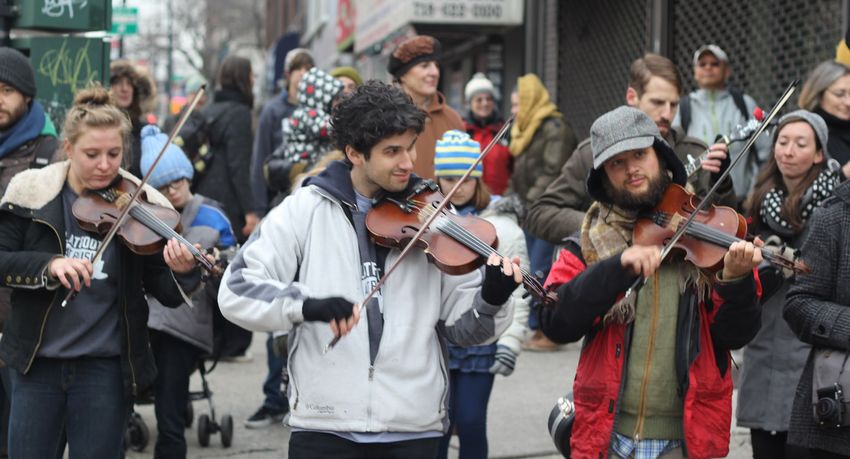
                    Flatfoot Flatbush is a joyous, participatory parade of Old Time music and Appala-
                    chian flatfoot dancing, organized for the past four years on December 21st along
                    the Brooklyn thoroughfare of Flatbush Avenue. The event is run as a partnership
                    between a local dance school, and a neighborhood Business Improvement Dis-
                    trict (BID), which promotes it and enlists support from local shops.

                    In your city, chances are you do not have a “Flatbush Avenue,” so you’ll want to
                    change the title to something locally appropriate. You can also adapt the concept
                    to other kinds of percussive dance – tap dancing, clogging, or classical Indian
                    Kathak dancing could all form the basis for a parade.

                    Generally, a Flatfoot Flatbush event starts with a 30 minute dance workshop, fol-
                    lowed by 1-2 hours of outdoor music and dance in a commercial district, ending
                    up at a bar or restaurant for food, drinks, and more music.

                    1. A lead guitarist and lead fiddler who know the songs you’ve chosen. Anyone
                    who shows up with a guitar, banjo, upright bass (ideally with an endpin wheel),
                    mandolin, or violin should be able to join, but it’s best to line up a couple of
     WHAT           strong players in advance to form a “house band.”
    YOU’LL          2. A dance instructor / dance caller. He or she can teach a few flatfooting
     NEED           steps and square dance calls at the workshop that begins the event, and call out
                    steps for the dancing along the way. The instructor may want a small CD-playing
                    boombox to use for the class, or the house band can accompany the class.

Make Music Winter is presented by the Make Music Alliance and the NAMM Foundation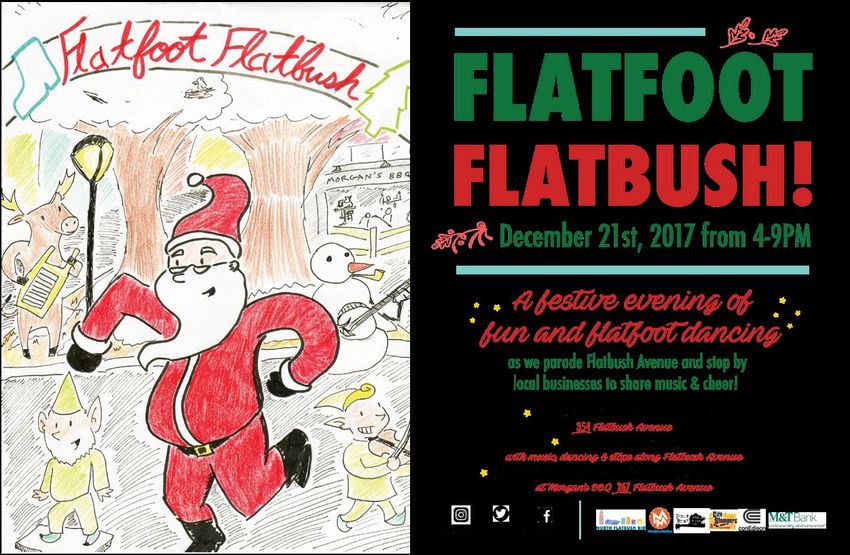
2

           3. A few hundred pennies, Shoe Goo adhesive, and a sheet of plywood. If
           dancers bring an old pair of sneakers, they can glue pennies onto the soles of
           their shoes at the start of the event to create a percussive tap shoe. (Since it takes
           time for the glue to dry, it’s best to prepare the shoes the day before, if possible.)
           The plywood provides a louder platform for dance soloists during the event.

           4. Hand Warmers for the musicians, if cold weather is expected. These are dis-
           posable plastic packs that give off heat for up to 10 hours. A package of 40 pairs
           should cost about $25.

           Permits and Venues
           This event works best when musicians play each song while standing still, let-
           ting the dancers square dance / flatfoot on the sidewalk in front of them. At the
           end of each song, the whole group then walks to the next stop. (The musicians
 HOW TO    may sing or play between stops as well, if they are able.) Playing acoustic music
ORGANIZE   on the sidewalk for a few minutes will not necessarily require a permit, but since
           people may be dancing in front of a store’s entrance, you should get permission
           in advance from each business where you will be stopping.

           We recommend partnering with a Business Improvement District, block associa-
           tion, or Merchants’ Association, who are often happy to reach out to their busi-
           nesses on your behalf. In December, retailers are usually eager for attention and
           walk-in customers. By agreeing to serve as a Flatfoot Flatbush stop, they can be
           listed in your marketing, and promote the event to their own customers as a fun
           reason to come to the store that day.

           In Brooklyn, the North Flatbush Avenue BID goes above and beyond, lining up

     Make Music Winter                                                Flatfoot Flatbush 2020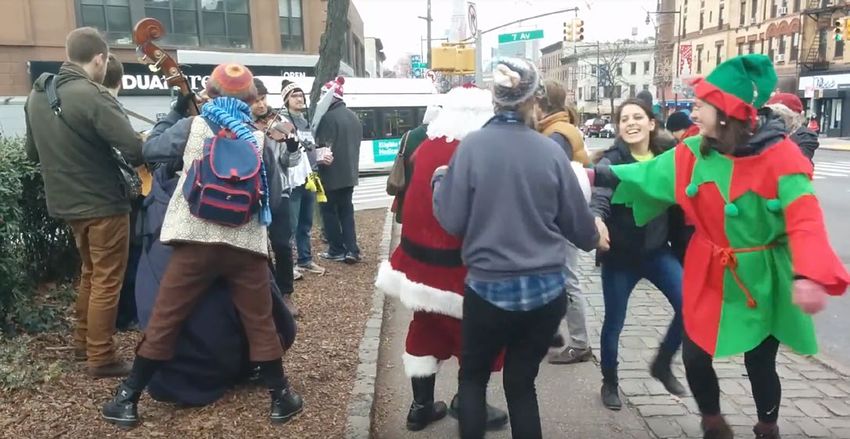
3

     free samples and small gifts from restaurants and stores for all Flatfoot Flatbush
     participants, printing posters and postcards to help shops promote the event,
     and providing a small budget to the organizers. Not every BID will play such an
     active role, but if you have an enthusiastic partner, you should explore these
     options.

     Starting and Ending Points
     Find a quiet, spacious place where
     people can gather at the start of the
     event and learn the dance steps.

     Flatfoot Flatbush celebrates Appa-
     lachian flatfooting, but the music
     is also perfect for square dancing.
     This gives many participants, who
     are unfamiliar with flatfooting but
     have gone square dancing before, a way to join in. Typically, the workshop cov-
     ers the basics of square dancing to refresh these dancers’ memories.

     Then, the workshop introduces flatfooting. You won’t have enough time to teach
     a beginner how to flatfoot, but it’s helpful to demonstrate a few steps so ev-
     eryone can appreciate what’s going on. And if you glue pennies on the soles of
     someone’s sneakers, they can improvise their own percussive accompaniment to
     the music, even if they’re not the “right” steps.

     If you have secured an indoor starting place, musicians and dancers can leave
     their cases and bags here during the event, and pick them up afterwards.

     After 1-2 hours of playing and dancing, people are likely to be tired and hungry.
     It’s nice to end at bar or restaurant where everyone can relax, and listen to more
     music from the players in your house band.

     Repertoire
     Before the event, post a list of 6 to 8 Old Time songs that you’re going to play.
     Include links to sheet music or YouTube videos so that people can practice in
     advance. Some favorites from Flatfoot Flatbush have been “Sandy Boys,” “Big
     Sciota,” “Fly Around My Pretty Little Miss,” “Liza Jane,” “Cluck Old Hen,” and
     “Breaking Up Christmas.”

     Marketing
     • To dancers: Contact local dance schools, and square dance & folk dance ven-
       ues, and ask them to spread the word to their patrons. Some cities have active
       email lists or Facebook groups for square dance enthusiasts. Your dance

Make Music Winter                                             Flatfoot Flatbush 2020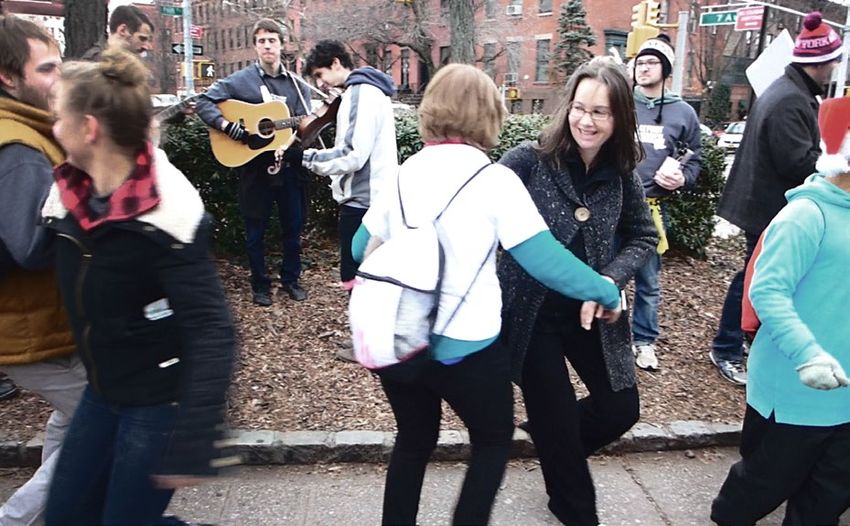
4

               instructor should know the best places to find local dancers. Remind people
               to bring an old pair of sneakers that they can glue pennies to. Also consider
               partnering with a school to offer flatfooting workshops for three weeks in
               advance on December 21, so participants can thoroughly learn the steps.

            • To musicians: Give fliers to your house band musicians and ask them to dis-
              tribute them at folk, bluegrass, and Old Time jam sessions, and email them to
              their musician friends. Emphasize that anyone can show up with their instru-
              ments and join in, regardless of experience.

            • To locals: Use your participating businesses, and your BID partner, to pro-
              mote the event throughout the neighborhood. Ask businesses to post about it
              on their Facebook pages, mention it in customer email lists, and put up a sign
              in their window two weeks in advance.

            • Finally, send your event details to aaron@makemusicday.org as soon as pos-
              sible for inclusion on the national Make Music Winter website and in press
              outreach.

            1. Gather at the starting location 30 minutes in advance with your dance
            instructor and lead musicians, and go over the route and itinerary. Set up the
            boombox for the dance workshop (if your instructor will be using one).
    WHAT    2. As dancers arrive, introduce them to the instructor, and point them to the
TO DO ON    glue and pennies if they want to make their shoes more percussive. As musicians
DECEMBER    arrive, show them where to put their cases, pass around handwarmers for them
            to put in their pockets, and introduce them to the house band musicians to talk
       21   through the songs and tune their instruments together.

     Make Music Winter                                              Flatfoot Flatbush 2020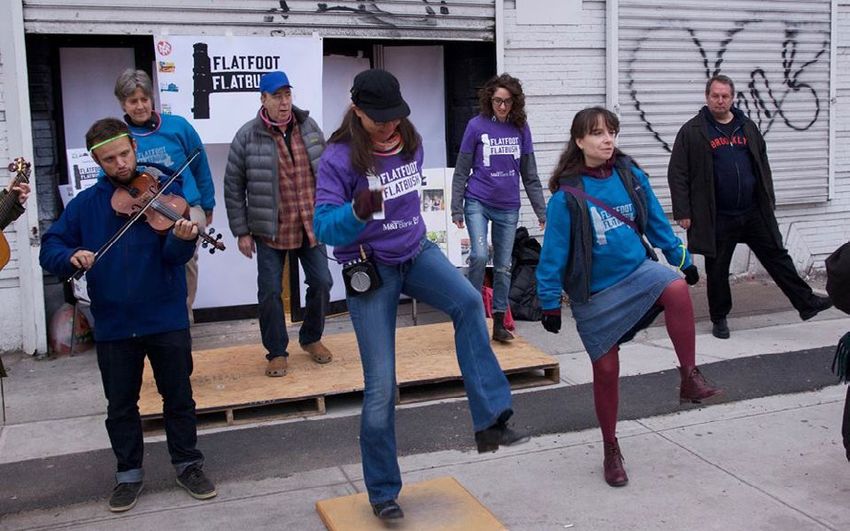
5

     3. At the end of the dance workshop, say a few words to thank everyone for
     coming, and start walking to the first stop. Ideally, the musicians will sing or
     play while walking from one stop to the next, and keep everyone’s energy up, but
     if this is too challenging they can just play at the designated stops.

     4. When everyone has arrived at the first location, the dance instructor
     places the plywood board on the ground, in a central spot. The musicians
     start to play, and the dance instructor calls the first square dance for everyone
     to join. Gesture to the more experienced dancers to step out of the square dance
     and onto the plywood to do some solo flatfooting, then they can rejoin the square
     dance and give someone else a turn.

     5. At the end of the song, the local business should have a chance to thank
     people for coming and distribute a free sample from their store or restaurant.
     Then it’s time to move on to the next stop and do it again.

     6. The final stop should be at a bar or restaurant, where everyone can relax,
     talk to each other, and hear more music from the house band. Remind peo-
     ple how to pick up their bags or instrument cases they may have left at the start-
     ing point. Thank everyone for coming and invite them to come back next year!

     If you have further questions about Flatfoot Flatbush, feel free to contact event
     organizers Nick Horner and Theo Boguszewski at mmnyporchstomp@gmail.com.

Make Music Winter                                             Flatfoot Flatbush 2020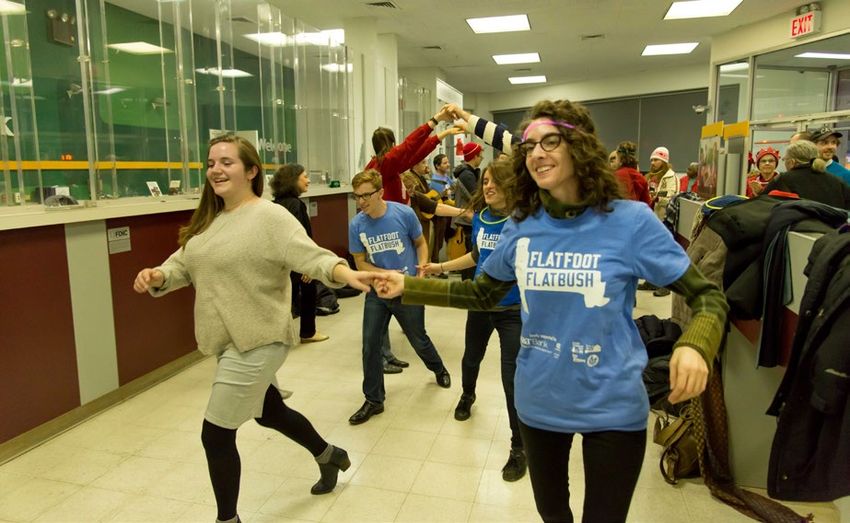
You can also read


