Foreign rights spring 2018 - Verlag Antje Kunstmann
←
→
Page content transcription
If your browser does not render page correctly, please read the page content below
foreign rights
 spring 2018
Axel Hacke
On Decency in trying times and the
question of how we can all get along
# 1 Nonfiction Bestseller in Germany [Über den Anstand in schwierigen Zeiten und
die Frage, wie wir miteinander umgehen]
A short, compellingly topical book about the age-old
question: how do we want to live – with ourselves
and with others.
»Too much has already become commonplace: These are turbulent times, and tumultuous events
shitstorms, coarse and shameless language, can rock the very foundations of how we live. Time,
then, to ask ourselves what it means for each of us
if lies, self-interest and gross conduct hold sway and
insults, lies, a total lack of restraint in judging even gain power. What happens when fundamen-
tal rules of propriety are flaunted with such success
others. The fundamental principles of human de- in public life. In these circumstances, what does it
mean to live a decent life?
cency are in question. Then again, what exactly is Axel Hacke’s book is no polemic – there are enough
pamphleteers at work in the world – but an associa-
decency?« AXEL HACKE tive reflection on what it means for human beings to
live together. He is motivated by the same questions
which preoccupied Anton Chekhov: how to “live as
best we can.” It is a plea that we look for the answers,
192 pages, hardcover with jacket,
not in others, but initially in ourselves and that in
Euro 16.00
doing so we discover some humility and perhaps
even curiosity about other people. In our complica-
ted world, we are unlikely to find a simple solution to Rights Sold To:
all our problems, and anyone claiming this should be
The Author: Hungary (Park Publishing),
treated with mistrust. But we can face this fact with
South Korea (Sam & Parkers)
decency and give due thought to the big, recurring
Axel Hacke is a writer and columnist for the Süddeutsche Zei- question: how do we want to live together?
tung Magazin. He is one of Germany’s best-known authors and
his work has been widely translated. Most recently, Die Tage,
die ich mit Gott verbrachte (The Days I spent with God) was
published by Kunstmann in 2016.
For further information please contact
Moritz Kirschner
Verlag Antje Kunstmann GmbH
Zweigstraße 10 | 80336 München
Tel. 089 / 12 11 93-28 | Fax 089 / 12 11 93-20
E-Mail: m.kirschner@kunstmann.de
Julia Jessen
                                                                                  the architecture of knotting
                                                                                                                                                                               new
                                                                                  [Die Architektur des Knotens]
»You’re destroying your family« he says.
»No,« I say, »I’m trying to save it.«                                             A woman leaves her husband and her two small
                                                                                  children. No-one understands. She doesn’t under-
»Save it from what, Yvonne?«                                                      stand herself. But her sense of suffocating in every-
                                                                                  day routine is overwhelming.
»From apathy.«                                                                    Yvonne and Jonas are good together: they care
                                                                                  deeply for their children, have a wide circle of friends,
                                                                                  and get on well with each other. They both have jobs
                                                                                  and share the domestic chores. Why Yvonne feels a
                                                                                  paralysing sense of merely functioning is a mystery
                                                                                  even to her. One thing she knows for sure is that she
»An interior view of an extraordinary separation.                                 can’t go on like this.
                                                                                  After a party she heads to a bar with a younger col-
                                                                                  league. She sleeps with him. But why does she have
                                                                                  to tell her husband? Why leave her family? Why des-
                                                                                  troy something she has built so perfectly? Perhaps to
                                                                                  avoid the perfect misery, the silent destruction which
                                                                                  people only notice when it’s too late?

                                                                                  Julia Jessen describes in exacting detail the conflic-         ca. 432 pages,
                                                                                  ting situations and emotions which people endure,              hardback with dust jacket
                                                                                  even if few confront them quite so radically. And she          Euro 24.00
                                                                                  tells of how a family can come together again, even if
                                                                                  it is no longer the way it once was.
             The Author:
             Julia Jessen was born in 1974. She studied literature and trai-
             ned as an actor. She worked in film and television for ten years,
             took part in various theatre productions and taught at drama
             schools. In 2010 Julia Jessen set up “kurswerk” in Hamburg, pro-
             viding training in acting, personality and stage presence. Julia
             Jessen lives with her family in Hamburg. Her novel Alles wird hell
             (All will be bright) was published by Kunstmann in 2015.

                                                                                                                              For further information please contact
                                                                                                                              Moritz Kirschner
                                                                                                                              Verlag Antje Kunstmann GmbH
                                                                                                                              Zweigstraße 10 | 80336 München
                                                                                                                              Tel. 089 / 12 11 93-28 | Fax 089 / 12 11 93-20
                                                                                                                              E-Mail: m.kirschner@kunstmann.de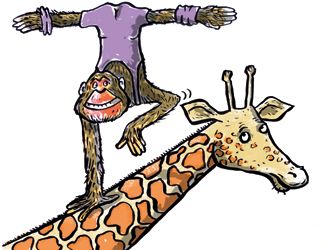
Julia Jessen
                                                                                   All will be bright
                                                                                   [Alles wird hell]
»I’m almost at the fence. Look down at my own
 feet, one next to the other. Seven steps at most                                  In this wonderful debut, Julia Jessen tells Oda’s sto-
 and I’ll be at the gate. At most. When I look up                                  ry, the story of a woman who knows the happiness
                                                                                   of family life as well as the joys of escaping it, who
 again, I see myself. An old woman. I’m standing                                   doesn’t lose herself in the contradictory demands of
 on my garden steps smoking. I see how I fall.                                     “modern” life, who makes unconventional decisions
                                                                                   and never feels at odds with them.
 Head first. I fall very slowly. It’s quiet.« Julia Jessen                         There’s the little girl, the first lie and the sense of
                                                                                   freedom. There’s the provocative sixteen-year-old,
                                                                                   her merciless yet affectionate exasperation with her
                                                                                   family, and her first sexual encounter. And there’s
                                                                                   the young woman who would like a second child but
                                                                                   whose husband objects. How do you deal with that
                                                                                   and stay together? How do you overcome estrange-
                                                                                   ment and keep on loving? Into old age?
                                                                                   This impressive novel tells the story of a life. Wholly
                                                                                   and utterly of our time. And all will be bright.

                                                                                                                                               288 pages, hardcover with jacket
                                                                                                                                               Euro 19.90

                 The Author:
                 Julia Jessen was born in 1974. She initially studied literature
                 but then left off to train as an actor. She worked in theatre,
                 television and film for ten years and taught in various drama
                 schools. In 2010 Jessen set up “Kurswerk” in Hamburg, provi-
                 ding acting lessons and personality/presence training. Jessen
                 lives in Hamburg with her husband and two children.

                                                                                                                               For further information please contact
                                                                                                                               Moritz Kirschner
                                                                                                                               Verlag Antje Kunstmann GmbH
                                                                                                                               Zweigstraße 10 | 80336 München
                                                                                                                               Tel. 089 / 12 11 93-28 | Fax 089 / 12 11 93-20
                                                                                                                               E-Mail: m.kirschner@kunstmann.de
Peng
                                                                              a bear called levy is just too …!
                                                                              Funny animal rhymes for very young poets                                                    new
A first book of rhymes                                                        [Kurt, der Bär, ist viel zu …!
                                                                              Lustige Tiergedichte für kleine Poeten]
for the very young
                                                                              A bear called Levy is just too heavy. Emil the crocodile
                                                                              shows us photos of the Nile. Doris the hen is on holi-
                                                                              day again. There’s a health-conscious hound known
                                                                              as Frank and a monkey called Alois who mistakes
                                                                              Gudrun the giraffe for a climbing tree. And tiny tiger,
                                                                              as you’ll see, is hanging around like a chimpanzee.

                                                                              In this vibrant picture book children meet a colour-
                                                                              ful collection of animals as never seen before: a bear
                                                                              weighing in, a crocodile with his tablet, a hen on her
                                                                              deck chair, a golfing wolf and many more. They will
                                                                              also discover the fun of open endings and filling in
                                                                                                                                            ca. 32 four-colour pages, hardback
                                                                              the gaps!                                                     Euro 12.00
                                                                              The joys of reading, writing and rhyming together.            For children from 2 years

             The Author:
             Peng lives and works in the Austrian mountains. A cartoonist
             with many years’ experience in print and online media, he
             collaborated with HU (Rudi Hurzlmeier) to create the pheno-
             menal HIRAMEKI. This is PENG’s first children’s book. He hopes
             all his young readers will have as much fun with it as his own
             children did.

                                                                                                                         For further information please contact
                                                                                                                         Moritz Kirschner
                                                                                                                         Verlag Antje Kunstmann GmbH
                                                                                                                         Zweigstraße 10 | 80336 München
                                                                                                                         Tel. 089 / 12 11 93-28 | Fax 089 / 12 11 93-20
                                                                                                                         E-Mail: m.kirschner@kunstmann.de
Leonard Riegel
                                                                                      strangely encrypted messages from outer space
                                                                                                                                                                                new
                                                                                      [Seltsam verschlüsselte Botschaften aus dem All]
»Leo Riegel has created a quite distinctive form of
comic art, making his some of the most striking
                                                                                      Looking for definitive answers to the compelling is-
line drawing in German cartoons.«                                                     sues of our universe? Look no further than Seltsam
                                                                                      verschlüsselte Botschaften aus dem All (Strangely
Andreas Platthaus                                                                     encrypted messages from outer space).
                                                                                      Leo Riegel’s book has all the answers to those bur-
                                                                                      ning questions: Why are young people today getting
                                                                                      more conservative? Just why are wolves starving in
                                                                                      forests close to Berlin? Why don’t touchscreens react
                                                                                      to liver sausage? What did great-grandad really do in
                                                                                      the war? And what’s with Nature and vulgarity?
                                                                                      If you’ve been asking yourself those questions, then
                                                                                      Leonard Riegel’s wonderful book is the one for you.
                                                                                      “Is there anything this man cannot do?” (from the fo-
                                                                                      reword by Moritz Hürtgen).                                  ca. 112 four-colour pages, hardback
                                                                                                                                                  Euro 15.00

                    The Author:
                    Leonard Riegel was born in Göttingen in 1983 and studied Vi-
                    sual Communication at the Academy of Arts in Kassel (KhK).
                    He is a past recipient of the German Cartoon Prize (2009 and
                    2016) and the Sondermann Prize for Comic Art (2015). His work
                    has appeared in Titanic, taz and the like. Leo Riegel has been
                    editor for cartoon and comic art at Titanic since 2014. Leonard
                    Riegel lives in Frankfurt am Main and Kassel.

                                                                                                                               For further information please contact
                                                                                                                               Moritz Kirschner
                                                                                                                               Verlag Antje Kunstmann GmbH
                                                                                                                               Zweigstraße 10 | 80336 München
                                                                                                                               Tel. 089 / 12 11 93-28 | Fax 089 / 12 11 93-20
                                                                                                                               E-Mail: m.kirschner@kunstmann.de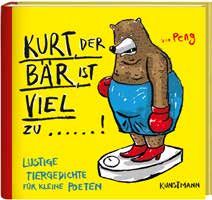
»A children´s book, but certainly not only for                                    Karl Philipp Moritz | Wolf Erlbruch
children. A book to help children learning to read                                new abc-book
and write, but much more than that: a captivating
                                                                                                                                                                               new
                                                                                  [Neues ABC-Buch]

piece of world theatre.« Die Zeit
                                                                                  A classic in the history of ABCs interpreted afresh by
                                                                                  one of the most successful illustrators working today.
                                                                                  “A children’s book that is so much more. A book for
                                                                                  learning to read and write. A conversation between
A wonderful book of pictures, poetry and                                          one century and another, between the sceptical en-
                                                                                  lightener Moritz and the enlightened sceptic
reflections, not only for children                                                Erlbruch. A book about what it means to
                                                                                  be human. Where Moritz preaches, Erlbruch             NOW
                                                                                                                                    IN A  BIGGER
                                                                                  finds himself dreaming. Where Moritz ad-
                                                                                  monishes and laments, Erlbruch quietly               FORMAT
                                                                                                                                              3 cm)
                                                                                  opens a few windows and doors to the out-          (22,5 x 3
                                                                                  side world. When Moritz, deeply moved by
                                                                                  his own pathos, extols virtue, Erlbruch adds a touch
                                                                                  of irony and makes all the world a stage. Where one
             The Author:                                                          meticulously dissects, breaking the human down
                                                                                  into its essential constituents, assured of the inher-
             Karl Philipp Moritz,(1756-1793) was a versatile writer of
                                                                                  ent value of human dignity, the other rearranges the
             Germany’s Sturm und Drang literary movement, the Berlin En-
                                                                                  letters into something new. And all the while we can
             lightenment and Weimar Classicism. He led an eventful life as
                                                                                  hear him cheerfully humming and mumbling and                 72 four-colour pages, hardback
             hatter’s apprentice, actor, steward, teacher, editor, author, late                                                                Euro 20.00
                                                                                  sighing and smiling. Humanity, ah yes.”
             enlightener, philosopher and art theoretician.
                                                                                  Benedikt Erenz, Die Zeit
                                                                                                                                                 Rights Sold To:
                                                                                                                                                 France (Editions Être),
                                                                                                                                                 Spain (Barbara Fiore),
             The Illustrator:                                                                                                                    Korea (Munhak Segye-Sa)
             Wolf Erlbruch, was born in 1948. He was Professor of Illustra-
             tion at the University of Wuppertal until 2009. In 2017 Wolf Erl-
             bruch became the first German to be awarded the prestigious
             Astrid Lindgren Memorial Award for his collected work. He is
             also a past recipient of the Gutenberg Prize (City of Leipzig),
             the German Children’s Literature Prize and the Hans Christian
             Andersen Medal.

                                                                                                                              For further information please contact
                                                                                                                              Moritz Kirschner
                                                                                                                              Verlag Antje Kunstmann GmbH
                                                                                                                              Zweigstraße 10 | 80336 München
                                                                                                                              Tel. 089 / 12 11 93-28 | Fax 089 / 12 11 93-20
                                                                                                                              E-Mail: m.kirschner@kunstmann.de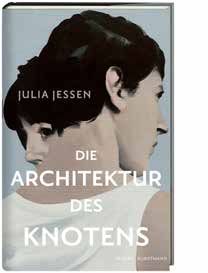
Oren Lavie | Wolf Erlbruch
                                                                              the bear who wasn’t there
                                                                              [Der Bär, der nicht da war]
Here comes the bear everyone‘s been waiting for.
A magical, lyrical story by Oren Lavie, perfectly                             Here comes the bear everyone‘s been waiting for. A
illustrated by Wolf Erlbruch                                                  magical, lyrical story by Oren Lavie, perfectly illust-
                                                                              rated by Wolf Erlbruch Once upon a time there was
                                                                              an Itch. And shortly after the once-upon-a-time, the
                                                                              Itch spotted a tree and began to have a good scratch.
                                                                              And then something very curious happened: the Itch
                                                                              began to grow. And a minute later, fur began to co-
                                                                              ver the Itch. Arms and legs grew out of the fur, and a
                                                                              nose. It wasn’t long before the Itch looked just like a
                                                                              Bear. And here he is: the Bear who wasn’t there just
                                                                              a moment ago. In his pocket he finds a note with a
                                                                              question written on it: »Are you me?« Good questi-
                                                                              on, he thinks to himself, let’s find out! So he wanders
                                                                              off into the Fabulous Forest, where he meets the
             The Author:
                                                                              Convenience Cow and the Lazy Lizard. Both assure
                                                                              him that he is a very nice bear indeed! Contented, he        German version by Harry Rowohlt
             Oren Lavie, born in Tel Aviv in 1976, is a composer, musician
                                                                              wanders on until he comes to the Compass Tree. So            48 four-colour pages,
             and theatre playwright. For his debut album The Opposite Side
                                                                              many ways to choose from: North, South, East, West,          24 x 30 cm, Euro 14,95
             of the Sea (2007), Lavie received the prestigious ASCAP Foun-
                                                                              Wrong, Right, Lunch, Breakfast. Which way should he
             dation Sammy Cahn Award for lyricists. Oren Lavie lives in Tel
             Aviv. The Bear who wasn’t there is his first book.
                                                                              go? Breakfast? Lunch? If the Turtle Taxi hadn’t chan-        Rights Sold To:
                                                                              ced along, the Bear might still be standing there…
                                                                              Now, we already know that this is a very nice and a          China (Modern Press)
                                                                              very happy bear. With his particular                         Denmark (Høst & Son)
             The Illustrator:                                                 take on life, he could easily be a distant relative of       English World (Akashic)
                                                                              Winnie-the-Pooh. And because everyone will want to           Italy (Edizioni e/o)
             Wolf Erlbruch, born in 1948, is one of Germany’s most re-        know who he is, adults as well as children will love
             nowned illustrators; his work is respected and loved around                                                                   France (La Joie de Lire)
                                                                              Oren Lavie’s bear and his enchanting and wise story          Netherlands
             the world. Among his many awards, Erlbruch received both the     with its unforgettable pictures by Wolf Erlbruch.
             Gutenberg and the German Children’s Book Prize and the Hans                                                                   (Hoogland & Van Klaveren)
             Christian Andersen Medal for Illustration. His previous book                                                                  Poland (Hokuspokus)
             Duck, Death and Tulip (Ente, Tod und Tulpe) sold more than                                                                    Slovakia (Slniec̆kovo)
             100.000 copies and was published in 19 countries.                                                                             South-Korea (Athena)
                                                                                                                                           Spain (Barbara Fiore)
                                                                                                                                           Sweden (Forlaget Hjulet)
                                                                                                                                           world english (Akashic)

                                                                                                                        For further information please contact
                                                                                                                        Moritz Kirschner
                                                                                                                        Verlag Antje Kunstmann GmbH
                                                                                                                        Zweigstraße 10 | 80336 München
                                                                                                                        Tel. 089 / 12 11 93-28 | Fax 089 / 12 11 93-20
                                                                                                                        E-Mail: m.kirschner@kunstmann.de
Wolf Erlbruch
                                                                              duck, death and tulip
                                                                              [Ente, Tod und Tulpe]
100.000 copies sold
                                                                              Sooner or later every child asks about death. With
                                                                              no inhibitions. Every parent knows this and yet is
                                                                              seldom ready with an uninhibited response. Death
                                                                              is a part of life but it rarely plays a part in children’s
                                                                              books. There are some exceptions to this rule, and
                                                                              Wolf Erlbruch’s Ente, Tod und Tulpe (Duck, Death and
                                                                              Tulip) is certainly one of the most notable. Death, it
                                                                              turns out, has been there all the time, Duck’s cons-
                                                                              tant but unnoticed companion. Duck had had a fun-
                                                                              ny feeling for a while. One morning she glanced over
                                                                              her shoulder.

                                                                              »Who are you? Why are you creeping along behind
                                                                              me?«
                                                                              »Good. You’ve finally noticed me,« said Death. »I am
                                                                              Death.«                                                         32 four-colour-pages
                                                                              Duck was startled. You couldn’t blame her for that.             Euro 14,90
                                                                              »And now you’re here to carry me off?«
                                                                              »It’s not a question of that,« smiled Death. »I’m close         Rights Sold To:
                                                                              to you as long as you live –
                                                                              just in case.«                                                  Australia, New Zealand, USA,
                                                                              »Just in case?« asked Duck.                                     UK (Gecko Press), Brazil (Cosac
                                                                              »Well, in case something happens to you. A bad cold,            &Naify), China (New Buds Publ.),
            The Author and Illustrator:                                       an accident – you never                                         Denmark (Høst), France (La Joie
                                                                              know.«                                                          de Lire), Italy (e/o), Japan (Sodo
            Wolf Erlbruch, born in Wuppertal in 1948, is one of Germany’s     You never know … But one thing you do know is that              Bunka), Netherlands (Querido),
            most popular illustrators. He has received numerous prizes for    Wolf Erlbruch’s poetic stories                                  Poland (Hokuspokus), Slova-
            his work, including the Gutenberg Prize of the City of Leipzig,   and pictures will provide beautifully simple answers            kia (Slniec̆kovo), South-Africa
            the German Children’s Book Prize and the Hans Christian An-       to life’s big questions – for                                   (Protea Bookhuis), South-Korea
            dersen Medal for illustrations.                                   both young and old.                                             (Woongjing), Spain (Barbara
                                                                                                                                              Fiore), Sweden (Lindskog),
                                                                                                                                               Taiwan (Avita Publ.),
                                                                                                                                              Turkey (Teas Yayincilik)

                                                                                                                           For further information please contact
                                                                                                                           Moritz Kirschner
                                                                                                                           Verlag Antje Kunstmann GmbH
                                                                                                                           Zweigstraße 10 | 80336 München
                                                                                                                           Tel. 089 / 12 11 93-28 | Fax 089 / 12 11 93-20
                                                                                                                           E-Mail: m.kirschner@kunstmann.de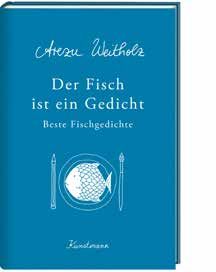
Axel Hacke | Michaeal Sowa
                                                                                    the days i spent with god
                                                                                    [Die Tage, die ich mit Gott verbrachte]
»Axel Hacke‘s books are not
only read, they‘re loved«                                                           When a stranger pushes a man off a park bench se-
                                                                                    conds before a heavy glass globe with a solid metal
Uwe Wittstock                                                                       stand crashes down there, that man can be forgiven
                                                                                    for wondering. Did the old man intend to save him?
                                                                                    (Otherwise he’d most certainly be dead… the weight
                                                                                    of the world and all that.) And who is this old guy in
                                                                                    the grey coat who keeps popping up everywhere, try-
                                                                                    ing to get close to people in general and especially the
                                                                                    narrator? He opens drawers in the walls of buildings
                                                                                    that were never there before and reveals worlds that
                                                                                    no-one ever suspected. He has the monumental lions
                                                                                    in front of the Feldherrnhalle jumping through rings
                                                                                    and conjures up little rain clouds in otherwise clear
                                                                                    blue skies. And that’s just the beginning of a glorious,
                                                                                    crazy story full of the strangest events. The melan-          104 pages, hardcover with jacket
                                                                                    choly old man who likes a glass of champagne: is this         Euro 18,–
                                                                                    God grown weary of the solitude of the universe? Is
                                                                                    it possible that for once humanity is not seeking con-
                                                                                    solation in God, but he in them? Now, of all days? And
                                                                                    more besides: forgiveness and reconciliation in the
                The Authors:                                                        light of an imperfect creation? God as gambler, artist,
                                                                                    rueful man? In that case, there’s a lot to discuss and
                Axel Hacke is a writer and columnist for the Süddeutsche            marvel at in these days with God.
                Zeitung Magazin. He is one of Germany’s best-known authors
                and his work has been translated into numerous languages.

                Michael Sowa One of Germany’s foremost artists, Michael
                Sowa’s work has featured in magazines, on album covers and
                in Jean-Pierre Jeunet’s 2001 film Amelie. But it is as an illust-
                rator that he is best known around the world. His numerous
                works include notable collaborations with Axel Hacke, as in
                Little King December and A Bear called Sunday. In 1995 Sowa
                received the Olaf Gulbransson Prize for his work as an illust-
                rator.

                                                                                                                               For further information please contact
                                                                                                                               Moritz Kirschner
                                                                                                                               Verlag Antje Kunstmann GmbH
                                                                                                                               Zweigstraße 10 | 80336 München
                                                                                                                               Tel. 089 / 12 11 93-28 | Fax 089 / 12 11 93-20
                                                                                                                               E-Mail: m.kirschner@kunstmann.de
Max Bronski
one good deed
[Der Pygmäe von Obergiesing]
The new crime novel by Max Bronski – a bold
take on racism and gentrification in Germanys Gossec, Munich’s hard-boiled antique dealer, is on his
way home. It’s late and he’s had a few beers. It rubs
richest city. him up the wrong way to find an unmarked police
car with lights flashing blocking his path. Two officers
are exercising their powers to stop and question a
black man. In Gossec’s eyes, it’s a clear case of harass-
ment and he weighs in. The inevitable happens and
both end up in police cells for the night. But Gossec
has made a new friend, hard-core Bavarian Alois Wo-
mack.
The scene is set for Max Bronski’s latest crime novel
and once again Munich provides the scintillating
backdrop. Spring is in the air as breezes waft across
the Isar meadows and into the Schlachthofviertel.
Gossec’s business is as always middling and his life
ready to catch him unawares. But for Alois Womack,
things couldn’t be better. His music entertainment
business is going well and he’s landed a gig at an 176 pages, Paperback,
event organized by MCB Properties. So now Gossec Euro 15,–
can provide the traditional Bavarian décor for the
party. It’s a lucrative deal but has dire consequen-
ces. The day after, the PA of the company director is
found dead in the park with Womack unconscious
The Author: beside her. Is he the murderer or does her death have
something to do with the business dealings of this
ostensibly ethical property investment company?
Max Bronski was born in Munich in 1964. Before turning to
crime writing, he studied theology and music science. He lives
in Munich. His novel Der Tod bin ich was published by Kunst-
mann in 2013.
For further information please contact
Moritz Kirschner
Verlag Antje Kunstmann GmbH
Zweigstraße 10 | 80336 München
Tel. 089 / 12 11 93-28 | Fax 089 / 12 11 93-20
E-Mail: m.kirschner@kunstmann.deMax Bronski
mad dog boogie
[Mad Dog Boogie]
A wild psychedelic trip through the provinces
and the seventies. Gifted guitarist Alex Dunbar has fuelled his music
and his life through the crazy 1970s with psychede-
lic drugs. At a legendary festival outside Munich, one
trip too far stops him in his tracks. Ever since he has
suffered from drug-induced psychosis … and from
terrible guilt after the brutal death of his lover at the
festival. Apparently at his own hands.
Alex can’t really remember and has spent years in
therapy at Gut Betzing in provincial Bavaria. A blow
to the head leaves him with brain trauma and, as
he lies in hospital, his memories return. With Ben, a
young Punk who has Tourette’s, and Willi, a giant of
a man with the nature of a child, Alex sets off on a
turbulent journey into the past. The old hippy in his
multi-coloured pillbox hat leads this bizarre trio, en-
listing the help of his therapist as they unpick the
tangle of dreams and real memories to get to the
truth. Was Alex Dunbar the murderer?
approx. 208 pages, Euro 14,95
The Author:
Max Bronski was born in Munich in 1964. Before turning to
crime writing, he studied theology and music science. He lives
in Munich. His novel Der Tod bin ich was published by Kunst-
mann in 2013.
For further information please contact
Moritz Kirschner
Verlag Antje Kunstmann GmbH
Zweigstraße 10 | 80336 München
Tel. 089 / 12 11 93-28 | Fax 089 / 12 11 93-20
E-Mail: m.kirschner@kunstmann.deBjörn Bicker
so, what do you believe
[Was glaubt ihr denn]
»Bicker wrote a fabulous text... a dense
conglomerate, that is on par with Hand- The chorus of the faithful is speaking. But no sooner
does one of their number speak than someone else
ke and Jelinek.« SZ wants their say. They can find no common langua-
ge but they do form a chorus and they do have an
addressee: the non-believers.
Globalization, migration and the loss of religious ties
have turned our cities into sites of diversity, religious
megacities. But what do their citizens believe? Do
they believe that their faith is a private matter? Do
people believe that their faith is political? Do they be-
lieve in the freedom of the one who thinks different-
ly, in a better world? How do they influence the social
and political life of their cities? What expectations do
they have of democracy and the state?
Believers and non-believers, the citizens of our towns
and cities tell their stories: the brother, the social
worker, the DHL courier, the teacher, the journalist.
They tell Leila’s story. But as soon as one version ends,
another begins. Social life finds a common language.
They talk about the youth of today, stake-holding, 272 pages, hardcover with jacket
Euro 24.95
immigration, home and the dream of a true life. What
do they believe politically? Do they allow others their
freedom? Are they working towards a better world?
The Author: How do they influence the social and political life of
the city?
Extended research into the religious life of our cities
Björn Bicker was born in 1972. He studied literature and phi-
has produced a text at once analytic and poetic, a
losophy before working at the Burgtheater in Vienna. Between
space for the many voices of reality to resonate.
2001 and 2009 he was engaged as dramaturge at Munich’s
famous Kammerspiele theatre, where he co-devised the “City
Projects” – highly-regarded theatre work at the interface of
artistic and political practice. Bicker is dramatist (theatre and
radio) and essayist and lectures in dramaturgy and writing for
the stage. He lives in Munich.
For further information please contact
Moritz Kirschner
Verlag Antje Kunstmann GmbH
Zweigstraße 10 | 80336 München
Tel. 089 / 12 11 93-28 | Fax 089 / 12 11 93-20
E-Mail: m.kirschner@kunstmann.deAxel Hacke
the columnist manifesto
The best of 1001 columns
[Das kolumnistische Manifest]
»For lovers of words and language, Axel Hacke has been writing for the Süddeutsche Zei-
Axel Hacke is a popstar.« tung Magazin for 25 years, practically never missing
a copy in that time. As this year will see his 1001st
Uwe Wittstock in Die Literarische Welt column, the time seems right for a Columnist Ma-
nifesto collecting the very best of his unmistakably
playful takes on life and the times. His stories and
reflections, full of charm, merriment and melancholy,
have found a place in the hearts and minds of more
than a generation. Selected and annotated by the
author, this beautiful linen-bound edition complete
with bookmark ribbon means that the perfect text
is always to hand to lighten and brighten every day.
A manifesto of the everyday lives we all know but
now see in a new light. A manifesto of the words
we use, celebrated here in all their wondrous oddity,
and of the maddest misunderstandings they someti-
mes cause. A manifesto for self-helpers in search of
answers to the conundrums of bringing up children
and living with partners. Die Zeit described Hacke as 616 pages, hardcover with jacket
Euro 19,95
“indefatigable” and in his column, featuring every-
body and everything from Bob Dylan to Putin, from
fishes in space to the sex life of the Nubian ibex, Axel
Hacke never misses an opportunity to poke fun, to
The Author: wonder, to smile.
Axel Hacke’s task – as he sees it himself – has always
Axel Hacke is a writer and columnist for the Süddeutsche Zei- been to take weighty issues and see their lighter side.
tung Magazin. He is one of Germany’s best-known authors And what could be better than to hold this weighty
and his work has been translated into numerous languages. volume in your hand and feel life getting a little ligh-
ter and beginning to soar?
5 CDs , Euro 19,95
For further information please contact
Moritz Kirschner
Verlag Antje Kunstmann GmbH
Zweigstraße 10 | 80336 München
Tel. 089 / 12 11 93-28 | Fax 089 / 12 11 93-20
E-Mail: m.kirschner@kunstmann.de»Kristof Magnusson tells it straight, with virtuoso changes of
Kristof Magnusson
tempo and immense skill in building tension from scratch«
Doctors. A Novel
NZZ
[Arztroman]
»Never mind demigods in white coats. The trend in doctor
novels is towards women doctors and definitely not as super- A hot summer in Berlin.
humans. … Kristof Magnusson’s Arztroman (Doctor Novel) is Anita Cornelius loves her work as an emergency doc-
a genre travesty located somewhere between Neukölln hip tor at a busy Berlin hospital. She knows she has the
right temperament to deal with the unexpected.
and allotment society.« She‘s in a position to help people. And even do some
good now and then. Adrian, her ex, is a doctor at the
Tilman Krause, Die Literarische Welt same hospital. They recently separated, amicably
enough, and now their fourteen-year-old son Lukas
lives with Adrian and his new girlfriend, Heidi.
»Kristof Magnusson’s Arztroman is great entertainment and Anita could keep pretending that everything is just
neither melancholy nor superficial. Quite the opposite: the fine. If only she hadn‘t been the one to find Adrian
best-selling author of the banker comedy Das war ich nicht unconscious in the hospital restroom, high on anest-
hetic. If only Heidi wouldn‘t keep making throwaway
(It Wasn’t Me) has a humorous sense of the entertainingly remarks about how life is what you make it and
grotesque. … And a writer who understands how to lend his how the poor and the sick are responsible for their
own predicament. No, deep down, she knows that
characters depth with a light touch between the lines can nothing is just fine: neither her private life, nor her
Kristof Magnusson
320 pages
also cleverly navigate the hazards of a happy end.« professional life. Euro 19,95
Elke Schröder, Neue Osnabrücker Zeitung With great authenticity, Kristof Magnusson describes
the everyday life of an emergency doctor and her pa-
tients. What‘s more, he paints a witty and engaging
Rights Sold To:
portrait of a woman in her early forties who wants
more than routine and an affluent Sold to: France (Métailié)
The Author:
lifestyle.
Kristof Magnusson was born in Hamburg in 1976 and lives in
Berlin as a writer and translator from the Icelandic. His bestsel-
ling novel Das war ich nicht (It wasn‘t me) was nominated for
the German Book Prize and has been translated into French,
Dutch, Italian, Vietnamese and Slovenian. The screen adapta-
tion of his comedy Männerhort (Male Creche) will be released
in October 2014.
For further information please contact
Moritz Kirschner
Verlag Antje Kunstmann GmbH
Zweigstraße 10 | 80336 München
Tel. 089 / 12 11 93-28 | Fax 089 / 12 11 93-20
E-Mail: m.kirschner@kunstmann.deKristof Magnusson Kristof Magnusson
it wasn’t me Home
[Das war ich nicht] [Zuhause]
Jasper Lüdemann has made it from the back office to Larus Ludvigson had really been looking forward to
the trading floor of a big investment bank in Chicago. Christmas in Reykjavik. Matilda and Svend, Milan and
Desk 3, Futures and Options. Keen to impress a young himself. He has nothing against Christmas, the prob-
German woman he’s just met, he shows her the tricks lem is that Christmas often seems to have something
of his trade, buying options without authorization. At against him. That‘s the way it looks this year: Matilda
first he makes a profit, but then there are losses – tells him at the airport that she and Svend have split
catastrophic losses. Meike, a translator, is in Chicago up, and Milan hasn‘t come along after all. Nothing
to discover the whereabouts of “her” author, Henry is quite as Larus had imagined in Hamburg. First he
LaMarck. LaMarck, bestselling writer and Meike’s isn‘t allowed to borrow videos because according to
bread and butter, has failed to deliver the big novel Icelandic records he is dead. Then a jealous DJ kicks
he promised and disappeared. Last seen fleeing the down his door. He takes refuge with Matilda and
publishers’ party for his sixtieth birthday, he has gone finds himself sharing with a drunken biochemist and
to ground in a hotel, unable to write and lonely. But a Slovakian volcanologist. But things finally spin out
he has fallen in love…with the photo of a young tra- of control when Dagur falls in love with him and then
der who stares in disbelief as prices tumble. crashes his Defender into a motorway service area.
Das war ich nicht (It wasn’t me) tells the story of Suicide? Larus isn‘t involved but uncovers a secret
three people whose lives are drawn by chance into a and finds himself caught up in a family history that
web of affinity and interdependence. And were it not makes him confront his own Icelandic roots in a way
for the possibility – and perhaps the impossibility – of he could never have thought possible.
288 pages 288 pages
love, who knows where their story would end.
Euro 19,90 Euro 19,90
Rights Sold To: Rights Sold To:
France (Métailié), France (Gaia Editions)
Italy (Neri Pozza),
»A whirlwind of a book and brilliantly Netherlands (De Geus),
written. Laugh-out-loud funny, moving Bulgary (Atlantis KL),
Slovenia (Madrijan Publishing),
and very clever!« Iceland (Forlagid),
TTT Vietnam (The Gioi)
For further information please contact
Moritz Kirschner
Verlag Antje Kunstmann GmbH
Zweigstraße 10 | 80336 München
Tel. 089 / 12 11 93-28 | Fax 089 / 12 11 93-20
E-Mail: m.kirschner@kunstmann.deThomas Gsella
nature’s a swine
[Saukopf Natur]
Why nature is our biggest enemy –
a lyrical reckoning. No-one is quite so crazy about Nature as the Ger-
mans. As soon as ever the rain inadvertently stops,
off they go into their beloved environment, to slip on
wet leaves and guarantee the flu, or heat stroke and
sunburn in summer. All the world’s ills, every misfor-
tune comes from nature and what do the Germans
do? They do what they like to do best: they identify
with the aggressor and become one with the swine.
Becoming one with Nature: for lyricist and satirist
Thomas Gsella, that is never an option. You have
to put up a fight with poems, laments and tirades.
Rail against puddles and ticks, birds and meadows,
hedgehogs and roots, against water, ravines and
trees, against the sun, the moon and the stars… oh,
and against clover, of course.
Humour means: laugh all the same,
But no one laughs at clover. ca. 160 pages, hardcover with jacket
There’s a dark magic in its name – Euro 16,–
All those four-leaves puzzled over.
With Thomas Gsella’s poems in your daypack, you
can confidently head out into Nature, safe in the
knowledge that you can face all challenges with wit
The Author: and high spirits. Sound like a plan?
Thomas Gsella is a poet and writer for several radio and TV
stations as well as newspaper and magazines.
For further information please contact
Moritz Kirschner
Verlag Antje Kunstmann GmbH
Zweigstraße 10 | 80336 München
Tel. 089 / 12 11 93-28 | Fax 089 / 12 11 93-20
E-Mail: m.kirschner@kunstmann.deArezu Weitholz
Fish is Poetry
Finest fish poems
»No chance to go fishing? Then grab this book – [Der Fisch ist ein Gedicht
Beste Fischgedichte]
it’s a great catch.« Herbert Grönemeyer
An A-Z of ichthyology: we dive into this rhyming
world of gilthead bream and electric eel and are
hooked. Just like you and me, fish dabble, fall in love,
Arezu Weitholz’s fish poems have quite a fan play Chinese whispers. We meet the rock’n’rollmops,
Bernard the sturgeon and Doro the dorade. Fish sho-
base these days. Now, her finest poems are aling and schooling, and maybe even swooning?
presented in this beautiful illustrated collection. Jade Fish
The jade fish came from far Langfang,
»A treasure trove brimming with fine wit and All lavender and greenish hues,
to the Shangri-La, and there he’ll hang
hidden meaning, a winning array for more than eavesdropping over lunchtime news
in the Chinese restaurant.
just fish lovers.« mare Immovably elegant,
Eternally prescient
Of wealth, fortune and good luck.
Sweet ‘n’ sour, crispy duck,
Nasi Goreng, egg-fried rice, 200 pages, clothbound, two-colour
Separate servings, daily twice. Euro 18.00
Hunger pangs as there he hangs,
Watching dishes secretly?
Jade fish suffer silently.
The Author:
Arezu Weitholz is a writer, illustrator, lyricist and librettist. She
has worked with musicians Herbert Grönemeyer and Udo Lin-
denberg and with bands such as Madsen, Die Toten Hosen and
2raumwohnung. Her poetry collection Ein Fisch wird kommen
(A fish will come) was published by Kunstmann in 2013.
For further information please contact
Moritz Kirschner
Verlag Antje Kunstmann GmbH
Zweigstraße 10 | 80336 München
Tel. 089 / 12 11 93-28 | Fax 089 / 12 11 93-20
E-Mail: m.kirschner@kunstmann.deF.W. Bernstein
Fresh Poems
»Unlike his colleague Robert Gernhardt – with
whom he shares the dual talent of drawing and [Frische Gedichte]
text – Bernstein has not mellowed with age but
Fans of F.W. Bernstein have been waiting a while for
become altogether more radical.« his Fresh Poems and, once again:
Listen, you wretched of the earth / Listen to poems,
Manfred Papst, NZZ am Sonntag (weekend edition of the Zurich newspaper) read!
F.W. Bernstein’s poems are a great way to start the day:
»A conjurer of verse form and the fine art of Good Morning!
befuddlement.« WD Radio Seven-thirty, glow of morning,
The cold night is done.
I’m still alive and yawning,
A new day has begun.
»F.W. Bernstein’s lyrical work conveys the impression
An hour in bath robe dreamily,
of limitless good cheer« Süddeutsche Zeitung Munching chocolate, guiltily?
The heating glugs contentedly,
Strip off and bathe blissfully.
200 pages, hardcover, Euro 18,–
This master of comic art has a distinctive, intoxica-
ting sound – whether he’s singing of Angela Merkel • Fresh poems from the old
taking office, princes turning into frogs, mole crickets, master of the New Frankfurt
global stock exchanges in free fall, chasing rabbits ac- School
The Author: ross the yard, searching for the meaning of life or wri- • Premium edition
ting crime fiction in 14 lines. And this poetic and witty • For all lovers of comic verse
F.W. Bernstein was (along with Robert Gernhardt, F.K. Waech- “late work” is even better than we’d hoped.
ter and Eckhard Henscheid) a member of the legendary New
Frankfurt School. He worked for Pardon and Titanic and was
professor of caricature and visual history at the University of
the Arts, Berlin. Bernstein, alias Fritz Weigle, was born in 1938.
His work has been recognized in literary and cultural awards.
He lives with his family in Berlin.
For further information please contact
Moritz Kirschner
Verlag Antje Kunstmann GmbH
Zweigstraße 10 | 80336 München
Tel. 089 / 12 11 93-28 | Fax 089 / 12 11 93-20
E-Mail: m.kirschner@kunstmann.deChristian Maintz
love in localities
[Liebe in Lokalen]
Never ever was love that funny and lyrical!
And to end that perfect day,
What a feeling, what a treat,
Eating bamboo shoots and beet
From the Chinese take-away.
And what a treat it is to enjoy the sound of Christi-
an Mainz, “end-rhymer extraordinary”. Fans of hu-
morous poetry will be familiar with his work from
various anthologies. Liebe in Lokalen is the first coll-
ection of all his poetry. His poems address the mys-
teries of love: conjuring the ecstasy of encounters on
the Intercity, at the sausage stand and in the lido at
Bad Oldesloe. They quiz the great thinkers and poets
– the likes of Goethe, Kant and Nietzsche - , take us
on a partridge shoot and provide insight into the love
life of wild boars, insects and rodents. With their wit,
intelligence, poetry – and those wonderful rhymes – 160 pages, hardcover with jacket
this is pure reading pleasure. Euro 14.95
The Author:
Christian Maintz is a poet and literary scholar,
who wrote extencively about humorous poetry
For further information please contact
Moritz Kirschner
Verlag Antje Kunstmann GmbH
Zweigstraße 10 | 80336 München
Tel. 089 / 12 11 93-28 | Fax 089 / 12 11 93-20
E-Mail: m.kirschner@kunstmann.deGabriele von Arnim | Christiane Grefe |
Susanne Mayer | Evelyn Roll | Elke Schmitter
Democracy on the Line
German President Frank-Walter Steinmeier: What do we do?
[Was Tun – Demokratie versteht sich nicht von selbst]
»What’s at stake once again is democracy itself.«
A book for those who want to take action but are un-
sure how.
All over Europe there’s a sense of democracy under
attack. Nationalists and populists are on the march
and citizens are realizing that liberal democracy is
not a status quo to be taken for granted but an on-
going process which has to be safeguarded, maintai-
ned and energized. Five women writers, all renowned
journalists, provide five different viewpoints. Their
crash course in citizenship, complete with analysis,
information, arguments, and success stories, shows
people how to stand up for democracy.
Gabriele von Arnim writes a love letter to democra-
cy. Christiane Grefe explains how globalization has
weakened the state and politics in the service of the
economy, resulting in a loss of public trust. But this
is not some immutable law of nature: if people exert
80 pages, softcover
enough pressure, governments will strengthen the Euro 10.00
public good. Elke Schmitter reminds us that demo-
The Authors: cratic utopias exist but are often overlooked. Evelyn
Roll underlines how vitally important it is for demo-
Gabriele von Arnim is a freelance journalist cracy to call a lie a lie and to distinguish between rea-
and TV and radio anchor (arte and SWR) lity and invention. Susanne Mayer celebrates positive
Christiane Grefe is a journalist at Die Zeit examples of democratic engagement.
Susanne Mayer is a journalist at Die Zeit
Evelyn Roll is a reporter for the Süddeutsche
Zeitung
Elke Schmitter is culture editor at Der Spiegel
For further information please contact
Moritz Kirschner
Verlag Antje Kunstmann GmbH
Zweigstraße 10 | 80336 München
Tel. 089 / 12 11 93-28 | Fax 089 / 12 11 93-20
E-Mail: m.kirschner@kunstmann.deMathias Greffrath (editor)
Re: Capital
Political Economy in the 21st Century
[RE: Das Kapital
Karl Marx’s Capital was first published 150 years ago. Politische Ökonomie im 21. Jahrhundert]
What can it tell us today? Globalization, financial crisis, climate change, pover-
ty revolt, weak growth – these are just some of the
multiple challenges facing western societies. “Is this
»Marx is as relevant now as ever: he described the the end of capitalism?” is a question now tabled at
elite world economic summits. Reason enough to
society in which we are living today – including the look again at Marx’s Capital, the work which reveals
the “laws of motion” of capitalist societies, criticizes
financial crisis.« Franziska Augstein the blind spots of economic sciences, and hones the
very concepts with which we comprehend the world
we live in.
Current phenomena may seem far removed from the
world in which Marx wrote his book, but Capital does
more than merely describe the germ out of which
our world grew. It also considers the history of its
emergence and the dynamics of the capitalist mode
of production (which has increased affluence around
the world in unimaginable ways) and identifies in
them the finite nature of capitalism, the mechanisms
The Editor: of its destruction and the powers which might over- ca.200 pages, hardcover with
come it. dustjacket, Euro 20,–
Mathias Greffrath was born in 1945. He studied sociology Does all this still apply in the age of turbo capitalism?
• New readings of Karl Marx’s
and psychology and worked as an editor on radio and at Die Sociologists, journalists, politicians, philosophers and Capital on the 150th anniversary
Zeit and Wochenpost. For the last twenty years he has been a economists re-read Capital. Starting out from a chap- of its publication.
freelance writer and radio playwright. Of late, alongside eco- ter of the work, each draws parallels with the present
nomic issues, his primary focus has been the history of the En- day and reflects upon both the enduring relevance • Eight sociologists, economists
lightenment, the future of work, and the image of the human and the limitations of Marxist theory. Their essays and philosophers translate
in neurological research. Mathias Greffrath lives in Berlin. are subjective and firmly focused on political possibi- Marx into the 21st century
lities. After all, as Marx would have it, the point is not
• For readers of Thomas Piketty,
With contributions from Etienne Balibar, David Harvey, only to interpret the world, but to change it. Eric Hobsbawm and Ha-Joon
Paul Mason, Robert Misik, Michael Quante, Wolfgang Streeck, Chang.
Sahra Wagenknecht
For further information please contact
Moritz Kirschner
Verlag Antje Kunstmann GmbH
Zweigstraße 10 | 80336 München
Tel. 089 / 12 11 93-28 | Fax 089 / 12 11 93-20
E-Mail: m.kirschner@kunstmann.deHermann Fischer | Horst Appelhagen
Chemical Turn
on the intelligent use of natural raw materials
[Chemiewende
»Wouldn’t it be great if it didn’t take a major Von der intelligenten Nutzung natürlicher Rohstoffe]
industrial accident to raise political awareness of We know now that the Energy Turn can and will hap-
pen. This book demonstrates the equal importance
the Chemical Turn now needed, but if a little book of a turn to renewables and natural raw materials in
the chemical industry.
could do the trick instead?« Tanja Busse, WD Radio 5 Converting to renewables is much more than twea-
king our economies. It calls for a radical change
in the raw materials we use to produce everyday
goods. The chemical industry, which still relies hea-
vily (up to 90%) on petroleum, has to reinvent itself.
This challenge has already triggered a raft of inno-
vations. Pioneering companies, reading the signs of
the times, are moving away from petrochemicals in
the manufacture of cars, building materials, textiles
and cosmetics, and looking to plants, algae and mi-
croorganisms. The benefits to health and wellbeing
The Authors: are becoming clearer.
Hermann Fischer is an entrepreneur and pioneer of
Hermann Fischer is the founder (1983) of AURO Natural
‘green’ chemistry. He and Horst Appelhagen engage
Paints. His campaigning work for an alternative chemistry ca.112 pages, paperback, Euro 14,–
in an informative and stimulating dialogue as they
has enjoyed international recognition. In 1992 he was named
outline these latest developments. But they also gui-
WWF/Capital »Eco Manager of the Year« and in 1999 received
de us back to the magic of the materials themselves,
the Friends of the Earth Environmental Prize. His book Stoff-
the very essence of chemistry, and demonstrate im-
Wechsel. Auf dem Weg zu einer solaren Chemie für das 21. Jahr-
pressively that plants are so much more than raw
hundert (Material Change. Paving the way for solar chemistry
materials. With their sophisticated synthesis, they
in the 21st century, Kunstmann 2012) has become a standard
provide the standard to govern any production pro-
text in the field.
cess.
Horst Appelhagen, born 1937, is a lawyer and worked with ma-
jor concerns on licensing and environmental issues. He and his
family have lived in “chemical-free” self-sufficiency since 1973.
For further information please contact
Moritz Kirschner
Verlag Antje Kunstmann GmbH
Zweigstraße 10 | 80336 München
Tel. 089 / 12 11 93-28 | Fax 089 / 12 11 93-20
E-Mail: m.kirschner@kunstmann.deChristiane Grefe
Global Gardening
Bio-economy – overexploitation or economic model for the future?
[Global Gardening
Using incisive reports, debates and analyses, re- Bioökonomie – neuer Raubbau oder Wirtschaftsform der Zukunft?]
nowned journalist Christiane Grefe presents the Car tyres from dandelions, plastics from potatoes,
risks and opportunities of the bio-economy. What petrol from sugar cane and jet fuel from algae… Pro-
ponents of a knowledge-based bio-economy hope it
technologies are we prepared to embrace? What is will provide solutions to the key question of the 21st
century: at a time of climate change and dwindling
»Nature«? resources, how do we provide a growing human po-
pulation with food, energy and raw materials? Alrea-
dy there is fierce competition for space, water and
soil between food crops and feed, biofuel and fibre
crops and the natural environment essential for bio-
diversity. Ask in ministries, company labs and biotech
start-ups and you encounter other interests, whether
research funding, product innovation, emerging mar-
kets or the safeguarding of resources in developing
countries. Meanwhile, synthetic biology is set to
create new life forms.
Is the bio-economy a totalitarian approach – as its
critics insist? Or are these new technologies the way
forward? How will trade agreements, research poli- 272 pages, Euro 22.95
cies and agricultural subsidies have to change in or- Publication date: 20.01.2015
der to maintain biodiversity? And who decides this?
Journalist Christiane Grefe sets out to find answers
to these questions. She talks to politicians, ecologists,
The Author: environmentalists, farmers and other stakeholders.
In reports, debates and analyses, she sets out the
Christiane Grefe was born in 1957. She attended the German risks and opportunities afforded by the bio-economy
School of Journalism and studied political science in Munich. and calls for an urgent discussion about the kind of
As a freelance journalist, her work has appeared in Natur and natural world we envision in the future.
GEO Wissen, the SZ Magazin and Wochenpost. Since 1999
Christiane Grefe has been a reporter in the Berlin office of Die
Zeit. She co-authored (with Harald Schumann) Der globale
Countdown (Global Countdown).
For further information please contact
Moritz Kirschner
Verlag Antje Kunstmann GmbH
Zweigstraße 10 | 80336 München
Tel. 089 / 12 11 93-28 | Fax 089 / 12 11 93-20
E-Mail: m.kirschner@kunstmann.deSusanne Wiborg | Jan Peter Wiborg
Faith, Hope, Hitler
The demise of Clara S.
[Glaube, Führer, Hoffnung – Der Untergang der Clara S.]
Fanaticism to the bitter end wasn’t only the mad-
ness of men. The fate of Clara S. shows how natio- Stettin, spring 1945. War and euphoria, love and
nal comrades of both sexes remained committed death: Clara S is one of the few women who stay on
in the Pomeranian capital. With the Soviet Army on
and true to their Führer. the opposite bank of the Oder, the twenty-four-year-
old believes she has finally found what she has been
looking for: a true “heroic” life and the love of her
life. In her own Götterdämmerung of euphoria, this
young leader of the BDM, the League of German Girls
in the Hitler Youth, creates a unique document of the
age, a bundle of letters which survives her disappea-
rance on the island of Rügen in early May 1945.
Rügen, spring 2015: why look for traces of a long-lost
aunt, when to do so is to stare into the abyss who-
se depths no-one wishes to plumb? Can we not now
The Authors: draw a line under this once and for all? No, because
Susanne and Jan Peter Wiborg are not looking for
Susanne Wiborg was born in 1957. She studied history and is their aunt, but for a prototype, for the strange distant
now a freelance journalist, writing for DIE ZEIT and other pu- shadow, the “something was going on” of almost
blications. Though fascinated by history – especially Hanseatic every German family. They find the female side of
history – she no longer wished to engage professionally with 320 pages, hardcover with jacket
fanaticism: an intelligent young woman who simply Euro 19.95
the Third Reich. Why keep plumbing depths which can never wants a little more than the role mapped out for her
truly be understood? in Eastern Pomerania. What made her such a naïve
and faithful supporter of Hitler, even unto death?
Her younger brother, Jan Peter Wiborg, thought differently.
Having engaged with the Nazi past of the region as a history
student, he was only too familiar with the silence which gree-
ted his enquiries. Born in 1960, Jan Peter Wiborg has continued
to explore this field in his professional work as journalist.
For further information please contact
Moritz Kirschner
Verlag Antje Kunstmann GmbH
Zweigstraße 10 | 80336 München
Tel. 089 / 12 11 93-28 | Fax 089 / 12 11 93-20
E-Mail: m.kirschner@kunstmann.deMichaela Vieser / Irmela Schautz
for ever and for now
Celebrating love around the world
[FÜR IMMER UND JETZT - Wie man hier
und anderswo die Liebe feiert]
Around the world, people find strange and wonder-
ful ways to celebrate the rituals of love: the best are
captured here in entertaining prose and beautiful il-
lustrations. The perfect gift on Valentine’s Day, on a
wedding anniversary or any other relationship anni-
versary – and for all those you love!
Ways to say I love you: whatever the occasion, whe-
rever in the world, people celebrate their love – with
rituals and customs to make that elusive emotion
visible, audible, tangible. Take the carving and pre-
senting of lovespoons in Wales, their rich decoration
symbolic of timeless love, or the bidding for eligible
partners as part of May Day celebrations along the
Rhine – or the astonishingly unspoilt celebration of
The Authors: male sexuality that is Japan’s Kanamara Matsuri,
where the parade features gigantic phallic symbols
Irmela Schautz was born in 1973, and studied painting and and visitors merrily suck penis-shaped lollipops…
graphic arts in Münster and stage and costume design in Love has its poetic, comic, curious, crazy and endea-
Stuttgart. Since 2005 she has worked freelance for publishers, ring traditions and those collected here provide int- 176 four-colour pages,
newspapers, magazines and in advertising. Irmela Schautz riguing insights into foreign cultures – and our own. 14 x 20,5 cm, Euro 16.00
lives with her family in Berlin. They show the many things that love can be. And for Publication date: 20.01.2015
those in love, this book also contains ideas about how
to find inspiration in these customs as well as recipes
Michaela Vieser was born in 1972, and studied Japanology and for crazier or more intimate celebrations of love.
Asian Art History in London. She writes for Süddeutsche Zei-
tung, NZZ, GEO and Deutschlandradio. Previous titles include:
Tee mit Buddha. Mein Jahr in einem japanishen Kloster (Tea
with Buddha. My year in a Japanese monastery) and, with Ir-
mela Schautz, Von Kaffeeriechern, Abtritt-anbietern und Fisch-
beinreissern (…). Michaela Vieser lives with her husband and
three children in Berlin.
For further information please contact
Moritz Kirschner
Verlag Antje Kunstmann GmbH
Zweigstraße 10 | 80336 München
Tel. 089 / 12 11 93-28 | Fax 089 / 12 11 93-20
E-Mail: m.kirschner@kunstmann.deSusanne Wiborg
garden splendour and birds of a feather
[Blütenpracht und schlaue Hühner]
Garden madness and keeping crazy
chickens might be one of the most Susanne Wiborg’s garden is a heavenly place, so take
a seat as you read: a wealth of knowledge and pure
pleasurable human follys. pleasure are rarely communicated so effortlessly. We
begin in the springtime and the garden is glorious
with golden marsh marigold; snake’s head fritillary
strikes a pose in antique rose, purple or deep violet,
and the bluest blue belongs to the forget-me-nots.
Breathe in high summer and the heady scent of
sweetbrier or eglantine and relish late summer as
filigree meadow rue immerses the garden in a sea
of blue. The real stars of this book, however, are fea-
thered: the hens who pick their way among the blos-
soms are clever, comical and exceedingly social ani-
mals. As Susanne Wiborg herself notes: “As I watch
the hens, it strikes me that there many variations of
human folly, but keeping chickens – and being “gar-
den mad” – has to be one of the most pleasurable.”
What more can you ask! ca. 176 four-colour-pages,
hardcover with jacket
Euro 18,–
The Author:
Susanne Wiborg Susanne Wiborg was born in 1957. She stu-
died history and is now a freelance journalist, writing for DIE
ZEIT and other publications. Though fascinated by history
– especially Hanseatic history – she no longer wished to en-
gage professionally with the Third Reich. Why keep plumbing
depths which can never truly be understood?
For further information please contact
Moritz Kirschner
Verlag Antje Kunstmann GmbH
Zweigstraße 10 | 80336 München
Tel. 089 / 12 11 93-28 | Fax 089 / 12 11 93-20
E-Mail: m.kirschner@kunstmann.deATAK
the garden
[Der Garten]
A wonderful, poetic garden picture book,
a feast for the eyes, a gift. Those familiar with ATAK’s pictures will have known
it was only a question of time before this: his own
portrait of a garden. Those not yet acquainted with
his work will feast their eyes on this book and want
their own garden … and all his other books. Every one
of those books, every picture ATAK paints, has alrea-
dy hinted at this garden: the flowers, the trees, the
animals. Here’s the swing, the blossom, the cherries,
the washing flapping in the breeze. And when the
wind blows home again, something returns: calm
and stillness. »The garden breathes time and time
breathes as a garden. I go into the garden in the eve-
ning to breathe. I touch the new blossom as I would
stroke my dog. Caress what is yours, touch these,
your friends and observe the changes. Caress, touch,
observe: those are the tasks of the true lover of gar-
dens.« And now you don’t even need a garden of your
own, just this book with its pure, exuberant joy in na-
32 four-colour pages,
ture. A garden to savour.
24 x 30 cm
Euro 16.95
Rights Sold To:
The Author and Illustrator:
Brazil (Companhia das Letras)
ATAK (aka Georg Barber) was born in 1967 in Frankfurt/Oder in France (Thierry Magnier)
the DDR. He now lives and works in Berlin as a freelance artist South-Korea (Bear and Cat)
and illustrator. He recently illustrated a German translation of Spain World (Niño Editor)
Mark Twain’s The Mysterious Stranger for Carlsen Verlag. Find
out more about ATAK at www.fcatak.de »You simply can’t get
enough of ATAK’s pictures: you can smell and taste them; they
hum with life.« Nadia Budde, award-winning illustrator.
For further information please contact
Moritz Kirschner
Verlag Antje Kunstmann GmbH
Zweigstraße 10 | 80336 München
Tel. 089 / 12 11 93-28 | Fax 089 / 12 11 93-20
E-Mail: m.kirschner@kunstmann.deYou can also read


