Forests for Future: Forest landscape restoration in Southwest Ethiopia - Nature ...
←
→
Page content transcription
If your browser does not render page correctly, please read the page content below
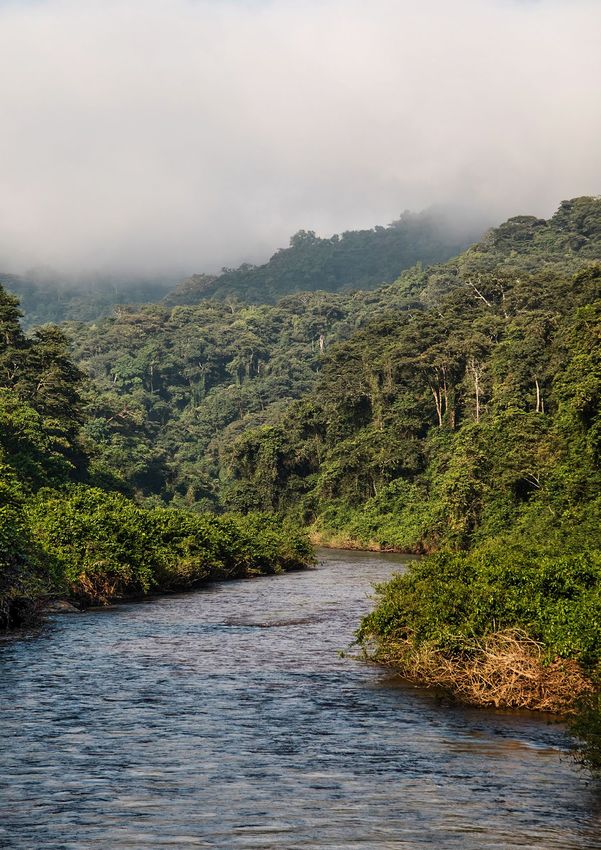
Forests for Future: Forest landscape restoration in Southwest Ethiopia
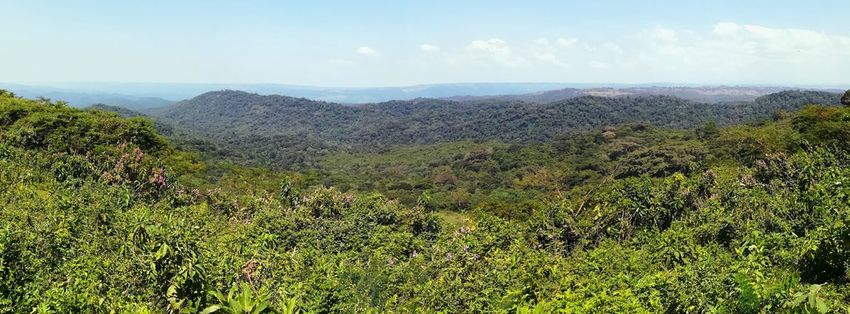
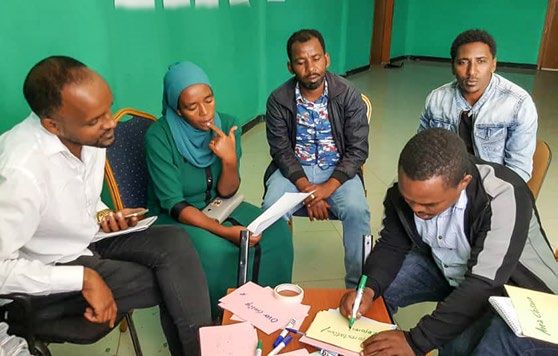
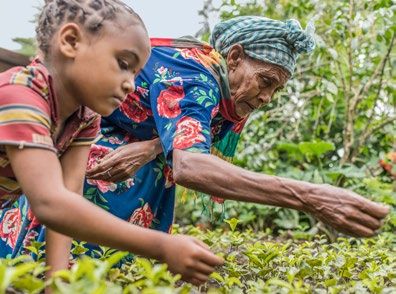
Deforestation threatens biodiversity and the livelihoods of the   Local forest users receiving training in forest conservation and
local communities.                                                sustainable and participatory forest management.

Forest landscapes under pressure                                  First steps towards forest landscape restoration
Forests and trees provide livelihoods and food security           In order to stabilise existing forests, initiate community-
for more than one billion people worldwide. They serve            based restoration, develop income schemes for the local
as a safety net in particular for women, children and             communities and build up the capacities of community
landless farmers.                                                 representatives, local NGOs and key government officials,
                                                                  NABU set up a project in partnership with Ethio Wetlands
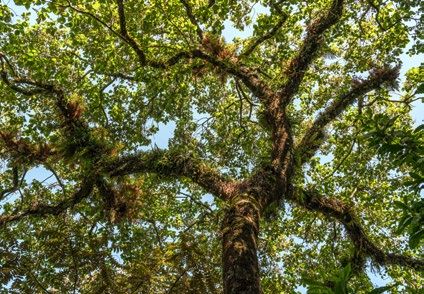
The last high forests of Southwest Ethiopia have been
                                                                  and Natural Resources Association (EWNRA).
identified as particularly valuable key ecosystems. They
belong to one of the two remnant natural forest blocks            Our joint project is focussing on the following major
in Ethiopia and provide habitat for a rich and endemic            activities:
biodiversity. Due to the diversity of its terrain and             • Initiation of the Southwest Forest Alliance, a platform for
ecosystems, high amounts of rainfall and fertile soils,             Southwest forest stakeholders for exchange, networking,
the region is considered as one of the most food-secure             capacity building and joint strategic collaboration
in the country. Forests and forest products are of great
                                                                  • Participatory forest assessment for selection of priority
importance for the livelihood of the rural poor. However,
                                                                    intervention sites and measures
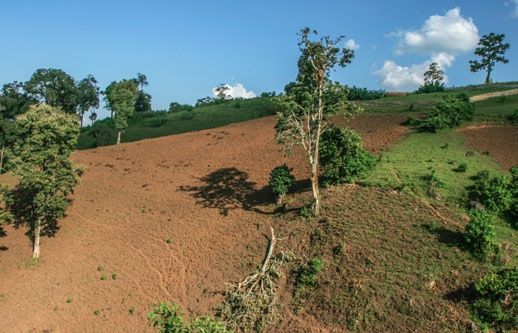
forest degradation and deforestation in Ethiopia are
serious and jeopardise people‘s livelihoods, food, water          • Piloting of community-based Forest Action Plans
and energy security and the resilience of both people             • Capacity development at all levels
and natural ecosystems. Fragmented forest patches                 • Income generation for forest user groups / Participatory
prevent gene flow, give access to further degradation and           Forest Management (PFM) groups
reduce essential ecosystem services, which leads to an
                                                                  • Awareness creation on forest degradation and means to
increasing vulnerability of both forests and two million
                                                                    intervene
people of forest dependent communities in Bench-Sheko
Zone, Kafa Biosphere Reserve and Sheka Forest Biosphere           • Support to local conservation NGOs for civil society
Reserve.                                                            enhancement in Ethiopia
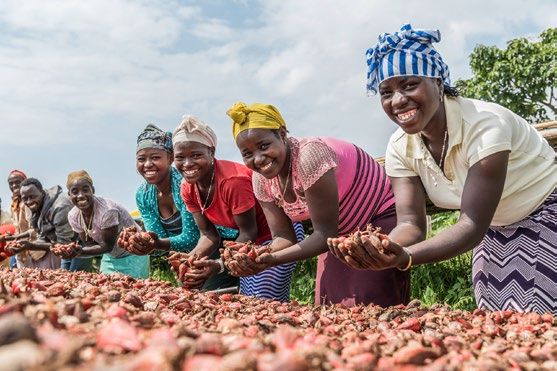
The project initiated Southwest Forest Alliance offers an exchange   Local green value chains like the Ethiopian cardamom generates
platform for actors and stakeholders from the forest sector.         additional income for forest users.

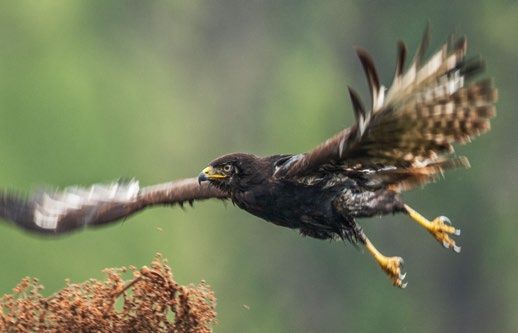
    The extensive forests offer important habitat for threatened
    species such as the Crowned Eagle.

                                                                                     ETHIOPIA
    Our project regions
    The project targets the Bench-Sheko Zone, Kafa Biosphere
    Reserve and Sheka Forest Biosphere Reserve in Southwest
    Ethiopia.
    Bench-Sheko Zone has a great share of lowland. In the
    past, the area has suffered severe forest decline from
    refugees’ settlements, nowadays, informal settlements
    as well as commercial farms increase the deforestation
    process within the zone. In the 466,800 hectare zone,
    income from forest resources is the most important source
    of livelihood for the population, alongside agriculture.
    Kafa Biosphere Reserve is characterised by Afromontane
    mountain cloud, rain and bamboo forests and wetlands
    on 760,000 hectare. The forests are highly fragmented
    and suffering from impacts of climate change. NABU has
    been supporting forest restoration and conservation in
    Kafa since 2006.
    Sheka Forest Biosphere Reserve comprises unique natural                        Bench Sheko Zone
    landscapes of about 240,000 hectare, ranging from cool,                        Kafa Biosphere Reserve
    humid highlands to hot lowlands. As in Kafa and Bench-
                                                                                   Sheka Forest Biosphere
    Sheko, wild Coffea arabica is part of the characteristic                       Reserve
    Afromontane rainforests of the region.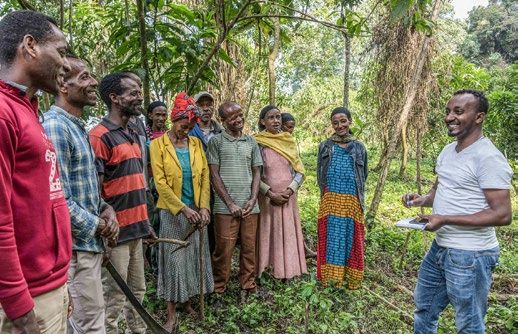
www.forestsforfuture-ethiopia.com                                   www.NABU.de/forests-for-future

The Nature and Biodiversity Conservation Union
(NABU), has promoted the interests of people and nature
for more than 120 years drawing on its unwavering
commitment, specialised expertise and the backing of
its 820,000 members and supporters. The NGO is the
largest of its kind in Germany. NABU has been working
towards the protection of Kafa’s unique environment
with national and international partners and support
from the German government since 2006. NABU aims
to ensure the conservation and restoration of the
Afromontane cloud forests and wetlands to preserve
ecosystem resilience and unique biodiversity, reduce
CO2 emissions and sustain ecosystem services for local
communities.

“Forests for Future: Developing forest landscapes for
livelihoods and climate adaptation in Southwest Ethiopia”

The project is implemented in partnership with EWNRA
and supported by the German Federal Ministry for Economic
Cooperation and Development (BMZ).

NABU – The Nature and
Biodiversity Conservation Union
Charitéstr. 3                       Imprint
10117 Berlin, Germany               © 2021, 1. edition 02/2021
Tel. +49 (0) 30.28 49 84-0          Text & Editor: Svane Bender, Stefanie Brandes, Sarah Stoll; Layout: NABU/Baer-Medien; Photos: front page:
Africaprogramme@NABU.de             Mathias Putze · page 2: Mathias Putze; Svane Bender; Maheder Haileselassie · page 3: NABU/Ashebir Wondimu;
www.en.NABU.de                      Maheder Haileselassie; Bruno D’Amicis · inside background: Maheder Haileselassie · back: Maheder Haileselassie.
You can also read


