FRANCE'S LEADING UNIVERSITY IN THE SOCIAL SCIENCES
←
→
Page content transcription
If your browser does not render page correctly, please read the page content below
FRANCE’S LEADING
UNIVERSITY
IN THE SOCIAL
SCIENCES
02

OPEN TO THE WORLD
Founded in 1872, Sciences Po is France's leading university in the social
sciences. For nearly 150 years, Sciences Po has educated decision-makers in
the public and private sectors. Our college offers a three-year undergraduate
degree that includes a year abroad at one of our 478 partner universities.
There are seven graduate schools composed of 27 master's degrees and five
PhD programmes.

Sciences Po offers over 40 dual degrees with partner universities, including
Columbia University in New York, the London School of Economics and             03
Peking University. We also provide executive education with 14 dedicated
executive master's degrees and over 100 customised training programmes.

Sciences Po offers a multidisciplinary, multilingual and outward looking
education. In order to provide a comprehensive curriculum, Sciences Po
places great emphasis on fundamental academic courses, professional
training and extra-curricular activities. Sciences Po also integrates digital
teaching methods into its programmes and continues to develop innovative
teaching platforms, such as MOOCs.

Following completion of their degree, Sciences Po graduates possess
unique profiles which are highly sought by leading recruiters. 84% of
Sciences Po graduates are hired within six months of graduation and
34% start their career abroad.

Our goal is to open minds and develop critical thinking. We seek to provide
students with the essential tools that will enable them to make sense of a
complex world. We also provide students with a truly international
environment. Our student community comprises 14,000 students – half
are international, coming from 150 countries.

As a research university, Sciences Po is focused on excellence, and demands
the highest standards from faculty and students. Sciences Po also holds a
high degree of social responsibility, and continues to play a pioneering role
in the promotion of diversity and equal opportunity in higher education.
Sciences Po has an array of financial aid for students of all origins and
26% of the student body hold a scholarship.
Facts and Figures About Sciences Po

                                                                        150

       14,000
                                                                   NATIONALITIES

04
                                            49%
               STUDENTS              OF STUDENTS COME
                                    FROM OUTSIDE FRANCE

                                            478                         43
                                         PARTNER                   DUAL DEGREE
                                        UNIVERSITIES               PROGRAMMES

                MORE THAN
            1 IN 4 STUDENTS IS
         A SCHOLARSHIP HOLDER

                                            3
                                                 RD

                                      IN THE QS RANKING
                  25                    FOR POLITICS &                  32%
          FOREIGN LANGUAGES         INTERNATIONAL STUDIES         OF SCIENCES PO’S
                TAUGHT                                          BUDGET IS DEDICATED
                                                                   TO RESEARCH

                                                                    MORE THAN

          4,500                                                2,000
     INSTRUCTORS WITH BACKGROUNDS                           STUDENTS COME ON EXCHANGE
                                             11
          IN ACADEMIA, BUSINESS                             EACH YEAR FROM OUR NETWORK
                                          RESEARCH
        OR PUBLIC ADMINISTRATION                               OF PARTNER UNIVERSITIES
                                            UNITS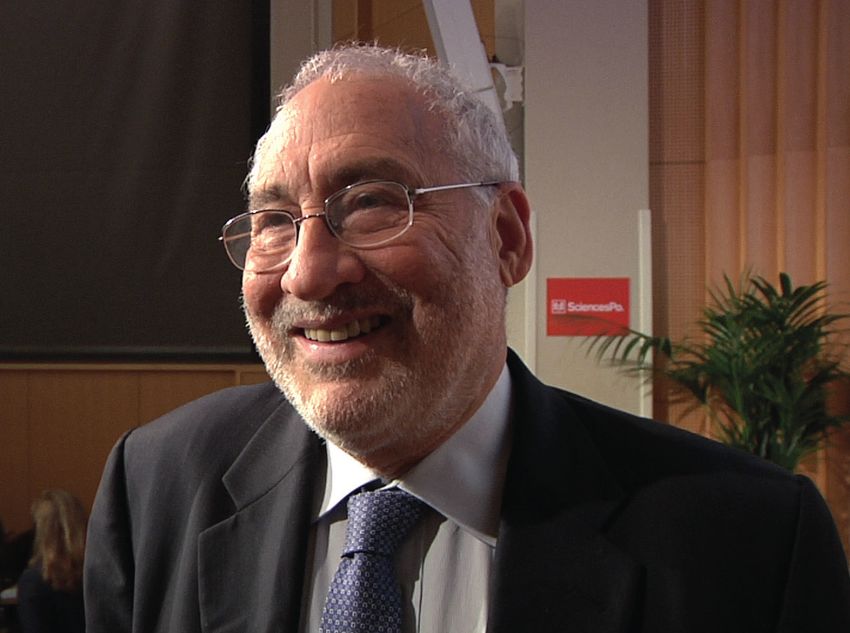
80,000 Alumni
                                                      Sciences Po alumni play an important role
                                                      in political life, international organisations,
                                                      multinational corporations, academic
                                                      research, as well as in the media and art
                                                      world. Notable Sciences Po alumni include:

                                                      Heads of State or Government
                                                      Chandrika Kumaratunga, former President
                                                      of Sri Lanka, Pierre Trudeau, former Prime
                                                      Minister of Canada, Salomé Zourabichvili,         05
                                                      president of Georgia de la Géorgie, etc.
                                                      French Presidents: Jacques Chirac,
                                                      François Hollande, Emmanuel Macron,
                                                      François Mitterrand, Georges Pompidou.
                                                      French Prime Ministers: Edouard Balladur,
                                                      Michel Debré, Dominique de Villepin,
                                                      Lionel Jospin, Alain Juppé, Edouard Philippe,
                                                      Michel Rocard, etc.
Sciences Po - Atelier de cartographie, october 2015
                                                      Heads of International
                                                      Organisations
                                                      Audrey Azoulay, Director-General of
                                                      UNESCO, Boutros Boutros-Ghali, former UN
478 Partner Universities                              Secretary General, Nicole Fontaine, former
                                                      President of the European Parliament, Pascal
Including the Following                               Lamy, former Director-General of the World
                                                      Trade Organization, Jean-Claude Trichet,
UC Berkeley, Bocconi, Cambridge, Colegio de
                                                      former President of the European Central
México, Columbia, Copenhagen Business                 Bank, Simone Veil, former President of the
School, Freie Universität Berlin, Fudan,              European Parliament, etc.
Humboldt-Universität, Instituto de Empresa,
King’s College, Keio, London School of                Business and Finance
Economics, McGill, MGIMO, MIT, National               Alexandre Bompard, CEO of Carrefour,
                                                      Agathe Bousquet, CEO of Publicis France,
University of Singapore, Northwestern, Oxford,
                                                      Maëlle Gavet, COO of Compass Inc, Jean
Peking University, Princeton, Tsinghua,               Lemierre, Chairman of BNP Paribas,
University of British Columbia, University of         Françoise Mercadal-Delasalles, CEO of Credit
Cape Town, University of Chicago, University          du Nord, Laurence Parisot, Vice-President of
                                                      IFOP, François Riahi, CEO of Natixis, Sibyle
of Ghana, University of Hong Kong, University
                                                      Veil, President of Radio France, etc.
of São Paulo, University of Sydney,
University of Tokyo, Uppsala, Waseda, etc.            Academia, Journalism,
                                                      Literature and Arts
                                                      Hélène Carrère d’Encausse, historian,
                                                      member of the Académie française, Stanley
                                                      Hoffmann, professor emeritus at Harvard
                                                      University, Jean-Marie Colombani, former
                                                      president of Le Monde, Michèle Cotta,
                                                      journalist, Marcel Proust, novelist, Christian
                                                      Dior, fashion designer, etc.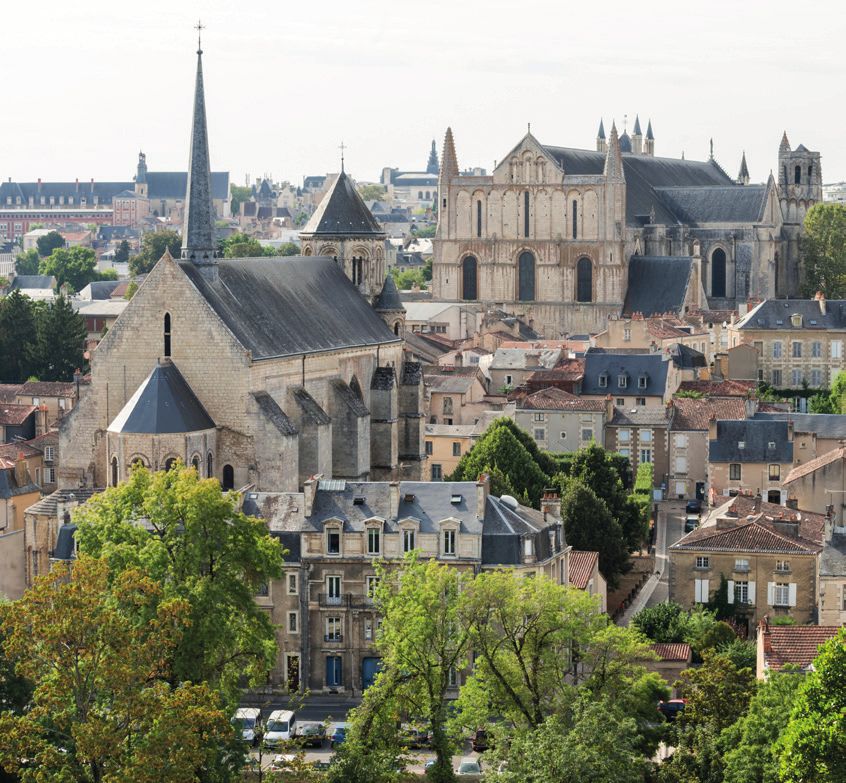
06
     DISCOVER OUR
     MULTICULTURAL CAMPUSES
     Sciences Po’s 7 campuses are home to a tight-knit multicultural student
     community and feature a vibrant intellectual and associative student life.

     Dijon Campus                              Menton Campus
     Located in the region of Burgundy in      Established in the French Riviera city
     a magnificent 19th century building,      of Menton in 2005, the campus is
     the Dijon campus was created in 2001.     located in an entirely renovated 19th
                                               century building overlooking the
     Le Havre Campus                           Mediterranean.

     On the coast of Normandy, Le Havre
     has hosted a campus since 2007.
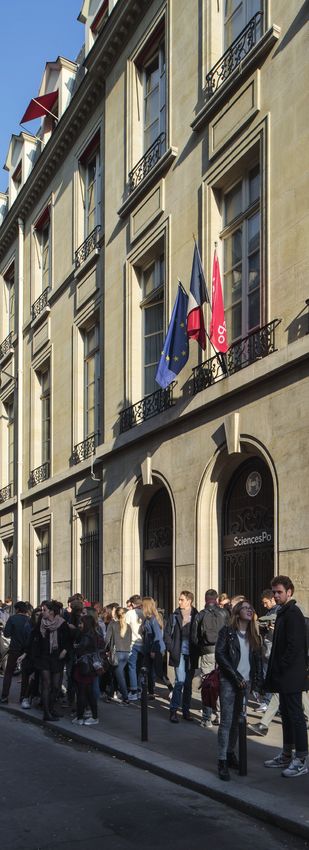
                                               Paris Campus
     Located at the entrance to the port,      Located in the heart of the French
     the Le Havre campus stands out for        capital in the Saint-Germain-des-Prés
     its all-glass architecture and the red    neighbourhood near the Louvre
     and white lightship docked in front       Museum, the Seine and the
     of it.                                    Luxembourg Gardens, the Paris
                                               campus is the birthplace of                 Our futur Paris campus at the historic
                                               Sciences Po, the site where the             Artillerie site
                                               institution was founded in 1872.

        Living in France

        Students attending university in France are exposed to French culture in their daily lives. The attractiveness of
        France as a study destination for international students continues to grow in 2018, with nearly two-thirds (64%) of
        respondents in a recent Campus France survey listing France as the first non-English speaking destination. In 2018,
        Paris came in 5th place in the QS Best Student Cities ranking.
Poitiers Campus
       Opened in 2010, the campus is                                                     Dijon in the region of Burgundy
       located in the heart of the
       historical city of Poitiers in the
       Hôtel Chaboureau, a renovated
       building dating from the 15th
       Century.

                                            Le Havre on the coast of Normandy

                                                                                         Nancy in the region of Lorraine

The historical city of Poitiers
                                                                                          Nancy Campus
                                                                                          Established in the region of
                                                                                          Lorraine in 2000, the Nancy
                                                                                          campus is located in a prestigious
                                            Reims in the heart of the Champagne region
                                                                                          18th century heritage site, the Hôtel
                                                                                          des Missions Royales.

                                            Reims Campus
                                            In the heart of the Champagne
                                            region, the Reims campus opened
                                            in September 2010 in the “Cité des
                                            Rois”.

Menton in the French Riviera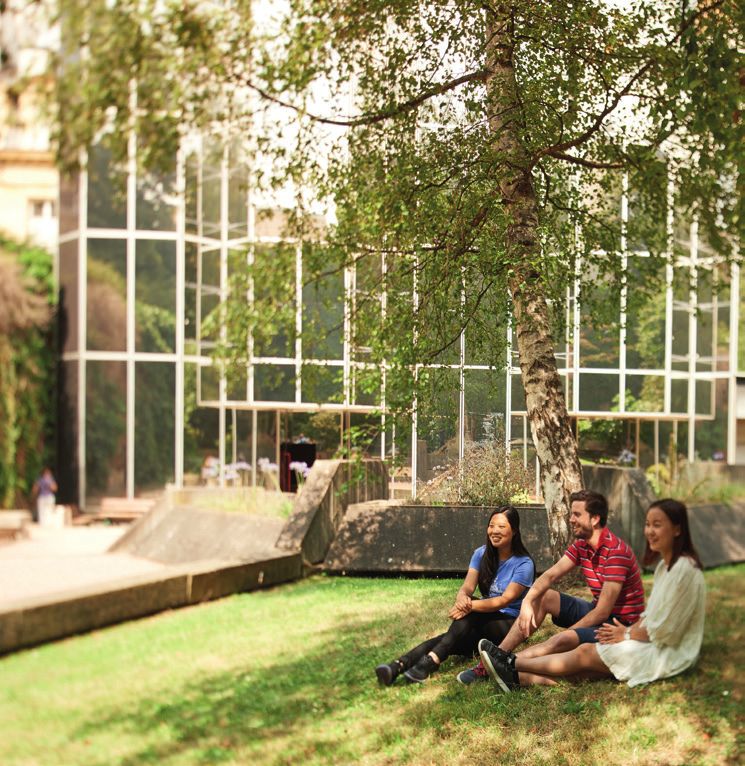
08
     UNDERGRADUATE
     STUDIES
     The Bachelor of Arts at Sciences Po                                             The Civic Learning
                                                                                     Programme
     A multidisciplinary
     foundation in the humanities
     and social sciences                   Educate enlightened citizens              All undergraduate students
                                                                                     engage in a civic engagement
     Sciences Po offers a three-year       Courses offered by the                    over the three years of the
     Bachelor of Arts degree with a        undergraduate college allow               Bachelor's degree. The
     multidisciplinary foundation in the   students to grasp the challenges          Civic Learning Programme
     humanities and social sciences and    and evolutions of contemporary            is a chance to learn and
     an emphasis on civic, linguistic,     societies, and offer them the tools to    understand citizenship and
     artistic, and digital education.      think critically and act ethically. The   social responsibility through
                                           goal is to educate enlightened and        a community internship
     The Bachelor of Arts pursues three    inventive citizens who work towards       that emphasises autonomy,
     core ambitions:                       the common good.                          consensus building and
                                                                                     personal ethic.
     •   Teaching to understand a
         complex world.

     •   Providing students with
         methods adapted to respond
         to diverse challenges.

     •   Instilling in students a sense
         of duty to contribute to their
         society.
A progressive and                            Extra-Curricular
international curriculum                     Learning
Two years in France and
one year abroad                              In addition to the teaching
                                             provided by teacher-
Undergraduates spend their first             researchers and professionals,         09
two years on a Sciences Po campus            field experience is encouraged
before pursuing their third and final        in the form of study tours,
year at one of Sciences Po’s 470             internships, simulations,
partner universities. On all campuses,       collective projects, associative
students choose a multidisciplinary          and union activities.
major - Economy & Society, Political
Humanities, or Politics & Government.
Each campus offers a different
regional concentration that anchors
students' intellectual objectives:       •    Third year: Expanding one’s
Africa, Asia, Europe, Latin America,          academic project
Middle East-Mediterranean, and North          During their year abroad,
America.                                      undergraduates complete their
                                              major at a partner university. This
                                              international academic experience
•   First year: Learning the                  may be complemented by an
    fundamentals                              internship. The degree culminates
    Undergraduate students are                with a capstone project.
    introduced to the disciplines and
    methods taught at Sciences Po
    – economics, history, humanities,    One degree, countless
    law, political science, and          opportunities
    sociology. Certain courses are
    related to the regional concentra-   Upon completion of the BA, students
    tions offered on each campus.        are equipped to pursue graduate
                                         studies at one of Sciences Po’s seven
•   Second year: Acquiring               graduate schools or at any of the
    intellectual autonomy                world’s most competitive universities.
    Students choose a major –            Common fields of study include
    Economy & Society, Political         communications, economics, finance,
    Humanities, or Politics &            international affairs, journalism, law,
    Government –, explore a range        organisational behaviour, and public
    of multidisciplinary courses, and    affairs.
    interact with the research
    methodologies linked to their
    chosen major.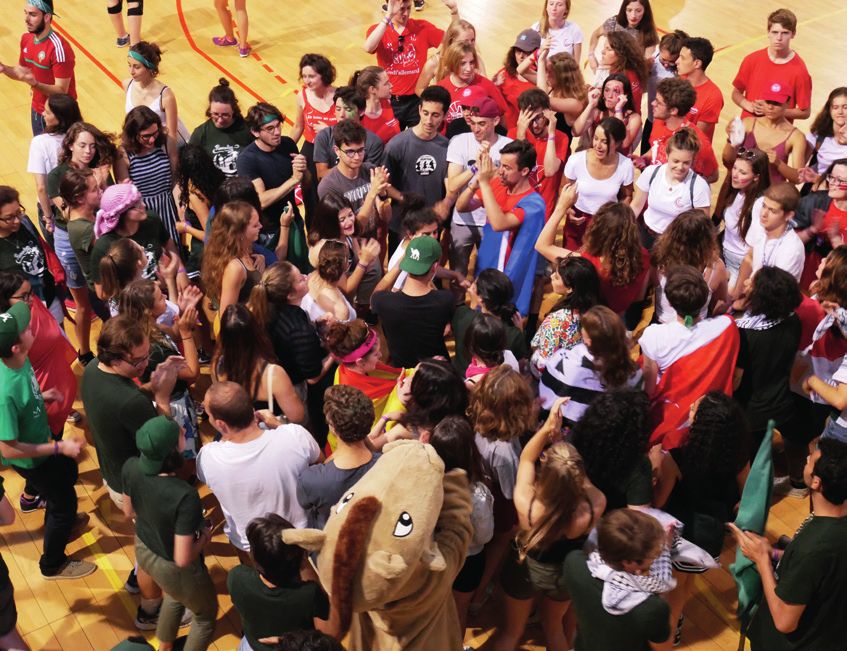
UNDERGRADUATE STUDIES
10
5 European Programme,
Our Regional Concentrations Franco-German concentration
Nancy Campus
Focus on the European Union,
specifically on the relationship between
1 Europe-Asia Programme France and Germany
Le Havre Campus 1
Programme taught in French, with
4 courses in English and German
F
ocus on Asia and its relations with 2
5
Foreign language study in French,
Europe and the world
German, English, Spanish, Russian and
rogramme taught in English with
P
6 Swedish
intensive French language study
3
Dual Bachelor’s degrees with Freie
oreign language study in Chinese,
F
Universität Berlin and University
Korean, Japanese, Hindi and
College London
Indonesian
ual Bachelor’s degrees with
D 6
Columbia University, Keio University, uropean Programme,
E
7
National University of Singapore, Central and Eastern Europe
University of British Columbia, concentration
University of California Berkeley,
University of Hong Kong, and Dijon Campus
University of Sydney 4 urope-North America
E
Focus on the European Union, its borders
and neighbouring states
Programme
2 General Programme
Programme in French, including courses in
Reims Campus English and intensive French language
Paris Campus
Focus on North America and its study
Programme taught in French, relations with Europe
Foreign language study in English,
with courses in English
Programme taught in English with German, Spanish, Hungarian, Italian,
Dual Bachelor’s Degrees with intensive French language study Polish, Romanian, Czech, Russian
University College London and
Foreign language study in Arabic,
Dual Bachelor’s degree with University
3 dual degrees with Université Paris 1 Italian, German and Spanish College London
and Sorbonne Université
Dual Bachelor’s degrees with
Columbia University, National 7 iddle Eastern and
M
3 University of Singapore, University
urope-Latin America
E of British Columbia, University of Mediterranean Programme
Programme California Berkeley, University of Menton Campus
Poitiers Campus Hong Kong, and University of Sydney
Focus on the Middle East, the
Focus on Latin America, Spain and Mediterranean and Gulf states
Portugal, and Euro-Latin American 4 Europe-Africa Programme
Programme taught in English with
relations Reims Campus intensive French language study ;
Programme taught in French, with programme taught in French, with courses
Focus on Africa and its relations with
courses in English, Spanish and in English
Europe
Portuguese
Foreign language study in Arabic, Turkish,
Bilingual French-English programme
Foreign language study in English, Hebrew, Italian and Spanish
Spanish, Portuguese and French for
Foreign language study in Arabic,
Dual Bachelor’s degrees with Columbia
foreigners Portuguese and Swahili
University, National University of
Dual Bachelor’s degree with
Dual Bachelor’s degrees with Singapore, University of British Columbia,
University College London Columbia University, University of University of California Berkeley,
British Columbia, and University University College London, University of
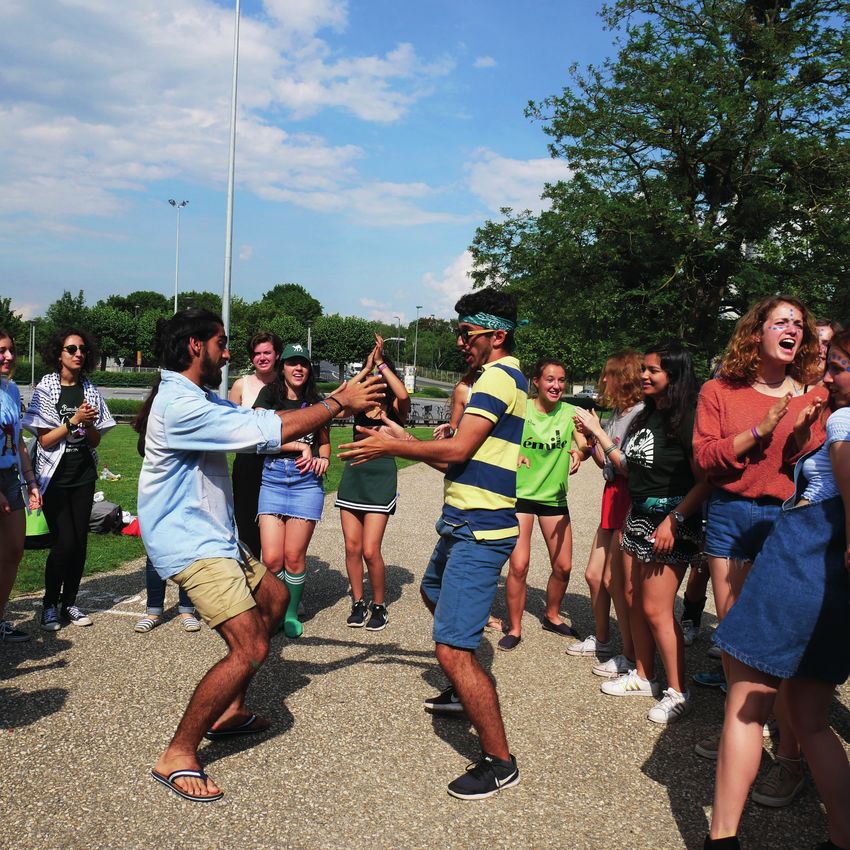
of Hong Kong Hong Kong, and University of Sydney11 Students dancing at the Collégiades 2018 tournament in Reims
UNDERGRADUATE STUDIES
12
     International Dual Bachelor’s Degrees
     Two years at Sciences Po + two years at the partner university
     Sciences Po offers dual Bachelor’s degrees with nine of the world’s leading universities, allowing students to study as fully-
     integrated members of two distinct academic cultures. Students from all around the world are recruited jointly by both
     institutions and form close-knit cohorts that are fully-integrated into the larger communities of their two universities.

     The first two years of all dual Bachelor’s programmes take place on one of Sciences Po’s campuses, where participants
     pursue the undergraduate curriculum and their choice of major. In years 3 and 4 at the partner university, students pursue a
     major offered by the host institution. Upon successful completion of the two curricula, students graduate with two
     Bachelor’s degrees, offering exceptional access to prestigious graduate studies or to entry into the job market.

      Dual Degree with                                 Dual Degree with                                      Dual Degree with the
      Columbia University                              Keio University (Tokyo,                               University of British
      (New York, USA)                                  Japan)                                                Columbia (Vancouver,
      Sciences Po campuses: Reims,                  S           ciences Po campus: Le Havre           Canada)
               Menton, Le Havre                           Students spend two years at Keio,            S       ciences Po campuses: Reims,
         In New York, students choose from                       where they study Economics and                    Menton, Le Havre
                about 70 majors offered at Columbia                  Japanese language and culture              In Vancouver, students choose from a
            Programme in English with no prior             Programme in English, no prior study              choice of five majors: Economics,
                study of French required                             of Japanese or French required                    Geography, History, Political Science,
                                                                                                                       Sociology
      Dual Degree with                                 Dual Degree with the                                        Programme in English with no prior
      Freie Universität Berlin                         National University of                                          study of French required
      (Berlin, Germany)                                Singapore (Singapore)
                                                                                                             Dual Degree with the
      S       ciences Po campus: Nancy             S         ciences Po campuses: Reims,
                                                                   Menton, Le Havre
                                                                                                             University of California
         In Berlin, students pursue a major in
                                                          In Singapore, students choose from
                                                                                                             Berkeley (Berkeley, USA)
                Political Science
                                                                   four majors: Economics, History,          S       ciences Po campuses: Reims,
            Trilingual programme (French,
                                                                   Political Science, or Sociology                     Menton, Le Havre
                German, English)
                                                             Programme in English with no prior           At UC Berkeley, students choose from
                                                                   study of French required                            a large array of majors offerings
                                                                                                                   Programme in English with no prior
                                                                                                                       study of French required
13
Dual Degree with Dual Bachelor’s Degrees with French
University College London Universities
(London, England)
Sciences Po offers three dual degrees with Parisian
S ciences Po campuses: Dijon, Menton,
universities, giving its students a unique programme that
Nancy, Paris, Poitiers
combines world class studies in the social sciences with
In London, students choose from one the study of hard sciences or the humanities.
of six majors: Economics, History,
International Relations, Law, Philosophy,
or Politics
Programme available entirely in French or Dual Degree with
in English. A mixed English/French track Université Paris 1 Panthéon-Sorbonne:
available as well Applied Mathematics & Social Sciences
Two years in Paris: students follow both Sciences Po's social
Dual Degree with the sciences programme and courses in applied mathematics
University of Hong Kong (algebra, analysis, probabilities and statistics) and computer
(Hong Kong) science at Université Paris 1.
S ciences Po campuses: Reims, Menton, One year abroad at a partner university of Sciences Po or
Le Havre Université Paris 1.
In Hong Kong, students choose among
three areas of study: Business, Social
Sciences, or the Arts Dual Degree with
Programme in English, no prior Sorbonne Université: Social Sciences
knowledge of Chinese or French required & Literary Humanities
T wo years in Paris: students follow both Sciences Po's social
Dual Degree with the sciences programme and courses in literature, philosophy or
University of Sydney (Sydney, history at Sorbonne Université (faculté des lettres).
Australia) One year abroad at a partner university of Sciences Po or
S ciences Po campuses: Reims, Menton, Sorbonne Université.
Le Havre
In Sydney, students choose one of two
Bachelor tracks: Bachelor of Arts or
Dual Degree with
Bachelor of Economics Sorbonne Université: Sciences
Programme in English with no prior study & Social Sciences
of French required Two years in Paris: students follow both Sciences Po's social
sciences programme and science courses at Sorbonne
Université (faculté des sciences et ingénierie).
One year abroad at a partner university of Sciences Po or
Sorbonne Université.14
GRADUATE STUDIES
Seven graduate schools that prepare for
professional life
Graduate studies at Sciences Po are hosted within seven schools, all located
on our campus in Paris. The seven schools offer a wide variety of master's
programmes that take place over two years, all tailored to the professional
world. We also offer international dual degrees, in which students spend one
year at Sciences Po and one year abroad at the partner university.
Graduate studies at Sciences Po are based on common principles of
internationalisation, active pedagogy, academic theory and applied project
work.
27 Master's programmes One-year Master's
are open to students with a Bachelor's programmes
degree or equivalent. Each
programme has four 12-week
deliver an intensive curriculum
semesters. One semester is spent
designed for young
completing an internship or a field
professionals who want to
study, writing a Master's thesis, or
develop the expertise necessary PhD programmes
studying at a Sciences Po partner
to accelerate their careers. offer solid training in research.
university. Programmes are taught
Programmes are offered in Students study for their PhD in one
in French or English; some require
English and in French. of Sciences Po’s 11 research centres.
both languages. Certain programmes
allow students to complete an
apprenticeship during their second
year.SCIENCES PO'S GRADUATE SCHOOLS
15
Sciences Po School of Sciences Po Paris School of
Management & Innovation International Affairs (PSIA)
The School of Management & Innovation trains students The Paris School of International Affairs offers a
for positions in consulting/auditing, banking/finance/ comprehensive education in international affairs.
insurance, marketing/communications, human resources, Graduates embark on careers in international
regulations and compliance, and the creative industries. organisations, NGOs, public administration, research
institutes, etc.
Master in Finance and Strategy
Master in International Management and Sustainability* Master in International Security*
Master in International Public Management*
Master in Organisational Behaviour and Human
Resources Master in International Economic Policy*
Master in Marketing: New Luxury & Art de Vivre* Master in International Development*
Master in Communications, Media and Master in Human Rights and Humanitarian Action*
Creative Industries** Master in Environmental Policy*
Master in Innovation and Digital Transformation Master in International Energy*
aster in Financial Regulation and Risk Management
M Master in Journalism and International Affairs*
(one-year programme)*
Master in Advanced Global Studies (one-year
Master in Corporate Strategy programme)*
(one-year programme)*
Joint Master of Law & Finance
International Dual Master’s Degrees with Bocconi
University (Italy), Columbia School of International and
Public Affairs (SIPA)* (USA), Freie Universität Berlin*
International Dual Master's Degrees with Fudan (Germany), Georgetown University Law School* (USA),
University* (China), Fundação Getulio Varga-Escola de King's College London* (United Kingdom), London School
Administração de Empresas* (Brazil), University of of Economics and Political Science (LSE)* (United
Pennsylvania Law School* (USA), University of St. Gallen Kingdom), MGIMO (Russia), Peking University* (China),
(Switzerland), Stockholm School of Economics (Sweden), Stockholm School of Economics* (Sweden), University
Bocconi University (Italy). of St. Gallen* (Switzerland).
Dual Master's Degrees in France (FR) with Strate Dual Master's Degrees in France (FR) with École du
(Sèvres), AgroParisTech (Paris), ISAE-Supaero (Higher Louvre (Paris), Sorbonne université (Paris), Saint-Cyr
Institute of Aeronautics and Space Engineering, Coëtquidan (Military Academy), AgroParisTech (Paris).
Toulouse).Sciences Po School of Sciences Po Law School
Public Affairs The Law School educates high-calibre legal
professionals with the skills to adapt and flourish in a
The School of Public Affairs educates public affairs constantly changing professional environment.
professionals who understand multiple layers of Graduates may choose to join the Bar, work in
governance. Graduates can pursue a wide range of careers business, economic regulation agencies or the
worldwide, spanning the public and private sectors and the judiciary.
local to global levels.
16 Master in European Affairs** Master in Economic Law**
Master in Public Policy** Master in Judicial and Legal Careers
Master in Public Affairs (one-year programme)*
LL.M. on Transnational Arbitration and
Master in Arts & Politics (one-year programme) Dispute Settlement (one-year programme)*
Joint Master of Law and Finance
International Dual Master’s Degrees with Bocconi
University (Italy), Columbia School of International and
Public Affairs (SIPA)* (USA), Freie Universität Berlin Sciences Po Urban School
(Germany), Fudan University* (China), Graduate School of
Public Policy, Hertie School of Governance (Germany), The Urban School prepares students and
Lee Kuan Yew School of Public Policy* (Singapore), professionals for urban governance in all its forms.
London School of Economics* (United Kingdom), Munk Graduates find employment in the public, private and
School of Global Affairs* (Canada), University of non-profit sectors at the local, national and
St-Gallen* (Switzerland), University of Tokyo* (Japan). international levels.
Dual Master's Degrees in France (FR) with École du
Louvre (Paris), HEC Paris, AgroParisTech (Paris), ISAE- Master in Governing the Large Metropolis*
Supaero (Higher Institute of Aeronautics and Space
Engineering, Toulouse). Master of Regional and Urban Planning
Urban Planning Programme
Sciences Po School of Journalism Dual Master’s Degrees with the London School
The School of Journalism prepares students for careers in of Economics* (United Kingdom), El Colegio de
all sectors of the news media – written press, radio, México** (Mexico).
television and the web. The programmes combine a solid
foundation in the social sciences and practice-focused
instruction provided by media professionals. Sciences Po Doctoral School
Master in Journalism The Doctoral School offers research-based Master's
and PhD programmes in law, economics, history,
Joint Master in Journalism and International Affairs political science and sociology. These programmes
equip students to pursue teaching or research
careers and senior positions in international
Dual Master's degree in Journalism with Columbia
Journalism School (New York). organisations, consulting firms and businesses.
Master's and PhD degrees in Economics*, History,
Law, Political Science and Sociology
* English track with no prior study of French required. Dual Master’s Degrees with École du Louvre
(France), Inalco (France), and Sorbonne University
** A French track and an English track are available for this
(France).
Dual PhD Degrees with Columbia University (USA),
programme. International Max Planck Research School
(Germany), Northwestern University (USA) and the
University of Cologne (Germany).CAREERS
Sciences Po graduates are highly sought after by employers in both the private and public sectors.
84% 17
OF GRADUATES FIND WORK
39% Common professions for Sciences Po
graduates include:
ARE RECRUITED PRIOR
TO GRADUATION Audit and Consulting
M
arketing and Communications
F
inancial Services
International Relations and Security
Sciences Po Graduates in the International Job Market
AFRICA
18%
ASIA / 14% 51% EUROPEAN UNION
AUSTRALASIA (OUTSIDE OF FRANCE)
34%
LATIN 5% 12%
OF ALUMNI BEGIN AMERICA
THEIR CAREER
NORTH
OUTSIDE OF FRANCE
AMERICA
Figures based on a 2017 employment survey of Sciences Po graduates (class of 2016).SCIENCES PO
18
CAREER SERVICES
Sciences Po Careers support Sciences Po students and graduates in their professional development, starting from their
first year as undergraduates and until two years post graduation.
Key figures Preparing for professional life Connecting students and
Internships: search, monitoring, employers
legislation Recruitment events (job fairs,
20,000 internship and job
offers
Workshops on a vast variety of
subjects, dispensed by professionals
corporate presentations, case
studies)
(CV and cover letter; job interview Posting of internships and job offers
7,000 monitored internships simulations; career building...). Liaising with top employers.
Guidance starting the first
240 professional integration
workshops year of study
Individual advice and guidance;
More than profile tests and assessments
Organisation of roundtables for
100 information and
recruitment events specific professions or geographic
areas
Events (conferences, presentations,
seminars...) to raise awareness and
transmit skills related to orientation
and the job market.CAREER OPPORTUNITIES
Sciences Po educates decision-makers for the public and private sector in France and worldwide. After graduation,
90.7% of students find employment within a year of completing their degree, with 84% finding work in less than six
months (Graduate Employability Survey, 2016). 19
69% of our graduates work
in the private sector 22% in the public sector
9% in international
organisations
Where our graduates work
Strategy/Development, Marketing & Communications Legal Careers
Audit/Consulting, Finance NGOs, multinational corporations, Attorneys, barristers or solicitors
Consulting and audit firms media outlets, public institutions, Legal departments of major
Banking and finance industries, or in fashion houses, industrial companies
corporate management, strategy and manufacturers Legal experts in European or
business development positions Consulting firms specialised in international organisations, both
Financial regulatory authorities communications, marketing and governmental and non-governmental
advertising
Public Administration Careers in Urban Affairs
& Politics Press, Media & Publishing
Consulting firms, architectural firms
Television, radio, press agencies, and design offices
EU institutions
newspapers, the web, etc. Local governments or international
National and local government
authorities in France organisations, development or urban
International Cooperation planning agencies, and in property
Large companies that do business
with public authorities or focus on
& Development development
European issues World governance, intergovernmental Social housing and real estate
organisations such as the OECD, UN,
Human Resources & IMF, WTO, World Bank, etc. Research & Think-Tanks
Employee Relations Non-governmental organisations Academia
Public or private organisations in Research institutions
fields such as HR development, HR
Entrepreneurship Think-tanks
communications or employee Start-ups, management of companies
relations or lead entrepreneurial projects within
Recruitment firms, human resource public or private organisations
consulting firms or corporate
management positions20
ADMISSIONS
The French and international admissions procedures allow candidates to introduce themselves, explain their motivation
for applying to Sciences Po, and put forth their foreign language skills, extra-curricular activities, as well as their future
career goals. The selection of candidates is based on students’ background and experience as well as academic
excellence.
Undergraduate Admissions
Procedure Who is eligible? Application Process
International procedure Students who have obtained a Online application, followed by an
foreign diploma abroad interview for shortlisted applicants.
Interviews take place in more than
Are also eligible, students who have 70 cities across the world.
obtained:
A French baccalauréat abroad
A foreign diploma in France
French procedure Students who have obtained the Online application and written
French baccalauréat in France exam, followed by an interview for
shortlisted applicants.
Are also eligible:
Students who have obtained
a foreign diploma abroad
(certificate of equivalence
required)
Undergraduate Dual Degrees
The Sciences Po Undergraduate College has established 12 dual Bachelor's degree programmes with prestigious
universities in France and around the world. Students graduate from both institutions, providing access to leading
graduate studies and prominent markets in the world. Please visit our website for specific Dual Degree admission
procedures.Graduate Admissions
Master's programmes procedures Who is eligible? Application Process
Students who have completed their
21
International procedure undergraduate education outside of Online application.
France.
Students who have completed Online application, followed
French procedure their undergraduate or graduate by an interview.
education in France.
Young graduates and early- to
One-Year Master’s programmes mid-career professionals. Please visit Online application.
procedure our website for specific admission
procedures.
Students holding a Master's degree,
PhD programmes procedure a postgraduate degree or an Online application.
equivalent degree.
Graduate Dual Degrees
Sciences Po has partnered with internationally renowned universities to
offer dual degree programmes at the Master's and PhD levels. Nearly all
dual degree programmes are taught in English. Please visit our website for
specific Dual Degree admission procedures.
Admission Decisions
International admission decisions are announced on a rolling basis, from
December through to mid-June of every year. The decision will be sent
within 3 months of the date of submission of the application.
French admission decisions are announced in May/June following the
application submission.22
TUITION FEES
At Sciences Po, we believe that financial
barriers should never get in the way of
Tuition Fee Table for Students of the
education. Tuition fees are relatively European Economic Area
lower than other world-class universities
as a result of our proactive social policy
to be an open and inclusive university.
Annual income Undergraduate Graduate
Tuition fees are determined according to per part Tuition Fees Tuition Fees
parents' tax residence rather than the
student's nationality: €66,584 and over €10,540 €14,500
Students whose parents' tax residence is €43,250 to €66,583 €8,480 €12,200
within the European Economic Area pay
€36,250 to €43,249 €6,810 €10,120
fees according to a sliding scale, from €0
to €10,540/year for the undergraduate €30,250 to €36,249 €5,600 €8,470
programmes and from €0 to €14,500/
year for the graduate programmes. €25,250 to €30,249 €4,460 €6,790
€21,250 to €25,249 €3,310 €4,980
Students whose parents' tax residence
falls outside of the European Economic €19,584 to €21,249 €2,160 €3,360
Area will pay fees of €10,540/year for the
undergraduate programmes and €14,500 €18,984 to €19,583 €2,000 €2,700
for the graduate programmes.
€18,250 € to €18,983 €1,630 €2,270
€17,250 € to €18,249 €1,100 €1,840
Did you know? €16,250 to €17,249 €850 €1,380
€14,250 to €16,249 €540 €920
In 2017, 33% of all Sciences Po €12,584 to €14,249 €320 €530
students paid no tuition fees at all. €0 to €12,583 €0 €0
Exemption is granted to CROUS
scholarship holders, to non-
scholarship holders from a low-
Tuition fees for the 2019-20 academic year
income household, as well as to
any student with a disability.
Please visit our website for specific One-Year Master, Dual Degree,
PhD and Summer School tuition fees.SCHOLARSHIPS AND FINANCIAL AID 23
To ensure that all students admitted to Sciences Po can smoothly and successfully complete their studies,
Sciences Po has substantially expanded its social aid policy.
European students Non-European
European students receiving the Students
CROUS scholarship are not only
A large number of scholarships and
exempt from paying tuition fees, but
financial aid opportunities are
also receive a significant top-up grant
available for non-European students,
from Sciences Po. Although European
amongst them:
students are only eligible for the
CROUS scholarship starting in their
second year of living in France, The Emile Boutmy
Sciences Po substitutes the CROUS Scholarship
scholarship during their first year
of studies. This scholarship is awarded by
Sciences Po to first-time applicants
Sciences Po also offers financial aid from outside the European Economic
to European students with limited Area who demonstrate academic
household income but who are not excellence and fulfill the profile
eligible for the CROUS scholarship. requirements. This scholarship can
take the form of a partial or full tuition Emile Boutmy scholars
What is a CROUS fee waiver and in some cases an
scholarship? additional cost of living scholarship.
European students who have Eiffel Scholarship
studied in France for at least
The Eiffel Scholarship is awarded by
one year are eligible to apply
the French Ministry of Foreign Affairs
for the CROUS need-based
to candidates from emerging
scholarship. These need-based
countries.Other scholarships and
scholarships are awarded by
financial aid are available for students
the French Ministry of Higher
from outside the European Economic
Education and Research to
Area, among them the Mastercard
students under 28 years of age
Foundation Scholars Program,
depending on family situation
the Campus France Scholarship,
and household income. In 2016,
and more.
26% of Sciences Po students
were CROUS scholarship
holders.HOUSING,
24
WELFARE & SUPPORT
Student Housing
The Sciences Po Housing Service can help you with your search for accommodation. Our staff will guide you towards
the housing solution that best suits your needs. Various partnerships have been established allowing eligible students
to receive accommodation in student residences.
Student Welfare and Support
Sciences Po's Student Welfare and Support Office offers:
Information on the social security system and the healthcare system
Help with applying for housing benefits with the French governmental
agency CAF
One-off emergency financial assistance under specific conditions
Help finding a student job
Help and information on your administrative formalities
Disability and Accessibility
If you have a temporary or permanent disability or disabling health
condition, Sciences Po will ensure that you receive the necessary
support and adjustments to complete your chosen programme and
immerse yourself in student life.SUMMER SCHOOL 25 Two programmes, one unforgettable summer The Summer School is an opportunity for students from all over the world to discover Sciences Po over the course of the summer. Participants have the opportunity to experience Sciences Po’s academic environment and to become a part of its international community. It features two distinct programmes: the University Programme, for university students and graduates, and the Pre-College Programme, for secondary school students. The University Programme takes place on the Paris campus in two separate, four-week sessions during the months of June and July. Through its intensive academic programme, participants may delve into Sciences Po’s core social sciences disciplines, study French language and culture, or mix both subjects. In 2017, the Pre-College Programme introduced secondary students to student life and academics at Sciences Po during two weeks on its historic Reims campus. Through challenging coursework that combined social sciences and language study, students got a taste of the Sciences Po experience.
26
      STUDENT LIFE
     A great variety of
     activities
     Students can find a broad array
     of cultural, sporting and other
     extra-curricular activities at
     Sciences Po. More than 300
     student associations, ranging
     from politics to philanthropy,
     provide opportunities for
     students to meet and share
     their passions.
                                                  Members of the Bollywood dance club, a
                                                  student association on the Le Havre campus.

                                                                                                Students in the Sciences Po for Africa
                                                                                                association (ASPA) on the Reims campus.

     Every year, the Collégiades at Sciences Po
     gather students from the seven campuses
     for sporting and artistic competitions.

                                                  Students in the group project Dance on the
                                                  Nancy campus.
Outstanding
conference speakers
Leading figures from politics,
business and academia regularly
make presentations or participate
in conferences at Sciences Po.
Sundar Pichai, CEO of Google Inc.
Recent visitors have included
Jacinda Ardern, Prime Minister of
New Zealand, Maria Fernanda
Espinosa, President of the United
Nations General Assembly, Ban Ki-
Moon, former Secretary-General of
the UN, Sundar Pichai, CEO of
Google, Condoleeza Rice, former
United States Secretary of State,
Sheryl Sandberg, COO of Facebook,
Eric Schmidt, Executive Chairman of
Google, Joseph Stiglitz, American
economist, Nobel Laureate in
Economics, Justin Trudeau, Prime
Minister of Canada.
Justin Trudeau, Prime Minister of Canada.
Jacinda Ardern, Prime Minister of New Zealand.
Sheryl Sandberg, founder of Leanin.org.
Joseph Stiglitz, economist.RESEARCH
28
AT SCIENCES PO
At Sciences Po, more than 200 faculty members in the fields of humanities and social sciences study transformations at
work in the modern world and the challenges they represent. With a firm focus on the major challenges facing society,
research conducted at Sciences Po fuels and enhances public debate on issues such as public health, education, urban
development, security, the environment and democracy all over the world.
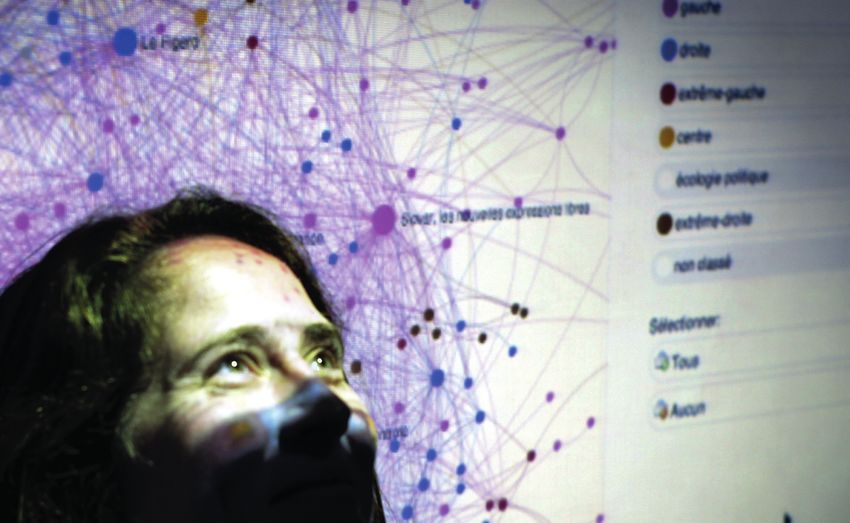
Research by
the numbers
230 academics
11 research centres
320 PhD students
45 PhDs awarded annually
45% international students
at the Doctoral SchoolOur Fields of Study Research centres and 29
programmes
Our researchers study major issues such as public health,
education, urban development, security, the environment
and democracy all over the world. Faculty members conduct their work in
eleven research centres (six of which are
affiliated with the French National Centre for
Scientific Research - CNRS): Centre for Socio-
Research at Sciences Po contributes to knowledge and Political Data (CDSP), Centre d’études
debate in five overarching disciplines: européennes (CEE), Centre for International
Studies and Research CERI), Centre de
Law, particularly private and international law Recherches Politiques (CEVIPOF), Centre for
History, Centre for the Sociology of
Economics, focusing on issues such as international Organisations (CSO), Economics Department,
trade, monetary policies, labour markets and innovation Law School, the medialab, and the Centre for
Studies in Social Change (OSC). The
History, particularly political history and the study of Observatoire Français des Conjonctures
conflicts, world history and the history of knowledge Economiques (OFCE) rounds out this
and cultures network.
Political science in all its forms: study of voter behaviour,
international relations, compared political and cultural In addition to these units, three major
areas, political theory, administration and public policy cross-cutting programmes – the LIEPP,
DIME-SHS and MaxPo – were recently
Sociology, and particularly organisational sociology, created.
economic sociology and sociology of social
stratification.30
EXECUTIVE EDUCATION
Reveal through education
It is becoming clearer each day that
established knowledge and past
Transformative Facts and Figures
experiences are no longer sufficient to professional training
face the current changes taking place
in our society. For this reason,
Sciences Po Executive Education
Custom programmes are tailored to
meet the specific needs of your 40 years of
expertise
established its mission to accompany organisation. After mapping out and
executives, directors, and leaders in
the public and private sector through
analysing the strategic issues to
address, we work closely with you to 100 customised training
programmes every year
their process of professional craft a curriculum in line with your
learning objectives. This collaborative
4,000
transformation and development. participants
approach ensures you develop the every year
Our pedagogy combines Sciences necessary skills and talents that will
Po's expertise in the social sciences initiate, contribute and accelerate your
and interdisciplinary perspective with organisation’s transformation.
a firm foundation in professional
realities. This unique outlook forms
the basis of our 200 academic
programs, including degree-granting
Expertise
programs, certificate programs, and Public Affairs & Reputation
short or customized training Strategy, Leadership and Governance
programs, which serve over 4,000 Communications, digital and media
participants each year. Personal DevelopmentThis document is not contractual Establishment of Higher Education Sciences Po - March 2019 Graphic design: www.breakfast-included.com Photos: © Martin Argyroglo, © Thomas Arrivé, © Judith Azema, © Charlotte Landes, © Lika Banshoya, © Manuel Braun, © Vincent Blocquaux, © Stéphanie Samper, © Antoine Meyssonnier, © Stéphanie Lacombe, © Claire-Lise Havet, © Fotolia, © Thinkstock, © Kaiqi Yang, © Stefan Meyer, © LikaBanshoya, © V. Camargo Gomez, © kezkamol/shutterstock, © Didier Parezy, ©Sogelym Dixence / Wilmotte & Associés Architectes / Moreau Kusunoki Architectes / RSI Studio. Cover: © Manuel Braun
Sciences Po
27 rue Saint Guillaume
75007 Paris – France
www.sciencespo.fr/en

facebook.com/sciencespo

twitter.com/sciencespo

linkedin.com/edu/sciences-po-12454

youtube.com/sciencespo

instagram.com/sciencespo

Follow Sciences Po on Snapchat
You can also read


