Health, Nursing and Midwifery - 2021 Undergraduate Course Guide - UNIVERSITY OF HULL
←
→
Page content transcription
If your browser does not render page correctly, please read the page content below

2021
Health, Nursing and Midwifery

2021
Undergraduate
Course Guide
Welcome to
Health, Nursing and
Midwifery
at the University
of Hull

Health, Nursing and Midwifery

Health, Nursing and                                                                       Courses
Midwifery                                                                                      What we offer ...

at the University of Hull                                                                  Course

                                                                                           BSc Midwifery
                                                                                                                                                                          Typical
                                                                                                                                                                           offer

                                                                                                                                                                            120
                                                                                                                                                                                     Example
                                                                                                                                                                                     A levels

                                                                                                                                                                                       BBB
                                                                                                                                                                                                  UCAS
                                                                                                                                                                                                  code

                                                                                                                                                                                                  B720

We’ll give you the skills, expertise and support to                                        BSc Nursing (Adult)                                                              112        BBC        B740
become a confident, compassionate professional health                                      BSc Nursing (Child)                                                              120        BBB        B730
practitioner.                                                                              BSc Nursing (Learning Disability)                                                112        BBC         B761

On most courses, you’ll split your time 50/50 between learning in classes and in           BSc Nursing (Mental Health)                                                      112        BBC        B760
full-time mentored clinical placements. And you won’t have to wait to get practical
                                                                                           BSc Operating Department Practice                                                112        BBC        B990
experience – placements start right from Year 1.
                                                                                           BSc Paramedic Science                                                            120        BBB        B780
Our courses are approved by professional and regulatory bodies including the
Nursing and Midwifery Council (NMC) and the Health and Care Professions Council            BSc Physiotherapy                                                                128        ABB        B160
(HCPC).                                                                                    For BSc Operating Department Practice, your points can be from any qualification on the UCAS tariff, but at
                                                                                           least 80 points should be from two or more A levels, or a combination of appropriate Level 3 qualifications.
Our experienced staff work with local health and social care providers to deliver a        For all other courses (except Nursing Studies), points should be from three A levels or equivalent.
range of innovative, relevant courses. We have programmes that empower you to
care for women throughout pregnancy and birth or look after critically ill babies,             For more information, please visit www.hull.ac.uk/ughealth
children or adults. You can train to support people with learning disabilities or
mental health needs, or to protect the health, dignity and emotional wellbeing
of patients before, during and after surgery. Or you could learn how to treat and
stabilise patients at the scene of an accident or emergency or gain the clinical skills
and knowledge to become a competent physiotherapist.
And if you’re already working in a professional setting, we have courses to enhance
your existing healthcare skills.
If you don’t quite meet the entry requirements for our full degrees, there’s still a
way in. You can study part time for a year on our University Certificate in Health
and Social Care Practice course or Alternative Route into Health and Social Care
(evening and online) (see page 22). Passing that means you can apply for any of the
programmes in this brochure (excluding Physiotherapy).*
                                                                                          We’re always looking to improve our courses. Which means we do review our modules from time to time,
                                                                                          to make sure they’re of a high standard and are relevant to you and to your potential future employers.
                                                                                          The information in this guide is correct at the time of going to print, but some of the modules could change
                                                                                          before 2021. Please contact our admissions team if you do have any questions or for further information on
*with 60 credits at level 4 in appropriate subjects.                                      admissions@hull.ac.uk.

4 | HULL.AC.UK                                                                                                                                                UNDERGRADUATE COURSE GUIDE 2021 | 5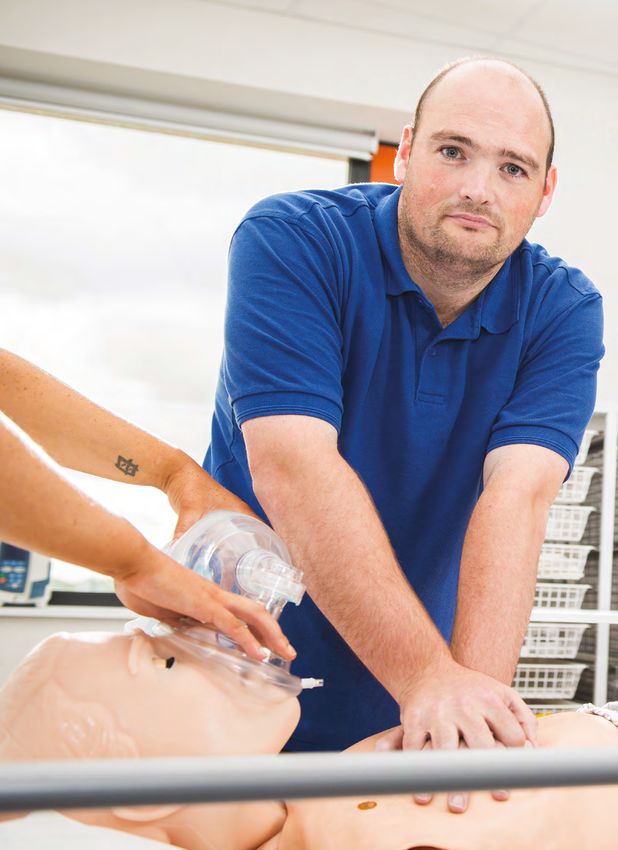
Accounting and Finance

Course structure
How are degrees taught?
Most of our undergraduate courses are made up of study units called modules.
You’ll be assessed after each module, and the average of all your module
assessments for the year is your overall result for that year.

Can I pick and choose modules?
Yes, to an extent. Some modules are compulsory, so you have to take them.
Within that compulsory group are some ‘core’ modules, too. They’re essential to the
course (to make sure our degrees qualify for relevant accreditation, for example), so
they’ll never change and you have to pass them.
That said, some of our modules are optional – so you can pick what you study to suit
your interests and career goals.

How many modules will I take?
Usually, you’ll take six modules a year: three from the start of term to Christmas, and
three more between January and the summer. Later in your course, some modules –
like larger-scale projects or a dissertation – might count as two modules and run for
the full year.

6 | HULL.AC.UK                                                                            UNDERGRADUATE COURSE GUIDE 2021 | 7

Careers
                 By the end of your course, you’ll be ready to undertake
                 the responsibilities of a health practitioner. Most of our
                 graduates go on to work in the NHS – but others find
                 positions overseas, in private practice, in the social
                 services, the pharmaceutical industry, the armed forces,
                 the prison service or in specialist areas such as drug
                 rehabilitation.
                       Graduate careers
                 •   Nurse
                 •   Midwife
                 •   Operating department practitioner
                 •   Paramedic
                 •   Physiotherapist

                       Career advice and support
                 Our team give you expert career advice and training. We’ll help you explore your
                 options and progress into a career you’ll love. You’ll learn how to apply for jobs, prep
                 for interviews and impress potential employers.
                 We can also get you into the room with a range of employers at on-campus events.
                 Networking helps you plan your career path and can open doors to internships and
                 job offers.

                 100%
                                                                  of students in work or
                                                                  further study six months
                                                                  after graduating*

                 * UK domicile full-time first degree leavers; Destinations of Leavers from Higher Education survey for the
                   academic year 2016/17, published by HESA 2018. For Nursing, Midwifery and Operating Department Practice
                   only (Paramedic Science and Physiotherapy are new programmes so graduation data is not available).

8 | HULL.AC.UK                                                                   UNDERGRADUATE COURSE GUIDE 2021 | 9
Health, Nursing and Midwifery

What’s stopping
you?
We offer flexible routes into nursing and healthcare. There are
courses where you can learn and gain experience at the same
time. And some of them don’t need you to meet our typical
entry requirements or study full time at the University.
Many of our programmes are designed for people already working in nursing,
healthcare or social work who want to make an even bigger contribution to patient
and client care.
Our courses can also open up careers as nurses, midwives, operating department
practitioners, paramedics and social workers to people from a wide range of
backgrounds and we welcome college leavers to mature students.
University Certificate in Health and Social Care Practice
This part-time flexible programme offers an accessible and relevant introduction
to academic study. If you complete the certificate, you’ll be eligible to apply for
selected health and social care degrees at Hull.
Alternative Route into Health and Social Care
Delivered through evening classes and online, this flexible course offers
opportunities for people who want to pursue careers in health and social care, but
don’t currently have the qualifications to apply for one of our degrees. As with the
Certificate, successful completion means you will be eligible to apply for selected
health and social care degrees at Hull.*

* excluding Physiotherapy.

10 | HULL.AC.UK                                                                        UNDERGRADUATE COURSE GUIDE 2021 | 11

Health, Nursing and Midwifery

A royal appointment
Her Majesty The Queen officially opened the Allam Medical
Building in November 2017. A jaw-dropping VIP for a mind-
blowing medical training facility.
The beating heart of our £28-million health campus project,
the building houses a simulated learning environment,
including a simulated hospital ward, operating theatre,
endoscopy unit, midwifery-led birthing unit, intensive care unit                        HER MAJESTY THE QUEEN SIGNING THE VISITORS' BOOK IN
and resuscitation unit. So right from the start, your training will                     THE ALLAM MEDICAL BUILDING

unfold in an authentic setting – giving you the skills and the
confidence to do the job when you eventually do face genuine
front-line situations. You'll also be learning side by side with
other healthcare practitioners, preparing you for future careers
working together.
And really, that’s the whole point. This is a facility that exists
to make an extraordinary difference to ordinary people. And
it is doing.
We train outstanding graduates to address the shortage
of doctors, nurses and healthcare workers. We’re helping
pregnant women and new mums with a radically different
service to diagnose mental health issues and access to better
care. Our partnership with Yorkshire Cancer Research is
tackling cancer inequalities in the region. And our Wolfson
Palliative Care Research Centre is helping those with terminal
conditions live as well as they can and giving them courage
and control when the time comes.
Real people. Real lives. Real solutions. Really want to be
part of it?

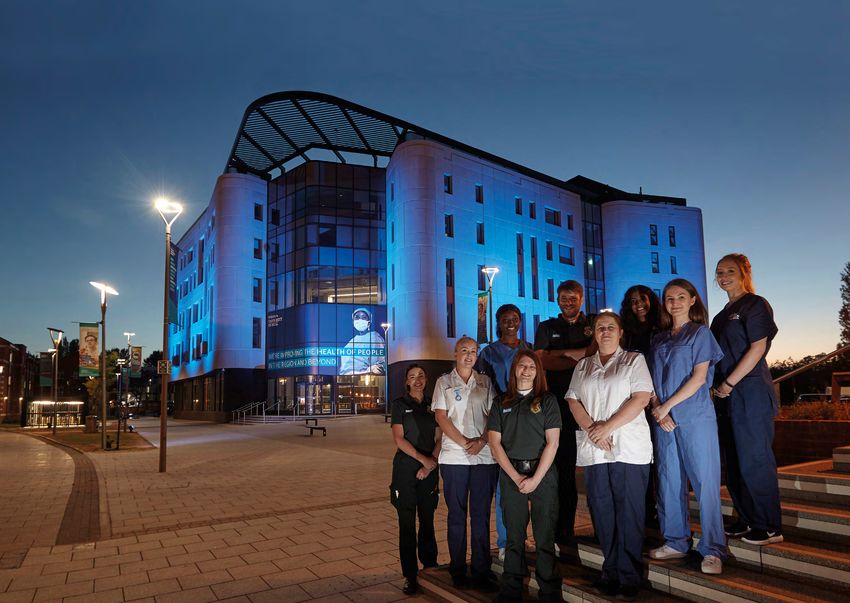
                                                                                                              THE AMB LIGHTING UP BLUE TO CELEBRATE
The Allam Medical Building was the winner of the ‘Buildings that Inspire’ category in                         70 YEARS OF THE NHS IN JULY 2018
The Guardian’s University Awards 2018.

12 | HULL.AC.UK                                                                                               UNDERGRADUATE COURSE GUIDE 2021 | 13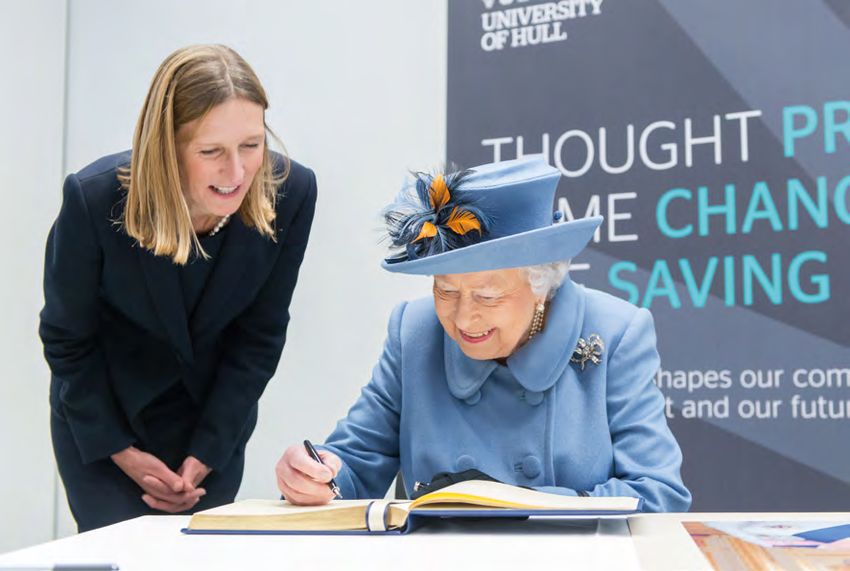
Health, Nursing and Midwifery
BSc Midwifery Year 2 modules
Core
Year 3 modules
Core
Introduction to Ill Health Childbirth 2
Year 1 modules Become equipped with the knowledge Examine complicated childbirth and
Typical offer 120 and skills to recognise, interpret, treat emergency scenarios. You’ll focus on
Core and manage ill-health conditions in how to support the woman and her
Example A levels BBB Introduction to Midwifery women of childbearing age. family, as well as making professional,
Become equipped with the skills to clinical judgements.
prepare for academic study and clinical Public Health, Society and Midwifery
UCAS code B720
work expectations and requirements. Epidemiology and demographics will Practice Module 5
be used to demonstrate the influence Combining placement with theory
Communication of various medical, social and political days you’ll develop the skills needed to
Gain the skills and self- You’ll be introduced to communication factors on the health of families and the facilitate care for the woman and her
confidence to become a theory and develop your knowledge of roles of midwives. family where there are complexities in
qualified midwife and various aspects of the midwife-mother pregnancy and birth.
relationship. Practice Module 3
providing a safe experience Gain the essential skills needed The Neonate 1
for the childbearing woman Practice Module 1 for midwifery including patient Learn how to recognise deviations from
Learn essential midwifery skills such handling and infection control, as normal health and initiate appropriate
and her baby. as measuring and recording vital signs well as promoting and supporting monitoring, care and referral for
and how to administer medicines safely, breastfeeding. compromised or sick neonates. This
as well as studying health and safety module has an an optional additional
measures. Childbirth 1
component of the Newborn Infant
Focus your knowledge and skills on
Human Anatomy and Physiology Physical Examination.
women-centred care when pregnancy
(Midwifery) and birth are physiologically normal. Becoming a Midwife 1
You will be introduced to the normal Develop the clinical decision-making
physiology of the human body and Practice Module 4
skills needed to practice as a lead
its related anatomy, with particular You’ll be introduced to the process of
professional responsible for delivering
reference to women’s anatomy and developing evidence-based practice
care that is safe and clinically effective.
physiology. guidelines, protocols and policies, as well
as gaining the skills to critique them. Practice Module 6
Practice Module 2 Prepare to undertake the role and
You’ll study the development of the responsibilities of a midwife. You’ll
embryo and fetus, the anatomical and consolidate your midwifery skills and
physiological changes of pregnancy prepare for professional practice.
and theoretical aspects of intrapartum
and postpartum care.
14 | HULL.AC.UK UNDERGRADUATE COURSE GUIDE 2021 | 15
Health, Nursing and Midwifery
“My mentors have been
absolutely fantastic: they
BSc Nursing (Adult)
want to teach me to
succeed, which I think is Year 1 modules
so important. The support
Typical offer 112
has been brilliant and I Core
have learnt so much. The Example A levels BBC Fundamental Nursing Skills
way the placements are This module provides students with
structured means I get UCAS code B740 the opportunity to learn in a campus-
good all-round experience based simulated practice environment.
from all aspects of Simulation-based learning features
nursing.” Split your time 50:50 between a reproduced representation of real-
world practice that support students’
David Taylor - BSc Adult being on campus and on development in a safe environment and
Nursing graduate, class placement – learning to provides opportunity for skill repetition,
of 2018 provide care to a range of feedback and evaluation. Small group
adults – differing in age and simulation-based learning is facilitated
by a team of academic and practice-
health needs. based colleagues in which adult, child,
learning disability and mental health are
represented.
Fundamentals of Professional Practice
This module prepares students for the
contexts in which they will practice by
introducing an operational awareness
of the requirements and expectations
of registered nurses. This module also
focuses on academic practice and
students learn about academic literacy,
self-reflection and how to use research
within academic writing.
Promoting Health and Preventing
Ill-Health
This module enables students to
explore the wider determinants of
health and how these impact on
health outcomes, as well as nurse-led
approaches to improving and saving
lives. As part of this module, students
will engage with the digital resources
16 | HULL.AC.UK UNDERGRADUATE COURSE GUIDE 2021 | 17
Health, Nursing and Midwifery
developed by Public Health England to Developing Professional Practice Practice 4 – Adult Nursing (Field) Practice 5 – Adult Nursing (Field)
support the All Our Health Framework, This module builds on the level 4 This module is the second of the This module is the first of the practice-
which are embedded in teaching and module Fundamentals of Professional practice-based learning modules that based learning modules that feature in
learning content. Practice. The module explores how feature in stage two of the programme. stage three of the programme. In this
nurses work with other professionals, Undertaking this module requires module, students are supported to work
Practice 1 Adult Nursing (Field)
patients and service users and their students to build on previous practice towards practicing independently with
This module is the first of two practice-
supporters to deliver and develop learning by demonstrating consistency, minimal supervision as well as leading
based learning modules that feature
collaborative care. The module also confidence and competence when and coordinating care.
in stage one of the programme. Whilst
prepares students to develop their actively participating in care with
undertaking this module and the one Practice 6 – Adult Nursing (Field)
teaching skills. This is because, in the minimal guidance and with increasing
following it (Practice 2), students are This module is the second of the
final stage of their programme, students confidence and competence.
supported to participate in care with practice-based learning modules
are expected to take responsibility for
guidance from others. Year 3 modules in stage three of the programme.
the learning of others as part of their
Developing skills and knowledge from
Practice 2 – Adult Nursing (Field) professional practice.
Core previous practice-based modules,
This module is the second of the
Care and Management of the Acutely Leading and Managing Care students are required to practice
practice-based learning modules that Ill Adult (Field) The module supports students to build independently, with minimal supervision
feature in stage one of the programme. This module builds on earlier modules upon existing learning and allows them and to continue to lead and coordinate
Building on learning from Practice 1, and provides a platform from which to understand the leadership role of care with increasing confidence and
students are required to demonstrate students will become more competent the registered nurse as a facilitator of competence.
consistency, confidence and and knowledgeable in caring for adults
competence when participating in care change, who is able to drive forward
with acute healthcare needs. The module the quality of care and to recognise and
with minimal guidance from others. will provide the student with the skills, mitigate risk. Throughout the module,
Year 2 modules knowledge and understanding required students will be required to demonstrate
to recognise and respond appropriately initiative and critical thinking to take an
Core to the needs of acutely ill adults. Students evidence-based approach reflective of
Developing Nursing Skills will be introduced to the principles relevant policy.
The module learning and teaching is of acute nursing care and the role of
the nurse in caring for adults who are Preparing for Registration (Field)
focused on supporting students to learn
acutely ill. Students will augment theory The focus for learning in this module
in a campus-based simulated practice
with practice with the use of simulated is a student-selected long-term health
environment. This module revisits the
clinical scenarios, which will enable them condition or number of conditions. The
programme theme of skill development
to develop critical thinking and clinical module has a focus on public health,
and offers learning, teaching and
decision-making skills. as students are required to critically
assessment activities that consolidate
evaluate research, policy and public
and extend those offered in the level 4 Practice 3 – Adult Nursing (Field) health initiatives as part of their learning.
module Fundamental Nursing Skills. This module is the first of two practice- The learning centres on the application
based learning modules that feature of knowledge of pathophysiology,
in stage two of the programme. Whilst pharmacology and life and social
undertaking this module and the one sciences to assess, plan, implement and
following it (Practice 4), students are evaluate care and support, provided for
supported to be an active participant people who are living with a longer-term
in care. health condition.
18 | HULL.AC.UK UNDERGRADUATE COURSE GUIDE 2021 | 19Health, Nursing and Midwifery
“The facilities are fantastic,
BSc Nursing (Child)
and also there’s an
emergency buzzer which Year 1 modules
gives students an insight Typical offer 120
into what it can be like in Core
an emergency situation on Example A levels BBB Fundamental Nursing Skills
the ward. There are vital This module provides students with
signs monitors … all the UCAS code B730 the opportunity to learn in a campus-
equipment you would based simulated practice environment.
think of that would be on a Simulation-based learning features
pediatric ward. The Paediatric and child-focused a reproduced representation of real-
neonatal facilities are also world practice that support students’
brilliant, with the nursing is among the most development in a safe environment and
equipment used when a rewarding careers out there. provides opportunity for skill repetition,
baby requires help You’ll learn to work and feedback and evaluation. Small group
breathing after being born.” communicate with children simulation-based learning is facilitated
by a team of academic and practice-
Rachael Ellis - BSc and their families – often based colleagues in which adult, child,
Nursing (Child) in difficult, demanding learning disability and mental health are
situations, on a course represented.
that’s split between study Fundamentals of Professional Practice
on campus and mentored This module prepares students for the
clinical placements. contexts in which they will practice by
introducing an operational awareness
of the requirements and expectations
of registered nurses. This module also
focuses on academic practice and
students learn about academic literacy,
self-reflection and how to use research
within academic writing.
Promoting Health and Preventing
Ill-Health
This module enables students to
explore the wider determinants of
health and how these impact on
health outcomes, as well as nurse-led
approaches to improving and saving
lives. As part of this module, students
will engage with the digital resources
20 | HULL.AC.UK UNDERGRADUATE COURSE GUIDE 2021 | 21Health, Nursing and Midwifery
developed by Public Health England to Developing Professional Practice Year 3 modules Practice 6 – Child Nursing (Field)
support the All Our Health Framework, This module builds on the level 4 This module is the second of the
which are embedded in teaching and module Fundamentals of Professional Core practice-based learning modules
learning content. Practice. The module explores how Leading and Managing Care in stage three of the programme.
nurses work with other professionals, The module supports students to build Developing skills and knowledge from
Practice 1 – Child Nursing (Field)
patients and service users and their upon existing learning and allows them previous practice-based modules,
This module is the first of two practice-
supporters to deliver and develop to understand the leadership role of students are required to practice
based learning modules that feature
collaborative care. The module also the registered nurse as a facilitator of independently, again with minimal
in stage one of the programme. Whilst
prepares students to develop their change, who is able to drive forward supervision and to continue to lead and
undertaking this module and the one
teaching skills. This is because, in the the quality of care and to recognise coordinate care with confidence.
following it (Practice 2), students are
final stage of their programme, students and mitigate risk. Throughout the
supported to participate in care with
are expected to take responsibility for module, students will be required to
guidance.
the learning of others as part of their demonstrate initiative and critical
Practice 2 – Child Nursing (Field) professional practice. thinking to take an evidence-based
This module is the second of the approach reflective of relevant policy.
Meeting the Acute Healthcare Needs of
practice-based learning modules that Child and Young People (Field) Meeting the Continuing and Critical
feature in stage one of the programme. This module builds upon earlier Care Needs of Children and Young
Building on learning from Practice 1, modules and provides a platform from People (Field)
students are required to demonstrate which students will become more This module enables students to
consistency, confidence and competent and knowledgeable in caring develop their learning around the needs
competence when participating in care for children and young people with of children and young people with long
with minimal guidance from others. acute healthcare needs. term and complex health needs. It also
Year 2 modules provides opportunities to advance
Practice 3 – Child Nursing (Field)
learning about the needs of children and
This module is the first of two practice-
Core based learning modules that feature
young people who require critical care.
Developing Nursing Skills in stage two of the programme. Whilst Practice 5 – Child Nursing (Field)
The module learning and teaching is undertaking this module and the one This module is the first of the practice-
focused on supporting students to learn following it (Practice 4), students are based learning modules that feature
in a campus-based simulated practice supported to be an active participant in stage three of the programme. In
environment. This module revisits the in care. this module, students are required to
programme theme of skill development practice independently with minimal
and offers learning, teaching and Practice 4 – Child Nursing (Field)
supervision and to lead and coordinate
assessment activities that consolidate This module is the second of the
care with confidence.
and extend those offered in the level 4 practice-based learning modules that
module Fundamental Nursing Skills. feature in stage two of the programme.
Undertaking this module requires
students to build on previous practice
learning by demonstrating consistency,
confidence and competence when
actively participating in care with
minimal guidance and with increasing
confidence and competence.
22 | HULL.AC.UK UNDERGRADUATE COURSE GUIDE 2021 | 23Health, Nursing and Midwifery
BSc Nursing (Learning lives. As part of this module, students
will engage with the digital resources
developed by Public Health England to
Developing Professional Practice
This module builds on the level 4
module Fundamentals of Professional
Disability) support the All Our Health Framework,
which are embedded in teaching and
Practice. The module explores how
nurses work with other professionals,
learning content. patients and service users and their
supporters to deliver and develop
Year 1 modules Practice 1 Learning Disability Nursing
Typical offer 112 collaborative care. The module also
(Field)
Core prepares students to develop their
This module is the first of two practice-
Example A levels BBC teaching skills. This is because, in the
Fundamental Nursing Skills) based learning modules that feature
final stage of their programme, students
This module provides students with in stage one of the programme. Whilst
UCAS code B761 are expected to take responsibility for
the opportunity to learn in a campus- undertaking this module and the one
the learning of others as part of their
based simulated practice environment. following it (Practice 2), students are
professional practice.
Simulation-based learning features supported to participate in care with
Learn to change the lives a reproduced representation of real- guidance. Maximising My Health (Field)
world practice that support students’ This module explores a range of
of people with learning development in a safe environment and
Practice 2 – Learning Disability Nursing
physical and mental health conditions
(Field)
disabilities, while gaining provides opportunity for skill repetition, which may impact on people with a
This module is the second of the
a range of professional feedback and evaluation. Small group
practice-based learning modules that learning disability across the spectrum
skills and qualifying as a simulation-based learning is facilitated of age, ability and service provider.
feature in stage one of the programme.
by a team of academic and practice- Prevalence, assessment, planned
registered nurse. Half study, based colleagues in which adult, child,
Building on learning from Practice 1,
intervention and evaluation of impact
students are required to demonstrate
half supported practice, this learning disability and mental health are in relation to improving or maintaining
consistency, confidence and
degree takes you into people’s represented.
competence when participating in care health of people with learning disability
homes, schools, treatment with minimal guidance from others. will predominate. This will be explored
Fundamentals of Professional Practice
within the framework provided by
units and care services. This module prepares students for the
legislation and policy, focusing on the
contexts in which they will practice by Year 2 modules
role of the RNLD. Supporting nurses to
introducing an operational awareness Core build resilience in their future practice
of the requirements and expectations
Developing Nursing Skills will be central.
of registered nurses. This module also
focuses on academic practice and The module learning and teaching is
Practice 3 – Learning Disability Nursing
students learn about academic literacy, focused on supporting students to learn (Field)
self-reflection and how to use research in a campus-based simulated practice This module is the first of two practice-
within academic writing. environment. This module revisits the based learning modules that feature
programme theme of skill development in stage two of the programme. Whilst
Promoting Health and Preventing and offers learning, teaching and undertaking this module and the one
Ill-Health assessment activities that consolidate following it (Practice 4), students are
This module enables students to and extend those offered in the level 4 supported to be an active participant
explore the wider determinants of module Fundamental Nursing Skills. in care.
health and how these impact on
health outcomes, as well as nurse-led
approaches to improving and saving
24 | HULL.AC.UK UNDERGRADUATE COURSE GUIDE 2021 | 25Health, Nursing and Midwifery
Practice 4 – Learning Disability Nursing offence/display offending behaviours.
(Field) Additionally students will develop skills
This module is the second of the in managing expressions of sexuality;
practice-based learning modules that therapeutic communication; medication
feature in stage two of the programme. management; legislation and policy;
Undertaking this module requires report writing; clinical supervision;
students to build on previous practice teaching; innovation and enterprise and
learning by demonstrating consistency, technology to develop practice.
confidence and competence when
actively participating in care with Practice 5 – Learning Disability Nursing
(Field)
minimal guidance and with increasing
This module is the first of the practice-
confidence and competence.
based learning modules that feature
Year 3 modules in stage three of the programme. In
this module, students are required to
Core practice independently with minimal
Leading and Managing Care supervision and to lead and coordinate
The module supports students to build care with confidence.
upon existing learning and allows them Practice 6 – Learning Disability Nursing
to understand the leadership role of (Field)
the registered nurse as a facilitator of This module is the second of the
change, who is able to drive forward practice-based learning modules
the quality of care and to recognise in stage three of the programme.
and mitigate risk. Throughout the Developing skills and knowledge
module, students will be required to from previous practice-based
demonstrate initiative and critical modules, students are required to
thinking to take an evidence-based practice independently, with minimal
approach reflective of relevant policy. supervision and to continue to lead and
Living My Best Life (Field) coordinate care with confidence.
This module draws upon students’
current knowledge and skills to enable
them to co-work with individuals
with complex needs, their families
and carers across the spectrum of
age, ability and service provider. The
module enables students to work both
autonomously and as part of extended
teams of professionals. Knowledge
and skills will be developed and
enhanced to enable students to work
confidently with people with a learning
disability who have committed an
26 | HULL.AC.UK UNDERGRADUATE COURSE GUIDE 2021 | 27Health, Nursing and Midwifery
BSc Nursing (Mental Promoting Health and Preventing
Ill-Health
This module enables students to
Year 2 modules
Core
Health) explore the wider determinants of
health and how these impact on
Developing Nursing Skills
The module learning and teaching is
health outcomes, as well as nurse-led focused on supporting students to learn
approaches to improving and saving in a campus-based simulated practice
Year 1 modules lives. As part of this module, students
Typical offer 112 environment. This module revisits the
Core will engage with the digital resources programme theme of skill development
Example A levels BBC developed by Public Health England to and offers learning, teaching and
Fundamental Nursing Skills support the All Our Health Framework, assessment activities that consolidate
This module provides students with which are embedded in teaching and
UCAS code B760 and extend those offered in the level 4
the opportunity to learn in a campus- learning content. module Fundamental Nursing Skills.
based simulated practice environment.
Simulation-based learning features Practice 1 – Mental Health Nursing Developing Professional Practice
a reproduced representation of real- (Field) This module builds on the level 4
Study for a mental health This module is the first of two practice-
world practice that support students’ module Fundamentals of Professional
nursing degree on our award- development in a safe environment and based learning modules that feature Practice. The module explores how
winning Health Campus provides opportunity for skill repetition, in stage one of the programme. Whilst nurses work with other professionals,
and on mentored clinical feedback and evaluation. Small group undertaking this module and the one patients and service users and their
simulation-based learning is facilitated following it (Practice 2), students are supporters to deliver and develop
placements. As a specialist supported to participate in care with
by a team of academic and practice- collaborative care. The module also
mental health nurse, the one- based colleagues in which adult, child, guidance. prepares students to develop their
to-one relationships you build learning disability and mental health are Practice 2 – Mental Health Nursing teaching skills. This is because, in the
with those in need are vital to represented. (Field) final stage of their programme, students
their care and to helping them This module is the second of the are expected to take responsibility for
Fundamentals of Professional Practice
practice-based learning modules that the learning of others as part of their
overcome challenges. This module prepares students for the
professional practice.
contexts in which they will practice by feature in stage one of the programme.
introducing an operational awareness Building on learning from Practice 1, Critical Perspectives on Assessment
of the requirements and expectations students are required to demonstrate and Formulation within Mental Health
of registered nurses. This module also consistency, confidence and Nursing (Field)
focuses on academic practice and competence when participating in care This module will help students to
students learn about academic literacy, with minimal guidance from others. question and explore their own and
self-reflection and how to use research alternative perspectives on mental
within academic writing. health and develop skills to promote
meaningful individual recovery.
28 | HULL.AC.UK UNDERGRADUATE COURSE GUIDE 2021 | 29Health, Nursing and Midwifery
Practice 3 – Mental Health Nursing Underpinnings of Contemporary
(Field) Mental Health (Field)
This module is the first of two practice- This module will consolidate the
based learning modules that feature knowledge and skills from the
in stage two of the programme. Whilst programme with an emphasis on
undertaking this module and the one producing accountable practitioners
following it (Practice 4), students are who can think critically and practice
supported to be an active participant autonomously within the milieu of
in care. contemporary mental health care and
service provision.
Practice 4 – Mental Health Nursing
(Field) Practice 5 – Mental Health Nursing
This module is the second of the (Field)
practice-based learning modules that In this module, students are required to
feature in stage two of the programme. practice independently with minimal
Undertaking this module requires supervision and to lead and coordinate
students to build on previous practice care with confidence.
learning by demonstrating consistency,
Practice 6 – Mental Health Nursing
confidence and competence when
(Field)
actively participating in care with
Developing skills and knowledge from
minimal guidance and with increasing
previous practice-based modules,
confidence and competence.
students are required to practice
Year 3 modules independently, again with minimal
supervision and to continue to lead and
Core coordinate care with confidence.
Leading and Managing Care
The module supports students to build
upon existing learning and allows them
to understand the leadership role of
the registered nurse as a facilitator of
change, who is able to drive forward
the quality of care and to recognise
and mitigate risk. Throughout the
module, students will be required to
demonstrate initiative and critical
thinking to take an evidence-based
approach reflective of relevant policy.
30 | HULL.AC.UK UNDERGRADUATE COURSE GUIDE 2021 | 31Health, Nursing and Midwifery
BSc Operating Department Year 2 modules Enhanced Post-Operative/Post
Anaesthetic Practice – Practice Module
Practice Core
Enhancing Intra-Operative
Intervention
While caring for immediate post-
operative patients, you will consider the
impact of preoperative, anaesthetic and
You’ll develop your understanding intra-operative procedures.
Identifying the Needs of the Surgical of quality care within the surgical
Typical offer 112 Patient – Practice Module environment and its impact on Year 3 modules
You will be supervised at all times by a the patient, significant others and
Example A levels BBC mentor allowing exposure to specific Core
organisation.
activities ensuring safe practice. Advanced Practice in Context
UCAS code B990 Enhanced Intra-Operative Practice – By participating in enhanced clinical
Evidence-Based Practice in the Practice Module skills such as airway management and
Perioperative Arena Develop your knowledge, understanding the surgical first assistant role, you’ll
You’ll demonstrate digital literacy skills,
Operating Department and practice skills to apply and analyse further develop your clinical practice
accessing a range of literature that problem-solving approaches relating
Practitioners (ODPs) are knowledge.
informs practice, policy and procedure. to various stages of patients’ surgical /
highly-skilled members of the intraoperative phases. Consolidation of Practice
Surgical/Anaesthetic Intervention and
surgical team who who care This module emphasises self-
It’s Impact Upon the Patient - Practice Enhancing Pre-Operative Anaesthetic directed autonomous practice,
for patients before, during Module Intervention future employment opportunities
and after surgery. Designed in Organise and manage the needs of the Consider practice-based knowledge and identification of activity towards
patient during the perioperative period during the pre-operative and
collaboration with local NHS within a range of clinical settings.
continual professional development.
anaesthetic event. Previous experiences
trusts and private healthcare will be developed, enhancing your Independent Project
Personal and Professional
providers, this course has Development in Operating Department competence and confidence. You’ll combine theory and practice
a strong clinical focus, to Practice to produce a work portfolio outlining
Enhanced Pre-Operative and a project that is of value to patients,
meet the growing demand Engage in the process of self-reflection Anaesthetic Practice – Practice Module
within a selected patient safety scenario members of the multidisciplinary team
for perioperative healthcare Develop your knowledge and practice or both.
or personal development experience skills to apply and analyse in-depth
professionals both locally and from clinical practice. problem-solving approaches relating Clinical Leadership
nationally. to various stages of the patients’ pre- You’ll evaluate leadership traits, change
Management and Organisation of the
Surgical/Anaesthetic Event – Practice operative and anaesthetic care. management and health policy to
Module justify areas of improvement in service
Year 1 modules Enhancing Post-Operative/Post provision.
This module provides you with the
Anaesthetic Intervention
Core opportunity to organise and manage
Build on your knowledge the needs of Contextualising Advanced Roles in
Fundamentals of Operating the needs of the patient during the Healthcare
the post anaesthetic / surgical patient
Department Practice perioperative period in a range of You’ll learn the principles of role
in relation to the biological sciences,
Gain an understanding of the clinical settings. enhancement and augmented skills
pathological processes, technology and
fundamentals of operating department therapeutic interventions. against the backdrop of government
practice, allowing you to consider your health policy in the perioperative arena
role as a healthcare professional. and beyond.
32 | HULL.AC.UK UNDERGRADUATE COURSE GUIDE 2021 | 33Health, Nursing and Midwifery
“Since attaining my job, I have
enjoyed every moment thus far.
And I am still enjoying
it – generally, working in the
NHS, no day is the same! This
includes the delivery of care to
the patients, the colleagues you
work with and care services to
all service users of the NHS. I am
enjoying every moment.”
Olayemi Elizabeth Ajayi
ODP Graduate
34 | HULL.AC.UK UNDERGRADUATE COURSE GUIDE 2021 | 35Health, Nursing and Midwifery
BSc Paramedic Science Year 2 modules
Core
Year 3 modules
Core
Clinical Practice Education 2 (40 Clinical Practice Education 3 (40
Year 1 modules credits) credits)
Typical offer 120 This module aims to build your Develop your core pre-hospital care
Core confidence, evolve theory-practice links principles, refining theory-practice links
Example A levels BBB Clinical Practice Education (40 credits) and advance dexterous skill towards whilst exploring and critically analysing
From non-technical leadership and autonomous paramedic practice. models of management, leadership and
UCAS code B780 communication skills to the practical clinical decision-making.
skills associated with cardiac arrests Research Methods
and trauma, this module will help to To provide evidence-based care, Clinical Pharmacology for Paramedics
prepare you for your future career. you’ll gain an understanding of the Develop your knowledge of applied
Our BSc Paramedic Science principles of research and how to apply pharmacology with respect to
degree was launched at Anatomy and Physiology for the findings of quality research in the paramedic practice. You will reflect
Paramedics practice setting. on your knowledge gained for your
the specific request of the
Develop your knowledge of human individual professional development.
Yorkshire Ambulance Service anatomy and physiology, exploring Acute Pre-Hospital Care
to meet a critical shortage homeostasis whilst evolving your This module draws on previous Research Project (40 credits)
experiences gained from clinical Draw together everything you’ve
of paramedics. You’ll learn understanding of key systems, their
interactions and interdependence. practice to inform and explore clinical learned, pick what topic interests you
front-line care through a decision making when identifying the most, and complete a research
combination of classroom Introduction to Evidence-Based common pre-hospital presentations. project based on a practice area of your
Practice
theory, online learning and Clinical Assessment and Examination
choosing.
You’ll be discussing research, reviews
clinical placements. and guidelines, learning how to assess for Paramedics Management of the Critically Ill Patient
each to best influence your care for Developing your clinical assessment This module will provide you with the
patients. and examination skills, you’ll assess and skills and knowledge needed to care
examine the cardiovascular, respiratory, and manage critically ill patients.
Foundations of Professional Practice neurological, gastrointestinal,
Explore the wider social determinants musculoskeletal and endocrine
of health and how these affect health systems.
and social care policy. Issues relating
to health economics and provisions of Pathophysiology for Paramedics
healthcare will be discussed. You’ll examine the pathophysiology
of shock, heart failure, myocardial
Professional and Contemporary Issues infarction and respiratory failure.
in Paramedic Practice
Examine the behaviours and attitudes
that are expected from paramedics and
how they can better communicate and
work as a team.
36 | HULL.AC.UK UNDERGRADUATE COURSE GUIDE 2021 | 37Health, Nursing and Midwifery
BSc Physiotherapy Clinical and Professional Development
2 and 3
These modules involve six-week
Service Development Project
Collaborative working skills are essential
in physiotherapy practice, and this
placements where you get to develop module will help you grow these skills
Acute and Community Rehabilitation your clinical practice skills. They as you work in small groups to develop
Typical offer 128 This module prepares you for working also include continuing professional and idea which will improve practice.
in acute and community rehabilitation components for you to enhance your
Example A levels ABB settings. It covers assessment and reflective skills which are key to lifelong Complex Integrated Rehabilitation
management approaches, to help you learning. You’ll enhance your physiotherapy
UCAS code B160 prepare for your first placement. skills and knowledge of working with
Musculoskeletal Physiotherapy more complex patient groups. You’ll
Exercise, Physical Activity and Health You’ll build on your anatomy, develop clinical reasoning skills and
Enjoy excellent career Promotion physiology, biomechanics and embed evidence-informed approaches
prospects and become a You’ll develop your understanding of pathology in the context of to practice.
qualified physiotherapist at human movement, biomechanics and musculoskeletal physiotherapy. You’ll
health promotion. This knowledge will develop your reasoning skills central Innovations and Enterprise
the official university partner be applied in the context of exercise This module will prepare you to work
to assessment and management of a
of Team GB. therapy in a range of areas. variety of problems. in the ever-changing world of health
and social care by exploring innovation
Clinical and Professional Applying Research Methods and enterprise in professional practice
Year 1 modules Development 1 In this module, you’ll apply your research from a business perspective. This will
Core This module combines a six-week skills by working in small groups to set you up with the critical thinking
placement with continuing professional identify an area you wish to investigate. and leadership skills you need to be an
Anatomy and Physiology for
development (CPD) and the importance You’ll learn about the process of carrying innovative practitioner.
Physiotherapy Practice
of critical reflective practice. out research, including how to collect
This module will develop your core Clinical and Professional Development
knowledge of the structure and function and analyse data.
Year 2 modules 4 and 5
of the major body systems, evolving Being in clinical practice for two six-
Year 3 modules
your understanding of systems across Core week placement blocks will enhance
the life stages. Cardio-Respiratory Physiotherapy Core your practical skills and prepare you
Foundations of Professional Enhance your skills in working with Physiotherapy Literature Review to qualify as a confident, autonomous
Physiotherapy Practice people with cardiovascular and This is your opportunity to make an professional. You’ll also develop your
You’ll enhance your communication respiratory conditions. Learning how original contribution to research by employability skills in preparation for
skills and learn about physiotherapy to support people in the long-term undertaking a critical review of the applying for graduate jobs.
values and professional standards. You’ll management of their conditions will literature on an area of professional
then put these skills into practice on a help you become excellent in person- practice of interest to you. The format
one-week placement. centred practice. of the module will be primarily through
Neurological Physiotherapy independent study with support from
Introduction to Evidence-Based
You’ll develop your assessment and your research tutor and peers.
Practice
You’ll be discussing research, reviews management skills in working with
and guidelines, learning how to assess those with neurological conditions and
each to best influence your care for in helping promote their independence.
patients. You’ll learn to deliver safe and effective
neurological physiotherapy rehabilitation.
38 | HULL.AC.UK UNDERGRADUATE COURSE GUIDE 2021 | 39Be part of something We’re in the top 50 universities
for research power**
Which basically means we’re helping to change
extraordinary the world through the work our people are
doing. And you could be part of it. From tackling
marine pollution to breaking the chain of
modern-day slavery, our research is not only
Here at Hull, we know extraordinary is in you. And we’re enriching the lives of people across the world,
it enriches your university experience. So come
here to help you find it. This is why we’ve partnered with and get involved.
Team GB. Our united belief is that anyone, with the right
opportunities ahead and a dedicated team behind, can You’ll meet new
achieve extraordinary things. people who’ll
become old friends.
More than 15,000 students
from around 100 countries
live, work and play on our
attractive single-site campus.
The partnership isn’t
the only thing we’ve got
going for us either. We Whether you’re into bands
also offer you guaranteed or board games, food or
accommodation,^ with film, history or horror, sci-fi
more than 2,300 rooms or skateboarding, this is a
on campus. Our students place to do more of what
go on to do amazing you love – there’s something
things too, with 95.9% of for everyone here in Hull.
our graduates in work It’s your home away from
or further study with six home. And your chance to
months.† discover who you really are.
Choose extraordinary. Choose Hull.
^ We guarantee you a room in University-owned or partnered accommodation if you apply by 1 October.
† Destinations of Leavers from Higher Education for the academic year 2016/17, published by HESA June 2018.
** Times Higher Education, based on the most recent Research Excellence Framework 2014.
40 | HULL.AC.UK UNDERGRADUATE COURSE GUIDE 2021 | 41This. Is. Hull.
A place where we stand up to kings, do deals with the
world and take a wrecking ball to the slave trade.
A place where culture stands out and the phone boxes
are a different colour. A place where we’re free thinking,
independent and proud of it.
Glasgow
Learn more about Hull M8
Edinburgh
THE DEEP at hull.ac.uk/abouthull A1
Newcastle
Belfast
A1
York
Dublin
Liverpool
M62
Leeds HULL
A15
Manchester
Sheffield
M1 Lincoln
Nottingham A1
A42
Birmingham M1
Cardiff o
London
HUMBER STREET THE FRUIT MARKET
42 | HULL.AC.UK UNDERGRADUATE COURSE GUIDE 2021 | 4312
47 52
6
38
46 40 15
37
31 8 20
32 49
11 48
25 59 36
2 7 26
23 4 57
42
13
54 5 24 51
30
55 19 34
1 33 9 29
27
58 44 14
3 21 56 35
10 53
16 39 18
45 22
17
43
28
41 47. Sports Pavilion
50 35. Middleton Hall
48. Student Central
(Students’ Union)
36. Multi Storey Carpark 49. Student Wellbeing,
37. Newlands House Learning & Welfare Support
17. Dennison Centre 26. Hardy 38. Newland Science Park 50. Swale House
18. Derwent 27. Holme 39. Nidd 51. Taylor Court
19. Don 28. Hull University Business 40. Prayer Room 52. The Courtyard
10. Calder 20. Energy & Environment School Reception 41. Raines House 53. Venn (Reception)
11. Canham Turner Institute 29. Larkin 42. Robert Blackburn 54. Washburn
5. Allam Medical Building 12. Central Print Services 21. Enterprise Centre 30. Leven 43. Rye House 55. Westfield Court
1. Accommodation Hub 6. Allam Sport Centre 13. Chemistry 22. Esk 31. Loten 44. Ryton Lecture Theatre 56. Wharfe
2. Acoustics Research Centre 7. Applied Science 3 14. Cohen 23. Fenner 32. Loten Workshops 45. Skell 57. Wilberforce
3. Aire 8. Asylum Nightclub 15. Day Nursery 24. Ferens 33 Loxley 46. Sport, Health & 58. Wiske
4. Allam Building 9. Brynmor Jones Library 16. Dearne 25. Gulbenkian Centre 34. Media Hub Exercise Science Lab 59. Wolfson
144 | HULL.AC.UK
| HULL.AC.UK UNDERGRADUATE
UNDERGRADUATECOURSE
COURSEGUIDE 2020| 45
GUIDE2020 |2You’ll feel right
WESTFIELD COURT WESTFIELD COURT
at home in Hull
We have something for everyone here. Whatever
you choose, you’ll find a place to live that works
best for you. And if you apply by 1 October, we
guarantee you a University room.^
From £125 to £210 per Take a virtual
week – something to suit all tour of our rooms
budgets* Go to hull.ac.uk/accommodation
to find out more and take a 360°
From 41, 43 and 51-week tour of where you’ll be living.
contracts, so you don’t pay
for more than you need
WESTFIELD COURT
2,300+ on-campus rooms
Up to 150mbps FREE WiFi**
Connect up to 7 devices to
the WiFi at once
24/7 security on campus
* 2020/21 fees correct at time of going to print.
See website for most up-to-date information.
^ If you’re a new, full-time, unaccompanied
student, and you apply for accommodation
by 1 October, we guarantee you a room in
accommodation that’s owned, in partnership or
directed by the University.
THE COURTYARD TAYLOR COURT
** Westfield Court and Taylor Court only.
46 | HULL.AC.UK UNDERGRADUATE COURSE GUIDE 2021 | 47How much can I borrow?
Your guide to What you can borrow for your maintenance loan depends on your family’s income
and where you’ll be living while you’re at uni.
fees and funding Is your family’s annual
household income £25,000
or less?
No, it’s more
So … time to talk about money. How much does university cost? Yes
than that
How are you going to pay for it?
How much does it cost to study an undergraduate degree? When you come to uni, Living
where will you be living? Household Living at
away from
Are you a UK student? income home
home
Yes No £30,000 £8,544 £7,095
Away from
At home home £35,000 £7,884 £6,442
£9,250 per year* £14,800 (non-science courses) £40,000 £7,225 £5,789
on a full-time degree or £17,550 (science courses) per year
for EU and international students You’ll be able You’ll be able £45,000 £6,565 £5,137
to borrow to borrow £50,000 £5,905 £4,484
You’ll pay lower fees while you’re on a year abroad or an industrial placement year. £7,747 £9,203
£55,000 £5,245 £3,831
£60,000 £4,589 £3,410
The figures for 2021 entry haven’t been
What loans are available? published yet, so here we’re using the 2020 £62,249 or above £4,289 £3,410
figures as a guide.
There are two types of loan available to students from England:
And how much will I be paying back after I graduate?
Maintenance loan Tuition fee loan – Currently
£9,250* Just to recap, you don’t have to pay back anything until your salary goes above
Helps with the cost of living
£26,575 a year. When that happens, the amount you’re earning determines what
Partially means tested Covers the full cost of your course
your loan repayment will be.
fees
• Paid straight into your bank
account at the start of each term • Paid straight to the University Is your annual salary above £26,575 a year?
• You won’t have to pay any of it • You don’t start paying any of it
back until you’re earning more back until you’re earning more Yes No, it’s less than that
than £26,575 a year than £26,575 a year
• After 30 years, any remaining • After 30 years, any remaining
Annual income Monthly payment You don’t have to
debt is written off – regardless of debt is written off – regardless
£26,575 £0 make any repayments
what you still owe of what you still owe
£30,000 £26
£35,000 £63
£40,000 £101
£45,000 £138
* Subject to approval. This fee is subject to an increase in line with inflation. Maximum tuition fees are set by the government.
£50,000 £176
48 | HULL.AC.UK UNDERGRADUATE COURSE GUIDE 2021 | 49Useful contacts Tariff calculator
BTEC level 3
Admissions The (not so) small print ... A level UCAS Tariff (QCF) / National (QCF) / National (QCF) / National
Extended Extended Extended
01482 466100 Please note … Diploma Diploma Diploma
admissions@hull.ac.uk The information in this guide is provided 144 DDD
hull.ac.uk/admissions by the University of Hull, and is for
128 DDM
general information purposes only.
We do everything possible to keep the 112 DMM D*D*
Accommodation information up to date and correct, 104 D*D
01482 466042 but we reserve the right to introduce
96 MMM DD
rooms@hull.ac.uk changes to the information given in our
publications. For more detail and the 84
hull.ac.uk/accomm
latest on our programmes, please go to 80 MMP DM
hull.ac.uk. 78
Student Finance
72
01482 466538 Want to know more?
64 MPP MM
hefunding@hull.ac.uk Our full 2020 Undergraduate
prospectus is available to order or 60
hull.ac.uk/money
download from hull.ac.uk/prospectus. A* 56 D*
Or visit hull.ac.uk to find out the latest
UCAS information.
A 48 PPP MP D
B 40
0371 468 0468
ucas.com We use role models, not models 36
*Our institution code is H72. You’ll find no models in this publication. C 32 PP M
For Medicine, apply to H75. The people you see on these pages are 28
our students, and we are proud of them.
D 24
International Office Tell us what you think 20
01482 462190 Please write to E 16 P
global@hull.ac.uk Marketing and Communications,
hull.ac.uk/international University of Hull, Of course, we also consider other qualifications – such as AS levels, Cambridge
Cottingham Road, Technicals and EPQs – and a range of international qualifications.
Hull, HU6 7RX, UK.
If you’ve got any questions about what qualifications we accept or our entry
requirements in general, just ask. We’re on 01482 466100 or at admissions@hull.ac.uk.
You can also work out your own UCAS points total at
www.ucas.com/ucas/tariff-calculator.
There’s also a full tariff points guide for all available qualifications on the UCAS site.
50 | HULL.AC.UK UNDERGRADUATE COURSE GUIDE 2021 | 51You can also read


