Pneumonia & Diarrhea Progress Report 2020 - Johns ...
←
→
Page content transcription
If your browser does not render page correctly, please read the page content below
Pneumonia & Diarrhea Progress Report 2020
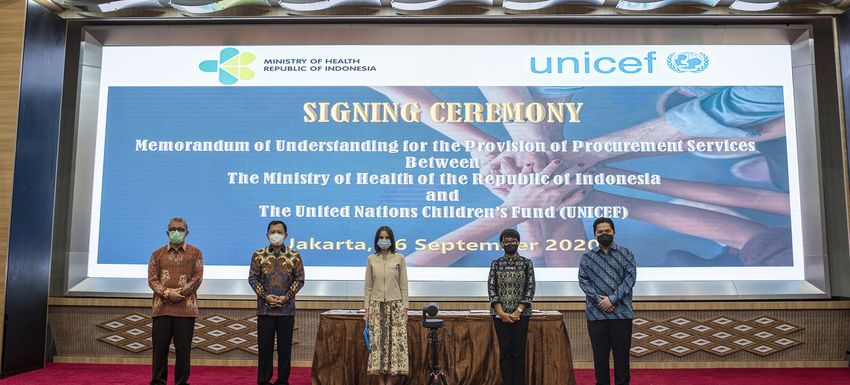
TABLE OF CONTENTS
       2   EXECUTIVE SUMMARY

       3   INTRODUCTION

       4   DATA & METHODOLOGY

       7   KEY RESULTS & FINDINGS

      16   CONCLUSIONS & RECOMMENDATIONS

      18   APPENDIX

      19   ACRONYMS & REFERENCES

      21   ACKNOWLEDGEMENTS

1                                   IVAC at Johns Hopkins Bloomberg School of Public Health
EXECUTIVE SUMMARY
    Pneumonia and diarrhea are leading killers of children under the age of
    five, claiming the lives of more young children globally than any other
    infectious disease.

    2020 OVERALL GAPPD SCORES MAPPED
    Each year, this report tracks progress towards 10 key

                                                                                                           CLOSING
    indicators in the 15 countries with the highest mortality
    burden of pneumonia and diarrhea in children under 5.
    These 10 indicators are evaluated and summarized into
    an Overall GAPPD score.
                                                                                                           THE GAP
                                                                                                              1.24 MILLION
                                                                                                          under-5 pneumonia and
                                                                                                          diarrhea deaths in 2017

                                                                                                                     of all pneumonia
                                                                                                                        and diarrhea
                                                                                                                         deaths in
                                                                                                          70%        children under 5
                                                                                                                     occur in these 15
                                                                                                                      focus countries

                                                                                                           A CHILD UNDER 5
                                                                                                          DIES OF PNEUMONIA
                         15 HIGH-BURDEN FOCUS COUNTRIES                                                   EVERY 39 SECONDS
             ANGOLA            CÔTE D'IVOIRE        INDONESIA             PAKISTAN
           BANGLADESH               DRC                MALI                SOMALIA
              CHAD
              CHINA
                                 ETHIOPIA
                                   INDIA
                                                       NIGER
                                                      NIGERIA
                                                                          TANZANIA
                                                                                                          ABOUT 1,200 YOUNG
                                                                                                           CHILDREN DIE PER
                                                                                                           DAY OF DIARRHEA

    MEDIAN 2020 GAPPD SCORES ACROSS                                                                                   5
                                                                                                             focus countries with
    15 FOCUS COUNTRIES                                                                                       Overall GAPPD score
    None of the 15 focus countries met GAPPD target scores                                                 increases of more than
                                                                                                              1 percentage point

         DIARRHEA                                    42
                                                                                                             2 PERCENTAGE
        PNEUMONIA                                                    59
                                                                                                                POINTS
     OVERALL GAPPD                                             51                                          2019 – 2020 change in
                                                                                                         Overall GAPPD score across
                                                                                                            all 15 focus countries
                     0    10      20      30   40         50        60    70    80      90

2                                                                                    IVAC at Johns Hopkins Bloomberg School of Public Health
INTRODUCTION
    Pneumonia continues to kill more children under         In 2009 and 2013, the World Health Organization
    five worldwide than any other single infectious         (WHO) and UNICEF published the integrated
    disease, claiming an estimated 800,000 children’s       Global Action Plan for the Prevention and
    lives in 2018, while diarrheal diseases—the             Control of Pneumonia and Diarrhea (GAPPD),
    second leading infectious cause of death of             a bold call to action with the goal of achieving
    children under 5—claimed the lives of 437,000           a global 75% reduction in incidence of severe
    young children. Globally, over 1.23 million children    pneumonia and diarrhea in children under 5 by
    died of pneumonia and diarrhea before reaching          2025. GAPPD outlines a set of core interventions
    their 5th birthday—the equivalent of over 141           to successfully prevent, protect, and treat
    child deaths per hour or 3,400 deaths per day.          children who are at risk of serious illness or
                                                            death due to these two diseases.
    Children living in countries that already bear
    disproportionate impacts of pneumonia and
                                                            GAPPD INDICATORS
    diarrhea must now also contend with potentially
    catastrophic impacts of the COVID-19 pandemic.                 7 Pneumonia-                   5 Diarrhea-
                                                                 specific indicators           specific indicators
    The fallout of the COVID-19 pandemic threatens
    to reverse decades of progress in protecting the                          Exclusive Breastfeeding
    world’s children from these preventable illnesses.                            MCV1 Coverage
                                                                  DTP3 Coverage                 RotaC Coverage
    Despite the massive toll of pneumonia, it has been
                                                                   Hib3 Coverage                        ORS
    called the forgotten epidemic. Now more than
    ever, the global child health community must take             PCV3 Coverage                         Zinc
    action to ensure that the world’s most vulnerable         Appropriate Care Seeking
    children are not left behind.                               Antibiotic Treatment

    2020 PDPR FOCUS COUNTRIES                               Each year, the International Vaccine Access
     Rank      Country
                             Under-5 Pneumonia & Diarrhea   Center (IVAC) reviews the progress towards
                                        Deaths              achieving these GAPPD targets in the 15 countries
       1        India                  233,240              with the highest number of pneumonia and
      2        Nigeria                 208,439              diarrhea deaths among children under 5 years of
      3        Pakistan                90,398               age, including reviewing the latest available data
      4          DRC                   64,170               on 10 key pneumonia and diarrhea indicators.
      5        Ethiopia                44,692               Although there are limitations to the indicators,
      6         Chad                    27,496              the composite view they provide offers a useful
       7      Indonesia                 27,422              reflection of the overall landscape regarding
      8         Angola                 25,609               progress on reducing preventable pneumonia and
      9        Tanzania                 25,367
                                                            diarrhea deaths in children under 5.
      10       Somalia                  25,158
      11        China                  24,254
      12         Mali                   21,353
      13      Bangladesh                21,166
      14        Niger                  20,048
      15     Côte d’Ivoire              18,651

3                                                                  IVAC at Johns Hopkins Bloomberg School of Public Health
DATA & METHODOLOGY
    IDENTIFYING THE HIGHEST                                         pneumonia and diarrhea deaths or adjustments
    BURDEN COUNTRIES                                                to the methodology used to estimate mortality.

    For this report, we analyze the progress of 10                  DATA SOURCES
    GAPPD indicators in the 15 countries with the
                                                                    The main sources for data for this report come
    highest total number of pneumonia and diarrhea
                                                                    from WHO and UNICEF data repositories on
    deaths among children under 5 years.
                                                                    global child health. The most recent available
    These 15 high-burden countries are identified                   data are used to compile the national coverage
    based on the latest data on pneumonia and                       estimates for each of the 10 GAPPD indicators
    diarrhea deaths, sourced from the WHO Maternal                  tracked in the report.
    and Child Epidemiology Estimation (MCEE) group
                                                                    We used data collected within the last 10 years to
    estimates. The most recent publicly available
                                                                    compile national coverage estimates for each of
    estimates were made available November 20181.
                                                                    the 10 indicators.
    The list of the 15 high-burden countries can shift
                                                                    Three key target scores are calculated by
    from year-to-year as new data is made available.
                                                                    averaging the GAPPD coverage target scores for
    Therefore, countries included in our list of high-
                                                                    these 10 indicators: a GAPPD Pneumonia score,
    burden countries may change either due to
                                                                    GAPPD Diarrhea score, and an Overall GAPPD
    country progress that results in fewer under-5
                                                                    score that includes both pneumonia and diarrhea

    DATA SOURCES FOR 10 GAPPD INDICATORS
                              Indicator                                                       Source

                                                              PROTECT
                                                                   UNICEF’s global database, Infant and Young Child Feeding:
    Exclusive breastfeeding Percentage of infants 0–5 months       Exclusive Breastfeeding (
indicators. These scores can be used to track              Antibiotics
    country progress towards achieving GAPPD
                                                               Some experts have raised concerns about the
    coverage targets for this selection of proven
                                                               validity of antibiotics for suspected pneumonia
    pneumonia and diarrhea interventions.
                                                               as an indicator and recommend excluding
                                                               this indicator in analyses of pneumonia
    LIMITATIONS                                                treatment coverage.
                                                               More information on the “antibiotics for
    Data availability                                          pneumonia treatment” indicator is available
    Not all indicators are available for each country          as a presentation (video, slides) by Prof. Harry
    for each year. While the data for some indicators          Campbell (Centre for Global Health Research,
    are updated annually, as with the WUENIC                   Usher Institute of Population Health Sciences
    immunization coverage, other data sources may              and Informatics, University of Edinburgh) and
    only be updated once every few years when new              through the Improving Coverage Measurement
    national surveys are published. In cases where             (ICM) Collection. Additional information in
    a country has no available data for a particular           Appendix on page 18.
    indicator, that indicator is recorded as either
    “missing” or “0% coverage,” depending on                   Oxygen
    the indicator.                                             The availability of oxygen is not currently
    While actual changes in the availability and               a standard health system indicator, despite
    provision of these key interventions may have              oxygen’s classification as an essential medicine
    occurred in a given year, estimates reflecting             by the WHO.
    these changes may not yet be recorded or                   The Every Breath Counts Coalition Indicators
    available. In the event that new data are not              Working Group describe the challenges of
    collected, the last reported data point within             estimating real-world oxygen access in
    the last 10 years is used for calculations. Thus,          health facilities.
    GAPPD scores for countries where more data
    are available may better reflect trends toward             Hamish Graham (University of Melbourne)
    GAPPD targets. This limitation underscores the             describes steps to close the oxygen access gap.
    importance of regularly collected, high-quality
    data that enables accurate monitoring of key
    GAPPD interventions. Table of data availability by
    year in an appendix on page 18.

                                                 GAPPD INDICATORS
                          A country’s Overall GAPPD Score reflects the average of all 10 indicators.
                        The Pneumonia Score reflects the average of 7 pneumonia-specific indicators.
                          The Diarrhea Score reflects the average of 5 diarrhea-specific indicators.

                  PROTECT                            PREVENT                               TREAT
                  Exclusively                        MCV1 Coverage                         Appropriate Care Seeking
                  breastfed for the                  PCV3 Coverage                         Antibiotic Treatment
                  first 6 months                     DTP3 Coverage                         ORS
                                                     Hib3 Coverage                         Zinc
                                                     RotaC Coverage

5                                                                      IVAC at Johns Hopkins Bloomberg School of Public Health
Equation

           PROTECT                             PREVENT                           TREAT
      50% *            1                 90% *             5               90% *           4              86%
    breastfeeding
      coverage
                    indicator      +      vaccine
                                         coverage
                                                       indicators   +     treatment
                                                                           coverage
                                                                                       indicators   =      Overall
                                                                                                           GAPPD
       target                              target                           target                      target score

               GAPPD sets forth the following coverage targets
             for its recommended interventions, which countries
                           should strive to achieve:

                    PROTECT                                                   PREVENT
                                    50%                                                        90%
                                rate of exclusive                                       coverage for each of
                                breastfeeding for                                      the following vaccines:
                                 the child's first                                     pertussis, measles, Hib,
                                six months of life                                    pneumococcal conjugate,
                                                                                       and rotavirus vaccines

                                                     TREAT

                                       90%                                                  90%
                                treatment coverage for                                  treatment coverage
                                children with suspected                                   for children with
                                 pneumonia, including                                    diarrhea, including
                                 care by an appropriate                                 treatment with ORS
                                health care provider and                               and zinc supplements
                                       antibiotics

6                                                                       IVAC at Johns Hopkins Bloomberg School of Public Health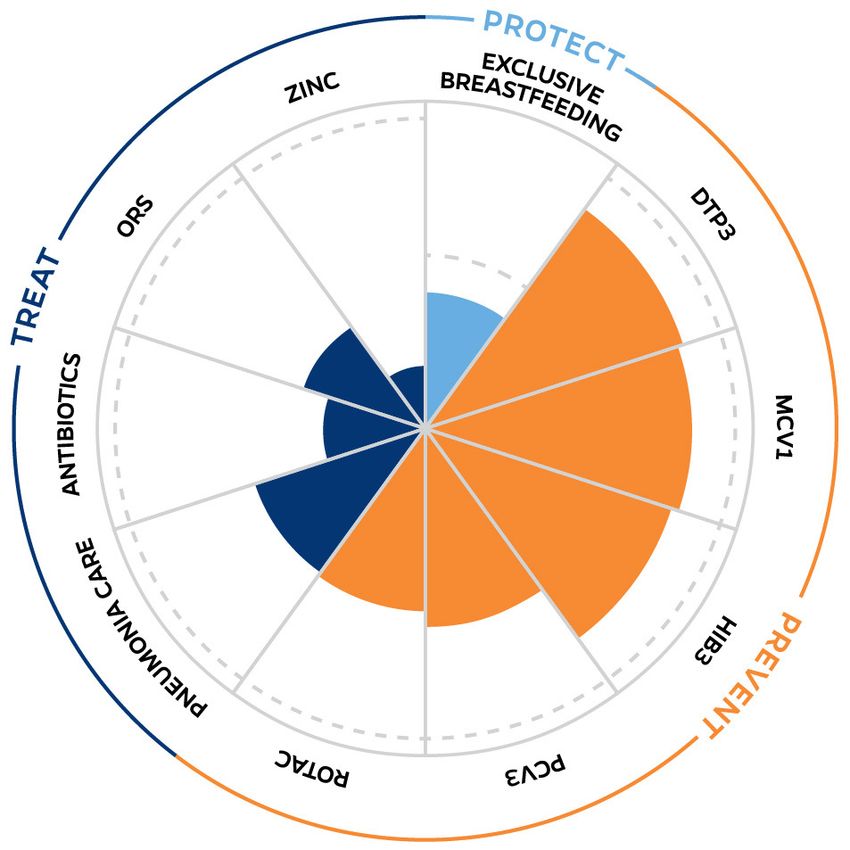
KEY RESULTS & FINDINGS
Each year we calculate and compare GAPPD scores to track global progress toward GAPPD targets.
To do so, we use 10 key indicators. Exclusive breastfeeding PROTECTS children by making them
healthier and less vulnerable to pneumonia and diarrhea. Vaccination against pertussis, measles,
Hib, pneumococcus, and rotavirus PREVENTS illness and death due to these pathogens that cause
pneumonia and/or diarrhea, while access to appropriate health care providers, antibiotics, ORS, and
zinc can TREAT pneumonia and diarrhea.
GAPPD SCORES FOR THE 15 COUNTRIES WITH THE HIGHEST NUMBER
OF UNDER-5 PNEUMONIA AND DIARRHEA DEATHS
2020 GAPPD
PROTECT PREVENT TREAT Intervention
Countries with Under-5 Score
most under-5 pneumonia and
pneumonia and diarrhea burden % of children % of
% Exclusive breastfeeding
diarrhea deaths (2017) under 5 with children
Vaccine coverage (%)
suspected under 5 with
in first 6 months
pneumonia diarrhea
Pneumonia
appropriate health
Diarrhea
Number of deaths per
Overall
Receiving ORS
Receiving zinc
care provider
supplements
Taken to an
Number of deaths
antibiotics
1,000 live births
Receiving
RotaC
MCV1
PCV3
DTP3
Global rank
Hib3
Country
Target:
Target: 90% Target: 90%
50%
1 India 233,240 9.3 58* 91* 95* 91* 15 53 78 N/A 51 20 61 71 55
2 Nigeria 208,439 28.4 25 57 54 57 57 0 75 23 40 31 42 50 30
3 Pakistan 90,398 16.6 47 75 75 75 75 75 84 46 37 13 60 68 49
4 DRC 64,170 18.9 47 57 57 57 58 0 34 39 24 22 40 50 30
5 Ethiopia 44,692 13.6 59* 69 58 68 63 68 31 7 30 33 49 51 50
6 Chad 27,496 43.1 0 50 41 50 0 0 26 30 20 1 22 28 13
7 Indonesia 27,422 5.6 51* 85 88 85 3 0 92* 34 36 37 51 63 42
8 Angola 25,609 20.8 37 57 51 53 53 58 49 N/A 43 0 45 50 38
9 Tanzania 25,367 11.7 58* 89 88 89 83 85 55 61 45 18 67 75 59
10 Somalia 25,158 39.5 5 42 46 42 0 0 23 N/A N/A 0 20 26 13
11 China 24,254 1.5 21 99* 99* N/A† 0 0 N/A N/A N/A 0 36 55 30
12 Mali 21,353 27.3 40 77 70 77 74 63 71 18 21 15 53 61 42
13 Bangladesh 21,166 6.9 65* 98* 97* 98* 97* 0 46 63 72 44 68 81 56
14 Niger 20,048 19.4 23 81 79 81 81 78 59 11 41 20 55 59 48
15 Côte d’Ivoire 18,651 21 23 84 76 84 84 70 44 30 17 18 53 61 41
MEDIAN 40 77 76 75 58 53 52 30 37 18 51 59 42
*Indicates coverage was above target † China has not yet introduced Hib, rotavirus, or pneumococcal vaccines into its national immunization program (NIP); as
such, WUENIC estimates indicate 0% coverage for these three vaccines. Hib and rotavirus vaccines are available through
N/A: Data is unavailable or not reported the private market. While relatively high private market coverage for Hib vaccine and low coverage for rotavirus vaccine
Data in this table may differ from that reported in WHO, has been reported in some settings, vaccine coverage levels are not well-documented in the private sector. In past reports,
UNICEF, or national survey sources. Differences of 1-2 because some evidence suggests that private market Hib3 coverage may exceed 50% in some parts of China even though
percentage points are often due to rounding differences the vaccine has not yet been introduced into the NIP—as opposed to private market coverage for other non-NIP vaccines,
across sources. Data used for this table came from the for which data is either unavailable or is limited and reflects low coverage—we classified Hib3 coverage as “missing”
most recently available sources as of September 2020. (noted in the data tables as “private market coverage”). We have applied the same approach this year. China’s Hib3
coverage is classified as “missing,” and therefore not included in the numerator or denominator for this year’s scores.
Detailed information about data sources available in
appendix on page 18.
7 IVAC at Johns Hopkins Bloomberg School of Public HealthPROGRESS SUMMARY OVERALL GAPPD SCORES
Highest scoring
countries:
Lowest scoring
countries:
Bangladesh (68%) Somalia (20%)
JUST 5 COUNTRIES United Republic of Chad (22%)
met the 50% target for exclusive breastfeeding: Tanzania (67%)
China (36%)
Bangladesh, Ethiopia, India, Indonesia, Tanzania
India (61%)
0 COUNTRIES OVERALL GAPPD SCORES FOR THE
met the 90% coverage target for all 5 vaccines;
1 country met the 90% coverage target for 4 2020 REPORT RANGED FROM 20-68%
vaccines (Bangladesh); 1 country met the 90%
coverage target for 3 vaccines (India)
THE MEDIAN FOR OVERALL GAPPD SCORE
ONLY 1 COUNTRY ACROSS ALL 15 COUNTRIES WAS 51%
met the 90% coverage target for any of This was a slight increase from 49% from the 2019 Report
the four treatment indicators (Indonesia)
TOTAL GAPPD TARGET SCORES
None of the 15 high burden countries met GAPPD targets
100
90
86% TARGET OVERALL GAPPD SCORE
84% TARGET GAPPD PNEUMONIA SCORE
82% TARGET GAPPD DIARRHEA SCORE
80
70
60
50
40
30
20
10
0
CÔTE
D’IVOIRE
TANZANIA
PERCENTAGE
BANGLADESH
PAKISTAN
INDIA
NIGER
ETHIOPIA
DRC
INDONESIA
ANGOLA
MALI
NIGERIA
CHINA
CHAD
SOMALIA
8 IVAC at Johns Hopkins Bloomberg School of Public HealthGAPPD PNEUMONIA SCORES
Although no countries met the GAPPD Highest scoring Lowest scoring
Pneumonia score target of 84%, several countries: countries:
countries are very close to reaching this target.
Bangladesh (81%) Somalia (26%)
Tanzania (75%) Chad (28%)
India (71%) Nigeria (50%)
THE MEDIAN FOR THE GAPPD
PNEUMONIA SCORE FOR ALL 15
COUNTRIES WAS 65% NEARLY GAPPD PNEUMONIA SCORES FOR THE
20% BELOW THE TARGET 2020 REPORT RANGED FROM 26-81%
GAPS IN GAPPD PNEUMONIA AND DIARRHEA SCORES PERSIST
Across 14 countries, coverage for pneumonia indicators was higher than coverage for
diarrhea indicators. Although 2020 saw progress on rotavirus vaccine coverage, access
to zinc and ORS still lags in all 15 focus countries.
SOMALIA GAPPD DIARRHEA SCORE
CHAD GAPPD PNEUMONIA SCORE
NIGERIA
DRC
ANGOLA
ETHIOPIA
CHINA
NIGER
CÔTE D’IVOIRE
MALI
INDONESIA
PAKISTAN
INDIA
TANZANIA
BANGLADESH
0 10 20 30 40 50 60 70 80 90 100
PERCENTAGE GAPPD SCORE
9 IVAC at Johns Hopkins Bloomberg School of Public HealthSPOTLIGHT: PCV IN INDONESIA
INDONESIA TO INTRODUCE PCV INTO attention to the critical issues of pneumonia and
child deaths while leading to longer-term savings.
ROUTINE IMMUNIZATION PROGRAM
Through an ambitious PCV roll-out plan, the
Sowmya Kadandale, Unit Chief Health, government of Indonesia aims to reach all of the
UNICEF Indonesia 5 million babies born in the country each year
by 2024. This will have significant outcomes on
In Indonesia, pneumonia remains the leading child mortality in the country and overall child
killer of children after the newborn period. With well-being.
nearly 20,000 pneumonia deaths among children
each year, Indonesia ranks among the highest in The COVID-19 pandemic is already causing
the world—outranking all other Southeast Asian disruptions in the delivery of essential health
countries, including China. services in the country, including immunization.
For example, diphtheria, pertussis, and
Through Gavi’s Advance Market Commitment tetanus (DPT3) and measles and rubella (MR1)
(AMC) mechanism, Indonesia will now be able vaccination coverage rates were reduced
to access pneumococcal vaccines that fight by more than 35% from March to May 2020
childhood pneumonia for a quarter of the compared to the same period in the previous
previous cost, allowing nationwide access to year. There is further concern that fiscal and
PCV vaccines. human resources are being diverted away from
Indonesia’s approval of the PCV Advance Market these vital interventions.
Commitment is therefore vital for child health. UNICEF will continue sustained support as the
Securing this agreement has not been easy. country continues to deliver immunization
It has required major ministerial engagement services and scale up PCV, taking into account
outside the health sector and with higher levels any needed adjustments as COVID-19 vaccines
of government. This has been an important and COVAX facility discussions progress.
opportunity to work across ministries and to draw
On 16 September 2020, (left-right) Secretary General of the Ministry of Health Oscar Permadi, Indonesian Minister of Health Terawan Agus
Putranto, UNICEF Indonesia Representative Debora Comini, Indonesian Minister of Foreign Affairs Lestari Priansari Marsudi and Indonesian
Minister of State-Owned Enterprises Erick Thohir attend a signing ceremony for a Memorandum of Understanding (MoU) between UNICEF
and the Indonesian government at the Ministry of Health office in Jakarta, Indonesia. The agreement with UNICEF allows the Indonesian
government to purchase high-quality commodities at lower prices—including vaccines, medicines, and equipment—which would take place
through the UNICEF Supply Division in Copenhagen.
10 IVAC at Johns Hopkins Bloomberg School of Public HealthGAPPD DIARRHEA SCORES
Highest scoring
countries:
Lowest scoring
countries:
IN 2020, NO COUNTRIES MET THE GAPPD
Tanzania (59%) Chad (13%) DIARRHEA TARGET SCORE OF 82%
Bangladesh (56%) Somalia (13%) As in past years, GAPPD diarrhea scores continued to
lag far behind GAPPD pneumonia scores, largely due
India (55%) China (30%) to low coverage for ORS and zinc.
DRC (30%)
Nigeria (30%)
THE MEDIAN FOR THE GAPPD DIARRHEA
SCORE FOR ALL 15 COUNTRIES WAS ONLY 42%
GAPPD DIARRHEA SCORES FOR THE Even the highest scoring countries were 23% below the GAPPD
Diarrhea target. However, 2020 did see a substantial increase
2020 REPORT RANGED FROM 13-59% in rotavirus vaccine uptake in several countries.
SPOTLIGHT: INDIA COMPLETES NATIONWIDE
ROTAVIRUS INTRODUCTION
In 2019, India completed the “100-days
agenda”—an unprecedented national scale-up of
rotavirus vaccine across the entirety of the nation.
“Diarrhea is one of the biggest killers in children
and rotavirus is one of the most common causes
of severe diarrhea in children less than 2 years
of age,” said Harsh Vardhan, Union Minister of
Health and Family Welfare. “Rotavirus vaccine will
now be given to every child across all 36 states
and [Union Territories] by September, 2019. The
government aims to end morbidity and mortality
The phased expansion of rotavirus vaccine in
in children due to diarrhea by 2022."
India has been praised as “an excellent example
Three doses of rotavirus vaccine will be provided of how government stewardship with well-defined
to India's birth cohort of 26 million children roles for development partners can allow a new
each year, preventing millions of cases of life- vaccine introduction to be used as a system
threatening diarrhea. strengthening activity2.”
11 IVAC at Johns Hopkins Bloomberg School of Public HealthSPOTLIGHT: ORS AND ZINC
PROGRESS IN THE USE OF ORS & ZINC FOR THE ORS, quickly equalizing their use.
TREATMENT OF CHILDHOOD DIARRHEA These evaluations illustrate that countries can
improve diarrhea treatment if they address
Robert E. Black, MD, MPH, Professor, product and supply issues, provider incentives,
Department of International Health, Johns consumer demand, and the policy environment.
Hopkins Bloomberg School of Public Health The question is no longer what needs to be done
to increase the quality of childhood diarrhea
As a landmark decision in the prevention and treatment—it is when we will collectively as a
treatment of childhood diarrhea deaths, the WHO global community take action on this evidence.
added co-packaged ORS and zinc to both the
Model List of Essential Medicines for Children We know what it takes to eliminate preventable
(EMLc) and the WHO’s Model List of Essential diarrhea deaths in children globally. On this
Medicines (EML) in July of 2019. 50th anniversary of the discovery of ORS, let us
recommit ourselves to making this a reality.
Recent efforts to promote use of ORS and zinc for
diarrhea treatment in some countries have shown Adapted from a 2019 editorial authored by
that substantial progress is possible and may Robert E. Black for the Journal of Global Health.
provide important lessons for other countries. Licensed under a Creative Commons Attribution
4.0 International License.4
From 2012 to 2016, the Clinton Health Access
Initiative (CHAI)3 engaged with governments,
health care providers, and communities to
improve diarrhea treatment in Kenya, Uganda
and selected high-mortality states of India
and Nigeria.
In the three African countries where the CHAI
activities were implemented, ORS coverage
at baseline ranged from 38% to 44% but zinc
use was negligible. The CHAI interventions
included improving knowledge about
appropriate treatment for caregivers via
schools and community health workers and
for providers via education and mentorship
as well as drug detailing.
An important strategic activity in these countries
was the change from separate ORS and zinc
products to a co-packaged product, particularly in
the public sector. These efforts from 2012 to 2016
contributed to combined ORS and zinc coverage
levels of 30% in the eight Nigerian states, 30%
in Uganda, and 15% in Kenya at the end line
assessment. These coverage levels exceed those
of most countries in Africa. This is likely the
result of the successful implementation of the
comprehensive interventions needed to scale up
recommended diarrhea treatments, but especially
influential in regard to zinc is co-packaging it with
12 IVAC at Johns Hopkins Bloomberg School of Public HealthMEDIAN COVERAGE
BY INDICATOR: PROGRESS
TOWARDS GAPPD TARGETS
Median coverage of 10 GAPPD
indicators across all 15 focus countries
As in past years, immunization coverage was
the indicator with the highest coverage in the
report. Immunization coverage is also the
indicator with the most frequently updated
data (WUENIC estimates are updated each
year while many of the other indicators may
not be updated for five years or even longer).
Treatment coverage indicators, particularly for
zinc, lagged behind other indicators.
*Dashed lines indicated target coverage levels for each indicator
(50% for exclusive breastfeeding and 90% for all other indicators)
PROGRESS IN OVERALL MALI: Largely driven by improvements in
GAPPD SCORE treatment indicators, the Overall GAPPD score for
Mali increased by six percentage points, from 47%
From 2018 to 2019, five countries saw overall to 53%. Although this score is still well short of
GAPPD score changes of more than one the GAPPD target of 86%, progress in pneumonia
percentage point. careseeking (23% to 71%) and treatment with zinc
BANGLADESH: Bangladesh experienced a four (9% to 15%) contributed to increases in GAPPD
percentage point increase in Overall GAPDD Pneumonia and Diarrhea scores. The GAPPD
score. New data from the 2019 MICS reflects Pneumonia score increased by 7 percentage
improvements in coverage in breastfeeding points and the GAPPD Diarrhea score increased
(an increase from 55% to 65%) and antibiotic by 2 percentage points.
treatment for pneumonia (34% to 63%). NIGER: Modest gains across immunization
INDIA: India experienced a four percentage point coverage for four vaccines and a 10 percentage
increase in Overall GAPPD score. Continued point increase in zinc treatment led to a
successful national rollouts of rotavirus (increase 2 percentage point improvement in Overall
from 35% to 53%) and pneumococcal conjugate GAPPD score.
vaccines (increase from 6% to 15%) led to PAKISTAN: Large gains in rotavirus vaccine
substantial gains in immunization coverage. coverage (58% to 75%) fueled a four percentage
India’s GAPPD Pneumonia score increased by 3 point increase in GAPPD Diarrhea score and a two
percentage points and the GAPPD Diarrhea score percentage point increase in Overall GAPPD (58%
increased by 5 percentage points. - 60%).
13 IVAC at Johns Hopkins Bloomberg School of Public HealthSPOTLIGHT: OXYGEN
INCREASING ACCESS TO MEDICAL OXYGEN
WITH EVERY BREATH COUNTS
As COVID-19 spreads in low- and middle-income
countries (LMICs), a lack of oxygen is leaving
patients gasping for breath. But a lack of access
to medical oxygen has always been a factor in the
high number of deaths from pneumonia among
both children and adults in LMICs. Despite the
WHO listing medical oxygen as an “essential
medicine”5, the majority of hospitals in LMICs do
not have reliable supplies of medical oxygen6.
Prior to COVID-19, children paid a heavy price
for the lack of oxygen. For example, studies have
found that just one in five children hospitalized
with pneumonia actually receive the oxygen they
need7, and estimated that closing these oxygen
gaps could prevent more than 148,000 child
pneumonia deaths each year8. Lack of oxygen has
also contributed to deaths in childbirth, as well
as from communicable and non-communicable
diseases and injuries that require surgery, all
areas targeted by the Sustainable Development
Goals (SDGs)9.
The rapid spread of COVID-19 in LMICs has made
these problems worse, with lack of access to
oxygen now contributing to many more deaths
from coronavirus, mainly among adults. About
To help LMICs meet this rising need for medical
20% of COVID-19 patients need up 10 to 20 liters
oxygen, the WHO, UNICEF, the World Bank and
of oxygen per minute, according to the WHO,
others are providing pulse oximeters, oxygen
which is two to six times the oxygen needs of an
concentrators, CPAP/BiPAP machines, ventilators,
average non-COVID-19 ICU patient. The WHO
and the other respiratory care items in the WHO
Director-General10 has warned of a global medical
COVID-19 disease commodity package. But much
oxygen shortage and said, “even as we search
more needs to be done.
for a vaccine and medicines, we have an urgent
responsibility to do everything we can with the In an Open Letter11 to global health leaders, the
tools we have now to save lives.” A great many Every Breath Counts Coalition has called for the
lives are at stake, especially in the 37 LMICs now Access to COVID-19 Tools (ACT) Accelerator to
struggling with more than 17 million confirmed invest in the production, distribution, installation
COVID-19 infections and 430,000 deaths, and and maintenance of affordable, quality medical
530,000 child pneumonia deaths. oxygen designed to meet the needs of public
14 IVAC at Johns Hopkins Bloomberg School of Public Healthhealth systems in low-resource settings, and train
health care staff to operate the equipment safely.
Governments, companies, and global health
agencies must all work together to close these
gaps and measure their progress. Currently, no
government, company, or global health agency
routinely measures access to medical oxygen
and its impact on lives saved! Coalition members
have released a Call to Action12 to include pulse
oximetry and oxygen coverage among health
indicators routinely measured by official surveys.
Studies have found that just one
in five children hospitalized with
pneumonia actually receive the
oxygen they need. It's estimated
that closing these oxygen gaps
could prevent more than 148,000
child pneumonia deaths each year.
COVID-19 is a wake-up call to governments,
companies, and the global health community
that access to medical oxygen is a critical service
“Limited access to medical oxygen all health systems must provide, not just during
puts lives at risk. As hospitals face respiratory pandemics but for the achievement
of most of the health SDGs and especially for the
an influx of COVID-19 patients, reduction in child pneumonia deaths that is so
it’s never been more important to critical to child survival. While the world waits for
new vaccines and medicines that can prevent
implement more sustainable and and treat COVID-19, increasing access to medical
resilient oxygen infrastructure oxygen will not only keep sick COVID-19 patients
alive, but will reduce child and adult mortality
around the world.” from pneumonia and many other causes
KEITH KLUGMAN, MD, PHD, accelerating achievement of the SDGs.
DIRECTOR FOR PNEUMONIA,
BILL & MELINDA GATES
FOUNDATION
The Every Breath Counts Coalition is a public-private partnership including 46 organizations representing UN and multilateral health
agencies, donor governments and foundations, companies, NGOs and academic institutions working together to help low and middle-
income countries reduce pneumonia deaths, including from COVID-19.
15 IVAC at Johns Hopkins Bloomberg School of Public HealthCONCLUSIONS & RECOMMENDATIONS
Impacts of COVID-19 Pandemic Disruptions to Health Systems
DISRUPTION OF ESSENTIAL HEALTH SERVICES
A WHO global pulse survey of more than 100 countries conducted between may
and July 2020 found that 90% of countries reported disruptions to 25 essential
health services since the start of the COVID-19 pandemic. Low- and middle-income
countries reported the greatest difficulties with disruptions to health services.13
LOSING GROUND
In a June 2020 survey conducted by UNICEF, WHO, Gavi, and the Sabin Vaccine
Institute, half of respondents mentioned parents’ reluctance to visit vaccination
centers due to of fear of exposure to COVID-19. Additional challenges for parents
and health workers included limited public transportation, lockdown measures,
and lack of personal protective equipment. These service disruptions could affect
approximately 80 million children under one year of age living across 68 countries.14
ROUTINE IMMUNIZATION OUTWEIGHS RISK OF COVID-19
A recent analysis in 54 African countries found that the benefits of continuing
routine childhood vaccination services outweighs the risk of being infected with
COVID-19 during the vaccination visit. Using a model, researchers predicted that 84
under-5 child deaths could be prevented through continuing routine vaccinations
for every additional COVID-19 death associated with exposure to the virus during
routine clinic visits.15
A HALT IN SDG PROGRESS
Released in September 2020, the Bill & Melinda Gates Foundation’s Goalkeepers
Report found that vaccine coverage is already dropping to levels seen decades ago,
“setting the world back about 25 years in 25 weeks.” The report points to continued
efforts to make PCV more affordable and strengthening health system resources
like treatment with oxygen as innovations that can continue progress on fighting
child mortality.16
16 IVAC at Johns Hopkins Bloomberg School of Public HealthThe year 2020 is unlike any other year of the
Pneumonia and Diarrhea Progress Report:
RECOMMENDATIONS FOR
Progress against these deadly, yet preventable
diseases is under threat. Across the globe,
MAINTAINING PROGRESS
the impacts of the COVID-19 pandemic are • Deaths due to pneumonia and
influencing child health in a myriad of ways, diarrhea among young children
ranging from country-wide lockdowns that have continue to be disproportionally
delayed routine immunizations to catastrophic concentrated in a subset of countries.
impacts of economic instability and pressures on We must continue to work with key
already fragile health care systems. stakeholders in these vulnerable
settings to advance country-level
and regional progress to reduce
this unacceptably high burden of
preventable child mortality.
• National programs to roll-out life-
saving immunizations, such as
rotavirus vaccine in India, represent
notable achievements. This progress
in vaccine introduction is significant
to not only reduce morbidity and
mortality but also to leverage
immunization as a key health system
strengthening activity.
• Collecting high-quality data to
reliably track progress remains an
essential stepping-stone to monitor
Investments in these proven prevention, national and global gains. Further
treatment, and protection interventions have efforts will be needed to explore
dramatically reduced child mortality, but with important subnational disparities so
over 1 million young children still dying of that efforts can be efficiently targeted
pneumonia and diarrhea every year, we cannot to reach communities which are
allow this progress to stall out or backslide. suffering the most due to prevailing
Preliminary reporting is already showing that the health inequities.
global pandemic is having unprecedented impacts • Ensuring universal access and
on access to routine health services, especially availability of oxygen and pulse
children’s access to routine immunization. oximetry as effective treatments
High-burden countries continue to fall short of is a goal which remains beyond the
GAPPD targets. In the 2019 report, we wrote reach of those providing care in low-
that “progress continues slowly” and warned of resource settings. Improvements
the dire need to invest in critical infrastructure in availability, frequency, and
and policy commitment to avoid stagnation or completeness of data reporting
backsliding in coming years. The window to on oxygen should be considered a
act was already urgent in 2019, but in the priority to underscore the central role
coming year we simply cannot afford to accept of this essential, life-saving treatment
the loss of decades of progress in reducing in the future.
childhood mortality.
17 IVAC at Johns Hopkins Bloomberg School of Public HealthAPPENDIX
YEAR OF LATEST AVAILABLE COVERAGE DATA BY COUNTRY AND INDICATOR
PROTECT PREVENT TREAT
% of children under 5 with % of children under 5
Immunization Coverage
suspected pneumonia with diarrhea
in first 6 months
breastfeeding
% Exclusive
Country
Receiving ORS
Receiving zinc
supplements
appropriate
Taken to an
health care
antibiotics
Receiving
provider
RotaC
MCV1
PCV3
DTP3
Hib3
Angola 2015-161 20192 20192 20192 20192 20192 2015-161 N/A3 2015-161 N/A1
Bangladesh 2017-181 20192 20192 20192 20192 20192 20191 MICS 20194 20191 20191
Chad 2014-151 20192 20192 20192 20192 20192 2014-151 MICS 20105 2014-151 2014-151
China 2013 1
2019 2
2019 2
2019 2
2019 2
2019 2
N/A N/A N/A N/A
Côte d’Ivoire 2016 1
2019 2
2019 2
2019 2
2019 2
2019 2
2016 1
MICS 2016 6
2016 1
20161
DRC 2013-141 20192 20192 20192 20192 20192 20181 MICS 20187 20181 20181
Ethiopia 20191 20192 20192 20192 20192 20192 20161 DHS 20118 20161 20161
India 2017-18 1
2019 2
2019 2
2019 2
2019 2
2019 2
2015-16 1
N/A 2015-16 1
2015-161
Indonesia 20171 20192 20192 20192 20192 20192 20171 DHS 2017 9 20171 20171
Mali 20181 20192 20192 20192 20192 20192 20181 MICS 201510 20181 20181
Niger 2012 1
2019 2
2019 2
2019 2
2019 2
2019 2
2015 1
DHS 2012 11
2015 1
20151
Nigeria 20181 20192 20192 20192 20192 20192 20181 MICS 2016-1712 20181 20181
Pakistan 2017-181 20192 20192 20192 20192 20192 2017-181 DHS 2017–1813 2017-181 2017-181
Somalia 2009 1
2019 2
2019 2
2019 2
2019 2
2019 2
2020 1
N/A 2006 1
N/A
Tanzania 2015-16 1
2019 2
2019 2
2019 2
2019 2
2019 2
2015-16 1
DHS 2015-16 14
2015-16 1
2015-161
Appendix References on Page 19
1. UNICEF. (September 2020). Child Health Coverage Database
2. WHO/UNICEF. (July 2020). WHO-UNICEF Estimates of National Immunization Coverage (WUENIC), 1980-2019
3-14. USAID Demographic and Health Survey (DHS), UNICEF Multiple Indicator Cluster Surveys (MICS), or equivalent
Indicator validity of antibiotic treatment for pneumonia
Concerns have been raised by global health experts about the validity of "antibiotic treatment for pneumonia" as an indicator historically used
to track population-based intervention coverage. Validation studies recently conducted in Bangladesh, Pakistan, and Nigeria found that the
sensitivity and specificity of estimates may vary widely and relying on this standard approach to calculate this indicator from data collected
through household surveys may be flawed.
Efforts to measure effective coverage of pneumonia treatment should ideally move toward estimation based upon linked datasets. Data
about care-seeking coverage from household surveys can be linked to quality of care data collected in health provider surveys. Adopting this
approach would mitigate risks associated with advocating for inappropriately elevated targets which could lead to substantial over-treatment
and the emergence of antibiotic resistance. Implementing this recommended strategy for tracking pneumonia treatment, unfortunately,
requires the availability of recent data from both household and health provider surveys which may not be feasible in the immediate future
although the collection of high-quality data is a recognized priority and long-term goal to advance child health in these vulnerable settings.
18 IVAC at Johns Hopkins Bloomberg School of Public HealthACRONYMNS & REFERENCES
DHS — Demographic & Health Survey APPENDIX REFERENCES
DRC — Democratic Republic of Congo 1. UNICEF. Child Health Coverage Database. (September, 2020).
https://data.unicef.org/
DTP — Diphtheria-tetanus-pertussis vaccine 2. World Health Organization and UNICEF. WHO-UNICEF Estimates
of National Immunization Coverage (WUENIC), 1980-2019.
GAPPD — The Integrated Global Action Plan (July, 2020). https://apps.who.int/immunization_monitoring/
globalsummary/timeseries/tswucoveragedtp3.html
for the Prevention and Control of Pneumonia
3. Instituto Nacional de Estatística (INE), Ministério da Saúde
and Diarrhea (MINSA), Ministério do Planeamento e do Desenvolvimento
Territorial (MINPLAN), and ICF. Angola Inquérito de Indicadores
Hib — Haemophilus influenzae type B Múltiplos e de Saúde (IIMS) 2015-2016. (2017). Luanda, Angola and
Rockville, Maryland, USA. https://dhsprogram.com/publications/
IVAC — International Vaccine Access Center publication-FR327-DHS-Final-Reports.cfm
4. Bangladesh Bureau of Statistics (BBS) and UNICEF Bangladesh.
LMIC — Low- and middle-income countries Progotir Pathey, Bangladesh Multiple Indicator Cluster Survey
2019, Survey Findings Report. (2019). Dhaka, Bangladesh. https://
MCEE — WHO Maternal and Child Epidemiology mics-surveys-prod.s3.amazonaws.com/MICS6/South%20Asia/
Bangladesh/2019/Survey%20findings/Bangladesh%202019%20
Estimation Group MICS%20Survey%20Findings_English.pdf
MCV — Measles-containing vaccine 5. Institut National de la Statistique, des Études Économiques et
Démographiques (INSEED), Ministère de la Santé Publique (MSP) et
ICF International. Tchad: Enquête Démographique et de Santé et à
MICS — Multiple Indicator Cluster Survey Indicateurs Multiples (EDS-MICS 2014-2015). (2016). N’Djaména,
Tchad and Rockville, Maryland, USA. https://dhsprogram.com/pubs/
NIP — National Immunization Program pdf/fr317/fr317.pdf
NFHS — National Family Health Survey 6. Institut National de la Statistique (INS). Enquête Par Grappes à
Indicateurs Multiples, Côte d’Ivoire 2016, Rapport Des Résultats
Clés. (2017). Abidjan, Côte d’Ivoire. https://mics-surveys-prod.
ORS — Oral rehydration salts s3.amazonaws.com/MICS5/West%20and%20Central%20Africa/
C%C3%B4te%20d%27Ivoire/2016/Final/Cote%20d%27Ivoire%20
PCV — Pneumoccocal conjugate vaccine 2016%20MICS_French.pdf
7. l’Institut National de la Statistique du Ministère du Plan de la RDC,
RotaC — Rotavirus vaccine final dose UNICEF. Enquête Par Grappes à Indicateurs Multiples, 2017-2018,
Rapport de Résultats de l’enquê. (2019). Kinshasa, République
UNICEF — United Nations International Children’s Démocratique du Congo. https://mics-surveys-prod.s3.amazonaws.
Emergency Fund com/MICS6/West%20and%20Central%20Africa/Congo%2C%20
Democratic%20Republic%20of%20the/2017-2018/Survey%20
findings/Congo%2C%20Democratic%20Republic%20of%20
WHO — World Health Organization the%2C%202017-18%20MICS%20SFR_French.pdf
WUENIC — WHO/UNICEF Estimates of National 8. Central Statistical Agency [Ethiopia] and ICF International.
Ethiopia Demographic and Health Survey 2011. (2012). Addis
Immunization Coverage Ababa, Ethiopia and Calverton, Maryland, USA. https://
dhsprogram.com/pubs/pdf/FR255/FR255.pdf
9. National Population and Family Planning Board (BKKBN),
Statistics Indonesia (BPS), Ministry of Health (Kemenkes), and ICF.
Indonesia Demographic and Health Survey 2017. (2018). Jakarta,
Indonesia. https://dhsprogram.com/pubs/pdf/FR342/FR342.pdf
10. Institut national de la statistique (INSTAT). Enquête par grappes
à indicateurs multiples au Mali (MICS-Mali), 2015, Rapport final.
(2016). Bamako, Mali. https://microdata.worldbank.org/index.php/
catalog/3421/download/46200
11. Institut National de la Statistique (INS) et ICF International.
Enquête Démographique et de Santé et à Indicateurs Multiples du
Niger 2012. (2013). Calverton, Maryland, USA. https://dhsprogram.
com/pubs/pdf/FR277/FR277.pdf
12. National Bureau of Statistics (NBS) and United Nations
Children’s Fund (UNICEF). Nigeria: 2017 Multiple Indicator Cluster
Survey 2016-17, Survey Findings Report. (2018). Abuja, Nigeria.
https://www.unicef.org/nigeria/reports/multiple-indicator-cluster-
survey-2016-17-mics
19 IVAC at Johns Hopkins Bloomberg School of Public Health13. National Institute of Population Studies (NIPS) [Pakistan] and 8. Floyd J, Wu L, Hay Burgess D, Izadnegahdar R, Mukanga D,
ICF. Pakistan Demographic and Health Survey 2017-18. (2019). Ghani AC. Evaluating the Impact of Pulse Oximetry on Childhood
Islamabad, Pakistan, and Rockville, Maryland, USA. https:// Pneumonia Mortality in Resource-Poor Settings. Nature. 2015.
dhsprogram.com/pubs/pdf/FR354/FR354.pdf 528(7580): p. S53-S59. doi:10.1038/nature16043
14. Ministry of Health, Community Development, Gender, Elderly 9. Clinton Health Access Initiative (CHAI) and 100& Change.
and Children (MoHCDGEC) [Tanzania Mainland], Ministry of Health Bringing Life-Saving Oxygen Therapy to Children Worldwide. https://
(MoH) [Zanzibar], National Bureau of Statistics (NBS), Office solutions.leverforchange.org/100-change-2020/breathing-new-life-
of the Chief Government Statistician (OCGS), and ICF. Tanzania transforming-access-to-oxygen-therapy-for-children/
Demographic and Health Survey and Malaria Indicator Survey
10. World Health Organization. WHO COVID-19 Media Briefing, 24
(TDHS-MIS) 2015-16. (2016). Dar es Salaam, Tanzania and Rockville,
June, 2020. United Nations Web TV. http://webtv.un.org/media/
Maryland, USA. https://dhsprogram.com/pubs/pdf/FR321/FR321.pdf
press-conferences/watch/dr.-tedros-adhanom-who-update-on-the-
coronavirus-covid-19-geneva-24-june-2020/6166951341001/?term
=&sort=popular&page=2
REPORT REFERENCES 11. Every Breath Counts. Open Letter to Leaders of Global
Coronavirus Response on Access to Medical Oxygen. Published May
1. World Health Organization (WHO) and Maternal Child 8, 2020. https://stoppneumonia.org/open-letter-to-leaders-of-the-
Epidemiology Estimation (MCEE). (November 2018). Child Causes global-coronavirus-response-on-access-to-medical-oxygen/
of Death, 2000-17. https://www.who.int/healthinfo/ global_burden_
disease/estimates/en/index2.html 12. Every Breath Counts. Good Data is Critical to Equitably Improve
Oxygen Access. A Call to Action to Fill Data Gaps & Ensure Every
2. Malik A, Haldar P, Ray A, et al. Introducing Rotavirus Vaccine in Breath Counts. Published August 5, 2020. https://stoppneumonia.
the Universal Immunization Programme in India: from Evidence org/good-data-is-critical-to-equitably-improve-oxygen-access-a-
to Policy to Implementation. Vaccine. 2019. 37(39): p. 5817-5824. call-to-action-to-fill-data-gaps-ensure-every-breath-counts/
doi:10.1016/j.vaccine.2019.07.104
13. World Health Organization. Pulse Survey on Continuity of
3. Schroder K, Battu A, Wentworth L, et al. Increasing Coverage Essential Health Services During the COVID-19 Pandemic: Interim
of Pediatric Diarrhea Treatment in High-burden Countries. J Glob Report, 27 August 2020. 2020. https://www.who.int/publications-
Health. 9(1). doi:10.7189/jogh.09.010503 detail-redirect/WHO-2019-nCoV-EHS_continuity-survey-2020.1
4. Black RE. Progress in the Use of ORS and Zinc for the Treatment 14. UNICEF. Immunization Coverage: Are We Losing Ground? 2020.
of Childhood Diarrhea. J Glob Health. 9(1). doi:10.7189/09.010101 https://data.unicef.org/resources/immunization-coverage-are-we-
5. World Health Organization. WHO Model Lists of Essential losing-ground/
Medicines. http://www.who.int/medicines/publications/ 15. Abbas K, Procter SR, Zandvoort K van, et al. Routine Childhood
essentialmedicines/en/ Immunisation During the COVID-19 Pandemic in Africa: A Benefit–
6. Graham H, Tosif S, Gray A, et al. Providing Oxygen to Children in Risk Analysis of Health Benefits Versus Excess Risk of SARS-CoV-2
Hospitals: A Realist Review. Bull World Health Organ. 2017. 95(4): p. Infection. The Lancet Global Health. 2020. doi:10.1016/S2214-
288-302. doi:10.2471/BLT.16.186676 109X(20)30308-9
7. Bakare AA, Graham H, Ayede AI, et al. Providing Oxygen to 16. Bill & Melinda Gates Foundation. The Goalkeepers Report 2020.
Children and Newborns: A Multi-Faceted Technical and Clinical 2020. https://www.gatesfoundation.org/goalkeepers/report/2020-
Assessment of Oxygen Access and Oxygen Use in Secondary-Level report/#GlobalPerspective
Hospitals in Southwest Nigeria. International Health. 2020. 12(1): p.
60-68. doi:10.1093/inthealth/ihz009
20 IVAC at Johns Hopkins Bloomberg School of Public HealthACKNOWLEDGEMENTS
The Pneumonia and Diarrhea Progress Report is prepared and published
annually by the International Vaccine Access Center (IVAC) at the Johns
Hopkins Bloomberg School of Public Health to mark World Pneumonia
Day. This is the 11th edition of the progress report and the 12th year of
World Pneumonia Day.
REPORT TEAM
IVAC Contributors Photo Credits
Victoria Chou Monica Tiwari for International Vaccine Access Center
Taylor Holroyd
Alexandra Michel ©UNICEF Indonesia/2020/Arimacs Wilander
Maria Deloria Knoll Diana Mrazikova for International Vaccine Access Center
Lois Privor-Dumm Adrian Brooks for Gavi
Molly Sauer
Rose Weeks Amanda Mustard for International Vaccine Access Center
Special thanks to: Mathuram Santosham, Robert Black, Suggested Citation
Andrew Lahn, Mary Kate Chandler, and Amelia Gerste
International Vaccine Access Center (IVAC), Johns Hopkins
Design and Layout Bloomberg School of Public Health. (2020). Pneumonia and
Diarrhea Progress Report 2020.
White Coffee Creative
MORE RESOURCES
VIEW-Hub (Vaccine Information VoICE (The Value of Immunization Rotavirus Organization of
and Epidemiology Window): Compendium of Evidence): Technical Allies
http://view-hub.org/viz/ https://immunizationevidence.org/ http://preventrotavirus.org
For inquiries on the content or use of this report, please contact Rose Weeks at rweeks@jhu.edu.
Report and web appendices can be found at https://www.jhsph.edu/ivac/resources/pdpr/
21 IVAC at Johns Hopkins Bloomberg School of Public HealthYou can also read


