Front cover - National Cave and Karst Research Institute
←
→
Page content transcription
If your browser does not render page correctly, please read the page content below
Front cover

     NATIONAL CAVE AND KARST RESEARCH INSTITUTE 2011-2012 ANNUAL REPORT   1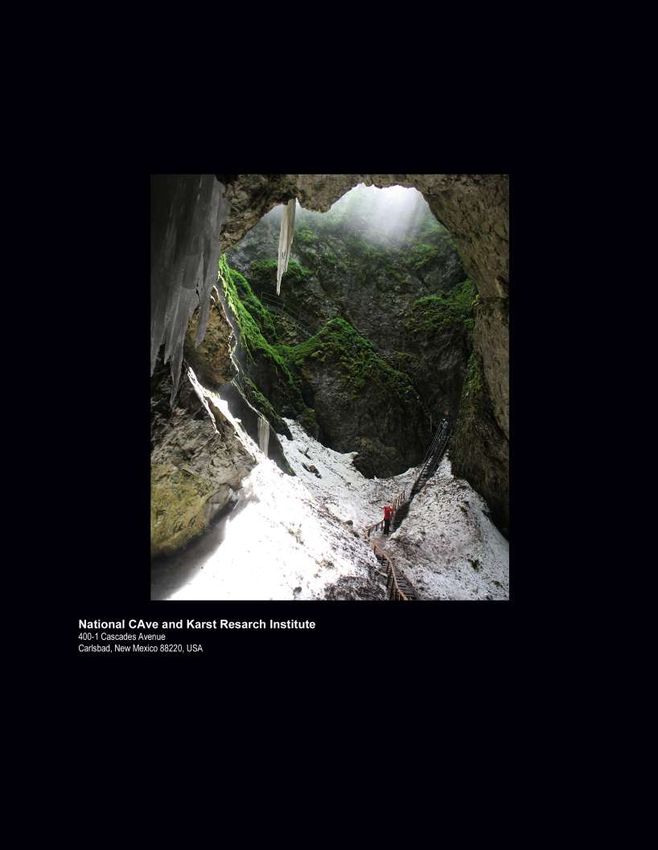
TABLE OF CONTENTS

Executive Director’s Report ............................ 1
NCKRI Research .............................................. 2
 National Park Service Karst Resources ............................. 2
 Southern Sacramento Mountains Watershed .................. 2
 NCKRI Bat Roost .............................................................. 3
 Cave Ice and Paleoclimate ............................................... 4            Vision and Values
 Naica Cave Geomicrobiology ........................................... 4                    The National Cave and Karst Research Institute
 BLM Assistance Agreement ............................................. 4               (NCKRI) will be the world’s premier cave and karst research
 NASA Infrared Instrument Development ......................... 4                       organization. NCKRI promotes and performs projects of
 LiDAR Studies .................................................................. 4     national and international application, of the highest quality
                                                                                        and integrity, through dedicated staff and partners.
 Granite Caves in Spain and Portugal ............................... 5
 White Sands National Monument .................................. 5
 Karst Information Portal ................................................. 6           Organization and Mission
Education Program.......................................... 7                                NCKRI is a non-profit 501(c)(3) corporation. It was
                                                                                        created by the U.S. Congress in 1998 in partnership with the
 International Workshops ................................................. 7
                                                                                        National Park Service, State of New Mexico, and the City of
 National Workshops ........................................................ 7          Carlsbad. Federal and state funding for NCKRI is adminis-
 Education Program Projects............................................. 8              tered by the New Mexico Institute of Mining and Technolo-
 Hidden Voyages............................................................... 9        gy (aka New Mexico Tech or NMT). Funds not produced by
 National Environmental Education Week ......................... 10                     agreements through NMT are accepted directly by NCKRI.
 Volunteers....................................................................... 10
                                                                                             NCKRI’s enabling legislation, the National Cave and
Student Activities ........................................... 11
                                                                                        Karst Research Institute Act of 1998, 16 U.S.C. §4310, iden-
 Student Projects ................................................. 11                  tifies NCKRI’s mission as to:
Advancement ................................................. 12                          1) further the science of speleology;
 NCKRI Establishes Endowment Fund ................................ 12                     2) centralize and standardize speleological information;
 Partnering for the Future ................................................. 12           3) foster interdisciplinary cooperation in cave and karst
Conferences and Meetings at NCKRI ................ 14                                        research programs;
                                                                                          4) promote public education;
Outreach ........................................................ 16
                                                                                          5) promote national and international cooperation in pro-
Board Activities/Board of Directors ................ 19                                      tecting the environment for the benefit of cave and karst
NCKRI Staff .................................................... 21                          landforms; and
Staff Publications ........................................... 23                         6) promote and develop environmentally sound and sus-
2011-2012 Budget .......................................... 25                               tainable resource management practices.

                                                                                        NCKRI Annual Report Series
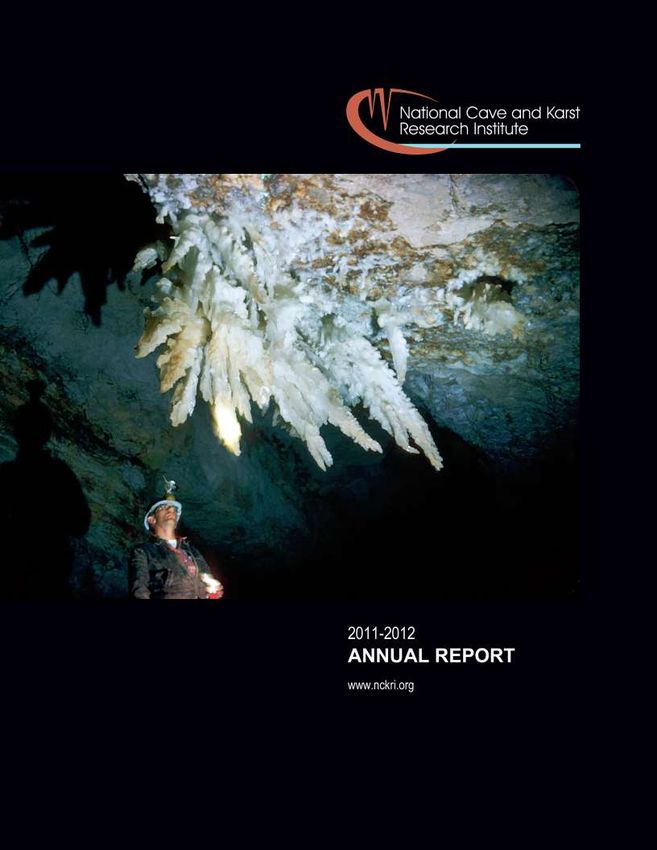
Cover Photo                                                                                  NCKRI produced this publication as part of its annual
This 1963 photo of rare gypsum chandeliers in Cottonwood                                reporting of activities. The reporting period covers NCKRI’s
Cave, New Mexico, is one of many taken by the late Bob                                  fiscal year, from 1 July to 30 June of the following year.
Trout that were donated this year to NCKRI. Gifts such as                               Digital copies of this and previous reports are available for
this have incredible value, in this case because this spectacu-                         free at www.nckri.org.
lar speleothem was senselessly destroyed by vandals. It now
only exists in a few images like this, which NCKRI strives to                           NCKRI is a proud institute of:
collect, preserve, and make available for research and educa-
tion.

Back Cover Photo
Entrance of Scărişoara Ice Cave, Romania. Over 10,000
years of valuable climatic history have been recovered from
ice deposits in this cave, and demonstrate the importance of
NCKRI’s proposed cave project (see page 4). Photo by
George Veni.

2011-2012 ANNUAL REPORT NATIONAL CAVE AND KARST RESEARCH INSTITUTE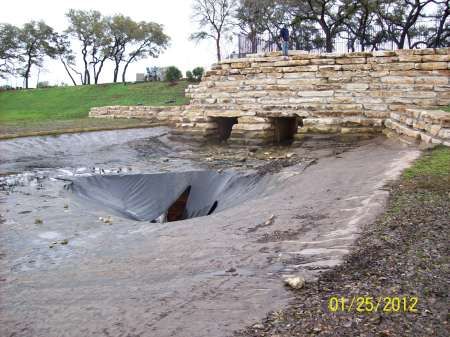
EXECUTIVE DIRECTOR’S REPORT

     My photo shows how I spent Thanksgiving this year, teaching a work-
shop on environmental management of karst systems for Brazil’s Instituto do
Carste. I am thankful for that opportunity. I’m especially thankful for the
enthusiasm I saw in the students, Brazilian land managers, scientists, con-
sultants, and graduate students, working to understand and protect caves and
karst. In my many travels for NCKRI, I keep seeing that same wonder for
caves and karst and the desire to better manage their priceless resources, and
am thankful NCKRI is playing a growing role in that sentiment.
     Such progress isn’t the product of one person’s work. Dr. Penny Boston,
our most senior employee, continues cutting-edge research and magnificent-
ly stretching grant dollars for students. Dr. Lewis Land continues superbly
expanding our research capabilities, this year through cooperative agree-
ments and project development in microgravity and cave ice. Debbie Herr,
our unfaltering Administrative Coordinator, solidifies NCKRI’s administra-
tive foundation through new software tools and procedures to greatly in-
crease our efficiency and abilities. Dianne Gillespie, who married to become
Dianne Joop, is excellently multitasking in building NCKRI websites, exhib-
it designs, and other educational programs. Our most recent employee, Ann
Dowdy, was only able to stay with NCKRI a short time but successfully
completed the critical task of setting up our Advancement Program. We will
now be ready to launch our capital campaign when our new Advancement
Director, Suzanna Langowski, begins work in the next fiscal year. I’m confi-
dent that she will be another outstanding member of the NCKRI team.
     I often talk about the importance of NCKRI’s partnerships, and how
thankful I am for them. But the most important partnerships start at home.
I’m extremely thankful for my fantastic NCKRI staff and our multi-talented
Board of Directors. The fruits of their labors are highlighted in this Annual
Report. With such a team and progress, I’m confident our work and partner-
ships around the country and world will continue to grow.

George Veni, Ph.D.

                     NATIONAL CAVE AND KARST RESEARCH INSTITUTE 2011-2012 ANNUAL REPORT   1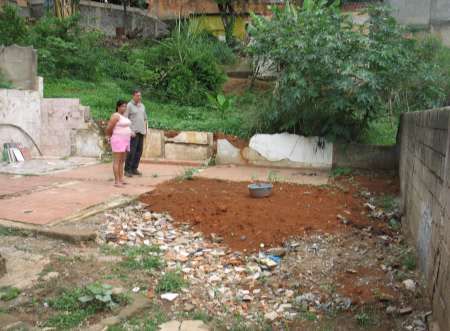
NCKRI RESEARCH

National Park Service
Karst Resources
     Dr. Lewis Land is the lead inves-
tigator on a survey of cave and karst
research, management, and education-
al resources within the National Park
Service (NPS). This NPS-funded pro-
ject is conducted in collaboration with
the Mammoth Cave International
Center for Science and Learning. The
project includes developing a ques-
tionnaire about karst resources that
will be sent to all National Park units
identified as having the potential for
caves and karst features within their
boundaries. The first phase of the
study is complete: identification of
these NPS units based in part on GIS
(geographic information system) data
from the US Geological Survey’s
                                                                   Preliminary data for ArcMap figure provided by Dr. Dan Doctor, US Geological Survey
National Karst Map project.
                                                 GIS map showing areas with potential karst and pseudokarst that underlie National Park Service
                                                 properties (red). Blue areas: carbonate bedrock; yellow: evaporite bedrock; brown: volcanic bed-
Southern Sacramento                              rock.
Mountains watershed
     In May 2012, Dr. Land attended                where he presented the results of his               ern Sacramento Mountains watershed
the Rocky Mountain Section Meeting                 research on groundwater residence                   in southern New Mexico. Dr. Land
of the Geological Society of America,              time in karstic aquifers of the south-              also presented a poster showing his
                                                                                                       regional water table map of the south-
                                                                                                       ern Sacramento Mountains (map,
                                                                                                       below left), now available as New
                                                                                                       Mexico Bureau of Geology and Min-
                                                                                                       eral Resources (NMBGMR) Open-
                                                                                                       File Report 542. As is the case with
                                                                                                       many karst aquifers, the mapping was
                                                                                                       complicated by the presence of multi-
                                                                                                       ple levels of perched groundwater
                                                                                                       above the actual water table. Dr.
                                                                                                       Land’s work is part of a larger inves-
                                                                                                       tigation of the regional hydrology
                                                                                                       conducted by the NMBGMR Aquifer
                                                                                                       Mapping Program, which was initiat-
                                                                                                       ed in 2005 and funded by the Otero
                                                                                                       Soil and Water Conservation District.
                                                                                                       Results of this study were published
                                                                                                       as NMBGMR Open-File Report 543,
                                                                                                       and indicate that conduits are a signif-
                                                                                                       icant factor controlling groundwater
                                                                                                       flow paths and residence times within
                                                                                                       the karstic Yeso and San Andres
                                                                                                       limestone aquifers in the southern
                                                                                           NCKRI       Sacramento Mountains.
  Water table map of the southern Sacramento Mountains, New Mexico.

2 2011-2012 ANNUAL REPORT NATIONAL CAVE AND KARST RESEARCH INSTITUTE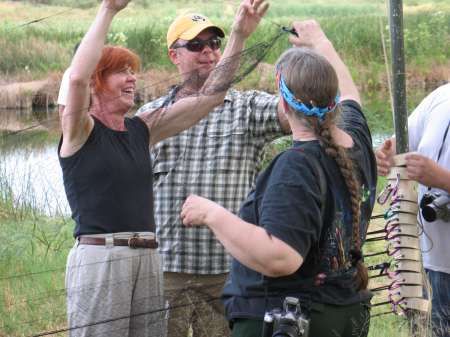
NCKRI Bat Roost through six doors in the floor of the
NCKRI Headquarters is the offices at the southeast end of the
world’s first building where an artifi- building. The doors are only opened
cial bat roost is part of the building’s to download data, conduct mainte-
design. The roost offers a safe home nance, and to modify the types or
for bats, as well as bat research and arrangements of probes. The doors
educational opportunities. It was de- open to reveal the tops of 12 rows of
signed in 2007 and 2008 by Mylea holes for probes. Each row has six
Bayless, Artificial Roosts Coordinator holes, one for each crevice along that
for Bat Conservation International section of the roost. If unoccupied by
(BCI), and Dr. George Veni, a probe, each hole is plugged with an
air-tight cork. Eight video ports ex- NCKRI Photo
NCKRI’s Executive Director. NCA Infrared camera’s view of the NCKRI bat roost,
Architects adjusted that design to pose the tops of all crevices for video waiting for bats to find a new home.
accommodate construction and at- cameras that will be installed later.
tachment to the building. The roost Two infrared cameras mounted tics show that bats usually need 2-5
has an optimal design for bats and below the crevices will record video years to find a new roost. While it
offers flexibility for study and educa- images of bats examining, entering, or will be great when the bats arrive,
tion. Ms. Bayless estimates the roost exiting the roost. Any motion is auto- developing a good record of roost
could hold up to 7,500 bats, with matically detected and saved to a conditions before occupation is valua-
5,000 bats as a likely average high. DVD recorder. Also, digital iButton ble to its long-term study.
probes are set in 18 of the 72 probe NCKRI’s Adopt-A-Bat program
holes to measure temperature and helps fund maintenance and future
relative humidity every 10 minutes. research in the roost. Some of
Data and power ports are available in NCKRI’s research plans include:
the bat roost but the iButtons are not video and audio monitoring within
designed to plug into those ports. the roost;
NCKRI volunteer Pam Cox removes more advanced monitoring of roost
the probes every two weeks and saves conditions; and
their data in Excel spreadsheets.
The roost was installed early in
automatic downloading of the data
to NCKRI’s server (freeing the
the building of NCKRI Headquarters,
iButton probes for use in caves and
but construction noise kept bats away. other remote sites); and putting live
The first chance for bats to occupy the video, sound, and data on NCKRI’s
roost came in 2011, but a drought that website, www.nckri.org, where you
Photo by George Veni
year and in early 2012 kept bat popu- can also learn more about the
Volunteer Pam Cox downloads bat roost data
from the iButton probes. lations low in the region and reduced Adopt-A-Bat program.
the odds of its discovery. BCI’s statis-
The roost is made of concrete and
has six crevices that bats will live in.
Each crevice is 60 cm high, 6.7 m
long and 1.9 cm wide. The crevices
are divided by 3-cm thick panels.
Horizontal slots near the bottom of
the panels let bats move from crevice
to crevice without leaving the roost.
The outer walls extend 10 cm below
the roost and serve as landing pads for
bats to easily access the roost. Lechu-
guilla plants were placed in front of
the roost; as they grow, they will dis-
courage people from going under the
roost and disturbing the bats. Educa-
tional signs will be placed along the
sidewalk near the roost, which will
also ask people to not disturb the bats. NCKRI
The top of the roost is accessed Relative humidity and temperature in Crevice 3 of the NCKRI Bat Roost, November 2011 through
May 2012.
NATIONAL CAVE AND KARST RESEARCH INSTITUTE 2011-2012 ANNUAL REPORT 3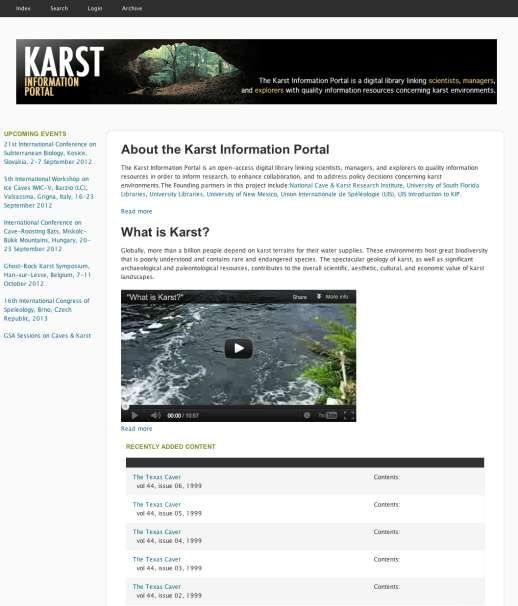
yses of DNA, the         NASA Minority Engagement
                                                                         nearest relatives to     Project
                                                                         microorganisms                A new project in collaboration
                                                                         found in this re-        with Dr. Nancy Chanover at New
                                                                         markable cave sys-       Mexico State University, Las Cruces,
                                                                         tem include mi-          and Scott Halliday at Navajo Tech-
                                                                         crobes from other        nical College (NTC) Crownpoint,
                                                                         caves elsewhere in       New Mexico will enable us to pro-
                                                                         the world, volcanic      duce a fully workable field unit of the
                                                                         soils, heavy metal       acousto-optical spectrometer men-
                                                                         environments, and        tioned above, and digitally and physi-
                                                                         other unique envi-       cally model cave walls using the
                                                                         ronments. New            Light Distancing and Ranging
                                                                         results show that        (LiDAR) mapping capabilities and
                                                                         some of the cul-         rapid-prototyping technology at NTC.
                                                                         tured strains have       The resulting physical model will be
                                       Photo courtesy of Kenneth Ingham
                                                                         extreme tolerance        used to investigate microbiological,
Crystal Ice Cave, Lava Beds National Monument, California, USA, one of
the caves considered for ice core sampling.                              to high osmotic          mineralogical, and micrometeorologi-
                                                                         pressure conditions      cal properties of cave walls at small
                                                   that may fit them uniquely for life in         scales.
Cave Ice and Paleoclimate                          the hot calcium sulfate saturated fluid
      NCKRI has begun investigating                environment of the Naica caves.                LiDAR Studies
funding sources and assembling a                                                                       NCKRI is also starting to study
team for a research project that will              Bureau of Land Management Cave                 the use of LiDAR in cave research at
involve collecting cores of ice depos-             Assistance Agreement                           larger scales. LiDAR essentially
its in caves in Europe and North                          Fort Stanton Cave’s Snowy River         shoots thousands to millions of laser
America to study the paleoclimate                  Passage project continues while ad-            beams that measure the distance and
record preserved in the ice. Collabo-              dressing concerns about White-nose             direction to objects. Computers plot
rators thus far are ice cave experts Dr.           Syndrome which has otherwise closed            those locations as points that three-
Aurel Persoiu (University of Suceava,              the cave to general access. Some per-          dimensionally map the size and shape
Romania) and Dr. Edward Brooke                     mits were granted for entry and sam-           of the objects in great detail and pre-
(Oregon State University), and cave                ples collected for us by members of
climatologist Dr. Andreas Pflitsch                 the Fort Stanton Cave Study Project
(Ruhr-University Bochum,                           (FSCSP) during their April 2012 ex-
Germany). Cave ice is melting due to               pedition. Dr. Penny Boston and
climate change and NCKRI hopes to                  NCKRI Scholar Daisy Morgan con-
save and study its valuable climatic               tinue developing methods to separate
record before it is lost.                          and analyze the mud deposits for bio-
      The initial phase of NCKRI’s                 logical and climate signals.
research will involve a 12-month pro-                     Drs. Land and Veni also continue
gram of water sampling and baseline                working with the FSCSP by evaluat-
data collection from selected ice                  ing hydrogeologic information and its
caves where we are considering col-                implications in the origin and man-
lecting cores. Later phases will decide            agement of the cave.
which sites to core and then conduct
that field work and analyses.                      NASA Infrared Instrument
                                                   Development
Naica Cave Geomicrobiology                                In the fourth and final year of this
      Dr. Penny Boston, in collabora-              project, the unique, tunable acousto-
tion with Dr. Diana Northup and Mi-                optical laser spectrometer was lab-
chael Spilde, both of University of                tested and moved for integration with
New Mexico, Albuquerque, and Cam-                  a time-of-flight mass spectrometer at
eron McMillan, Northern Arizona                    Goddard Spaceflight Center later in
University, Flagstaff, continue to ana-            the summer of 2012. Plans for de-
lyze materials collected during the                ployment of the small field unit under                           Photo courtesy of Peter Jones
2008 and 2009 Naica expeditions to                 construction call for a fall 2012 test in     LiDAR unit ready to scan in Carlsbad
Chihuahua, Mexico. Based on anal-                  caves in New Mexico and California.           Cavern.

4 2011-2012 ANNUAL REPORT NATIONAL CAVE AND KARST RESEARCH INSTITUTE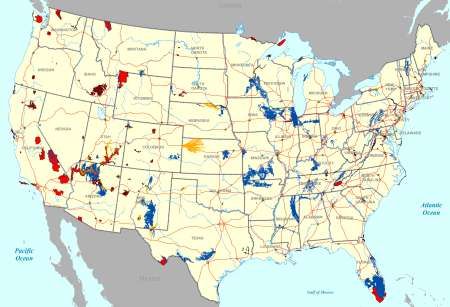
cision. This tool has potentially fan-      electrodes. NCKRI’s equipment pack-
tastic application to caves, which are      age, which uses 112 electrodes, has a
highly complex structures and diffi-        maximum possible depth of investiga-
cult to map using standard techniques.      tion of approximately 230 meters.
     Working with Real Earth Models         During the 2012-2013 fiscal year
(REM), Inc., of Dallas, Texas, and          NCKRI staff will begin conducting
with the generous cooperation of            microgravity surveys in conjunction
Carlsbad Caverns National Park,             with resistivity profiles, using micro-
NCKRI conducted a LiDAR survey              gravity equipment generously provid-
of a short section of the cavern’s Left     ed on extended loan from the Hoff-
Hand Tunnel. Peter Jones of Shot in         man Environmental Research Institute
the Dark Cave Photography in Cam-           at Western Kentucky University.
den, Maine, joined the team. His pho-
tos will be digitally draped over the       White Sands National
LiDAR points to create a three-             Monument
dimensional real looking image of the            In December 2011, Dr. Land
passage. The data are being processed       conducted additional electrical resis-
and the results will help the team          tivity surveys at White Sands Nation-
evaluate the feasibility of other           al Monument (WSNM) in central
LiDAR projects NCKRI is consider-           New Mexico’s Tularosa Basin. He
ing. Jason Walz of the U.S. Forest          was assisted by New Mexico Bureau
Service was also instrumental in train-     of Geology and Mineral Resources
ing the REM team in safe caving             (NMBGMR) colleagues and National
practices for future LiDAR research.        Park Service personnel. The purpose
                                            of these surveys was to more precise-
Granite Caves in Spain and                  ly locate the Jarilla Fault, a large fault                                                NCKRI map
Portugal                                    with no surface expression that appar-              Simplified geologic map of the Tularosa
                                                                                                Basin, flanking mountains, and approximate
     Work continues on the geomicro-        ently trends north-south beneath                    position of the Jarilla Fault. Basin-bounding
biology and mineralogy of granite           White Sands National Monument and                   surface faults = thick solid lines; subsurface
caves in northern Spain and northern        the White Sands Missile Range. The                  faults = dashed lines; blue = Paleozoic bed-
Portugal in collaboration with Dr.          Jarilla Fault may play an important                 rock outcrop; WSNM = White Sands National
Juan-Ramon Vidal Romani at the              role in controlling deep groundwater                Monument headquarters; HAFB = Holloman
University of Coruna, Spain. We are         flow paths in the Paleozoic carbonate               Air Force Base; WSMR = White Sands Missile
                                                                                                Range headquarters; Tul = Tularosa; Alm =
conducting a series of long-term            aquifers that underlie several hundred              Alamogordo (modified from McLean, 1975).
benchtop laboratory experiments to          meters of Tertiary age fill in the Tula-
investigate the affects of microorgan-      rosa Basin. The position of the fault is
ism growth on the solubility of sili-       poorly constrained, and based mostly
cates in the granite.                                                                                   on airborne gravity surveys
                                                                                                        several decades old.
Geophysical Investigations                                                                                   Preliminary results indi-
     NCKRI continues use of electri-                                                                    cate that the Jarilla fault proba-
cal resistivity (ER) surveys to investi-                                                                bly occurs several kilometers
gate a variety of karst-related phe-                                                                    farther east than indicated on
nomena. This work makes use of the                                                                      existing surface geologic
Institute’s AGI SuperSting R8/IP re-                                                                    maps. Additional resistivity
sistivity equipment and Topcon GR3                                                                      surveys at White Sands are
global positioning system. Resistivity                                                                  planned for the third quarter of
profiles collected with the SuperSting                                                                  2012. This work is funded by
equipment package illustrate vertical                                                                   the National Park Service, and
and lateral variations in subsurface                                                                    is part of a larger NMBGMR
resistivity, which are strongly affected                                                                effort to characterize the
by the presence of air or water-filled                                                                  groundwater hydrologic sys-
conduits. The resistivity method is        Detailed map of White Sands National Monument study          tem within WSNM, and deter-
thus well-suited for investigations of     area. Position of the Jarilla Fault is based on the geologic mine the relationship between
                                           map by Seager et al. (1987) and gravity data from Healy et
karst phenomena. Depth and precision                                                                    groundwater and surface water
                                           al. (1978). Ph = Permian Hueco Limestone outcrop. Short red
of investigation is directly related to    lines show locations of ER surveys.                          systems in that part of the Tu-
the length and spacing of the array of                                                                  larosa Basin.

                                                                         NATIONAL CAVE AND KARST RESEARCH INSTITUTE 2011-2012 ANNUAL REPORT   5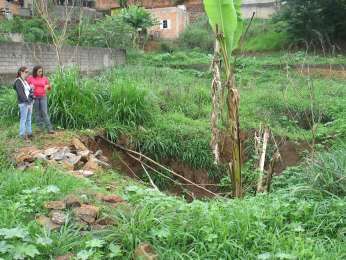
NCKRI/Karst Information                            initial core of karst relevant geospatial   metadata under development. Ap-
Portal Collaboration                               data will be available in early 2013.       proximately 761 issues of the NSS
     In 2012, following a comprehen-               We hired a full-time Geospatial Ana-        News, 24 NSS Convention guide-
sive review of available technologies,             lyst to make these and other services       books, and 17 issues of the SpeleoDi-
we migrated the Karst Information                  available to the KIP community.             gest are now accessible through KIP.
Portal (KIP) to a third platform, the                   The content collection now in-         This expansion of content was the
Drupal 7 open source Content Man-                  cludes metadata records for 6,655           result of a strong effort by Alex
agement System (CMS). Drupal of-                   information resources, 43 percent of        Sproul of the National Speleological
fers a variety of very powerful con-               which are digitally hosted in KIP.          Society who worked with our team to
tent management tools including a                  This is an increase over the 37 percent     supply issues that filled many gaps in
robust taxonomy and controlled vo-                 reported in 2011. We continue to dig-       the KIP’s holdings. Finally, Universi-
cabulary infrastructure which will                 itize George Veni's private library of      ty of South Florida Professor Bogdan
allow us to provide better access to               technical reports and will make them        Onac secured permission to digitize
the content. The system is designed to             accessible via KIP. Texas Caver from        and host the full run of the journal
seamlessly integrate modules that                  1955 to present (with two missing           Theoretical & Applied Karstology.
increase performance and capability                years) has been digitized and is now        Work on this title will begin in the
without the need for a full migration.             loaded into the system with the             fall.
This system is used by The
Economist magazine, the
White House, MTV, and
many other information-
rich organizations.
     Some of the improve-
ments include browsing by
classification, cave name,
creator, publisher, and sub-
ject term. A “Monthly Ar-
chive” feature allows visi-
tors to access changes,
including new content, on
a month-by-month basis.
The search utility has been
simultaneously greatly
simplified and made more
precise by implementing a
robust indexing service
that scans the collection
every 30 minutes to find
and taxonomically organ-
ize the content. Adminis-
trative reports that focus on
user behavior have im-
proved our ability to cus-
tomize KIP to serve user
needs.
     The University of
South Florida Geoportal
that was launched in March
2011 will be used to imple-
ment a mapping service
that will be integrated into
the Drupal version of KIP,
making it possible to
search for information re-
sources using a Google
style map. Online mapping
services and access to an

6 2011-2012 ANNUAL REPORT NATIONAL CAVE AND KARST RESEARCH INSTITUTE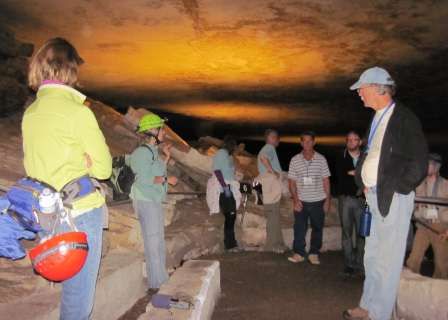
EDUCATION PROGRAM
cave manage- well-being, yet have never heard the
ment could be word “karst” and do not understand
seen and dis- how karst works.
cussed. The Edwards Aquifer is a karst
Dr. Luis groundwater resource that supplies
Mejia arranged two million residents of San Antonio,
for the Cozumel Texas and the surrounding area with
branch of the their drinking water. For the past
University of eight years, Region 20 of the Texas
Quintana Roo to Education Agency has partnered with
sponsor an ab- water interest groups to conduct a
breviated ver- summer water conference, Water A
sion of the Living Lesson (WALL), for educators
course. It was to explore practical strategies to teach
taught for the water concepts and issues and to con-
International nect educators to the physical re-
Speleological sources within the region.
Photo by George Veni Congress on Who better to teach the teachers
Students examine the remains of a house that disappeared into a sinkhole, Maya Caves and about karst water resources than karst
Mina Gerais, Brazil.
Cenotes in Playa specialists? Geary Schindel, the Ed-
del Carmen, wards Aquifer Authority’s (EAA)
International Workshops Mexico. One day was devoted to lec- Chief Technical Officer, initiated a
NCKRI’s Executive Director Dr. ture and one to a field trip into a recent- collaboration with NCKRI and other
George Veni travelled to Brazil and ly discovered cave. cave and karst research organizations
Mexico to teach the workshop, Envi- to develop a two day session giving
ronmental Impacts and Management of National Workshops San Antonio educators unique in-
Karst Systems. The Instituto do Carste WALL Workshop sights and experiences in regards to
hosted the first workshop in Belo Hori- their water supply.
zonte, Brazil. It included three days of Day One: Karst Geology Field
“Bottles, bottles, everywhere…
lectures and two days of field trips. The Trip and Classroom Applications.
we need clean water to drink.
50 participants were geologists, biolo- The EAA kicked off the morning with
Bottles, bottles, everywhere…
gists, and environmental scientists who a field trip following typical flow of
Polluting our karst waters; trash
work for the Brazilian government to water in a karst system, from recharge
dumps in the sink!”
manage its natural resources, as well as to discharge. The field trip started in
consultants, university professors, and Life on our planet is dependent northern San Antonio to view the
students. on the quality and quantity of water recharge zone containing both Bear
The workshop was taught in three resources. As water quality issues and Cub caves to demonstrate how
parts: continue to esca-
environmental problems unique to late, so does the
karst or unique in their severity in demand for
karst; greater public
research tools to evaluate those prob- awareness and
lems; and education for
management strategies to solve healthy and sus-
them. tainable water
The field trip was co-led by Dr. resource man-
Augusto Auler, Executive Director of agement. Mil-
the Instituto do Carste. Sites were visit- lions of people
ed where landfills, sinkhole collapses, worldwide de-
sinkhole flooding, land management pend on karst
for water quality, agriculture, archeolo- groundwater for
Photo by Dianne Joop
gy, paleontology, quarries, and show their health and Geary Schindel explaining groundwater flow in a karst aquifer.
NATIONAL CAVE AND KARST RESEARCH INSTITUTE 2011-2012 ANNUAL REPORT 7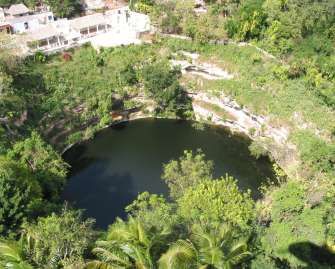
the aquifer receives water from rain-              Education Program Projects                 Facebook
fall and its runoff into conduits. The             nckri.org                                       NCKRI joined Facebook in Feb-
teachers were intrigued to learn that                    NCKRI’s redesigned website was       ruary 2011. Since its launch, the page
these conduits may be a fracture only              launched on September 21, 2011 and         has expanded to 266 “Likes” with
a few millimeters wide or a cave large             was well received. But how well? We        over 800,000 views of our postings.
enough to walk through. After brief                are using Google Analytics to track             The growth of digital content has
stops identifying other recharge areas             user statistics and site ranking. In the   established learning as a hybrid of
and dye trace study locations, the trip            first nine days we had 356 visitors (26    formal education and self-directed
concluded at San Pedro Springs, the                from outside the US) to our site. On       discovery enhanced by virtual tools
karst springs which made the estab-                average, they looked at 3.08 pages per     and communities. NCKRI is develop-
lishment of San Antonio possible in                visit and spent 4 minutes and 19 se-       ing digital cave and karst education
1691. Viewing these springs from a                 conds on the site. During the last         tools to reach a global audience
different perspective helped the teach-            quarter of the year, visitation in-        through new equipment and free soft-
ers to identify with the environmental             creased with more than half being          ware like Facebook to create engag-
issues inherent with karst groundwa-               new visitors to the website. The most      ing and high quality educational and
ter.                                               visited pages, with the longest times      Internet material, internally and for
      After the field trip, NCKRI pre-             on a page, are the two pages with          potential clients. NCKRI is expanding
sented its first Project CAVER work-               content focusing on sinkholes.             iCAVERN (International Cave and
shop, Everything is Connected, in                        Data from September 2011             Karst Awareness Via Education and
partnership with the American Cave                 through June 2012 indicate that new        Research Network) by developing
Conservation Association (ACCA).                   visitors to the site, both domestic and    educational and interpretive modules
      NCKRI’s Education Director,                  foreign, are increasing while returning    for app-based distribution, expanding
Dianne Joop, developed this work-                  visitor numbers are leveling off. New      social networking, and beginning
shop for teachers to gain the skills and           visitation is expected to significantly    phase II of nckri.org.
tools necessary to apply the experi-               increase next year as people
ences gained on the field trips to                 register for conferences
classroom teaching. Using inquiry-                 NCKRI is hosting (see page
based and hands-on teaching methods                15). Since the redesign was
and the ACCA’s Exploring Caves                     launched, NCKRI.org has
and Karst curriculum, teachers gained              had over 20,000 page-views
background knowledge and practice                  from 101 countries/
with the lessons for classroom inte-               territories. These and other
gration. The ACCA provided each                    data from Google Analytics
teacher with a copy of Exploring                   are being used by NCKRI
Caves and Karst for their classroom.               staff to guide further site and
      Day Two: Exploring a Wild                    program development.
Cave. Teachers experienced learning
in a new way as they ventured into
Robber Baron Cave! This all-day, in-
cave field trip led by EAA, NCKRI,
and members from the Bexar Grotto
of the National Speleological Society,
truly gave educators new perspectives
on “active learning.”
      Owned by the Texas Cave Man-
agement Association, Robber Baron
is the longest cave in the San Antonio
area. A show cave in the 1920s and
1930s, the cave is now managed to
protect its endangered species of karst
invertebrates. As the participants
squeezed and climbed through the
crisscrossing network of passages in
the cave, they gained new perspective
on the geology, history, and biology
of this environment below a highly
urbanized area.

8 2011-2012 ANNUAL REPORT NATIONAL CAVE AND KARST RESEARCH INSTITUTE
Hidden Voyages!
After the music stopped, the cake
was cut and the doors to the Institute
swung wide open, then what? May
2011, NCKRI celebrated the opening
of its headquarters. While this accom-
plishment denotes a milestone for the
Institute, it also symbolizes a stepping
stone toward developing our Educa-
tion Program’s major project, design-
ing the National Cave and Karst Mu-
seum’s inaugural exhibition.
The Education Program’s most
important initiative this year has been
the development of Hidden Voyages:
Exploring the Amazing World of
Caves and Karst. This combination of Illustration courtesy of Storyline Studio
Gallery A will welcome visitors to NCKRI. “Rock” walls lead them to the voyages inside (the exhibit
traditional exhibits, experiential learn-
name was changed to “Voyages” after this graphic was created).
ing opportunities, and hands-on teach-
ing space will provide an immersive
introduction to cave and karst science Discovery Phase to present our subject matter from a
that is easy to absorb, and inspire fur- Developing exhibits to achieve different perspective. Our goal is to
ther topic exploration. Small muse- the highest level of visitor engage- convey the excitement and intrigue of
ums can have exhibits as attractive ment, learning, and satisfaction re- cave and karst exploration based on
and sophisticated as those of larger quired first identifying NCKRI’s sto- accurate and cutting-edge science.
institutions, it just takes design and ry and communication goals. Devel- How better to start identifying our
discipline to focus on the storyline. oping an experiential exhibition on visitor activities and exhibit content
This philosophy led NCKRI’s selec- caves and karst is exciting and chal- themes, than by taking our designers
tion of a design firm. With 20 years in lenging. Since most people have no underground?! Storyline’s team visit-
the field and many successful projects knowledge of karst or cave environ- ed not only our headquarters, but vari-
involving realistic rockwork, geosci- ments, or base their impressions on ous caves during our initial design
ence topics, and related industries, Hollywood’s interpretation, we need meetings.
Storyline Studio, LLC was the obvi-
Hidden Voyage: Karst Science Table
ous choice.
Storyline Studio is devoting itself In the center of one gallery, a cave and karst investigations table will allow
visitors a much more interactive and appealing experience with collections on
to this project to create engaging, one-
display. Giving visitors the opportunity to handle objects, it will change the dy-
of-a-kind visitor experiences about
caves and karst that will resonate with namic of the exhibit. When an item leaves its glass case, it will become a “living”
NCKRI’s broad audiences. Working object, teaching in ways beyond words. The table will hold microscopes and other
closely with NCKRI staff, they began tools that allow for close examination of objects. A smart pad will allow for deep-
er exploration into cave and karst topics. The table will serve as a classroom, a
with three fundamental steps:
place for students, and the public to examine artifacts, and to undertake some of
1) designing a gallery plan that the same experiments and exercises conducted by cave and karst scientists.
guides visitors on a voyage of
discovery about caves and karst;
2) create an identity of the total space
and each exhibit gallery; and
3) melding graphics and multi-media
displays with the flexibility to
update and change content, while
maintaining a consistent identity.
Illustration courtesy of Storyline Studio
NATIONAL CAVE AND KARST RESEARCH INSTITUTE 2011-2012 ANNUAL REPORT 9Hidden Voyages: An invitation by Dianne Joop,
NCKRI’s Education Director
“We want to facilitate visitors’ en-
gagement with our exhibit, inviting curi-
osity by offering a framework within
which to start asking questions. Learning
works best when it engages us through
multiple mental pathways and sensory
inputs. With immersive thematic settings,
we can add multiple layers of experience
and learning. For example, in my time
spent with cave exploration, my own un-
derstanding of cave and karst concepts
has been augmented by crawling through
the rock, conducting inventories, and doc-
umenting caves through mapping and
photography. Our cave crawl exhibit will
promote discourse on the ways NCKRI
mediates our relationship with the cave
environment, and fosters the idea that
caves are a natural laboratory and a place
Illustration Courtesy of Storyline Studio
to learn through scientific discovery.”
Design Development for the detailed drawings and con- will fund construction and installation
The brainstorming sessions dur- struction specifications. Even more of NCKRI’s Hidden Voyages!
ing our initial meeting generated exciting for the Education Program, Project Learning Tree
many more questions than answers, this phase is developing the opera- NCKRI hosted a one-day Project
which in the design world is a good tional descriptions, storyboards for Learning Tree (PLT) workshop in
thing. The design team used the ques- multimedia components, and coordi- December 2011, given to 25 local
tions as a guide to develop our sche- nating educational curricula! educators. PLT has been growing
matic, exhibition title, and exhibit Most of this annual report’s de- environmental stewardship for 35
designs. scription of NCKRI’s exhibit plans years through its award-winning cur-
Currently we are near the end of has been deliberately conceptual since riculum resources that helps educators
the design development phase, transi- the details are not yet final. Next year, teach complex environmental issues.
tioning toward the final design. This our exhibit designs will be unveiled
end phase hones in on specific ideas as part of our capital campaign, which National Environmental
Education Week
NCKRI hosted the Lincoln Na-
tional Forest’s Guadalupe Mountains
District’s 15th annual National Envi-
ronmental Education Week. Almost
800 people came to NCKRI Head-
quarters where 44 presenters taught
on the theme of Green STEM
(science, technology, engineering,
and math) to about 700 5th grade stu-
dents, and 66 teachers and chaper-
ones.
Volunteers
We deeply appreciate NCKRI’s
volunteers, especially in strengthen-
Photo by Dianne Joop ing cave and karst education. During
Students learning about water quality with the US Geological Survey during National Environmen- this year, Education Program volun-
tal Education Week. teers gave close to 800 hours of their
10 2011-2012 ANNUAL REPORT NATIONAL CAVE AND KARST RESEARCH INSTITUTESTUDENT ACTIVITIES
characterizing distinctive dark coat-
ings and banding in speleothems and
on surfaces in these caves. He will
attempt to explain how such colora-
tion came to be present and what role
it may have played in the history of
these caves. These caves are managed
by the US Forest Service.
Cave Microorganisms
time. Estimated monetary value: cal dynamics of fumarolic ice caves Raquel Daza Brunet, visiting
$16,800. Value to NCKRI, priceless! and towers on Erebus Volcano. Aaron PhD student from the Museo Nacion-
Student Projects will be returning to Antarctica for a al de Ciencias Naturales, Madrid,
Sulfuric Acid Caves and Sulfur fourth field season in November Spain, is spending 3 months with Dr.
Springs of Tabasco, Mexico 2012. Boston’s research team learning how
Laura Rosales-Lagarde defended to work with cave microorganisms,
her PhD dissertation on the geochem- Fort Stanton Cave geochemical techniques, and field
istry of the Cueva de Villa Luz sys- Kristina Daisy Morgan, hydrolo- techniques. Her PhD work concerns
tem in Tabasco, Mexico, in January gy MS student, continues to develop the unique opal A biospeleothems in
of 2012. She is now working as a post cutting edge procedures to search for lava tubes in the Azores Islands.
-doctoral fellow on climate data from biological materials and climatically
caves in Mexico under the direction significant geochemical signals from Student Support at
of Dr. Michael Lachniet at the Uni- surface sources during previous Other Universities
versity of Nevada, Las Vegas. flooding events in the Snowy River NCKRI’s broader educational
passage of Fort Stanton Cave, New outreach efforts extend to universities
Ice Caves in Antarctica Mexico. This cave is managed by the outside of New Mexico Tech. General
Aaron Curtis, geology PhD stu- Bureau of Land Management (see support through information is pro-
dent, continues to analyze ice samples page 4). vided to many students. Formal sup-
from Antarctica obtained during the port this year was provided by Dr.
previous three field seasons as part of Surface Drainage in the Jemez Calde- George Veni, who served on the doc-
his work on the physical and biologi- ra toral committee of Keith Muhlestein
Yaika Echeverria-Roman, geo- at The University of Texas at San
chemistry MS student, is on track to Antonio. Mr. Muhlestein successfully
defend her thesis in late
summer or early fall 2012.
She has investigated the
hydrological properties of
surface drainages in the
Jemez Caldera area of
northern New Mexico.
Guadalupe Mountains
Caves
Sam Rochelle, physics
major/Earth science minor
BS student, began a re-
search project in Black
Cave, Hidden Cave, and
Cottonwood Cave in the
Guadalupe Mountains of
Photo courtesy of Laura Rosales-Lagarde
NMT students Stas Edel and Daisy Morgan New Mexico in Fall 2011. Courtesy of Keith Muhlestein
studying Cactus Cave, New Mexico. This project is aimed at Thermal image of a cave entrance.
NATIONAL CAVE AND KARST RESEARCH INSTITUTE 2011-2012 ANNUAL REPORT 11ADVANCEMENT
completed and defended his disserta-
tion, Detecting Thermal Infrared Ra- Continuous Line in Space
diation from Cave Openings Using by
Thermography. Michael Orgel
National Cave and Karst
Research Institute Establishes The City of Carlsbad, through the 1% Arts in Public
Endowment Fund Places program, implemented by the New Mexico Arts
The National Cave and Karst Division, procured two exquisite artworks for NCKRI
Research Institute’s Board of Direc- Headquarters. This piece reflects the curves of caves
tors approved the establishment formed by flowing water. It is sculpted from Salem
of NCKRI’s Endowment Fund in (aka Indiana) Limestone, famous for adorning many
partnership with the New Mexico buildings and containing some of the longest caves in
Institute of Mining and Technology the USA.
(NMT). This fund will be managed
and invested by the NMT Foundation.
students, and research equipment. City of Carlsbad
The creation of the endowment is an
We are currently working on New Mexico Institute of Mining
important step for NCKRI and NMT.
funding educational museum exhibits and Technology
Donors share our mission and help us
for our new headquarters. Donors can US National Park Service
fulfill the vision through education,
endow these exhibits to fund their
research and community outreach.
construction and maintenance. These Education Partners
This endowment will help to build a
generous gifts will help NCKRI grow Bat Conservation International
strong philanthropic effort to provide
and at the same time allow donors to Carlsbad Municipal Schools
a progressive future of excellent pro-
support their special interests. Geological Society of America
grams through additional funds from
For more information about how Hoffman Environmental Research
private and corporate giving.
to donate to NCKRI’s endowment Institute
Many endowed gifts are scholar-
fund, please contact, Dr. George National Speleological Society
ships given in someone’s memory.
Veni, Executive Director, at 575-887- NASA
You can begin a scholarship with any
5518 or by email at gveni@nckri.org. University of New Mexico
amount; however, a scholarship is not
University of South Florida
considered to be “endowed” until it
Partnering for the Future US Bureau of Land Management
reaches $15,000, at which point it is
Founding Partners US Fish and Wildlife Service
able to sustain itself in perpetuity.
NCKRI’s Founding Partners con- US Forest Service
Donors can choose to give any
tinue to play a crucial role in US Geological Survey
gift amount to the project of their
NCKRI’s growth and development. US National Park Service
choice. They can also specify where
and how they want their gifts used. Each Founding Partner maintains one
Common gifts include research schol- permanent position on NCKRI’s International Partners
arships, funding for travel, graduate Board of Directors: Emil Racovita Institute of Speleology
Instituto do Carste
Passing Storm International Union of Speleology
by Karst Research Institute
Dean Pulver Ukrainian Institute of Speleology and
Karstology
This second artwork is a creative-
ly designed wooden table that Research Partners
now rests in NCKRI’s reception Bat Conservation International
area. It serves as a lovely and Edwards Aquifer Authority
functional setting for promotional Fort Stanton Cave Study Project
and education information. Hoffman Environmental Research
NCKRI thanks the City of Carls- Institute/Western Kentucky
bad for its support in acquiring University
these art pieces. New Mexico Bureau of Geology and
12 2011-2012 ANNUAL REPORT NATIONAL CAVE AND KARST RESEARCH INSTITUTEMineral Resources the cave photography collection of You can designate your program of
University of New Mexico her late husband Bob. One of those choice and name the scholarship fund
US Bureau of Land Management photos graces the cover of this report, in memory or honor of someone. We
US Geological Survey demonstrating the great historical and would love to talk with you about
US National Park Service scientific value of such gifts. your ideas.
Stewardship Partners Giving to the Future of NCKRI Legacy Cavers
Bat Conservation International Private gifts support the mission NCKRI’s Legacy Cavers is a
Edwards Aquifer Authority of the National Cave and Karst Re- group of donors that have chosen to
Hoffman Environmental Research search Institute. Your contributions make a planned or deferred gift
Institute enhance programs provide for excel- through their estate planning that will
National Speleological Society lence in staff, and support research have an everlasting impact on the
US Bureau of Land Management programs. Thank you for your gener- organization. Planned or deferred
US Fish and Wildlife Service osity and making NCKRI a priority in gifts include: bequest through a will,
US Forest Service your charitable giving choices. charitable gift annuity, charitable re-
US Geological Survey mainder trust, charitable lead trust,
US National Park Service Many Ways to Give and gift of life insurance, real estate
At the National Cave and Karst or other assets. Legacy Cavers can
Giving Recognition Research Institute, every gift makes a also make gifts through the NCKRI
Annual Donors big difference. Through Annual Giv- Endowment Fund, now established at
NCKRI’s Annual Giving Pro- ing, donors and friends support the the New Mexico Institute of Mining
gram recognizes the following indi- areas of greatest need. The annual and Technology.
viduals and corporations who made fund is the cornerstone of our fund- Gifts such as this not only help
gifts or pledges this year: raising program, and is used to sup- NCKRI, but also help provide the
Dr. E. Calvin Alexander, Jr. port scholarships, equipment, facili- donor with additional income, convert
Paula Bauer and Dale Pate ties, research, and exhibit develop- low income assets to higher income
Anna Beason ment. By making gifts, our supporters assets, help care for your surviving
Canon® demonstrate their regard for the Na- family members, avoid long-term
David Decker tional Cave and Karst Research Insti- capital gains tax, reduce your estate
Ann and Terry Dowdy tute and its mission. taxes, and generate income tax deduc-
Harvey DuChene Give Online: The simplest way tions.
Paula Dye to give. Visit www.nckri.org to make The NCKRI Advancement staff
Edwards Aquifer Authority your gift. will work with you to arrange appro-
Alan Fryar Give by telephone with a credit priate forms of recognition that reflect
Annette Fuerhoff card: Call our Advancement Office at your personal gift’s purpose and your
Mel Gascoyne 575-628-2702 and we will assist you preferences. Your gift may also be
GoodSearch.com in making your gift. given anonymously. For tax purposes,
Jim Grantner Give through the mail: Use the the National Cave and Karst Research
Dr. William Halliday contribution envelope included in Institute is a 501(c) (3) with a tax
Larry Henderson your printed Annual Report to make exempt ID: #42-1741207. For more
Dr. John (Jack) Hess your gift, or send it to us at, National information on leaving a legacy,
Dianne and Mark Joop Cave and Karst Research Institute, please call 575-628-2702.
Ronal Kerbo 400-1 Cascades Avenue, Carlsbad,
Ellen Krumm NM 88220-6215 NCKRI Membership
Lowe’s® We hope you will join us today!
Hazel Medville Scholarship Funds There is no better way to support
Doug Omundson Scholarship support is one of the NCKRI than by becoming a member.
Pinsonnault Creative® most important ways to impact the JOIN BY PHONE OR MAIL:
Ginger Price lives of students. There are several You can join by phone at 575-628-
Paula Provencio ways to support student scholarships 2702. Or, you can download our
Jesse Richardson at the National Cave and Karst Re-
Patricia Seiser search Institute:
Linda Starr Through NCKRI’s Annual Giving
Mary Ellen Trout program
US Bureau of Land Management By making a gift to an existing
Karen and George Veni scholarship fund
Gifts are not limited to funds. Mary By creating a new scholarship fund
Ellen Trout entrusted NCKRI with
NATIONAL CAVE AND KARST RESEARCH INSTITUTE 2011-2012 ANNUAL REPORT 13CONFERENCES AND MEETINGS AT NCKRI
Workshops, symposia, meetings,
congresses, and conferences all serve
as focused events that are vital to ful-
filling NCKRI’s diverse mission. Since
opening its headquarters in 2011,
NCKRI has received many requests to
host such events; seven are currently
planned. Below are descriptions of
conferences held during the year of this
report and those planned for the next
two years. For more information and to
register for the upcoming meetings,
visit www.nckri.org.
BCI-USFS Bat Inventory and
Monitoring Workshop
This event was the first workshop
held at NCKRI Headquarters. It was
organized by Bat Conservation Interna-
tional and the US Forest Service and
ran August 10-13, 2011. Bat biologists
Sybil Amelon and Janet Tyburec
taught a group of about 30 biologists, Photo by George Veni
land managers, and bat research volun- Sybil Amelon (left) of the US Forest Service helps students set up a mist net for bat
teers about bat habits, needs, manage- research.
ment, and identification. The workshop
included field trips to net and identify ment. The three-day workshop was version for those unable to attend the
bats visually and with acoustical equip- followed by an abbreviated one-day full event.
First International
Interplanetary Caves
Workshop: Implications for As-
trobiology, Climate, Detection
and Exploration
This international meeting was
organized by the Lunar and Planetary
Institute, co-chaired by NCKRI’s Dr.
Penny Boston, and held at NCKRI
headquarters on October 25-28, 2011.
It was the first in a continuing series
of meetings that promote the ex-
change of knowledge between plane-
tary and terrestrial scientists interest-
ed in cave exploration and research
across the solar system. The work-
shop was interdisciplinary and cov-
ered theoretical, experimental, and
field experiences. Scientists from six
countries presented 28 papers discuss-
Photo by Dianne Joop ing caves on five different planetary
Dr. Penny Boston (wearing the green helmet) discusses how the study of terrestrial caves, like bodies.
Carlsbad Cavern, can be used to predict characteristics of extraterrestrial caves.
14 2011-2012 ANNUAL REPORT NATIONAL CAVE AND KARST RESEARCH INSTITUTE13th Multidisciplinary
Conference on Sinkholes and the
Engineering and Environmental
Impacts of Karst
Generally called “The Sinkhole
Conference,” since 1984 this confer-
ence series has been among the most
significant in creating a better under-
standing of karst processes that result
Carbon and Boundaries in environmental issues. It has also
highlighted effective methods to iden-
in Karst tify karst impacts before they occur,
There is growing interest in the prevent them from occurring, and
storage, transport, and production of remediate them when they do occur.
inorganic and organic carbon between In 2011 NCKRI was given manage-
the surface and subsurface in karst ment of this conference series, and the
systems. Scheduled for January 7-11, tivity in karst.
next one will be held in Carlsbad on
2013 at NCKRI headquarters, this May 6-10, 2013. 20th National Cave and Karst Manage-
latest Karst Waters Institute (KWI) This Carlsbad meeting will be the ment Symposium
conference is being co-organized by most westward location of the confer- The National Cave and Karst
NCKRI. Carbon and Boundaries in ence. It will be the first to include Management Symposium (NCKMS)
Karst is especially timely because of evaporite karst and oil and gas pro- is the world’s longest-running confer-
rapid scientific advances and the im- duction in karst as major topics in ence series on cave and karst manage-
portance of carbon sequestration in both the field trips and sessions. ment issues. It began in New Mexico
global climate change. As is the tradi- Other field trips will visit the deep in 1975 and will return to that state
tion with KWI meetings, this one will salt disposal site for transuranic mate- for its 20th meeting on November 4-8,
be aggressively interdisciplinary, in- rials at the Waste Isolation Pilot 2013 in Carlsbad.
ternational, and focused on cutting- Plant. The conference will also offer “NCKMS: A Changing Climate”
edge science in a new area of karst four short courses on grouting, hydro- reflects this symposium’s theme, not
research through meetings, sessions, a physical logging of wells, site charac- just on how climate change is or
day-long field trip, and other activi- terization, and use of electrical resis- might impact caves and karst systems,
ties. but the changing attitudes, laws, fund-
ing sources, and other factors which
are crucial to the proper management
of show caves, “wild” caves, and
karst terrains and aquifers. This 20th
NCKMS is hosted by NCKRI in close
partnership with the Bureau of Land
Management, National Park Service,
and the US Forest Service.
2014 Karst Interest Group
Meeting
The Karst Interest Group (KIG)
meets roughly every three years to
encourage and support interdiscipli-
nary collaboration and technology
transfer among US Geological Survey
(USGS) scientists working in karst
areas. The KIG also encourages coop-
erative studies between the USGS and
other Department of Interior agencies,
and with university researchers and
research institutes. NCKRI is co-
Photo courtesy of Russell Lewis organizing this 6th KIG Meeting and
Sinkhole collapse under an engineered pond in Austin, Texas. Carlsbad will be its furthest westward
NATIONAL CAVE AND KARST RESEARCH INSTITUTE 2011-2012 ANNUAL REPORT 15OUTREACH
Professional Partnerships
NCKRI signed a memorandum of
understanding with Brazil’s Instituto
do Carste. The Instituto was founded
in 2007 to conduct and support karst
research and sustainable usage of
karst resources. Its projects include
groundwater and biological research,
management and restoration of karst
environments, programs for young
cave scientists, annual invited distin-
guished scholar-led workshops, and
public education presentations. The
memorandum formally establishes a
collaborative and mutually beneficial
relationship to better meet the goals
of both the Institute do Carste and
NCKRI.
Professional Meetings
NCKRI attended, sponsored and/
or had a booth at many conferences Photo by George Veni
during the past year: Instituto do Carste Executive Director Dr. Augusto Auler advises a homeowner on remediation of a
2011 National Speleological Socie- sinkhole collapse that destroyed much of her home.
ty Convention; Glenwood Springs,
Colorado. Station, New Mexico. presentations and lectures:
2012 National Speleological Socie- Ms. Dianne Joop: Amazing ice caves of Austria for
ty Convention; Lewisburg, West Co-sponsored the Cave Conserva- the National Speleological Socie-
Virginia. tion and Management Special Ses- ty’s Pecos Valley Grotto, Carlsbad,
Geological Society of America sion for Agencies and Cavers with New Mexico, Bexar Grotto, San
Convention; Minneapolis, Minne- US Forest Service National Cave Antonio, Texas, and the University
sota. and Karst Coordinator, Cynthia of Texas Grotto, Austin, Texas.
International Speleological Congress Sandeno, and National Speleologi- An introduction to environmental
cal Society (NSS) Conservation impacts and management of karst
on Maya Caves and Cenotes; Playa
Division Co-Chairs Jim Werker and systems, University of Quintana Roo,
del Carmen, Mexico.
Val Hildreth-Werker at the 2011 Cozumel, Mexico.
National Association for Interpreta- NSS Convention, Glenwood
tion, 2012 International Conference; Springs, Colorado.
An introduction to NCKRI and
Kailua-Kona, Hawaii. NCKRI Headquarters for the Kiwa-
Dr. George Veni:
nis Club, Carlsbad, New Mexico.
National Cave and Karst Manage- Co-convened the Karst Soils Ses-
ment Symposium; Midway, Utah. sion of the EuroSoils 2012 confer-
Artesian water resources of the
NCKRI staff also organized or Pecos Valley region, at the En-
ence, Bari, Italy.
co-organized the following events: chanted Evenings educational event
Served as a Scientific Committee at Bottomless Lakes State Park,
Dr. Penny Boston:
member of the International Work- New Mexico.
First International Conference on shop on Ice in Caves V, Barzio and
Planetary Caves, Carlsbad, New Milan, Italy, scheduled for Septem-
Astrobiology in the age of exoplan-
Mexico. ets: Defining homes for life across
ber 2012.
the galaxy. Keynote address, Sol-
Making New Worlds: Atmospheric,
stice Celebration, The Albuquerque
Thermal, and Astrobiological Inter- Guest Lectures by NCKRI Astronomical Society, Albuquer-
pretation of Exoplanets. Sevilletta Drs. Boston, Land, and Veni que, New Mexico.
National Wildlife Refuge Field were invited to give the following
16 2011-2012 ANNUAL REPORT NATIONAL CAVE AND KARST RESEARCH INSTITUTEYou can also read


