Future of Work: Device Convergence Empowering Next-Generation Mobile Workers - AN IDC INFOBRIEF | FEBRUARY 2020 - Samsung
←
→
Page content transcription
If your browser does not render page correctly, please read the page content below

Future of Work:
Device Convergence Empowering
Next-Generation Mobile Workers
AN IDC INFOBRIEF | FEBRUARY 2020

                                   Sponsored by
Executive summary
     Technological advancements, the rise of smart devices, and fast-changing
     demographic shifts are driving organizations to rethink their workplace
     strategies. As digital workers make up a growing share of the total workforce,
     organizations must not only adapt to a labor force that is multigenerational
     but also task oriented, target focused, and gig based. Future-ready organizations
     will be those that empower employees with the latest devices and create a work
     culture that delivers sustained competitive advantage.

     IDC defines the future of work (FoW) as a fundamental change to the concept
     of work that transforms employee behaviors and skills as well as organizational
     culture. It supports a dynamic work environment not bounded by time of day
     or physical space, empowers teams and a diverse workforce, and fosters
     human-machine collaboration. The FoW is an enterprisewide imperative that
     applies 3rd Platform technologies and innovation accelerators (IAs), such
     as augmented reality/virtual reality (AR/VR), artificial intelligence (AI), and
     Internet of Things (IoT) to transform the concept of work and how it is done.

     In this InfoBrief, we discuss the key trends driving FoW with a particular focus
     on mobility and device convergence.

An IDC InfoBrief | Future of Work: Device Convergence Empowering Next-Generation Mobile Workers   2
Workforce           Mobility        Mobile-PC Convergence           Mobile-First Strategy       Recommendations

     Impact of today’s multigenerational workforce
     For the first time in history, five generations
     are working together, with millennials and
     Gen Z workers exerting influence on employers’
     technology and device investment choices.

     Asia Pacific (AP) organizations are creating
     policies and changing business models to suit
     today’s younger workers who prefer                                             Traditionalists                       Baby Boomers                                      Generation X                                       Millennials                                    Generation Z
                                                                                         1928-1945                              1946 - 1964                                      1965 - 1982                                      1982 - 1994                                  1995 or later
     mobile-digital channels.

                                    of organizations recognize                                          of organizations                                                                        of organizations have
                                    the need to bring changes in                                        are making policy                                                                       increased or are planning
                                    the workspace, work culture,                                        changes that are                                                                        to increase more flexible
                                    and technologies.                                                   millennial-friendly.                                                                    work options.

                                                                                                       Case example: Tata Steel

                                                                                                       This Indian conglomerate has implemented several policies, including implementing new technologies and
                                                                                                       increased digital communication, to attract millennial and Gen Z talent.

An IDC InfoBrief | Future of Work: Device Convergence Empowering Next-Generation Mobile Workers
                                                                                                         Sources: IDC APEJ Future of Work Survey, 2018 (n = 1,275)
                                                                                                         https://economictimes.indiatimes.com/news/company/corporate-trends/traditional-companies-tweaking-policies-to-engage-millennials/articleshow/65300221.cms?from=mdr
                                                                                                                                                                                                                                                                                               3
Workforce           Mobility        Mobile-PC Convergence           Mobile-First Strategy    Recommendations

     Organizations are also deploying new workspace practices
     These trends further reinforce the need                                                                                                                            Coworking is a rapidly growing trend, driven by
     for better connectivity and remote                                                                                                                                 competition to spearhead innovation and boost talent
     collaboration technologies.                                                                                                                                        attraction and retention.

                                                                                                                                                                                       Industries embracing shared workspaces culture

                                                                                                                                                                                  33%                          32%
                                                                                                                                                                                                                                             29%                           24%

                                                                                                                 of AP enterprises have
                                    of AP enterprises have                                                       already started embracing
                                    increased or are planning                                                    the coworking/shared
                                    to increase flexible working                                                 working spaces culture
                                    and anytime-anywhere                                                         and have started shifting
                                    working policies.                                                            their employees to shared
                                                                                                                                                                            Manufacturing             Telecommunications                    Retail                    Healthcare
                                                                                                                 workspaces.

                                                                                                                                           Case examples

                                                                                                                                             Large organizations such as Tata Motors, HSBC and Amazon are also using
                                                                                                                                             coworking spaces.

An IDC InfoBrief | Future of Work: Device Convergence Empowering Next-Generation Mobile Workers       Source: IDC APEJ Future of Work Survey, 2018 (n = 1,275)                                                                                                                     4
                                                                                                      https://economictimes.indiatimes.com/news/company/corporate-trends/traditional-companies-tweaking-policies-to-engage-millennials/articleshow/65300221.cms?from=mdr
Workforce           Mobility        Mobile-PC Convergence           Mobile-First Strategy    Recommendations

     Future workforce comprising humans and machines
     The future workforce will increasingly be a mix of humans and bots working together. Artificial intelligence (AI), AR/VR, and robotics
     are augmenting, enhancing and expanding human capabilities to enable human and machine collaboration like never before.

                                of AP organizations agree AI and cognitive systems
                                                                                                                                  of AP organizations have
                                such as robotic process automation (RPA) and
                                                                                                                                  deployed chatbots.
                                bots are most important to drive topline revenue
                                growth in the next 2-3 years.

                                                                                                                                           Case example: HDFC Bank

                                                                                                                                             Since its launch in March 2017, HDFC Bank’s AI-based chatbot Eva has addressed over
                                                                                                                                             1.2 million customer queries across multiple channels.

An IDC InfoBrief | Future of Work: Device Convergence Empowering Next-Generation Mobile Workers
                                                                                                      Sources: IDC APEJ Future of Work Survey, 2018 (n = 1,275)
                                                                                                      IDC FutureScape: Worldwide Connected Devices and Augmented Reality/Virtual Reality 2018 Predictions                          5
                                                                                                      https://www.financialexpress.com/industry/technology/hdfc-banks-eva-becomes-indias-smartest-chatbot/843614/
Workforce           Mobility        Mobile-PC Convergence           Mobile-First Strategy       Recommendations

     Majority still navigating the future of work
     FoW transformation initiatives are well underway in AP organizations, but it is still early days. Significant gaps remain as organizations struggle to create a
     strategy that overcomes silos of innovation to deliver superior customer experience and retain the best digital talent. More than half of AP organizations are
     still in the early stages of FoW maturity.

                    01                             02                            03                              04                                         05
                                                                                                                                                                                                Organizations deploying FoW
                                                                                                                                                                                            transformation initiatives by country

                                                                                                                                                                                     Australia                                23%

                                                                                                                                                                                        China                                          30%

                                                                                                                                                                                   Hong Kong                           17%

                     AD HOC                   OPPORTUNISTIC                     REPEATABLE                       MANAGED                                    OPTIMIZED                    India                                        28%

                                                                                                                                                                                    Indonesia                                               34%

                                                                                                                                                                                     Malaysia                                          31%

                                                                                                                                                                                  New Zealand                                   24%

                 FoW Laggard                  FoW Apprentice                 FoW Practitioner              FoW Transformer                                 FoW Disrupter            Singapore                                 22%
              There is little or low        Some recognition of            Pan-enterprise FoW           FoW is supported by                          FoW initiatives are agile,
              realization for FoW           FoW but enterprise-            strategy is supported        enterprise technology                        adaptive, learning,          South Korea                        15%
              initiatives; no               wide strategy is still         at senior levels but         platform; initiatives                        transformational, and             Taiwan                                 22%
              overarching strategy,         lacking; initiatives are       internally-focused;          extend beyond corporate                      deliver competitive
              funding or support.           siloed and limited.            some silos still exist.      boundaries.                                  advantage.                      Thailand                           18%

                                                                                                                                                                                     Vietnam                                           31%

                                                                         Case example: Mitr Phol Group

                                                                           Mitr Phol Group embarked on a digital transformation (DX) journey to change its agricultural business and to establish its leadership in
                                                                           Thailand’s sugar and bio-energy industry. In line with Thailand’s 4.0 initiative, Mitr Phol implemented new technologies to support its
                                                                           agricultural business models and enforced policies that guide its digitalized operations and talent management.

An IDC InfoBrief | Future of Work: Device Convergence Empowering Next-Generation Mobile Workers          Sources: IDC Future of Work MaturityScape, 2019                                                                                          6
                                                                                                         DC APEJ Future of Work Survey, 2018 (n = 1,275)
Workforce           Mobility        Mobile-PC Convergence           Mobile-First Strategy    Recommendations

     As organizations plan their future of work journey,
     mobility is pervasive
     With the advent of technologies and constantly changing workspace demands, mobility is considered as a pivotal facet of the FoW. The demographic shifts,
     changing workspace practices, and nature of work demands anytime, anywhere working policies. Organizations are increasingly adopting and implementing
     mobility solutions as they see mobility as one of the key initiatives to gain a competitive edge as they plan their FoW strategy.

     Running the modern business on mobility and devices                                                                                                                Top industries already implementing enterprise mobility solutions
     AP mobility solutions spending is expected to grow.
                                                                                                                                                                            Manufacturing
                                                                                                                                                            (includes discrete and process)                                                 52%

                                                                                                                                                                                  Government                                 36%

                                                                                                                                                                           Telecommunications                               34%

                                                                                   of organizations plan to                                                         Banking, finance services                               32%
                                                                                   invest the same or                                                                   and insurance (BFSI)

                                                                                   more on mobility over
                                                                                                                                                                                        Retail                              32%
                                                                                   the next 12-18 months.
                                                                                                                                                                           Transportation and                               32%
                                                                                                                                                                       transportation services

                                                                                                                                                                                   Healthcare                    19%

     Corporate-liable (CL) device deployments are gaining favor over individual-liable device deployments in enterprises. While bring your own device (BYOD) helps
     reduce cost, corporate liable devices - with the help of mobile device management - enables IT administrators to easily control and manage an organization’s
     diverse set of mobile devices.

An IDC InfoBrief | Future of Work: Device Convergence Empowering Next-Generation Mobile Workers
                                                                                                      Sources: IDC APEJ Future of Work Survey, 2018 (n = 1,275)
                                                                                                      IDC Worldwide Semiannual Mobility Spending Guide, March 2018, (n = 1,377)
                                                                                                                                                                                                                                                  7
Workforce           Mobility        Mobile-PC Convergence           Mobile-First Strategy         Recommendations

     Thai retailers turn to mobile for better customer experience
     Retailers in Thailand are utilizing mobile capabilities as solutions to focus on productivity gains and to drive their overall
     digital transformation efforts.
                                                                                         Where mobility adoption will spike
     Thai retailers have deployed mobile tech for:                                                                                                                                Drivers to improve retail operations
                                                                                                                       Now              Future (3-5 years)

                                                                                                             47%
                                                                                                                                                                              22%                   21%
                                                                                                                                                             43%

    Networking and                                                Marketing
    communications                                               automation                       30%                                                                                                                     18%
                                                                                                                                                   20%

                                                                                                                                                                         Develop inventory        Increase                Reduce
                                                                                                                                                                        and stock movement   employee efficiency   merchandizing cycle
       Customer                                             Access information                                                                                                visibility                           time across different
                                                              and dashboard                       Asset tracking and                         Workforce management                                                        channels
      engagement
                                                                                                     monitoring                                   applications
                                                                                                                                                                    Thai retailers have plans to invest in ERP software, to
                                                                                                                                                                    manage the entire retail operations in a single integrated
                                                                                                                                                                    system, which includes:
                                                   Case example: Big C
                                                                                                                                                                               Managing employees,                    Point of Sale system
                                                        Thailand’s second-largest hypermarket has partnered with Symphony Retail AI to build a                                 suppliers and warehouses
                                                        new program to deliver personalized digital offers via text, mobile app, and its website.
                                                        The plan is to enhance its mobile capabilities by leveraging a geofencing mobile app that
                                                        interacts with shoppers at the right moment and in the right place, delivering timely and                              Accounting
                                                                                                                                                                                                                      Consistent customer
                                                        relevant messages.                                                                                                                                            experience

An IDC InfoBrief | Future of Work: Device Convergence Empowering Next-Generation Mobile Workers             Source: IDC’s Thailand Retail Overview, 2018                                                                                     8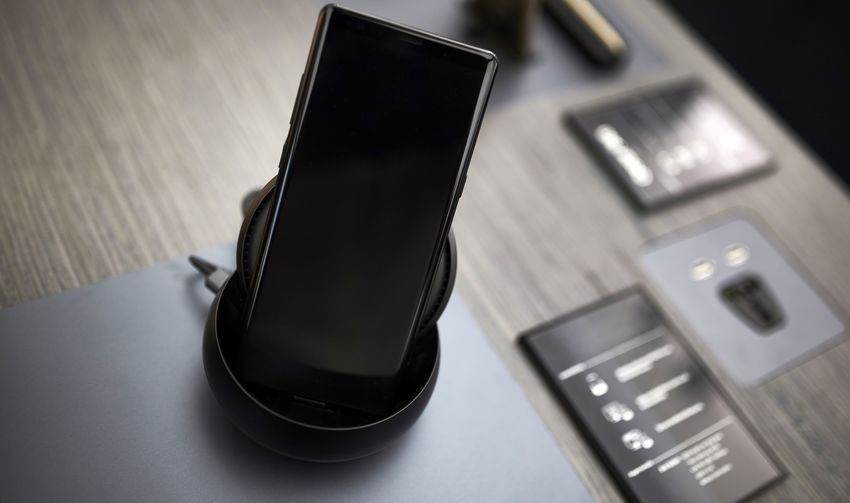
Workforce           Mobility         Mobile-PC Convergence            Mobile-First Strategy   Recommendations

     Australian miners eye new digital capabilities
     Australian miners rely on mobile phones to collect and assess data, which enable safety tracking and manage operations and
     assets in real time.
                                                                                           Deployment of mobile technology
     Mining companies’ top priorities:                                                                                                                                                                                       Drivers to improve mining operations

                                                                                                                                  51%
     Easy access to information
                                                                   28%
               and dashboards                                                                                                                                                                                                                                 41%
                                                                                                                                                     of mining equipment                                                    38%
               Geolocation and                                       31%                                                         across fixed and mobile
         wayfinder applications
                                                                                                                                 equipment are instrumented
         Mine site mobility and                                          37%                                                     (i.e., have programmable logics
      networking infrastructure
                                                                                                                                                                                                                                                                                         21%
                                                                                                                                 controllers and distributed
                                                                                                                                 control systems).

                                  of mining companies will have
                                  workforce strategies for the delivery
                                                                                                                                                                                                                    Connected via a                   Connected via a               Not connected to
                                  of dynamic and real-time work                                                                                                                                                     wireless network                  wired network                    a network
                                  allocation across optimized people/                      The number 1 priority for companies was to
                                  machine (cobot) systems by 2024.                         improve mobility of business processes and
                                                                                           reduce the overall cost structure.                                                                       Benefits of gaining digital capabilities:

                                                   Case example: BHP (formerly BHP Billiton)
                                                                                                                                                                                                    To automate                             To create                  To create agile mining operations
                                                   BHP, an Australian multinational mining company, has announced to automate 500 haul                                                               equipment                             operational                  that will enable responsiveness
                                                   trucks across Western Australia Iron Ore and Queensland coal sites. The autonomous                                                                                                       visibility                through the execution of the mine
                                                   haulers are expected to reduce risk exposure and safety incidents, as well as enabling                                                                                                 through data                plan and the flow of all the related
                                                                                                                                                                                                                                                                       activities across the organization
                                                   longer operational hours; which in turn will enhance productivity.

                                                                                                       Sources:

An IDC InfoBrief | Future of Work: Device Convergence Empowering Next-Generation Mobile Workers
                                                                                                       IDC’s 5G Connectivity Framework for the Digital Transformation Industrial Enterprise, 2019
                                                                                                       IDC FutureScape: Worldwide Mining 2019 Predictions
                                                                                                                                                                                                     IDC Insights IT/OT Integration and OT Security Survey, 2018 (Mining n = 196)
                                                                                                                                                                                                     https://www.amsj.com.au/bhp-autonomous-haul-truck-fleet-could-top-500/
                                                                                                                                                                                                                                                                                                             9
                                                                                                       IDC’s The State of Play of IT/OT Integration in Mining, 2019
Workforce Mobility Mobile-PC Convergence Mobile-First Strategy Recommendations
Indonesian financial institutions seek payment innovation
Fintechs are driving adoption of mobile wallets in Indonesia to deliver a convenient, secured, and user-friendly experience to customers.
Where mobility adoption will spike
>30%
have invested on mobility, 141%
Drivers to improve FSI operations
cloud and analytics to drive Indonesia experienced
Finance sector spend in IT services - 2H18
DX in 2019. the highest sustained
growth for mobile 10M
wallet* usage at
8M
141 %
20%
(IDR million)
38% 6M 19% 19%
Bank Negara Indonesia (BNI), Bank Rakyat Indonesia
4M 18%
(BRI), Bank Mandiri and Bank Tabungan Negara from 2015 to 2018;
with growth slowing
(BTN) have collaborated with Telkom Indonesia and to an estimated 38%
2M
Pertamina to launch “Link Aja.” The QR payment by 2023. CAGR 2015-2018 CAGR 2018-2023E 0
Indonesia Indonesia 2018 2019 (P) 2020 (P) 2021 (P)
platform will enable users of Alipay and WeChat to
YoY growth
transact in the country, taking into account the large *Mobile wallets: A virtual wallet that stores payment information
inflow of Chinese tourists in Bali in recent years. using the mobile phone as the primary method for both access and
fulfilling transactions. of Indonesia’s GDP will be digitalized, with growth
in every industry driven by digitally-enhanced
>
offerings, operations, and relationship by 2022.
Case example: Bank BTPN – A MEMBER OF SMBC Group
Its Jenius App is banking reinvented for customers to have a full control in
managing life and finances in a simpler, smarter, and safer way - all from a of all IT spending will be on 3rd Platform
smartphone. This is aligned to its vision to become Indonesia’s first life finance technologies, as over 50% of Indonesian
application and maintaining its customer-centric value. enterprises build “digital-native” IT environments
to thrive in the digital economy by 2022.
12,000+ customers used the Jenius App in less than two months after its launch,
which contributed to more than 26,000 added transactions.
Note: Finance includes banking, insurance, securities and investment services.
Sources:
An IDC InfoBrief | Future of Work: Device Convergence Empowering Next-Generation Mobile Workers
IDC FutureScape: Worldwide IT Industry 2019 Predictions — Indonesia Implications
IDC’s 2H18 Country Report on IT Services – Indonesia (June 2019)
10
IDC’s Southeast Asia — Digital Models Creating New Growth: How New Digital Platforms Are Shaping, 2019Workforce Mobility Mobile-PC Convergence Mobile-First Strategy Recommendations
Malaysian manufacturers implement automation platform
Malaysian manufacturers are opening up on mobility adoption, especially in areas including automation and transformation of their business
processes, accessing information, and managing workforce applications.
Drivers to improve
Digital transformation (DX) journey Where mobility adoption will spike
manufacturing operations
Manufacturers are looking to implement smart Now Future (3-5 years)
manufacturing and explore platform solutions that will
32% Manufacturing and resource sector spend in IT services
facilitate automation within their manufacturing plants 29%
using RPA* and IoT technologies. 2,000
In 2017-2022, we will see increase in: 4.6%
23% 23% 1,900
4.7%
(MYR million)
39% 29% 1,800 4.8%
16% 4.9%
1,700
20% 13%
16% 1,600
13%
1,500
7% 2018 2019 (P) 2020 (P) 2021 (P)
YoY growth
Automation Business Supply chain Access information Access Workforce
management intelligence management and dashboard automation management applications
applications applications and self-service of Malaysia’s GDP will be digitalized, with growth
in every industry driven by digitally-enhanced
>
offerings, operations, and relationship by 2022.
Case example: Smart Modular Technologies
Smart Modular Technologies (manufacturer and supplier of electronic subsystems to
original equipment manufacturers [OEMs] in the computer, industrial, networking, of all IT spending will be on 3rd Platform
telecommunications, aerospace and defense markets) has deployed collaborative robots technologies, as over 50% of Malaysian
(cobots) in Penang, Malaysia. The company uses AI-based systems to spot product enterprises build “digital-native” IT environments
defects. Using cobots, the company has automated the testing capabilities. The cobots to thrive in the digital economy by 2022.
automatically spots defective products and remove them from the production line
* Robotic process automation (RPA) is a class of software designed to automate or augment manual repetitive
before it reaches the packaging station. tasks. Those tasks may be individual tasks executed by a knowledge worker outside the context of a business
process or may replace a task that is currently manually performed by process participants in an enterprise
Sources: application or a custom business process.
IDC FutureScape: Worldwide IT Industry 2019 Predictions — Malaysia Implications
An IDC InfoBrief | Future of Work: Device Convergence Empowering Next-Generation Mobile Workers IDC’s 2H18 Country Report on IT Services – Malaysia (May 2019) 11
IDC’s Southeast Asia — Digital Models Creating New Growth: How New Digital Platforms Are Shaping Lifestyles (May 2019)
https://futureiot.tech/collaborative-robots-ai-to-support-industry-4-0-ready-manufacturing-facility-in-penang/Workforce Mobility Mobile-PC Convergence Mobile-First Strategy Recommendations
Enterprise mobility to further drive business outcomes
Enterprise mobility enables anytime, anywhere working; giving rise to the always-connected worker.
However, mobility has moved beyond BYOD/choose your own device (CYOD) discussions.
Key outcomes driving mobility investments
57%
55%
52%
49%
46%
AP organizations continue to embrace and
implement enterprise mobility solutions to
maximize the opportunity it presents.
of organizations have already
implemented enterprise mobility.
Improve employee Gain competitive Improve/Enhance Reduce cost of Create new revenue
productivity advantage user experience doing business streams through new
product/services
of organizations are planning to
implement enterprise mobility in the
next 12-18 months. Leading organizations are focusing on mobilizing business processes and workflows to drive business outcomes as
smartphones become more powerful, and faster networks enable truly anytime, anywhere experiences.
An IDC InfoBrief | Future of Work: Device Convergence Empowering Next-Generation Mobile Workers Source: IDC APEJ Future of Work Survey, 2018 (n = 1,275) 12Workforce Mobility Mobile-PC Convergence Mobile-First Strategy Recommendations
Mobile-PC convergence will enable smartphones to take on
new roles and workflows in the enterprises
As the mobility focus shifts toward mobilizing workflows and business processes, this will proliferate the adoption of smartphones as the preferred choice for 3-in-1 device.
Docked smartphones are gaining attention and are
60%
of global enterprises will be testing smartphones as their augmenting the mobile-PC convergence.
company’s singular IT-supported 3-in-1 device* and 15%
will have adopted it already by 2021.
of U.S. enterprises
For AP, 4% of enterprises have already deployed smartphones as their have already deployed
smartphones connected
company’s 3-in-1 solutions. While the percentage of smartphones as to docking stations, and
singular 3-in-1 device for AP is low, the number of mobile apps and use another 22% are planning
cases will only increase with ubiquitous connectivity. to implement in the next
12-18 months.
36%
of organizations are using
employee/partner facing
mobile apps. Case example: Chicago Police Department
Chicago Police Department is running a pilot of Samsung’s DeX
in Vehicle Solution, which enables the officers to dock their
Galaxy smartphones to get access to all policing application
including computer-aided dispatch (CAD) and other systems to run
background checks. Using their smartphones, the participating
officers can also immediately attach photo and video evidence to
* 3-in-1 device is a device that replaces or takes on more of the tasks that have traditionally been performed on a PC or laptop.
their reports.
Sources: IDC APEJ Future of Work Survey, 2018 (n = 1,275)
An IDC InfoBrief | Future of Work: Device Convergence Empowering Next-Generation Mobile Workers
IDC US Enterprise Mobility IT Decision Maker Survey, 2018 (n = 250)
IDC FutureScape: Worldwide Connected Devices and Augmented Reality/Virtual Reality 2018 Predictions 13
https://insights.samsung.com/2019/08/21/chicago-police-department-piloting-samsung-dex-in-vehicle/Workforce Mobility Mobile-PC Convergence Mobile-First Strategy Recommendations
Empowering the workforce raises security concerns
A majority of organizations have already instituted a BYOD policy, which now includes new connected devices like AR/VR headsets, wearables, smartwatches,
and so on. The adoption of these devices is likely to grow in 2020. The increasing connected endpoints with diverse devices entering the enterprises also raises
security threats.
50% of AP
organizations
are willing to deploy unified endpoint
management (UEM) solutions to manage
and secure their diverse devices from a
single pane of control.
Organizations are required to build ubiquitous mobility platform stressing on an
all-in-one device approach.
Deploy UEM to manage diverse device and OS types and protect critical data from a
single pane of control.
An IDC InfoBrief | Future of Work: Device Convergence Empowering Next-Generation Mobile Workers Source: IDC APEJ Future of Work Survey, 2018 (n = 1,275) 14Workforce Mobility Mobile-PC Convergence Mobile-First Strategy Recommendations
A three-phase approach for a mobile-first strategy
Mobile
only
Mobile Smartphones to replace laptops
and desktops to deliver a
ready complete computing solution
— one that not only offers
A mix-environment where
Mobile smartphones co-exists along
performance and applications
but also addresses the security
friendly
with other computing devices
concerns of the enterprise.
like laptops and PCs. However,
A separate device type for desk and critical applications are slowly
mobile work. Complex computing ported on to smartphones
tasks are majorly done on laptops using docking system
and PCs, while mobile phones are that offers a multidevice
used only for non-complex tasks experience to users.
like checking emails, setting up
calendars, and others.
An IDC InfoBrief | Future of Work: Device Convergence Empowering Next-Generation Mobile Workers Source:IDC Future of Work Practice, 2019 15Workforce Mobility Mobile-PC Convergence Mobile-First Strategy Recommendations
Essential guidance
FoW should be considered as an opportunity to deliver experiences for both employees and customers alike. In order to provide superior experiences, it is critical
to empower your workforce. The following points can help organizations support their vision for the empowered future workforce:
Evaluate carefully the current state of
workplace and worker strategies, policies,
procedures, and technology infrastructure to
develop an FoW roadmap.
Use the roadmap to clearly define an FoW strategy
and ensure that it is not siloed to individual
business units, locations, or functions.
Create an agile architecture, which is easy to
scale up and is flexible to accommodate new
technology, policies, and talent requirements.
An IDC InfoBrief | Future of Work: Device Convergence Empowering Next-Generation Mobile Workers
This IDC InfoBrief was produced by IDC Custom Solutions. Copyright 2020 IDC. Any IDC information or reference to IDC that is to be used in advertising,
press releases, or promotional materials requires prior written approval from IDC. For more information, visit: www.ap.idc.asia or email: gmsap@idc.com
16Message from the sponsor:
The three core values that enable our vision to bring mobile-first technology to businesses to help them achieve
digital transformation.
Samsung’s suite of innovative Open Innovative Secure
Why and collaborative products can
help businesses pave the way for
new business models and new
ways of working.
Extensive B2B Innovative Advanced
As the Next Mobile Economy partner, Samsung’s mission is ecosystem of mobile security
to prepare all businesses for this digital transformation by partners solutions solutions
setting new and ever higher standards in mobile products,
Samsung Knox 5G/WiFi6 Samsung Secure
solutions and innovations for the businesses of tomorrow.
partner program Supply Chain
Smartphones and
Samsung for Business. Knox Service Plugin
tablets Knox Platform for
Enterprise
Built for the new way business is done. Fit-for-purpose
Samsung DeX
Enterprise Tech Support Knox E-FOTA
Ruggedized devices
samsung.com/business NFC Payment
Knox Manage
Wearables
AR/VR Samsung Pass
S Pen Biometric
authenticationYou can also read


