Awareness, Perception and Preparation of TVET Students, Teachers and Managers for Industry 4.0 in Myanmar
←
→
Page content transcription
If your browser does not render page correctly, please read the page content below
Khin Cho Tun (GTI Insein, Myanmar), Nay Zar Aung (SITE, Myanmar), &
Sai Kyaw Naing Oo (DTVET, Myanmar)

Awareness, Perception and Preparation of TVET Students,
Teachers and Managers for Industry 4.0 in Myanmar

Abstract
Today, every industry is calling for their workforce to develop new skill sets due to the dynamic of
technological change. Every country needs to prepare its Technical and Vocational Education and
Training (TVET) sector for providing the required skills in the new industrial revolution (IR4.0). It is
vitally important to assess TVET academics’ awareness and perceptions of IR4.0 and to ascertain how
prepared they are to strategically and effectively manage work-based learning. Which factors have an
influence on the situation? A survey based on 16 structured questionnaires was devised to measure the
awareness, perception and preparation of 156 respondents, including TVET managers, teachers and
students from different TVET institutions in Myanmar. Gender, major study, nature of employment
and type of school were considered as influencing factors. Results were presented quantitatively for
discussion and confirmed that gender, major study, nature of job and school influenced the awareness,
perception and preparation of TVET academics. Strategic plans and reforms can be effectively
introduced for future skills development in work- based learning scenarios which are relevant to major
study, job nature and school nature.

Keywords: Technical education and training, Industry 4.0, Technological change, Technological
literacy, Skills development

1   Introduction
Today, many industrial sectors have entered the fourth industrial revolution (IR4.0) with the
power of 4G/5G internet and new technologies such as IoT (Internet of Things), AI (Artificial
Intelligence), Cloud Computing, System Integration, Robotics, 3D Printing, Virtual Reality
(VR), Argument Reality (AR), Cyber Security, Simulation, etc. In IR4.0, industrial sectors
seamlessly connect their physical world to cyber systems in a variety of ways for greater
efficiency and productivity. Changes in technology and working environments across
different industrial sectors have created a demand for new types of jobs and, by extension, a
workforce with the requisite skill set to master the new roles.

“In their journey to adopt IR4.0, each country is expected to encounter a number of
challenges related to the skill level of their workforce” (BRICS Skill Development Working
Group 2016). Thus, most countries have started to prepare knowledge and skills for the
imminent industrial revolution, IR4.0. The level of preparation and readiness of each country
for IR4.0 differs from one country to another and is dependent on many factors such as
awareness, perception and current industrial demand, as well as government policy. There

© KHIN, NAY, & SAI (2021)                      www.tvet-online.asia              Issue 17              1
have been many surveys which have assessed the awareness, perception and preparation of
corresponding societies for IR4.0.

Aygün et al. (2019) used a qualitative approach to measure the awareness level of 46
postgraduate students (master and doctoral students) from Istanbul University. The group
included 21 male and 25 female students. Results showed that most respondents (more than
80%) had knowledge of “cyber security”, “simulation”, “virtual reality” and “3D printing”.
However, only respondents from information technology were well acquainted with the
concepts of Big Data and IoT. Only a few respondents from other major fields of study were
familiar with these technologies. Major study is one identifiable factor which affects
technology awareness. The authors recommended that undergraduate students’ awareness be
measured on an international scale with a larger sample size and comparison between
universities and countries.

The Ujakpa et al. (2020) study assessed the perception, awareness and preparedness of 24
university students in Namibia. The respondents, most of whom were 18 years old, came
from the University of Namibia (UNAM) -14 students, the International University of
Management (IUM) -5 students, and the Namibia University of Science and Technology
(NUST) -5 students. 60% of respondents were aware of IR4.0. Results also revealed that
69.6% had worked with IR4.0 applications and 65.2% had competency to use IR4.0
applications, even though only 60% had known what IR4.0 actually is. The study’s authors
admitted that the sample size was too small and recommended to increase it by including all
levels of education (including primary and secondary school students). Level of education is
clearly another factor influencing the awareness of IR4.0.

In Turkey, IR4.0 awareness of employees from 32 different businesses was surveyed by
Ersoz et al. (2018). Results showed that IR4.0 awareness level was dependent on the sectors
in which these businesses operated. The authors recognized that businesses/job variations
ultimately led to varying levels of training that employees received. 54.65% of the employees
were trained in IR4.0 and 43.35% were not trained. Results indicated that 27.08% of
businesses had adequate knowledge of IR4.0. Ratnasingam et al. (2020) assessed the
awareness and readiness of 778 large, medium and small-sized Malaysian companies in the
furniture industry for IR4.0. Manufacturers of wood-based panel and metal furniture were
found to be more aware of IR4.0 technologies than solid wood and leather furniture
manufacturers. Respondents replied that robotics, CAD-CAM simulation and horizontal and
vertical system integration were important IR4.0 technologies for them. This confirms that
the nature of a business or the nature of the job is also a factor affecting the awareness of
IR4.0.

Regarding readiness of business, Kohnová et al. (2019) analysed seven internal factors that
support business and technology transformation towards IR4.0. These factors were (1)
internal system of education/ knowledge management and development, (2)level of external
partnerships in education and knowledge acquisition, (3) level of operational coordination–
organization of projects, processes and tasks, (4) level of strategic alignment of development

© KHIN, NAY, & SAI (2021)                  www.tvet-online.asia           Issue 17               2
plans with existing resources, (5) availability of technologies and knowledge to develop new
products/ services, (6) corporate culture in relation to promoting innovation and knowledge
development and (7) the ability to identify and analyse trends and respond to them. Results
showed that internal systems of education/ knowledge management and development were
the most significant factors. Knowledge management and development is especially related to
work-based learning. The authors recommended that it is important to educate employees and
share knowledge through effective partnerships. This highlights the fact that external
partnerships are essential to improving awareness of IR4.0, which is the first step of work-
based learning.

According to the results from the Tinmaz and Jin (2019) survey in Korea, 14.7% of
respondents were unaware of IR4.0 and 55.8% did not understand the applications of IR4.0,
although they had heard of the concept. 4.1% have been working with IR4.0 and 3.1% had no
preparation, although they knew of IR4.0. It was found that Korean students were less
familiar with IoT, whilst 3D printing was the most well-known area. The authors noted that
male students seemed more knowledgeable about and more interested in IR4.0 technologies
than their female counterparts.

Similar observations were made in the study of Ismail et al.(2020).Based on a sample of 155
(85 male and 70 female) students, it was found that male students were better prepared to
work in industry compared to female students in terms of attitude, leadership, communication
and interpersonal elements, problem solving, knowledge levels and emotional intelligence.
Gender is thus a potential factor which can influence the awareness, perception and
preparation of IR4.0.

These findings make it clear that there are many factors that influence the awareness,
perception and preparedness of academics and business people with regard to IR4.0. These
factors include gender, education level, major study, nature of business/job, and external
partnerships. Most surveys have been conducted with university students. Little or no
attention has been granted to different academic levels in the TVET sector. The objective of
this work is to assess awareness, perception and readiness of TVET students, teachers and
managers with regard toIR4.0 in Myanmar by considering different influencing factors.

1.1   Problem statement and research question

TVET will play a significant role in the era of IR4.0. In anticipation of this development, the
requisite IR4.0 skills for TVET are currently being prepared and developed in most countries,
including Myanmar. In order to develop future TVET skills for IR4.0 effectively, it is
important to have a strategy that takes account of the awareness, perception and readiness of
TVET academics. The diverse nature of technical and vocational education and training
depends on variables of gender, major study and job situations in relation to TVET academics
and the types of school in which they work. The lack of information on these points in
Myanmar leads to the following research questions:

© KHIN, NAY, & SAI (2021)                  www.tvet-online.asia           Issue 17             3
− What levels of awareness, perception and preparedness for IR4.0 can be identified in
      Myanmar TVET students, teachers and managers?
    − How do influencing factors (gender, major study, job nature, school nature) impact on
      awareness, perception and preparedness of academics for IR4.0?

2    Work-Based Learning Continuum
The work-based learning (WBL) continuum is a sequence of activities that starts with low-
intensity experiences that begin to engage students in thinking about careers and gradually
progresses into more in-depth, intensive experiences that include opportunities for hands-on
learning (Johnson et al. 2017). Today, IR4.0 is an emerging technological concept that has
been introduced in some industrial sectors such as manufacturing, healthcare, and logistics.
Consequently, many employers are trying to transform their business model to align with
IR4.0 on the basis of three factors; Process, People and Technology (PPT). Thus, it is
important to encourage people in businesses to do work-based learning related to IR4.0.

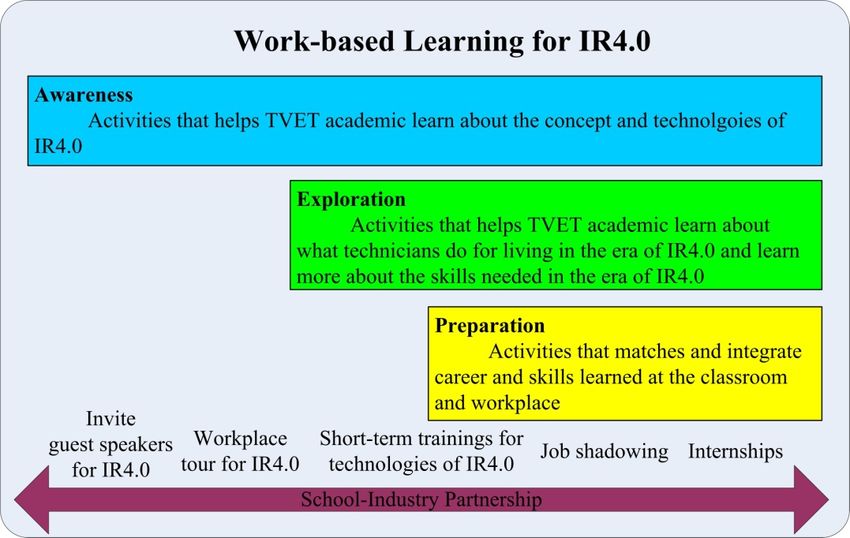
Work-based learning consists of three main processes: awareness, exploration and preparation
as shown in Figure 1. Work-based learning is important not only for students but also for
teachers. It can expand teachers’ knowledge of employers in their region and of careers that
maybe available to their students (Johnson et al. 2017).This study is related to measuring
awareness, perception and preparation for IR4.0, which are the three main steps in work-
based learning.

        Figure 1:   Work-based learning for IR4.0 (with reference to work-based
                    learning process of Johnson et al. 2017)

© KHIN, NAY, & SAI (2021)                 www.tvet-online.asia           Issue 17              4
3 Methodology
3.1 Research model
There are indeed many factors that influence the awareness, perception and preparation of a
country towards IR4.0. National policy and economy conditions are undoubtedly influential
factors. For the purpose of this study, gender, major study, job nature, type or nature of
school for academics were considered as influencing factors (independent variables) and
awareness levels, perception and preparation of academics were considered as dependent
variables in this research model as shown in Figure 2.
Gender
Major study Awareness,
Perception,
Job nature Preparation
ofAcademics
School nature
Figure 2: Research Model (own creation)
3.2 Research method
A survey approach was selected for this study as a means of exploring levels of awareness,
perceptions and preparation of a number of academics. Survey research is usually undertaken
through the use of questionnaires or interviews (Dawson 2009).The mono method, in which
only structured questionnaires are applied, was used for data collection. Quantitative analysis
of collated data was subsequently presented for discussion. Data collection was completed in
a single phase of less than two months.
3.3 Population and samples
In survey research, it is important to provide detail of the sample used. In Myanmar, there are
three different types of TVET institutions: Government Technical Institute (GTI) which
offers diploma level, Government Technical High School (GTHS) which offers certificate
level and Vocational Training School (VTS) which offers certificate level. There are a total of
3508 teachers and 70 school managers (principals) serving in 70 TVET institutions located all
© KHIN, NAY, & SAI (2021) www.tvet-online.asia Issue 17 5over Myanmar’s 15 regions. There are 24,918 students registered in the academic year of
2019-2000.
As samples, 17 principals of TVET institutions were selected to represent one region by at
least one manager. At least five TVET teachers and three students from each region were
invited to take the survey. 90 TVET teachers and 49 students participated in total. Table 1
shows detailed sample information. In most Myanmar educational institutions, the number of
female teachers is twice that of male teachers. For this reason, the number of female samples
is larger than the number of male samples. In terms of major study, Civil, Mechanical,
Electrical and Electronics are four main major fields of study, whilst Industrial Engineering
and Information Technology are only offered in a few GTI. Thus, the number of academics in
Industrial Engineering and Information Technology is smaller than respondent numbers from
other major studies. In Myanmar, there are 28 GTI, 35 GTHS and 7 VTS, hence the smaller
number of respondents from VTS compared to the other institutions.
Table 1: Classification of respondents
Influencing Number of Total
Classification
Factor Respondents Respondents
Male 62
Gender 156
Female 94
Civil 33
Mechanical 34
Major Electronic 35
156
study Electrical 23
Industrial Engineering 18
Information Technology 13
Student 49
Job nature Teacher 90 156
Manager 17
VTS 18
School
GTHS 29 156
nature
GTI 109
© KHIN, NAY, & SAI (2021) www.tvet-online.asia Issue 17 63.4 Instrument
A total of 16 structured questionnaires were created using Google survey forms and
distributed to participants. The structured questionnaires used both closed-ended question
types and open-ended question types. Some structured questionnaires were adopted from the
work of Aygün et al. (2019). To avoid ethical issues, respondents’ permission was requested
in advance and the names of respondents were omitted. As shown in Table 2, the
questionnaires can be grouped into three categories.
Table 2: Structured questionnaires used in the survey
-Have you heard about/ Do you know IR4.0?
Close-ended
-Where did you become aware ofIR4.0?
questions
Awareness -When did you first learn ofIR4.0?
-How do you understand IR4.0? Open-ended
-What are the essential technologies for implementing IR4.0? questions
-Do you think IR4.0 will really become true in some years?
-Do you think IR4.0 will really become true in Myanmar in
some years?
-Do you think employment opportunities will decrease due to
IR4.0?
Close-ended
Perception -Do you think the current TVET courses match the requisite questions
skills for IR4.0?
-Do you think IR4.0 will create new job opportunities?
-How great is your interest in technologies (Big Data, IoT, 3D
Printing, System Integrating, AI) which require implementing
IR4.0.
-Which technologies are you currently studying?
-How will you disseminate your knowledge or skills for
Close-ended
IR4.0?
questions
-What are the barriers to study/disseminate/prepare the
Preparation concept of IR 4.0?
-What skills are you preparing for the near future? Open-ended
-How are you preparing for the new era? questions
© KHIN, NAY, & SAI (2021) www.tvet-online.asia Issue 17 73.5 Data analysis
Count percentages and mean scores were used for quantitative analysis of the answers to
closed-ended questions. These were calculated with the following equations.
Number of interested respondents
Count percentage(%) = (1)
Total respondents
n
∑ Rating score × Number of corresponding respondents
Mean score(%) = i =1
(2)
Total respondents
Here, there are five rating scores. The score for “Strongly Agree” is 5, “Agree” is 4,
“Normal” is 3, “Disagree” is 2 and “Strongly Disagree” is 1. Data analysis was conducted
using Excel (software) spreadsheets.
4 Results and discussion
4.1 Awareness
Awareness levels of TVET academics are shown in Figure 3. Results indicated that 87.8% of
Myanmar TVET academics have heard the term IR4.0, a larger number than expected. The
result is similar to the findings of Aygün et al. (2019) which surveyed postgraduate students
from Istanbul University. It is larger than the (60%) percentage observed by Ujakpa et al.
(2020)for the University of Namibia (UNAM).
Figure 3: Percentage of respondents who are aware /unaware of IR4.0
When answers to the open-ended question “How do you understand IR4.0?” were analyzed, it
became apparent that some respondents had generally heard of technologies related to IR4.0
such as robot, AI, IoT, cloud computing technology, etc. but did not completely grasp the
concept of IR4.0.Their answers were, at most, partially relevant.
© KHIN, NAY, & SAI (2021) www.tvet-online.asia Issue 17 8“Latest manufacturing technology like robots and AI”
“The fusion of digitalization with traditional industrial processes”
“Fourth industry revolution, more automation, cloud computing and creating smart
factories”
“Based on cloud technology and IoT technique (Internet of Things)”
“Digitalization and connection of all actors in the value process”
To another open-ended question, “What are essential technologies for implementing IR4.0?”
most respondents answered:
“Big Data, AI, IoT, 5G”
“Internet, PLC and IOT”
“Internet of Things”
“The Internet of Things (basically), automated systems, robots”
“A little bit familiar with IoT”
It finds that most respondents are more familiar with IoT rather than other technologies. This
contrasts with Tinmaz and Jin observations (2019), in which Korean students were less
familiar with IoT.
Indeed, the concept of IR4.0 was first mentioned by BOSCH at the Hanover Trade Fair in
2011 (BOSCH Sanayi Ve Ticaret A.Ş. 2017). As depicted in Figure 4-(a), 46.2% of
respondents became aware of IR4.0 in the last six months, 33.3% of respondents have known
about it for a year. 13% of them have known about IR.40 since two years ago. Only 7.1% of
respondents have known about it for three or more years.
(a) (b)
Figure 4: Percentage of respondents for (a) How long have you known
about IR4.0? (b) Where did you hear/ learn aboutIR4.0?
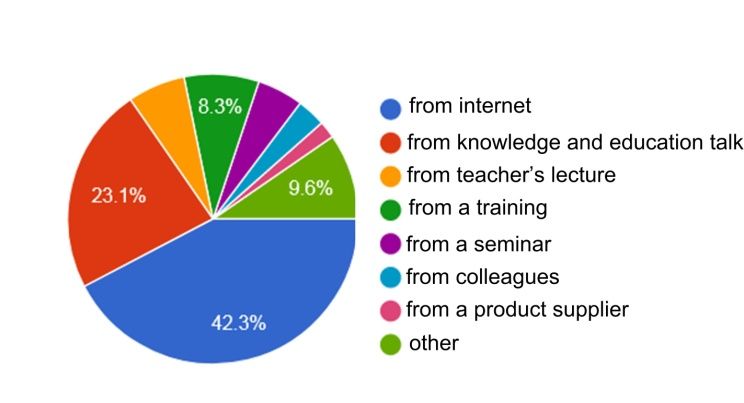
The results in Figure 4-(b) reveal that 42.3% of TVET academics knew IR4.0 from the
internet, 23.1% from educational talks, 9.6% from other sources (the workplace, for
example), 8.3% from trainings, 6.4% from lectures, 5.1% from seminars. Most respondents
read about IR4.0 on internet websites. Events such as educational talks, seminars and
trainings for IR4.0 or advanced technologies (e.g. IoT) are rarely held in TVET institutions.
© KHIN, NAY, & SAI (2021) www.tvet-online.asia Issue 17 9Knowledge of IR4.0 is seldom shared in teachers’ lectures. Work-based learning (exploring
the nature of work and learning required skills in the workplace) becomes particularly
important. TVET teachers need to practice work-integrated learning and work-oriented
teaching/learning processes.
4.2 Perception
As discussed in Kohnová et al (2019), there is still an intense debate in most countries on
IR4.0 due to existing economic conditions, the ability to identify and analyse trends and how
to respond to them. This study examined the perception of TVET academics with regard
toIR4.0. Table 3 shows the mean scores of perception for Myanmar TVET academics. The
highest mean score is 4.2, which shows the respondents are highly interested in IR4.0
technologies. Harnessing motivation to upgrade their skills for new technologies is a
relatively easy proposition. It also appears that academics expect these technologies to find
more practical applications in the near future.
Based on a mean score of 3.9, most academics agree that IR4.0 will become evident in most
applications in some years, although it is currently at the very beginning in various industries,
even from a global perspective. For Myanmar, the data shows that most TVET academics are
in a natural position, whilst some respondents are less confident with regard to how IR4.0
will impact on Myanmar in the coming years.
Table 3: Mean score of perception of TVET academics for IR4.0
Strongly Dis- Strongly Std
Agree Normal Mean
Questionnaires Agree agree Disagree Devi-
(4) (3) score
(5) (2) (1) ation
Do you think Industry 4.0
will become a reality in 56 48 46 4 2 3.9 0.94
the next few years?
Do you think Industry 4.0
will really become a
29 44 58 18 7 3.4 1.06
reality in Myanmar in a
few years?
Do you think employment
opportunities will shrink 12 24 60 39 21 2.6 1.10
due to Industry 4.0?
© KHIN, NAY, & SAI (2021) www.tvet-online.asia Issue 17 10Do you think current
TVET courses are matched
18 35 57 27 19 3.0 1.16
with required skills for
Industry 4.0?
Do you think Industry 4.0
will create new job 36 59 54 3 4 3.7 0.91
opportunities?
How far are you interested
in technologies (Big Data,
IoT, 3D Printing, System 84 35 29 6 2 4.2 0.97
Integrating, AI),
implementing Industry 4.0.
Since the mean score is only 2.6, TVET academics disagree with the statement “Employment
opportunities will shrink due to Industry 4.0.”Their expectations do not suggest that
employment opportunities will be reduced by IR4.0. At the same time, the results show that
most respondents agree that IR4.0 will create new job opportunities. Few respondents had
either positive or negative perceptions of current TVET courses.
Considering influencing factors, the detailed analysis of TVET academics’ perception of
IR4.0 is shown in Table 4. Respondents generally agree that “IR4.0 will become evident in
some years”. Differences in gender, major study, job nature and school nature appear to have
little effect on perceptionasIR4.0 is currently trending as a global concept.
Table 4: Mean score of TVET academics’ perception of IR4.0
IR4.0 will become true in
IR4.0 will become true in
IR4.0 will create new job
Employment opportunity
will be less due to IR4.0
some years in Myanmar
I am interested in IR4.0
Current TVET courses
are matched with
technologies
i d kill
opportunity
some years
Influencing Factors
Male 4.0 3.4 3.0 2.9 3.6 4.3
Gender
Female 3.9 3.5 2.7 3.1 3.9 4.2
Civil 4.2 3.3 3.0 3.3 3.9 4.3
Major
Mechanical 3.9 3.5 2.8 2.7 3.6 4.4
Study
Electronic 3.9 3.4 2.8 3.0 3.7 4.4
© KHIN, NAY, & SAI (2021) www.tvet-online.asia Issue 17 11Electrical 4.0 3.5 2.5 2.9 4.0 3.6
Industrial Engineering 4.1 3.9 2.8 3.8 3.9 4.6
Information Technology 3.8 3.5 2.8 2.9 4.1 4.3
Student 4.1 3.5 2.9 3.5 3.9 4.5
Job
Teacher 3.8 3.4 2.7 3.2 4.8 4.1
nature
Manager 4.2 3.7 3.1 2.2 3.7 4.4
Vocational Training
3.8 3.4 2.4 2.9 3.8 3.9
School (VTS)
School Government Technical
3.9 3.6 2.6 3.0 3.8 4.3
nature High School (GTHS)
Government Technical
4.0 3.4 2.9 3.1 3.7 4.3
Institute (GTI)
According to local conditions in Myanmar, TVET academics only agree slightly that “IR4.0
will become evident in Myanmar in some years”. This depends on major study and the job
nature of TVET academics. Industrial Engineering respondents feel the same way, due to the
fact that TVET academics in Industrial Engineering constantly experience the gradual growth
of automation processes in Myanmar, more so than other major studies. TVET managers are
confident that“IR4.0 will become evident in Myanmar in some years” as they have a better
overview of global conditions and anticipate the positive growth of new technologies in
Myanmar.
Most TVET academics disagree with the statement “Employment opportunities will be
reduced due to IR4.0” so it can be claimed that TVET technicians do not generally expect any
negative impact due to IR4.0. Perceptions do not vary depending on gender, major study, job
nature or school nature.
TVET academics have different perceptions according to fields of major study and job nature
with regard to the statement: “Current TVET courses are matched with required skills.”
Academics from Industrial Engineering agree that their current course is individually matched
with required skills in IR4.0, whereas respondents from other major studies such as
Mechanical, Electrical and Information Technology do not feel that their current TVET
courses match with the skills required in IR4.0. The curricula of Mechanical and Electrical
major studies currently lack ICT skills and are in need of revision to promote work-
integrated, work-connected and work-oriented teaching/learning.
© KHIN, NAY, & SAI (2021) www.tvet-online.asia Issue 17 12Different perceptions between students and managers were highlighted in the survey. While
students agree that current TVET courses are poorly matched with IR4.0skills, the managers
do not. It is likely that students look at individual major studies, whereas managers look at as
the overall picture.
All TVET technicians agree with the statement, “IR4.0 will create new job opportunities.”
Female respondents have a stronger expectation of new job opportunities than the men. The
field of major study does not show a significant impact on perceptions of job opportunities,
indeed every major study has positive expectations in this regard. In terms of job nature,
teachers have higher positive expectations for the emergence of new jobs in the era of IR4.0,
more so than students and managers. Interest is high in every perspective, but it does also
depend on major study fields and job nature. Respondents from Industrial Engineering shows
a higher degree of interest than academics in other major study areas, as TVET academics
from Industrial Engineering are more likely to encounter smart sensors, data transmission and
automation, thus sparking their interest. Students are more curious about IR4.0 technologies
than teachers or school managers and this shows in their pursuit of different technologies
during their studies.
4.3 Preparation
Strategy, technologies, skills and barriers were surveyed to assess how prepared TVET
academics really are for IR4.0. Figure 5 shows that Myanmar TVET academics study IoT
more than any other field. PLC application is the second most popular, commonly used in
smart factories. A high percentage of TVET academics have studied none of these advanced
technologies.
Figure 5: Technologies studied by TVET academics in Myanmar
Machine learning is in third place, creating social web comes in fourth, followed by cloud
computing in fifth one and AI in sixth. Smart sensors and 3D printing are in seventh spot,
followed by others. An increasing number of engineering companies are providing IoT
solutions, which could be one reason why IoT gains such a high level of interest and
preparation among TVET academics. Furthermore, automation is a trending technology,
© KHIN, NAY, & SAI (2021) www.tvet-online.asia Issue 17 13popularly used in growing factories in Myanmar. PLC and sensors are essential components in automation systems, so TVET academics are currently keen to study PLC and smart sensors. One should note that TVET academics are learning these technologies in both formal and informal approaches for professional development. In the formal approach, they join curriculum-based trainings provided by Vocational Training Institutes (VTSs) and follow a specific curriculum. The informal approach is based on self-reliant learning at the workplace or at home. According to the detailed data shown in Table 5, it can be seen that a larger percentage of females are preparing for IoT technology, social web and PLC technologies than their male counterparts. Meanwhile, a higher percentage of males are focussed on machine learning, cloud computation, 3D printing technologies. In terms of major study fields, larger percentages of TVET academics from civil, industrial engineering and information technologies are preparing for IoT technology compared to other major studies. On the other hand, respondents from Electronic, Electrical and Industrial Engineering are engaging with PLC applications. Many respondents from Information Technology are preparing for social web technology. © KHIN, NAY, & SAI (2021) www.tvet-online.asia Issue 17 14
Table 5: Percentage of TVET academics who are preparing skills in different IR4.0 technologies
Smart Factory (PLC
Augmented reality
Smart sensors (%)
None of these (%)
Internet of Things
Machine learning
Cloud computing
Application) (%)
Human machine
intelligence (%)
3D printing (%)
Social web (%)
Robotics (%)
interface (%)
Artificial
(%)
(%)
(%)
(%)
Influencing Factors
Male 4.8 6.5 21.0 21.0 24.2 8.10 9.70 3.20 11.3 4.80 19.4 29.0
Gender
Female 1.1 10.6 17.0 17.0 30.9 8.50 6.40 2.10 6.40 20.2 23.4 17.0
Civil 3.0 15.2 12.1 21.2 51.5 6.10 6.10 3.00 21.2 15.2 0.00 24.2
Mechanical 0.0 0.0 0.00 0.00 8.80 0.00 0.00 2.90 5.90 0.00 2.90 38.2
Electronic 5.7 5.7 14.3 5.7 31.4 17.1 8.60 2.90 8.60 14.3 34.3 17.1
Major Study
Electrical 0.0 8.7 0.00 21.7 0.00 4.30 8.70 0.00 0.00 21.7 52.2 0.00
Industrial Engineering 0.0 5.6 16.7 5.6 44.4 16.7 27.8 0.00 0.00 11.1 44.4 0.00
Information Technology 0.0 0.0 25.0 12.5 50.0 12.5 0.00 0.00 0.00 37.5 0.00 12.5
Student 4.1 12.2 10.2 18.4 34.7 12.2 4.10 2.00 18.4 16.3 12.2 18.4
Job nature Teacher 1.1 5.6 24.4 7.8 25.6 7.80 11.1 2.20 3.30 13.3 30.0 18.9
Manager 5.9 17.6 11.8 0.00 23.5 0.00 0.00 5.90 5.9 11.8 5.90 47.1
Vocational Training School (VTS) 5.6 5.6 22.2 5.6 38.9 22.2 16.7 5.60 5.6 5.6 50.0 22.2
School
Government Technical High School (GTHS) 0.0 14.3 25.0 14.3 32.1 7.10 3.60 3.60 3.6 17.9 7.10 32.1
nature
Government Technical Institute (GTI) 2.8 8.3 16.5 9.2 9.2 6.40 7.30 1.80 10.1 14.7 2.1 19.3
© KHIN, NAY, & SAI (2021) www.tvet-online.asia Issue 17 15Respondents answered the open-ended question “What skill(s) are you preparing for the near
future?” as follows:
“IT skills”
“Computer skills”
“English and Programming”
“Communication”
“21stCentury skills”
“Language skills”
These answers demonstrate that TVET academics understand both soft and hard skills are
important in the era of IR4.0. ICT skills and communications are their key areas of focus.
Responses to the question, “How are you preparing for the new era?” were as follows.
“Training course”
“On-line training, internet study”
“Self-learning (according to current conditions)”
“I am learning IoT and some sensors subjects from the internet”
“Watching technological videos”
It can be noted that most respondents rely on self-learning through video-lectures or the web.
Some join physical training courses for IoT, Computer Programming, etc.
Figure 6: Planned approaches or disseminating the concept of IR4.0
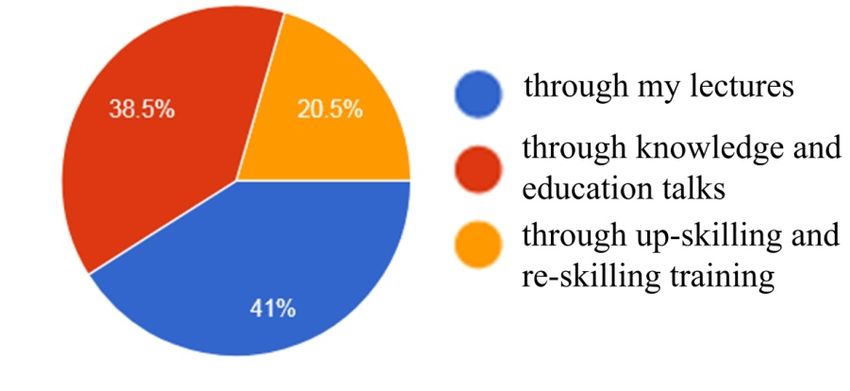
Figure 6 shows strategic plans of TVET managers and teachers for disseminating the concept
of IR4.0. According to the results, teachers will share the IR4.0 concept and technologies by
preparing special lectures or through reskilling and upskilling trainings. TVET managers also
have plans to hold knowledge-based talks. It is likely that lectures and knowledge-based talks
have more potential than upskilling or reskilling trainings. Trainings need more resources
(experts, budget and materials) than lectures and talks, but they can provide more hands-on
skills. The other potential approach for increasing knowledge of IR4.0 is work-based learning
(e.g. factory learning or project learning) in which actual processes and practical work tasks
can be observed or simulated. Work-based learning can increase not only knowledge of IR4.0
© KHIN, NAY, & SAI (2021) www.tvet-online.asia Issue 17 16but also the requisite skills and competences through focussing on the simulation of work
organization, work tasks and processes. Table 6 depicts detailed analysis of TVET academic
strategies for the dissemination of IR4.0. Males are seen to be more interested in distributing
knowledge and information of IR4.0 through talks, whilst a higher percentage of females plan
to share knowledge through lectures. All major studies except f Information Technology
choose the knowledge-based talks approach, whilst a significant percentage of TVET
academics from Information Technology plan to share knowledge of IR4.0 through lectures.
The approach of sharing through reskilling and upskilling trainings is clearly the least
favoured choice due to the greater need for experts and resources. TVET managers are
nevertheless keen to disseminate IR4.0 through reskilling and upskilling trainings.
Table 6: Strategies of TVET academics for the dissemination of IR4.0
Through reskilling and
Through my lecturers
Through knowledge-
upskilling training
programmes (%)
based talks (%)
(%)
Influencing Factors
Male 38.7 37.1 24.2
Gender
Female 38.3 43.6 18.1
Civil 45.5 33.3 21.2
Mechanical 38.2 32.4 29.4
Electronic 45.7 40.0 14.3
Major Study
Electrical 26.1 47.8 26.1
Industrial Engineering 38.9 44.4 16.7
Information Technology 12.5 87.5 0.00
Student 61.2 22.4 16.3
Job nature Teacher 24.4 56.7 18.9
Manager 47.1 11.8 41.2
Vocational Training School (VTS) 5.60 77.8 16.7
School nature Government Technical High School (GTHS) 39.3 42.9 17.9
Government Technical Institute (GTI) 44.0 34.9 21.1
© KHIN, NAY, & SAI (2021) www.tvet-online.asia Issue 17 17In Myanmar, short-term trainings for technologies such as 3D Printing, Argument Reality,
Virtual Reality, Robotics Maintenance, etc. are still something of a rarity. One obvious
reason is that these technologies do not feature in many applications in developing countries
like Myanmar. This study also assesses the barriers to study/disseminate/prepare the concept
of IR4.0.
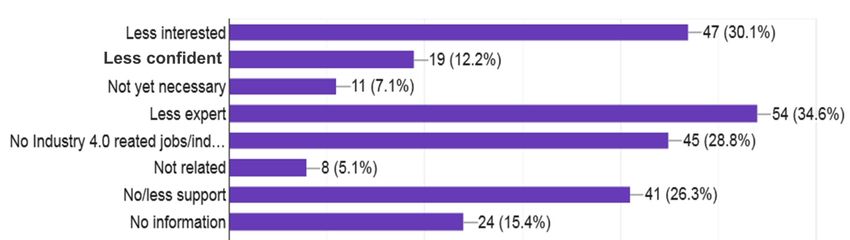
Figure 7 depicts the barriers described by TVET academics. It can be seen that most
respondents suggested that a lack of expertise with regard to IR4.0 is the greatest hurdle. It is
a reasonable conclusion, as the number of industrial experts or academics who are fully
expert in different IR4.0 technologies is still low. The Department of TVET of Myanmar is
therefore trying to nurture expert trainers for IR4.0 by collaborating with ASEAN countries
and European organizations such as GIZ.
Figure 7: Barriers to study/disseminate/prepare the concept of IR4.0
Another reason they mentioned is that factories or employers are less interested, as awareness
of IR4.0 in Myanmar is still in its early stages. Many manufacturers are still less interested in
the transformation from IR2.0/IR3.0 to IR4.0 due to different conditions, such as existing
infrastructure, investment costs, human resources, digital literacy and so on.
The third barrier is “No IR4.0 related jobs/industries”. It is clear that, in most countries, there
are no obvious IR4.0 industries and/or jobs at this juncture. These will evolve in the next few
years in most countries.
The fourth barrier relates to insufficient support to study/disseminate/prepare IR4.0. A lot of
materials are freely and easily available to study about IR4.0, but considerable effort and
resources are required to set up effectively organized and systematic training. This could be
the reason why TVET technicians stress the need for support. The fifth barrier is “Not enough
information”. TVET technicians need to access information for conferences, knowledge-
based talks and trainings for IR4.0 which should be available to everyone. The sixth barrier is
that some respondents are less confident with regard to the reality of IR4.0 or they may think
it is not yet necessary in Myanmar’s current state of development. This is also one of the
factors impeding the move to study/disseminate/ prepare IR4.0.
© KHIN, NAY, & SAI (2021) www.tvet-online.asia Issue 17 185 Conclusions
In this work, a survey was conducted with a total of 156 respondents -students, teachers and
school managers - aiming to explore the awareness levels, perceptions and preparation of
Myanmar TVET academics with regard to IR4.0 by considering influencing factors such as
gender, major study, job nature and school nature. 16 closed-ended and open-ended
questionnaires were deployed. Based on the observations gleaned from the survey, the
following conclusions can be drawn.
− More than 87% of TVET academics have heard about IR4.0, even though some
respondents may not properly understand it to any great degree. Thus, different
approaches are still needed to create awareness of IR4.0 among Myanmar TVET
academics.
− Most respondents learned about IR4.0 from internet sources within the last six
months. More knowledge-based talks and reskilling or upskilling trainings should be
arranged in TVET institutions.
− Most managers knew about IR4.0 through knowledge-based talks. Others learned
about it on the internet. TVET managers should devise more plans to share and
increase awareness of IR4.0 and develop curricula to promote work-integrated, work-
connected, work-oriented teaching/learning.
− Myanmar TVET academics agree that IR4.0 will become a reality in Myanmar in a
few years. They do not believe that on that IR4.0 will have an adverse effect on
employment opportunities.
− While respondents from Mechanical and Electrical Engineering feel their current
TVET courses do not match with the required skills for IR4.0, Industrial Engineering
respondents believe that their current courses are individually matched with required
IR4.0skills. This perception depends on the field of major study. TVET courses in
Myanmar are currently being reviewed and GTHS and GTI courses being improved.
− IoT and PLC are the most prioritized technologies being prepared by Myanmar TVET
academics. A higher percentage of females are preparing for IoT technology, social
web and PLC technologies, males tend to focus on machine learning, cloud
computation, 3D printing technologies. Development of social webs is highlighted
primarily interested by Information Technology respondents due to its relevance to
their studies. Preparation for IR4.0 is clearly dependent on gender and major study
areas.
− All types of TVET institutions in Myanmar favour the knowledge-based talks
approach rather than lectures or reskilling/upskilling trainings. However, TVET
institutions also consider work-integrated, work-connected and work-orientated
learning as strategies for more effective and faster distribution.
The small sample size of students and the fact that only questionnaires were used in the
survey must be acknowledged as limitations of this research. Interviews should be added to
reach a more complete understanding of the situation and to explore perceptions more
thoroughly. Data can display some variations, depending on the sample size in relation to the
© KHIN, NAY, & SAI (2021) www.tvet-online.asia Issue 17 19population. In further works, consideration should be given to teaching/ learning processes, curriculum design, and the effect of industrial development, economic conditions and government policies on awareness, perception and preparation forIR4.0. References Aygün, D., Yılmaz, I. G., & Sati, Z. E. (2019). Industry 4 Awareness: A Research on Postgraduate Students. In: 6th International Management Information Systems Conference, 239-247. Istanbul: Kadir Has University. BRICS Skill Development Working Group. (2016). Skill Development for Industry 4.0.Whitepaper. Munich: Roland Berger GmbH. BOSCH Sanayi Ve Ticaret A.Ş. (2017). A brief history of Industry. Online: https://www.sanayidegelecek.com/en/sanayi-4-0/tarihsel-gelisim/ (retrieved 30.07.2021). Dawson, C. W. (2009). Projects in Computing and Information Systems: A Student’s Guide, Second Edition. Essex: Pearson Education Limited. Ersoz, F., Merdin, D., & Ersoz, T. (2018).Research of Industry 4.0 Awareness: A Case Study of Turkey. In: Economics and Business, 32, 1, 247-263. Ismail, M. E. et al. (2020). Gender analysis of work readiness among vocational students: A case study. In: Journal of Technical Education and Training, 12, 1, 270-277. Johnson, L., White, R., Charner, I., Cole, J., & Promboin, G. (2017). FHI 360 Work Based Learning Manual: A How to Guide for Work-Based Learning. Durham: FHI 360. Kohnová, L., Papula, J., & Salajová, N. (2019). Internal factors supporting business and technological transformation in the context of Industry 4.0. In: Business Theory and Practice, 20, 20, 137-145. Ratnasingam, J. et al. (2020). Assessing the awareness and readiness of the Malaysian furniture industry for Industry 4.0. In: BioResources, 15, 3, 4866-4885. Tinmaz, H. & Jin, H. W. A. (2019).A preliminary analysis on Korean university students’ readiness level for Industry 4.0 revolution. In: Participatory Educational Research, 6, 1, 70- 83. Ujakpa, M. M., Osakwe, J. O., Iyawa, G. E., Hashiyana, V., & Mutalya, A. N. (2020). Industry 4.0: University Students’ Perception, Awareness and Preparedness-A Case of Namibia. In: 2020 IST-Africa Conference, 1-10. © KHIN, NAY, & SAI (2021) www.tvet-online.asia Issue 17 20
CITATION:
Khin, C. T., Nay, Z. A., & Sai K. N. O. (2021). Awareness, Perception and Preparation of TVET
Students, Teachers and Managers for Industry 4.0 in Myanmar. In: TVET@Asia, issue 17, 1-21.
Online: http://tvet-online.asia/issue/17-1/awareness-perception-and-preparation-of-tvet-
students-teachers-and-managers-for-industry-4-0-in-myanmar/ (retrieved 31.07.2021).

This document is published under a Creative Commons Attribution-NonCommercial-
NoDerivs3.0 License

© KHIN, NAY, & SAI (2021)                   www.tvet-online.asia            Issue 17            21
You can also read


