Scientific update on COVID-19 - THERAPEUTIC - Updated on February 18th 2021 - Inserm
←
→
Page content transcription
If your browser does not render page correctly, please read the page content below
THERAPEUTIC
https://www.coreb.infectiologie.com/                                    https://reacting.inserm.fr/

                                       Scientific update
                                         on COVID-19

                                        Updated on February 18th 2021
2
Redaction committee
Boris Lacarra – ANRS MIE
F-Xavier Lescure – Inserm, AP-HP Bichat, COREB
Guillaume Mellon – AP-HP Bichat, COREB
Inmaculada Ortega Perez – ANRS MIE
Eric D’Ortenzio – ANRS MIE
Erica Telford – ANRS MIE

Reviewing committee
Jean-Marc Chapplain – CHU Rennes, COREB          Jean-Christophe Lucet – Inserm, AP-HP Bichat
Flavie Chatel – COREB                            Claire Madelaine – Inserm, ANRS MIE
Hélène Coignard – HCL, COREB                     Matthieu Mahevas – Inserm, AP-HP Henri-Mondor
Dominique Costagliola – Inserm, ANRS MIE         Emmanuelle Vidal Petiot – Inserm, AP-HP Bichat
Marie-Paule Kieny – Inserm, ANRS MIE             Benoit Visseaux – Inserm, AP-HP Bichat
Quentin Le Hingrat – Inserm, AP-HP Bichat
3
THERAPEUTIC

 Questions:
 - What drug showed clinical efficacy?
 - What drugs did not show proven benefits?
4

                                 COVID-19 Treatment
• Dexamethasone is the first drug to show life-saving efficacy in patients infected with COVID-19
• More data from clinical trials are needed

                                         Classes of treatment

  Anti viral effect        Monoclonal antibody           Immunomodulatory effect             Passive immunity

(Hydroxy)chloroquine           Tocilizumab                     Corticosteroids

                               Vilobelimab                                                     Convalescent
    Ivermectin                                                    INFβ-1a
                                                                                                 plasma
Lopinavir/ritonavir          LY CoV 555/016              Janus Kinase (JAK) inhibitor

    Remdesivir                   Anakinra

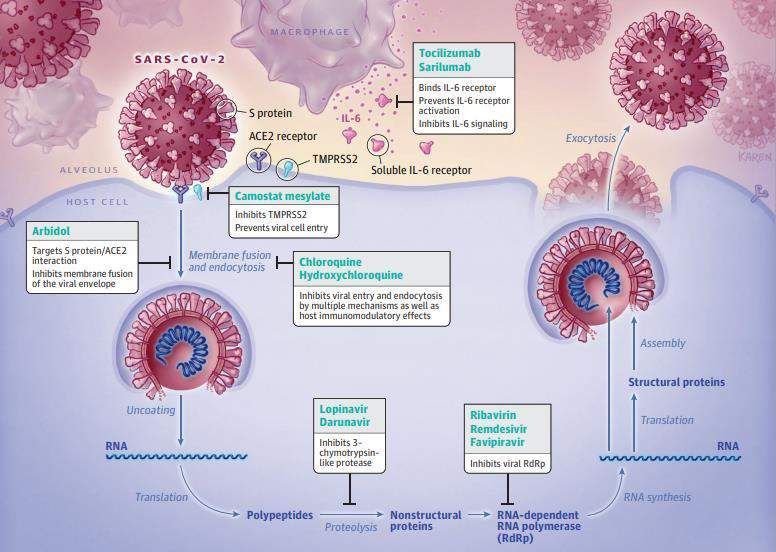
                                REG CoV2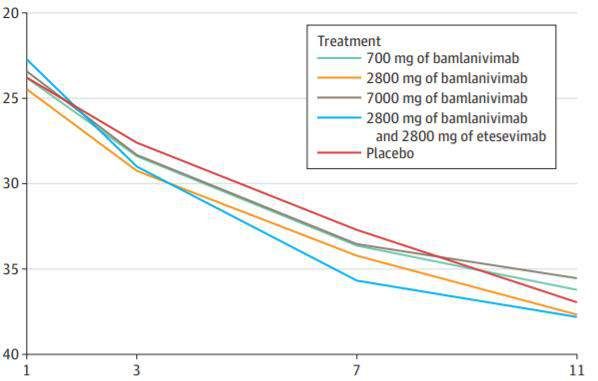
What targets for treatment?                                  IFX-1
                                                                                                                      5

          CP                                                 Anti C5a                           ANK
      Neutralizing                             TCZ
                                                                                              IL-1 receptor
       antibodies                       IL-6 receptor                                          antagonist
                                         antagonist
                                                                           IL-1
INFβ-1a                                               C5a                                      IL-1 receptor

                                                                                               ANK: anakinra
                                                                                               CT: corticosteroids
                      HCQ            CQ                                                        CP: convalescent plasma
                                                                                               CQ: chloroquine
                     Inhibit viral entry and                                                   HCQ: hydroxychloroquine
                          endocytosis                                                          IFX-1: vilobelimab
                      Immunomodulatory                                                         INFβ-1a: interferon beta
                              effect                                                           LPVr: lopinavir/ritonavir
                                                                                               RDV: remdesivir
                                                                                               TCZ: tocilizumab

                         LPVr                        RDV
                        Protease                Polymerase
                        inhibitor                inhibitor

                                                                    Sanders JM et al. JAMA May 2020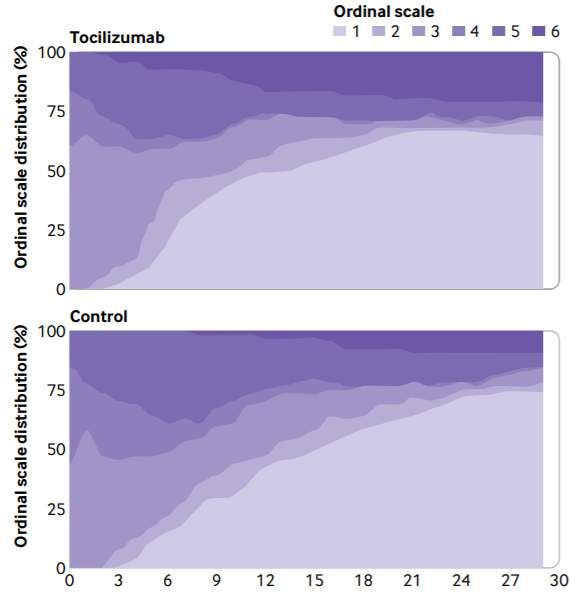
6
   Anti viral effect
                                               Hydroxychloroquine (HCQ)
1stAuthor                  Design                     Groups                   Participants       Primary outcome                 Main results (Primary outcome)

                                                      HCQ vs.                                                                      Early termination of the
                                                                                  N= 132
                    Randomized,                       placebo                                                                               study
                                                                               Hospital HCW         Incidence of
  Abella            double-blind,                                                                                                  HCQ group: 4/64 (6,3%)
                                                                             (ED and COVID-19    SARS-CoV-2 infection
                 placebo-controlled (Pre-exposure                                                                                  vs. placebo group: 4/61
                                                                                   units)
                                     prophylaxis)                                                                                      (6,6%); p > 0,99

                                                                                                                                   HCQ once/week group:
                                                HCQ once/week                                                                     29/494 (5,9%) vs. placebo
                                                  vs. placebo                     N= 1483                                         group: 39/494 (7,9%); HR:
              Randomized,                       HCQ twice/week                 Hospital HCW          Confirmed or                    0,72 95%CI[0,44-1,16]
Rajasingham double-blind,                         vs. placebo                     (ED, ICU,       probable COVID-19
           placebo-controlled                                                COVID-19 units,      compatible illness               HCQ twice/week group:
                                                 (Pre-exposure               first responders)                                    29/495 (5,9%) vs. placebo
                                                  prophylaxis)                                                                    group: 39/494 (7,9%); HR:
                                                                                                                                     0,74 95%CI[0,46-1,19]

                                                                     No virological data on some studies
                       ED: emergency department – ICU: intensive care unit                                      Rajasingham R et al. CID Oct 2020
                       HCW: health care worker                                                             Abella BS et al. JAMA Int Med Feb 2021
7
  Anti viral effect
                                  Hydroxychloroquine (HCQ)
1stAuthor             Design          Groups           Participants          Primary outcome             Main results (Primary outcome)

                                                                  Incidence of either
                                  HCQ vs. placebo
            Randomized,                          N= 821         laboratory confirmed HCQ group: 49/414 (11,8%)
Boulware    double-blind,                  Exposed to a known COVID-19 or illness     vs. placebo group: 58/407
                            (Post exposure
         placebo-controlled                COVID-19 individual compatible with COVID-       (14,3%); p=0,35
                             prophylaxis)
                                                                   19 within 14 days

                                   HCQ vs. usual         N= 2314
                                                                                             HCQ group: 64/1116 (5,7%)
                    Open-label,       care          Healthy contacts of
                                                                          D14 PCR-confirmed,   vs. usual care group:
  Mitjà         cluster-randomized                    672 index case
                                                                        symptomatic COVID-19 74/1198 (6,2%); RR=0.86
                        trial      (Post exposure      patients with
                                                                                                  95%IC[0,52-1,42)
                                    prophylaxis)        COVID-19

                                                No virological data on some studies
                                                                                      Boulware DR et al. NEJM May 2020
                                                                                             Mitjà et al. NEJM Dec 2020
8
  Anti viral effect
                                          Hydroxychloroquine (HCQ)
1stAuthor                 Design             Groups           Participants          Primary outcome                   Main results (Primary outcome)
                                                                                             D3 VL$: HCQ group: -1,41 vs.
                                                                                              placebo group: -1,41 Log10
                                    HCQ vs. placebo       N= 353                              copies/mL; difference: 0,01
                 Multicenter, open                                    D3 and D7 reduction of
                                                    Mild symptoms < 5                              95%CI[-0,28- 0,29]
  Mitjà          label, randomized                                      viral RNA load from
                                        (Non-          days before                                 §
                   controlled trial                                    nasopharyngeal swab D7 VL : HCQ group: -3,44 vs.
                                     hospitalized)      enrollment                            placebo group: -3,37 Log10
                                                                                              copies/mL; difference: 0,07
                                                                                                   95%CI[-0,44- 0,29]

                                                                                                             Mean reduction from
                                                                                  D14 ordinal outcome of
                                          HCQ vs. placebo                                                  baseline: HCQ group: 2,60
                   Randomized,                                                       not hospitalized,
                                                                                                           points vs. placebo group:
 Skipper           double-blind,                                 N= 491               hospitalized, or
                                              (Non-                                                               2,33 points;
                placebo-controlled                                                intensive care unit stay
                                           hospitalized)                                                    absolute difference: 0,27
                                                                                         or death
                                                                                                           95%CI[0,61-0,07]; p=0,117)

                                                       No virological data on some studies
                      VL: viral load                                                                         Mitja et al. CID Jul 2020
                      $ Mean difference                                                      Skipper et al. Ann Intern Med Oct 2020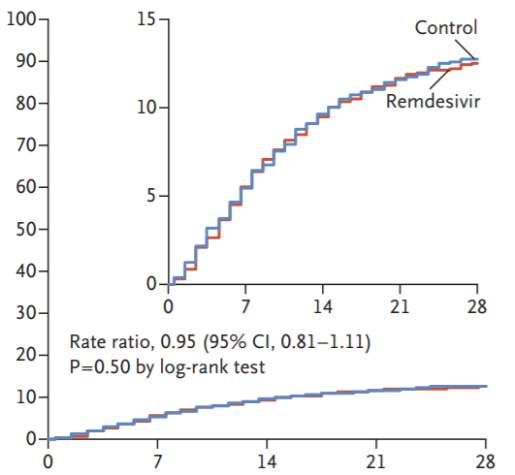
9
  Anti viral effect
                                              Hydroxychloroquine (HCQ)
1stAuthor                 Design                Groups            Participants          Primary outcome               Main results (Primary outcome)

                                                      N= 667
                              HCQ + AZ vs. SoC,                                                                   HCQ + AZ vs. control: OR: 0,99
                                                No supplemental O2
              Multicenter,      HCQ vs. SoC,                                             D15 clinical status         95%CI[0,57-1,73]; HCQ vs.
                                                or a max of 4 L/min
Cavalcanti randomized, open- HCQ + AZ vs. HCQ                                           (seven-level ordinal       control: OR: 1,21 CI95% [0,69-
                                                   supplemental,
            label, controlled                                                                  scale)             2,11]; HCQ + AZ vs. HCQ: OR:
                                                   ≤14 days since
                               (Hospitalized)                                                                          0,82 95%CI[0,47-1,43]
                                                  symptom onset

                                                                    N= 4717
                                              HCQ vs. usual                                                       HCQ group: 421/1561 (27,0%)
           Randomized,                                           Median of days
                                                 care                                                                 vs. usual care group:
RECOVERY controlled, open-                                       since symptom             D28 mortality
                                                                                                                   790/3155 (25,0%) RR: 1,09;
               label                                                 onset:
                                              (Hospitalized)                                                        95%CI[0,97-1,23]; p=0,15
                                                                     9 days

                                                           No virological data on some studies
                      AZ: azithromycin                                                                Cavalcanti et al. NEJM Jul 2020
                      SoC: standard of care                                                               RECOVERY NEJM Oct 2020
10
  Anti viral effect
                                            Hydroxychloroquine (HCQ)
1stAuthor                    Design          Groups           Participants          Primary outcome            Main results (Primary outcome)
                                                           N= 479
                                                   supplemental oxygen
                    Multicenter,
                                   HCQ vs. placebo    to maintain SpO2               D14 clinical status HCQ group: 6 (4-7) vs. placebo
                    randomized,
   Self                                                     ≥92%                    (seven-level ordinal   group: 6 (4-7); OR: 1,02
                 blinded, placebo-
                                    (Hospitalized)  Onset of symptoms                      scale)              95%CI[0,73-1,42]
                     controlled
                                                     to randomization:
                                                           5 days§

              Multicenter,                                       N= 1 863                                    HCQ group: 104/947 (10,2%)
                             HCQ vs. control
SOLIDARITY randomized, open-                                                                                  vs. placebo group: 84/906
                                                            Study stopped for        All-cause mortality
  (WHO) label, non-placebo-                                                                                     (8,9%); rate ratio: 1,19;
                             (Hospitalized)                      futility
               controlled                                                                                      95%CI[0,89-1.59]; p= 0,23

                                                      No virological data on some studies
                      §   Median duration                                                            Self et al. JAMA Nov 2020
                      +   Mean duration                                                            SOLIDARITY NEJM Dec 2020
11
Anti viral effect
Hydroxychloroquine (HCQ)
1stAuthor Design Groups Participants Primary outcome Main results (Primary outcome)
N= 150
Randomized, Mild to moderate or
HCQ + SoC vs. SoC D28 negative HCQ + SoC: 85,4%,
controlled, severe disease, onset
Tang conversion of SARS- 95%CI[73,8% - 93,8%] vs. SoC:
multicenter, open of symptoms to
(Hospitalized) CoV-2 81,3%, 95%CI[71,2%-89,6%]
label randomization:
16,6 days+
Multicenter, HCQ vs. placebo N= 128 D14 severe disease HCQ group: 11/67 (16,4%) vs.
Ulrich double-blind Excluded patient progression placebo group: 6/61 (9,8%);
randomized (Hospitalized) admitted in ICU composite end point p=0,35
No virological data on some studies
Tang W et al. BMJ May 2020
Ulrich et al. Open Forum Infect Dis Sep 202012
Anti viral effect
Lopinavir/ritonavir (LPVr)
1stAuthor Design Groups Participants Primary outcome Main results (Primary outcome)
N= 199 LPVr group not associated with a
Randomized, LPVr vs. SoC
SaO2 ≤ 94% or Time to clinical difference in time to clinical
Cao controlled, open-
PaO2/FiO2 < 300 improvement improvement
label (Hospitalized)
mm Hg HR: 1,31 95%CI[0,95-1,80]
LPVr + SoC vs.
Randomized, LPVr + SoC group: 364/1616 (23%)
SoC N= 5 040 28-day all-cause
RECOVERY controlled, open- vs. SoC group 767/3424 (22%); RR:
Not specified mortality
label 1,03 95%CI[0,91-1,17], p=0,60
(Hospitalized)
Approximately 2-fold higher than
One group HIV patients receiving the same
N= 8 LPVr plasma
Schoergenhofer Experimental dose (7.1 µg/mL) 60 to 120-fold
Non ICU patients concentration
(Hospitalized) higher concentrations are required
to reach the assumed LPV EC50
No virological data on some studies
LPVr : Lopinavir/ritonavir RECOVERY Lancet Oct 2020 Cao B et al. NEJM May 2020
SoC: Standard of Care Schoergenhofer et al. Ann Int Med May 202013
Anti viral effect
Lopinavir/ritonavir (LPVr)
1stAuthor Design Groups Participants Primary outcome Main results (Primary outcome)
Multicenter,
N= 2 791 LPVr group : 148/1399 (9,7%) vs.
randomized, LPVr vs. control
SOLIDARITY placebo group: 146/1372 (10,3%);
open-label, non- Study stopped for All-cause mortality
(WHO) rate ratio: 1,00; 95%CI[0,79-1,25];
placebo- (Hospitalized) futility p= 0,97
controlled
LPVr vs. control ARDS rate: LPVr group 15,6% vs.
Systematic
specified N= 4 023 ARDS and Mortality control group 24,2%; p= 0,49
Zhang review and
Not specified rate Mortality rate: LPVr group 6,2% vs.
meta-analysis
(Hospitalized) control group 5,5%; p= 0,93
No virological data on some studies
LPVr : Lopinavir/ritonavir Zhang J et al. CID May 2020
SOLIDARITY NEJM Dec 202014
Anti viral effect
Ivermectin (IVM)
1stAuthor Design Groups Participants Primary outcome Main results (Primary outcome)
Oral IVM group: 9,7 95%CI
Oral IVM alone [7,8-11,8], IVM + doxycycline
vs. IVM + group: 11,5 95%CI [9,8-13,2],
Randomized,
doxycycline Virological clearance placebo group: 12,7 95%CI
Ahmed double-blind, N= 72
vs. placebo (days) [11,3-14,2]
placebo-controlled
Oral IVM group vs. placebo
(Hospitalized) p=0,02; Oral IVM group vs.
IVM + doxycycline p=0,27
D3-D5 SARS-CoV-2 PCR:
IVM group : 5/13 (38,5%) vs.
N= 26
IVM vs. non- non-IVM group : 4/13
All patients D3-D5 SARS-CoV-2
Retrospective IVM (30,8%); p>0,99
Camprubí received HCQ and PCR and clinical
study Clinical improvement:
azithromycin improvement
(Hospitalized) IVM group : 9/13 (69,2%) vs.
Severe patients
non-IVM group : 10/13
(76,9%); p>0,99
Camprubí D et al. PLoS One Nov 2020
Ahmed S et al. International Journal of Infectious Diseases Dec 202015
Anti viral effect
Ivermectin (IVM)
1stAuthor Design Groups Participants Primary outcome Main results (Primary outcome)
IVM vs. usual care IVM group: 15,0% vs. usual
Cepelowicz Retrospective All-cause in-hospital
N= 280 care group: 25,2%; OR, 0,52;
Rajter study mortality
(Hospitalized) 95% CI [0,29-0,96]; p= 0,03
Double-blind,
placebo- N= 24 IVM group: 11/12 (91%) vs.
D7 proportion of
controlled, Non-severe patients placebo group: 12/12 (100%)
Chaccour IVM vs. placebo patients with detectable
parallel-arm, without risk factors RR 0,92 95%CI [0,77-10,09];
SARS-CoV-2 RNA (PCR)
superiority, p=1,0
randomized
Cepelowicz Rajter J et al. Chest Oct 2020
C. Chaccour et al. EClinicalMedicine Jan 202116
Anti viral effect
Ivermectin (IVM)
1stAuthor Design Groups Participants Primary outcome Main results (Primary outcome)
Randomized, N= 50 IVM group : 16/25 (64%) vs.
IVM vs. usual D7 improvement
Chachar controlled, open- Mild cases of non-IVM group : 15/25
care symptoms
label COVID-19 patients (60%); p=0,5
IVM + usual Total recovery time
Randomized, care vs. usual N= 62 from the onset of IVM group : 10,09 ± 3,24 vs.
Podder controlled, open- care only Mild to moderate symptoms to control group : 11,50 ± 5.32
label patients complete resolution 95%CI [-0,86-3,63]; p>0,05
(Hospitalized) of symptoms (days)
Chachar A et al. International Journal of Sciences Sep 2020
Podder CS et al. IMC J Med Sci Sep 202017
Anti viral effect
Remdesivir (RDV) - 1
• Randomized, double-blind, placebo-controlled, 255 participants screened
multicenter, academic study, China
18 excluded
• Inclusion criteria: age ≥ 18yo, positive SARS-CoV-2 RT • 14 did not meet eligibility criteria
• 4 withdrew
PCR, pneumonia confirmed by chest Imaging, SpO2 < 94%
(room air) or PaO2/FiO2 ≤ 300 mmHg, within 12 days of 237 adults enrolled
symptom onset
• Exclusion criteria: pregnant women, renal 158 assigned to the RDV group
79 assigned to the placebo
impairment, hepatic cirrhosis group
1 withdrew consent
• Primary outcome: time to clinical improvement 158 in the intention to treat popo 78 in the intention to treat popo
within 28 days after randomization 3 did not start study
treatment
• Secondary outcome : D28 mortality, SARS-CoV- 155 started study treatment 78 started study treatment
2 viral load 5 received RDV < 5 days 2 received placebo < 5 days
• 237 eligible patients, 158 received RDV, 79 150 included in the per-protocol popo 76 included in the per-protocol popo
placebo (2:1)
155 included in the safety population 78 included in the safety population
Wang Y et al. Lancet Apr 202018
Anti viral effect
Remdesivir (RDV) - 1
Characteristics RDV (N=158) Placebo (N=78)
Age, median (IQR) – yr 66 (57-73) 64 (53-70)
Male sex – no (%) 89 (56) 51 (65)
Baseline viral load of NP and OP swabs median (IQR) – (log10 copies/mL) 4,7 (0,3) 4,7 (0,4)
Coexisting conditions
Diabetes – no (%) 40 (25) 16 (21)
Hypertension – no (%) 72 (46) 30 (38)
Coronary heart disease – no (%) 15 (9) 2 (3)
Vital sign
Respiratory rate > 24/min – no (%) 36 (23) 11 (14)
Time from symptom onset to starting study treatment,
11 (9–12) 10 (9–12)
median (IQR) – days
Early (≤10 days from symptom onset) – no (%) 71/155 (46%) 47 (60%)
Late (>10 days from symptom onset) – no (%) 84/155 (54%) 31 (40%)
NP: nasopharyngeal
OP: oropharyngeal Wang Y et al. Lancet Apr 202019
Anti viral effect
Remdesivir (RDV) - 1
• Time to clinical improvement: median 21,0 days
improvement
[IQR 13,0–28,0] RDV group vs. 23,0 days [15,0–
Cumulative
28,0] placebo group; no significant difference HR
Rate
1,23 IC95%[0,87-1,75]
• D28 mortality: 22/158 (14%) RDV group vs. 10/78
(13%) placebo group; similar
• Viral load: decreased over time similarly in both
Viral load (log10 copies per mL)
groups
Number
• Adverse events: 102 (66%) RDV group vs. 50 (64%) at risk
placebo group
• Limits: target enrolment not reached; insufficient
power to detect assumed differences in clinical
outcomes, late treatment initiation (within 12 days
of symptom onset), no virological data
Wang Y et al. Lancet Apr 202020
Anti viral effect
Remdesivir (RDV) - 2
1114 adults patients assessed for eligibility
• Randomized, double-blind, placebo-controlled, 52 excluded
multicenter (73 centers), academic study, USA, 28 did not meet inclusion criteria/met exclusion
criteria
Adaptive Covid-19 treatment trial (ACTT-1) 24 eligible but not enrolled
• Inclusion criteria: SARS-CoV-2 RT PCR positive 1062 underwent randomization
patients, radiographic infiltrates, SpO2 < 94%
(room air) or requiring supplemental oxygen, 541 assigned to the RDV group
521 assigned to the placebo
group
mechanical ventilation, or ECMO 3 didn’t meet eligibility criteria
7 withdrew consent
1 didn’t meet eligibility criteria
3 withdrew consent
• Exclusion criteria: pregnant women, allergy 531 received RDV 517 received placebo
to study product
208 received all 10 doses 226 received all 10 doses
• Primary outcome: time to recovery 323 received21
Anti viral effect
Remdesivir (RDV) - 2
Characteristics All (N=1062) RDV (N=541) Placebo (N=521)
Age, mean (SD) – yo 58,9 (15) 58,6 (14,6) 59,2 (15,4)
Male sex – no (%) 684 (64,4) 352 (65,1) 332 (63,6)
Time from symptom onset to randomization, median (IQR) — days 9 (6–12) 9 (6–12) 9 (7–13)
Co existing conditions
Type 2 Diabetes – no (%) 322/1051 (30,6) 164/532 (30,8) 158/519 (30,4)
Hypertension – no (%) 533/1051 (50,7) 269/532 (50,6) 264/519 (50,9)
Obesity – no (%) 476/1049 (45,4) 242/531 (45,6) 234/518 (45,2)
Score on ordinal scale
4. Hospitalized, not requiring supplemental O2, requiring ongoing medical care
133 (13,0) 75 (13,9) 63 (12,1)
– no (%)
5. Hospitalized, requiring supplemental O2 – no (%) 435 (41,0) 232 (41) 203 (39,0)
6. Hospitalized, receiving noninvasive ventilation/high flow O2 device – no (%) 193 (18,2) 95 (17,6) 98 (18,8)
7. Hospitalized, receiving invasive mechanical ventilation or ECMO – no (%) 285 (26,8) 131 (24,2) 154 (29,6)
Beigel JH et al. NEJM Nov 202022
Anti viral effect
Remdesivir (RDV) - 2
• Time to recovery (median): RDV group: 10 days vs. placebo Overall
group: 15 days; recovery rate ratio 1,29 CI95%[1,12-1,49]
• D29 mortality: RDV group: 11,4% vs. placebo group: 15,2%;
HR 0,73 CI95%[0,52-1,03]
• Adverse events: RDV group: 131/532 (24,6%) vs. placebo
group: 163/516 (31,6%)
• Limits: primary outcome changed during the study, Days
uncompleted follow up, no virological data
Number at risk
Recovery rate ratio CI 95%
Placebo better RDV better
Beigel JH et al. NEJM Nov 202023
Anti viral effect
Remdesivir (RDV) - 3
• Randomized, open-label, non-placebo- 5 475 Underwent randomization
between
controlled, international trial, WHO, RDV and control
SOLIDARITY
• Inclusion criteria: patients aged ≥ 18yo, 2 750 Were assigned to receive RDV 2 725 Were assigned not to receive RDV
hospitalized with definite COVID-19, not
already receiving any of the study drugs, no 7 Had no or unknown
consent to follow-up
17 Had no or unknown
consent to follow-up
allergy nor contra-indications to any of them
• Exclusion criteria: significant contraindication 2743 Were included in the intention to 2708 Were included in the intention to
to any one of the study drugs treat analyses treat analyses
2260 Died or left the hospital 2252 Died or left the hospital
• Primary outcome: all-cause mortality 88 Entered trial before Sept.; still an 72 Entered trial before Sept.; still an
inpatient in late Sept. inpatient in late Sept.
• Secondary outcome: initiation of mechanical 67 Entered trial before Sept.; not yet 76 Entered trial before Sept.; not yet
ventilation and hospitalization duration reported on in late Sept. reported on in late Sept.
328 Entered trial in or after Sept.; not 308 Entered trial in or after Sept.; not
• 5475 patients underwent randomization; 2750 reported on in late Sept. (entry still reported on in late Sept. (entry still
continuing) continuing)
RDV group, 2725 control group (1:1)
SOLIDARITY NEJM Dec 202024
Anti viral effect
Remdesivir (RDV) - 3
Characteristics All (N= 11 266) RDV (N= 2 743) Control (N=2 708)
Age < 50 yr – no (%) 3995 (35) 961 952
50-69 yr – no (%) 5125 (45) 1282 1282
≥ 70 yr – no (%) 2146 (19) 500 469
Sex Male sex – no (%) 6985 (62) 1706 1725
Co existing conditions Diabetes – no(%) 2768 (25) 707 666
Heart disease – no (%) 2337 (21) 571 567
Chronic lung disease – no (%) 635 (6) 151 145
Respiratory support No supplemental O2 at entry 3204 (28) 661 664
Supplemental O2 at entry 7146 (63) 1828 1811
Already receiving ventilation 916 (8) 254 233
SOLIDARITY NEJM Dec 202025
Anti viral effect
Remdesivir (RDV) - 3
• All-cause mortality: 301/2743 (12,5%) RDV group vs.
303/2708 (12,7%) placebo group; rate ratio: 0,95;
CI95%[0,81-1,11]; p= 0,50
In-Hospital Mortality (%)
• Initiation of mechanical ventilation: RDV group: 295/2489
(11,9%) vs. control group 284/2475 (11,5%)
• Time to discharge: RDV did not reduced hospitalization
duration
Discharge alive (%)
Days since Randomization
Days since Randomization
SOLIDARITY NEJM Dec 202026
Anti viral effect
Remdesivir (RDV) - 4
1stAuthor Design Groups Participants Primary outcome Main results (Primary outcome)
N = 402
Open-label, SpO2 < 94%* or requiring
randomized, RDV 5 days vs. supplemental O2, Status assessed on No significant difference in
Goldman placebo-controlled, RDV 10 days Symptoms§ before 1st RDV dose day 14 on a efficacy between 5-day and
multicenter, (Hospitalized) (IQR) : RDV 5 days : 8 days (5– 7-point ordinal scale 10-day courses of remdesivir
SIMPLE trial 11) vs. RDV 10 days :
9 days (6–12)
N = 596
Randomized, open- RDV 5 days vs. 5-day RDV group higher
SpO2 > 94%* Symptoms§ Clinical status assessed
label, placebo- RDV 10 days vs. clinical status distribution
Spinner before 1st RDV dose, (IQR): RDV on the 7-point ordinal
controlled, SoC compare to SoC; OR: 1,65
5 days: 8 (5-11) vs. RDV 10 scale on study day 11
multicenter (Hospitalized) 95%CI[1,09-2,48]; p= 0,02
days: 8 (5-11) vs. SoC: 9 (6-11)
* Room air ** Mechanical ventilation Spinner CD et al. JAMA Aug 2020
§ Median duration Goldman JD et al. NEJM Nov 202027
Immunomodulatory
effect Corticosteroids (CT) - 1
• Randomized, controlled, open-label, multi center (176 11 303 patients recruited
hospitals), academic study, UK (RECOVERY) 1 948 excluded
357 did not have dexamethasone available
1 707 not considered suitable for
• Inclusion criteria : age ≥ 9yo (age changed during the randomization to dexamethasone
study)), SARS-CoV-2 infection (clinically suspected or 9 355 underwent randomization
laboratory confirmed), pregnant or breast-feeding 2 930 assigned to receive other active
women were eligible treatment
• Primary outcome: all-cause mortality within 6 425 underwent randomization
28 days after randomization
• Secondary outcome: time until discharge from 2 104 to the DXM group 4 321 to usual care alone group
hospital, invasive mechanical ventilation 1 withdrew consent 6 withdrew consent
(including ECMO) or death (among patients
95 proceeded to second 276 proceeded to second
not receiving invasive mechanical ventilation randomization randomization
at randomization)
• 6 425 participants; 4 321 usual care alone 2 104 included in the 28-day intention to 4 321 included in the 28-day intention
group, 2 104 DXM group (2:1) treat analysis to treat analysis
DXM: dexamethasone RECOVERY collaborative group NEJM Jul 202028
Immunomodulatory
effect Corticosteroids (CT) - 1
Treatment assignment
Characteristics DXM (N=2 104) Usual care (N=4 321)
Age ≥ 70 yr – no (%) 963 (45) 1817 (42)
Female sex – no (%) 766 (36) 1572 (36)
Coexisting conditions
Diabetes – no (%) 521 (25) 1025 (24)
Heart disease – no (%) 586 (49,1) 1171 (27)
Chronic lung disease – no (%) 415 (20) 931 (22)
SARS-CoV-2 test result
Positive – no (%) 20 (18-22) 18 (18-20)
Respiratory support received
No oxygen – no (%) 501 (24) 1034 (24)
Oxygen only – no (%) 1279 (61) 2604 (60)
Invasive mechanical ventilation – no (%) 324 (15) 683 (16)
RECOVERY collaborative group NEJM Jul 202029
Immunomodulatory
effect Corticosteroids (CT) - 1
• Day 28 mortality: 482/2104 (22,9%) DXM group vs. Invasive Oxygen Only
1110/4321 (25,7%) usual care group, risk ratio 0,83 Mechanical (N=3883)
Mortality (%)
Ventilation
CI95%[0,75-0,93] (N=1007)
• Discharged from hospital within 28 days: 1413/2104
(67,2%) DXM group vs. 2745/4321 (63,5%) usual care
group, risk ratio 1,10 CI95%[1,03-1,17]
Days
• Invasive mechanical ventilation or death: 456/1780 Number at
risk
(25,6%) DXM group vs. 994/3638 (27,3%) usual care Usual care
DXM
group, risk ratio 0,92 CI95%[0,84-1,01]
• Limits: Preliminary report, patients Respiratory support
and randomization
DXM Usual care Rate ratio CI95%
without confirmed SARS-CoV-2
positive PCR included, age of
inclusion changed during the study,
absence of viral load follow-up
DXM better Usual care better
RECOVERY collaborative group NEJM Jul 202030
Immunomodulatory
effect Corticosteroids (CT) - 2
• Prospective Meta-analysis, academic study, WHO Rapid 16 Trials identified
Evidence Appraisal for COVID-19 Therapies (REACT) 13 Found via database searches
3 Found via other sources
Working Group
• Objective: estimate the association between
administration of corticosteroids compared with usual
16 Screened after duplicates removed
care or placebo and 28-day all-cause mortality
• Primary outcome: all-cause mortality at 28 days after 7 Excluded
3 Wrong interventions
randomization 3 Not yet recruiting
1 ineligible population
• Secondary outcome: investigator-defined serious adverse
9 Trial investigators contacted for
events participation
• 1703 included participants; 678 (40%) corticosteroid 2 Excluded
1 No response
group (systemic dexamethasone, hydrocortisone, or 1 Declined participation due
methylprednisolone); 1025 (60%) usual care or placebo to ongoing recruiting for trial
group 7 Trial included in quantitative
synthesis (meta-analysis)
Sterne et al. JAMA Sep 202031
Immunomodulatory
effect Corticosteroids (CT) - 2
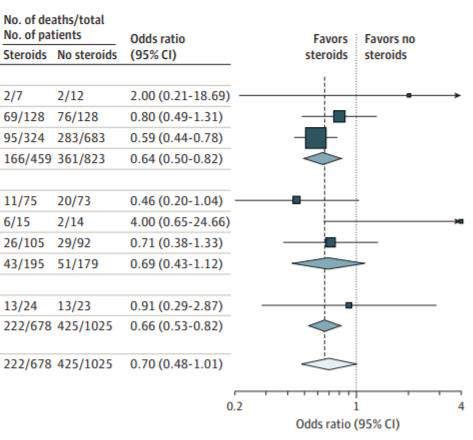
• 222/678 deaths among patients Steroids No Steroids
randomized to corticosteroids group vs. better better
425/1025 deaths among patients
randomized to usual care or placebo; OR:
0,66 IC95% [0,53-0,82]; p < 0,001 fixed-
effect meta-analysis)
• Association with mortality: DXM: 0,64
IC95% [0,5-0,82]; p32
Immunomodulatory
effect Corticosteroids (CT) - 3
Author CT Design Groups Participants Primary outcome Main results (primary outcome)
SoC group 31 (44,3%) vs. mPred
Escalation of care from
N=213 group 32 (27,3%)
ward to ICU
Moderate to severe OR: 0,47 95%CI[0,25-0,88], p= 0,017
Multi-center, mPred COVID-19, SoC group 26 (36,6%) vs. CT group
New requirement for
Fadel R mPred quasi- vs. no Median time to CT 26 (21,7%)
MV
experimental mPred initiation from OR: 0,47 95%CI[0,25-0,92], p= 0,025
admission: SoC group 21 (26,3%) vs. CT group
2 days (1-4) Death 18 (13,6%)
OR: 0,45 95%CI[0,22-0,91], p= 0,024
N=117
Requiring MV
mPred
Case-control Median time from D28 ventilator-free after mPred group 6,2 vs. control group
Nelson B mPred vs.
study symptom onset to admission 3,14, p=0,044
control
admission: 7 days
(3–8)
mPred: methylprednisolone Fadel R et al. CID May 2020
MV: mechanical ventilation Nelson B et al. CID Aug 202033
Immunomodulatory
effect Corticosteroids (CT) - 3
Author CT Design Groups Participants Primary outcome Main results (primary outcome)
N=416
Parallel, Suspected COVID-19 mPred group 72/194 (37,1%) vs.
double-blind, mPred hospitalized patients placebo group
Prado
mPred placebo- vs. Median time from D28 mortality 76/199 (38,2%)
Jeronimo
controlled, placebo illness onset to HR: 0,924 95%CI[0,669-1,275], p=
randomized randomization: 0,629
13 days (9–16)
N= 299
Receiving MV,
Study interrupted
Multicenter, DXM + Median time since
Ventilator-free days DXM + SoC group 6,6 IC95% [5-8,2]
Tomazini DXM randomized, SoC vs. symptom onset: DXM
during the first 28 days vs. SoC group 4,0
open-label SoC group: 9 days (7-11)
95%CI[2,9-5,4], p= 0,04
vs. SoC group 10 days
(6-12)
mPred: methylprednisolone - DXM: dexamethasone Prado Jeronimo et al. CID Aug 2020
MV: mechanical ventilation Tomazini BM et al. JAMA Sep 202034
Immunomodulatory
effect Corticosteroids (CT) - 4
Author CT Design Groups Participants Primary outcome Main results (primary outcome)
N=149
Critically ill, acute
respiratory failure
Study stopped early
Multicenter Median durations of
HC vs. D21 treatment HC group 32/76 (42,1%) vs. placebo
Dequin HC randomized symptoms prior to
placebo failure group 37/76 (50,7%)
double-blind randomization: HC
p= 0,29
group 9 days (7-11,5) vs.
placebo group 10 days
(8-12)
N=384 Study stopped early
Admitted in ICU for D21 respiratory and No treatment strategy met
Multicenter, HC vs.
Angus HC respiratory or cardiovascular organ prespecified criteria for statistical
open label trial placebo
cardiovascular organ support–free superiority, precluding definitive
support conclusions
HC: hydrocortisone Dequin PF et al. JAMA Sep 2020
Angus DC et al. JAMA Sep 2020Immunomodulatory
effect Tocilizumab (TCZ) - 1
• Multicenter, open-label, randomized, controlled 131 underwent randomization
clinical trial, academic study, France (CORIMUNO-
TOCI 1 trial)
64 assigned to TCZ + UC group 67 assigned UC group
• Inclusion criteria : confirmed SARS-CoV-2 infection
1 withdrawal of consent
(positive RT-PCR and/or typical chest CT), moderate or
severe pneumonia (at least 3 L/min of O2, without 59 received TCZ at Day 1
ventilation) and patients with critical pneumonia 1 received TCZ at Day 3
(high-flow oxygen, non invasive ventilation (NIV) or 3 didn’t receive TCZ
• 1 technical problem
MV) • 1 respiratory deterioration prior
administration
• Primary outcome: scores >5 on the WHO 10-point • 1 patient refusal
Clinical Progression Scale (WHO-CPS) on day 4 and
8 lost to follow-up at Day 28
survival without need of ventilation at day 14 • 1 discharge alive at day 9
• 1 discharge alive at day 13 3 Lost to follow-up at Day 28
• Secondary outcome: overall survival, adverse events • 6 discharge alive between day 15
and 28
• 3 Discharge alive with last contact
at Day 14
• 154 participants; 76 usual care group, 78 TCZ + usual
care group (1:1) 63 analyzed for primary 67 analyzed for primary
outcomes outcomes
UC: usual care
MV: mechanical ventilation Hermine O et al. JAMA Int Med Oct 202036
Monoclonal
antibody Tocilizumab (TCZ) - 1
Characteristics TCZ (N=63) Usual care (N=67)
Age (y) – median (IQR) 64 (57,1-74,3) 63,3 (57,1-72,3)
Female sex – no (%) 19 (30) 23 (34)
BMI (kg/m²) – median (IQR) 27,9 (23,3-30,8) 27,4 (24,5-31,3)
Coexisting conditions
Diabetes – no (%) 20/61 (33) 23/67 (34)
Chronic cardiac disease – no (%) 20/61 (33) 20/67 (30)
Chronic kidney disease – no (%) 5/61 (8) 13/67 (19)
Other
Time from symptoms onset to randomization – days – median (IQR) 10 (7-13) 10 (8 – 13)
Respiratory rate – median (IQR), bpm 24 (22-30) 26 (24-30)
Flow – median (IQR), L/min 5 (3-8) 5 (3-6)
Patients who received CT during the trial – no (%) 21 (33%) 41 (61%)
CT: corticosteroids
Hermine O et al. JAMA Int Med Oct 202037
Monoclonal
antibody Tocilizumab (TCZ) - 1
Probability of primary outcome at day 14
• Day 4 WHO-CPS scores >5 : 12/63 (19%) TCZ group
vs. 19/67 (28%) UC group, median posterior absolute
risk difference -9,0%; CrI90%[-21,0-3,1], no difference
• Day 14 Primary outcome : 15/63 (24%) TCZ group vs.
24/67 (36%) UC group. TCZ group: 12% fewer
patients needed NIV or MV or died. Posterior
probability of hazard ratio (HR)38
Monoclonal
antibody Tocilizumab (TCZ) - 2
• Randomized, double-blind, placebo-controlled, multicenter, 1560 Patients were screened
USA (BACC Bay Tocilizumab Trial) 1317 Did not enroll
• Inclusion criteria : age 18-85 yo, confirmed SARS-CoV-2
(not eligible, declined, referred to another
trial or other reason)
infection (nasopharyngeal swab RT-PCR or serum IgM
antibody assay), fever or pulmonary infiltrates or a need for 243 Were included in the modified
intention-to-treat analysis
O2 to maintain SpO2 > 92%, CRP > 50mg/L or ferritin > 500
ng/mL or D-dimer > 1000 ng/mL or LDH > 250 U/L 1 Was intubated before receiving placebo
• Exclusion criteria : supplemental O2 > 10L/min, history of
biologic agents treatment or immunosuppressive therapy or 242 Were included in the modified
diverticulitis intention-to-treat analysis
• Primary outcome: intubation or death after TCZ or placebo
administration 161 Received tocilizumab 81 Received placebo
145 (90.1%) Were discharged 70 (86.4%) Were discharged
• Secondary outcome: clinical worsening on ordinal scale 7 (4.3%) Were still hospitalized 8 (9.9%) Were still
at day 28 hospitalized at day 28
• 242 participants; 161 TCZ + standard care group, 9 (5.6%) Died 3 (3.7%) Died
81 placebo group (2:1)
Stone JH et al. NEJM Dec 202039
Monoclonal
antibody Tocilizumab (TCZ) - 2
Characteristics TCZ (N=161) Placebo (N=82) Overall (N=243)
Age (y) – median (IQR) 61,6 (46,4-69,7) 56,5 (44,7-67,8) 59,8 (45,3-69,4)
Male sex – no (%) 96 (60) 45 (55) 141 (58)
BMI (kg/m²) – median (IQR) 29,9 (26,0–34,2) 30,2 (25,7–33,8) 30,1 (25,9–34,2)
Median time from symptom onset to randomization (IQR) — days 9,0 (6,0–13,0) 10,0 (7,0–13,0) 9,0 (6,0–13,0)
Patients who received CT during the trial – no (%) 18 (11%) 5 (6%) 23 (9,5)
Coexisting conditions
Diabetes – no (%) 45 (28) 30 (37) 75 (31)
Hypertension – no (%) 80 (50) 38 (46) 118 (49)
Chronic kidney disease – no (%) 29 (18) 13 (16) 42 (17)
Ordinal scale score — no. (%)
2 23 (14) 15 (18) 38 (16)
3 133 (83) 61 (74) 194 (80)
4 5 (3) 5 (6) 10 (4)
CT: corticosteroids
Stone JH et al. NEJM Dec 202040
Monoclonal
antibody Tocilizumab (TCZ) - 2
• Mechanical ventilation or death: 10,6% CI95%[6,7–16,6] TCZ group vs. 12,5% CI95%[6,9–22,0] placebo group,
Hazard ratio: 0,83 CI95%[0,38–1.81], p=0,64
• Clinical worsening on ordinal scale: 19,3% CI95%[14,0–26,2] TCZ group vs. 17.4% CI95%[10,7–27,7] placebo
group, Hazard ratio: 1,11 CI95%[0,59–2,10], p=0,73
• Limits: Remdesivir became available early in the trial, primary event rate we observed was lower than
anticipated
Cumulative incidence (%)
Cumulative incidence (%)
Mechanical Ventilation or Death Clinical Worsening on Ordinal Scale
Days since enrollment Days since enrollment
Stone JH et al. NEJM Dec 202041
Monoclonal
antibody Tocilizumab (TCZ) - 3
126 Patients enrolled
• Prospective, open-label, randomized, multicenter, academic
study, Italy (RCT-TCZ-COVID-19 trial) 126 Randomized
• Inclusion criteria: hospitalized patients, age ≥ 18 yo, 60 Randomized to TCZ IV 66 Randomized to SoC
confirmed COVID-19 pneumonia (positive SRAS-CoV-2 PCR), 58 Received tocilizumab IV and 60 standard care and no
acute respiratory failure (PaO2/FiO2 [200-300mmHg]), fever no prohibited drugs prohibited drugs
> 38°C for at least 48h and/or CRP ≥ 100mg/L 1 Did not receive tocilizumab IV 2 TCZ IV + steroids (D2 and D4)
for a serious adverse event 1 TCZ subcutaneously (D2)
• Exclusion criteria : patient receiving at enrollment 1 Received steroids (D4) 2 steroids (D5 and D9)
mechanical ventilation, TCZ hypersensitivity 1 canakinumab (D2)
After clinical worsening
• Primary outcome: clinical worsening within 14 days since After clinical worsening
5 Received steroids
12 got 2 doses of TCZ IV
1 got 2 doses of TCZ and
randomization (occurrence of one of these events: entry STR
into ICU with IMV or death from any causes or clinical 1 got 1 dose of TCZ and
aggravation (PaO2/FiO2 < 150 mmHg)) STR
1 got STR
• Secondary outcome (one of them): hospital discharge rates 60 followed for 30 days
63 followed for 30 days
3 Withdrew consent
• 126 participants; 60 TCZ group, 63 standard of care group 60 included in the efficacy 63 included in the efficacy
(1:1) analysis analysis
SoC: standard of care IMV: invasive mechanical ventilation
STR: steroids Salvarani C et al. JAMA Int Med Oct 202042
Monoclonal
antibody Tocilizumab (TCZ) - 3
Characteristics TCZ (N=60) SoC (N=66) Overall (N=126)
Age (y) – median (IQR) 61,5 (51,5-73,5) 60,0 (54,0-69,0) 60,0 (53,0-72,0)
Male sex – no (%) 40 (66,7) 37 (56,1) 77 (61,1)
BMI ≥ 30 kg/m² – no (%) 16 (28,1) 22 (36,1) 38 (32,2)
Coexisting conditions
Diabetes – no (%) 10 (16,7) 9 (13,6) 19 (15,1)
Hypertension – no (%) 27 (45) 29 (43,9) 56 (44,4)
COPD – no (%) 2 (3,3) 13 (16) 42 (17)
Others
Median time from symptom onset to randomization (IQR) - days 7,0 (4,0-11,0) 8,0 (6,0-11,0) 8,0 (6,0–11,0)
Median time from hospital admission to randomization (IQR) - days 2,0 (1,0-3,0) 2,0 (1,0-4,2) 2,0 (1,0-3,2)
C-Reactive protein - median (IQR) - mg/L 105 (50-146) 65 (32-118) 82 (37-135)
Patients who received steroids during the trial – no (%) 6 (10) 7 (10,6) 13 (10,3)
Salvarani C et al. JAMA Int Med Oct 202043
Monoclonal
antibody Tocilizumab (TCZ) - 3
• Clinical worsening within 14 days since randomization: 17/60 (28,3%) TCZ group vs. 17/63 (27%) SoC group,
Rate ratio 1,05; CI95%[0,59-1,86] p=0,87, no difference
• Hospital discharge rates : 54/60 (90%) TCZ group vs. 58/63 (92,1%) SoC group. Rate ratio 0,98; CI95%[0,87-
1,09], no difference
• Limits: not a double-blind placebo-controlled trial, prematurely interrupted after an interim analysis for
futility
Cumulative clinical worsening Hospital
discharge rates
Time to clinical worsening (days since randomization) Time to hospital discharge (days since randomization)
Salvarani C et al. JAMA Int Med Oct 202044
Monoclonal
antibody Tocilizumab (TCZ) - 4
• Multicenter cohort, academic study, USA (STOP-COVID trial) 4485 Critically ill (ICU hospitalized) patients
561 Excluded from analysis
• Inclusion criteria: ICU hospitalized patients, age ≥ 18 yo, 267 Enrolled in a placebo-controlled trial
with an IL-6 antagonist
laboratory confirmed COVID-19 203 Admitted to the ICU ≥7 d after
hospital admission
• Exclusion criteria: hospitalization for 1 week or more before 63 Had an AST or ALT >500 U/L on ICU
admission
ICU admission, liver dysfunction, got IL-6 antagonist other 20 Received an IL-6 antagonist other than
tocilizumab
than TCZ during the first 2 days of ICU, got TCZ before ICU 8 Received tocilizumab before ICU
admission
admission
3924 Categorized by receipt of tocilizumab
• Primary outcome: in-hospital death within 48 h of ICU admission
• Secondary outcome: incidence of secondary infection,
transaminitis, arrhythmias, and thrombotic complications 433 Received TCZ within 2 days 3491 Did not receive TCZ
of ICU admission within 2ays d of ICU admission
occurring within 14 days after ICU admission
229 Treated on day 1 of ICU
• 3 924 participants; 433 TCZ group, 3491 no TCZ group admission (53%)
204 Treated on day 2 of ICU 3491 Did not receive TCZ
admission (47%) within 2 days of ICU admission
433 Received TCZ within 2 days
of ICU admission
SoC: standard of care IMV: invasive mechanical ventilation
STR: steroids Gupta S et al. JAMA Int Med Oct 202045
Monoclonal
antibody Tocilizumab (TCZ) - 4
Characteristics TCZ (N=433) No TCZ (N=3 491)
Age (y) – median (IQR) 58 (48-65) 63 (52-72)
Male sex – no (%) 299 (69,1) 2165 62)
BMI (kg/m²) – median (IQR) 31,6 (27,5-37,0) 30,4 (26,3-35,9)
Coexisting conditions
Diabetes – no (%) 165 (38,1) 1464 (41,9)
Hypertension – no (%) 234 (54) 2186 (62,6)
Coronary artery disease – no (%) 39 (9) 504 (14,4)
Others
PiO2/FiO2 < 200 (mmHg) — no (%) 205 (47,3) 1322 (37,9)
Time from symptom onset to ICU admission ≤ 3 days – no 58 (13,4) 835 (23,9)
Fever (>38 °C) on ICU admission — no (%) 207 (47,8) 1647 (47,2)
Treated with any Steroid (%) 81 (18,7) 440 (12,6)
Gupta S et al. JAMA Int Med Oct 202046
Monoclonal
antibody Tocilizumab (TCZ) - 4
• In hospital death: 1544 patients (39.3%) died;
125/433 (28,9%) TCZ group vs. 1419/3491
(40,6%) no TCZ group, adjusted HR: 0,71; Mortality in TCZ-Treated vs. Non-TCZ-Treated Patients
95%CI[0,56-0,92]
• Estimated 30-day mortality: 27.5%
Mortality (%)
95%CI[21.2%-33.8%] TCZ group vs. 37.1%
95%CI[35.5%-38.7%] no TCZ group; risk
difference: 9.6%; 95%CI[3.1%-16.0%]
• Limits: TCZ group patient were younger with
fewer comorbidities, were more hypoxemic
with more elevated inflammatory markers,
Time after ICU admission (days)
corticosteroids could have been
concomitantly administrated to TCZ, data
missed for some key variables, high D14
overall mortality >20%
Gupta S et al. JAMA Int Med Oct 202047
Monoclonal
antibody Tocilizumab (TCZ) - 5
445 Patients were assessed for eligibility
• Randomized, double-blind, placebo-controlled, phase 3
trial 56 Were excluded
• Inclusion criteria: age ≥ 18 yo, positive SARS-CoV-2 RT- 388 Underwent randomization
PCR, radiographic imaging pneumonia
• Exclusion criteria: SpO2 < 94% (room air) if receiving 259 Were assigned to receive 129 Were assigned to receive
continuous positive airway pressure, bilevel positive tocilizumab placebo
airway pressure, or mechanical ventilation, progression of 10 Did not receive 1 Did not receive
tocilizumab placebo
the illness to death was imminent and inevitable within 24
hours, active tuberculosis or suspected active bacterial, 249 Were included in the 128 Were included in the
fungal, or viral infection (other than SARS-CoV-2) modified intention-to-treat modified intention-to-treat
population population
• Primary outcome: mechanical ventilation or death by day 250 Were included in the safety 127 Were included in the safety
28 population population
24 (9.6%) Died 11 (8.6%) Died before Day 28
• Secondary outcome (one of them): Median time to before D28 2 (1.6%) Discontinued trial because of
transfer to another facility before D28
hospital discharge or readiness for discharge
225 (90,4%) Completed the trial 115 (89,8%) Completed the trial
• 388 participants; 249 TCZ group, 128 placebo group (2:1)
SoC: standard of care IMV: invasive mechanical ventilation
STR: steroids Salama C et al. NEJM Jan 202148
Monoclonal
antibody Tocilizumab (TCZ) - 5
Characteristics TCZ (N=249) Placebo (N=128)
Age (y) – mean (SD) 56 (14,3) 55,6 (14,9)
Male sex – no (%) 150 (60,2) 73 (57)
BMI (kg/m²) – mean (SD) 32 (7,9) 33,1 (7,2)
Category on seven-category ordinal scale for
clinical status
2 – no (%) 24 (9,6) 11 (8,6)
3 – no (%) 161 (64,7) 81 (63,3)
4 – no (%) 64 (25,7) 36 (28,1)
Others
C-reactive protein level ( mg/L) — median (range) 124,50 (2,5–2099,0) 143,40 (9,0–3776,0)
Ferritin level (pmol/L) — median (range) 1401,34 (29,2–38 482,1) 1353,14 (110,1–122 328,9)
Salama C et al. NEJM Jan 202149
Monoclonal
antibody Tocilizumab (TCZ) - 5
• Mechanical ventilation or death by day 28: Time to Mechanical Ventilation or Death by Day 28 in
12% 95%CI [8,5-16,9] TCZ group vs. 19,3% 95%CI the Modified Intention-to-Treat Population
[13,3-27,4] placebo group; p=0,04 HR: 0,56;
95%CI [0,33-0,97]
Proportion of patients
• Median time to hospital discharge or
readiness for discharge: 6 days 95%CI [6,0-7,0]
TCZ group vs. 7,5 days 95%CI [7,0-9,0] placebo
group; HR: 1,16; 95%CI [0,91-1,48]
• Death from any cause: 26/249 (10.4%) 95%CI
[7,2-14,9] TCZ group vs. 11/128 (8,6%) 95%CI
[4,9-14,9] placebo group; Weighted
Difference: 2 95%CI [-5,2-7,8] Days
Salama C et al. NEJM Jan 202150
Monoclonal
antibody Tocilizumab (TCZ) - 6
• Randomized, multicenter, open label trial, Brazil
129 Randomized
• Inclusion criteria: hospitalized patients, age ≥ 18 yo, positive
SRAS-CoV-2 PCR, symptoms > 3 days, receiving supplemental
O2 or mechanical ventilation, ≥ 2 serum biomarkers 65 Allocated to receive 64 Allocated to receive
tocilizumab plus standard of standard of care alone
abnormal levels (C reactive protein, D dimer, lactate care 62 Received tocilizumab plus
dehydrogenase, or ferritin) 65 Received tocilizumab standard of care
plus standard of care 2 Received tocilizumab
• Exclusion criteria : uncontrolled infection, raised ASAT or
ALAT > 5 times ULN, renal disease (estimated glomerular
65 64
filtration of51
Monoclonal
antibody Tocilizumab (TCZ) - 6
Characteristics TCZ (N=65) Control (N=64)
Age (y) – mean (SD) 57,4 (15,7) 57,5 (13,5)
Male sex – no (%) 44 (68) 44 (69)
Coexisting conditions
Hypertension – no (%) 30 (46) 34 (53)
Diabetes – no (%) 22 (34) 20 (31)
Obesity – no (%) 15 (23) 16 (25)
Others
Days from symptom onset to randomization — mean (SD) 10 (3,1) 9,5 (3,0)
Respiratory rate (rpm) – median (IQR) 20 (18-24) 20 (18-25)
Peripheral oxygen saturation (%) — median (IQR) 95 (92-96) 95 (93-96)
C reactive protein (mg/L) — mean (SD) 160 (104) 193 (283)
Veiga VC et al. BMJ Jan 202152
Monoclonal
antibody Tocilizumab (TCZ) - 6
• Receiving mechanical ventilation or died at day
15: 18/65 (28%) TCZ group vs. 13/64 (20%) placebo
group; effect size 1,54 95%CI [0,66-3,66], p= 0,32
• D15 death: 11/65 (17%) TCZ group vs. 2/64 (3%) Relative distribution of patient
placebo group status over time stratified by
• D28 mortality: 14/65 (21%) TCZ group vs. 6/64 treatment group Six level
(9%) placebo group; OR 2,70 95%CI [0,97-8,35], p= ordinal scale
0,07
• Mean (SD) D29 ventilator-free days : 19.4 (12.0)
TCZ group vs. 20.5 (10.8) placebo group; Rate ratio
1,12 95%CI [0,86-1,99], p= 0,53
• Limits: small sample size, investigators did not
record the number of patients assessed for
eligibility
Veiga VC et al. BMJ Jan 202153
Monoclonal
antibody Vilobelimab (IFX-1) - 1
• IFX-1: anti-complement C5a monoclonal 172 patients assessed for eligibility
antibody 142 not included
141 did not meet inclusion criteria
• Exploratory, open label, randomized, phase 2, 1 declined participation
multicenter, academic study, Netherlands 30 enrolled
• Inclusion criteria : age ≥ 18yo, severe
pneumonia (PaO2/FiO2 between [100-250] 15 randomly assigned IFX-1 group 15 randomly assigned control group
mmHg), positive RT-PCR SARS-CoV-2 test,
requiring non-invasive or invasive ventilation 15 received at least one dose of 15 received allocated best
treatment supportive care
• Primary outcome: Day 5 PaO2/FiO2 3 received seven infusions
percentage change from the baseline 3 received six infusions
3 received five infusions
• Secondary outcome: Day 28 mortality 5 received less than five infusions
• 30 participants; 15 control group, 15 IFX-1
treated group (1:1) 15 completed the study up to day 28 15 completed the study up to day 28
2 died 4 died
13 recovered 11 recovered
Vlaar APJ et al. Lancet Rheumatol Sep 202054
Monoclonal
antibody Vilobelimab (IFX-1) - 1
• Day 5 PaO2/FiO2 percentage change: no differences; IFX-1 IFX-1 Control
group (17%) vs. control group (41%); difference –24% Characteristics
(N=15) (N=15)
95%CI[–58-9], p=0,15 Age, mean (SD) - yr 58 (9) 63 (8)
• D28 mortality: IFX-1 group 13%; 95%CI[0-31] vs. control Male sex – no (%) 11 (73) 11 (73)
group 27 %; 95%CI[7-49]; HR=0,65 95%CI[0,1-4,14]
Coexisting conditions
IFX-1 Hypertension – no (%) 6 (40) 3 (20)
Control Diabetes – no (%) 4 (27) 4 (27)
Obesity – no (%) 2 (13) 4 (27)
Respiratory support
Day since randomization Intubated at randomization – no 8 (53) 10 (67)
Number at risk (%)
Control
IFX-1 Oxygen mask – no (%) 6 (40) 2 (13)
Nasal cannula – no (%) 1(7) 3 (20)
• Limits: patient heterogeneity, open label study
Vlaar APJ et al. Lancet Rheumatol Sep 202055
Monoclonal
antibody LY-CoV555 and LY-CoV016
• LY-CoV555 (bamlanivimab): potent antispike neutralizing MAb 613 Adults with symptomatic SARS-CoV-2
• LY-CoV016 (etesevimab): potent antispike neutralizing MAb infection screened for eligibility
• Randomized, double-blind, placebo- 21 Excluded
controlled, multicenter, USA (BLAZE-1)
592 Randomized
• Inclusion criteria : age ≥ 18yo, not
hospitalized, ≥ 1 mild or moderate COVID-19 101 received 107 received 101 received 112 received 156 received
symptoms, first positive SARS-CoV-2 viral 700 mg LY-CoV555 2800 mg LY-CoV555 7000 mg LY-CoV555 2800 mg LY-CoV555 Placebo
2800 mg LY-CoV016
infection ≤3 days prior to start of the infusion
• Primary outcome: effect of LY-CoV555 Efficacy 101 included
analysis population
107 included
Efficacy analysis population
101 included
Efficacy analysis population
112 included
Efficacy analysis population
156 included
Efficacy analysis population
monotherapy and combination therapy with
LY-CoV555 and LY-CoV016 compared with
placebo on SARSCoV-2 log viral load from 100 included
Primary analysis
103 included
Primary analysis
95 included
Primary analysis
102 included
Primary analysis
146 included
Primary analysis
baseline to day 11 (±4 days)
• 577 participants; 101 LY-CoV555 700 mg group, 107 LY-CoV555 2800 mg group, 101 LY-CoV555 7000 mg group,
112 LY-CoV555 2800 mg + LY-CoV016 2800 mg group, 156 placebo group
MAb: Monoclonal Antibody Gottlieb RL et al. JAMA Jan 202156
Monoclonal
antibody LY-CoV555 and LY-CoV016
Characteristics LY-CoV555 LY-CoV555 + LY-CoV016 Placebo
700 mg N=101 2800 mg N=107 7000 mg N=101 2800 mg + 2800 mg N= 112 N= 156
Age (y) – median (IQR) 39 (31-58) 45 (31-56) 46 (34-55) 44 (30-60) 46 (35-57)
Female sex – no (%) 63 (62.4) 51 (47.7) 58 (57.4) 58 (51.8) 85 (54.5)
BMI (kg/m²) – median
28,8 (25,1-35,4) 30,4 (25,6-34,0) 27,8 (24,7-32,3) 27,2 (22,9-33,0) 29,2 (25,9-34,2)
(IQR)
Duration of symptoms
5 (3-6) 4 (3-6) 4 (2-7) 4 (3-5) 4 (3-6)
(days) , median (IQR)
SARS-CoV-2 Ct – mean
23,8 (6,5) 24,5 (7,6) 23,4 (6,8) 22,7 (8,0) 23,8 (7,8)
(SD)
COVID-19 severity
Mild – no (%) 83 (82,2) 79 (73,8) 70 (69,3) 92 (82,1) 125 (80,1)
Moderate – no (%) 18 (17,8) 28 (26,2) 31 (30,7) 20 (17,9) 31 (19,9)
Gottlieb RL et al. JAMA Jan 202157
Monoclonal
antibody LY-CoV555 and LY-CoV016
• D11 change from baseline SARS-CoV-2 viral Mean SARS-CoV-2 viral
load: –3,72 700 mg group vs. – 4,08 2800 mg load cycle threshold value
group vs. –3,49 7000 mg group, –4,37
combination treat group, –3,80 placebo group
• Compared with placebo, differences in the
Ct value
change in log viral load at D11: 700 mg group
0,09; 95% CI[–0,35 - 0,52], p=0,69, vs. 2800 mg
group -0.27; 95% CI[-0,71 - 0,16], p=0,21, vs.
7000 mg group 0.31; 95% CI[-0,13 - 0,76],
p=0,16 vs. combination treatment –0,57
95% CI, [–1,00 - –0,14], p = 0,01
Days
• Limits: small patient
population, trial originally
designed as a safety and
biomarker study
Gottlieb RL et al. JAMA Jan 202158
Monoclonal
antibody REGN-COV2
• REGN-COV2: antibody cocktail containing two 306 Patients were assessed for eligibility
SARS-CoV-2 neutralizing antibodies
31 Were excluded
• Randomized, double-blind, placebo-controlled, 29 Were excluded at screening
2 Withdrew
multicenter, phase 1–3 study 275 Underwent randomization
269 Received REGN-COV2 or placebo
• Inclusion criteria : age ≥ 18yo, not hospitalized, 6 Did not receive REGN-COV2 or placebo
positive SARS-CoV-2 antigen or molecular test, 5 Withdrew
1 Discontinued owing to randomization error
symptom onset ≤ 7 days before randomization,
O2 saturation ≥93% (room air) 92 received REGN- 90 received REGN-
93 received placebo
COV2 2.4 g COV2 8.0 g
• Primary outcome: D7 viral load (VL) average 1 Is currently in ongoing 3 Are currently in ongoing 2 Are currently in
change trial
4 Discontinued owing to
trial
9 Discontinued
ongoing trial
4 Discontinued
1 Was withdrawn by sponsor
• Secondary outcome: safety
being lost to follow-up 1 Was lost to
3 Were lost to follow-up follow-up
4 Withdrew 3 Withdrew
• 275 participants; 90 REGN-COV2 high dose 1 Had unknown reason
group, 92 REGN-COV2 low dose group, 93 88 Completed the 80 Completed the 84 Completed the
placebo group (1:1:1) trial trial trial
Weinreich DM et al. NEJM Dec 202059
Monoclonal
antibody REGN-COV2
Characteristics REGN-COV2 (N=182) Placebo (N=93)
Age (y) - median (IQR) 43,0 (35,0–52,0) 45,0 (34,0–54,0)
Female sex - no (%) 98 (54) 43 (46)
BMI (kg/m²) - mean (SD) 30,51 (6,87) 29,73 (7,15)
Days from symptom onset to randomization - median
3,0 (0–8) 3,0 (0–8)
(range)
Positive baseline qualitative RT-PCR - no (%) 147 (81) 81 (87)
Viral load (log10 copies/mL) - mean (SD) 5,02 (2,50) 4,67 (2,37)
Baseline serum C-reactive protein (mg/L) - Mean (SD) 11,7 (24,4) 21,5 (43,5)
At least one risk factor for hospitalization - no (%)
Age > 50 years, obesity, cardiovascular disease (including hypertension),
chronic lung disease (including asthma), chronic metabolic disease (including 118 (65) 58 (62)
diabetes), chronic kidney disease (including receipt of dialysis), chronic liver
disease, and immunocompromise
Weinreich DM et al. NEJM Dec 202060
Monoclonal
antibody REGN-COV2
Viral load over time (overall population)
from baseline (log10 cp/mL)
Change in mean viral load
• Time-weighted average change in viral load from day
1 through day 7: −1,74 95%CI[−1,95 - −1,53] REGN-
COV2 group vs. −1,34 log10 cp/mL 95%CI[−1,60 - −1,08]
placebo group
• Viral load difference vs. placebo at day 7: −0,41 log10
cp/mL 95%CI[−0,71 - −0,10]
• Safety: Grade 3 or 4 event: 1/176 (0,56%) REGN-
COV2 group vs. 1/93 (1,07%) placebo group,
Event that led to infusion interruption 1/176 Trial day
(0,56%) REGN-COV2 group vs. 1/93 (1,07%)
placebo group, none led to death
• Limits: interim analysis
Weinreich DM et al. NEJM Dec 202061
Monoclonal
antibody Anakinra (ANK)
• Anakinra: recombinant human IL-1 receptor
antagonist 153 patients screened
• Multicenter, open-label, Bayesian randomized 37 excluded
19 included in another CORIMUNO trial
clinical trial, France (CORIMUNO-ANA-1) 2 did not meet inclusion criteria
2 errors in the inclusion process
• Inclusion criteria : positive SARS-CoV-2 RT-PCR or 14 unspecified reason
chest CT scan typical of COVID-19 pneumonia, 116 eligible for randomisation
mild-to-moderate, severe, or critical pneumonia
(O2 flow of >3 L/min via mask or nasal cannula 59 randomly assigned to ANK group 57 randomly assigned to UC group
and WHO-CPS score ≥5 points)
• Coprimary outcome: proportion of patients who 59 received assigned treatment 57 received usual care
had died or needed NIV or MV (WHO-CPS score of
>5 points) at D4, survival with no need for MV or
NIV at D14
• 116 participants; 59 ANK group, 57 usual care 59 analysed for primary outcome 55 analysed for primary outcome
group (1:1)
MV: mechanical ventilation UC: usual care
NIV: non-invasive ventilation The CORIMUNO-19 Collaborative group. Lancet Resp Med Jan 202162
Monoclonal
antibody Anakinra (ANK)
Characteristics Anakinra (N=59) Usual care (N=55)
Age (y) - median (IQR) 67,0 (55,5–74,3) 64,9 (59,5–78,3)
Female sex - no (%) 16 (27) 18 (33)
BMI (kg/m²) - median (IQR) 27,4 (24,9-32,0) 26,8 (24,7-31,5)
Coexisting conditions
Chronic cardiac disease - no (%) 22 (37%) 14 (25%)
Diabetes - no (%) 19 (32%) 15 (27%)
Chronic kidney disease (stage 1 to 3) or dialysis - no (%) 5 (8%) 3 (5%)
Others
O2 flow (L/min) - median (IQR) 5,0 (4,0–7,0) 6,0 (4,0–9,0)
Respiratory rate (breaths/min) - median (IQR) 28,0 (24,0–32,0) 28,0 (23,0–36,0)
C-reactive protein (mg/L) - median (IQR) 121,0 (77,0–198,0) 120,0 (87,0–191,5)
Time from symptoms onset to randomization (days) - median (IQR) 10,0 (8,0–13,0) 10,0 (7,0–13,0)
The CORIMUNO-19 Collaborative group. Lancet Resp Med Jan 202163
Monoclonal
antibody Anakinra (ANK)
• WHO-CPS score of >5 points) at D4: 21/59
(36%) anakinra group vs. 21/55 (38%) usual
Proportion of participants (%)
treatment group, median posterior ARD: – Mechanical ventilation or death
2,5%, 90%CI[−17,1 - 12,0]
• Survival with no need for MV or NIV at D14:
28/59 (47%) anakinra group vs. 28/55 (51%)
usual treatment group, median posterior HR:
0,97, 90%CI[0,62 - 1,52]
• Overall mortality at D90: 16/59 (27%)
anakinra group vs. 15/55 (27%) usual
treatment group, median posterior HR: 0,97,
95%CI[0,46 - 2,04] Trial day
• Limits: not blinded trial, usual care may
differed among centers, small sample size
• Study stopped early for futility
The CORIMUNO-19 Collaborative group. Lancet Resp Med Jan 202164
Immunomodulatory
effect Interferon beta 1a (INFβ-1a)
• SNG001: inhaled nebulized INFβ-1a 116 patients assessed for eligibility
15 excluded
• Randomized, double-blind, placebo-controlled, phase 1 of childbearing potential
1 had confirmation of SARS-CoV-2
2, multicenter, academic trial, UK (SG016) infection >24 h
13 were negative for SARS-CoV-2 infection
• Inclusion criteria: age ≥ 18 yo, hospitalized patients, 101 randomly assigned
COVID-19 symptoms, positive SARS-CoV-2 RT-PCR
• Exclusion criteria: inability to use a nebulizer, 51 assigned to placebo 50 assigned to SNG001
pregnant and breastfeeding women, 50 received intervention 48 received intervention
1 withdrew consent 2 withdrew consent
• Primary outcome: clinical condition change (WHO 14 withdrawn 9 withdrawn
Ordinal Scale for Clinical Improvement) 5 withdrew consent
2 lost to follow-up
6 withdrew consent
2 lost to follow-up
• Secondary outcome: change in Breathlessness, Cough
2 due to investigator’s decision 1 for other reasons
2 for other reasons
2 due to a fatal serious adverse reaction
And Sputum Scale score, safety and tolerability 1 due to a non-serious adverse reaction
• 101 participants; 50 SNG001 group, 51 placebo group 36 completed follow-up at D28 39 completed follow-up at D28
(1:1) 50 included in ITT analysis 48 included in the ITT analysis
43 included in the per-protocol 43 included in the per-protocol
analysis analysis
SoC: standard of care IMV: invasive mechanical ventilation
STR: steroids Monk PD et al. Lancet Resp Med Nov 2020You can also read


