YEAR 2 REVIEW AND REPORT - THE GAMEPLAN FOR GROWTH THE FA's STRATEGY FOR WOMEN'S AND GIRLS' FOOTBALL: 2017-2020 - Football Association
←
→
Page content transcription
If your browser does not render page correctly, please read the page content below

THE GAMEPLAN FOR GROWTH
THE FA’s STRATEGY FOR WOMEN’S AND GIRLS’ FOOTBALL: 2017–2020

YEAR 2 REVIEW AND REPORT

YEAR 2 HIGHLIGHTS
Participation:                                                 Infrastructure:
Players:                      Up 9% to 2.7 million.            The FA Women’s        Now a fully-professional league.
Coaches:                      Up 24% to 1,691.                 Super League:
Referees:                     Up 13% to 1,727.                 SSE Wildcats Centres: More than 880 throughout
                                                                                     England.
Registered teams:             11,088 – a growth of 1,774 new
                              teams in the last 12 months.     Bespoke coaching      ‘Blueprint for Success’ geared
                                                               manual:               to the women’s and girls’ game.
Fans:
                                                               Commercial:
New attendance                Domestic: 45,423 – SSE
highs:                        Women’s FA Cup Final,            Historic investment:   Landmark title FA WSL
                              May 2018.                                               sponsorship with Barclays.
                              International: 25,603 –          New partners:          Six new partners in last 12
                              England v Wales, April 2018.                            months: Barclays, Head &
                                                                                      Shoulders, Mars, PayPal,
The FA Women’s                Attendances up 13%.                                     Lucozade Sport and Budweiser.
Super League:
The FA Women’s                Attendances up 76%.              Awareness:
Championship:
                                                               Brand:                 Brand awareness of The FA
                                                                                      WSL up from 46% to 58%.
England:
                                                               Social media:          Interactions have trebled to
Lionesses:         1st in the UEFA European                                           almost 2.5 million in last 12
                   rankings;                                                          months across Lionesses
                   4th in the FIFA World rankings.                                    and The FA WSL.
                   Winners: 2019 SheBelieves                   Broadcast:             1.7m viewers for England v
                   Cup, USA.                                                          Wales, BBC 2, April 2018.
Development teams: Under-20s win bronze in age-                                       1.4m peak viewing for BBC
                   group FIFA Women’s World Cup.                                      Women’s Football Show.
UEFA Women’s       Won bid to host across eight                                       60+ women’s matches
EURO 2021:         proposed cities, with the Final                                    broadcast live, or streamed
                   at Wembley Stadium connected                                       online, including radio.
                   by EE.
                                                                                      Peak viewing for Lionesses’
                                                                                      matches in 2019 SheBelieves
                                                                                      Cup more than doubled
                                                                                      from 2018.

2 | ‘The Gameplan for Growth’ – Year 2 review and report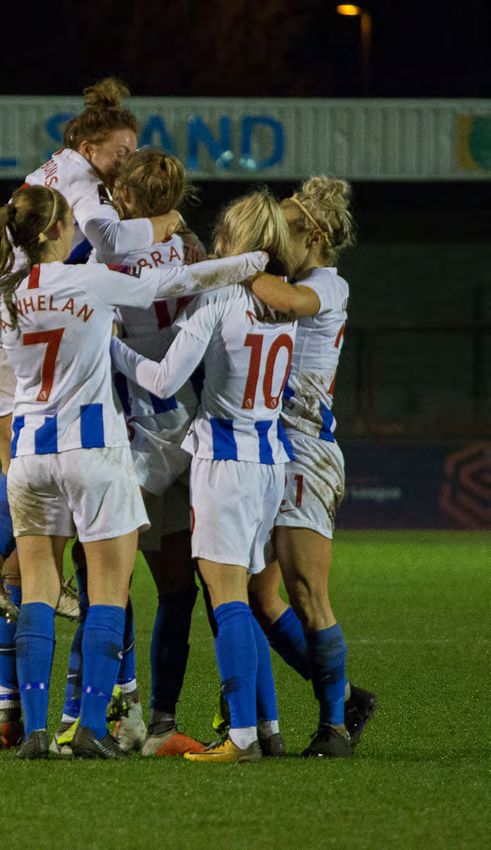
A PICTURE THAT TELLS ME WE’RE
HEADING IN THE RIGHT DIRECTION
     A pivotal moment in our work to grow             With the opportunities we are now providing     PAGE   CONTENTS
     women’s and girls’ football in England           young girls to play the game, and with a
     came in May last year.                           fully-professional FA Women’s Super League,     4      ONE VISION, THREE GOALS, EIGHT PRIORITIES
                                                      it means the girls among the record 45,423
     I was walking up a busy Wembley Way                                                              5      CREATING A FULLY-PROFESSIONAL LEAGUE
                                                      crowd that day can genuinely aspire to a
     on my way to the SSE Women’s FA Cup
                                                      career as a full-time professional player.
     Final between Arsenal and Chelsea. I saw                                                         6      NURTURING OUR NATIONAL TALENT
                                                      They can develop through our talent
     a whole family – mum, dad, children and
                                                      pathway and who knows, one day play in a        7      QUALIFYING AND DEVELOPING
     grandparents – taking a selfie, with the
                                                      FIFA Women’s World Cup, as our Lionesses               MORE TOP COACHES
     world-famous Wembley Stadium in
                                                      will do this summer. Or they can purely play
     the background.
                                                      for fun and make new friends.                   8      MAKING A GLOBAL IMPACT
     If you pick apart the elements of that
                                                      Since we launched the ‘Gameplan for
     moment, it touches on so many positive                                                           10     TRAINING MORE MATCH OFFICIALS
                                                      Growth’, the momentum is building quicker
     things we are working every day to achieve.
                                                      than any of us anticipated. But experience      11     ENGAGING THE GAME’S FUTURE
     For example, encouraging families across         tells me that many things grow at speed and
     generations to watch women’s football –          just as quickly fade away. We must not allow    12     UPLIFTING AWARENESS
     sharing memorable experiences and having         this to happen to the women’s game.
     fun in the process. Hopefully, the daughter                                                      13     GROWING ATTENDANCES
                                                       We want women and girls from all over the
     in the family will have been inspired to sign-
                                                       country, from whatever background, to          14     STRENGTHENING COMMERCIALLY
     up to SSE Wildcats. And there’s nothing to
                                                       play, coach, referee and sit in boardrooms.
     stop her mum playing the game, becoming
                                                      This means not only providing these             15     LOOKING AHEAD
     a coach or a referee or volunteering at her
                                                       opportunities, but communicating them
     daughter’s club – playing her own part in
                                                       positively and highlighting all the benefits
     helping the game develop.
                                                      – professional and personal – which our
     And the moment was captured on a
                                                                                                             UNFOLDING THE FUTURE
                                                       national game can bring. We still have
                                                                                                             2019/20 women’s football fixture calendar
     mobile device which no doubt found                much to do, but no-one can deny that solid
     its way onto social media – spreading             foundations are in place.
     awareness of the game.
     Once inside the stadium, the family will
     have been inspired by some wonderful
     role models – players, match officials and
     coaches. And all within arguably the most        Baroness Sue Campbell
     famous stadium in the world, giving the          Director of Women’s Football
     women’s game the status it deserves.             The Football Association

                                                                                                               ‘The Gameplan for Growth’ – Year 2 review and report | 3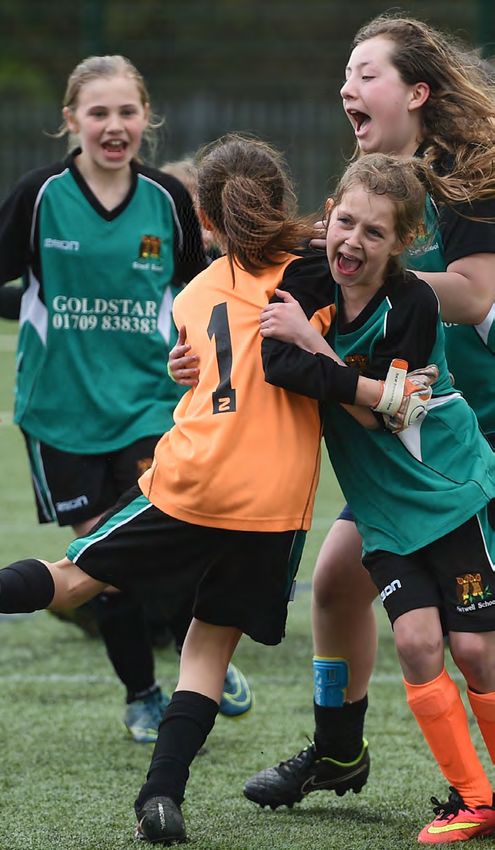
ONE VISION
Whether competitively or recreationally, to be the no.1 team sport of choice for every girl and woman in England

THREE GOALS                                                                                                                                   EIGHT PRIORITIES
                                                                                                                                              1. Build a sustainable and successful
 2020 GOAL                                   2020 TARGET                                        STATUS AND STATS                                 high-performance system
 DOUBLE                                      12,000 registered¹                                 11,088 registered¹ teams
                                                                                                                                              2. Build a world-class talent pipeline
 PARTICIPATION                               teams
 DOUBLE FANS                                 International matches:                             25,603 – England v Wales,                     3. Increase the number and diversity of women
                                             increase to 22,000                                 April 2018                                       coaching, refereeing and administering the
                                                                                                                                                 sport at all levels
                                             FA WSL: 2,020 average                              FA WSL currently averaging
                                             attendance                                         937 per match                                 4. Develop participation opportunities and
                                                                                                                                                 infrastructure
                                             Peak FA WSL TV                                     Peak FA WSL TV viewing:
                                             viewing: 92,000                                    90,361 (BBC red button                        5. Change perceptions and social barriers to
                                                                                                and BT Sport)                                    participation and following
 CONSISTENT                                  Within top three                                   Lionesses FIFA-ranked                         6. Enhance the profile and value of England
 SUCCESS ON THE                              countries in all                                   between 2 and 4 inclusive                        players and senior team
 WORLD STAGE                                 age groups                                         since March 2018.
                                                                                                                                              7. Signpost opportunities to participate,
                                             Potential to win                                   Under-20s win bronze in                          watch or follow
                                             2023 FIFA Women’s                                  age-group FIFA Women’s
                                             World Cup                                          World Cup                                     8. Improve commercial prospects in
                                                                                                                                                 women’s football
                                                                                                Lionesses win prestigious
                                                                                                SheBelieves Cup, USA,
                                                                                                March 2019

¹Registered teams = affiliated teams + team equivalents from SSE Wildcats Centres and ‘Premier League for Girls’ football satellite centres

4 | ‘The Gameplan for Growth’ – Year 2 review and report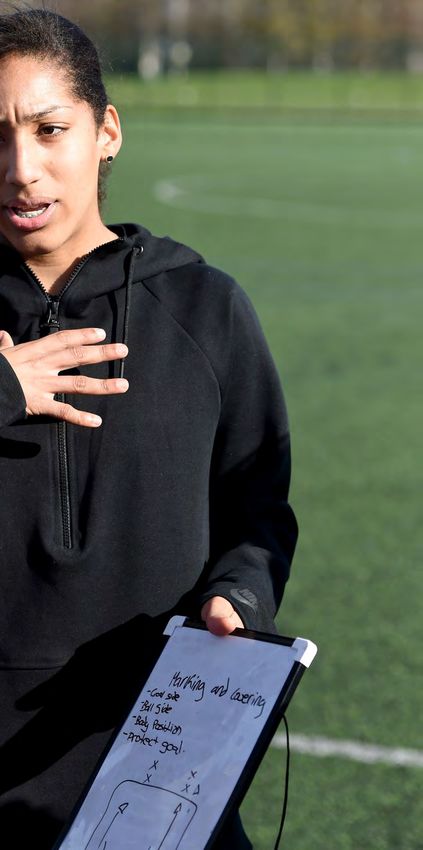
Two years into our four-year strategy to grow and sustain women’s and girls’ football in England,
the following pages showcase nine facets of our work. All directly underpin the work of our priorities,
leading to achieving our three big 2020 goals.

CREATING A FULLY- PROFESSIONAL LEAGUE
Re-launched last September, The FA Women’s Super League is now the only fully-professional women’s football league in Europe.
This ground-breaking move was one of the key outputs of a comprehensive review of the top tiers of women’s football competitions.
The professional FA WSL means players can train full-time and have access to highly-qualified coaching, sports science and medical support.
Coaches too are now full-time – a crucial element in improving the quality of our top domestic league.
The review also saw Tier 2 rebranded ‘The FA Women’s Championship’ (FA WC) with semi-professional status. Minimum standards outlined
in both leagues, provide the players, coaches and clubs with a platform to grow.
         Outputs:
           •     11 fully-professional teams, plus 11 new FA WSL club academies to provide holistic development, including physical
                 capability and dual careers for talented players aged 16+.
           •     40+ FA WSL games broadcast live.
           •     A new and competitive semi-professional FA WC.
           •     A new FA WSL and FA WC Board to drive development and sustainability of both leagues.
           •     Title sponsorship from Barclays (see page 14).
           •     Average attendances now approaching 1,000.
           •     Brand awareness of FA WSL increased from 46% to 58% and continues to rise.
            •    New, distinctive brands for the top tiers of the game: The FA Women’s Super League, The FA Women’s Championship
                  and the two tiers of The FA Women’s National League.

                                    “For the first time in this country’s footballing history, young girls
                                     can now dream of becoming a professional footballer. And we
                                     have the pathway in place to turn those dreams into reality.”
                                     Katie Brazier, FA Head of Women’s Leagues and Competitions

                                                                                                  ‘The Gameplan for Growth’ – Year 2 review and report | 5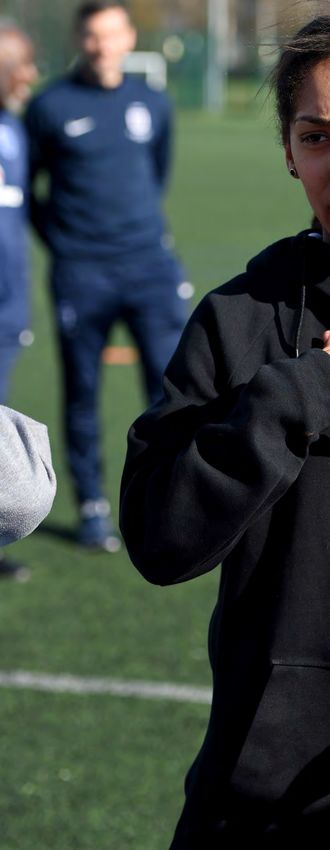
NURTURING OUR NATIONAL TALENT
Having a defined playing and coaching philosophy at national teams’ level is vital if players are to progress seamlessly through our talent pathway.
Equally, having a bespoke curriculum of learning alongside our England DNA (see below) is imperative to produce female players who are able to
compete and win on the world stage.
To meet these needs, the ‘Blueprint for Success’ has been created. It will be launched in August 2019 across our national teams and talent pathway.
It defines the processes, structures and support required for each age group and pathway stage. In addition, it outlines our culture and values when
developing our talented players.
Outputs:
    • A single document which delivers:
        –– a clear framework to enable us to best support our talented players;
        –– our key principles, systems and styles of play per age group, with developing future Lionesses at its heart;
        –– a coaching playbook, covering in-possession, out-of-possession, transition, set plays and final-third football;
        –– an indivisible link to the ‘How we play’, ‘How we coach’ and ‘Who we are’ elements of the England DNA (see below).

             “The Blueprint for Success will be unique to women’s football, and will
              build on the rich and unique history of our game. It’s a game-changer.”
              Kay Cossington, FA Head of Women’s Technical Development

                                               THE ENGLAND DNA
                                               The ‘England DNA’ document unequivocally states the on- and off-pitch
                                               ethos which underpins every aspect of every England team at every level.
                                               It is an ever-evolving document which covers five areas:
                                                   • Who we are – culture and values;
                                                   • How we play – in and out of possession;
                                                   • The future England player – skills and attributes;
                                                   • How we coach – training and matchday;
                                                   • How we support – physical and psychological performance.
                                               To read it, visit: TheFA.com/learning/england-dna

6 | ‘The Gameplan for Growth’ – Year 2 review and report
QUALIFYING AND DEVELOPING
MORE TOP COACHES
Increasing the number and diversity of women coaching football is a central pillar of growing the game. Equally, having coaches qualified
to operate at the very top level of the game is vital to national success.
To achieve these aspirations, we have proactively identified women ready to take The FA Level 4 (‘A’ Licence) in coaching football. We have
also established a Coach Developer workforce to support coaches already working in the professional and semi-professional game – and
the levels immediately below. That’s in addition to ensuring opportunities exist for talented female BAME coaches to work at the highest
level – as well as supporting coaches already working in our England talent pathway.
Outputs:
    • 29 coaches from all levels of women’s and girls’ football obtained a place on the ‘A’ Licence course (17 male/12 female).
    • All 12 females received a bursary to attend the course (covering 90% of the £3k course cost).
    • At current progress rate, we will have 70 female coaches with an ‘A’ Licence by 2020, with an additional 30 ‘A’ Licence-
      holding male coaches already working in the women’s game.
    • First three BAME mentee coaches given the opportunity for this season to work in England talent pathway.
    • 50% of managers/head coaches in The FA WSL and The FA WC are female, as are 70% of our England national teams’
      head coaches.
    • Six female coaches in the talent pathway now receiving direct coach developer support.
    • All eight Women’s High-Performance Football Centres have a dedicated coach development officer. Collectively, these
      officers have engaged with over 900 coaches across grassroots and the talent pathway. This has resulted in 2,000+ positive
      development interactions from workshops to one-on-one support on the grass. In addition, we have three women’s national
      coach developers supporting the professional game.

                 “It’s been a year of firsts. For the first time, we’ve appointed a
                 team of women’s national coach developers. And we launched
                  our first support programme for female BAME mentee coaches
                 to work at the game’s highest level. We intend to carry on breaking
                  new ground every year.”
                 Audrey Cooper, FA Head of Women’s Coach Development

                                                                                              ‘The Gameplan for Growth’ – Year 2 review and report | 7
MAKING A GLOBAL IMPACT
England’s women’s teams haven’t just arrived on the world stage – they’re playing a leading role.
But it hasn’t happened by accident. More high-performance coaches, expert support for existing coaches, a defined
talent pathway and soon the ‘Blueprint for Success’ manual. These are just some of the factors which have played their
part in producing better players at national level.
Understandably, the Lionesses’ share of media attention is on the senior team. Rightly so, especially in light of the recent
triumph in the prestigious SheBelieves Cup in the USA.
Indeed, Phil Neville will lead the Lionesses into this summer’s FIFA Women’s World Cup in France with confidence, given
their no.1 ranking in Europe and no.4 in the world.
But the seeds of senior success are deeply rooted. There are now six England development squads, from under-15s to
under-21s inclusive. These squads collectively provide a cohesive pathway from youth to professional development,
with success in the last 12 months including:
    • Under-20s:              2018 FIFA Women’s World Cup – bronze medallists
    • Under-18s:              2018 USA Invitational Tournament – winners
    • Under-17s:              2018 UEFA Women’s Championship – fourth place
And it goes deeper still. Increased investment from The FA into the game’s workforce at club level is also bearing fruit.
Clubs themselves are investing and growing as a result. Working in positive partnership with clubs is vital to success at
domestic and national levels.

FIFA WOMEN’S WORLD CUP FRANCE 2019
The Lionesses kick-off their FIFA Women’s World Cup journey on Sunday 9 June in Nice at 5pm GMT. First up in Group D –
statistically the toughest group based on FIFA rankings – are traditional rivals Scotland (FIFA ranking: 20).
The remaining group matches are:
v. Argentina (FIFA ranking: 36), Friday 14 June, 8pm GMT (Le Havre);
v. Japan (FIFA ranking: 8), Wednesday 19 June, 8pm GMT (Nice).

                                      “We’ve set no limits on what we can achieve in
                                      France. It’s not lost on us the power our success
                                       in the World Cup could have on growing the game
                                       in England and inspiring the next generation.”
                                       Phil Neville, Lionesses’ Head Coach

8 | ‘The Gameplan for Growth’ – Year 2 review and report
UEFA WOMEN’S EURO 2021
In two years’ time, the top 16 countries in Europe will gather in England to contest the UEFA Women’s EURO 2021.
It’s the result of The FA’s successful bid to host the tournament, with eight proposed host cities starting to prepare to host
matches and welcome visitors from across the continent.
Tournaments of the scale and profile of UEFA Women’s EURO 2021 have the power to inspire a new generation of young girls –
and women of all ages – to get involved in the sport, for fitness, competition or fun.
The tournament provides a pivotal moment in the next phase of the growth of the women’s game in England. It offers the
opportunity to showcase the women’s game at both club and national levels and grow its support.
‘See it and be it’ is the mantra for potential participants. ‘See it and see it again’ is the mantra for potential spectators.
It all culminates in the Final at Wembley – a year after the men’s UEFA EURO 2020 Final will have been played at the same venue.

              “Hosting UEFA Women’s EURO 2021 is fantastic news for The FA,
              the country and, crucially, for the future development of girls’ and
              women’s football in England – and across Europe.”
               Baroness Sue Campbell, FA Director of Women’s Football

                                                                                                     Rotherham

               This map shows the provisional venues to host               Manchester
                                                                                        Sheffield
               matches in the UEFA Women’s EURO 2021
               tournament – to be played in July 2021.
                                                                                        Nottingham

                                                                                           Milton Keynes
                                                                                                           Brentford

                                                                                                             Wembley

                                                                             Southampton
                                                                                                           Brighton

                                                                                           ‘The Gameplan for Growth’ – Year 2 review and report | 9
TRAINING MORE MATCH OFFICIALS
A competitive game cannot take place without a qualified referee. Therefore, having enough referees to officiate women’s and girls’
football is crucial to its growth. That’s particularly true in areas identified as ‘hotspots’ for the game, where we know there’s passion for
the game and it’s growing. We must facilitate that passion.
To do so, our County FAs have engaged with clubs in hotspot areas to run referee recruitment initiatives. Nationally, we’ve hosted a National
Development Day at St. George’s Park to inspire female referees to reach the top.
Outputs:
    •   1,727 qualified female referees.
    •   48% of FA WSL games are officiated by female referees; 27% in FA Women’s Championship and 24% in FA Women’s National League.
    •   More than 100 female referees attended National Development Day at St. George’s Park.
    •   Sian Massey-Ellis and Lisa Rashid appointed as assistant referees to this summer’s FIFA Women’s World Cup.
    •   Rebecca Welch promoted to Category 1 on the FIFA referee list.
    •   Four female referees/four assistant referees now on FIFA list:
          –– Referees: Amy Fearne, Rebecca Welch, Sarah Garratt, Abigail Marriott;
          –– Assistant referees: Lisa Rashid, Sian Massey, Helen Byrne, Natalie Aspinall.

              “As the standard of women’s football, domestically and internationally,
               continues to rise, we must ensure our referees are given adequate
               development and support to ensure they meet the demands of the game.
               Our elite referees continue to inspire more girls and young women with
               an existing passion within women’s football to become match officials.”
               Joanna Stimpson, FA Women’s Refereeing Manager

10 | ‘The Gameplan for Growth’ – Year 2 review and report
ENGAGING THE GAME’S FUTURE
‘Have fun, make friends, play football!’ That’s the ethos behind SSE Wildcats, a national programme to inspire 5-11-year-old girls to play football and experience its benefits.
Launched in 2017, SSE Wildcats has gone from strength to strength. This time last year we had 199 SSE Wildcats Centres in locations throughout the country. That figure has
more than quadrupled in the past 12 months. Every SSE Wildcats Centre is accessible for all, run weekly over a period of months – and staffed by qualified FA coaches.
Outputs:
• Since 2017, more than 17,000 girls attracted to play the game for the first time.
• More than 880 SSE Wildcats Centres in place – and more on the way.
• 98% of girls who attend express a desire to carry on playing football.
• Tangible contribution to doubling the numbers of girls’ teams, with a 16.9% rise in girls’ affiliated teams last season.
• 96% of girls now play football at least once per week, compared to 34% pre-SSE Wildcats.
• The programme has been recognised and endorsed as a best-practice model for its innovative approach, winning a UEFA Grow award.
“We know the sooner girls start to play and enjoy football, the more likely they are to
stay involved as they grow up. SSE Wildcats has proved to be the perfect start point –
it’s really taken off.”
Louise Gear, FA Head of Women’s Participation
THE FA GIRLS’ FOOTBALL
SCHOOL PARTNERSHIPS
Alongside SSE Wildcats, The FA is also working hard to embed girls’ football in the school curriculum.
To do so, last year it launched The FA Girls’ Football School Partnerships, in collaboration with the
Youth Sport Trust. The goal is to build a sustainable infrastructure of schools committed to developing
the girls’ game.
To date, there are 100 FA Girls' Football School Partnerships, reaching more than 5,500 schools nationally.
To find out more. visit: www.youthsporttrust.org/FA-partnerships
From 2019, the programme will benefit with additional investment from Barclays (see page 14).
‘The Gameplan for Growth’ – Year 2 review and report | 11UPLIFTING AWARENESS
To achieve the key goal of doubling the fanbase by 2020, the last 12 months has seen a mixture of pro-active PR
and marketing support for priority areas, alongside the implementation of a wide-ranging social media strategy.
Social media content has taken fans behind-the-scenes with the Lionesses and provided followers with exclusive content
from The FA WSL and The FA WC. Best-performing content has provided fans with unprecedented access to the stars and
showcased the quality of the game through individual skills and team plays.
Social has also provided a platform to support and celebrate the fans. For example, you may remember when seven-
year-old Darcy was invited to be mascot for the Lionesses’ home fixture against Sweden after being picked on for
playing mixed football.
Current Lionesses now have established online presences and several former England players are part of a Legends’
programme to promote the women’s game.
Elsewhere we have been grateful for the support of our broadcast partners, BBC and BT Sport, for their support of domestic
and international football.
Outputs:
Social media in last 12 months:
• Lionesses: • FA WSL:
–– Instagram: 169% growth – now 102.8k followers; –– Instagram: 65% growth – now 51k followers;
–– Twitter: 57% growth – now 66.3k followers; –– Twitter: 20% growth – now 80.7k followers;
–– Interactions (likes, comments, shares): 1.78 million. –– Facebook: 17.53% growth – now 93.2k likes;
–– Interactions (likes, comments, shares): 679k.
TV:
• Viewership peaked at 1.9 million for the 2018 SSE Women’s FA Cup Final on BBC 1.
• 1.7 million tuned in to watch the England v Wales, FIFA Women’s World Cup Qualifier in April 2018 on BBC 2.
• Peak TV viewing audiences more than doubled across the Lionesses’ three matches in the SheBelieves Cup matches 2019
v 2018 (v. Brazil, USA and Japan. 626,667 = 2019; 262,333 = 2018).
12 | ‘The Gameplan for Growth’ – Year 2 review and reportGROWING ATTENDANCES
Maximising attendances at showpiece matches is a vital part of growing spectatorship at all levels. It also attracts broadcast and commercial interest.
But, growing a fanbase doesn’t come easy. It requires impactful marketing and PR initiatives based on robust research and insight. In The FA’s case, this has
led to ticket-pricing strategies to attract families and schools, the use of role models, ambassadors and social media influencers – and front-foot campaigns
around major matches and tournaments.
All are playing their part in growing attendances for Cup Finals and Lionesses’ games, alongside the ongoing work with clubs to build league match crowds.
There’s still work to be done but progress is being made.
Outputs:
• 45,423 at the SSE Women’s FA Cup Final was a new record for the competition.
• 49,096 fans have attended the four home Lionesses’ games in the last 12 months, compared to 33,309 for the four home games in the
previous 12 months – a 48% increase.
• At the midpoint of the 2018/19 season, average attendances in FA WSL are 937. That’s 13% up on 2017/18 (828).
• In FA WC attendances are currently 548. That’s 76% up on 2017/18 (311).
“Seeing the colour and vibrancy fans bring to women’s matches is a vital ingredient
in attracting more media coverage, more sponsors – and even more fans.”
Kelly Simmons, FA Director of Women’s Professional Game
FOOTBALL FOR ALL
We are working hard to ensure the female game enshrines equality, diversity and inclusion. Some of our key
achievements are:
• The launch of a £185,000 County FA Inclusion Innovation Fund to initiate key projects between local
partners, using the Women’s World Cup
as a catalyst for change.
• The development of the first National Women’s Football Disability Group to help us shape the future of
the sport.
• The increase in the numbers of women playing recreational football, especially the exciting development
of women’s walking football. The FA People’s Cup has developed this as a new category and 21 teams
entered in this inaugural season.
‘The Gameplan for Growth’ – Year 2 review and report | 13STRENGTHENING COMMERCIALLY
The last 12 months have been pivotal in the commercial history of women’s football in this country. The recently-announced partnership with Barclays, as title partner of
The FA Women’s Super League and lead partner of The FA Girls’ Football School Partnerships, is the biggest ever commercial investment by a brand in UK women’s sport.
At international level, top brands such as Head & Shoulders, Mars, PayPal, Budweiser and Lucozade Sport have all become partners to the Lionesses as part of their overall
strategies around England teams.
And that’s in addition to existing sponsors of the game, as the chart on this page shows. Top brands not only provide financial injections into the game – they also provide
valuable exposure and promotion for women’s and girls’ football.. There’s never been a better time for brands to be involved.
Outputs:
• The multi-million pound partnership with Barclays is the biggest investment to date by a brand in UK women’s sport.
• Six new partners recruited in the last 12 months.
• Bespoke women’s kit developed by Nike for the first time, to be worn by the Lionesses in this summer’s FIFA Women’s World Cup.
“The support of commercial partners is vital in allowing The FA to continue to invest millions
into all aspects of the game. The increased commitment in the women’s game has reinforced
the value now placed on women’s and girls’ football.”
Marzena Bogdanowicz, FA Head of Commercial & Marketing for Women’s Football
COMMERCIAL PARTNERS HOST BROADCASTERS
14 | ‘The Gameplan for Growth’ – Year 2 review and reportLOOKING AHEAD
FACILITIES FOR THE FUTURE
Facility investment into the game continues across the country, thanks
to funding from The FA, Premier League and Government, through their
collective charity, the Football Foundation.
Projects include:
• Unity Academy, Blackpool: £576,533 funding has built a new
3G pitch, supporting 20 new female teams and host Lancashire
FA SSE Wildcats’ sessions.
• Roundwood Park School, Harpenden: £500,000 has built a new
3G pitch and will help double female participation (below left).
• Samuel Ryder Academy, St Albans: £457,866 into another 3G
pitch will develop 16 new girls’ teams and 250 new female footballers
(below right).
In addition, a £20 million investment into four sites in Liverpool (pictured
alongside) has seen over 12,000 females participate in the first three months.
‘The Gameplan for Growth’ – Year 2 review and report | 15THE FA’S STRATEGY FOR WOMEN’S AND GIRLS’ FOOTBALL: 2017-2020
In March 2017, The FA published ‘THE GAMEPLAN FOR
GROWTH’, its four-year strategy for women’s and girls’
football. To read more about the women’s and girls’
game, visit: TheFA.com/womens-girls-football
The Football Association
Wembley Stadium
London HA9 0WS
T: +44 (0)800 169 1863
F: +44 (0)800 169 1864
W: TheFA.com REF. 16001You can also read


