Uganda: The Role of the Informal Economy in City Growth - POLICY BRIEF FOR DECISION MAKERS - Cities Alliance
←
→
Page content transcription
If your browser does not render page correctly, please read the page content below
POLICY BRIEF FOR
DECISION MAKERS

Uganda:
The Role of
the Informal
Economy in
City Growth

                   1
UGANDA
    INCLUSIVE, RESILIENT AND
    SUSTAINABLE URBAN GROWTH

    Facts:
    Area: 241,038 km2
    Population: 37,873,253
    GDP per capita: US$648
    GDP growth: 5.5% (2010/15)                                  Poverty map at sub-nation level
                                                                (OPHI, 2013)
    GINI: 44.11 (medium)

                                                93B
    HDI: 164th (low)

    33M
                                                US$ a year is sub-Saharan Africa's
                                                infrastructure investment needs,
    urban dwellers in Uganda by 2050.           mostly in cities
    Eastern Africa is by far the world's most   (World Bank)
    rapidly urbanising region

    60%                                         75%
                                                of urban growth occurred in secondary cities
    of urban population living in slums         between 2010-25 in sub-Saharan Africa
    in Uganda

    200M
                                                             The urban sector in Africa
                                                             faces a time-bound window
                                                             of opportunity to design
    of urban population living in slums in                   and implement policies that
    sub-Saharan Africa by 2020                               promote inclusive and resilient
                                                growth in which the informal sector can play
                                                a central role

    URBAN AND RURAL POPULATION                  UGANDA - PER CAPITA GDP AND
    CHANGE, 1950-2050                           URBANISATION 1950-2010 (INDEXED)

2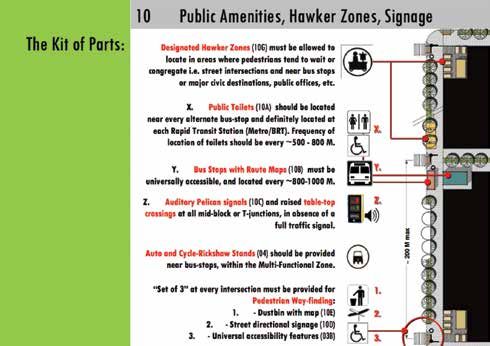
Table of Contents
                                                      A. POLICY BRIEF  .  .  .  .  .  .  .  .  .  .  .  .  .  .  .  .  .  .  .  .  . 4
                                                         1. Reconceptualising Informality in the
                                                             Hybrid Economy – Policy Implications  .  .  .                   . . .5
                                                         2. Heterogeneity and Inclusivity  .  .  .  .  .  .  .  .  .  .  . 8
                                                         3. Key Governance Policy Implications  .  .  .  .  .  .  . 9
                                                         4. Spatial, Infrastructural and Sectoral
                                                            Recommendations  .  .  .  .  .  .  .  .  .  .  .  .  .  .  .  .  . 9
                                                         5. Addressing Knowledge and Data Gaps and
                                                            Facilitating Community-Based Approaches  .  .  . 10
                                                      B. KEY POLICY RECOMMENDATIONS .  .  .  .  .  .  .  .  . 11

Research conducted by The University of Westminster
                                                                                                                                         3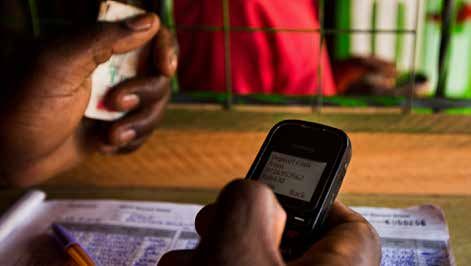
A.                    POLICY BRIEF
    The Uganda case study research indicates that the idea of
    the economy as divided simply into formal and informal
                                                                      This requires a rupture with the established political
                                                                      economy and a new political agenda that encompasses
    ‘sectors’ is no longer workable. It limits the scope for a        a more flexible, affordable, accessible and enforceable
    more holistic approach to urban economic growth and               regulatory framework, a wider range of business and social
    development of appropriate policies that can have a               support to local enterprises, and supportive urban planning.
    transformative impact. Support to informal operators within a
    formal-informal continuum and a ‘hybrid economy’ is likely to
    offer a much more effective route to positive transformation.

       BOX 1
       THE FORMAL-INFORMAL CONTINUUM AND ‘HYBRID ECONOMY’
       Current thinking on the informal sector and economy is deficient and new concepts are needed. The line drawn
       between informal and formal sectors based on whether they are registered does not begin to tell the full story.
       Although informal enterprises are predominantly very small with low market entry costs, some of these businesses
       may have some form of registration or another. However, they may not necessarily be registered to pay tax, and can
       be part of an industry as a whole that is largely unregulated, lacking regulated services, procedures or processes that
       conform to legal requirements and standards. Formality is a matter of degree.

                                          TWO CONCEPTS OF THE INFORMAL ECONOMY

                                       Employed in registered                Formal Economy Activity Sectors
                                       micro, small, medium
                FORMAL SECTOR          and large enterprises

                                       Socially unprotected
                                       employees and
                Informal Economy       contributing family                         FORMAL SECTOR
                                       members working in
                                       the formal sector

                                       Employed in informal
                                       enterprise, mostly
                                       self employed in
               INFORMAL SECTOR         unregistered micro
                                       enterprises

                                                                                   INFORMAL SECTOR

                                       Socially unprotected
                Informal Economy       domestic workers
                                                                              Informal Economy Activity Sectors

4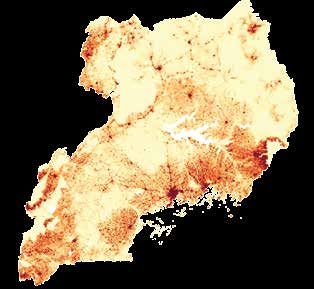
1.           econceptualising Informality in the Hybrid
            R
            Economy – Policy Implications
As a consequence of the current dualistic approach,                           missing middle’ (see below), to achieve their full potential
across sub-Saharan African cities, institutional and policy                   for growth, productivity improvements must be secured
constraints are limiting the necessary progress. Institutional                for many of the activities located in the bottom half of the
neglect, disdain for the poor and women, and an absence                       continuum. Growth channelled solely through the modern
of a pro-poor perspective at all levels of government,                        industrial sector is likely to make the informal economy
together with the additional pressure on local governments                    an even more important space for those with limited
by donor agencies to generate more revenue, are                               resources. The business needs of the lower segments of
reinforcing the traditional orthodoxy and policies directed                   the informal economy should be acknowledged.
towards registering informal business units without
                                                                              Effective support requires integration of informal economy
providing matching social or economic benefits.
                                                                              enterprises into the value chains currently dominated by
The hybrid economy should be regarded as potentially                          formal enterprises so they can expand, become more
transformative. While in the long term the hybrid economy,                    productive and benefit from ‘spill over effects.’ The
dominated in employment terms by informal sectors,                            gradual but steady integration of the informal and formal
could be transitional, it is very likely to characterise the                  sectors will enhance overall factor productivity, promote
city economy for decades. The hybrid economy should,                          increasing product differentiation and sophistication,
however, be seen as ‘transformative’ and part of the                          and encourage increasing social inclusiveness. The main
process of moving low-income nations towards middle-                          mechanism for this will be the development of value chains
income status, where they can be more resilient and self-                     in which informal activities work with others within the
reliant than they are at present.                                             informal sector and those in the formal sector to provide
                                                                              goods and services for both domestic and export markets.
For cities in Africa to become engines of growth the urban
                                                                              This requires targeted interventions, training and skills
economic continuum as a whole must be strengthened,
                                                                              development and innovations in the value chains currently
promoting a form of growth that is increasingly socially
                                                                              dominated by informal enterprises and strengthening of
inclusive and economically resilient. As well as ‘filling the
                                                                              their ‘value networks’ (see Box 2).

      BOX 2
      NEW APPROACHES TO TARGETING VALUE CHAINS OF LOW INCOME ENTERPRISES
      Policies targeting value chain interventions involving poor households often assume that poor households: 1) have
      sufficient resources to effectively participate in value chain development; 2) do not face substantial trade-offs when
      using these resources; and 3) are able to assume higher risks when reinvesting capital and labour. Value chain
      development with poor and vulnerable populations requires additional conceptual frameworks, analyses, and
      interventions. This includes a better understanding of poverty risk profiles, adopting an asset-based approach to
      the design, implementation, and assessment of target value chains and identifying the non-market interventions
      needed for enabling particularly disenfranchised groups to meet the minimum asset thresholds for their successful
      participation in value chain initiatives. A wider perspective beyond conventional value chain analysis through
      mapping value networks could be beneficial in looking at the often-complex livelihood strategies and portfolios
      employed by poor households. (Source: Stoian et al, 2012)1

                                   THE HYBRID ECONOMY AS A SPECTRUM OF BUSINESS UNITS

               Informality                                     The ‘hybrid economy’                                             Formality

                  Survivalist      Livelihood      Focused micro-   Family run small                      Large domestic     Multinational
                                                                                           SMEs
                   activities      portfolios        businesses       businesses                            companies        Companies

                 Accounts for X% of the total number of     The missing middle - Accounts for X% of the       Accounts for X% of the total
                business and Y% of total employment but       total number of business and Y% of total       number of business and Y% of
                      only Z% of wealth generation          employment but on Z% of wealth generation        total employment but only Z%
                                                                                                                  of wealth generation

1
    Stoian et al.,2012. Value chain development for rural poverty reduction: a reality check and a warning.

                                                                                                                                             5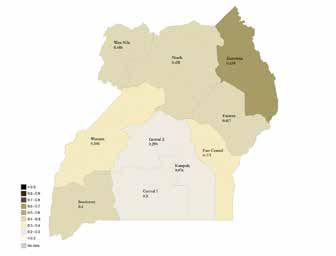
Three main groups need to be targeted by policy:
    1. Top performers within the informal segment of                      BOX 3
       the hybrid economy or closely linked to it;                        FILLING THE MISSING MIDDLE
    2. A group of constrained entrepreneurs who are not yet
       successful, but share several characteristics with the first       Uganda needs more professionally managed and
       group; and                                                         adequately financed firms employing between 30
                                                                          and 100 people and focused on producing and
    3. A group of ‘survival enterprises’ with fundamentally               exporting value-added products based on the
       different characteristics.                                         comparative advantages of the country. Informal
                                                                          micro and small enterprises need to mutate into
    These need to sit within a spectrum of business units
                                                                          formal medium or large-scale companies as they
    operating in the hybrid economy according to degrees of
                                                                          rarely do now. Many of these businesses would
    formality, generally related to size. (In general, only larger
                                                                          operate within a value chain involving both smaller
    firms can afford, and benefit from, formality).
                                                                          firms and larger system integrator type operations.
    Well-targeted policy at the local government level                    For accelerated, inclusive, and sustainable growth this
    can help address many of the business challenges of                   form of structural transformation must occur.
    those operating in the informal economy, especially
    in accessing affordable finance. Supporting ways of
    improving access to finance that is cheaper than that
                                                                       As is typical of resource-based economies, value extraction
    currently available in the informal sector is key. Lack of a
                                                                       is dominated by large firms holding a monopolistic or
    permanent or acknowledged address makes it difficult to
                                                                       oligopolistic position, and owned, managed or linked to
    access credit from banks. This is part of a wider demand
                                                                       political and social elites. The remaining, mainly informal,
    for improved and secure business premises. Activities of
                                                                       economy is numerically dominated by low productivity
    those operating in uncovered spaces are disrupted in the
                                                                       personal services and basic manufacturing activities. Top
    rainy season. The lack of refrigeration facilities is an issue
                                                                       performers and constrained entrepreneurs are the likely
    for the majority of traders who market perishable produce.
                                                                       targets for these measures.
    Ultimately, however, issues of low demand and high
    operational costs still have to be addressed.                      Supporting the development of relevant technologies.
                                                                       Uganda’s Vision 2040 recognises the need to support and
    Policy reforms, especially registration, should work to
                                                                       encourage the adoption, adaption and development of
    strengthen the potential benefits, increase security, and
                                                                       technology by indigenous businesses. There is an awareness
    focus on opening up new opportunities. A majority of
                                                                       that the processes of technological change and innovation
    informal traders see benefits accruing from registration,
                                                                       primarily takes place in developing countries like Uganda
    giving access to cheaper bank credit, improved premises,
                                                                       through enterprises learning to master, adapt and improve
    and better scope for growing their business. If policy is
                                                                       technologies that already exist, although there is room for
    designed to address some of the constraints noted in the
                                                                       innovation (see Box 4).
    research, it could be a win-win situation.
                                                                       Promote social impact funds. A number of social impact
    A ‘missing middle’ needs to be filled by targeted policy
                                                                       funds operating in Africa are investing in the missing middle,
    measures. Uganda is a country with a ‘missing middle’
                                                                       namely assisting formal and informal SMEs operating in
    in its economy, a feature common to most sub-Saharan
                                                                       priority sectors but without the technology and business
    African countries. There are large numbers of very small and
                                                                       models required for expansion. These need further
    informal operations, and a few medium-to-large companies.
                                                                       development, support and scaled up programmes.

       BOX 4
       SUPPORTING THE RIGHT KIND OF TECHNOLOGY
       Technologies that are practical and proven, and innovations
       that are incremental and augmentative, commonly drive
       growth in developing countries. These technologies and
       innovations add value to existing production and service
       activities, and allow ‘business stretch’, the development of
       higher value added businesses related to existing activities,
       and so the product composition of output becomes more
       sophisticated and valuable.
       This process can lead to innovations being developed, and
       not just in domestic markets. Recent experience does include
       ‘trickle-up’ innovations; those proven in countries like Uganda     Image: Eminence Advisory (2016)
       and Kenya and then used in more mature markets. The mobile
       banking and information service, M-PESA, is the most notable illustrative case. A step from lower middle income status
       to higher middle income status, involving successful structural transformation, may be necessary before trickle-up can
       characterise an economy as innovative products emanating from China, India and South Africa exemplify.

6
Economy, Poverty and Informal Economy
64% 70%
of the working population is engaged in of population is poor in Uganda.
subsistence agricultutre.
"Regional economic disparities arise mostly
"Uganda continues to export largely from unevenly distributed socio-economic
unprocessed primary products. This should be a infrastructure such as road networks, good
major concern given that agricultural practices access to markets, health and educational
in Uganda remain overwhelmingly subsistence- facilities and private sector investments".
focused providing little impetus for stimulating (AfDB, 2015)
the growth of value-added manufacturing."
(AfDB, 2014)
SHARE OF GDP (UGANDA VS LOW/
MIDDLE INCOME COUNTRIES)
60
50
40
30
20
10
0
Low income Uganda Middle income
Poverty map at sub-nation level
(OPHI, 2013) Agriculture Industry Services
Informal Economy
With its low market entry conditions, the AFRICA UGANDA The informal
55% 43%
informal economy is widely recognised as sector is not
structurally integral to the urban system in only large: it
growing economies in developing countries is the fastest
of GDP of GDP growing sector
and a major force in African economies,
in Uganda
80% 70%
contributing significantly to both Gross
National Product and employment
labour force labour force
Missing middle
There are a few medium-to-large
companies and large numbers of
? very small and informal operations,
mainly informal. Uganda's economy
is dominated by low productivity
personal services and basic
manufacturing activities.
72. Heterogeneity and Inclusivity
In moving towards a wider programme for resilient Gender concerns should be mainstreamed. Since
and inclusive development, policy needs to be based the resource-intensive industrial growth policy is
on a sound understanding of the poverty-risk profiles disadvantaging educated women, it is important to
found in different elements of urban activity. This will mainstream gender in other growth areas, for example,
be essential to shape and design any major urban in communications and the information technology
development programme that also works for the poor and industry. While, in Uganda, women are more heavily
disadvantaged groups. Meanwhile, analytical groups to represented in the main informal sector – trading – in other
be targeted will differ, according to the objectives of the sectors, such as construction and transportation, they are
development programme. They could provide the policy severely under-represented.
entry points. This study provides both the tools for analysis
and the necessary conceptual framework.
INFORMAL EMPLOYMENT BY TYPE OF ACTIVITY AND GENDER
Transportation
7%
Construction
8%
Services Trade
(other) 44%
Informal
16%
employment
by sector
Manufacturing
25%
Construction/
Services (other) Transportation
12% 1%
Services (other)
20%
Construction
Trade
13%
36%
Trade
Informal Informal
54%
employment employment
by sector by sector
Transportation (male) Manufacturing (female)
14% 25%
Manufacturing
25%
83. Key Governance Policy Implications
Giving appropriate support to informal enterprises will Policy needs to encompass and institutionalise ‘informal
require a radical change of policy direction. Changing the governance.’ This refers to the complex and diverse forms
mind-set of policy makers and of local government officials of associations and networks in which informal urban
will be fundamental to developing and implementing groups organise, recognising how these impact on their
pro-poor policies. It is important for donor agencies to trading activities, their linkages to the state, and their
appreciate the negative cross-sectoral impacts of their overall recognition as key actors within the urban economy.
policies that push for greater revenue generation by local
Co-operation and capacity building is crucial at all
governments. There is a need to address the tensions
levels, including in national and local government and
that arise from conflicting policy aims of donor agencies;
informal organisations. Policy efforts should promote
otherwise it could difficult to develop an enabling policy
long-term and strategic engagement through building
focusing on the urban poor.
capacity and co-operative association rather than linkages
A more flexible, affordable, accessible and enforceable based on clientelistic relationships with short-term benefits
regulatory framework is required. The evidence suggests for the parties concerned. Moreover, institutionalisation
that regulation, in itself, is not the problem if it can be can help change the negative perceptions that remain
more flexible and the positive benefits that it can bring to common in administrative and political authorities, as well
informal enterprises given more emphasis. as public spheres.
4. Spatial, Infrastructural and Sectoral Recommendations
Issues of low demand and high operational costs can look beyond the existing administrative boundaries
only be resolved by improved infrastructure provision. A that separate urban from rural areas and develop
supportive strategic policy framework needs to be put in physical planning and local economic development
place urgently to address the growing urban infrastructure policies that encompass the rural catchment areas of
deficit, improve access to basic services, and ensure the fast growing cities.
that African cities can begin to realise their economic
A strategic approach to planning and managing traffic
development potential.
and movement in Africa’s cities is urgently required.
The variable growth experienced in the different Public mass transit schemes are popular among donors
geographical sub regions of the national economy need to but often difficult and costly to implement successfully.
be taken on board in the new policy agenda. The different Interventions in the transport sector will require careful
consumption and demand patterns of a slow-growing or prior investigation and extensive consultations.
stagnating city and a more economically dynamic city are
Policy should be informed by a wider systematic analytical
also reflected in the informal economy.
approach to understanding where and how different types
New policies are needed to address the lack of basic of informal economic activity are clustered and distributed
services and infrastructure in informal settlements. in cities. This includes in informal settlements and their
Rapid urbanisation is contributing to the development near regions and the related patterns of movement, short
and expansion of slums – environmentally precarious, and long term. A better understanding of the movement
unplanned informal settlements where many in the informal patterns of informal economy operators and employees is
economy live and/or base their business activities. There needed, including the positive impacts of increasing use
are many effective international policies and models of of phones to aid mobility, accessibility, access to livelihood
community-based good practice to draw upon. opportunities and business development.
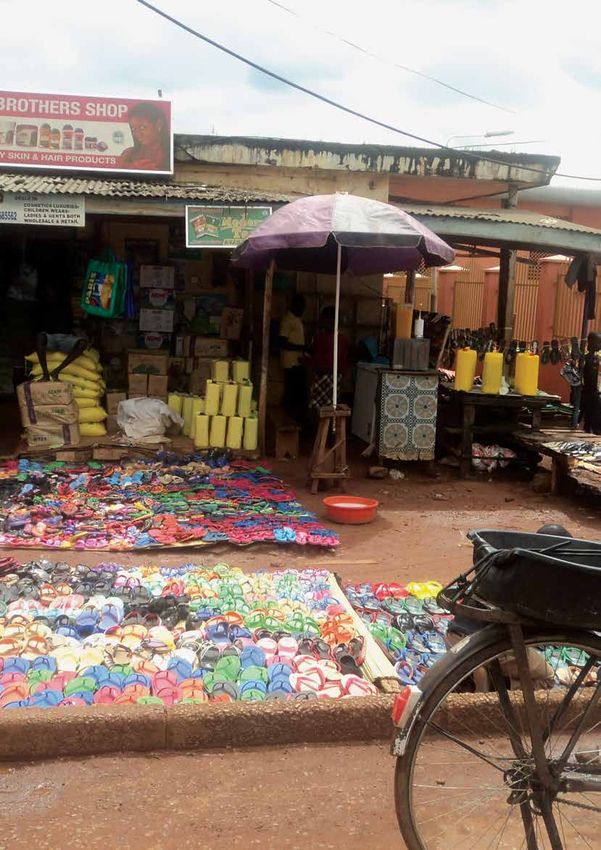
The growth of slums presents key urban resilience policy The spatial needs of informal street stalls and mobile
concerns but also opens up potential ‘green growth’ ‘hawkers’ and their integration into street design in the
development opportunities for informal economic context of Africa cities needs to be addressed in new
sectors and the hybrid economy. Informal settlements are approaches to street design. Street trading and markets
vulnerable to a range of climate-related hazards, including constitute a significant component of the informal economy
flooding and mudslides. Secondary impacts of climate in cities and traders deal in many different types of goods
change that informal settlement residents potentially face and services. There are significant knowledge gaps and
include increased competition and higher prices for clean critical policy deficiencies. Attention needs to be paid
drinking water, and increased food prices. Developing to market access by both motorised and non-motorised
green growth and urban resilience-related policy transport, to provisions for storage and arrangements for
interventions involving informal economy sectors and the disposal of solid waste. Security, sanitation, lighting
enterprises should be a priority. and child-care are also important facilities, and where
further research is required to develop appropriate types
Physical, economic and environmental planning and
and standards of provision. Context specific guidance is
effective management of land use and development
needed for Ugandan secondary cities as they urbanise.
is required at the city-region scale. As currently weakly
resourced as they are, local authorities need to
9BOX 5
GUIDELINES FOR STREET DESIGN INCORPORATING TRADERS
(Source: UTTIPEC 2009:103)
New concepts of, and
international guidelines
for, urban street design
are being promoted that
prioritise the needs of
pedestrians and where
streets are considered as
places which combine
vehicular movement with
the pedestrian-based
social spaces of the city,
including spaces for
informal trading.
Urban and transport planning policies need to be urgently ingrained rigid and negative attitudes towards slums and
implemented and supported with necessary resources their inhabitants. The regulatory framework needs to be
and institutional capacity development. An expanded and more flexible and accommodate ‘intermediate’ solutions
enhanced professional training programme for planners with less rigid standards but with the means of being
and built environment professionals needs to challenge properly enforced.
Addressing Knowledge and Data Gaps and
5. Facilitating Community-Based Approaches
Community-based approaches may have a major • Assist the informal construction sector to realise its
impact on the informal economy, but, as with other significant growth potential more sustainably, including
policy agendas, is short on basic evidence. Better entrepreneurial roles for women;
information systems and local data collection is essential • Suggest ways in which the regulatory framework can
to the pursuit of resilient, sustainable and inclusive urban
reduce workplace hazards whilst providing a more
economic development and positive support to the hybrid facilitating and less restrictive and punitive role so that
economy at all levels. Addressing these knowledge gaps urban planners can engage more proactively with the
can provide an evidence base for developing policy informal economy;
interventions that can:
• Support informal enterprises by working with the
• Provide targeted advice and support to enterprises communities in which they are located to improve the
and industry associations to enable them to take understanding of environmental and climate change
measures that improve their productivity and improve and undertake risk mitigation measures to improve
their understanding of the needs and economic community-based resilience; and
potential of women and other relatively disadvantaged
social groups; • Offer technical advice and micro-finance support
to informal homebuilders to facilitate incremental
• Unlock the potential for sustainable practices and improvements over time through tenure regularisation,
realisation of green growth opportunities based on infrastructure upgrading, and self-help improvement
the circular economy; and construction.
10B KEY POLICY
RECOMMENDATIONS
Registration Capacity building
Policy reforms to emphasise potential Build capacity at all levels, including
benefits, increase security of tenure and in national and particularly
focus on opening up new opportunities local government and informal
organisations
Governance
Government to work cooperatively with The 'missing middle'
informal trade associations, networks Target advice and business support
and stakeholders at promising enterprises and
industry associations to improve their
Heterogeneity and inclusivity productivity in growth and export
Positive support at all levels recognising potential areas; promote social
heterogeneity; targeted support for impact funds
disadvantaged groups including training
and skills development and integration Access to finance
into wider value chains and networks Support access to finance that is
cheaper than that currently available
Gender for informal businesses
Mainstream gender in growth areas
to counter current exclusion Green growth and climate
resilience
Technology and innovation Develop green growth and urban
Support the adoption, adaptation and resilience-related policy interventions
development of appropriate technology involving informal economy sectors
and business innovation and enterprises
Infrastructure and basic services Urban planning
Strategic policy to address a growing Less restrictive, more supportive (and
urban infrastructure deficit and improve better supported) urban planning
access to basic services in workplaces and including inclusive approaches to
informal settlements accommodate street traders and
addressing rural-urban linkages
Transporation
A strategic approach to managing traffic Knowledge/data gaps -
and movement; support improved facilitating community based
connectivity and improve public transport approaches
services incorporating informal transport
Improved understanding of poverty-
providers
risk profiles in different informal
sectors, spatial distribution of informal
Regulation
activities and ways of engaging local
A more flexible, affordable, accessible and communities
enforceable regulatory framework
11You can also read


