Would you like to live and work in - England? - NORFOLK AND SUFFOLK - NHS England
←
→
Page content transcription
If your browser does not render page correctly, please read the page content below

Would you like to
  live and work in
  England?

                 The NHS is looking for GPs to work in the areas of
                                  NORFOLK AND SUFFOLK

NHS England Gateway reference: 07950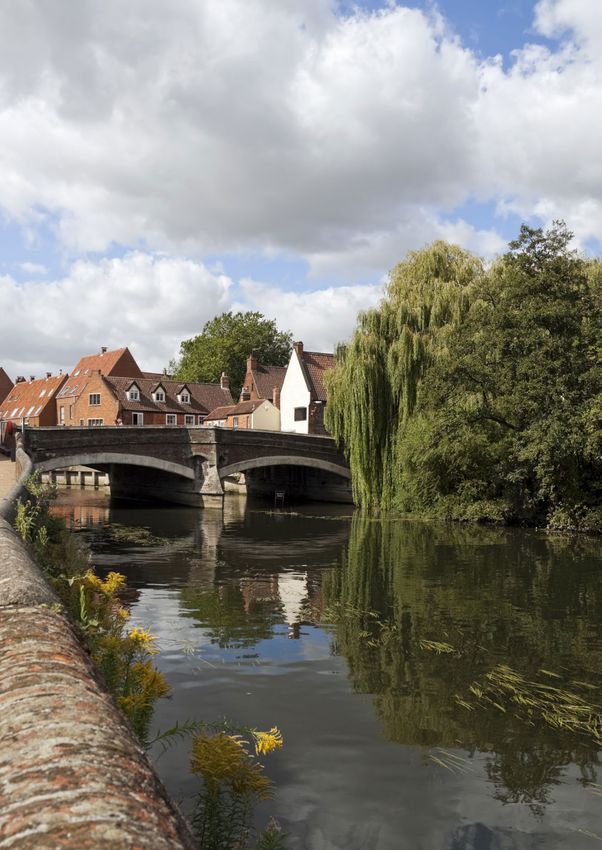
INTRODUCTION
    The National Health Service in England is running an international recruitment
    campaign for family doctors. In England these are called General Practitioners or
    GPs. We plan to recruit around 2,000 GPs from overseas by 2020. They will work
    alongside GPs we train in England to develop an exciting range of health services
    away from hospitals and in local community settings.
    This brochure explains the importance of GPs in providing healthcare to our population. It tells you about the
    application process and what to expect when you apply. We are recruiting GPs for many areas across England.
    This brochure gives you an idea of the benefits and opportunities available to you if you choose to work in
    Norfolk and Suffolk.

    WHY WORK AS A GP IN ENGLAND?
    GPs in England are the foundation of the NHS. They are usually the first person
    a patient turns to for help and they deal with a whole range of health problems.
    They are general experts in the whole field of medicine for adults and children.
    They manage the healthcare of all their patients, including acute illness, long term
    conditions and mental health problems.
    GPs usually work in practices, often leading teams which include nurses, healthcare assistants, practice
    managers, receptionists and other staff. Practices also work closely with other healthcare professionals,
    such as health visitors, midwives, pharmacists, physiotherapists, mental health services and social care services.

    GPs provide continuing medical care for patients in the community or they will refer patients to hospital clinics
    for further assessment or treatment by specialists. Nine out of 10 NHS patients are seen in English general
    practice, and nearly nine out of 10 patients rate their experience of their GP practice as good. Because GPs
    often lead the continuing development of the NHS in England, we are investing an additional £2.4bn a
    year into general practice by 2021. The money is being used to recruit more doctors and other healthcare
    professionals, improve buildings and extend the use of information technology so general practice can offer
    more and better services to meet people’s needs.

    Any GP recruited under the international recruitment programme and working in the UK before 29 March
    2019 will be able to stay and enjoy the same rights and benefits as now and qualifications of EU doctors will
    continue to be recognised if they were obtained before 29 March 2019. Recruitment will go beyond March
    2019 and while we do not know details of a future immigration system yet, we will make clear how it applies
    to this programme as soon as possible.

    Many GPs choose to work in England because of the attractive salaries and benefits. But the work offers
    much more: the chance to extend your clinical experience as part of a team of 1.2 million NHS employees,
    all of whom are proud to work for a ‘national treasure’ and many of whom have come to England from
    across the globe.

2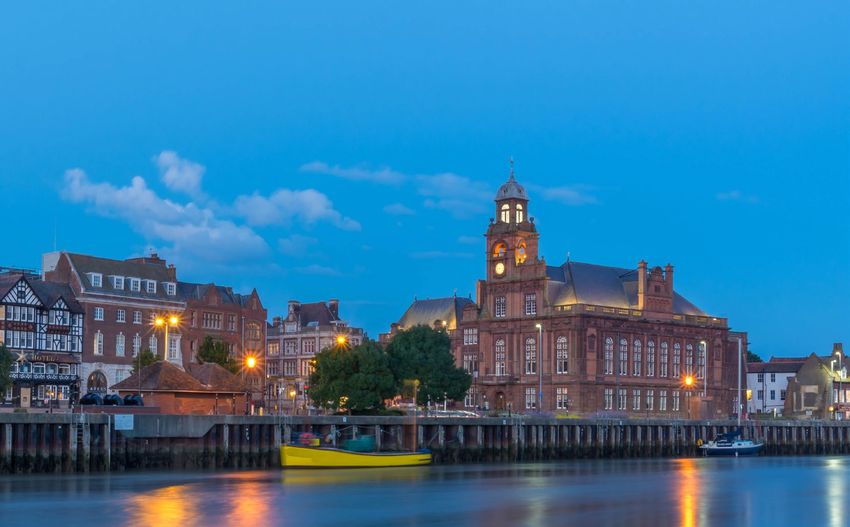
GENERAL PRACTICE AND YOU
• If you choose to apply to work as a GP in Norfolk and Suffolk you will be supported with dedicated
  training programmes, help with meeting language requirements and in meeting the standards of the
  national Induction and Refresher (I&R) Scheme.

• You will have an opportunity to meet with staff from the recruiting practices and to learn more about
  them and the local areas. This will help you and the practices decide if this is the best place for you to
  live and work.

• Practices involved in this recruitment scheme will be offering attractive and competitive salaries.

• You and your family will be offered help to relocate to the area and continued support while you
  settle into your new community.

THE CANDIDATE PROCESS
If you apply to be a GP in England this is the application process you will follow:

  STEP
            An initial conversation in your own country with the recruitment agency for the area you are interested
   1        in working in and some background checks (including police checks).

  STEP      You will be asked to take an English test organised by the recruitment agency. The agency will use

   2        the International English Language Testing System (IELTS) or the Occupational English Test (medicine
            version) proficiency test for people wishing to study or work in English speaking countries.

  STEP      You will have an interview in your own country by Skype. You start your registration with the General

   3        Medical Council (GMC). The GMC is the organisation which sets standards for doctors in the United
            Kingdom. You need to be registered with the GMC and be on the GMC’s GP Register to work as a GP
            in England. You will be invited to complete a self-assessment to help identify any training needs.

  STEP
            You visit your chosen area to find out more about where you will be working and to meet other
   4        international GPs. You will have a second interview and an assessment of your learning needs.

  STEP
            Once you pass your second interview you will be able to join the programme. You will be allocated to a
   5        GP practice within the region.

  STEP      You will be provided with a minimum of three months of training and observation in your employing

   6        practice to prepare you for the I&R assessments and improve your English language skills. You will then
            spend a minimum of six months treating patients with supervision and support from a senior GP at
            your practice.

                                                                                                                      3
THE NHS OFFERS A
COMPETITIVE PAY PACKAGE FOR GPS
Once you have gained entry to the National Medical Performers List without conditions you can expect to
earn a salary of between £68,000 and £72,000 per year. This salary is the same across all parts of the NHS in
England excluding London where you will receive additional funds to help with the increased living costs there,
known as London weighting.
Alongside your salary there are many other financial benefits including paid maternity and paternity leave,
parental and carers leave.
THE NHS IN ENGLAND
The National Health Service was founded in 1948, based on the principle that
good healthcare should be available to all, regardless of wealth.
With the exception of some charges, such as prescriptions, optical services and dental services, the NHS in
England remains free at the point of use for all UK residents.
In 2014, the Commonwealth Fund declared that in comparison with the healthcare systems of 10 other
countries (Australia, Canada, France, Germany, Netherlands, New Zealand, Norway, Sweden, Switzerland
and the US) the NHS was the most impressive overall. The NHS was rated as the best system for its efficiency,
safety, effectiveness, co-ordination and patient-centred care.
The NHS covers It deals with more than
54.3M PEOPLE 1M PATIENTS
in England every 36 hours
The NHS employs And has more than
JOBS
1.2M PEOPLE 40,500 GPs
4LIVING IN...
NORFOLK AND SUFFOLK
One of the
most historic
and enchanting
places in England
5HEALTH SERVICES IN
NORFOLK AND SUFFOLK
Norfolk and Suffolk have five major hospitals trusts - Norfolk and Norwich
University Hospitals NHS Foundation Trust, Ipswich Hospital NHS Trust,
The Queen Elizabeth Hospital King’s Lynn NHS Foundation Trust,
James Paget University Hospitals NHS Foundation Trust and
West Suffolk NHS Foundation Trust.
There are a range of community health care providers. Norfolk and Suffolk NHS
Foundation Trust offers mental health, substance misuse and learning disability
services and the area is covered by East of England Ambulance Service NHS Trust.
NORFOLK AND SUFFOLK
Situated on the east coast of England, the counties of Norfolk and Suffolk are largely unspoilt by mass
development and boast more than 200 kilometres of coastline, beautiful countryside, nature reserves,
picturesque market towns and seaside resorts.
The area is one of the most historic and enchanting places in England.
During medieval times, the prosperity of the wool and weaving industry turned the region into one of the
richest parts of the British Isles.
Norwich, the regional capital, is two hours from London by train while Ipswich is an hour.
Norfolk is possibly most famous for the man-made Broads, one of Britain’s most beautiful National Parks.
Suffolk, its smaller sister, is full of charming villages and pristine beaches - famously captured by the artists
Constable and Gainsborough.
TOWNS AND VILLAGES
Whether you enjoy living by the coast, life in a historical town with a vibrant nightlife, or sleepy village life,
Norfolk and Suffolk have an array of attractive places to live.
6LOCATION
Norfolk and Suffolk
Wells Cromer
Sandringham
Kings Lynn NORFOLK Great
Yarmouth
Downham
Market Norwich
Bury St Edmunds
Newmarket
SUFFFOLK
Ipswich
7NORWICH GREAT YARMOUTH
The city of Norwich is Norfolk’s regional capital Situated just over 30 kilometres east of Norwich and
and home to a third of its population. It boasts close to the Broads National Park, Great Yarmouth
one of Britain’s finest medieval cathedrals, a large is an old-time seaside town where arcades and rides
open market and plenty of bars, shops, restaurants line the seafront.
and nightlife.
A popular choice is the village of Blakeney which
There is a real mix of things to see and do in lies within the Norfolk Area of Outstanding
Norwich with a vibrant music and creative scene. Natural Beauty.
Each May, the Norfolk and Norwich Festival
transforms public spaces, city streets, parks, forests Further east, Sheringham is a traditional seaside
and beaches, bringing people together to share town which grew up around an old fishing port. It’s
music, theatre, literature, visual arts, circus, dance now a thriving town centre with a regular market
and outdoor events. and the North Norfolk Railway, which has steam
train rides running to Holt.
The Norwich Castle Museum and Art Gallery
overlooks the city, housing Saxon gold and jewellery, The pretty Georgian town of Holt, with its flint stone
while hidden gems like Norwich’s secret garden houses, has a good range of independent shops as
offer sanctuary among beautiful plants and lawns, well as a nearby county park, Holkham Hall. It was
serving homemade afternoon tea. named as one of the best places to live in the east of
England by the Sunday Times in 2016.
KING’S LYNN
King’s Lynn lies 72 kilometres west of Norwich. Burnham Market on the North Norfolk coast is a
Much of this market town’s maritime past is still beautiful village centred on the green, with a range
in evidence, with fine old merchants’ houses and of independent boutiques and traditional shops.
cobbled streets that stretch down to the quayside.
SUFFOLK
King’s Lynn is known as Norfolk’s festival town with The main regional town for the county is Ipswich;
an impressive array of events throughout the year other important towns include Lowestoft, Bury St
including the King’s Lynn Festival of Music and the Edmunds, Newmarket, and Felixstowe, one of the
Arts and the annual King’s Lynn Fiction Festival. largest container ports in Europe.
The Suffolk Coast and Heaths are an Area of
Outstanding Natural Beauty.
8IPSWICH century fort, one of Britain’s best-preserved coastal
Ipswich is a waterfront town with a vibrant arts defences, alongside the fascinating collections of the
and culture scene, home to world-class food and Felixstowe Museum.
drink and all surrounded by the beautiful Suffolk
countryside and coastline. COASTAL LIVING
Southwold is not just known for its quaint pier. It is
Christchurch Mansion and the Wolsey Art Gallery home to the Adnams Brewery, famous lighthouse,
is the home of the largest collection of paintings beach huts and nearby nature reserves.
by Constable and Gainsborough outside London.
Ipswich Museum is filled with local Anglo-Saxon Woodbridge is another attractive town that sits on
artefacts along with relics from Ancient Egypt and the edge of the Suffolk Coast and Heaths Area of
spectacular natural history exhibits. Outstanding Natural Beauty. With a combination
of excellent shops, pubs and restaurants and other
Every year, celebrating the town’s international attractions including the beautifully restored old river
connections, there’s the Indian Summer Mela, Tide Mill and Sutton Hoo, an ancient royal Anglo
African Global Rhythm Festival and German Saxon burial ground.
Oktoberfest.
BURY ST EDMUNDS
Home to Suffolk’s only cathedral, Bury St Edmunds’ NOT TO BE MISSED
most famous landmark is its impressive abbey ruins
and their adjoining gardens. The glorious expanse of the Broads, East Anglia’s
only National Park, is one of the county’s prime
With the beautiful medieval wool towns of attractions, great for boating, watersports
Lavenham and Long Melford on the doorstep and and wildlife.
Cambridge just 30 minutes away, Bury St Edmunds
is a quintessentially English market town and a Both Norfolk and Suffolk have some of the best
shopper’s delight. birdwatching reserves in the country. Common
and grey seals can be spotted along parts of the
LOWESTOFT coast too.
Lowestoft is an old fishing port on the North Sea
coast, the most easterly settlement in the UK, sitting Arguably the best way to see both counties is on
on the edge of the Broads. foot on the Norfolk Coast Path and Suffolk
Coast Path.
Lowestoft Beach has wide golden sands, beach huts
and a pier. Nearby Oulton Broad offers year-round Or you could take a boat out to Orford Ness, an
water sports, cafés, riverside restaurants and bars. internationally renowned nature reserve - its history
is shrouded in secrecy - or walk, or cycle in Thetford
NEWMARKET Forest, the UK’s largest manmade forest.
Newmarket is a market town considered to be the
birthplace of and now a global centre for horse
racing. There are lots of tours available which will
provide a great insight into breeding, racing and CULTURE / ENTERTAINMENT
training as well as going to the tracks for a day out
at the races. Both Norfolk and Suffolk boast a wide variety of
galleries, museums, music venues and theatres.
FELIXSTOWE The Sainsbury Centre for Visual Arts in Norwich
Felixstowe is a seaside town of fine Edwardian houses the Sainsbury family art collection, a range of
architecture, seafront gardens, colourful beach temporary exhibitions, lectures and gallery talks.
huts and six kilometres of lovely sand and
shingle beaches. The New Wolsey Theatre in Ipswich offers drama
from both national touring shows and local groups.
Felixstowe includes the largest container port in Modern art and popular design exhibitions can
the UK and the Landguard Peninsula with its 18th be seen in Ipswich Art Gallery.
9Every July, Southwold plays host to the music event Suffolk is blessed with a broad range of quality local
Latitude Festival, while Folkeast, Suffolk’s biggest produce including smoked fish, Suffolk ham and
folk festival, takes place in August. For classical pork, quality beef and lamb, hand-picked asparagus
music lovers the Aldeburgh Festival, founded by and strawberries, cheese, honey and jams. Try the
composer Benjamin Britten, takes place in June Norwich food and drink festival or the Aldeburgh
each year. food and drink festival to taste the best of
local delicacies.
And of course Suffolk is Constable country, so
you can explore the picturesque Stour Valley
and Dedham Vale, the areas made famous by
his paintings. HOUSING
From beautiful countryside and coast, to traditional
English villages and bustling towns, there’s a setting
EDUCATION for every lifestyle.
In Norfolk there are more than 370 state primary You can choose from modern apartments and
(5 – 11 years) and 69 secondary schools (11 – 16 town houses, a house by the sea to Grade II
years). Sixth forms (for 16 + A level education) can listed townhouses or flint stone cottages in
be found in larger towns. There are 12 independent smaller villages.
schools. Further education and training courses are
offered at City College Norwich and the College In Norfolk, the average residential property price is
of West Anglia. Easton & Otley College provides just slightly lower than the national average, but
agriculture-based courses for the county, parts of property values in Norwich and the most attractive
Suffolk and nationally. rural and coastal areas tend to be higher. In Suffolk
you can expect to pay more, especially in the
The University of East Anglia, ranked 12th in the UK, more sought-after locations such as Newmarket,
and Norwich University of the Arts are both based Woodbridge and Southwold.
in Norwich.
Suffolk has 264 primary schools and 68 secondary
schools and, like Norfolk, sixth forms are in the SHOPPING
larger towns. Further education and training is
available at Lowestoft College, Easton & Otley Norwich is one of the top 10 shopping destinations
College, Suffolk New College (Ipswich) and West in the UK and has a mix of individual shops and high
Suffolk College (Bury St Edmunds). street names, set out on attractive streets and lanes.
It is also home to one of Britain’s largest outdoor
The University of Suffolk, based in Ipswich, has four markets, open six days a week.
other sites in Lowestoft, Bury St. Edmunds, and
Great Yarmouth in Norfolk. There are several shopping centres in Suffolk such as
the Arc shopping centre in Bury St Edmunds. Bury
St Edmunds’ medieval streets are also lined with
independent shops, as are the charming streets near
FOOD AND DRINK Ipswich’s waterfront, where you’ll find everything
from vintage boutiques to modern cafés.
Norfolk has some of the best fresh, seasonal
produce in the UK, from Cromer crab to Brancaster The abundance of independent shops is one of the
mussels, artisan cheeses, farmers’ markets, the best best reasons to go shopping in Suffolk. Woodbridge,
malting barley – and more than 50 breweries - as Southwold and Beccles boast fantastic boutique and
well as an English whisky distillery. independent shops.
10SPORT
With its waterways and stretches of coastline, all In Suffolk, the A12 as well as the A11 / M11 serve
types of sailing and boating are popular in this part as the county’s arterial roads to London. The A12
of the world, as well as kite surfing, water skiing and starts at Lowestoft and runs through Colchester and
paddle boarding. Chelmsford to the capital. And the A11 connects
to the M11 at Cambridge. The A14 is the main east
Norwich City and Ipswich Town football clubs are to west route from Felixstowe to the Midlands. It
in the Championship, the second tier of the English passes through Cambridge and Kettering before
football league. linking to the M6.
With thousands of local sports clubs, societies, TRAINS
activity centres and open countryside, whatever Norfolk’s towns and villages are served by local
sport you like you are likely to find it in Norfolk stations. There is a direct train service to Cambridge
and Suffolk. from Thetford station, and to both Cambridge and
London from King’s Lynn and Norwich stations. The
latter also offers a direct route to Liverpool.
TRANSPORT
There are direct trains from Ipswich to London
Liverpool Street, which take around an hour and
Norfolk is one of the few counties that has no a quarter.
motorway, but there are strategic trunk roads that
provide connections to the rest of the region and the AIRPORT
wider UK. Norwich has its own international airport, offering
worldwide destinations via Amsterdam.
ROAD
The A11 road runs south west, from Norwich to
London and the south east of England via the M11/
M25. WEATHER
The A47 crosses the county west to east, linking Norfolk and Suffolk tend to be drier than much
to Peterborough and the Midlands. The A17 of England. Spring and Autumn can be mild, with
provides a main road link westwards to Lincolnshire April and September the peak months for spotting
and the north. migratory birds. The warmest weather is in July
and August.
MORE INFORMATION
If you would like more information about our international recruitment programme or about living and
working in Norfolk and Suffolk the following websites will be useful:
Visit Norfolk – www.visitnorfolk.co.uk
Norfolk Travel Tourist Information Guide – www.tournorfolk.co.uk
Norfolk City Council – www.norfolk.gov.uk
Visit Suffolk – www.visitsuffolk.com
Suffolk County Council – www.suffolk.gov.uk
11NHS ENGLAND’S PARTNERS: FOR MORE INFORMATION PLEASE VISIT: www.england.nhs.uk/igpr Published April 2018 by NHS England
You can also read


