GIRL SCOUTS BEYOND BARS - Incarcerated Mothers, Empowered Daughters-and a Better Future for All
←
→
Page content transcription
If your browser does not render page correctly, please read the page content below
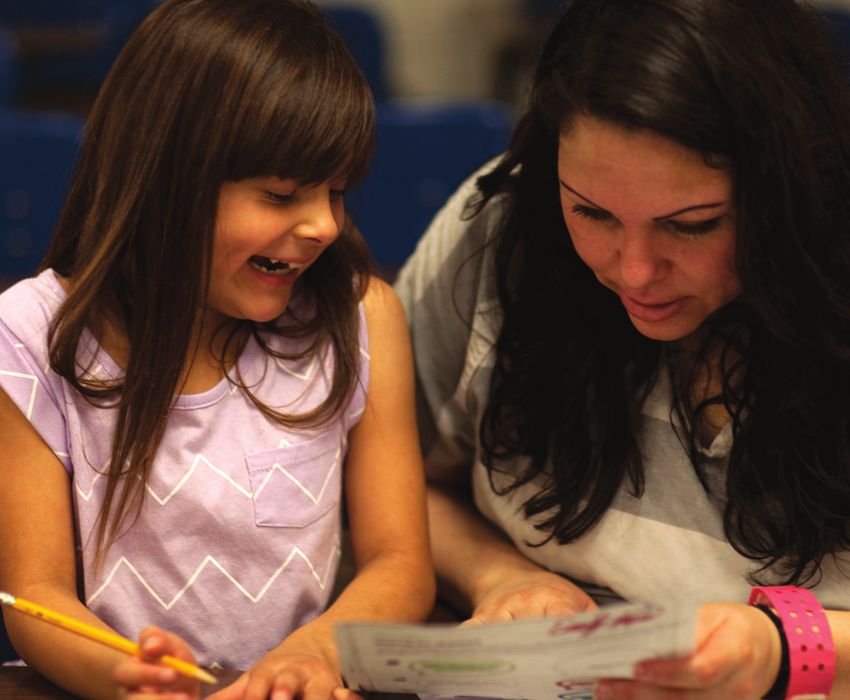
GIRL SCOUTS BEYOND BARS
      Incarcerated Mothers, Empowered Daughters—and a Better Future for All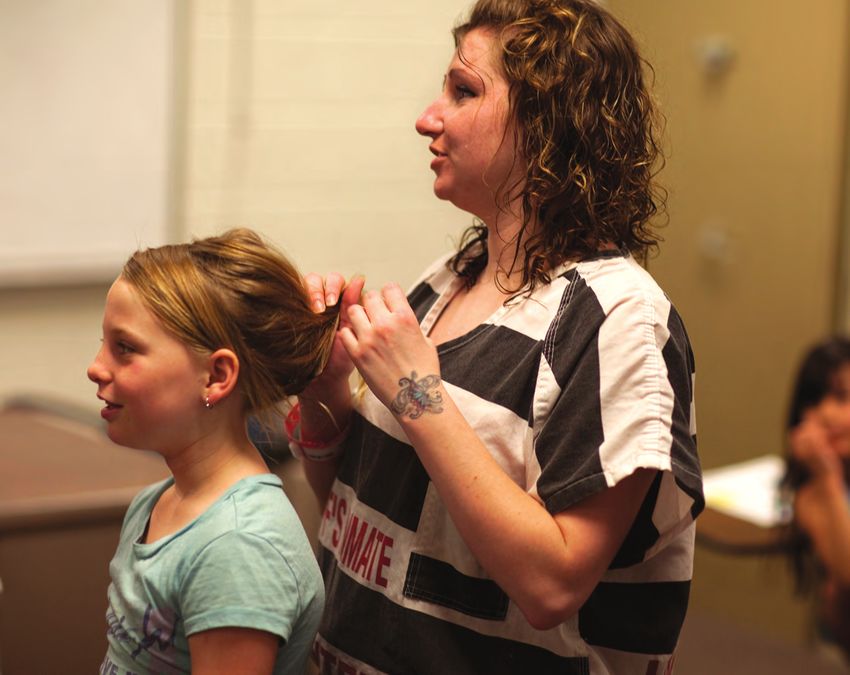
ACKNOWLEDGEMENTS
       National President
       Connie L. Lindsey

       Chief Executive Officer
       Anna Maria Chávez

       Interim Chief Operating Officer
       Kerry Connolly

       Vice President, Global and Strategic Alliances
       Sandy Thomas

       National Project Manager
       Christine Brongniart

       National Project Coordinator
       Aabha Adhiya

       Girl Scout Research Institute, Senior Researcher
       Wendy Friedman, Ph.D

       This publication was made possible by a generous grant from the Department of
       Justice-Office of Juvenile Justice and Delinquency Prevention (DOJ-OJJDP)

       WRITTEN BY: Fiona Soltes
       DESIGNED BY: Sondra Murphy Creative
       PHOTOGRAPHY BY: John Lair
       All GSBB participants photographed within participate in the Girl Scouts Beyond
       Bars program hosted by the Girl Scouts-Arizona Cactus-Pine Council.
       © 2012 by Girl Scouts of the USA

| 2|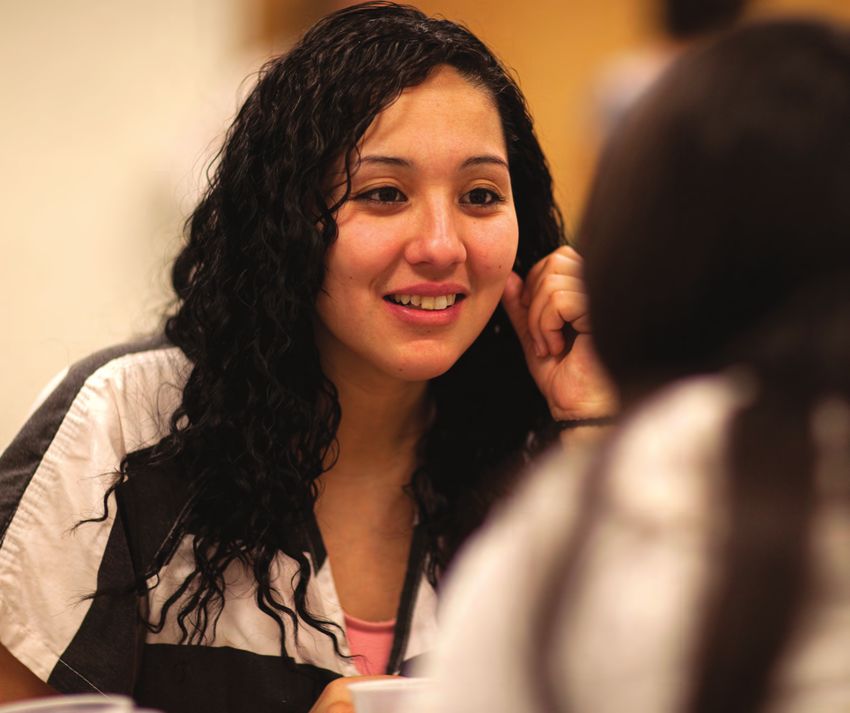
A PARENT IN JAIL,
 A FAMILY IMPRISONED

“When people ask me where my mom is, I say she’s out of town in Las Vegas.”
                                                                                          Troop 1500, Girl Scouts of Central Texas

 STABILITY
 Ty’s mother, who is serving a life
 sentence for first-degree murder,
 has been incarcerated since the
                                         I   magine being a girl—a young girl,
                                             perhaps 6 or 7, as full of potential
                                             as any.
                                         Now imagine that your mother is in
                                         prison—and that no one else could
                                                                                          Especially for girls. The difficulties
                                                                                          represented by sexual violence against
                                                                                          young women, unwanted pregnancies,
                                                                                          peer pressure, shame, poverty, bullying,
                                                                                          and an increasingly recognized societal
                                                                                          bias against girls are compounded when
                                         possibly understand.
 late 1990s. Her father is deceased.                                                      a girl has incarcerated parents.
 Ty has gone through a lot of            Across the country, 1.7 million children         In the midst of all this, one organization
 transition in her living situation,     have a parent in prison, according to            is making an impact, boldly doing what
 making it more difficult for her to     advocacy and research group The                  it has done for 100 years: giving girls a
 feel “rooted.” But the Girl Scouts      Sentencing Project; half are under 10.           chance to make their worlds a better
 Beyond Bars program has offered         Ninety percent of children remain with           place. The Girl Scouts Beyond Bars (GSBB)
 stability. A few years ago it was       their mother if the father is incarcerated,      program is a national initiative supported
 difficult to get her involved in        but only a quarter of the children of            by Girl Scouts of the USA (GSUSA) and
 activities or outside events.           incarcerated mothers live with their fathers.    activated locally by many of the
                                         The rest stay with grandparents, relatives,
 She did not show any interest and                                                        organization’s 112 councils. It began
                                         or other caregivers who, despite their best
 occasionally had a poor attitude                                                         in 1992 as a partnership between the
                                         efforts, often lack the resources needed for
 toward not only Girl Scouts but life                                                     National Institute of Justice and the
                                         raising kids into healthy, happy adults.
 in general. But Ty has blossomed                                                         Girl Scouts of Central Maryland, hosted
 into a young woman who not only         What happens to these children is an             at the Maryland Correctional Institute
 participates, but also acts as a "big   alarming and ever-increasing dilemma.            in Jessup. Since then, GSBB has served
 sister" to the other girls. She seems   Research has shown that children of              thousands of girls across the country,
 excited about her future and has        incarcerated parents can exhibit signs of        offering mother/daughter troop meetings
                                                                                          at the correctional facility, opportunities
 been particularly inspired by a         post-traumatic stress disorder. They are
                                         more likely to withdraw, show physical           for the strengthening of relationships
 13-year program volunteer who is
                                         aggression, take part in substance abuse,        and leadership development. In addition,
 also a nurse in the U.S. Navy.                                                           after the women are released, they and
                                         exhibit depression and/or anxiety, and end
   Girl Scouts of Central Maryland’s     up in the criminal justice system themselves.    their daughters can continue to participate
            Girl Scouts Beyond Bars      And as the number of Americans in prisons        in troop meetings in their communities,
                                         continues to grow—a 280 percent increase         extending opportunities for growth and
                                         since 1980 to more than 7 million                continued support.
                                         incarcerated, on probation, or on parole—
                                         the future looks challenging indeed.

                                         “Being in the Girl Scout program reminds me that
                                          even though my mom and I are miles apart, when
                                          we look up in the sky, we see the same thing.”
                                                                         Girl Scouts of Central Maryland’s Girl Scouts Beyond Bars

                                                                                                                                     | 3|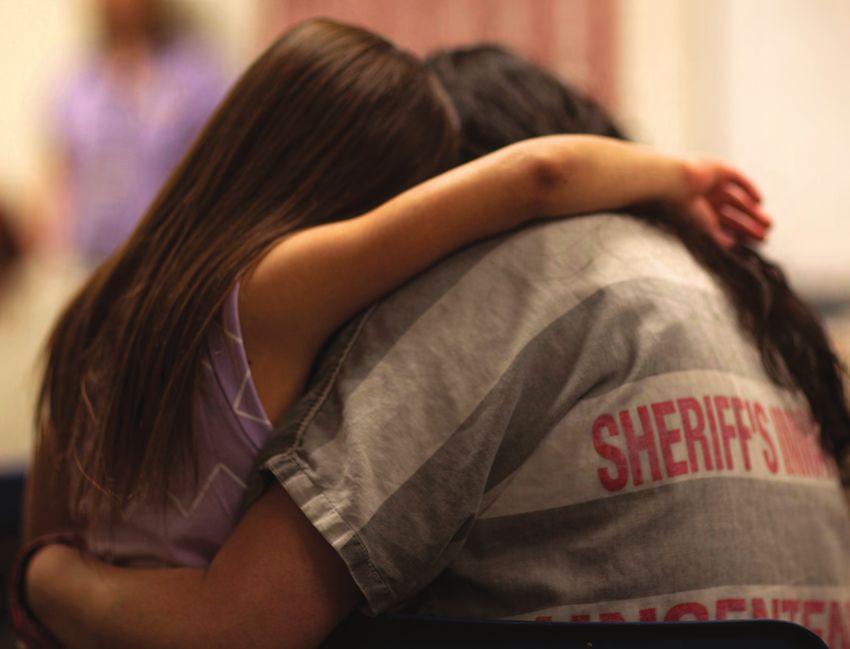
Before Julie began attending the GSBB program, she was having a difficult time
in school and at home with discipline and anger management. Since coming to
GSBB, her caregiver said, she has graduated from anger management class
and is doing “115 percent better in school and at home.”
                                                 Girl Scouts of Eastern Oklahoma’s Project Mend

| 4|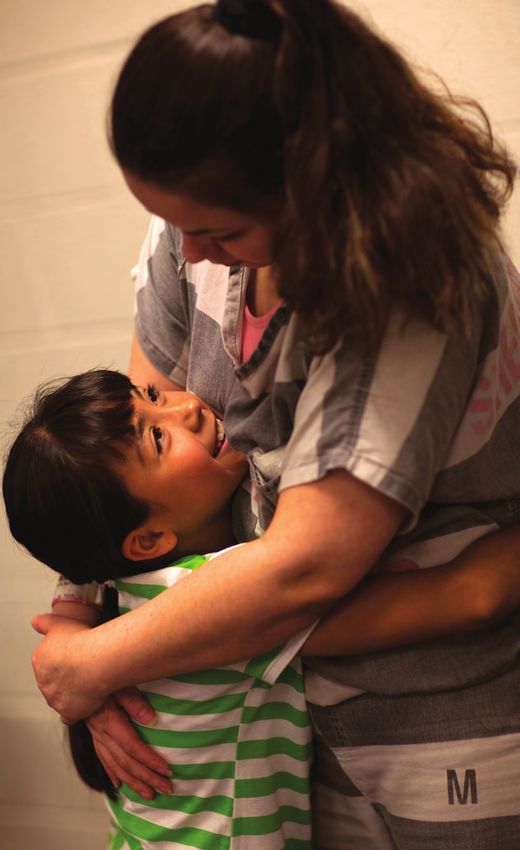
The crime of inequality
A           cross the country—as in many
            parts of the world—girls are
            being cheated.
Though great strides have been made
toward gender equality, men and women
                                                   The Girl Scout Leadership Experience
                                                   offers a practical approach to helping each
                                                   and every girl find the leader within herself.
                                                   It focuses on three keys to leadership:
                                                   discover, connect, and take action.
still are not equally represented in               • When girls lead in their own lives,
leadership in all segments of society.               they discover their values and the
And if a girl from an affluent, stable two-          confidence to do what’s right.
parent household experiences life beneath
                                                   • When girls lead in their communities,
a glass ceiling, how much more so the
                                                     they connect as they learn how to work
daughter of an incarcerated parent?
                                                     with other people.
In early 2012, as Girl Scouts of the USA began
                                                   • When girls lead in the world, they
celebrating its 100th anniversary, it launched
                                                     take action to change the world for
ToGetHerThere, the largest, boldest
                                                     the better.
advocacy and fundraising cause dedicated
to girls' leadership in the nation's history.      Ideally, then, everything that girls do in
The goal of the multiyear, $1 billion effort is    Girl Scouting—whether it takes place
to create balanced leadership—the equal            during a visit to a correctional facility,
representation of women in leadership              on a camping trip by a lake, or in the midst
positions in all sectors and levels of society—    of the annual cookie sale—is aimed at
within one generation.                             helping them succeed in these areas.
Bringing this about, however, involves far          But Girl Scouting isn’t just about what
more than grooming certain girls from              the girls do; it’s also about how they do
particular socioeconomic strata already on         it. The Girl Scout Leadership Experience
a pathway to lead. It involves all girls, of all   is different from other school and
races and backgrounds, many of whom are            extracurricular activities because it
held back by societal barriers. Having a           focuses on girl-led experiences, “learning
parent in prison is one such barrier, and          by doing,” and cooperative learning.
Girl Scouts Beyond Bars remains the only           These three processes help the girls
national gender-responsive and gender-             take ownership of their activities,
specific leadership development                    increasing self-esteem and empowering
experience in the U.S. directed to this            them for the future.
population.
The focus on girls is essential; independent
Girl Scout research has shown that today’s
girls tend to shy away from leadership
opportunities. Even those with a desire to
lead often feel they don’t have what it takes.
And yet statistics indicate convincingly that
without balanced future leadership in

                                                      MENDED RELATIONSHIP
place—a leadership that values the unique
viewpoints and abilities each gender brings
to the table—our society as a whole cannot
succeed.                                              Sanyika will be an adult by the time her mother is released, so both were excited
Girls with incarcerated parents may face              to take part in Girl Scouts Beyond Bars. At first, Sanyika’s mother did not know
unique obstacles, but through GSBB they               what to do or say to her daughter, because Sanyika was so honest in expressing
are simply Girl Scouts. They have access to           her feelings. But over the months, mother and daughter began communicating
materials, programs, and activities that              better. Her mother has learned that she must be a parent rather than a friend.
foster leadership and growth. And they
                                                                             Girl Scouts of Ohio's Heartland Council’s Bonds Beyond Bars
have the opportunity to believe in
themselves and to make sound and healthy
choices for their futures.

                                                                                                                                          | 5|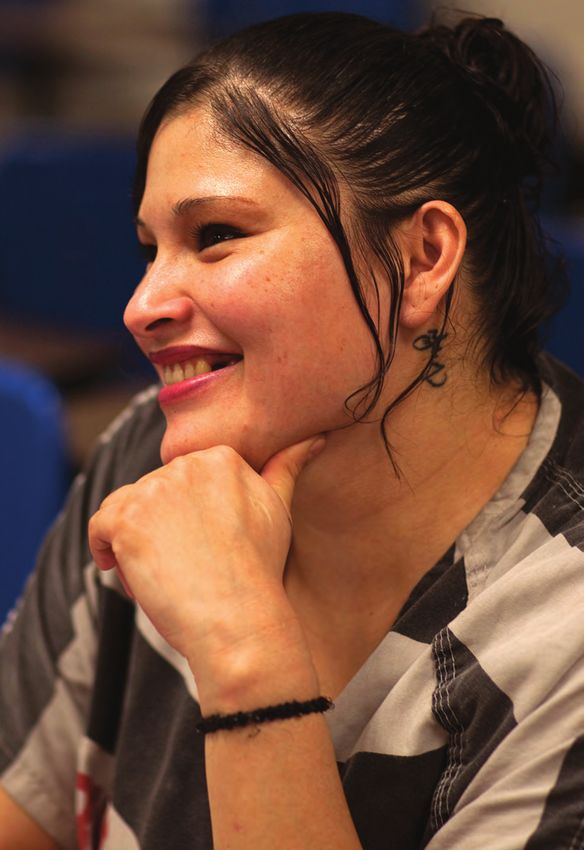
Against all odds
• Girls can follow in their mothers’
 footsteps in a variety of ways—
 including victimization. According to
 the National Institute of Justice, prior
 victimization is one of the most significant
 risk factors contributing to women’s
 criminal behavior. The 2002 Survey of
 Inmates in Local Jails found that 36
 percent of female inmates had been
 sexually abused.

• The Adoption and Safe Families Act
 authorizes the termination of parental
 rights when a child has remained in
 foster care for 15 out of the previous
  22 months. Most mothers are in prison
 for sentences longer than 22 months;
 if their children have been in foster care
 during that time, the loss of custody is a
 very real possibility.

• Sixty-two percent of parents in state
 prisons and 84 percent of parents in
 federal prisons are held more than
 100 miles away from their last
 residence, according to the National
 Resource Center on Children and
 Families of the Incarcerated (NRCCFI).
 Worse yet, 43 percent of parents in federal
 prisons stay more than 500 miles away
 from their residence, making regular
 visitation—if any at all—virtually impossible.
 More than half of incarcerated women
 report never having had a visit from their
 children. Most prisons are not accessible by
 public transportation, and collect phone
 calls from the facilities can be expensive,
 putting a financial strain on caregivers.

“More of these girls would end up in the judicial
 system if not for the intervention of the Girl Scout
 program…. I have been volunteering for 18 years
 and I know that the program makes a difference in
 the lives of all of us. Our children are our future—all
 of our children, even the powerless ones.”
                                Girl Scouts of Central Maryland’s Girl Scouts Beyond Bars

| 6|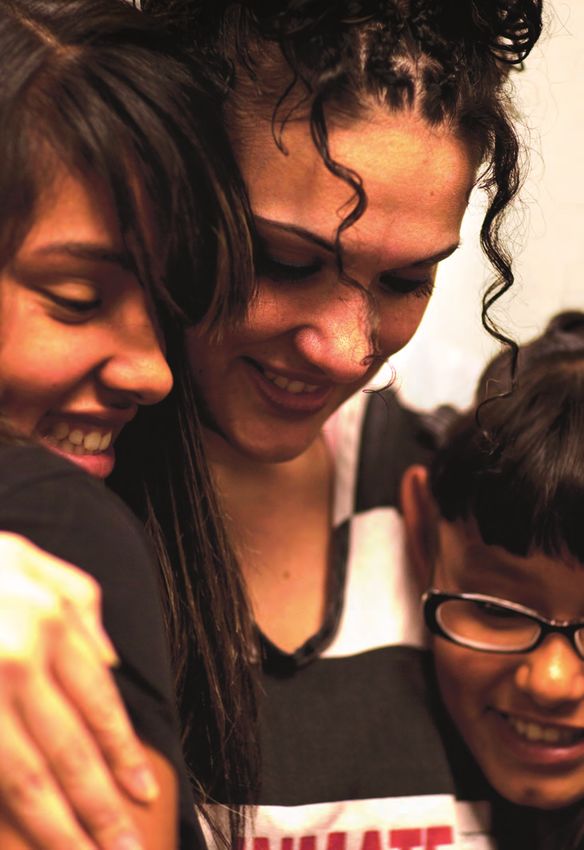
UNLOCKING NEW DOORS:
A PROGRAM THAT WORKS

The keys to success                                                                             RESPECT
G             irl Scouts Beyond Bars has a
              simple—yet at the same time
              profoundly complex—goal:
to offset the devastating impact of
incarceration on girls ages 5 to 17 who have
mothers in prison.
                                               girls who have been adjudicated, are
                                               wards of the court, or are court-referred
                                               delinquents. GSDC is the only gender-
                                               specific program in the United States to
                                               serve girls in detention.)
                                                                                                Fifteen-year-old Lehnniah and her
                                                                                                incarcerated mother have gained
                                                                                                newfound mutual respect. As the
                                                                                                teen has matured, the Girl Scouts
                                                                                                Beyond Bars program has helped
                                                                                                her learn how to deal with her
                                               Since its inception, GSBB and GSDC have
                                                                                                anger and make healthy choices.
Through GSBB-organized mother/daughter         received roughly $9 million in funds from the
                                                                                                She’s also now carrying a 3.8 GPA
prison visits, familial bonds have been        Department of Justice’s Office of Juvenile
                                               Justice and Delinquency Prevention. As the       in school. During a workshop, her
maintained and strengthened. In addition,
the nurturing and supportive Girl Scout        councils involved are committed to serving       mother said, "I have learned a lot
volunteers and activities have empowered       at-risk populations, they supplement federal     about my daughter as I have
girls to take charge of their own lives        funds with donations from corporations and       learned to stop talking about
regardless of circumstance.                    foundations.                                     myself all the time… and actually
                                                                                                heard the message when she said,
GSUSA, however, realizes that the effects                                                       ‘It isn't all about you, Mom.”
of incarceration on all involved are
multilayered and ongoing. (In addition to                                                           Girl Scouts of Ohio Heartland’s
GSBB, there’s a sister program called Girl                                                                      Bonds Beyond Bars
Scouting in Detention Centers (GSDC) for

“We took two new girls to see their mothers after months of waiting due to state
 budget cuts. One girl had not seen her mother in over five years; the other girl
 had not seen her mother in over seven years…. The reunion was such an
 emotional sight—even the typically tough corrections officer was choked up.
 There wasn’t a dry eye in sight as we watched these girls and their mothers get
 to know each other again.”
                                                   Girl Scouts Eastern Washington & Northern Idaho’s Girls Successful, Bonds Built!

                                                                                                                                | 7|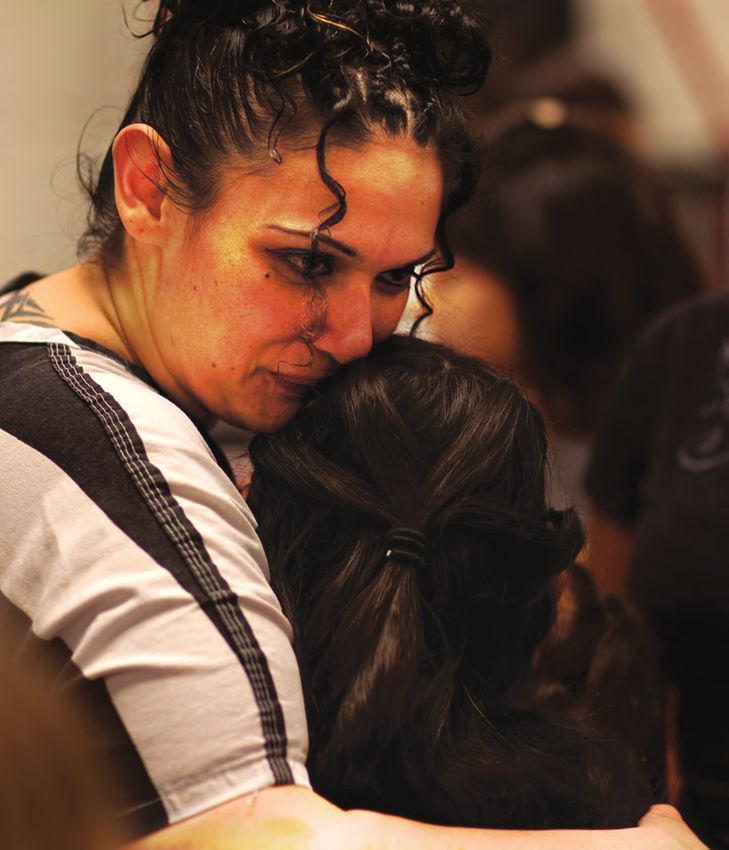
HOPE
  During one session incorporating
  the ITVS-GSBB resource,
  16-year-old Frances broke into
  tears. After the video, she was
  the first to speak. In a trembling
  voice, she said she felt she was on
  the path to ending up incarcerated
  at a juvenile correctional facility
  and didn’t even care about her
  future. But when she found out
  she was going to be able to see
  her mother for the first time in
  almost a year, she jumped at the
  chance and became a member
  of Girl Scouts Beyond Bars.
  She said it changed everything
  about her outlook and provided
  hope. She looks forward to going
  to school and college and visiting
  her mom every two weeks.
  She thanked the staff several
  times for bringing in the video
  so she could share her story—
  and said she hoped it would help
  other girls who felt the same way
  she had.
                Girl Scouts of Oregon
        and Southwest Washington’s
             Girl Scouts Beyond Bars

| 8|
More than meetings
E          very girl, regardless of background
           or opportunity, should have the
           chance to develop the leader
within. To help her do so, Girl Scouts of the
USA has streamlined and standardized its
                                                 • On the other two Saturdays of the month,
                                                  the girls might meet with one another for
                                                  troop meetings and council-wide activities.
                                                  Like other Girl Scouts, the members of
                                                  GSBB troops complete projects, participate
                                                                                                       SEE FOR
                                                                                                      YOURSELF
offerings to provide a more focused,              in field trips, and engage in the varied           The films featured in
                                                  activities of the Girl Scout Leadership
uniform leadership experience for girls.
                                                  Experience. In addition to programming              This Is a Story You
Girl Scouts Beyond Bars has done the same,
offering a program experience based on
                                                  that helps girls develop critical life skills,     Have to Tell include :
                                                  build self-esteem, and cultivate positive
relevancy, sustainability, and replication of     value systems, GSUSA provides resources
best practices.                                   that specifically address sensitive issues                 Troop 1500
                                                  unique to their current situation. One           www.pbs.org/independentlens/troop1500/
Typically, GSBB programs include several
                                                  particular program resource is This Is a
components:
                                                  Story You Have to Tell—Women, Girls
• Mother/daughter troop meetings usually          and the Criminal Justice System,                        Me Facing Life:
 take place a couple of Saturdays each            adapted in partnership with the                         Cyntoia’s Story
 month. The local Girl Scout council              Independent Television Service (ITVS).               www.itvs.org/films/me-facing-life
 arranges to take the girls to and from          • In between in-prison meetings, the
 the correctional facility; while there, they     incarcerated mothers may gather for
 attend two-hour meetings alongside their         an hour each month with a Girl Scout                   Girls on the Wall
 mothers. Supervised activities focus on          council staff member or contracted                    www.girlsonthewallmovie.com
 family issues and fun, but also core             professional facilitator. During these
 Girl Scout opportunities for leadership          sessions, they plan meeting events as
 growth and life skills development.              well as discuss parenting issues.

  THIS IS A STORY YOU
  HAVE TO TELL
  ITVS’ Community Classroom resource, This Is a Story You Have to Tell—Women,
  Girls and the Criminal Justice System, has been blended with the national Girl Scout
  program, resulting in a unique GSBB facilitator guide utilizing both organizations’
  programmatic expertise. Rooted in seven short film modules lifted from three
  feature-length documentary films, the program allows mothers and daughters
  alike to see themselves in the characters, presenting opportunities for discussion
  and personal exploration. This customized guide presents material lists, session
  goals, and age-specific facilitation guidelines to be followed with mothers alone as
  they prepare for visits, as well as with mothers and girls during the visitations
  themselves.
  One session, for example, considers the impact of individual decisions, as well as
  the values that help shape those decisions. Another session explores resiliency.
  Volunteers report that the segments often open up additional reflection on the
  decisions that led to incarceration.
  This program tool is available online. Visit www.girlscouts.org and
  SEARCH: Girl Scouts Beyond Bars.

                                                                                                                                           | 9|
One mother worked on her own anger management
for three years in order to remain discipline free for
six months, as that is one of the requirements to
participate. “I finally made it,” she said. “I wanted
so badly to be able to share this with my daughter….
It’s because of this program that I’ve changed my
behavior.”
                Girl Scouts of Greater Los Angeles’ Girl Scouts Beyond Bars

| 10 |
Community, coordination, and commitment
G irl Scouts Beyond Bars requires
far more than a girl who misses
her mother and a volunteer
willing to arrange a visit. Each troop relies
heavily on community support; cooperation
from correctional facility administration;
girls. After training, volunteers are matched
according to interests and abilities. While the
majority of volunteers provide leadership
and guidance to groups of girls in the troop
setting, volunteers also form the backbone
of the entire system, providing administrative
efforts, offer assistance, and support the
building of relationships within the
community. Individual councils are strongly
encouraged to broaden their local
collaborations and partnerships to
continually improve the program’s success
and determination from the girls, their services, program organization at the and raise support. Councils partner with local
incarcerated mothers, their guardians, and neighborhood level, and training of other and state agencies, schools, universities,
Girl Scout staff and volunteers. volunteers. At Girl Scouts – Arizona Cactus- religious organizations, and local businesses;
Pine Council, group mentoring also is offered the support those partners provide might
First, Girl Scout program managers and to GSBB participants in partnership with
facilitating volunteers must participate in include meeting spaces, transportation,
Gamma Alpha Omega Sorority, Inc.; the volunteers with particular content expertise,
Girl Scout and correctional facility training, mentoring experience is a critical
as well as undergo background checks. As for and program supplies. One such example is
component to the GSBB program as it helps Girl Scouts of Oregon and Southwest
the girls, they generally live within the area girls learn how to trust other women.
served by the local Girl Scout council Washington, where program partners range
jurisdiction. Their guardians must release As each GSBB program is autonomous, staff from a quilting group that helps the girls
them to participate in the program, often participation helps ensure consistency in create items for donation to a domestic
overcoming their own complex feelings offerings. A Girl Scout council program violence shelter to nurses who train inmates
about relationships with the incarcerated manager makes regular site visits to monitor on safety and healthy relationships.
woman. The incarcerated mothers cannot
be serving sentences related to crimes
against children, and they must remain
infraction free for specific periods of time
to take part.
Some councils take the idea a step further
via strategic partnerships. Through the
program offered by Girl Scouts of Eastern
Oklahoma’s GSBB program, Project MEND
(Mothers Encouraging and Nurturing their
Daughters), mothers have the ability to enroll
in a parenting class, which, due to the
support of the Oklahoma Department of
Corrections, earns them credits toward early
release. This effort is part of a larger
consortium of adult mentoring and prisoner
reentry services, and the council works in
collaboration with Tulsa Community College
to deliver this portion of the program.
In addition, Project MEND is unique in that it
offers seamless programming across five
PARTNERSHIP
correctional facilities in the state. This allows
the mother and daughter to continue their
reunification process without interruption
due to a facility move (when a mother is While Kizmaree’s mother has been serving time, the 10-year-old girl has been
moved from higher to lower security within living in a chaotic situation in a rough neighborhood. She was hanging around
corrections). The same lessons are offered on the streets, not going to school, and quick to pick a fight. But Girl Scouts
at each facility each month, allowing for offered Kizmaree different options through a partnership with a neighborhood
program continuation. ministry offering after-school programming. Kizmaree is now involved in
Regardless of the council or program, Girl Scouts on a weekly basis. Her life is much happier. She gets along better with
however, GSUSA empowers its volunteers others—and is even helping younger kids to learn to read. Her mother is relieved
through appropriate training, which is and has told Girl Scouts Beyond Bars staff and volunteers many times how much
provided free of charge. It not only addresses she appreciates what the program has done for her daughter.
Girl Scout policy and procedures, but also
Girl Scouts of Rhode Island’s Girl Scouts Beyond Bars
provides instruction specifically relevant to
the GSBB program and the age group of the
| 11 |A path to freedom
15OUTCOMES
Girl Scouts of the USA exists for one reason alone: to develop
girls who lead with courage, confidence, and character. But it’s
not enough to just offer programs like Girl Scouts Beyond Bars
and “hope” it happens.
Rather, GSUSA has developed 15 short- and medium-term
outcomes that offer measurable progress along the way.
Each of the activities in GSBB ties in with one or more of the
of the Girl Scout Leadership Experience : following aspects of the Girl Scout Leadership Experience:
DISCOVER
1. Girls develop a strong sense of self.
2. Girls develop positive values.
3. Girls gain practical life skills.
4. Girls seek challenges in the world.
5. Girls develop critical thinking.
TAKE ACTION LEADERSHIP
1. Girls can identify community needs.
2. Girls are resourceful problem solvers.
3. Girls advocate for themselves and other, CONNECT
locally and globally.
1. Girls develop healthy relationships.
4. Girls educate and inspire others to act.
2. Girls promote cooperation
5. Girls feel empowered to make a difference and team building.
in the world.
3. Girls can resolve conflicts.
4. Girls advance diversity in
a multicultural world.
5. Girls feel connected to their
communities, locally and globally.
| 12 |“I am thankful that my daughter is in this Girl Scout program, not just because
I get to see her once a month, but because Girl Scouts is giving her skills she
needs so that she does not follow the same path I took that got me in jail.”
Girl Scouts of Hawai’i’s Girl Scouts Beyond Bars
| 13 |HONESTY
Jah'me has always been quiet and soft-spoken. Drawing a mural expressing her feelings about having an incarcerated
mother, Jah'me became very emotional. Other girls in the group helped guide her through the activity. Afterward, her mother
said she knew Jah'me was impacted by her incarceration, but wouldn’t admit it. The mural project helped Jah'me express her
true feelings, and her mother reported that it was their first honest conversation about the subject. The mother was so inspired
by her daughter’s courage that at the next meeting, she shared a poem expressing her own feelings about leaving Jah'me
after each troop meeting.
Girl Scouts of Northeast Kansas and Northwest Missouri’s Girl Scouts Beyond Bars
| 14 |PROVEN SUCCESS
“I like Girl Scouts because I get to talk about my feelings about my mom without
feeling ashamed for myself and my mom.”
H
Girl Scouts of Hawai’i’s Girl Scouts Beyond Bars
appy reunions aside, Girl Scouts
Beyond Bars has sought more KEY FINDINGS FROM THE
2012 EVALUATION INCLUDE:
rigorous proof of the program’s
success. The Girl Scout Research Institute
evaluated the 2010–12 GSBB program cycle
as a follow-up to an independent evaluation
by CSR, Incorporated, released in 2008. GSBB improves the mother-daughter relationship.
Both evaluations set out to determine
whether participation in the program actually • Seventy-seven percent of Girl Scout Seniors and Ambassadors and 86 percent of Girl Scout
strengthened the relationship between Juniors and Cadettes agree that they now have a better relationship with their mother.
the girls and their incarcerated mothers.
In addition, the research considered whether GSBB helps girls develop healthy behaviors.
these Girl Scouts were receiving the same
benefits as Girl Scouts across the globe: the • Sixty-six percent of Girl Scout Juniors and Cadettes and 64 percent of Girl Scout Seniors
development of leadership skills necessary and Ambassadors agree that since they’ve been in GSBB they get in less trouble.
for making the world a better place for
themselves and others.
• Seventy-nine percent of Girl Scout Juniors and Cadettes and 86 percent of Girl Scout
Seniors and Ambassadors agree that they are doing better in school since they’ve been in
Both quantitatively and qualitatively, the GSBB. Seventy-one percent of Girl Scout Juniors and Cadettes and 79 percent of Girl Scout
results are positive. Seniors and Ambassadors agree that since they’ve been in the GSBB program they make
healthier choices (e.g., eat better foods, stop smoking).
Findings from both evaluations indicate
that GSBB not only has helped girls
strengthen their relationships with their GSBB promotes the development of leadership skills
mothers, it has helped them build self-
esteem and develop leadership skills, while • Seventy-one percent of Girl Scout Seniors and Ambassadors and 77 percent of Girl Scout
promoting their healthy development. Juniors and Cadettes agree that since they’ve taken part in GSBB they’ve gotten involved in
community activities.
• Ninety-three percent of Girl Scout Seniors and Ambassadors and 81 percent of Girl Scout
Juniors and Cadettes agree that they have had opportunities to help other people since
they’ve been in the GSBB program.
As for the mothers, they believe GSBB has helped them better handle stress and anxiety
about their daughters, as well as learn necessary skills for functioning outside of prison—
including how to parent more effectively.
Similar findings were reported in the 2008 evaluation, indicating that the success and impact
of the GSBB program has been sustained over time.
| 15 |Incarcerated mothers speak
about themselves
What is the most important change (or changes) you have seen in yourself as
a result of your participation and involvement in this program?
“I am able to talk to my
children without going off.
I am able to actually be
there for them and listen
and understand their needs,
wants, fears, and goals they
want to achieve.”
“The willingness to continue
being involved and be
supportive of my children,
and the desire to provide
stability.”
“How to communicate
with my daughter and be
encouraged to get involved
in positive, helpful activities.”
“The ability to step up and
facilitate a curriculum
in a leadership fashion.
To allow my daughter to
lead by my example.”
Source: 2012 evaluation of Girl Scouts Beyond Bars
| 16 |Incarcerated mothers speak
about their daughters
What is the most important change (or changes) you have seen in your daughter
that you think has come about through her participation in this program?
“She has more self-esteem
and confidence in herself
and what she does.”
“She will express her feelings
and her doubts, whatever
she's going through. She's
more open.”
“My daughters are able to
talk to me better about
challenges and changes
they might be experiencing.”
“She is showing interest in her
community. She has learned
the importance of staying
‘young,’ that having fun is still
OK, and that you can be you
with confidence.”
“She is more ambitious about
setting goals in school and
getting them accomplished.”
“She's open now, she speaks
what's on her mind; she
doesn't run away from her
problems. She knows what's
right and wrong. Girl Scouts
has made her a beautiful
young girl.”
Source: 2012 evaluation of Girl Scouts Beyond Bars
| 17 |FACING TOMORROW
OPPORTUNITY
At first, Dawnie had a rough start in
the Girl Scouts Beyond Bars program.
The 16-year-old would skip meetings
S ince March 1912, Girl Scouts of the
USA has offered experiences girls
simply can’t find anywhere else.
For some, that means discovering the great
outdoors away from urban life. For others,
Opportunities abound for investing in
Girl Scouts Beyond Bars—monetarily and
otherwise. Strategic partnerships and
volunteer involvement can help expand
its reach, not only in the geographic areas
it already serves, but in new ones. In
it’s developing interests in fields like
and tell her grandmother she had science, technology, engineering, or math. addition, the program can continue to
attended. Ultimately, she tested But for the girls of the Girl Scouts Beyond grow in its holistic approach with added
positive for drugs. She ran away from Bars program in particular, it’s a chance to life skills services and offerings for
home and was placed in foster care. learn skills and confidence that might make mothers and guardians.
Though she’s been moved around the difference between a life of success It would be easy enough to pretend that
several times since, Dawnie has been and a continuing familial cycle of violence, the need for such a program doesn’t exist.
able to maintain contact with both her crime, incarceration, and poverty. But according to the most recent
mother and her younger sister through statistics, 1 in every 15 black children, 1 in
Girl Scouts Beyond Bars. During a The program, however, is bigger than just
42 Latino children, and 1 in every 111 white
the girls it serves. It not only impacts their
recent meeting, the group was children has a parent in prison.
immediate communities today—but also all
discussing the material presented in
of our communities tomorrow. When girls Their future—our own future—is in our
This Is a Story You Have to Tell:
succeed, so does society. hands.
Women, Girls and the Criminal Justice
System. With teary eyes and a
quivering voice, she said that without
GSBB keeping her family connected,
she would have been one of the girls “In the beginning of Girl Scouts, life skills were
from the Girls on the Wall movie. "I am about how to survive in the wilderness. Now it’s
lucky to have GSBB,” she said.
“Without them I would be homeless about how to survive in the wilderness—the
and still doing drugs."
wilderness of the culture.”
Girl Scouts of Rhode Island’s
Troop 1500, Girl Scouts of Central Texas
Girl Scouts Beyond Bars
| 18 |For more information regarding the Girl Scouts Beyond Bars program, including a listing of Girl Scout councils
who currently host the program, as well as access to THIS IS A STORY YOU HAVE TO TELL: Women, Girls,
& the Criminal Justice System A FACILITATOR’S GUIDE FOR GIRL SCOUTS BEYOND BARS PROGRAMS,
please visit www.girlscouts.org and SEARCH: Girl Scouts Beyond Bars
| 19 |Girl Scouts of the USA 420 Fifth Avenue New York, New York 10018 girlscouts.org
GIRL SCOUTS BEYOND BARS
      Incarcerated Mothers, Empowered Daughters—and a Better Future for All
You can also read


