Glass Science & Technology - nd2 ICG-CGCRI Tutorial 2021 - CSIR-Central Glass ...
←
→
Page content transcription
If your browser does not render page correctly, please read the page content below
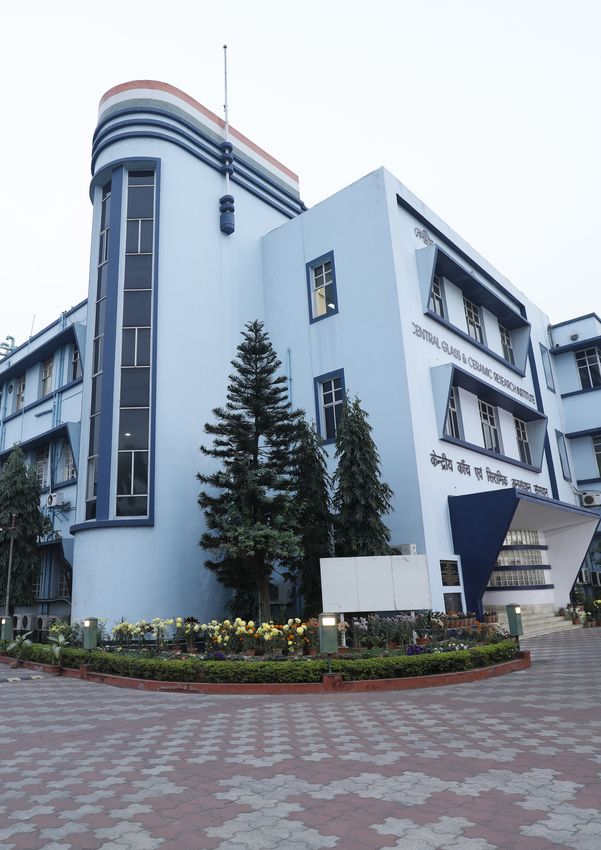
Report on

   2nd ICG-CGCRI Tutorial 2021
                             on
    Glass Science & Technology
               Through On-line Mode

    18-23 and 25-27 January 2021 (09 days)

                       Organised by
CSIR-Central Glass and Ceramic Research Institute
                   in association with
       International Commission on Glass

  CSIR-CENTRAL GLASS & CERAMIC RESEARCH INSTITUTE
      196 Raja S. C. Mullick Road, Kolkata – 700032, India
                         February 2021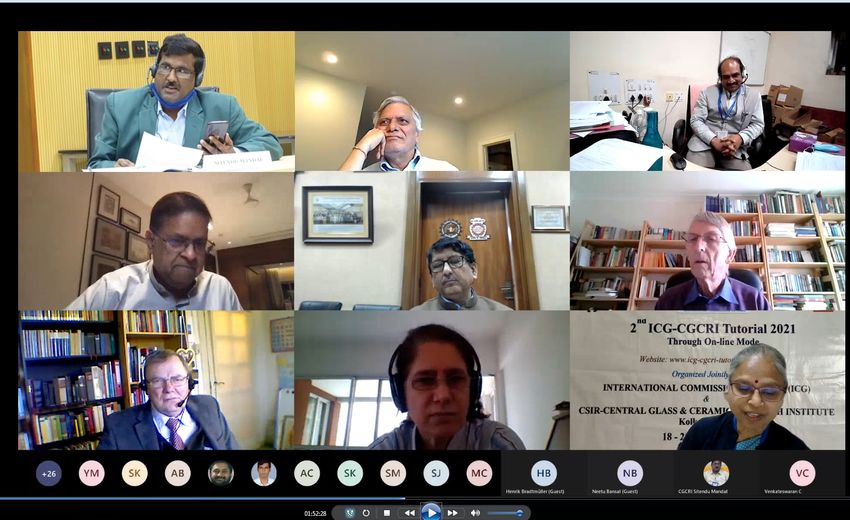
Report
                              on

        nd
      2 ICG-CGCRI Tutorial 2021
                              on
      Glass Science & Technology
                     Through On-line Mode
             18-23 and 25-27 January 2021 (09 days)

                         Organised by
CSIR-Central Glass and Ceramic Research Institute
                       in association with
    International Commission on Glass (ICG)

CSIR – Central Glass and Ceramic Research Institute
                   Kolkata, India

                         February 2021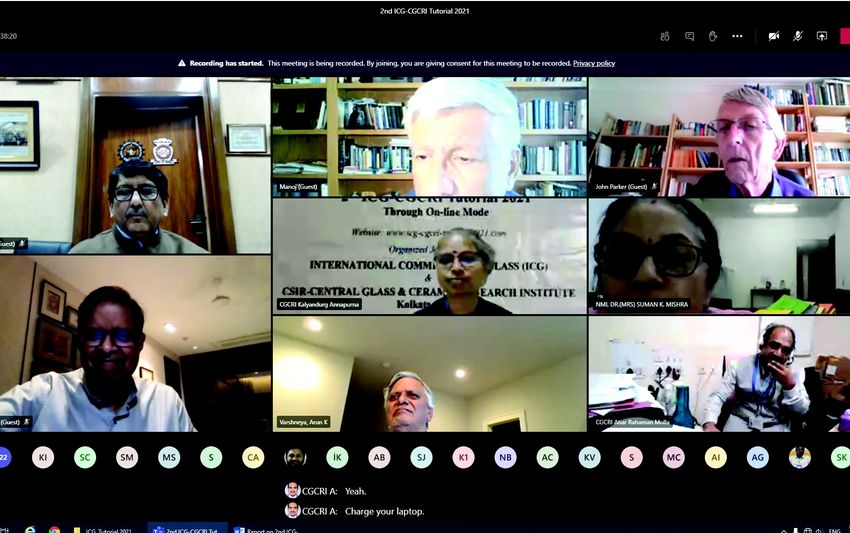
Table of Contents:

                                            Page no.

Preamble                                       2

Foreword                                      3-4

Organizing Committee                          5-6

Statistics on 2nd ICG-CGCRI Tutorial 2021      7

Topics covered                               7-10

About 2nd ICG-CGCRI Tutorial 2021            11-16

Key outcomes of the Tutorial                 17-19

                                 1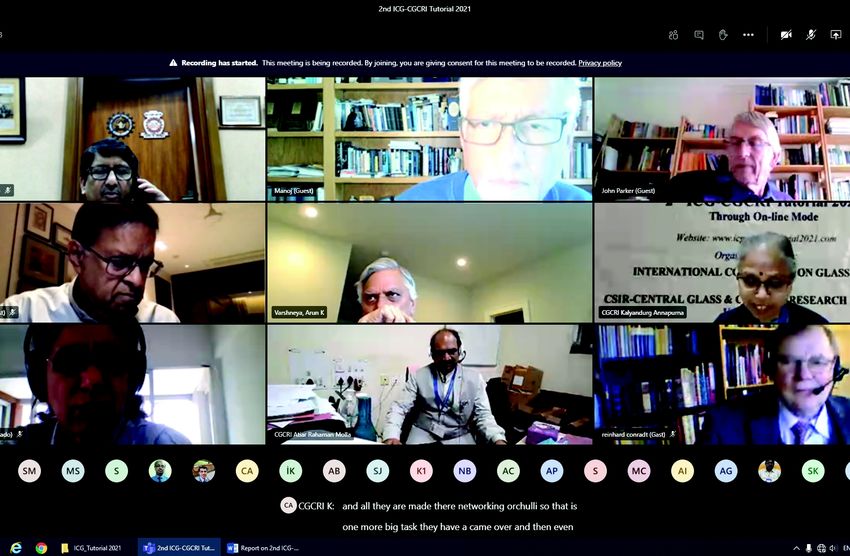
Preamble:

CSIR-Central Glass & Ceramic Research Institute [CSIR-CGCRI], Kolkata,
India in association with the International Commission on Glass (ICG)
jointly organized the 2nd ICG-CGCRI Tutorial 2021 in online mode during
January 18-27, 2021. The tutorial covered various aspects of glass science
and technology including basics of glass/glass-ceramics and glass melts,
structural aspects of glass, advanced characterization techniques,
properties of glasses and glass-ceramics for advanced applications. For
the benefit of the budding glass researches across the globe, ICG hosts its
winter and summer schools every alternative year in Wuhan, China and
Montpellier, France. Keeping in mind The Indian glass community,
especially young glass researchers industry personnel, CGCRI, Kolkata
organized such ICG-CGCRI Tutorial event first in 2017 which received an
overwhelming appreciation. This Tutorial is supported by the ICG
education team consisting of entire galaxy of stalwart faculties from across
the globe who not only designed the course curriculum, but also taught,
inspired and mentored the students during their entire course work. It was
envisaged that the tutorial will aid towards enrichment of knowledge base
of glass researchers and promote development of skilled human resource
in the field of glass science and technology for catering to the needs of the
country.
This was a unique opportunity for the students, young researchers,
faculties and glass industry representatives. We selected about 70
students for this school from across the globe. In this tutorial 23 topics
were covered by 15 eminent speakers from various countries like USA, UK,
France, Germany, Japan and Brazil. The online tutorial on glass was
conducted successfully for the first time in India which has been reflected
in the awe-inspiring feedback received from the participants, faculties,
scientists and industrialists.

                                      2
Foreword

                                      It is our pleasure and privilege to take
                                 part in organizing the "2nd ICG-CGCRI
                                 Tutorial 2021” on glass during January
                                 18-27, 2021 in CSIR-CGCRI, Kolkata,
                                 India conducted online. It was just a
                                 pleasant coincidence that I took over the
                                 charge as Director of the prestigious
                                 Institute CSIR-CGCRI on 18th January
                                 itself and attended the program. It is
                                 particularly remarkable that the Tutorial
                                 is conducted for the 2nd time in India in
                                 association with International Commi-
ssion on Glass (ICG) despite colossal difficulties caused by the most
devastating Covid19 pandemic. The first such tutorial was conducted in
India in 2017 by considering the needs of the country for development of
skilled human resources in the field of glass science and technology. CSIR-
CGCRI has committed to conduct such events once in every four years in
association with ICG.
    The major objectives of this Institute is to carry out basic and applied
research in the fields of glass, ceramics, refractories, vitreous enamels,
composites for various diverse applications and develop the technologies
relevant to the country’s security, economic, industrial and socio-
economic needs. It caters to many sectors by world class research and
development of technologies to name a few are Energy, Power, Petroleum,
Electronics, communication, Bio-medical, refractory, steel, aluminum &
other related metal industries and strategic. It has excellence in different
varied glasses, ceramic materials, optics and fiber optics materials and
devices, energy material such as SOFC, LI & Na ion batteries, SOEC,
Sensors, Bio medical devices, bio-sensors and implants, radiation
shielding, cutting tool, laser glasses, advanced refractories for steel and
other industries, waste to wealth generation and many advanced
applications.
    CSIR-CGCRI undertake advanced R&D projects which are
internationally competitive and public-private partnership projects
sponsored by private/public sector enterprises. It also provide technical
advisory and infra-structural services like project engineering, testing &
evaluation, training & education and dissemination of scientific
information to the public domain.
    CSIR-CGCRI, established in 1950, has a legacy of more than 70 years
with successful implementation of major programs and the development of
novel products and processes. Specialty glass is one such area in which
this Institute has left its remarkable footprint.
   Glass is emerging as the material of choice from the point of advanced
applications such as buildings, many electronic gadgets, shatter-proof

                                      3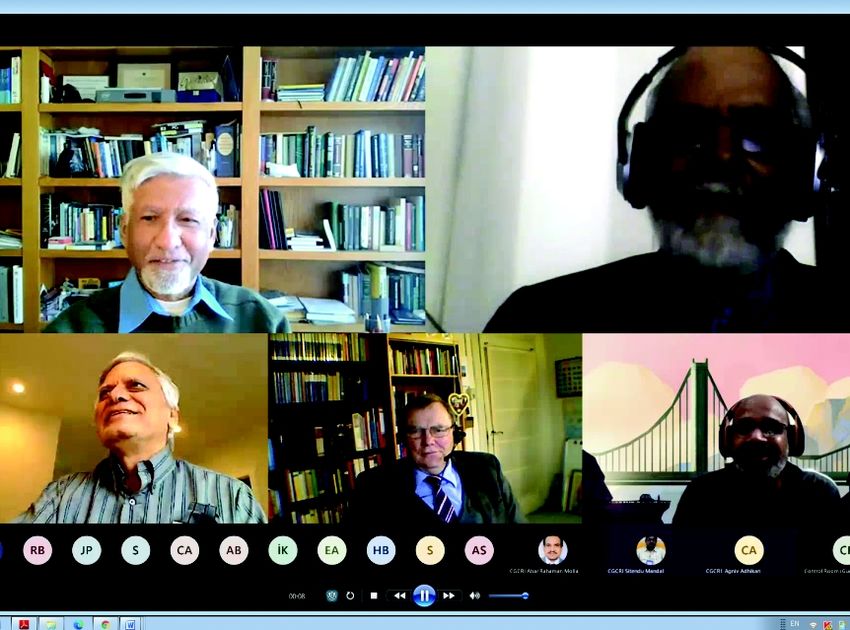
touch screens for mobiles and other display devices. High purity silica
glass enabled optical communication to be realized through glass fibers
and making a revolution in telecommunication. The examples are endless
but each one highlights the diverse characteristics developed in glass to
meet the needs of society.
    Glass is one of the very few materials that can be customized for
superior performance and diverse applications. It is thus an appropriate
forum to bring together the budding glass students/researchers/ industry
personals along with the pioneers and torch bearers of the field of glass
research so that an amalgamation of minds can take place. I take this
opportunity to thank and record my gratitude to all colleagues of CSIR-
CGCRI, the eminent speakers and participants from across the globe who
made the contributions, which made 2nd ICG-CGCRI a very successful
event. I am also thankful for the inspiring feedbacks and appreciations
received from the participants, faculties, scientists and industrialists. I
look forward to the organization of ICG2025 Congress and 3rd ICG-CGCRI
Tutorial 2025.

                               (Dr. Suman Kumari Mishra)
                               Director, CSIR-CGCRI and
                               Chairperson, 2nd ICG-CGCRI Tutorial 2021

                                     4
Organizing Committee

Director, CSIR-CGCRI                Chairman

Shri Sitendu Mandal
Chief Scientist and Head,           Organizing Secretary
Specialty Glass Division (SGD)
                       Tutorial Core Secretariat:
           Dr. Atiar Rahaman Molla, Principal Scientist
       Organizing Joint Secretary (I) (Technical and Secretariat)
               Dr. Kaushik Biswas, Principal Scientist
       Organizing Joint Secretary (II) (Technical and Secretariat)
Dr. K. Annapurna                    Shri Santanu Sen
Sr. Principal Scientist             Sr. Principal Scientist and Head,
In-charge: Virtual Mode             Instrumentation Section, MCID:
Arrangement and Students’           In-charge: Instrumentation
Projects                            Facilities and General Arrangement
Assisting Members:                  Assisting Members:
Dr. Anal Tarafder                   Shri M L Ram
Principal Scientist                 Senior Technical Officer (3)
Dr. Sourja Ghosh                    Shri Mrinmoy Adhikary
Principal Scientist,                Technical Officer
Dr. Debashri Ghosh                  Shri Shibasish Barik
Senior Scientist,                   Technical Officer
Dr. Shirshendu Chakraborty          Shri Gautam Ghosh
Senior Scientist                    Sr. Technician (2)
Shri Srikrishna Manna
Senior Technical Officer (2)
Mr. Agniv Adhikary
Senior Technical Officer (1)
Ms Ruma Chakraborty
Senior Technical Officer (1)

                          Dr. Sunirmal Jana
                        Sr. Principal Scientist
 In-charge: Finance Management and Day to Day Event Management
                          Assisting Members:
           Mrs. Mousumi Majumdar, Sr. Principal Scientist
                Dr. P. K. Sinha, Sr. Principal Scientist
            Mr. Rana Dasgupta, Principal Technical Officer
                  Mr. Priyam Mukherjee, S.O (F & A)
          Ms. Subarna Roy, ASO (G), Finance and Accounts

                                   5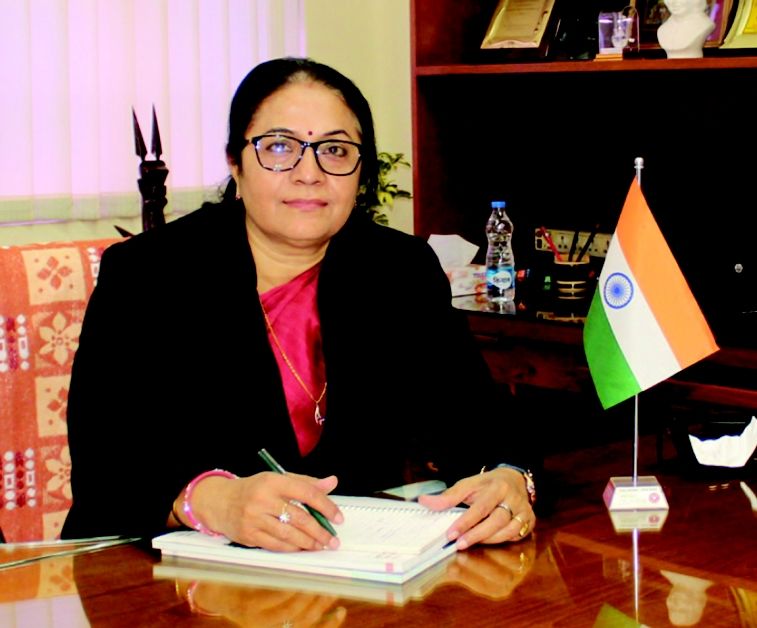
Dr. Debashis Bandyopadhay
               Sr. Principal Scientist and Head, ISTAG
          In-charge: Liaison with CSIR and Electronic Media
                          Assisting Members:
              Dr. N. C. Pramanik, Sr, Principal Scientist
                   Dr. Indranil Biswas, Pr. Scientist
                  Dr. Ambarish Sanyal, Sr. Scientist
           Mr. Debshis Sarkar, Senior Technical Officer (2)
      Mrs. Krishna Bhattacharya, Senior Hindi Officer, Hindi Cell
Dr. Ashis K. Mandal                Dr. Sunirmal Jana
Principal Scientist                Sr. Principal Scientist
In-charge: Tutorial Registration   In-charge: Tutorial Website
and Logistics                      Designing and E-Brochure
Assisting Members:                 Committee
Dr. Sumana Ghosh                   Assisting Members:
Pr. Scientist                      Mr. Agniv Adhikary
Dr. Anirban Dhar                   Senior Technical Officer (1)
Sr. Scientist                      Dr. S. Balaji
Dr. Himanshu S. Maharana           Principal Scientist
Scientist                          Dr. Kausik Dana
Mr. Sanjib Samaddar                Pr. Scientist
Senior Technical Officer (2)       Dr. Atasi Pal
                                   Pr. Scientist
                                   Dr. Ambarish Sanyal
                                   Sr. Scientist
                                   Dr. Srabanee Sen
                                   Pr. Scientist
                                   Mr. Sukamal Mondal
                                   Pr. Tech. Officer
                                   Mr. Sirshendu Ghorui
                                   Sr. Tech. Officer
                                   Mrs. Sanhita Ganguly
                                   S.O (G)

                            Dr. Ranjan Sen
                          Chief Scientist (Rtd.)
                Advisor, Tutorial Organizing Committee

                                   6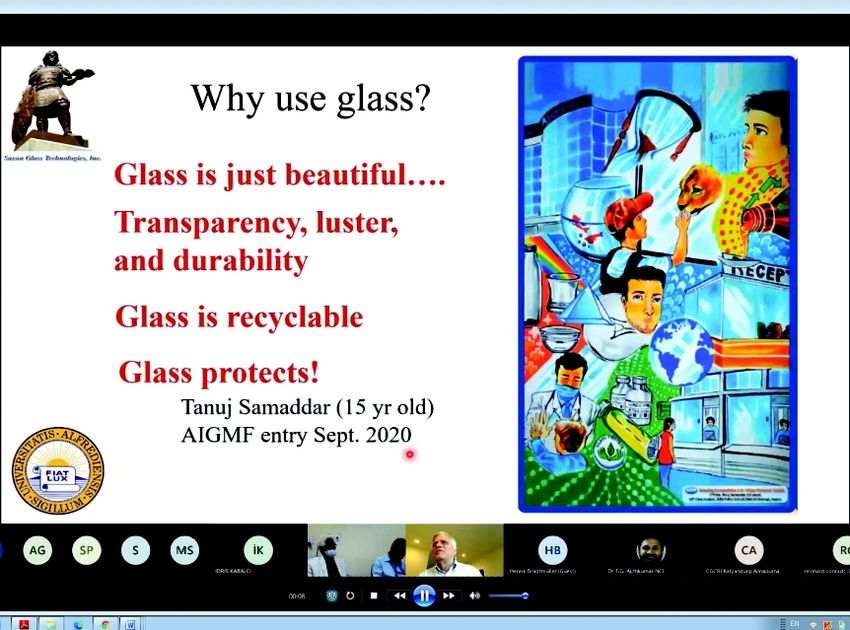
Statistics on 2nd ICG-CGCRI Tutorial 2021

                                         Total          Indian      Foreign

Participants                                 68           64           4

Faculties                                    15           Nil         15

Total topics covered                         23

Session Chairs                               15           15          Nil

Projects Allotted                            11

Projects awarded with certificates                        4

Topics covered

Day 1                       18th January 2021 (Monday)
                    Session Chair: Dr. Sunirmal Jana
                  Senior Principal Scientist, CSIR-CGCRI
                                                  Country and     Date and
        Topics                    Instructor
                                                   Affiliation    Time (IST)
                                                  UniglassAC
        Phase equilibria and
                                   Prof. R.         GmbH,     18.01.2021
  1     chemical activities in
                                   Conradt         Aachen,   7:20-8:20 PM
        glassmelts
                                                   Germany
Day 2 19th January 2021 (Tuesday)
                   Session Chair: Prof. Dipankar Banerjee
                 Indian Institute of Science, Bengaluru and
                 Chairman, Research Council, CSIR-CGCRI
        Evolution of theories       Alicia                        19.01.2021
  1                                               CSIC, Spain
        on glass structure          Duran                        5:00-6:00 PM
                    Session Chair: Dr. K. Muraleedharan
                     Former Director, CSIR-CGCRI and
                    Emeritus Scientist, C-MET, Thrissur
        Thermodynamics and                        UniglassAC
        energy demands for         Prof. R.         GmbH,     19.01.2021
  2
        batch to melt              Conradt         Aachen,   6:10-7:10 PM
        conversion                                 Germany

                                     7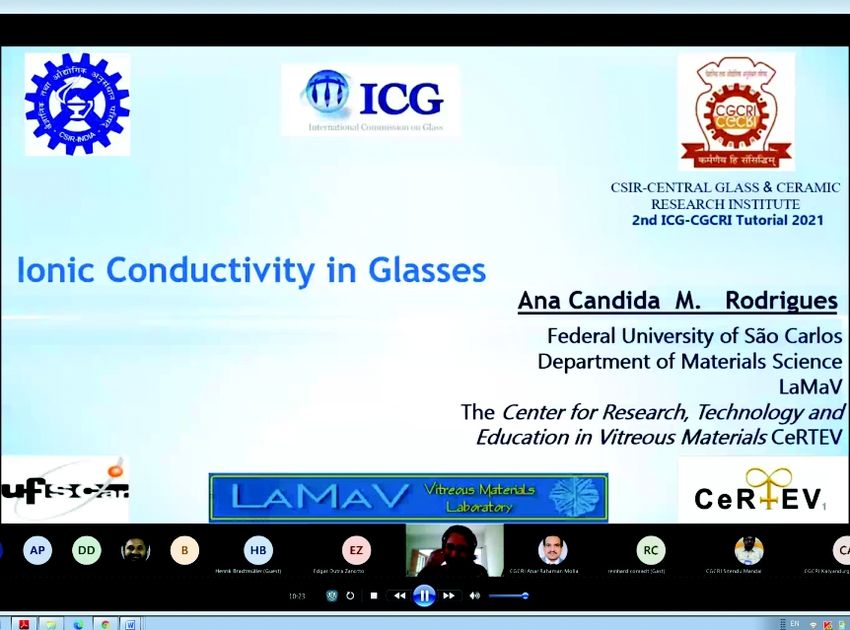
Session Chair: Dr. G. P. Kothiyal
        Formerly Head, Glass and Advanced Ceramics Division,
                   Materials Group BARC, Mumbai
                                               MKC
                                            Innovations
        Heat Transfer
                              Prof. M. K. LLC and The 19.01.2020
 3      Phenomena in Glass
                              Choudhary Ohio State 7:20-8:20 PM
        Melting Processes
                                             University,
                                                USA
Day 3                    20th January 2021 (Wednesday)
                     Session Chair: Dr. Mukul Pal
                Senior Principal Scientist, CSIR-CGCRI
                                              UniglassAC
        Chemical Durability       Prof. R.      GmbH,     20.01.2021
 1
        of Glass                  Conradt      Aachen,   3:50-4:50 PM
                                               Germany
                  Session Chair: Dr. K. Annapurna
                Senior Principal Scientist, CSIR-CGCRI
                                               Sheffield
        Optical Properties of
                               Prof. J. M.    University,    20.01.2021
 2      Glass; Glass color and
                                 Parker       Sheffield,    5:00-6:00 PM
        redox chemistry (I)
                                                 U.K.
                                               Sheffield
        Optical Properties of
                               Prof. J. M.    University,    20.01.2021
 3      Glass; Glass color and
                                 Parker       Sheffield,    6:10-7:10 PM
        redox chemistry (II)
                                                 U.K.
                  Session Chair: Mr. V. Ramaswamy
                 MD, Borosil Glass Works Ltd., Mumbai
                                 Prof. John                  20.01.2021
 4      Futuristic glasses                     PSU, USA
                                 C. Mauro                   7:20-8:20 PM
Day 4                     21st January 2021 (Thursday)
                   Session Chair: Dr. Gautam Kr. Dey
                                 BARC
        Neutron and X- ray                    University of
                                  Prof. R.                   21.01.2021
 1      diffraction studies of                Montpellier,
                                  Vacher                    5:00-6:00 PM
        glass                                   France
        Vibrations (I): basics
                                              University of
        of IR absorption,         Prof. B.                   21.01.2021
 2                                            Montpellier,
        Brillouin and Raman       Hehlen                    6:10-7:10 PM
                                                France
        scattering.
        Vibrations (II):                      University of
                                  Prof. B.                   21.01.2021
 3      relation with glass                   Montpellier,
                                  Hehlen                    7:20-8:20 PM
        structure & properties                  France

                                    8
Day 5 22nd January 2021 (Friday)
Session Chair: Prof. Aswini K. Ghosh
Indian Association for the Cultivation of Science, Kolkata
NMR technique for CEMHTI-
Prof. P. 22.01.2021
1 evaluation of glass CNRS,
Florian 3:50-4:50 PM
structure (I) France
NMR technique for CEMHTI-
Prof. P. 22.01.2021
2 evaluation of glass CNRS,
Florian 5:00-6:00 PM
structure (II) France
Session Chair: Prof. K. K. Ray
IIT Kharagpur
Saxon Glass
Mechanical properties Prof. A. 22.01.2021
3 Technologies,
of glass Varshneya 6:10-7:10 PM
Alfred, USA
Saxon Glass
Glass Strengthening Prof. A. 22.01.2021
4 Technologies,
Techniques Varshneya 7:20-8:20 PM
Alfred, USA
Day 6 25th January 2021 (Monday)
Session Chair: Dr. C. P. Kaushik
Director, Nuclear Recycle Group (NRG), BARC
Nuclear waste Sheffield
Prof. R. J. 25.01.2021
1 vitrification and University,
Hand 3:00-4:50 PM
chemical durability UK
Session Chair: Dr. Dipayan Sanyal
Chief Scientist and Chairman, ICG-CGCRI Tutorial, CSIR-CGCRI
Asahi Glass
Modelling (I): Prof. Akira 25.01.2021
2 Yokohama,
Atomistic Simulations Takada 5:00-6:00 PM
Japan
Session Chair : Dr. Ranjan Sen
Former Chief Scientist, CSIR-CGCRI
Federal
Glass-Ceramics (I):
University of
Fundamentals of Prof. E. D. 25.01.2021
3 São Carlos,
Nucleation and Zanotto 6:10-7:10 PM
São Carlos,
crystallization
Brazil
Federal
Glass-Ceramics (II): University of
Prof. E. D. 25.01.2021
4 Advanced São Carlos,
Zanotto 7:20-8:20 PM
Applications São Carlos,
Brazil
9Day 7 26th January 2021 (Tuesday)
Session Chair: Dr. Shyamal Kr. Bhadra
Former Chief Scientist, CSIR-CGCRI
Rare-earth doped Kyoto
Prof. S. 26.01.2021
1 glasses for photonic University,
Tanabe 3:50-4:50 PM
applications Japan
Modelling (II):
Asahi Glass
Relation with Prof. Akira 26.01.2021
2 Yokohama,
structure and Takada 5:00-6:00 PM
Japan
properties
Session Chair: Dr. A. R. Molla
Principal Scientist, CSIR-CGCRI
University of
Bioactive glass and A. R. Erlangen- 26.01.2021
3
glass-ceramic Boccaccini Nuremberg, 6:10-7:10 PM
Germany.
Federal
University of
Ionic conductivity in Ana C. M 26.01.2021
4 São Carlos,
Glasses Rodrigues 7:20-8:20 PM
São Carlos,
Brazil
10About 2nd ICG-CGCRI Tutorial 2021
The International Commission on Glass (ICG) and CSIR-Central Glass
& Ceramic Research Institute (CSIR-CGCRI), Kolkata, India jointly
organized the 2nd ICG-CGCRI Tutorial 2021 on Glass in virtual mode
through MS Teams during January 18 – 27, 2021. This tutorial aimed to
cover a wide spectrum of topics related to glass science and technology
including fundamentals of thermodynamics, melt flow dynamics,
mechanical behaviour, characterisation techniques, nucleation kinetics,
atomistic simulation and so on for developing an insight into the
processing-structure-property correlations of glass and glass-ceramics for
the benefit of the budding glass researches across the globe. The first ever
ICG-CGCRI Tutorial that was organized by CSIR-CGCRI, Kolkata in 2017
was very successful and had generated an overwhelming response. With
this background, ICG granted permission to CSIR-CGCRI to conduct such
tutorials once in every four years. The website for the Tutorial (www.icg-
cgcri-tutorial2021.com) was launched on 1st December 2020 in virtual
mode by Prof. Reinhard Conradt, Vice-President, ICG who delivered his
Presidential address to the audience. Dr. K Muraleedharan, Former
Director of CSIR-CGCRI and Shri Ashim Kumar Chakraborty, Former
Chief Scientist and Director (Acting) of CSIR-CGCRI, Prof. J. M. Parker
(Sheffield University, Sheffield, UK), Shri Sitendu Mandal (Chief scientist
& Organizing Secretary), and other distinguished dignitaries from Glass
community also participated in the website-launching program.
On 18th January, 2021, the 2nd ICG-CGCRI Tutorial 2021 was formally
inaugurated by Dr. Suman Kumari Mishra, Director, CSIR-CGCRI in
presence of Dr. Dipayan Sanyal, Chief Scientist, CSIR-CGCRI, Prof. Alicia
Duran, President, ICG, Prof. R Conradt, Vice President, ICG, Prof. J. M.
Parker, Advisor, ICG-Education, Prof. Ana C. M. Rodrigues, Chairperson,
TC-23 (ICG-Education) and several other eminent academicians and
expert professionals from glass science & technology community. Prof.
Dipankar Banerjee, Chairman, Research Council, CSIR-CGCRI and Prof.
Alicia Duran, President, ICG graced the event as Chief Guest and the
Guest of Honor respectively.
Shri Sitendu Mandal, Chief Scientist and Organizing Secretary of 2nd
ICG-CGCRI Tutorial 2021 delivered the formal vote of thanks to all the
dignitaries, guests, participants and other members of this tutorial
including the local organizing committee members for their wholehearted
support, active participation in making this inauguration a grand success.
A total of 23 lectures were delivered during the 9-days tutorial by
Stalwarts like, Prof. R. Conradt (Uniglass AC GmbH, Aachen, Germany);
Prof. J. M. Parker (Sheffield University, Sheffield, U.K); Prof. Alicia Duran
(CSIC, Spain); Prof. M K Choudhary (MKC Innovations LLC and The Ohio
State University, USA); Prof. John Mauro (PSU, USA); Prof. R. Vacher and
Prof. B. Hehlen (University of Montpellier, France); Prof. P. Florian
(CEMHTI-CNRS, France); Prof. A. Varshneya (Saxon Glass Technologies,
Alfred, USA); Prof. R. J. Hand (Sheffield University, UK); Prof. Akira Takada
(Asahi Glass, Yokohama, Japan); Prof. E. D. Zanotto (Federal University of
11Dr. Suman Kumari Mishra, Director, Shri Sitendu Mandal, Chief Scientist,
CSIR-CGCRI inaugurating the 2nd ICG- CSIR-CGCRI and Organizing Secretary of
CGCRI Tutorial 2021 2nd ICG-CGCRI Tutorial 2021 delivering
the vote of thanks
São Carlos, São Carlos, Brazil); Prof. S. Tanabe (Kyoto University, Japan);
Prof. A. R. Boccaccini (University of Erlangen-Nuremberg, Germany); Prof.
Ana C. M. Rodrigues (Federal University of São Carlos, Brazil) and other
distinguished experts from R&D Institutes, academia and Industries. The
topics covered in this tutorial are on the various aspects of glasses
including fundamentals of glass, thermodynamics, energy demands and
heat-transport phenomena of glass melts/glass formers, the structural
aspects of glasses/glass-ceramics, bioactive glass and glass-ceramics,
redox chemistry of glasses including conducting glasses, advanced testing
and characterization techniques to evaluate various properties of glasses,
glass-ceramics and other glass based composites, the futuristic glasses,
etc. All 23 lectures were covered in 15 different sessions, which were
chaired by eminent scientists & researchers from India.
In addition, 11 students’ projects were also allocated to eleven groups,
formed out of the participants to explore the new horizon of glass sciences
and to address vital issues in connection with glass science and
technology.
The participants carried out the project work very meticulously and
many new ideas emerged for future technologies related to application of
glass in frontier areas. The students were asked to carry out the project
work in a group to develop mutual understanding and collaborative spirits
among the participants. Almost all the groups presented their work very
nicely which were evaluated by an eight membered jury consisting of
eminent personalities from India and abroad.
Prof. J. M. Parker, Adviser, ICG- Education and Dr. K. Annapurna, Sr.
Pr. Scientist, Specialty Glass Division, CSIR-CGCRI, India announced the
projects which bagged awards for the 1st, 2nd and 3rd prizes. The 1st prize was
awarded for the project work on “In spite of the many advantages glass has
as a solid-state electrolyte in Li batteries, no breakthrough for practical
applications has been seen. Identify its limitations and design glass
composition(s) to overcome those limitations.”
12The 2nd prize was jointly awarded to two project teams who had worked
on “Foam glass is a high quality, insulation material. A proposal has been
made to improve its properties by creating vacuum bubbles rather than
gas filled bubbles. Consider the practicalities of this suggestion” and
project work on “You work in the QA department of your firm, which
produces optical components based on a range of glassy materials. List in
order of important what parameters you would monitor, how you would
measure them and indicate for each what range of values would be
acceptable”
The 3rd prize went to the project team for their work on “Write an article
for Wikipedia on the use of glass in the human body.”
The 9-days long tutorial program concluded with Panel Discussion and
Valedictory Session. The panelists were Dr. (Mrs.) Suman Kumari Mishra
(Director, CSIR-CGCRI, Kolkata, India); Dr. Manoj K. Choudhary (Former
President, International Commission on Glass (ICG)); Mr. Pradip Kumar
Kheruka (CMD, M/s Borosil Glass Works Ltd., Mumbai, India); and Prof.
Arun Kumar Varhneya, President, Saxon Glass, USA. Mr. Sitendu Mandal
(Chief Scientist and Organizing Secretary, ICG-CGCRI Tutorial, CSIR-
CGCRI, Kolkata, India) welcomed the entire panelists for their gracious
presence. Dr. A. R. Molla, Organizing Joint Secretary, ICG-CGCRI
Tutorial, CSIR-CGCRI, Kolkata, India moderated the session. Panelists
discussed about the proceeding that happened during the past 9-days and
also about the future prospects of glass technology and the career
opportunities for glass researchers.
Dr. (Mrs.) Suman K Mishra made the introductory remarks, and talked
about the career opportunity. She stated that glass and ceramic
researchers have huge scope and very excellent career opportunities
across the globe for development of new materials for catering to the
demands of the society. Even they have huge demand in
society/community and specilized one if interested can go for
entrepreneurship for various end applications of glasses including the
areas like biomedicals, building/structural, coatings on glasses for
various functionalities and so on.
Dr. Manoj Choudhary talked on career prospects/opportunities for
reserchers working on glass science & technologies and pointed out that
there are grand challenges in global aspect. He also remarked that glasses
have opportunities in all sectors like environment, energy, safety etc.
Accordingly participants & students have to tap the opportunities and
collaborate with various stakeholders. Various glasses are becoming
highly demanding such as ultra thin glass used for display system is
expected to be 30 b$ by 2025, commodity glass (e-glass) 7.8%),
construction 6.15% (66.7 b$), solar energy 20.5% per year.
Mr. Pradeep Kheruka commented that scientists are developing new
products which are of very high interest and on the other hand, the
persons working in glass production are mostly people with less
qualifications but possessing hands on experience in the process and
highly skilled to produce tons of glasses of various types. He mentioned
13Glimpses of Various Lecture Sessions
14Announcement of project awards by Prof. J. M. Parker and Dr. K. Annapurna
Panel Discussion
15that his company has at least about 30 problems which researchers or
academicians can take up for finding solutions.
In the panel discussion various important issues were discussed and
Mr. Kheruka stressed on the need for deep involvement of researchers and
academicians to solve problems faced by the glass industries. Dr. Mishra
took up this challenge of looking into some of their problems by CGCRI,
that to be followed up after this event.
Prof. A. Varshneya spoke about the life saving applications of glasses
like the one his company Saxon Glass is producing and such glasses can
be developed in India and commercially produced. These deliberations
were followed by question from participants.
All the speakers and participants highly appreciated for conducting
such tutorial in online mode during the grievous pandemic Covid 19.
The tutorial was formally concluded by a Valedictory Session through
insightful deliberations of Dr. Dipayan Sanyal, Prof. Manoj Choudhary,
Prof. Conradt, Prof. Parker, Prof. Rodrigues, Prof. E. D. Zanotto, Prof. Arun
Varshneya, etc. All the dignitaries commended the efforts made by CSIR-
CGCRI and congratulated for its grand success. Mr. Sitendu Mandal,
Organizing Secretary of this event thanked all the participants, speakers
for their support and deliberations.
Finally, formal vote of thanks to all dignitaries, participants and others,
was offered by Dr. A. R. Molla, Organizing Joint Secretary, ICG-CGCRI
Tutorial.
Mr. Sitendu Mandal, Chief Scientist and Organizing Secretary, ICG-
CGCRI Tutorial, CSIR-CGCRI, Kolkata, India announced the formal
closure of this tutorial with an expectation to have great International
Congress on Glass (ICG-2025), to be held in 2025 in Kolkata, India.
16Valedictory Session
Key outcomes of the Tutorial:
CSIR-CGCRI took up this challenge for hosting a tutorial on glass in
online mode in associations with the ICG for the first time. The website for
the tutorial was launched on 1st December and only 20 days was given to
the students for applying for registration for this tutorial. Under this
tutorial various projects were planned to be allocated to different students’
groups and so it was decided that maximum 60 students will be selected
for this school for a proper grooming, mentoring and teaching. However,
we received large number of applications within deadline and applications
/ requests kept pouring in even after the deadline. This clearly reflected
how much students are interested to participate in the glass tutorial
organized jointly by ICG and CGCRI, by paying registrations fees of Rs.
1000-2000 for Indians and US$ 50 for foreign students. Unfortunately, we
could not accept all the applications for maintaining quality of this glass
school and finally 68 students were registered by considering their
background. During the entire course work, the responses of the students
were overwhelming and interactions with the students were lively. We had
course instructors from various countries who are pioneers in their
respective fields of glass research and teaching and that made the school
much attractive to the students. This additionally opens up possibilities
for the scientists of CGCRI to collaborate with some of these tutorial
faculties in the areas of mutual interest.
17This school created a unique platform for not only intensive interaction
among the student participants across the globe but also to directly get
taught, mentored and motivated by the stalwarts in the field.
We received feedbacks from the students and faculties post this
tutorial event. Overall, these comments are highly motivating and
inspiring. Some of the responses are provided as an example. CGCRI has
decided to handpick few brilliant students from the list of participants to
allow them to pursue their research career in the Institute to contribute for
the nation as a whole.
Ms. Neetu Bansal from Thapar Institute of Engineering & Technology,
Patiala was highly positive about this tutorial and she particularly liked
“getting virtual face-to face with national and international glass
scientists, learning the basics from the experts and working in a team with
students from different places and institutions and sharing our
knowledge”. Mr. Allan B. Samuel from Pondicherry University wrote that
tutorial “Motivates me to continue my research in glass and glass
ceramics. I was able to understand the research and career opportunities
in this area and got a chance to hear and see eminent speakers in the field
of glass and glass ceramics.”Henrik Bradtmüller from Universidade
Federal de São Carlos (UFSCar), Brazil liked “very broad coverage of topics,
the stimulating project work and networking and good relevance
opportunities”. Mr. Sakthi Prasad a participant from CSIR-CGCRI wrote
“It gives an opportunity to interact with research scholars from various
institutes. It offers a stage to meet and interact with various pioneers in the
field of glasses and it provides a platform to learn new topics in glasses”. It
is not possible to share all the remarks made by the participants, however,
overall responses were overwhelming.
Prof. E. D. Zanotto, LaMaV, DeMA, Federal University of Sao Carlos,
Brazil said “This is only to thank you and your competent team for
organizing such a wonderful tutorial!”.
Dr. Manoj K. Choudhary, President, MKC Innovations, LLC. Adjunct
Prof. Materials Science & Engineering, The Ohio State University and
President, International Commission on Glass (2015-2018) appreciated
the CGCRI effort by saying “CONGRATULATIONS on a superbly organized
and conducted Tutorial! This was bound to happen and I was not
surprised a bit!”.
Renowned Professor and researcher of glass popularly known as “Glass
Guru” Prof. Arun Varshneya, Professor of Glass Science & Engineering,
Emeritus Alfred University and the President Saxon Glass Technologies,
Inc. USA wrote “I would like to express my heartfelt Thank You for giving
me an opportunity to "give back" to my Motherland by teaching glass
engineering science to the younger generation mostly of India. Your
organization of the Tutorial under the auspices of the ICG was near-
18perfect. Minor glitches here and there were, as noted, only minor. More
importantly, it was possible for you to collect a cadre of renowned teachers
from all over the globe to deliver the glass tutorials to students (and some
professionals) from across India. I am looking forward to January 2025
with the organization of the International Congress on Glass for the second
time in India. It was a matter of pride for me to have helped with the
organization of the first one, Delhi 1986”.
The online glass tutorial was organized successfully with seamless
support from the IT team, the appreciation from the students and faculties
are truly inspiring and motivating.
19CSIR-Central Glass & Ceramic Research Institute
196, Raja S.C. Mullick Road,
Kolkata – 700 032
West Bengal, India
EPABX: +91 33 2473 5829/3469/76/77/96
+91 33 24837340/41/42/43/44/45/46/49/50 (Extension)
Fax/e-mail:
Director’s Office: +91 33 2473 0957/dir_office@cgcri.res.in
Website: https://www.cgcri.res.in/You can also read


