GLOBAL STRATEGY 2022: THWARTING KREMLIN AGGRESSION TODAY FOR CONSTRUCTIVE RELATIONS TOMORROW - Atlantic Council
←
→
Page content transcription
If your browser does not render page correctly, please read the page content below
SCOWCROFT CENTER FOR
STRATEGY AND SECURITY
AND EURASIA CENTER
February 2022

   GLOBAL STRATEGY 2022:
   THWARTING KREMLIN AGGRESSION
   TODAY FOR CONSTRUCTIVE
   RELATIONS TOMORROW

   Anders Åslund        Alexander Vershbow
   John E. Herbst       Brian Whitmore
   David J. Kramer
Global Strategy 2022:
Thwarting Kremlin aggression
today for constructive
relations tomorrow

About the Atlantic Council’s Global Strategy papers

The Atlantic Council Strategy Papers series is the Atlantic Council’s flagship
outlet for publishing high-level, strategic thinking. The papers are authored
by leading authorities, including a range of established and emerging
strategic thinkers from within and outside the Atlantic Council.

In October 2019, the Atlantic Council published Present at the Re-Creation:
A Global Strategy for Revitalizing, Adapting, and Defending a Rules-Based
International System. This bold paper proposed a comprehensive strategy
for rebuilding and strengthening a rules-based order for the current era. In
July 2020, the Council published A Global Strategy for Shaping the Post-
COVID-19 World, outlining a plan for leading states to recover from the health
and economic crisis, and also to seize the crisis as an opportunity to build
back better and rejuvenate the global system.

To build upon these far-reaching strategies, the Atlantic Council publishes
an annual Global Strategy paper in the Atlantic Council Strategy Papers
series. The annual Global Strategy provides recommendations for how the
United States and its allies and partners can strengthen the global order,
with an eye toward revitalizing, adapting, and defending a rules-based
international system. A good strategy is enduring, and the authors expect
that many elements of these Global Strategy papers will be constant over the
years. At the same time, the world is changing rapidly (perhaps faster than
ever before), and these papers take into account the new challenges and
opportunities presented by changing circumstances.

 The inaugural Global Strategy was Global Strategy 2021: An Allied Strategy
for China. The Atlantic Council now presents the second-annual report:
Global Strategy 2022: Thwarting Kremlin aggression today for constructive
relations tomorrow. While the strategy has been in the works for some time,
it is published as the Kremlin threatens to turn its long-running war in Ukraine
into the largest European conflict since the Second World War. It imbues
this strategy with an essential timeliness, with recommendations to counter
the Kremlin’s threats in the short term while planning for how to manage
relations with Russia in the long term. This kind of foresight is at the heart of
the Global Strategy series.

Developing a good strategy begins with the end in mind. As General
Scowcroft said, a strategy is a statement of one’s goals and a story about
how to achieve them. The primary end of all Global Strategy papers will be a
strengthened global system that provides likeminded allies and partners with
continued peace, prosperity, and freedom.

ATLANTIC COUNCIL STRATEGY PAPERS

EDITORIAL BOARD
Executive Editors
Mr. Frederick Kempe
Dr. Alexander V. Mirtchev

Editor-in-Chief
Mr. Barry Pavel

Managing Editor
Dr. Matthew Kroenig

Editorial Board Members
Gen. James L. Jones
Dr. Odeh Aburdene
Amb. Paula Dobriansky
Mr. Stephen J. Hadley
Ms. Jane Holl Lute
Ms. Ginny Mulberger
Gen. Arnold Punaro

Copyright:
© 2022 The Atlantic Council of the United States. All rights reserved. No part of
this publication may be reproduced or transmitted in any form or by any means
without permission in writing from the Atlantic Council, except in the case of brief
quotations in news articles, critical articles, or reviews. Please direct inquiries to:

Atlantic Council
1030 15th Street NW, 12th Floor
Washington, DC 20005

For more information, please visit
www.AtlanticCouncil.org.

ISBN-13: 978-1-61977-213-7

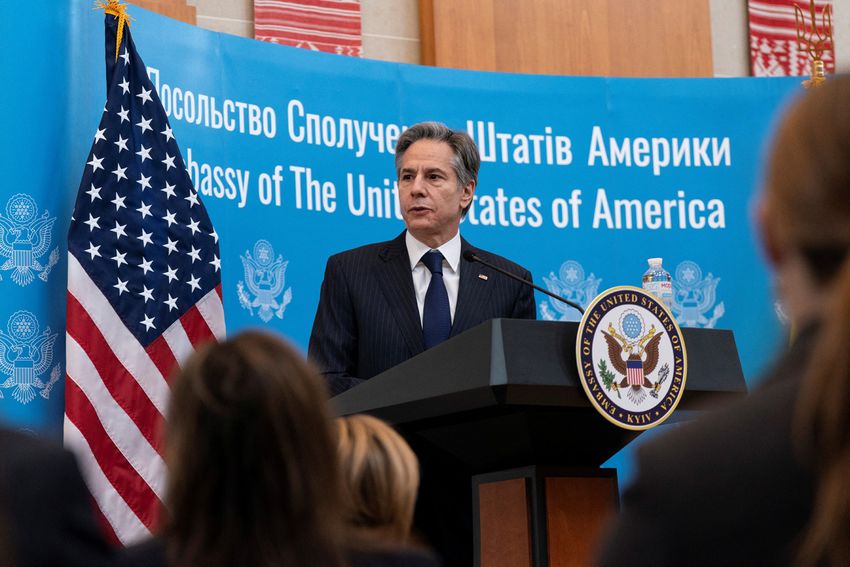
TABLE OF CONTENTS

TABLE OF CONTENTS
ABOUT THE AUTHORS                           4

I. FOREWORD                                 6

II. PREFACE                                 9

III. EXECUTIVE SUMMARY                     10

IV. STRATEGIC CONTEXT                      16

V. GOALS                                   19

VI. MAJOR ELEMENTS OF THE STRATEGY         21

VII. ASSUMPTIONS                          35

VIII. GUIDELINES FOR IMPLEMENTATION       36

IX. RISKS, CRITICISMS, AND ALTERNATIVES   53

X. CONCLUSION                             55

ENDNOTES                                  56

                                                          3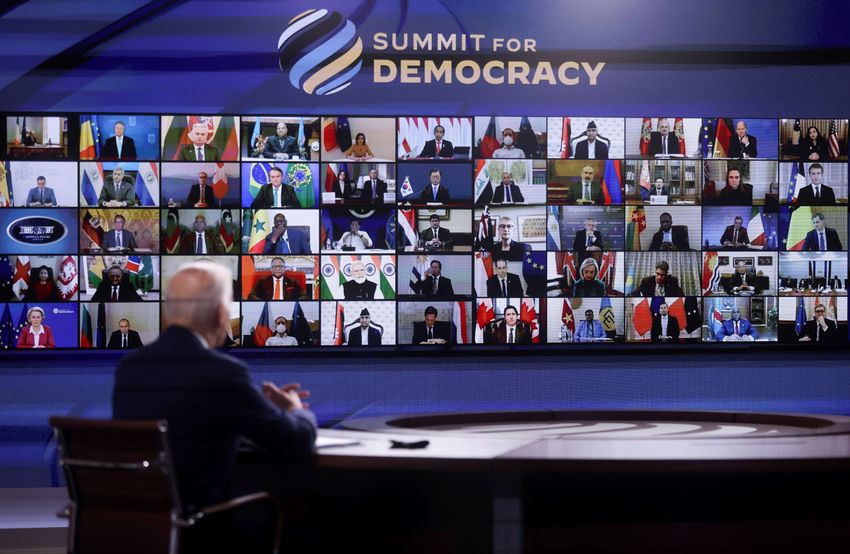
GLOBAL STRATEGY 2022

             ABOUT THE AUTHORS

             Anders Åslund is a senior fellow at the Stockholm Free World Forum and a
             former resident senior fellow at the Atlantic Council’s Eurasia Center. He also
             teaches at Georgetown University. He is a leading specialist on economic
             policy in Russia, Ukraine, and Eastern Europe.

             John E. Herbst is senior director of the Atlantic Council’s Eurasia Center.
             He previously served for thirty-one years as a foreign service officer in the
             US Department of State, retiring at the rank of career minister. He split his
             career between Eurasia and the Middle East. He was the United States’
             ambassador to Ukraine from 2003 to 2006, when he helped ensure the
             conduct of a fair Ukrainian presidential election and prevent violence during
             the Orange Revolution. He earned a Bachelor of Science in foreign service
             from Georgetown University’s School of Foreign Service, Phi Beta Kappa,
             and a Master of Law and Diplomacy, with distinction, from the Fletcher
             School at Tufts University. He also attended the Johns Hopkins University
             School of Advanced International Studies Bologna Center.

             David J. Kramer is Senior Fellow in the Vaclav Havel Program for Human
             Rights and Diplomacy and Director for European and Eurasian Studies at
             Florida International University’s Steven J. Green School of International
             and Public Affairs. Previously, Kramer worked as a Senior Director at the
             McCain Institute for International Leadership; President of Freedom House;
             and a Senior Transatlantic Fellow at the German Marshall Fund of the United
             States. He also served as Assistant Secretary of State for Democracy,
             Human Rights, and Labor and Deputy Assistant Secretary of State for
             European and Eurasian Affairs (responsible for Russia, Ukraine, Moldova
             and Belarus affairs as well as regional non-proliferation issues) during the
             administration of President George W. Bush. He is author of the book, Back
             to Containment: Dealing with Putin’s Regime.

4
ABOUT THE AUTHORS

Alexander Vershbow is a distinguished fellow with the Atlantic Council’s
Scowcroft Center for Strategy and Security and Eurasia Center. He served
as the deputy secretary general of NATO from February 2012 to October
2016. Prior to his post at NATO, he served for three years as the US assistant
secretary of defense for international security affairs. In that position, he was
responsible for coordinating US security and defense policies relating to
the nations and international organizations of Europe (including NATO), the
Middle East, and Africa.

Brian Whitmore is a nonresident senior fellow at the Atlantic Council’s
Eurasia Center and adjunct assistant professor at the University of Texas at
Arlington. He is also the founder and author of the Power Vertical blog and
host of the Power Vertical podcast, both of which focus on Russian affairs.

                                                                                          5
GLOBAL STRATEGY 2022

             I. FOREWORD
                The last time Beijing hosted the Olympics in August 2008, I was awakened
             in the middle of the night with a call on my secure home phone: US assets
             had confirmed that Moscow was beginning an attack on Georgia including
             with ballistic missiles and fighter planes en route to Tbilisi. As the 2022
             Olympics take place in Beijing, in an eerie echo of 2008, Russian forces
             are poised to attack Ukraine. This time, Ukrainians and their democratic
             champions are in overdrive, seeking to deter Russian President Vladimir
             Putin and preparing for the worst.
                Most, if not all, policymakers in the democratic West have learned that not
             sufficiently countering Russian aggression in the past taught Putin that he
             could get away with more Russian aggression. The authors of this report are
             committed to helping today’s decision-makers better manage the current
             crisis. They argue correctly that the United States does not have the luxury
             of focusing only on China. They recognize that “Ukraine is at the center of
             Moscow’s revisionist foreign policy” and that “frustrating Kremlin aggression
             in Ukraine” reduces the likelihood of provocations elsewhere and could “well
             prove the key to persuading [Moscow] to change course.”
                Fourteen years since 2008, a period marked by Russia’s military build-up
             and a global authoritarian resurgence, democrats around the world
             recognize the stakes of today’s crisis are not about Ukraine alone, but
             about the future of freedom. The authors of this paper make an important
             contribution by arguing that only with strong measures to thwart the
             Kremlin’s aggression now will the United States and its allies be able to
             pursue more interest-based cooperation in the medium term. Notably, the
             authors underscore that these policies should be combined with outreach
             to the Russian people to lay the groundwork for a future, more constructive
             relationship with a Russia that respects the rule of law.
                In the short-term, the authors endorse significant, new steps such as
             increasing US military aid to Ukraine to $1 billion; bolstering the allied
             presence in the Black Sea and along the Suwalki Corridor, the sixty-five-mile
             Lithuanian-Polish border that separates the Russian exclave of Kaliningrad
             from Belarus; as well as increasing support for independent media, Russian
             civil society, and the non-systemic opposition. The authors also propose
             policy innovations such as creating a trust fund of ill-gotten assets to be
             returned to the Russian people when a Russian government that respects
             the rule of law is established, as well as enhanced personal sanctions and
             sanctions that escalate as long as Russian forces remain in Donbas.
                However, given Putin’s track record, deterrence today may require more
             than even the strong responses to Russian aggression proposed—rather it
             may require creative thinking and policies to disrupt Vladimir Putin’s Russia,
             increasing the costs of his actions, while supporting the Russian people
             through new means of engagement.

6
FOREWORD

   I applaud the effort to lay out a vision for a longer-term cooperative
relationship with a different, likely post-Putin Russia, to help Russians
envision a different relationship with the United States and its allies. As the
authors note, Levada Center polls indicate a majority of Russians would
prefer improved relations with the West.
   Thirty years since the collapse of the Soviet Union, the new states of
Europe and Eurasia face grave challenges to their sovereignty. They are
stronger, more integrated internationally, more economically stable and
more durable than ever, but they are also under extraordinary duress. Putin
was 39 when the Soviet Union collapsed, which he perceived as the greatest
catastrophe of the twentieth century. He turns seventy this year and seeks a
legacy of restoring a de facto empire as an exclusive sphere of influence.
   The terms that were presented to the United State and NATO in
December 2021 were essentially a restoration of the Cold War-era division of
Europe. Putin aims for a reversal of NATO enlargement and US withdrawal
from Europe. This comes in the context of continued threats to integrate
Belarus, the aggression against Ukraine, creeping annexation of Georgian
lands, manipulation of the Nagorno-Karabakh conflict, and the first-ever
use of force by the Kremlin-led Collective Security Treaty Organization in
Kazakhstan.
   The aggression seems anachronistic, an echo of the actual catastrophes
of the twentieth century. A post-Soviet generation has come of age.
National identity is stronger not only in Ukraine, where Kremlin aggression
has solidified its pro-Western orientation, but across all of Eurasia where
people from Belarus to Armenia to Central Asia take pride in their countries
and resent Russian interference and encroachment.
   While it seeks to undo the sovereignty of its neighbors, elsewhere in
the world Russia presents itself as a defender of state sovereignty. When
it gains strategic advantages by propping up a murderous dictator in Syria
or Venezuela, Russia champions state sovereignty over any humanitarian
principle of international law.
   Putin is exploiting perceived weakness in the West. But in so doing he is
re-ordering the perceptions and priorities of the US and European publics.
Putin can take the initiative regionally or on the global stage only when
the United States is distracted. His overreach in Europe now is prompting
a vigorous response. This important strategy paper is part of the response
that will help to shape policy to deter Russia while supporting Russian civil
society so that a democratic and peaceful Russia may eventually emerge as
an authentic partner for the West.
   Today’s crisis is an entirely fabricated one. Putin recognizes that if freedom
and democracy succeed in Ukraine—or Georgia or Belarus—that if they
follow the wildly successful path of the Baltic states, it is only a matter of

                                                                                          7
GLOBAL STRATEGY 2022
time until the Russian people demand more for themselves. Today’s conflict
is therefore also about power inside of Russia. Confrontation with the West
helps Putin consolidate control at home.
But it’s neither Ukraine nor NATO that threatens Russia. Rather, Putin
fears people, including his own people. So, as he thrusts the world into his
latest crisis, we must avoid contorted efforts to meet his demands, echoing
the actions of democracies in the 1930s which led to disaster. Rather,
democracies today must meet this moment with democratic unity and
strength—with solidarity with Ukraine as a nation, and solidarity with the
people of Russia who deserve so much better.
Damon Wilson
President and CEO
National Endowment for Democracy
8EXECUTIVE SUMMARY
II. PREFACE
This paper offers a comprehensive strategy to manage and develop US
relations with Russia over the next twenty years. This strategy seeks to
thwart current Kremlin efforts to undermine the international system that
the United States helped create after World War II and revise after the
Cold War; to cooperate in the short and medium term on issues of mutual
interest, in particular arms control; and to establish in the long term a broad
cooperative relationship once Moscow recognizes that its own security and
prosperity are best realized in partnership with the United States and the
West.
While ultimate responsibility for this paper is mine, the expertise of my
co-authors enriched the paper and provided necessary detail and nuance
throughout. This paper reflects the advantages of teamwork. Indeed, the
team goes beyond the co-authors. It also incorporates the knowledge and
wisdom of additional colleagues with whom I have worked closely over the
past eight years on US policy towards Russia. This broader group includes
Gen. (Ret.) Philip M. Breedlove, Ambassador (Ret) Steven Pifer, Ambassador
(Ret) Daniel Fried, LTG (Ret.) Ben Hodges, and Franklin D. Kramer.
My team at the Eurasia Center was also critical to this effort. Doug Klain
sweated every line of this paper’s multiple edits and provided key research
support. My deputy, Melinda Haring, provided smart advice and superb
editorial support. I would also like to thank my colleagues at the Atlantic
Council’s Scowcroft Center for Strategy and Security, Barry Pavel and
Matthew Kroenig, who oversee the Atlantic Council Strategy Papers series,
of which this paper is a part, and those who edited, designed, and helped
to bring this paper to publication, including Susan Cavan, Adrian Hoefer,
Donald Partyka, and Amanda Elliot.
Naturally, none of this would be possible without the support of our
sponsors. Aleksander Mirtchev has underwritten the series of Strategy
Papers at the Scowcroft Center and the Future of Russia Foundation’s
generous support made this paper possible
Ambassador John E. Herbst
Senior Director,
Eurasia Center, Atlantic Council
9GLOBAL STRATEGY 2022
III. EXECUTIVE SUMMARY
A
fter the end of World War II, the United States, its allies, and
partners built a rules-based international system that ushered in
peace, prosperity, and freedom in many parts of the world. The
system has come under fire from revisionist powers, mainly China and
Russia, seeking to fundamentally change the established international order.
This paper seeks to address how to manage the multifaceted challenges
Russia poses.
There are broadly two views of the threat posed by Russia. One maintains
that Russia is a revisionist power that uses all means of state power,
including military aggression, to impose its will on its neighborhood and to
undermine US, NATO, and the European Union’s (EU’s) interests in an effort
to revise the international order. The second view does not deny Kremlin
misbehavior but contends that NATO and the EU have not been sensitive to
traditional Russian interests, especially in the post-Soviet space, and have
responded too strongly to Kremlin provocations with sanctions, military
support to Ukraine, and enhancing NATO’s military presence on its eastern
flank.
This paper leans toward the first view but seeks to transcend the debate
by laying out a vision for a long-term and mutually beneficial relationship
with Russia. In brief, Russia is a historic great power with talented people
and great natural resources. Unfortunately, within a decade of the fall of
the Soviet Union, an authoritarian system formed in Russia with strong
state control of the economy that directed resources to the leadership and
privileged insiders, and its leader launched an aggressive foreign policy.
In sum, for more than a decade, Kremlin policies have not been good for
Russia, its neighbors, or the West.
Washington should seek to build a relationship with Russia in the long
run—likely, but not necessarily, post-Putin—based on mutual respect,
respect for international law, and respect for the international order that
emerged after World War II and the Cold War. This is a Russia with which
the United States would cooperate on many political issues, and with which
there would be substantial economic cooperation. It would also be a Russia
whose people would prosper.
A peaceful, prosperous Russia is a distinct possibility if we approach US
policy realistically, and that starts with a clear-eyed look at the global system
and Russia today.
The Russia challenge is evident in the economic, diplomatic,
governance, and security domains.
The list of Kremlin provocations is long and includes military action
notably in Georgia and Ukraine and changing borders by force, relentless
and ongoing cyberattacks, electoral interference in the United States
and numerous other democratic countries, assassinations abroad,
disinformation campaigns, coup attempts, and efforts to buck up dictators.
10EXECUTIVE SUMMARY
There is also evidence that Moscow is likely behind some of the directed
energy attacks on US officials that produce the Havana Syndrome. Russian
President Vladimir Putin presides over these active measures and malign
activities in his quest to destabilize the international order that the Kremlin
calculates works against its interests.
All of this is a sign of fear of and opposition to democracy, especially
in Russia’s neighborhood. While the Biden administration evaluates the
Chinese threat to US interests as its top priority, the Russian threat to the
rules-based order, in the short term at least, has been more aggressive and
persistent.1 The United States does not have the luxury of focusing only on
China.
The strategy outlines the following overarching short, medium, and
long-term goals.
Short term: Thwart and deter the Kremlin’s revisionist foreign policy,
which seeks to weaken NATO, the EU, and their respective principal states,
especially the United States, and to restore Russian hegemony in Eurasia.
Push back against Kremlin repression at home.
Short and medium term: Seek areas of cooperation where US and Russian
interests may overlap: arms control, counterterrorism in Taliban-controlled
Afghanistan, reduced military confrontations, and an effective response
to climate change. It also includes dialogue with Russian elites on possible
future cooperation and outreach to the Russian people.
Longer term: Describe in clear terms the cooperative relationship that
would emerge with a prosperous, powerful Russia that plays a constructive
role in the rules-based international order. While this is a long-term
objective, it should immediately be enshrined in US policy.
US President Joe Biden convenes a virtual summit with leaders from democratic
nations at the State Department's Summit for Democracy, at the White House, in
Washington, U.S. December 9, 2021. REUTERS/Leah Millis TPX IMAGES OF THE DAY
11GLOBAL STRATEGY 2022
The strategy consists of four major elements.
1) WORK WITH ALLIES AND PARTNERS TO COUNTER IMMEDIATE
DANGER FROM MOSCOW: The first element of the strategy is to ensure
that US allies and partners understand the danger coming from Moscow and
work together to counter it. The United States should:
Maintain and strengthen NATO’s defense and deterrence posture, both
conventional and nuclear.
• Enhance the already significant forward presence on NATO’s
northeastern flank.
• Establish a comprehensive Black Sea strategy. To do this the United
States should:
• Work with NATO to establish a stronger and more regular NATO
naval presence in the Black Sea.
• Enhance cooperation with and defense support for NATO
partners Georgia and Ukraine in the Black Sea.
• Establish mutual understanding with the EU on the danger from
Moscow and how to meet it.
• Build on the first Summit for Democracy to highlight Moscow’s
aggressive policies in Ukraine and Georgia and show staunch support
for the democratic movements in Belarus and Venezuela.
2) ESTABLISH CLEAR REDLINES ON MOSCOW’S BEHAVIOR: The second
element of the strategy is to thwart Kremlin aggression and provocations
against US interests and the international liberal order. The United States
must establish clear redlines as a deterrent and be prepared to act swiftly
when Moscow threatens or crosses them. Ukraine is the current center of
Moscow’s revisionist foreign policy and needs the self-defense capabilities
to deter further aggression. Frustrating Kremlin aggression in Ukraine
reduces the risk of Kremlin provocations against the United States’ Eastern
European NATO allies and may well prove the key to persuading it to change
policy course. The US policy response should involve military, economic, and
diplomatic tools, specifically to:
• Encourage Ukraine’s military to become completely interoperable
with NATO.
• Increase US military aid to Ukraine to $1 billion per year and encourage
additional assistance from other NATO members. Make Ukraine’s
defense to a NATO objective.
• Provide Ukraine with anti-ship missiles, naval drones, and air defense
systems.
• Maintain and strengthen the current sanctions regime. Impose new
sanctions promptly the next time that Moscow either escalates its
military operation in Ukraine or commits a major new provocation
there. In concert with the EU, impose progressively tighter sanctions
as Moscow continues its current operation in the Donbas. The
sanctions for new escalation should be stronger than those for
ongoing aggression.
12EXECUTIVE SUMMARY
• Impose proportionate sanctions for Moscow’s ongoing, under-the-
radar aggression in Georgia, and consider sanctions on Moscow for
its efforts to extort geopolitical concessions from Moldova for gas
supplies.
• Focus on the most effective sanctions, financial sanctions and
personal sanctions, on Kremlin oligarchs.
• Maintain public attention on Moscow’s occupation of Crimea, the
Donbas, and Georgia.
• Take a more active role in the Minsk peace process and consult with
the parties to ensure that Ukraine is not pressured to make undue
concessions to Moscow. Prepare to enter negotiations fully when
Moscow is ready to negotiate its withdrawal from the Donbas.
Equally important, the United States should respond forcefully to Kremlin
provocations against itself, as well as its allies and partners globally:
• Respond to Kremlin election interference, cyber operations, and
assassinations abroad promptly with public diplomacy, sanctions, and,
in the case of cyberattacks, counter operations.
• Support the democratic movements in Belarus and Venezuela.
• Provide strong support to the current reformist Moldovan
government so that its reforms can succeed in spite of a Russian gas
embargo.
Take advantage of Kremlin weaknesses in countering and deterring
provocations:
• Uncover and publicize in English and Russian information about
the corruption of the Russian regime and order US intelligence to
establish the financial holdings of Putin, top Kremlin officials, and
Putin cronies in the West. The appropriate classified information on
this should be declassified, published, and publicized in English and
Russian.
• Enact and enforce strong and transparent laws against money
laundering and other hidden channels, including requirements for
shell companies to disclose beneficial owners, that corrupt Putin
cronies and Kremlin-associated actors use to further Russian state
interests or their own.
• Implement the Corporate Transparency Act of 2020 rigorously.
• Significantly increase funding to Voice of America (VOA) and Radio
Free Europe/Radio Liberty (RFE/RL) and use other means, including
the use of the Russian diaspora, to provide information to the Russian
people.
• Pay consistent but low-key attention to points of friction in the Russia-
China relationship and particularly Chinese territorial claims in Russia.
• Support Russian political figures, civil society activists, and influencers
facing repression and highlight election practices in Russia that
prevent the Russian people from fairly choosing their political leaders.
• Counter the Kremlin narrative that the United States and the West
seek to encircle and weaken Russia; make clear that the United States
13GLOBAL STRATEGY 2022
looks forward to a closer, mutually beneficial partnership with a
democratic Russia that respects the sovereignty of its neighbors.
3) WORK TOGETHER WHERE POSSIBLE. The third element of the strategy
is to work with Moscow to reduce the dangers of competition and to explore
cooperation in areas where interests may overlap. This starts with mitigating
nuclear confrontation and reducing the risk of escalation of military
incidents, but not at the expense of strong pushback against Kremlin
provocations.
• Encourage NATO to maintain a mix of strategic and tactical nuclear
options to dissuade the Russians from believing they can succeed
with their “escalate to deescalate” strategy.
• Be open to maintaining and negotiating verifiable nuclear arms
control agreements with Russia that also address nonstrategic
systems and other destabilizing technologies.
• Regulate interactions between Russian and US warships and
warplanes that risk escalating into confrontation. Reestablish the
Open Skies Treaty.
• Cooperate with the Russian government on shared threats, including
counterterrorism, counter-narcotics efforts, COVID-19, and climate
change.
• Work to prevent the spread of Islamic extremism into Central Asia.
4) LAY OUT A VISION FOR CLOSE FUTURE RELATIONS WITH A
PROSPEROUS RUSSIA. The fourth element of the strategy is to pursue a
multiple-track policy designed to promote a significant improvement in
relations with Russia once Moscow turns away from a revisionist foreign
policy. While this policy is part of the long game, it should begin now
because it will take time to have an impact. The purpose is to start to
condition the Russian government, elites, and people that US intentions
toward Russia are not hostile and that good relations with the United States
and the West and an opening of the political and economic system would
lead to both prosperity and security. As part of this, Washington should:
• Establish a framework for more interaction now with the Russian
people and better relations with a future Russian government.
• Engage with all major segments of Russian society simultaneously,
including various levels of Russian government, the general Russian
public, elites, and involved members of the global Russian diaspora.
• Maintain and increase support for the “non-systemic” Russian
opposition.2
• Sanction officials (and their spouses and children) who order and
implement repressive measures.
14EXECUTIVE SUMMARY
• Increase the transparency of offshore funds and freeze and hold
the assets of senior Kremlin officials and their associates in a trust
fund for return to the Russian people when a Russian government
that respects the rule of law is established. This would require new
legislation to allow the transfer of funds.
• Impose strict reciprocity in the treatment of state media in Russia and
the United States, respectively. If Russia expels RFE/RL, the United
States should expel Sputnik and RT.
• Increase support for US-Russia educational and cultural exchange
programs, especially for high school and college students.
• Propose track 1.5 or track 2 dialogues on alternative futures for the
US-Russia relationship.
• Establish a similar dialogue with representatives of the non-systemic
opposition and with the Russian diaspora.
15GLOBAL STRATEGY 2022
IV. STRATEGIC CONTEXT
T
he emergence of Russia and China over the past fifteen years
as major powers pursuing hegemonic revisions to the way the
international community conducts its affairs is the largest challenge
to global peace and prosperity since the end of the Cold War, and perhaps
even the end of World War II.3 Russia and China’s revisionism is the principal
security challenge currently facing the United States. This paper will address
how to manage the Russian side of the challenge, which is more direct.4
Since the end of World War II, and especially the Cold War, the world has
enjoyed an unprecedented period of peace, stability, and prosperity. While
there has been no shortage of conflict in this period—the United States
and its allies have made mistakes, for instance, in Vietnam, Afghanistan,
and Iraq—there has not been one hot war between great powers, the great
destroyer of peace and prosperity. The end of the Cold War and its signature
documents, the 1975 Helsinki Accords and the 1990 Paris Charter, seemed to
herald a new international order, acceptable to both the West and the newly
liberated Warsaw Pact members; one based on the rule of law, respect for
the sovereignty and territorial integrity of nations, the peaceful resolution of
disputes, and respect for human rights.
The United States sought to establish a place for a democratic Russia
in the new security order in partnership with a transformed NATO that
was open to new members. There was indeed some success in building
NATO-Russia cooperation—for instance, the United Nations Security
Council, of which Russia is a permanent member, authorized the first Gulf
War; Russian troops deployed under NATO command in Bosnia and later
Kosovo; the signing of the NATO-Russia Founding Act 1997; an adapted
Treaty on Conventional Armed Forces in Europe; the expansion of the
G7 to the G8; and joint counterterrorism efforts after 9/11. Even after the
Kremlin’s hostilities against Estonia in 2007 and Georgia in 2008, productive
cooperation continued under both Dmitry Medvedev and Putin until it broke
down in 2014 when Putin attacked Ukraine.
In this relatively peaceful and stable environment, the world economy has
blossomed as never before. Global stability was an important factor, but so
was human ingenuity. The ongoing revolutions in agricultural production,
information, computer technology, social media, and artificial intelligence
have reduced global poverty from affecting 70 percent of the world’s
population in 1945 to less than 10 percent by 2015.5 Countries that opened
or directed their economies to participate in the global economy prospered,
from China and the Four Asian Tigers—South Korea, Taiwan, Singapore, and
Hong Kong—to the former Warsaw Pact nations.
US security and economic interests are very much connected to this state
of affairs, as are most of the major nations and economies—the EU, the
United Kingdom, Japan, Canada, Australia, South Korea, India, Brazil, South
Africa, Turkey, and Saudi Arabia. This community of interests and, in many
cases, values, is an enormous strength as the international order grapples
with the growing authoritarian challenge posed by Russia and China.
16STRATEGIC CONTEXT
The United States and its allies need to understand the strengths and
weaknesses of their Russian adversary. Russia is a nuclear superpower
with a substantial conventional military force, first-rate cyber capability, a
talented people, and a stagnant economy that nevertheless retains great
potential.6 It has substantial energy reserves and financial reserves nearing
$624 billion, of which $133 billion is in gold.7 It is also in demographic decline
and suffering from brain drain.8 Its corrupt, authoritarian government uses
the economy to oversee a vast political patronage system and to enrich
its elite. If this does not change, the economy will continue to struggle,
and Russian power will diminish over time.9 But for the foreseeable future,
Putin’s revisionist Russia remains a large and unsettling presence on the
international stage.
Despite Russia’s aggressive power projection, Kremlin policy makers
are vulnerable internally for at least two reasons: first, Russia’s stagnant
economy over the past decade has led to declining living standards. The
Kremlin has used diminishing resources to compensate Putin’s cronies for
losses due to sanctions and to empower the children of senior officials at
the cost of regional elites. Second, while preaching a strong anti-Western
message throughout society, Kremlin elites’ assets and, in some cases,
families are parked in the West.10 Also, despite repression and anti-NATO
propaganda, some political restiveness and pro-Western thinking still
endures among a notable portion of Russia’s younger generation that
is tired of having spent most of its existence living under Putinism and
institutionalized corruption.
In the short term, Moscow enjoys certain leadership advantages in
conducting an aggressive foreign policy despite being much weaker
economically and even militarily than the United States and NATO. Tactically,
the Kremlin’s options are limited. Putin has clear goals that he pursues
relentlessly: preserve a sphere of influence in the post-Soviet space; prevent
the expansion of NATO and EU influence; weaken the EU and NATO, which
includes interfering through subversion and social and official media
in Western elections and referenda; and maintain himself in power. His
provocations usually occur in the shadows—to have plausible deniability—
and always maintain a line of retreat to limit losses when the stronger West
responds. He also uses information operations to present his aggressive
steps as responses to the aggression of his adversaries, and especially the
United States.11
The ambiguity of many Kremlin provocations enables its friends in
the West to question whether Moscow has crossed any redlines. The
deployment of so-called little green men to Crimea—unmarked soldiers
who were obviously Russian but maintained an air of deniability—is a classic
example of these ambiguous provocations. The Kremlin declared that
these soldiers were not Russian even as various governments, journalists,
and NGOs spent time proving that, in fact, they were.12 Eventually, Putin
acknowledged what clear-eyed observers had already known, after the
annexation of Crimea from Ukraine.
Because of this extended ambiguity, Putin’s acknowledgement of the
Kremlin’s lie has had little impact to this day on how people discuss Russian
17GLOBAL STRATEGY 2022
aggression in Ukraine, both in Crimea and the Donbas. To this day, it is
common for Western media to ignore that Russian soldiers have fought
and are still present in the Donbas based on the fiction that they were
volunteers or on vacation. That is why many media organizations often refer
to “Russian-backed rebels” or “Russian-backed separatists” when describing
the parties to the fighting. They do not mention that Russian officers are
directing the fighting or that the weapons, financing, and strategic direction
come from Moscow.13
18GOALS
V. GOALS
T
he immediate US and allied partners’ goal is to thwart and deter the
Kremlin’s revisionist foreign policy, which seeks to weaken NATO, the
EU, and their principal states, especially the United States. Moscow
also seeks to restore Russian hegemony in Eurasia.14 This requires prompt
action by the United States, usually and preferably along with allies and/or
partners, to impose a cost on Moscow for its aggressions and provocations.
Given the power imbalance between Moscow and the more powerful
West, this should be doable in most instances. The key, of course, is a clear
recognition of what Moscow is up to and the political will to use the United
States’ superior resources to stop Kremlin aggression. This policy would
also serve as a lesson urging caution on China, which watches carefully how
Washington responds to Moscow’s misadventures.
To do this effectively, the United States needs to use its advantages,
which include its wide network of allies and partners around the world; its
conventional military superiority; its economic superiority, including its
role at the center of the global financial system; its record as a supporter of
human rights; and its cyber and information capacities.15
Washington should also exploit Russia’s disadvantages: its economic
weakness, including its dependence on hydrocarbon exports; its declining
standard of living; its shrinking population; its population’s opposition to the
use of Russian troops in Ukraine and desire to improve relations with the
West; the preference of elites to park their ill-gotten gains and families in the
West; and the fact that the Putin regime has lost the major cities and young
people as a voting bloc.16
In the shorter term, US goals include seeking dialogue with two distinct
purposes. The first is to manage or stabilize the competition between
Washington and Moscow. This includes reducing the risk of escalation in
military confrontations and arms control.
The second is to explore possible areas of cooperation where US and
Russian interests overlap—perhaps counterterrorism, including in Taliban-
controlled Afghanistan; reducing military confrontations; nuclear diplomacy
with Iran; reaching an understanding on the use of the Arctic; and dialogues
with Russian elites on possible future cooperation as well as outreach to the
Russian people are also key elements of US strategy.
The United States’ longer-term goal is to encourage the evolution
of a Russia that sees its role as a constructive power contributing to—
not violating—the rules-based international order. This is not an effort at
regime change. It looks to a day when Moscow recognizes that the path to
continued great-power status depends on freeing the creative talents of its
people who can turn Russia into a global economic power that attracts its
neighbors into closer relations, rather than seeking to compel them due to
an inability to exert soft power. Such a Russia would be an economic engine
in Eurasia and a natural partner connecting its neighbors with the EU, for
instance by permitting hydrocarbons from Central Asia and the Caucasus
to use Russian pipelines—as required by the EU’s third energy package. It
19GLOBAL STRATEGY 2022
would also make Moscow a natural partner—like the EU—in dealing with
global national security challenges, such as North Korea.17
What is driving the current relationship between Russia and China is
Putin’s obsession with what he sees as the threat of the United States—an
obsession that has little chance of fading—and deteriorating relations with
Europe. Putin’s view, of course, prevails, but others in Moscow understand
that China is in fact a danger to Russia’s position in at least the Far East and
perhaps even Siberia. Eventually though, when it is clear to Russian policy
makers that US intentions do not pose a threat to the integrity of Russia,
Moscow will understand the real national security threat facing it—the rising
and increasingly assertive great power to its south.
The United States will not be the lever that puts an end to this historically
anomalous partnership, thereby isolating China as the only major power
seeking to undermine the state of the global order. But Washington should
both understand the dynamic and publicly pay attention to it.18 As Dmitri
Trenin, the director of the Carnegie Moscow Center, argues, both Russia and
China have so many bilateral considerations toward various countries that
they prefer to deal with the United States bilaterally and not in an alliance.19
20MAJOR ELEMENTS OF THE STRATEGY
VI. MAJOR ELEMENTS
OF THE STRATEGY
THE FIRST ELEMENT OF THE STRATEGY is to ensure that US allies and
partners understand the danger coming from Moscow and work together
to counter it.
The United States’ global alliances and relationships are a great advantage
as it confronts Moscow (and Beijing). This network will be stronger if the
United States properly activates it. Some of the United States’ allies are slow
to see the danger emanating from Moscow. For instance, some Southern
and Western European states see mass immigration from the south as more
dangerous than the Kremlin’s aggression in Ukraine and its provocations
against the Baltic states.20 Others, like Germany, are developing economic
relations with Russia through projects like the Nord Stream 2 pipeline that
poses a danger to NATO and EU members in Eastern Europe, not least of all
because it enhances the Kremlin’s influence in Germany.21
The US government’s work on this element starts with ensuring NATO’s
defenses. NATO has taken strong measures to ensure deterrence in the
Baltics. The deployment of multinational battle groups to the three Baltic
states and Poland serves as a tripwire to Russian military intervention.
There is also US defense cooperation with non-NATO members Sweden
and Finland that recognize the dangers of the Kremlin’s current policy. But
security measures on NATO’s northeastern flank can still be improved.22
The first step is to harden NATO’s defenses in the Suwalki Corridor,
the sixty-five-mile Lithuanian-Polish border that separates the Russian
exclave of Kaliningrad from Belarus.23 Keeping that corridor open ensures
land continuity between Poland and the Baltic states, which is essential
for the security of the Baltics. Strengthening those defenses would also
make it harder for Moscow to defend Kaliningrad if it decides to raise
tensions with the Baltic states. While it may not be the West’s intention
to seize Kaliningrad, that danger would complicate the Kremlin’s military
planning. The threats facing NATO in this region have increased as a result
of Moscow’s growing military presence in Belarus since the fraudulent
2020 Belarusian presidential election and the rise of a viable Belarusian
opposition.24
NATO needs to do much more work to strengthen deterrence in the Black
Sea region.25 Romania is realistic about the dangers coming from Moscow;
Bulgaria and Turkey less so. The United States needs to work with its NATO
allies, and with Georgia and Ukraine—two partner nations directly facing
Russian occupation.
But Washington and NATO should clearly signal that these measures are
a response to Russia’s more threatening presence in the Black Sea and the
Sea of Azov and that, were the Russian military to adopt a different course,
NATO’s measures could be reversed.
Washington should also take advantage of its bedrock democratic
principles and oppose the challenge of the Kremlin’s foreign policy in the
context of the battle between democracy and rising authoritarians. Since
21GLOBAL STRATEGY 2022
Moscow began its war in Ukraine, the West has expelled Russia from the G8,
and has since used the G7 to take steps against Moscow—for instance, with
sanctions for its occupation of Crimea.
The United States should rally the world’s democracies to work
together against the world’s authoritarians, particularly when they pursue
a revanchist foreign policy. The Biden administration’s convening of a
virtual Summit for Democracy in December of 2021 was a strong step
in this direction. Washington should use this forum to highlight Moscow’s
aggressive policies in Ukraine and Georgia, as well as to show staunch
support for the democratic movements in Belarus and Venezuela—both of
which are struggling against Russian-backed regimes.
U.S. Deputy Secretary of State Wendy Sherman and Russian Deputy Foreign
Minister Sergei Ryabkov attend security talks at the United States Mission in Geneva,
Switzerland January 10, 2022. REUTERS/Denis Balibouse TPX IMAGES OF THE DAY
SECOND ELEMENT: Thwart Kremlin aggression and provocations against
US interests and the international liberal order.
The Russian threat is global and US policy must be prepared to meet it
everywhere. Moscow’s priorities center on its neighbors, especially Ukraine,
and then Europe and the United States. Washington’s strategy must reflect
that reality.
To meet the Russian threat effectively, the United States must establish
clear redlines as a deterrent and be prepared to act quickly when Moscow
threatens or crosses them. Corresponding responses may involve military,
economic, and diplomatic tools, depending on the violation.
Successful US pushback starts with helping Ukraine withstand Kremlin
aggression in the Donbas, the Sea of Azov, and the Black Sea. Ukraine
22MAJOR ELEMENTS OF THE STRATEGY
is at the center of Moscow’s revisionist foreign policy. Frustrating Kremlin
aggression in Ukraine reduces the risk of Kremlin provocations against
Eastern European NATO allies and may well prove the key to persuading
it to change course. Washington’s objective should be to get the Russians
out of eastern Ukraine, but even a Moscow bogged down in the Donbas has
fewer resources and lower expectations for the success of any provocation
against, for example, the Baltic states.
Pushback on the military side should include encouraging Ukraine’s
military to become interoperable with NATO. This can be facilitated, for
instance, by building port facilities in Odesa where Alliance ships could be
serviced. This would also enhance the NATO presence in the region. NATO
should be looking actively at doing the same with Georgia.
US policy toward Ukraine should also increase US military aid and
encourage additional assistance from other NATO members. During
Ukrainian President Volodymyr Zelenskyy’s 2021 visit to Washington, the
United States announced a $60 million increase in military aid to Ukraine.26
This was a nice gesture, but given Ukrainian needs, and US interests in
stopping Kremlin aggression, US assistance should rise from over $275
million to $1 billion annually. This would not only greatly enhance Ukraine’s
ability to deter further aggression, it would also send a clear message to
Moscow that military victory is increasingly unrealistic.
An increase in Western military assistance would make it easier to provide
Ukraine with weapons systems that make Kremlin aggression riskier.
Washington’s supply of counter-battery radar for missiles in 2015 and
of Javelins in 2018 had a positive impact on Ukraine’s defense posture. 27
Numerous Levada Center polls show that the Russian people have mixed
opinions about conflict in Ukraine. They appreciate that Crimea became
Russian almost without bloodletting, while they do not like the long and
bloody war in the Donbas. The issue is no longer the great patriotic unifier
Putin found it was back in 2014.28 Javelins and counter-battery radars
made Kremlin policy more cautious. Responding to Kremlin provocations
in the Sea of Azov and the Black Sea, the United States approved the sale
of up to 16 Mark 6 fast patrol boats to Ukraine in 2020, followed up by the
contracting of another six boats in September of 2021.29 Washington should
now be looking at providing Ukraine with anti-ship missiles, naval drones,
and air defense systems.
In response to Moscow’s massing of troops near Ukraine’s borders in the
fall and winter of 2021, the Biden administration has said that it would send
additional military equipment to Ukraine, if and after those troops are sent
into Ukraine. While this is a good step, the timing is off. Those weapons
should have been sent once the massing of troops occurred. Providing
Ukraine with such weapons before an invasion enhances the deterrence of
Kremlin aggression.30
We note above the importance of strengthening NATO defenses among
the eastern members. The Biden administration also understands the value
of doing this, which is why in response to the Russian buildup on Ukraine’s
borders in the fall and winter of 2021 it said that a Kremlin conventional
military invasion of Ukraine would lead to a strengthening of NATO’s force
23GLOBAL STRATEGY 2022
posture in the east. But the administration takes the same half-step here
that it has done with weapons supplies to Ukraine. These force posture
changes would follow an invasion. But the deterrence value of such a force
strengthening among the eastern members of NATO would be greater if
done immediately. Moscow’s military planners would then have to take those
changes into account as they plot a major new offensive against Ukraine.
While military aid to Ukraine targets Putin’s aversion to casualties,
sanctions target a second weakness, which is the slowing Russian economy.
Sanctions have been essential for the defense of Ukraine.
Moscow was surprised by the stiff US sanctions and even more so by
those enacted by the EU in the summer of 2014 for its aggression in the
Donbas. Sanctions have been regularly renewed ever since. The threat
of additional sanctions may well have dissuaded the Kremlin from further
aggression in 2014–15.
For seven years, Moscow has been energetically seeking sanctions relief,
even while arguing that sanctions do not damage the Russian economy and
have no influence on Kremlin policy in Ukraine.31 Similar arguments have
been made by Westerners with an interest in trade with and investment in
Russia.32
Moscow repeatedly states that sanctions do not impact Russian policy, yet
it devotes substantial energy to trying to persuade the West to remove or
at least ease them. In the crisis created by the Kremlin’s 2021-2022 buildup
along Ukraine’s border, the Biden administration has properly threatened
major, punishing sanctions. Putin demonstrated his concern about this in
the December 30, 2021 phone call with Biden when he threatened a major
disruption in relations if the US imposes such sanctions.33
Sanctions have not persuaded Moscow to cease its aggression in Ukraine.
But according to the International Monetary Fund in 2015, sanctions cost
Russia’s gross national product 1 percent to 1.5 percent of growth yearly.34
Another study estimates that since 2014 sanctions may have reduced
Russia’s economic growth by 2.5 percent to 3 percent per year.35 The
authors put the impact of sanctions starkly: “The Russian economy is not
likely to grow significantly until the Kremlin has persuaded the West to ease
the sanctions.”36 With Moscow’s current aggressive foreign policy seeking
to reshape the global order counter to US interests, this type of serious
sanctions impact is useful for limiting the Kremlin’s options. Ultimately,
military power depends on economic growth—so weakening the Russian
economy over time will reduce Moscow’s military capability and capacity for
harm. There is also evidence that the perception of a worsening economic
situation makes Russians themselves less supportive of the Kremlin’s
militaristic propaganda narrative. This, too, would constrain policy options
available to the Kremlin.37
Therefore, the West has a great stake in maintaining the current sanctions
regime, and indeed an interest in strengthening it. There are two ways to
do this. First, the United States and its partners should be prepared to
impose new sanctions when Moscow either escalates its military operations
in Ukraine or commits a major new provocation there. It took the United
States months to respond—and the response was weak—after Russia seized
24MAJOR ELEMENTS OF THE STRATEGY
Secretary of State of U.S. Antony Blinken speaks as he greets embassy staff at the
U.S. embassy, in Kyiv, Ukraine, January 19, 2022. Alex Brandon/Pool via REUTERS
Ukrainian ships in the Kerch Strait in November 2018 and began to harass
shipping to and from Ukrainian ports in the Sea of Azov.38 The United States
should prepare new sanctions and it should reinforce its coordination with
Brussels, the UK, and Canada for joint Western action, anticipating a need to
respond quickly to new provocations. With prepared sanctions, the United
States and/or the EU would be able to communicate privately to Moscow
in order to deter aggression. While the United States already has in place
punishing sanctions, there are still sectors of the Russian economy and
people close to Kremlin officials who could be targeted with substantial
impact.
Second, new thinking is needed to persuade Moscow to leave the
Donbas. Without greater pressure, the Kremlin is unlikely in the short term
to reconsider. Therefore, Washington should prepare new sanctions to be
imposed every year until Moscow ceases its operation in the Donbas. For
instance, Washington should announce that unless all Russian troops
and military equipment are out of the Donbas by December 31, 2022, one
additional Russian state bank will be sanctioned. If the EU is not willing to
coordinate on this, the United States should seek ways to proceed alone,
but after close consultation with Brussels. Because of the dominance of the
US dollar in the world economy, it is primarily US financial sanctions that are
effective. This approach would be more persuasive if rolled out as part of a
diplomatic effort that also calls on Ukraine to meet its Minsk commitments.
But it is critical in this case that the order of implementing Minsk start with
the withdrawal of Russian soldiers and weapons from the Donbas.
Washington should also impose sanctions for Moscow’s ongoing,
under-the-radar aggression in Georgia. Since the 2008 war, Russian
troops in occupied Georgia have been moving the internal demarcation
25GLOBAL STRATEGY 2022
line between the occupied areas and the rest of Georgia a few meters at
a time to expand the occupied zone.39 Imposing proportionate sanctions
for each encroachment might help persuade Moscow that such expansion
is too expensive. Sanctions should be accompanied or even preceded by
active diplomacy and information operations. The information operations
would detail how far the internal demarcation line has moved to Georgia’s
advantage since the 2008 cease-fire. That should be accompanied by a
US-led diplomatic effort at the UN General Assembly to focus on ongoing
Kremlin aggression in Georgia.
Diplomacy is also an important part of the United States’ efforts to contain
and foil Kremlin aggression across Eurasia. This starts with constant efforts
to maintain public attention on Moscow’s occupation of Crimea, the Donbas,
and Georgia; public diplomacy on the Kremlin’s human rights abuses in
these occupied territories; regular votes at the UN General Assembly and
the Parliamentary Assembly of the Council of Europe on Russian violations
of international law in these territories; and support for the Crimea Platform,
Ukraine’s new vehicle for maintaining international focus on Crimea.
At the same time, diplomacy is an essential mechanism for containing and
ending Moscow’s war in the Donbas. The current platform for negotiations
on the Donbas is the Normandy Format, which includes Ukraine, Russia,
France, and Germany. While not formally part of this negotiating framework,
the United States has closely monitored the talks; consulted frequently with
France, Germany, and Ukraine; and even at times engaged Moscow.40 Critics
correctly point out that there has been no progress in the formal Donbas
negotiations since the two Minsk agreements were signed in September
2014 and February 2015.41 The reason is simple: Moscow has no interest in
ending its aggression, and recent documents indicate that it plans to spend
$12.4 billion over the next three years in social spending in the Russian
separatist-held parts of eastern Ukraine.42 It also spends $34 billion a year on
Crimea.43
The United States should maintain an active interest in the Minsk process
and continue to consult with the parties to ensure that France and Germany
do not pressure Ukraine to make undue concessions to Moscow. US
diplomacy, however, should take care not to displace France and Germany.
They took on this responsibility, and their involvement could be key to
sustaining EU sanctions.
The United States should designate a senior diplomat responsible for
US policy on the war, and that figure should be in regular contact with all
parties.44 The negotiations will be important to end the war when Moscow
decides that it wants to pull out of the Donbas. At that point, the Kremlin will
negotiate seriously, and Washington will be its preferred negotiating partner.
Keeping Ukraine and the “near abroad” under its thumb are the top
priorities of Moscow’s aggressive foreign policy, but its mischief-making
is global, and much of that is aimed squarely at US interests. Therefore,
US policy must be prepared to meet this challenge. The list of Kremlin
provocations is long: cyberattacks, electoral interference, disinformation
campaigns, poisoning dissidents in foreign countries, coup attempts,
bucking up dictators, and more.45
26You can also read


