Global trends in democracy - DEMOCRACY SPECIAL - The European Partnership for ...
←
→
Page content transcription
If your browser does not render page correctly, please read the page content below
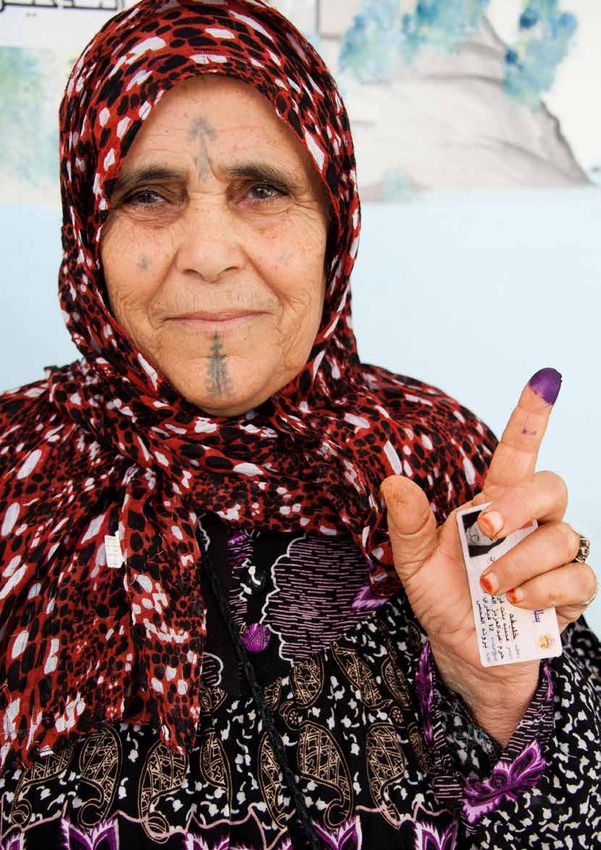
VOLUME 48 | FEBRUARY 2015

DEMOCRACY SPECIAL

Global trends
in democracy

        Round table
         discussion
    How can processes of
     democratization be
        supported?

Democracy schools          Dutch MPs      Report Uganda        LiquidFeedback
Building trust from        Investing in   Political dialogue   Promoting citizen
the bottom up in           democracy      opens the way for    involvement
Georgia                                   reforms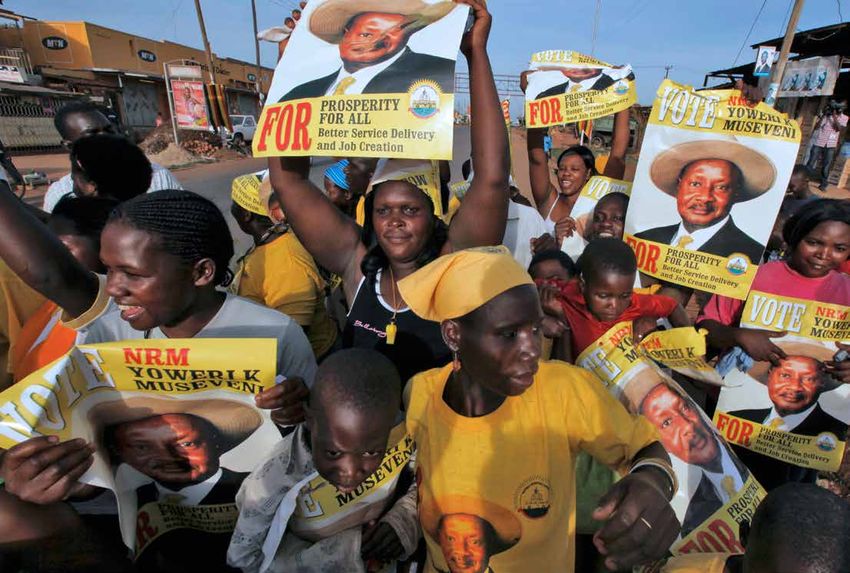
2 CONTENTS EDITORIAL 03
Contents
© Leonard Fäustle
© Stefany Molema
Publisher: Lokaalmondiaal
04 09 12 17
The global trend toward more democracy seems
Editor-in-chief: Marc Broere unmistakable. But what does a closer look reveal?
Sub-editor: Jeroen Teitler This special edition of Vice Versa was created in
Editors: Selma Zijlstra collaboration with the Netherlands Institute for
Editorial committee: Marc Broere, Arachne
Multiparty Democracy (NIMD) and is intended to
Molema and Anita Ramharakh
contribute to a greater understanding of the com-
Concept: Arachne Molema
Contributors to this edition: Leonard
plexities that democracy entails. It also shows the
Fäustle, Arachne Molema, Seada Nourhussen, ways in which the Netherlands offers support to
Iris Visser, Co Welgraven, Selma Zijlstra, processes of democratization.
Nic van der Jagt and Eugenia Boutylkova The opening article suggests that both citi-
Production: Selma Zijlstra and Nathalie zens and governments are better off in democra-
Zanen cies than in societies with other forms of govern-
Translation: Sara van Otterloo, Susan Parren ment, in terms of many important indicators and
certainly over the long term. But free elections
Art direction, design layout: alone do not constitute a democratic society. Why
SAZZA: Saskia Stolz and Daphne Meijer
is that? And how do processes of democratization
Cover photo: Francesca Oggiano
Back-cover photo: Pasa Au Yeung
Deeper democracy Joost Taverne (Dutch MP) Uganda Roelof van Laar (Dutch MP) work on the ground?
Printer: Veldhuis Media An overview of the global ‘Democracy is the best way Towards democracy through ‘Imposing democracy is A visit to the democracy schools in Georgia has
shown that trust has to be built from the bottom
Address Vice Versa: state of affairs of running a country’ dialogue never good’ up. Under the tutelage of professionals, students
Joseph Haydnlaan 2-A, 3533 AE Utrecht. from the fields of politics, NGOs and the media are
tel: +31 30 303 550 learning to build a democratic culture.
redactie@viceversaonline.nl In the hostile political climate of Uganda,
www.viceversaonline.nl NIMD initiated a political dialogue for reforms.
For information on subscriptions and to order
individual magazine editions:
18 22 26 31 What is the role of dialogue in a country’s process
of democratization? And is the opposition genu-
inely open to dialogue? Vice Versa visited Uganda
tel. +31 30 303 550
and found out that dialogue is more than just a
abonnementen@viceversaonline.nl
‘chat club’.
This special edition of Vice Versa Leert was In the final article we asked three experts for
produced in collaboration with the Netherlands their views on several ‘big issues’. Can you create
Institute for Multiparty Democracy. a democracy or does it need to emerge organi-
cally? Should Westerners involve themselves in the
NIMD is a democracy-assistance process at all? The participants in the round table
organization that promotes the deepening discussion were unanimous: democracies need to
of democracy through interparty dialogue grow. And that costs time.
and strengthening the capacity of political
parties (www.nimd.org).
Marc Broere
Vice Versa is a Dutch magazine about
development cooperation and global issues
Arachne Molema
(www.viceversaonline.nl).
LiquidFeedback Georgia Round Table Sjoerd Sjoerdsma (Dutch MP)
Direct participation Democracy schools pave ‘Democracies have to grow’ ‘Multiparty democracy can
increases involvement the way be frustrating’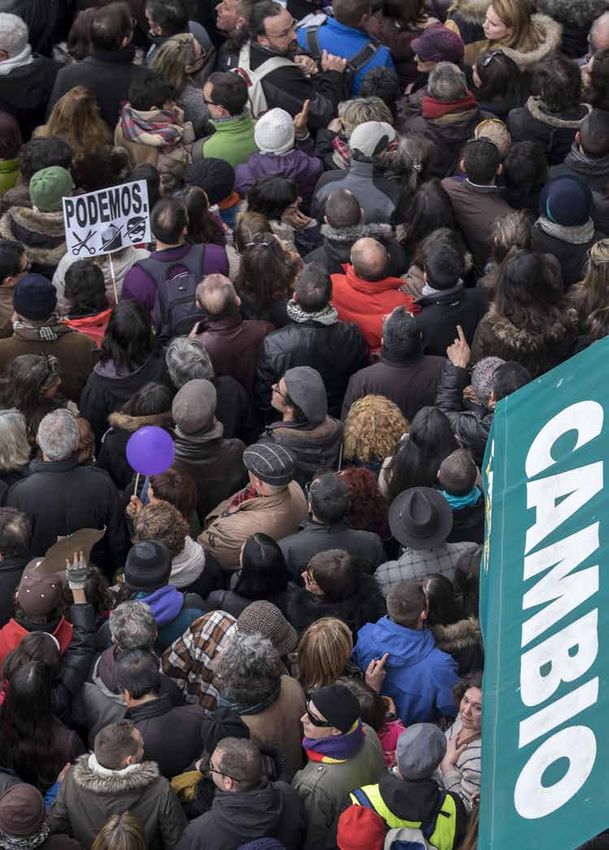
04 OPENING STORY THE STATE OF DEMOCRACY 05
Deeper ked the end of the boom in the number of demo-
cracies, which had been only 69 a decade earlier.
The enormous increase was due mostly to coun-
tries in Eastern Europe that had abolished the
‘not free’ according to Freedom House, and the
other 59 countries are ‘partially free’ and can
still shift in any direction. This last category in-
cludes Tunisia, a democracy, and the non-demo-
the results are roughly the same, namely that the
situation has been stagnating for the past ten or
fifteen years: the number of democracies is no
longer increasing. The most positive results
democracy
one-party communist state after the fall of the cratic Burkina Faso. In North America, Australia come from the so-called Mo Ibrahim index,
Berlin Wall and the collapse of the Soviet Union. and Europe, continents where democratic sys- named after the British-Sudanese telecommuni-
Since the millennium, the number has stag- tems are centuries old, the situation is stable, cations tycoon and billionaire, that charts only
nated; as The Economist editors John Mickle- although there are also serious threats to this the countries in Africa. The last index showed
thwait and Adrian Wooldridge state in their book form of government. The changes in the annual that 39 of the 52 countries scored better than
The fourth revolution: ‘The rise of democracy has publication of Freedom House and other institu- they had a year earlier in the four areas of good
ground to a halt.’ And we are speaking here only tions are related especially to Latin America, Af- government analysed by Mo Ibrahim: safety and
about countries that are democratic in name, rica, Asia and the former Soviet republics. The law, participation and human rights, sustainable
The global trend toward more democracy seems unmistakable. But how universal where elections are held now and again. maps of those continents and areas have few
green areas (green is the colour of true democra-
economic opportunities and human develop-
ment; the other thirteen countries had a lower
is democracy, and why don’t free elections always result in democratic societies? Stagnation cies); the colours yellow (half-free countries) score. Mauritius tops the list, just as it did a year
Despite all the ups and downs, many political scientists are optimistic: If we take a deeper look, for example at political
rights, respect for the Constitution, complete
and purple (not free or dictatorships) are much
more prominent.
ago, and Somalia once again hangs far below at
the bottom.
‘No society is free from conflicting interests. Democracy is the appropriate form freedom for the opposition, a fully-fledged legal There are many other indicators of the Interesting conclusions can be drawn from
to create a balance.’ system and education open to everyone, then
there are only 88 countries that can truly claim
spread of democracy in the world. Although one
is more intricate than the other and the research
all of the studies done by political scientists.
Countries that were British colonies until the
to be a liberal, free democracy; 48 countries are methods differ from one institute to the next, mid-twentieth century are doing quite well with
by Co Welgraven respect to democracy; this is attributed to the
In September 2014, protests broke out in Hong Kong after the Chinese authorities had announced restrictions on fact that the British left behind reasonably func-
reforms to the electoral system tioning civil service and legal systems. In con-
trast, the former colonies of France and Portugal
W
are having less success.
hile one African country is hold-
ing free elections, another Afri- No reason for pessimism
can country is undergoing a Political scientists are not at all pessimistic
military coup. In Tunisia, the about the current state of democracy in develo-
success story of the Arab ping countries. It could have been much worse,
Spring, people were able to vote for both a new said the Flemish political scientist Kristof Jacobs
parliament and a president in the past year. In of Radboud University in Nijmegen, and certainly
addition, a new Constitution has been passed, if we consider the international economic crisis
one that has been praised for being transparent that started in 2008 – an economic crisis is a
and progressive. natural opponent of democracy.
In Burkina Faso, however, the military seized ‘There is both good and bad news,’ said Ja-
power shortly after president Blaise Compaoré cobs. ‘In general, we can say that it takes a very
resigned in the face of mass demonstrations. long time before a country can call itself a true
Compaoré himself also came to office as a result democracy; it usually takes decades. But once a
of a military coup 25 years ago, but he had since country has become a democracy, it also takes a
been duly re-elected a few times. The question long time for it to revert to a dictatorship. Given
now is whether or not the army will keep its pro- the global crisis of the past few years, you might
mise to organize elections and prepare the way expect that democracies would have floundered,
for a civil government but that didn’t happen. In developing countries,
These two examples illustrate how variable democracy, once it has been established, is resi-
the process of democratization is in Africa and lient. It is an established system, it’s anchored,
on non-Western continents. According to the and that’s interesting to note. Look at Africa. Only
American research institute Freedom House, 122 a couple of countries there have reverted from a
of the 195 countries in the world had a democra- democracy to a dictatorship in the last few years.
tic system at the beginning of 2014 (Tunisia is on There are almost no parties or politicians who re-
the list, Burkina Faso isn’t). That’s four more solutely state: “We have to abolish democracy, get
countries than the year before. The newcomers rid of it.” That’s a hopeful development.’
are Honduras, Pakistan, Kenya and Nepal, all of According to Jacobs, we can speak of a posi-
them developing countries. At first glance, this tive tendency in the past several decades, star-
seems like a decent score and a hopeful develop- ting in the mid-twentieth century. ‘One of our
©Leung Ching Yau Alex
ment. primary findings is that there’s a very strong re-
But if we look further back, the current pic- lationship between wealth, the prosperity of a
ture is less heartening; at the turn of the century, country, and the chance of establishing a demo-
there were also about 120 ‘electoral democracies’ cracy. The world is becoming increasingly richer,
as defined by Freedom House. The year 2000 mar- which is spectacular, and that translates into
06 OPENING STORY THE STATE OF DEMOCRACY 07
‘As democracy such an Ebola epidemic will spread. An epidemic
increases the risk of a return to a dictatorship. In
ons don’t constitute a democracy. Kristof Jacobs:
‘You have to have free media, independent
Democratic experiment
becomes more all aspects, Ebola is life-threatening.’ President
Ellen Johnson Sirleaf of Liberia acts decisively,
courts, a Constitution that can’t be amended at
whim, and a system of checks and balances,
In many places in the world, people
continue to call for a greater voice.
westernized, the political scientist admitted. ‘But if that even-
tually leads to power being centralized, there’s a
which means that the resoluteness I was refer-
ring to is set in a framework. That’s the big pro-
There are all sorts of interesting
experiments to improve the
it loses support’ problem with regard to democracy.‘ blem, especially in Africa: there are too few
checks and balances, if any.’
democratic system and to enlarge
people’s involvement in government
Gap both in the West and in new
The indexes published by Freedom House show Universal? democracies. In countries such as
that there is rather a wide gap between countries May the West expect the rest of the world to fully Belgium, Germany, Estonia, Iceland
and Ireland there are (or were)
so-called democratic conventions,
named after the meeting held in
the American city of Philadelphia,
where the Constitution of the
United States was adopted in 1787.
These modern conventions often
have a fixed core of citizens who are
involved in parts of the government
and who make proposals intended
to improve the working of
parliamentary democracy.
At the end of the last century,
there was an interesting experiment
in the Brazilian city of Porto
Alegre: participatory budgeting.
Inhabitants were given direct
© Francesca Oggiano
influence on setting the budget
© Rown El Shimi
for the district. At well-attended
annual meetings, they discuss
which sectors should receive
some funding. The experiment
is successful and popular, and
At the beginning of 2011, mass demonstrations at Tahrir Square in Cairo, Egypt led to president Mubarak Men look at posters for the Tunisian parliamentary election of October 2014: the first elections to be held under the the meetings are sometimes
stepping down new Constitution attended by more than a thousand
people. The population places
more democratization. It’s as simple as that.’ But and pitfalls. The borders drawn so arbitrarily by tion tries to make life difficult for the newly elec- that are democratic in name (‘electoral democra- adopt its democratic values and standards? Is de- the emphasis on education (the
according to Jacobs this doesn’t mean that coun- the former colonizers constitute such a handi- ted president.’ cies’) and the free, liberal democracies such as mocracy universal? Or is it tied to a certain cul- number of schools in the city has
tries that are rich because of, for example, their cap. ‘That makes the situation more difficult,’ In Africa there are definitely many strong those in the wealthy West. ‘It’s sort of a two- ture and civilization that can’t simply be increased fourfold in a quarter of a
many natural resources, are also democratic - said Kristof Jacobs. ‘If you place two or more op- presidents, Jacobs added. ‘He is expected to be staged rocket,’ explained professor Ben Crum of translated to other countries? Ben Crum: ‘I tend century) and healthcare, especially
look at Congo or the oil countries. Jacobs’s view posing tribes in one country, you’re asking for resolute – it’s almost always a he. He has to help the VU. ‘In the ideal type of democracy, you have a to think from the universal perspective. There’s preventive care. Today almost every
is certainly not undisputed. There are also nume- problems. One of the characteristics of a fully- the nation to advance and to put an end to divi- basic Constitution that always applies: respect for no single society in this globalized world that household is connected to both the
rous people who see a reversed relationship: de- fledged democracy is that you have what we po- sions and tribal disputes. He has to save the situ- human rights, protection of minorities, etc. This doesn’t have a certain amount of heterogeneity water and the sewerage systems.
mocracy is necessary in order to realize economic litical scientists call ‘loser’s consent’: the ation with decisive actions because seeking basic Constitution isn’t enforced by a majority on and opposing interests; democracy is the appro- Tens of other municipalities in
growth. Political stability paves the way for in- opposition accepts the fact that it has lost the consensus is only time-consuming and we know the basis of elections and is thus independent of priate form to create a sort of balance. We have to Brazil have followed the example
vestments in infrastructure, industry and servi- election, better luck next time. In an artificially which measures are necessary, don’t we? That’s who comes to power. Rather, it rests on a sort of be patient. We can’t expect that sending a couple of Porto Alegre, and the system of
ces as well as in good education. drawn country, that doesn’t always happen. The the sort of pervasive feeling. But being resolute consensus in society. On top of this basis are the of experts to Afghanistan so they can explain participatory budgeting can now
Political science professor Ben Crum of VU loser tends to protest, and it’s much more diffi- can lead to the erosion of democracy. Experience elections with winners and losers. But that electo- how to hold an election will result in a perfectly be found in other Latin American
University in Amsterdam is reasonably optimis- cult for a democracy to take root.’ Examples of has shown that a strong president becomes an ral process has to be framed within the basic Con- functioning democracy from one day to the next.’ countries, Asia (India) and Africa.
tic: ‘Democracy is an extremely difficult process this are Sudan, Libya, which is now undergoing a enlightened despot in no time. And an enligh- stitution.’ Kristof Jacobs: ‘It’s a question of how you In addition, a few cities in Europe
with many ups and downs that has taken decades civil war, Mali and, to a lesser extent, Iraq. tened despot tends to become a despot rather The problem is that the ideal type is often ab- describe democracy. Elections, freedom of the and the United States are also
if not centuries here, but not always without pro- A presidential system doesn’t improve the than a democrat. The call for resoluteness usually sent. Crum: ‘Look at what happened in Egypt two press, independent judges, almost everyone conducting this experiment. After
blems. The most dramatic example of course is situation in such countries, where the ‘winner boomerangs back in the democrats’ faces.’ years ago. The Muslim Brotherhood won the elec- quickly agrees on this. But if you further define a study of Puerto Alegre, the
the Weimar Republic in Germany between the takes all’ principle almost always rules. Jacobs: Natural disasters and disease are also major tions with Mohamed Morsi as the leader and new the concept, problems arise: religious freedom, World Bank concluded that the
two World Wars. If you keep this in mind, then ‘That means that one group or tribe dominates threats to the democratization process. ‘A disease president. Morsi was subsequently deposed and tolerance of minorities such as homosexuals. citizens were much more involved
it’s certainly not going so badly in the develo- the other. If the latter group comes to power in such as Ebola is not only killing thousands of the Muslim Brotherhood prohibited because it was That’s more difficult, certainly in the Middle in government and that the poor
ping countries. I see a lot of encouraging signs.’ the next elections, the situation will be reversed; people in western Africa, but it is also fully un- suspected of being a terrorist organization. This is East. As democracy becomes more westernized, especially benefit.
this has little to do with a fully-fledged demo- dermining the state and destroying the economy, a good example of elections that weren’t framed it loses support.’
Pitfalls cracy. Look at Zambia, where one despot was re- with disastrous consequences,’ stated Jacobs. within a Constitution. And unfortunately, that’s The former minister of Foreign Affairs Ben
But countries outside of Europe, Australia and placed by another, or at Egypt. And Indonesia is ‘The poorer the country, the poorer the hospitals more often the case in the non-Western world.’ Bot: ‘We may find it universal, but the rest of the
North America are confronted by many handicaps a good example of a country where the opposi- and healthcare and the bigger the chance that In short, although very welcome, free electi- world often has other ideas. Your enlightenment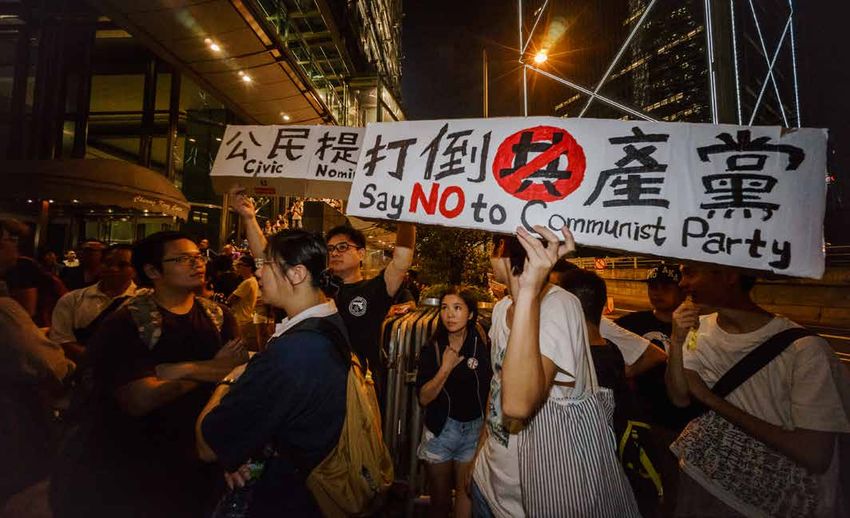
08 OPENING STORY 09
DU
TC
H
MP
‘Being resolute can lead to the
deterioration of a democracy’
Joost Taverne:
‘Large groups of
the population
Was the Arab Spring, which began four years
ago, not a clear signal that the population wanted
must identify
with policies’
a democracy? Bot disputes that: ‘That wasn’t so
© Leonard Fäustle
much a call for democracy as a call for food and
money and hope for the future. Young people
were losing hope. They were looking for a good
slogan, and what is better than to come together
under the rallying cry of “We want democracy”?
But that didn’t really interest them at all; they
just wanted a government that could revive the
economy.’
Investing in good governance and democracy and to allow people abroad to vote online.
‘The third point concerns what the Constitution states about who has
There are scholars who can imagine that an increases the chances of Dutch development the last say on changes to the law in the Netherlands. The Constitution not
extremely poor country doesn’t give first priority
to trying to establish a western-styled democracy.
funds being spent wisely. But in what way does only says that international law is directly applicable here, but that this
takes precedence over the Constitution itself. This means we have under-
In a recent interview with NRC Handelsblad, Ja- their understanding of democracy colour the mined our own legal sovereignty. We need to be careful not to jeopardize
mes Robinson, co-author of the highly praised
Why Nations Fail, said: ‘It’s important to under-
daily work of Dutch members of Parliament? the credibility of the Dutch legal system.’
stand that, if you want to build a prosperous soci- Joost Taverne of the VVD (a liberal party): What democratic trends do you discern in the Netherlands?
ety in a poor country, democracy is only part of
the process and not the most important.’
‘Too many parties can be tricky.’ ‘In addition to the issues that concern me, there are also moves to hold
referendums in the Netherlands. There is a proposal for a constitutional
VU political scientist Ben Crum agrees with
review of our rule of law, and the House of Representatives is continually
this: ‘Poverty is a very fundamental threat,’ he by Arachne Molema introducing new initiatives. In addition a study was done recently on the
stated. ‘If there’s nothing to eat and people are
position of the senates in the neighbouring countries. We also have regular
dying from hunger, I think that democracy is a
discussions on freedom of expression.’
© Francesca Oggiano
luxury problem, if I may be so blunt.’ So it’s better What role does democracy play in your daily work as a member of
to eat in a dictatorship than to be hungry in a Parliament?
Is a multiparty system always the best form of government?
democracy? ‘Yes, I think so.’ ‘I am committed to modernizing the Dutch system of democracy. Democracy
‘Democracy implies a multiparty system; there has to be something to vote
Nevertheless, despite all the criticism, there requires maintenance. It’s easy to forget that you have to devote attention
on. In the United Kingdom they have a three-party system, but in practice
is clearly a visible trend toward more democracy, to upholding democracy in a country, precisely because people here regard
it’s a two-party system. Yet it’s the oldest democracy in the world. If you
and you can see that the international community it as the normal state of affairs.
have too many parties, it can be difficult to form a government.’
wants to respond to this. With all of the criticism ‘I focus on three aspects. The first is that the judiciary and the legal
Tunisia, October 2014: the country’s new Constitution guarantees, among other things, women’s rights
of the system, political science nevertheless also system are separated as far as is possible. From the jurisprudence point of
Can you impose a multiparty system as a pre-condition for
shows that democracy has many positive aspects. view the idea is that there is a separation of power, but the Dutch Council
development cooperation?
Political scientist Kristof Jacobs in Nijmegen: ‘De- of State still encompasses two functions: it advises the government in the
‘One answer is that the subject of development cooperation policy is not my
mocratic countries are healthier, richer. People field of law making and it is the highest administrative court. In 2011, I
field. But if you make it a pre-condition, you’ll exclude some countries. De-
philosophy, which emphasizes the individual, always function as well as it should in the West. who live in a democracy are happier. There’s less submitted a motion on the subject and the Cabinet has now come up with a
mocracy is part of policy influencing. If you help countries to set up their
only leads us to poverty, division, war and tribal ‘Look at the United States, where the Republicans terrorism, which is logical because you have lo- legislative proposal for a better separation of these two aspects.
own democracy or to strengthen the existing democratic system, there need
arguments, they claim. We first have to take care and the Democrats have each other in a strangle- ser’s consent so you don’t have to reach for your ‘In addition, I want to make it easier for people to vote. The average
to be several parties. It’s important that policies are determined by more
of the community and only then the individual. hold that threatens to make the country impossi- weapons if you disagree. All empirical research turnout for House of Representatives elections is only 75 percent. There are
than one person and that large groups of the population can identify with
The western system isn’t the system in which we ble to steer. And take the situation in the indicates that democracies perform much better 350 thousand people alone who have difficulties making a pencil mark on a
them. That is why democracy is so far the best way of running a country.’
can grow and offer young people a future. I un- Netherlands, where we see increasingly more on a large number of important indicators, espe- ballot paper because they have a visual handicap. On top of that there are
derstand this argument.’ splinter parties; you wonder if that really helps cially if you look at the long term. They have so over 700 thousand eligible Dutch voters living and working abroad. In the
Joost Taverne (VVD, born 1971) – Member of Parliament since 2010.
democracy. I can imagine that countries in Africa many advantages in so many domains for citizens last elections for the House of Representatives only 30 thousand of them
Spokesman for issues including the Constitution, international treaties,
Not optimum currently look especially towards China, Russia and governments that’s its very difficult to be op- actually voted. If the turnout were that low at home there’d be an outcry. I Electoral Law and freedom of expression. Worked previously as a diplomat in
Bot referred to the fact that democracy doesn’t and Turkey and to their forms of government.’ posed to a democracy as a political system.’ have handed in a motion to introduce electronic voting in the Netherlands the United States. Studied law.
10 RESEARCH HOW DO YOU MEASURE DEMOCRATIZATION? 11
How do you measure
democratization? proaches include baseline surveys and annual
measurement of the outputs of the various pro-
grammes. By comparing indicators it is possible
to gain insight for example into whether the
zambique has grown. One of the recommenda-
tions was to extend inter-party dialogue beyond
electoral issues by including matters such as
broader democratic reforms and policy debates.
Democracy leads to healthier and more stable societies, according to amount of collaboration between political parties A second finding was that the NIMD democ-
political scientists. The Netherlands Institute for Multiparty Democracy has changed.
Qualitative measurements look more at the
racy schools in Nampula and Chimoio have made
a valuable contribution to the development of a
promotes democratization through projects in over 20 countries. ‘how’ questions, for example the way in which the democratic culture in the region. As many of the
But how do they measure the results of their work? work is carried out and what the challenges and
opportunities are. For example, in 2013 NIMD
participants hold important positions within lo-
cal government, political parties and NGOs, they
piloted a ‘storytelling’ assessment with the pro- have been able to contribute to laying a founda-
by ic van der Jagt
N gramme directors of partner organizations and tion for democracy and shown that interest in ac-
political actors in five African countries on the tive participation is growing among the
Eugenia Boutylkova changes in their countries, how these arose and population.
how they dealt with the biggest challenges they Moreover, most of NIMD’s evaluations are
encountered. carried out by external evaluators, and as is the
Furthermore, NIMD tries to monitor at differ- case with other forms of development work, it is
T
ent levels. For example, to measure the effective- sometimes difficult to link the recommendations
he Netherlands Institute for Multipar-
ty Democracy (NIMD) is a democracy
ness of its ‘democracy schools’ (see below) NIMD
looks at whether the alumni actually end up in a
from external evaluations to the daily reality en-
countered by those implementing the pro-
A democratization
assistance provider: an organization
whose work is to provide support to
public or political job afterwards. Other indica-
tors say something about the amount of trust
grammes. To prevent this happening, this
evaluation chose to send a team of NIMD staff
process is
political processes in new and emerg-
ing democracies. The institute has programmes
between political parties and the feasibility of
working together on reforms. Trust is measured
from other programme countries where compara-
ble programmes are being implemented, so that
never linear
in over 20 countries, where the focus is on
strengthening the capacities of political parties
by looking at how often parties hold meetings
together, the subjects that are discussed and the
the participants would learn about each other’s
work and reality-based recommendations would
or predictable
and on facilitating mutual dialogue. To ensure long-term results of the talks. be made. This turned out to be a useful method,
that the programmes for promoting democracy Here context analysis is important again. which is also being used increasingly by other or-
function as optimally as possible NIMD attempts Representatives from different political parties ganizations engaged in democracy assistance.
to measure their effects and the impact they may well hold meetings, but if the most impor-
have. tant issues remain unaddressed there is little Improvements
point getting together, and little can be said These examples show that, despite the difficul-
Challenging task about the amount of mutual trust. ties of measuring outcomes in this field – re-
Democratization is certainly not the easiest sub- ferred to as ‘Democracy & Governance’ (D&G) by
Mozambique
©NIMD
ject to measure. Democracies take many forms the experts – learning is taking place and that
and undergo different phases, and the process of To take a concrete example, we looked at the innovative methods of measuring outcomes are
democratization is never a linear or predictable findings of a recent NIMD evaluation. In February being adopted that make it possible to improve
one. Processes encounter setbacks and success- NIMD organized a meeting for dialogue on electoral reform in Mozambique 2014 an NIMD team travelled to Mozambique for the programmes.
es, and it may take years before the effects you in-depth interviews and group discussions with Other organizations besides NIMD are also
are trying to measure actually become visible. the representatives of political parties, local starting to find their way in these developments.
Democracy is to a large extent context de- stakeholders, donors, academics and NGOs. NIMD The American National Democratic Institute (NDI)
pendent. Because every country has its own po- be caused by natural disasters, epidemics, eco- come about. The indexes provide a good overall used its 'Political Context Scan' and 'Organisa- is experimenting with the Relection, Analysis and
litical history and specific issues, it is important nomic crises or political relations that countries description of the situation, but the level of ag- tional Scan' for the evaluation. The focus was on Decision (RAD) monitoring systems, which focus
to assess for each country individually the ways have with, for example, the World Bank or world gregation means they are not suitable for meas- the dialogue between parties, direct assistance on strengthening local partners' capacities for
in which its democratization process can be sup- powers such as the US, China or Russia. The chal- uring specifically the effects of democracy to parties and the ‘democracy schools’ where po- reflection, analysis and decision-making so that
ported. This emphasis on context also makes it lenge is therefore to isolate the indicators you assistance programmes. litically active members of society take courses on they become more relevant to the local context.
difficult to compare countries with each other, are measuring from external factors, in order to ways of contributing to democratization in their The International Republican Institute (IRI) has
although this is important when measuring re- see the results achieved by the process of provid- Mixed results region (see also the article on p. 22). started doing peer mentoring, where colleagues
sults. It is also crucial that the measuring process ing democracy assistance. Nevertheless, the NIMD can say something about Several interesting findings on the outcomes in the field support each other in carrying out
is flexible if results are to be reliable. It is also the case that, even though much the impact of its programmes, and it does so by of the programme emerged from the evaluation. evaluations, thereby helping to strengthen each
The influence of external factors must also be information is collected using indexes such as using ‘flexible and mixed measurement of re- First is that the relevance of the inter-party dia- other’s capacities. These initiatives paint a hope-
taken into account when measuring indicators of that of the American Freedom House and the Mo sults’. This means that NIMD combines quantita- logue is beyond doubt. Despite the complex po- ful picture of measuring results in the still young
the results of democracy support, because the Ibrahim index, this does not tell us anything tive and qualitative approaches for its planning, litical context, trust between political parties and field of Democracy & Governance. Yet there is still
changes that you are trying to measure may also about how the progress that a country makes has monitoring and evaluation. Quantitative ap- the National Election Commission (CNE) in Mo- much to be learned, for NIMD too.
12     REPORT FROM THE FIELD                                                                                                                                                                                                                                                                           POLITICAL DIALOGUE IN UGANDA          13

Uganda: how
dialogue helps
smooth the road
to reform
Elections will be held in Uganda in just over a year's
time. The opposition can’t wait to defeat president
Museveni, who has been in power for the last 28 years.
But in Uganda’s young democracy they do not yet have a
fair chance. In a hostile political climate NIMD initiated

                                                                                                                                                                                                                                                                                                                                                   © EPA/Dai Kurokawa
a political dialogue for reforms. What role can dialogue
play in the democratization of a country?
by   Selma Zijlstra
                                                                                                                                                                Supporters of President Museveni celebrate on the street after his victory in the presidential elections of 2011. The opposition contested the results

H
               ippo Twebazes has his eyes closed.     been working on these since 2012, and have now       with an iron hand and had his opponents bru-         Museveni becoming the donor darling of the                                                                                    and South Sudan sees to it that Western powers
               It looks like he’s asleep; indeed,     come up with over fifty proposals for improving      tally murdered. A young, idealistic political sci-   West, which regarded this as an African alterna-               With elections                                                 are not too critical.
               the subjects have been discussed       the electoral process. But NRM still needs to de-    ence student, Yoweri Museveni, grew up during        tive to multiparty democracy. Ultimately, how-
               countless times. But it turns out      cide on a number of the proposals. Maintaining       Amin’s reign, drawing inspiration from Marxist       ever, donors put increasing pressure on Uganda                 planned for 2016                                               Stability and corruption
               he’s following the conversation,       the status quo remains an option for the time        literature. Together with a group of Ugandan ex-     to create a multiparty system and after a refer-                                                                              In his office on the campus of the Makerere Uni-
for the moment an important subject comes up          being.                                               iles and the aid of the Tanzanian army he over-      endum in 2005 this became reality. Old political               the opposition                                                 versity in Kampala, professor of political science
his eyes open. ‘When would you advise us to give          Electoral reforms are a hot topic in Ugandan     threw Idi Amin in 1980. When Milton Obote was        parties were resurrected and new ones were reg-                                                                               Sabiti Makara sums up the positive and negative
up on this proposal?’ the opposition asks. ‘How       politics. With elections planned for 2016 the op-    elected president again after contested elec-        istered.                                                       wants a radical                                                points of Museveni’s rule. ‘One: the country has
far can the National Resistance Movement go?’         position wants a radical reform of the electoral     tions, Museveni withdrew in frustration to the           But Museveni was by no means ready to step                                                                                endured continuous crisis and chaos. There was
Twebaze, a member of the governing party Na-          legislation. They say the previous elections were    forests. A civil war ensued in which an estimated    down. The former guerrilla fighter, who had once               reform of the                                                  much violence and the army was undisciplined.
tional Resistance Movement (NRM), answers pa-         not free and are now demanding a fair chance.        300 thousand people lost their lives. Museveni       promised not to rule for longer than two terms,                                                                               Museveni provided stability and created disci-
tiently and then closes his eyes again. Darkness      But that is not a simple process in the East Afri-   and his NRM conquered Kampala in 1986.               changed the Constitution so that it no longer in-              electoral                                                      pline in the military. Two: he addressed gender
falls outside. All that remains visible is the out-   can country.                                              In an attempt to end the divisions, Museveni    cluded clauses on presidential terms. The 2006                                                                                equality, as a result of which women form 35 per-
line of the boundary wall that protect the quiet          Uganda’s democracy is still young. The first     outlawed all political parties; in his view they     and 2011 elections, both of which were won out-                legislation                                                    cent of the representation in parliament. Three:
offices in Ntinda neighbourhood from the vibrant      elections were held after the country gained in-     were organized too much along ethnic and re-         right by Museveni, were disputed and the opposi-                                                                              Uganda’s GNP has grown since the 1990s by an
capital of Kampala.                                   dependence from the United Kingdom in 1962.          gional lines. NRM was the only movement al-          tion contested the results. Meanwhile Museveni                                                                                average of 7 percent. This has not led to a direct
     Today the Interparty Organization for Dia-       Milton Obote, the leader of the United People        lowed. Members of parliament were elected on a       has been in power for 28 years. And although the                                                                              increase in income for the poor, but absolute
logue (IPOD) is at work and electoral reform is on    Congress (UPC), became the first president of        personal basis and not as members of a party.        passing of the anti-homo law caused a few rip-                                                                                poverty has decreased from 56 percent in 1990
the agenda. Delegates from the six political par-     Uganda. He was toppled in 1971 by the leader of      The stability that emerged under the new presi-      ples in relations with the West, Ugandan military                                                                             to about 21 percent today. More children attend
ties represented in the Ugandan parliament have       the military, Idi Amin. The notorious Amin ruled     dent and Uganda’s economic success resulted in       participation in conflict areas such as Somalia                                                                               school, and number seven – are you keeping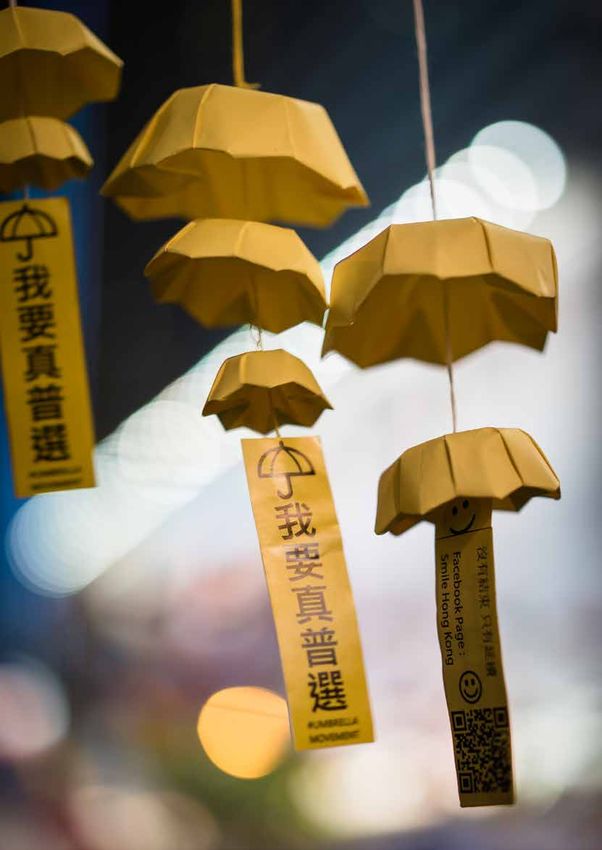
14 REPORT FROM THE FIELD POLITICAL DIALOGUE IN UGANDA 15
NIMD facilitates debate
in Uganda
NIMD's aim in Uganda is to foster
terms of office, the confounding of executive,
legislative and judicial power: all of these are a
The famous ‘handshake’ moment of the sec-
retaries general of the six parliamentary parties
Minister: ‘The
better collaboration between
political parties. Themes are
thorn in the flesh of the opposition. They want
one thing more than anything: to see Museveni
was of great symbolic value, said Karijn de Jong,
a senior programme manager at NIMD. It was the
dialogue has
proposed by the parties themselves
and anchored in an agenda for
go. Omar Kalinge, secretary general of the
JEEMA party (Justice, Education, Economic Revi-
first time that they had been seen together pub-
licly and it was a signal that the parties were pre-
prevented chaos –
reform. Dialogue is held between
the secretary generals of the
talization, Morality and African Unity) estab-
lished in 1996, was blunt: ‘The discussion on
pared to work together. ‘Putting Uganda first’
became IPOD's motto. An informal platform, the
and the army too
parties; they lobby within their own
parties and the final decision is
change starts with regime change. We want to
see another face on TV.’
organization has no decision-making powers,
but getting the parties to the table was already
of course’
© Selma Zijlstra
taken by parliament. Florence Namanyana of the Democratic Party quite an achievement.
NIMD facilitates the dialogue. (‘the country’s oldest party,’ as the parliamen- Henry Kasacca, who works for IPOD, experi-
‘Our role is to keep discussions tarian proudly put it) confirms this from within enced the developments at close hand: ‘Members
technical and focused on the Uganda’s impressive parliament building. Walk- of the opposition could not be seen to be associ-
subject,’ explained Eugène van ing through the corridors on her way to a com- ating with the ruling party. Now they are open
Kemenade, who works at the mittee meeting on government businesses ('so about the fact that they talk to each other. The
Ugandan NIMD office. ‘You’re a much corruption,' she sighed) Namanya com- NRM didn’t use to listen to the opposition; now
kind of referee. When parties are mented: ‘He’s been in power for too long. It’s the opposition has a platform.’
not willing to budge on a particular time for him to go.’ It took a while for trust to be established,
matter we try to get to the bottom But Daudi Migereko, the amiable NRM minis- said Kalinge, who was present from the start.
of what the real issue is. Civil ter of Land, Housing and Urban Development, ‘The opposition wondered why we should work
society representatives, academics and an IPOD representative, believes the accusa- together with the ruling party. But things
and other relevant institutes such tions are far too exaggerated. On his desk four changed after a few years. You get to know peo-
as the Electoral Committee and landline telephones compete with his constantly ple and build up relationships. Working from
parliamentary committees are ringing mobile phone. President Museveni looks these personal relationships you can try to con-
included in the dialogue. down benevolently from his picture on the wall. vince the party.’
In addition NIMD offers ‘Why shouldn’t someone who’s doing a good job The participants regard dialogue as an impor-
assistance to the parliamentary be allowed more time?’ Migereko asked, in re- tant goal in its own right. Namanyana: 'It’s impor-
© Selma Zijlstra
parties to enable them to arrive sponse to complaints about the presidential tant to keep NRM involved. We can call them to
at a strategic plan and create a terms being abolished. 'A good leader who has account when they don’t live up to agreements
well-founded party programme. not yet reached retirement age should be able to that have been made within IPOD. And we learn to
Not unimportant, according to van continue serving the country. Ugandans still work together with other opposition parties.’
Kemenade. ‘Because the parties are want him as president,' he commented calmly. Moreover, IPOD provides a framework within
Above: Minister Daudi Migereko. ‘Ugandans still want Museveni as president'
so fixated on Museveni, they hardly This is not untrue. Although support for Mu- which NRM can indicate the points on which they
Below: MP Florence Namanyana. ‘It’s time for Museveni to go'
get round to developing a political seveni is crumbling in the capital of Kampala and are not prepared to compromise. ‘In this way the
alternative. We help them to convey many former NRM voters no longer make the ef- opposition can prepare its demands from within
a clear message to their supporters, fort to go to polling stations, support in rural IPOD, and as a result they stand more chance in Reforms Electoral Committee. At present the members are room for manoeuvre. When the leader of the FDC,
but also create the opportunity for areas remains strong. Lacking confidence in the parliament,’ Kasacca said. While dialogue is important, there must be some- appointed by Museveni and therefore not inde- Kizza Bessigye – like Ruzindana, one of Musev-
substantive discussion with the opposition, which offers no real alternative, and Whereas the benefits that the opposition de- thing that needs to be discussed. For this reason pendent in the eyes of the opposition and ana- eni’s old cronies – dared to challenge the presi-
governing party.’ fearing any change, many people still regard rive from IPOD are clear, the gains for NRM are a the parties decided to work on four issues within lysts. dent during the 2006 elections he was arrested
NRM as the best option. Their fears are not un- matter of guesswork. Critics and many members of IPOD: electoral reforms, constitutional reforms, ‘You don’t let Ajax’s trainer appoint the ref- for 'terrorism'. In 2011 he ended up in hospital.
founded: transfer of power in Uganda has always the opposition believe that NRM takes part merely public financing of political parties and the legal eree either, do you?’ said Augustine Ruzindana, ‘Museveni regards it as a crime if you challenge
been accompanied by bloodshed. as a window dressing exercise and to keep donors system. The first steps toward electoral reform, secretary general of the Forum for Democratic him,’ said professor Makara.
satisfied; others believe that NRM does take the in 2011, reached as far as London. Because the Change (FDC) by way of explanation. Uganda's Moreover, according to the opposition the
Dialogue begins process seriously. Kasacca is one: ‘The govern- suspicion had arisen that there would be irregu- second largest party was born in 2005 when Mu- president uses treasury money to finance his
Because Uganda’s political parties are diametri- ment uses IPOD to build its legitimacy,’ he said. larities the ballot papers were printed there; and seveni's old comrades-in-arms were outraged at campaign. He tours the country liberally handing
count? – he liberalized the media and there is cally opposed to each other, opposition and gov- Someone who can shed more light on NRM’s the entire opposition went along too. The papers his decision to abolish presidential terms. An- out money to win votes. Florence Namanyana
free access to internet.’ ernment have refused to talk to each other for motivation is of course Minister Migereko. ‘We were also counted there and taken under escort other problem associated with this, in the oppo- was visibly enraged. ‘The president has already
He pauses for a moment. ‘Now the negative years. It was within this hostile atmosphere that focus on discussion and dialogue with the oppo- to the airport. The opposition awaited the arrival sition’s view, is that the members of the started his campaign. Money is being handed out
side: he’s been in power for 28 years already. If a the Netherlands Institute for Multiparty Democ- sition to achieve consensus. In this way political of the ballot papers in Kampala and then accom- Electoral Committee can also be appointed for as we speak. Where does it come from? The gov-
person stays too long, he starts to make mis- racy (NIMD) embarked on setting up a dialogue parties will be discouraged from trying to achieve panied them to the different polling stations in several terms. ‘That leads to people trying to ernment. That money could be used for public
takes. Corruption is omnipresent. The roads are between the parties in 2009. Both the opposi- their political goals in an unconstitutional and the country. Kalinge regarded this as significant: stay in the president’s good books so that they services, health, education.’ National media esti-
bad, public services have collapsed, institutions tion and the ruling party had approached the illegal way, which leads to chaos and instability. ‘Of course the NRM could still have faked the elec- can remain on the Committee,' said Florence mate that Museveni’s campaign has cost 350 bil-
crippled. It costs twice as much to build a road then Netherlands ambassador, Joke Brandt, for IPOD has had important successes; it has pre- tions. But they weren’t able to print new ballot Namanyana. lion Ugandan shillings; the opposition can’t even
here than it does in neighbouring Rwanda. The support. Brandt introduced them via NIMD to vented chaos. As the military has also done, of papers; at least we were able to keep an eye on An equally serious concern is the alleged hope to spend a tenth of that amount.
reason? Corruption.’ their colleagues in Ghana, where NIMD was also course,’ he added. According to Karijn de Jong of that.’ confusion between party and state. ‘We are not The opposition’s concerns are shared by EU
These could have been the words of the op- working on fostering political dialogue. There NIMD, however, Museveni is not only driven by The opposition’s wishes for reform are clear: opposing a party, but the state,’ said Ruzindana. observers, who reported irregularities and the
position. The system of patronage, through the Ugandan parties saw how dialogue can con- pressure from the opposition, he also has to keep they suspect large-scale fraud and are therefore ‘That means that we are also against the military lack of a level playing field in the last two elec-
which Museveni grants favours to friends, family tribute to building democracy and a peaceful the reform-oriented factions of NRM satisfied. demanding that a modernized voting register is and the police’. The opposition claims that they tions. NRM does not acknowledge this picture
and his supporters, the abolition of presidential transfer of power. set up. They also want to see a newly appointed are in NRM’s pocket, leaving the opposition little however. Migereko: ‘There are winners and losers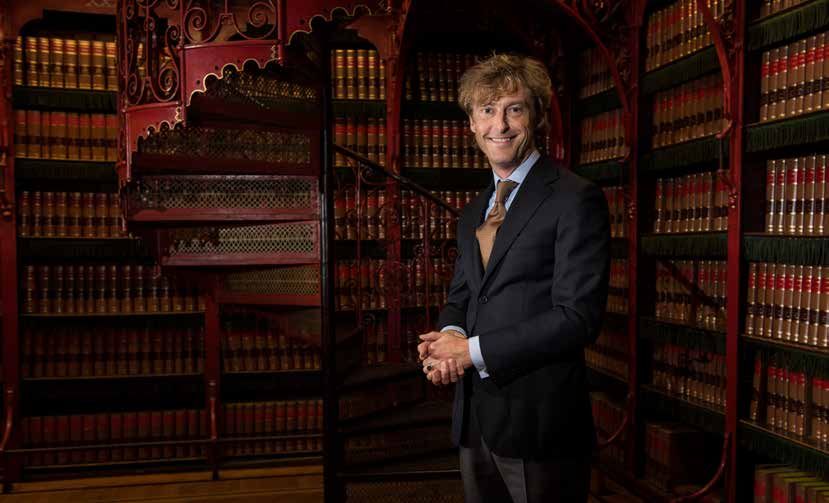
16 REPORT FROM THE FIELD 17
DU
TC
H
MP
It seems that no
one yet believes
that Museveni will
Roelof van Laar PvdA (Partij van de Arbeid):
step down from
power in 2016
Perhaps the internal dynamics of the NRM party
‘Democracy
is a never-ending
will lead to cracks? The signs are already showing.
In September Prime Minister Amama Mbabazi was
fired for allegedly having set his sights on becom-
© EPA/Dai Kurokawa
ing a presidential candidate. There are specula-
tions that Mbabazi will defect to the opposition. If
process’
the opposition were to unanimously support him
and conduct a concerted campaign, Museveni may
encounter serious opposition in 2016.
Another scenario about which speculation
© Leonard Fäustle
A boda boda (motorcycle taxi) transports ballot boxes and papers in Mukono during the 2011 elections
abounds is a Ugandan Spring, along the lines of
the Arab Spring. Whether this will happen is
questionable since there is no well-educated
in elections. If you lose, that doesn’t mean you NIMD Ugandan office. ‘We cannot pass laws. We middle class as there was in Tunisia. Neverthe-
haven’t had a fair chance.’ He doesn’t under- can make proposals. They want to see the regime less some of the conditions for a potentially ex-
stand many of the concerns of the opposition, go, but all we can do is to try and make the play- plosive situation are in place. Three-quarters of
such as those about the Electoral Committee. ing field more level.’ the population are younger than thirty, and 83 institutions care about the public interest. It takes a long time to achieve this.
‘They may be appointed by the president, but The generally more moderate secretary gen- percent of young people aged between 18 and 24
Investing in good governance and democracy We are still working on it in the Netherlands. In developing countries you see
that doesn’t mean that they don’t operate inde- erals of the parties managed, however, to per- are unemployed. They are starting to become increases the chances of Dutch development elements of what you’d like to see, but never a whole system. Even South Af-
pendently. The opposition wants a selection suade their leaders of the importance of the frustrated at the lack of opportunities, while funds being spent wisely. But in what way does rica, a vibrant democracy, is in fact a one-party state where the ANC determi-
committee. But that way you create a bureau- IPOD process. Kalinge understands the reserva- they see a small elite getting richer. Significant- nes everything. Fully democratic elections have been held, fairly and freely,
cracy for problems that can be solved simply.’ tions that his fellow party members have about ly, Uganda's most popular rap artist has a big hit their understanding of democracy colour the and yet one party dominates. In many developing countries you see dominant
the IPOD process: ‘We talk with the NRM while at the moment with Time Bomb. 'It will be easy to daily work of Dutch members of Parliament? parties like this, or two parties that alternate. That’s not democracy. Rwanda
Addressing symptoms? our people are beaten up by the same NRM mem- capitalize on this frustration,’ Kalinge suspects. and Cambodia are examples.
Nevertheless, NRM says it is open to proposals bers. Nevertheless we follow both paths: that of Even Museveni seems to be getting nervous.
Roelof van Laar of the Partij van de Arbeid ‘Democracy is the result of development, not something you can just in-
for improvements. For example, new ways of activism and that of the strategically important Demonstrations are increasingly being quashed (a social democratic party): ‘Development troduce. A country with a multiparty democracy is not by definition better.
proving identity will be used for voting. These dialogue.’ and permission is required from the police for What’s important is that governing is done from the perspective of the public
Yet to some extent they are fighting a losing
cooperation is always about dialogue.'
and the other reforms being prepared jointly by demonstrations involving more than three peo- interest. If you live in a democracy that is corrupt and merely self-serving,
the parties within IPOD will find their way to par- battle, for it seems that no one yet believes that ple. ‘Extremist forces are gaining ground within you’re often worse off than under a benign dictator or despot. The regime in
liament, where the cabinet will vote on them. Museveni will step down from power through free the government and the opposition,’ Kasacca by Arachne Molema China is not democratic but it has brought a billion people out of poverty.’
The opposition is confident that the proposed and fair elections in 2016. ‘The elections have observed. He believes that IPOD has a crucial role
reforms will make the elections fairer. The ques- already been hijacked,’ professor Makara be- to play in increasing the moderate vote in a po-
tion remains, however, whether this will be lieves. ‘His campaign started the day after the tentially explosive situation. What role does democracy play in your daily work as a member Can you impose a multiparty system as a pre-condition of develop-
achieved before 2016. According to the opposi- 2011 elections. He has an enormous lead.’ Kalinge too believes in the future of IPOD. of Parliament? ment cooperation?
tion the biggest obstacle is the attitude of the So why bother to participate in elections and ‘The time will come that NRM needs us.’ And ‘There’s nowhere where you can make as much difference to society as in ‘Imposing something is never a good way of going about things. You can make
NRM. ‘NRM does not regard these issues as a fight for reforms? Kalinge sees plenty of reasons: leaning forward, peering over his glasses, he the House of Representatives. It is a great advantage that the Netherlands pre-conditions as hard as you like, but development cooperation is about dia-
problem,’ said Ruzindana in response to Migere- ‘Even if we don’t win the elections, for us it's a added while lowering his voice: ‘Did you know? has a culture of openness and that you can say anything to politicians. All logue and working jointly on issues. We subsidize the Netherlands Institute
ko’s earlier words. ‘So how can you put an issue way of being able to talk to the people for ninety At the end of last year Museveni’s son-in-law at- the input from members of the public, civil society organizations and par- for Multiparty Democracy, which is engaged in long-term work with local po-
on the agenda if the most important party days without being harassed by the police. And tended an IPOD meeting in a hotel just outside ties makes for good debate. I’m not going to dream up what’s good for my wers in countries themselves. They bring politicians together outside the po-
doesn’t even accept that it is an issue? We can above all, we cannot walk away from our respon- the city as an NRM representative. He said: country by sitting alone in my room. In countries where there is no demo- litical setting, and away from the eyes of the media, to help get dialogue
work on reforms indirectly, but that is merely ad- sibilities. It is our duty to prepare ourselves for “We’ve been in power for 28 years and we know cracy, people only represent themselves or the interests of a small group.’ going.
dressing symptoms not causes.’ true democracy. Good electoral legislation is a that things can change. But we value our lives ‘That’s the strength of the Netherlands Parliament. Everyone knows what
Ruzindana expressed the opinion of many reason itself. You bite off what you can chew. and want to maintain our assets. If Museveni What democratic trends do you discern in the Netherlands? we are up to. Sometimes party interests take priority, but in the longer term
members of the opposition who are frustrated at We’re not here for short-term gains: it’s about goes, will you lock us up and steal our property? ‘We have a developed democracy. We have a vibrant civil society and there parties’ main work is to run the country. The country's interest comes first.
the lack of progress within IPOD. An evaluation strategy.’ Or can we talk about safety during a transitional is a place for everyone within Dutch society, but democracy is a never-en- This Cabinet does not have a majority in the Senate and yet it has not col-
report suggested that it was unable to realize period and will we be treated humanely?” That ding process. In the politics and the media, form is sometimes apparently lapsed. In developing countries they often fight to the bitter end because
the high expectations that the opposition had. Ugandan Spring was the first time that I’d heard anything like it more important than content. The pace of the media today is so fast and power must be held on to at all costs.’
The leaders of the opposition parties even No one can predict Uganda’s future with certain- in IPOD. See, we were talking about something that’s not going to change. But more focus on content would mean we could
threatened to leave IPOD at one point and to opt ty. Scenarios abound. Is Museveni’s admiration important! That’s exactly the role that IPOD run the country better.’ Roelof van Laar (PvdA, born 1981) – Member of Parliament since 2013.
for a more activist approach. ‘The opposition of Mugabe, the 90-year-old president of Zimbab- needs to play. Then it won’t just be about a cou- Spokesman for development cooperation and kingdom relations. Was previously
wants big changes, but IPOD's mandate is limit- we, a betrayal of his own ambitions? Or will he ple of electoral reforms, but about the survival of Is a multiparty system always the best form of government? director of the relief organization Free a Girl and Councillor in the city of Leiden.
ed,’ said Eugène van Kemenade, head of the retire at 75 as stipulated in the constitution? the nation.’ Studied political science and business management.
'It’s the ultimate form of government: an inclusive multiparty system in which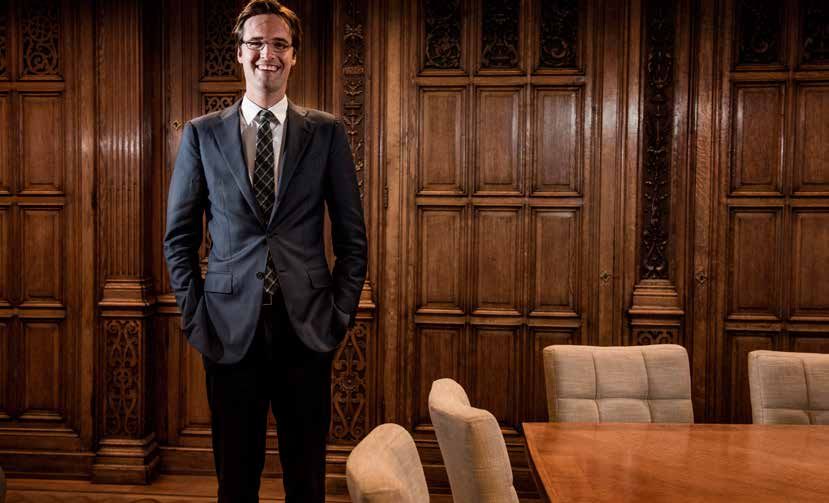
You can also read


