Grant Application Guidance All Applicants 2021-2022 - Rotary ...
←
→
Page content transcription
If your browser does not render page correctly, please read the page content below
2021-2022
                  Grant Application Guidance
                         All Applicants

Rotary Charities of Traverse City
P: 231-941-4010
E: info@rotarycharities.org
W: rotarycharities.org

Revised 6/03/2021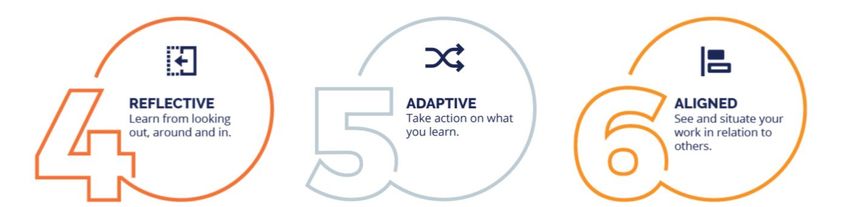
OVERVIEW

ROTARY CHARTIES
VISION A region that is fair, thriving and resilient.
MISSION Rotary Charities helps changemakers work better together to address our region’s complex
problems and create community assets for all.

ELIGIBLE APPLICANTS
Eligible applicants for funding include all 501(c)(3) tax-exempt organizations, Native nations, local units of
government, and local school districts serving Antrim, Benzie, Grand Traverse, Kalkaska or Leelanau
Counties. Partnerships and networks are encouraged to apply using an eligible organization as a fiduciary.

GRANTS AT A GLANCE
 GRANT CATEGORY          PURPOSE                        DEADLINES    AMOUNT &      MATCH           STAFF
                                                                     DURATION                      CONTACT
 Assets for Thriving     Support for community          9/1/2021     $50,000       Request         Sakura Takano:
 Communities (ATC)       assets that help create                     total         can be no       stakano@rotarych
                         prosperity that is broadly     3/1/2022                   more than       arities.org
                         experienced.                                1 - 3 years   50% of the
                                                                                   total project
                                                                                   cost
 Systems Change          Support collaborative          9/1/2021     $150,000      10% of          Freya Bradford:
 Accelerator (SCA)       innovation(s) that target                   Total         request         fbradford@rotaryc
                         root causes to complex         3/1/2022                   (mix of         harities.org
                         community problems                          2 – 3 years   cash and
                                                                                   in-kind); all
                                                                                   organizatio
                                                                                   ns named
                                                                                   in budget
                                                                                   contributing
 Changemaker             Support breakthrough           1st of the   $20,000       Sharing         Freya Bradford
 Fellowship              learning and sharing that      month                      what you        fbradford@rotaryc
                         will expand understanding                   1 year        learn with      harities.org
                         about how we might work                                   our region
                         differently to make durable
                         and broad community
                         progress. Fellows will
                         commit to share what they
                         learn through a local
                         workshop and through
                         quarterly Community of
                         Practice (CoP) meetings
                         with other fellows &
                         grantees.
 Seed Grant              Support ventures where a       1st of the   $10,000       25% of          Related to
                         small investment will go a     month        (suggested    request         Community
                         long way toward a larger                    max)          (mix of         Assets: Sakura
                         impact. Often used for                                    cash and        Takano
                         convening, planning or                      1 year        in-kind)
                         capacity building stages of                                               Related to
                         larger projects like those                                                Systems Change:
                         that could be funded under                                                Freya Bradford
                         the ATC or SCA programs.
Before beginning the grant application process, please review the Pre-Grant Checklist and contact
the lead staff person to schedule a pre-grant conversation..
APPLICATION & REVIEW PROCESS
Assets for Thriving Communities & Seed Grant &
Systems Change Accelerator Changemaker Fellowship
Pre-Grant Call or Meeting Required before application Required before application
Applications Due in Online September 1, 2021 1st of any month
Portal March 1, 2022
(11:59 PM)
In person reviews with select Fall: Completed by October 31, 2021 N/A
applicants Spring: Completed by April 30, 2022
Final decision and notification Fall: November 2021 First week of the month following
Spring: May 2022 application
All grant applications must be submitted electronically here: https://rotarycharities.smapply.io/.
Please contact Stacey Foster sfoster@rotarycharities.org if you need assistance with the electronic
submission process.GENERAL FUNDING REQUIREMENTS
Please note: Adherence to these requirements does not ensure that the application will be funded.
Grant decisions will be made by the Rotary Charities Board based on current priorities and availability
of funds.
• Grants are not made to individuals.
• An applicant must be a school system, Native nation, local units of government or have received a
ruling from the Internal Revenue Service (IRS) that it is tax-exempt under Section 501(c)(3) and is
not a private foundation as defined by the IRS. Applications from partnerships and networks are
encouraged to apply using an eligible applicant as a fiduciary.
• Applications from tribes, units of local government, governmental departments, organizations and
schools must be approved by the elected body that is ultimately responsible for the grant funds
and implementation.
• Start-up organizations are not eligible for Rotary Charities grants. Prior to applying, the
applicant should have: 501(c)(3) status and been providing services for at least one year
• No part of a grant may be used for, or applied to, debt service without the expressed written
consent of Rotary Charities.
• Proposals will not be considered for any religious programs or services that:
• Require a person to hold or accept a particular religious belief, doctrine or creed as a
condition to receive services
• Primarily address spiritual needs
• Have evangelism as the primary purpose of the program
• Proposals from faith-based organizations must address community need or enhance the quality
of life for citizens of the region and:
• Have a clearly demonstrated public benefit
• Be fully accessible to persons regardless of their individual religious creed or convictions
• Respect diversity of religious and spiritual beliefs of all individuals
ADDITIONAL GUIDANCE
• Grants to school districts will be directed to programs and facilities that serve the entire district and
not benefit only a single building. Grants for school curriculum will generally not be considered.
• Requests or grants to meet immediate short-term emergency needs of clients (for rent payment,
gas money, food, etc.) will generally not be considered.
• Endowment funds are not supported, unless such support is considered necessary to carry out
other Rotary Charities objectives.
• It is allowable to have active grants in one of the Fall categories – Assets for Thriving
Communities or Systems Change Accelerator – concurrent with a grant in one of the monthly
categories – Seed Grants and Changemaker Fellowship.REQUIRED ATTACHMENTS FOR ALL GRANT APPLICATIONS
All attachments are able to be submitted electronically through the online application at
https://rotarycharities.smapply.io/.
Nonprofit Organizations
1. List of Board of Directors with affiliations
2. Applicant organization’s current annual operating budget, including expenses and revenues
3. Applicant organization’s balance sheets (current Fiscal Year to date and previous Fiscal Year)
4. Project/Initiative Budget (if template in narrative is not used)
5. Budget Narrative describing the expenses in your project/initiative budget
6. Most recent independent audited statement or review. Organizations with operating
budgets $750,000 and over must submit an Audited Statement. Organizations with
budgets under $750,000 may submit an Independent Review
7. Copy of the minutes of the meeting or board resolution authorizing the grant application
8. If Applicable: Memorandums of Understanding, Letters of Intent or other indications of
collaboration from all participating entities, Statements of Work from consultants or
coaches. (General Letters of Support are not accepted)
Governmental Agencies or School Districts
1. List of elected officials
2. Summary of the current operating budget, including expenses and revenue for the appropriate
department budget
3. Most recent independent audit
4. Project/initiative budget (if template in narrative is not used)
5. Budget narrative describing the expenses in your project/initiative budget
6. If applicable: Memorandums of Understanding, Letters of Intent and other indications of
collaboration from all participating entities. General Letters of Support are not accepted.
7. Copy of the minutes of the meeting or board resolution from the body that has the ultimate
authority to implement the grant (Usually this is the board of elected officials versus the
appointed board).GRANT CRITERIA
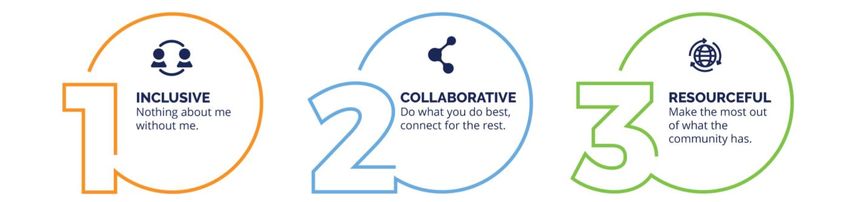
We’ve learned from our grantees over the years that projects most likely to achieve long-lasting
results involve deep collaboration, resourcefulness and the flexibility to adapt to changing
circumstances.
Creatively leveraging the
Those closest to an issue We are stronger and knowledge, capital and
or opportunity have strong smarter together. infrastructure that is already
solutions for a way forward. Collaboration can take a available makes for
Involve those most affected variety of forms, from an sustainable, relevant
by an issue or opportunity advisory team to a joint initiatives.
as well as those who have venture where ownership
the most ability to affect and decision-making are
change. shared.
Learning does not take time Building flexibility into Our society is
away from work, weaving strategies helps us use interconnected and
learning into the everyday what we are learning to initiatives that build a fair,
is the work. We must learn adapt to what’s needed, thriving and resilient region
from what is happening when it’s needed. Principles must reflect that. Get to
globally and nationally; in of Prototyping and Adaptive know others who are
our local contexts and Leadership can help. working toward a similar
ecosystem; and within the vision. What part of the
culture, mindsets and problem are they most
practices of our familiar with? Work in ways
organizations, teams and that complement each
ourselves. other.GRANT SPECIFIC GUIDELINES
ASSETS FOR THRIVING COMMUNITIES
Community assets that are available to everyone are the building blocks of a fair, thriving and
resilient region. Our Assets for Thriving Community grants support the infrastructure &
initiatives our neighbors need.
WHAT WE FUND
We support initiatives that develop, strengthen, or build community assets that are available to all, or
make an existing asset more widely available. This category is intended for projects that have done
significant groundwork prior to application to engage the community, establish working relationships
with stakeholders, and execute research to inform strategy. Citizen voice is essential in determining
what is best for our communities. We prioritize assets that have been identified by citizens as
important to improve the quality of life in their community. We recommend applicants demonstrate a
robust community engagement strategy and decision-making process. This category is not generally
intended to fund the engagement process; if you are interested in that, please consider applying for a
Seed Grant instead.
POTENTIAL GRANT USES
Including but not limited to:
Multi-modal transportation Child welfare
Affordable housing Land preservation
Accessible recreation Health and wellbeing
Arts & culture Education
Energy (efficiency, conservation, renewable) Adapting a program or service to COVID-19
ELIGIBILITY
Eligible applicants for funding include all 501(c)(3) tax-exempt organizations, Native nations, local
units of government, and local school districts serving Antrim, Benzie, Grand Traverse, Kalkaska or
Leelanau Counties. Partnerships and networks are encouraged to apply using an eligible organization
as a fiduciary.
DEADLINE
Fall: September 1, 2021; Spring: March 1, 2022
AMOUNT & DURATION
Up to $50,000 total disbursed over 1 to 3 years. Request must not exceed 50% of the total project
cost.
NEXT STEPS
Please contact Sakura Takano to set up a time to discuss your project: stakano@rotarycharities.org.SYSTEMS CHANGE ACCELERATOR
We support collaborative initiatives that target the root causes of complex problems. Our
Systems Change Accelerator grants invest in problem solving that is different than business
as usual, shifting resources, structures, and mindsets for lasting change.
Rotary Charities believes that in order for our communities to thrive we need to tackle our most
entrenched, complex problems at their roots. The roots of complex problems lie in the context, or
systems, around them. Many interconnected factors together often end up producing results nobody
wants – poverty, obesity, addiction, climate change, health inequities, homelessness. In order to
really begin to solve these problems and not just keep treating the symptoms over and over again, we
believe we must apply a different problem solving approach that aims at systems change.
A Systems Change Approach
I: Convene & III: Design & Implement
Commit Actions to Change
Systems
IV: Learn as you Go II: Explore the Problem &
Find Leverage Points for
Change
There are many frameworks and approaches to systems change; we do not prescribe any one in
particular. However, four key elements are at the heart of most approaches. First changemakers
convene and commit to others in the system, including those most affected by the issue, see the
system around a problem together, develop and implement innovations that change that system so
it functions differently, and learn all along the way and adapt accordingly. The intended impact of
systems change is both durable and broad progress on a complex problem, beyond what any one
organization could achieve alone.
GRANT PURPOSE
Most of the work in the social sector targets the people or environments experiencing a problem to
help them transcend the problem. These efforts are critical as long as we have systems that are not
working for everyone. But, if this is all we do, our problems will persist. Systems change strategies
offer an upstream complement by targeting the systemic factors creating the problem.
Rotary Charities System Change Accelerator Grants are awards intended to support innovation(s)
that target root causes of complex community problems leading to a more fair, thriving and
resilient region. These grants support systems change strategies that restructure how things workand aim to change policies, practices, relationships,
resource flows, relationships, power and mental models The Targets of System Change
so that fewer and fewer people or environments ever
experience a problem. • Policies
• Practices
Powerful strategies involve a constellation of actions: • Resource Flows
multiple, complementary actions carried out by • Relationships and Connections
stakeholders throughout the system. They create greater • Power Dynamics
equity in a system by considering who experiences the • Mental Models
problem most severely and designing actions that
intentionally target the roots of those inequities (ABLe John Kania, Mark Kramer, and Peter
Change Framework, Michigan State University). Senge. “The Waters of Systems
Change.” FSG, June 2018.
https://www.FSG.org/publications/wat
er_of_systems_change
What complex problems are we interested in?
We do not limit funding to specific issue areas, but rather open to any that, if addressed, will lead to a
more fair, thriving, and resilient region for all. Ideally, applicants will know the following about the
problem they are targeting:
• The current status of the complex problem, how many are experiencing it or are affected by it,
what groups of people are affected most by the problem and why
• What the typical approach to the problem has been, what has been tried, what is the “status
quo”
• Why this is a good time to disrupt this status quo. Systems will naturally uphold the status quo
until they have to change. Systems change efforts are most successful when the timing is right
for change.
What work is required before an application?
This grant category is meant for teams that have done some significant groundwork together prior to
applying. Rotary Charities supports all stages of systems change work. However, for this grant,
applicants will apply after they have come together with other diverse stakeholders, looked at what
may be causing the current levels of the complex problem they are addressing, found potential
leverage points and designed a constellation of actions that will act on those leverage points to
change the system that is creating the problem.
Early aspects of a systems change process can be funded through our Seed Grants (described in
this document). Learning about new ways to approach problems like this can be funded through our
Changemaker Fellowship (described in this document).
To get more familiar with these concepts, you may want to review some of the definitions and
resources highlighted at the end of this document. We also offer workshops and other learning
opportunities throughout the year. You can find out about those by signing up for our newsletter at:
http://www.northskynonprofitnetwork.org/sign-up/ and visiting our Events Calendar
(https://www.rotarycharities.org/learning-coaching/learning-experiences/workshop-calendar). If you
are ready to go a little deeper, your team may want to sign up for a free online course called SystemsPractice: How to move from Impossible to Impact (https://www.plusacumen.org/courses/systems-
practice) or Systems Thinking Practice by David Peter Stroh and Michael Goodman
(https://www.iseesystems.com/store/training/systems-thinking-practice/). Rotary Charities offers free
coaches to teams who are interested in taking a course. Contact Freya Bradford to learn more,
fbradford@rotarycharities.org. These courses are suggested as resources that may be helpful.
We do not prescribe any precise approach to systems change and are open to considering any
process of system change that meet our criteria.
POTENTIAL GRANT USES
Grants may be for a constellation of actions by several organizations aimed at leverage points for
the same problem. Grants can be used for innovations that are intended to change systems by
shifting the underlying structures that keep problems in place: changes in system processes, policies,
resources flows, relationships, power structures, and mindsets.
The actions that will change a system are unique to the particular context of that system. Some
actions that have been funded in previous years:
• Convening of cross-sector networks that are working together to share information and best
practices, align work more effectively, experiment with new innovations and learn
• Advocacy work to increase public or legislative support
• Communication work to change public narratives about a problem or solution
• Stipends to compensate stakeholders experiencing a problem to participate in creating
solutions
• Creating new standards for data collection, sharing and use between organizationsEXAMPLE Provided by Housing North
Complex Community Problem: Lack of affordable housing in the region
System/Context around the problem Proposed Constellation of Actions
A network of diverse stakeholders explored the An organizing entity will work to align and support
context surrounding the region’s affordable housing actions of several partner organizations to:
crisis and found that factors were working together in
a way that is creating several confounding patterns: - Develop and share local data and public
messaging about the problem
- The cost of development is high - Advocate for enabling legislation at the state
- The return on investment for affordable level that will increase local governmental
workforce housing is extremely low tools and subsidies
- The process of development is extremely - Provide education and resources to local
complex governments and the public on long-term
- The perception of the problem at the public development costs and procedures
level and the legislative level are often - Provide education and resources to
inaccurate and working against potential developers on community goals and best
solutions practices for development in this region
- Provide developers, employers and
communities with one-stop information and
expertise to navigate the development
process from pre-development to post-
development compliance activities
- Aid developers in accessing and braiding
multiple financing sources
LEARNING – A SHARED COMMITMENT
Systems change as an intentional approach to social change is relatively new. Not many funders and
changemakers are organizing their work in this way. We believe that learning together as we go must
be a shared commitment. We ask that applicants demonstrate a commitment to learning by
designating a Learning Steward from your team and budgeting for their time (grant funds and/or
match may be used for this person’s time). You are encouraged to designate a Learning Steward
from an organization that is not the primary fiscal agent for this proposal.
The Learning Steward will commit to:
• Join a Systems Change Community of Practice with other grantees that meets quarterly
(other team members are welcome as well, but not required). The Community of Practice is a
facilitated group focused on learning and co-designed around the needs of the cohort.
• Work with Rotary Charities staff and consultants to create processes custom to your team that
will help you collect information and stories that will document your team’s unique learning
journey, and help us all notice early signals of a changing system together.
• Capture and share your team’s unique learning journey.Rotary Charities is committed to:
• Provide facilitation for the Community of Practice that will create a brave space to share and
explore successes and challenges.
• Work with Learning Stewards to articulate processes that will help document each team’s
learning.
• Amplify each team’s story (with permission) through our communications channels. We hope
to help inspire others, build the body of knowledge around this type of work, and attract more
resources.
ELIGIBILTY
Eligible applicants for funding include all 501(c)(3) tax-exempt organizations, Native nations, local
units of government, and local school districts serving Antrim, Benzie, Grand Traverse, Kalkaska or
Leelanau Counties. Partnerships and networks are encouraged to apply using an eligible organization
as a fiduciary.
DEADLINE
Fall: September 1, 2021; Spring: March 1, 2022
AMOUNT & DURATION
Up to $150,000 total disbursed over 2 to 3 years. Applicant must provide 10% match, contribution
from all entities named in the budget is required (may include a combination of cash and in-kind).
NEXT STEPS
Please contact Freya Bradford to set up a meeting to discuss your initiative:
fbradford@rotarycharities.org.CHANGEMAKER FELLOWSHIP Changemaker Fellows are lifelong learners who adapt in the name of progress. They investigate new ideas to lay a foundation for a better future. And they commit to bringing us all along on the journey. WHAT WE FUND The Changemaker Fellowship is one way we support community leaders to develop their skills to change behavior, workplace culture, or systems when what’s established or expected isn’t what’s best for most. Changemaker Fellows are local leaders seeking breakthrough learning at the leading edge of changemaking work. Fellows may travel outside of the region for an opportunity, or bring an opportunity here for community- wide or group/issue learning. Then, fellows share what they’ve learned with the community to expand the conversation about how we might work differently to make progress toward a fair, thriving and resilient region. We work with fellows to design the community learning experience that best suits their skills – for example, a local workshop, a video or blog series, an event. Our Changemaker Fellowship is made possible by a generous bequest from Charles Fultz. POTENTIAL GRANT USES Costs associated with learning activities, including, but not limited to: -- Registration fees -- Travel -- Bringing trainers/trainings to our region for community-wide or group/issue learning -- Participant’s absence from work -- Local application of learning This funding is not intended for issue-specific training (e.g. a national affordable housing summit), but rather something that can be generalized and shared with changemakers working in other issue areas. **Find a list of learning experiences that would be a good fit at https://www.rotarycharities.org/grants- investments/grant-types/changemaker-fellowship. This list is meant to give you an example of what we have considered funding. Don’t feel limited – bring us your ideas. We want to hear about what excites you and how it might contribute to community transformation. ELIGIBILITY Eligible applicants for funding include all 501(c)(3) tax-exempt organizations, Native nations, local units of government and local school districts serving Antrim, Benzie, Grand Traverse, Kalkaska or Leelanau Counties. Partnerships and networks are encouraged to apply using an eligible organization as a fiduciary. DEADLINE Applications should be submitted by the 1st of any month. The Board makes decisions at their monthly board meeting, and applicants can expect to be notified in the first week of the month following application. AMOUNT & DURATION Up to $20,000, 1 year NEXT STEPS Please contact Freya Bradford to discuss your request: fbradford@rotarycharities.org
SEED GRANTS

We support the convening, planning & capacity building that make projects possible. Our Seed grants
                      make small investments with potential for big impact.

WHAT WE FUND
Seed grants fund the beginning stages of projects with the potential for broad community impact that may
eventually be strong applicants for an Assets for Thriving Communities grant or a Systems Change Accelerator
grant.

Finding the way into deeper collaboration, learning and adapting – as described in our Grant Criteria below –
often requires that we pause and take stock of where we are and where we want to go. Whether you’re
developing a new community asset or trying to change an entrenched system, new ways of working may
require coaching, consulting, and facilitated processes. Seed Grants can help support this type of groundwork
that must happen before the rubber ever meets the road. You have heard us and others say, “go slow to go
fast.” Seed Grants are part of our “patient capital” that helps build strong foundations for deeper impact.

POTENTIAL GRANT USES
Including, but not limited to what is listed here. Bring your ideas that best suit your project needs.

•   Convening stakeholders to better understand a community problem or need, and developing opportunities
    for development
•   Community planning to implement high priority projects
•   Feasibility studies, market analyses, needs assessments, or other research
•   Planning or piloting new strategies and/or aligning actions with others
•   Assessing and building the capacity of organizations, partners, or networks to move forward together
•   Network convening around a complex community issue
•   Organization, partner or network development activities – especially those that will improve connectivity,
    learning and the ability to adapt and respond to changing conditions
•   Designing processes and tools for deeper learning

ELIGIBILITY
Eligible applicants for funding include all 501(c)(3) tax-exempt organizations, Native nations, local units of
government, and local school districts serving Antrim, Benzie, Grand Traverse, Kalkaska or Leelanau
Counties. Partnerships and networks are encouraged to apply using an eligible organization as a fiduciary.

DEADLINE
Applications should be submitted by the 1 st of any month. The Board makes decisions at their monthly board
meeting, and applicants can expect to be notified in the first week of the month following application.

AMOUNT & DURATION
Up to a suggested maximum of $10,000, 25% match of request required (combination of cash and in-kind)

1 year

NEXT STEPS Please contact Stacey Foster to set up a meeting with staff to discuss your project:
sfoster@rotarycharities.org or (231) 941-4010.
GLOSSARY OF TERMS Community asset: Something that will improve the quality of life in our region in a broad (for all) and durable (for a long time) way. Complex community problem: A community problem that defies any singular solution. There may be disagreement about what is causing a problem and/or what to do about it. Many factors influence complex problems that are difficult to predict and influence (political, social, economic, attitudinal). Problems at their roots: Tackling the system dynamics or conditions that created the problem in the first place. Context around a complex problem: Various factors and how they are working together in a way that is creating an entrenched problem. Factors are things like policies, practices, resource flows, relationships and connections, power dynamics, and mental models. See the system: Diverse stakeholders name and visualize the factors that are influencing a problem and explore how they may be interacting to create the problem. Through this, opportunities for “leverage” emerge – places in the system where relatively small structural change can have outsized impact. Change the system: Unlike direct service projects, systems change works on the underlying structures of a system by shifting processes, practices, relationships, resources, and/or policy. This also requires shifting and supporting new mindsets, building trust and deep connections to others working in the system, and engaging those most affected by the system. The intended impact of systems change is both durable and broad progress on a complex problem, beyond what any one actor could achieve alone. Leverage: In this context, leverage means making the actions funded by a Rotary Charities grant to be bigger and do more and affect more people. In other words, what other partners, grants or resources will you be able to attract to your work as a result of this grant and how will it change your impact? Community of Practice: Groups of people who share a concern or a passion for something they do and learn how to do it better as they interact regularly. (Etienne Wenger) Learning Steward: A designated person who will ensure your team is intentionally learning and adapting based on new insights. With support from Rotary Charities, they will help identify indicators of systems change that are specific to your context and develop processes to collect and share data and stories about changing patterns. All Systems Change Accelerator applicants are required to designate a Learning Steward in their application.
RESOURCES THAT HAVE SHAPED THIS WORK

ABLe Change Framework, Michigan State University

Capacity Building 3.0: How to Strengthen the Social Ecosystem, TCC Group

Emergent Strategy, Adrienne Maree Brown

Grantmakers for Effective Organizations, especially the Systems Grantmaking Community of Practice
and the Change Leaders in Philanthropy Fellowship program

Network Weaver Handbook, June Holley

Social Innovation Generation (Sig), Fostering a Canadian Ecosystem for Social Change

Social Innovation Exchange & SIX Funders’ Node

Systems Grantmaking Resource Guide, GEO & Management Assistance Group

Systems Practice Course, +Acumen & The Omidyar Group

Systems Thinking for Social Change, David Peter Stroh

Theory U, Leading from the Future as it Emerges, Otto Scharmer, MIT

The Fifth Discipline Fieldbook, Peter Senge, et al.

The Practice of Adaptive Leadership, Ronald Heifetz, et al.

The Water of Systems Change, FSG

Thinking in Systems, Donella Meadows

Who Do We Choose To Be?, Margaret Wheatley
APPENDIX 1: ATC & SCA SCORING CRITERIA

Assets for Thriving Communities & Systems Change Accelerator grants are reviewed and scored by
staff, board and Rotarian volunteers. Final decisions to fund are made by the Rotary Charities board
of directors. The following criteria will each be scored from 1 to 5 using the following scale.
Application questions have been designed to elicit responses to the bullets under each criterion.

                         1                  2                 3                  4                     5
                   Does Not Meet       Mostly Does        Somewhat          Mostly Meets       Meets or Exceeds
                      Criteria          Not Meet         Meets Criteria       Criteria             Criteria
                                         Criteria

                             ASSETS FOR THRIVING COMMUNITIES

                                                         ATC CRITERIA
 Proposed Project: Project meets the purpose of the category and is likely to produce the intended results:
      ● The project is well designed to create/expand a community asset that will help our region be more fair, thriving or
          resilient.
      ● There is evidence that the project is based on a known need/opportunity (based on data and/or a community
          engagement process)
 Alignment: Project is well aligned with other work in the community:
      ● The project is aligned with other related work in the region in order to maximize impact
      ● References are well-informed about the initiative, in full support, and believe the work will create a more fair and
          thriving region (new)
 Inclusive: The project is inclusive of project beneficiaries:
      ● Those who will benefit from the project have influenced the planning or design of the proposed work
      ● If a group of stakeholders has not been included, there is a plan to include them in the future
      ● Project beneficiaries will be included throughout the implementation of the project
      ● The asset will be equally available to all in the community; barriers to access have been addressed. Or, the project will
          make an existing asset more available to a specific group.
 Collaborative: The organization and project will be collaborative:
      ● The applicant describes a history of collaboration
      ● It is clear how project partners will work together to increase the project’s impact, including how decisions will be made
      ● If there is a fiduciary, its role is clear, including how funds will be distributed to other partners
      ● MOUs or partnership agreements are attached if grant funds will be shared with partners
 Resourceful: The project will be resourceful:
      ● Other funds, expertise and resources will be leveraged for the project.
      ● Existing community resources and assets will be used creatively to make the most out of what the community already
          has
      ● Future resource needs have been considered and there is an idea how these resources may be acquired
 Reflective: The project has been, and will continue to be, reflective:
      ● The project has been informed by global, national and or local trends
      ● They have ideas about what will indicate progress toward their long-term vision, what they will look for and how they
          will find it
      ● They have considered the potential unintentional consequences of the success or failure of their initiative
 Adaptive: The project will be able to be adaptive during the grant period and after:
      ● Processes, mechanisms, and culture are in place that ensure they can adapt quickly to changing needs
      ● The project has been designed in a way that it will continue to adapt into the future
SYSTEMS CHANGE ACCELERATOR
SCA CRITERIA
Proposed Initiative: Initiative meets the purpose and requirements of the grant category, and it is likely to produce intended
results:
• Addresses a complex community problem that inhibits our region’s ability to be fair, thriving or resilient
• It is a good time to intervene
• Well designed to change systems factors like mindsets, policies, relationships, power, practices, the way resources flow
• Seems likely the actions proposed will achieve the impact described
Alignment: Work is aligned with others to maximize impact:
• Initiative is aligned with other related work in the region in order to maximize impact
• The initiative will stay connected and amplify others doing complementary work
• References are well-informed about the initiative, in full support, and believe the work will create a more fair and
thriving region (reference information may not be available until in-person review, score can be adjusted as needed
then) (new in 2020)
System-Awareness: Partners are aware of the system, or context, around the complex problem they aim to change:
• They understand the current status of the problem - who/how many are experiencing the problem and the trends over
time
• They have looked at the factors that may be enabling and inhibiting the complex problem they aim to change and how
those factors are interconnected
• They have considered how all partners may be unintentionally contributing to conditions that create the need for the
proposed initiative
They have selected how they will intervene in the system based on their understanding of this context
Inclusive: The initiative is inclusive of those experiencing, or most affected by, the problem:
• Those experiencing, or most affected by the problem, have been meaningfully included in the exploration of the problem
and/or planning and design of the proposed work.
• If they have not been able to include all stakeholder groups, there is a plan to try to include them in the initiative going
forward
Those experiencing, or most affected by the problem, will be included in the implementation of the initiative
Collaborative: The initiative will be collaborative:
• It is clear how initiative partners will work together throughout the grant period
• It is clear how decisions will be made
• The role of the fiduciary/fiscal agent is clear, including how funds will be distributed to other partners (if applicable)
MOUs or partnership agreements are attached
Resourceful: The initiative will be resourceful:
• Other funds, expertise and resources will be leveraged for the initiative. Existing community resources and assets will be
used creatively to make the most out of what the system already has
• Future resource needs have been considered and there is an idea how these resources may be acquired
Reflective: The initiative has been, and will continue to be, reflective:
• They have identified two levels of impact: systemic factors and long-term change in the level of the problem
• They have identified an approach to learning and evaluation and selected a learning steward for their project
Adaptive: The initiative will be able to be adaptive:
• They can point to an example of adapting to new information or needs (new in 2020)
• Processes, mechanisms and culture are in place that ensure they can adapt quickly to changing circumstancesYou can also read


