Greater San Gabriel Valley Community Health Snapshot - Greater San Gabriel Valley Hospital Collaborative - Los ...
←
→
Page content transcription
If your browser does not render page correctly, please read the page content below
Greater San Gabriel Valley
Community Health Snapshot
Greater San Gabriel Valley Hospital Collaborative
PRESENTED ON FEBRUARY 6, 2020
BACKGROUND
This report was prepared by the Greater San Gabriel Valley (SGV) Hospital Collaborative, an initiative
facilitated by the Health Consortium of Greater San Gabriel Valley (Health Consortium). The mission of the
Health Consortium is to strengthen the health care safety net and optimize seamless access to high quality
physical health, mental health and substance use disorder (SUD) services in the Greater SGV. In 2018 and
2019, the SGV Hospital Collaborative—funded in part by UniHealth Foundation—collaborated to streamline
data collection for regional Community Health Needs Assessments (CHNAs) and to begin developing a
collaborative strategy to address a priority health need in the region. This work is innovative with respect to
the size and diversity of the joint service areas of participating hospitals, and the breadth of key
stakeholders engaged.

Every three years, nonprofit hospitals throughout the United States conduct CHNAs to develop a deeper
understanding of the health care needs of the residents of their service areas. The CHNA process involves
collecting and analyzing both primary data (from interviews, focus groups and listening sessions) and
secondary data (from large public datasets like the US Census and local and regional public health
departments). CHNAs provide insight into the magnitude and severity of disease and predictive factors, as
well as an understanding of the social, economic, cultural and environmental factors that influence health
behaviors and health outcomes.

The Greater SGV Hospital Collaborative is comprised of six nonprofit hospitals and two public agencies
serving the Greater San Gabriel Valley, an area that includes both the San Gabriel and Pomona Valleys. The
Center for Nonprofit Management provides CHNA data collection, analysis and synthesis technical support
under contract with City of Hope.

    Greater SGV Hospital Collaborative               This snapshot report provides a high-level overview of data
    City of Hope Medical Center
                                                     that describes the area’s population and five priority issue
    Emanate Health
    Huntington Hospital                              areas in the Greater SGV, including: Behavioral and Mental
    Kaiser Permanente Baldwin Park                   Health, Health Care Affordability and Accessibility, Housing
    Methodist Hospital of Southern California        and Homelessness, Economic and Food Insecurity, and
    Pomona Valley Hospital Medical Center
                                                     Chronic Conditions.
    Los Angeles County Department of Public Health
    Pasadena Public Health Department
                                               For more detailed information about these priority issues as
                                               well as specific health topics by category including disease
rates, behavioral and mental health indicators, maternal and child health and health concerns of specific
populations (i.e. the aging population), please refer to the Greater San Gabriel Valley Hospital Collaborative
website where you can find links to each of the participating hospitals’ complete CHNA:
www.publichealth.lacounty.gov/chs/SPA3/SGVhospitalcollaborative.htm.

HOW YOU CAN USE THIS REPORT
This report combines public health indicators with the voice of residents and service providers on issues
affecting quality of life and health in the Greater San Gabriel Valley. This report includes: select demographic
and public health indicators; brief summaries of priority health needs; and insights into the connections
between economic, social, political, cultural and geographic factors and quality of life in the San Gabriel
Valley. Furthermore, community recommendations for improving health and wellbeing for residents is
considered. This report can be used to complement nonprofit program grant writing, and to direct and
anchor collaborative public health program development.

                                                                                                                    2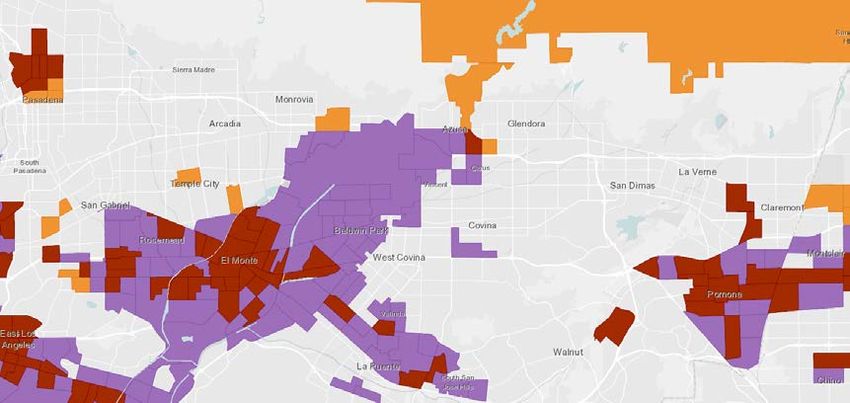
INTRODUCTION
The Greater San Gabriel Valley is home to 1,799,204 residents1 (nearly one-fifth the population of Los
Angeles County), and spans approximately 400 square miles. The geographic boundaries of the Greater San
Gabriel Valley are similar to those of Service Planning Area 3—a planning area that includes 28 cities and 16
unincorporated areas. Beyond its size, the Greater San Gabriel Valley is one of the most racially and
ethnically diverse regions of the United States. In fact, it is the largest majority Latino/a and Asian American
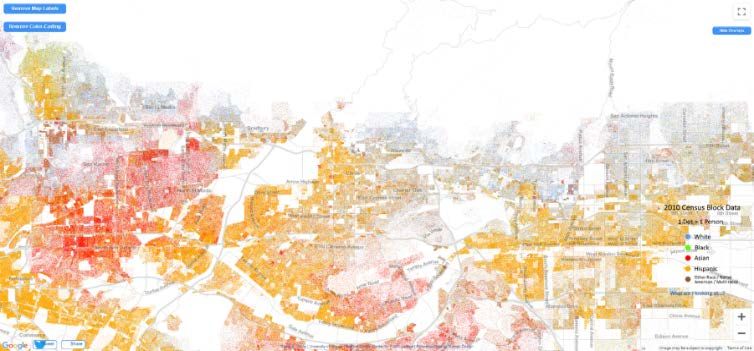
region in the country. The diverse racial and ethnic groups who call the Valley home are unevenly
distributed in pockets of high density—an artifact of a long history of housing policies, immigration and
migration in the region. The region is also linguistically heterogeneous—67% of residents speak Spanish at
home in South El Monte, 56% of residents speak an Asian language at home in Rosemead, and
socioeconomically heterogeneous: 23% of the population lives below 100% FPL in El Monte, only 5% do in
Sierra Madre.2

This report aims to echo key themes that emerged from the primary and secondary data collection efforts
of multiple community health needs assessments conducted in the San Gabriel Valley. Looking at the
current health trends through an equity lens reveals that the geographic size of the Valley—coupled with
the cultural, racial and socioeconomic diversity and heterogeneity—make providing responsive health care
services that equally meet the needs of all residents an important priority. Additionally, understanding how
current economic and social trends, along with reports on the added complexities of structural racism are
impacting access to healthy and long lives for vulnerable groups is an important step in developing and
evolving public health initiatives, systems and institutions. Furthermore, the snapshot points to the enormity
of need that necessitates community-wide attention and support.

                                                                                                               3
DEMOGRAPHIC SNAPSHOT
  The proportion of the Asian population in the Greater San Gabriel Valley (29.9%) is more than double
  their proportion in Los Angeles County (14.3%). The proportion of Latino/as is more similar: 44.7% in the
  SGV and 48.4% in Los Angeles County.3

                               Native HI/PI American                                 Black or   Native American
                    Black or      0.3%      Indian/AK                                African-   HI/PI Indian/AK   Other or
                    African-                  Native Other or                       American     0.2%   Native    Multiple
                   American                    0.2% Multiple                          7.9%               0.2%      2.5%
                     3.6%                             1.9%
                                                                                       Asian
                       Asian                                                           14.3%
                                                          Latino
                       29.9%                                                                                          Latino
                                                          44.7%
                                                                                                                      48.4%

      San Gabriel                                                                                                            Los Angeles
      Valley                                                                                                                      County
                               White                                                       White
                               19.3%                                                       26.5%

  Racial/ethnic populations are highly concentrated in specific geographic “pockets” throughout the
  Valleys. This is indicative of the challenges of building a coordinated service delivery system that is culturally
  and linguistically responsive and available in the communities where needed.4

      Altadena                                                                                                           Latino

      40%
27%              22%                   Sierra Madre                                                                      White
            7%
                                           67%                                                                           Asian
                                     16%         11% 1%                  Irwindale
                                                                   93%                                                   Black/African American

                                                                          5%   1%    0%

                                                                                                   Walnut

                                                                                                      64%
                                                                                            21% 11%
                                                                                                            3%

                                                                                                                                      4
Nearly one in six residents of the Greater San Gabriel Valley are over 65. The Greater SGV is home to a
proportionately smaller population aged 25 to 44, and slightly larger population aged 45+ than Los Angeles
County, meaning there are fewer working adults to support an aging population in the San Gabriel Valley.5
27.3% 29.6% 26.6% 25.2%
18.4% 18.9%
14.9% 12.5%
5.7% 6.3% 7.0% 7.5%
0 to 4 5 to 19 20 to 24 25 to 44 45 to 64 65+
Years Years Years Years Years Years
% of totalSGV
population by age category
LA County
El Monte, Pomona and parts of Pasadena have high concentrations of residents with low income and
low levels of educational attainment. These are the communities most vulnerable to economic, housing,
and food insecurity, factors that can lead to higher than average morbidity and mortality rates.6
Where more than
20% of the
population are
below poverty level
Where more than
25% of the
population have
less than a HS
education
Areas above both
thresholds
5PRIORITY HEALTH NEEDS
The following section describes the priority health needs that emerged from the Community
Health Needs Assessments of the Greater San Gabriel Valley Hospital Collaborative.
Behavioral Health, Including Mental Health
Poor mental health is increasingly recognized as a health concern by individuals, community, and
health care providers.
Needs assessment participants named stress related to social isolation and economic insecurity as
the main factor for underlying poor mental and behavioral health.
Mental and behavioral health services are not adequately covered by many insurance plans,
leading to out-of-pocket costs that are prohibitively expensive for many residents.
The linguistic, cultural and racial diversity of the Greater San Gabriel Valley indicates a need for
mental and behavioral health care services that is responsive to patterns of mental and behavioral
health care utilization that vary across communities and subpopulations.
Community Recommendations
Form parent/client advisory councils for mental and behavioral health care providers.
Provide trauma-informed care, with a particular focus on racial trauma.
Work through schools to destigmatize mental and behavioral health issues.
Expand use of promotoras and peer-to-peer mental and behavioral health training.
Percent of Greater San Gabriel Valley adults who seriously thought about committing suicide7
Latino 14.6%
African
American
7.7%
White 5.4% “Do you feel stressed? No, sick! You feel feo. Alone, like
you don’t know where to go. The stress of not being able
to find a place to live is too much for a person.”
Asian 2.1%
6Health Care Affordability and Accessibility
Health care is increasingly unaffordable and inaccessible, particularly for the low- and middle-
income, undocumented immigrants and aging populations.
Even when insured by Medi-Cal, Covered California or private health insurance, health care costs—
particularly dental—are prohibitively high.
Insurance systems can be difficult to navigate.
Available health care providers are often located long distances away: patients lacking
transportation, paid time off for visits or affordable childcare find the distance a barrier to
accessing services.
The current political climate conveys an anti-immigrant sentiment and feeds disinformation about
public policies including public charge, leading to fear among immigrant communities and a
reluctance to accept services.
Issues of structural and institutional racism in the health care field, implicit bias against the poor,
seniors, people of color and LGBTQ individuals, and lack of sufficient linguistically and culturally
responsive health care services function as barriers to health care access.
Community Recommendations
Expand mobile health clinics at workplaces, homeless encampments and schools.
Provide free health literacy to communities.
Include community members in health care service planning and evaluation.
Develop health care services that are rooted in cultural values and traditions.
1 out of 3 adults in the
42%
of Greater SGV residents
were unable to pay for Greater SGV delayed
basic necessities due to medical care due to cost or
medical debt in 20178 lack of insurance in 20189
“In our area, I don’t know what is happening, I
Whites 6.5% don’t know if the doctors are already booked
African or have total capacity for the Medical patients
11.5%
Americans but they are full, and the patients get referred
Latinos 15.4% to places outside of the area, which is very
difficult because they don’t have
Asian 15.9% transportation.”
% of SPA 3 residents who did not have a usual place to go when sick or needing health advice in 201810
7Housing and Homelessness
Housing insecurity and homelessness are at crisis levels in Los Angeles County, with the Greater San
Gabriel Valley also deeply impacted.
Individuals and families are responding to increasing housing prices by sharing single homes with
multiple families, living in garages or in cars, or bouncing between friends and hotels.
School districts in the Greater San Gabriel Valley are seeing the impact of housing insecurity and
homelessness on student achievement: lack of sleep, lack of quality diets, and lack of a safe space
to study impede students’ ability to succeed in school.
Residents who can no longer afford to live in their homes are moving to the Inland Empire or the
Antelope Valley area, further from work and school. Longer commute times contribute to poor
physical and mental health.
Community Recommendations
Address the stigma around “homelessness” and increase political and community will to address
the shortfall in affordable housing.
Provide targeted employment and housing supports for groups highly vulnerable to housing.
insecurity and homelessness including transitional age youth, foster youth, undocumented
immigrants and seniors.
There were 4,489 homeless
individuals in the Greater SGV in
2019; 63.3% of these were
72% Nearly 3 out of 4 homeless in the
Greater SGV were newly homeless. The
newly homeless are vulnerable to
unsheltered homeless11 trauma and illness that can impact
health and wellbeing in the long term12
29%
Asian “The increase in rent has really killed people.
1%
29% People are starting to qualify for homeless
4% services because they’ve doubled up, tripled up
African American
22% in houses. Homeless in schools – it’s not the
19% same definition as HUD. In public schools, you
White can be in a garage, transitional, doubled up
28%
and count as homeless – we have 500 kids who
45% are “homeless” now.”
Latino
46%
residents homeless
African Americans are only 4% of the total population, but comprise 22%--more than one out of five--of
the homeless residents of the Greater SGV13
8Economic and Food Insecurity
Economic insecurity is experienced as an inescapable day-to-day stressor that detracts from the
physical, emotional, and social wellbeing of individuals and communities.
Hikes in housing prices and associated costs of living coupled with stagnant wages have driven an
increase in economic insecurity among the lower and middle class in the Greater San Gabriel
Valley.
Immigrants—particularly undocumented immigrants—and seniors on fixed incomes are highly
vulnerable to economic insecurity.
Economic insecurity is directly linked to issues including housing and food insecurity.
Economic insecurity is a strong driver of stress, anxiety and depression among residents.
Community Recommendations
Increase the number of food pantries in communities.
Increase availability of affordable, quality childcare for working families.
Provide accessible, physical and behavioral health care to individuals experiencing economic
insecurity.
Expand availability of emergency housing funding for very low-income residents.
One third of Greater SGV Only half of Greater SGV
Cities have household adults said affordable fruits
incomes below the $67,169 and vegetables are always
state median. 14 In order to available in their
afford median asking rent in neighborhood.16
Los Angeles County,
In a 2018 survey, 49% of
household income needs to
Latinos in the Greater SGV
be at least $98,84115
report being able to afford
enough food each month, 67%
of Whites and 88% of Asians17
“I see the communities with a tremendous financial strain – working class families and seniors on fixed incomes.”
“Being in a stressful situation, you’re in fight or flight, you’re not thinking down the line, you’re thinking “how am
I getting food today?” You don’t think if the food is healthy or how it will affect your teeth. So preventive care is
not a priority.”
9Chronic Conditions
Chronic conditions are particularly challenging because of the complex nature of underlying causes,
and the influence of economic and social factors on management and treatment of chronic diseases.
Economic insecurity and heavy workloads are barriers for many to attaining healthy diets, access to
needed medications, physical activity, and leisure time with friends and family – factors that
prevent chronic illness and support the management of chronic illness.
Housing insecurity and homelessness function as barriers to the management of chronic illness and
contribute to risk for chronic illness.
Several factors contribute to racial disparities in incidence and mortality due to chronic conditions.
Addressing these disparities means first understanding the nature of structural racism and racial
bias in health care and related systems.
Overweight or Obese in SPA 3 in 201818 Heart disease mortality rates in Los Angeles
County are nearly twice as high for Black
Asian 31.4% men as for all other men.19
White 63.1% “It’s hard to manage sugar and eating healthy
even when you have access and means to
afford it. Disproportionally lower income
Latino 63.7%
populations are more impacted as they have
less money and are managing multiple jobs.
African
89.6% They have less time to make healthy meals and
American less income to afford health options. For the
same reasons, homeless people have a huge
difficulty staying healthy.”
In California, the ratio of incidence to mortality for all cancer types is highest for African
Americans: 45% of African Americans diagnosed with cancer will die of that cancer. This
is true for 35% of Whites.20
10CALL TO ACTION
As in other regions of Los Angeles County, a great number of lower-income residents of the Greater SGV are
experiencing economic and housing insecurity and finding it very difficult to afford the things that are
foundational to health and wellbeing: safe, comfortable housing, healthy food and health care. Unique to
this moment in time, the current economic reality is putting stress on all public health and social services
systems, consequentially impacting the health and wellbeing of all of the diverse communities in the
Greater San Gabriel Valley. Many of these communities are particularly vulnerable because they are
positioned at the intersection of multiple social, cultural,
Especially Vulnerable Populations political, and environmental forces that act as structural
Immigrants, particularly undocumented immigrants
Non-native English speakers
and systemic barriers to accessing resources—barriers that
African Americans are outside of individual control. These populations include
Chronically homeless immigrant populations and non-native English speakers,
Those at risk of homelessness
Aging seniors
undocumented immigrants, African Americans, chronically
Individuals and families on fixed incomes homeless and those at risk of becoming homeless, aging
LGBTQ+ populations seniors, particularly those on fixed incomes, LGBTQ+
populations. We know that a chain or community is only as
strong as its weakest link. A coordinated and collaborative approach is necessary to address the issues
affecting the health of our most vulnerable communities. This moment presents an opportunity for
innovation and coordination among our community members and leaders across sectors and industries.
The Greater SGV Hospital Collaborative and Greater SGV Health Consortium invite your participation in a
collective effort to improve health access and outcomes in our communities.
LOOKING FORWARD
As an initiative of the Health Consortium of Greater SGV, the Hospital Collaborative will leverage the
information collected through the Community Health Needs Assessment process to develop a coordinated
strategy to collectively address a mental health need in the area. The mission of the Health Consortium of
Greater SGV is to strengthen the health care safety net and optimize seamless access to high quality
physical health, mental health and substance use disorder (SUD) services in the Greater San Gabriel Valley
(SGV).
This report, in addition to the detailed public health data contained in the Community Health Needs
Assessments published by each of the Greater San Gabriel Hospital Collaborative partners, will inform the
work of the Health Consortium as well as the Hospital Collaborative. You can access these resources at:
www.publichealth.lacounty.gov/chs/SPA3/SGVhospitalcollaborative.htm.
SOURCES CITED
1. http://publichealth.lacounty.gov/ha/docs/2015LACHS/KeyIndicator/PH-KIH_2017-sec%20UPDATED.pdf
2, 3, 5, 14. U.S. Census, American Community Survey, 2013-2017
4. https://demographics.coopercenter.org/racial-dot-map and U.S. Census, American Community Survey, 2013-2017
6. https://engagementnetwork.org/map-room/?action=tool_map&tool=footprint
7, 8, 9, 10, 16, 17, 18. California Health Interview Survey http://healthpolicy.ucla.edu/chis/Pages/default.aspx
11, 12, 13. Los Angeles Housing Services Authority 2019 Greater Los Angeles Homeless Count https://www.lahsa.org/news?article=557-
2019-greater-los-angeles-homeless-count-results
15. California Housing Partnership. Los Angeles County Affordable Housing Outcomes Report, December 2019
19. Los Angeles County Department of Public Health
http://publichealth.lacounty.gov/chronic/docs/CVD%20Data%20Brief_Nov%202018.pdf
20. California Cancer Registry, California Department of Public Health, 2012-2016; Age-adjusted to 2000 U.S. Standard
11ACKNOWLEDGEMENTS
The development of this report was made possible by funding from the UniHealth Foundation as
well as the participation of the members of the Greater San Gabriel Valley Hospital Collaborative.
Special thanks go to:
Nonprofit Hospitals
• City of Hope (Contact: Nancy Clifton-Hawkins)
• Emanate Health (Contact: Maria Peacock)
• Huntington Hospital (Contact: Cathi Chadwell)
• Kaiser Permanente Baldwin Park (Contact: Portia Jones)
• Methodist Hospital of Southern California (Contact: Clifford Daniels)
• Pomona Valley Hospital Medical Center (Contact: Courtney Greaux)
Local Health Departments
• Pasadena Public Health Department (Contact: Matthew Feaster)
• Los Angeles County Department of Public Health (Contact: Noel Bazini-Barakat)
Convening and Technical Assistance
• Health Consortium of Greater SGV (Contact: Deborah Silver)
• Center for Nonprofit Management (Contact: Maura Harrington)
12You can also read


