Shock wave Why we'll still be feeling the health effects of Covid-19 long after the pandemic
←
→
Page content transcription
If your browser does not render page correctly, please read the page content below

Shock
                   wave
                   Why we’ll still be feeling the
                   health effects of Covid-19 long
                   after the pandemic

AXA’s 2021 Pulse
Health Survey
2 | AXA 2021 Pulse Health Survey

Contents                            Welcome to AXA’s 2021 Pulse Health Survey examining
                                    the impact of Covid-19 on people’s health and well-
                                    being. The survey covers fourteen countries and
                                    territories around the world (see below). It was carried
                                    out in February-March 2021, jointly with the research
3       Foreword Thomas Buberl      firm Ipsos. For more details on the methodology used,
4       Executive summary           please see page 15.

7  Our health during the
   Covid-19 crisis
10 Access to healthcare
   during lockdown
                                                                              Europe
13 Vaccines offer a way out of     Americas                                   Belgium, France, Germany, Italy,
   health crisis                   Mexico and the US                          Spain, Switzerland and the UK

14 Conclusions
15 Additional note on
   methodology
                                                                                                 Asia
                                                                                                 China,
                                                                                                 Hong Kong
                                                                                                 and Japan

                                                       Africa
                                                       Morocco and Nigeria
3 | AXA 2021 Pulse Health Survey

Foreword Thomas Buberl
                                   The Covid-19 pandemic has been the most severe sanitary              environment. Taken together, this could add up to a new
                                   crisis of this century. Its swift outbreak resulted in uncertainty   “health shock wave”. In many respects, the Covid-19 crisis is
                                   for all, hardship and grief for many. Individuals, organizations,    moving from its acute phase to its chronic phase.
                                   and communities were affected to varying extents, but without
                                   exception. It has put our healthcare systems under immense           Our survey also identifies a change in attitude toward health
                                   strain, revealing the fragility of our health infrastructure,        during this pandemic. Around the world, people are taking
                                   increased precarious imbalances and worsened social                  more personal responsibility for their own well-being. Whether
                                   inequalities. New vaccines now offer hope, but we must learn         it is about more carefully monitoring one’s health or investing
                                   from this pandemic and should incorporate the lessons of             time and resources in practices like yoga and meditation, the
                                   Covid-19 in the healthcare systems of tomorrow.                      trend toward more personalized healthcare is here to stay.

                                   We commissioned this Health Pulse Survey to give us insight          These trends – the risk of a sanitary aftershock, shifting
                                   not only into the impact of the pandemic, but also into how we       consumer demands, the rise of mental health issues – are key
                                    can meet the global health challenges that lie ahead. While         issues and expectations to be taken into account to build more
                                        longer-term trends such as the boom in chronic illnesses,       resilient health systems in the aftermath of Covid-19. This calls
                                          aging populations, or the digitization of healthcare may      for closer cooperation between public and private sectors to
                                           have been overshadowed by the Covid-19 crisis in             move toward a coordinated approach benefiting patients,
                                             recent months, they have not gone away.                    healthcare professionals, and society at large. It means more
                                                                                                        focus on prevention, more importance attached to mental
                                             In the short term, Covid-19 has put immense strain         health, expanding telemedicine, giving patients more say in
                                            on national healthcare systems, particularly in             their care, better leveraging data.
                                           Europe. During the pandemic, too many people
                                         missed medical appointments or postponed check-ups,            As an insurer, we have a key role to play, not only with our
                                      either as a consequence of the lockdown measures or               customers, but also in engaging and coordinating with
                                   because of the hospitals prioritizing Covid-19 patients over         governments and other healthcare providers to contribute to
                                   regular pathologies. As a result, countless cases of cancer and      building the healthcare system of tomorrow, one that will be
                                   other serious illnesses may have gone undiagnosed.                   convenient, affordable, effective and seamless. In every crisis,
                                   Researchers are also warning of a crisis in mental health            there are opportunities – this is ours.
                                   because of increased anxiety induced by the stressful
4 | AXA 2021 Pulse Health Survey                                                                                                                  5,250,000

Executive
                                                                                                                                                  5,000,000

                                                                                                                                                  4,750,000
                                                                              Worldwide, cases of Covid-19 now
                                                                              exceed 5.25 million a week.                                         4,500,000

summary
                                                                                                                                                  4,250,000

                                                                                                                                                  4,000,000

                                                                                                                                                  3,750,000

J   ust over a year after the start of the pandemic, it’s clear                                                                                   3,500,000

                                                                                                                                                              Source: World Health Organization (WHO) Data covers the period from end-December 2019 to end-April 2021.
    Covid-19 is affecting our long-term health and well-being.
                                                                                                                                                  3,250,000
Our survey - carried out jointly with research firm Ipsos -
shows that many of us have seen our health decline during                                                                                         3,000,000
the Covid-19 crisis. We’ve also found it harder to get medical
help, even for serious chronic conditions like cancer and                                                                                         2,750,000
diabetes. At the same time, lockdowns have significantly
                                                                                                                                                  2,500,000
increased levels of stress and anxiety. The result could be a
“health shock wave” - we may still be feeling the after-effects                                                                                   2,250,000
of Covid-19 long after the pandemic itself is over.
                                                                                                                                                  2,000,000
Highlights from our survey
                                                                                                                                                  1,750,000
 • More than a third of people (34%) say their health
   has deteriorated during the Covid-19 pandemic.                                                                                                 1,500,000
   Generally, women have fared worse than men;
   they’re more likely to feel tired, to suffer from                                                                                              1,250,000
   stress and to have trouble sleeping – all factors
                                                                                                                                                  1,000,000
   that may damage their long-term health.
                                                                                                                                                  750,000

                                                                                                                                                  500,000

                        12,546                                                                                                                    250,000
                  44
                                                                                                                                                  0
                       Jan         Feb   Mar   Apr   May   Jun          Jul      Aug    Sep    Oct    Nov    Dec   Jan   Feb          Mar   Apr
                                                                 2020                                                          2021
5 | AXA 2021 Pulse Health Survey

                                                              Vaccination rates
                                                              (surveyed countries only)

                                                              %
                                                                     Total doses
                                                                     per 100
                                                                     population

                                                              565.5 million
 • At the same time, going to the doctor has become           Total number of doses                          UK                Belgium
                                                                                                             68.7%             30.0%
   harder. An astonishing 62% of those surveyed say           administered worldwide                         46.7 million      3.5 million
   they’ve had problems getting treatment because of the
                                                                                                    France                            Germany
   pandemic. Fear of contracting Covid-19 is preventing                                             29.2%                             30.6%         Update on Covid-19
   many from visiting clinics or doctors’ surgeries.          US                                    19.6 million                      25.5million   It’s just over a year since
                                                              73.0%
 • Many of those with chronic illnesses like cancer and       241.6 million                            Spain                          Switzerland   Covid-19 was officially
   heart disease have seen their conditions worsen.                                                    31.0%                          28.1%         declared a pandemic.
                                                                                                       14.7 million      Italy        2.4 million
   We’re also running into new health problems - not                                                                     29.5%                      During that time, more
   least psychological, as a result of increased stress and                                                              17.6 million               than 150 million of us have
   anxiety. During the pandemic, more of us have had                                                                                                contracted Covid-19. Sadly,
   neurological issues - or problems with our muscles,        Mexico                                                                                just over three million have
   joints and teeth, even with our digestive systems.         9.5%                                                          Japan                   died because of the virus.
                                                              12.2 million
 • Consequently, more of us are choosing to self-                                                                           2.0%                    Around the world,
                                                                                                                            2.5 million
   medicate. According to our survey, nearly one in five                                                                                            governments have
   (19%) are self-medicating more now than they were                                                                                                imposed strict lockdowns
   before the pandemic. Twenty-one percent are                                                                     China                            in an attempt to contain
   turning instead to practices like meditation,                                                                   14.4%                            the spread of Covid-19. In
                                                                                                                   211.2 million
   homeopathy or relaxation therapy. Rates are highest           Morocco                                                                            many countries easing
                                                                 25.3%
   in China and Africa, where there is a long tradition of       9.3 million                                                                        restrictions has proved
   alternative medicine.                                                              Nigeria                                                       difficult. The hope now is
                                                                                      0.6%
 • There’s better news on vaccinations: to escape the                                 1.9 million                                                   that new vaccines will
   current crisis, nearly three quarters of those                                                                                                   reduce transmission and
   surveyed (74%) say they’re willing to be vaccinated.                                                                                             help build collective
   In some countries – most notably France and                                                                                                      immunity. To date, just
   Switzerland – there’s still significant skepticism. But    Source: WHO. Data covers the period from end-December 2019 through to May 5,
                                                              2021. All figures have been rounded to the nearest decimal point. Only countries
                                                                                                                                                    over 565 million people
   signs are that, even in these countries, more of us        covered by our survey are shown. For more information, see the WHO’s                  worldwide have been
   are beginning to accept the need for vaccination to        Coronavirus (Covid-19) Dashboard, available online at www.who.int.                    vaccinated with at least
   escape the lockdown cycle.                                                                                                                       one dose.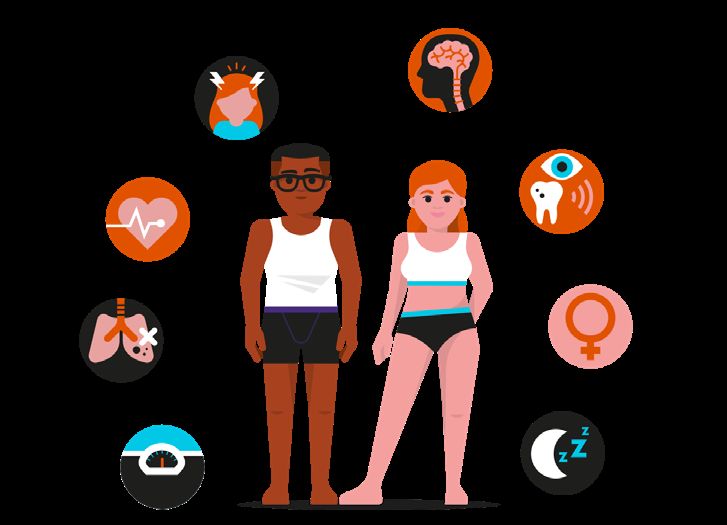
6 | AXA 2021 Pulse Health Survey

Survey
results
in full
7 | AXA 2021 Pulse Health Survey

Our health during
the Covid-19 crisis
                                                          30              %     20
                                                                                Neurological
                                                                                              %
                                                                                20% of us have suffered more
                                                      Psychological             from neurological problems
                                           30% of us have had psychological     like headaches or a loss of
                                            problems as a result of increased   consciousness.

                                                                                                        21          %
                                                          stress and anxiety.

                                         10    Heart
                                                      %                                                 Teeth, eyes & hearing
                                                                                                        21% of us have had more problems
                                                                                                        with our teeth during the pandemic,
                                                                                                        16% with our eyes and 10% with our
                                  10% have experienced
                              increased heart problems.                                                 hearing.

                                    12          %                                                              9      %
                                                                                                               Gynecological
                                                                                                               Among women, 9% have
                   Respiratory & lung                                                                          experienced more gynecological
                  12% have had respiratory or lung                                                             problems during the Covid-19
                    problems, not including those                                                              pandemic.
                     directly affected by Covid-19.

                                           38             %                                             38
                                                                                                        Sleep & fitness
                                                                                                                       %
                                     Weight & diet                                                      38% of us say we are not
                                                                                                        sleeping as well - 45% admit
                               38% have seen their weight                                               their overall fitness level has
                             increase - however, the same                                               deteriorated.
                          number (38%) say they’re eating a
                                      more balanced diet.
8 | AXA 2021 Pulse Health Survey
J
ust over a third of those surveyed say their health has
worsened since the start of the pandemic. On the During the pandemic, our overall health has deteriorated...
34%
positive side, we’re eating better – largely because
we’re eating out less. Nor has the pandemic affected of respondents say their
our work-life balance, despite the switch to home working. health is “somewhat” or
But more of us are having trouble sleeping. We’ve gained “much worse” than
weight; we’re more tired – and we’re suffering from increased before the pandemic.
stress and anxiety. Overall, 45% of us say our levels of fitness
have gone down during the pandemic. 7 21 37 30 4 1
Much better Somewhat better
It’s worse in Europe than elsewhere – and worse for No change Somewhat worse Much worse Did not answer
women than men
In Italy, Spain and the UK, more than 40% say they’re in worse
health than before. In China, the figure is similar, but in the US ...And women generally have fared worse than men.
and Japan it’s much lower. In Africa – where populations are
younger – 66% say their health has actually improved. Men
Generally, women are faring worse than men. In recent Women +13 Chronic
health
months, research has already shown that Covid-19 has hit problems
(where Stress &
women’s health particularly hard.1 That’s because more Weight Sleep +9 Fitness applicable) Tiredness anxiety
women work in frontline occupations – in hospitals, schools -4 -4
-7 Diet -12 -13 -21
and care homes.
-13
Lockdowns have increased levels of stress and anxiety -15 -15
It’s also clear that lockdown measures are taking their toll. -18
Levels of stress and anxiety have risen sharply. Thirty percent -23
of those surveyed say they’ve suffered from psychological
problems since the start of the pandemic, more than any
-32
other condition. People are worried not only about their
health – but also the economic consequences of the crisis for Scores are based on the following question: Since the beginning of the
pandemic, would you say your personal situation with regard to the
following is better or worse? Scores are calculated by subtracting those
1 See our previous report: At risk: how Covid-19 is jeopardizing women’s long-term physical,
answering “worse” from those answering “better.”
mental and social well-being (November 2020).9 | AXA 2021 Pulse Health Survey
their jobs and livelihood. Younger people are most at risk -
42% say they’ve had psychological problems since the
During the pandemic, many people have
43 %
Covid-19 outbreak began. In Europe, anxiety may have
worsened because of fears that health systems would be seen their chronic illnesses worsen.
81
overwhelmed.
Worldwide, healthcare systems have come under
%
Say they have missed out
on care, treatment or
extreme pressure visits to the doctor
In many countries, confidence in national governments’ during the pandemic.
42 58 % %
handling of the virus has taken a hit over the past year.
Europe is no exception as Europeans have grown used to
reliable public healthcare – for the first time, they fear their
health systems could be overwhelmed by the rise in Covid-19 Since the beginning of the
pandemic, 81% of those with
cases. That trend can be seen best in Italy – the country’s chronic illnesses say they’ve
experienced health problems. Say their health has Say they’ll need a full
health system came under unprecedented strain during the worsened since the start health check-up in the
pandemic. In our survey, 85% of Italians said they found it of the pandemic. coming weeks.
harder to access the treatment and healthcare professionals
they needed – the highest of any of the countries included in
our poll. In response to the pandemic, there are calls for
increased investment in public health.2 problems, such as headaches or loss of consciousness. Nearly
the same number have experienced issues with their teeth or
We’re struggling to manage pre-existing health digestion. Ten percent of those surveyed say they have had
conditions properly more problems with their heart. In all, 69% of respondents say
In our survey, just over a third (35%) of those with chronic that, during the pandemic, they have either developed a new
illnesses like cancer, diabetes and heart disease, say their health problem or a previous health problem has worsened.
conditions have worsened during the pandemic. Many have
missed out on care, treatment or visits to the doctor because What these results tell us
of Covid-19. Even those without chronic problems are running Our survey shows that, in the short term, we’re less healthy
into health issues - 29% of all respondents say they’ve – we’re not taking care of chronic conditions. Lockdowns have
suffered more from muscle, bone or joint pain since the led to increased stress and anxiety. The consequences for our
beginning of the pandemic. One in five report neurological long-term health could be serious – and could emerge fully
only months or even years after the pandemic is over.
2 Sources: A year of Covid in Italy (Eurispes, February 2021), WHO urges countries to build a
fairer, healthier world post-COVID-19, (WHO, April 2021).10 | AXA 2021 Pulse Health Survey
Access to healthcare
Problems experienced for the first time or more
intensely than before, since the beginning of the
pandemic.
during lockdown 62%
have found it harder to
access healthcare
45 % professionals.
have missed out on
healthcare or treatment. 9%
used video more to consult their
family doctors.
41 %
have kept away from
surgeries for fear of catching
the virus.
17 %
have managed their
health problems through
specialist websites.
55
have found it easier to
%
19 %
monitor and control have turned to
their health. self-medication.11 | AXA 2021 Pulse Health Survey
W
Because of the pandemic, more of us have missed out on vital medical care.
e’ve seen that Covid-19 has brought added Yes*
health problems. But it’s also made it harder for Since the beginning of the Spain 60 21 39 39 1
us to get the right medical care when we need it. pandemic, have you given Italy 53 17 36 45 2
In our survey, 45% of those surveyed say they’ve up care, treatment or visits
given up on at least some care, treatment or visits to the to your doctor? US 44 19 25 55 1
doctor - 14% have given up altogether. Unsurprisingly, Germany 42 9 33 57 1
perhaps, more of us are self-medicating – or turning to China 41 10 31 59 0
alternative methods of treatment. One of the unforeseen
consequences of Covid-19 has been the yoga craze in many Japan 30 5 25 69 1
countries. Yes, all of them Yes, but only some No Did not answer
*Selected countries only
Fear of the virus is keeping us away from the doctor’s
Overall, 62% of those we surveyed say they’ve found it
“slightly” or “much” harder to get to see healthcare
professionals during the pandemic. That includes people Technology is helping improve access to care. However, our
suffering with serious, long-term conditions like cancer and survey shows that, in many countries, there’s still work to be
heart disease. Generally speaking, it’s fear of contracting the done. In the US, 26% of respondents say they’re now using
virus that is keeping us away from the doctor’s surgery – video more to consult their family doctor, but figures for
though nearly a quarter of those surveyed also blame Europe, Africa and even Asia are much lower. Among those
financial hardship. likeliest to use video consultations are those between 25 and
34 years of age, or with children in their household.
This sense of mistrust is highest in European countries worst
affected by the pandemic. Sixty percent of those surveyed in We’re finding it easier to monitor our own health
Spain, for example, say they’ve stopped at least some Though we have less access to medical care, we’re finding it
medical care during the pandemic. Elsewhere, the figures are easier to monitor and manage our own health. Fifty-five
still worryingly high – 44% in the US, and around half the percent of those surveyed say they know more now about
respondents in Italy, Nigeria, Hong Kong and Morocco say how to treat their health problems than they did before the
they’ve missed out on treatment. In Japan, it’s only 30% - so pandemic . Eleven percent of those we surveyed say they’re
far, with just 600,000 confirmed cases, the country has making more use of health and well-being apps on their
escaped the worst of the Covid-19 pandemic. smartphones.12 | AXA 2021 Pulse Health Survey
More of us are self-medicating – or turning to alternative It’s fear of Covid-19 that’s keeping us away
41 %
33 %
treatments from clinics and doctors’ surgeries.
One result of the pandemic is an increase in self-medication.
Nineteen percent of respondents to our survey say that, since Which of the following best
the start of the Covid-19 crisis, they have opted for more self- explains why you gave up
medication rather than visiting a healthcare professional. care, treatment or visits to Fear of getting Covid-19 It wasn’t possible to see
Others are turning to practices like meditation, homeopathy your doctor? while seeing a healthcare your doctor during the
professional. pandemic.
or mindfulness as a way of reducing stress and anxiety
brought on by the pandemic. Clearly, figures are highest in
36 23 % %
countries with an established culture of “non-western
medicine”, such as China, Morocco and Nigeria. It’s high, too,
in the US, where 20% say they’ve increased their use of
alternative treatments over the past year. In many countries,
activities like yoga, hiking and running have become more You were able to take You were experiencing
popular – at a time when other forms of exercise, like care of yourself in financial hardship.
another way (including
swimming, football or keep-fit classes, have been stopped as self-medication).
part of lockdown measures.1
What these results tell us
During the pandemic, we’ve not always been getting the
professional healthcare we need. Fear of the virus is stopping
many of us seeing our doctors and specialists. As a result,
we’re becoming more self-reliant, and more pro-active when
it comes to managing our health. Coming out of the
pandemic, 43% of those surveyed said they will “probably” or
“absolutely” book a full health check-up.
1 Data from health tech company Withings shows the number of people practicing yoga
increased 42% during the pandemic. Numbers hiking and running have also risen
significantly – by 34% and 18% respectively (May 2020). For more information, see www.
withings.com.13 | AXA 2021 Pulse Health Survey
Vaccines offer a way
out of health crisis Vaccine “skeptics”
and “enthusiasts”
Of those surveyed, nearly three quarters (74%) said
they would be willing to be vaccinated against Covid-
19. Not surprisingly, figures were highest in countries
that had been hard hit by the pandemic, including Italy,
74 %
Yes
Top five vaccine enthusiasts
(% Yes)
26 %
No
Top five vaccine skeptics
(% No)
Spain and the UK. Vaccine skepticism remains in UK 87% Hong Kong 45%
countries where there is low trust in central China 84% France 40%
government - both Hong Kong and France fall into this Italy 84% Switzerland 36%
category - though signs are this skepticism is beginning Spain 83% Nigeria 33%
to weaken as people recognize that vaccination offers Mexico /Morocco 82% Japan 29%
a way-out of the current crisis.1 Our survey shows that,
overall, men are less skeptical about vaccination than
women; those on higher incomes or with higher formal
education are also likely to be less skeptical.
1 In France, a recent Le Figaro /Odox-Backbone Consulting poll showed 61% of French
people would be willing to be vaccinated, up from just 42% in December 2020.14 | AXA 2021 Pulse Health Survey
Our conclusions
• It is clear that, during the pandemic, our health – both physical devices that help us make better decisions – and smart use of
and mental – has worsened. More of us are having trouble data, which not only improves diagnosis and treatment, but also
sleeping, are tired, or have gained weight. Lockdowns have added protects our privacy. And we want effective, quality health
to stress and anxiety. Again, women are among the most services accessible both to developing countries and the most
vulnerable – something we’ve seen throughout this pandemic. vulnerable in our own societies.
Inevitebly, in recent months, many of us have incurred new health
problems. At the same time, the virus has kept us away from • Rightly, our current focus is on rolling out new Covid-19 vaccines
consulting doctors and other healthcare professionals. – but we need to act now to prevent a “health shock wave”, with
Consequently, illnesses are going untreated – and undiagnosed. long-term effects, following the pandemic. To do so, we must
The result could be a “health shock wave” in the wake of the return to our doctors, resume treatment, screenings and check-
Covid-19 pandemic, particularly in Europe where healthcare ups, and put more emphasis on prevention – particularly when it
systems are already under significant strain. comes to chronic disease. Private and public sectors must work
more closely together at building a Healthy Recovery and pool
• We’ve become more conscious of health issues. Around the world, resources where possible – so that, in recovering from this
we’re ready to take more responsibility for our own health. We pandemic, we create more resilient communities better able to
understand more about the link between mental and physical resist future health crises.
health – and more about the need for prevention. We’re using
digital more and more – it’s making it easier for us to monitor our
health and making us less dependent on national healthcare
systems. A more personalized approach isn’t entirely without risk,
however – our survey shows that, during recent lockdowns, more
of us turned to self-medication.
• Post-pandemic, we’ll need to rethink the way, together, we tackle
global health crises. We’ll also need to respond to society’s
changing expectations with regard to health – increasingly, we
want better access to information about our health, and a more
holistic approach to health and well-being. We want digital15 | AXA 2021 Pulse Health Survey
Health at AXA Additional note on methodology
This report is based on results from AXA’s 2021 Pulse Health Survey. This survey
covered countries and territories in Europe (Belgium, France, Germany, Italy,
AXA is one of the world’s leading health insurers. Around the world, we Spain, Switzerland and the UK), Africa (Morocco and Nigeria), Asia (China, Hong
have more than ten million health customers. That gives us an Kong and Japan) and the Americas (Mexico and the US). The survey took place
important stake in the future of healthcare. For us, health is part of online from February 21 to March 19, 2021. In each country, 1,000 respondents
protecting what matters. In recent years, we’ve put a lot of emphasis on were interviewed. All were adults (over the age of 18). Steps were also taken to
illness prevention. Increasingly, we’re working with our customers as a ensure respondents were representative in terms of gender, age, region and
health partner, rather than simply paying the bills. To support our market size, as well as socio-economic category. Each respondent was asked ten
health business, we’re also investing more in technology – in Europe, questions (apart from basic identification information). All answers were
we already have six million telemedicine customers. Earlier this year, we checked for consistency and response behavior.
joined forces with Microsoft to build a digital healthcare platform,
offering a virtual healthcare system open to all. This platform – already We welcome feedback and suggestions on our report. You can
successfully launched in Germany and Italy – includes a self- follow us on:
assessment tool, teleconsultation and a medical concierge. We’re
planning to expand the platform to other European countries. During
the Covid-19 outbreak, AXA has helped arrange more than half a million facebook.com/axa
online consultations. At the same time, we’re growing in Asia and
investing in our own clinics and diagnostic centers in Spain, Italy,
Mexico and Egypt to improve access to affordable, quality healthcare. twitter.com/axa
We’re also helping developing countries combat the pandemic - we’ve
joined forces with the 101 Fund to provide new intensive care units in 60
countries, and we have donated EUR 1.5 million to support UNICEF’s instagram.com/axa
roll-out of Covid-19 vaccines worldwide through the COVAX facility.1
linkedin.com/company/axa
youtube.com/user/axapeopleprotectors
Colophon Contact
Research: Ipsos (Paris) Liza Garay-De Vaubernier
1 Please note UNICEF does not endorse any company, brand, product or service Editing, design and typesetting: Kōan Group (Global Head of ESG Business
(Amsterdam) Development and Outreach)
liza.garay@axa.comYou can also read


