School Health Update 2021 School Health Update 2021 - Pennsylvania Department of Health Bureau of Community Health Systems Division of School Health
←
→
Page content transcription
If your browser does not render page correctly, please read the page content below
School Health Update 2021

   School Health Update 2021

 Pennsylvania Department of Health
Bureau of Community Health Systems
      Division of School Health
    Colleen Schultz, M.Ed., CSN RN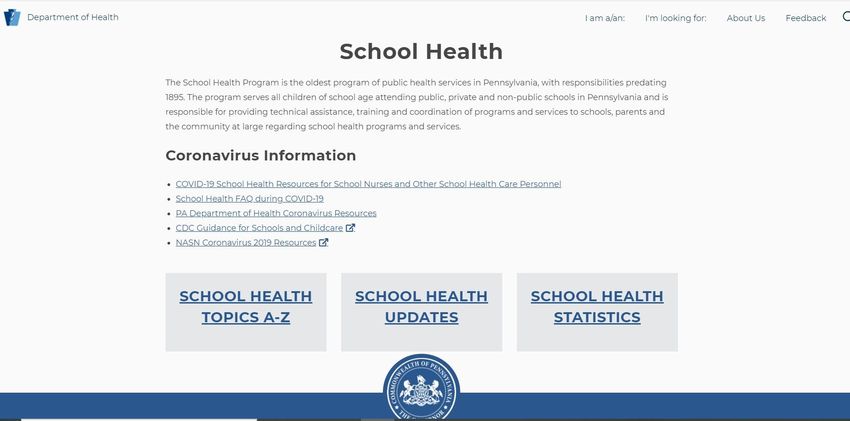
Division of School Health

• Chief of School Division
     Colleen Schultz, M.Ed.,
     CSN RN
• School Health Consultants
     Sheri Mountz RN
     Bill Deemer RN
     Ed Woods RN
• Bureau Administrative
  Support
     Christine Weltmer,
     Administrative Officer 1
School Health Consultants

                      NC and NE
                     Sheri Mountz
                    1-877-PAHEALTH
                    smountz@pa.gov
                     SW and NW
                     Bill Deemer
                   1-877-PAHEALTH
                   wdeemer@pa.gov
                      SE and SC
                       Ed Woods
                    1-877-PAHEALTH
                    edwoods@pa.gov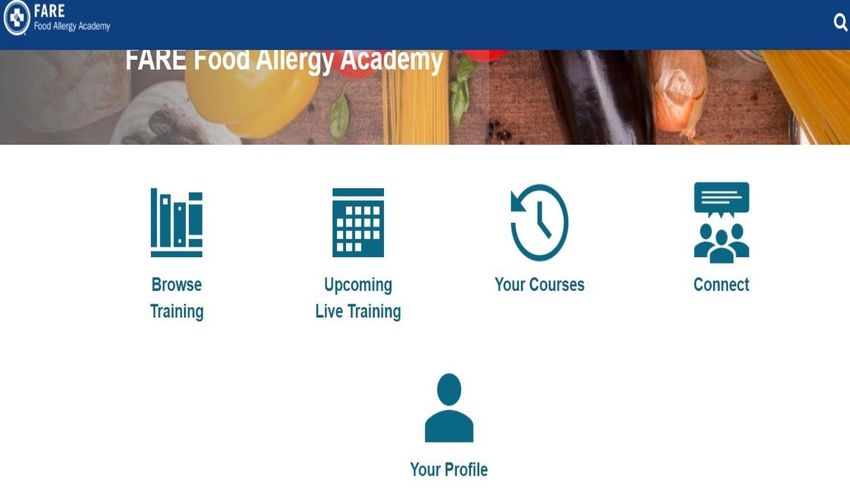
Immunizations and Communicable Diseases

• Immunization questions should be directed to your local State
  Health Center/District Immunization Nurse Consultant, or
  your local Health Department. If they are not able to assist
  you, contact the Division of Immunizations at 717-787-5681.
     For information on the school immunization requirements
     select the link below.
     https://www.health.pa.gov/topics/programs/immunization
     s/Pages/School.aspx

• Report suspected cases and questions related to
  communicable diseases and vaccine preventable diseases to
  your local state health center or the local county or municipal
  health department.
     https://www.health.pa.gov/About/Pages/State%20Health
     %20Centers.aspx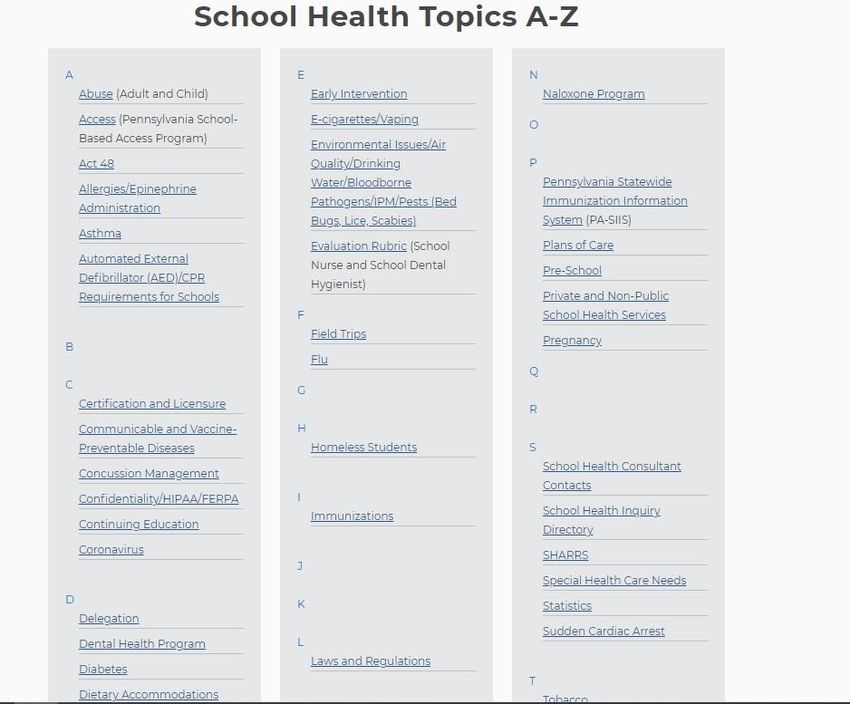
Communications

• Advice on legal, personnel or policy development may not be
  provided by the Division of School Health.
• Utilize available tools such as the Division of School Health’s
  website to research topics.
      https://www.health.pa.gov/topics/school/Pages/School%20
      Health.aspx
       o The School Health updates (emails and PowerPoints) are
         posted on the school health website and contain valuable
         information.
       o These updates are excellent training tools for both
         healthcare and administrative staff. Please share
         accordingly.
• Contact the appropriate licensing/ enforcement entities
  (Immunizations, Education, Board of Nursing, Department of
  Human Services, etc.)
Communications (cont.)

• Pennsylvania Department of Education
    https://www.education.pa.gov/Pages/default.aspx
• Pa Department of Human Services
    https://www.compass.state.pa.us/compass.we
    b/Public/CMPHome
• Pa State Board of Nursing
    https://www.dos.pa.gov/ProfessionalLicensing/Boa
    rdsCommissions/Nursing/Pages/default.aspx
• Office of Child Development & Early Learning
    https://www.education.pa.gov/Early%20Learni
    ng/Pages/default.aspx
Suspected Child Abuse & Neglect (SCAN)

  Free live training for school nurses.
  Developed by the PA Academy of Pediatrics.
   • Presented by a Physician and a local
     Children & Youth worker.
   • Approved for three credits (Act 48/58) that
     satisfy Act 126 and Act 31 requirements.
   • Go to www.pascan.org to submit your
     presentation request.
   • Contact Teresa Olsen, Program Director at
     the PA Chapter, American Academy of
     Pediatrics at tolsen@paaap.org with
     questions.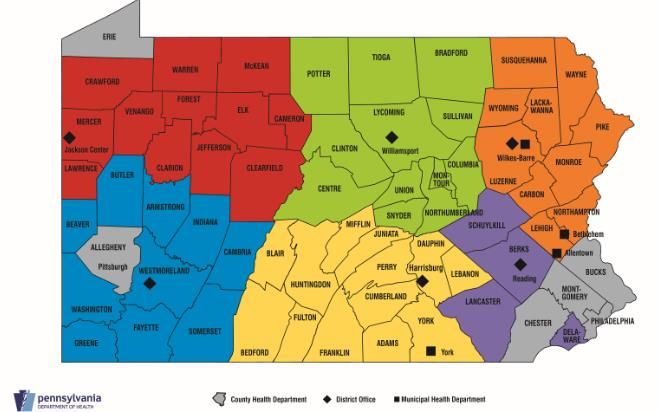
Medical Marijuana
• All questions regarding medical marijuana
  refer to:
   RA-DHMedMarijuana@pa.gov
   Medical marijuana webpage
    https://www.health.pa.gov/topics/programs/Medi
    cal%20Marijuana/Pages/Medical%20Marijuana.as
    px
   Guidance for schools
    https://www.health.pa.gov/topics/programs/Medi
    cal%20Marijuana/Pages/School.aspx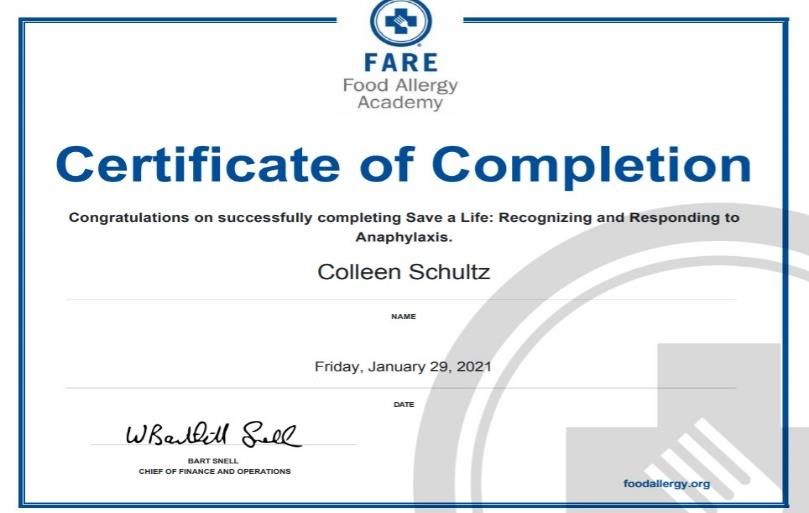
School Health Website
https://www.health.pa.gov/topics/school/Pages/School%20Health.aspx
School Health Website (cont.)
School Health Website (cont.)
Private/Non-Public Services
• Provision of School Health Services to Private/Non-Public Schools.

     School Nurse Act, Act 707 of 1962
      • Equal health services are required for public and non-public
        schools.
      • Neither the law nor regulation distinguish differences in the
        level of service to public vs. non-public schools.

     Pa. Public School Code, § 14-1401 and 14-1402
      • (1) "Children of school age“ …means every child attending
        or who should attend an elementary grade or high school,
        either public or private, within the Commonwealth.
      • Section 1402(a.1) requires that “every child of school age
        shall be provided with school nurse services …”
Private/Non-Public Services (cont.)
• Private, parochial and non-public school entities
may request school health services from the public
school district within its geographical boundaries.
DOH Division of School Health recommends the
administrators of the two school entities come to an
agreement on the services to be provided, through a
written memorandum of understanding (MOU).
28 Pa. Code § 23.52 states that the school nurse
services shall be provided through the public school
system and the administration of this service shall be the
responsibility of the public school administrator in
consultation, as needed, with the private or parochial
school administrator.Private/Non-Public Services (cont.)
• Provision of School Health Services to Private/Non-
Public Schools.
28 Pa. Code § 23.1 states school districts are
required to provide specified health services for
children of school age who attend an elementary,
grade or high school, either public or private.
28 Pa. Code § 23.51 states that a child in private,
parochial and public schools shall be provided with
school nurse services in the school which the child
attends.
https://www.health.pa.gov/topics/school/Pages/P
rivate%20School%20Services.aspxPrivate/Non-Public Services (cont.)
• 28 Pa. Code § 23.74
A function of the school nurse is to interpret
the health needs of individual children.
Includes assessment of student health care
needs, development of appropriate plans of
care, medication administration, first aid and
emergency care, etc.
• Certified school nurses must rotate to every
assigned building. Amount of time necessary is
based on assessment of student health needs
as determined by the school nurse.SHARRS
School Health Annual Reimbursement Request System
(SHARRS)
SHARRS can be accessed at the following link:
https://apps.health.pa.gov/sharrsSHARRS (cont.)
• A School Dentist is still required for a school
with an approved Dental Hygiene Services
Program (DHSP).
• The School Dentist must review and approve the
Dental Hygiene Authorization Plan.
• The Dental Hygiene Authorization Plan must be
closed before the SHARRS system can be
opened for data entry in order for the system to
process reports correctly.
Note: Only the Superintendent/CEO may submit the SHARRS
report. Any user may submit the Dental Hygiene Authorization
Plan.SHARRS (cont.)
• For a DHSP, schools must:
o Have a Dept. of Education certified dental hygienist
hired
o Have an authorization plan, developed and approved by
the school dentist and administration, submitted to and
approved by the Division of School Health between April
1st and April 30th.
Refer to the August 2019 School Health Update for more
information on DHSP requirements and helpful links.SHARRS (cont.)
• An “Instructions” button is located in the
top right corner of every page.
Provide detailed guidance on how to complete
the report, manage user accounts and
determine what data must be included.
Button will direct the user to the section of the
instructions that correlates to the page the
user is on.SHARRS (cont.)
• CSN Days Per Cycle in Building or OTHER Cycle
Days per Cycle reflect the number of days in the School’s
cycle the school nurse is assigned to each specific building
under their caseload.
Formula to calculate days per cycle: Number of hours spent
in a building per cycle divided (÷) by the number of hours in
a work week multiplied (X) by the days in the cycle equals
(=) days per cycle. (the sum of hours for all buildings needs
to equal the week’s work hours)
Example of a 6 day cycle, 30 hour work week, covering 3
buildings:
• Bldg 1: 5 hours per cycle ÷ 30 hour work week X 6 day cycle = 1 out of 6
• Bldg 2: 17 hours per cycle ÷ 30 hour work week X 6 day cycle = 3.4 out of 6
• Bldg 3: 8 hours per cycle ÷ 30 hour work week X 6 day cycle = 1.6 out of 6SHARRS (cont.)
• OTHER Cycle
Is checked when the number of hours or days the CSN is
scheduled to be present at a specific building is outside
of the school’s standard “Cycle” schedule, such as two
hours every other week, one day per month, or when
the cycle varies from week to week.
A description of the “OTHER Cycle” is required in the
comment box.
o The term “PRN” or “As Needed” is not an
acceptable description.SHARRS (cont.)
• SHARRS data is used for statistical reporting and
research and should be accurate.
Ungraded special education has been removed
from the ADM field, as directed by PDE.
Grade should be entered as defined in the
student’s IEP.
• A CSN should review the report prior to
submission to ensure healthcare data is accurate,
as data entry errors delay the processing of the
SHARRS report.Screenings and Exams • Written into law and regulation. • Required for ALL students in the mandated grades. • Prioritize starting with the most vulnerable and those with known problems. • Encourage parents to have exams done by student's PCP/Dentist.
Screenings/Exams(cont.)
• For the 20-21 SHARRS report:
  If screenings/exams are not
  completed/incomplete due to COVID-19,
  ensure that the data entry person places
  the following verbiage in the “Comment”
  box on the “ADM page”:
     "Health screens and exams not
     completed/incomplete due to COVID-
     19.“
     This will aid in expediting the processing
     of the report.
Screenings/Exams(cont.)
• The Pennsylvania Public School Code
Section 1402. Health Services (e) requires
that students upon original entry, 6th
grade and 11th grade be given a
"comprehensive appraisal" of their health.
The physical is to be completed within 4
months prior to the start of the school year.
Section 1402(c) requires the completion of
medical questionnaires which are to become
part of the student's health record.Act 122: Vision Screening
• Act 122 of 2020 Highlights:
Prior to admission for first time, documentation from PCP or
screener with specific training in vision screening techniques
and protocols, that the child has passed or failed a vision
screening.
Vision screen to be done every school year, until the child
completes fifth grade, and at least every two years
thereafter until the child graduates from twelfth grade.
Vision screen to be performed by school health personnel or
screeners with specific training in vision screening
techniques and protocols.Act 122: Vision Screening (cont.)
• Act 122 of 2020 Highlights:
New vision screening guidelines will go into effect after
regulations are promulgated. Additional info will be provided once
the regs are promulgated.
The Advisory Health Board shall promulgate regulations to
establish vision screening standards based on instrument based
vision screening technologies or visual acuity testing, taking into
consideration national guidelines from the American Academy of
Pediatrics AND AMERICAN ASSOCIATION FOR PEDIATRIC
OPHTHALMOLOGY AND STRABISMUS.
• The regulations shall apply to school years beginning after
the regulations are promulgated by the Advisory Health
Board.Medication Administration
• CSN may identify unlicensed school staff
to administer the following medications:
Asthma rescue inhalers;
Epinephrine auto-injectors;
Glucagon (if the district opts into Act 86);
Insulin (if the district opts into Act 86); and
Naloxone (Narcan).Medication Administration (cont.)
• If self-administration or unlicensed staff are
permitted, it requires at a minimum:
School policies and procedures;
Provider order and permission; and
Parent/guardian permission.
• CSN determines staff designation based on
a student’s health needs:
CSN assures staff training is completed.
CSN assesses staff/student annual competency.
CSN assures student acknowledgement.Medical Orders
• Prescribed orders are good for one year.
Renew orders at the start of each school year.
School year officially begins July 1 per the Department of
Education.
OTC/CAM medications require an order.
• Parent/guardian provides orders from the student’s
licensed prescriber for all medications and
treatments.
Parent/guardian provides all medications and treatment
equipment/supplies for use in school.
• Parent/guardian without prescriptive authority may
not direct medical care and treatments.Medical Orders (cont.) • Standing orders must have school physician approval for use in the following cases: Non-licensed staff giving emergency medications like rescue inhalers, epinephrine auto-injectors, and naloxone. District licensed nurses providing care at non- public/private schools. District licensed volunteers providing care. Supplemental nurses at CTCs using district standing orders.
Medical Orders (cont.)

               • Schools may minimize
                 use of medications
                 under standing orders
                 for various factors,
                 including cost,
                 expiration date, etc.
               • Standing orders are
                 null and void if the
                 district loses its school
                 physician,
                 necessitating
                 individual orders.
Medical Orders (cont.)
• Refer to the medication manual for further
guidance.
https://www.health.pa.gov/topics/school/Pages/Me
dications.aspx
• Orders must contain student name; signature
and phone number of licensed prescriber;
name and dosage of medication; frequency;
route and time of administration; effective
start and end dates; and specific directions if
needed.
Orders may not state, “per package or parental
instructions.”Bloodborne Pathogens
• Bloodborne Pathogen (BBP) information for schools
can be found on the school health Environmental
Issues web page
https://www.health.pa.gov/topics/school/Pages/E
nvironmental.aspx this page has been updated
with the following information on BBP
o https://www.cdc.gov/niosh/docs/2004-
101/default.html (Safety Checklist Program
for Schools)
o https://www.cdc.gov/niosh/topics/bbp/occupati
ons.htmlSchool Jurisdiction
• School jurisdiction
Public School Code, Section 510
School board may adopt rules during time
students are under supervision of school,
including time spent in coming to and
returning from school.
22 Pa. Code, Section 15.1
Equal opportunity to participate in the school
program and extracurricular activities.School Jurisdiction (cont.) Schools are required to provide nursing services to students any time they are under school jurisdiction School jurisdiction includes: • Trips to and from school while in school furnished transportation. • Class time (including lunch, recess, physical education). • School sponsored extracurricular activities, field trips and camps. • Non PIAA sports/athletic activities (such as intramural activities).
School Jurisdiction (cont.)

• U.S. Department of Education Office for Civil
  Rights
    https://www2.ed.gov/about/offices/list/ocr/ind
    ex.html
     “OCR’s mission is to ensure equal access to
     education and to promote educational excellence
     through vigorous enforcement of civil rights in our
     nation’s schools”.
    https://www2.ed.gov/about/offices/list/ocr/faq
    s.html?src=go
     Frequently Asked Questions on OCR's work, including
     information related to our areas of enforcement and
     the Civil Rights Data Collection.
School Jurisdiction (cont.)
http://www2.ed.gov/about/offices/list/ocr/lette
rs/colleague-201301-504.html
III. Ensure Equal Opportunity for Participation
“A school district that offers extracurricular
athletics must do so in such manner as is
necessary to afford qualified students with
disabilities an equal opportunity for
participation. This means making reasonable
modifications and providing those aids and
services that are necessary to ensure an equal
opportunity to participate, unless the school
district can show that doing so would be a
fundamental alteration to its program”.Administrative Authority
• The Public School Code of 1949 (law)
• Section 1410. Employment of School Health Personnel.
Except as otherwise provided in this article, all school
districts alone or jointly with other districts or joint school
boards shall employ school physicians and school dentists
but only with the approval of the Secretary of Health...
and shall employ one or more school nurses…
• The Pa Code (regulation)
• 23.34. School Nurses
The duties of school nurses shall be those assigned by the
school district or joint school board which are exclusively
connected with medical and dental school health
activities. The technical content of the duties of the
nurse shall be those prescribed by the Department of
Health.Administrative Authority (cont.)
• Responsibility of nurse to determine
appropriate level of care for students.
PDE- CSPG 95- Principal
• A principal may supervise and direct nurses …
exclusive of directing health services controlled by
the Nurse Practice Act.
• CSPG 101- Paraprofessional
• A paraprofessional shall not be directed to engage in
health-related activities reserved exclusively for
licensed professionals.Administrative Authority (cont.)
• In loco parentis
Public School Code, Section 1317 Authority of
Teachers, Vice Principals and Principals over
Pupils.
• Every teacher, vice principal and principal in the public
schools shall have the right to exercise the same
authority as to conduct and behavior over the pupils
attending his school, during the time they are in
attendance, including the time required in going to
and from their homes, as the parents, guardians or
persons in parental relation to such pupils may
exercise over them.
Does not provide parental authority for
medication administration and other nursing
functions.Pre-K And K
• School Districts do not have to provide services to
private-nonpublic K and/or pre-K students if
those grades are not offered in the public school.
Schools do have to provide services if the K or pre-K is
an “integral” part of the school district.
Integral means that the pre-K is operated by the public
school entity, not just renting space in the school
building.
School administrators may have an agreement to
provide those services; it then becomes a contractual
issue between the nurses and administrators.
Schools may not receive reimbursement via SHARRS for
“Pre-K Counts” students or any preschool program that
receives funding from any other source.Child Care Centers
• Chapter 3270: Child care centers are
regulated by the Department of Human
Services
https://www.pacode.com/secure/data/055/chap
ter3270/chap3270toc.html
3270.131. Health assessment.
3270.131a. [Reserved].
3270.132. Emergency medical care.
3270.133. Child medication and special diets.
3270.134. Child hygiene.
3270.135. Diapering requirements.
3270.136. Reporting diseases.
3270.137. Children with symptoms of disease.
3270.138. Discrimination based on illness.Sharing Health Information
• Sharing health information
49 Pa. Code § 21.18 Nurse Practice Act
• Covers standards of nursing conduct, requirement for
registered nurses to safeguard patients’ dignity, right to
privacy and the confidentiality of patient information.
• Records that are transferred to a student’s new school
are to be maintained by the new school.
• Records entered into an electronic database must be
secure from unauthorized personnel access to a
student’s health information.
Records should never be sent back to the student’s previous
school, as that school no longer has a right to the student’s
health information.Sharing Health Information (cont.)
• Sharing health information
Pa. Public School Code, § 14-1409
All health records … shall be confidential, and their
contents shall be divulged only when necessary for
the health of the child or at the request of the parent
or guardian to a physician …
28 Pa. Code § 23.55
Health records shall be maintained for each child …
kept in the school building where the child attends …
available to the school nurse at all times …shall be
transferred with the child when he moves from one
school to another or from one district to another.
Personally identifiable information should not be
submitted to the Division of School Health.FERPA HIPAA
• Family Educational Rights and Privacy Act
Health records maintained by a school district that
receives funds under any program administered by
the U.S. Department of Education are “education
records” subject to the Family Educational Rights
and Privacy Act (FERPA).
FERPA allows schools to disclose a student’s health
and medical information to teachers and other
school officials, without written consent, if these
school officials have “legitimate educational
interests” in accordance with school policy.FERPA HIPAA (cont.)
• Family Educational Rights and Privacy Act
The school district must issue annual notice of rights under
FERPA to parents and to students over age 18, which includes
information regarding criteria used by the school for
determining which school staff members have been
designated as “school officials” and what is “legitimate
educational interest” for staff access to education records.
https://www2.ed.gov/policy/gen/guid/fpco/faq.html
o FERPA@ed.gov
https://www.hhs.gov/hipaa/for-professionals/index.html
http://www.dhs.pa.gov/yourprivacyrightshipaa/index.htmFERPA HIPAA (cont.)
• Health Insurance Portability and Accountability Act
(HIPAA)
School nurses may communicate concerns about
medical orders or share related health issues or
information that may be relevant to the treatment
regimen with the physician.
HIPAA allows the school nurse and physician to communicate verbally
with each other without written authorization of the parent if it is for
treatment purposes.
This does not apply to requests for release of health records.
State licensure statutes and professional standards of practice for
nurses and physicians require nurses to question/clarify medical
orders, when indicated, before carrying them out, regardless of the
healthcare setting. They also require physicians to provide nurses
with sufficient information for safe execution of the treatment plan.Working with Agency Nurses • The CSN maintains the caseload at all times the student is under school jurisdiction. • The agency staff functions as a supplemental staff under the guidance of the CSN. • The agency must share with the school district the most current provider orders and nursing plans of care. • School nurses should be included in care conferences and receive all updated information.
Working with Agency Nurses (cont.)

• The school nurse should also receive
  copies of agency nurse notes to show care
  provided during school day (maintenance
  of comprehensive school health record).
• The school nurse should receive copies of
  the medication administration record
  (MAR). Meds administered by an agency
  should be counted in SHARRS.
Working with Agency Nurses (cont.)

• Home Health Agencies function under
  HIPAA except when in a school setting, at
  which time they function under FERPA.
• Agencies must ensure the school is
  provided with all the appropriated parental
  consents, a daily report of the care
  provided and medication administered.
Nurse Practice Issues

• CSN caseload
   The CSN must go to all assigned buildings on
   a regular basis.
    • The school district is responsible for provision of
      school health services.
    • The amount of time necessary is based on
      assessment of student health needs as
      determined by the school nurse.
    • The CSN cannot cover a caseload they never see.
    • The CSN needs to be on duty and be available for
      verbal direction or provide on-site assistance to
      the supplemental staff nurses as needed.
Nurse Practice Issues (cont.) • If a CSN is absent and a substitute is a supplemental licensed nurse covering the daily needs, the caseload of the absent CSN’s assignment must be temporarily redistributed so the supplemental nurse has a CSN to report to and receive direction from. • CSPG 101 Utilization of Paraprofessional Staff … Paraprofessionals serving as health room aides cannot be directed to engage in health-related activities reserved exclusively for licensed professionals and controlled by the Nurse Practice Act, or other medically related laws…
Nurse Practice Issues (cont.)
• Responsibilities:
     •   Coordinate care
     •   Develop plans of care
     •   Participate in teams (ex. student assistance, IEP)
     •   Communicate with parents
     •   Perform duties exclusively connected with medical
         and dental school health activities (28 Pa. Code
         Chapter 23, Section 23.34)
          • The duties of school nurses shall be those assigned
            by the school district or joint school board which are
            exclusively connected with medical and dental
            school health activities. The technical content of
            the duties of the nurse shall be those prescribed by
            the Department of Health.
Nurse Practice Issues (cont.)
• Supplemental staff:
May not carry a caseload
May not function as a substitute for a CSN
Function under their own license
Function under the direction of the CSN
Responsibilities:
• Meet daily health care needs of students;
• Follow written plans of care for assigned students;
• Assist with completion of mandated screens and exams;
• Consult with the student’s assigned CSN on student health
care issues; and
• Function within their scope of practice.Epinephrine Training School Staff
• Food Allergy Research & Education (F.A.R.E.) has
updated the training module for school staff.
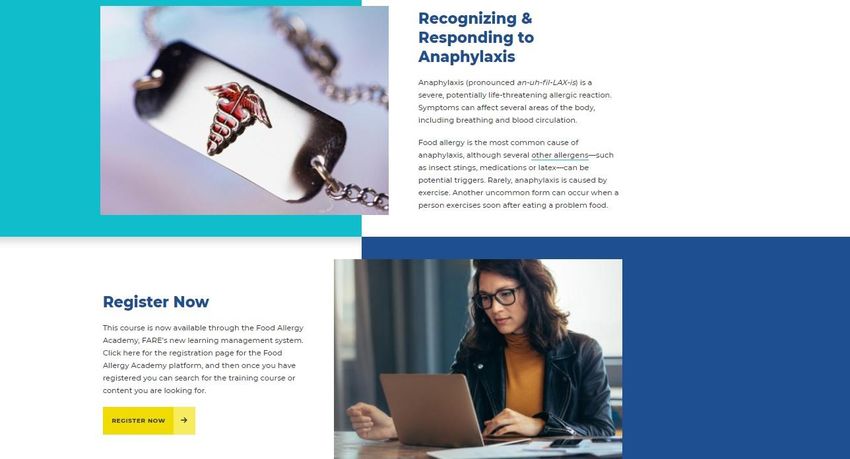
The new link F.A.R.E Recognizing and
Responding to Anaphylaxis may be found on
the School Health website
Individuals must register for the Food Allergy
Academy and select the correct course
module.
https://www.health.pa.gov/topics/school/Pages/Epinephrine-
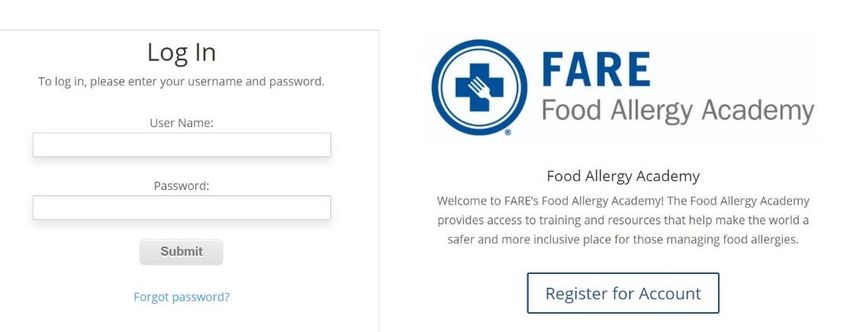
Training.aspxEpinephrine Training School Staff (cont.)
The link leads to the initial
registration page
Clicking on “Register Now” will
bring up the following screenEpinephrine Training School Staff (cont.) Once registered, users will see the following screen, where they will select: Browse Training
Epinephrine Training School Staff (cont.)

                         • Users may use the search
                           function at the top right,
                           and type “Save a Life” OR
                         • They may also scroll to
                           the course name, as they
                           are listed alphabetically.

They must
select the
online course
with the
Computer Logo
Epinephrine Training School Staff (cont.) • Individuals will receive a course completion certificate from F.A.R.E. after a knowledge quiz at the end of the module.
For You
You can also read


