GWS NEWS - Department of Gender and Women's Studies
←
→
Page content transcription
If your browser does not render page correctly, please read the page content below
Gender and Women’s Studies                                                                     FALL 2020

             GWS NEWS
         University of Illinois, Urbana Champaign | In The Age of Pandemic

 AWARDS &
 ACHIEVEMENTS
 Just some of the awards and
 achievements of our GWS
 faculty. p2.

 DISRUPTIVE
 SITUATIONS
 Drawing on their research
 expertise, GWS faculty
 Ghassan Moussawi and Karen
 Flynn respond to our historical
 moment. pp3-5.
                                   WELCOME TO FALL 2020!
 NEW FACULTY
                                   This semester will require our collective generosity and imagination
 In Fall 2020, we welcome new      as we find new ways to think and learn together – and to care for
 assistant professors Emma         and connect with each other – amidst the COVID-19 pandemic.
 Velez and Damian Vergara          GWS faculty and staff have been working this summer to adjust our
 Bracamontes, and our              fall courses and student mentoring to online formats. As we grapple
 inaugural Chancellor’s            with the nuances of power, violence, and vulnerability during this
 postdoctoral fellow Sawyer        time, we draw strength and inspiration from the theoretical tools
 Kemp. Meet them in our Q&A.       and practices of collective resistance offered through the field of
 pp6-11.                           Gender and Women’s Studies. As always, we look forward to the
                                   vibrant energy our students bring to the shared project of a feminist
 FOREVER JACQUE                    education.

 We wish a heartfelt               Even as we face tremendous challenges, we hope this newsletter
 congratulations to GWS            can be one way to reconnect, share, and celebrate together. And
 academic advisor Dr. Jacque       our department has lots to celebrate this year! Although a
 Kahn on the occasion of her       newsletter can never really substitute for the in-person feelings of
 retirement! pp10-11.              our annual fall party, perhaps as you read you’ll still be able to
                                   imagine yourself packed into the GWS house with delicious food,
                                   good music, laughter, and community.

Gender and Women’s Studies                                                                                1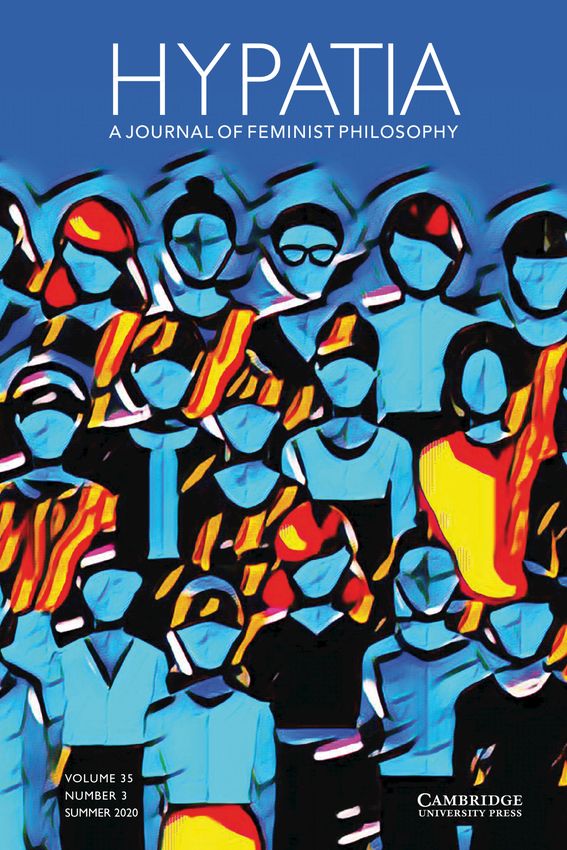
Gender and Women’s Studies                                                                   FALL 2020

                             AWARDS & ACHIEVEMENTS
                             Toby Beauchamp was named Conrad Humanities Scholar, a five-year
                             appointment awarded by the College of Liberal Arts and Sciences. He
                             continues as a Center for Advanced Study Resident Associate for
                             2020-2021, and with his colleague A. Naomi Paik in Asian American
                             Studies, to co-direct the CAS initiative on the theme of ABOLITION. He also
                             published “Beyond the ‘Pine Pig’: Reimagining Protection through the US
                             National Park Ranger,” in Radical History Review 137 (2020).

                             Ruth Nicole Brown has moved from the University of Illinois to a new
                             position as the inaugural Chair of the Department of African American and
                             African Studies at Michigan State University. We'll miss her!

                             C.L. Cole published with Chamee Yang, “Smart Stadium as a Laboratory of
                             Innovation: Technology, Sport, and Datafied Normalization of the Fans,” in
                             Communication & Sport (online, August 2020).

                             Karen Flynn was named the Aaron and Laurel Clark Professorial Scholar, a
                             three-year appointment awarded by the College of Liberal Arts and
                             Sciences. She was also awarded an Insight Development Grant from the
                             Social Sciences Research Council of Canada as co-researcher on The
                             Canadian Midwives of Colour History Project, as well as a Public Voices
                             Fellowship from the University of Illinois.

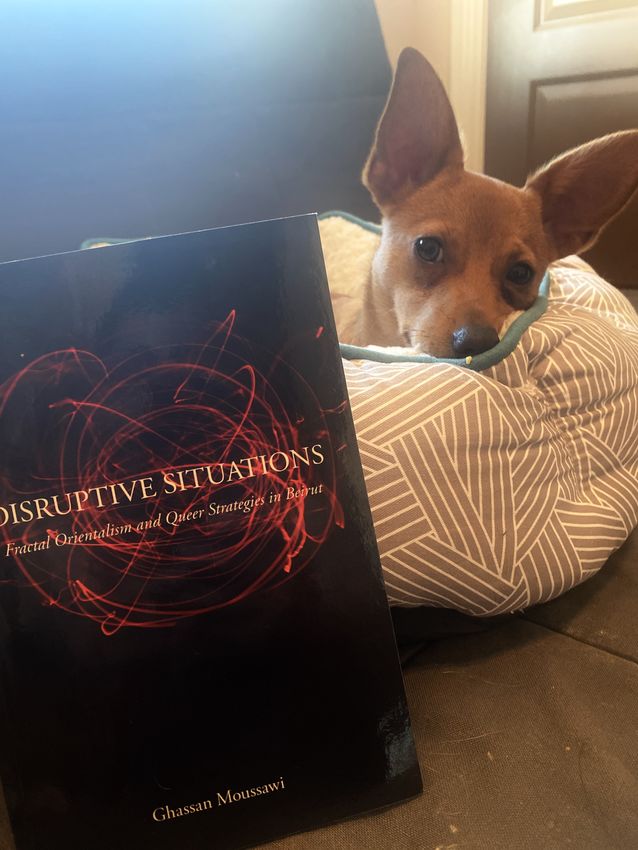
                             Ghassan Moussawi published Disruptive Situations: Fractal Orientalism and
                             Queer Strategies in Beruit (Temple UP 2020), which “employs the lens of
                             queer lives in the Arab World to understand everyday life disruptions,
                             conflicts, and violence.” His article “Queer Exceptionalism and Exclusion:
                             Cosmopolitanism and Inequalities in ‘Gay Friendly’ Beirut,” received an
                             honorable mention from the American Sociological Association's Global
                             and Transnational Section for their 2020 Best Scholarly Article award.
                             Published in 2018 in The Sociological Review, “this article examines how
                             LGBTQ individuals in Beirut articulate discourses of progress, modernity,
                             and exceptionalism in light of the regional geopolitical situation.”

                             Chantal Nadeau is publishing Les trouées [Full of Holes], a creative non-
                             fiction work that explores trauma, violence, and sex. (Hamac, Montréal,
                             December 2020).

                             Mimi Thi Nguyen is publishing “Poster Child,” about her graphic design, in
                             an upcoming issue of Women & Performance (Vol. 30, Is. 1).

                             Siobhan Somerville edited the Cambridge Companion to Queer Studies,
                             published in July 2020 by Cambridge University Press. The volume includes
                             original essays by a wide range of scholars in queer literary and cultural
                             studies, along with a critical chronology of the field by GWS graduate minor
                             Erin Grogan.

                             Emma Velez is co-editor of a special issue of Hypatia: A Journal of Feminist
                             Philosophy (Vol. 35, Is. 3) called “Toward Decolonial Feminisms: Tracing the
                             Lineages of Decolonial Thinking Through Latin American/Latinx Feminist
                             Philosophy.”

Gender and Women’s Studies                                                                               2
Gender and Women’s Studies                                                                         FALL 2020

                                                          mentioned Black nurses being restricted to COVID
DISRUPTIVE                                                only patients. Sadly, at the onset of the COVID
                                                          crisis, three of the healthcare workers who died
SITUATIONS                                                were personal support workers (PSW’s) who are not
                                                          necessarily considered nurses’ aides but do similar
                                                          work.
Q&A with Professors                                       How does your new work on Black travel
Karen Flynn and Ghassan                                   resonate in the present as well?

                                                          I immediately began paying attention to how Black
Moussawi                                                  English as Foreign Language (EFL) teachers in
                                                          South Korea were dealing with COVID 19 in the
Professor Karen Flynn was recently named the              classroom but also in the larger Korean society.
Aaron and Laurel Clark Professorial Scholar, a            Fortunately, for me, I have access to information via
three-year appointment awarded by the College             Brothas and Sistas (BSSK), the Facebook group that
of Liberal Arts and Sciences in recognition of her        I study. I wondered whether there would be some
prominence in the field, the high caliber of her          backlash against EFL teachers, how COVID affected
scholarship and teaching, and her leadership              contractual agreements, and of course, teaching
experience. She was also awarded an Insight               during COVID. There seems to be a consensus
Development Grant from the Social Sciences                among the EFL teachers that South Korea has done
Research Council of Canada as co-researcher on            a better job than the U.S. but there were concerns
The Canadian Midwives of Colour History                   about increased xenophobia against foreigners.
Project, as well as a Public Voices Fellowship at
the University of Illinois. We asked Professor            What can you tell us about The Canadian
Flynn for some insights into our contemporary             Midwives of Colour Project, which received a
healthcare crisis in the wake of the global               grant from SSRCC?
COVID-19 pandemic.
                                                          My co-applicant, Karline Wilson-Mitchell, in
How do you see the relevance of your                      conjunction with a multidisciplinary team of faculty
scholarship with Black nurses unfolding right             and students will aim to document and analyze the
now?                                                      history of racialized midwives in Canada and the
                                                          communities they served beginning with Black
I have taken a keen interest in who has emerged as        midwives in Ontario and Nova Scotia between 1800
the experts in discussions of COVID-19. Again, the        and 1970. There is a lacuna in the historical
same pattern emerges where white men are                  scholarship and our objective is to fill that gap. We
experts on all matters relating to COVID. When            will use The SHRCC Development to initiate and
people of colour appear as subjects, it is primarily      complete a pilot study involving the following
as victims of COVID-19. The voices of medical             activities: identify community partners and
health professionals of colour are virtually absent.      collaborators, and contact archives, and conduct
Where are the nurses of colour who are on the front       preliminary research. We will also create a
lines? What about nurses’ aides/assistants, those on      multimedia communication platform to disseminate
the lowest echelon of the medical hierarchy but           our research to the public, the midwifery
who are continually lauded as “essential” in our          community, educators, and learners.
efforts to save lives and contain the virus? I recently
did a presentation for the Canadian Society for the
History of Medicine, where I discussed Black health
care workers working during COVID. A few of the
health care workers echoed concerns similar to the
nurses I interviewed almost two decades ago such
as higher patient load. One health care worker

Gender and Women’s Studies                                                                                   3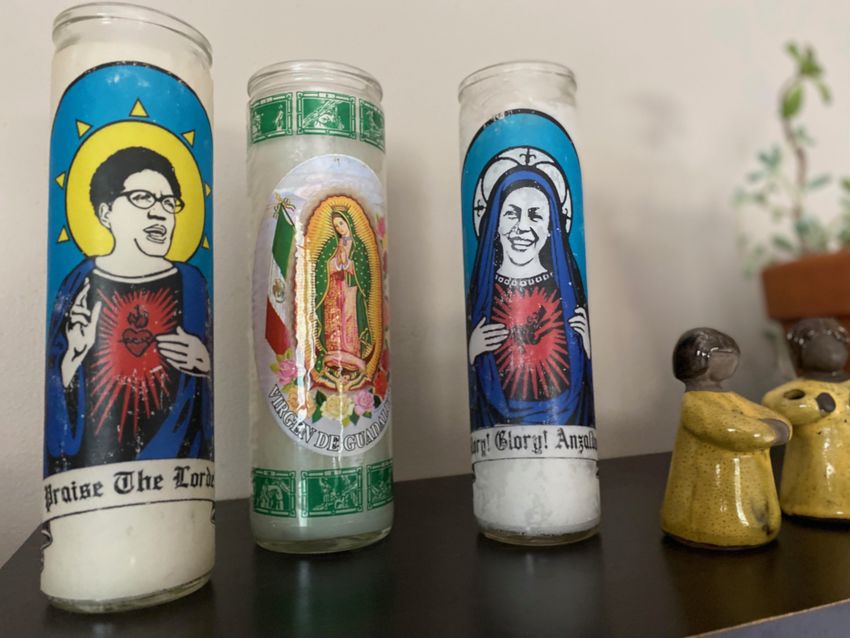
Gender and Women’s Studies                                                                        FALL 2020

On the occasion of the publication of Disruptive       and imminent disruptions, caused by wars, civil
Situations: Fractal Orientalism and Queer              unrest, corruption, and everyday violence.
Strategies in Beruit (Temple UP 2020), we asked
Professor Ghassan Moussawi to help us think            Since March 2020, in the US, we have witnessed
                                                       how the global pandemic has and continues to
through our historical present.
                                                       affect peoples’ lives differently. What came as a
                                                       shock to many is the sudden interruption of
                                                       everyday life as we know it. We think of the times
                                                       we are living in as exceptional, however, how do we
                                                       account for people’s lives in places (countries, cities,
                                                       regions) where everyday life violence, disruptions,
                                                       and uncertainties about the present and future are
                                                       not exceptional, but are normalized? We don’t have
                                                       to go to non-US settings to ask these questions, as
                                                       many communities, especially BIPOC people in the
                                                       US, have and continue to live amidst constant
                                                       disruptions and violence, such as systemic anti-
                                                       Black violence and police brutality, violence against
                                                       indigenous populations, undocumented migrants,
                                                       and trans people, to name a few.

                                                       To question what “a normative life” entails, means
                                                       that we cannot assume that COVID affected
                                                       people’s lives similarly. The most precarious people
                                                       are the ones who have most been affected by the
                                                       pandemic. For example, some people lost their
 Marcel finds himself in a disruptive situation.       jobs, others have had to quit their education to
                                                       take care of sick family members, and there has
                                                       been and continues to be a higher death rate
                                                       among communities of color, especially Black,
                                                       indigenous, Latinx, and undocumented persons
                                                       and communities in the US. While some might say,
How does your new book help us to think about
                                                       we are living in “a new normal;” the definition of
what is happening right now, at multiple
                                                       “new” and “normal” keep changing to the extent
registers and scales, in the United States and in
                                                       that the term “new normal” fails to account for the
Lebanon?
                                                       moment we are living in. The majority of people
                                                       living in the U.S. today have not encountered such
In my book, I invite readers to question and
                                                       sudden shifts and disruptions in their everyday
reconsider what counts as normative and non-
                                                       lives. For queer people and communities of color,
normative life and living conditions. We often
                                                       however, pandemic and government neglect are
assume that stability is the norm and that
                                                       familiar; the AIDS pandemic of the 1980s wiped out
disruptions are aberrations. However, my book
                                                       an entire generation while the Reagan and Bush
challenges this assumption by asking what it means
                                                       administrations looked the other way.
to live amidst constant everyday life disruptions
that keep on taking new forms, and how people
                                                       The book helps us understand how everyday life
negotiate such conditions. It draws on the
                                                       disruptions and violence become normalized, and
experiences of LGBT individuals in Beirut and how
                                                       also asks us to consider the links between
they negotiate normalized everyday life disruptions
                                                       disruptions and violence on multiple scales, from
and violence. Disruptive Situations comes at a time
                                                       the everyday to the geopolitical and global levels.
when we are all experiencing a sense of loss, grief,
                                                       While language sometimes fails to account for
and disorientation, and my hope is that the book
                                                       these conditions of normalized violence and
might shed light on how people survive constant
                                                       disruptions, affect does not.

Gender and Women’s Studies                                                                                   4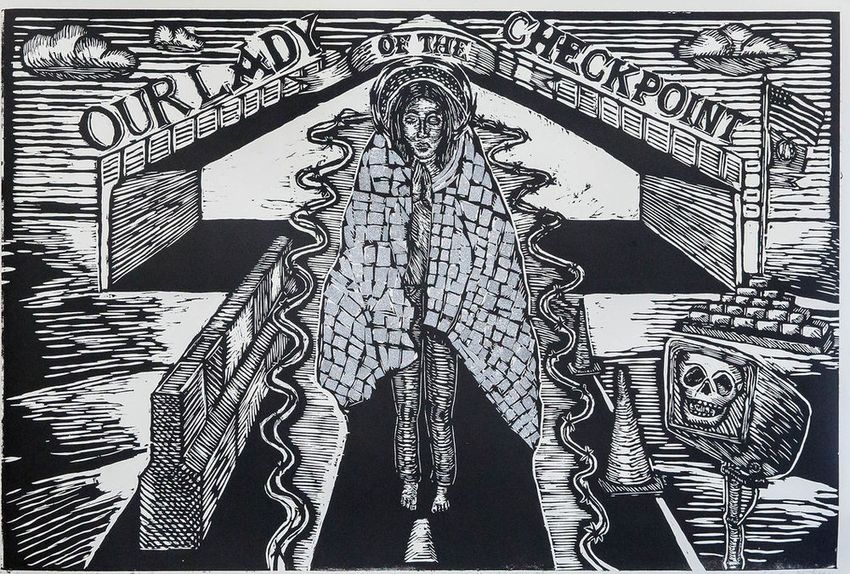
Gender and Women’s Studies                                                                            FALL 2020

                                                            reconciliation narratives help us better understand
What can queer tactics teach us about how to                the uses of queer strategies?
live in “disruptive situations”?
                                                            Rather than focusing on culture, I turn to
Using the concept of “al-wad” or “the situation,”           geopolitics and political economy, and the
which my interlocutors use to name a queer                  everyday lived experiences of disruptions. I unravel
condition of life, does not only illustrate the realities   how political economy and geopolitics are
and lived experiences of violence but also, reveals         embedded in everyday life experiences of gender,
the kinds of queer tactics or strategies that become        race, immigrant status, sexualities, and disruptions.
necessary under such disruptive conditions. Rather
than using queer as an umbrella term to identify            Where will your research go from here? What is
LGBTQ people, I use it to describe a “queer                 your new work focused on?
situation” that of constant disruption that has no
beginning or end and to think about what queer              I am working on several projects that are linked. My
tactics or strategies people use to negotiate and           first main project centers on transnational
live through queer situations. These queer tactics          immobilities and queer modes of movements and
also gesture toward an expansive understanding of           mobility, by focusing on the experiences of non-
queerness— one that does not necessarily link to            linear time and temporality. The second project is
LGBT identities but to practices of negotiating             on “bad feelings,” especially trauma,
everyday life.                                              embarrassment and shame, as they come across
                                                            during fieldwork and how they take a life of their
By examining everyday life queer tactics, rather            own. I try to highlight the productive ways in which
than document or look for the possibilities of LGBT         acknowledging such bad feelings can orient us to
life, I investigate people’s “queer strategies” in          larger questions and subjects of inquiry that we
navigating anxieties, violence, and disruptions of          tend to ignore or take for granted. Therefore, I am
everyday life, with a focus on how people access            advancing what I call “queer flexible
space and move around the city. I also ask what             methodologies,” that call for rethinking how we
everyday life queer tactics can tell us about local         approach research and our subjects of inquiry.
and regional politics. Queer tactics or strategies are
not just a theorization, nor are they simply rational;
rather, they are embodied and affective
experiences. They are enactments of political
strategies that are not always calculated but
essential in navigating the difficulties of daily life.

While queer strategies or tactics in my book refer to
the experiences of some LGBT people in Beirut,
these strategies are not enacted only by LGBT
people. Rather, they are a lens to show how people
manage everyday-life anxieties and disruptions. For
example, negotiating queer subjectivities, much
like managing constant disruptions in Beirut, occurs
in complex, nonlinear, and often contradictory
ways. I ask the following questions: How can queer
strategies disrupt yet help people navigate
everyday-life disruptions? Since queer visibility is
often linked to assumptions about modern LGBT
subjects, how does that affect our understanding of
queer subjectivities that do not rely on mainstream
strategies of coming out and visibility? What does a
political economy of queer life look like? How does
embracing seeming contradictions and resisting

Gender and Women’s Studies                                                                                        5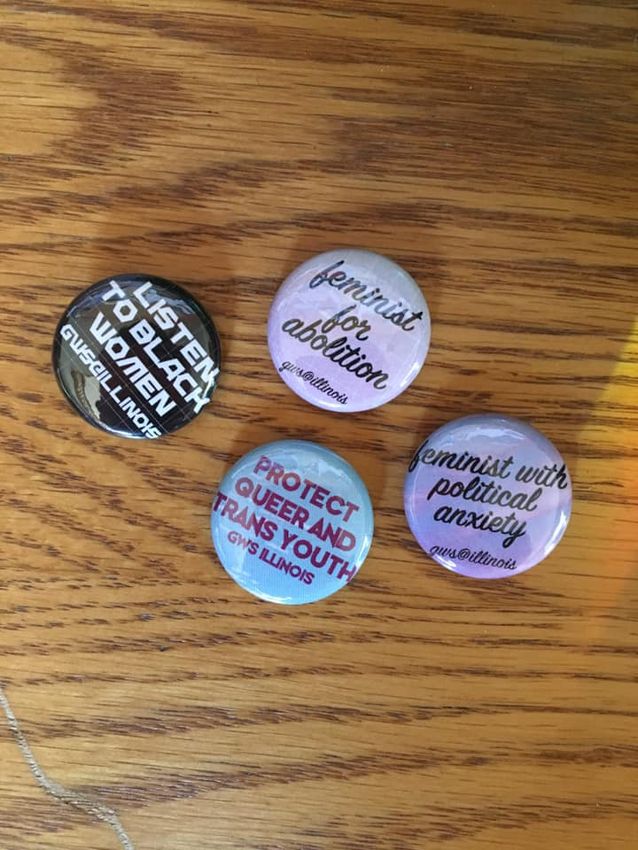
Gender and Women’s Studies                                                                         FALL 2020

                                                                             The Chancellor’s
MEET OUR NEW FACULTY                                                         Postdoctoral
AND POSTDOC FELLOW                                                           Research Fellow in
                                                                             Trans Studies in
Q&A with Professors Damian Vergara
                                                                             Gender and
Bracamontes, Emma Velez, and Sawyer Kemp                                     Women’s Studies

We are thrilled to welcome three new members of the department:
Assistant Professor Damian Vergara Bracamontes, Assistant Professor          Gender and Women’s
Emma Velez, and Dr. Sawyer Kemp, the inaugural Chancellor's                  Studies is truly thrilled to
Postdoctoral Research Fellow in Trans Studies. We asked each of them         have secured a new,
to give us an image or an object that helps to explain their research, and   standing postdoctoral
to describe their teaching philosophy.                                       fellowship in transgender
                                                                             studies, the first of its kind in
           DAMIAN VERGARA BRACAMONTES                                        the country. This recurring
                                                                             position reflects our
                    ASSISTANT PROFESSOR                                      department’s commitment
                                                                             to research, teaching, and
                                                                             public engagement in trans
                                                                             studies, and it responds to
                                                                             growing student demand for
                                                                             trans studies work at Illinois.
                                                                             The fellowship enables GWS
                                                                             to provide significant
                                                                             support for emerging
                                                                             scholars in this dynamic
                                                                             interdisciplinary field. In
                                                                             turn, our department and
                                                                             our campus will benefit from
                                                                             each postdoctoral fellow’s
                                                                             research expertise and
                                                                             course offerings. This
                                                                             fellowship is a one-year
                                                                             appointment eligible for
    Artist: Celeste de Luna
                                                                             renewal for a second year;
                                                                             postdoctoral scholars will
                                                                             give a public presentation
This image captures the looming presence of Immigration Enforcement          on their research project and
that shapes the daily life of Latinx migrants living near the San Diego-     teach one undergraduate
Tijuana, Baja California Mexico border. In addition to being home to the     course each year.
largest port of entry in the world, San Diego is also enclosed by interior
immigration checkpoints on every highway. Such a landscape required
an ingenuity on the part of undocumented migrants to navigate the
space daily that I wanted to capture in my work. When I started reading

Gender and Women’s Studies                                                                                   6
Gender and Women’s Studies                                                                        FALL 2020

transgender studies scholarship in undergrad that so aptly described the     Donate to GWS
ways transgender folks are subject to exposure in certain spaces like
airports, it compelled me to think about the ways undocumented               Gender and Women’s Studies
migrants similarly are exposed in numerous spaces. Sites like highways,      relies on the generous support
schools, and hospitals, and other social institutions have functioned as     of alumni and friends to
spaces of vulnerability for queer, trans, and undocumented migrants          provide the best possible
alike. This led me to devise a research agenda grounded in the               learning and research
experiences of queer, trans, and undocumented Latinx migrants and the        environment for our students
social life of the law.                                                      and faculty members. Donor
                                                                             support allows us to advance
My teaching philosophy is rooted in a feminist politics of “thinking         faculty and student research in
with” my students, local communities, and academic fields. I strive to       a number of crucial ways:
design courses that are collaborative, dynamic, and have a public
component to encourage students to engage their local communities
both of their hometowns and campus.                                              •   Offer scholarships to
                                                                                     academically strong
This fall I will be teaching the “History of Sexuality,” and the course is           undergraduate and
largely designed with an emphasis on public history. The course                      graduate students, as
includes a range material from exhibitions, oral history initiatives,                well as to those with
documentaries, and guest speakers that seek to reach broader                         financial need
audiences on issues for LGBTQ communities. The course will also                  •   Recruit and retain the
provide students an opportunity to engage their own local history by
                                                                                     best faculty members
conducting archival research and oral history interviews in the
collaborative setting of a history lab.                                          •   Provide learning and
                                                                                     professional
In the spring I am especially excited to offer my course “Policing Latinx            development
(Im)migrant Communities.” In this crucial moment of mobilization to                  opportunities for our
abolish the police and Immigration Customs and Enforcement, this                     students
course provides the context of how contemporary policing strategies
emerged out of key historical episodes and include a wide range of
                                                                             Every gift makes a difference,
actors and institutions beyond the police. Drawing from interdisciplinary
                                                                             no matter its size! And when
fields and methodologies, students and I will also explore activists’
                                                                             you donate, you will receive
strategies against policing and community-based alternatives as well as
                                                                             some of our buttons as a
engage local organizations doing this critical work.
                                                                             special thank you!
Professor Damian Vergara Bracamontes earned a Ph.D. in American              gws.illinois.edu/giving
Studies and a graduate certificate in Women’s, Gender, and Sexuality
Studies from Yale University. Prof. Vergara Bracamontes’s areas of
research expertise include Latinx studies, critical prison studies, and
queer of color critique. The recipient of a Public Scholar Award at Yale,
he has put his research to work beyond the university by teaching
“Know Your Rights” trainings and serving as an expert witness in an
asylum case. This year, Prof. Vergara Bracamontes will teach GWS 387:
History of Sexuality in the U.S. (Fall 2020) and GWS 395: Policing Latinx
(Im)migrant Communities (Spring 2021).

Gender and Women’s Studies                                                                                     7
Gender and Women’s Studies                                                                             FALL 2020

                             EMMA VELEZ                                         Student Awards
                     ASSISTANT PROFESSOR                                        Gender and Women’s Studies
                                                                                recognizes students every year for
                                                                                outstanding research and other
                                                                                contributions. Apply or nominate
                                                                                someone today: gws.illinois.edu
                                                                                The Mary Ramier Grant is set up
                                                                                to inspire undergraduate women
                                                                                to develop as successful leaders,
                                                                                activists, and professionals.
                                                                                Awards will support activism,
                                                                                creative projects, research, and
                                                                                travel related to Gender and
                                                                                Women's Studies.
                                                                                The Marianne A. Ferber Award
                                                                                was created to honor Marianne A.
                                                                                Ferber's thirty-eight years of
                                                                                excellence at the University of
                                                                                Illinois in scholarship, research,
                                                                                and teaching on the behalf of
                                                                                women. It is awarded annually to
                                                                                a graduate student with the most
                                                                                outstanding dissertation proposal
  Photo of three velas santas/saints candles. Candle on the left depicts a
                                                                                related to Gender and Women's
  rendering of Audre Lorde with a halo and text that reads: “Praise the
                                                                                Studies.
  Lorde!” Candle in the middle depicts a traditional rendering of La Virgen
                                                                                The Barbara and Donald Smalley
  de Guadalupe. Candle on the right depicts a rendering of Gloria
                                                                                Graduate Research Fellowship
  Anzaldúa with a halo and text that reads: “Glory! Glory! Anzaldúa!” In
                                                                                supports graduate students
  the background of the image are two clay figurines dressed in yellow          working on their dissertation. This
  and a succulent from Emma’s beloved collection of plantitas.                  fellowship is awarded to a
                                                                                graduate minor in Gender and
                                                                                Women's Studies for a
                                                                                dissertation proposal promising to
These velas santas are near and dear to my heart. Not only do                   make an important and original
these three formidable santas – Audre Lorde, Gloria Anzaldúa, and               contribution to the field of
La Virgen de Guadalupe – watch my back in my office while I’m                   Gender and Women's Studies.
working, they encapsulate three important influences in my                      The Scharre Thompson
scholarship: Latinx Feminisms, Black Feminisms, and my roots as a               Undergraduate Scholarship in
Chicana Okie.                                                                   Gender and Women’s Studies is
                                                                                a one-time annual
In my work, I utilize an interdisciplinary archive to stage a dialogue          award providing support.
across disciplines and traditions in order to consider decolonial feminist
contributions to questions of identity, cross-cultural communication, and
political marginalization particularly as they intersect with issues of race,
gender, and sexuality. I’m also committed to theorizing from what Emma
Pérez has termed the “decolonial imaginary.” As both a critical

Gender and Women’s Studies                                                                                       8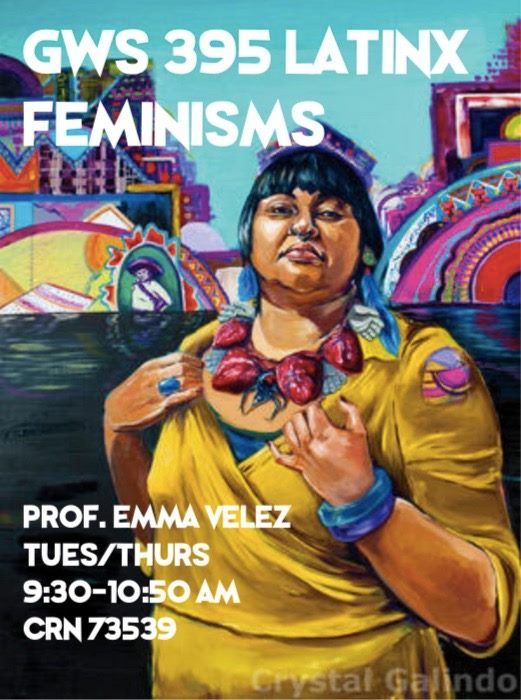
Gender and Women’s Studies                                                                           FALL 2020

apparatus and resistant space-time, the decolonial        empowered my students to apply the theoretical
imaginary works to subvert colonial mythologies           lessons from our courses in creative, insightful, and
(e.g. “the State,” “universality,” “modernity”). For      inspiring ways. This semester my students will be
example, in my own work I examine the                     working on a final podcast project that will utilize
ambiguities and contradictions sustained by figures       the concepts, insights, and discussions from our
like La Virgen de Guadalupe (La Llorona and La            class in order to analyze work by contemporary
Malinche are two other figures I have considered).        Latinx feminist artists and activists. I can’t wait to
Born out of the aftermath of the conquest, La             check out what everyone comes up with!
Virgen’s historia is deeply intertwined with
colonialism and the continued legacy of coloniality       Professor Emma Velez earned a dual-title Ph.D. in
in the Americas. Yet, despite this colonial history, La   Philosophy and Women’s, Gender, and Sexuality
Virgen has been resignified by Chicanx and                Studies from The Pennsylvania State University.
Mexicanx feminists toward resistant and decolonial        Prof. Velez specializes in the areas of Latinx
ends (check out Pepe Romero’s Fancy Lupe for one          feminism, feminist philosophy, decolonial
contemporary example!).                                   feminisms, and U.S. women of color feminisms.
                                                          She has co-edited two special issues of journals
I would also suggest that these velas santas              focusing on decolonial feminisms, including the
depicting Lorde and Anzaldúa are workings of a            latest issue of Hypatia, “Toward Decolonial
decolonial imaginary and provide a direct                 Feminisms: Tracing the Lineages of Decolonial
challenge to traditional understandings of who is         Thinking through Latin American/Latinx Feminist
worthy of veneration.                                     Philosophy.” This year, Prof. Velez will teach GWS
                                                          395: Latinx Feminisms (Fall 2020) and GWS 498:
My teaching philosophy is guided by three key             Senior Seminar (Spring 2021).
pillars: curiosity, empowerment, and putting theory
to work. I am an interdisciplinary scholar (my Ph.D.
is in Philosophy and Women’s, Gender, and
Sexuality Studies) and I bring this training to bear in
the classroom. I think that in order to analyze the
complex ways that gender, race, and power
structure our worlds we first have to stoke our
curiosity. Being curious enables us to ask and dig
into hard questions, like the ones my students will
consider this fall in my Latinx Feminisms course:
What is the relationship between race, gender,
sexuality, and colonization? When it comes to
Latinidad, who has been included and who has
been excluded? How do decolonial feminisms
arising from Latinx contexts challenge and disrupt
Western paradigms of identity, epistemology, and
power? I am also committed to empowering my
students by helping them cultivate the feeling that
they have a stake in these conversations and in the
structure of their own learning. For example, I often
let students vote on exam formats and
demonstrate their knowledge through creative
projects. This has led to some incredible work (self-
portraits, poems, graphic design!) and has also

Gender and Women’s Studies                                                                                         9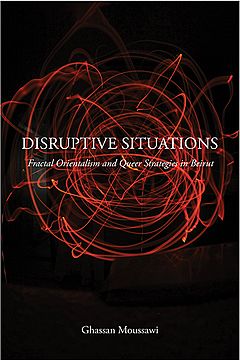
Gender and Women’s Studies                                                                           FALL 2020

                          SAWYER KEMP
                                                                            FOREVER JACQUE
                  POSTDOCTORAL FELLOW
                                                                            In July 2020, our academic advisor
                                                    Have you heard          Dr. Jacque Kahn retired after over
                                                    about pants? These      two decades of serving our students
                                                                            in the Department of Gender and
                                                    are pants.              Women’s Studies. Here, one of our
                                                                            students and a former chair reflect
                                                    In 16th and 17th        on her greatness.
                                                    century drama, a pair
                                                    of pants can function   I had the amazing opportunity and
                                                                            pleasure of having Jacque as an
                                                    as a complete and
                                                                            advisor over the past three years and
                                                    totalizing disguise     also working with her on various
                                                    that prevents your      projects for the GWS department as
                                                    own family, your best   a GWS student employee this past
                                                                            school year. I know that I can
                                                    friend, and your true   confidently speak for many GWS
                                                    love from               students, past and present, that
                                                    recognizing you.        Jacque's presence as an advisor
                                                                            makes the university feel like home.
                                                     When female            Jacque has personally always been
                                                                            such a huge support system for me
                                                     characters put on      over the past three years and she
                                                     pants, the pants       has always encouraged me to go
                                                     seem to become a       after anything I wanted while also
                                                                            knowing when I needed to be
                                                     tool of magical and
                                                                            reminded to step back and relax a
                   Pants, people.                    absolute transition,   bit. With her selfless attitude, Jacque
                                                     and indeed, many       has always made me and several
                                                     theatres have begun    other students not only feel heard
                                                                            within the department and on
                                                     to advertise           campus but also valued. There was
Shakespeare’s cross-dressing plays by stressing their relevance to          never anything I couldn't talk to
contemporary trans and gender-nonconforming social justice issues.          Jacque about and she has always
                                                                            been there for me whenever I
Theatres benefit from contemporary sociopolitical themes that help          needed her.
heighten the stakes of the play, but have not examined the history of
transphobic stage tropes and the systematic forms of exclusion that                         Taylor Ann Mazique
                                                                              History and Gender and Women's
have historically kept trans people from participating fully in
                                                                                 Studies Student, Student Public
Shakespeare theatre.                                                         Outreach Employee for Gender and
                                                                              Women's Studies, & Social Media
My past research has explored the performative role of “accessibility” in                       Intern for History
theatre institutions and described the potential for greater transgender
inclusion in Shakespeare performance through tangible community
investment. My next project seeks to shift the ways we as scholars look     From the time I met her in my first
for trans and proto-trans identities in early and pre-modern periods. I     Shakespeare graduate seminar here
investigate transhistorical gender nonconformism through the lens of        in fall 1988 –32 years ago– up to the
                                                                            lunch we had in January 2020,
contemporary trans theory/activist concerns like homelessness, violent      Jacque’s many talents have been
law enforcement, medical care & dysphoria. This models a new                visible. She is super smart,
methodology for early modern gender studies—which I argue has               effortlessly well-organized, warmly
                                                                            generous and supportive, terrific at
largely overemphasized the role of transvestism (and magical pants) in      building alliances (her dissertation
early modern analyses—but also explores the material and social             topic) — and oh so modest. In that
conditions of historical gender nonconforming bodies.                       seminar, I required too much written
                                                                            work and ended up cancelling a final

Gender and Women’s Studies                                                                                     10
Gender and Women’s Studies FALL 2020
I am elated to be teaching an Early Modern Trans Studies course next short paper; Jacque, the only
spring because it is truly an actively developing field. I am excited to student with a family to care for,
had already completed it. In 1996,
invite undergraduate students to join an ongoing conversation about Amanda Anderson (her
the long history of gender nonconformism and to work together to help dissertation director) and I, both
shape a queer archive. with half-time appointments in
Women’s Studies, gave Jacque a
In my classes, I like to give students a range of methods for engaging tough mock-interview for the job
of Assistant Director of Women’s
with material and applying their research skills. Past assignments have Studies – that she aced. Thank
asked students to prepare dramaturgy protocols for a play, to record goodness she got the job. She has
podcast episodes that recap key historical context, and to adapt theory been indispensable to the
program and crucial to its success
texts in critical game design workshops. ever since. (I hope she has
forgiven us.)
Dr. Sawyer Kemp earned a Ph.D. in English Language and Literature,
with a designated emphasis in Studies in Performance and Practice, Her appointment came at a key
from the University of California at Davis. With a focus on early modern moment for Women’s Studies. In
1988, after 17 years of fierce
studies, their research expertise includes trans and queer theory,
advocacy, the program still
contemporary performance, and history of drama. As a Mellon Public operated by the seat of its pants
Scholar at UC Davis, Dr. Kemp worked closely with a local gender health with little money and few office
resource center to develop an all-trans, socially-engaged theatre staff or faculty lines (only 3 part-
time faculty with .80 FTEs). But by
production. Dr. Kemp will teach GWS 395: Trans Approaches to Early 1996, the program was growing
Modern Studies (Spring 2021). and flourishing with about 3FTEs
(all part-time), regular courses on
the books, growing enrollments,
and big successful conferences to
brag on. However the office and
program structures had not kept
up with growth. Then Jacque
arrived and voila! She superbly
organized the office–with a light
touch. She formed alliances within
the program and across campus.
In an early initiative, she enlisted
the minors to compile a handbook
for WS students, the first of her
many successful initiatives to
mentor and empower generations
of students.
Jacque has provided stability,
expertise, and warmth for the last
24 years as the program (and her
job description) have repeatedly
changed and grown. [Because of
FOREVER JACQUE KAHN! her], the office was always
humming with stimulating activity,
always welcoming. And Jacque
threw great parties. […] I’m sad
that we can’t bring her treats –and
Contribute to the Spring 2021 newsletter! champagne— today.
Send us your achievements, your interviews with GWS
Carol Thomas Neely, Professor
professors or fellow GWS students, or your thoughts on
Emerita of English and Women’s
feminist lessons to: gws-email@illinois.edu Studies
Gender and Women’s Studies 11You can also read


