HANDBOOK - INDIAN COUNCIL OF MEDICAL RESEARCH - National Centre for ...
←
→
Page content transcription
If your browser does not render page correctly, please read the page content below
HANDBOOK

           INDIAN COUNCIL OF
           MEDICAL RESEARCH
                  2018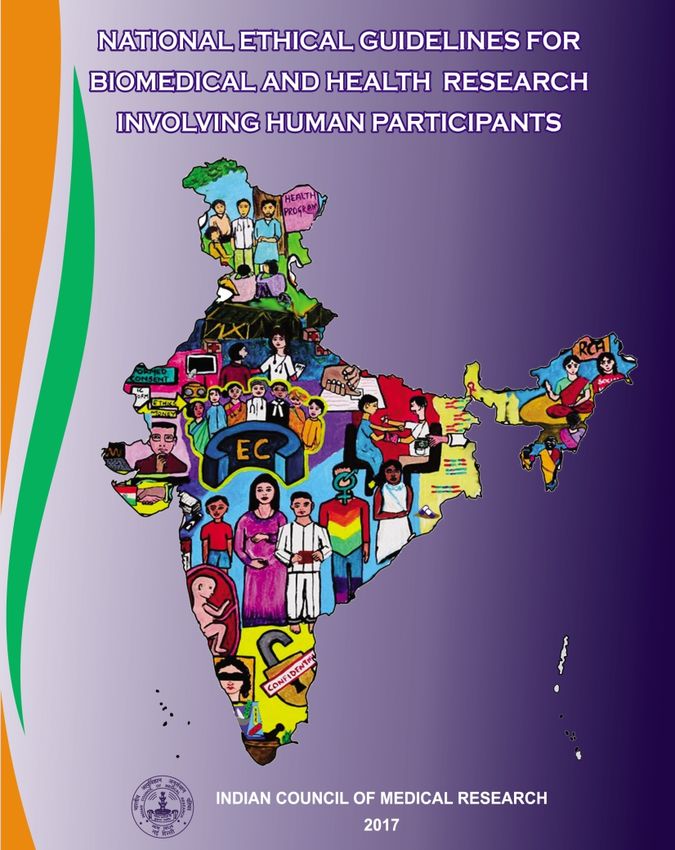
HANDBOOK
                ON
    NATIONAL ETHICAL GUIDELINES
FOR BIOMEDICAL AND HEALTH RESEARCH
  INVOLVING HUMAN PARTICIPANTS

     INDIAN COUNCIL OF MEDICAL RESEARCH
                    2018
Edited & Coordinated by
Dr. Roli Mathur
Scientist ‘E’ & Head
ICMR Bioethics Unit
NCDIR, Bengaluru
Published by:
Director-General
Indian Council of Medical Research
New Delhi 110 029
www.icmr.nic.in
2018
© Copyright Indian Council of Medical Research
The use of content from this handbook is permitted for all non-commercial purposes giving full
acknowledgement to ICMR which shall not be held liable for any damages whatsoever as a result of the
use or application of the contents of this document. ICMR reserves the right to update and change the
contents without notice and accepts no liability for any errors or omissions in this regard. Care has been
taken to present the information accurately, however the reader is urged to check latest notifications/
rules/regulations by GOI from time to time.
Cover page:This is the image of the cover page of National Ethical Guidelines for Biomedical and
Health Research Involving Human Participants 2017. This handbook is prepared from this
source document in 2018.TABLE OF CONTENTS
S. No. Sections Page No.
Foreword
Introduction 1
1.
Statement of general principles 2
2.
General ethical issues 3
3. Responsible conduct of research (RCR) 5
4.
Ethical review procedures 6
5.
Informed consent process 8
6.
Vulnerability 10
7. Clinical trials of drugs and other interventions 11
8 & 9. Public health research & Social and behavioural sciences research for health 13
10. Human genetics testing and research 14
11. Biological materials, biobanking and datasets 15
12. Research during humanitarian emergencies and disasters 16
References
Standard operating procedures
Members of Ethics Advisory Group & SecretariatINTRODUCTION
In October 2017, the Indian Council of Medical Research issued the National Ethical
Guidelines for Biomedical and Health Research Involving Human Participants. The purpose
of these guidelines is to safeguard the dignity, rights, safety and well-being of the human
participants involved in biomedical and health research. These guidelines must be followed
by all stakeholders including institutions, ethics committees (ECs), researchers and sponsors/
funding agencies.
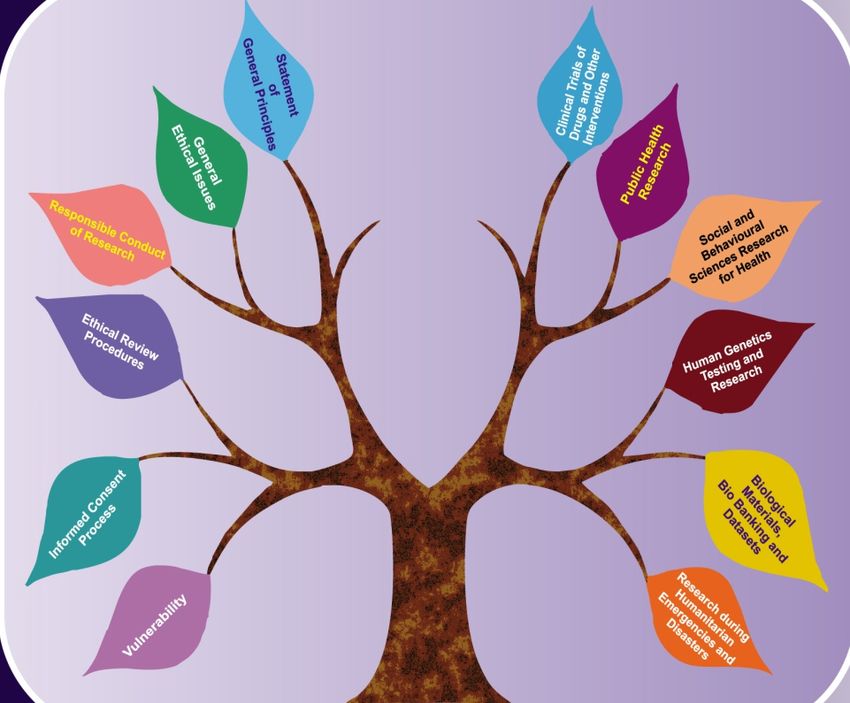
This handbook provides a quick reference to all 12 sections of the ICMR National Ethical
Guidelines, 2017. For complete details this source document may be referred to.
Scope
The guidelines are applicable to all biomedical, social and behavioural science research for health
conducted in India involving human participants, their biological material and data. The PURPOSE
of such research should be:
i. DIRECTED towards enhancing knowledge about the human condition while maintaining
sensitivity to the Indian cultural, social and natural environments.
ii. CONDUCTED under conditions such that no person or persons become mere means for the
betterment of others and that human beings who are subjected to any biomedical and/or
health research or scientific experimentation are dealt with in a manner conducive to and
consistent with their dignity and well-being, under conditions of professional fair treatment
and transparency.
iii. SUBJECTED to a regime of EVALUATION at all stages, i.e., design, conduct and reporting
of the results thereof.
INDIAN COUNCIL OF MEDICAL RESEARCH 1SECTION 1
STATEMENT OF GENERAL PRINCIPLES
1.1. Every research has some inherent probabilities of harm or risk and thus, protection of
research participants and/or communities should be built into the design of the study.
1.2. While conducting biomedical and health research, the four basic principles namely;
respect for persons (autonomy), beneficence, non-maleficence and justice must guide
research in order to protect the dignity, rights, safety and well-being of research
participants.
1.3. ECs must ensure that the research is conducted in accordance with the basic principles.
1.4. The basic principles have been expanded into 12 general principles (Table 1), that are
applicable to all biomedical and health research involving human participants or research
using their biological material or data.
Table 1: General Principles
1. Principle of Essentiality 7. Principle of Professional Competence
2. Principle of Voluntariness 8. Principle of Maximization of Benefit
3. Principle of Non-exploitation 9. Principle of Institutional Arrangements
4. Principle of Social Responsibility 10. Principle of Transparency & Accountability
5. Principle of Ensuring Privacy & Confidentiality 11. Principle of Totality of Responsibility
6. Principle of Risk Minimization 12. Principle of Environmental Protection
2 INDIAN COUNCIL OF MEDICAL RESEARCHSECTION 2
GENERAL ETHICAL ISSUES
There are some general issues that must be kept in focus during the conduct of biomedical
and health research involving human participants (Table 2).
Table 2: General Ethical Issues
Benefit–risk assessment Informed consent process Privacy and confidentiality
Distributive justice Payment for participation Compensation for research related harm
Selection of vulnerable and special
Ancillary care Conflict of interest
groups as research participants
Community engagement Post-research access and benefit sharing
2.1. Researchers must protect the dignity, rights, safety and well-being of research
participants.
2.2. They should have appropriate qualifications, competence in research methodology and
be compliant towards the scientific, medical, ethical, legal and social requirements of
research.
2.3. The researcher, sponsor and EC must conduct a benefit–risk assessment and actively
attempt to maximize benefits and minimize risks to participants.
2.4. Benefits to the individual, community or society refer to any sort of favourable outcome
of the research, whether direct or indirect. The social and scientific value of research
should justify the risk, which is the probability of causing discomfort or harm anticipated
as physical, psychological, social, economic or legal.
2.5. Risk can be categorized as less than minimal risk, minimal risk, minor increase over
minimal or low risk and more than minimal or high risk.
2.6. The EC must decide about the type of review required (exempted, expedited, full
committee) based on the type of risk involved.
2.7. The researcher must obtain informed consent from the participant/legally acceptable/
authorized representative (LAR) in writing.
2.8. Informed consent documents (participant information sheet and informed consent form)
should carry the specified elements in simple, layman’s language. These documents
should be approved by the EC.
INDIAN COUNCIL OF MEDICAL RESEARCH 3General Ethical Issues
2.9. Oral consent/waiver of consent/re-consent may be obtained under certain conditions,
after due approval by the EC.
2.10. Researcher(s) should safeguard the privacy and confidentiality of participants and
research-related data from unauthorized access.
2.11. Benefits and burdens of research should be equitably distributed among the participating
individuals or communities.
2.12. Participants should not be made to pay for research-related expenses incurred beyond
routine clinical care. Reimbursement for expenses incurred can be made in cash or kind
or both.
2.13. The researcher must report all serious adverse events (SAEs) to the EC within 24 hours
of knowledge and submit a report on SAE relatedness to research within 14 days.
2.14. Research participants who suffer direct physical, psychological, social, legal or economic
harm are entitled to financial compensation or other forms of assistance.
2.15. It is the responsibility of the sponsor (whether a pharmaceutical company, government or
non-governmental organization (NGO), national or international/bilateral/multilateral
donor agency/institution) to include insurance coverage or provision for possible
compensation for research related injury or harm within the budget.
2.16. In investigator initiated/student research, the investigator/institution where the research
is conducted becomes the sponsor and must provide compensation for research-related
injury through insurance, corpus funds or grants.
2.17. Free medical care may be offered as ancillary care for non-research-related conditions
or incidental findings if it does not amount to undue inducement as determined by EC.
2.18. Policies for declaration and management of financial or non-financial (personal, academic
or political) conflict of interest for researchers, EC, institution and sponsor must be
implemented by research institutes.
2.19. The selection of vulnerable and special groups needs careful consideration, with
provisions for additional safeguards and close monitoring.
2.20. Engaging with the community from the beginning of research till after its completion
helps to improve design and conduct of research and ensures greater responsiveness
to health needs. However, every individual participant’s consent is essential.
2.21. Post-research access and benefit-sharing may be done with individuals, communities
and populations, wherever applicable after completion of study.
4 INDIAN COUNCIL OF MEDICAL RESEARCHSECTION 3
RESPONSIBLE CONDUCT OF RESEARCH (RCR)
3.1. Major components of RCR are values and policies; planning and conducting research;
reviewing and reporting research; responsible authorship and publication aspects.
3.2. A research office must be set up to facilitate research, manage grants and provide research
oversight.
3.3. Institutions must have policies for the protection of participants and should assign
responsibilities to stakeholders.
3.4. Researchers must follow professional codes of conduct and have personal conviction
about ethical requirements.
3.5. The following should be established prior to conducting research:
• Conflict of Interest policies
• Safeguards for data acquisition, management, sharing and ownership
• Policies for handling research misconduct including fabrication, falsification and
plagiarism
3.6. Completed research, irrespective of results, must be published in accordance with the
guidelines of the International Committee of Medical Journal Editors (ICMJE).
3.7. Clinical studies on human participants should be registered prospectively with the
Clinical Trial Registry - India (CTRI). This is mandatory for regulatory trials.
3.8. Issues related to ownership, sharing of materials/data, IPR, joint publications, research
findings, conflict of interest, commercialization should be addressed in collaborative
research.
3.9. The ethical framework of international collaborations should be based on equity and
equality. Researchers and EC members should be trained to protect the best interests
of the country.
3.10. In multicentre research, common ethics review by a designated EC can help to reduce
time for getting ethical approvals from across the sites and improve coordination among
participating sites. However, the local EC must look at site specific concerns and monitor
research.
INDIAN COUNCIL OF MEDICAL RESEARCH 5SECTION 4
ETHICAL REVIEW PROCEDURES
4.1. ECs must safeguard the dignity, rights, safety and well-being of research participants
and review research before initiation.
4.2. The EC is responsible for scientific and ethical review of research proposals and should
have well defined standard operating procedures (SOPs) for all functions.
4.3. Each member of the EC has a defined role and responsibility. EC members should be
trained in protection of human research participants, SOP and Good Clinical Practice
(GCP) guidelines, and be conversant with relevant ethical guidelines and regulations.
Composition, affiliations and qualifications given in Table: 3
Table 3: Composition, affiliations and qualifications of EC members
Members of EC Qualifications
Chairperson/ • A well-respected person from any background with prior
Vice Chairperson (optional) experience of having served/serving in an EC
Non-affiliated
Member Secretary/ Alternate • Should be a staff member of the institution
Member Secretary (optional) • Should have knowledge and experience in clinical research and
Affiliated ethics, be motivated and have good communication skills
• Should be able to devote adequate time to this activity which
should be protected by the institution
Basic Medical Scientist(s) • Non-medical or medical person with qualifications in basic
Affiliated/ non-affiliated medical sciences
• In case of EC reviewing clinical trials with drugs, the basic
medical scientist should preferably be a pharmacologist
Clinician(s) • Should be individual/s with recognized medical qualification,
Affiliated/ non-affiliated expertise and training
Legal expert/s • Should have a basic degree in Law from a recognized university,
Affiliated/ non-affiliated with experience
• Desirable: Training in medical law.
Social scientist/ philosopher/ • Should be an individual with social/behavioural science/
ethicist/theologian philosophy/ religious qualification and training and/or expertise
Affiliated/ non-affiliated and be sensitive to local cultural and moral values. Can be from
an NGO involved in health-related activities
Lay person(s) • Literate person who has not pursued a medical science/ health
Non-affiliated related career in the last 5 years
• May be a representative of the community and aware of the local
language, cultural and moral values of the community
• Desirable: involved in social and community welfare activities
6 INDIAN COUNCIL OF MEDICAL RESEARCHEthical Review Procedures
4.4. The EC should be multidisciplinary, competent and independent in its functioning with
the chairperson and 50% members as non-affiliates.
4.5. The quorum for decision-making should have a minimum of five members, including
both medical and non-medical or technical/non-technical members with at least one of
them as non-affiliated member.
4.6. EC members should be aware of local, social and cultural norms and emerging ethical
issues.
4.7. Larger institutions can have more than one EC while smaller institutions may utilize
the services of other institutions under an MoU.
4.8. An EC could have subcommittees with additional members, if necessary, e.g., SAE
subcommittee or expedited review committee.
4.9. The institutional head appoints the EC and acts as the appellate authority.
4.10. The EC secretariat should screen proposals for completeness before categorizing as:
exempted from review, expedited review or full committee review.
4.11. The EC reviews every study protocol for ethical issues as given in Table 4:
Table 4: Ethical issues related to reviewing a protocol
• Social values • Scientific design and conduct of study
• Benefit–risk assessment • Selection and recruitment of participants
• Payment for participation • Protection of privacy and confidentiality
• Community considerations • Review of informed consent process
• Disclosure of conflict of interest • Qualification of researchers and adequacy of study sites
• Plans for medical management and compensation for study related injury
4.12. The EC monitors progress of ongoing proposals, reviews SAEs, protocol deviations/
violations, new information and final reports.
4.13. An EC office must have space, infrastructure, funds, staff and protected time for the
member secretary to coordinate EC functions.
4.14. EC documentation should be dated, filed and preserved. Records must be archived for
at least 3 years (5 years for regulatory clinical trials) after completion/termination of
the study.
4.15. ECs should be registered with the relevant authority and should make efforts to seek
recognition or accreditation.
INDIAN COUNCIL OF MEDICAL RESEARCH 7SECTION 5
INFORMED CONSENT PROCESS
5.1. Voluntary written informed consent should be obtained in an informed consent document
(ICD) from each participant to protect each individual’s freedom of choice.
5.2. Informed consent is a continuous process involving three main components:
• Providing relevant information to potential participants
• Ensuring competence and comprehension of the information and
• Voluntariness of participation
Table 5: Characteristics of an ICD
Elements of an ICD Additional elements (optional)
1. Statement mentioning that it is research 1. Alternative procedures or treatment
2. Purpose and methods 2. Insurance coverage
3. Duration, frequency, methods 3. Possible stigmatizing condition
4. Benefits to participant, community or others 4. Biological material and data, including:
5. Foreseeable risks, discomfort or inconvenience i) Current and future uses
6. Confidentiality of records ii) Period of storage and secondary use
7. Payment/reimbursement for participation iii) Sharing of data and biological materials
8. Treatment and/or compensation for injury iv) Right to prevent use of biological sample
9. Freedom to participate/withdraw v) Provisions to safeguard confidentiality
10. Identity of research team and contact persons vi) Post-research plan/benefit sharing
vii) Publication plan/photographs/pedigrees
5.3. Researchers should only use the EC approved version of the consent form and its
translation in local languages.
5.4. Informed consent should be voluntary and be signed by the participant after receiving
information, understanding it and discussing with family/friends (if required).
8 INDIAN COUNCIL OF MEDICAL RESEARCHInformed Consent Process
5.5. Verbal/oral consent/waiver of consent/reconsent may be obtained only after approval
by the EC. Table 6 gives conditions for granting waiver of consent.
Table 6: Conditions for granting waiver of consent
The EC may grant consent waiver in the following situations:
• research cannot practically be carried out without the waiver and the waiver is scientifically
justified;
• retrospective studies, where the participants are de-identified or cannot be contacted;
• research on anonymized biological samples/data;
• certain types of public health studies/surveillance programmes/programme evaluation
studies;
• research on data available in the public domain; or
• research during humanitarian emergencies and disasters, when the participant may not be in a
position to give consent. Attempt should be made to obtain the participant’s consent at the
earliest.
5.6. Appropriate ICD should be prepared for differently abled participants.
5.7. In case of research involving children, in addition to parental consent, verbal (7-12 years)
or simplified written (>12 – 18 years) assent should also be taken from the participant.
5.8. The LAR’s consent is required in case a participant is incompetent (medically or legally).
5.9. Electronic/online consent may be obtained for research involving sensitive topics while
safeguarding information and data and also if required for regulatory clinical trials.
5.10. Individual consent is important and required, even if the community gives permission
for participation in a research study.
5.11. In studies using deception a true informed consent may lead to modification and may
defeat the purpose of research. Such research should be carefully reviewed by the EC
before implementation. In such instances, an attempt should be made to debrief the
participants/communities after completion of the research.
INDIAN COUNCIL OF MEDICAL RESEARCH 9SECTION 6
VULNERABILITY
Individuals/ groups/ populations are considered vulnerable if they are relatively or absolutely
incapable of protecting their own interests because of personal disability; environmental
burdens; social injustice; lack of power, understanding or ability to communicate or other
reasons. Individuals are considered to be vulnerable if they are:
• Socially, economically or politically disadvantaged and susceptible to exploitation
• Incapable of making a voluntary informed decision for themselves or if their
autonomy is compromised temporarily or permanently (e.g., people who are
unconscious, differently abled)
• Able to give consent, but their voluntariness or understanding is compromised
due to their situational conditions
• Unduly influenced either by the expectation of benefits or fear of retaliation in
case of refusal to participate, which may lead them to give consent
6.1. Researchers must justify the inclusion/exclusion of a vulnerable population.
6.2. A community representative may be invited to EC meetings to make sure the research
is responsive to their needs and the informed consent process is appropriate.
6.3. Additional precautions should be taken by all stakeholders such as researchers, ECs
and sponsors to avoid exploitation of vulnerable participants.
6.4. Informed consent process should be well documented and additional measures adopted
if required, such as audiovisual/audio recording of assent/consent/reconsent.
6.5. Research proposals should undergo review in a full committee meeting.
6.6. Protection of privacy and dignity as well as provision of quality health care is required
in dealing with vulnerable people, especially the minorities.
6.7. Research involving children, in addition, should follow the National Ethical Guidelines
for Biomedical Research Involving Children, ICMR, 2017.
6.8. Due approvals are needed from competent authorities before entering tribal areas.
6.9. Research involving cognitively impaired individuals or those with mental illness must
be done carefully, especially if there is risk to themselves, to others or suicidal ideation.
6.10. The EC should carry out the benefit–risk analysis and examine risk minimization
strategies.
10 INDIAN COUNCIL OF MEDICAL RESEARCHSECTION 7
CLINICAL TRIALS OF DRUGS AND OTHER INTERVENTIONS
7.1. Clinical trials must be conducted in accordance with the Indian GCP guidelines,
Declaration of Helsinki, National Ethical Guidelines for Biomedical and Health Research
Involving Human Participants (2017), amendments to the Drugs & Cosmetics Act (1940),
and Rules (1945) and other applicable regulations and guidelines.
7.2. Clinical trial interventions could be of drugs, vaccines, biosimilars, biologics,
phytopharmaceuticals, radiopharmaceuticals, diagnostic agents, public health or socio-
behavioural interventions, technologies, devices, surgical techniques or traditional
systems of medicine, etc.
7.3. An investigator should determine if the clinical trial is within the regulatory ambit and if
so, all Central Drug Standards and Control Organisation (CDSCO) requirements should
be followed.
7.4. If students are conducting clinical trials as part of their thesis, guides/and institutions
should take the responsibilities of sponsor.
7.5. Clinical trials must be prospectively registered with CTRI, which is mandatory for trials
under the purview of CDSCO.
7.6. ECs should register and follow the quorum requirements specified by CDSCO before
reviewing clinical trials on ‘new drugs’ as per Schedule Y and its amendments.
7.7. Patients should not be charged for trial interventions that are added on as part of research.
7.8. Ancillary care may be provided to clinical trial participants for non-study/trial related
illnesses arising during the period of the trial.
7.9. Adverse effects of drugs should be reported in a timely manner.
7.10. Institutions must obtain grants, insurance coverage or set up corpus funds to meet the
costs related to treatment/management and payment of compensation as decided by
EC.
7.11. Clinical trials should be scientifically and ethically sound and preclinical studies should
precede trials on humans.
7.12. BA/BE studies involving healthy volunteers may pose risks due to adverse effects of
drugs and require safeguards.
INDIAN COUNCIL OF MEDICAL RESEARCH 11Clinical Trials of Drugs and other Interventions
7.13. Precautions should be taken to protect participants from harm when a placebo is used.
7.14. Trials on devices should follow the same requirements as for new drugs. Similarly,
surgical interventions must also follow the ethical guidelines.
7.15. If a study involves biosimilars, the product quality, preclinical data and bioassay must
demonstrate similarity with a reference biologic.
7.16. Clinical trials with stem cells should follow the National Guidelines for Stem Cell
Research, 2017.
7.17. Community trials may be conducted to evaluate preventive strategies like mass drug
administration.
7.18. Research that involves sexual minorities or intravenous drug users should ensure
community engagement for the duration of the project as well as for dissemination of
results after completion.
7.19. Research on traditional medicine interventions, such as Ayurveda, Yoga and Naturopathy,
Unani, Siddha and Homeopathy (AYUSH) should be conducted in accordance with
ethical guidelines, ASU-GCP (Ayurveda, Siddha, Unani GCP) guidelines as well as
other applicable regulations.
7.20. Trials using diagnostic agents should follow the same protocols as for trials on new
drugs.
7.21. Radioactive materials and X-rays should be used with more precaution in persons who
have not completed family.
7.22. Clinical trials among women for contraceptives or if they are pregnant or lactating
should involve abundant precautions and care.
7.23. Therapeutic misconception is high in oncology trials; therefore, due care should be taken
to address this issue.
7.24. Any product using new technology should be GLP (Good Laboratory Practices), GMP
(Good Manufacturing Practices) and GCP compliant, which should be duly approved
by appropriate authorities.
12 INDIAN COUNCIL OF MEDICAL RESEARCHSECTION 8 & 9
PUBLIC HEALTH RESEARCH & SOCIAL AND BEHAVIOURAL
1
SCIENCES RESEARCH FOR HEALTH
8.1. Benefits and risks in public health research may not be limited to an individual, but
may influence communities, populations and the environment.
8.2. Social and behavioural studies must ensure social equity and inter sectionality. Ethical
relativism applies to moral diversity among different cultures and societies.
8.3. ECs must review different types of research such as programme evaluations,
demographic surveillance, registries, implementation research, demonstration projects,
community trials, surveys, etc.
8.4. Based on specific research, appropriate consent processes may be considered by the
EC, such as verbal/oral consent; broad consent; group consent; waiver of consent and
reconsent.
8.5. Special provisions should be provided in design and execution of research if they are
likely to have a potential to exploit socioeconomically deprived people.
8.6. Stakeholders (researchers, health providers/ sponsors, Govt. agencies, participants,
ECs, institutions, NGOs, etc.) must make every effort to provide post-research public
health interventions, use of findings for sustainability of public health action.
8.7. The EC may require appropriate experts to address the specific ethical challenges
related to socio-behavioural or public health research.
8.8. Safety measures should be in place to protect the privacy and confidentiality of research
participants and/or research teams in the field collecting sensitive data.
8.9. The EC should carefully review studies where the use of deception is necessary to
achieve the study objectives for larger public good and consider debriefing after
completion of the study.
8.10. Support systems such as counselling centres, rehabilitation centres, police protection,
etc. should be in place for sensitive studies.
8.11. The EC should ensure that the researcher has taken appropriate measures for data
security and confidentiality of information and also that disclosure permissions have
been taken and appropriate use of the accessed data is stated by the researcher.
This section corresponds to Chapters 8 and 9 of the National Ethical Guidelines for Biomedical and Health Research Involving
1
Human Participants, 2017.
INDIAN COUNCIL OF MEDICAL RESEARCH 13SECTION 10
HUMAN GENETICS TESTING AND RESEARCH
10.1. Due to an overlap between genetic research and services, therapeutic misconception is
common and ethical, legal and social issues (ELSI) require careful consideration.
10.2.
Genetic test results have familial/societal implications, therefore, maintaining
confidentiality and providing pre- and post-test non-directive counselling by qualified
persons is important.
10.3. Written consent should be obtained for genetic screening, confirmatory tests, specific
interventions, pre-symptomatic testing, next generation sequencing, prenatal or carrier
testing, genomic studies, use of embryos/foetal tissue, etc.
10.4. Informed consent should explain the nature and complexity of information, choices,
implications, data/sample storage, etc.
10.5.
If identifiable information is being collected for preparing family pedigrees, the
members become secondary participants and informed consent should be obtained
from each member.
10.6.
Genetic screening should be purposive, with established provisions for disease
management, treatment and counselling.
10.7. Genetic test reports of multifactorial/late onset diseases should be communicated
carefully to prevent unnecessary worry or fear.
10.8. Information about a patient’s disease and investigations may not be shared with others.
10.9. Screening for late onset diseases should not be done in children, unless there is suitable
childhood intervention.
10.10. Technology should not be misused for pre-implantation genetic screening, creation of
designer babies, sex selection, etc.
10.11. Confidentiality must be maintained while using new technologies like chromosomal
microarray (CMA), whole exome sequencing, whole genome sequencing, etc.
10.12. Publication of pictures, pedigrees or other identifying information about individuals/
families requires fresh or re-consent.
10.13. Laboratories offering genetic testing should participate in quality assurance
programmes specific to genetic testing.
14 INDIAN COUNCIL OF MEDICAL RESEARCHSECTION 11
BIOLOGICAL MATERIALS, BIOBANKING AND DATASETS
11.1. Biological material may be prospectively collected or may be left over from earlier
studies or clinical services, e.g. biological fluids, dried blood spots, tissues, organs, etc.
11.2. Datasets are collections of health data in disease registers, surveys, surveillance, census,
personal records, etc.
11.3. Ethical issues such as ownership of samples or data, transfer of biospecimens,
custodianship, secondary use, return of results, etc. are important.
11.4. Samples/data may be anonymous (unidentified); anonymized (coded reversibly or
irreversibly) or identifiable.
11.5. Respecting ethnic identity and confidentiality is important in population-based
studies/stigmatizing diseases.
11.6. Multiple layered consent provides options to allow samples/data to be used for future
research. Types of consent include blanket or broad; tiered; specific; delayed; dynamic;
waiver; re-consent, etc.
11.7. Informed consent should provide information about the commercial value of samples
or data, if applicable, with clarity about benefit sharing.
11.8. Privacy and confidentiality should be ensured when databases are maintained in
electronic/digital formats which are linked by Internet, cloud computing or are
associated with big data initiatives.
11.9. Material transfer agreement (MTA) should be executed if the biospecimens are likely
to be shipped to collaborators within or outside the country.
11.10. Data privacy, accuracy, security and legal liability should be clarified if the data is
outsourced or sold.
11.11. Participants own their biological sample/data and biobanks/institutes are custodians
or trustees.
11.12. A donor has the right to ask for destruction/withdrawal of collected sample(s).
11.13. Datasets and repositories offer huge potential for research as well as commercialization
and the EC should review these aspects with caution.
INDIAN COUNCIL OF MEDICAL RESEARCH 15SECTION 12
RESEARCH DURING HUMANITARIAN EMERGENCIES
AND DISASTERS
12.1. Pre-emptive research preparation can be done much in advance of a future humanitarian
emergency by researchers and sponsors. Meticulous documentation and archiving are
required to enable future application in similar situations.
12.2. Obtaining valid informed consent in an emergency situation is a challenge as the decision-
making capacity is compromised in differentiating between reliefs offered and research.
12.3. Efforts should be made to protect the identifying information about individuals and
communities to prevent stigmatization, ostracization and exploitation by the print and
visual media.
12.4. Research during humanitarian emergencies and disasters can be reviewed through an
expedited review/scheduled or unscheduled meetings and decided on a case-to-case
basis.
12.5. If an expedited review is done, full ethical review should follow along with careful
monitoring by the EC.
12.6. In case of an outbreak of infectious diseases, monitored emergency use of unregistered
and experimental interventions (MEURI) may be approved with close monitoring.
12.7. Ongoing research may have to be suspended. This decision may be taken by researchers
with information to the EC.
12.8. Prior arrangements about research questions to be addressed in the design, collection
of samples, data sharing mechanisms etc. should be made in advance of an expected
humanitarian emergency.
16 INDIAN COUNCIL OF MEDICAL RESEARCHREFERENCES
1. National ethical guidelines for biomedical and health research involving human
participants. Indian Council of Medical Research; 2017. Available from: https://icmr.
nic.in/sites/default/files/guidelines/ICMR_Ethical_Guidelines_2017.pdf (accessed
20 August 2018).
2. National ethical guidelines for bio-medical research involving children. Indian Council
of Medical Research; 2017. Available from: https://icmr.nic.in/sites/default/files/
guidelines/National_Ethical_Guidelines_for_BioMedical_Research_Involving_
Children_0.pdf (accessed 20 August 2018).
3. Good Clinical Practice. New Delhi: Central Drugs Standard Control Organization; 2004.
Available from: http://www.cdsco.nic.in/html/gcp1.html.
4. Schedule Y of the Drugs and Cosmetics Act, 1940 as amended in 2005. Available from:
www.cdsco.nic.in
5. Declaration of Helsinki: ethical principles for medical research involving human subjects.
Fortaleza: World Medical Association; 2013. Available from:https://www. wma.net/
wp-content/uploads/2016/11/DoH-Oct2013-JAMA.pdf
6. Defining the role of authors and contributors [homepage on the Internet]. International
Committee of Medical Journal Editors. Available from: http://www.icmje.org/
recommendations/browse/roles-and-responsibilities/defining-the-role-of-authors-
and-contributors.html
7. National Guidelines for Stem cell research, 2017. Available from www.icmr.nic.in
8. Clinical Trial Registry-India[home page on the Internet]. Available from: www.ctri.nic.in
9. Guidelines for international collaboration /research projects in health research [home
page on the Internet]. Available from: https://www.icmr.nic.in/content/guidelines
10. International guidelines for health related research involving humans. Geneva: Council
for International Organizations of Medical Sciences; 2016.
INDIAN COUNCIL OF MEDICAL RESEARCH 17STANDARD OPERATING PROCEDURES (SOPS)
S. No. List of SOPs
1 Writing, Reviewing, Distributing and Amending Standard Operating Procedures for ECs
2 Constituting an Ethics Committee
3 Confidentiality Agreements
4 Conflict of Interest Agreements
5 Training Personnel and EC Members
6 Selection of Independent Consultants
7 Procedures for Allowing a Guest or Observer
8 Categorization of Submitted Protocols for Ethics Review
a. Initial Full Committee Review of New Research Protocols
b. Expedited Review of Research Protocols
c. Exemption from Ethics Review of Research Protocols
9 Agenda Preparation, Meeting Procedures and Minutes
10 Review of New Medical Device Studies
11 Review of Resubmitted Protocols
12 Review of Protocol Amendments
13 Continuing Review of Protocols
14 Review of Final Reports
15 Review of Serious Adverse Events (SAE) Reports
16 Review of Study Completion Reports
17 Management of Premature Termination, Suspension, Discontinuation of the Study
18 Waiver of Written or Verbal/oral Informed Consent
19 Site Monitoring Visits
20 Dealing with Participants’ Requests and Complaints
21 Emergency Meetings
22 Communication Records
23 Maintenance of Active Study Files
24 Archive and Retrieval of Documents
25 Maintaining Confidentiality of EC’s Documents
26 Reviewing Proposals involving Vulnerable Populations
27 Review and Inspection of the EC
28 Audio Visual Recording of the Informed Consent Process
18 INDIAN COUNCIL OF MEDICAL RESEARCHHANDBOOK ON NATIONAL ETHICAL GUIDELINES FOR
BIOMEDICAL AND HEALTH RESEARCH INVOLVING HUMAN
PARTICIPANTS
Members of Ethics Advisory Group
Dr. Vasantha Muthuswamy (Chairperson), Former Sr DDG & Head, Division of BMS, ICMR,
New Delhi and President, Forum for Ethics Review Committees in India (FERCI)
Dr. Nandini K Kumar, Vice-President, Forum for Ethics Review Committees in India (FERCI)
Dr. Narendra K Arora, Executive Director, The INCLEN Trust International, New Delhi
Dr. Urmila Thatte, Prof & Head, Dept of Clinical Pharmacology, Seth GS Medical College, Mumbai
Dr. Vijay Kumar, Scientist ‘G’ & Head, Division of BMS, ICMR, New Delhi
Dr. Roli Mathur (Member Secretary), Scientist ‘E’ & Head, ICMR Bioethics Unit, NCDIR, Bengaluru
NCDIR Secretariat
Dr. Rajib Kishore Hazam, RA, ICMR Bioethics Unit, NCDIR, Bengaluru
Dr. Kalyani Thakur, RA, ICMR Bioethics Unit, NCDIR, Bengaluru
INDIAN COUNCIL OF MEDICAL RESEARCH 19The aim of this handbook is to provide students,
researchers and ethics committees a simplified
reference to the “National Ethical Guidelines
for Biomedical and Health Research
Involving Human Participants, 2017”.
ICMR Bioethics Unit
National Centre for Disease Informatics and Research (NCDIR)
Indian Council of Medical Research
Poojanhalli Road, Off NH-7, Kannamangala Post, Bengaluru - 562110
Email: icmr.bioethics@gmail.com, www.ncdirindia.org
Indian Council of Medical Research
V. Ramalingaswami Bhawan, Ansari Nagar, New Delhi-110 029
www.icmr.nic.inYou can also read


