The Psychological Impact of COVID-19 Pandemic on Health Care Workers: A Systematic Review and Meta-Analysis
←
→
Page content transcription
If your browser does not render page correctly, please read the page content below
SYSTEMATIC REVIEW
                                                                                                                                                  published: 08 July 2021
                                                                                                                                         doi: 10.3389/fpsyg.2021.626547

                                                The Psychological Impact of
                                                COVID-19 Pandemic on Health Care
                                                Workers: A Systematic Review and
                                                Meta-Analysis
                                                Ping Sun 1 , Manli Wang 2 , Tingting Song 2 , Yan Wu 2 , Jinglu Luo 2 , Lili Chen 2,3* and Lei Yan 1,2*
                                                1
                                                 Center for Reproductive Medicine, Cheeloo College of Medicine, Shandong University, Jinan, China, 2 The Eighth People’s
                                                Hospital of Xinjiang Uygur Autonomous Region, Urumqi, China, 3 Chen Lili’s Clinic, Korla, China

                                                Objective: The COVID-19 epidemic has generated great stress throughout healthcare
                                                workers (HCWs). The situation of HCWs should be fully and timely understood. The aim
                                                of this meta-analysis is to determine the psychological impact of COVID-19 pandemic
                                                on health care workers.
                                                Method: We searched the original literatures published from 1 Nov 2019 to 20 Sep
                          Edited by:            2020 in electronic databases of PUBMED, EMBASE and WEB OF SCIENCE. Forty-seven
                        Martin Teufel,
                         University of
                                                studies were included in the meta-analysis with a combined total of 81,277 participants.
            Duisburg-Essen, Germany             Results: The pooled prevalence of anxiety is 37% (95% CI 0.31–0.42, I2 = 99.9%)
                      Reviewed by:              from 44 studies. Depression is estimated in 39 studies, and the pooled prevalence of
                          Yesim Erim,
                University of Erlangen          depression is 36% (95% CI 0.31–0.41, I2 = 99.6%). There are 10 studies reported
                Nuremberg, Germany              the prevalence of insomnia, and the overall prevalence of insomnia is 32% (95%
                    Vanessa Rentrop,
                          University of
                                                CI 0.23–0.42, I2 = 99.5%). The subgroup analysis showed a higher incidence of
            Duisburg-Essen, Germany             anxiety and depression among women and the frontline HCWs compared to men and
                 *Correspondence:               non-frontline HCWs respectively.
                           Lili Chen
             18910931311@163.com                Conclusions: The COVID-19 pandemic has caused heavy psychological impact among
                             Lei Yan            healthcare professionals especially women and frontline workers. Timely psychological
                  yanlei@sdu.edu.cn
                                                counseling and intervention ought to be implemented for HCWs in order to alleviate their
                   Specialty section:
                                                anxiety and improve their general mental health.
         This article was submitted to
                                                Keywords: mental health, anxiety, depression, insomnia, COVID-19, health care workers
      Psychology for Clinical Settings,
               a section of the journal
               Frontiers in Psychology
                                                INTRODUCTION
       Received: 09 November 2020
           Accepted: 25 May 2021                Epidemic studies proved that previous infectious diseases caused long-term and persistent
           Published: 08 July 2021
                                                psychopathological consequences among this category. Similarly, in this extremely hard and bitter
                             Citation:          fight against COVID-19, health care workers (HCWs) played a significant role and may undergo
 Sun P, Wang M, Song T, Wu Y, Luo J,
                                                severe psychological stress. Just like several studies reported, a multitude of HCWs appeared to
         Chen L and Yan L (2021) The
   Psychological Impact of COVID-19
                                                suffer from several long-lasting psychological problems, including anxiety, depression, insomnia,
 Pandemic on Health Care Workers: A             etc. (Cheng et al., 2020). HCWs are exposed to longer work shifts in order to meet the growth
Systematic Review and Meta-Analysis.            of health care demand. Meanwhile, the lack of social support, poor sleep quality, isolation from
           Front. Psychol. 12:626547.           families and friends, fear of spreading the disease to their families and coworker and direct contact
     doi: 10.3389/fpsyg.2021.626547             with patients are several triggers for more psychological problems among HCWs. Moreover, during

Frontiers in Psychology | www.frontiersin.org                                         1                                            July 2021 | Volume 12 | Article 626547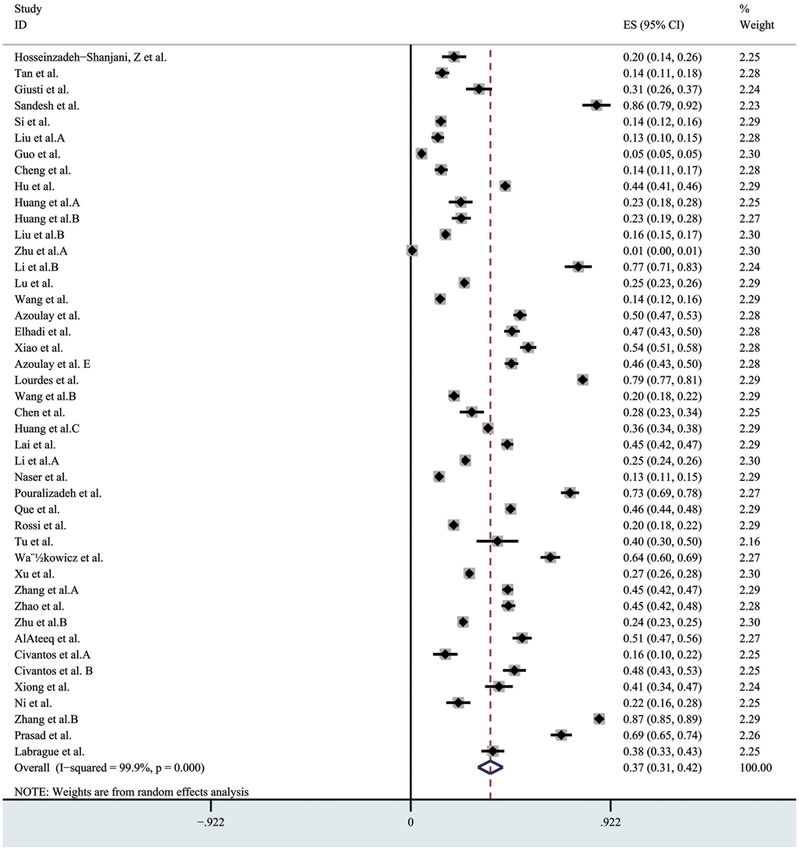
Sun et al.                                                                                                     Mantality in HCWs During COVID-19

working hours, HCWs have to wear protective equipment                    OR mental OR anxiety OR depression OR stress OR post-
making their movement and operation slowly and cause                     traumatic OR trauma), #3 TS=(doctor OR surgeons OR surgical
respiratory discomfort and difficulties which are also aggravating       staff OR maternity staff OR medical staff OR medical workers
factors for psychological symptoms of HCWs (Cheng et al., 2020;          OR healthcare workers OR healthcare staff OR healthcare
Elhadi et al., 2020; Giusti et al., 2020; Huang et al., 2020a).          professional OR nursing professional OR nursing staff OR
   A systematic review and meta-analysis summarizes                      nurses), #4 #1 AND #2 AND #3 for WEB OF SCIENCE.
COVID-19 during a pandemic the prevalence of depression
and anxiety among the healthcare workers, which includes only            Selection Criteria
the literatures published in Asia before April 2020 (Luo et al.,         We selected the literatures we need according to our PICOS
2020). Following the publication of this review, many studies            (population; intervention; compare; outcomes; study) criteria.
have been published on the psychological impact of COVID-19              The included criteria of our study were as follows: (1) P/I:
on health professionals in many other countries and have                 The subjects in these literatures should be healthcare staffs
compared the psychological impact of COVID-19 on frontline               (i.e., medical doctors, nurses, nursing assistant, clinical assistant
and non-frontline HCWs. As the epidemic continues to spread              departments’ staffs, public health professionals) fighting against
and cases increase at this stage, we consider that a meta-analysis       the COVID-19; (2) O: Only when those studies evaluating the
of published studies is necessary to explore whether COVID-19            prevalence rates of anxiety, depression and/or insomnia using
has further psychological effects on medical staffs. In order to         validated assessment methods were eligible for inclusion; (3) S:
implement appropriate strategies to prevent or intervene in              Cross-sectional studies, cohort studies, randomized controlled
the adverse psychological effects on HCWs and provide help               trials were acceptable; (4) The language of the included studies
to relieve the burden, we conducted the current systematic               is English or Chinese.
review and meta-analysis to assess the latest psychological                  Two researchers searched the literatures independently, and
impact of the COVID-19 pandemic among healthcare workers                 we conducted three rounds of screening of the studies we have
In this meta-analysis, we assessed the psychological impact              searched. Firstly, the titles of the articles were screened and then
of COVID-19 on the HCWs and summarized the different                     the selected studies are further screened by reading abstracts
prevalence rates of anxiety and depression between frontline             of the literature. Finally, the full text of the articles after the
HCWs and non-frontline HCWs.                                             second round of screening were read in order to decide which
                                                                         studies would be included. If two researchers had discrepancies
METHODS                                                                  on whether to include a certain study, the senior author (LY) was
                                                                         consulted to make the final decision.
Literature Search
In order to perform a systematic review and meta-analysis                Data Extraction and Quality Assessment
on studies evaluating the prevalence of the psychological and            The information from each literature were extracted by two
mental impact of COVID-19, we did this study according                   researchers independently including: author, year, the number
to the Preferred Reporting Items for Systematic Reviews and              of the participation, response rate, region, the percentage of
Meta-Analyses (PRISMA) statement (Liberati et al., 2009).                physician, nurse and other healthcare workers in those studies,
The study was approved by the Ethics Committee of the                    the percentage of men and women in included articles, survey
Eighth People’s Hospital of Xinjiang Uygur Autonomous Region.            methods used and the cut-offs mentioned in each study as
We searched the original literatures published from 1 Nov                well as the total number and percentage of participants that
2019 to 20 Sep 2020 in electronic databases of PUBMED,                   screened positive for depression, anxiety or insomnia. As far
EMBASE and WEB OF SCIENCE. Our search terms were                         as the quality assessment method, we referred to a resent
(“COVID-19”/exp OR COVID-19 OR “coronavirus”/exp OR                      systemic review and meta-analysis (Pappa et al., 2020) using
coronavirus) AND (“psychological”/exp OR psychological OR                the modified Newcastle-Ottawa scale to evaluate the quality of
“mental”/exp OR mental OR “stress”/exp OR stress OR                      included cross-sectional studies. The appraisal tool assessed the
“anxiety” OR anxiety OR “depression” OR depression OR                    representativeness of sample and the sample size, the validate
“post-traumatic” OR “post-traumatic”/exp OR “trauma” OR                  assessment tool with appropriate cut-offs, the response rate and
’trauma’/exp) AND (“doctor” OR “maternity staff ” OR “medical            adequacy of descriptive statistics. The total score ranged between
staff ” OR “medical workers” OR “Healthcare workers” OR                  0 and 5. Studies scoring ≥3 points were regarded as low risk of
“Healthcare staff ” OR “Healthcare professional” OR “Nursing             bias, compared to the studies assessed with  75%. We
professional)] OR (nursing staff)] OR (nurses)] for PUBMED;              also perform a subgroup analysis according to the following
#1 TS=(COVID-19 OR coronavirus), #2 TS = (Psychological                  categories: the severity of anxiety and depression, gender,

Frontiers in Psychology | www.frontiersin.org                        2                                       July 2021 | Volume 12 | Article 626547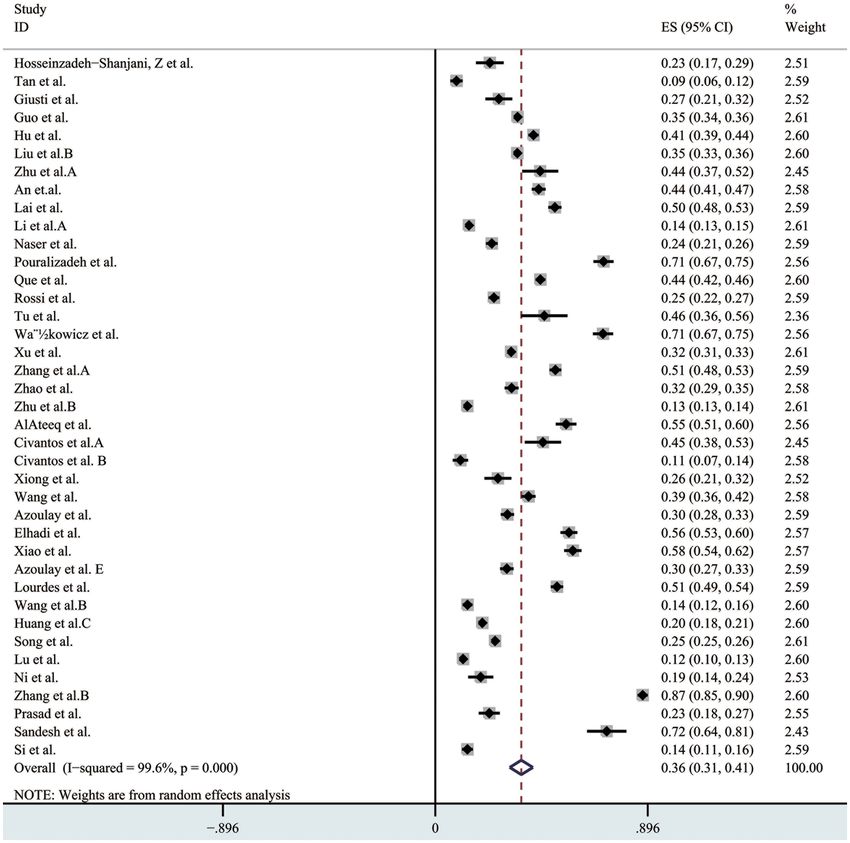
Sun et al.                                                                                                    Mantality in HCWs During COVID-19

frontline and non-frontline healthcare workers. In articles that           Prevalence of Anxiety
focus on the severity of anxiety and depression, the following             A total of 44 studies reported the prevalence of anxiety,
questionnaires and grading criteria are used. Generalized Anxiety          and the pooled prevalence of the anxiety was 37% (95% CI
Disorder 7 (GAD-7) questionnaire:mild (score of 5–9), moderate             0.31–0.42, I2 = 99.9%) as shown in Figure 2. In the sensitivity
(score 10–14), or severe (score 15–21) (Spitzer et al., 2006);             analysis, no study affected the pooled prevalence by over
the Patient Health Questionnaire (PHQ-9):mild (score of 5–9),              3% when excluded. As far as the assessment tool, studies
moderate (score 10–14), moderately severe (score 15–19), or                using different validated scales included: Depression, Anxiety,
severe (score 20–27) (Löwe et al., 2004); Selfrating Anxiety Scale         Stress Scale (DASS); Self-Rating Anxiety Scale (SAS); Hamilton
(SAS): a score of 50–59 indicated mild anxiety, 60–69 indicated            Anxiety Scale (HAMA); Hospital Anxiety and Depression Scale
moderate anxiety, and ≥70 indicated severe anxiety; Self-Rating            (HADS); The 7-item Generalized Anxiety Disorder scale (GAD-
Depression Scale (SDS): 50–59 for mild depression, 60–69 for               7); Generalized Anxiety Disorder-2 (GAD-2) and The COVID-19
moderate depression, and 70 or more for severe depression                  Anxiety scale.
(Zung, 1971); The Hamilton rating scale for anxiety (HAMA):
no anxiety (score 0–6), mild and moderate anxiety (score 7–13),            Prevalence of Depression
severe anxiety (score ≥ 14); The Hamilton rating scale for                 Depression were estimated in 39 studies, and the pooled
depression (HAMD): mild and moderate (score 7–23), severe                  prevalence of the depression was 36% (95% CI 0.31–0.41,
depression (score ≥ 24) (Lu et al., 2020). Frontline HCWs are              I2 = 99.6%), as presented in Figure 3. In the sensitivity
defined as those who currently caring for COVID-19 patients in             analysis, no study affected the pooled prevalence by
the participating hospitals and working in places with the highest         over 1% when excluded. Different validated scales used
probability of contact with COVID-19, for example, intensive               to measure depression included: Depression, Anxiety,
care units, infectious diseases units, and emergency departments           Stress Scale (DASS); Self-Rating Depression Scale (SDS);
(Hu et al., 2020; Rossi et al., 2020; Wańkowicz et al., 2020).            the 9-item Patient Health Questionnaire (PHQ-9); The
The non-frontline HCWs are those not working with COVID-                   Hospital Anxiety and Depression Scale (HADS); The
19 patients (Lai et al., 2020). Sensitivity analysis was done by           Center for Epidemiologic Studies Depression Scale (CES-
subtracting each study and calculating the pooled prevalence               D); Hamilton Depression Scale (HAMD) and Patient Health
of the remaining studies, in order to identify studies which               Questionnaire-2 (PHQ-2).
may severely affect the pooled prevalence. Our main outcomes
were prevalence (p), confidence intervals (CI) and percentage              Prevalence of Insomnia
prevalence (p × 100%).                                                     There were 10 studies which reported the prevalence of
                                                                           insomnia, and the overall prevalence of the insomnia
                                                                           was 32% (95% CI 0.23–0.42, I2 = 99.5%) as presented
RESULTS                                                                    in Figure 4. In the sensitivity analysis, no study affected
                                                                           the pooled prevalence by over 3% when excluded.
Search Result and Characteristics of                                       The evaluation tool using in these studies included:
Studies                                                                    the seven-item Insomnia Severity Index (ISI); PSQI
A PRISMA diagram detailing the study retrieval process is shown            (Pittsburgh Sleep Quality Index) scale and Athens Insomnia
in Figure 1.                                                               Scale (AIS).
    The total number of the references we had searched from
three databases was 3,168 (Embase: n = 659; PubMed: n = 1,215;             Subgroup Analysis
Web of science: n = 1,294). Among these articles, 1,118 studies            We conducted a subgroup analysis of the morbidity of the anxiety
were removed because of duplication. After screening the title             and depression by gender, severity, risk and profession. The
and abstract, 1,962 studies were excluded due to failure to meet           results are shown in Figures 5–8, respectively.
the inclusion criteria (949: non-medical workers; 970: not about              A total of 11 studies reported the prevalence of anxiety by
the psychological effects of COVID-19; 43: case report). Eighty-           gender and the pooled prevalence was 50, 36% for female and
eight studies were screened for the full text. Among the above             male, respectively. The severity of the anxiety was divided into
studies, 35 were deleted because of not reporting the prevalence,          two groups including “mild” group and “moderate-severe” group
four were excluded because no mention was made of the type of              and data could be obtained in 13 articles. The overall prevalence
questionnaire, and two were deleted because not in English or              of anxiety for “mild” group was 26 and 21% for “moderate-
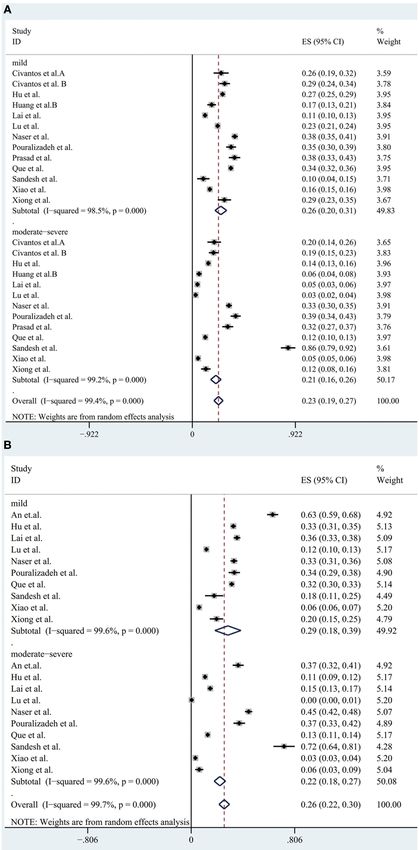
Chinese. Finally, 47 studies are included in this meta-analysis.           severe” group. In the frontline and non-frontline groups, data
All of these studies are cross-sectional studies and they are all          on prevalence of anxiety were available in 5 literatures, with
conducted through online questionnaires (“questionnaire star,”             respective values of 45 and 28%. In addition, nine literatures
Wechat or text message/email, etc.). A trigraph has been made              (Al Sulais et al., 2020; Azoulay et al., 2020a; Guo et al., 2020;
to show the characteristics of these studies in Table 1. The results       Huang et al., 2020a; Lai et al., 2020; Liu et al., 2020; Que
of the quality assessment for each study using Newcastle-Ottawa            et al., 2020; Xiao et al., 2020; Zhu et al., 2020b) reported
score are presented in Table 2, and the total pooled prevalence            the prevalence of anxiety of doctors and nurses. The overall
of anxiety, depression and/or insomnia as well as the subgroup             prevalence of anxiety for “doctor” group was 28%, and 34% for
analysis results are showed in the figures below.                          “nurse” group. For depression, data could be extracted from 10

Frontiers in Psychology | www.frontiersin.org                          3                                     July 2021 | Volume 12 | Article 626547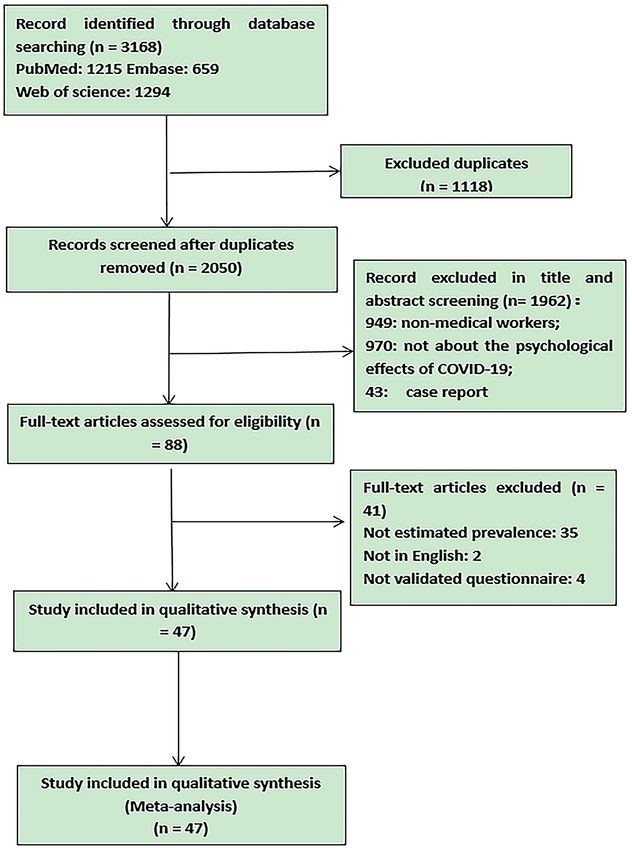
Sun et al.                                             Mantality in HCWs During COVID-19

 FIGURE 1 | Flow chart of literature screening.

Frontiers in Psychology | www.frontiersin.org     4   July 2021 | Volume 12 | Article 626547
Frontiers in Psychology | www.frontiersin.org
Sun et al.
TABLE 1 | The characteristics of included studies.
References Study Response Region Age (MD ± Physicians Nurses (%) Others (%) Female (%) Assessment Cut off Depression Anxiety (%) Insomnia
population rate (%) SD/RANGE) (%) (%) (%)
Hosseinzadeh-Shanjani et al. 200 100% Iran 40.6 ± 10.15 21.50% 47% 31.50% 80% DASS N.A. 46 (23%) 40 (20%) N.A.
(2020)
Liu et al. (2020) 512 85.40% China 18–39 N.A. N.A. N.A. 84.50% SAS ≥50 N.A. 64 (12.5%) N.A.
Guo et al. (2020) 11,118 N.A. China 20–50 30.40% 53.07% 16.53% 74.80% SAS ≥50 3858 554 (4.98%) N.A.
(13.47%)
SDS ≥50
Tan et al. (2020) 470 94.00% Singapore 34.4 ± 5.85 28.70% 34.30% 37% 68.3 DASS-21 D>9 42 (8.9%) 68 (14.5%) N.A.
A>7
Wang et al. (2020) 1,045 99.60% China - N.A. N.A. N.A. N.A. HADS ≥7 411 (39.4%) 142 (13.6%) 521 (49.9%)
ISI ≥7
An et al. (2020) 1,103 100% China 32.2 ± 7.61 - 100% - 90.80% PHQ-9 ≥5 43.60% N.A. N.A.
Azoulay et al. (2020a) 1,058 67% France 27–42 29.10% 68% 2.60% 71% HADS ≥7 30.40% 50.40% N.A.
Chen X. et al. (2020) 252 62.80% Ecuador 39–53 N.A. N.A N.A. 65.50% GAD-7 ≥10 N.A. 71 (28.2%) N.A.
Cheng et al. (2020) 534 N.A. China - 54.10% 45.90% - 82.40% SAS ≥50 N.A. 14.00% N.A.
Elhadi et al. (2020) 745 93.10% Libyan 33.7 ± 7.4 N.A. N.A. N.A. 51.90% HADS ≥11 420 (56.3%) 348 (46.7%) N.A.
Giusti et al. (2020) 235 71.20% Italy 44.6 ± 13.5 42.20% 26.00% 31.80% 62.60% DASS D>9 26.80% 31.30% N.A.
A>7
5
Hu et al. (2020) 2,014 77.50% China 30.99 ± 6.17 N.A. 100% N.A. 87.10% SAS ≥50 41.40% 43.60% N.A.
SDS ≥50
Huang et al. (2020a) 230 93.50% Fu yang 32.6 ± 6.20 30.40% 69.60% - 81% SAS ≥50 N.A. 53 (23.04%) N.A.
Huang et al. (2020b) 364 96.60% Sichuan 30–40 - 32.70% 67.30% 58.50% SAS ≥50 N.A. 85 (23.4%) N.A.
Huang and Zhao (2020) 2,250 85.30% China - N.A. N.A. N.A. 54.60% GAD-7 ≥9 446 (19.8%) 802 (19.8%) 531 (23.6%)
CES-D ≥28
PSQI ≥7
Labrague and De Los Santos 325 N.A. Philippines 30.94 ± 6.67 - 100% - 74.80% The ≥9 N.A. 123 (37.8%) N.A.
(2020) COVID-19
Anxiety Scale
Lai et al. (2020) 1,257 68.70% Wuhan 26–40 39.20% 60.80% - 23.30% GAD-7 ≥5 634 (50.4%) 560 (44.6%) 427 (34%)
PHQ-9 ≥5
July 2021 | Volume 12 | Article 626547
ISI ≥8
Mantality in HCWs During COVID-19
Li et al. (2020a) 4,369 82.20% Wuhan 30–49 46.40% 40.00% 26.80% 100% GAD-7 ≥8 620 (14.2%) 1100 (25.2%) N.A.
PHQ-9 ≥10
Li et al. (2020b) 176 100% Wuhan 20–40 - 100% - 77.30% HAMA ≥7 N.A. 136 (77.3%) N.A.
Li et al. (2020c) 948 N.A. China 20–40 N.A. N.A. N.A. 86.82% AIS ≥6 N.A. N.A. 311 (32.8%)
Liu et al. (2020) 4,679 N.A. China 18–39 39.60% 60.40% - 82.30% SAS ≥50 1619(34.6%) 749(16.0%) N.A.
SDS ≥50
(Continued)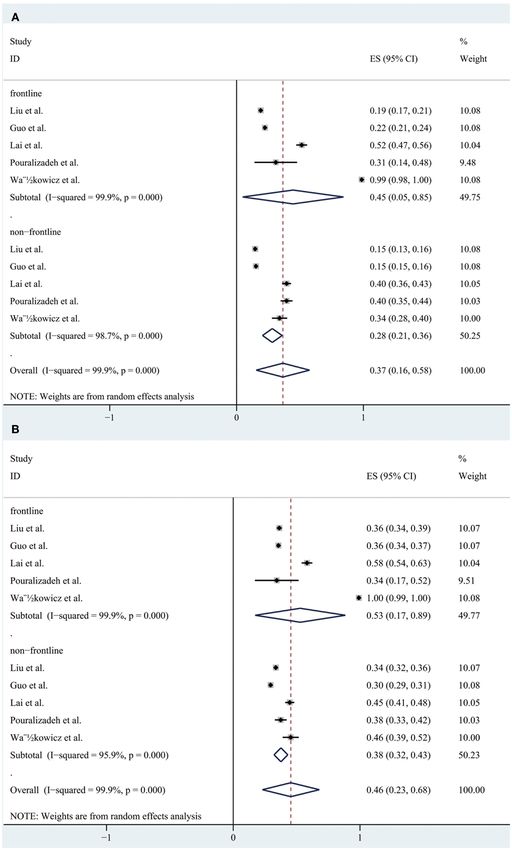
Frontiers in Psychology | www.frontiersin.org
Sun et al.
TABLE 1 | Continued
References Study Response Region Age (MD ± Physicians Nurses (%) Others (%) Female (%) Assessment Cut off Depression Anxiety (%) Insomnia
population rate (%) SD/RANGE) (%) (%) (%)
Lu et al. (2020) 2,299 94.90% China 35.9 ± 9.0 88.80% - 11.20% 77.60% HAMA ≥7 269(11.7%) 568(24.7%) N.A.
HAMD ≥7
Naser et al. (2020) 1,163 N.A. Jordan 18–29 48.20% 13% 38.80% 56.10% GAD-7 ≥5 277 (23.8%) 152 (13.1%) N.A.
PHQ-9 ≥5
Ni et al. (2020) 214 61.20% China - - - - N.A. GAD-2 ≥3 41(19.2%) 47(22%) N.A.
PHQ-2 ≥3
Pouralizadeh et al. (2020) 441 N.A. Iran 36.34 ± 8.74 - 100% - 95.20% GAD-7 ≥10 313 (71%) 324 (73.5%) N.A.
PHQ-9 ≥10
Que et al. (2020) 2,285 N.A. China 31.06 ± 6.99 37.64% 9.10% 53.26% 69.06% GAD-7 ≥5 1,013 1,052 657 (28.75%)
(44.37%) (46.04%)
PHQ-9 ≥5
ISI ≥8
Rossi et al. (2020) 1,379 N.A. Italy - 31.40% 34.23%% 34.37% 77.20% GAD-7 ≥15 341 (24.73%) 273 (19.8%) 114 (8.27%)
PHQ-9 ≥15
ISI ≥22
6
Sandesh et al. (2020) 112 N.A. Pakistan - N.A. N.A. N.A. 42.90% DASS N.A. 81 (72.3%) 96 (85.7%) N.A.
Si et al. (2020) 863 76.00% China - 43.70% 24.20% 31.90% 70.70% DASS-21 N.A. 117 (13.6%) 120 (13.9%) N.A.
Song et al. (2020) 14,825 N.A. China 34 ± 8.2 41.60% 58.90% - 64.30% CES-D ≥16 3,736 (25.2%) N.A. N.A.
Tu et al. (2020) 100 100% Wuhan 34.4 ± 5.85 - 100% - 100% GAD-7 ≥4 46 (46%) 40 (40%) N.A.
PHQ-9 ≥4
Wańkowicz et al. (2020) 441 N.A. Poland 40.47 ± 4.93 N.A. N.A. N.A. 52.20% GAD-7 ≥4 312 (70.7%) 284 (64.4%) N.A.
PHQ-9 ≥4
ISI ≥8
Xiao et al. (2020) 705 73.60% Wuhan - 39.50% 37.50% 23% 67.20% HAD ≥4 409 (58%) 382 (54.2%) N.A.
Xiaoming et al. (2020) 8,817 N.A. Chongqing - 36.40% 53.10% 10.40% 78% GAD-7 ≥5 2,821 (30.2%)2,381 (20.7%) N.A.
PHQ-9 ≥5
Zhang et al. (2020a) 1,563 N.A. China 25–40 29.00% 62.90% 7.90% 82.70% GAD-7 ≥5 792 (50.7%) 699 (44.7%) 564 (36.1%)
July 2021 | Volume 12 | Article 626547
PHQ-9
Mantality in HCWs During COVID-19
≥5
ISI ≥8
Zhang et al. (2020b) 927 N.A. China - 73.40% 26.60% - N.A. GAD-2 ≥3 811 (87.8%) 806 (87%) 571 (61.6%)
PHQ-2 ≥3
ISI ≥8
(Continued)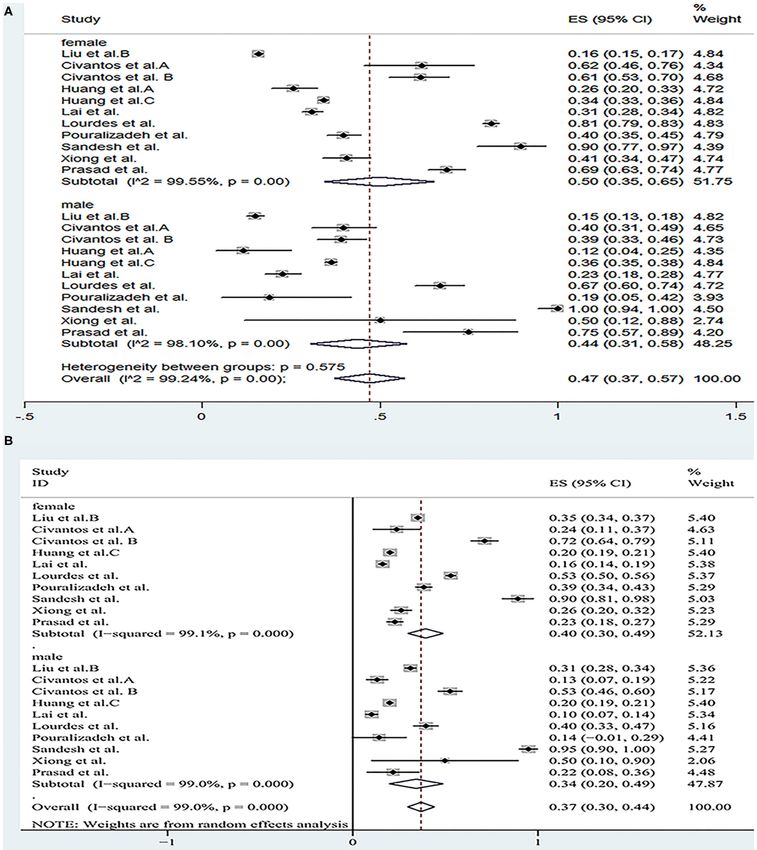
Frontiers in Psychology | www.frontiersin.org

                                                                                                                                                                                                                                                                 Sun et al.
                                                TABLE 1 | Continued

                                                References                              Study         Response Region                  Age (MD ±          Physicians Nurses (%) Others (%) Female (%) Assessment Cut off Depression Anxiety (%)       Insomnia
                                                                                      population       rate (%)                        SD/RANGE)             (%)                                                            (%)                          (%)

                                                Zhao et al. (2020)                        972             N.A.      Wenzhou            34.16 ± 8.06           N.A.            N.A.      NA.      N.A.    GAD-7     N.A.   313 (32.2%) 438 (45.1%) 380 (39.1%)
                                                                                                                                                                                                         PHQ-9
                                                                                                                                                                                                          ISI
                                                Zhu et al. (2020a)                        165            100%       Gansu                     -             47.90%          52.10%       -       83%      SAS      ≥50    73 (44.2%)     33 (20%)       N.A.
                                                                                                                                                                                                          SDS      ≥50
                                                Zhu et al. (2020b)                       5,062          77.10%      Wuhan                  30–49            19.80%          67.50%     12.70%   85.00%   GAD-7      ≥8    683 (13.5%) 1,220 (24.1%)     N.A.
                                                                                                                                                                                                         PHQ-9     ≥10
                                                AlAteeq et al. (2020)                     502             N.A.      Saudi Arabia           30–49            22.11%          26.90%     51.50%   31.90%   GAD-7     N.A.   277 (55.2%) 258 (51.4%)       N.A.
                                                                                                                                                                                                         PHQ-9
                                                Azoulay et al. (2020b)                   1,001           20%        -                      39–53              N.A.            N.A.      N.A.     34%     HADS       ≥7    302 (30.2%) 465 (46.5%)       N.A.
                                                Civantos et al. (2020a)                   163             N.A.      Brazil                    -              100%               -        -      25.80%   GAD-7      ≥4    74 (45.5%)    26 (16.0%)      N.A.
                                                                                                                                                                                                         PHQ-9      ≥3
                                                Civantos et al. (2020b)                   349             N.A.      -                         -              100%               -        -      39.30%   GAD-7      ≥4    37 (10.6%)    167 (47.9%)     N.A.
                                                                                                                                                                                                         PHQ-9      ≥3
7

                                                Luceno-Moreno et al. (2020)              1,422            N.A.      Spanish           43.88 ± 10.82           N.A.            N.A.      N.A.    86.40%   HADS       ≥7    730 (51.3%) 1,128 (79.3%)     N.A.
                                                Prasad et al. (2020)                      347             N.A.      America                26–40                -           71.50%     28.50%   90.80%   GAD-2      ≥4    79 (22.8%)    241 (69.5%)     N.A.
                                                                                                                                                                                                         PHQ-2      ≥3
                                                Wang et al. (2020)                       1,045          99.60%      China                     -             14.30%            74%      11.70%   85.80%   HADS       ≥7    142 (13.6%)   209 (20%)       N.A.
                                                                                                                                                                                                          ISI       ≥8
                                                Xiong et al. (2020)                       231           61.80%      China                     -                 -            100%        -      97.30%   GAD-7      ≥4    61 (26.4%)    94 (40.8%)      N.A.
                                                                                                                                                                                                         PHQ-9      ≥5

                                                All studies are cross-sectional; the absolute number of patients for each category is included in the brackets; N.A., not available.
July 2021 | Volume 12 | Article 626547

                                                                                                                                                                                                                                                                 Mantality in HCWs During COVID-19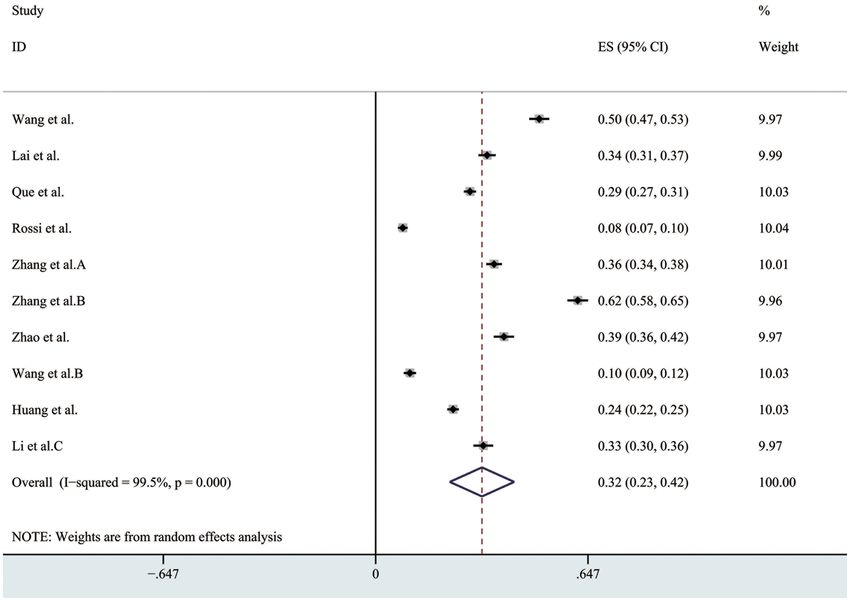
Sun et al. Mantality in HCWs During COVID-19
TABLE 2 | Modified Newcastle-Ottawa quality assessment scale and total score of each study.
References Modified Newcastle-Ottawa quality assessment scale Score
1 2 3 4 5
Hosseinzadeh-Shanjani et al. (2020) * - * - * 3
Liu et al. (2020) * - * * - 3
Guo et al. (2020) * * - * * 4
Tan et al. (2020) * - * * * 4
Wang et al. (2020) * * * * - 4
An et al. (2020) * * * * - 4
Azoulay et al. (2020a) * * - * - 3
Chen X. et al. (2020) * - - * * 3
Cheng et al. (2020) * - - * * 3
Elhadi et al. (2020) * * * * * 5
Giusti et al. (2020) * - - * * 3
Hu et al. (2020) * * - * * 4
Huang et al. (2020a) * * * * * 5
Huang et al. (2020a) * - * * - 3
Huang et al. (2020b) * - * * * 4
Labrague and De Los Santos (2020) * - - * * 3
Lai et al. (2020) * * - * * 4
Li et al. (2020a) * * * * * 5
Li et al. (2020b) * - - * * 3
Li et al. (2020c) * * - * * 4
Liu et al. (2020) * * - - * 3
Lu et al. (2020) * * - * - 3
Naser et al. (2020) * * - * * 4
Ni et al. (2020) * - * * * 4
Pouralizadeh et al. (2020) * - - * * 3
Que et al. (2020) * * - * * 4
Rossi et al. (2020) * * - * * 4
Sandesh et al. (2020) * - - - * 2
Si et al. (2020) * * * - * 4
Song et al. (2020) * * - * * 4
Tu et al. (2020) * - - * * 3
Wańkowicz et al. (2020) * - - * * 3
Xiao et al. (2020) * * * * * 5
Xu et al. (2020) * * - * * 4
Zhang et al. (2020a) * * - * * 4
Zhang et al. (2020b) * * - * * 4
Zhao et al. (2020) * * - - * 3
Zhu et al. (2020a) * - - * * 3
Zhu et al. (2020b) * * * * * 5
AlAteeq et al. (2020) * - - - - 1
Azoulay et al. (2020b) * * - * - 3
Civantos et al. (2020a) * - - * * 3
Civantos et al. (2020b) * - - * * 3
Luceno-Moreno et al. (2020) * * - * * 4
Prasad et al. (2020) * - - * * 3
Wang et al. (2020) * * * * * 5
Xiong et al. (2020) * - - * - 2
1. Representativeness of sample (The number of HCWs ≥ 65% of total sample); 2. Sample size > 600 HCWs; 3. Response rate > 80%; 4. The study employed validate measurement
tools with appropriate cut-offs; 5. Adequate statistics and no need for further calculations. *The study met the scoring criteria. -The study did not meet the grading criteria.
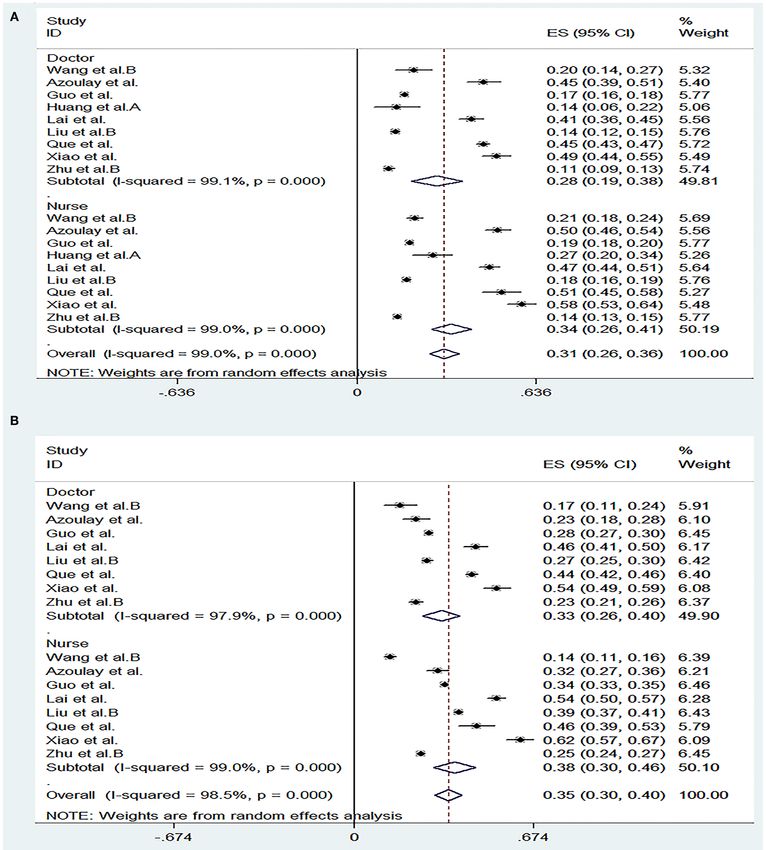
Frontiers in Psychology | www.frontiersin.org 8 July 2021 | Volume 12 | Article 626547Sun et al. Mantality in HCWs During COVID-19 FIGURE 2 | The pooled prevalence of anxiety. ES, effect size; CI, confidence interval; Weight, weight of each included study (degree of impact on pooled results), The larger the weight is, the greater the influence on the combination result is. articles according to gender, with a pooled prevalence of 40% for in the former and 38% in the later which were calculated from female and 34% for male. As far as the severity of depression, the same five articles as anxiety. The prevalence of depression there were also 10 studies reported the morbidity of depression, could be detected in eight literatures, with a pooled prevalence with values of 29% for “mild” group and 22% for “moderate- of 33% for doctors and 38% for nurses. As far as insomnia, severe” group respectively. Regarding to the “frontline” group a subgroup analysis was not performed due to the limited and “non-frontline” group, the prevalence of depression was 53% available data. Frontiers in Psychology | www.frontiersin.org 9 July 2021 | Volume 12 | Article 626547
Sun et al.                                                                                                                         Mantality in HCWs During COVID-19

 FIGURE 3 | The pooled prevalence of depression. ES, effect size; CI, confidence interval; Weight, weight of each included study (degree of impact on pooled results),
 The larger the weight is, the greater the influence on the combination result is.

DISCUSSION                                                                             analysis showed that the incidence of anxiety and depression was
                                                                                       significantly increased in females. After statistical analysis and
Results of a systemic review and meta-analysis of 47 studies                           calculation of the included data, the proportion of the “mild”
indicated that a large proportion of healthcare workers suffered                       group was higher than that of the “moderate-severe” group. The
from the adverse psychological impact of COVID-19. Symptoms                            prevalence of anxiety and depression of frontline HCWs was
such as anxiety, depression and insomnia were analyzed as                              much higher than non-frontline HCWs. Furthermore, nurses
indicators of psychological effects of healthcare staffs during the                    had higher rates of anxiety and depression than doctors.
COVID-19 epidemic, with respective values of 37% (31–42%),                                Since COVID-19 is novel and has never been explored,
36% (31–41%), and 32% (23–42%). The results of subgroup                                and its horrible infectivity and mortality generate great stress

Frontiers in Psychology | www.frontiersin.org                                     10                                             July 2021 | Volume 12 | Article 626547
Sun et al. Mantality in HCWs During COVID-19 FIGURE 4 | The pooled prevalence of insomnia. ES, effect size; CI, confidence interval; Weight, weight of each included study (degree of impact on pooled results), The larger the weight is, the greater the influence on the combination result is. throughout healthcare staffs especially on the frontline healthcare government and society is sufficient, whether the social support is professionals, which become a major factor causing anxiety enhanced, etc., all of these factors, to a certain extent, can enhance depression and insomnia among HCWs (Salari et al., 2020). In the mental strength of medical staff and reduce the incidence of addition, there are also other factors, for example, insufficient mental illness. We believe it is necessary to conduct this meta- medical protective equipment, contact ban with relatives, transfer analysis based on the research published so far to address the to another ward, work overload and so on (Sandesh et al., 2020; psychological condition of the HCWs. Shigemura et al., 2020; Wańkowicz et al., 2020) that would lead Compared with the recent meta-analysis concerning to mental health problems for medical staff. In view of the above, the psychological impacts of COVID-19 among healthcare several practical steps should be implemented by government professionals which included 13 articles and reported the officers and hospital administrators in order to prevent the prevalence of anxiety, depression and insomnia were 23.2, 22.8, occurrence of mental illness and relieve the mental and physical and 34.2% respectively, our study found a similar prevalence stress of the healthcare staffs, for example, adequate supplies of of insomnia among healthcare staffs but the prevalence of protective equipment (Koh et al., 2005; Chen et al., 2006; Kim and anxiety 37% and depression 36% were much higher than the Choi, 2016), appropriate work shift with regular sleep (Ho et al., prior study. We consider that as the epidemic worsens and the 2005; Lee et al., 2005; Kang et al., 2018), clear communication number of cases increase rapidly all over the world, the mental (Bai et al., 2004; Goulia et al., 2010; Kang et al., 2018), and video and physical stress faced by medical staff in each country is contact with their families and friends (Azoulay et al., 2020a; also increasing. Kisely et al., 2020). Furthermore, it’s extremely necessary to According to the result of the subgroup analysis, the incidence provide timely and professionally tailored mental health support of anxiety and depression among female medical staffs was through media or multidisciplinary teams (Pappa et al., 2020). higher than that of male. The results of epidemiological studies Whether the medical protective equipment provided by the showed that women were at a higher risk of depression (Lim Frontiers in Psychology | www.frontiersin.org 11 July 2021 | Volume 12 | Article 626547
Sun et al.                                                                                                                             Mantality in HCWs During COVID-19

 FIGURE 5 | The forest map based on the prevalence of anxiety and depression among healthcare workers of different genders. (A): A forest map based on the
 incidence of anxiety among health care workers of different genders; (B): A forest map based on the incidence of depression among health care workers of different
 genders. ES, effect size; CI, confidence interval; Weight: weight of each included study (degree of impact on pooled results), The larger the weight is, the greater the
 influence on the combination result is.

et al., 2018). There are many reasons for this gap between                               gender gap in depression is still scarce (Albert, 2015; Kuehner,
men and women. For example, genetic factors might play a                                 2017). In addition, a ruminative response style, that is, the
part, but empirical evidence for their potential to explain the                          tendency to passively and repetitively analysis one’s distress,

Frontiers in Psychology | www.frontiersin.org                                       12                                              July 2021 | Volume 12 | Article 626547
Sun et al.                                                                                                                         Mantality in HCWs During COVID-19

 FIGURE 6 | A forest map based on the incidence of various levels of anxiety and depression among medical personnel. (A): A forest map based on the incidence of
 various levels of anxiety among medical personnel; (B): A forest map based on the incidence of various levels of depression among medical personnel. ES, effect size;
 CI, confidence interval; Weight: weight of each included study (degree of impact on pooled results), The larger the weight is, the greater the influence on the
 combination result is.

Frontiers in Psychology | www.frontiersin.org                                     13                                             July 2021 | Volume 12 | Article 626547
Sun et al.                                                                                                                            Mantality in HCWs During COVID-19

 FIGURE 7 | A forest map based on the prevalence of anxiety and depression between front-line and non-frontline medical staffs. (A): A forest map based on the
 incidence of anxiety between front-line and non-frontline medical personnel; (B): A forest map based on the incidence of depression between front-line and
 non-frontline healthcare workers. ES, effect size; CI, confidence interval; Weight: weight of each included study (degree of impact on pooled results), The larger the
 weight is, the greater the influence on the combination result is.

Frontiers in Psychology | www.frontiersin.org                                       14                                              July 2021 | Volume 12 | Article 626547
Sun et al.                                                                                                                       Mantality in HCWs During COVID-19

 FIGURE 8 | A forest map based on the prevalence of anxiety and depression between doctors and nurses. (A): A forest map based on the incidence of anxiety
 between doctors and nurses; (B): A forest map based on the incidence of depression between doctors and nurses. ES, effect size; CI, confidence interval; Weight,
 weight of each included study (degree of impact on pooled results), The larger the weight is, the greater the influence on the combination result is.

problems, and concerns, without taking actions, has been                              tendencies in women than in men (Kuehner, 2017). However,
proposed to account for a substantial part of the gender gap                          of the studies included in our subgroup analysis, most had
in depression. Two meta-analyses identified higher rumination                         a higher percentage of female responders than male, and

Frontiers in Psychology | www.frontiersin.org                                    15                                            July 2021 | Volume 12 | Article 626547
Sun et al.                                                                                                         Mantality in HCWs During COVID-19

only four (Civantos et al., 2020a,b; Lai et al., 2020; Sandesh               Therefore, it is not only necessary to ensure adequate equipment
et al., 2020) (25.8, 39.3, 23.3, 42.9%, respectively) had a lower            supply and timely psychological support for medical staffs, but
percentage of women than men. This selection bias may exist.                 also important to provide psychological support for patients, as it
According to the statistical results of the literature, we included          indirectly affects the mental and psychological state of frontline
that the prevalence rate of anxiety and depression appeared                  HCWs. Also, to a certain extent, the workload and difficulty of
to be higher in “mild” group, while moderate and severe                      frontline medical work will be reduced. We held the opinion
symptoms were less common among the participants. In our                     that a special research can be conducted to study which factors
opinion, this result suggests that we ought to detect and                    (little is known about the new virus/disease, limited resource,
intervene the mental health status of medical staffs timely and              long work hours, contact ban with relatives, work overload, etc.)
efficiently in order to prevent the occurrence of adverse mental             have a serious psychological impact on medical staff in the new
illness, thus effectively reducing the incidence of anxiety and              epidemic, and what measures can be taken to effectively reduce
depression. Furthermore, we also find that a great proportion                the psychological pressure on medical staff in the future study.
of the frontline healthcare workers suffered from anxiety and                Third, the second wave of the outbreak in many countries has
depression, since frontline healthcare professionals treating                been kicked off, due to the outbreak of the first wave made a
patients with COVID-19 are likely to be exposed to the highest               great influence on the spirit of the medical personnel psychology,
risk to be infected because of their close, frequent contact                 therefore, we think it is necessary for medical workers, especially
with patients and longer hours than usual. In addition, these                women and healthcare workers who have fought on the front line
people are exposed to emotionally challenging interactions with              to carry out a psychological evaluation and to give professional
the sick and critically ill patients and they tend to pay more               guidance in time, in order to prevent the second pandemic from
attention to their own and their families’ health. Moreover,                 having a more severe impact on them.
they are subject to occupational overload due to staff shortages                 There are several strengths and limitations to our review.
and insufficient personal protective equipment (Rossi et al.,                Compared to the last systematic review and meta-analysis that
2020; Wańkowicz et al., 2020). This highlighted the significance            comprised 13 studies from Asian countries (n = 33,062), the
to take more effective and precautionary measures to protect                 current meta-analysis included more studies (47 studies from
frontline healthcare workers from the psychological damage                   12 countries) with a much bigger sample size (n = 81,277).
at the governmental level and the personnel level (Luo et al.,               Psychological conditions of frontline and non-frontline HCWs
2020). The higher overall prevalence of anxiety and depression               were further investigated, which has some guiding implications
is observed in nurses. There are several reasons to consider this.           for medical personnel to provide psychological assistance when
Firstly, nurses are relatively young and mostly female which                 facing different risks. The inherent heterogeneity across studies
may be an important reason. In addition, nurses are responsible              is also one of the main considerations for the limitations on
for the collection of sputum for virus detection, which is the               research. While all of these studies reported prevalence of anxiety,
most dangerous work (Guo et al., 2020), and they need to act                 depression or insomnia, several of them used the same test, but
as “gatekeepers” responsible for educating and monitoring the                screened the population using different assessment scales and set
practices of staff and visitors and also had an increased workload           different thresholds which may have an effect on the outcome.
as they took on duties of other staff (Mitchell et al., 2002). All of        In addition, only three symptoms were meta-analyzed in this
these may contribute to the higher incidence of anxiety among                article due to the lack of relevant studies on other psychological
nurses than doctors.                                                         symptoms of healthcare workers. Therefore, related studies can
    Overall, the findings of the current study may have some                 be conducted on other psychological effects of the COVID-19
clinical implications. First, the COVID-19 pandemic situation                on medical staff in the future. Moreover, most of the included
has been effectively controlled in some countries, but the                   studies are from China, data from other countries are still a
situation in other countries is still not optimistic. We must                few. At the present stage, the severity of the epidemic varies
take adequate measures to prevent possible the next outbreak                 from country to country; the impact on the mental health of
of the epidemic. We clearly confirm that HCWs who under                      medical workers also varies greatly. In addition to the study in
high physical and mental health burden are still at a higher                 China, 16 of the included studies were conducted in 13 different
risk of suffering from psychological disease. It is urgently to              countries. It is not reliable to describe the psychological status of
provide psychological assistance to medical personnel who could              medical staff in each country according to the limited literature
help the governments better prepare for future outbreaks of                  collected so far. Therefore, if more literatures are collected in
unexpected infectious diseases. Second, our study showed that                the future, further analysis can be made in this aspect. All
frontline HCWs presented higher prevalence of anxiety and                    quantitative studies were cross-sectional surveys with a short
depression. In fact, they did not want their families and friends            follow-up duration. Psychological status of medical personnel
worry about them and were afraid of bringing the virus to                    will change as the epidemic progresses, so it is not possible to
their home. In addition, patients’ not cooperation with medical              extrapolate from these studies only the long-term mental health
measures, unable to deal with patients’ anxiety, panic, and other            effects and how the basic rates of these mental health symptoms
emotional problems, shortage of protective equipment were the                relate to other periods. Some literatures reported age (MD ±
main factors resulting psychological stress (Chen Q. et al., 2020).          SD) or age range of the study group, but some did not report

Frontiers in Psychology | www.frontiersin.org                           16                                       July 2021 | Volume 12 | Article 626547
Sun et al. Mantality in HCWs During COVID-19
(age not applicable, Table 1), so we could not analyze age as a DATA AVAILABILITY STATEMENT
factor. Although most of the study subjects were between the
ages of 25 and 45 (young adults), we still can’t rule out the The original contributions presented in the study are included
possibility that age may affect the results. It is also a limitation in the article/supplementary material, further inquiries can be
of our study. directed to the corresponding authors.
AUTHOR CONTRIBUTIONS
CONCLUSIONS
LY: funding acquisition, conceptualization, and methodology.
The COVID-19 pandemic has created an emergency state LC: supervision, review, and editing. MW, TS, YW, and JL:
and caused heavy psychological impact among HCWs. The investigation and data curation. PS: data curation, original
prevalence of anxiety and depression are significantly higher draft preparation, writing, and editing. All authors contributed,
in female HCWs than males, also in the frontline HCWs than reviewed, and approved the final manuscript.
non-frontline HCWs. In addition to quickly establish programs
that provide knowledge on the virus, timely psychological FUNDING
counseling and intervention ought to be implemented for HCWs
in order to alleviate their anxiety and improve their general This study was supported by the National Key Research and
mental health. Development Program of China (2018YFC1004800).
REFERENCES COVID-19 pandemic: a national study. Am. J. Otolaryngol. 41, 102694–102694.
doi: 10.1016/j.amjoto.2020.102694
Al Sulais, E., Mosli, M., and AlAmeel, T. (2020). The psychological impact of Civantos, A. M., Byrnes, Y., Chang, C., Prasad, A., Chorath, K., Poonia, S. K.,
COVID-19 pandemic on physicians in Saudi Arabia: a cross-sectional study. et al. (2020b). Mental health among otolaryngology resident and attending
Saudi J. Gastroenterol. 26, 249–255. doi: 10.4103/sjg.SJG_174_20 physicians during the COVID-19 pandemic: national study. Head Neck-J. Sci.
AlAteeq, D. A., Aljhani, S., Althiyabi, I., and Majzoub, S. (2020). Mental Spec. Head Neck 42, 1597–1609. doi: 10.1002/hed.26292
health among healthcare providers during coronavirus disease (COVID- Elhadi, M., Msherghi, A., Elgzairi, M., Alhashimi, A., Bouhuwaish, A., Biala, M.,
19) outbreak in Saudi Arabia. J. Infect. Public Health. 13, 1432–1437. et al. (2020). Psychological status of healthcare workers during the civil war and
doi: 10.1016/j.jiph.2020.08.013 COVID-19 pandemic: a cross-sectional study. J. Psychosom. Res. 137:110221.
Albert, P. R. (2015). Why is depression more prevalent in women? J. Psychiatry doi: 10.1016/j.jpsychores.2020.110221
Neurosci. 40, 219–221. doi: 10.1503/jpn.150205 Giusti, E. M., Pedroli, E., D’Aniello, G. E., Stramba Badiale, C., Pietrabissa,
An, Y., Yang, Y., Wang, A., Li, Y., Zhang, Q., Cheung, T., et al. (2020). Prevalence G., Manna, C., et al. (2020). The psychological impact of the COVID-
of depression and its impact on quality of life among frontline nurses in 19 outbreak on health professionals: a cross-sectional study. Front. Psychol.
emergency departments during the COVID-19 outbreak. J. Affect Disord. 276, 11:1684. doi: 10.3389/fpsyg.2020.01684
312–315. doi: 10.1016/j.jad.2020.06.047 Goulia, P., Mantas, C., Dimitroula, D., Mantis, D., and Hyphantis, T. (2010).
Azoulay, E., Cariou, A., Bruneel, F., Demoule, A., Kouatchet, A., Reuter, General hospital staff worries, perceived sufficiency of information and
D., et al. (2020a). Symptoms of anxiety, depression and peritraumatic associated psychological distress during the A/H1N1 influenza pandemic. BMC
dissociation in critical care clinicians managing COVID-19 patients: a Infect. Dis. 10:322. doi: 10.1186/1471-2334-10-322
cross-sectional study. Am. J. Respir. Crit. Care Med. 202, 1388–1398. Guo, J., Lianming Liao, P., Baoguo Wang, M. D., and Xiaoqiang Li, M. D. (2020).
doi: 10.1164/rccm.202006-2568OC Psychological effects of COVID-19 on hospital staff a national cross-sectional
Azoulay, E., De Waele, J., Ferrer, R., Staudinger, T., Borkowska, M., survey. SSRN Electron. J. doi: 10.2139/ssrn.3550050
Povoa, P., et al. (2020b). Symptoms of burnout in intensive care unit Ho, S. M., Kwong-Lo, R. S., Mak, C. W., and Wong, J. S. (2005). Fear of severe
specialists facing the COVID-19 outbreak. Ann. Intensive Care 10:110. acute respiratory syndrome (SARS) among health care workers. J. Consult. Clin.
doi: 10.1186/s13613-020-00722-3 Psychol. 73, 344–349. doi: 10.1037/0022-006X.73.2.344
Bai, Y., Lin, C. C., Lin, C. Y., Chen, J. Y., Chue, C. M., and Chou, P. (2004). Survey Hosseinzadeh-Shanjani, Z., Hajimiri, K., Rostami, B., Ramazani, S., and
of stress reactions among health care workers involved with the SARS outbreak. Dadashi, M. (2020). Stress, anxiety, and depression levels among healthcare
Psychiatr. Serv. 55, 1055–1057. doi: 10.1176/appi.ps.55.9.1055 staff during the COVID-19 epidemic. Basic Clin. Neurosci. 11, 163–170.
Chen, Q., Liang, M., Li, Y., Guo, J., Fei, D., Wang, L., et al. (2020). Mental doi: 10.32598/bcn.11.covid19.651.4
health care for medical staff in China during the COVID-19 outbreak. Lancet Hu, D., Kong, Y., Li, W., Han, Q., Zhang, X., Zhu, L. X., et al. (2020). Frontline
Psychiatry 7, e15–e16. doi: 10.1016/S2215-0366(20)30078-X nurses’ burnout, anxiety, depression, and fear statuses and their associated
Chen, R., Chou, K. R., Huang, Y. J., Wang, T. S., Liu, S. Y., and Ho, L. Y. (2006). factors during the COVID-19 outbreak in Wuhan, China: a large-scale cross-
Effects of a SARS prevention programme in Taiwan on nursing staff ’s anxiety, sectional study. EClin. Med. 24:100424. doi: 10.1016/j.eclinm.2020.100424
depression and sleep quality: a longitudinal survey. Int. J. Nurs. Stud. 43, Huang, J. Z., Han, M. F., Luo, T. D., Ren, A. K., and Zhou, X. P. (2020a).
215–225. doi: 10.1016/j.ijnurstu.2005.03.006 [Mental health survey of medical staff in a tertiary infectious disease hospital for
Chen, X., Zhang, S. X., Jahanshahi, A. A., Alvarez-Risco, A., Dai, H., Li, J., et al. COVID-19]. Zhonghua Lao Dong Wei Sheng Zhi Ye Bing Za Zhi 38, 192–195.
(2020). Belief in a COVID-19 conspiracy theory as a predictor of mental health doi: 10.3760/cma.j.cn121094-20200219-00063
and well-being of health care workers in Ecuador: cross-sectional survey study. Huang, L., Wang, Y., Liu, J., Ye, P., Chen, X., Xu, H., et al. (2020b). Factors
JMIR Public Health Surveill. 6:e20737. doi: 10.2196/20737 influencing anxiety of health care workers in the radiology department
Cheng, F. F., Zhan, S. H., Xie, A. W., Cai, S. Z., Hui, L., Kong, X. X., et al. with high exposure risk to COVID-19. Med. Sci. Monit. 26:e926008.
(2020). Anxiety in Chinese pediatric medical staff during the outbreak of doi: 10.12659/MSM.926008
Coronavirus Disease 2019: a cross-sectional study. Transl. Pediatr. 9, 231–236. Huang, Y., and Zhao, N. (2020). Generalized anxiety disorder, depressive
doi: 10.21037/tp.2020.04.02 symptoms and sleep quality during COVID-19 outbreak in China:
Civantos, A. M., Bertelli, A., Goncalves, A., Getzen, E., Chang, C., Long, Q., et al. a web-based cross-sectional survey. Psychiatry Res. 288:112954.
(2020a). Mental health among head and neck surgeons in Brazil during the doi: 10.1016/j.psychres.2020.112954
Frontiers in Psychology | www.frontiersin.org 17 July 2021 | Volume 12 | Article 626547Sun et al. Mantality in HCWs During COVID-19
Kang, H. S., Son, Y. D., Chae, S. M., and Corte, C. (2018). Working experiences Naser, A. Y., Dahmash, E. Z., Al-Rousan, R., Alwafi, H., Alrawashdeh, H. M.,
of nurses during the Middle East respiratory syndrome outbreak. Int. J. Nurs. Ghoul, I., et al. (2020). Mental health status of the general population,
Pract. 24:e12664. doi: 10.1111/ijn.12664 healthcare professionals, and University students during 2019 coronavirus
Kim, J. S., and Choi, J. S. (2016). Factors influencing emergency nurses’ burnout disease outbreak in Jordan: a cross-sectional study. Brain Behav. 10:e01730.
during an outbreak of middle east respiratory syndrome coronavirus in Korea. doi: 10.1002/brb3.1730
Asian Nurs. Res. 10, 295–299. doi: 10.1016/j.anr.2016.10.002 Ni, M. Y., Yang, L., Leung, C. M. C., Li, N., Yao, X. I., Wang, Y., et al. (2020). Mental
Kisely, S., Warren, N., McMahon, L., Dalais, C., Henry, I., and Siskind, D. health, risk factors, and social media use during the COVID-19 epidemic and
(2020). Occurrence, prevention, and management of the psychological effects cordon sanitaire among the community and health professionals in Wuhan,
of emerging virus outbreaks on healthcare workers: rapid review and meta- China: cross-sectional survey. JMIR Ment. Health 7:e19009. doi: 10.2196/19009
analysis. BMJ 369:m1642. doi: 10.1136/bmj.m1642 Pappa, S., Ntella, V., Giannakas, T., Giannakoulis, V. G., Papoutsi, E.,
Koh, D., Lim, M. K., Chia, S. E., Ko, S. M., Qian, F., Ng, V., et al. (2005). Risk and Katsaounou, P. (2020). Prevalence of depression, anxiety, and
perception and impact of severe acute respiratory syndrome (SARS) on work insomnia among healthcare workers during the COVID-19 pandemic: a
and personal lives of healthcare workers in Singapore: what can we learn? Med. systematic review and meta-analysis. Brain Behav. Immun. 88, 901–907.
Care 43, 676–682. doi: 10.1097/01.mlr.0000167181.36730.cc doi: 10.1016/j.bbi.2020.05.026
Kuehner, C. (2017). Why is depression more common among women than among Pouralizadeh, M., Bostani, Z., Maroufizadeh, S., Ghanbari, A., Khoshbakht, M.,
men? Lancet Psychiatry 4, 146–158. doi: 10.1016/S2215-0366(16)30263-2 Alavi, S. A., et al. (2020). Anxiety and depression and the related factors in
Labrague, L. J., and De Los Santos, J. A. A. (2020). COVID-19 anxiety among front- nurses of Guilan University of Medical Sciences hospitals during COVID-
line nurses: predictive role of organisational support, personal resilience and 19: a web-based cross-sectional study. Int. J. Afr. Nurs. Sci. 13:100233.
social support. J. Nurs. Manag. 28, 1653–1661. doi: 10.1111/jonm.13121 doi: 10.1016/j.ijans.2020.100233
Lai, J., Ma, S., Wang, Y., Cai, Z., Hu, J., Wei, N., et al. (2020). Factors Prasad, A., Civantos, A. M., Byrnes, Y., Chorath, K., Poonia, S., Chang,
associated with mental health outcomes among health care workers C., et al. (2020). Snapshot impact of COVID-19 on mental wellness in
exposed to coronavirus disease 2019. JAMA Netw. Open 3:e203976. nonphysician otolaryngology health care workers: a national study. OTO Open
doi: 10.1001/jamanetworkopen.2020.3976 4:2473974X20948835. doi: 10.1177/2473974X20948835
Lee, S. H., Juang, Y. Y., Su, Y. J., Lee, H. L., Lin, Y. H., and Chao, C. C. (2005). Que, J., Shi, L., Deng, J., Liu, J., Zhang, L., Wu, S., et al. (2020). Psychological impact
Facing SARS: psychological impacts on SARS team nurses and psychiatric of the COVID-19 pandemic on healthcare workers: a cross-sectional study in
services in a Taiwan general hospital. Gen. Hosp. Psychiatry 27, 352–358. China. Gen. Psychiatr. 33:e100259. doi: 10.1136/gpsych-2020-100259
doi: 10.1016/j.genhosppsych.2005.04.007 Rossi, R., Socci, V., Pacitti, F., Di Lorenzo, G., Di Marco, A., Siracusano, A.,
Li, G., Miao, J., Wang, H., Xu, S., Sun, W., Fan, Y., et al. (2020a). Psychological et al. (2020). Mental health outcomes among frontline and second-line health
impact on women health workers involved in COVID-19 outbreak in care workers during the coronavirus disease 2019 (COVID-19) pandemic
Wuhan: a cross-sectional study. J. Neurol. Neurosurg. Psychiatry 91, 895–897. in Italy. JAMA Netw. Open 3:e2010185. doi: 10.1001/jamanetworkopen.2020.
doi: 10.1136/jnnp-2020-323134 10185
Li, R., Chen, Y., Lv, J., Liu, L., Zong, S., Li, H., et al. (2020b). Anxiety and related Salari, N., Hosseinian-Far, A., Jalali, R., Vaisi-Raygani, A., Rasoulpoor, S.,
factors in frontline clinical nurses fighting COVID-19 in Wuhan. Medicine Mohammadi, M., et al. (2020). Prevalence of stress, anxiety, depression among
99:e21413. doi: 10.1097/MD.0000000000021413 the general population during the COVID-19 pandemic: a systematic review
Li, X., Yu, H., Bian, G., Hu, Z., Liu, X., Zhou, Q., et al. (2020c). Prevalence, and meta-analysis. Glob. Health 16:57. doi: 10.1186/s12992-020-00589-w
risk factors, and clinical correlates of insomnia in volunteer and at home Sandesh, R., Shahid, W., Dev, K., Mandhan, N., Shankar, P., Shaikh, A.,
medical staff during the COVID-19. Brain Behav. Immun. 87, 140–141. et al. (2020). Impact of COVID-19 on the mental health of healthcare
doi: 10.1016/j.bbi.2020.05.008 professionals in Pakistan. Cureus 12:e8974. doi: 10.7759/cureus.
Liberati, A., Altman, D. G., Tetzlaff, J., Mulrow, C., Gotzsche, P. C., Ioannidis, J. 8974
P., et al. (2009). The PRISMA statement for reporting systematic reviews and Shigemura, J., Ursano, R. J., Morganstein, J. C., Kurosawa, M., and Benedek, D. M.
meta-analyses of studies that evaluate healthcare interventions: explanation and (2020). Public responses to the novel 2019 coronavirus (2019-nCoV) in Japan:
elaboration. BMJ 339:b2700. doi: 10.1136/bmj.b2700 mental health consequences and target populations. Psychiatry Clin. Neurosci.
Lim, G. Y., Tam, W. W., Lu, Y., Ho, C. S., Zhang, M. W., and Ho, R. C. (2018). 74:281–282. doi: 10.1111/pcn.12988
Prevalence of depression in the community from 30 countries between 1994 Si, M. Y., Su, X. Y., Jiang, Y., Wang, W. J., Gu, X. F., Ma, L., et al. (2020).
and (2014). Sci. Rep. 8:2861. doi: 10.1038/s41598-018-21243-x Psychological impact of COVID-19 on medical care workers in China. Infect.
Liu, C. Y., Yang, Y. Z., Zhang, X. M., Xu, X., Dou, Q. L., Zhang, W. W., Dis. Poverty. 9:113. doi: 10.1186/s40249-020-00724-0
et al. (2020). The prevalence and influencing factors in anxiety in medical Song, X., Fu, W., Liu, X., Luo, Z., Wang, R., Zhou, N., et al. (2020).
workers fighting COVID-19 in China: a cross-sectional survey. Epidemiol. Mental health status of medical staff in emergency departments during the
Infect. 148:e98. doi: 10.1017/S0950268820001107 Coronavirus disease 2019 epidemic in China. Brain Behav. Immun. 88, 60–65.
Löwe, B., Gräfe, K., Zipfel, S., Witte, S., Loerch, B., and Herzog, W. doi: 10.1016/j.bbi.2020.06.002
(2004). Diagnosing ICD-10 depressive episodes: superior criterion validity Spitzer, R. L., Kroenke, K., Williams, J. B., and Löwe, B. (2006). A brief measure
of the patient health questionnaire. Psychother. Psychosom. 73, 386–390. for assessing generalized anxiety disorder: the GAD-7. Arch. Intern. Med. 166,
doi: 10.1159/000080393 1092–1097. doi: 10.1001/archinte.166.10.1092
Lu, W., Wang, H., Lin, Y., and Li, L. (2020). Psychological status of medical Tan, B. Y. Q., Chew, N. W. S., Lee, G. K. H., Jing, M., Goh, Y., Yeo, L. L. L.,
workforce during the COVID-19 pandemic: a cross-sectional study. Psychiatry et al. (2020). Psychological impact of the COVID-19 pandemic on health care
Res. 288:112936. doi: 10.1016/j.psychres.2020.112936 workers in Singapore. Ann. Intern. Med. 173, 317–320. doi: 10.7326/M20-1083
Luceno-Moreno, L., Talavera-Velasco, B., Garcia-Albuerne, Y., and Martin- Tu, Z. H., He, J. W., and Zhou, N. (2020). Sleep quality and mood
Garcia, J. (2020). Symptoms of posttraumatic stress, anxiety, depression, symptoms in conscripted frontline nurse in Wuhan, China during COVID-
levels of resilience and burnout in spanish health personnel during 19 outbreak: A cross-sectional study. Medicine (Baltimore) 99:e20769.
the COVID-19 pandemic. Int. J. Environ. Res. Public Health 17:5514. doi: 10.1097/md.0000000000020769
doi: 10.3390/ijerph17155514 Wang, H., Huang, D., Huang, H., Zhang, J., Guo, L., Liu, Y., et al.
Luo, M., Guo, L., Yu, M., and Wang, H. (2020). The psychological and mental (2020). The psychological impact of COVID-19 pandemic on medical
impact of coronavirus disease 2019 (COVID-19) on medical staff and general staff in Guangdong, China: a cross-sectional study. Psychol. Med. 52, 1–9.
public – a systematic review and meta-analysis. Psychiatry Res. 291:113190. doi: 10.1017/S0033291720002561
doi: 10.1016/j.psychres.2020.113190 Wańkowicz, P., Szylińska, A., and Rotter, I. (2020). Assessment of mental
Mitchell, A., Cummins, T., Spearing, N., Adams, J., and Gilroy, L. (2002). Nurses’ health factors among health professionals depending on their contact
experience with vancomycin-resistant enterococci (VRE). J. Clin. Nurs. 11, with COVID-19 patients. Int. J. Environ. Res. Public Health 17:5849.
126–133. doi: 10.1046/j.1365-2702.2002.00560.x doi: 10.3390/ijerph17165849
Frontiers in Psychology | www.frontiersin.org 18 July 2021 | Volume 12 | Article 626547Sun et al. Mantality in HCWs During COVID-19 Xiao, X., Zhu, X., Fu, S., Hu, Y., Li, X., and Xiao, J. (2020). Psychological impact of fighting against COVID-19 in Wenzhou, China. Psychiatry Res. 292:113304. healthcare workers in China during COVID-19 pneumonia epidemic: a multi- doi: 10.1016/j.psychres.2020.113304 center cross-sectional survey investigation. J. Affect. Disord. 274, 405–410. Zhu, J., Sun, L., Zhang, L., Wang, H., Fan, A., Yang, B., et al. (2020a). Prevalence doi: 10.1016/j.jad.2020.05.081 and influencing factors of anxiety and depression symptoms in the first-line Xiaoming, X., Ming, A., Su, H., Wo, W., Jianmei, C., Qi, Z. (2020). The medical staff fighting against Covid-19 in Gansu. Front. Psychiatry. 11:386. psychological status of 8817 hospital workers during COVID-19 Epidemic: doi: 10.3389/fpsyt.2020.00386 A cross-sectional study in Chongqing. J. Affect Disord. 276, 555–561. Zhu, Z., Xu, S., Wang, H., Liu, Z., Wu, J., Li, G., et al. (2020b). COVID-19 doi: 10.1016/j.jad.2020.07.092 in Wuhan: Sociodemographic characteristics and hospital support measures Xiong, H., Yi, S., and Lin, Y. (2020). The psychological status and self-efficacy associated with the immediate psychological impact on healthcare workers. of nurses during COVID-19 outbreak: a cross-sectional survey. Inquiry EClin. Med. 24:100443. doi: 10.1016/j.eclinm.2020.100443 57:46958020957114. doi: 10.1177/0046958020957114 Zung, W. W. (1971). A rating instrument for anxiety disorders. Psychosomatics 12, Xu, J., Xu, Q. H., Wang, C. M., and Wang, J. (2020). Psychological status of 371–379. doi: 10.1016/S0033-3182(71)71479-0 surgical staff during the COVID-19 outbreak. Psychiatry Res. 288:112955. doi: 10.1016/j.psychres.2020.112955 Conflict of Interest: The authors declare that the research was conducted in the Zhang, C., Yang, L., Liu, S., Ma, S., Wang, Y., Cai, Z., et al. (2020a). Survey of absence of any commercial or financial relationships that could be construed as a insomnia and related social psychological factors among medical staff involved potential conflict of interest. in the 2019 novel coronavirus disease outbreak. Front. Psychiatry 11:306. doi: 10.3389/fpsyt.2020.00306 Copyright © 2021 Sun, Wang, Song, Wu, Luo, Chen and Yan. This is an open-access Zhang, W. R., Wang, K., Yin, L., Zhao, W. F., Xue, Q., Peng, M., et al. article distributed under the terms of the Creative Commons Attribution License (CC (2020b). Mental health and psychosocial problems of medical health workers BY). The use, distribution or reproduction in other forums is permitted, provided during the COVID-19 epidemic in China. Psychother. Psychosom. 89, 242–250. the original author(s) and the copyright owner(s) are credited and that the original doi: 10.1159/000507639 publication in this journal is cited, in accordance with accepted academic practice. Zhao, K., Zhang, G., Feng, R., Wang, W., Xu, D., Liu, Y., et al. (2020). No use, distribution or reproduction is permitted which does not comply with these Anxiety, depression and insomnia: a cross-sectional study of frontline staff terms. Frontiers in Psychology | www.frontiersin.org 19 July 2021 | Volume 12 | Article 626547
You can also read


