Health Courses Programme 2020 - Master Programmes in Public & International health Short Courses E-learning Courses Cours en français - KIT Royal ...
←
→
Page content transcription
If your browser does not render page correctly, please read the page content below
Health Courses
Programme 2020

 Master Programmes in
 Public & International health
 Short Courses
 E-learning Courses
 Cours en français
Contents
1. Studying at KIT                                                                1

Make a difference                                                                 2
Teaching and learning methods                                                     3
Where our students come from                                                      4
What our alumni say about us                                                      5

2. Master programmes                                                              6

Master of Science in Public Health / International Course in Health Development   7

 • MPH Track in Health Systems Policy and Management
 • MPH Track in Sexual and Reproductive Health and Rights

Master of Science in International Health                                         11
Netherlands Course on Global Health and Tropical Medicine (NTC)                   15
Core Course in Public Health                                                      19

3. Short courses                                                                  20

Courses on Health Systems Strengthening                                           21
Courses on Sexual and Reproductive Health and Rights, including HIV and AIDS      23
Courses on Health Systems in Fragile and Conflict-affected Environments           24
Courses on Disease Management                                                     25

4. Cours de Santé Publique en Français                                            26

5. Tailor-made Training and other services                                        27

6. General information                                                            28

Practical Information                                                             29
Application & Admission criteria                                                  30
Impressions of Student Life at KIT                                                31
Course Calendar                                                                   32
Contact Information                                                               33
Studying
1   at KIT

               1
Studying at KIT
    Make a difference
    While global health continues to improve, many are still being left behind due to
    inequality. At KIT Royal Tropical Institute, we are committed to narrowing this gap.
    With a multidisciplinary team of researchers, educators and advisors, we are an
    innovative player in international and public health.

    KIT Royal Tropical Institute equips health professionals to address public health challenges around
    the world. We offer Masters programmes and advanced courses at our training facilities in Amsterdam,
    and through e-learning. Since this year we also offer a few courses in French. In addition we conduct regi-
    onal and tailor-made training programmes around the world.

    By bringing together people from different countries and regions, KIT’s international courses create
    a forum for linking and exchanging experiences among a broad range of development practitioners.

    Impact: Leaders in Global Health
    Our training programmes respond to current global developments in the health field. KIT’s courses
    are known for their practical applicability, their multidisciplinary approach and the interactive,
    participatory training methods.

    Our training programmes develop effective leaders that create impact in their home countries. Alumni of
    KIT obtain higher positions after graduating and contribute to health and health policy at district, regional
    and national levels. They also pass on their knowledge to colleagues and local health professionals by
    teaching at universities and training institutes. As such we have a broad-based impact.

    In the past fifty years, over 3000 health professionals have studied at KIT. We are proud to be part of their
    professional journey in becoming leaders in health around the globe.

2
Studying at KIT
Teaching and learning methods
We use a wide variety of teaching and learning approaches to ensure an optimal
learning experience. The content of KIT course programmes are practice-based and
oriented to the working situation of participants. We emphasise the practical
application of the course content.

As a participant, you will be asked to discuss and    What they all have in common is their engagement
solve problems which are derived from real            in, and commitment towards, improving health.
working situations, either from your own or those     The KIT Alumni Network is a dynamic community
from the facilitators. Our approach is aimed at       with a global presence; for most the time at KIT
improving your skills to implement and evaluate       results in lifelong friendships and professional
different approaches to solve health problems.        contacts across the world.
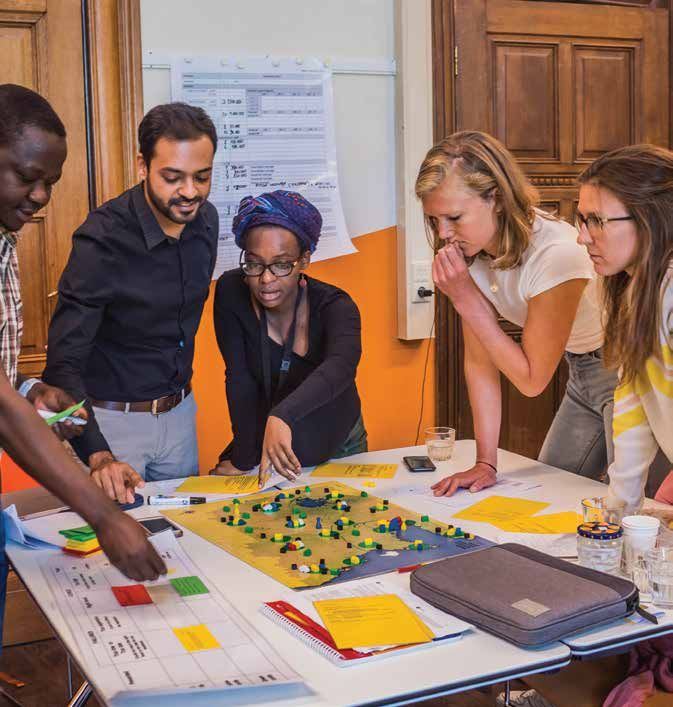
Our interactive learning approaches include
lectures, discussions, group work, debates,           KIT Virtual Grounds
case studies, exercises, role plays, self-study,      In our courses we make use of KIT Virtual Grounds,
self-reflection, written assignments, simulations     KIT’s virtual community of professionals in health
and serious games.                                    and international development. KIT’s e-learning
                                                      courses are offered through KIT Virtual grounds.
Our Facilitators                                      For classroom based courses, course materials
Course facilitators are leading professionals in      are offered digitally through this platform and it is
the field of public and international health and      used as well for peer review and other interactive
with this experience they enrich the learning of      methods.
participants and put theory into perspective of
the latest developments. Our facilitators work        Accreditation
for international NGOs as well as UN agencies         KIT’s Master programmes are given in cooperation
such as the World Health Organisation. KIT staff      with the VU Vrije Universiteit Amsterdam and
members bring back the latest experience from         are accredited the Dutch Flemish Accreditation
the field, based on KIT’s involvement in ongoing      Organisation (NVAO www.nvao.com).
projects across the globe. KIT also collaborates      In addition, advanced courses are all accredited by
with highly ranked Dutch universities.                tropEd, an international network of institutions for
                                                      higher education in international health.
Students and alumni
Health professionals from all over the world attend
courses at KIT. Some classes have as many as
twenty nationalities. Students come from a range
of disciplinary backgrounds. Typical profiles are
doctors, nurses or health managers working in
hospitals, ministries of health, NGOs and other
organisations.

                                                                                                              3
Studying at KIT
    Where our students come from

                Participants from
                over 95 countries

                                 Over 3000 health
                       professionals trained at KIT

                 75 master students
                 per year

4
Studying at KIT
What alumni say about us

“   As a Returned Peace Corps Volunteer from the US, I was looking for an MPH
    programme that allowed me to learn from the experts in the field: those who actually
    originate and work in the local contexts most in need of development help. KIT was
    the perfect fit for me. While the KIT professors are experts in the various domains of
    public health, to me, the true beacons of knowledge in the MPH/ICHD programme
    were my fellow students. I learned so much from them; how their countries worked,
    rural versus urban challenges, corrupt realities, cultural and social views, and so
    much more. Not only did I get to constantly learn about my colleagues’ experiences,
    realities, and what shaped their views, I also got to learn a lot about their culture
    by simply working with them in groups. Thanks to this programme I’ve learned
    countless skills that contribute to my current job on a daily basis

                        Lorena Gonzalez, US, Peru, MPH
                        Currently working as Programmes Technical Advisor for a
                        humanitarian aid and development NGO in Yemen

“   There is no doubt that my KIT MPH experience marked a milestone in my
    professional development and life post-MPH. Since my graduation, I have worked
    for major donor funded disease control programs in Nigeria where we have
    used scarce resources to push back the spread of HIV/AIDS, Tuberculosis and
    Malaria. I feel so honoured to be among those making this difference in the public
    health landscape of my country, Nigeria. I presently work with KNCV Tuberculosis
    Foundation, a Dutch NGO, which I feel deepens my ties and affiliation to the
    Netherlands! My time at KIT certainly gave me the knowledge, skills and confidence
    to do the work I do now.

                        Eno Ekaete Usoroh from Nigeria, MPH
                        Background as medical doctor, working as Senior Programme (regional)
                        manager, KNCV TB Foundation

                                                                                               5
Master
    2   programmes

6
Master programmes
Master of Science in Public Health /
International Course in Health Development
• MPH Track in Health Systems Policy and Management
• MPH Track in Sexual and Reproductive Health and Rights
The International Course in Health Development (MPH/ICHD) is a twelve-month Master
of Science in Public Health programme organised by KIT Royal Tropical Institute in
cooperation with the Vrije Universiteit Amsterdam (VU).
Public health in a changing environment After the programme you will be able to:
Health systems in low and middle income • Critically assess population health status and
countries face a wide range of complex challenges. identify population health problems, risk factors
These challenges include: the inequalities in and determinants and determine health needs.
health and healthcare; the double burden of • Appraise the role of health systems in terms of
communicable and non-communicable diseases; fundamental goals, functions, actors and
the challenges presented by the unfolding performance.
demographic transition; the health needs in fragile • Influence effective policy-making and strategic
environments, and the call for equity. planning concerning interventions aimed at
improving public health, taking into account
The worlds of international and national health scientific evidence, good practice and local
governance and financing are increasingly context.
complex and interconnected. Globally, there is • Creatively implement, quality client-centred,
more emphasis upon the importance of working cost-effective, strategies and interventions.
in partnerships to provide evidence-based public • Monitor and evaluate health interventions by
health solutions for continuously improving the effectively managing human, financial and
quality and responsiveness of health services. logistic resources in the dynamic global and
Addressing these issues requires well-trained local context.
professionals capable of solving complex public • Work professionally across different sectors,
health problems systematically, using a partnership different cultures, disciplines and institutional
approach. levels, with private and public actors, and through
advocacy, communication and networking.
Course objectives • Identify research needs; commission research,
The MPH/ICHD is designed to develop the capacity and critically analyse and translate research
of senior health managers to use an integrated, results into policy and practice.
multi-disciplinary approach to address health pro- • Incorporate a pro-poor and equity approach
blems in their country. In all programme compo- in all actions.
nents participants are encouraged to compare with • Continuously examine and critically self-reflect
participants from other countries who face similar on your own cultural competence, motivation,
issues but with alternative solutions. practice and values, adjust them accordingly,
and act as an agent of change.
7
Programme structure
    In total the MPH programme consists of three trimesters:

1   First trimester: Core Course for both tracks
     • Introduction                                         • Social determinants of Health
     • Epidemiology and Statistics                          • Health Systems and Policy Making
     • Learning and Communication Skills                    • Health Planning

2   Second trimester: Advanced modules

       Second trimester: Advanced modules for both tracks

       • Qualitative Methods for Health Systems Research
       • Human Resources for Health

       Track in Health Systems Policy                        Track in Sexual and Reproductive Health
       and Management                                        and Rights

       Sexual and Reproductive Health and Rights             Sexual and Reproductive Health and Rights
       including HIV and AIDS                                including HIV and AIDS

       Control Strategies for Communicable and               Sexual and Reproductive Health and Rights:
       Non-Communicable Diseases                             Organising Effective Responses

       Health Policy and Financing                           Sexual and Reproductive Health and Rights:
                                                             Policy, Governance and Finance

3   Third trimester: For both tracks
    Study visit to Geneva; Thesis; Oral examination
    The thesis is focused on a topic relevant to the track that you chose as well as to your work. MPH
    students are invited to a study trip to Geneva to visit the World Health Organisation (WHO) and other
    international organisations working in the health sector. With guidance from an advisor, you write
    a thesis on an important health problem you have been involved with in your country. The aim is to
    systematically analyse the problem and make suggestions for its solution based on qualitative and
    quantitative information, and on literature review.

8
Practical information
Your profile • MPH Track in Health Systems Policy and
If you are a health professional working, Management: if you aspire to work at the
or preparing to work, in a managerial capacity interface of policy and management, within
in health services or programmes at national, different health systems contexts.
regional or decentralised district level, then the
MPH/ICHD is ideal for you. You have the option • MPH Track in Sexual and Reproductive Health and
of choosing between two tracks, designed for Rights: if you wish to work in SRHR focus domains
different professional domains: which may include HIV and AIDS.
Admission criteria Course information
• Academic training at least to the level of a Course dates
bachelor’s degree, either in medicine or in 14 September 2020 until 3 September 2021
another field related to health care, such as
health sciences, economics, social science or Duration 1 year (Full-time)
nursing. up to 3 years (Part-time)
EC 60
• A minimum of three years of relevant working Location KIT Royal Tropical Institute,
experience in a low or middle income country, Amsterdam
including managerial responsibilities and Language English
including some experience in public health. Fee (full-time) € 17.700
Fee (part-time) € 18.350
• Proven proficiency in spoken and written English
in form of academic TOEFL or IELTS test is Eligible for Orange Knowledge Programme
required. See our website for more information (Full-time programme only)
and exceptions.
KIT application deadline OKP applicants
• Computer literacy is essential, as we use a 25-02-2020
virtual learning platform in our education. OKP application deadline
Date to be confirmed, probably March 2020
KIT application deadline other funding
01-07-2020
Contact courses@kit.nl
Website www.kit.nl/mph
9Part time MPH/ICHD NEW
If you cannot leave your home/job for one year, it is now possible to follow the
MPH/ICHD programme in parts. You will take most of trimester one in your first year,
trimester two in the second year and trimester three can be done (distanced-based) in
the second or third year. Unfortunately there are no OKP (Orange Knowledge
Programme) scholarships available for the part-time MPH/ICHD programme.
Student testimonials
“ ICHD at KIT integrates knowledge from different disciplines; from epidemiology to health
policy, planning and human resource for health to research and field trips among several
others to advance the expertise of students to improve the health of people. KIT provided me
the opportunity to interact and network with students from diverse cultural and professional
backgrounds as well as lecturers who are making great strides in different fields of public
health across the world and so you ultimately learn from the experiences that are shared in the
classroom. I have learnt to look beyond theory in analyzing health challenges in my daily work in
other to be able to provide innovative, practical and context-specific solutions to health problems.”
Evelyn Amoako from Ghana, MPH
Head of Institutional Public Health, St. Dominic Hospital
“ My time at KIT has not only given me growth in Public Health understanding and skills but much
more also the appreciation of the constant exchange of culture. Following the MPH/ICHD and
being able to learn through the eyes from an African or Asian perspective, gave more value to the
course than I first realized. I liked the open communication with the facilitators and the space in
the sessions to ask critical questions. KIT became for me a home away from home. Studying my
MPH at KIT was one of the best decisions I could have taken.”
Iline Ceelen from Belgium and Switzerland, MPH
Background in midwifery, working as Medical Coordinator for Medecins sans Frontieres.
“ Studying the MPH/ICHD at KIT was the best experience I ever had. The facilitators at KIT were
so knowledgeable and supportive and I liked the interactive teaching. Fellow students from 23
different countries also helped me to understand different cultures as well as to tackle public
health issues in various ways. The course has enhanced my theoretical and practical knowledge
and skills, which I am using in my work now to advocate and promote girls and women’s health
rights and improve their health status. I am passionate to contribute in changing the society and
make world better place for women to live in.
Manju Pandey from Nepal, MPH
Background in Nursing, working as Project Manager, CARE International in Nepal.
10Master programmes
Master of Science in International Health
The Master of Science in International Health (MIH) aims to develop the capacity of
health professionals planning to work at the interface of international organisations
and national health systems.
Studying the MIH at KIT allows you to design a of the population most in need, and assists in the
programme that is tailored to your specific wishes mobilisation of resources and capacity building.
and needs, with a combined offer from institutes
across the tropEd network- of approximately 100 Course Objectives
different advanced courses to choose from. With this The MIH provides health professionals with the
variety of modules, the MIH prepares you optimally competencies and attitude required to effectively
for your desired field of work - whether that be deal with current challenges, understand and analyse
maternal and child health, HIV and AIDS, disaster international health issues, conduct applied research,
settings, research, health policy, human resources or and develop adequate, appropriate and evidence-
another area. informed responses in a global context.
The MIH can be completed within 1 year (full-time), After the programme you will be able to:
and up to 5 years (part-time) and as a “blended • Advocate for and address equity and human rights in
programme” with online modules, depending on international health
your availability. This flexible programme targets • Identify and analyse current and emerging health
health professionals who are unable to take long problems and its determinants in different population
periods of leave from home or work to follow an groups.
academic programme. • Identify the needs for and generate ethically sound
evidence to address health problems through
The MIH is organised by KIT Royal Tropical Institute research and evaluation.
and the VU Vrije Universiteit Amsterdam. • Formulate effective responses and contribute to its
implementation in health systems management and
What is International Health? organisation across the continuum of healthcare.
Experts in International Health work across national • Initiate and manage collaborative relations and
and regional boundaries, focusing on health communicate effectively across disciplines, sectors
problems of disadvantaged populations integrating and cultures within complex environments.
the complexity of social determinants of health and • Critically self-reflect your own cultural competence,
globalisation. Key elements are a multidisciplinary motivation, practice and values, adjust them
and multi-sectoral approach, generating and accordingly, and act as an agent of change.
applying evidence from personal experience and
other contexts, disciplines and actors. In addition,
professionals working in the field of International
Health, master issues related to health systems
management and organisation across the
continuum of health care, and keep an equity-based
approach while analysing health problems and the
provision of health services. The expert functions
as an advocate aiming to improve the health
11Programme structure
The programme consists of three parts, taken in the following order:
1 Core course (NTC) (20 EC)
The core course, Netherlands Course on Global Health and Tropical Medicine (NTC), provides you with
basic knowledge on a wide range of topics related to international health needed to follow the advanced
modules and to complete the final thesis. The NTC will also help you to be aware of the perspectives of
equity and gender while analysing health problems. The course consists of five modules: introduction,
social determinants of health, health needs and responses, basic research methods and health systems.
For a more detailed description see p. 15 or www.kit.nl/ntc.
2 Advanced modules (20 EC) + Study visit WHO
The advanced modules will help you to acquire and develop the needed competencies and attitude
to allow you to work in the field of International and Global Health. With support from the course
management, you will make an individual study plan. The study plan will include advanced modules that
can be taken at KIT and at various universities and institutes throughout the Netherlands, Europe and
around the globe. The availability of distance-based modules (e -learning) also allow you to continue your
studies from home or wherever you currently work. KIT encourages students to expand their professional
network and diversify their learning experience by following modules in different countries and different
tropEd institutions. See p. 21-26 for all advanced modules at KIT Royal Tropical Institute. For modules at
other institutes see: www.troped.org
Visit to Geneva: MIH students go on a study trip to Geneva to visit the World Health Organisation (WHO)
and other international organisations working in the health sector.
3 Thesis (20 EC)
Under the guidance of a content expert, you will work on your thesis. During this phase you will identify
and define a relevant health problem. You will systematically analyse this problem and make suggestions
for its solution based on qualitative and quantitative information from a primary study, secondary
data analysis or a literature review. While working on your thesis you are not required to stay in the
Netherlands.
Part-time option: The programme can be completed within one to five years, depending on your availability.
12Practical information
Your profile TropEd
If you are a health professional (for example The MIH is offered by a series of institutions
medical doctor, nurse, midwife) and you aspire working on international health and that are part of
to develop or expand your career in international the tropEd network. These institutions are located
health, with an individual study plan, then the in Europe, Africa, Asia and in Latin America. KIT is a
MIH is ideally designed for you. longstanding member of the tropEd network.
Admission criteria Course information
• Medical Doctor degree or Bachelor degree in Start dates
nursing or in midwifery. If you have a Bachelor Spring 2020 (09-03-2020)
degree in Public Health, Dentistry, Physiotherapy Autumn 2020 (07-09-2020)
or social science you will need to show proven
work experience in health service delivery. Duration 1 year (Full-time)
Up to 5 years (Part-time)
• Two years of relevant work experience, including EC 60
work experience in low-and middle-income Location KIT Amsterdam, optionally
settings. abroad depending on the
selection of advanced
• Proven proficiency in spoken and written English modules (including
in form of academic TOEFL or IELTS test is e-learning)
required. See our website for more information Language English
and exceptions. Fee (full-time) 2020 € 11.140 (*)
Fee (part-time) 2020 € 11.760 (*)
• Computer literacy is essential, as we use a
virtual learning platform in our education. Application deadline
2 months before the start of the course,
3 months if you need visa
Contact courses@kit.nl
Website www.kit.nl/mih
* This fee includes core course, thesis. It does not include
fees for advanced modules taken at KIT or elsewhere.
13Course fees
The tuition fee for the MIH covers the core as these depend on the students personal
course, course materials, tutoring for the study plan. MIH students from KIT receive
thesis and advisory services for the duration a 20% discount on indicated prices for
of the programme. Please note that it does advanced modules taken at KIT.
not include fees for advanced modules
Student testimonials
“ As a nutritionist, I chose to pursue a Master in International Health to expand my
knowledge in public health and global health issues. Work experience prior to the course
was important to build upon my strengths and overcome some weaknesses. The theoretical
and practical learnings are balanced to improve both knowledge and skills. I particularly
deepened knowledge in infectious diseases and developed sound research skills. I feel
more confident professionally thanks to the training. In addition, the programme design is
adapted to young professionals, the learning topics are diverse and taught by a variety of
lecturers which helps sustaining interest throughout the course.
Nora Hobbs from France
Nutritionist, UN World Food Programme
“ As a nurse in the field of migrants health I worked for the UN Migration Agency (IOM) in
many countries, among others Ethiopia,Jordan, Kenya, Haiti, Libya. After 15 years I took
the decision to study a Master’s programme to broaden my knowledge. My enrollment at
the KIT and the Master in International Health (MIH) helped matching my extensive field
experience with the theory.
I followed the core course of this Master’s programme at KIT in Amsterdam, and the rest
via distance learning. After my graduation I rejoined IOM in Cox’s Bazar, Bangladesh with
Rohingya refugees as the health programme manager. I benefited tremendously from the
knowledge acquired during the MIH. This Masters programme empowered me with the
knowledge to perform better.
Mariam Abdelkerim from Chad
Health programme manager for the UN Migration Agency
14Master programmes
Netherlands Course on Global Health
and Tropical Medicine (NTC)
The Netherlands Course on Global Health and Tropical Medicine (NTC) provides essential
preparation for health professionals such as medical doctors, nurses and midwives
planning to work in low and middle income countries.
The NTC can be taken as a stand-alone course Course Objectives
or as the core course of the Master of Science in By following the NTC, you will be able to:
International Health (MIH). In the Netherlands, • Critically reflect on the collection, analysis and
the NTC forms part of a post-graduate training appraisal of qualitative and quantitative data
programme for physicians leading to a diploma as relevant for the improvement of health and
MD Global Health and Tropical Medicine (AIGT). health care equity.
For more information, go to: www.oigt.nl. • Identify and analyse interrelated determinants of
health and major health concerns of populations in
The NTC is organised by KIT Royal Tropical Institute a trans-disciplinary perspective in low- and middle-
in collaboration with the Vrije Universiteit Medical income settings and on global level
Centre (VU) in Amsterdam, the University Hospital • Propose sustainable improvements of health systems
of the University of Amsterdam (UvA). addressing inequities and considering diverse
intercultural settings as well as social, legal and
ethical responsibilities.
• Describe the role, decision-making process and
impact of global health policy actors
• Collaborate and clearly communicate in a multi-
disciplinary and multi-cultural setting
15Programme structure
The NTC is divided into five modules
1 Introduction Module
This module aims to help you to develop learning and communication skills needed for the course
and for your future practice. You will examine cultural and international contexts.
2 Social Determinants of Health
The factors that have the most significant influence on health are known as social determinants of
health. Most of the key determinants lie outside the direct influence of health care, such as gender,
education, culture, employment and environment. This module provides you with an overview of these
determinants and with the policy tools devised to address them.
3 Health Needs and Responses
You need knowledge and skills to address the most important diseases and health problems occurring
in low- and middle-income countries while having access to limited resources. This module will provide
you with an overview of health topics including communicable and non-communicable diseases,
maternal and child health, and sexual and reproductive health. Because of the limited diagnostic and
therapeutic possibilities available in many low and middle income countries, a syndromic approach is
often emphasised.
4 Basic Research Methods
This module familiarises you with quantitative and qualitative research methods and how to critically
appraise evidence provided in literature. Basic principles of statistics, epidemiology and study design
are discussed here to answer questions such as: which determinants and/ or risk factors of diseases
are most important to address? Which intervention has the most impact? A socio-cultural perspective
on health, illness and health care, medical anthropology and sociology is used to examine questions
such as why patients do or do not seek health care in time.
5 Health Systems
Health systems around the globe are facing challenges to address demographic changes like
population growth, technological developments, and a more assertive demand for quality care. At the
same time, many countries already have trouble achieving access for the poor while containing costs.
The emphasis in this module is on the practical implementation of health programmes by the public
and private sector (NGOs) and the organisation of health care across the continuum of care including
health promotion, prevention, diagnosis, and treatment, palliative care and rehabilitation.
16Practical information
Your profile Full-time or part-time study
The NTC is aimed at health professionals, such as The full-time course takes 14 weeks. If you are not
doctors, nurses and midwives, who are planning able to take 14 weeks off work, other possibilities
to work in low and middle income countries or are feasible upon discussion with KIT course
societies. management. It is also possible to follow one
or more selected sessions of the course upon
You may for example be preparing to work in a discussion.
low and middle income country in a primary health
care programme or a district / referral hospital,
or you are planning to participate in healthcare
projects with non-governmental organisations
(NGOs).
Admission criteria Course information
• Medical Doctor degree or Bachelor degree in Course dates
nursing or Bachelor degree in midwifery. Spring 2020 (09-03-20 until 12-06-20)
If you have a Bachelor degree in Public Health, Autumn 2020 (07-09-20 until 11-12-20)
Dentistry, Physiotherapy or Social Science you
need to show proven work experience in health Duration 3 months (full-time)
service delivery. EC 20
Location KIT Amsterdam
• Two years of relevant work experience, Language English
including work experience in low- and Fee (full-time) 2020 € 6.720
middle-income settings.
Application deadline
• Proven proficiency in spoken and written English 2 months before the start of the course,
in form of academic TOEFL or IELTS test is requi- 3 months if you need visa
red. See our website for more information and
exceptions. Contact courses@kit.nl
Website www.kit.nl/ntc
• Computer literacy is essential, as we use a
virtual learning platform in our education.
17Student testimonials
“ I can put in practice the knowledge I gained during the NTC now in Liberia. The interaction with
people from different backgrounds and especially people from different cultures was very useful.
It allowed me to adapt quickly in a new environment when I came to Liberia to support the Ebola
Outbreak response. The topic of health systems was also useful, since I am using it to support the
restoration of health services and rebuilding of health system after Ebola outbreak in Liberia.
Jeremias Naiene, from Mozambique, MIH
Currently working in Liberia with United Nations Mission for Ebola emergency response WHO.
“ The course in Tropical Medicine (NTC) proved to be very useful during my experience in both
Tanzania and Ethiopia. As midwives we have a quite narrow field of work; mainly obstetrics/
midwifery. With the NTC I learned to think of a greater perspective and recognise illnesses like
for example tuberculosis and malaria earlier during pregnancy.
Anna Ruth Kuipers from the Netherlands, NTC
Working as Senior Midwife, Ethiopia, background in Education in Midwifery
“ The NTC is a course which has been a great help in expanding my view on health related issues
in a broader perspective. The interactive modules and working together with colleagues from
various cultural backgrounds, really helped in obtaining a bigger in-depth understanding of the
complexity of development aid and healthcare in different settings. The knowledge and skills I
gained helped me to understand underlying problems in my work as a tropical doctor, thereby
allowing me to initiate and successfully complete projects with significant impact. Among other
things I started up a neonatal intensive care unit and I contributed to reorganizing the supply
chain of the hospital I worked in.
Niek Versteegde, The Netherlands
Nick followed the NTC as final course for the degree in Tropical Medicine, and was working in Sengerema
Hospital in Mwanza, Tanzania.
18Master programmes
Core Course in Public Health
The core course in Public Health is a three month course that prepares health managers
to use a public health approach to address the problems in country, taking into account
epidemiology, health system aspects and broader social determinants of health. The course
will prepare you to solve complex public health problems systematically. The course can be
taken as a stand-alone course or as part of the (part-time) Master of Science in Public Health.
Programme structure
The course consists of 3 parts
1 Epidemiology and Statistics
Epidemiology is the discipline concerned with describing how disease and ill-health is distributed
in populations – in person, place and time – and also tries to answer the question as to why this
distribution occurs and how interventions may influence this distribution. Statistics deals with
collecting, summarizing, presenting and interpreting data, and using them to develop and test
hypotheses.
2 Social Determinants of Health
The factors that have important influence on health are known as determinants of health. Most of
these determinants lie outside the direct influence of health care, such as gender, education, culture,
employment and environment. Understanding these factors is important to effectively design and
manage interventions in the public health sector.
3 Health Systems and Policy Making
You will look into the health needs of people, the consequent demand for services and the organisation
of health service delivery. What are the factors that influence utilisation of health services and peoples
health (care) seeking behavior, especially the poor and other underprivileged groups? This module
discusses health systems: their boundaries, actors, functions and goals.
Practical information
Course dates 21 September 2020 Unfortunately there are no Orange Knowledge
until 11 December 2020 Programme scholarships available for the core
Duration 3 months course in Public Health.
EC 17
Location KIT Amsterdam
Language English
Fee 2020 € 5.780
19Short
3 courses
20The advanced courses offered at KIT Royal Tropical Institute are an opportunity
for professionals in health and development to further develop their knowledge
and skills and broaden their perspectives.
The courses are practical, focused and complete in and of themselves. Courses can be taken as a
standalone course, or as part of the Master of Science in Public Health (MPH) or the Master of Science in
International Health (MIH). Courses are given in various formats: in classrooms at KIT or where indicated
as e-learning courses. We are happy to offer also courses on public health issues in French.
Short Courses on
Health Systems Strengthening
Qualitative Methods in Health through the development of your own research
Systems Research proposal, through practical exercises, and by
22 January – 7 February 2020 (4 EC) appraising a research proposal. Attention is also
€ 2020, eligible for OKP paid to enhance the use of research results by
In health systems policy makers, managers policy makers, managers, health care providers,
and service providers need to be able to civil society and clients.
select appropriate research methods to better
understand and address the problems they Human Resources for Health
face. This course discusses which methods to 17 – 28 February 2020 (3 EC)
use to answer different health system research € 1660, eligible for OKP
questions. The course specifically focuses on The quality of health service delivery depends to a
qualitative research methods. You will gain large extent on the availability and performance
experience in each step of the research process of qualified personnel. Policy makers and
managers need to be able to develop adequate
policies and strategies, analyse organisational
behaviour and identify appropriate leadership
WHO Collaborating skills.
This course addresses the knowledge and skills
Centre for Human required for human resource planning and
Resources for Health management. It provides an overview of the
situation of HRH from a global perspective and
The World Health Organisation discusses strategies at country level to address
(WHO) has designated KIT an HRH health workforce issues. Topics include labour
Collaborating Centre for the training, market analysis, workforce planning, training,
retention and motivation of health care strategies to improve retention, motivation and
workers in developing countries. performance, governance, gender and leadership
As such, KIT conducts research and and organisational change.
advises countries on policy, planning
and capacity development.
21Health Policy and Financing Monitoring and Evaluation in
18 May – 5 June 2020 (4 EC) a Dynamic Health Environment
€ 2020, eligible for OKP 17 – 28 August 2020 (3 EC)
This module takes an in-depth look at important € 2650 (tropEd € 1600), eligible for OKP
issues and current debates in health policy, health € 2220 (Early bird: if paid before 1 May 2020)
economics and health financing, such as universal Monitoring and evaluation skills are essential for
health coverage, decentralisation, the publicprivate working in a dynamic health environment. Sectoral
mix, international finance of health goods, aid plans at national, regional and local level require
effectiveness, TRIPS, community participation, insight to allow informed decision making, planning
health insurance and governance of health and to facilitate implementation. This course will
systems. As part of this course, you are required to provide participants with a deeper understanding
critically read and discuss papers on specific health of the role that M&E plays in all aspects of
policy debates in low and middle income countries; the health system. Course participants will
and write a policy brief. Examples include feasibility examine contextual changes such as the new aid
of national insurance systems, the role of private architecture and multistakeholder environments
sector and contracting arrangements, and the and its implications for M&E. Emphasis will be put
relationship between decentralisation and health on identifying appropriate M&E and information
systems performance and equity. management approaches to be used in developing
countries. Rational data collection for optimal
NEW Suivi et Évaluation de la Santé dans un usefulness while imposing minimal burden on staff
Contexte Dynamique (Cours en français) will also be highlighted. Finally special attention is
Voir p. 26 pour la description de ce cours et given to making M&E systems equity aware and to
d’autres cours enseignés en français. balance the ethical aspects of an evaluation.
“ The M&E course was a great eye opener in the role of M&E across all the
elements of the health system. The key concepts that I was introduced
to such as the theory of change have been of tremendous help in
conceptualization, implementation and evaluation of programs in my day
to day work. The classes were engaging, practical and were greatly enriched
by the wide experience of the lecturers and interaction with students from
different backgrounds and cultures.
Judy Gichuki from Kenya
Currently working as a Sub-County team lead in the Nairobi County Health Services Department.Short Courses on
Sexual and Reproductive Health and
Rights, including HIV and AIDS
Sexual and Reproductive Health and Sexual and Reproductive Health and Rights:
Rights, including HIV and AIDS Policy, Governance and Financing
9 – 27 March 2020 (4,5 EC) 18 May – 5 June 2020 (4 EC)
€ 2170, eligible for OKP € 2020, eligible for OKP
Driven by international call for a more inclusive, What are the key issues in the good governance of
human rights-based and gendered approaches, sexual and reproductive health and rights (SRHR)
there is a shift in addressing the range of issues responses, including HIV? How can one negotiate
in sexual and reproductive health (SRH) that affect the complex political and financial terrain when
women and men at all stages in their lives. developing policies and strategic plans?
This course explores the causes, consequences Maternal health, family planning, adolescent
and patterns of SRH issues including: sexual health, safe abortion and HIV, and the policies and
health, family planning, infertility, maternal and strategies that address these, are among the most
newborn health, abortion, adolescent health, child internationalised and to some extent politicised of
marriage, menstrual health, sex work, gender all health issues. In this course, you identify SRHR-
based violence and HIV and AIDS. It also discusses related international agreements, development
key considerations for SRHR and HIV policy and commitments and financial mechanisms, and
practice such as gender, rights, sexuality, disability, analyse how these influence national policies and
stigma, ethics and mental health promotion. plans and vice versa. You will perform an SRHR
Throughout the course, there is a focus on strategic policy review from a multi-stakeholder
marginalised and vulnerable groups in various perspective, addressing governance and financing
contexts, including emergency and fragile settings. structures and their implications for planning and
managing the responses.
Sexual Reproductive Health and Rights:
Organising Effective Responses Santé et Droits Sexuels et Reproductifs NEW
14 April – 6 May 2020 (4,5 EC) (Cours en français)
€ 2170, eligible for OKP Voir p. 26 pour la description de ce cours et d’autres
Improving equitable access to and quality of sexual cours enseignés en français.
and reproductive health and rights (SRHR) related
services, including HIV and AIDS services, continues
to be high on the global public health agenda.
This course builds on current evidence to critically
identify and analyse responses across the health
system, including in emergency and fragile
state settings. It also discusses equity, voice,
accountability and participation in the organisation
of responses and services, with a focus on making
services equitably accessible to marginalised
groups and key populations. This will enable you to
translate principles of sound SRHR responses, into
practice.
23Short Courses on
Health Systems in Fragile and
Conflict-affected Environments
Analysing Disrupted Health Systems E-learning: Rebuilding Disrupted Health
in Countries in Crisis Systems - Developing Context-Specific
17 – 28 August 2020 in Amsterdam (4 EC) Strategies for Health Care Policies,
€ 2000 (tropEd € 1600), eligible for OKP Implementation and Governance
€ 1690 (Early Bird: if payment made before 30 March – 19 June 2020 (5 EC)
27 April 2020) € 1940 (tropEd € 1550), eligible for OKP
Protracted crises have several severe impacts on € 1800 (Early bird: if payment made before
health and health systems. Understanding the 1 February 2020)
context and these impacts will help find ways for This e-learning course strengthens your ability
improvement. This course provides participants to address health system challenges in complex
with an approach to analyse disrupted health emergencies and fragile states. To prepare you
systems, both looking at key challenges as well for improving these challenging situations we will
as opportunities for addressing the main analyse health system policies, politics, roles and
weaknesses. The course makes extensive use strategies of key actors, and human rights policies.
of case studies, learning from successes and This will enable you to develop context-specific
failures from countries in crises. Participants will strategies for rebuilding disrupted health systems.
also analyse the international aid system in these This is a part-time programme which takes
contexts and formulate recommendations for approximately 12.5 hours of online study per week.
adequate health sector recovery strategies. This e-learning course is especially interesting if
you want to develop your professional skills, but
you cannot leave your job or home for extended
“
periods of time.
As Emergency Manager working
for WHO in North East Nigeria,
The ADHS course was very
relevant to the Humanitarian and
Development Nexus as it was
tailored towards understanding
and analyzing the disrupted health
WHO Collaborating
Systems in various countries. I also
found meeting colleagues from Centre or Health
different parts of the world very Systems in Fragile and
valuable. I can recommend this Conflict-affected
course (ADHS) to others colleagues contexts
working in disrupted health
systems all over the world.
The World Health Organisation (WHO)
has designated KIT Health as WHO
Dr Collins Owili , ADHS
Collaborating Centre for Health Systems
Emergency Manager, World Health
in Fragile and Conflict-affected Contexts.
24 Organisation NigeriaShort Courses on
Disease Management
Control Strategies for Communicable Good Epidemiological Practice: Design, NEW
and Non-Communicable Diseases Implementation and Analysis of Global
14 April – 6 May 2020 (4,5 EC) Health Studies
€ 2170, eligible for OKP 16 – 20 December 2019 (1,5 EC)
Disease control refers to a broad package of € 750 (tropEd € 500)
strategies for controlling diseases, from primary Epidemiology is the cornerstone of global health.
prevention, health promotion, and health It shapes policy decisions and evidence-based
legislation to screening for early detection, practice by identifying disease risk factors and
treatment and rehabilitation. In order to choose preventive healthcare targets. Most epidemiological
the right strategies it is necessary to understand findings are genuine and make an important
the context in which a disease arises, the factors contribution to global health, but some findings are
contributing to its spread and the natural course obtained from ill-designed, poorly implemented,
of the disease. In this course, a number of inappropriately analysed or selectively reported
communicable and non-communicable (NCD) studies. This course aims to provide students with
diseases, are used as models to demonstrate the skills and knowledge needed to critically appraise
different aspects and principles of disease control. epidemiological practice in global health, as a basis
A variety of diseases relevant to public health are for sound decision making. The course will have
discussed, such as malaria, tuberculosis, cancer a strong focus on the emerging themes of good
and mental health, in addition to nutrition and epidemiological practice within the boarder debate of
refugee health care. Part of this course is carried reproducibility crisis in science.
out throught interactive learning in our virtual
learning environment.
“
Using GIS for Global Health
This course was an opportunity
22 June – 3 July 2020 (3 EC)
to widen my knowledge on how
€ 2050, eligible for OKP
to handle NCDs and to get an
€ 1620 (Early bird: if payment made before
27 March 2020)
update on control strategies for
Geographic Information Systems (GIS) provide communicable diseases. The
tools for planning and monitoring of health module consisted of lectures,
interventions and disease control activities. group work, self-study and online
GIS can be applied to improve health care delivery study. I had a wonderful time in
in disease control programmes. In this course you Amsterdam, met people from
will learn how to use GIS to identify patterns of different parts of the world with
disease in time and place and to assess public different experiences related
access to health care services. Emphasis will to communicable and non-
also be given to geo-visualise Health Management
communicable diseases.
Information for advocacy purposes and to monitor
and evaluate programme performance.
Tessy Fautsch from Luxemburg,
followed CCND as part of the MIH.
Case studies and lectures will address a wide range
Working as medical coordinator for MSF
of infectious diseases, including water-born and
sexually transmitted diseases. in projects around the world. 25Nouveau
Cours de Santé
4 Publique en Français
Après avoir mené à terme pendant des années des cours de santé publique en anglais avec grand succès,
le KIT offre désormais des cours entièrement en français grâce à nos experts francophones. Les cours se
déroulent au cœur d’Amsterdam dans les bâtiments historiques du KIT. Nos experts ont plusieurs années
d’expériences en Afrique francophone et les partenaires locaux ont longtemps exprimés leurs désirs de
parfaire leurs capacités de suivi & évaluation. C’est donc en réponse à la demande de nos partenaires
d’Afrique francophone que ces cours ont été développés.
NEW Suivi et Évaluation de la Santé dans NEW Santé et Droits Sexuels et Reproductifs
un Contexte Dynamique 9 – 20 Mars 2020 (3 EC)
17 – 28 Août 2020 (3 EC) € 2050 frais de scolarité normaux et pour/
€ 2650, frais de scolarité normaux et pour titulaires de bourses OKP
titulaires de bourses OKP La Santé et les Droits Sexuels et Reproductifs
€ 2220 (Early bird, frais de scolarité en avance: (SDSR) sont une question de santé publique et
si payé avant le 1er Mai 2020) droits humains. En plus d’assurer l’accès universel
Les compétences de Suivi & Évaluation (S&E, ou et équitable à des services de santé sexuelle et
M&E en anglais) sont des outils essentiels pour reproductive de qualité, l’avancement de la SDSR
agir dans un environnement dynamique dans nécessite également l’adoption d’une perspective de
le secteur du développement. Ces compétences genre, une approche basée sur les droits et prendre
appuient la prise de décision et permettent en compte l’influence des facteurs socioéconomiques
d’augmenter l’impact d’un projet en maximisant et culturels. Cela inclut la prise en compte des besoins
les opportunités d’apprentissage disponibles. spécifiques de certaines populations comme les
Ce cours est destiné aux cadres supérieurs qui jeunes et adolescents ou les personnes avec diverses
sont pleinement engagés dans la planification, orientations sexuelles et identités de genre.
la gestion, et l’évaluation des réformes du
secteur de la santé dans les pays en voie de Ce cours explore les principes clés de la SDSR au
développement. Ces cadres supérieurs peuvent travers de différentes thématiques comme la santé
être des employés dans les Ministères de la sexuelle, la santé prénatale, périnatale et de post-
Santé, ils peuvent travailler dans des ambassades, partum, l’avortement sécurisé, la sexualité des
organisations internationales, ou organisations jeunes et adolescentes, la grossesse précoce, le
non gouvernementales qui coopèrent avec les mariage précoce et violences sexuelles et basées
Ministères de la Santé sur les réformes actuelles du sur le genre. Le cours aborde également les moyens
secteur de santé. d’améliorer l’accès équitable aux services de santé
sexuel et reproductif et de VIH pour les populations
défavorisées, en discutant qualité, voix, responsabilité
26 et participation.Tailor-made Training
5 and other services
Tailor-made Training (TMT) Our approach
All KIT courses can also be organised as tailor-made To achieve meaningful change, we take into
training and adapted to the need of the client. consideration the perspectives of rights, equity,
Each organisation faces context specific challenges participation and gender equality. We use a
and opportunities in the changing field of global highly innovative demand-driven and tailor-made
health. Contrary to regular courses, the tailor-made approach. Our methods are always adapted to
training programmes are specifically designed to local contexts and respond to the priorities defined
address the unique objectives and capacities of your by the stakeholders and partners we work with.
organisation. We offer tailor-made training to clients
such as educational and research institutes, NGOs Focus areas of our health related work
and local or national governments and ministries • Sexual and Reproductive Health and Rights
across the globe. Tailor-made courses can be held • Human Resources for Health (HRH)
in the Netherlands or in-country or via e-learning. • Health Governance and Financing
• Data for disease control
KIT’s other health related work • Health Systems in Fragile and
Through capacity building and institutional support Conflict-affected Contexts
KIT contributes to improving access to quality
health services and strengthening health systems If you would like to learn more about our projects
all around the world. We do this working together and our work visit www.kit.nl/health or contact
with local and national governments, national and us at health@kit.nl
international organisations and educational
institutes. We employ many of our skills and
techniques for: action research, impact evaluation,
policy development assistance, technical advice
and capacity building programs.
KIT’s Mission: Knowledge for a Sustainable World
KIT Royal Tropical Institute is an independent centre of expertise and education for sustainable development. We
assist governments, NGOs and private corporations around the world to build inclusive and sustainable societies,
informing best practices and measuring their impact. Guided by the Sustainable Development Goals (SDGs) of the
United Nations, our work focuses on health care, gender, economic development and intercultural cooperation.
27General 6 Information
General Information
Practical information
Requirements                                              European Credit (EC)
For classroom based courses, course materials             The EC, through the European Credit Transfer
are offered digitally, and a virtual platform is          System facilitates transfer of course credits
used to share audio-visual resources and content.         between institutions at the same academic level.
Online repositories are used for learning material;       A study work load of 28 hours of formal teaching
laptops and/or tablets are required.                      and private study is equivalent to one EC credit
                                                          point. Advanced Courses followed at KIT can thus
Financial assistance                                      be followed independently, as part of the KIT or
The arrangement of financial support to cover             tropEd Master programmes, but also as part of
all study costs is the responsibility of the applicant.   another master programme if agreed previously
Some candidates are sponsored by their own                with your home institution and KIT.
governments, universities or employers while
others apply for a fellowship.                            Accommodation
                                                          There is a severe shortage of student
Visit www.kit.nl/fellowships as a start                   accommodation in Amsterdam and participants
in your search for scholarships.                          are advised to contact KIT for information.
                                                          KIT will secure accommodation for participants
Orange Knowledge Programme                                with an OKP fellowship and assist others in their
For a number of courses there are scholarships            search for housing. Master students looking for
available from the Orange Knowledge Programme             accommodation should make the request to KIT
(OKP).                                                    before 1 May.

                                                          Visa requirements
Application deadlines                                     Most EU or EFTA citizens do not need a visa to enter
Upcoming OKP deadlines for courses in                     the Netherlands. Participants from other countries
Spring 2020: July 2019, October 2019.                     must obtain a visa or residence permit to the
OKP deadlines for Master Programmes 2020:                 Netherlands. KIT will assist with this.
March 2020.
                                                          Insurance requirements
Visit www.kit.nl/okp for the new OKP deadlines            Course participants and accompanying dependents
in 2020, the list of courses, more information,           are required by Dutch law to have health-, accident
application procedures, eligible countries and            and third party- insurance. KIT can assist with
specific deadlines per course.                            arranging insurance. For information on
                                                          accommodation, visa and insurance requirements
                                                          go to our website, www.kit.nl/study and see
Location                                                  under practical information.
Unless otherwise noted, classes are held at KIT
in Amsterdam or through our online platform.
KIT is located in the heart of Amsterdam on
beautiful historical premises.

                                                                                                                 29
You can also read


