GUIDED CHOICES 2018 2021 - BRIGHTON HILL COMMUNITY SCHOOL - Brighton Hill Community School
←
→
Page content transcription
If your browser does not render page correctly, please read the page content below
BRIGHTON HILL COMMUNITY SCHOOL

GUIDED CHOICES
    2018 - 2021

   Brighton Hill Community School

Brighton Hill Community School Guided Choices Booklet 2018 - 2021 | 01

INFORMATION AND GUIDANCE FOR
STUDENTS
Dear Students,
                                                                            General Guidance:
After nearly two years at the school, you will have
                                                                            •   Think about which subjects you are good at, as this may lead to your
experienced many aspects of a varied and extensive                              best final results in Year 11
curriculum, preparing you for the next three years studying
                                                                            •   Consider taking the subjects that interest you the most, as you will
Key Stage 4 courses. You must now choose to continue                            study them for up to 3 years
your work in some subjects, whilst giving up others. These
                                                                            •   Find out which subjects may help you with your future career (if you
are important decisions, so take your time. Consider all the
                                                                                already have some ideas)
possible choices carefully and make sure you use the help
and advice that is available to you.                                        •   If you need some careers advice make sure you speak to your tutor
                                                                                early on, as they will be able to help
It is really important that you discuss these choices with
your parents, your tutor and your subject teachers.
                                                                            Avoid choosing subjects because:
Our aim is to prepare you as well as possible for the most appropriate,     •   Your friends have chosen it; you may well not end up in the same
aspirational and prosperous progression route when you graduate from            class as your friend
Brighton Hill Community School. As such, we will recommend that
                                                                            •   You think it will be easy
you study either the EBacc pathway, the Open Options pathway or the
Access pathway to meet your academic needs and interests.                   •   You think it’s a good option for a boy/girl

You must consider carefully all information when making your choices,       •   Someone else thinks that it’s a good idea
as you are committing to programmes for the next 3 years. It is virtually
                                                                            •   You like the teacher you have now; you may end up with a different
impossible to change once you have started the courses that you
                                                                                teacher at Key Stage 4
choose in Year 9.
                                                                            •   You didn’t have time to research your options properly
In addition to the core curriculum (that is, subjects you MUST study) -
English Language, English Literature, Mathematics, Science, Physical
Education, Citizenship and PSHE - you will be able to choose, with
guidance from your teachers, between one and three specialism               Parents Information Evening:
subjects to study in Year 9, depending upon your recommended pathway.
                                                                            To help you make your choices you and your parents will be invited to
We understand the importance of the decisions that you are about to         an individual appointment the week commencing Monday 21st May 2018,
make. Therefore, information on all of the courses is contained in this     with a senior member of staff, in order to finalise your course decisions.
booklet. It is important to take note of the requirements for each of the
subjects on offer so that suitable courses are selected.                    Please use the Guided Choices sheet on the reverse of the accompanying
                                                                            letter to plan your thoughts and bring it to your appointment.

Additional Information:
Places on some courses are limited due to constraints on available
resources; this includes limited space in specialist rooms or the number
of teachers available. Where courses are oversubscribed, preference will
be given to students who have shown a high level of attendance and
commitment to that subject.

Occasionally, a course may not be viable as very few students choose it.
Students will then be asked to make an alternative selection, after their
reserve choice has been considered. We make every effort to allocate
students’ preferences, or suitable second choice, although this is not
always possible.
02 | Brighton Hill Community School Guided Choices Booklet 2018 - 2021

    INFORMATION AND GUIDANCE FOR
    PARENTS / CARERS
    Dear Parent / Carer,                                                               In such an instance, an alternative course may need to be followed. If your
                                                                                       child will not be able to follow one of his/her chosen courses, he/she will be
    The purpose of this booklet is to help you and your child                          seen individually by a senior member of staff.
    gain a greater understanding of the courses which he/
    she will follow from Year 9 through to Year 11 at Brighton
    Hill Community School. This booklet accompanies the                                Useful websites to help make the right
    personalised Guided Choices letter that details the Guided                         guided choices
    Choices pathway that is recommended for your child.
                                                                                       www.icould.com
    The school’s aim is to provide a curriculum which is broad, balanced and           Video clips of people who have experience of working in a variety of
    relevant for all students.                                                         job sectors

    During Years 7 and 8 your child will have studied a broad range of subjects in     www.careersbox.co.uk
    line with the National Curriculum. In Years 9, 10 and 11, all students follow      Short films and current news articles covering a wide range of careers.
    a ‘core’ curriculum which is supplemented by a range of specialism subjects        www.nhscareers.nhs.uk
    which they choose to take following advice on the most appropriate                 Information service for careers in the NHS in England.
    pathway to meet their academic needs, combined with guidance and
                                                                                       www.stepintothenhs.nhs.uk
    consultation between their teachers and their parents.
                                                                                       Find out more about the 350 careers in the NHS, you can also register for
    Very few decisions at this stage will limit choice in the future. This is          a free careers welcome pack.
    important since young people are still changing and developing, and it
                                                                                       www.bma.org.uk
    is important to keep as many options open as possible. However, it is
                                                                                       The British Medical Association – publishes an annual guide to becoming a
    important to remember that courses followed should take into account               doctor, lists the entry requirements of each medical school.
    possible future options at Post 16, in terms of Further Education
    and training.                                                                      www.bda.org
                                                                                       The British Dental Association offers advice about careers and
    We aim to prepare each student as well as possible for the most appropriate,       education in dentistry.
    aspirational and prosperous progression route when they graduate from
                                                                                       www.bps.org.uk
    Brighton Hill Community School and as such we are recommending
                                                                                       The British Psychological Society website has a helpful section on careers
    students for one of three pathways to help guide their GCSE choices. We
                                                                                       and qualifications.
    want you to be aware of these to enable you to help your son / daughter
    make the best possible choices for their future success.                           www.futuremorph.org
                                                                                       Website for those interested in science, technology, engineering
    Using current progress and attitude to learning grades and prior                   and maths.
    attainment data from primary school, your child has been identified as a
    student who either:                                                                www.iop.org
                                                                                       The Institute of Physics site contains careers information and resources for
    •   is strongly recommended to follow the EBacc pathway. If your child is          students.
        invited by letter to study Triple Science, this would take up one of their
        specialism options (should they select it).
                                                                                       www.architecture.com
                                                                                       The Royal Institute of British Architects has a section on becoming
    •   could follow the EBacc pathway but would be better suited to the Open          an architect.
        Options pathway. If your child is invited by letter to study Triple Science,
                                                                                       www.tomorrowsengineers.org.uk
        this would take up one of their specialism options (should they select it).
                                                                                       Engineering is behind everything – visit the website to find out why.
    •   will be invited to follow the Access pathway to support their
                                                                                       www.whynotchemeng.com
        learning needs.                                                                Website promoting chemical engineering as a rewarding career choice.

    Further information about the pathways, including the particular pathway           www.mathscareers.org.uk
    recommended for your child is set out in a personalised Guided Choices             Site for young people from age 11 upwards interested in courses and
    letter which accompanies this Guided Choices booklet.                              careers related to maths.

    It is important that students, parents and carers are aware of the
                                                                                       www.careers-in-sport.co.uk
                                                                                       An in-depth analysis of the different career options available in the world of sport.
    recommended pathway at the start of the options process, as this advice
    and guidance is given to ensure the greatest success for your child when           https://nationalcareersservice.direct.gov.uk/
    choosing their Key Stage 4 qualifications.                                         Website that provides information, advice and guidance to help make
                                                                                       decisions on learning, training and work.
    Details of all courses can be found in the following pages. Although every
    effort will be made to provide the full range of courses, the school reserves      www.apprenticeships.org.uk
    the right to run reduced, additional or alternative courses depending upon         Find out more about and apply for apprenticeships
    group numbers, staffing and Government Policy.
Brighton Hill Community School Guided Choices Booklet 2018 - 2021 | 03

INFORMATION ABOUT
PUBLIC EXAMINATIONS (GCSE)
As a result of recent government reforms to examinations                     The GCSE Certificate
and GCSE, the qualifications and structure of subjects
                                                                             Each candidate (student) will be given a certificate by the examination
have changed.                                                                group setting out the grade awarded for each subject. GCSE grades will
Particular features of the new GCSE examinations are:                        be awarded as follows:

                                                                             GCSE Numerical Grades
•   A grading scale that uses numbers 1 - 9 to identify levels of
    performance (with 9 being the highest)                                    9

•   Tiering of examinations will only appear in Maths, Science and            8
    Languages                                                                 7
•   Linear GCSEs, with assessment to be taken at the end of the course in     6
    June of Year 11 (summer exam period, usually May to June)
                                                                              5 Currently the National ‘pass rate’
•   Assessment by external exam only
                                                                              4
•   For most GCSE subjects, 5% of the total marks available in the final
                                                                              3
    written examination paper are allocated to spelling, punctuation
    and grammar                                                               2

Colleges, employers and now, even more so, universities ask for certain       1
GCSE grades and subjects as entry levels for courses, employment and
degrees. The expected entry requirement for most A-Level studies is 6        *Where performance is below the minimum required to pass a GCSE.
GCSEs awarded at a grade 5 or higher, with a grade 6 likely in
specified subjects.

The majority of subjects from September 2017, for students across
England, follow the newly reformed GCSE courses. These courses are
graded 1-9, with 9 being the highest grade and (currently) a 5 regarded as
the National ‘pass rate’.

We reserve the right to change a course, without prior notice, with the
intention of ensuring that any new course is as close as possible to the
associated course within this booklet and in order to secure the best
possible outcomes for all students.

There may be other changes to the examination system that we are
unable to anticipate at present. The information in this booklet is as up
to date as possible as of April 2018.
04 | Brighton Hill Community School Guided Choices Booklet 2018 - 2021

  CONTENTS

      Core Curriculum                                                     Specialism Curriculum
      English Faculty
                                                                          Humanities Faculty
      English Language - Core Subject		                              05
                                                                          Geography						12
      English Literature - Core Subject		                            06   History						13

                                                                          Philosophy, Ethics & Beliefs (PEB)			   14
      Mathematics Faculty
      Mathematics - Core Subject			                                  07   Modern Foreign Languages Faculty
                                                                          French						15
      Science Faculty		                                                   Spanish						16
      Combined Science (2 GCSEs) - Core Subject                      08

      Triple Science (3 GCSEs) - Core Subject (By Invitation only)   09   Technology Faculty
                                                                          Food Preparation and Nutrition				      17
      Physical Education Faculty		                                        Design and Technology				18
      Physical Education - Core Subject (non-examined)               10   Information Technologies				19

                                                                          Media Studies					20
      Humanities Faculty		                                                Business						21
      Citizenship - Core Subject (non-examined)       		             11

                                                                          Physical Education Faculty
                                                                          Physical Education				                  22

                                                                          Expressive & Performing Arts Faculty
                                                                          Fine Art						23

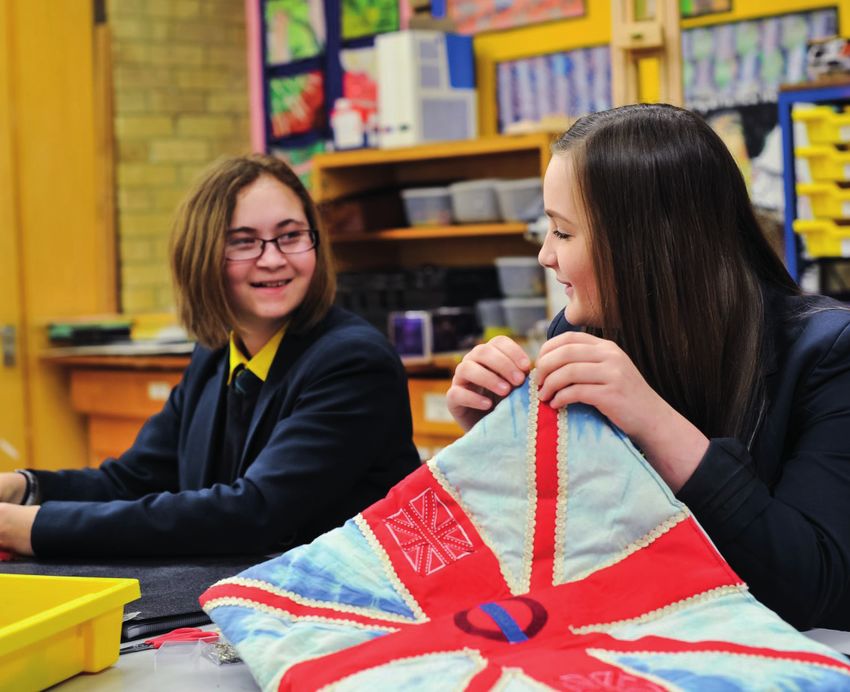
                                                                          Art Textiles					24

                                                                          Dance						25

                                                                          Drama						26

                                                                          Music						27

                                                                          Notes pages				                         28
Brighton Hill Community School Guided Choices Booklet 2018 - 2021 | 05

Core Subject

ENGLISH LANGUAGE
Head of Faculty:		                Mrs S Gregson
Examination Board:                AQA
Qualification:		                  GCSE

Course Description:
Students will draw upon a range of texts as reading stimulus
and engage with creative as well as real and relevant
contexts.
Students will have opportunities to develop higher-order reading and critical
thinking skills that encourage genuine enquiry into different topics and
themes. This course will ensure that students can read fluently and write
effectively.

Students will be able to demonstrate a confident control of Standard English
and write grammatically correct sentences, deploying figurative language
and analysing texts. GCSE English Language is designed on the basis that
students should read and be assessed on high quality, challenging texts from
the 19th, 20th and 21st centuries. The texts, across a range of genres and
types, should support students in developing their own writing by providing
effective models.

Assessment Structure:
This course has 100% external examination assessment. There will be a Spoken Language assessment which will be teacher’ assessed during the course.
This element will not carry marks for the final GCSE grade, however students will gain a spoken language endorsement.

Examination Structure:
There will be two final examinations to assess students in the English Language course.

Examination Paper 1: Explorations in Creative Reading and Writing (50% 1 hour 45 minutes)
This examination will include a reading response to one unseen literature fiction text and one extended descriptive or narrative writing piece.

Examination Paper 2: Writers’ Viewpoints and Perspectives (50% 1 hour 45 minutes)
This examination will include a reading response to one unseen non-fiction text and one unseen literary non-fiction text, as well as one extended
writing piece – writing to present a viewpoint.

There will also be one spoken language assessment, which will be completed and filmed during English lessons.
06 | Brighton Hill Community School Guided Choices Booklet 2018 - 2021

    Core Subject

    ENGLISH LITERATURE
    Head of Faculty:		                Mrs S Gregson
    Examination Board:                AQA
    Qualification:		                  GCSE

    Course Description:
    The English Literature course should encourage students to
    develop knowledge and skills in reading, writing and
    critical thinking.
    Through literature, students have a chance to develop culturally and acquire
    knowledge of the best that has been thought and written. Studying GCSE
    English Literature should encourage students to read widely for pleasure and
    as a preparation for studying literature at a higher level. Students will have
    the opportunity to study a wide range of literature including:

    Shakespearean plays; 19th Century novels; modern plays and novels and a
    selection of poetry, both modern and from the English Literary Heritage.

    Assessment Structure:
    This course has a 100% external examination assessment structure.

    Examination Structure:
    There will be two final examinations to assess students in the English Literature course.

    Examination Paper 1: Shakespeare and the 19th Century Novel (40% 1 hour 45 minutes)
    This examination will include a response to an extract from the Shakespearean play that students have studied and a response to the question on their
    studied novel.

    Examination Paper 2: Modern Texts and Poetry (60% 2 hours 15 minutes)
    This examination will include a response to a question on students’ studied modern play or novel; a comparative response to their studied poetry; a
    response to an unseen poem and one comparing the unseen poem to another unseen poem.
Brighton Hill Community School Guided Choices Booklet 2018 - 2021 | 07

Core Subject

MATHEMATICS
Head of Faculty:		                  Mrs R Duffy
Examination Board:                  Edexcel
Qualification:		                    GCSE

Course Description:
The Mathematics Faculty aims to teach Mathematics in a
stimulating and interesting way.
This is accomplished by adopting a variety of styles and approaches for the
different topics to be covered.

Mathematics is taught and examined under five headings:

1. Using and applying Mathematics

2. Number and Algebra

3. Geometry

4. Statistics

5. Ratio and Proportions

Assessment Structure:
The assessment is conducted solely by examination:

•   Written papers sat in the summer of Year 11

•   There is no coursework component

Examination Structure:
There are two examination entry levels. It is anticipated that students will be entered for either:

Higher Level:                                                                  Foundation Level:
Results in the award of grades: 9, 8, 7, 6, 5 or 4                             Results in the award of grades 5, 4, 3, 2 or 1

The examination component consists of 3 examination papers                     The examination component consists of 3 examination papers

The written examination at each level consists of two calculator papers and one non-calculator paper.

Special Requirements:
Students are required to have a full set of mathematical equipment and a scientific calculator for all of their lessons and examinations.

08 | Brighton Hill Community School Guided Choices Booklet 2018 - 2021

    Core Subject

    COMBINED SCIENCE
    Head of Faculty:		                Miss V Mandizha
    Examination Board:                AQA
    Qualification:		                  2 GCSEs

    Course Description:
    This course is suitable for students of all abilities and is our
    core Science course. The course will cover:
    Biology: Cell biology; transport systems; health; disease and the
    development of medicines; coordination and control; photosynthesis;
    ecosystems; inheritance; variation and evolution.

    Chemistry: Atomic structure and the periodic table; structure, bonding and
    the properties of matter; chemical changes; energy changes in chemistry;
    the rate and extent of chemical change; chemical analysis; chemical and
    allied industries; earth and atmospheric science.

    Physics: Energy; forces; forces and motion; waves in matter; light and
    electromagnetic waves; electricity; magnetism and electromagnetism;
    particle model of matter and atomic structure.

    Assessment Structure:
    The assessment is conducted solely by examination:

    •   Written papers sat in the summer of Year 11

    •   There is no coursework component

    Examination Structure:
    All examinations are to be externally assessed through written examinations.

    Special Requirements:
    Students are required to have a full set of mathematical equipment and a scientific calculator for all of their lessons and examinations.
Brighton Hill Community School Guided Choices Booklet 2018 - 2021 | 09 Core Subject - By invitation only TRIPLE SCIENCE Head of Faculty: Miss V Mandizha Examination Board: AQA Qualification: 3 GCSEs Course Description: This course is suitable for students who have a genuine interest in Science and wish to study a Science at A-Level in post 16 education. Such students are predicted to achieve a minimum of a Step 5 at Key Stage 3, in both Science and Maths. Prospective Triple Science students will be invited to join the course in April. The course will cover: Biology: in addition to the Combined Science content - the genome and gene expression Chemistry: in addition to the Combined Science content - organic chemistry Physics: in addition to the Combined Science content - Space physics Assessment Structure: The assessment is conducted solely by examination: • Written papers sat in the summer of Year 11 • There is no coursework component Examination Structure: All examinations are to be externally assessed through written examinations. Special Requirements: Students are predicted a minimum of a Step 5 at Key Stage 3 in both Science and Maths. Prospective Triple Science students will be invited to join the course. Students are required to have a full set of mathematical equipment and a scientific calculator for all of their lessons and examinations.
10 | Brighton Hill Community School Guided Choices Booklet 2018 - 2021

    Core Subject

    PHYSICAL EDUCATION
    Head of Faculty:		                Miss S Lambert
    Examination Board:                N/A
    Qualification:		                  Non-examined

    Course Description:
    Throughout Year 9 students will continue to complete a range
    of activities planned by the PE Faculty. These activities are
    developed in line with the National Curriculum.
    Students will continue in their current PE sets throughout Year 9 unless their
    rate of progress indicates that a move of set would be beneficial. Towards
    the end of Year 9 students will be guided towards one of a range of different
    routes based upon their progress. The aim of this is to encourage students
    to take ownership of their own learning, enable them to develop aspects
    of their own personal fitness, experience new sports and to refine their
    competitive play.

    As well as covering some traditional and new sports there is also greater
    emphasis placed on leadership. This is aimed at ensuring all learners
    know how to lead sessions and develop their awareness of the associated
    responsibilities. Furthermore, the course looks to develop skills such as
    communication, organisation and fair play.

    During the summer term of Year 9 students will be guided towards one of a range of routes which they will then follow throughout Year 10 and 11,
    during core PE lessons.

    Moving into Years 10 and 11 those students who have opted for GCSE PE can expect some core PE lessons to be used to support this course.

    Assessment and Examination Structure:
    This is a non-examined course but a compulsory element and subject of the National Curriculum.

    Special Requirements:
    Students are required, as currently, to have full PE clothing for these sessions.
Brighton Hill Community School Guided Choices Booklet 2018 - 2021 | 11 Core Subject CITIZENSHIP Head of Faculty: N/A Examination Board: N/A Qualification: N/A Course Description: In addition to the core and specialism subjects that students will study at Key Stage 4, we endeavour to create a curriculum which is balanced and broad, which prepares students at Brighton Hill Community School to be good citizens in our local community and wider society. This curriculum is delivered through a variety of means, through cross-curricular links and through extra-curricular activities and projects that are organised to enrich every one of our students’ experiences as well as through the structured tutor programme. The range of statutory topics that will be delivered to prepare our students for Citizenship in the 21st Century include, but are not limited to: • Personal, Social, Health and Economic Education • Spiritual, Moral, Social and Cultural development • British Values • Prevent Duty • Sex and Relationships Education • Religious Education • Careers Information, Advice and Guidance Through this programme we support our students and encourage them to support others, irrespective of gender, ethnicity, belief, attainment, disability or social, cultural or economic background in order that they are prepared for the opportunities, responsibilities and experiences of later life. Assessment and Examination Structure: The above elements are non-examined but constitute a statutory part of students’ education entitlement.
12 | Brighton Hill Community School Guided Choices Booklet 2018 - 2021
Choice Subject
GEOGRAPHY
Head of Faculty: Miss H Adkins
Examination Board: OCR B
Qualification: GCSE
Course Description:
The course will engage learners through the exploration of
a number of geographical topics encapsulating both the
geography of the UK and the rest of the world. Learners will be
encouraged to make links between topics and challenge their
previous ideas developed in geography through an enquiring
approach to the content.
Students will take part in 2 fieldwork studies during the course, ensuring
they become both adaptable and resilient, no matter their future pathway.
Students follow the OCR B Specification.
There are 3 themes:
The Natural World: This theme explores the rich diversity of distinctive
landscapes and ecosystems which are constantly changing through physical
processes and human interactions.
People and Society: This theme investigates patterns and processes that shape the human planet. It explores the connections between people and places,
questioning how these may change over time and space.
Geographical Exploration: Content from a range of topics within both the Our Natural World and People and Society components will be applied,
as appropriate, in relation to a specific unseen country context.
Throughout the course you will be challenged to suggest and explain sustainable solutions to a wide range of interlinked issues.
Examination Structure:
There are three written exams:
• Our National World = 35%
• People and society = 35%
• Geographical Exploration = 30%Brighton Hill Community School Guided Choices Booklet 2018 - 2021 | 13
Choice Subject
HISTORY
Head of Faculty: Miss H Adkins
Examination Board: Edexcel
Qualification: GCSE
Course Description:
If you have an interest in how we got to where we are today
and in finding out how the problems of the past have shaped
our future, then History is the course for you!
GCSE History aims to promote understanding of the political world post
World War One and bring to the fore what life was like in post-war Europe.
We follow the Edexcel exam board for History with particular focus on the
inter-war years as well as the development of warfare over time.
Units include:
Warfare through time: Thematic Study
• How and why the experience of war has changed over time
• London and the Second World War
Early Elizabethan England: British Depth Study
Superpower relations and the Cold War 1941-91:
• Challenges to Elizabeth at home and abroad
• The origins of the Cold War
• Elizabethan society in the age of exploration
• The Cold War Crises
Weimar and Nazi Germany: Modern Depth Study
• The end of the Cold War
• The Weimar Government
• Hitler’s Rise to Power
• Life in Nazi Germany
Assessment Structure:
• Written examinations
Examination Structure:
There are three exam papers, each paper examines different historical skills:
• Paper 1 concentrates on arguing points and is worth 30% of the overall grade
• Paper 2 primarily assesses knowledge and understanding and is worth 40% of the qualification
• Paper 3 is primarily a skills based paper, which concentrates on the use and analysis of sources, worth 30%.14 | Brighton Hill Community School Guided Choices Booklet 2018 - 2021
Choice Subject
PHILOSOPHY, ETHICS AND BELIEFS (PEB)
Head of Faculty: Miss H Adkins
Examination Board: AQA Syllabus A
Qualification: GCSE
Course Description:
Students are assessed in the following two components:
Component 1:
The study of religions - beliefs, teachings and practices:
The two religions studied are Christianity and Judaism. Beliefs, teachings and
practices of these two religions are taught and the final examination makes
up 50% of the final mark.
Component 2:
Religious, philosophical and ethical studies themes
The following four themes are studied, mainly through the religion of
Christianity:
• Theme A - Relationships and families
• Theme B - Religion and Life
• Theme D - Religion, peace and conflict
• Theme E - Religion, crime and punishment
Each theme is made up of 24 marks, totalling 50% of the final mark.
Assessment Structure:
100% externally assessed by two examination papers.
Examination Structure:
There are 2 written papers for each component of study both worth 50% of the marks.
• Each written paper is 1 hour 45 minutes in length.
• There are no controlled assessments involved in this GCSE.Brighton Hill Community School Guided Choices Booklet 2018 - 2021 | 15
Choice Subject
FRENCH
Head of Faculty: Mrs S Hallum Barnard
Examination Board: AQA
Qualification: GCSE
Course Description:
In Year 9 students will follow a foundation course based on
the Expo 3 text book including a range of topics not previously
covered during Key Stage 3.
The aim of the foundation year is to give students a more in-depth
understanding of grammar, linguistic skills and vocabulary that have been
introduced in Key Stage 3. The foundation year prepares students for the
GCSE speaking and writing assessments by using GCSE-style tasks and the
GCSE mark schemes to grade their work.
In Years 10 and 11, the GCSE French course will be studied. The themes and
topics on which the GCSE course is based are:
1. Identity and culture
2. Local, national, international and global areas of interest
3. Current and future study and employment
Assessment Structure:
• Students will be regularly assessed during the foundation year
• Over the course of the foundation year, the skill areas of listening, reading and speaking or writing will be assessed at least once per half-term
• Over the two year GCSE course, students will be assessed regularly in each of the four skills
• All four skills are assessed in final exams at the end of Year 11 and are marked externally, although speaking exams are conducted by the teacher
Examination Structure:
All four skills of Listening, Reading, Speaking and Writing have equal weighting at 25% each
Special Requirements:
• Students must have their own dictionary to assist with class work, coursework and homework
• Students will have access to ICT in some lessons and in their own time at school for internet access to the foreign language, access to listening
and reading tasks on the VLE, word processing, etc.16 | Brighton Hill Community School Guided Choices Booklet 2018 - 2021
Choice Subject
SPANISH
Head of Faculty: Mrs S Hallum Barnard
Examination Board: AQA
Qualification: GCSE
Course Description:
This is an intensive ab-initio course for students who are
motivated to learn a new language from scratch.
In Year 9 students will follow a foundation course based on the Mira Express
text books to provide a foundation of knowledge of vocabulary, linguistic
skills and grammar in a range of key stage 3 topics.
In Years 10 and 11 the GCSE Spanish course will be studied.
The themes and topics on which the GCSE course is based are:
1. Identity and culture
2. Local, national, international and global areas of interest
3. Current and future study and employment
Assessment Structure:
• Students will be regularly assessed during the foundation year
• Over the course of the foundation year, the skill areas of listening, reading and speaking or writing will be assessed at least once per half-term
• Over the two year GCSE course, students will be assessed regularly in each of the four skills
• All four skills are assessed in final exams at the end of Year 11 and are marked externally, although speaking exams are conducted by the teacher
Examination Structure:
All four skills of Listening, Reading, Speaking and Writing have equal weighting at 25% each
Special Requirements:
• Students must have their own dictionary to assist with class work, coursework and homework
• Students will have access to ICT in some lessons and in their own time at school for internet access to the foreign language, access to listening
and reading tasks on the VLE, word processing, etc.
• As this is an ab-initio course, students must have the aptitude and motivation to study a language to GCSE intensively over 3 years.Brighton Hill Community School Guided Choices Booklet 2018 - 2021 | 17
Choice Subject
FOOD PREPARATION AND NUTRITION
Head of Faculty: Mrs C Roberts
Examination Board: Eduqas
Qualification: GCSE
Course Description:
Assessment and Examination Structure:
The new GCSE food technology course ensures the students
• 50% written examination to be carried out in May/June of
will have a proper understanding of the scientific principles year 11
behind food and nutrition as well as acquire a number of
• 50% practical controlled assessment which will also take
practical cooking techniques to prepare and cook food. place in year 11
At the heart of the food qualification is a focus on developing practical • 15% of this assessment is a food Investigation task
cookery skills and a strong understanding of nutrition so that students learn
A Food Investigation will be set that will require each learner to:
the essentials of food science, nutrition and how to cook healthily.
(a) Research and plan the task
This qualification will give young people the preparation they need to (b) Investigate the working characteristics, function and chemical
succeed in the food and hospitality industries as well as giving them vital properties of Ingredients through practical experimentation and
life skills. use the findings to Achieve a particular result
(c) Analyse and evaluate the task
The qualification will be demanding and give students in-depth knowledge (ii) Produce a report which evidences all of the above and
of nutrition, food choice, where food comes from, and practical cooking as includes photographs And/or visual recordings to support the
well as the ability to apply this knowledge when cooking. There is also a new investigation
emphasis on understanding and enjoying British and international cuisines
For example:
and encouraging students to develop their own recipes. It will prepare Shortcrust pastry should be crisp to the bite and crumbly in the
them for further study, such as a high-quality food-related tech level, or mouth. It can be prepared Using a range of different ingredients.
apprenticeships in the catering or food industries. Investigate the working characteristics and the functional
and chemical properties where Appropriate, of the different
ingredients needed to achieve a perfect shortcrust pastry.
• 35% is a food preparation and cooking task
Below is a brief outline of the main areas of study: This assessment will require learners to:
Principles of nutrition
• Plan, prepare, cook and present a selection of dishes, to
This includes healthy eating, balanced diet, special dietary needs,
meet particular requirements such as a dietary need,
metabolism, macro and micro nutrients, health risks, dietary reference
values, calculating nutritional values and the importance of hydration. lifestyle choice or specific context.
Food safety Two options for this assessment will be set by WJEC Eduqas that
Bacterial growth, food hygiene are also an essential part of the course. will require the learners to:
Diet and good health (i) Investigate and plan the task, select a final menu to be
Students learn about the many reasons for choosing the foods we eat produced to showcase skills and produce a plan of action for the
including our sensory perceptions, seasonality, availability, cultural practical execution of the dishes (include trialling and testing)
influences, beliefs or medical reasons.
(b) Prepare, cook and present a menu of three dishes within a
Food Science single session.
Functions of ingredients and the changes taking place during cooking will be
studied in detail. (c) Evaluate the selection, preparation, cooking and presentation
of the three dishes
Food Provenance
Students will learn where and how foods and ingredients are produced and (ii) Produce a folio of evidence which includes documentation
how processing affects sensory and nutritional properties. We consider related to the selection of dishes, planning and evaluation and
the impact of food on the environment in the study of British and two photographs and/or visual recordings which demonstrate the
International cuisines. learner’s application of technical skills and the final outcomes
Cooking and Food Preparation
For example: A local restaurant is holding an international week.
There is an extensive list of high level cooking and food preparation skills
Research, prepare and cook 3 dishes that could be served on a
to be covered in the course so students will benefit from 3 years of study.
themed menu to promote the cuisine of a specific country
These include knife skills, preparation of fruits and vegetables, marinating,
shaping, making sauces, baking, bread making, using a range of cooking or region.
processes and many more.18 | Brighton Hill Community School Guided Choices Booklet 2018 - 2021
Choice Subject
DESIGN AND TECHNOLOGY
Head of Faculty: Mrs C Roberts
Examination Board: AQA
Qualification: GCSE
Course Description:
Assessment and Examination Structure:
This qualification is linear. Linear means that students will sit
all their exams and submit all their non-exam assessment at Exam Assessment:
the end of the course. What’s assessed?
• Core technical principles
Design and Technology encourages pupils to consider design problems (usually
the problems other people face). Pupils develop a range of practical skills • Specialist technical principles
associated with modern industry working in Graphics design, Textiles and • Designing and making principles
Resistant materials. Some of the skills they develop are: How it’s assessed
• an understanding of drawing as a method of communication. Written exam: 2 hours
• Working as a team to solve design problems. 100 marks
• Learn how to use 2D modelling programs to plan and design products. 50% of GCSE
• an understanding of aesthetics and its role in the design of everyday items Questions
and architecture. Section A – Core technical principles (20 marks)
• Developing practical & communication skills that aid them in everyday life. • A mixture of multiple choice and short answer questions
• Research introduces pupils to the technology of other cultures from an assessing a breadth of technical knowledge and understanding.
historical and modern perspective.
Section B – Specialist technical principles (30 marks)
• Ecology and the environment are serious considerations to any design and
• Several short answer questions (2–5 marks) and one extended
technology student.
response to assess a more in depth knowledge of technical
• Pupils learn the importance of economics when costing projects.
principles.
• Consideration is given to the role of designers in history and the modern world.
Section C – Designing and making principles (50 marks)
• The design process is central to project work as a method of problem solving.
A mixture of short answer and extended response questions.
Design and technology can set you up for a career in a wide variety of
What’s assessed?
industries such as fashion, engineering, architecture, information technology
• Practical application of:
and even education.
• Core technical principles
Popular careers for people with design and technology qualifications include: • Specialist technical principles
fashion designer, tailor, product designer, architect, software engineer, civil • Designing and making principles
engineer, carpenter
Subject content Non-exam Assessment (Practical Production):
• Core technical principles
How it’s assessed
• New and emerging technologies
Non-exam assessment (NEA): 30–35 hours approximately
• Materials, systems and energy 100 marks
• Materials and their working properties 50% of GCSE
• Common specialist technical principles
Producing a prototype and portfolio of evidence which involves
• Designing and making principles
substantial design and make task
All students should also develop an in-depth knowledge and understanding of
Assessment criteria:
the following specialist technical principles for the following materials only:
• Identifying and investigating design possibilities
papers and boards, textile based materials and polymers. They will look at:
• Producing a design brief and specification
• selection of materials or components
• Generating design ideas
• forces and stresses
• Developing design ideas
• ecological and social footprint
• Realising design ideas
• sources and origins
• Analysing & evaluating
• using and working with materials
• stock forms, types and sizes A design brief to be released annually by AQA on 1 June in the year
prior to the submission of the practical production.
• scales of production
• specialist techniques and processes Work will be marked by teachers and moderated by AQA
• Surface treatments and finishes.Brighton Hill Community School Guided Choices Booklet 2018 - 2021 | 19
Choice Subject
INFORMATION TECHNOLOGIES
Head of Faculty: Mrs C Roberts
Examination Board: OCR
Qualification: Level 1&2 Cambridge National Certificate in Information Technologies
Technical Award (GCSE Equivalent)
Course Description: • How to mitigate the risks of cyber-attacks.
• You will be able to select and use the most appropriate technology
The collection and communication of data and storing of
safely and effectively, to complete a data management task, such
data/information happens all around us. as a cable TV provider monitoring customers’ viewing to make
Technology underpins how it’s collected and communicated nearly all of recommendations for additional packages in the customer’s
the time. It can be seen in all walks of life, from a wearable fitness tracker subscription.
recording how many steps you have taken, your mobile phone provider • Learn to follow a project life cycle of initiation, planning, execution
recording your usage to create your bill or an online retailer being able and evaluation to complete a data management task and use your
to target you with specific promotions based on your purchase history. skills, knowledge and understanding of technology to complete each
Knowing how and why data is gathered and being able to turn raw data into of the phases of the project life cycle.
something meaningful is essential as you move through education and into
employment. To be able to do this you will need to have the confidence to The skills, knowledge and understanding you will develop through this
use a range of information technology that is currently available, as well as qualification are very relevant to both work and further study. They will
being adaptable and resilient enough to deal with the rapid advances. support you in a range of subject areas such as A Levels in Business or
Geography, or Cambridge Technicals in IT. They can also support your
What will this qualification teach you? progression into employment through Apprenticeships in areas such as
This qualification will teach you what different technologies could be used, Digital Marketer or Business Administrator.
why you should use them and how to make best use of them, to gather,
store, manipulate and present data; this is known as data management. There are two units of assessment.
To claim the Level 1/2 Cambridge National Certificate Information
You will learn about: Technologies qualification, learners must complete both units of
• tools and techniques for use in different digital hardware and software assessment.
technologies, Performance in both assessments will be underpinned by acquiring
• How these can be integrated to create digital solutions to manage and the knowledge, understanding and skills specified for the qualification
communicate data and information. You will also be taught through learning by doing. We encourage holistic delivery and require
the synoptic application of skills, knowledge and understanding.
• what data and information are and the legal, ethical and moral
considerations when using technology to gather, store and present data Understanding tools, techniques, methods and processes for
and information, and technological solutions
Assessment and Examination Structure: This will directly assess the learning outcomes titled as ‘Understand’:
LO1: Understand the tools and techniques that can be used to initiate
Exam Assessment: and plan solutions
• 1 hour 45 minutes written examination LO3: Understand how data and information can be collected, stored and used
• 80 marks LO4: Understand the factors to be considered when collecting and
processing data and storing data/information
• OCR-set and marked
LO6: Understand the different methods of processing data and presenting
• Exam assessment in June 2018 and then every January and June.
information.
Non-exam Assessment: This will directly assess the learning outcomes titled as ‘Be able to’:
LO2: To be able to initiate and plan a solution to meet an identified need
Developing technological solutions
LO5: To be able to import and manipulate data to develop a solution to
• You will be given a project to develop a technological solution
meet an identified need
that processes data and communicates information
LO7: To be able to select and present information in the development of
• 80 marks
the solution to meet an identified need
• An assignment set by OCR, marked by teachers and moderated by OCR
LO8: To be able to iteratively review and evaluate the development of
• The assignment will include a context and set of tasks the solution.
• A new assignment will be released each series20 | Brighton Hill Community School Guided Choices Booklet 2018 - 2021
Choice Subject
MEDIA STUDIES
Head of Faculty: Mrs C Roberts
Examination Board: AQA
Qualification: GCSE
Course Description:
Assessment and Examination Structure:
This qualification is linear. Linear means that students will sit
all their exams and submit all their non-exam assessment at Exam Assessment:
the end of the course. What’s assessed?
Section A – will focus on Media Language and Media
Many students choose GCSE Media Studies for its relevance to their lives and
Representations. Questions in this section can test any two of the
for the opportunities it provides for exploring contemporary issues through
following forms:
the use of different media in creative and practical ways. The AQA GCSE Media
• magazines
Studies course you’ll learn about media theory and practice, covering:
• advertising and marketing
• The media industries – worth £977 billion globally
• newspapers
• a range of different media – like YouTube sites, websites, films, TV
• Online, social and participatory media and video games.
programmes, radio programs and a range of magazines
• New technologies – an exciting aspect of media that’s growing in Section B – will focus on Media Industries and Media Audiences.
importance. Questions in this section can test any two of the following forms:
• Subject content is divided into 4 categories: • radio
• 1. Media language • music video
• 2. Media representations • newspapers
• 3. Media industries • online, social and participatory media and video games
• 4. Media audiences • film (industries only).
Course structure How it’s assessed
Media Studies involves 1 NON EXAM ASSESSMENT (creating a media Written exam: 1 hour 30 minutes
product) and a written exam. 84 marks
All students study the AQA GCSE Media Studies Single Award. 35% of GCSE
The course is three years in duration
Questions
What is Covered by the Course? • A range of questions relating to an unseen source and Close
• Learning how to ‘read’ or ‘deconstruct’ a media text (Looking at how media Study Products.
texts are constructed) • An extended response question (20 marks).
• Understanding narrative and genre
Non-exam Assessment (Practical Project):
• Representations of different social groups and how they are portrayed in
the media What’s assessed?
• Developing an understanding of who audiences are, and how media texts • Application of knowledge and understanding of the theoretical
are marketed towards different kinds of people framework.
• How to communicate a narrative/message to a specific target audience • Ability to create media products in one of the following media
by creating their own media product by using a range of media including sectors: moving image, audio, print or online
stop frame animation; film; magazines; podcasts; You Tube and social media
How is the practical production assessed
adverts etc)
A choice of one of five annually changing briefs set by AQA.
60 marks
30% of GCSE
Assessed by teachers
Moderated by AQA.
Tasks
Students produce:
• a statement of intent
• a media product for an intended audience (This could be a film,
advert, magazine or an online product like a you tube vlog)Brighton Hill Community School Guided Choices Booklet 2018 - 2021 | 21
Choice Subject
BUSINESS
Head of Faculty: Mrs C Roberts
Examination Board: AQA
Qualification: GCSE
Course Description:
This qualification is linear. Linear means that students will sit
Assessment and Examination Structure:
all their exams at the end of the course. Paper 1: Influences of operations and HRM on business
activity
Subject content:
What’s assessed?
1. Business in the real world
Business in the real world
2. Influences on business
Influences on business
3. Business operations Business operations
4. Human resources Human resources
5. Marketing
6. Finance How it’s assessed
Written exam: 1 hour 45 minutes
The new specification will give students the opportunity to explore real
90 marks
business issues and how businesses work. Students will consider the 50% of GCSE
practical application of business concepts. The units provide opportunities to
explore theories and concepts in the most relevant way, through the context Questions
of events in the business and economic world. Section A has multiple choice questions and short answer
questions worth 20 marks.
Students apply their knowledge and understanding to different business
contexts ranging from small enterprises to large multinationals and Section B has one case study/data response stimuli with
businesses operating in local, national and global contexts. Students develop questions worth approximately 34 marks.
an understanding of how these contexts impact on business behaviour. Section C has one case study/data response stimuli with
questions worth approximately 36 marks.
Students will apply their knowledge and understanding to business
decision making including: Paper 2: Influences of marketing and finance on business
activity
• the interdependent nature of business activity, influences on business,
business operations, finance, marketing and human resources, and how What’s assessed?
these interdependencies underpin business decision-making Business in the real world
Influences on business
• how different business contexts affect business decisions Marketing
Finance
• the use and limitation of quantitative and qualitative data in making
business decisions.
How it’s assessed
Written exam: 1 hour 45 minutes
The specification requires students to draw on the knowledge and
90 marks
understanding to: 50% of GCSE
• use business terminology to identify and explain business activity
Questions
• apply business concepts to familiar and unfamiliar contexts Section A has multiple choice questions and short answer
questions worth 20 marks.
• develop problem solving and decision making skills relevant to business
Section B has one case study/data response stimuli with
• investigate, analyse and evaluate business opportunities and issues
questions worth approximately 34 marks.
• make justified decisions using both qualitative and quantitative data Section C has one case study/data response stimuli with
including its selection, interpretation, analysis and evaluation, and the questions worth approximately 36 marks.
application of appropriate quantitative skills
The knowledge and skills gained from this specification will provide students
with a firm foundation for further study.22 | Brighton Hill Community School Guided Choices Booklet 2018 - 2021
Choice Subject
PHYSICAL EDUCATION
Head of Faculty: Miss S Lambert
Examination Board: AQA
Qualification: GCSE
Course Description:
The GCSE PE course is highly theoretical and as such students
will spend 100% of their allocated lesson time in the
classroom for the first year of the course.
The course is highly academic, and we would like to stress a strong grasp of
both English and Science is essential to enable students to access the
course content.
Students will learn about and be assessed on the human body and
movement which has its foundation in biology and physics. Students will
also learn about and be assessed on the socio-cultural influences in PE and
sport, understanding how and why people participate in certain activities,
the psychology behind sport and the impact on health. Both of these areas
will also cover the use of scientific data and the ability to interpret and
explain this data.
The practical element of the course offers only a narrow range of activities
and it is expected students will commit to relevant extra-curricular activities
to support the course. It is also beneficial if students participate in an activity
outside of school listed on the approved practical activity list.
Assessment Structure:
Assessment Structure:
Theory - 70%
This qualification is linear and all exams will be sat at the end of the course.
Students will cover a range of topics in preparation for two written examinations of 75 minutes in length: The Human Body and Movement in Sport, and
Socio-cultural Influences and Well-being in Physical Activity and Sport. There is one coursework element which involves analysing performance in
one sport.
Practical - 30%
There is a narrow activity list which students can be assessed in. Students will follow at least 4 areas of study, of which they will submit at least 3 marks
consisting of at least one team and one individual sport. Within each sport students will be assessed in their individual skill, their competitive play and their
knowledge of tactics and strategies or routines and sequences. All students will be expected to lead their peers as well as umpire / coach in all areas of study.
Examination Structure:
Practical element - two written examinations of 75 minutes - Coursework element
Special Requirements:
Each student will be provided with an exercise book that they are expected to maintain.
Students will also be encouraged to invest in some revision resources which will be offered in Years 10 & 11 and attend additional activities where
recommended by their teacher. Students will be expected to have the full and correct Brighton Hill PE kit to be able to complete all aspects of the
practical component effectively.Brighton Hill Community School Guided Choices Booklet 2018 - 2021 | 23
Choice Subject
FINE ART
Head of Faculty: Mrs C Espeseth | Course Leader: Mrs C Espeseth
Examination Board: AQA
Qualification: GCSE
Course Description:
Do you enjoy drawing, painting or sculpture? Are you are
interested in a career in any areas of art and design such as
architecture, special effects make-up, illustration and art therapy
to name a few? If so, this could be the course for you.
This course will give you variety of experiences exploring a range of
art media, techniques and processes, ranging from drawing, painting,
printmaking, ceramics, photography and many more.
You will learn to explore relevant images, artwork and resources relating to
art and design from the past and from recent times, including European and
non-European examples which is the integral part of the investigating and
making process.
You will explore drawing for different purposes and needs as part of this course
and you will use sketchbooks to record your work throughout the project.
You will complete a series of projects and activities exploring the following
possible areas:
• Still Life • Current Affairs
• Food • The Human Body
• Mechanical objects
Assessment and Examination Structure:
AQA GCSE Art and Design – Fine Art (single award)
Component 1 – Portfolio
• No time limit – Several extended projects
• 60% of GCSE
• You are now required to show an ability to draw and give written annotations throughout your portfolio.
• The portfolio must include a sustained project evidencing the journey from initial engagement to the realisation of intentions and a selection of
further work undertaken during your course or study.
Component 2 – Externally set assignment
• Preparatory period from January in Y11
• 10 hours supervised time to produce final outcome in April/May
• 40% of GCSE
Special Requirements:
• You need to have a good skill level in art, especially in drawing. You need to be committed to attending workshops
• You need to be able to work independently both in school and at home. You need to be open minded in exploring new materials and subject matter.
• Due to the workload it is not advisable to take BOTH Fine Art and Art Textiles.24 | Brighton Hill Community School Guided Choices Booklet 2018 - 2021
Choice Subject
ART TEXTILES
Head of Faculty: Mrs C Espeseth | Course Leader: Mrs C Espeseth
Examination Board: AQA
Qualification: GCSE
Course Description:
Do you enjoy textiles? Are you interested in developing your
skills further and learning intricate textiles techniques along
with how to design for home accessories, fashion or costume?
If so, this may be the course for you.
This course will give you a variety of experiences exploring a range of
textile media, techniques and processes, including both traditional and new
technologies e.g. computerised embroidery and digital printing.
It will give you the opportunity to specialise in areas of particular interest and
allows the creation of designs and products of woven, knitted, stitched, printed
or decorative textiles that might have a functional or non-functional purpose.
You will explore drawing for different purposes and needs as part of this course
and you will use sketchbooks to record your work throughout the project.
You will complete a series of projects and activities exploring the following
possible areas:
• Mexican Day of the Dead • Natural Forms
• Steam Punk • Under the sea
• Theatre costume and design
Assessment and Examination Structure:
AQA GCSE Art and Design – Textiles (single award)
Component 1 – Portfolio
• No time limit – Several extended projects
• 60% of GCSE
• You are now required to show an ability to draw and give written annotations throughout your portfolio.
• The portfolio must include a sustained project evidencing the journey from initial engagement to the realisation of intentions and a selection of
further work undertaken during your course or study.
Component 2 – Externally set assignment
• Preparatory period from January in Y11
• 10 hours supervised time to produce final outcome in April/May
• 40% of GCSE
Special Requirements:
• You need to have a good skill level in art, especially in drawing. You need to be committed to attending workshops
• You need to be able to work independently both in school and at home. You need to be open minded in exploring new materials and subject matter.
• Due to the workload it is not advisable to take BOTH Fine Art and Art Textiles.You can also read


